25 Cozy Living Room Ideas for Hygge-Filled Evenings
A cozy living room can turn an ordinary evening into the most relaxing part of your day. Soft lighting, comfortable blankets and warm colors can make even a small space feel like a peaceful retreat.
These Cozy Living Room Ideas will help you create a welcoming atmosphere inspired by hygge, the Danish concept of finding comfort and happiness in life’s simple moments. Whether you’re decorating a small apartment, refreshing your family living room, or working with a limited budget, you’ll find practical inspiration that fits your space and lifestyle.
From layered lighting and plush rugs to natural wood accents and inviting reading corners, each idea focuses on details that make a room feel warmer and more comfortable. You don’t need to replace all your furniture or spend a fortune on decorations. Small, thoughtful changes can make a noticeable difference.
As you explore these ideas, consider which textures, colors and lighting styles make you feel most at ease. The goal is to create a living room that looks beautiful in photographs but feels even better in everyday life.
Warm Ambient Lighting
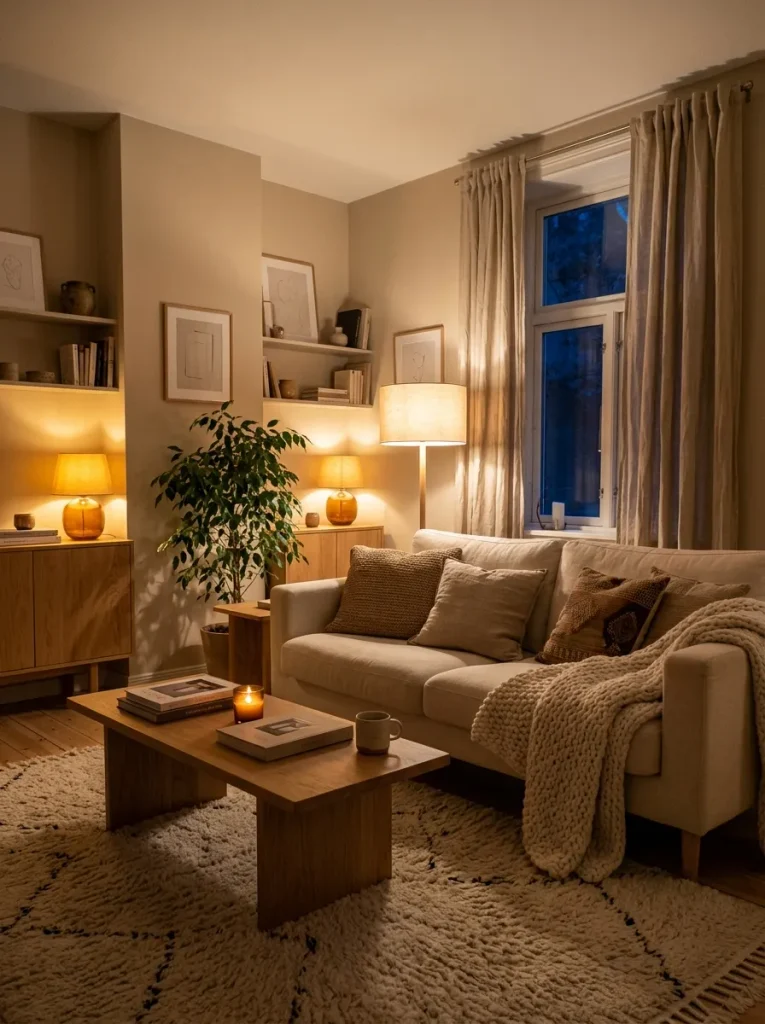
The right lighting can make an ordinary living room feel wonderfully inviting after sunset. Instead of relying on a single bright ceiling light, combine two or three softer light sources to create a gentle glow throughout the space.
Place a table lamp beside the sofa, add a floor lamp near a reading chair and use warm white bulbs around 2700K. This approach keeps the room bright enough for reading while making it comfortable for relaxing, chatting, or watching a favorite movie. Start with the darkest corner of your living room and add light where you need it most.
Layered Throw Blankets
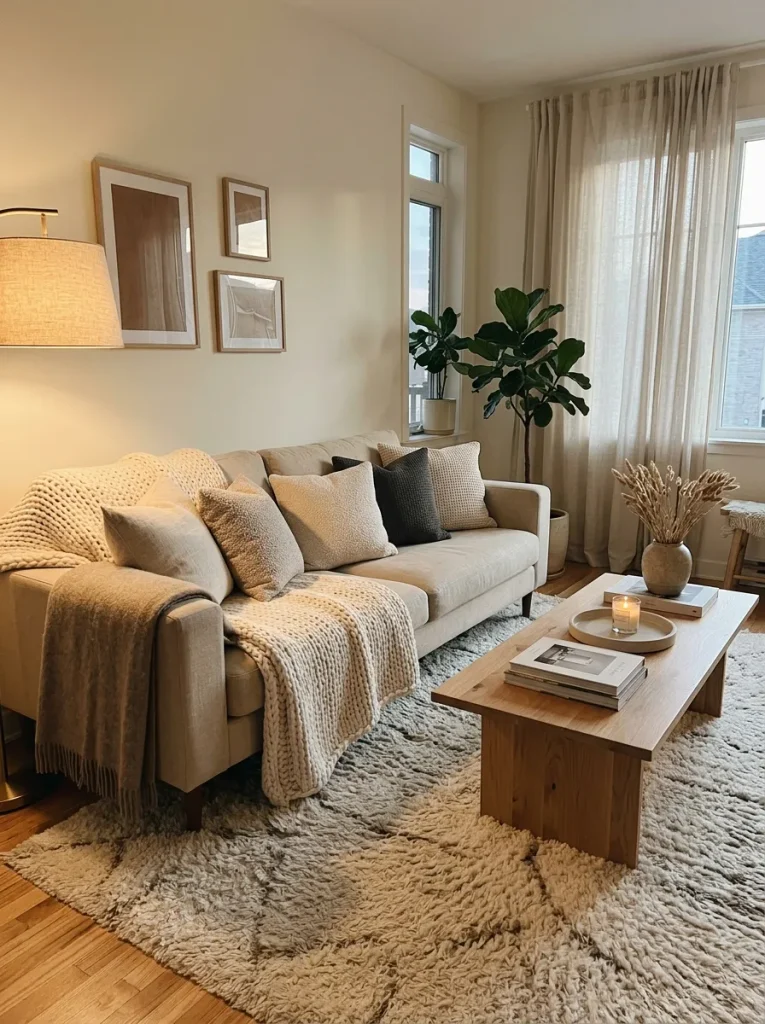
- Choose different textures. Combine chunky knits, brushed cotton, fleece, or soft wool for a rich, inviting appearance.
- Mix complementary colors. Cream, oatmeal, camel, and warm gray work beautifully together.
- Drape blankets naturally. Fold one over the sofa arm and loosely arrange another across the seat.
- Keep extras nearby. Place additional blankets in a woven basket beside the sofa.
Layered throws make your seating area look softer while giving everyone something warm to reach for on chilly evenings. In my experience, mixing two contrasting textures often looks more interesting than buying several identical blankets. Choose washable fabrics if you have children or pets and leave enough room for people to sit comfortably without moving a pile of decorative textiles.
Candlelit Coffee Table
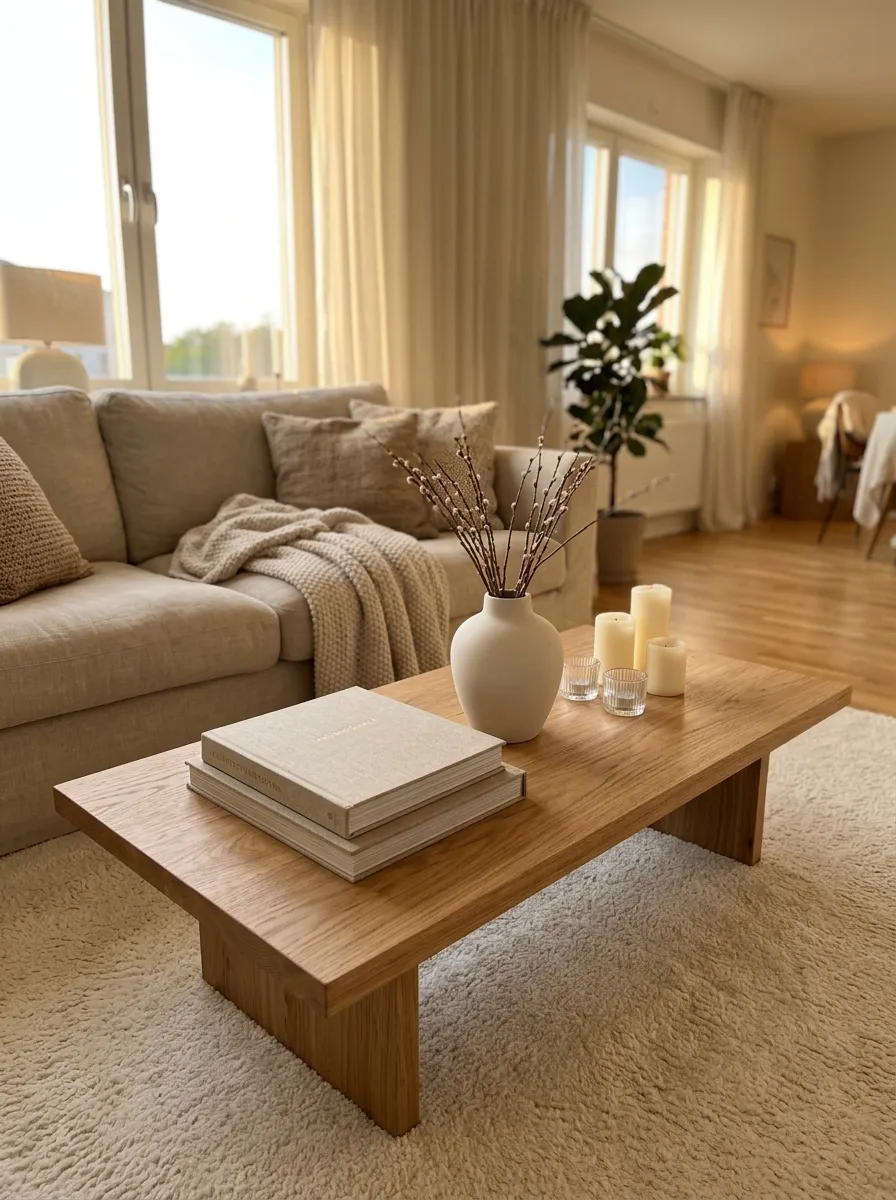
Quick Tip:
Group three candles of different heights on a heat-resistant tray for a balanced arrangement. Choose unscented candles if strong fragrances bother you and keep every flame away from curtains, blankets, and other flammable materials. Never leave burning candles unattended.
A softly styled coffee table adds warmth without requiring a complete room makeover. Arrange the candles slightly off-center, then balance them with a small vase or a stack of books. Leave part of the tabletop clear for mugs, snacks and board games. For homes with young children or curious pets, use realistic LED candles to achieve a similar golden glow without an open flame.
Plush Neutral Rugs
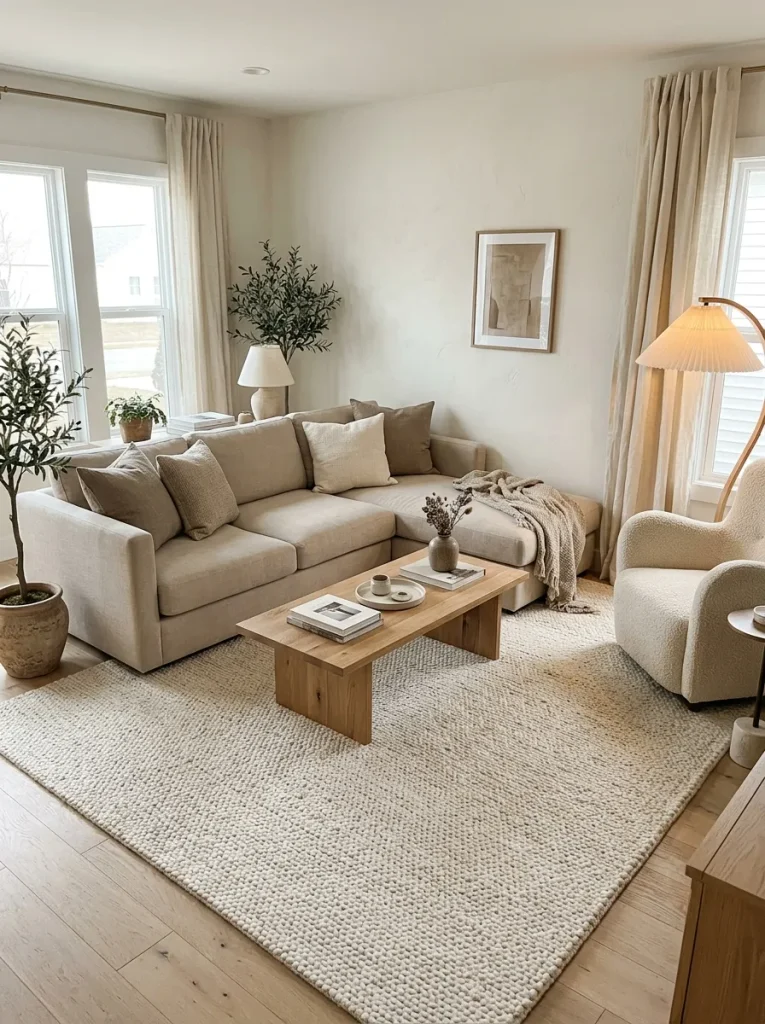
BEFORE
A small rug floating in the middle of the room can make the furniture arrangement feel disconnected. Bare floors may also feel cold underfoot during winter evenings.
AFTER
A generously sized, plush rug visually connects the seating area. The sofa and chairs feel like part of one comfortable gathering space, while the soft surface adds warmth and texture.
Choose a rug large enough for the front legs of your main seating pieces to rest on it. Cream and oatmeal shades create a light, airy look, while patterned beige rugs are more forgiving of everyday marks. If your living room gets heavy foot traffic, check the cleaning instructions before choosing a high-pile design.
A Cozy Reading Nook
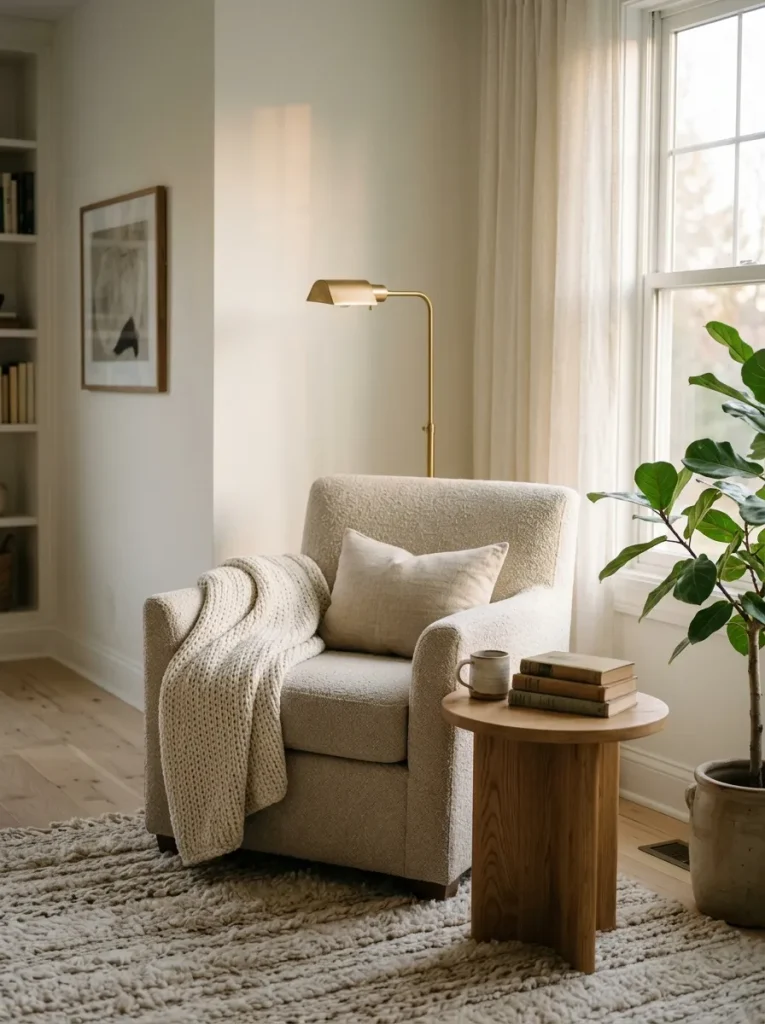
- Select a quiet corner. Choose a spot near a window or away from the television.
- Add comfortable seating. Use an upholstered armchair with enough space to sit back and relax.
- Provide focused lighting. Position an adjustable floor lamp beside the chair.
- Include a small table. Keep a book, mug, or reading glasses within easy reach.
- Finish with soft textiles. Add a cushion and a lightweight throw for extra comfort.
A dedicated reading nook gives even a small living room a peaceful purpose beyond watching television. You do not need a large library or a separate room to make it work. A comfortable chair, suitable lighting and a little surface space are enough. If floor space is limited, use a slim side table and a wall-mounted shelf to keep the corner functional without making it feel crowded.
Soft Layered Curtains
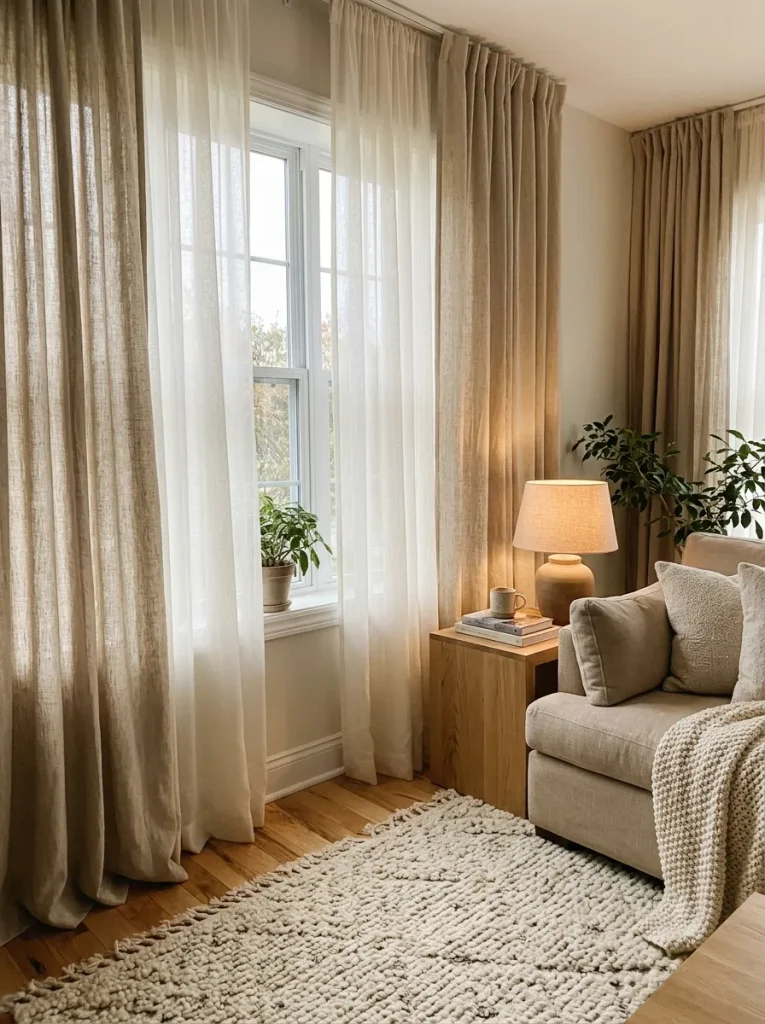
| Feature | Option A: Sheer Curtains | Option B: Layered Curtains |
|---|---|---|
| Natural light | Allows more daylight through | Offers adjustable light control |
| Privacy | Provides limited privacy at night | Thicker outer panels offer greater privacy |
| Appearance | Light and airy | Soft, full and textured |
| Best use | Bright rooms and daytime | Living rooms needing flexibility |
Layering curtains combines a light daytime appearance with better privacy in the evening. Hang the curtain rod slightly above the window frame and extend it beyond the sides to make the window appear larger. Choose fabrics that complement your sofa and rug rather than matching every item exactly. If your room already has heavy furniture, lightweight linen-look panels can keep the overall space feeling balanced.
Natural Wood Accents
DO
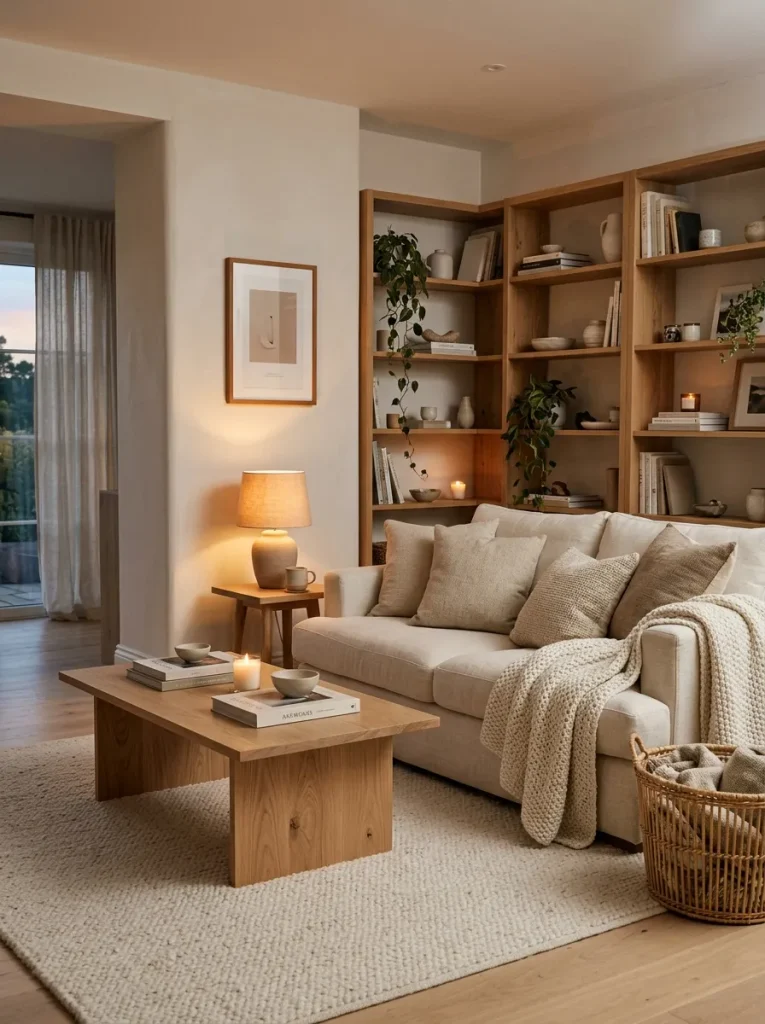
- Choose oak, ash, or other natural-looking wood tones for a warm foundation.
- Repeat one or two wood finishes across tables, frames, or shelves.
- Pair wooden surfaces with soft fabrics and rounded shapes.
- Keep the natural grain visible for an organic appearance.
DON’T
- Mix too many competing wood tones without a clear color scheme.
- Fill every surface with wooden accessories.
- Place unprotected wood where moisture can damage the finish.
- Choose furniture that blocks walking paths just to add another accent.
Wood brings a grounded, natural quality to a living room, especially alongside cream upholstery and soft neutral fabrics. A wooden tray, small side table, or picture frame can introduce this look without the cost of replacing large furniture pieces. For a rented home, removable wood-look accessories are an easy way to create visual warmth while keeping permanent changes to a minimum.
Warm Earthy Colors
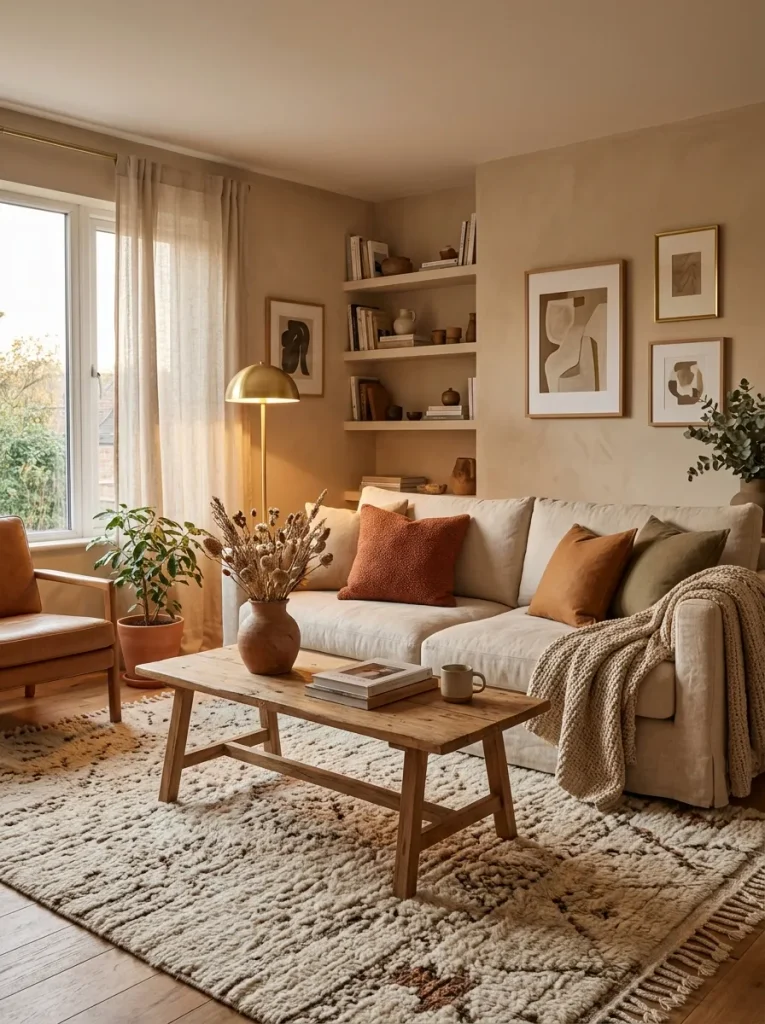
Color palette: Terracotta, camel, warm ivory and muted olive.
Best starting point: Neutral walls with earthy cushions and throws.
Budget approach: Replace small accessories before repainting or buying furniture.
Style match: Rustic, modern organic, Scandinavian and relaxed traditional interiors.
Warm earthy colors create a comfortable atmosphere because they add depth without requiring strong contrast. Start with a neutral sofa, then introduce terracotta through cushions, camel through a throw and muted olive through a plant or decorative vase. Keeping the largest surfaces relatively calm allows smaller color accents to stand out. If the room receives limited daylight, use lighter warm neutrals as the foundation and reserve deeper shades for accessories.
Cushions in Mixed Textures
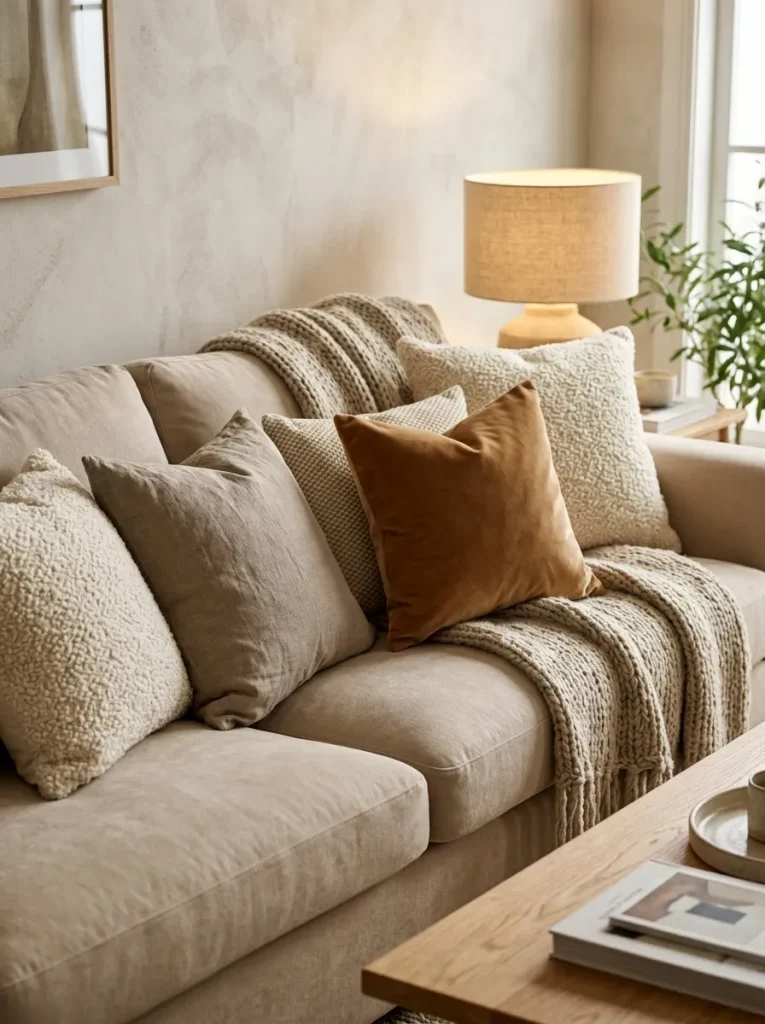
Different cushion textures can make a plain sofa feel thoughtfully decorated without introducing lots of color. Combine linen, boucle, velvet, and knitted covers in a coordinated palette of cream, taupe, and caramel. Use larger cushions at the back and smaller accents toward the front, but keep enough open seating for everyday comfort.
For a three-seat sofa, begin with four or five cushions and adjust according to its size. If patterned covers appeal to you, choose one understated design and let the remaining cushions provide texture rather than competing prints. Removable covers also make seasonal changes simple and affordable.
A Fireplace Focal Point
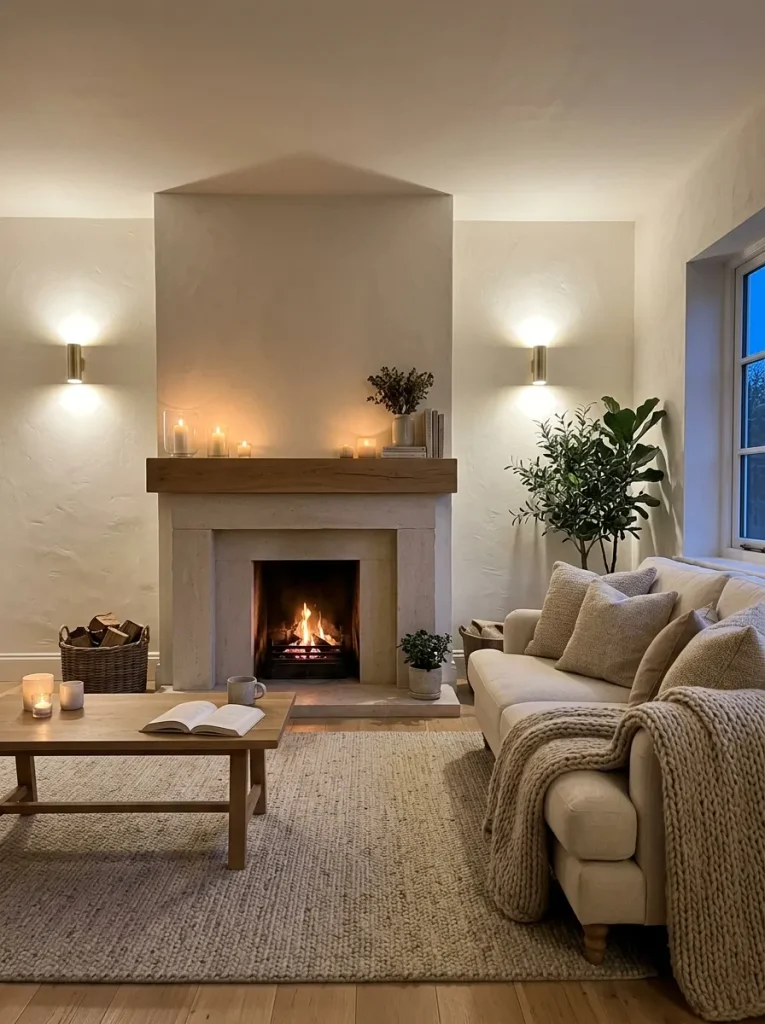
- Bullet 1: Keep the mantel simple with a framed print, ceramic vase, or a small arrangement of branches.
- Bullet 2: Arrange seating to face the fireplace when the room layout allows.
- Bullet 3: Repeat the fireplace’s natural materials through a wood side table or stone accessories.
- Bullet 4: Use an electric fireplace or LED candle arrangement if a traditional fireplace is unavailable.
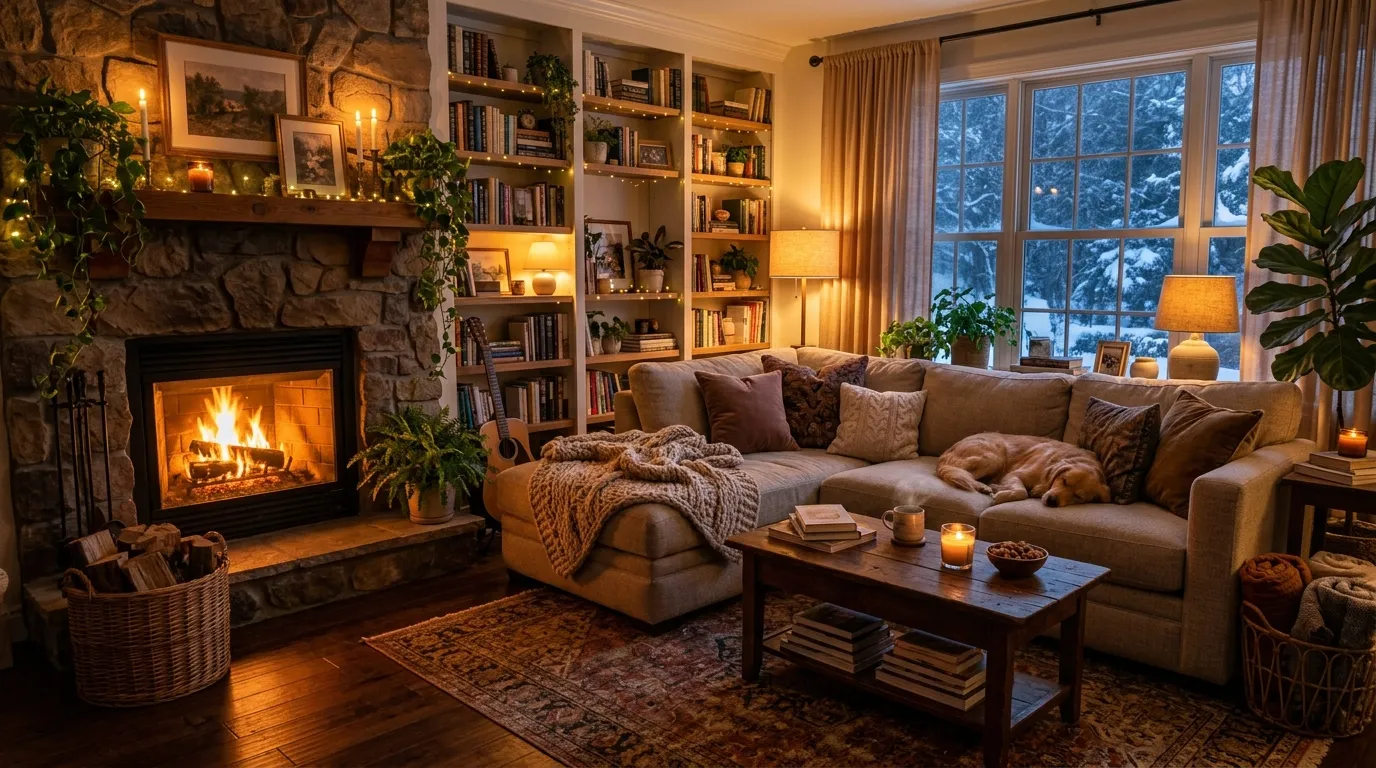
A fireplace naturally draws attention, so the surrounding decor works best when it supports rather than competes with the focal point. Keep the mantel balanced and leave some empty space around decorative objects. Always follow the manufacturer’s clearance requirements for heaters and electric fireplaces and never place blankets or flammable accessories near heat sources. Even a simple mantel styled with warm lighting can create a similar visual focus.
Soft Fairy Light Accents
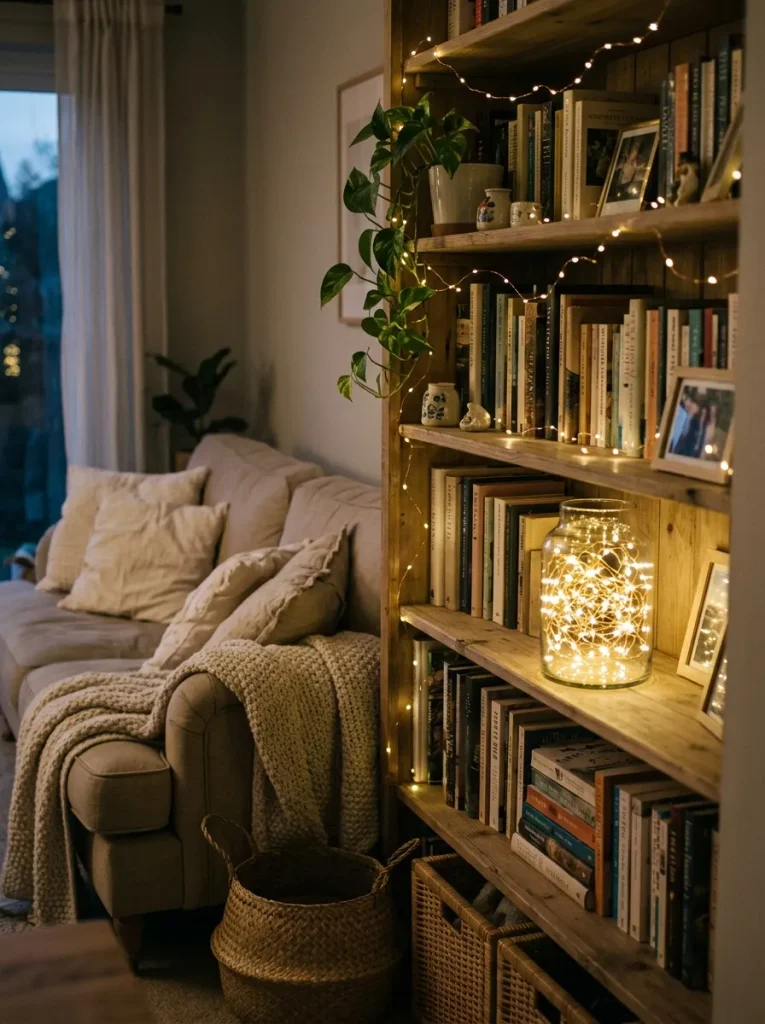
Quick Tip:
Choose warm-white fairy lights rather than cool blue-white versions for a softer evening appearance. Battery-powered lights work well on shelves and in decorative jars, while plug-in versions suit longer installations. Secure cables neatly and use products rated for their intended indoor or outdoor location.
Fairy lights add small points of illumination that make a room feel more relaxed after dark. Place them along a bookshelf, around a safe decorative display, or inside a clear vase for a gentle glow. Avoid covering bulbs with fabric or placing electrical lights where they can overheat. Use them as a supporting light source alongside lamps rather than expecting them to illuminate the entire living room.
A Textured Accent Wall
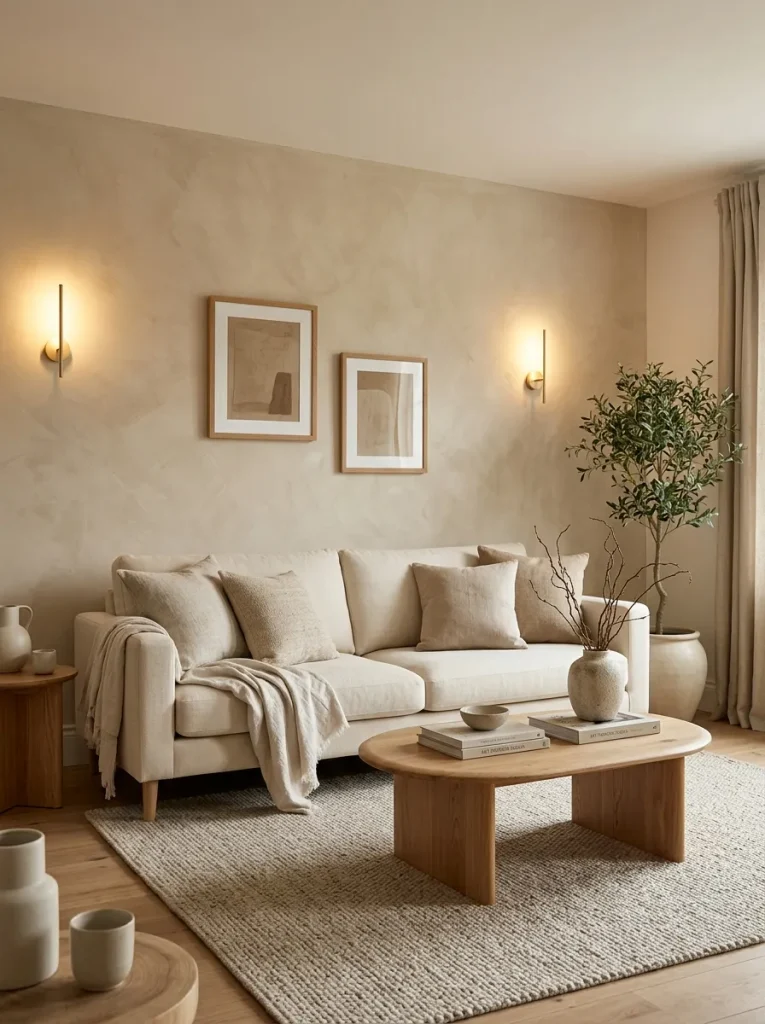
BEFORE
Plain walls can feel unfinished when the living room has very little artwork or architectural detail. Adding lots of small decorations may create clutter instead of providing a clear focal point.
AFTER
A single textured wall introduces depth and visual interest behind the main seating area. The subtle finish gives the room character while allowing the furniture and soft textiles to remain the focus.
Try a warm beige paint finish, removable textured wallpaper, or a limewash-style effect suitable for your wall surface. Test a sample in both daylight and lamplight because warm finishes can look different throughout the day. Renters can achieve a similar result with a large textile wall hanging or an oversized framed print instead of making permanent changes.
Woven Storage Baskets
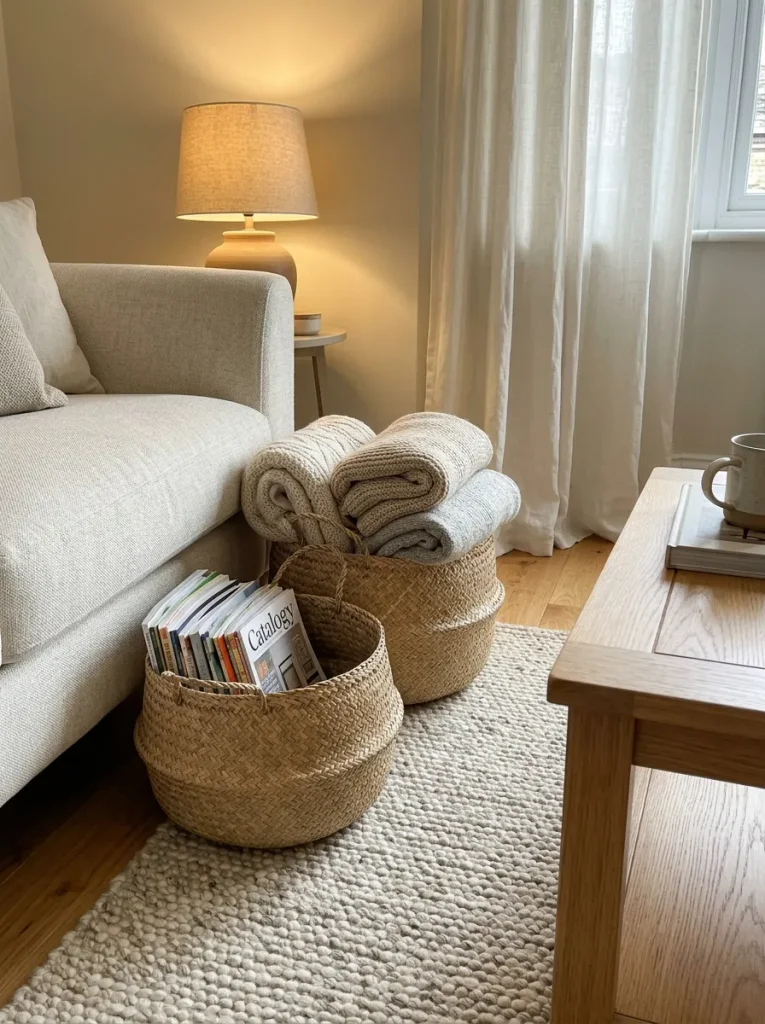
- Identify everyday clutter. Gather the blankets, magazines, toys, or remote controls that regularly end up on the sofa.
- Choose suitable baskets. Select sizes that fit beside the furniture without narrowing walking paths.
- Assign each basket a purpose. Use separate containers for throws, reading materials and small household items.
- Keep frequently used items accessible. Place baskets within easy reach of the people who use them.
- Coordinate the finishes. Repeat natural woven textures elsewhere through a tray or lampshade.
Storage can contribute to the room’s decor when practical items have an attractive place to live. Woven baskets soften the look of open shelving and make it easier to tidy the room before guests arrive. Choose sturdy handles if you plan to move baskets often and use washable fabric-lined options for children’s toys or pet accessories. A simple storage routine helps the room stay inviting long after the decorating is finished.
Curved Comfortable Furniture
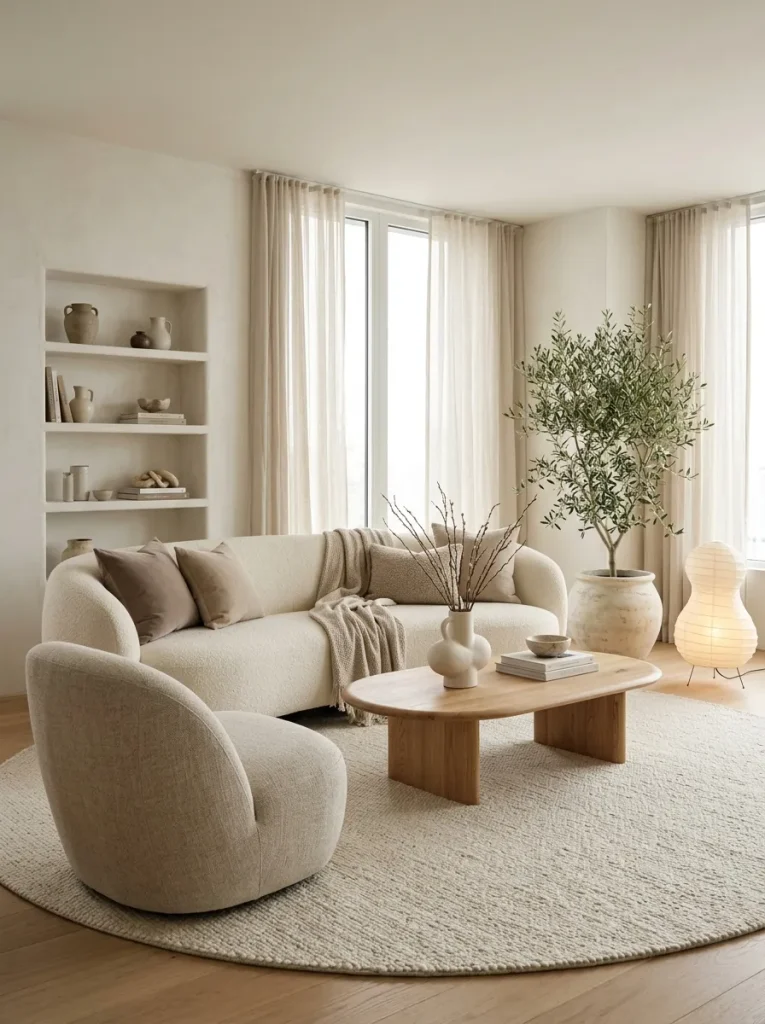
| Feature | Option A: Angular Furniture | Option B: Curved Furniture |
|---|---|---|
| Visual effect | Structured and geometric | Soft and flowing |
| Layout | Often suits straight walls | Can soften rigid room layouts |
| Styling | Works well with linear shelving | Pairs nicely with rounded tables and organic accessories |
| Space planning | Corners may fit close to walls | Curved edges may need extra clearance |
Rounded furniture introduces softer lines that balance boxy architecture and rectangular furniture. You do not need to replace a square sofa to try the look. An oval coffee table, round pouf, curved lamp, or circular mirror can create a similar effect for much less money. Before buying a curved piece, measure the available floor space carefully so its shape improves movement rather than making the seating area harder to navigate.
Indoor Greenery Corners
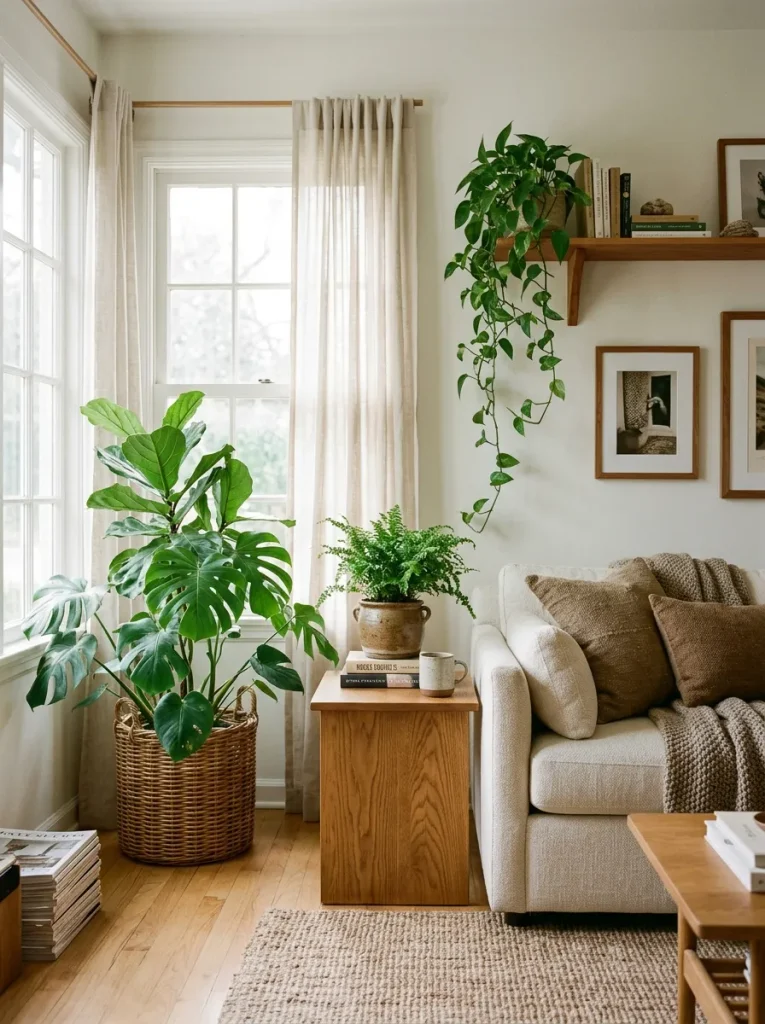
DO
- Select plants according to the natural light available in your room.
- Use pots that complement your existing wood and textile colors.
- Group plants of different heights for a layered appearance.
- Check watering and drainage requirements for each plant.
DON’T
- Buy a plant solely because it looks good in a photograph.
- Leave standing water in decorative cachepots.
- Place plants where they block doors, walkways, or essential light.
- Assume every indoor plant is safe for pets.
Greenery introduces a fresh, natural contrast to neutral furnishings. A tall plant can soften an empty corner, while a smaller plant on a side table adds detail at eye level. If you are new to plant care, start with a species suited to your room’s light conditions and your available time. Check plant safety before bringing greenery into a home with pets or young children, since some common houseplants can be toxic if chewed.
A Warm Neutral Sofa
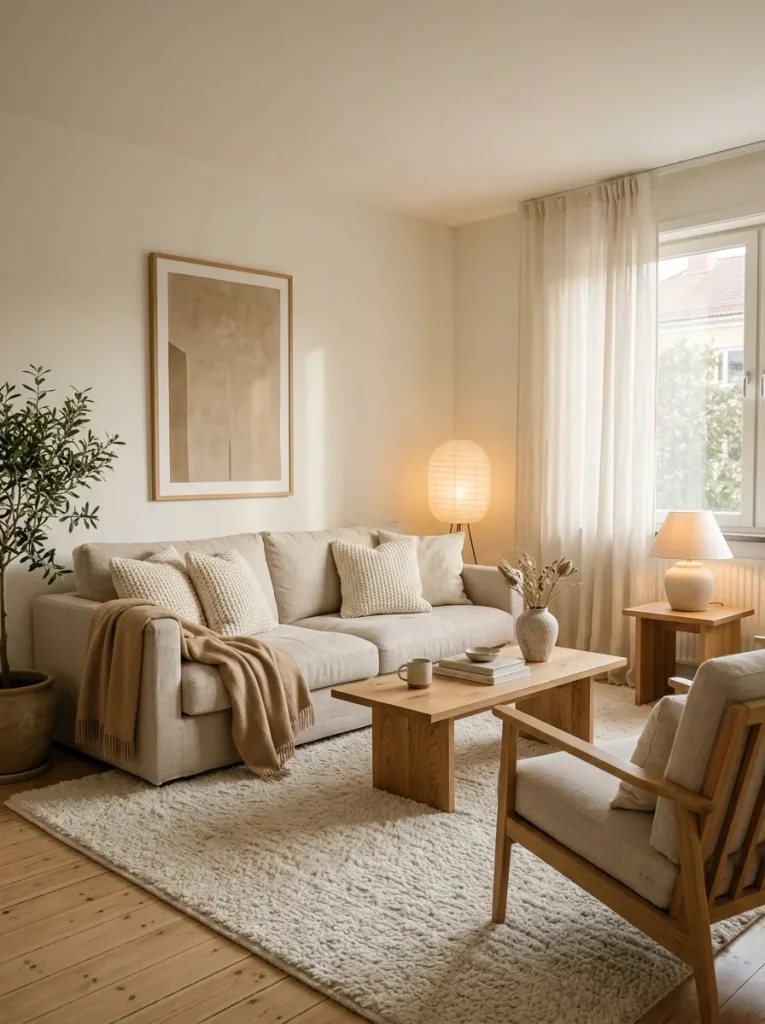
Cost: Varies by size, fabric and construction.
Best colors: Oatmeal, warm beige, ivory and soft taupe.
Practical priority: Supportive cushions and durable upholstery.
Best for: Living rooms that need a flexible, timeless foundation.
A warm neutral sofa makes it easier to update the room without replacing its largest piece of furniture. Add seasonal color through cushions, blankets and small accessories while keeping the main upholstery consistent. If the sofa gets daily use, pay attention to seat depth, frame construction and fabric cleaning instructions. A beautiful sofa should support comfortable sitting as well as the overall design, especially in a room used by the whole family.
Layered Ambient Lamps
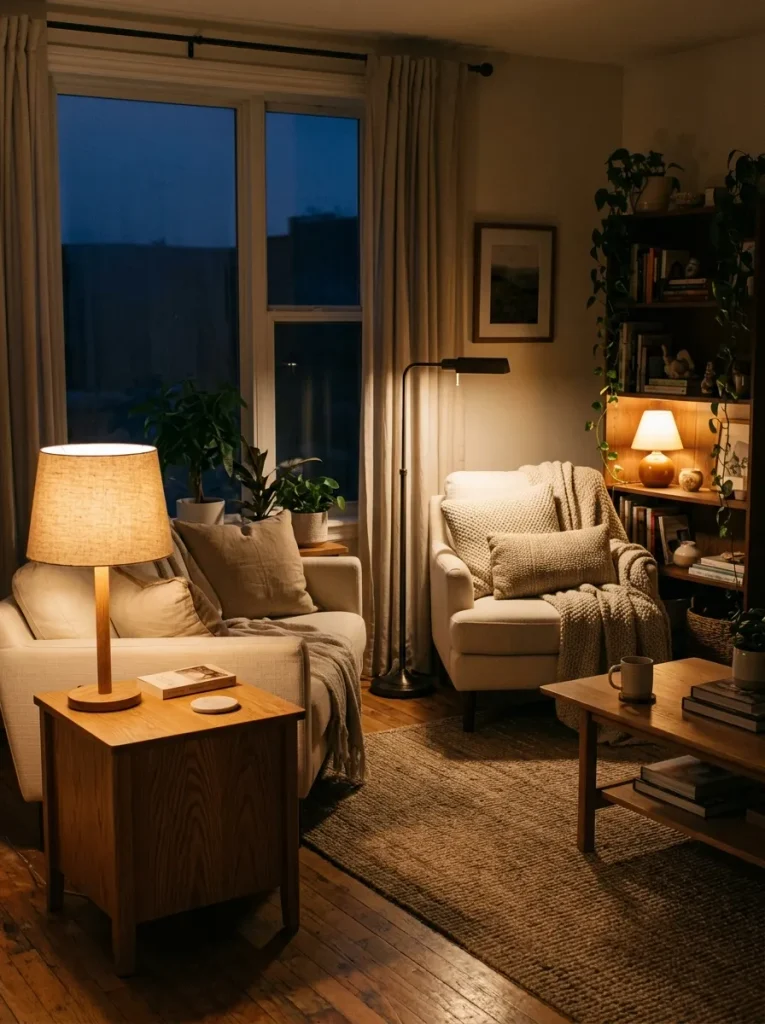
The secret to comfortable evening lighting is giving each lamp a clear job. Use a floor lamp beside the reading chair, a table lamp near the sofa and a small accent light on a shelf or console. Together, these lights create depth and prevent one bright ceiling fixture from dominating the room.
Choose similar warm color temperatures so the lighting feels consistent across the space. Put lamps on separate switches or use compatible dimmers when possible, allowing you to adjust the atmosphere for reading, conversation, or a quiet movie night. Keep cords tidy and position lamps where they will not be knocked over easily.
A Simple Book Display
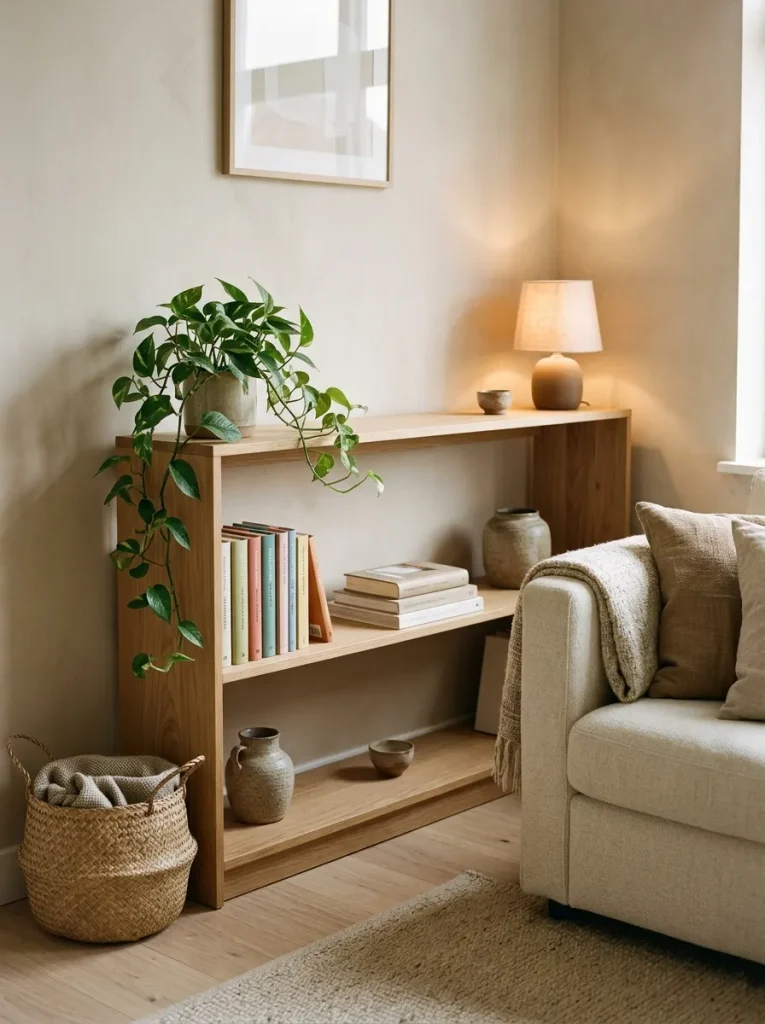
- Choose a small color palette. Group books with complementary spines or mix colors in balanced clusters.
- Vary the arrangement. Alternate upright books with short horizontal stacks.
- Add breathing room. Leave some shelf space empty to prevent a crowded appearance.
- Include personal details. Display a favorite ceramic piece, framed photograph, or small plant.
Bookshelves make a living room feel personal and lived-in without requiring expensive decor. Start with books you actually enjoy, then organize them in a way that is easy to maintain. A few horizontal stacks can create display space for small objects, while upright books make better use of taller shelves. Keep heavier items on lower levels and secure tall bookcases properly, especially in homes with children.
A Cozy Floor Pouf
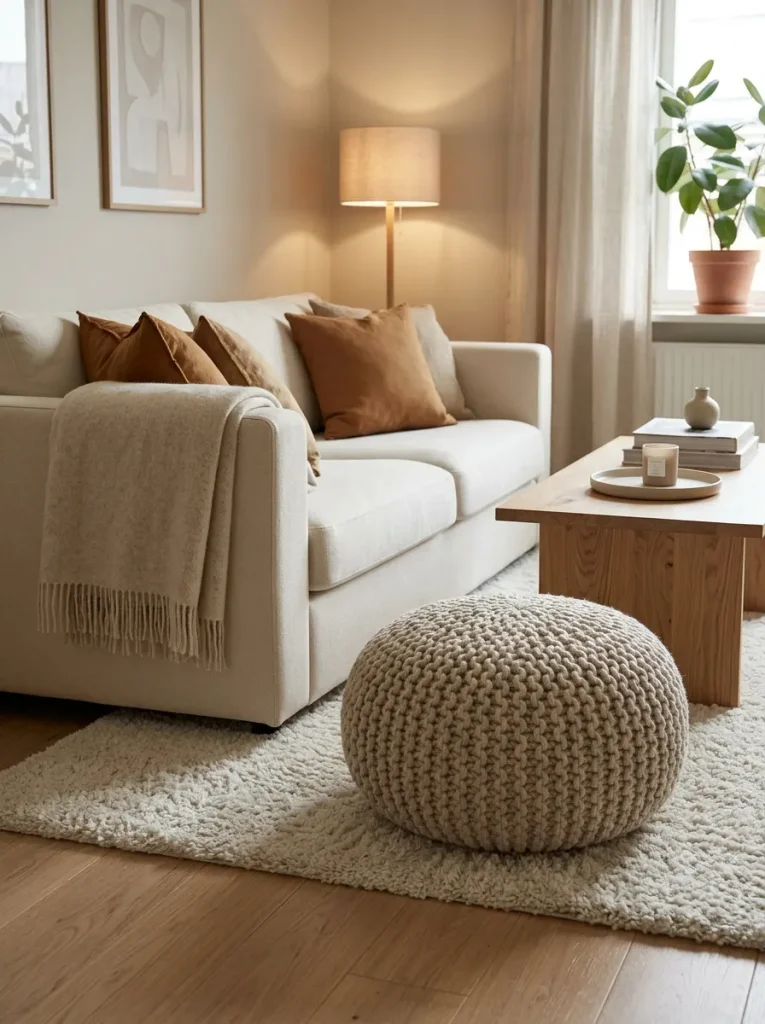
Quick Tip:
Choose a pouf that is firm enough to support its intended use. A structured design works better as occasional seating, while a softer knitted pouf can serve as a footrest or decorative accent. Check the cover’s cleaning instructions before purchasing.
A floor pouf offers flexible seating without the visual weight of another full-sized chair. Move it beside the sofa when guests visit, place it near a reading corner, or use it as a comfortable footrest during movie nights. Choose a color that connects with your rug or cushions so it looks intentional when not in use. Keep enough space around it for people to walk safely, particularly in smaller living rooms.
A Natural Stone Tray
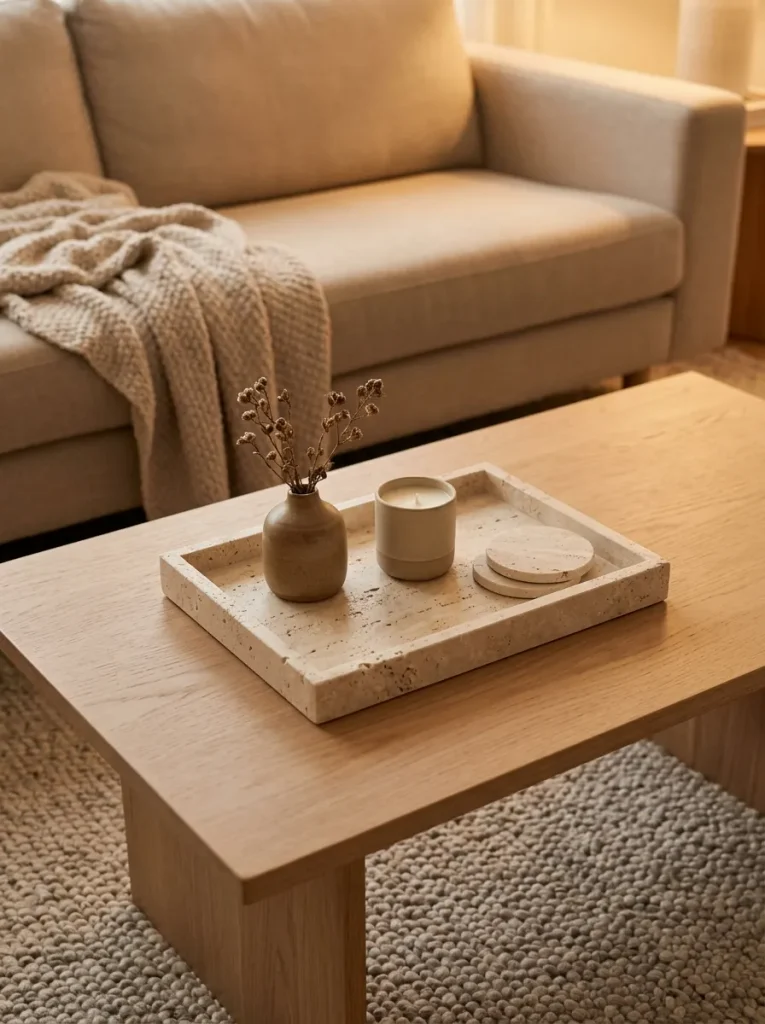
BEFORE
Small accessories scattered across a coffee table can make the surface feel busy. Remote controls, coasters and decorative objects may compete for attention without creating a clear arrangement.
AFTER
A simple stone or stone-look tray groups the smaller items into one defined area. The tabletop looks more organized and the tray adds a natural material that contrasts with wood and soft upholstery.
Choose a tray sized to leave room for drinks and everyday use. Travertine, marble and ceramic options bring different textures, while a lightweight stone-look alternative may be easier to move. Place only a few items on top rather than filling every inch. The aim is to create a practical landing spot that looks calm even during a normal evening at home.
Soft Textured Wall Art
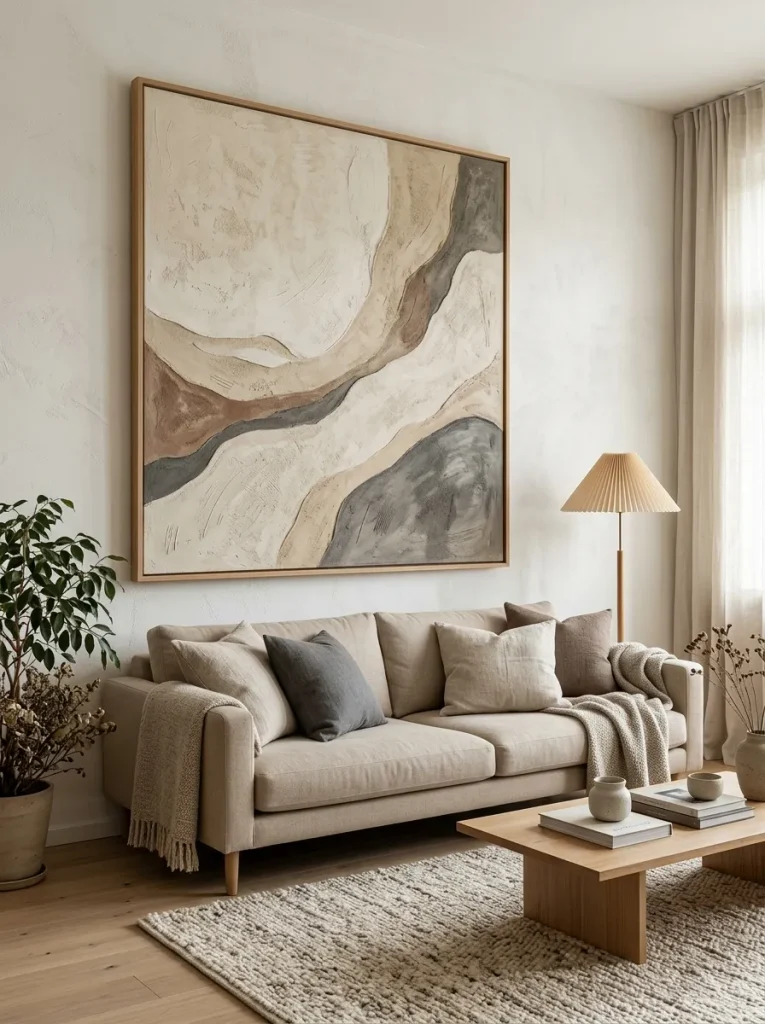
- Measure the wall. Choose artwork that fits the width of the sofa without overwhelming the surrounding space.
- Select complementary colors. Look for warm neutrals or muted shades already present in the room.
- Hang it at a comfortable height. Position the center of the artwork near average eye level, adjusting for the furniture below.
- Repeat one material. Connect the artwork to the room through a wooden frame, textured ceramic accessory, or woven fabric.
- Keep the surrounding wall simple. Allow the main piece enough space to stand out.
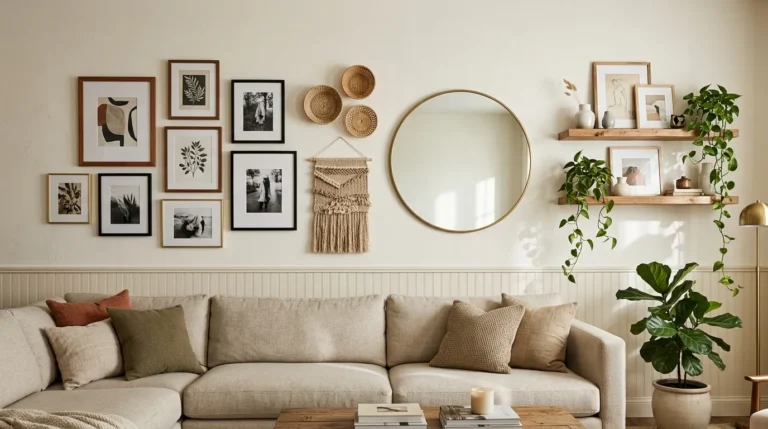
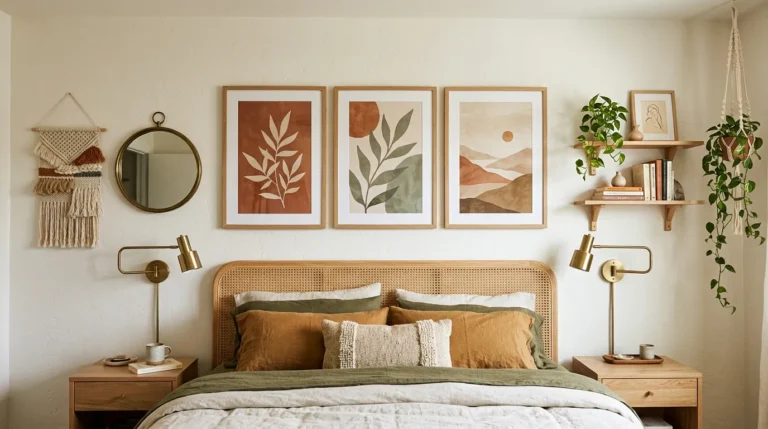
Wall art can add personality without filling the living room with extra furniture or accessories. Textured abstracts, botanical prints and quiet landscapes all work well with a hygge-inspired palette. If original artwork is outside your budget, consider an affordable print in a quality frame or create your own abstract canvas using a limited range of colors. Test the placement before making holes, especially if you are decorating a rented home.
A Cozy Window Seat
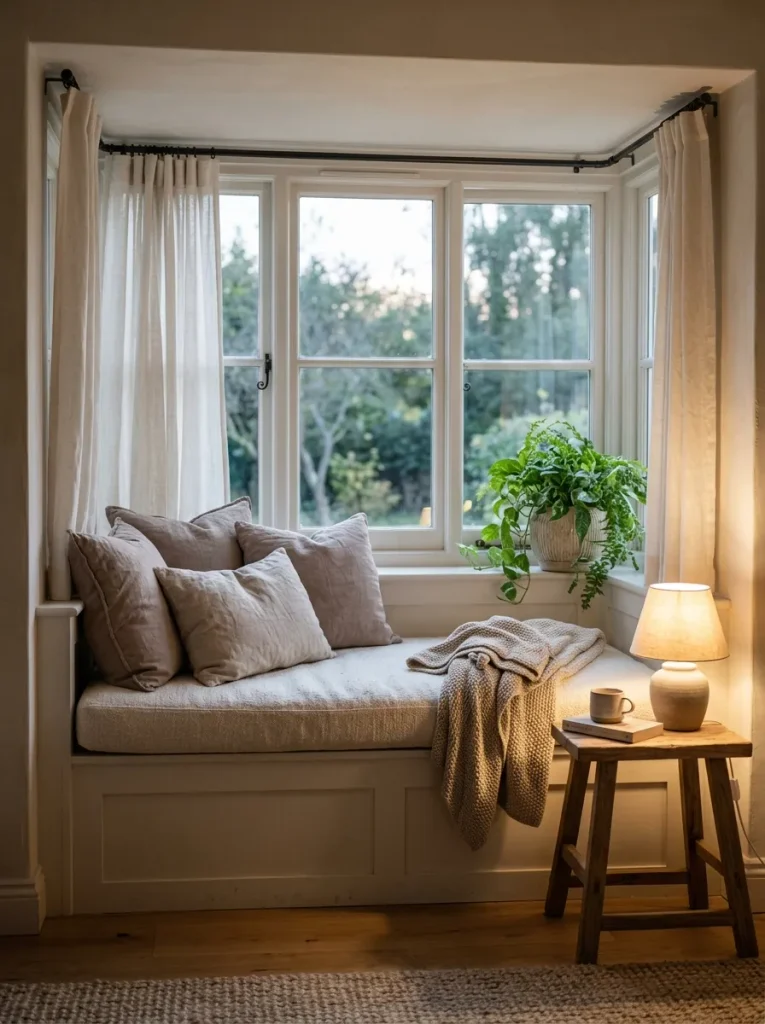
Cost: Low to moderate for a removable cushion setup, depending on materials.
Space: Best suited to a window ledge, bay window, or sturdy built-in bench.
Comfort essentials: A supportive cushion, washable covers and soft pillows.
Best for: Reading, morning coffee, or quiet evening relaxation.
A window seat creates a useful resting spot without requiring a full sofa or armchair. If you have a suitable bench, add a made-to-measure cushion and two supportive pillows. For a rental, a freestanding bench placed beneath a window can achieve a similar look. Check that the seating is stable and does not obstruct window operation, heating vents, or emergency exits. Add a nearby lamp if you plan to use the nook after sunset.
A Relaxed Sofa Layout
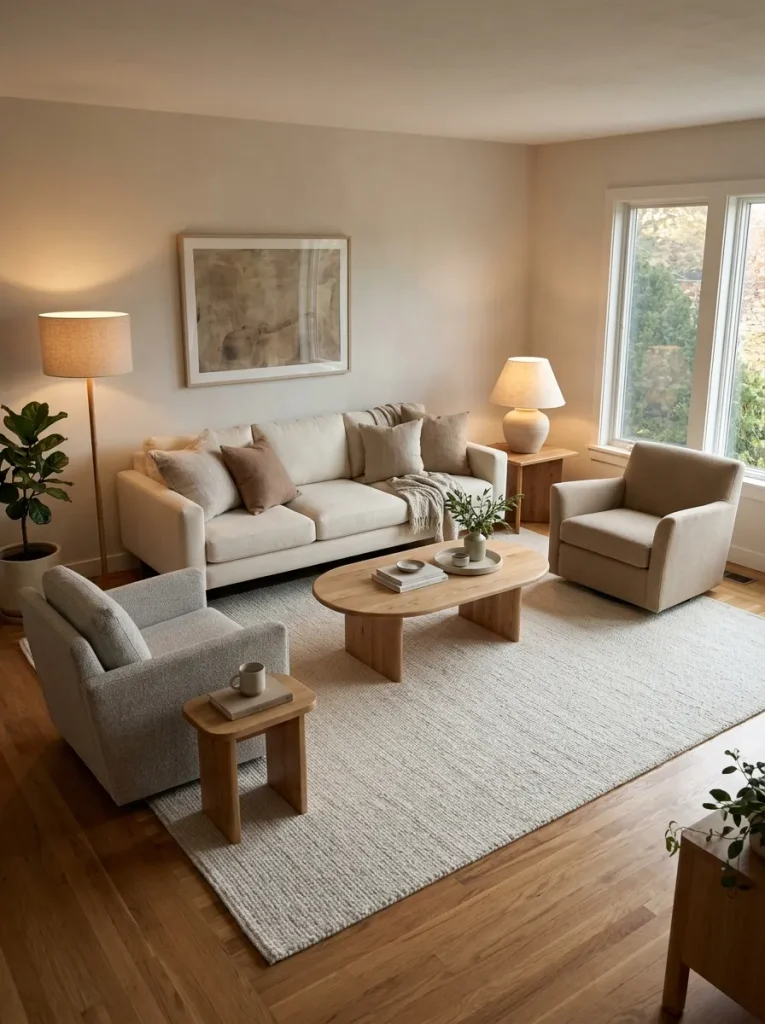
DO
- Arrange seats so people can speak comfortably without shouting across the room.
- Keep a clear walking path between entrances and the main seating area.
- Leave enough space to reach the coffee table without squeezing past furniture.
- Position reading lights near the seats where they will be used.
DON’T
- Push every piece of furniture against the walls automatically.
- Block windows or doors with oversized chairs.
- Choose a coffee table that is difficult to reach from the sofa.
- Fill every gap with a small side table or stool.
A thoughtful furniture layout can make the room feel more comfortable even when every piece stays the same. Start by identifying the main activity, whether it is conversation, watching television, or reading. Arrange the largest seats first, then add smaller pieces where they serve a purpose. Use painter’s tape to mark furniture dimensions on the floor before moving heavy items and preserve clear routes through the room.
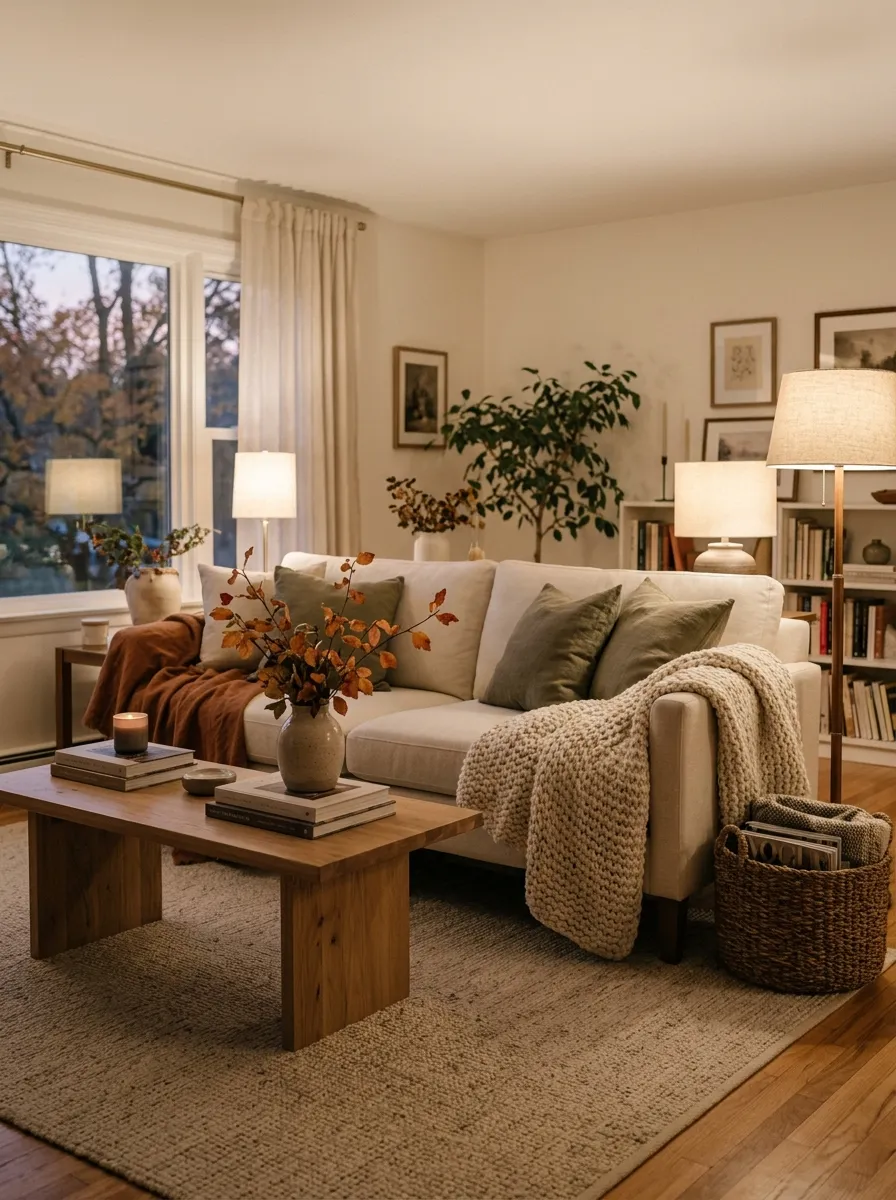
Seasonal Cozy Accessories
| Feature | Option A: Permanent Seasonal Decor | Option B: Swappable Accessories |
|---|---|---|
| Cost | Can involve larger purchases | Usually lower when reusing existing furniture |
| Storage | May require little extra storage | Needs a place for off-season items |
| Flexibility | Keeps one consistent look | Makes seasonal changes easy |
| Best use | Long-term style preferences | Budget-conscious decorating |
Seasonal accessories let you refresh the living room without changing the main furniture or color scheme. Use rust, caramel and deeper greens in autumn and winter, then switch to lighter linen covers and softer greens in spring. Store off-season textiles in a labeled basket or cupboard to make future changes easier. Focus on a few coordinated pieces rather than buying an entirely new collection every season.
A Hygge Evening Corner
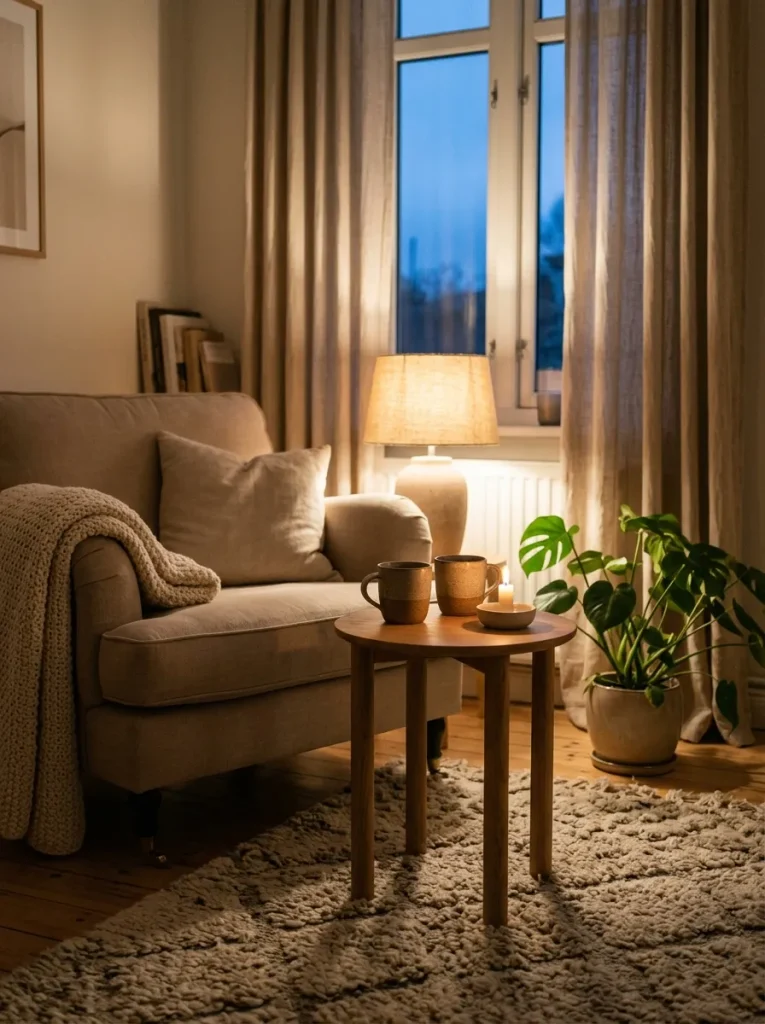
- Lighting: Combine a warm table lamp with a safe candle or LED alternative.
- Comfort: Keep a soft throw and supportive cushion within reach.
- Refreshments: Use a small tray for tea, coffee, or a favorite evening snack.
- Atmosphere: Keep nearby surfaces tidy and choose a quiet, comfortable seating position.
- Personal touch: Add a favorite book, a puzzle, or a small object that makes the corner feel like yours.
The most inviting living rooms support the small routines that help people unwind at the end of the day. Set up one corner for reading, sharing a warm drink, or spending a few quiet minutes away from screens. You do not need expensive furniture or a perfectly styled home. Start with comfortable seating, gentle lighting and a few useful items, then adjust the arrangement to fit your own evening habits.
CONCLUSION
Creating a warm, welcoming home doesn’t require a complete makeover. With these Cozy Living Room Ideas, you can bring more comfort into your evenings through soft lighting, layered textiles, natural materials and thoughtful furniture arrangements.
Start with one simple change, such as adding a knitted throw, rearranging your lamps, or creating a peaceful reading corner. Build on it gradually as your budget and preferences allow. The best hygge-inspired living room reflects your personality and supports the everyday moments you enjoy most.
Save this article on Pinterest so you can revisit your favorite ideas whenever you need fresh inspiration. Try the ideas that suit your home and share this guide with someone who loves cozy interiors. Your next favorite evening spot might be just a small change away.