27 Small Kitchen Decorating Ideas Full of Personality
A small kitchen can have just as much charm and personality as a spacious one. The secret is choosing thoughtful details that make the room feel inviting without sacrificing valuable counter space or storage. Whether you live in an apartment, rent a home, or simply want to refresh an outdated kitchen on a budget, the right decorating choices can make a noticeable difference.
These Small Kitchen Decorating Ideas include everything from soft cabinet colors and open wooden shelves to cozy lighting, patterned runners and clever vertical storage. You do not need a complete renovation or expensive furniture to create a kitchen you love. With a few practical updates, coordinated colors and personal decorative touches, you can make even the smallest kitchen feel brighter, more organized and uniquely yours.
Paint Cabinets Soft Sage
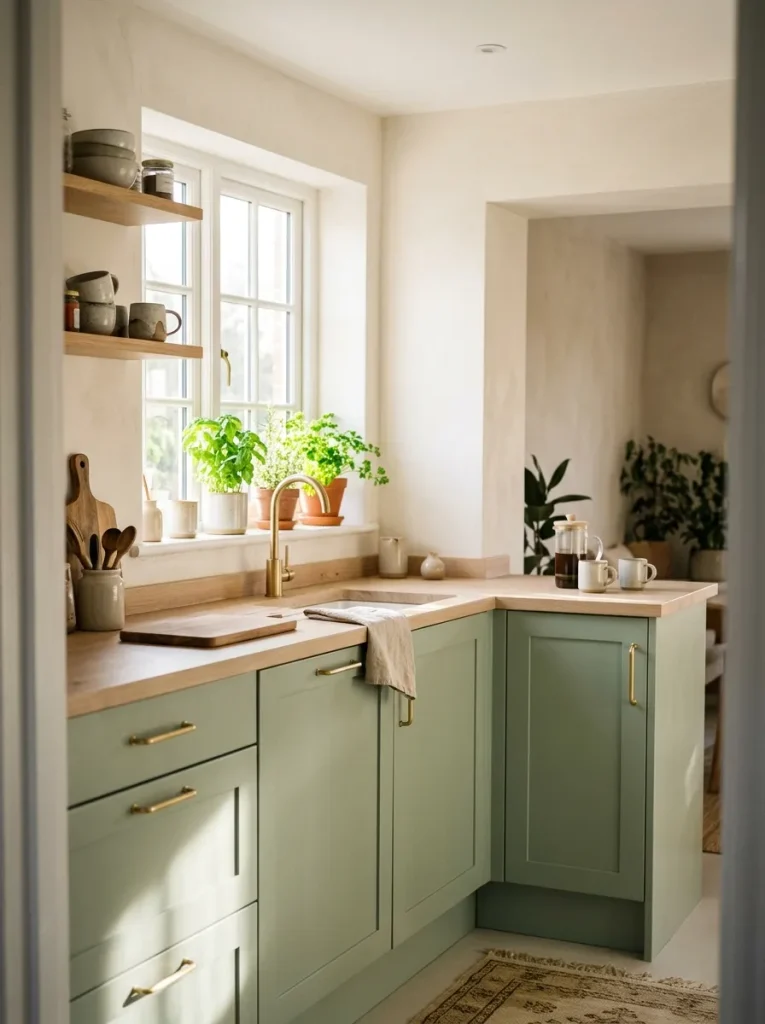
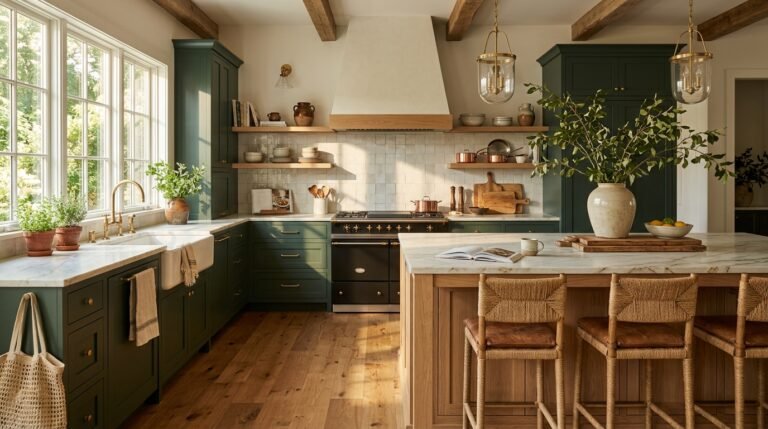
Soft sage cabinets bring color into a small kitchen without making the room feel too busy. The muted green looks especially inviting alongside cream walls, wooden cutting boards and simple white dishes. If replacing cabinets is outside your budget, paint the existing doors instead.
For a balanced look, keep countertops relatively clear and repeat the green in just one or two accessories. Brass or black hardware can add definition, while warm lighting prevents the color from feeling cold. Test a paint sample in both daylight and evening light before committing to the entire kitchen.
Open Wooden Shelves
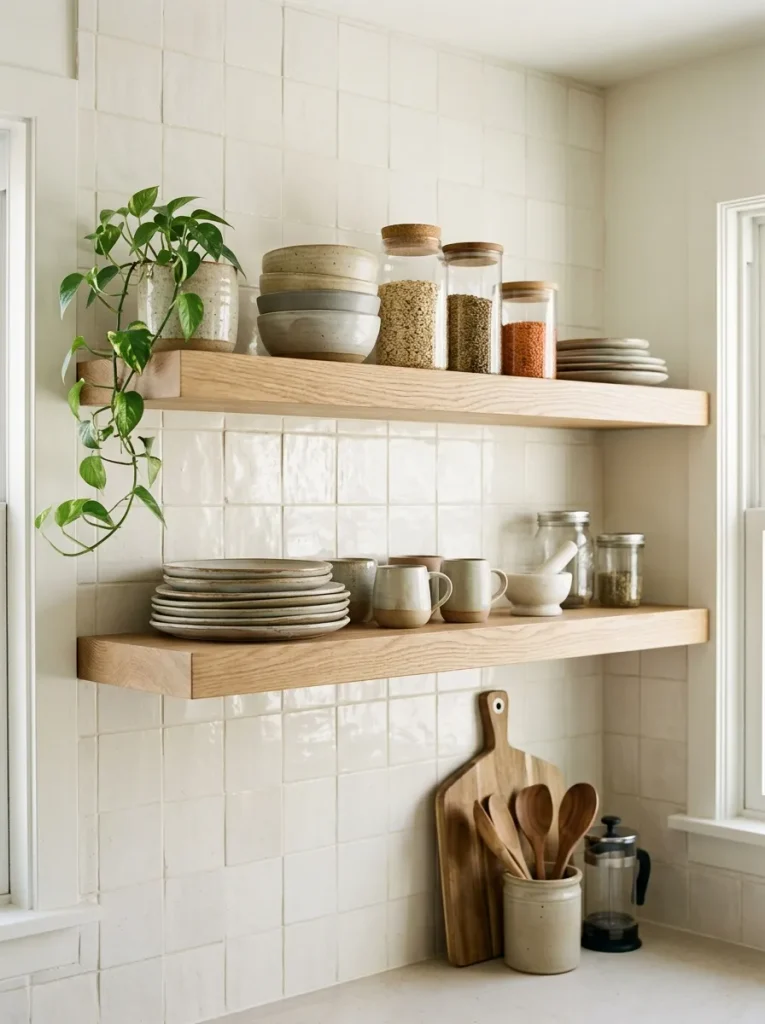
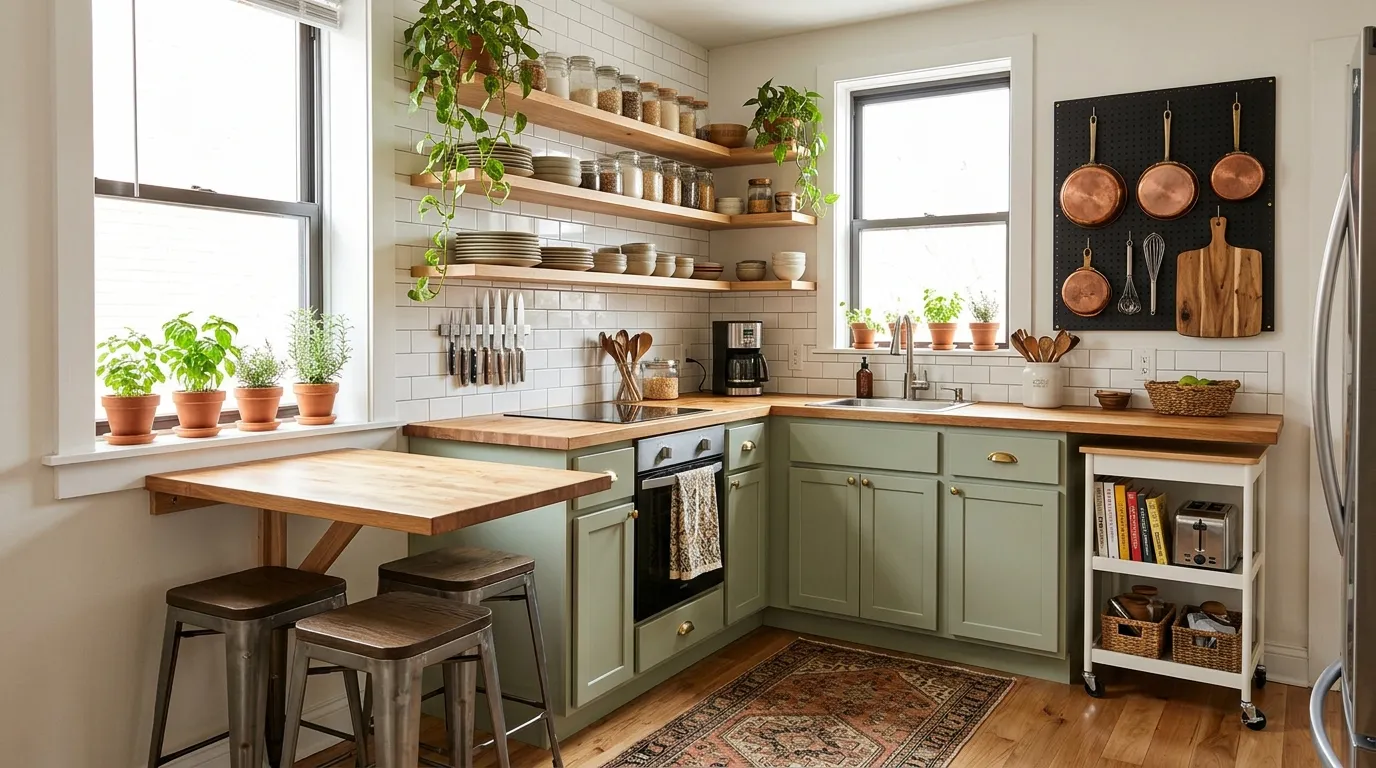
- Install one or two shelves where they will not interfere with cooking or cabinet doors.
- Choose matching or complementary dishes to keep the display visually calm.
- Use jars for frequently reached ingredients such as pasta, oats and rice.
- Leave some empty space between objects so the shelves do not look crowded.
- Place heavier items on sturdy shelves secured to appropriate wall supports.
Open shelving can make a compact kitchen feel lighter by replacing a solid row of upper cabinets with a more open view. It also gives everyday items a decorative role. Display your prettiest bowls and glasses, then store less attractive supplies behind closed doors to maintain a tidy appearance.
Colorful Backsplash Tiles
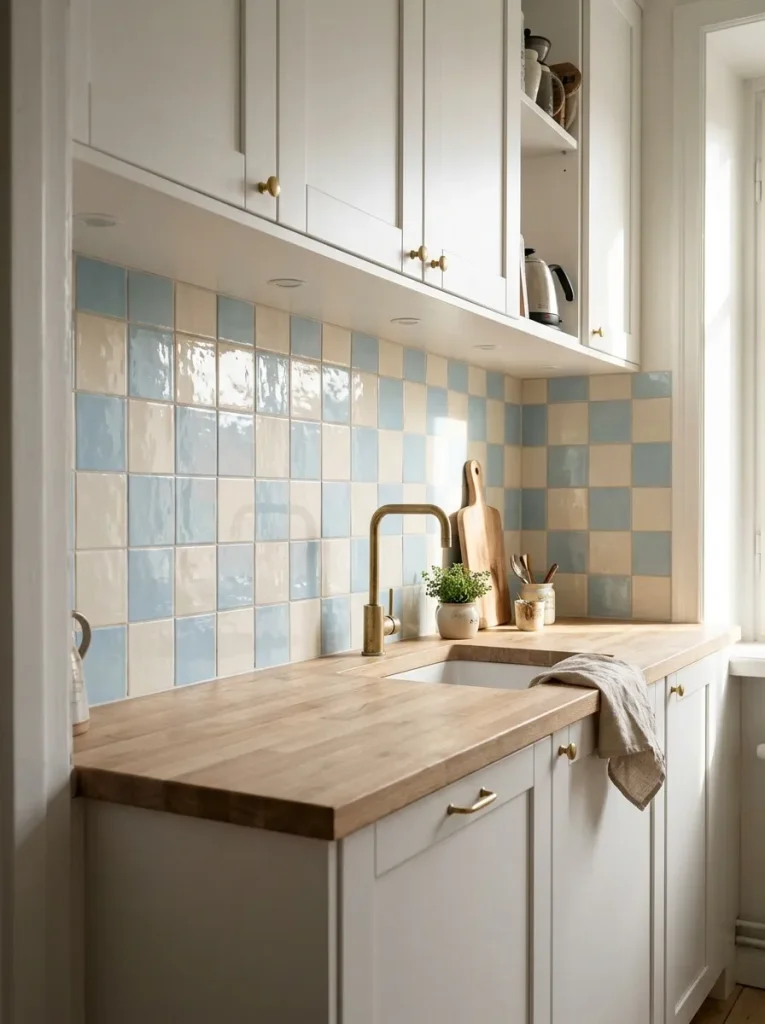
Quick Tip: Choose backsplash tiles with a repeating color pattern rather than several competing designs. If permanent renovation is not possible, look for removable backsplash panels that suit your rental agreement and wall surface.
A colorful backsplash adds personality at eye level, making it an effective choice when floor space is limited. Pale blue, dusty pink, buttery yellow, or soft green can bring life to neutral cabinets without overwhelming the room. Keep nearby accessories simple so the tile design remains the focal point.
For a budget-friendly update, focus on the wall behind the sink or cooking area instead of covering every available surface. Check cleaning and heat-resistance requirements before choosing a material, particularly near the stove. A small, well-placed area of color can make the entire kitchen feel more considered.
Before and After Styling
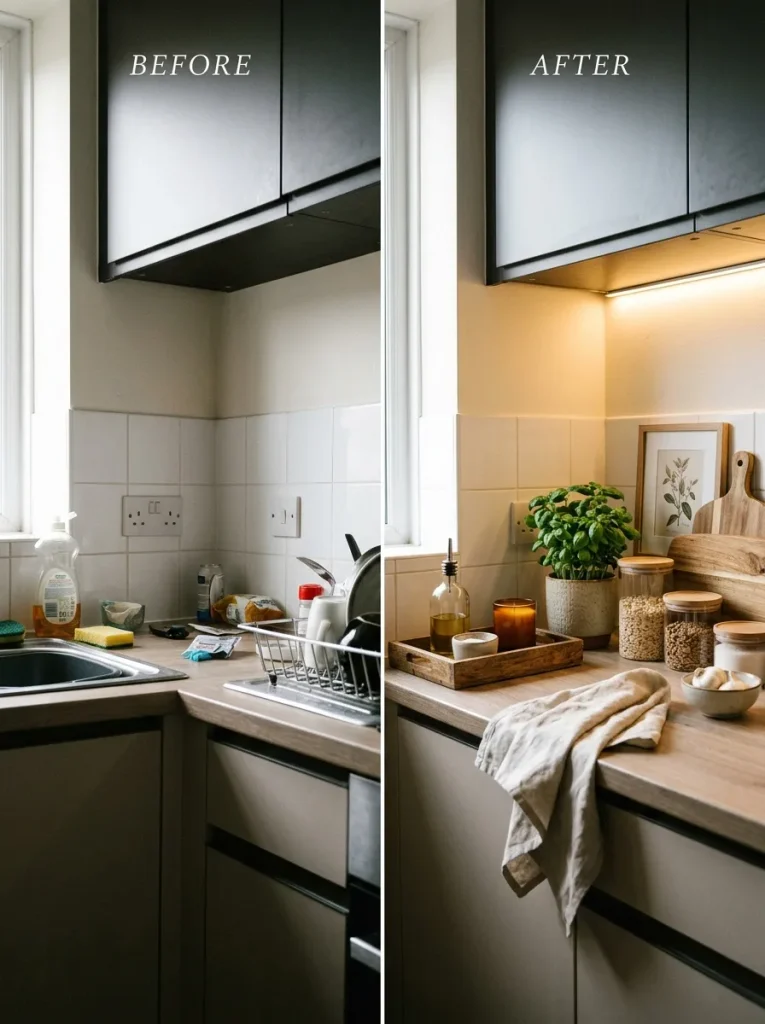
BEFORE: The kitchen has plain white walls, scattered cooking supplies and a countertop that feels unfinished. Everyday essentials sit wherever space is available, making the room appear more cluttered than it really is.
AFTER: A wooden tray groups oils and seasonings, matching containers organize dry ingredients and a small framed print adds character. A warm lamp or under-cabinet light creates a softer evening atmosphere.
The difference comes from organizing what is already there rather than buying lots of new decor. Start by removing unused items, then choose two or three finishes to repeat throughout the room. This approach helps small kitchens feel intentional while preserving the clear work surfaces needed for preparing meals.
Create a Coffee Corner
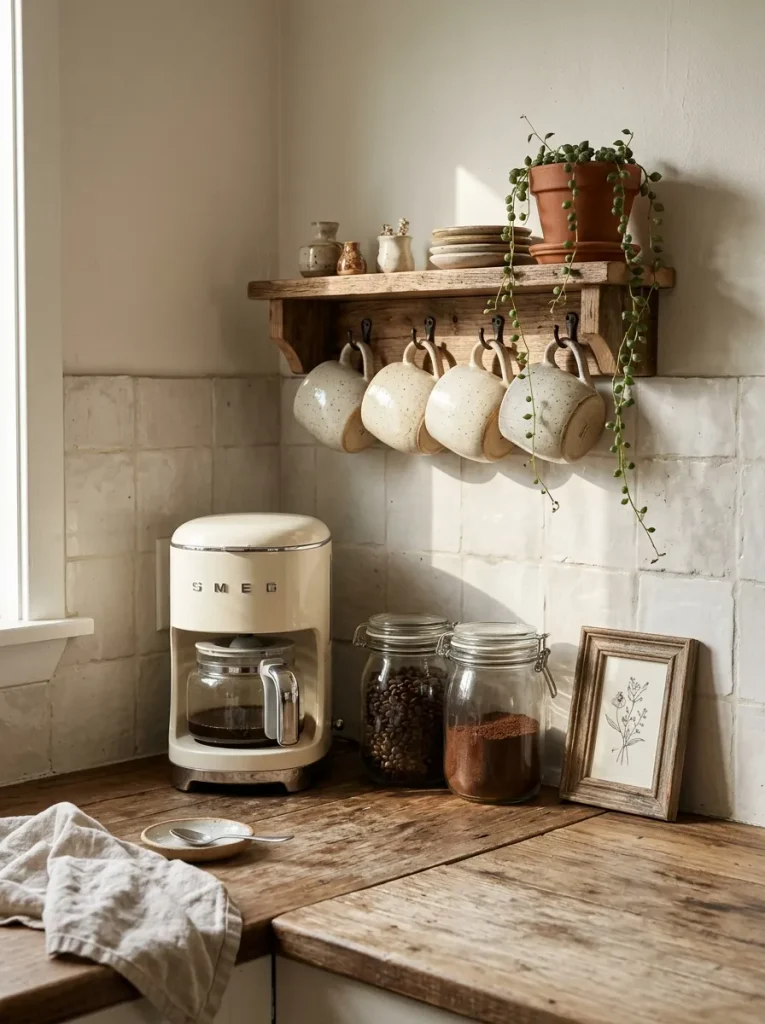
- Choose a small spot: Use an unused counter corner or a short shelf away from the main food-preparation area.
- Group essentials: Place the coffee maker, cups and coffee or tea containers together.
- Add a tray: Use a washable tray to contain small items and make cleaning easier.
- Include one decorative touch: A tiny plant, print, or attractive sugar bowl adds personality.
A dedicated coffee corner gives a small kitchen a welcoming feature without requiring an additional cabinet. It can also prevent mugs and drink supplies from spreading across the counter. Keep the arrangement compact and make sure appliances have suitable outlets, ventilation and clearance according to their instructions.
Two-Tone Cabinet Colors
| Option | Visual Effect |
|---|---|
| Light upper cabinets | Keep the upper half of the kitchen feeling open |
| Dark lower cabinets | Add depth and help anchor the room |
| Matching cabinet colors | Create a simple, uniform appearance |
| Contrasting cabinet colors | Introduce personality without extra accessories |
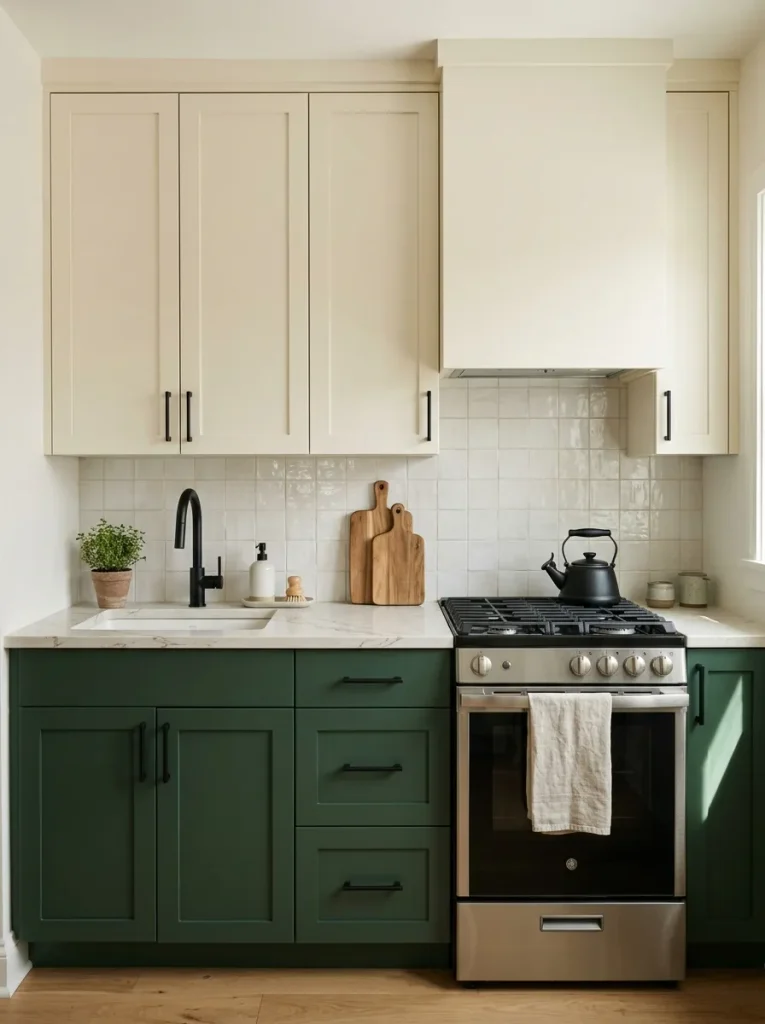
Two-tone cabinets create interest through color placement rather than additional decorations. Keeping the upper cabinets lighter can help a low-ceilinged or narrow kitchen feel more spacious, while darker lower cabinets provide contrast. Navy, olive, charcoal and muted terracotta can all work when balanced with lighter walls and countertops.
If repainting every cabinet is too expensive, update only the lower doors or the island, if you have one. Repeat one of the cabinet colors in a tea towel, small artwork, or ceramic bowl to make the palette feel connected. Always test colors in your actual lighting before choosing a finish.
Decorate With Fresh Herbs
DO:
- Choose compact herb pots that fit safely on a windowsill or shelf.
- Group pots in coordinating colors for a neat appearance.
- Select herbs suited to the light available in your kitchen.
- Use trays or saucers to protect the surface from water.
DON’T:
- Block a window that provides valuable natural light.
- Crowd plants beside a hot stove or oven.
- Let excess water sit beneath the pots.
- Buy more herbs than you can care for comfortably.
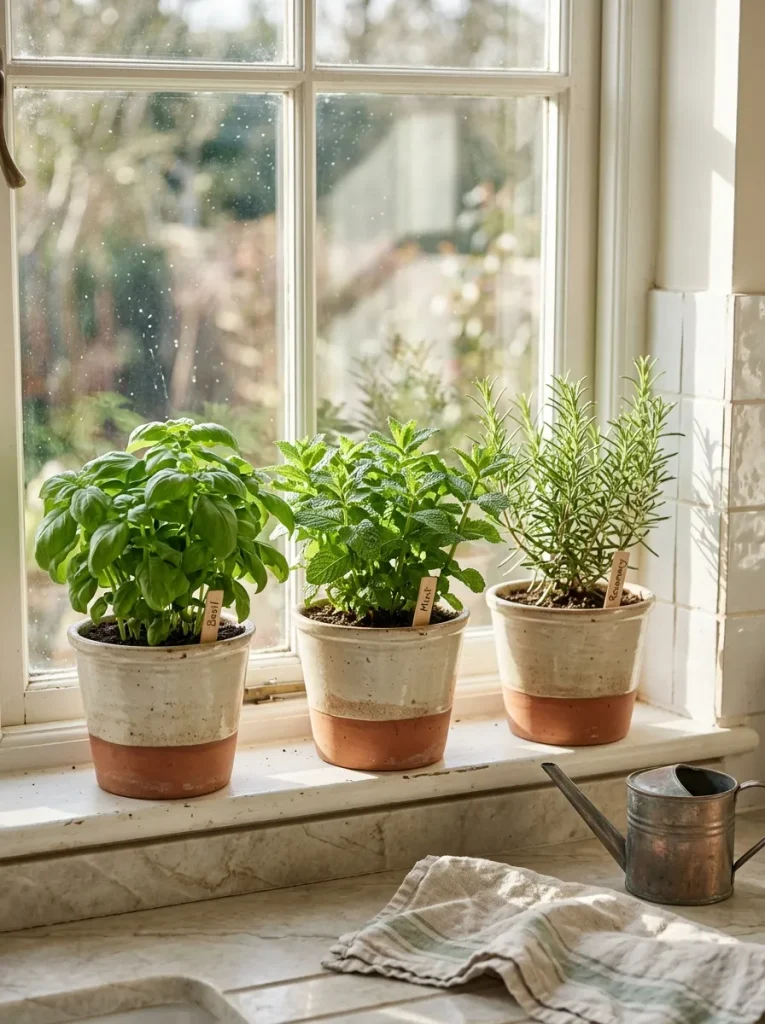
Fresh herbs bring natural color and useful greenery into a kitchen without taking up much room. Basil, mint and parsley can look attractive in simple containers, while rosemary offers a different leaf texture. If your kitchen has limited sunlight, choose plants according to their actual growing needs rather than appearance alone.
A Statement Pendant Light
Cost: Varies by fixture style, finish and installation needs.
Time: Allow extra time if an electrician must install or relocate wiring.
Skill Level: Easy for selecting a fixture; professional help may be required for electrical work.
Best For: Kitchens with a breakfast counter, peninsula, or suitable ceiling position.
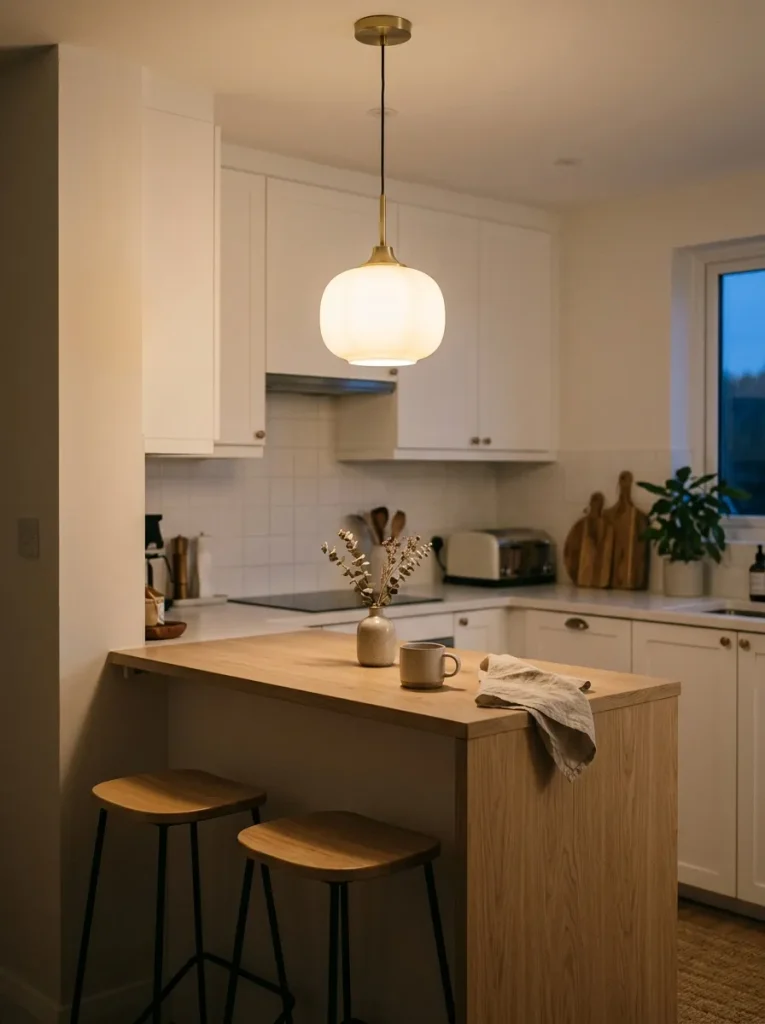
A statement pendant creates a visual focal point, helping a small kitchen feel designed rather than merely functional. Choose a size that suits the room and does not obstruct sightlines or movement. A rounded glass shade can feel light, while a woven or metal shade adds texture and stronger character.
Consider the light quality as carefully as the fixture’s appearance. Warm, comfortable lighting can make evening meals and casual conversations more inviting. Check the manufacturer’s clearance and installation guidance, particularly near cooking areas and use a qualified electrician when wiring changes are needed.
A Mini Gallery Wall
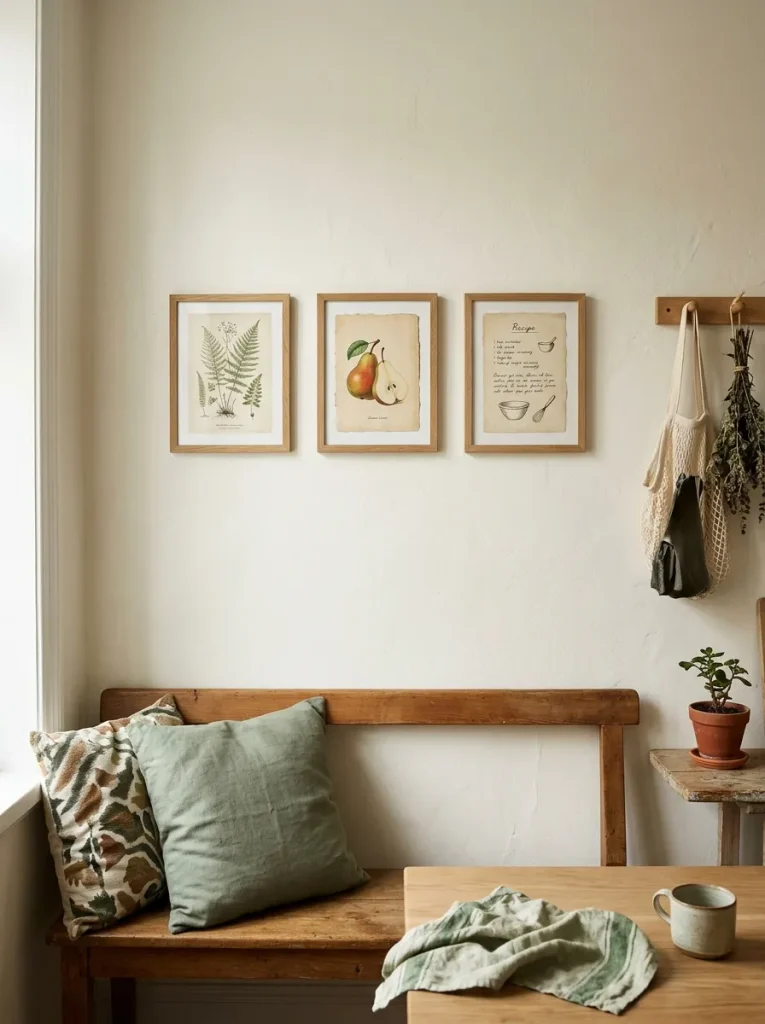
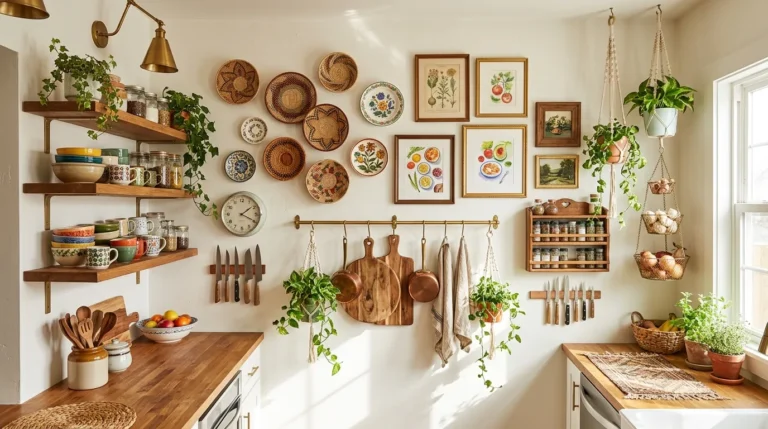
Small artwork can bring personality to a kitchen without using valuable storage space. A mini gallery wall of fruit prints, botanical sketches, or vintage food illustrations gives a blank wall a purpose. Choose frames in one or two finishes so the display feels connected instead of chaotic.
Keep the arrangement away from splashes, grease and direct heat. If you have a narrow wall, hang two or three smaller frames vertically rather than creating a wide display. Removable picture-hanging strips may suit some surfaces and frames, but check their weight limits and rental rules before installing them.
Patterned Kitchen Runner
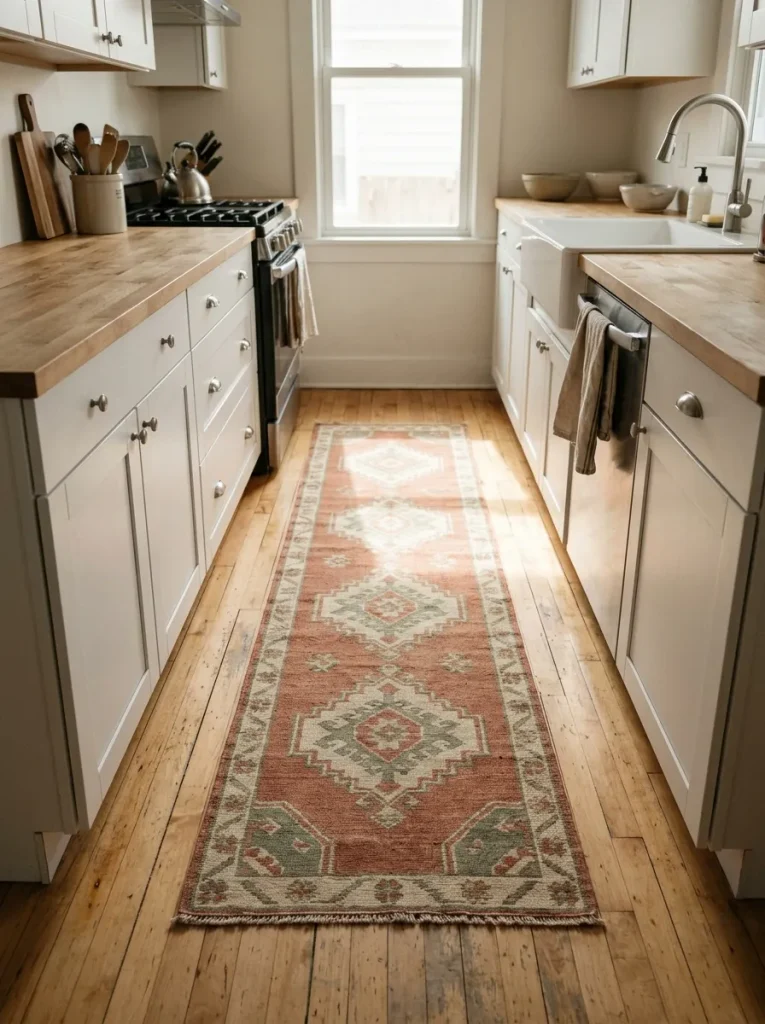
- Measure the walkway before shopping so the runner fits without catching on cabinet doors.
- Pick a low-profile design that will not create a tripping hazard.
- Use a nonslip backing or suitable rug pad if the flooring requires it.
- Choose a washable material that can handle kitchen spills and frequent cleaning.
- Repeat one color from the runner in a tea towel or small accessory.
A patterned runner introduces color and softness to a kitchen where the walls and cabinets may need to stay neutral. It can also visually connect separate zones in a galley layout. Stripes can make the walkway appear longer, while small repeating motifs provide detail without dominating the room.
Function matters more than decoration underfoot. Avoid thick rugs near appliances or doors and keep the fabric away from open flames and other heat sources. A runner should make the room more comfortable while remaining easy to clean and safe to walk across.
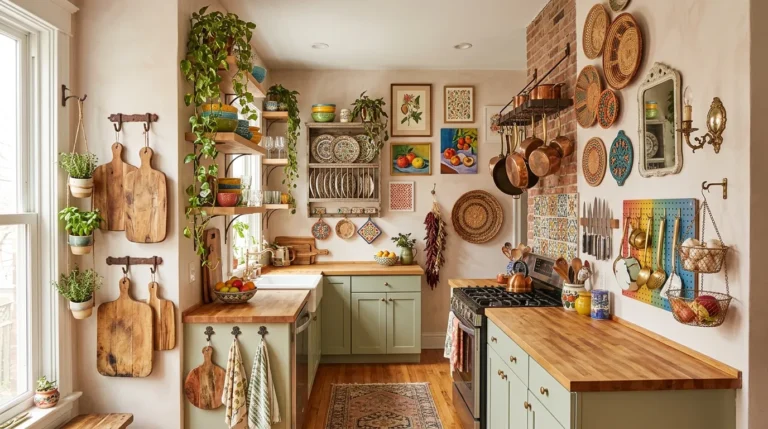
Decorate With Wooden Boards
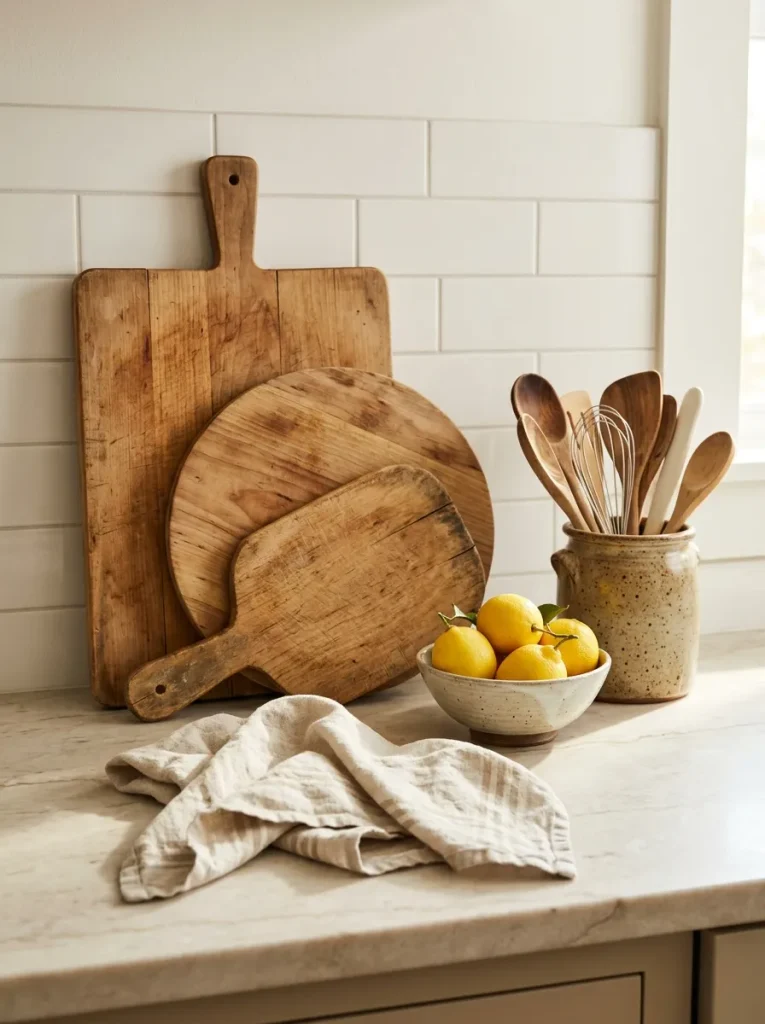
Quick Tip: Lean only clean, dry boards against a wall and keep the arrangement away from direct heat and splashing water.
Wooden boards add natural warmth to a kitchen filled with glossy tiles, metal appliances, or smooth countertops. Their varied shapes and grain patterns create visual interest without introducing another bold color. A few attractive boards can double as accessible kitchen tools, making the decor useful as well as appealing.
Choose a simple arrangement with different heights, but leave enough space for everyday cooking. Keep raw-food preparation separate from decorative styling and wash boards according to their material and use. If the counter is especially small, display one board and store the others in a nearby cabinet until needed.
Before and After Countertops
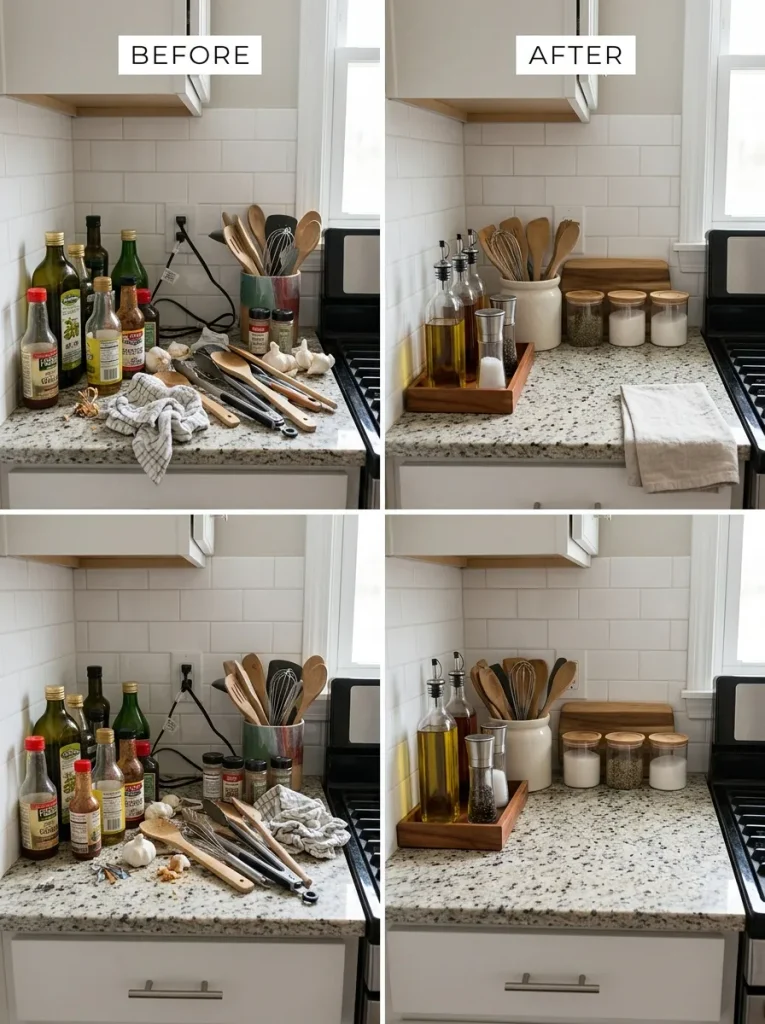
BEFORE: Bottles, utensils, loose packets and appliances occupy most of the available countertop. There is little room for chopping vegetables or setting down a plate and the variety of packaging makes the space feel visually noisy.
AFTER: Frequently used oils sit together on a washable tray, utensils are grouped in one container and unnecessary items are returned to cabinets. A small bowl or plant adds a restrained decorative touch.
A practical countertop can still look beautiful. Start by deciding which items you truly use every day, then give those items a consistent home. Keep the main preparation area open and place decorative accessories toward the edges. This simple reset can make even a very small kitchen feel calmer and easier to use.
Add a Bold Painted Door
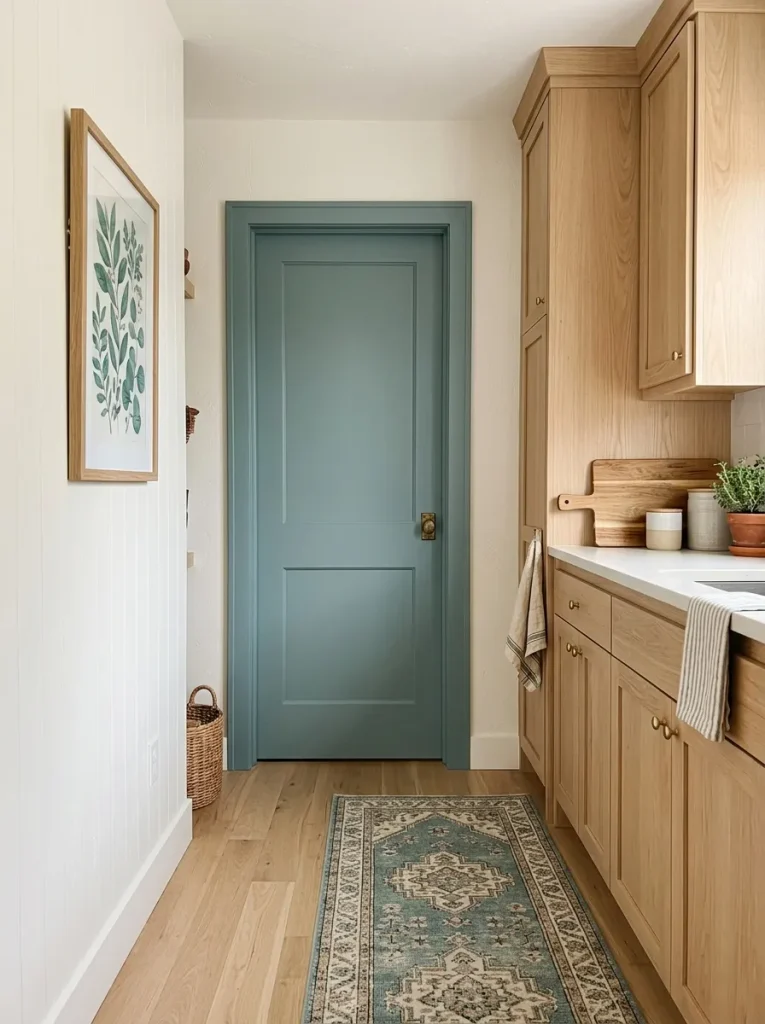
- Choose the door: A pantry door or interior kitchen door can provide a contained area for color.
- Select a complementary shade: Try dusty blue, olive, muted coral, or deep green against your existing cabinets.
- Prepare the surface: Clean, sand if needed and apply the suitable primer for the door material.
- Use a durable finish: Choose paint designed for the surface and follow its drying instructions.
- Repeat the color lightly: Add a small accessory in a similar shade to connect the look.
A painted door adds a strong design feature without changing every cabinet or wall. It works particularly well when the rest of the kitchen is neutral, because the color has room to stand out. In a rental, check permission before painting and consider a removable decorative alternative where appropriate.
Open Shelves Versus Cabinets
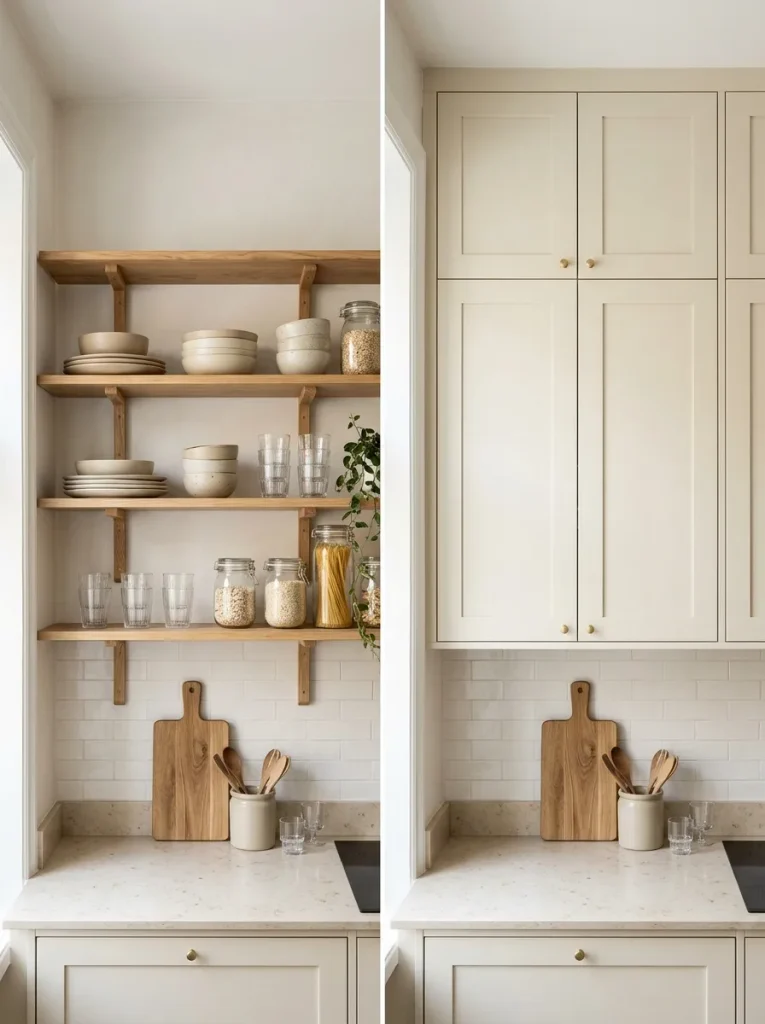
| Feature | Open Shelves | Closed Cabinets |
|---|---|---|
| Appearance | Airy and decorative | Clean and visually quiet |
| Everyday access | Items are easy to reach | Items stay protected behind doors |
| Cleaning | Dust and grease may collect more readily | Contents are more protected |
| Best use | Attractive dishes and frequently used items | Mixed supplies and visual clutter |
Open shelves suit people who enjoy displaying coordinated dishes and keeping everyday items within reach. Closed cabinets work better for storing mismatched cookware, food packets and supplies that do not need to be visible. In a small kitchen, combining the two usually provides a useful balance of openness and concealed storage.
You do not need to replace existing cabinets to introduce this look. Try one short shelf in an available wall area, then keep the remaining storage closed. The goal is to create visual breathing room without making every kitchen essential part of a permanent display.
Add a Small Breakfast Nook
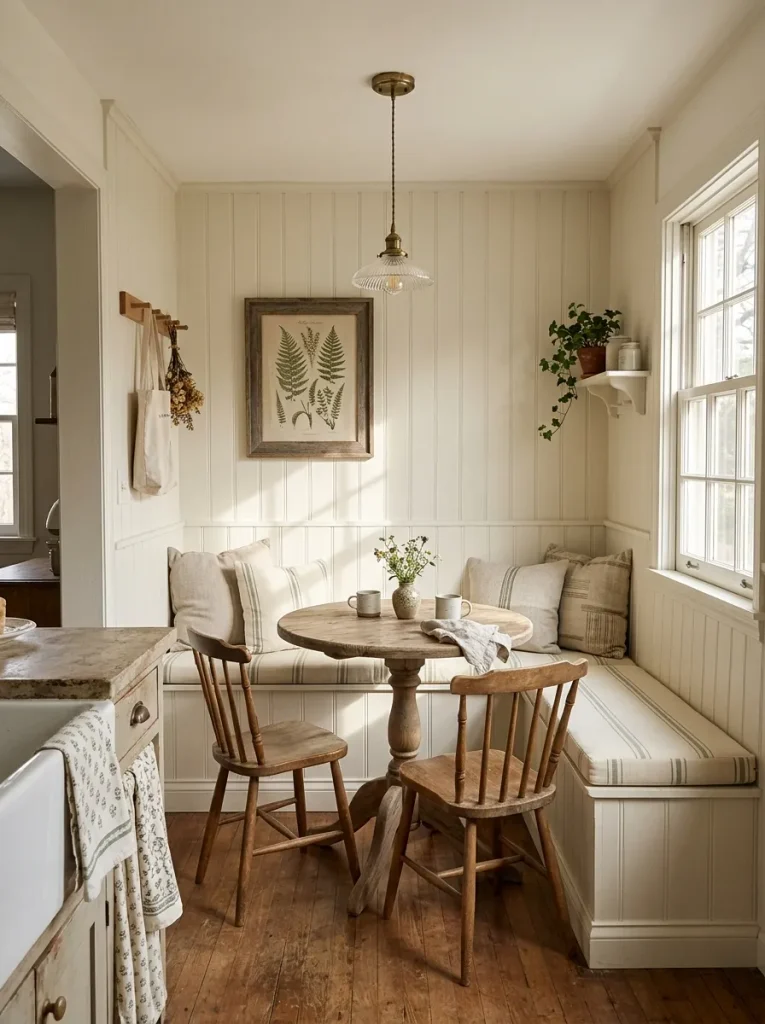
DO:
- Measure the corner carefully before choosing a table or bench.
- Consider a round or drop-leaf table to improve movement.
- Use cushions that can be removed and washed.
- Add a small wall light or pendant if suitable for the layout.
DON’T:
- Block access to cupboards, appliances, or exits.
- Choose oversized chairs that crowd the walkway.
- Fill the table with permanent decorations.
- Ignore the need for comfortable legroom.
A breakfast nook can give even a tiny kitchen a welcoming place for morning coffee, quick meals, or conversation. A bench against the wall often uses space efficiently, while a round table can make a tight corner easier to navigate. Keep textiles simple and choose furniture that fits the actual dimensions.
If a built-in bench is impractical, try a narrow table with two compact chairs. A foldable or drop-leaf design can be especially helpful in apartments where the kitchen serves several purposes. The most successful nook is comfortable to use without getting in the way of cooking.
Mix Cream and Natural Wood
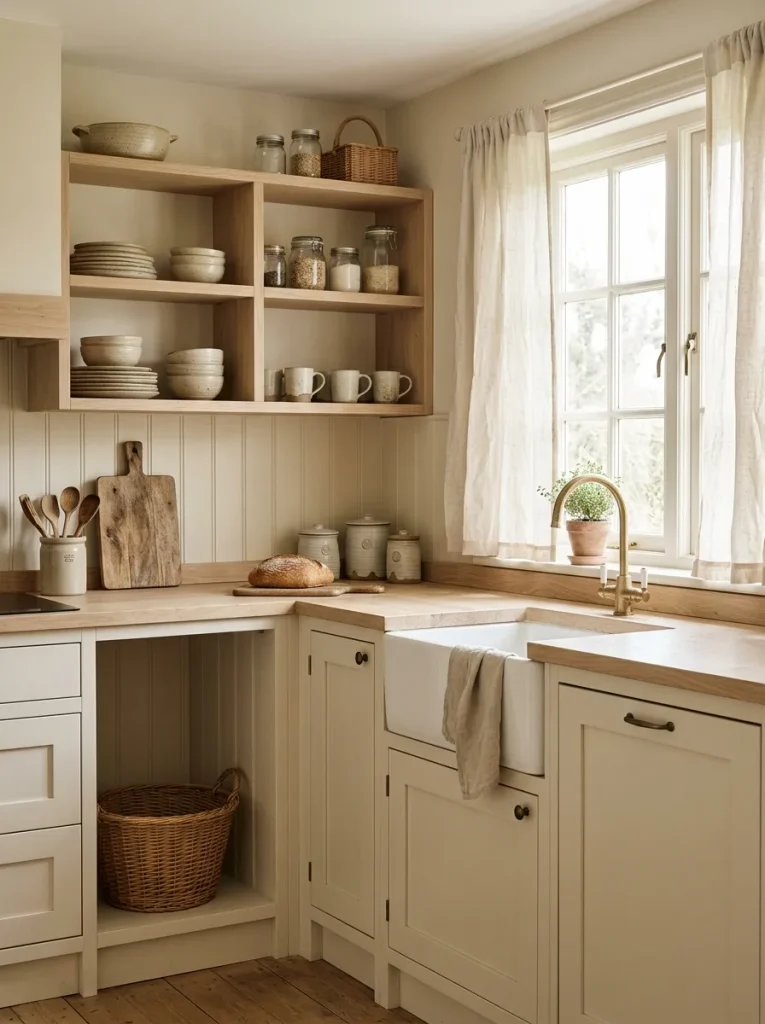
Cost: Flexible, depending on whether you change finishes or simply add accessories.
Time: A styling update can take an afternoon; cabinet or countertop changes take longer.
Skill Level: Beginner-friendly for accessories, more advanced for renovation.
Best For: Small kitchens that feel cold, stark, or overly dominated by white surfaces.
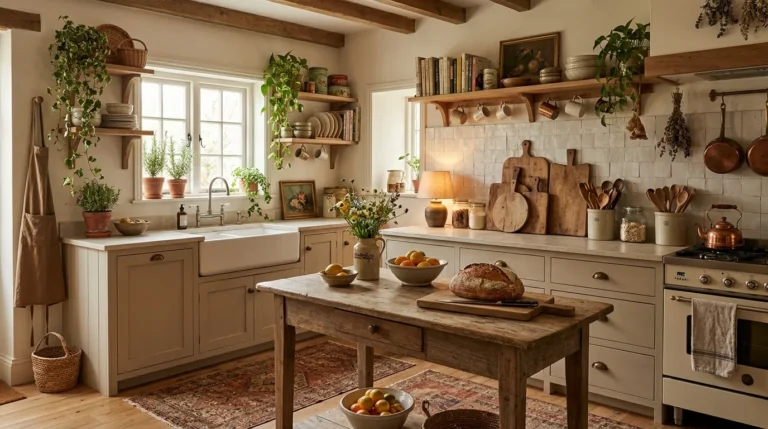
Cream and natural wood create a gentle, welcoming palette that suits many compact kitchens. Cream softens the brightness of white, while wood introduces warmth and visible texture. The combination works especially well with simple ceramics, linen and a few green plants.
You can create the look gradually rather than renovating everything. Add a wooden tray, replace a few plastic containers with attractive jars, or introduce a pale oak shelf. Repeat the same wood tone where possible, but do not worry about making every piece identical. A little variation helps the room feel lived-in.
Hang Pretty Tea Towels
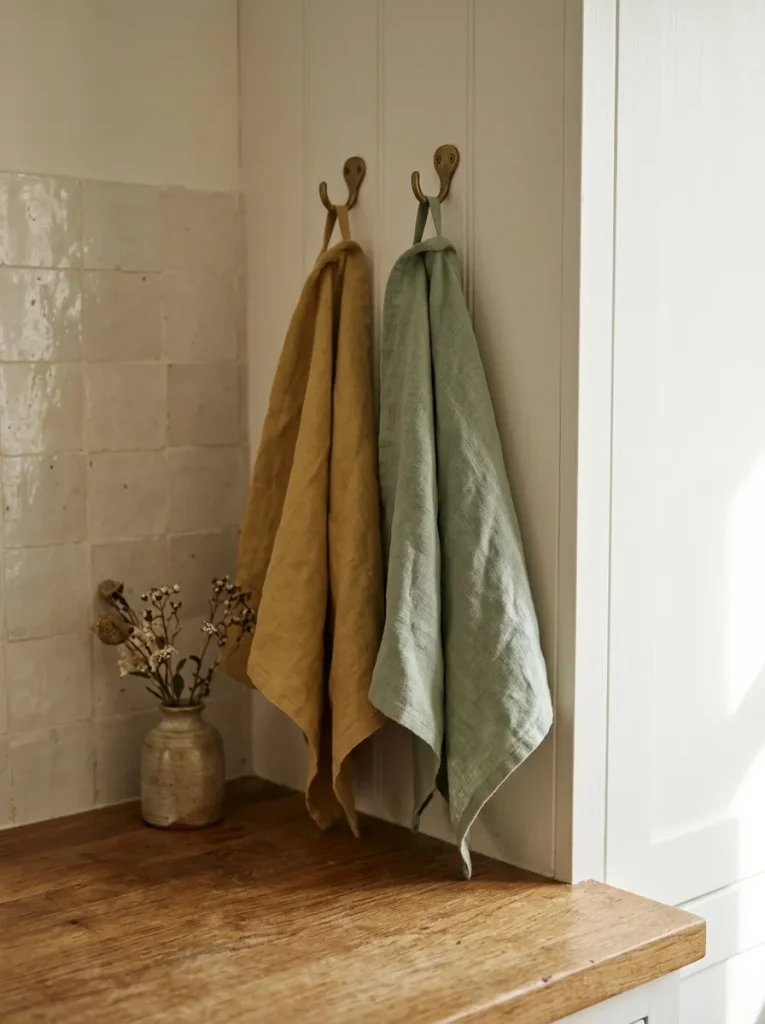
Tea towels are a low-cost way to bring pattern and color into a small kitchen. A striped linen towel, tiny floral print, or bold block color can become a small decorative accent without taking up counter space. Choose shades that complement the cabinets, runner, or backsplash.
Hang towels on a dedicated rail or sturdy hook where they can dry properly and remain away from hot surfaces. Keep a separate clean towel available for drying hands and dishes and wash used textiles regularly. Rotating a few seasonal colors can refresh the kitchen without buying new furniture or changing permanent finishes.
Use a Compact Rolling Cart
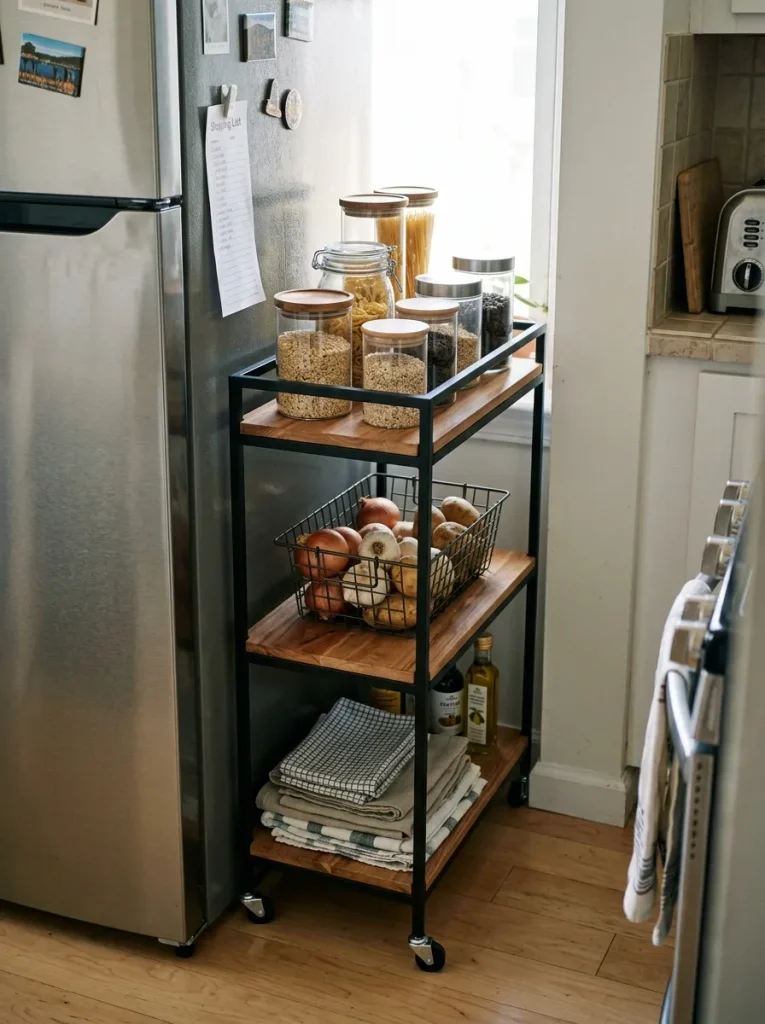
- Pick the right width: Measure the gap and allow room for the cart to roll safely.
- Assign each tier: Use one shelf for produce, another for pantry items and the bottom for heavier supplies.
- Use small containers: Baskets prevent loose packets from slipping around.
- Keep the top useful: Leave space for items you reach regularly.
- Lock the wheels: If the cart has brakes, engage them when it is parked.
A rolling cart provides flexible storage when a small kitchen has no room for another permanent cabinet. It can hold snacks, produce, baking supplies, or frequently used appliances, depending on its size and stability. The open design also makes it easy to move the cart for cleaning or to reclaim floor space.
Avoid overloading the cart or placing heavy items on high shelves. Keep it clear of hot appliances and make sure it does not block walkways or exits. If the kitchen is extremely narrow, a slim cart that fits beside the refrigerator may be more useful than a larger island.
Style a Kitchen Window
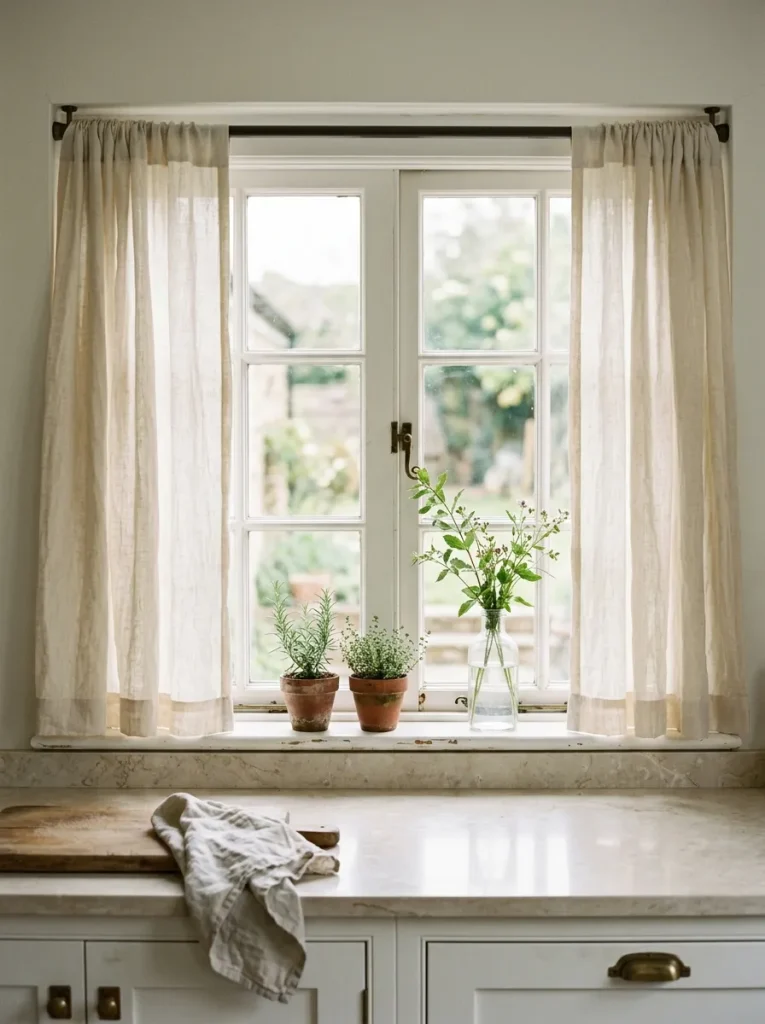
A kitchen window can become a charming feature with just a few thoughtful details. Light curtains soften the room, while a pair of small plant pots brings greenery close to the sink or preparation area. If the window has a sill, use it for lightweight objects that do not obstruct the view.
Choose washable fabric and a curtain length that stays safely away from burners, heaters and other heat sources. For a window beside the cooking area, a simple shade or bare window may be more practical. Let daylight remain the main feature and avoid overcrowding the sill with decorations.
Add Peel-and-Stick Wallpaper
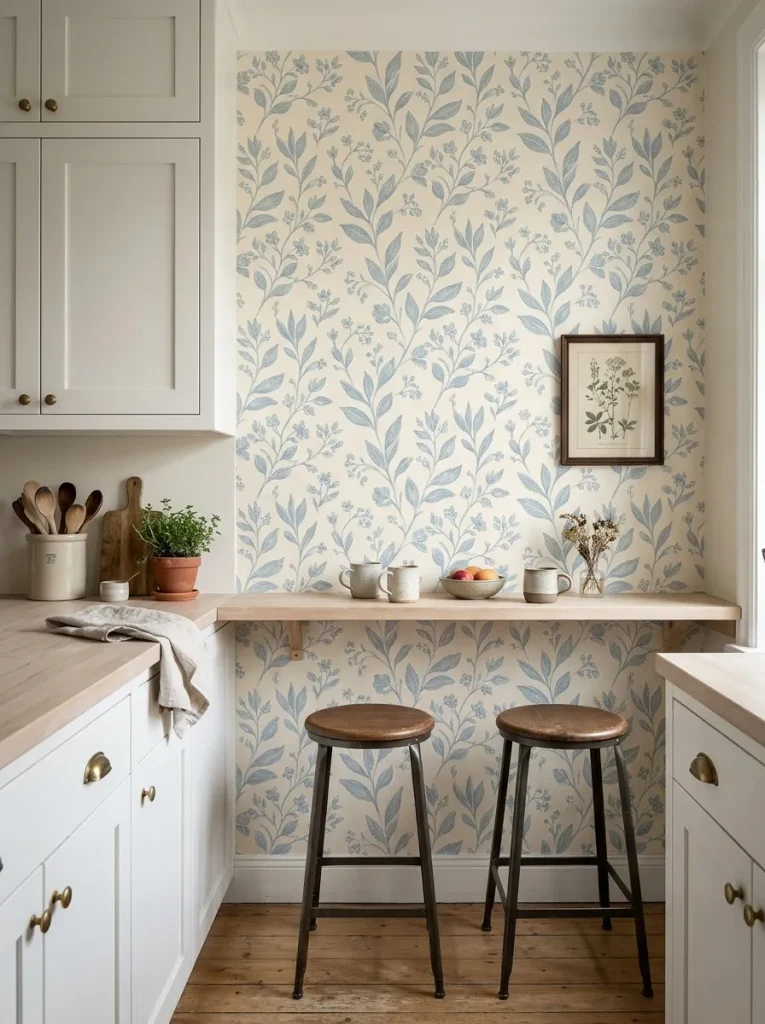
BEFORE: A plain wall gives the kitchen little visual character, especially when the cabinets and counters are all neutral. Adding permanent tile or a full renovation may be too expensive or unsuitable for a rental.
AFTER: A carefully chosen removable wallpaper pattern adds a decorative feature to one limited wall section. The rest of the room remains simple, allowing the print to bring color and movement without taking over.
Choose wallpaper made for the intended surface, and test a small area first to check adhesion and removal. Keep it away from direct heat, grease, and splashes unless the product is specifically suitable for those conditions. A small accent section is often easier to install and replace than covering every wall.
Display Everyday Ceramics
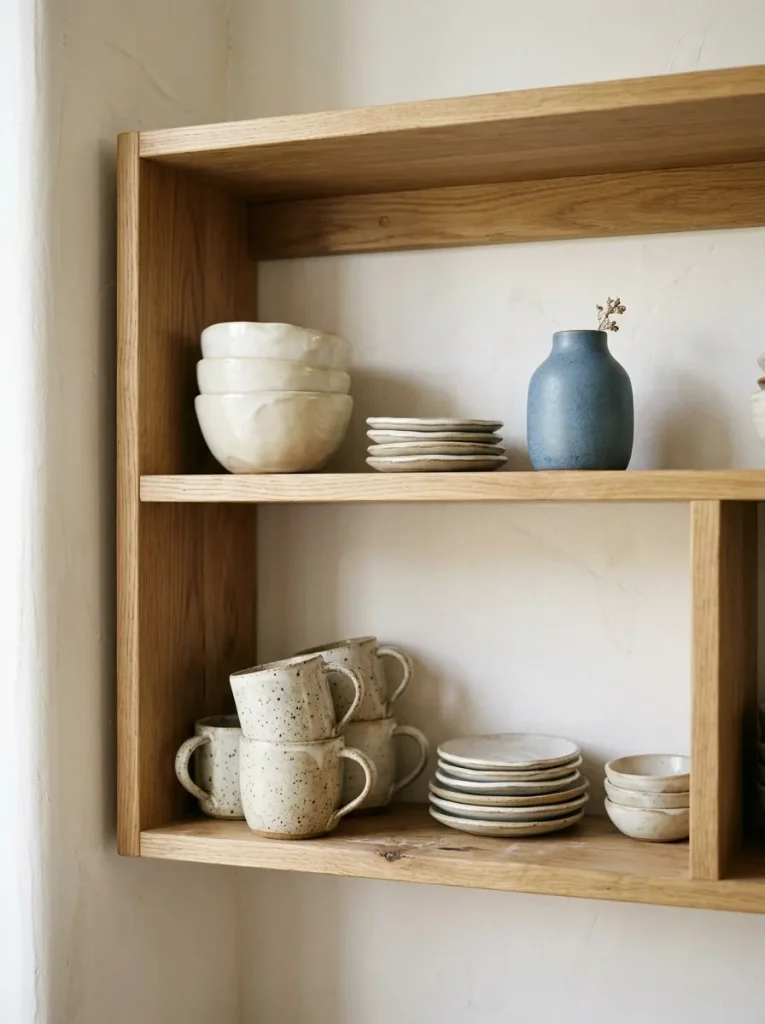
- Choose a palette: Start with two or three colors that complement the kitchen.
- Group by purpose: Place mugs together, stack plates, and keep bowls in an easy-to-reach spot.
- Vary the shapes: Mix a few rounded pieces with simple straight-edged dishes.
- Leave gaps: Give each group a little breathing room so the shelf stays visually calm.
- Keep daily items accessible: Attractive dishes are most useful when they are easy to reach.
Everyday ceramics can function as both kitchen essentials and decoration. A small display of coordinated mugs, bowls, and plates adds color and texture without requiring extra decorative objects. Handmade or slightly varied pieces can also bring character to an otherwise uniform kitchen.
Choose a shelf or cabinet area that is strong enough for the weight, and store frequently used dishes where you can reach them safely. You do not need a matching set to achieve a cohesive look. Repeating a color or material is often enough to make different pieces feel connected.
Choose a Compact Dining Table
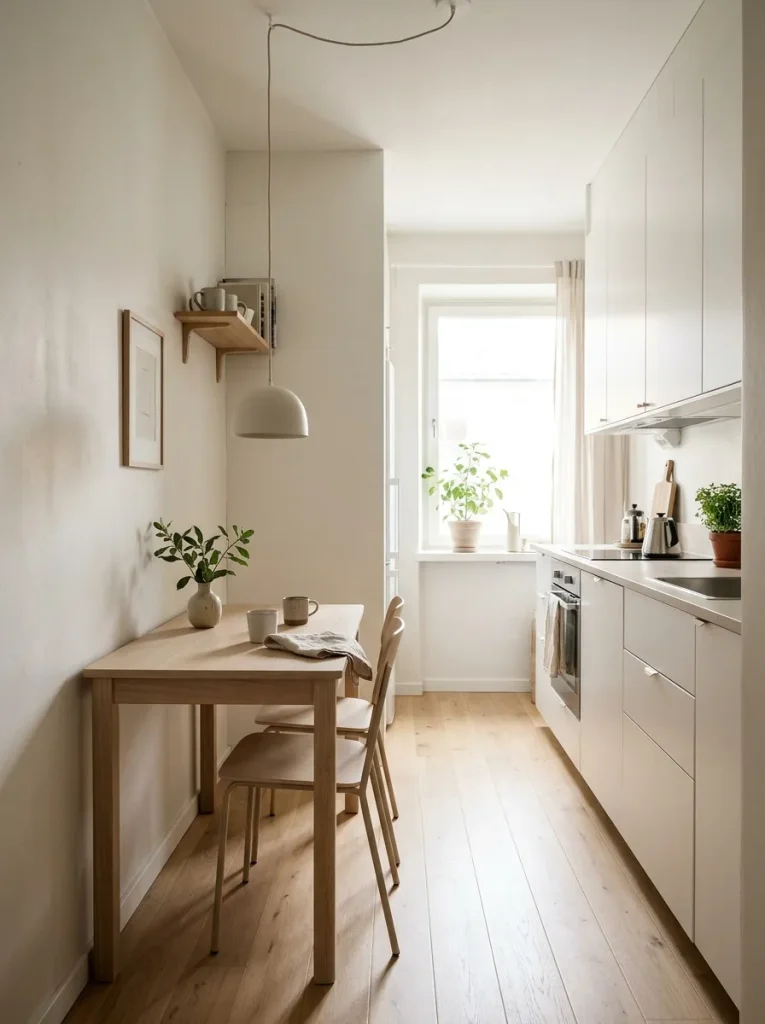
| Option | Best Benefit |
|---|---|
| Round table | Easier movement around curved edges |
| Narrow rectangular table | Fits neatly against a wall |
| Drop-leaf table | Expands when needed and folds away afterward |
| Wall-mounted folding table | Frees floor space when not in use |
The right table can make a small kitchen more useful without making it feel cramped. Measure the area with chairs pulled out, not just the tabletop, and leave enough room to move between the dining spot and appliances. A narrow or foldable design is often better than a full-size dining set.
Choose a finish that complements the cabinets or countertop so the furniture feels connected to the room. Keep the tabletop mostly clear, with perhaps a small vase or bowl that can be moved easily. A compact table should support everyday meals and work without becoming another obstacle in the kitchen.
Add Warm Under-Cabinet Lighting
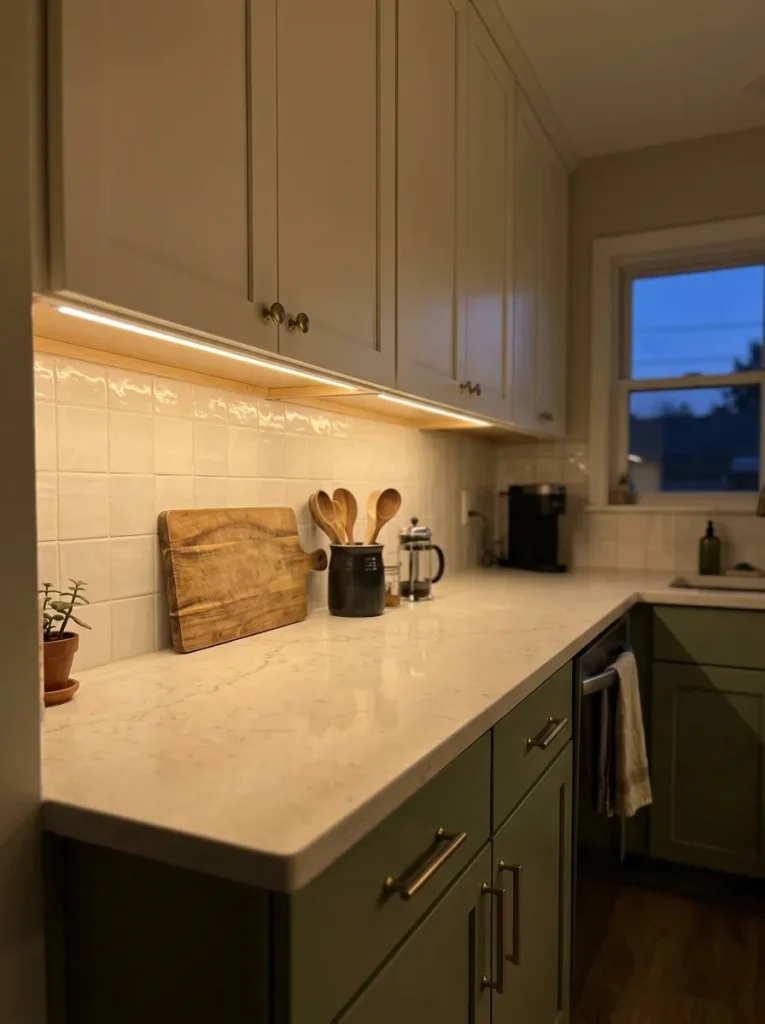
DO:
- Choose lighting designed for kitchen use and the intended installation location.
- Use a warm or neutral white tone that suits the room’s overall lighting.
- Position the light to illuminate the work surface rather than shine directly into your eyes.
- Follow the product instructions for wiring, mounting, and heat considerations.
DON’T:
- Leave cords stretched across preparation areas.
- Install lights too close to water unless properly rated.
- Assume every adhesive strip will stick to every cabinet finish.
- Use decorative lighting as a replacement for adequate task lighting.
Under-cabinet lighting makes a small kitchen feel more inviting in the evening while helping illuminate the countertop. It can also highlight a backsplash and add depth beneath upper cabinets. Plug-in or rechargeable options may suit some kitchens, while hardwired fixtures may require professional installation.
Choose a light color that works with your cabinet finish and existing bulbs. Avoid overly bright glare on glossy counters and make sure the lighting is practical for chopping, cleaning and other daily tasks. A simple lighting upgrade can change the atmosphere without using any additional counter or floor space.
Display a Decorative Fruit Bowl
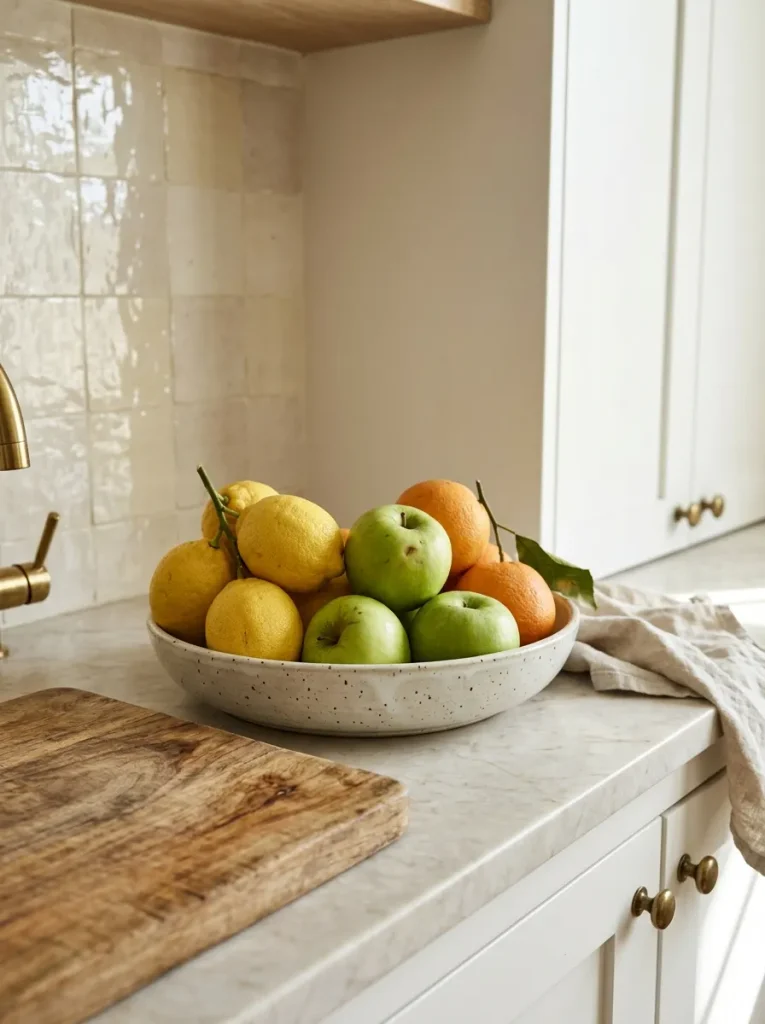
Cost: Usually low, depending on the bowl you choose.
Time: A few minutes to arrange and maintain.
Skill Level: Beginner-friendly.
Works In: Kitchens with a small section of free countertop or a sturdy dining table.
A fruit bowl adds natural color and gives fresh produce a visible, convenient place to live. Lemons bring a bright yellow accent, green apples create a softer look, and seasonal fruit keeps the arrangement changing naturally. Choose a bowl with a shape and finish that complements the rest of your kitchen.
Use a shallow bowl if counter space is limited and avoid piling fruit so high that it becomes unstable. Keep the bowl away from direct heat and clean it regularly. If the counter is already crowded, a small bowl on a dining table or shelf may be a better option.
Coordinate Small Appliances
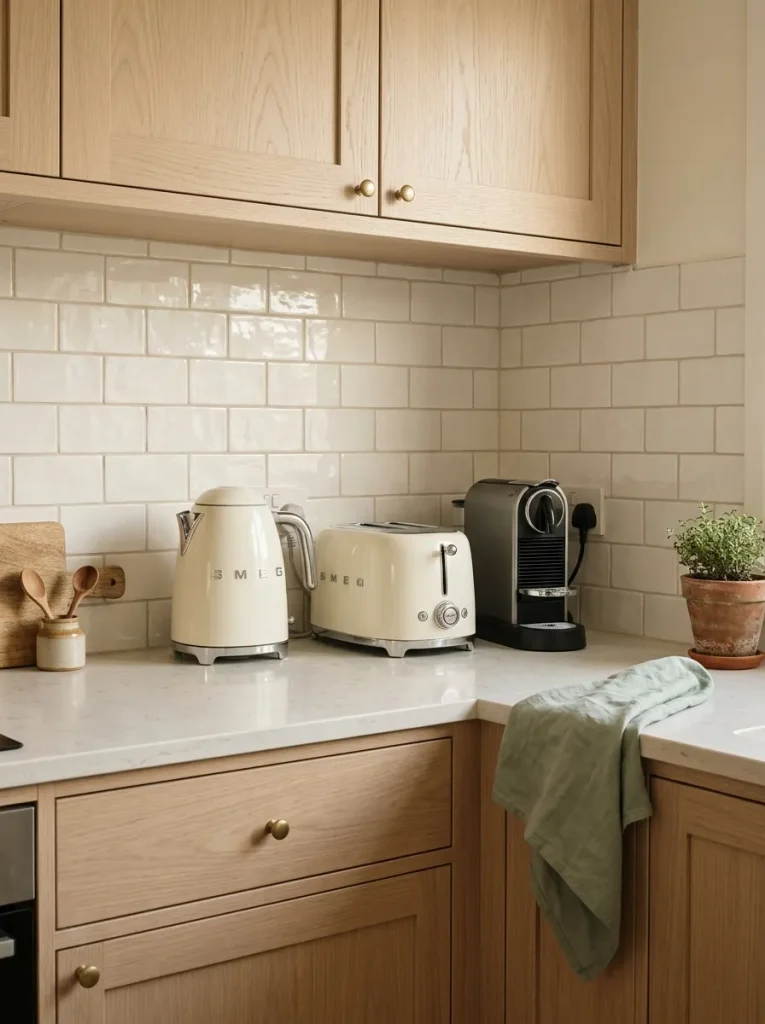
Small appliances can occupy a large part of a kitchen’s visual field, so coordinating their colors helps the room feel more organized. Cream, brushed steel, black, or muted green appliances can look cohesive when paired with a consistent cabinet and accessory palette. You do not need every appliance to match exactly.
Quick Tip: Before buying a new appliance for its appearance, check its dimensions, power needs and available counter space.
Group the appliances you use most often and store occasional-use items elsewhere if safe and practical. Keep required ventilation clear, follow manufacturer guidance and avoid arranging cords where they can catch on cookware or spill-prone areas. A coordinated counter should remain easy to clean and comfortable to use.
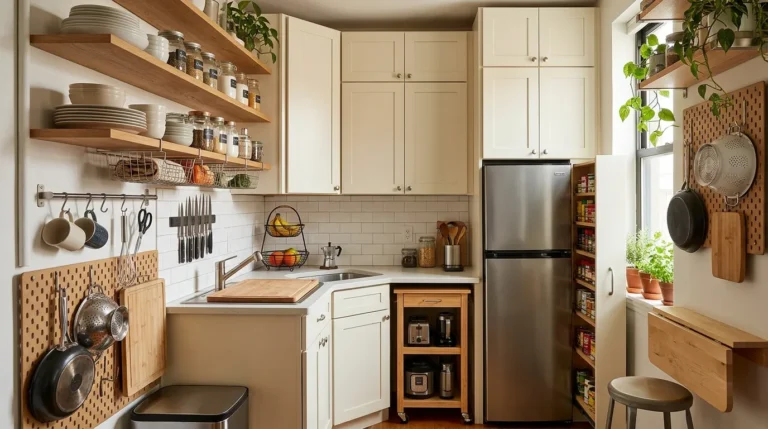
Create a Vertical Storage Wall
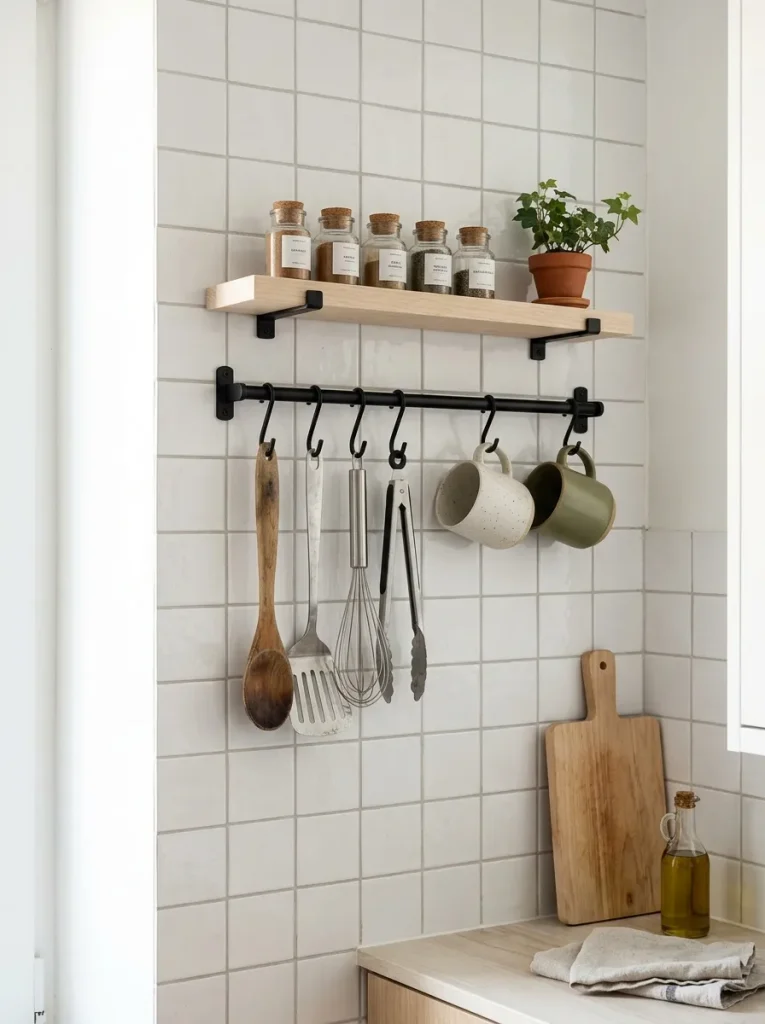
- Start with a wall audit: Identify a clear wall section that will not interfere with cooking, doors, or movement.
- Install suitable storage: Choose a rail, hooks, or shallow shelves rated for the items you intend to hold.
- Group similar objects: Keep utensils together and frequently used spices within easy reach.
- Keep heavier items secure: Follow the mounting instructions and avoid overloading hooks or shelves.
- Review the layout: Move rarely used items elsewhere to keep the wall useful rather than crowded.
Vertical storage takes advantage of wall space that might otherwise remain unused. A rail with a few hooks can hold frequently used utensils, while a small shelf can keep spice jars accessible. This is particularly helpful when drawers and cabinets are limited, though the arrangement should remain selective.
Keep the storage wall away from direct flames and excessive heat and avoid placing items where they can fall into food or obstruct movement. Choose a finish that complements your hardware for a more intentional appearance. A tidy vertical arrangement can make everyday tools part of the kitchen’s design.
Add Personality With Vintage Finds
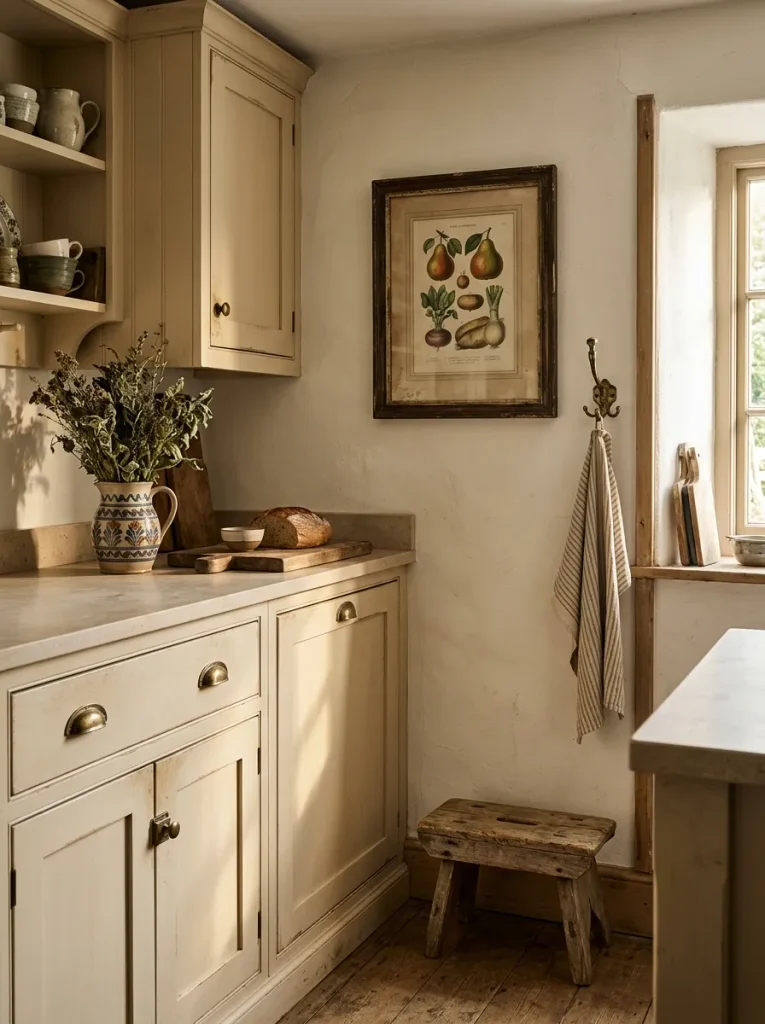
Cost: Flexible, from inexpensive secondhand accessories to collectible pieces.
Time: Allow time to find items that fit your space and color palette.
Skill Level: Beginner-friendly.
Best For: Kitchens that feel too plain or lack a personal touch.
Vintage-inspired details make a small kitchen feel individual rather than copied from a catalog. A secondhand ceramic jug, old-fashioned print, wooden stool, or brass hook can add history and texture without requiring a major redesign. One or two meaningful pieces often have more impact than a crowded collection.
Look for items that are useful, easy to clean and suited to the kitchen environment. Check secondhand pieces for damage, stability and materials before using them for food. Repeat a color or finish from the existing room so your finds feel connected to the overall design. The aim is a kitchen that reflects your taste while remaining comfortable to work in.
CONCLUSION
Decorating a compact kitchen is all about making thoughtful choices that combine beauty with everyday function. From painting cabinets and adding a colorful backsplash to displaying fresh herbs and creating a cozy breakfast nook, small changes can make your kitchen feel more welcoming and personal.
Try the Small Kitchen Decorating Ideas that best suit your budget, layout and style and build your look gradually instead of changing everything at once. Remember to keep essential work surfaces clear and choose decorations that are easy to maintain. Save your favorite ideas on Pinterest for inspiration, experiment with colors and textures and create a kitchen that feels like home, no matter how little space you have.