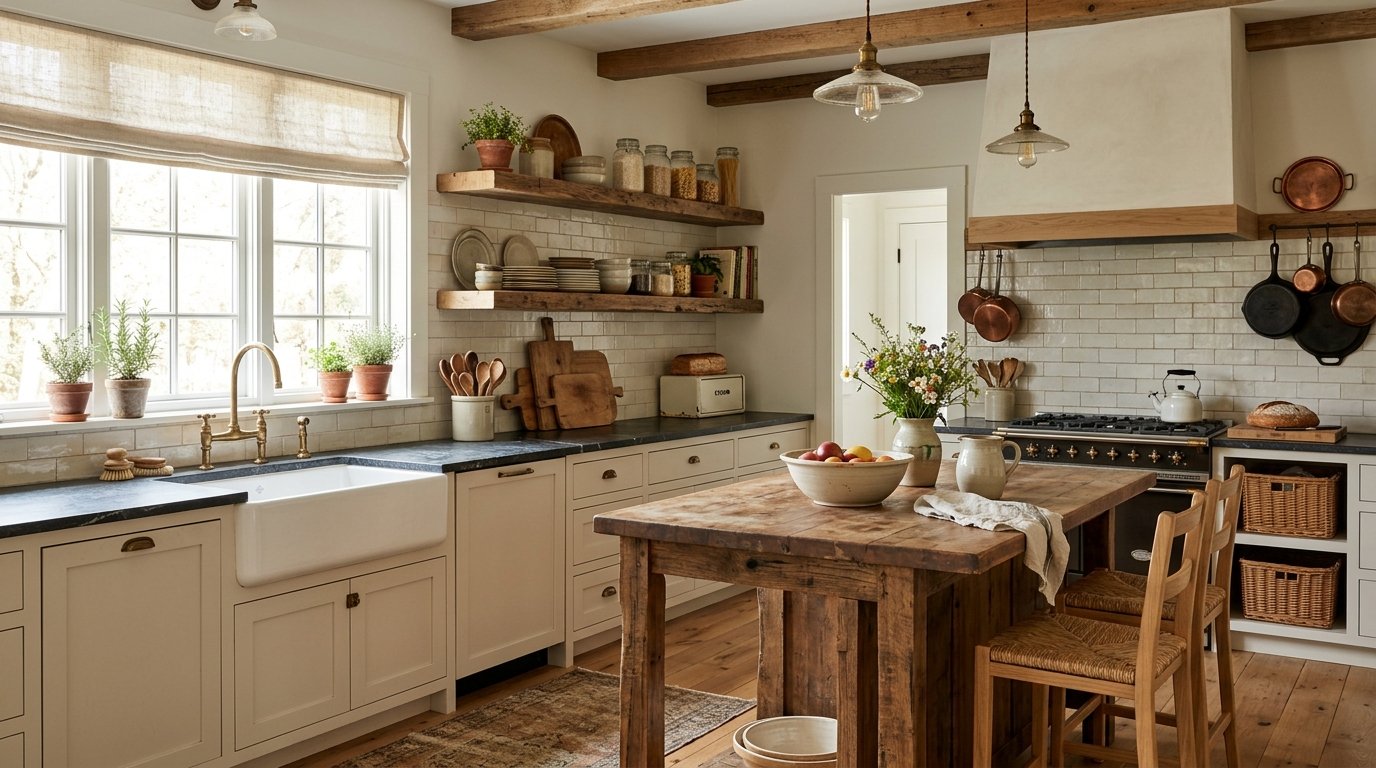
Farmhouse Kitchen Decor: 26 Rustic Finds to Swoon Over
Love the warmth of a country kitchen, with natural wood, vintage details, and cozy little touches that make a house feel like home? You can bring that timeless charm into your own space without spending a fortune. These Farmhouse Kitchen Decor ideas combine rustic textures, soft neutral colors, practical storage, and charming accessories to help you create a kitchen that feels welcoming and full of character.
Whether you have a spacious country kitchen or a small apartment cooking area, the right details can make a noticeable difference. Think reclaimed wood shelves, cream cabinets, woven baskets, checkered tea towels, and warm pendant lighting. You do not need to renovate everything at once. Start with a few affordable updates, use materials that suit your everyday routine, and build a look that feels both beautiful and practical.
Butcher Block Countertops
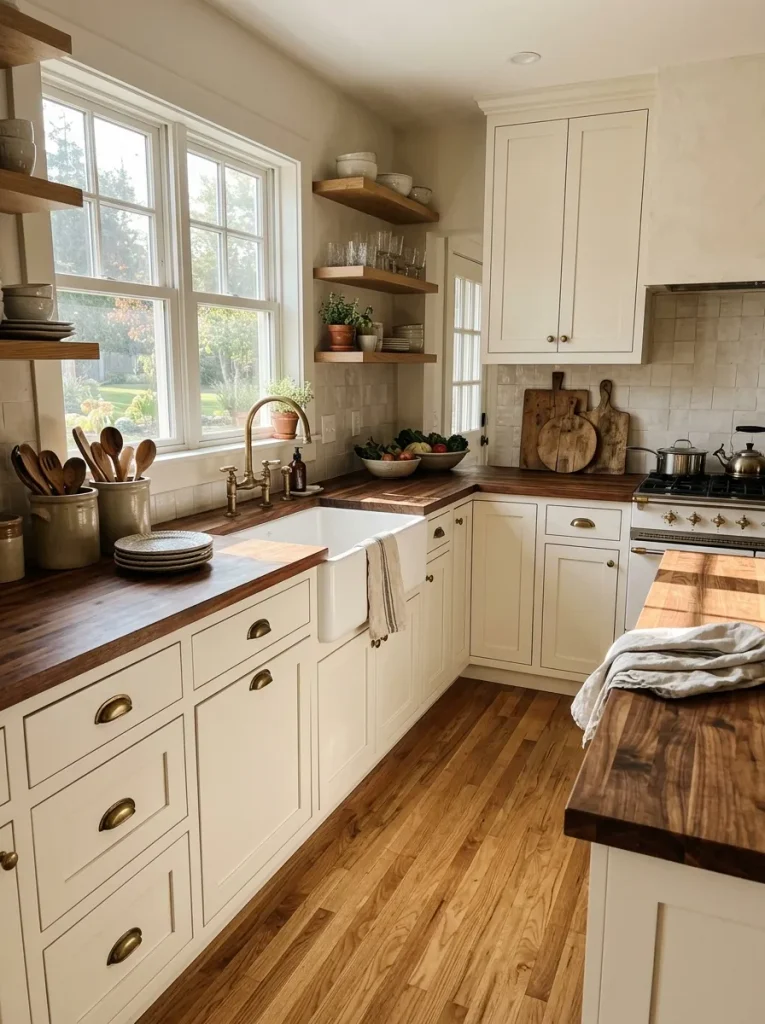
Warm wood countertops bring instant character to a farmhouse kitchen, especially when paired with simple white cabinets. The natural grain adds texture without needing extra decorations, while the honey and caramel tones make the room feel welcoming. Butcher block also works beautifully alongside vintage-inspired hardware and handmade pottery.
For everyday use, choose a finish suitable for kitchen counters and follow its care instructions. Wipe up spills promptly, use cutting boards for food preparation, and avoid leaving standing water around the sink. If replacing countertops is too expensive, introduce a large wooden chopping board to create a similar rustic accent.
Open Wooden Shelving
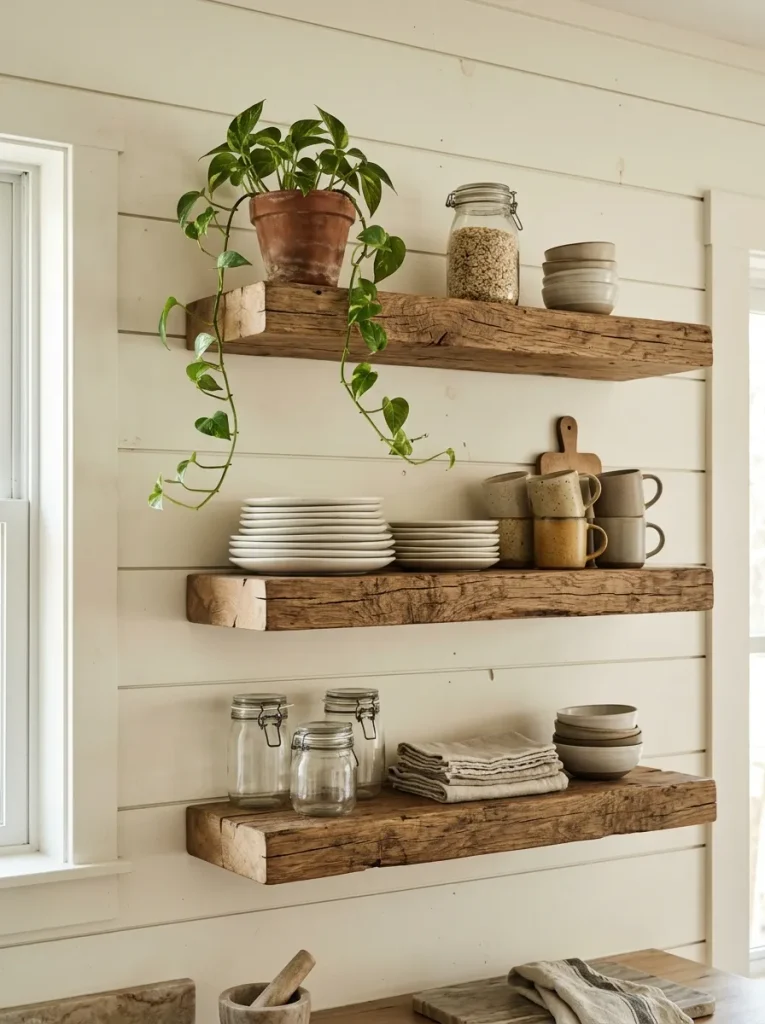
- Install sturdy shelves with brackets or fixings suited to your wall type.
- Display everyday plates, mugs, and bowls that complement each other.
- Use clear jars for pantry staples such as flour, pasta, and oats.
- Mix in one or two vintage pieces for an authentic farmhouse feel.
- Leave some open space so the shelves do not appear overcrowded.
Open shelving gives a country kitchen a relaxed, lived-in appearance while keeping frequently used dishes within reach. Reclaimed wood adds visible grain and imperfections that make the space feel less formal. If you already have upper cabinets, consider adding just one short shelf rather than removing useful storage.
Keep shelves away from direct cooking splashes where possible, and clean displayed dishes regularly because kitchen grease and dust can settle on exposed surfaces. Store mismatched supplies behind cabinet doors and reserve open shelves for items that are both attractive and practical.
Apron-Front Farmhouse Sink
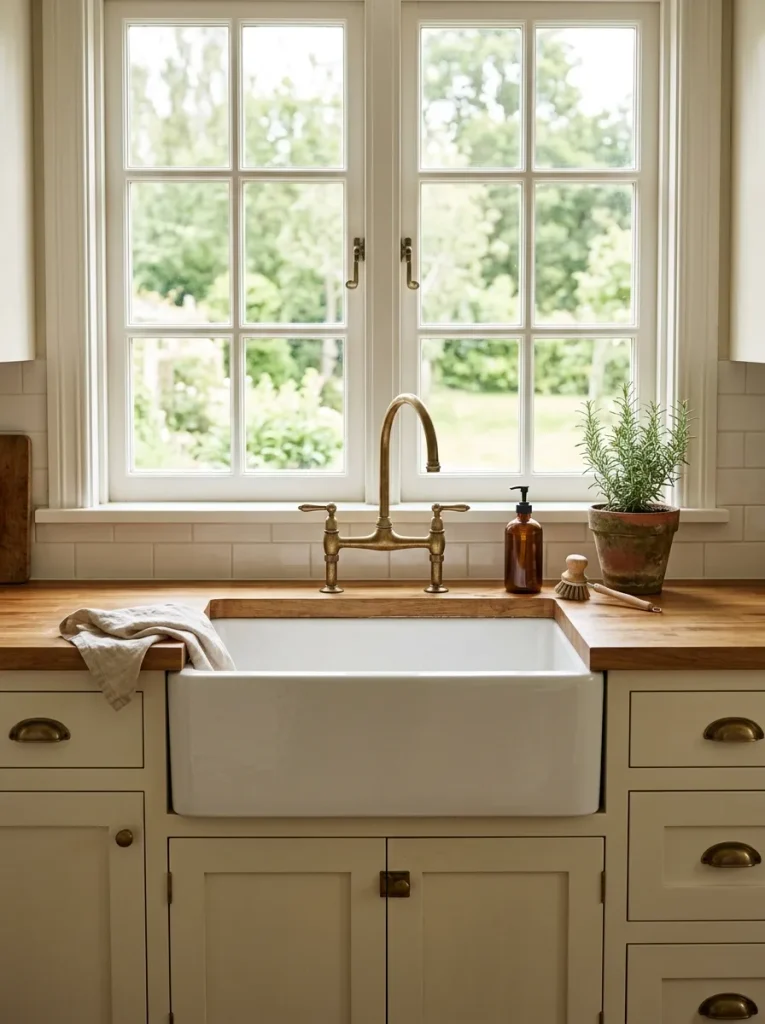
Quick Tip:
Choose a sink size that fits your existing cabinetry and plumbing before falling in love with a particular style. If a full replacement is not practical, you can still capture the same farmhouse feeling with a traditional bridge-style faucet, a simple dish rack, and warm natural accessories.
An apron-front sink creates a distinctive focal point because its exposed front adds shape and texture to the cabinetry. White fireclay offers a classic look, while stainless steel can provide a more budget-conscious alternative with a clean, practical finish. Pair the sink with understated hardware to keep the overall design timeless.
Consider daily cleaning habits, bowl depth, cabinet modifications, and installation costs before making a change. The best farmhouse kitchen combines nostalgic details with features that suit real cooking and cleanup routines.
Vintage Brass Hardware
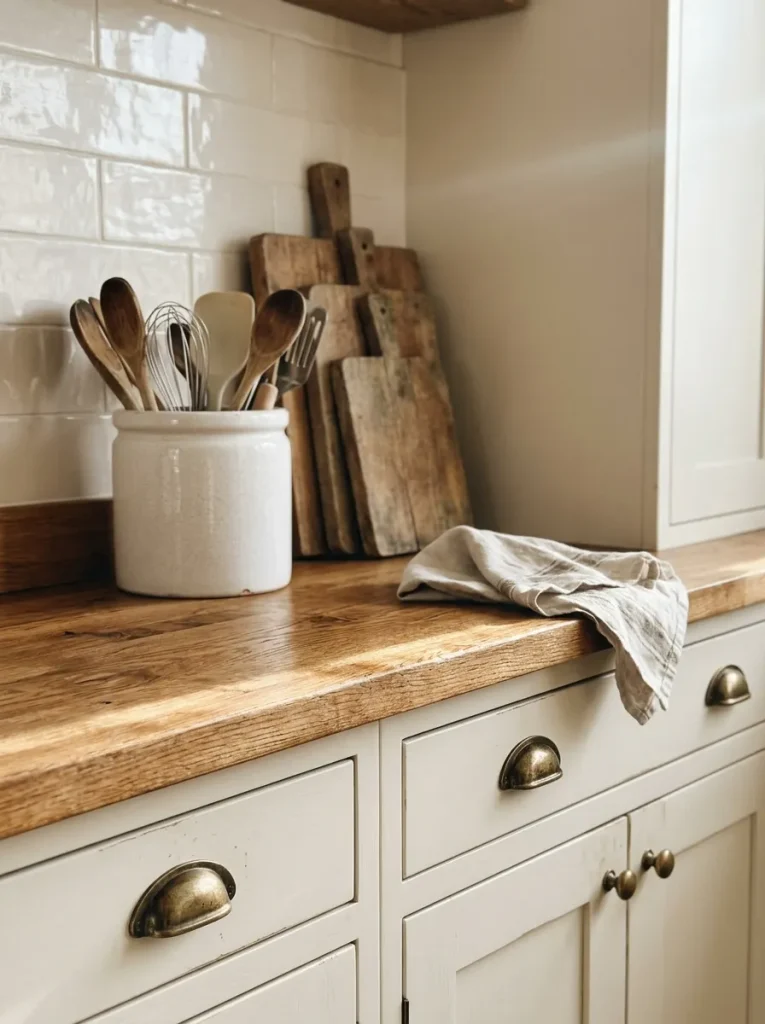
BEFORE: Plain cabinet doors with mismatched or outdated handles can make a kitchen feel unfinished. Even beautiful wooden cabinets may lack the small details that bring the whole design together.
AFTER: Matching brass knobs and cup pulls introduce a subtle golden glow. The cabinets feel more intentional, and the warm metal complements natural wood, cream paint, and traditional farmhouse accessories.
Hardware is one of the easiest details to update without changing the entire kitchen. Measure the existing screw holes before shopping, especially if you want to avoid drilling new ones. Brushed or aged brass often suits rustic interiors better than an overly shiny finish, and repeating the same metal in a faucet or light fixture helps the room feel cohesive.
Reclaimed Wood Accents
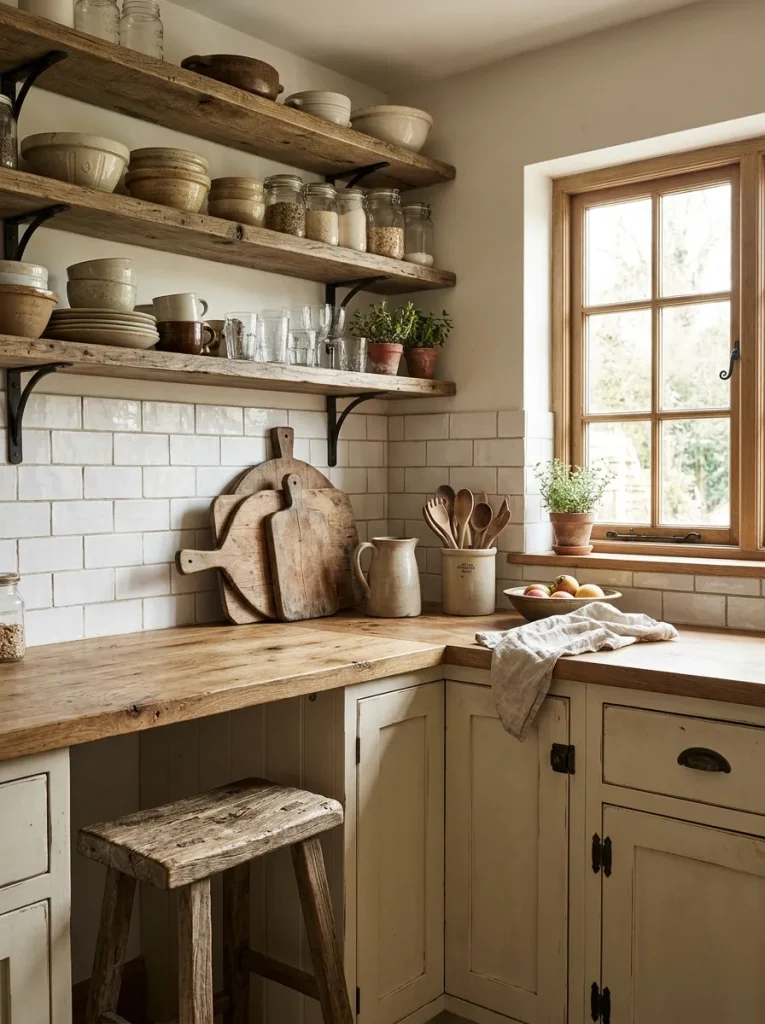
- Choose a focal piece: Start with a reclaimed shelf, small stool, or wooden serving board.
- Check the condition: Look for splinters, loose joints, pests, or signs of moisture damage.
- Clean appropriately: Remove dust and grime using a method suitable for the wood.
- Keep the palette simple: Pair aged wood with cream, white, sage, or muted blue.
- Balance the textures: Combine rough timber with smooth ceramic or linen for contrast.
Reclaimed wood adds the imperfect details that make rustic kitchens feel authentic. Its knots, grain patterns, and weathered finish provide visual interest without relying on bold colors or excessive decoration. Even a single old wooden stool can bring warmth to a plain corner.
Use food-safe finishes on surfaces intended for food contact, and avoid placing untreated timber where it will remain wet. If genuine reclaimed wood is unavailable, a distressed wood accessory can offer a similar appearance with less effort.
Farmhouse Table Styling
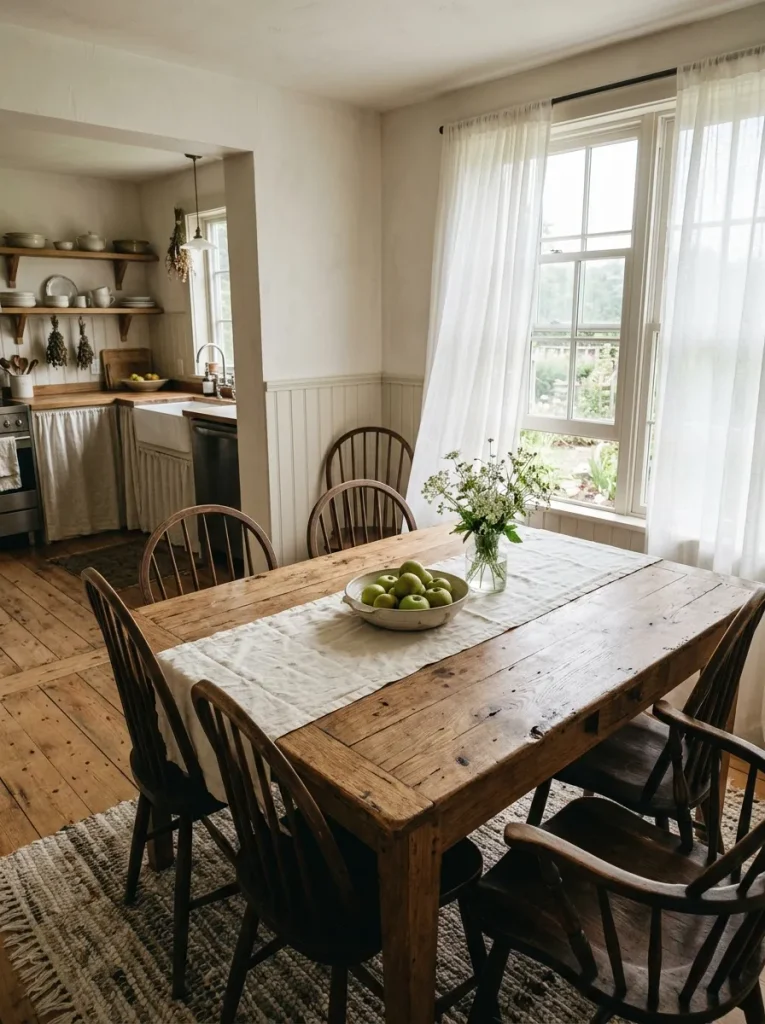
| Feature | Option A: Simple Styling | Option B: Layered Styling |
|---|---|---|
| Centerpiece | One ceramic bowl | Bowl with a small vase |
| Textiles | Bare wooden surface | Neutral linen runner |
| Color palette | Natural wood and cream | Wood, cream, and soft green |
| Best for | Busy everyday kitchens | Special meals and gatherings |
A farmhouse table often becomes the heart of the kitchen, so styling it simply helps preserve its welcoming character. A linen runner softens the wood, while a fruit bowl keeps the arrangement useful. For everyday meals, choose decorations that can be moved in seconds rather than a permanent centerpiece.
Avoid overcrowding the table with tall arrangements or multiple decorative trays. Leave enough room for plates, homework, coffee cups, or whatever the household uses the table for most. The most convincing rustic look feels comfortable enough for daily life, not just for photographs.
White Shiplap Walls
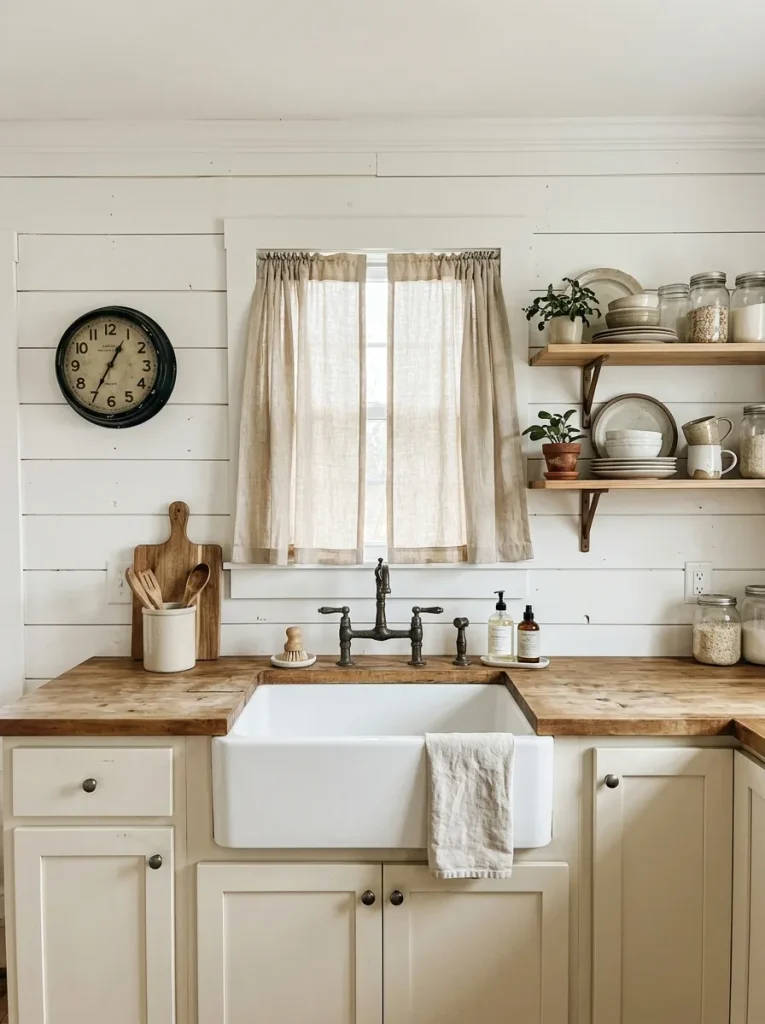
DO:
- Use shiplap on one feature wall if the kitchen is small.
- Choose a warm white that complements your cabinets.
- Keep trim and nearby finishes relatively simple.
- Consider moisture-resistant materials in areas exposed to kitchen humidity.
DON’T:
- Cover every surface if it makes the room feel visually busy.
- Install untreated wood where frequent splashes can damage it.
- Ignore wall irregularities before fitting boards.
- Use too many competing patterns nearby.
Shiplap brings a classic farmhouse texture to plain walls and works especially well behind open shelves or a dining nook. Horizontal lines can visually widen a narrow area, while painted white boards help keep the room bright. For a softer effect, choose a creamy white instead of a stark, cool shade.
If permanent installation is not suitable, consider removable wall treatments designed for your surface. Keep the material away from direct heat and follow the manufacturer’s instructions for cleaning and installation. A single carefully chosen wall often provides enough character without overwhelming a compact kitchen.
Rustic Pendant Lighting
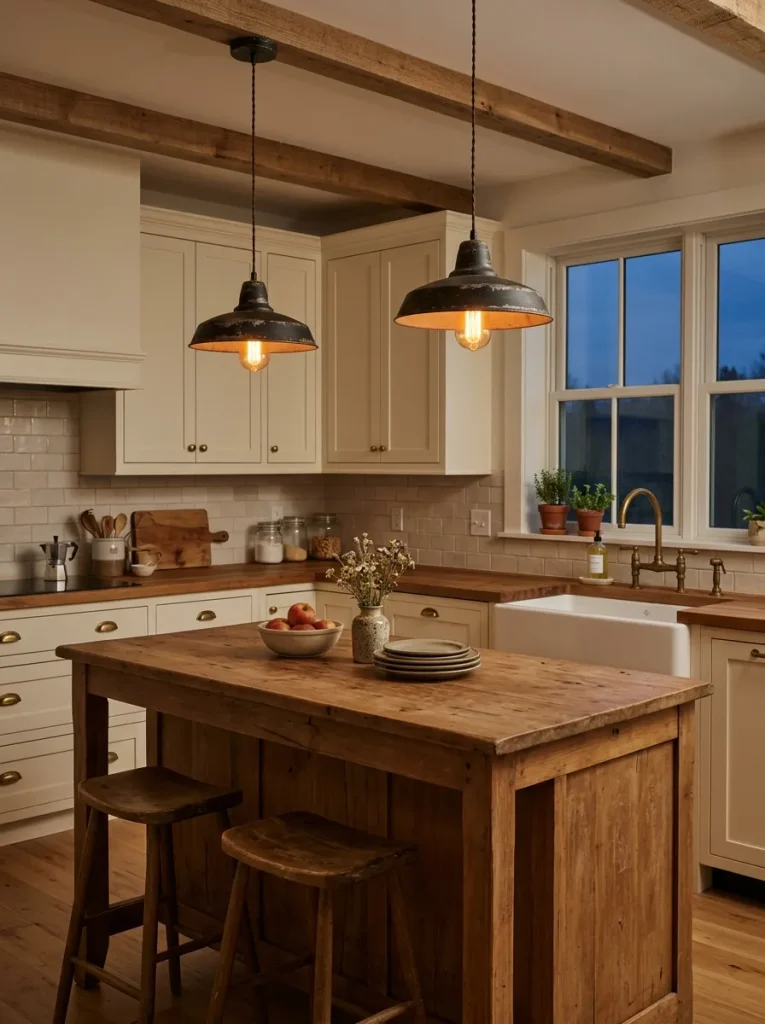
Cost: Varies with fixture material, size, and installation requirements.
Time: Allow additional time for professional installation if wiring needs to change.
Skill Level: Beginner-friendly for choosing a fixture; electrical installation may require a qualified electrician.
Best For: Islands, breakfast bars, or dining areas with suitable ceiling clearance.
Pendant lighting adds a strong farmhouse detail without taking up any counter space. Black metal shades create a traditional barn-inspired look, while glass pendants feel lighter and more understated. Choosing a fixture that suits the scale of the room is important, especially above a narrow counter.
Check the manufacturer’s recommendations for hanging height and clearance, and make sure the light does not obstruct sightlines. A warm bulb can make wood and cream finishes feel especially inviting in the evening. If the kitchen has low ceilings, a compact semi-flush fixture may be more practical than a long pendant.
Mason Jar Storage
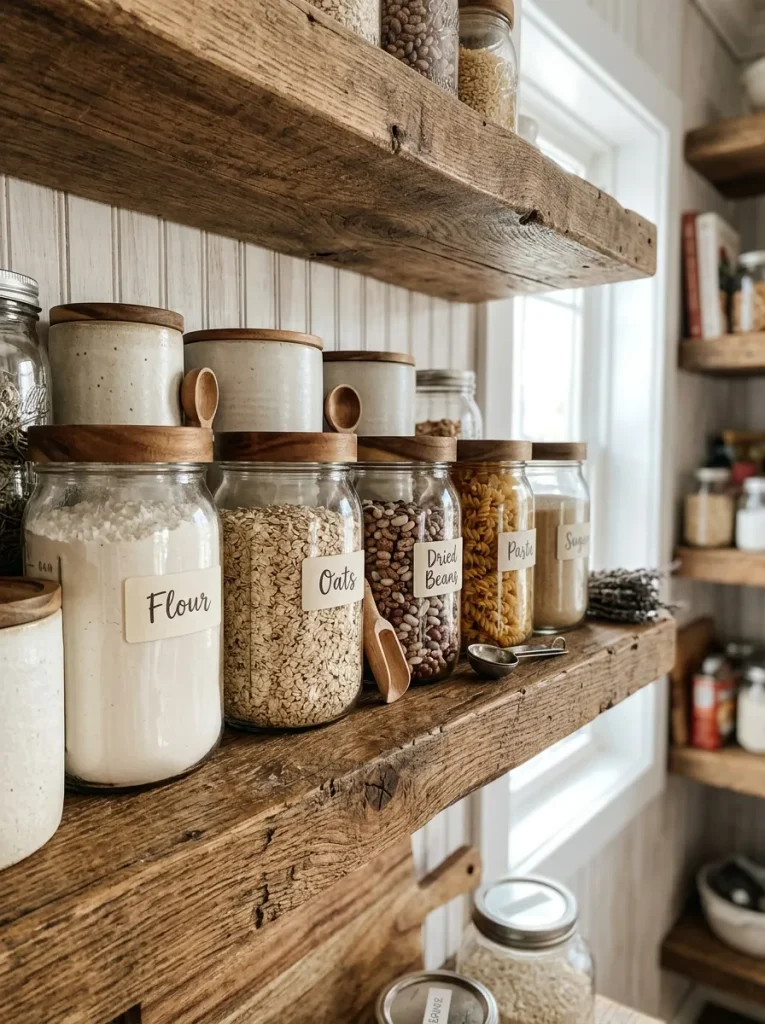
Clear jars make pantry storage feel decorative while allowing you to see what needs replenishing. They work especially well for dry ingredients with different shapes and colors, such as pasta, lentils, oats, and rice. A row of jars can also reduce the visual clutter created by mixed packaging.
Choose containers that seal properly and are easy to clean, and label them with the ingredient name and any useful storage information. Make sure food is completely dry before placing it in storage, and keep jars away from direct heat. If matching glass jars are too costly, begin with just a few frequently used staples.
Checkered Kitchen Textiles
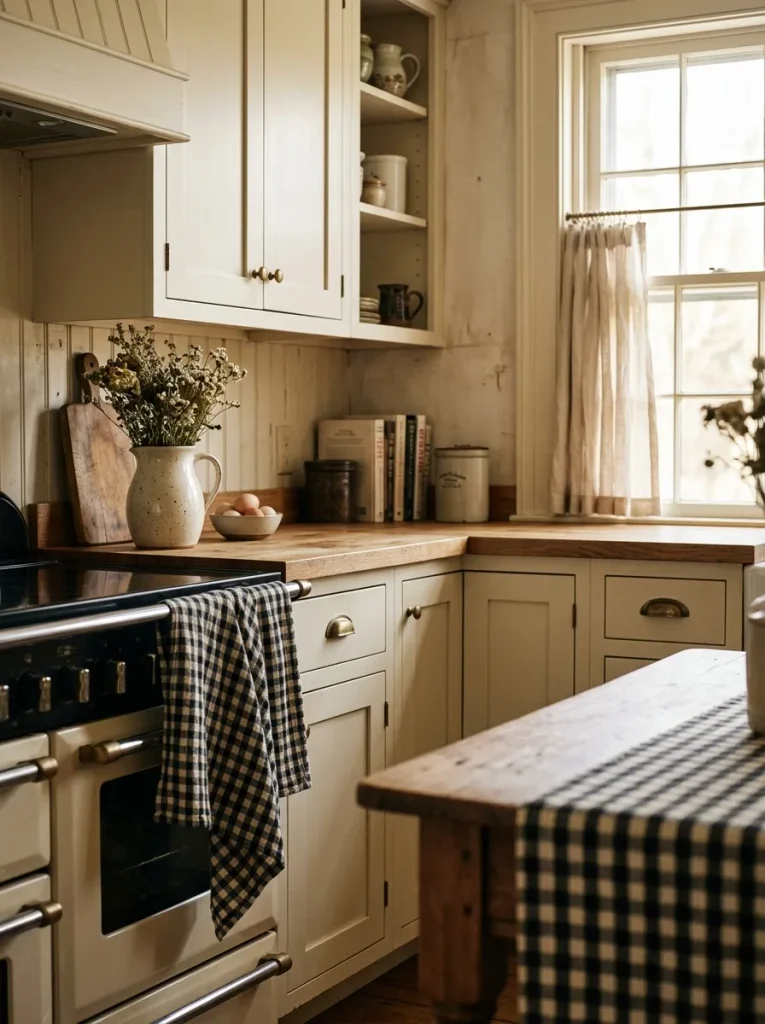
- Choose black-and-cream checks for a classic country look.
- Try muted sage and ivory for a softer, more relaxed palette.
- Coordinate one or two textiles rather than matching every fabric.
- Select washable cotton or linen blends for everyday use.
- Repeat a color from your towels in a small rug or cushion.
Checkered textiles bring a familiar farmhouse pattern into the kitchen without requiring paint or renovation. A tea towel, runner, or small curtain can introduce contrast against plain cabinetry, while natural materials keep the pattern from feeling too formal. Start with one textile and add another only if the room needs more visual connection.
For a busy kitchen, practicality matters as much as appearance. Wash fabrics regularly, keep towels away from open flames, and choose a rug that stays securely in place. These small details create a comfortable country atmosphere while supporting everyday cooking and cleaning.
Antique-Inspired Crockery
Quick Tip:
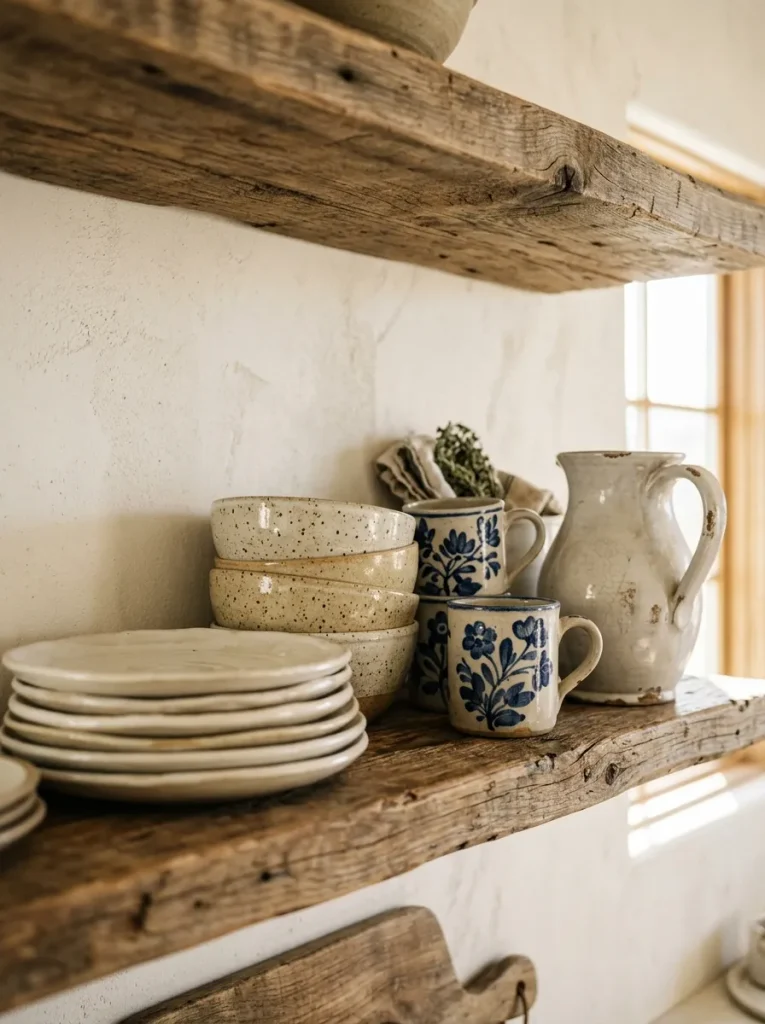
Look for crockery with one connecting detail, such as a shared color, floral motif, or softly aged finish. Different pieces do not need to match perfectly, but a repeated feature helps the display look intentional.
Vintage-style crockery adds personality to open shelves and dining tables while remaining useful for serving meals. Cream stoneware creates a calm base, while a few blue-and-white pieces bring a traditional country touch. Slight variations in glaze and shape can make a collection feel collected over time rather than purchased all at once.
Check secondhand dishes for chips, cracks, and safe food-use condition before serving food in them. For everyday storage, place frequently used pieces at an easy-to-reach height. If your shelves are already full, display just a few special mugs or bowls and keep the rest neatly stored away.
Farmhouse Pantry Corner
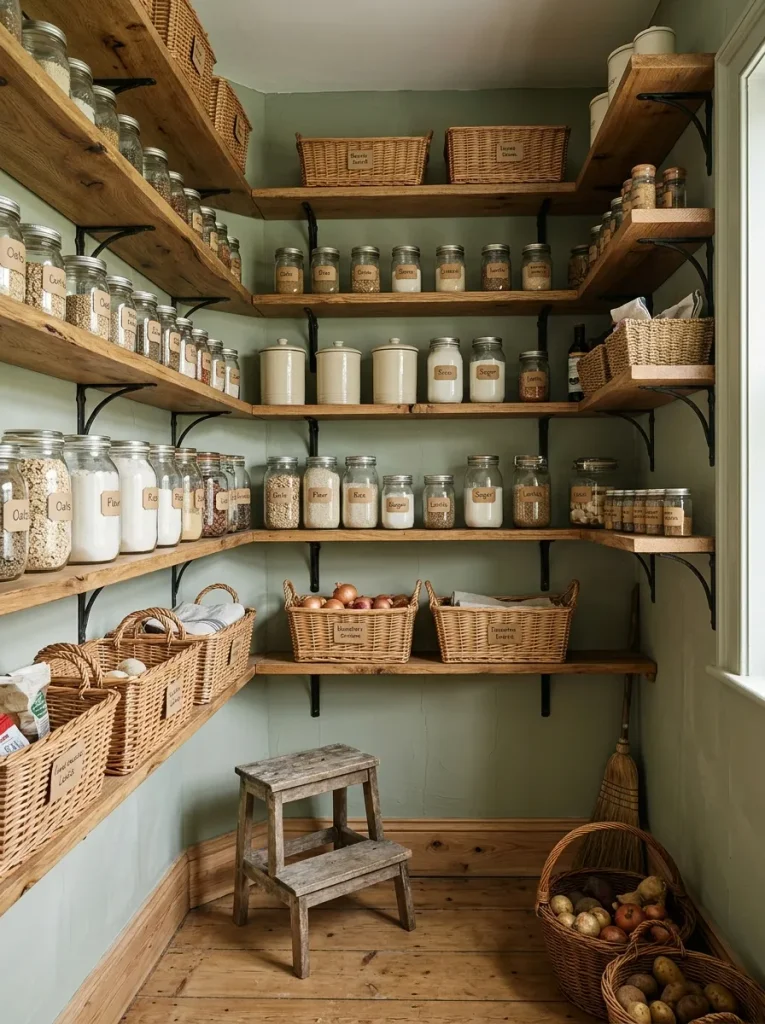
BEFORE: Pantry items in different bags and boxes fill the shelves without a clear arrangement. Ingredients are difficult to locate, duplicates accumulate, and the storage area feels messy even when there is enough room.
AFTER: Matching jars hold frequently used dry goods, baskets group packets, and labels make ingredients easier to identify. Everyday supplies sit at reachable heights, while occasional-use items occupy higher shelves.
A farmhouse pantry can look attractive without requiring a separate walk-in room. Even one cabinet or narrow shelving unit can become a tidy storage zone with a few containers and clear categories. Use baskets for small packets and reserve airtight jars for dry ingredients that benefit from sealed storage.
Before buying new organizers, measure the available shelves and sort what you already own. Keep heavier items low, check food dates regularly, and leave enough room to remove containers safely. A practical pantry saves time during cooking and makes it easier to keep track of what needs restocking.
Wooden Ceiling Beams
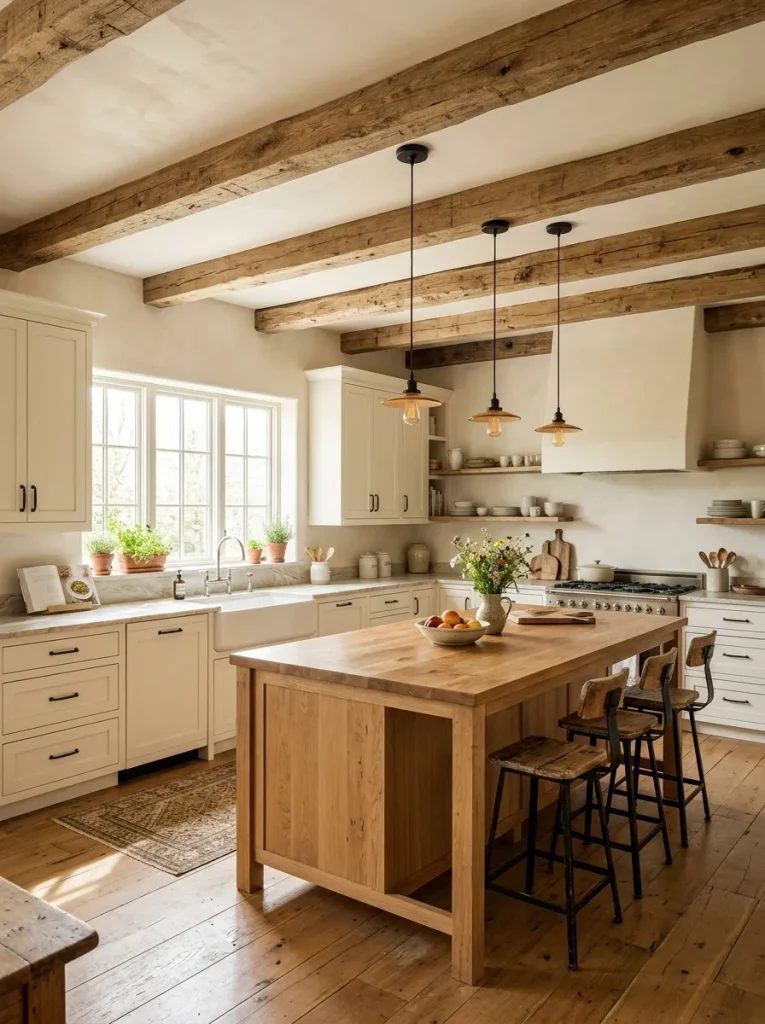
- Assess the ceiling: Check its structure and condition before planning decorative beams.
- Choose the finish: Natural oak, weathered timber, or a darker stain can suit different farmhouse styles.
- Consider scale: Larger beams need sufficient ceiling height to avoid making the room feel cramped.
- Plan professional installation: Structural changes or heavy fittings may require qualified help.
- Balance the room: Pair timber overhead with lighter cabinets and walls.
Exposed beams create architectural character and make a kitchen feel connected to traditional country homes. Their natural texture contrasts beautifully with smooth painted cabinetry and simple tile. In rooms with high ceilings, beams can also help the space feel more intimate and visually grounded.
You do not need to add beams to every ceiling to achieve a rustic effect. A single decorative timber feature may be enough, especially in a small kitchen. Choose materials and installation methods appropriate for the building, and avoid compromising existing structural elements for appearance alone.
Rustic Island Finishes
| Feature | Option A: Painted Island | Option B: Natural Wood Island |
|---|---|---|
| Overall look | Colorful and traditional | Warm and organic |
| Best shades | Sage, navy, muted charcoal | Oak, pine, reclaimed timber |
| Maintenance | Depends on paint durability | Depends on wood finish |
| Styling partner | Brass or black hardware | Cream ceramics and linen |
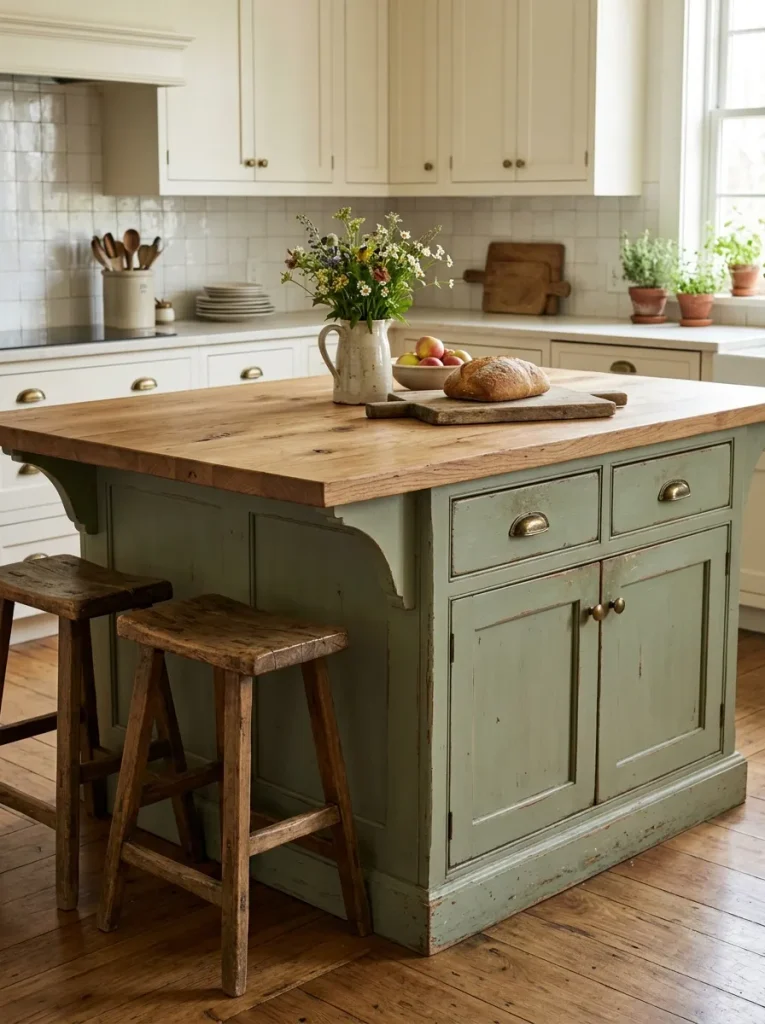
A rustic island can become the visual anchor of a farmhouse kitchen, even when the rest of the cabinets are simple. A muted painted base adds character, while a natural wood finish highlights grain and texture. If a permanent island will not fit, a small movable worktable can provide a similar country-inspired feature.
Make sure the island leaves adequate clearance for doors, drawers, and walking paths. Select a countertop finish suited to how you prepare food, and keep the top relatively clear for practical use. A pair of simple stools can make the island feel welcoming without adding too many decorative details.
Woven Basket Storage
DO:
- Use baskets to group small pantry items or clean kitchen linens.
- Choose sizes that fit the shelves without sticking out.
- Repeat one or two basket styles for a coordinated look.
- Use washable liners where they are helpful.
DON’T:
- Store damp towels in closed baskets.
- Place delicate wicker near direct flames or excessive heat.
- Overfill baskets until they become difficult to lift.
- Use open woven containers for ingredients that need airtight storage.
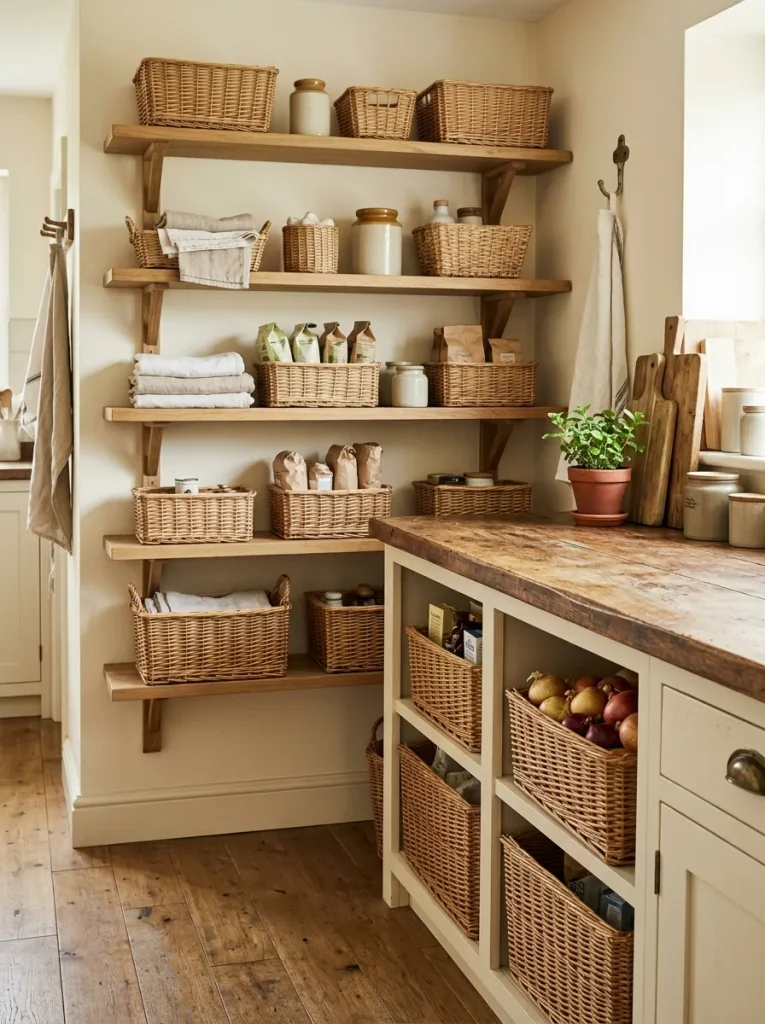
Woven baskets bring texture to a farmhouse kitchen while helping everyday items look organized. Their natural fibers soften the hard surfaces of tile, metal, and cabinetry, creating a comfortable country feel. They are particularly useful for grouping tea towels, packaged snacks, or other small items that tend to scatter across shelves.
Choose baskets based on what they need to hold, not just their appearance. Keep food in appropriate containers when protection from moisture or pests is important, and clean the baskets according to their material. A few well-placed baskets can provide plenty of texture without making the kitchen look crowded.
Cream and Sage Palette
Cost: Flexible, from a few accessories to a full cabinet repaint.
Time: A small styling refresh can take an afternoon; painting requires preparation and drying time.
Skill Level: Beginner-friendly for accessories, intermediate for cabinet painting.
Best For: Kitchens that need warmth and color without a busy pattern.
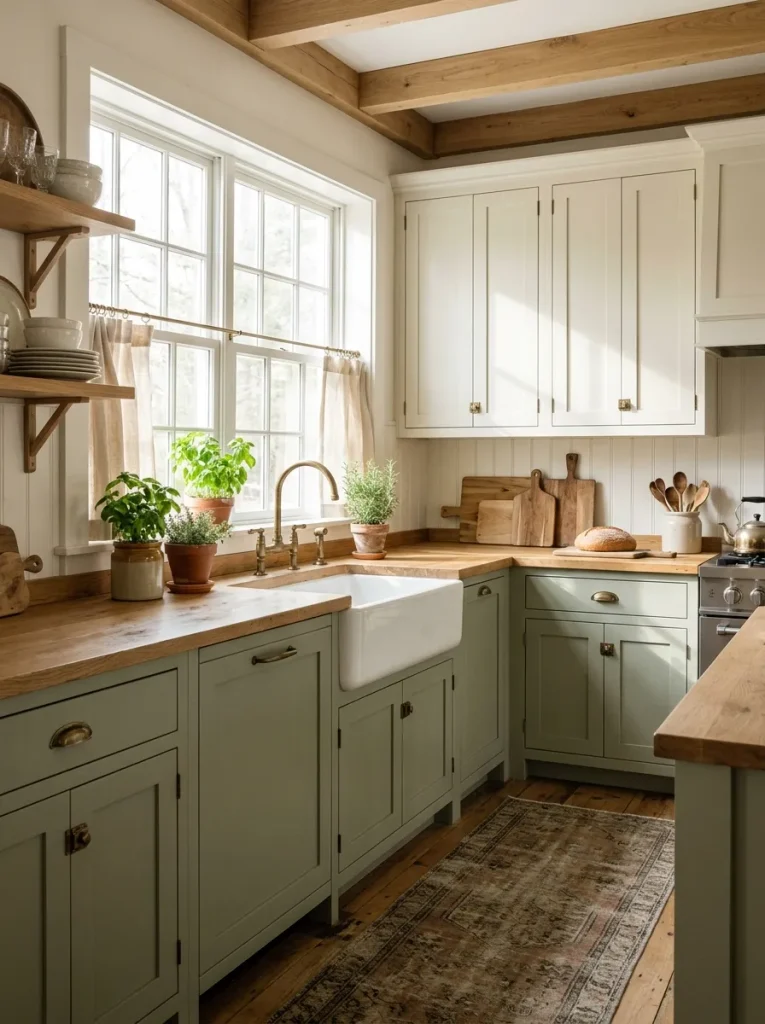
Cream and sage create a restful farmhouse palette that feels natural rather than overly decorated. Cream keeps the kitchen bright, while muted green introduces a connection to gardens and the outdoors. Natural wood and brushed metal finishes complete the look without competing for attention.
If repainting cabinets is not an option, introduce sage through tea towels, ceramic pots, a small runner, or artwork. Repeat the color in two or three places so it feels deliberate. Test paint samples under your kitchen’s actual lighting, because greens can look quite different in direct sunlight and at night.
Vintage Farmhouse Signs
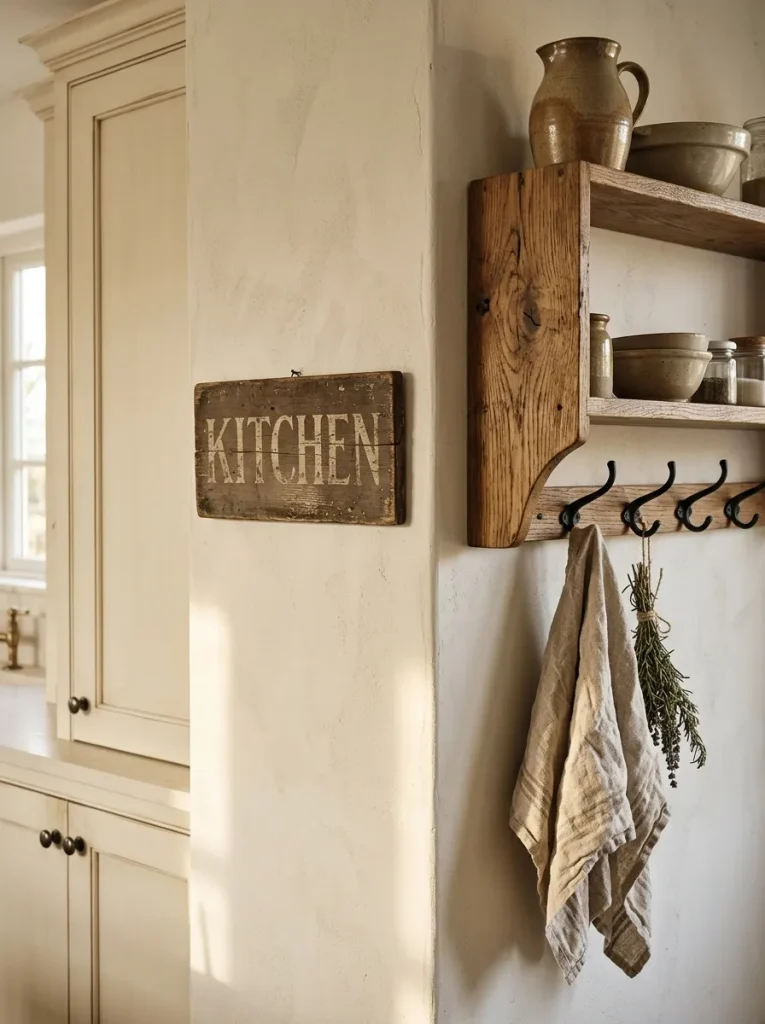
A small vintage-style sign can add a personal touch to a plain kitchen wall. Weathered wood, simple lettering, and understated colors fit naturally with rustic finishes. Choose a phrase or design that means something to your household instead of filling the room with generic decorative signs.
Hang artwork away from cooking splashes and direct heat, and keep the scale appropriate for the wall. One well-placed sign above a breakfast nook or beside a pantry is often more effective than several competing pieces. If you prefer a less themed look, a framed vintage botanical print offers a similar sense of age and character.
Rustic Coffee Station
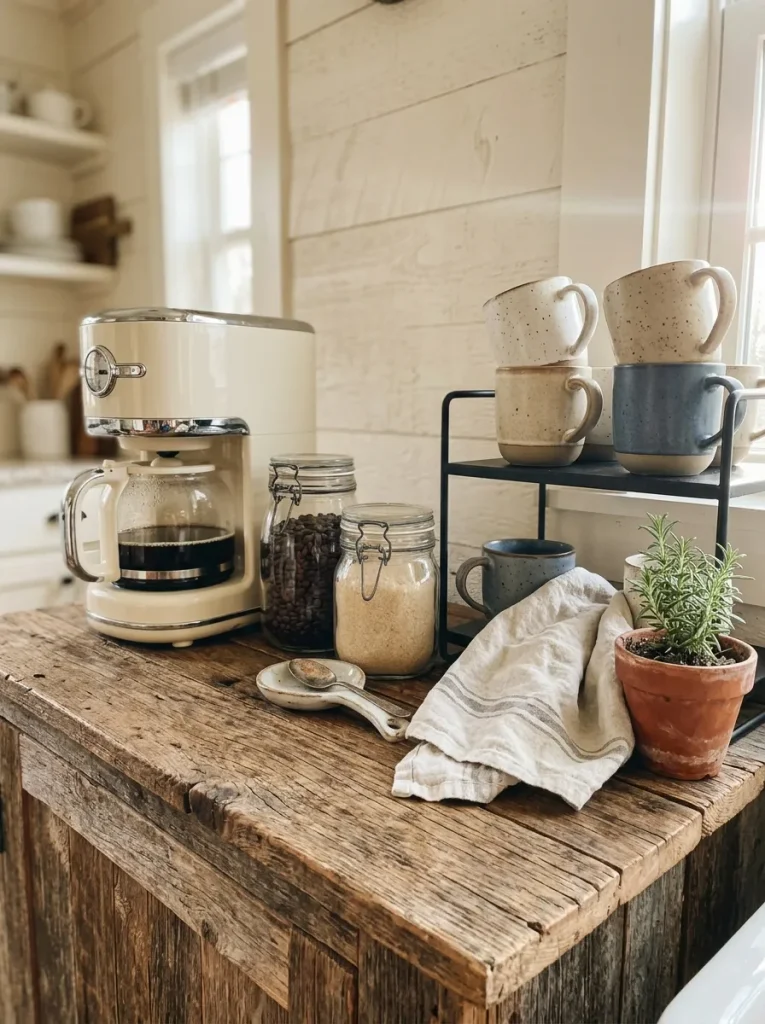
- Choose a dedicated spot: Use a spare countertop corner or a sturdy shelf.
- Group the essentials: Keep mugs, coffee, tea, and sweeteners together.
- Add a tray: Contain small jars and make wiping the counter easier.
- Include rustic materials: A wooden board or ceramic container adds warmth.
- Keep cords and heat in mind: Follow appliance instructions and maintain safe clearances.
A farmhouse coffee station makes a daily routine feel a little more special while keeping drink supplies organized. Reclaimed wood, cream ceramics, and clear jars create a warm, coordinated look without needing a large area. The setup works well in a kitchen corner that might otherwise remain unused.
Keep the arrangement functional by displaying only the items you reach for regularly. Store extra mugs and seasonal supplies elsewhere, and clean the tray to prevent sticky residue from building up. A small station can feel inviting without becoming another cluttered countertop.
Linen Curtains and Roman Shades
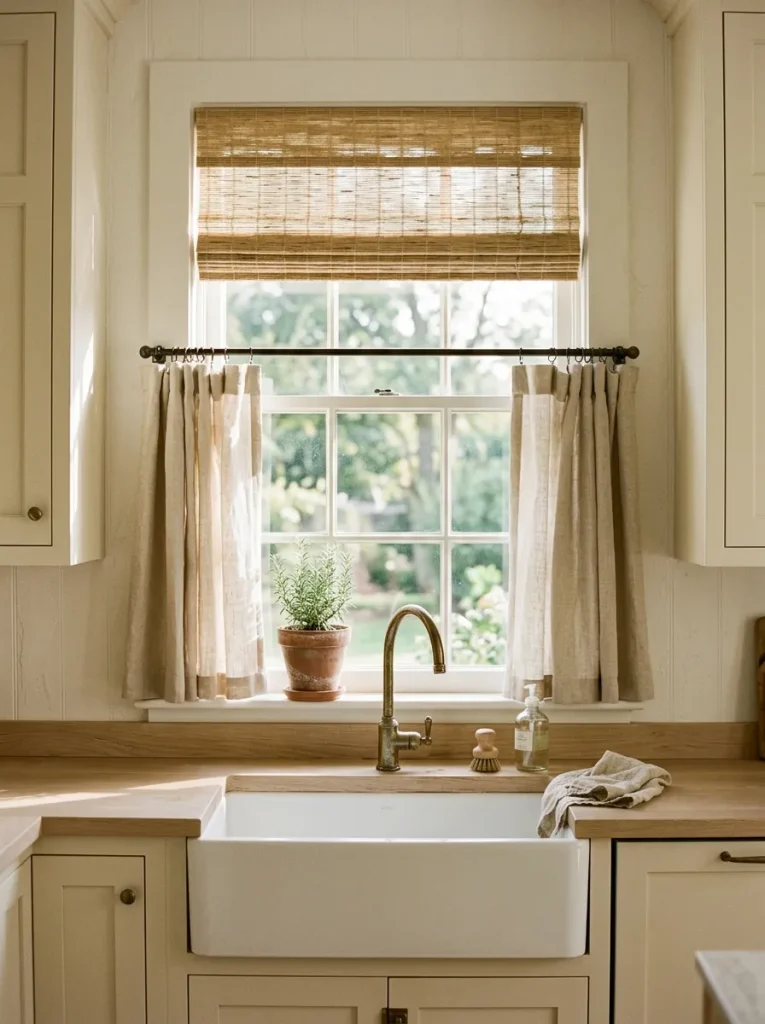
Quick Tip:
Choose window treatments that allow enough daylight into the room and can be cleaned easily. If your window is close to the stove, avoid loose fabric near flames or hot surfaces and consider a shorter, safer style.
Linen curtains soften the straight lines of cabinets and counters, making a farmhouse kitchen feel less rigid. Natural flax, warm white, and muted beige complement wood and stoneware without introducing a strong pattern. A simple Roman shade can offer a tidier alternative when space around the window is limited.
Measure the window carefully before buying fabric, and consider how the treatment will handle kitchen humidity and grease. Washable materials are especially useful near cooking areas. Keep the design uncomplicated so the window remains a source of natural light rather than another busy focal point.
Enamelware Accessories
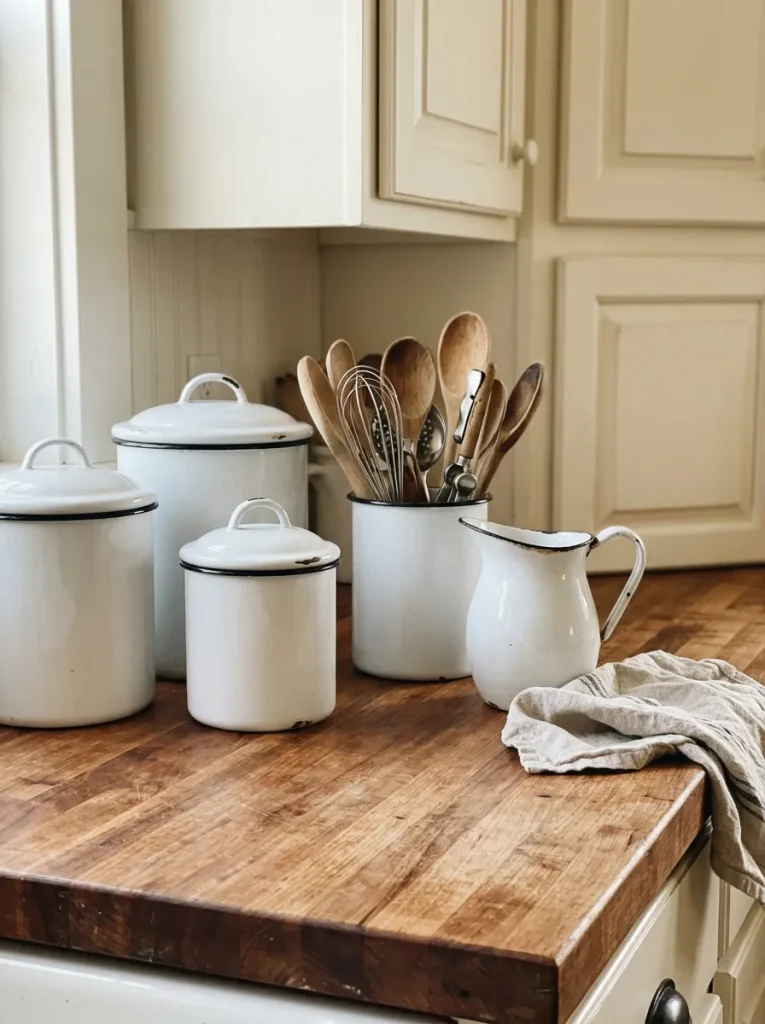
BEFORE: A kitchen filled with plastic containers and mismatched accessories can feel visually disconnected, even when the cabinets and counters suit a farmhouse style.
AFTER: A few coordinated enamelware pieces introduce a classic country detail. A utensil holder, pitcher, or storage tin provides a clean contrast against wood and cream surfaces.
Enamelware is a recognizable farmhouse accent because its simple shapes and contrasting rims recall traditional country kitchens. White pieces with black edging are especially versatile, while muted colors can bring a softer vintage feel. Start with one or two functional items rather than buying an entire matching collection.
Check each piece for chips, rust, and suitability for its intended use. Some enamel accessories are decorative only, so follow product guidance before using them for food or heat. Keeping the display small allows the classic finish to stand out without crowding the counter.
Farmhouse Herb Garden
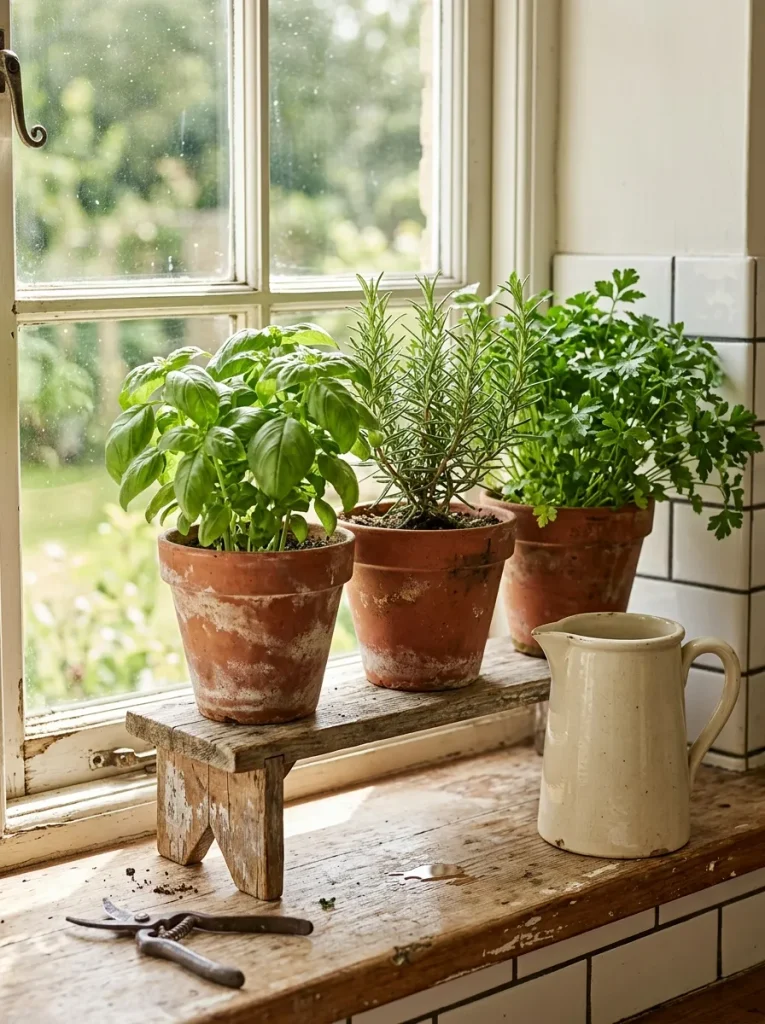
- Check the light: Select a window or shelf that provides the sunlight your chosen herbs need.
- Choose suitable pots: Use containers with drainage holes and trays to protect the surface.
- Group compatible plants: Arrange herbs according to their light and watering requirements.
- Keep them accessible: Place frequently used herbs where you can reach them easily.
- Maintain the display: Remove dead leaves and water according to each plant’s needs.
A small herb garden adds living color and a practical touch to a rustic kitchen. Terracotta pots bring earthy texture, while fresh green leaves soften the harder surfaces of counters and tile. Basil, parsley, and rosemary are useful choices when the available light and growing conditions suit them.
Avoid placing plants where heat from the stove or oven can damage them, and do not let excess water collect under the pots. If the kitchen receives little sunlight, consider a suitable grow light or choose a different decorative element. A few healthy plants are more appealing than a crowded windowsill full of struggling herbs.
Farmhouse Dining Bench
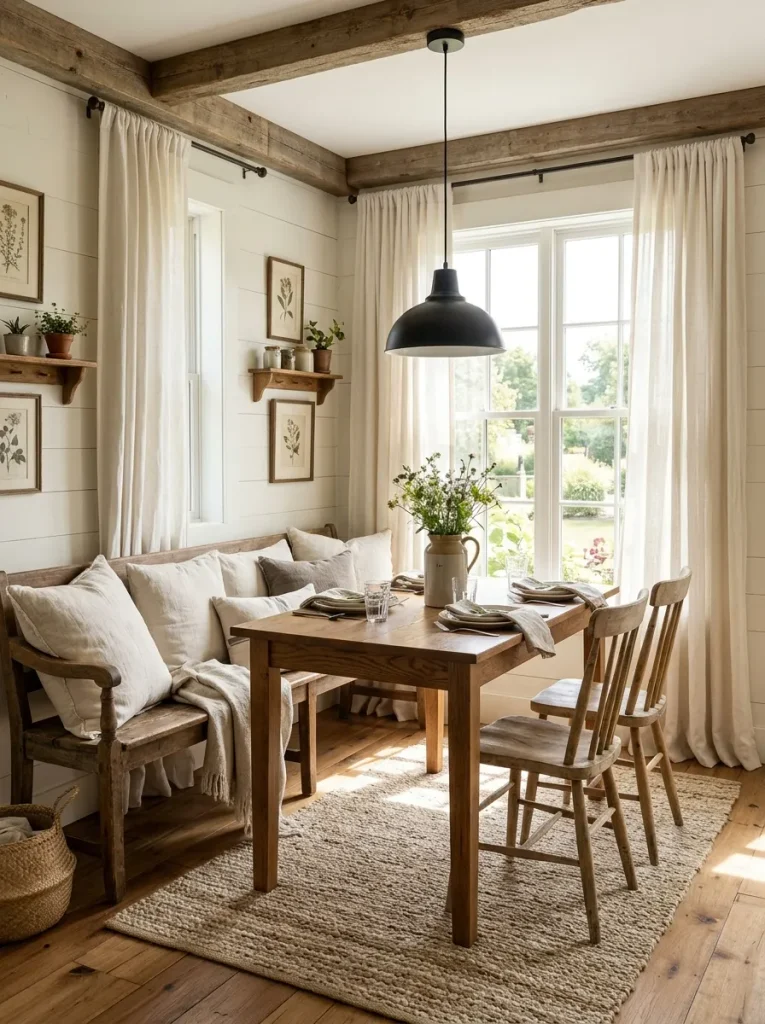
| Option | Bench Seating | Individual Chairs |
|---|---|---|
| Space use | Can fit neatly along a wall | Requires room for each chair |
| Storage | Some benches include hidden storage | Usually little built-in storage |
| Comfort | Cushions can soften a firm seat | Comfort depends on chair design |
| Best layout | Narrow breakfast nooks | Flexible dining arrangements |
A farmhouse bench creates a relaxed dining spot and can make better use of a narrow wall than several separate chairs. Natural wood provides rustic character, while linen cushions soften the seat and introduce a subtle fabric detail. It is a useful choice for family breakfasts or casual meals.
Measure the table and bench together, leaving enough room for people to sit down and stand up comfortably. If the kitchen is small, choose a bench with a shallow depth or consider one that can slide beneath the table. Keep cushions removable and washable to make everyday cleanup easier.
Black Metal Accents
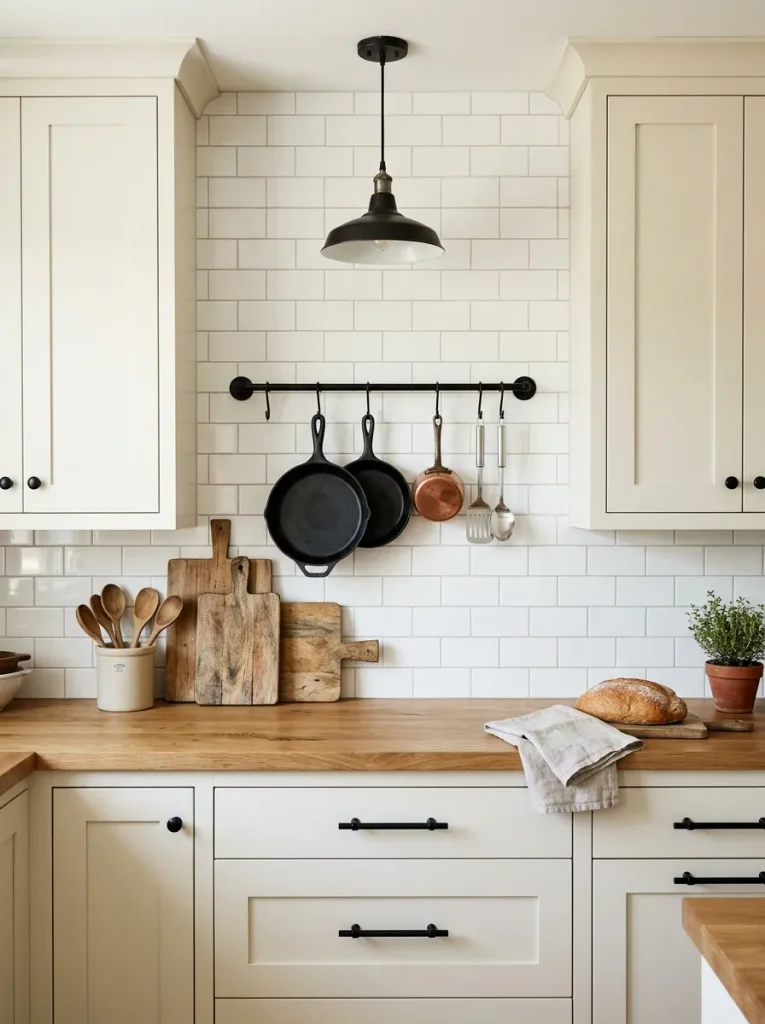
DO:
- Repeat black in two or three places, such as handles, lighting, and hooks.
- Pair metal accents with warm wood and creamy paint.
- Choose a consistent finish, such as matte black.
- Keep larger dark features balanced with lighter surfaces.
DON’T:
- Introduce too many competing metal finishes.
- Use dark accessories on every available surface.
- Choose oversized fixtures that overwhelm a compact kitchen.
- Ignore cleaning requirements for matte finishes.
Black metal details add definition to a farmhouse kitchen without taking away its warm, rustic character. The contrast looks especially effective against cream cabinets, pale tile, and natural wood. Small accents such as hooks, handles, and a pendant light can make the room feel more structured.
If you are updating an existing kitchen, start with cabinet hardware or a simple rail before replacing larger fixtures. Repeat the finish selectively and allow the natural materials to remain prominent. This creates a modern country look that feels balanced rather than industrial.
Distressed Wooden Furniture
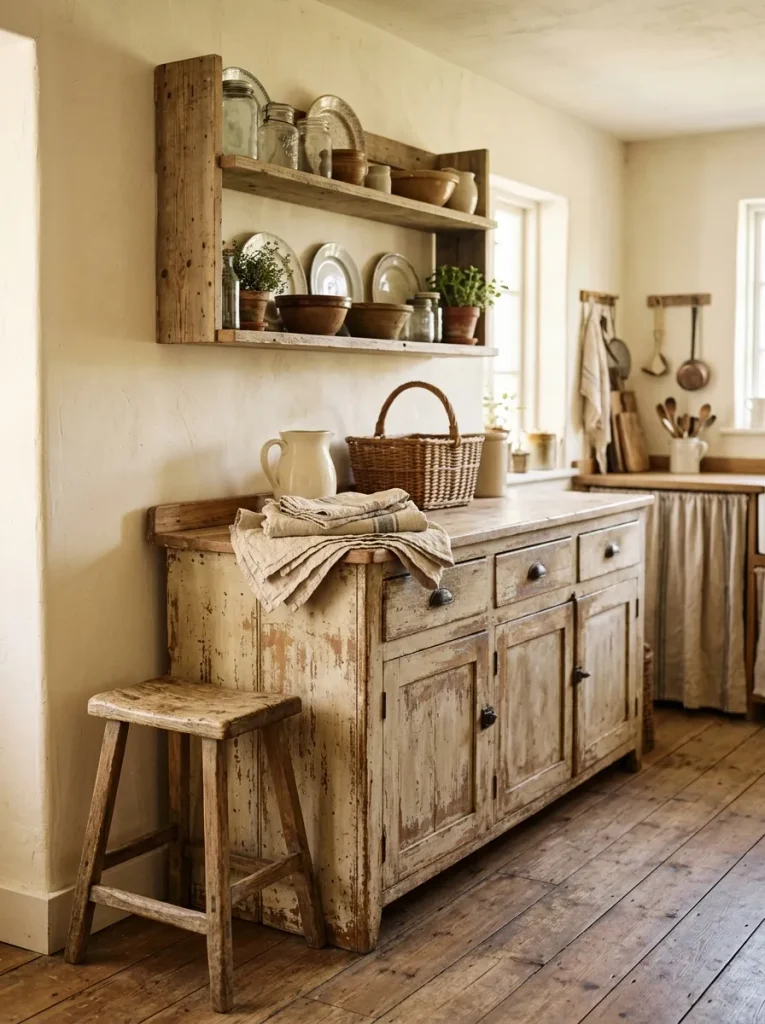
Cost: Varies from affordable secondhand finds to restored antique furniture.
Time: A simple furniture refresh may take a weekend, including drying time.
Skill Level: Beginner-friendly for styling, intermediate for sanding and repainting.
Best For: Kitchens with an unused corner or a small wall beside the dining area.
Distressed wooden furniture gives a farmhouse kitchen the relaxed character of a country home. A weathered sideboard can store linens and serving dishes, while a small stool adds useful seating or a place to set a basket. The worn finish brings texture that newly manufactured furniture sometimes lacks.
Look for sturdy secondhand pieces with sound joints and manageable dimensions. If you want to refinish a piece, prepare the surface properly and use suitable products according to their instructions. Keep the surrounding decor simple so the furniture’s natural imperfections become the main attraction.
Copper Kitchen Accents
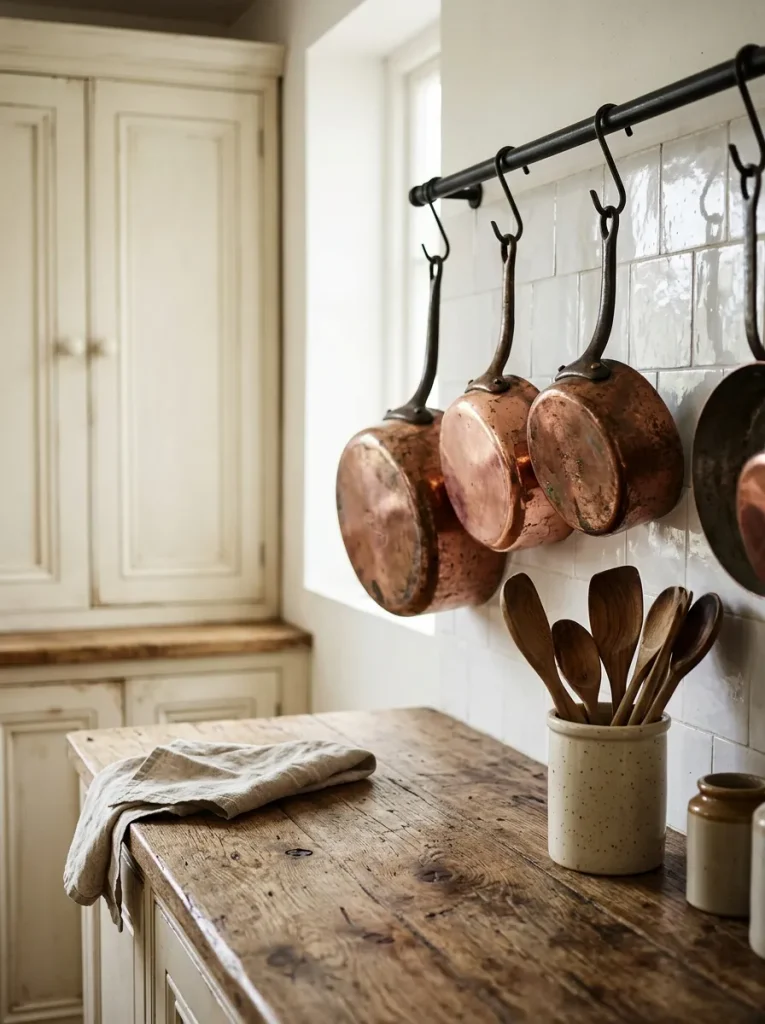
Copper accents introduce a rich, warm color that pairs beautifully with wood, cream cabinetry, and muted green. A hanging saucepan, small decorative pot, or copper-toned utensil holder can add a traditional country detail without requiring a full kitchen makeover. The metal catches the light and creates interest against pale surfaces.
Start with one statement piece and see how it works with your existing finishes. Real copper may develop a patina and require particular care, while copper-colored alternatives can offer a lower-maintenance look. Keep cookware secure on properly installed rails, and follow manufacturer guidance for cleaning and safe use.
Layered Rustic Textures
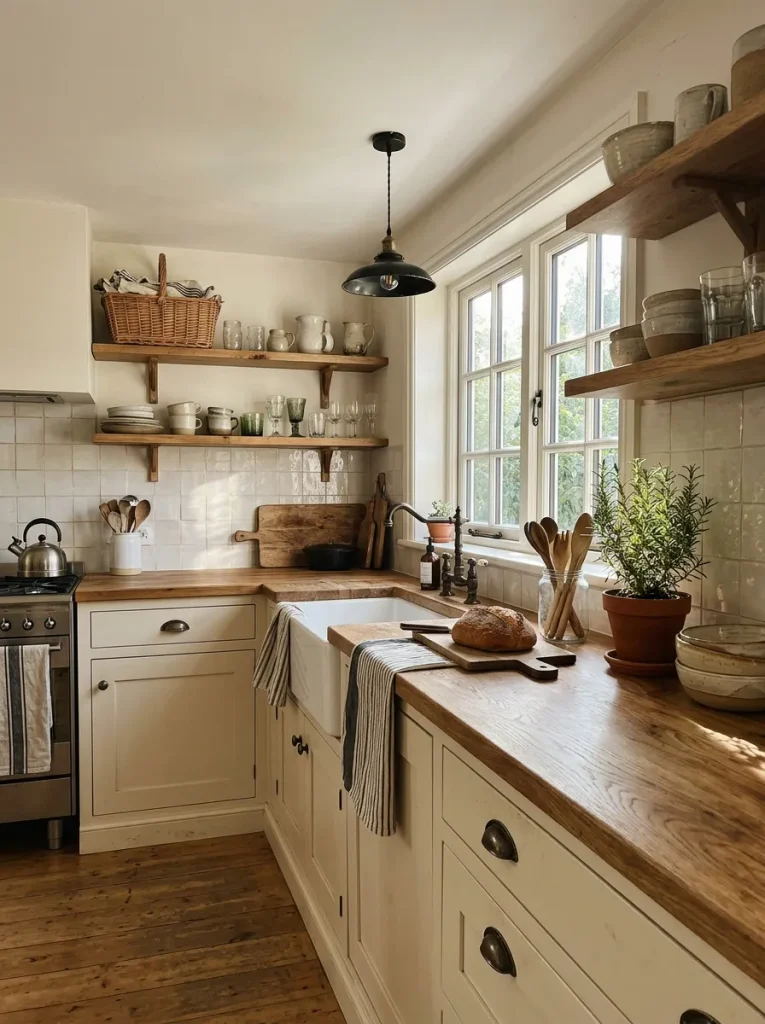
- Start with a neutral base: Cream walls and simple cabinets allow different materials to stand out.
- Add natural wood: Use a shelf, cutting board, or small furniture piece for warmth.
- Introduce soft textiles: Linen towels or a washable runner soften harder surfaces.
- Include one woven element: A basket adds texture and useful storage.
- Finish with ceramics or metal: A handmade bowl or black metal fixture creates contrast.
The secret to inviting Farmhouse Kitchen Decor is often the mix of materials rather than the number of decorations. Smooth ceramic, rough timber, soft linen, woven fibers, and aged metal each contribute a different texture. Together, they make a neutral kitchen feel layered and personal.
Build the look gradually, using items you already own wherever possible. Repeat a few colors to connect the different finishes, and leave some surfaces clear so the room remains practical. A balanced mix of rustic textures creates warmth without making a small kitchen feel crowded.
CONCLUSION
Creating a cozy farmhouse kitchen is about combining rustic charm with the practical details that make everyday life easier. From vintage-inspired hardware and wooden shelves to soft textiles, herb pots, and layered natural textures, even a few thoughtful updates can bring warmth and personality to your home.
Choose the Farmhouse Kitchen Decor ideas that suit your budget, available space, and personal taste, then introduce them gradually. Save your favorite inspiration on Pinterest, try one simple change this week, and share this article with someone who loves country-style interiors. Your kitchen can become a welcoming space that feels personal, comfortable, and timeless.