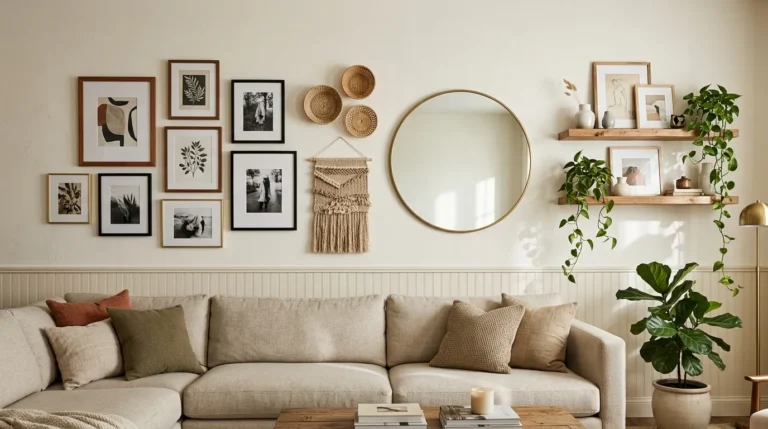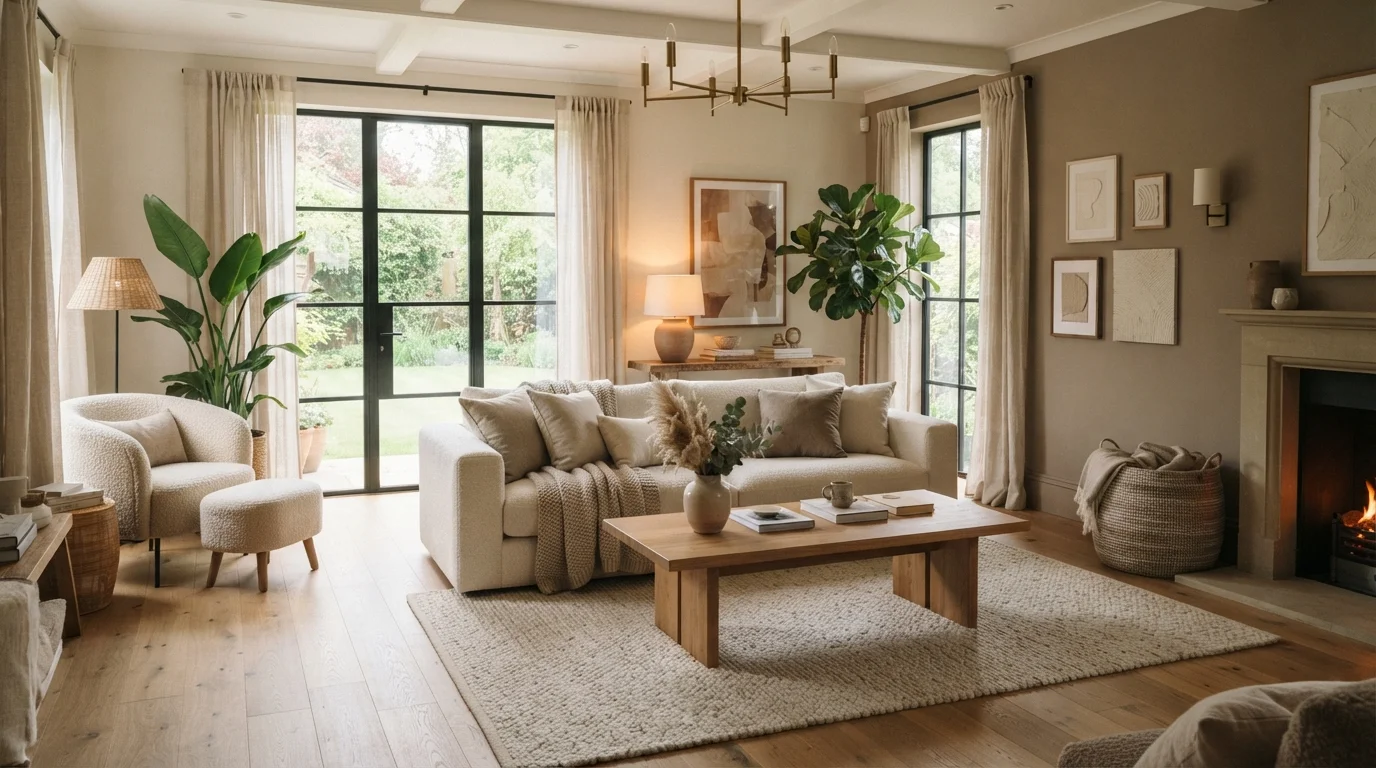
28 Living Room Decor Ideas That Create a Welcoming Feel
A living room should feel like a deep breath the moment you walk in. If yours feels flat, cold or just a little unfinished, these living room decor ideas will show you exactly where to start.
Inside, you will find 28 simple ideas, from cozy throw layers and oversized rugs to warm lighting and plug in sconces. Each one comes with real measurements, easy steps, and styling tips you can use this weekend, whether you rent a small apartment or own a big family home.
I’ve noticed that a welcoming room rarely needs a big budget. It needs the right rug size, softer light, and a few textures that invite people to sit. Scroll through, save your favorites, and build a room that feels warm every time you come home.
Layered Neutral Palette
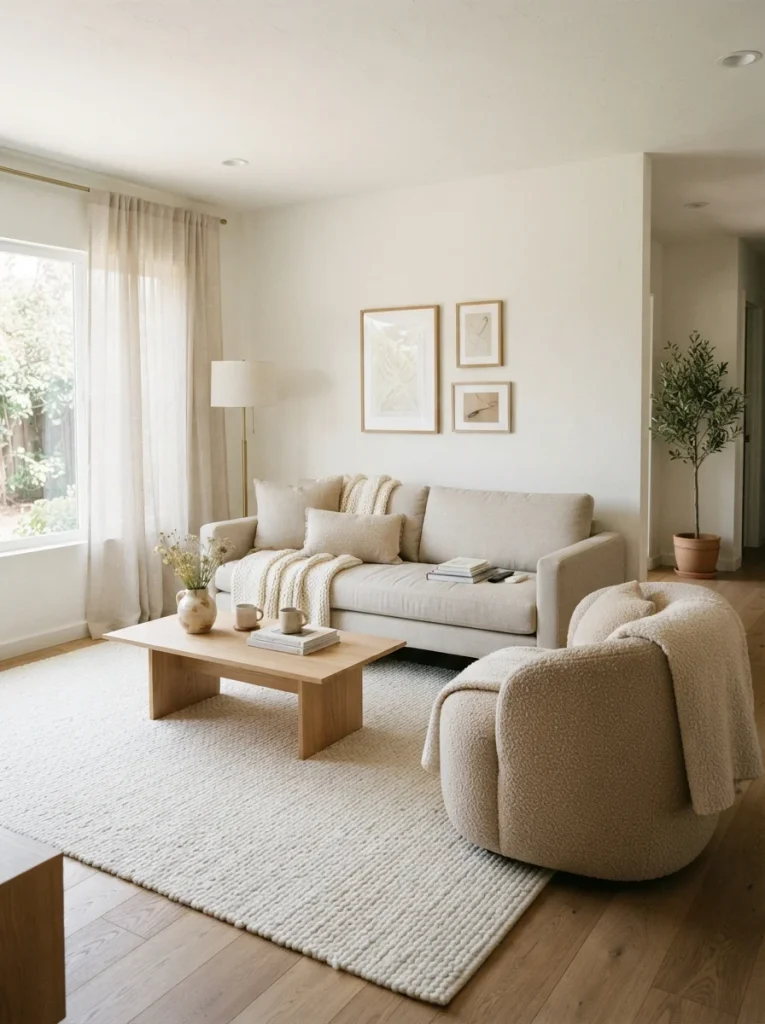
Neutral rooms feel calm because nothing fights for attention. Start with three shades only, such as cream, oatmeal, and soft taupe, and spread them across the sofa, rug, and curtains. Then vary the textures so the room never reads flat. Aim for at least three different fabrics.
I’ve noticed that texture does the heavy lifting here. A chunky knit throw, a boucle chair, and a woven jute rug add depth without adding color. Keep metal accents warm, like brass or aged bronze, and skip cool chrome. Guests walk in and relax almost instantly.
Oversized Area Rug
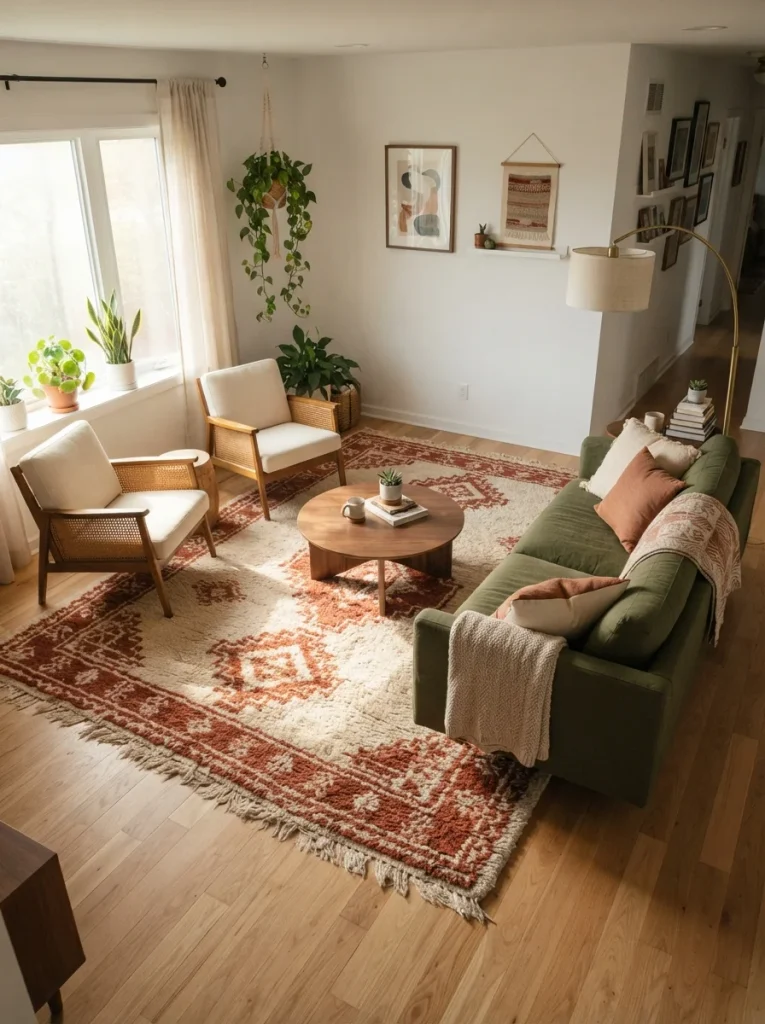
- Size is the biggest rug mistake. In most living rooms, an 8 by 10 foot rug works better than a 5 by 8.
- Place at least the front legs of the sofa and chairs on the rug so the seating feels connected.
- Leave 12 to 18 inches of bare floor around the edges for a framed look.
- Add a non-slip pad cut an inch smaller than the rug to stop sliding and add cushion.
- Pick a low pile or flatweave if you have pets or kids, since it cleans up fast.
Rugs anchor a room the way a frame anchors a photo. I’ve seen small rugs make a big sofa look like it’s floating, and a properly sized one fix that in a single afternoon. Measure with painter’s tape on the floor first, then live with it for a day.
Layered Lighting
Quick Tip:
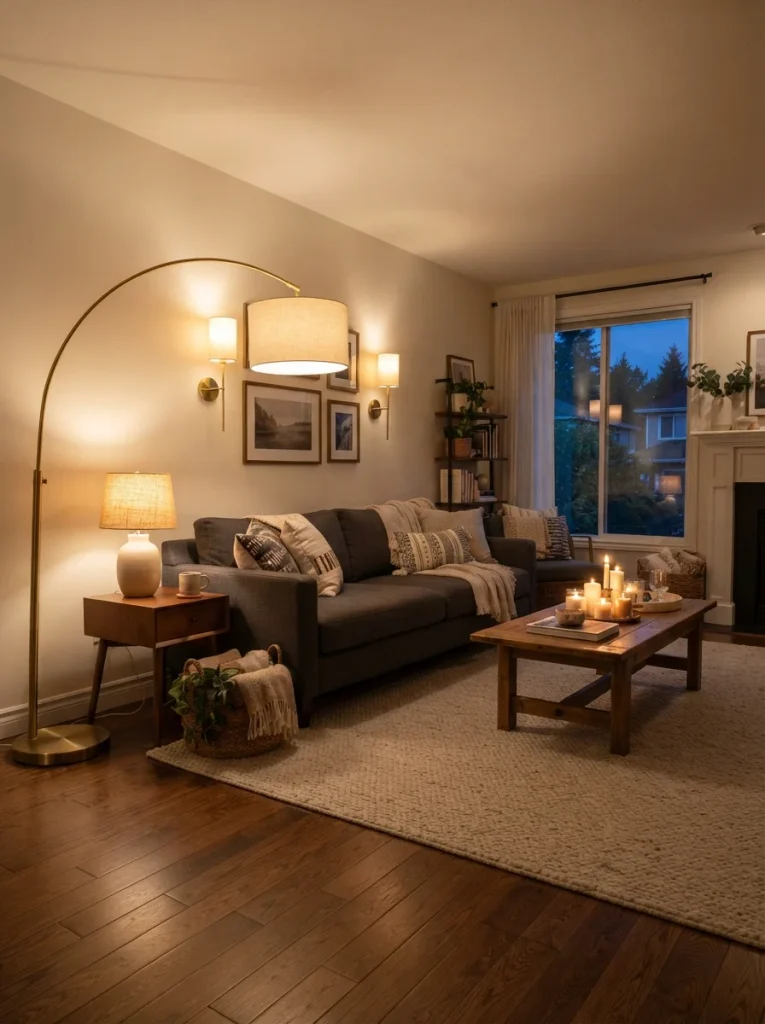
Use three light sources at different heights: one floor lamp, one table lamp, and one small accent light. Choose warm bulbs rated 2700K and keep them under 800 lumens for a soft glow. Put every lamp on a dimmer or smart plug.
Overhead lights flatten a room and cast harsh shadows. Lamps at different heights spread the glow and make corners feel inviting. In my experience, switching off the ceiling light after sunset is the fastest way to make any living room feel cozy. Start with one lamp beside the sofa and build from there.
Gallery Wall Grid
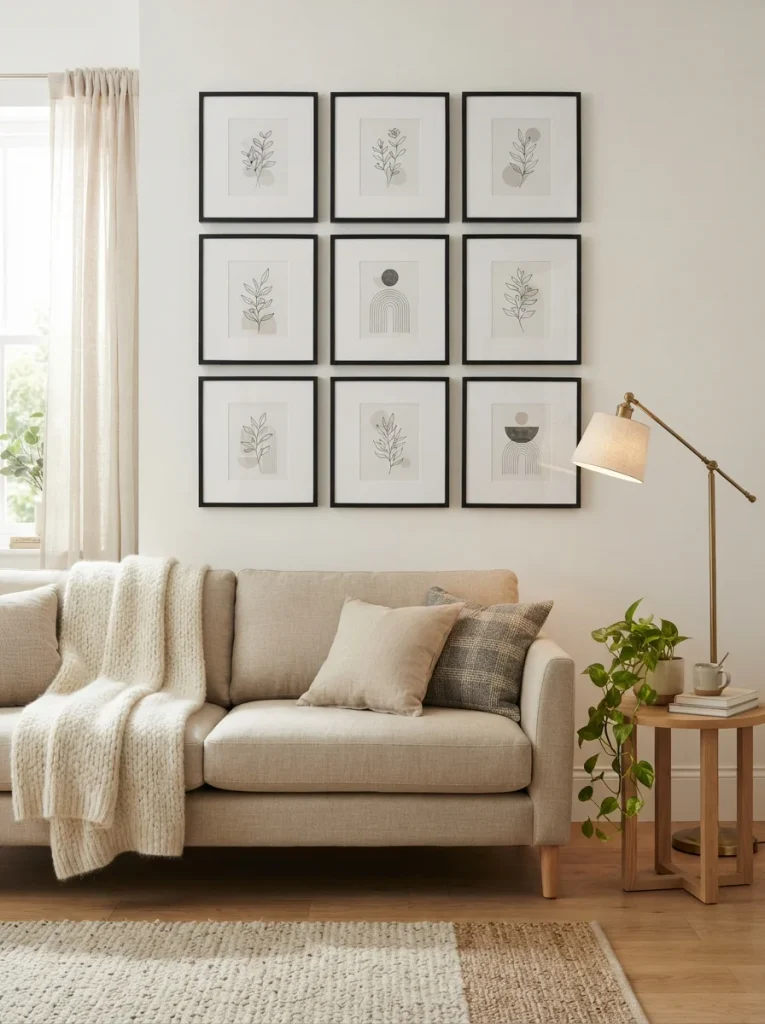
BEFORE: A bare wall above the sofa makes the whole room feel unfinished. Nails go in the wrong spots, frames hang crooked, and the group never quite lines up.
AFTER: A tidy grid of nine matching frames now spans two thirds of the sofa width. Every edge lines up, and the wall reads as one confident piece of art.
Grids are the safest path for beginners because the pattern does the planning for you. Cut paper templates, tape them to the wall, and adjust before you drill. Keep frames 2 inches apart and the center of the grid at eye level, about 57 inches from the floor.
Cozy Throw Layers
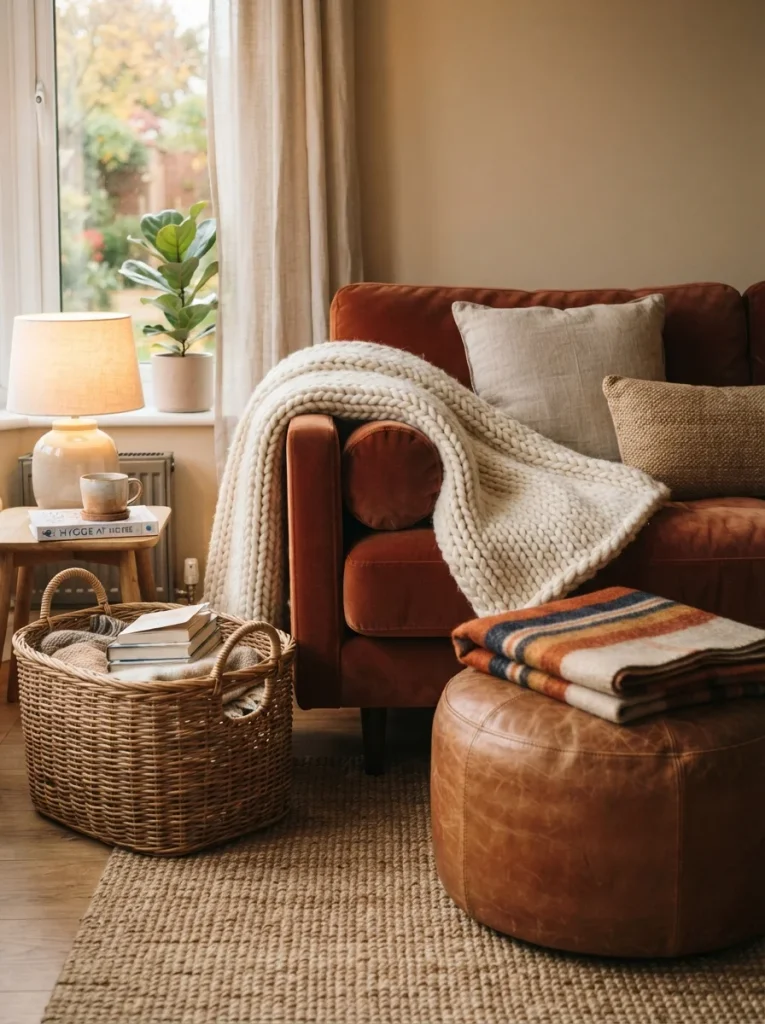
- Start with one large throw, about 50 by 60 inches, in a chunky knit or soft wool.
- Drape it over one sofa arm instead of the back, so it stays put and looks relaxed.
- Fold a second throw in thirds and rest it on an ottoman or chair.
- Pick two colors from your rug, so the blankets feel planned.
- Keep a basket nearby for the extras, and rotate which ones are out each week.
Soft layers invite people to settle in, which is the whole point of a welcoming room. I’ve seen a single basket of throws turn a stiff sofa into the favorite seat in the house. Wash knit throws on a gentle cycle and keep them out of direct sun so colors stay rich.
Round Coffee Table
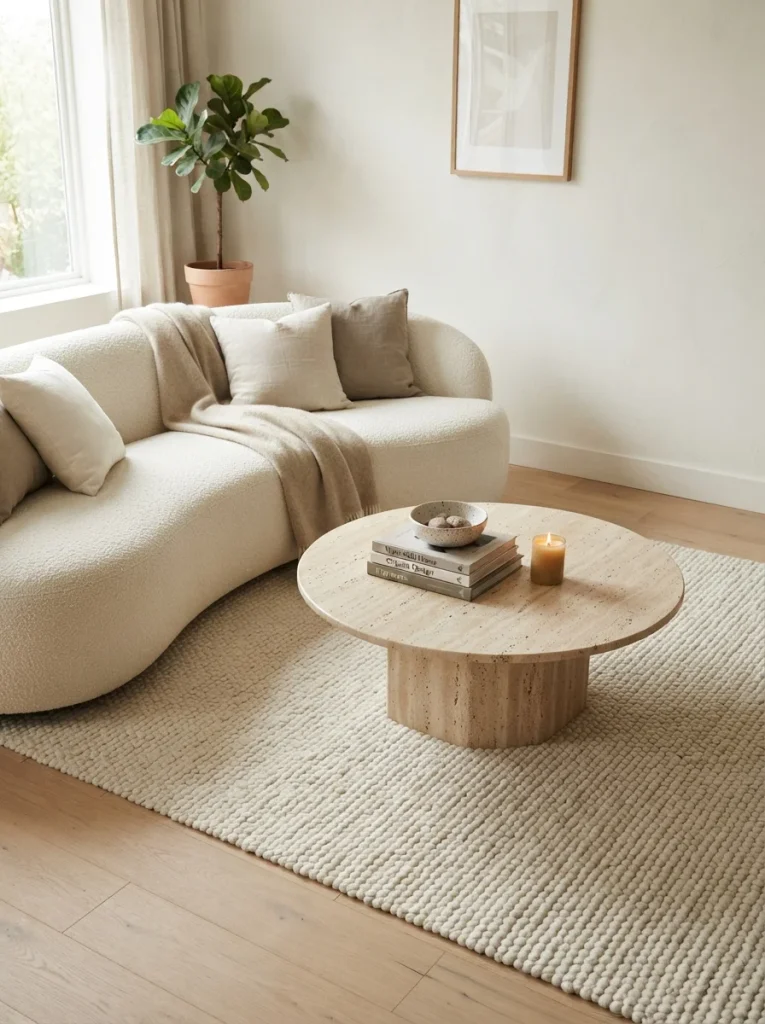
| Round Table | Rectangular Table | |
|---|---|---|
| Traffic flow | No sharp corners to bump | Corners catch hips and shins |
| Seating fit | Works with curved or mixed seating | Best with long straight sofas |
| Kids and pets | Softer, safer edges | Needs corner guards |
Soft curves loosen up a room full of straight lines. Pick a table about two thirds the length of your sofa, and keep it 16 to 18 inches from the seat edge so drinks stay within reach. Measure with a cardboard cutout first, and you will know the size is right before you buy.
Floating Media Shelves
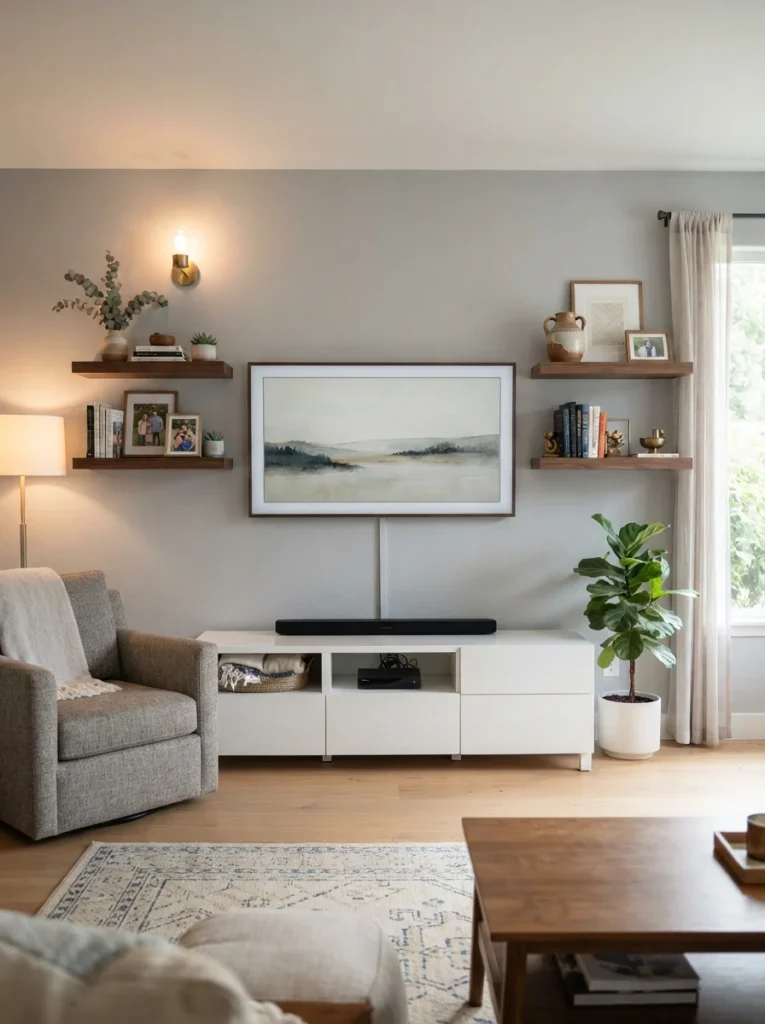
Do:
- Center the TV so its middle sits about 42 to 48 inches from the floor.
- Hang shelves 8 to 10 inches deep on each side of the screen.
- Mix books, one plant, and one object on each shelf.
- Hide cables in a paintable cord cover.
Don’t:
- Don’t mount shelves into drywall alone, since books are heavy.
- Don’t fill every shelf with identical decor.
- Don’t leave cords dangling below the screen.
A television does not have to rule the wall. Shelves on each side frame the screen and give the eye something warmer to rest on. In my experience, a media wall feels friendlier once it holds board games and family photos too. Leave one shelf half empty so the wall still feels light.
Indoor Plant Corner
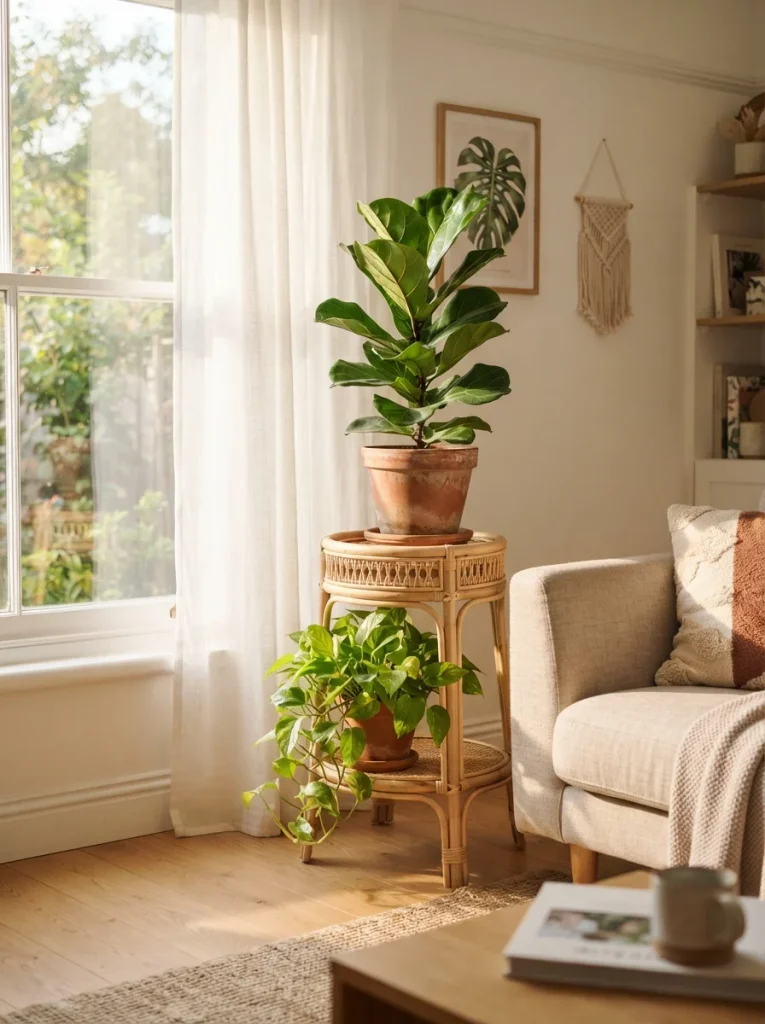
Cost: Low to moderate | Time: Under one hour | Skill Level: Beginner | Best For: Bright corners and empty floor space
An empty corner is wasted charm. One tall plant, one trailing plant, and one small pot at different heights fill it in minutes. Pothos, snake plant, and ZZ plant forgive missed waterings and handle low light. Match every pot to your room’s palette, and use saucers so water never marks the floor.
Warm Wood Accents
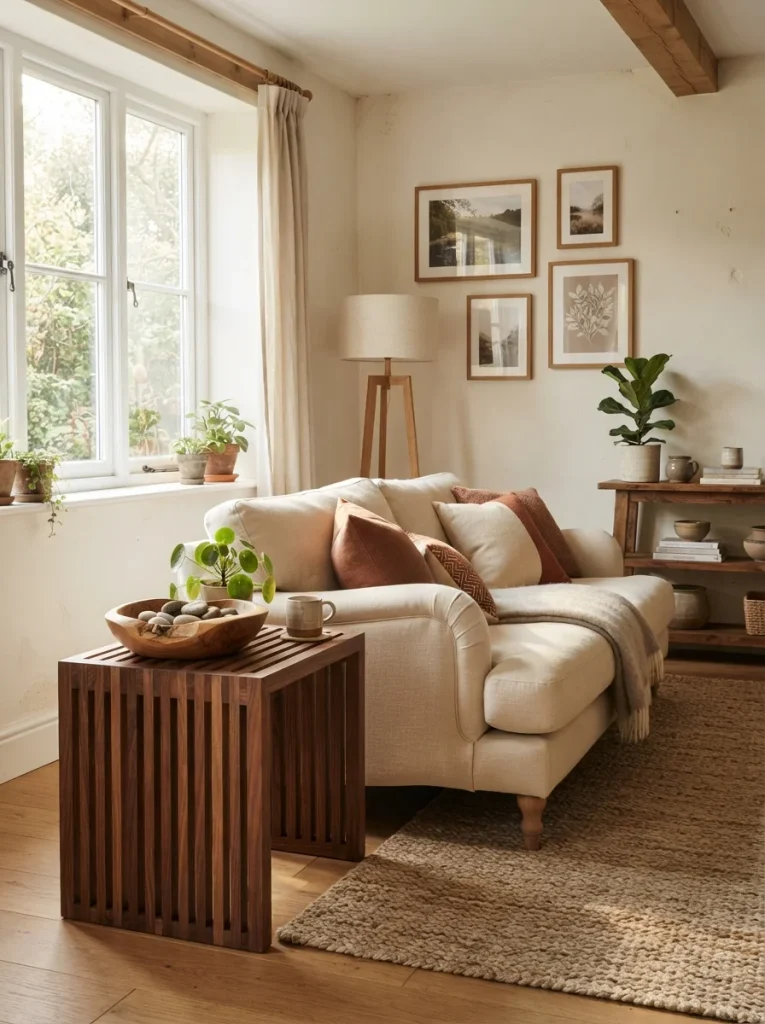
Wood makes a room feel lived in, even when everything else is new. Pull in two or three tones, such as walnut, oak, and light ash, and spread them across small pieces like a bowl, a side table, and picture frames so the warmth repeats around the room.
Mixing tones is fine, as long as the undertones match. Hold pieces side by side in daylight before you buy. Warm woods with a yellow or red glow pair well together, while gray washed woods belong in a separate family. Oil raw wood yearly to keep the grain rich.
Oversized Wall Mirror
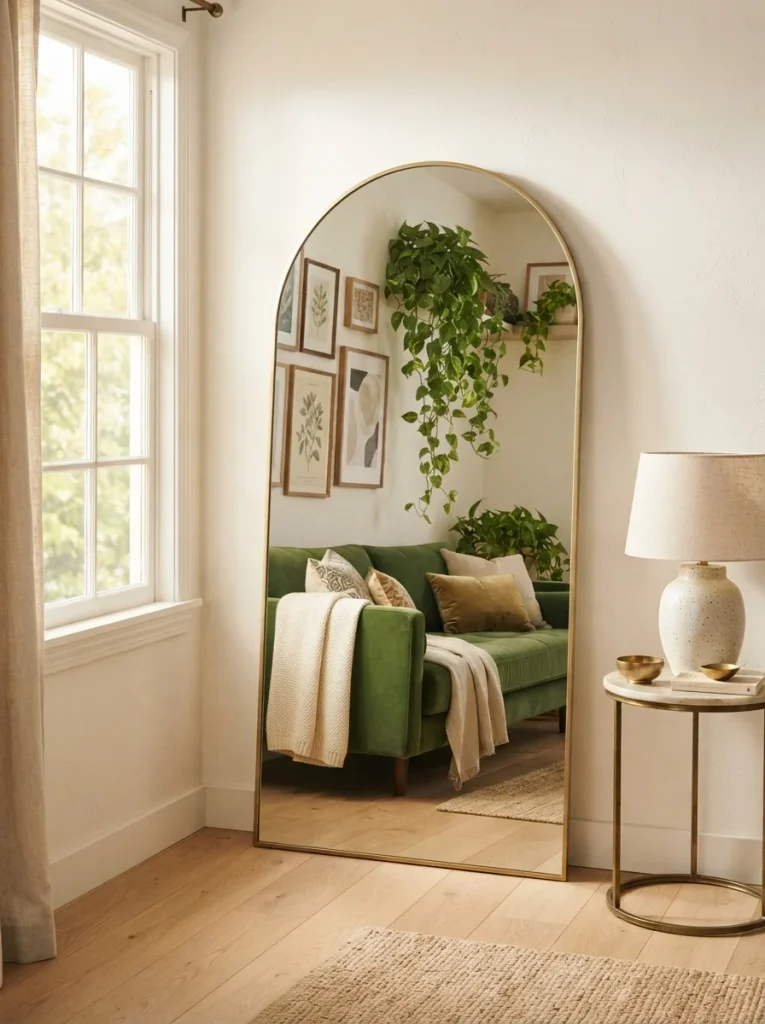
- Dark rooms gain light fast when a big mirror faces a window. Place it on the wall that sees the most daylight.
- Choose a mirror at least two thirds as wide as the sofa or console below it.
- Hang the center at about 57 inches from the floor, so it meets most eyes.
- Lean a floor mirror if you rent, and tuck felt pads under the bottom edge.
- Check what it reflects before you commit, since clutter doubles in a mirror.
Mirrors act like a second window. They bounce daylight across the room and make tight spaces feel deeper. I’ve seen a single arched mirror change a dim corner in one afternoon. Thin frames in brass or black keep the look light. Always anchor heavy mirrors into studs or use wall rated anchors.
Floor-Length Curtains
Quick Tip:
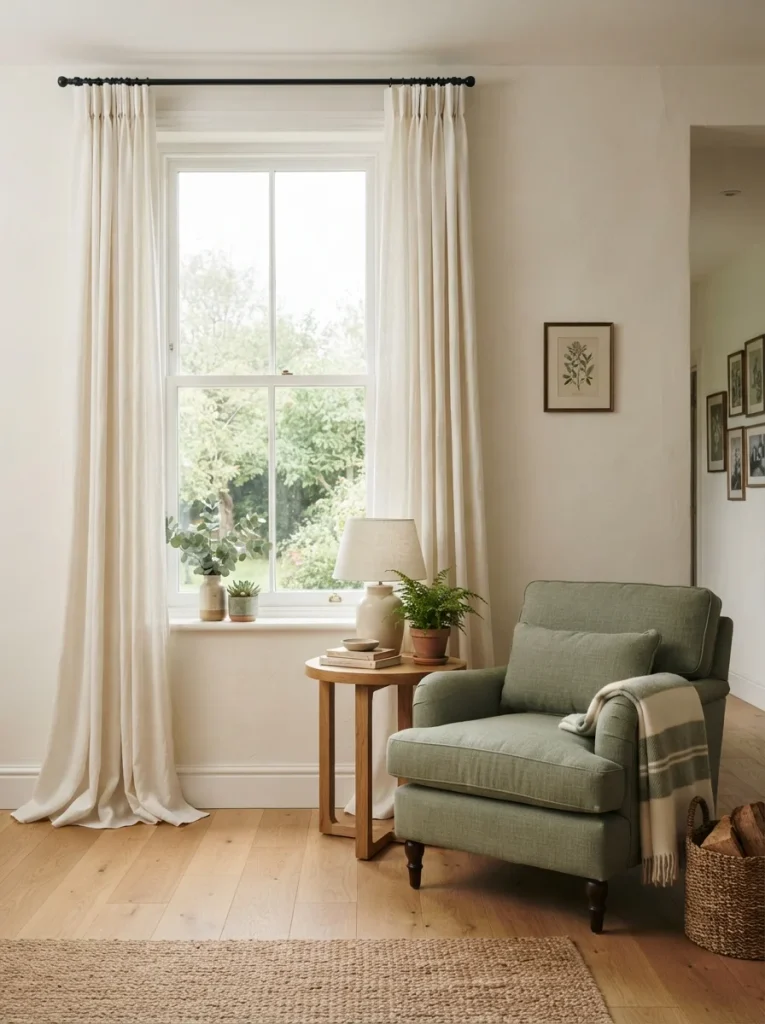
Mount the rod 4 to 6 inches above the window frame and extend it 8 to 12 inches past each side. Pick panels that skim the floor or break just barely. Choose a width of two times the window so the fabric looks full when closed.
Short curtains make windows look small and ceilings look low. Height fixes both. Hanging the rod near the ceiling draws the eye upward, and the extra width lets sunlight pour in when the panels are open. Linen blends soften glare without making the room dark.
Reading Nook Corner
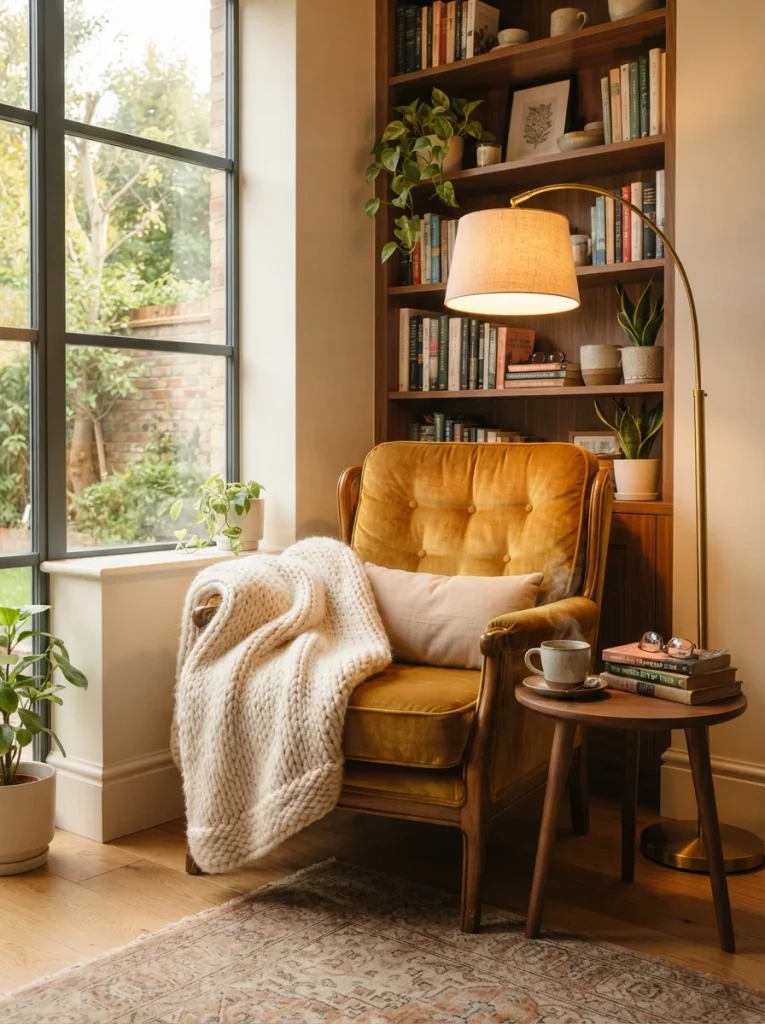
BEFORE: The corner by the window holds a laundry basket and a pile of unread books. Nobody sits there because nothing about it invites you to stay.
AFTER: One armchair, one lamp, and one small table now turn it into the quietest seat in the house. A throw rests on the arm, and a book waits on the table.
A good nook needs three things: comfortable seating, light you can read by, and a surface within reach. Angle the chair slightly toward the room, not the wall, so it feels social. Keep a lamp bulb around 800 lumens, and store a basket of favorites beside it.
Accent Armchair Pair
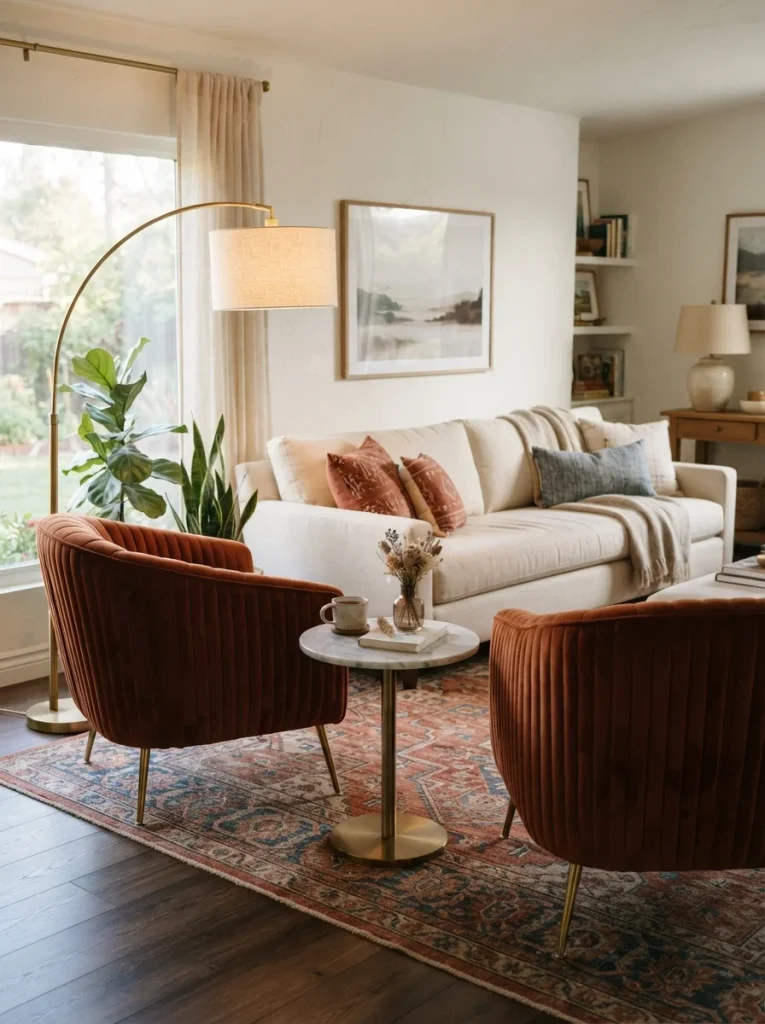
- Measure the space first. Leave at least 30 inches between the chairs and the sofa for easy walking.
- Pick two matching chairs in a color pulled from your rug or art.
- Angle them toward each other, not straight at the TV, to make chatting natural.
- Slide a small round table between them for drinks and a lamp.
- Add one patterned pillow per chair, and keep the rest solid.
Two chairs invite conversation in a way a lone sofa never will. A pair also gives guests somewhere to land without crowding the couch. In my experience, chairs with open arms and slim legs keep a small room from feeling heavy. Test comfort in person, since deep seats and low backs vary a lot.
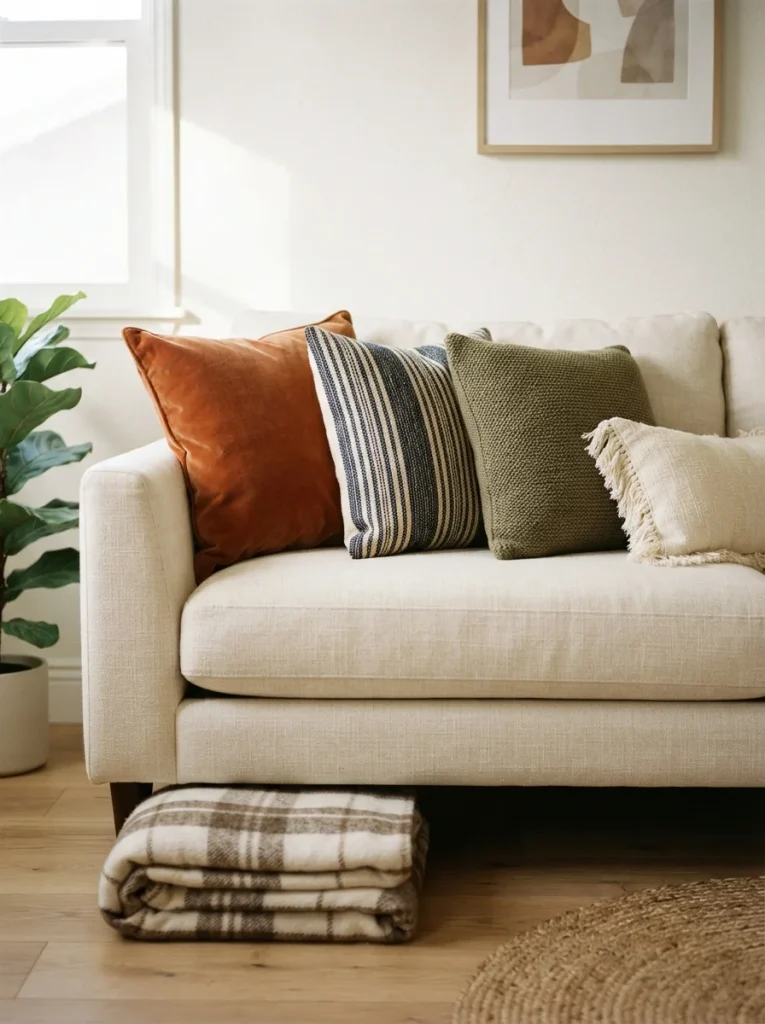
Pillow Mixing Rules
| Matching Set | Mixed Layers | |
|---|---|---|
| Look | Neat but a bit stiff | Collected and relaxed |
| Effort | Almost none | Needs one simple rule |
| Best for | Formal rooms | Cozy family rooms |
Pillows are the cheapest way to change a sofa overnight. Follow one rule: three sizes, two patterns, and one solid. Place the largest pair at the back and a smaller lumbar in front. Pick inserts one size bigger than the covers so the pillows look plump, not flat.
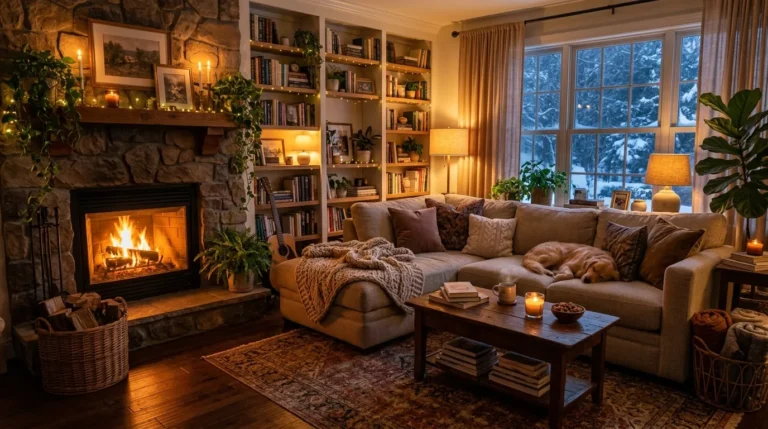
Fireplace Mantel Styling
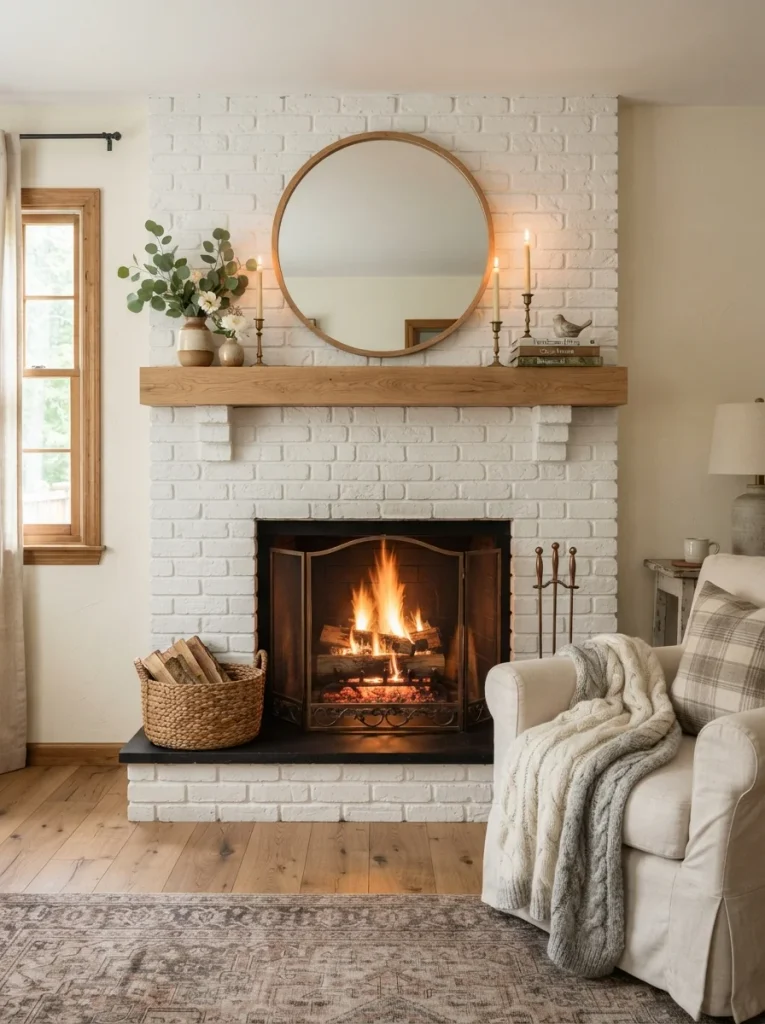
Do:
- Lean one large mirror or art piece at the center.
- Group items in odd numbers with different heights.
- Keep candles and dried stems well away from a working firebox.
- Add one living touch, such as fresh greenery.
Don’t:
- Don’t spread decor evenly from edge to edge.
- Don’t hang a TV above a wood burning firebox, since heat can damage it.
- Don’t place paper or fabric within reach of flames.
A mantel is the stage of the room, so style it with one clear focal point. Start with the largest piece, add height on one side, and balance with something low on the other. Swap one item each season, and the whole fireplace feels new without a shopping trip.
Deep Green Accent Wall
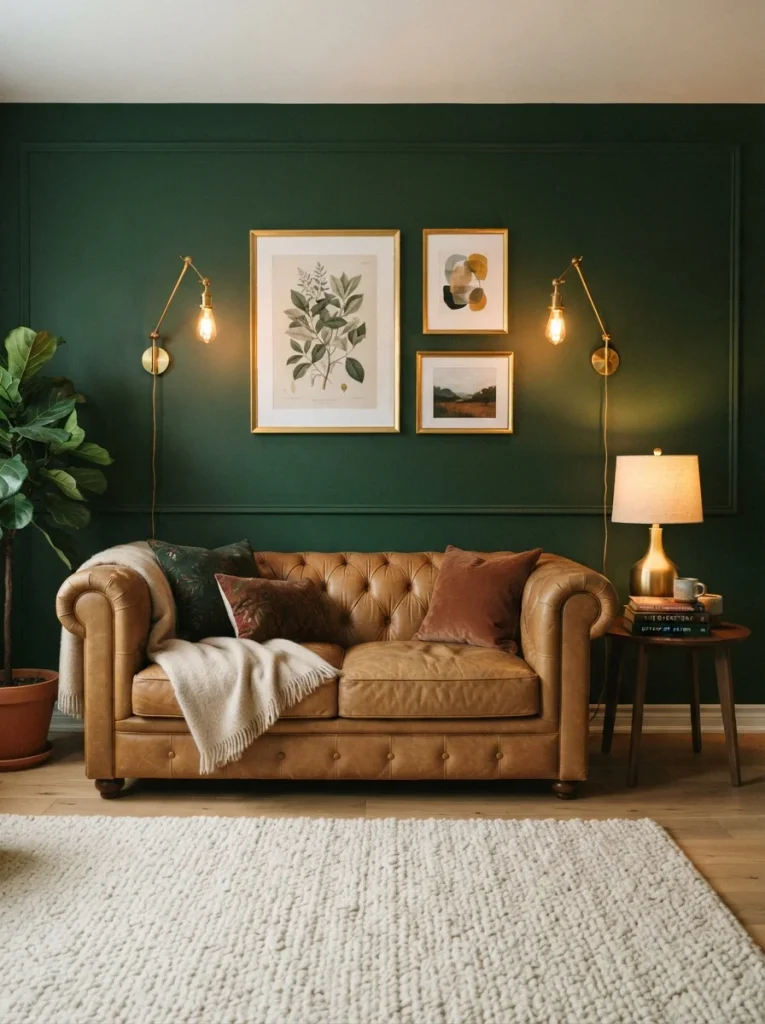
Cost: Low | Time: One weekend | Skill Level: Beginner | Best For: Rooms with one strong wall
Color gives a plain room a pulse. Paint the wall you face when you walk in, since that is the one everyone sees first. Choose a matte or eggshell finish to soften glare, and test a large sample for three days in morning and evening light. Use warm bulbs so the green glows.
Small Room Layout
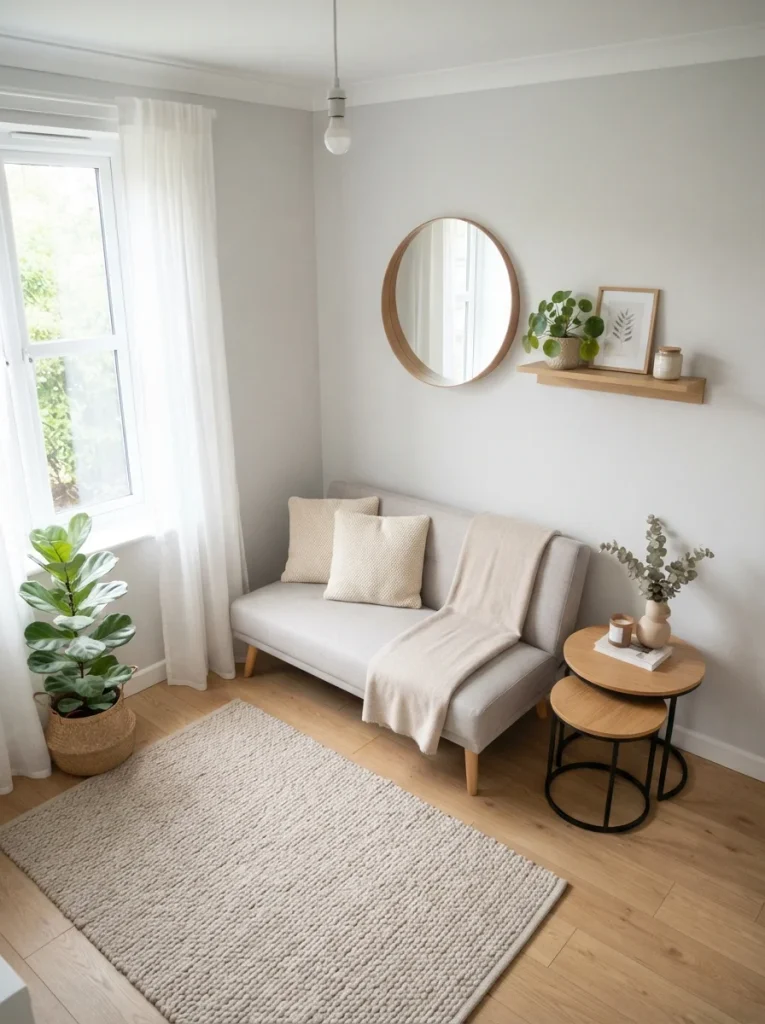
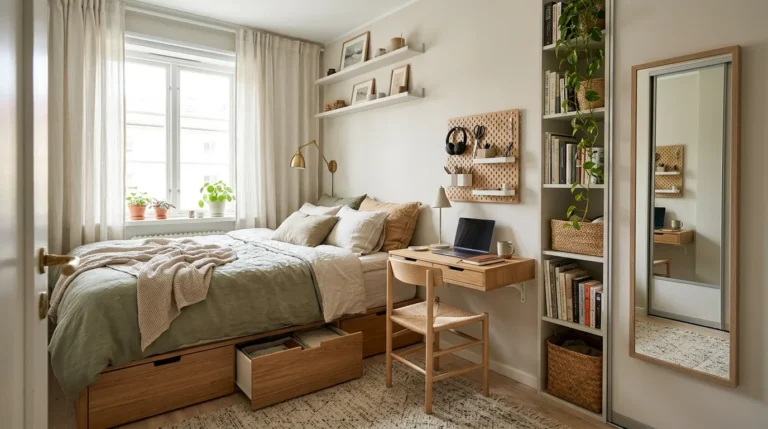
Small rooms feel tight when furniture crowds the walls. Choose a loveseat on raised legs so floor shows underneath, and leave a few inches behind it. Visible floor tricks the eye into reading more space, even in a studio apartment. Measure first, then tape the footprint on the floor.
Among the smartest living room decor ideas for tight spaces, going vertical wins. Hang shelves above the sofa, stack nesting tables, and use a round mirror to bounce light. Keep the palette to two or three colors so the eye never gets tired.
Sectional Sofa Setup
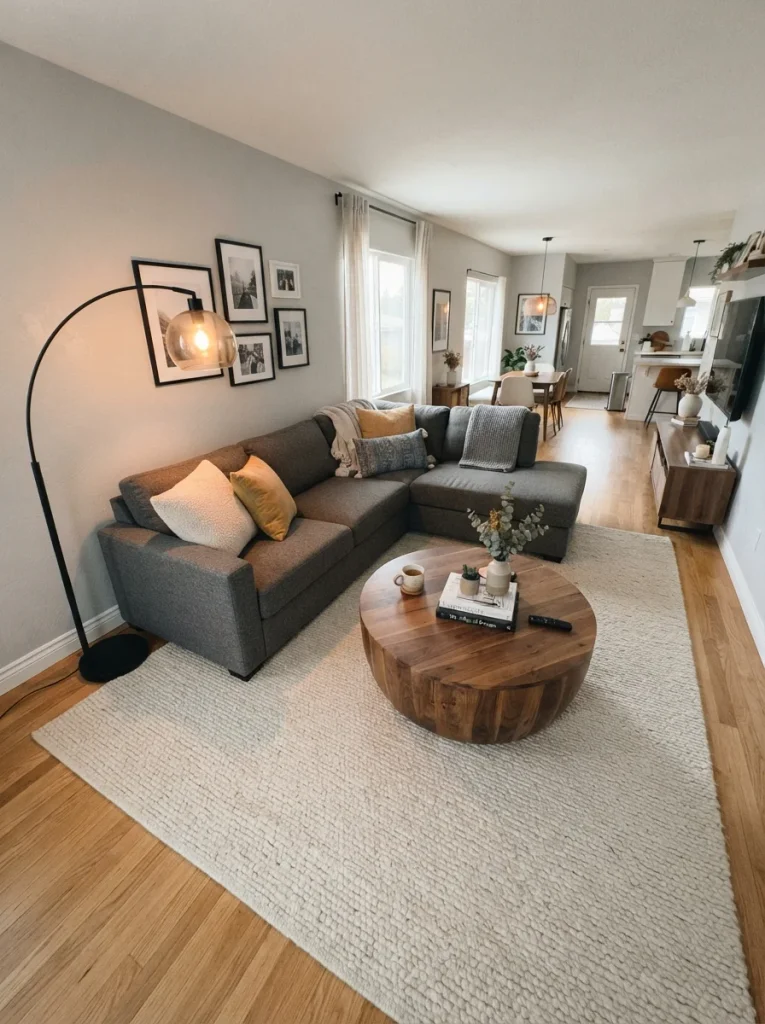
- Float the sectional a foot or two off the wall to define the seating zone and make the room feel bigger.
- Place a narrow console behind the back to hold a lamp and drinks.
- Put the chaise on the side closest to the room’s edge, so it never blocks traffic.
- Anchor the set on a rug large enough for the front legs of every piece.
- Leave 30 to 36 inches for walkways around it.
Sectionals can swallow a room if they are placed carelessly. Measure the footprint with painter’s tape and walk around it for a day. I’ve seen families move the chaise to the other end and suddenly gain a clear path to the kitchen. Choose performance fabric if kids or pets share the couch.
Candle Glow Grouping
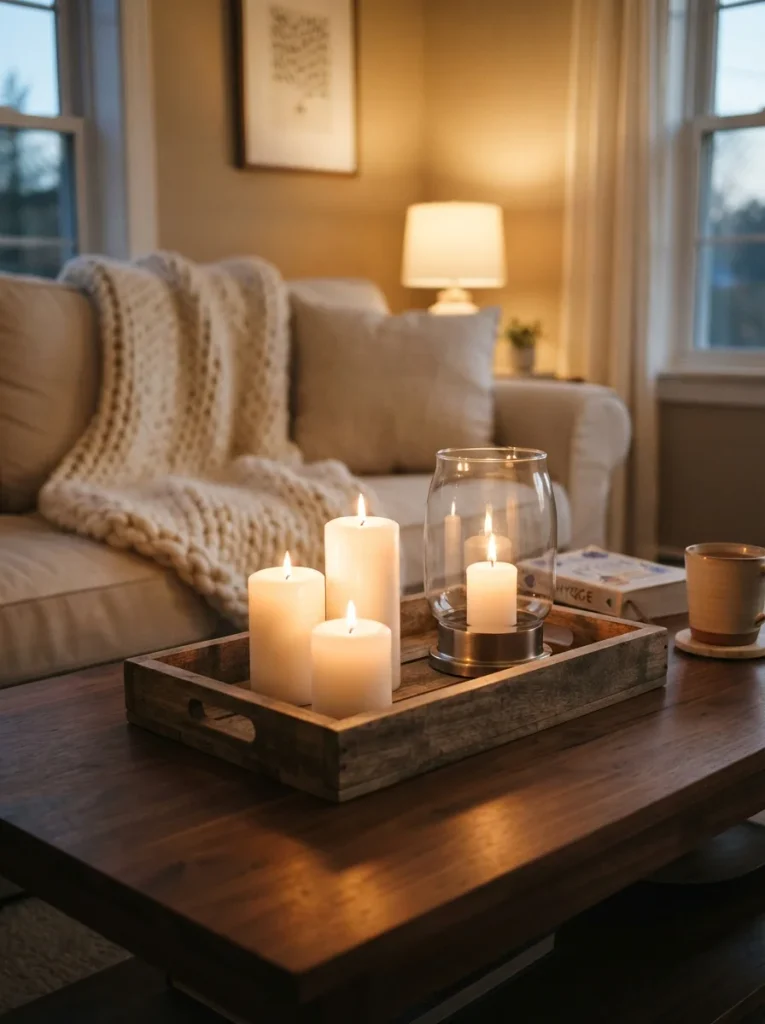
Quick Tip:
Group candles in threes with different heights, and set them on a tray to catch wax. Trim each wick to a quarter inch before lighting. Keep flames at least 12 inches from fabric, and never leave them burning in an empty room.
Flame light is softer than any bulb. A small cluster on the coffee table gives the room a slow, warm pulse at night. Choose unscented or lightly scented candles, since strong fragrance competes with dinner smells. Flameless LED candles with a flicker setting work well for homes with toddlers and pets.
Open Shelf Styling
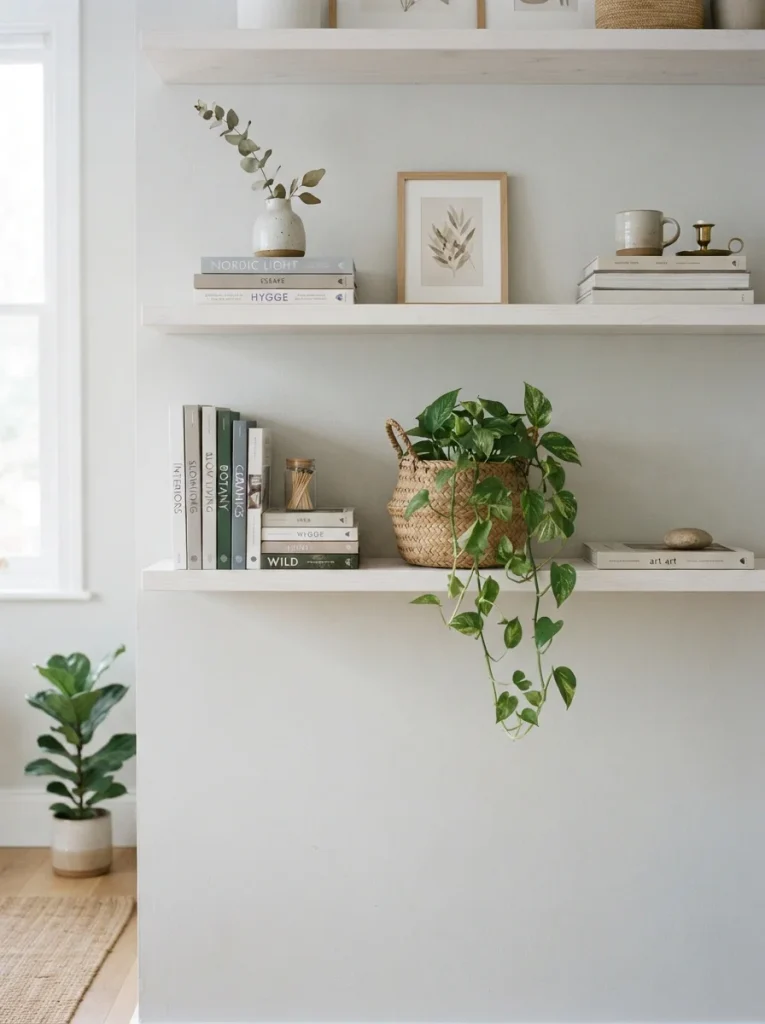
BEFORE: Every inch of the shelf is full, so nothing stands out. Books lean in every direction, and small trinkets hide behind them.
AFTER: Items now sit in small groups with room to breathe. Stacks of books alternate with a vase, a framed print, and a plant, and each shelf has a clear point of focus.
Shelves look styled when about a third of the space stays empty. Group items in threes, mix horizontal stacks with upright books, and vary heights. Put the heaviest or darkest pieces on the lowest shelf. Step back every few minutes, since small changes read better from across the room.
Basket Storage Corners
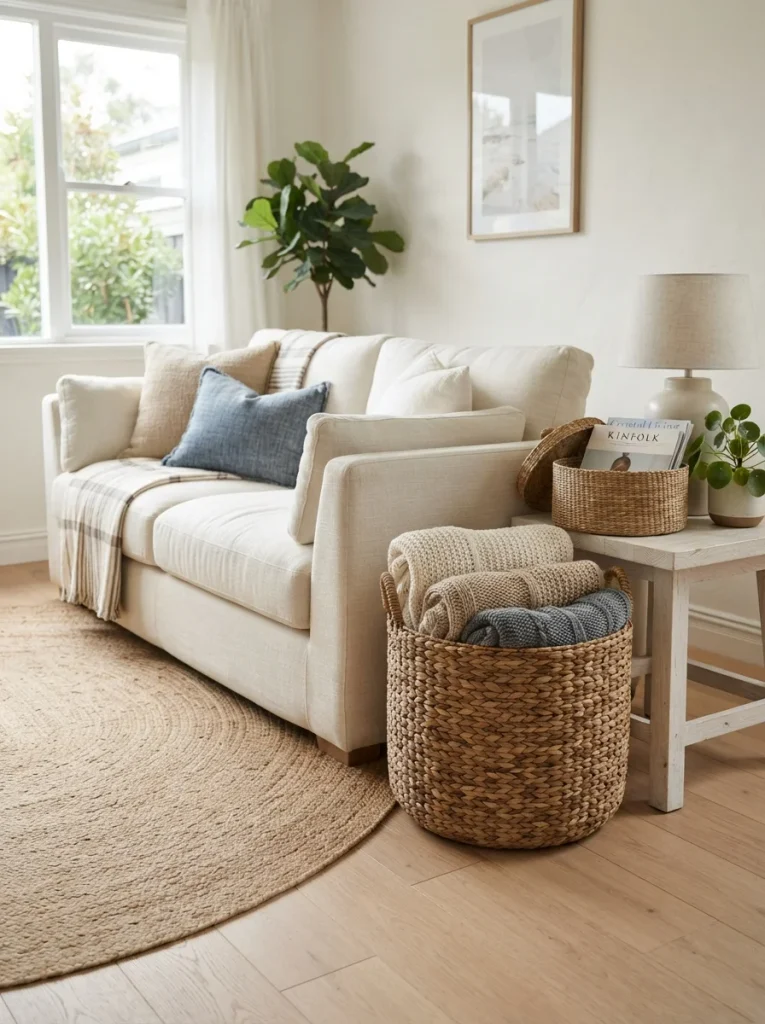
- Walk the room with a laundry basket and collect loose items like remotes, toys, chargers, and magazines.
- Sort them into three groups: blankets, kids’ items, and everyday clutter.
- Give each group its own basket, with one large open basket for blankets and lidded ones for the rest.
- Place the baskets where the mess builds up, such as beside the sofa and under the console.
- Add a small label tag to each one so everybody knows where things go.
Baskets work because they make storage look like decor. Pick one material, such as seagrass or cotton rope, so the set feels calm. Measure the space before you buy, since many baskets are an inch wider than they look. Empty and wipe them every month to keep dust out.
Vintage Piece Mix
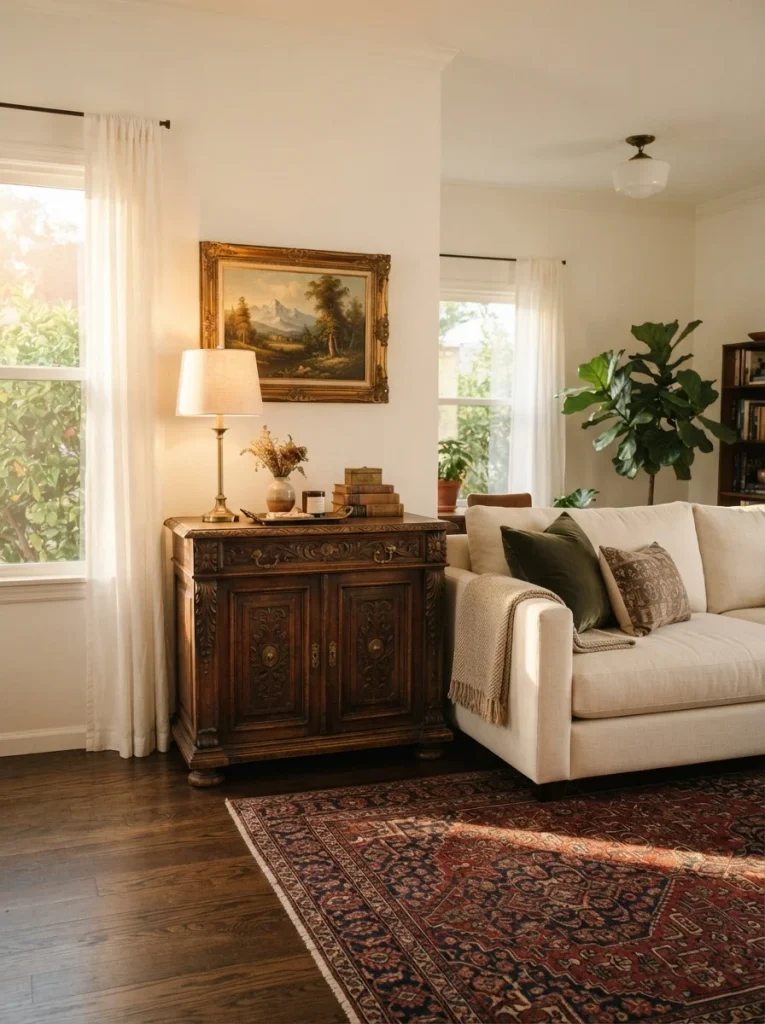
| All New Furniture | New Mixed With Vintage | |
|---|---|---|
| Personality | Clean but generic | One of a kind |
| Cost | Higher for solid wood | Often lower at thrift stores |
| Quality | Varies by brand | Often solid wood that lasts |
Every room needs one piece with a past. A vintage cabinet, a worn rug, or an old painting adds depth that new furniture cannot copy. Start with a single item, and match its tone to your wood or metal accents. Check for wobbles and wood bugs before you carry anything home.
Art Leaning Display
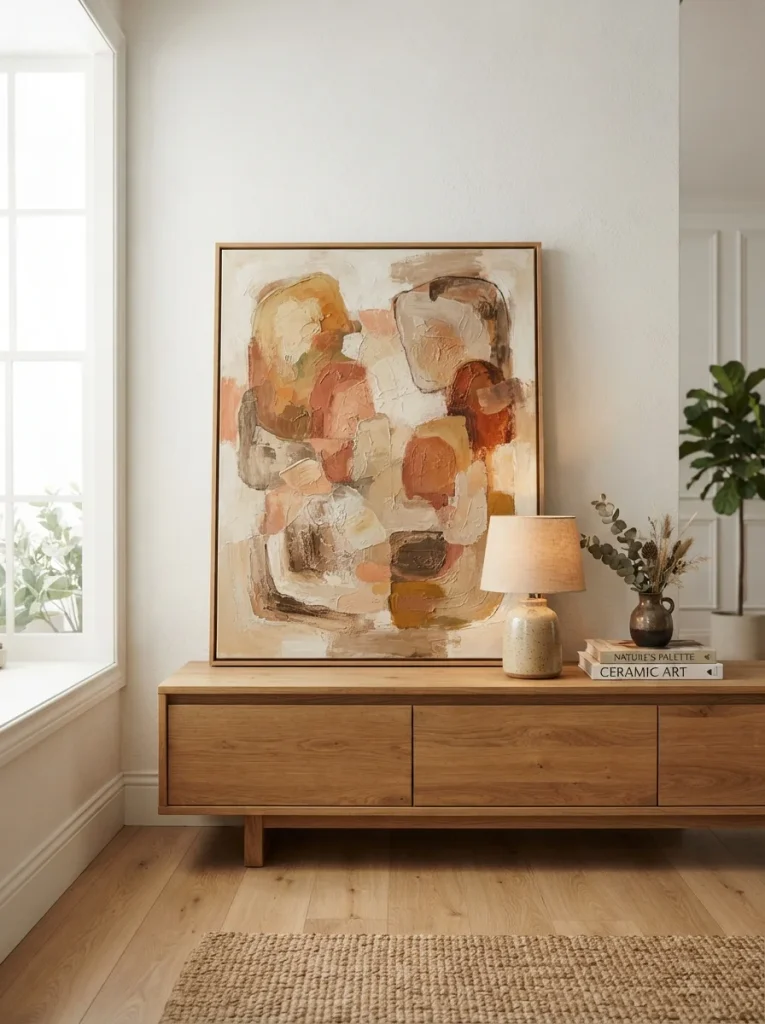
Do:
- Lean art on a console, mantel, or floor shelf for a relaxed look.
- Choose a piece at least two thirds as wide as the surface.
- Layer a smaller frame in front of a larger one.
- Use a bit of museum putty so the canvas cannot slide.
Don’t:
- Don’t lean heavy glass frames where kids or pets can bump them.
- Don’t place art over a heat source.
- Don’t crowd the surface with too many items.
Not every piece needs a nail. Leaning art skips drilling and lets you swap pieces in seconds, which suits renters. Add a lamp on one side to balance the visual weight. Tilt the canvas back slightly so gravity holds it in place. Swap in a new piece each season.
Seasonal Swaps
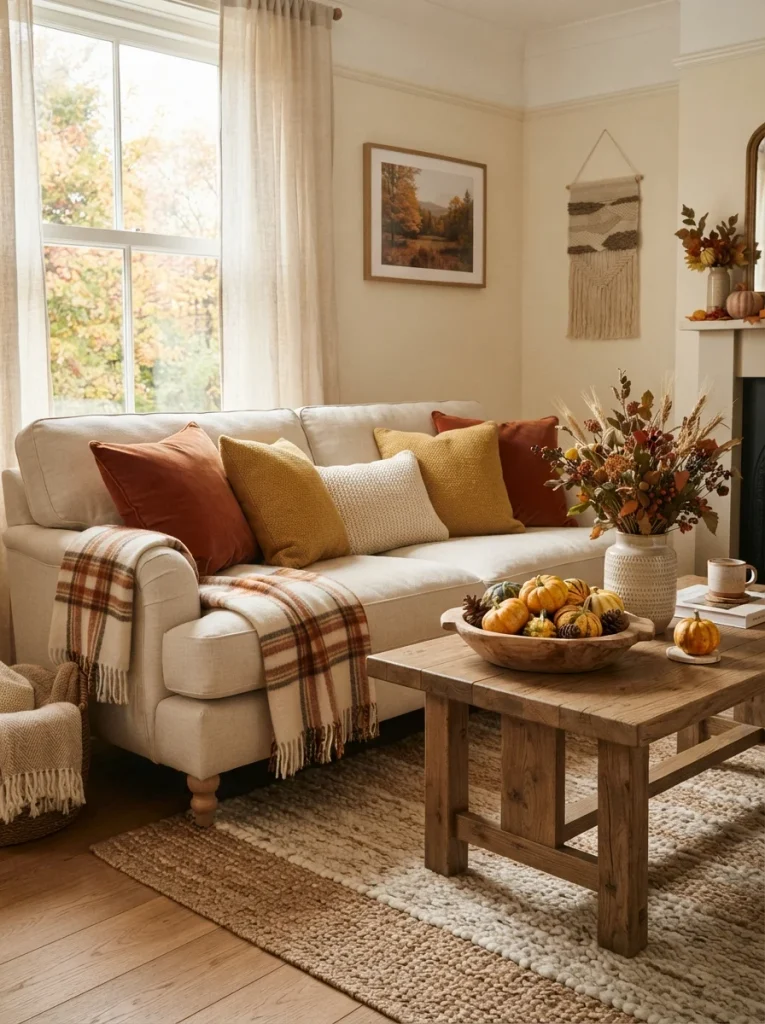
Cost: Low | Time: 20 minutes per season | Skill Level: Beginner | Best For: Fresh looks without a big budget
Four small swaps a year keep a room feeling alive. Change only pillow covers, one throw, and a tabletop item. Store off season pieces in one labeled bin so the next change takes minutes. I’ve noticed that fewer, bolder swaps look more polished than many tiny ones.
Textured Wall Panels
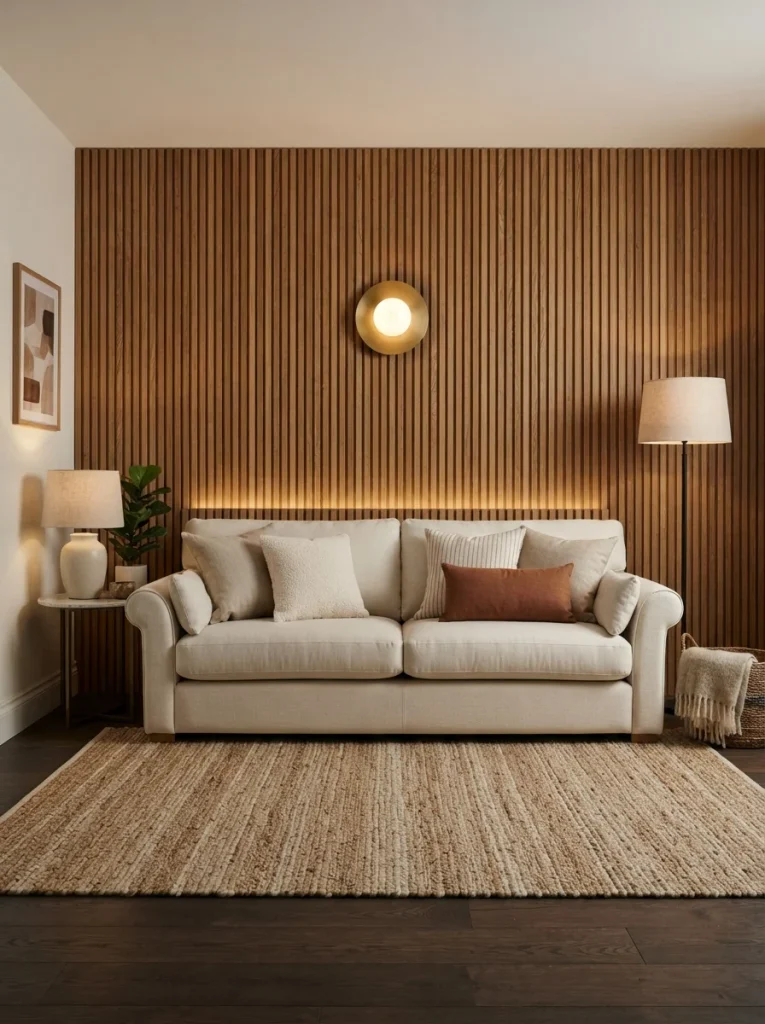
A flat wall can feel cold, but texture warms it fast. Wood slats, board and batten, or fluted panels add shadow lines that shift through the day. Peel and stick slat panels make the look easy for renters and need only a level and a tape measure.
Pick the wall behind the sofa or TV, since it carries the most attention. Paint panels the same color as the wall for a quiet look, or leave natural wood for warmth. Add a slim LED strip at the top edge for soft evening glow.
Plug In Wall Sconces
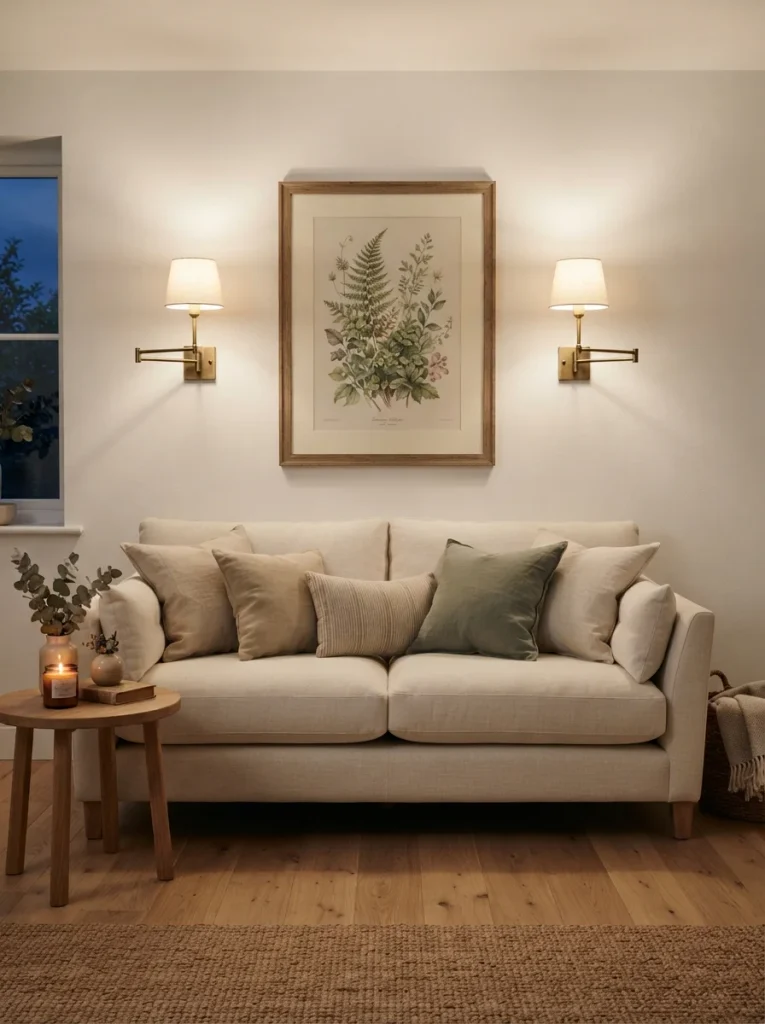
- No outlet nearby? Choose plug in sconces with a cord cover that matches the wall color.
- Hang them 60 to 66 inches from the floor, about 8 inches from each side of the art or sofa.
- Choose warm bulbs around 2700K so the glow stays soft.
- Add a dimmer cord switch for easy control from the sofa.
- Keep both sconces at the same height so the pair looks intentional.
Wall light frees up table space and adds glow at eye level. Sconces beside a sofa or art piece cast light upward and sideways, so the wall itself seems to glow. Renters usually prefer plug in versions, since no electrician is needed and only two small holes need patching later.
Hidden TV Cabinet
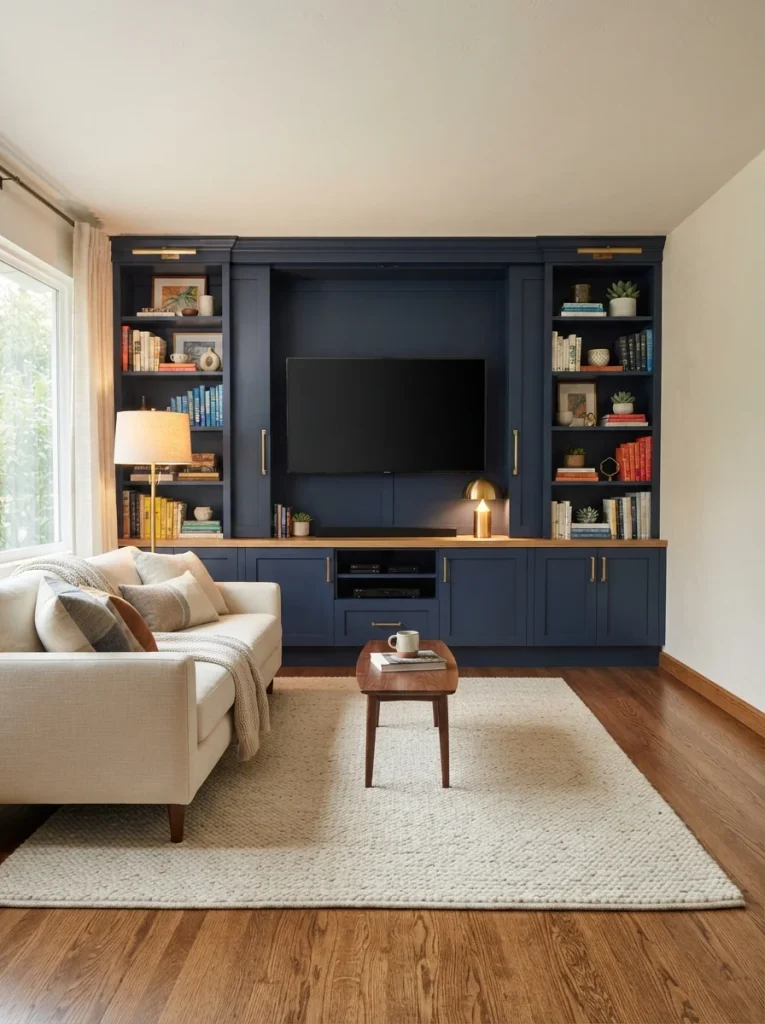
Quick Tip:
Leave 2 to 3 inches of ventilation space behind and above the TV so it does not overheat. Run the power and cables through the back panel to one hidden outlet. Choose doors that slide or fold flat so they never block the screen.
A dark screen can dominate a room even when it is off. Closed doors turn it back into calm furniture. Paint the cabinet the same shade as the wall for a built in look, and add a small shelf on the side for a lamp. Open the doors fully before turning the set on.
Fresh Flower Touch
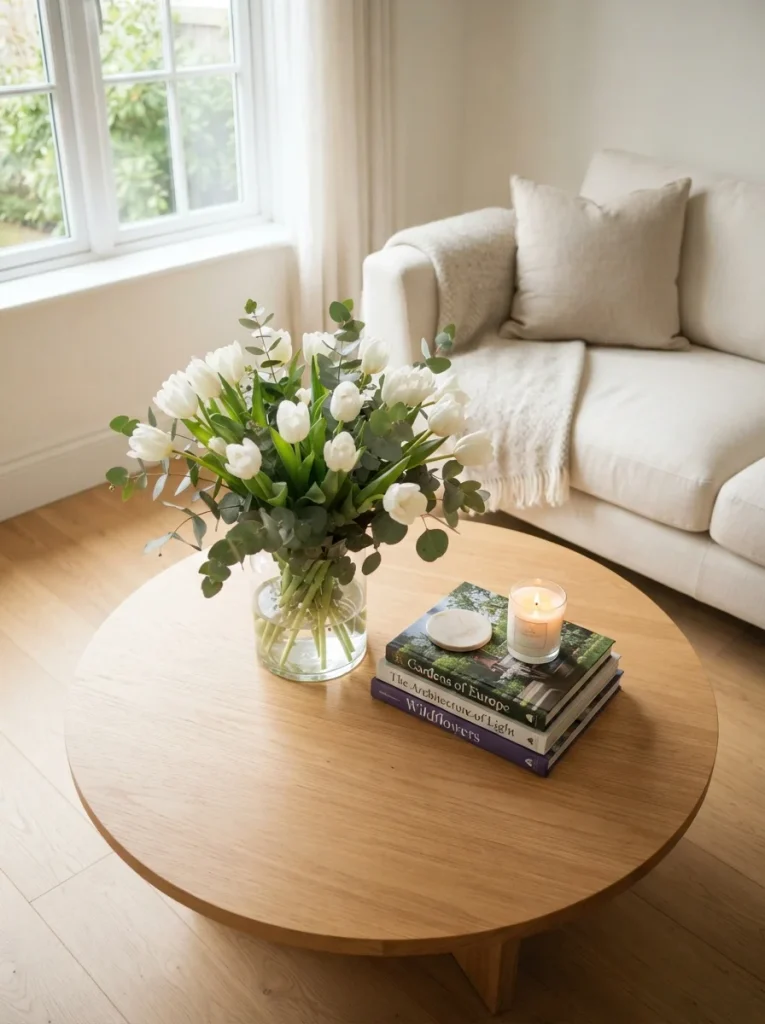
BEFORE: The coffee table holds a remote and yesterday’s mail. The room is neat, yet something still feels missing.
AFTER: A single vase of fresh stems now sits in the center. Color and scent soften the whole room, and the table finally looks finished.
Fresh flowers are the cheapest finishing touch there is. Buy one bunch of a single type, such as tulips or eucalyptus, and trim the stems at an angle. Use a vase about half as tall as the flowers, and change the water every two days so the blooms last longer.
Conclusion
A welcoming living room is built from small choices: softer light, cozy layers, and a spot for everyone to land. I’ve seen how small changes like these can completely shift the way a space feels, often in a single afternoon.
Pick one idea from this list, try it this week, and let the room grow from there. With so many living room decor ideas to choose from, you are sure to find a place to begin. Save this post on Pinterest, share it with a friend who needs a fresh start, and enjoy coming home.