Small Bedroom Ideas: 29 Tricks That Make It Feel Huge
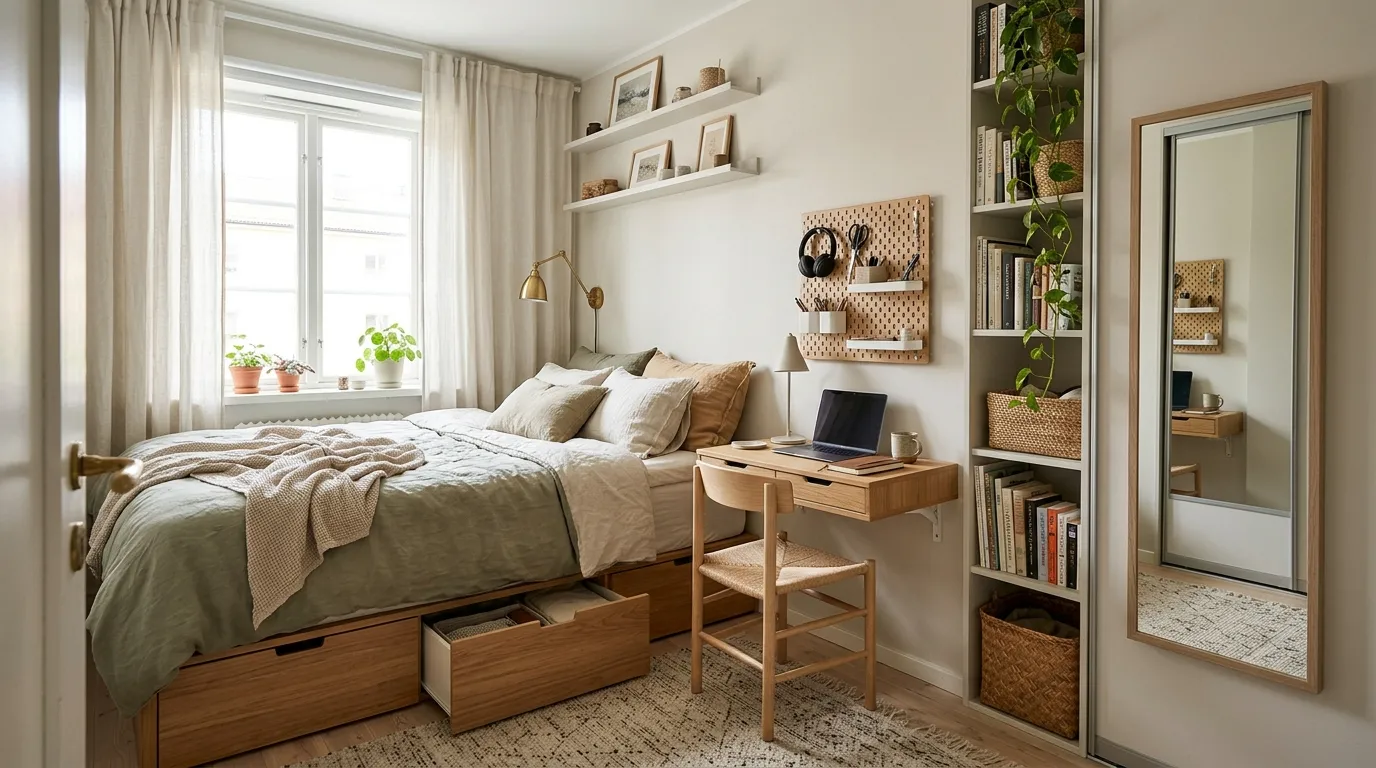
A small bedroom can feel cramped, cluttered and difficult to decorate, even when you have all the right furniture. But a few smart changes can make your space feel surprisingly open and comfortable.
These Small Bedroom Ideas will help you create a brighter, more spaciouslooking room without needing a bigger home or an expensive makeover. From clever storage solutions and light reflecting mirrors to space saving furniture and calming color palettes, each idea focuses on making the most of the room you already have.
The secret isn’t removing everything you love. It’s choosing the right pieces, arranging them thoughtfully and letting your bedroom breathe. I’ve noticed that simple changes, such as clearing the floor, hanging curtains higher and reducing visual clutter, can make a room feel much more inviting. Whether you’re decorating a tiny apartment bedroom, a rental or a compact guest room, these practical tricks will help you create a space that feels organized, stylish and restful. Keep reading to find the ideas that work best for your room, your budget and your everyday routine.
Light Neutral Walls
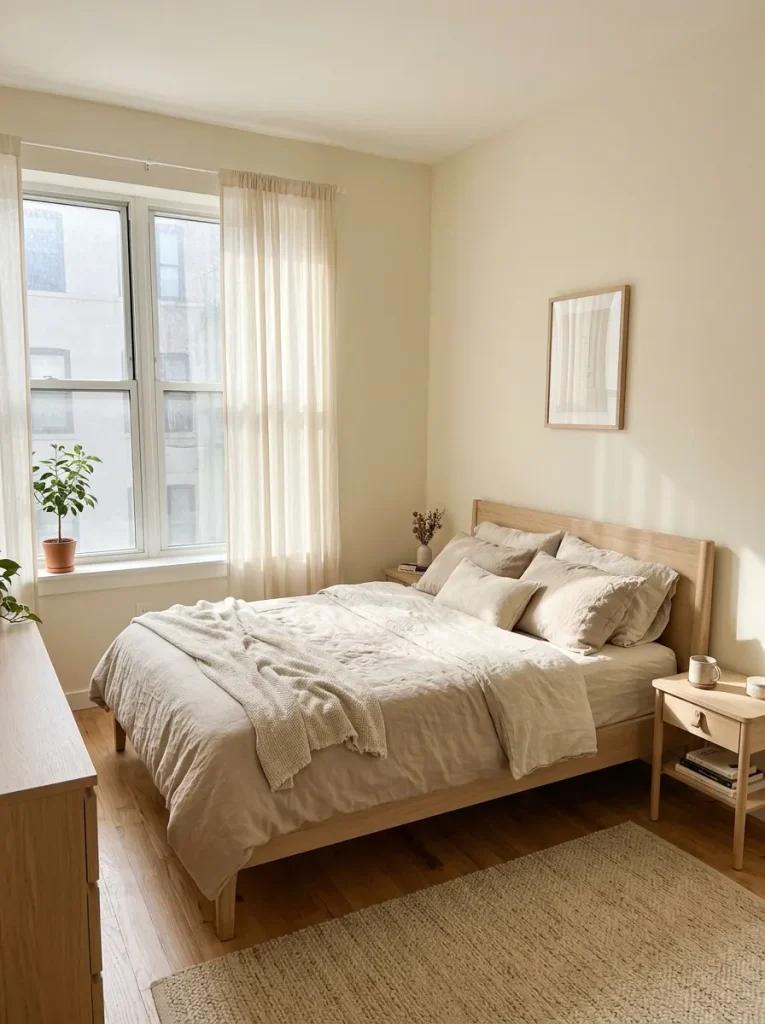
Soft, light colored walls can make a compact bedroom feel more open without changing its actual size. Shades like warm white, ivory, pale beige and light greige reflect natural light and create a calm backdrop for the rest of your decor.
For the best result, choose one light shade for most walls and keep the ceiling white or slightly lighter. In my experience, warm neutrals often feel more inviting than stark white, especially when paired with wooden furniture and textured bedding. Keep bold colors for small accents, such as cushions or artwork, so the room feels bright rather than visually crowded.
2. Floor Length Curtains
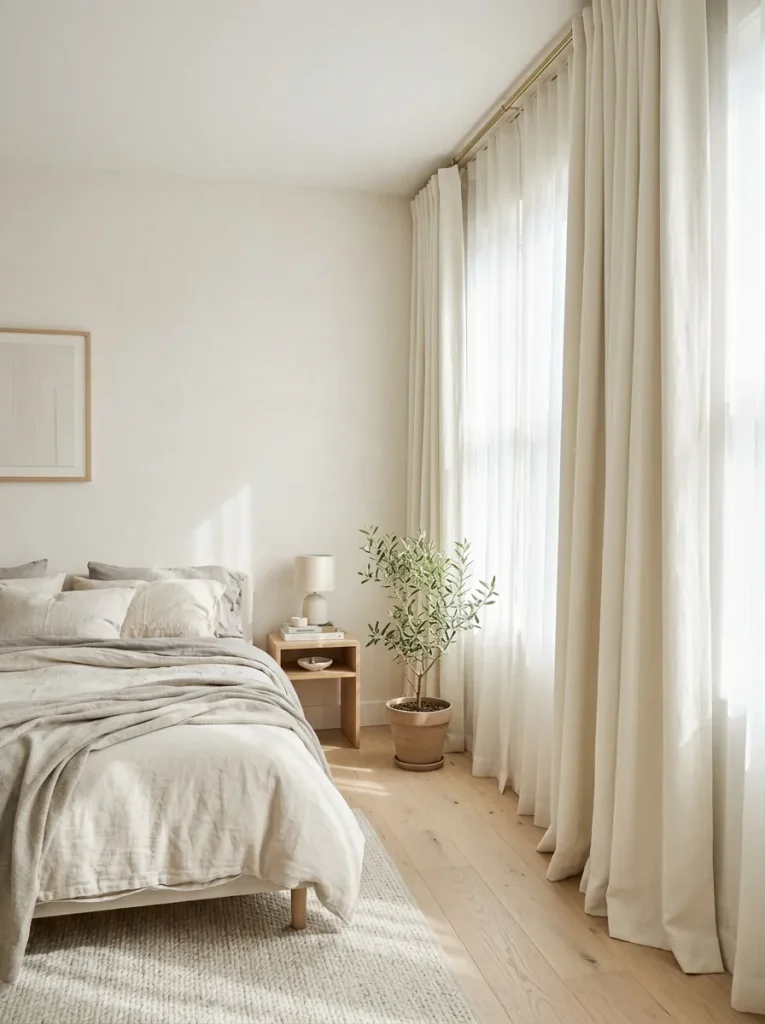
- Mount curtains higher: Place the curtain rod close to the ceiling to draw the eye upward.
- Extend the rod: Let it reach beyond both sides of the window to make the window appear wider.
- Choose lightweight fabric: Sheer cotton or linen allows daylight to filter into the room.
- Match the walls: Similar curtain and wall colors create a continuous visual effect.
- Keep the hem clean: Let the fabric lightly touch the floor without pooling excessively.
Long curtains create the impression of taller walls, especially in bedrooms with low ceilings. Avoid heavy, dark drapes that cover much of the window during the day. A simple ceiling mounted track or slim curtain rod works well in rental rooms, too. Pair sheer panels with blackout liners if you need darkness for sleeping.
3. Mirrors Opposite Windows
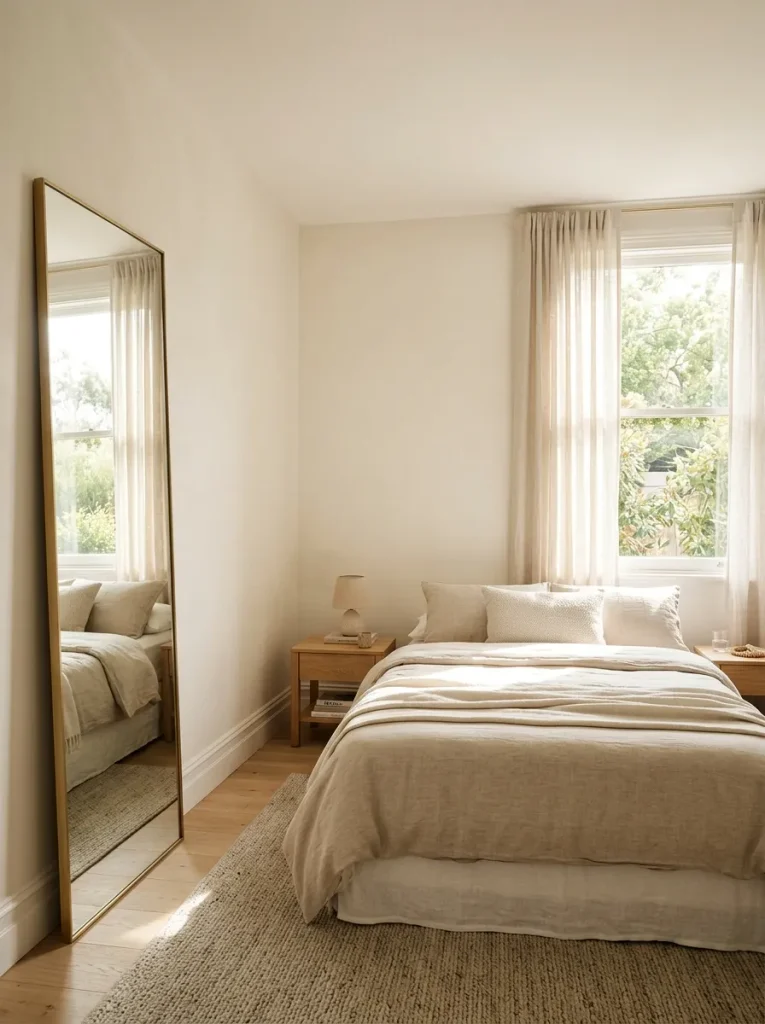
Quick Tip:
Position a full length mirror where it reflects daylight, a pleasant view or an uncluttered part of the bedroom. Choose a slim frame in light wood, champagne gold or matte black. Avoid reflecting laundry piles, open wardrobes or cluttered shelves.
Mirrors can make a small bedroom feel brighter because they reflect existing light and create a stronger sense of depth. A leaning floor mirror works well beside a wardrobe, while a wall mounted mirror saves valuable floor space. Before drilling, check for hidden wiring and choose secure fixings suitable for the mirror’s weight. The best placement reflects something attractive rather than simply adding another decorative object.
4. Under Bed Storage
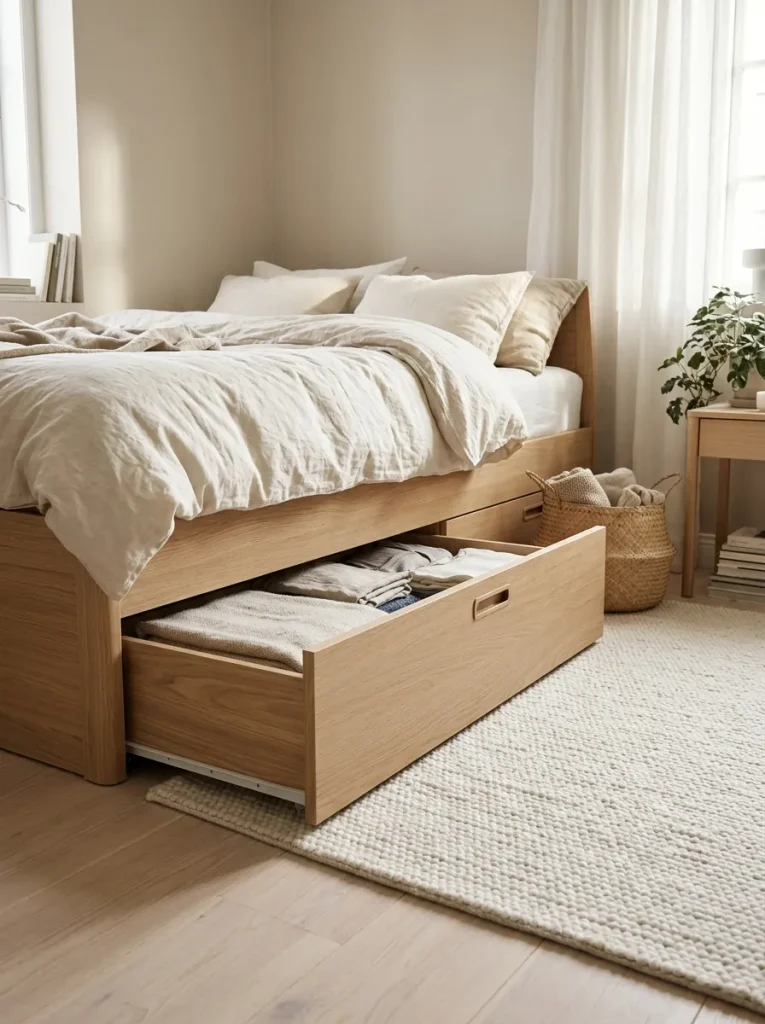
BEFORE: Shoes, spare blankets and seasonal clothes fill the wardrobe and spill into corners. Bulky storage boxes make the bedroom feel crowded, leaving little room for everyday essentials.
AFTER: Shallow drawers beneath the bed keep belongings neatly hidden. The wardrobe becomes easier to organize and the visible surfaces stay clear.
Under bed storage works especially well in bedrooms where adding another cabinet would block movement. Measure the clearance beneath your bed before buying containers and choose covered boxes to protect fabrics from dust. Store seasonal items, extra bedding or shoes you rarely wear. Keep daily essentials somewhere easier to reach so you do not need to move several containers every morning.
5. Wall Mounted Nightstands
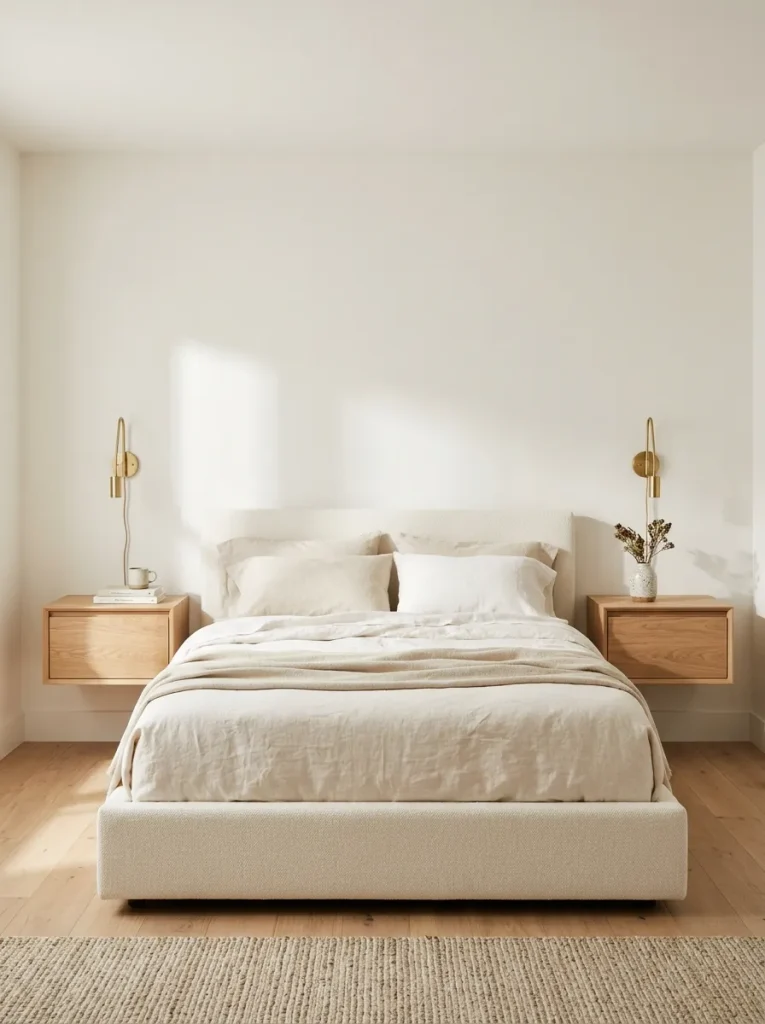
- Measure the bed height: Position each nightstand at a comfortable level for reaching a phone, book or glass of water.
- Choose a compact design: Look for a shallow shelf or drawer that holds everyday essentials without protruding too far.
- Mount securely: Use wall fixings appropriate for your wall type and the furniture’s weight.
- Move lighting upward: Install a wall mounted lamp to free the nightstand surface.
Floating bedside tables expose more floor beneath the furniture, helping the room look less crowded. They are especially useful when a traditional nightstand would leave only a narrow walking path beside the bed. Keep the tabletop simple with a small lamp, one book and a catchall dish. A single drawer is useful if you want hidden storage without a bulky cabinet.
6. Low Profile Furniture
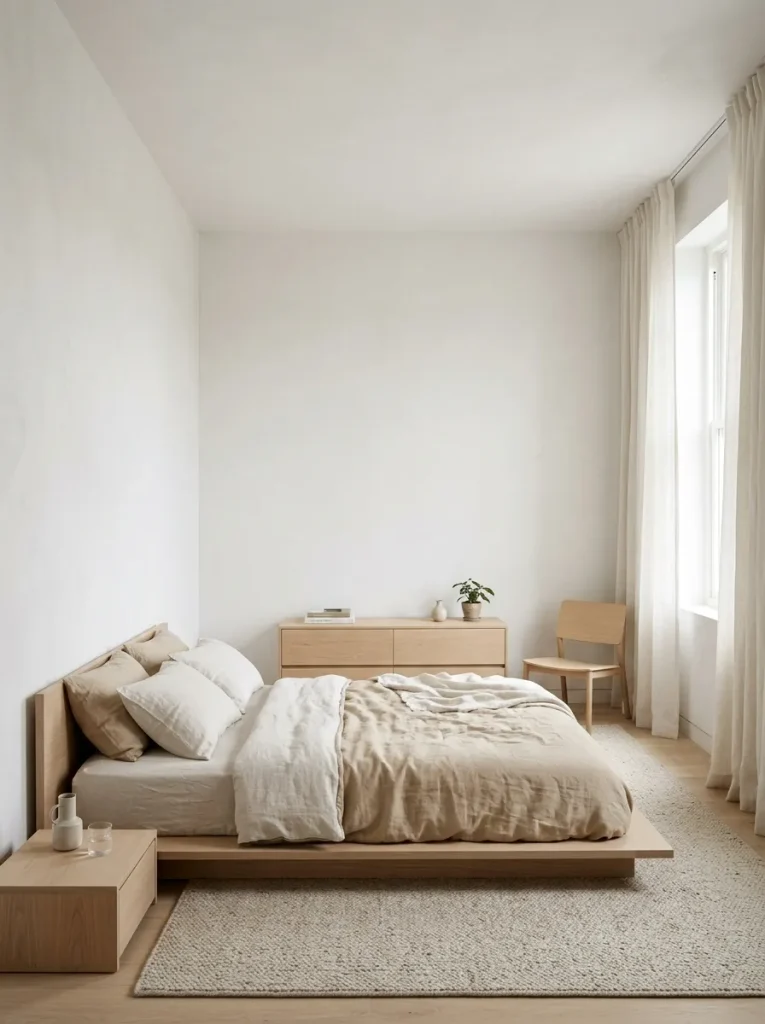
| Design choice | Old Way | Better Way |
|---|---|---|
| Bed frame | Tall, bulky frame | Low platform bed |
| Dresser | Deep, heavy cabinet | Slim, lower dresser |
| Bedside furniture | Large bedside chest | Compact floating shelf |
| Visual effect | Crowded sightlines | More visible wall space |
Furniture that sits lower can make a small bedroom feel more open by leaving more uninterrupted wall space above it. Choose pieces with simple shapes and proportions suited to your room rather than filling every corner. Before replacing anything, remove unnecessary items from existing furniture surfaces. Sometimes reducing visual clutter creates a similar effect without the expense of buying new pieces.
7. Vertical Wall Shelves
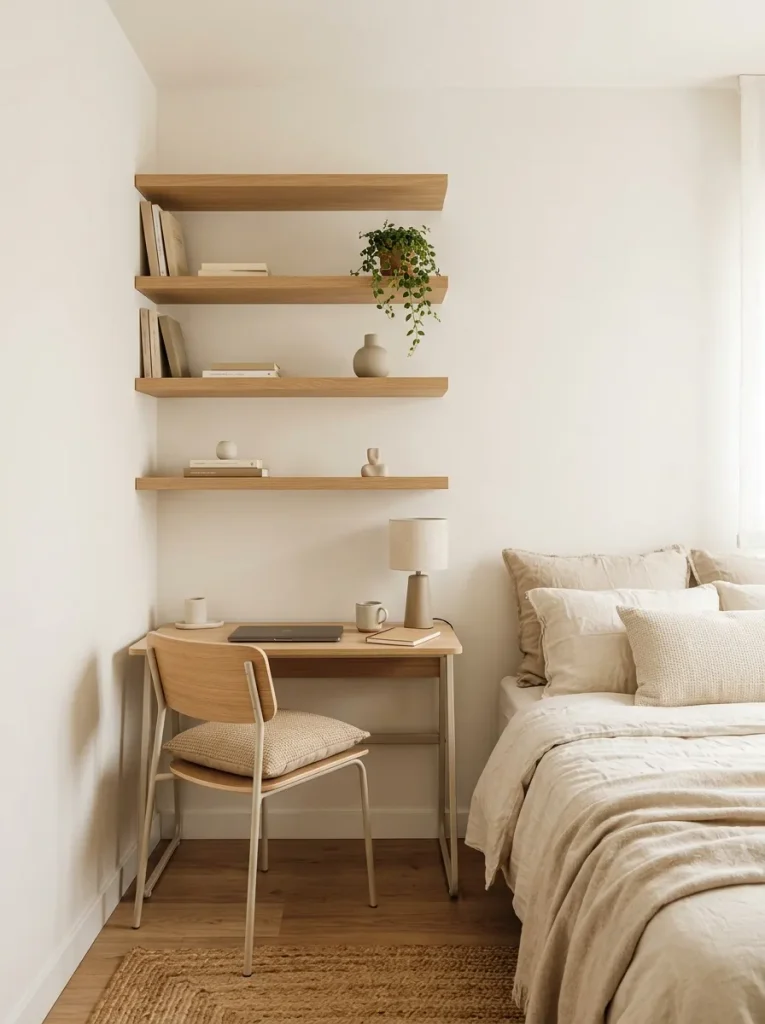
DO:
- Install narrow shelves above a desk or beside the wardrobe.
- Place frequently used items on the lowest shelf for easy access.
- Leave some empty space between decorative objects.
- Use matching baskets to conceal small accessories.
DON’T:
- Fill every shelf with books and ornaments.
- Install deep shelves that protrude into walking paths.
- Place heavy objects on shelves with unsuitable fixings.
- Arrange items so densely that the wall looks cluttered.
Vertical shelving uses wall space that might otherwise remain empty, keeping the floor available for movement. For a balanced appearance, combine a few useful items with simple decor and leave visible gaps between them. If your bedroom has a narrow layout, position shelves above existing furniture rather than adding them beside the bed where they could feel intrusive.
8. Sliding Wardrobe Doors
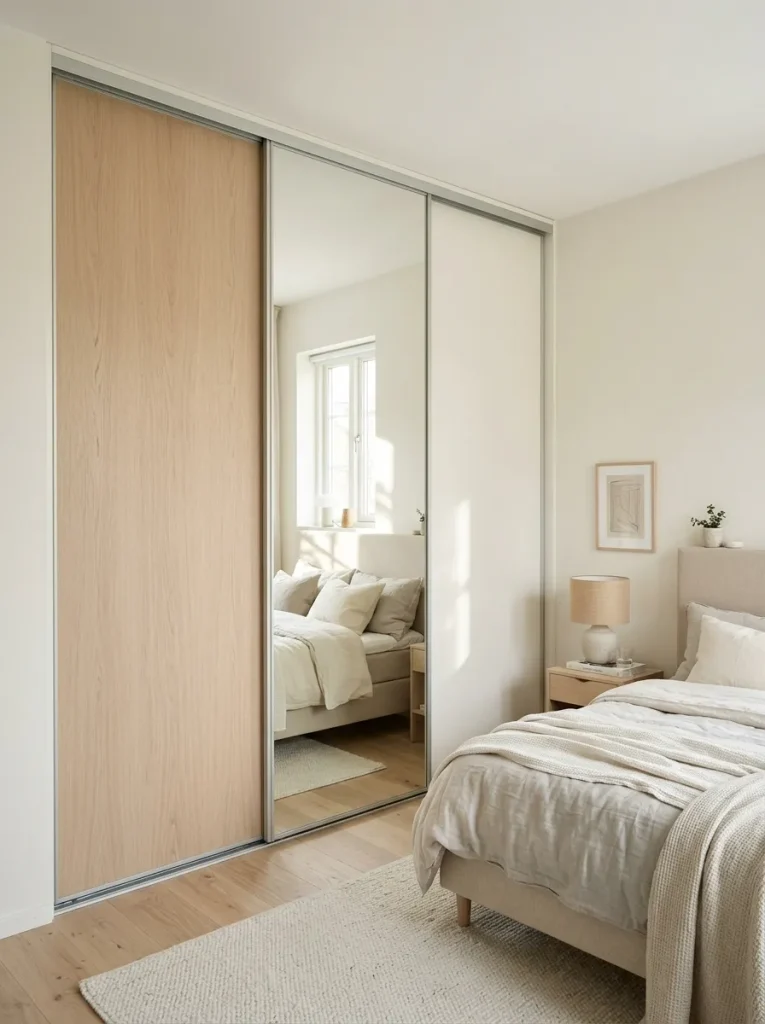
Cost: Moderate to high, depending on the wardrobe system.
Time: One afternoon for basic organization, longer for installation.
Skill Level: Beginner for styling; professional help may be needed for installation.
Best For: Narrow bedrooms where hinged doors restrict movement.
Sliding wardrobe doors move along a track instead of swinging outward, leaving more usable floor space in front of the closet. This can make getting dressed easier when the bed sits close to the wardrobe. Mirrored panels can also reflect daylight and visually expand the room. Measure the opening carefully and check that drawers, hanging rails and shelves remain accessible behind the sliding panels.
9. Matching Bedding Layers
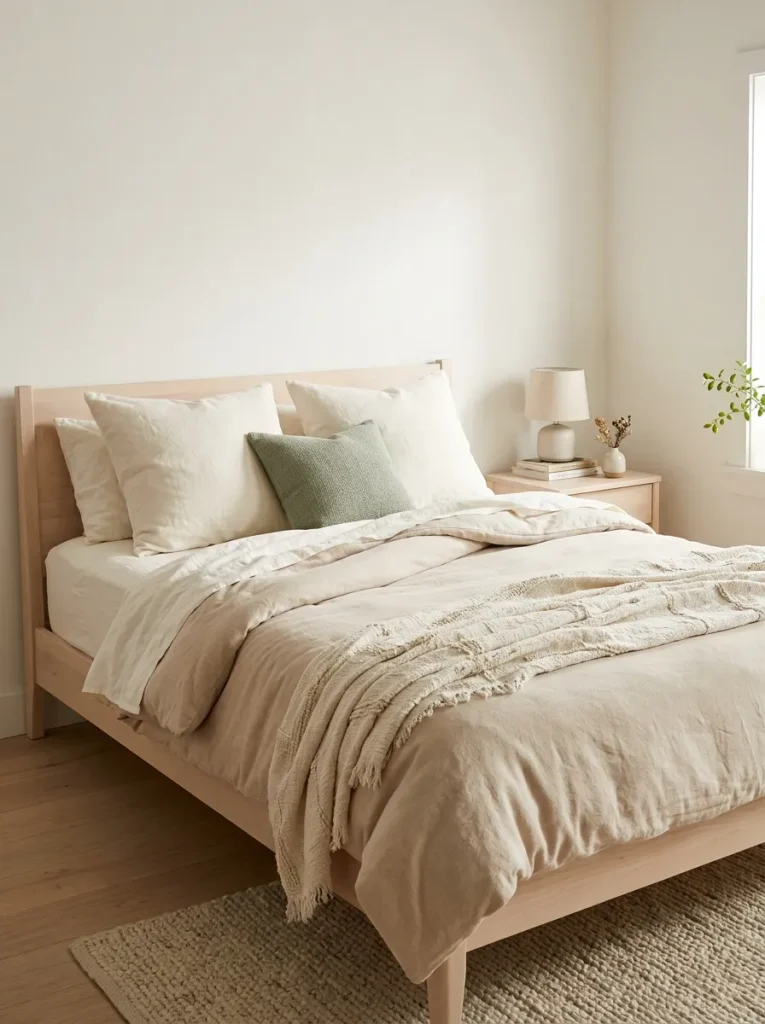
A coordinated bed can make the entire bedroom feel calmer because it creates one clear visual focal point instead of many competing colors and patterns.
Choose two or three complementary shades, such as cream, warm white and soft taupe. Layer plain sheets with a subtly textured duvet and add one or two accent cushions for depth. Keep large patterns to a minimum, particularly if the room already contains patterned curtains or wallpaper. A simple bedding palette helps the bed feel intentional rather than visually overwhelming.
10. Furniture With Legs
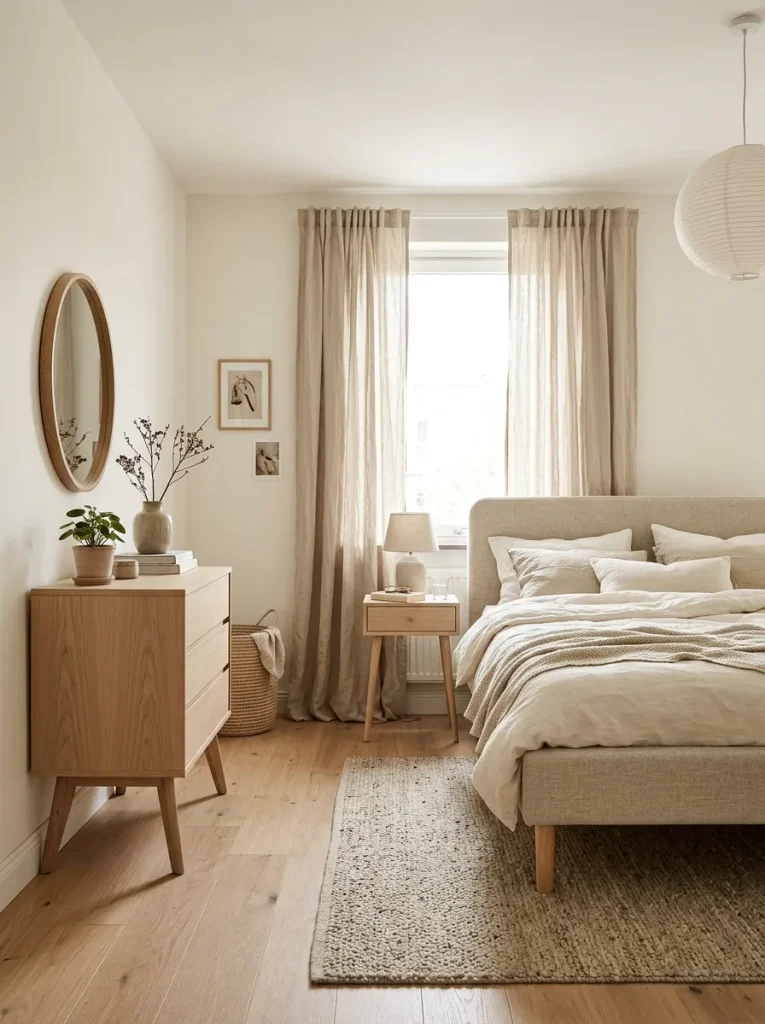
- Choose raised furniture: Look for dressers and bedside tables with visible legs rather than solid bases.
- Keep the legs slim: Simple wooden or metal legs create a lighter visual profile.
- Maintain floor visibility: Avoid placing baskets and boxes beneath every piece of furniture.
- Coordinate finishes: Similar wood tones help the furniture feel cohesive.
Furniture with exposed legs allows more flooring to remain visible, which can make a compact bedroom appear less crowded. The effect is particularly helpful when several pieces sit close together. If replacing furniture is not practical, remove unnecessary objects from the floor and keep the visible areas around each piece clear. Always choose stable furniture that suits your storage needs.
11. A Single Accent Wall
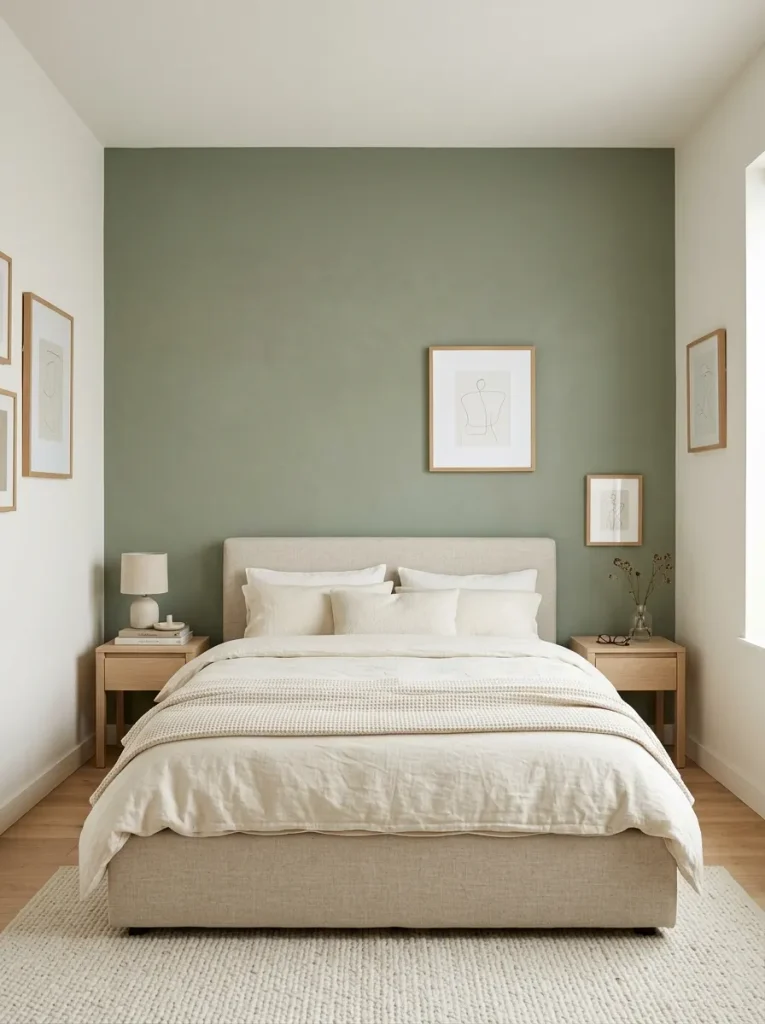
Quick Tip: Place the accent color behind the headboard to create a clear focal point. Choose muted sage, dusty blue, warm taupe or another soft shade that complements your bedding. Keep the other walls light to maintain visual balance.
A carefully chosen accent wall gives a small bedroom personality without making every surface compete for attention. Paint is often an affordable option, especially if you refresh the wall yourself. Before choosing a shade, test a sample in both daylight and evening lighting because colors can look dramatically different throughout the day. Keep nearby artwork and accessories simple so the wall remains the main feature.
12. Decluttered Bedside Surfaces
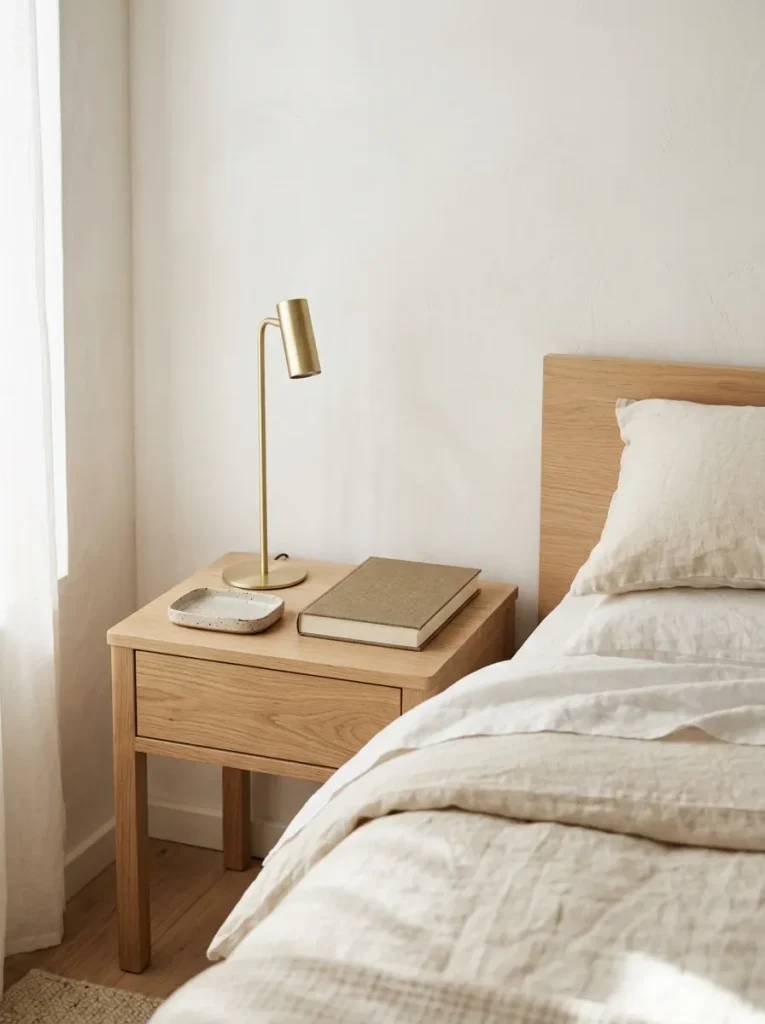
BEFORE: The bedside table holds charging cables, skincare products, loose papers, books and decorative objects. Everyday essentials compete for space, making the entire sleeping area appear busy.
AFTER: Only a lamp, a book and a small tray remain visible. Cables are secured, personal items are stored in a drawer and the tabletop feels spacious.
A clear bedside surface makes even a tiny sleeping area look more organized. Start by removing everything, then return only the items you use regularly at night. Place chargers in a cable organizer and move spare products into a drawer or bathroom cabinet. If your table has no storage, a small lidded box can hide little essentials without introducing another bulky piece of furniture.
13. Bedside Wall Sconces
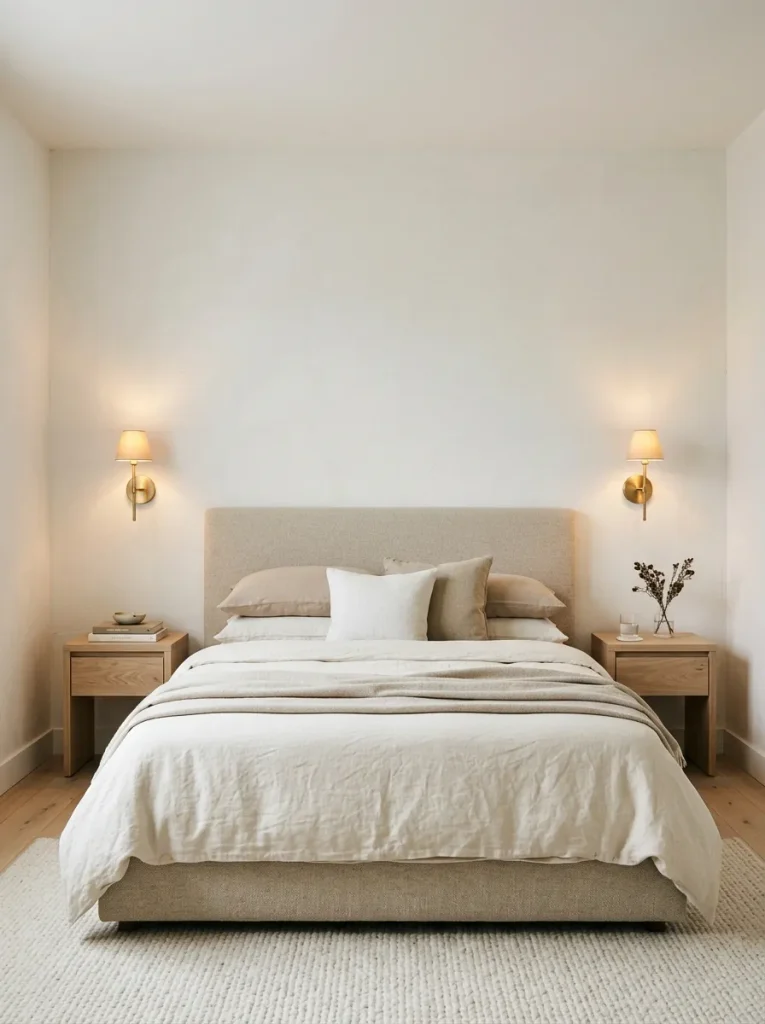
- Choose the placement: Mount each sconce where its light reaches the bed comfortably without shining directly into your eyes.
- Measure carefully: Keep the fixtures proportionate to the headboard and bedside tables.
- Select adjustable arms: Swing arm sconces allow you to direct light toward a book or pillow.
- Plan the wiring: Use existing wall connections or suitable plug in fixtures to avoid unnecessary renovation.
Wall sconces free up valuable space on narrow bedside tables while providing focused reading light. Matching fixtures can create a balanced look, but they do not need to be oversized or elaborate. Choose warm white bulbs for a relaxing atmosphere and make sure electrical installations are completed safely. This approach works particularly well when the bed occupies most of the available wall.
14. Mirrors on Closet Doors
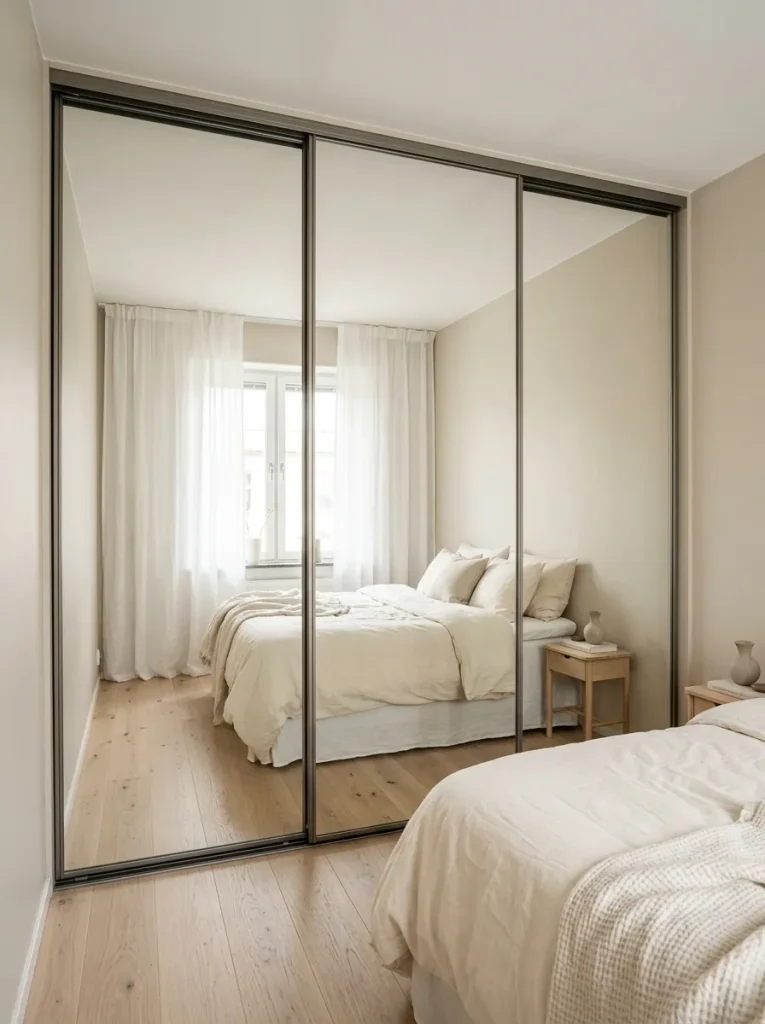
| Design choice | Option A | Option B |
|---|---|---|
| Wardrobe finish | Solid dark panels | Light or mirrored panels |
| Light reflection | Limited reflection | Reflects available daylight |
| Visual effect | Stronger visual block | More perceived depth |
| Floor space | Depends on door type | Sliding doors avoid outward swing |
Mirrored closet doors combine a practical dressing mirror with a surface that reflects light throughout the room. They are especially useful when there is little wall space for a separate full length mirror. Keep the panels clean and avoid reflecting a cluttered corner. If replacing wardrobe doors is too expensive, a securely fitted mirror panel can offer a similar visual benefit.
15. A Clear Walking Path
DO:
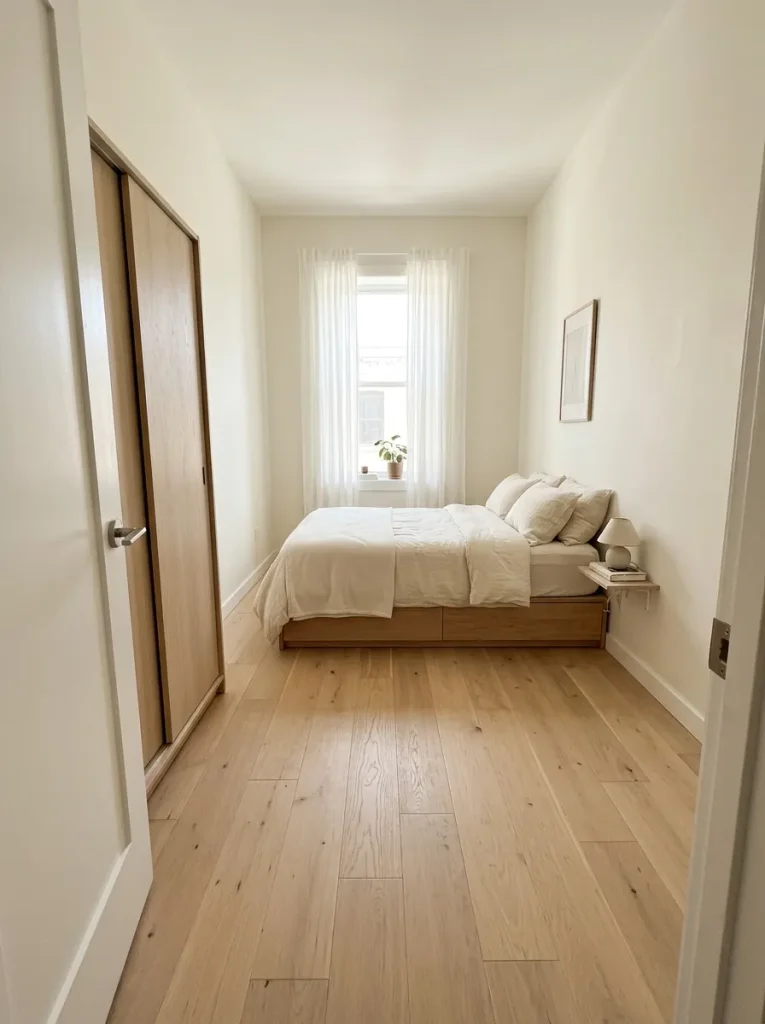
- Keep the route from the door to the bed free of obstacles.
- Place laundry baskets inside the wardrobe or in an unused corner.
- Choose a narrow bedside table when space beside the bed is limited.
- Leave enough clearance to open drawers and wardrobe doors comfortably.
DON’T:
- Position a chair where it blocks the bedroom entrance.
- Leave shoes scattered along the main walking route.
- Place storage boxes in front of frequently used drawers.
- Squeeze furniture into corners simply to fill empty space.
A clear walking path can make a small bedroom feel larger because the eye can follow the floor through the room without repeatedly stopping at obstacles. Start by measuring the space between the bed, walls and wardrobe before moving furniture. Prioritize comfortable access over decorative symmetry, especially in narrow rooms. Even a small adjustment to the bed’s position can improve daily movement.
16. Ceiling Mounted Lighting
Cost: Low to moderate, depending on the fixture.
Time: About 30 to 60 minutes for a straightforward replacement by a qualified electrician.
Skill Level: Beginner for choosing and styling; electrical installation requires appropriate expertise.
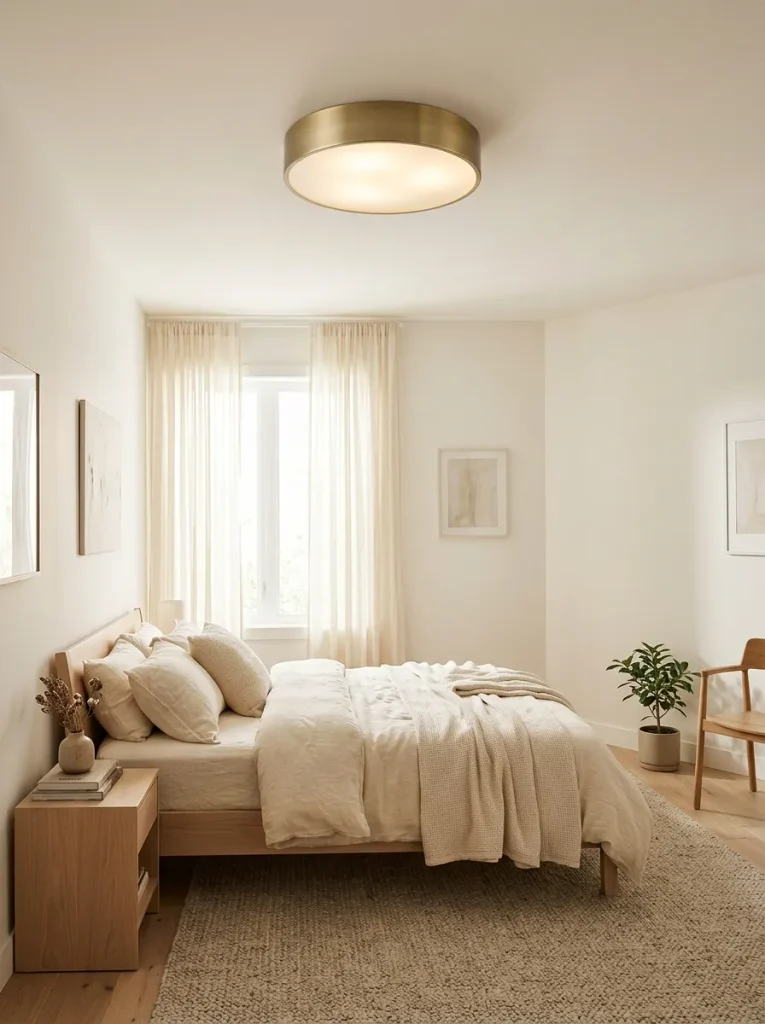
Best For: Bedrooms with low ceilings or limited space for floor and table lamps.
A flush mounted ceiling light provides useful illumination without hanging low over the room. Choose a fixture with a simple shape and a finish that complements your furniture. For a comfortable atmosphere, look for warm white lighting and consider a dimmer if your electrical setup supports one. Combine the ceiling light with a bedside reading lamp to avoid harsh, uniform brightness at night.
17. Soft Color Blocking
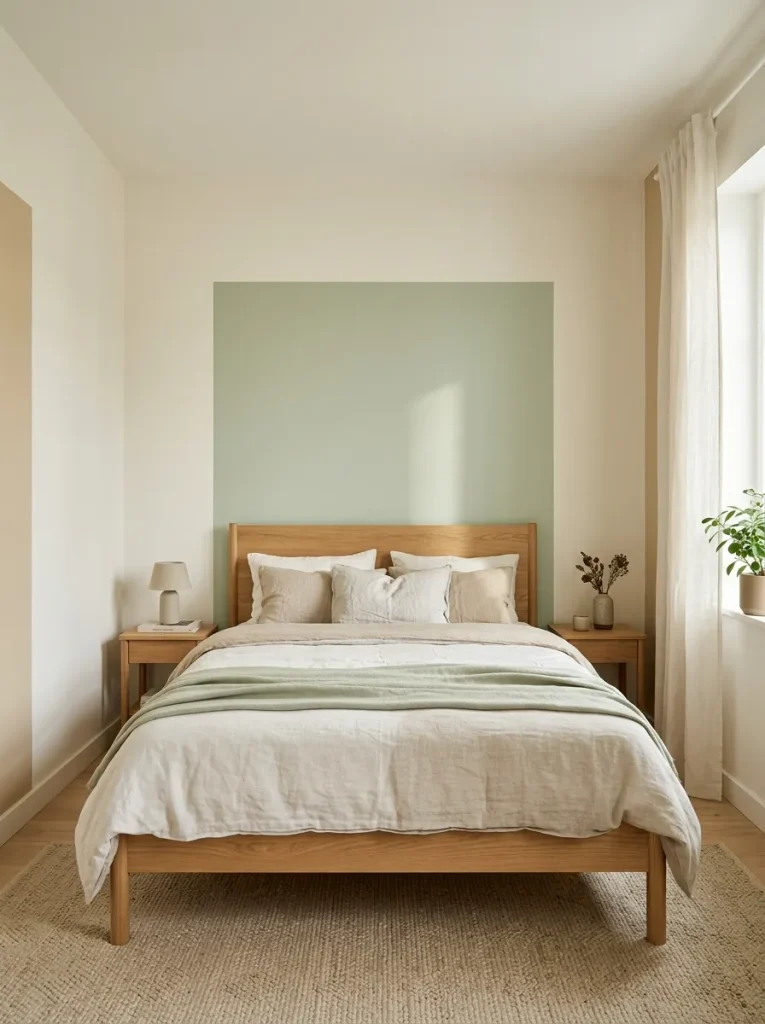
Color blocking can add character to a small bedroom without covering every wall in a busy pattern. The key is to use a limited palette and create one intentional area of color.
Choose two complementary shades and use the stronger color behind the bed or around a compact desk. Keep furniture and bedding relatively simple so the room still feels connected. Before painting, mark the proposed boundaries with painter’s tape and check how the shapes look from the doorway. Clean lines and restrained colors help the design feel considered rather than crowded.
18. Compact Bedroom Desk
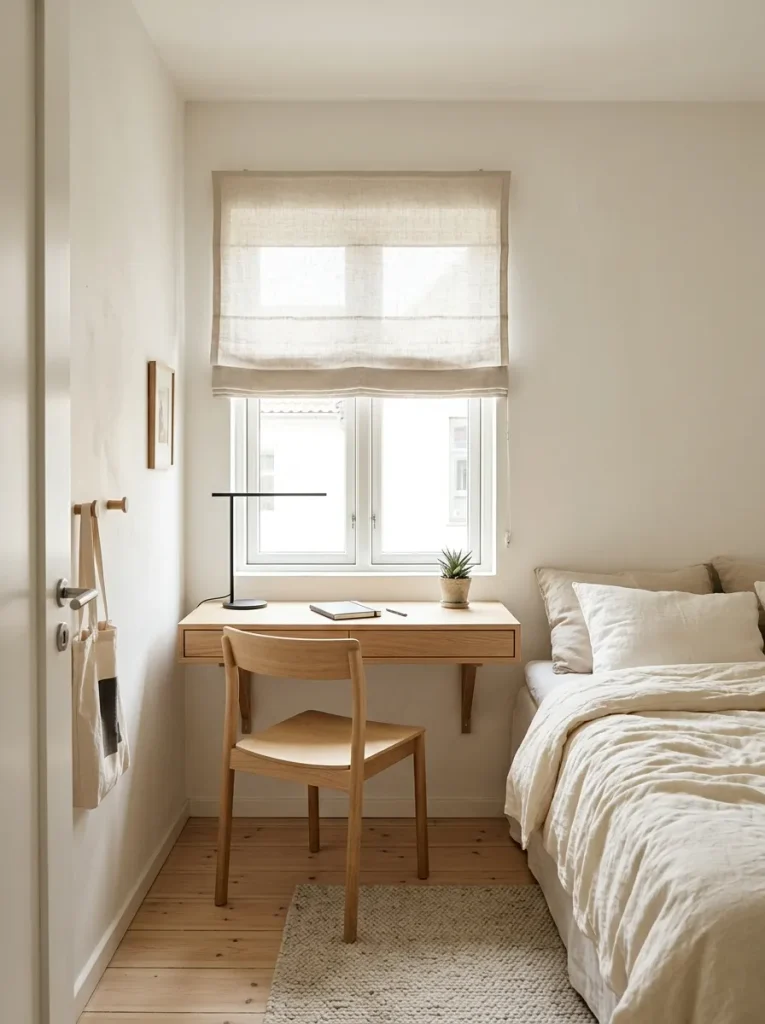
BEFORE: A bulky desk occupies a large section of the bedroom and the chair sticks into the walking path. Papers and accessories spread across the surface, making the sleeping area feel crowded.
AFTER: A narrow desk fits against the wall, with a chair that slides underneath when not in use. A small drawer or wall organizer keeps supplies contained.
A compact workspace can fit into a small bedroom without taking over the room. Look for a desk with a shallow depth that still accommodates your laptop and essential supplies. If floor space is especially limited, consider a fold down wall desk. Position the setup near natural light when possible and keep work materials organized so the bedroom remains restful after the workday ends.
19. Built In Storage Niches
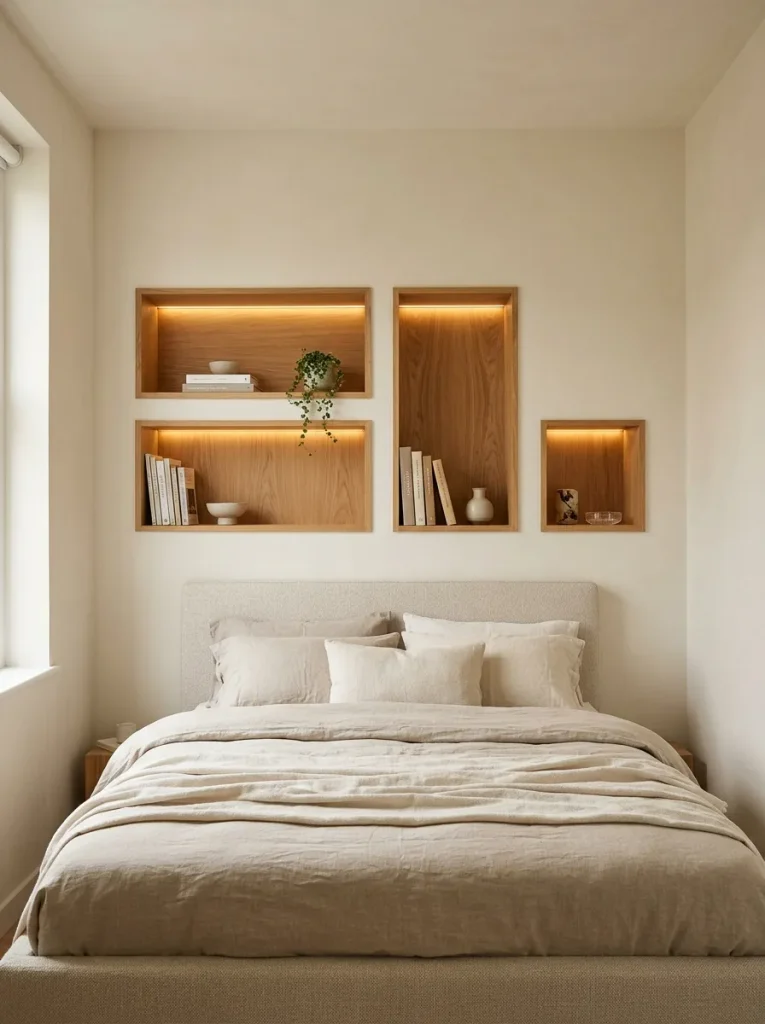
- Choose the location: Identify an unused wall section where a recessed niche will not interfere with wiring, plumbing or structural supports.
- Plan the dimensions: Make the niche wide enough for everyday essentials without dominating the wall.
- Keep the styling simple: Display a few books, a small vase or a compact reading light.
- Use professional help: Have a qualified contractor check the wall before creating a recess.
Built in niches provide storage without adding furniture that projects into the bedroom. They can be particularly useful beside a bed or above a desk, where ordinary shelves might feel bulky. If structural work is not practical, a shallow wall mounted box shelf can create a similar effect. Match its finish to the wall or surrounding furniture for a more integrated appearance.
20. A Large Area Rug
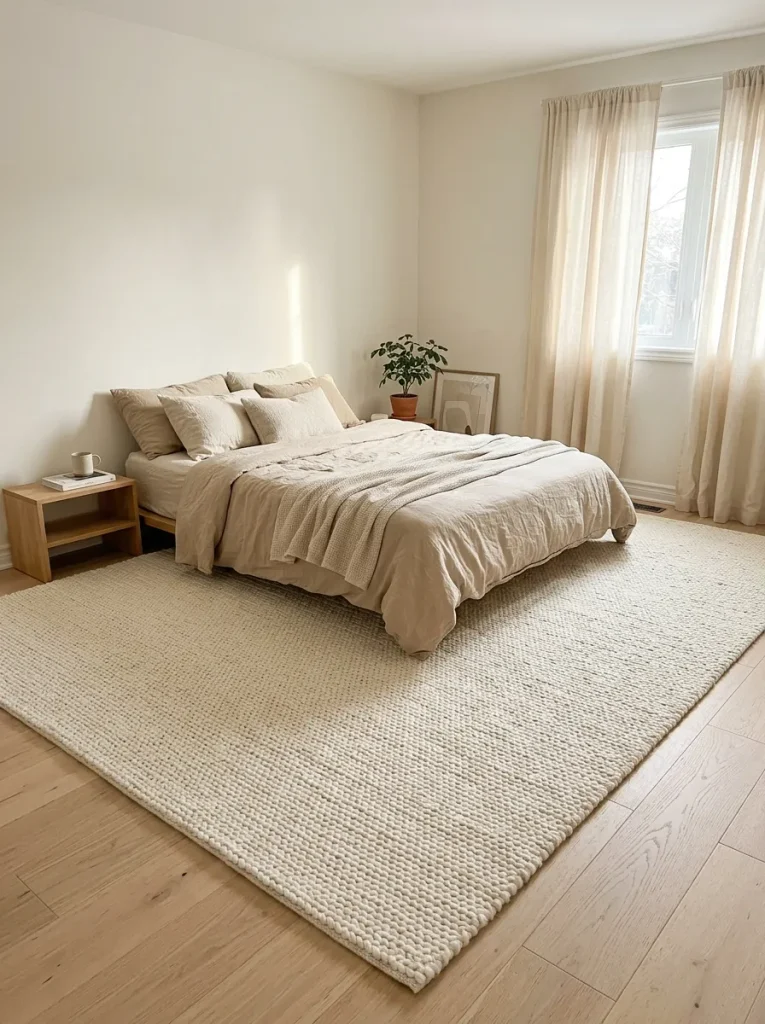
| Design choice | Option A | Option B |
|---|---|---|
| Rug size | Small mat beside the bed | Larger rug beneath the bed |
| Visual effect | Separate floor patches | More unified sleeping area |
| Texture | Thin, plain surface | Subtle woven texture |
| Placement | Floating near furniture | Extending beyond bed edges |
A well sized rug can make the bedroom feel more cohesive by visually connecting the bed and surrounding furniture. Rather than using several small mats, choose one rug that extends beyond the sides and foot of the bed. Leave some flooring visible around the room’s perimeter and select a low pile style if doors need to swing over it. A light neutral shade helps maintain a calm, open appearance.
21. Hidden Laundry Storage
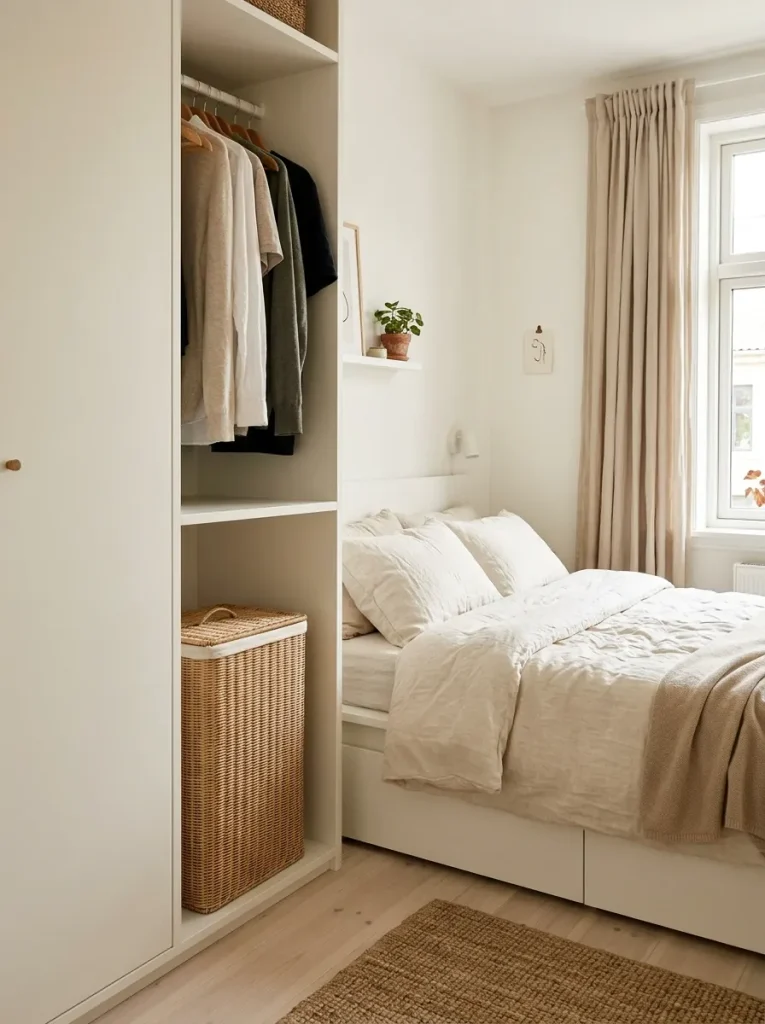
DO:
- Choose a narrow hamper that fits beside the wardrobe or inside a closet.
- Use a lidded design to keep laundry visually contained.
- Empty the hamper regularly before clothes begin spilling over.
- Select a washable liner for easier cleaning.
DON’T:
- Leave laundry piles on chairs or at the foot of the bed.
- Choose a hamper that blocks the wardrobe doors.
- Store damp towels in a closed container for long periods.
- Add several small baskets when one suitable hamper will do.
Laundry can make even a beautifully decorated bedroom look messy when it has no designated home. A slim hamper tucked beside the wardrobe keeps clothing off the floor and preserves a clear view of the room. Measure the available space before buying one and choose a breathable design that suits your laundry routine. Keeping this single everyday task organized can make the whole bedroom feel calmer.
22. Floor to Ceiling Wardrobes
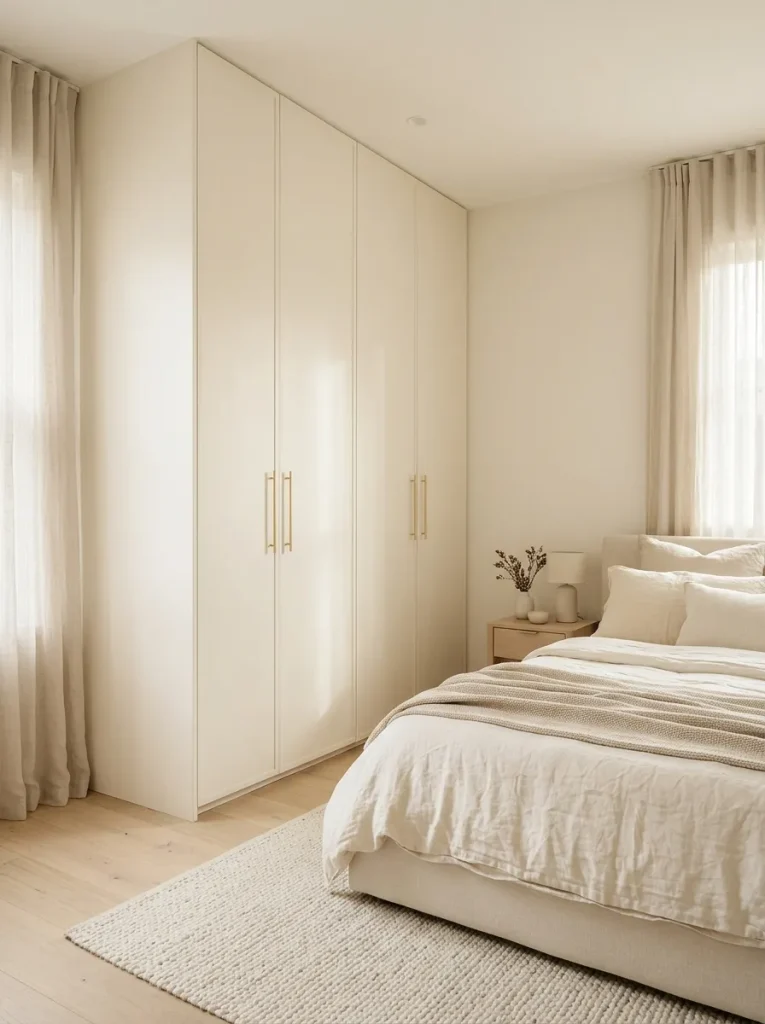
Cost: Moderate to high, depending on materials and installation.
Time: One to several days, depending on the wardrobe design.
Skill Level: Beginner for planning; professional installation may be needed.
Best For: Bedrooms with limited floor space and unused vertical wall area.
Tall wardrobes use the full height of a wall, providing storage without spreading furniture across the bedroom. Store seasonal clothing and rarely used items on the upper shelves, keeping everyday essentials within easy reach. Choose simple doors that blend with the wall color to reduce visual contrast. Before installing a tall unit, check ceiling height, door clearance and secure anchoring requirements.
23. Minimal Wall Artwork
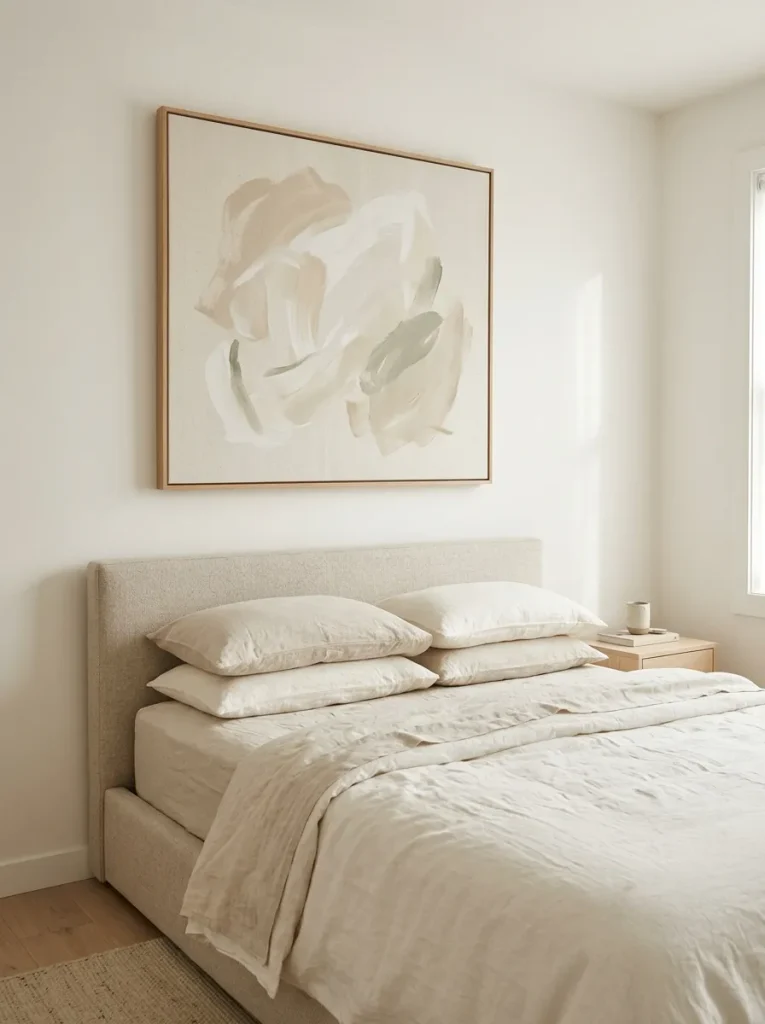
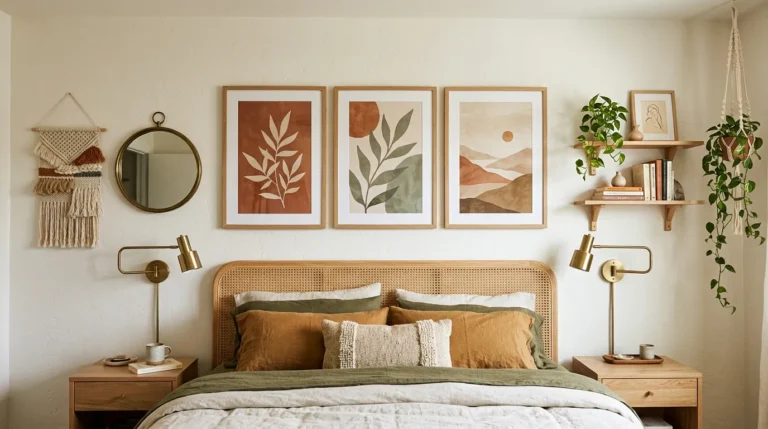
A single well proportioned artwork can give a small bedroom a finished look without making the walls feel busy. Choose an abstract print, a soft landscape or a simple botanical design that complements your bedding.
Hang the piece above the headboard or on another clear wall, keeping its size proportional to the furniture below it. Avoid filling every available section with tiny frames, especially if the room already has patterned textiles. A restrained arrangement creates a focal point while allowing the rest of the bedroom to feel open and peaceful.
24. A Foldable Bedside Table
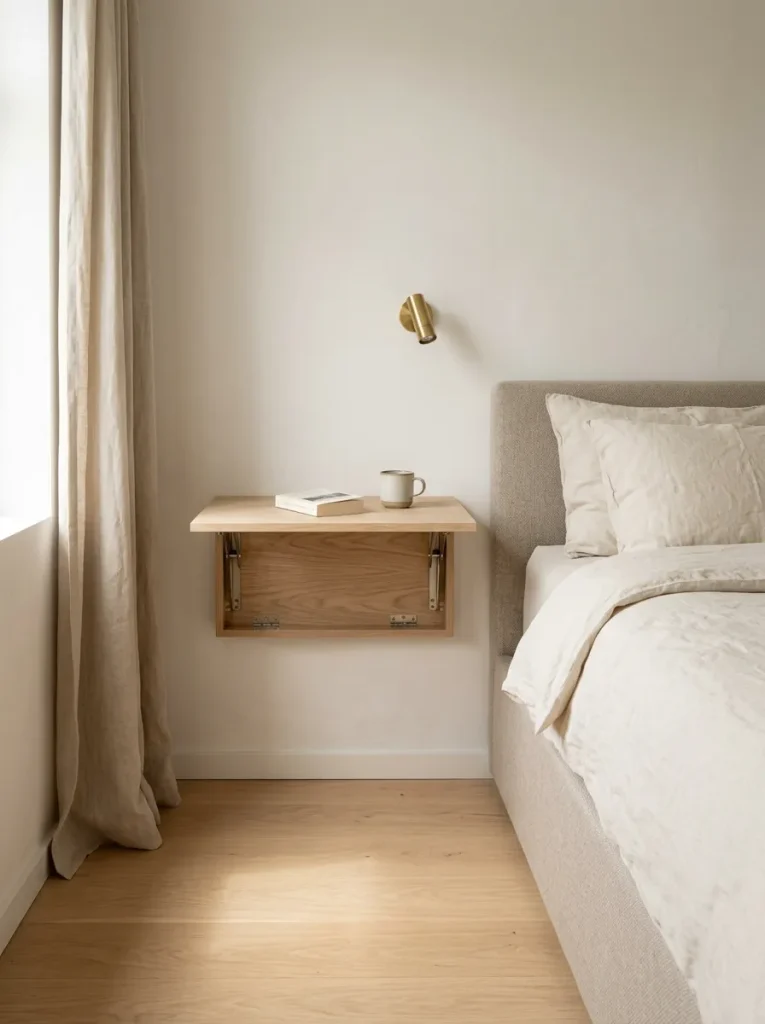
BEFORE: A conventional bedside table occupies the narrow space beside the bed, making it difficult to walk past comfortably. Its legs and drawers add bulk to an already tight layout.
AFTER: A compact fold down table provides a surface for a phone, book or glass of water when needed. When folded away, it leaves more visible wall and floor space.
A foldable bedside table is useful when the bed sits close to a wall or wardrobe. Choose a model with a secure locking mechanism and enough depth for your nighttime essentials. Check the folded and open dimensions before purchasing and mount it according to the manufacturer’s instructions. For renters who cannot drill into walls, a narrow movable table may offer a more suitable alternative.
25. Sheer Window Treatments
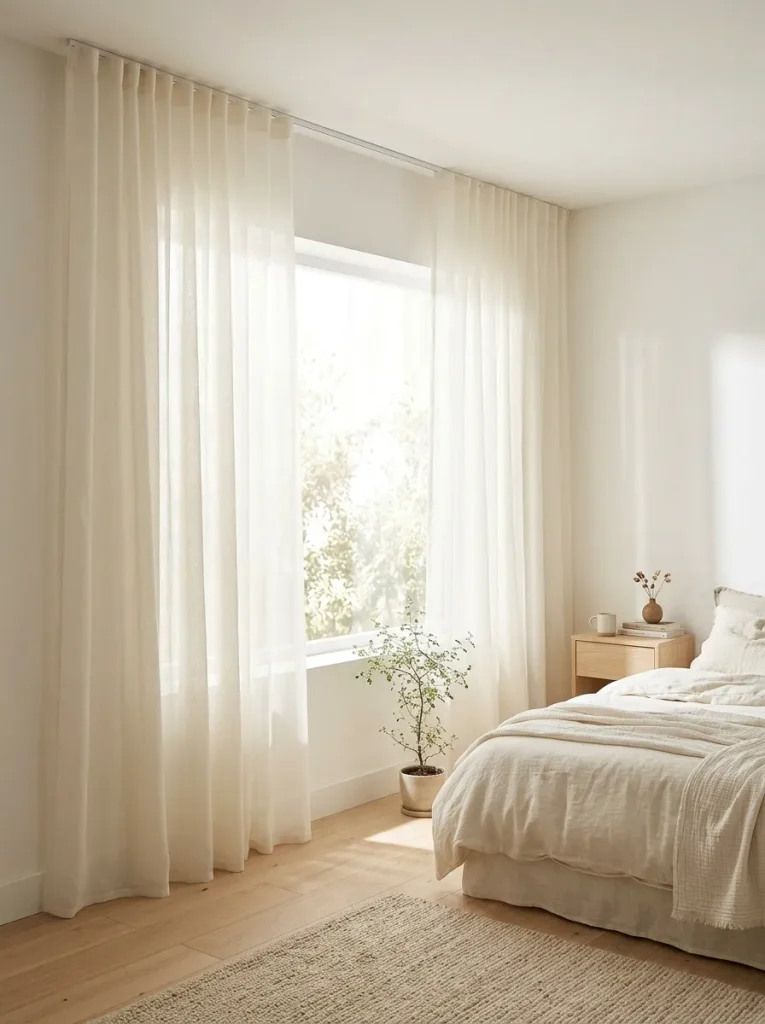
DO:
- Choose sheer white or ivory fabric to soften incoming daylight.
- Hang curtains close to the ceiling to emphasize wall height.
- Extend the curtain track beyond the window frame when space allows.
- Pair sheers with discreet blackout blinds if you need a darker sleeping environment.
DON’T:
- Choose thick, dark curtains that block daylight throughout the day.
- Let excess fabric pile heavily across the floor.
- Cover the entire window with bulky decorative layers.
- Ignore privacy needs when selecting transparent fabric.
Sheer curtains soften harsh sunlight while keeping the bedroom bright and visually light. They work particularly well in rooms where heavy window treatments make the walls feel enclosed. If your window faces a neighboring building, combine sheers with blinds that provide privacy when needed. Keep the curtain color close to the wall shade for a continuous appearance that draws attention to the available light.
26. A Consistent Color Palette
Cost: Low if using existing decor.
Time: One afternoon to rearrange and coordinate accessories.
Skill Level: Beginner.
Best For: Bedrooms with mismatched bedding, furniture and decorative accessories.
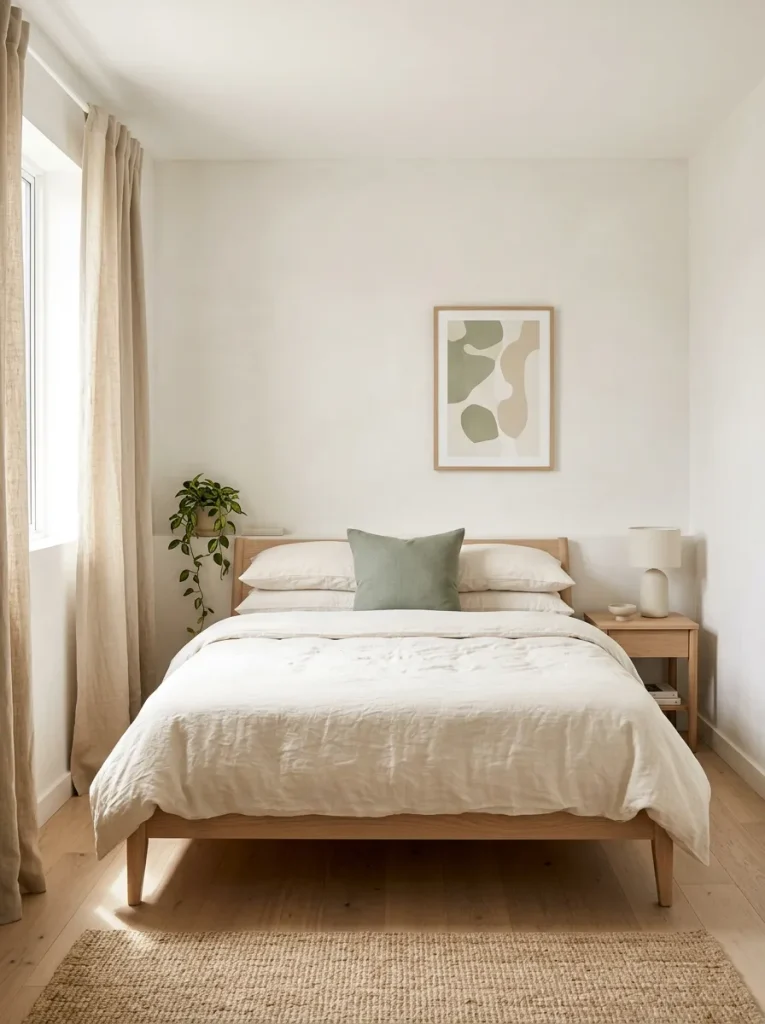
A consistent color palette helps a small bedroom feel connected instead of visually fragmented. Start with one main neutral shade, add a complementary secondary color and introduce a third shade through small accents. For example, warm white walls, beige bedding and sage cushions can create depth without introducing too many competing colors. Before buying anything new, group your existing decor by color and remove pieces that disrupt the overall balance.
27. A Simplified Bed Frame
BEFORE: A bulky bed frame with thick side rails, an oversized footboard and elaborate detailing occupies much of the visible room. The furniture feels heavy and leaves less space for movement.
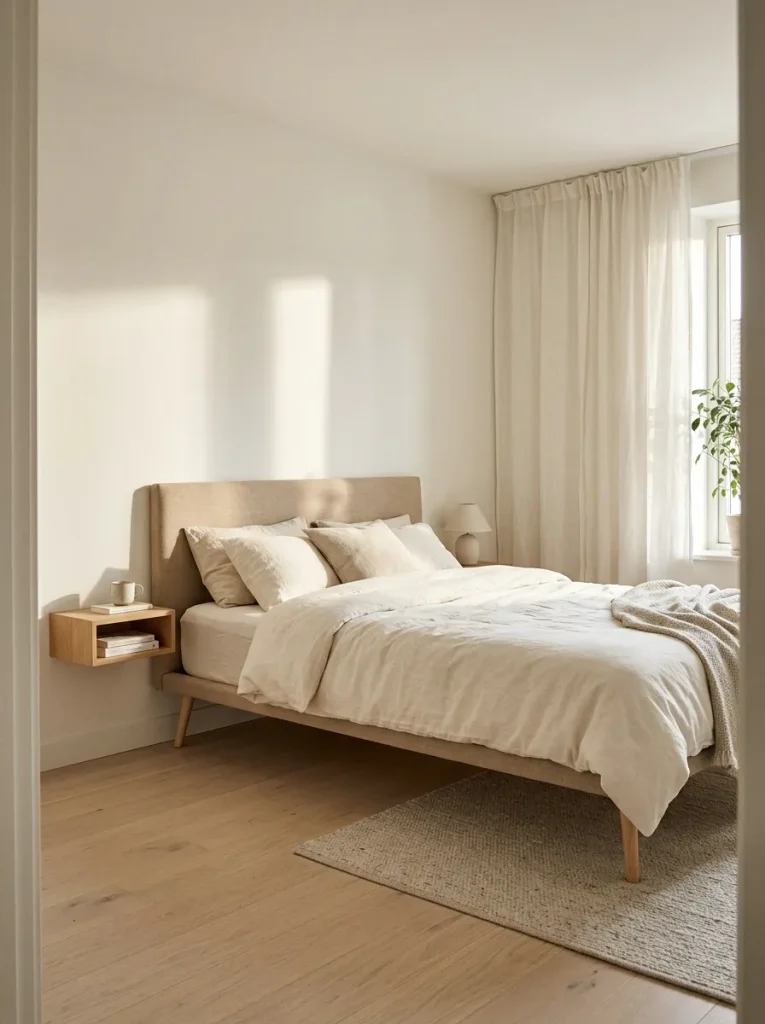
AFTER: A streamlined frame with a simple headboard and narrow profile creates a lighter appearance. The bed remains the focal point without visually dominating the bedroom.
The bed usually takes up the largest area in a bedroom, so its design strongly influences how spacious the room feels. Choose a frame that fits your mattress without unnecessary decorative extensions. If you need storage, consider a streamlined frame with drawers rather than adding separate cabinets. Measure the overall dimensions carefully, including the headboard and footboard, before making a purchase.
28. Corner Reading Nook
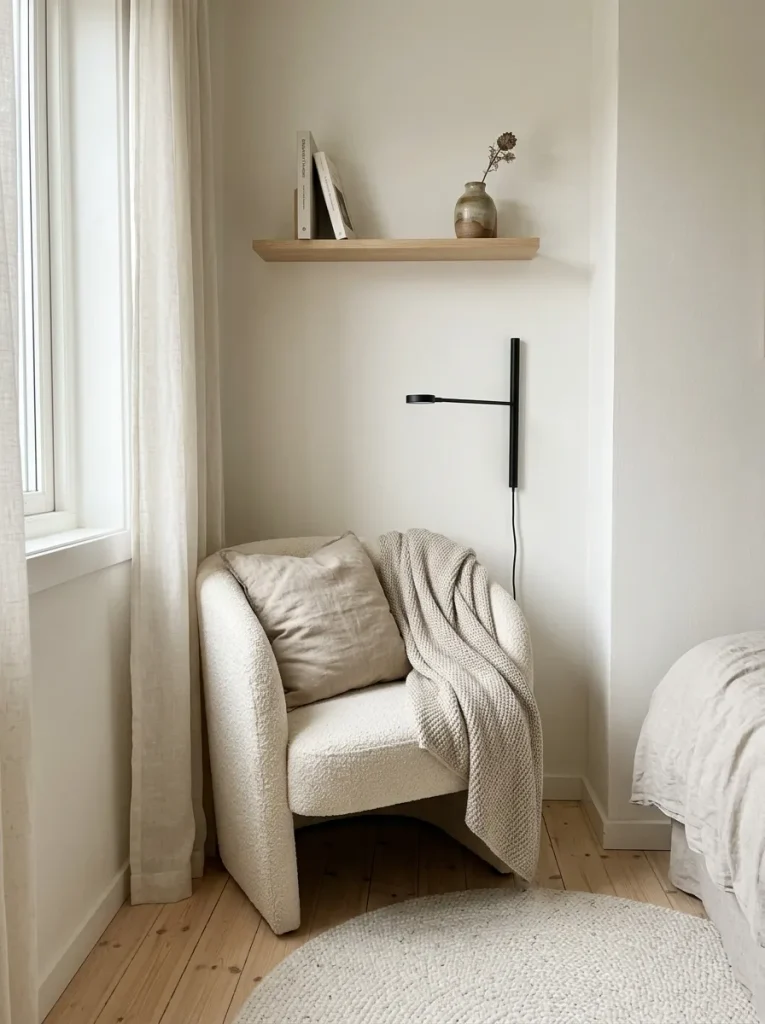
- Choose a compact seat: Select a small armless chair or cushioned stool that fits comfortably into the corner.
- Use wall lighting: Install a reading light above the seat to avoid taking up space with a floor lamp.
- Add a narrow shelf: Keep a book and a few essentials within reach without introducing another cabinet.
- Keep the floor clear: Avoid adding a bulky side table or oversized footstool.
An unused corner can become a practical reading spot without making the bedroom feel crowded. Measure the area before choosing a chair and leave enough room to move comfortably around it. If a chair will not fit, a floor cushion and a small wall shelf can provide a simpler alternative. Keep the colors consistent with your bedding so the nook feels like part of the same room.
29. Layered Ambient Lighting
Cost: Low to moderate, depending on the lighting fixtures.
Time: Around 30 minutes to arrange portable lights; installation may take longer.
Skill Level: Beginner for lamps and plug in lighting.
Best For: Bedrooms that feel dark, flat or uncomfortable under a single bright ceiling light.
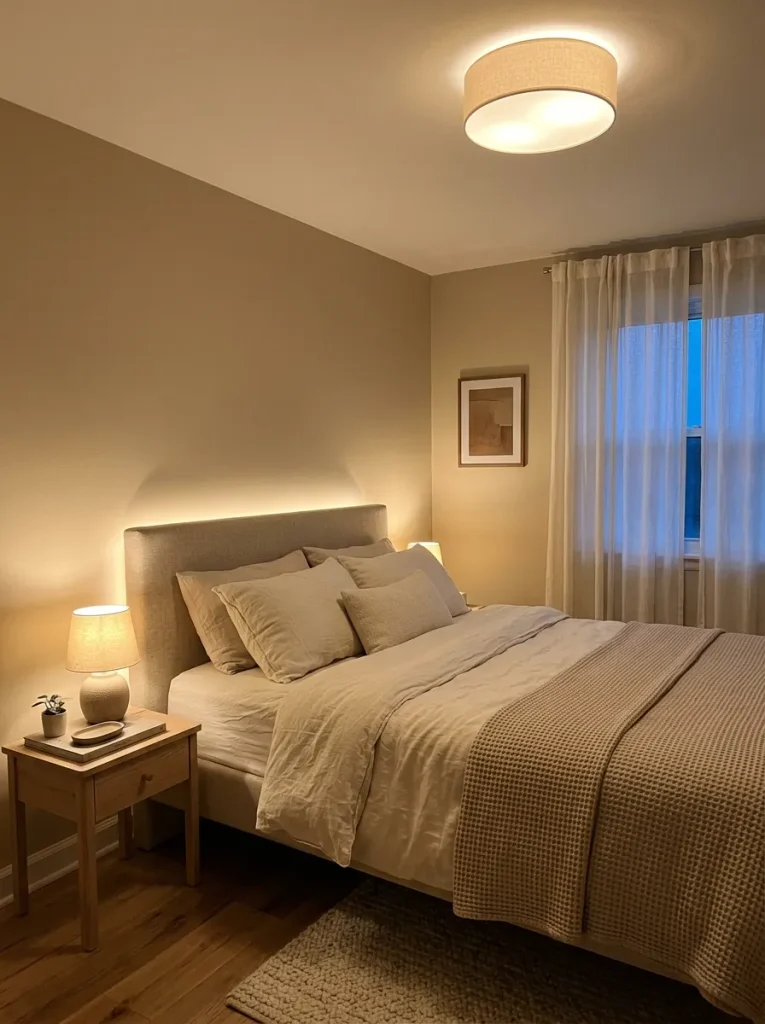
Layered lighting makes a small bedroom feel more welcoming by creating different levels of brightness for different activities. Use a ceiling fixture for general illumination, a bedside lamp for reading and subtle accent lighting to highlight a headboard or shelf. Choose warm white bulbs for a relaxing evening atmosphere and avoid placing too many lights in one area. A few well positioned sources can create depth without adding furniture or clutter.
CONCLUSION
A small bedroom doesn’t have to feel limiting. With thoughtful furniture choices, better lighting, clever storage and a cohesive color palette, you can create a room that feels brighter, calmer and more spacious. These Small Bedroom Ideas offer practical ways to improve your space without starting an expensive renovation. Begin with one simple change, such as clearing your bedside table or adding a mirror and build from there. Save this article on Pinterest so you can revisit your favorite ideas when you’re ready to decorate. Share it with a friend who needs more room to breathe and remember that even small changes can make your bedroom feel more like home.