Bedroom Ideas: 31 Dreamy Looks You’ll Want to Copy
Your bedroom should be more than just a place to sleep. It should feel cozy, reflect your personality and give you a little peace at the end of a busy day.
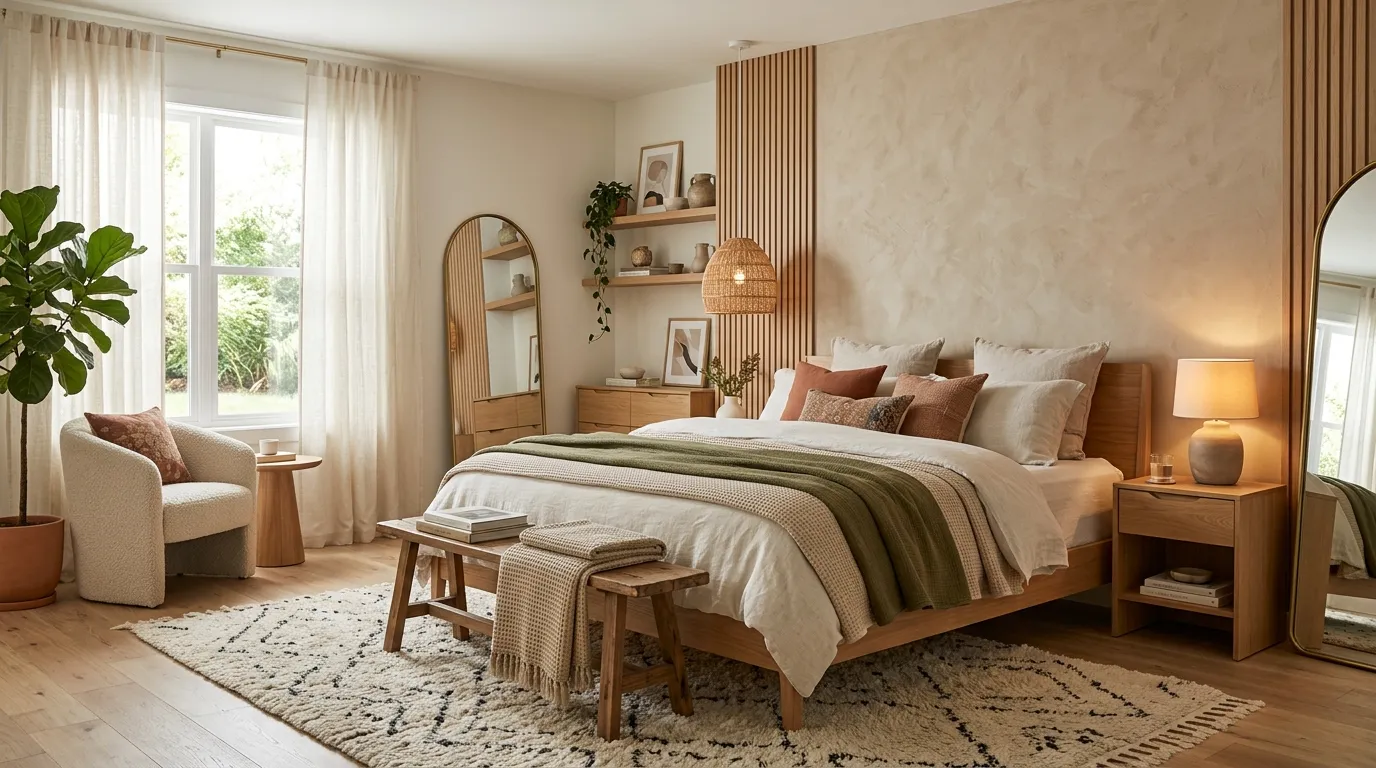
These 31 dreamy Bedroom Ideas will help you create a space you’ll love waking up to, whether you’re decorating a small apartment, refreshing an outdated room or starting with a completely blank canvas. From soft neutral bedding and warm ambient lighting to earthy terracotta accents and elegant hotel inspired designs, there’s inspiration for every style and budget.
I’ve noticed that small changes often make a room feel surprisingly different. New bedding, a carefully placed mirror or a fresh accent wall can bring a whole new mood without requiring a complete makeover. You’ll discover practical decorating tips, beautiful color combinations and simple ways to make your bedroom feel more inviting. Keep reading, save your favorite looks on Pinterest and find the inspiration to create your own dreamy retreat.
1. Soft Neutral Bedroom
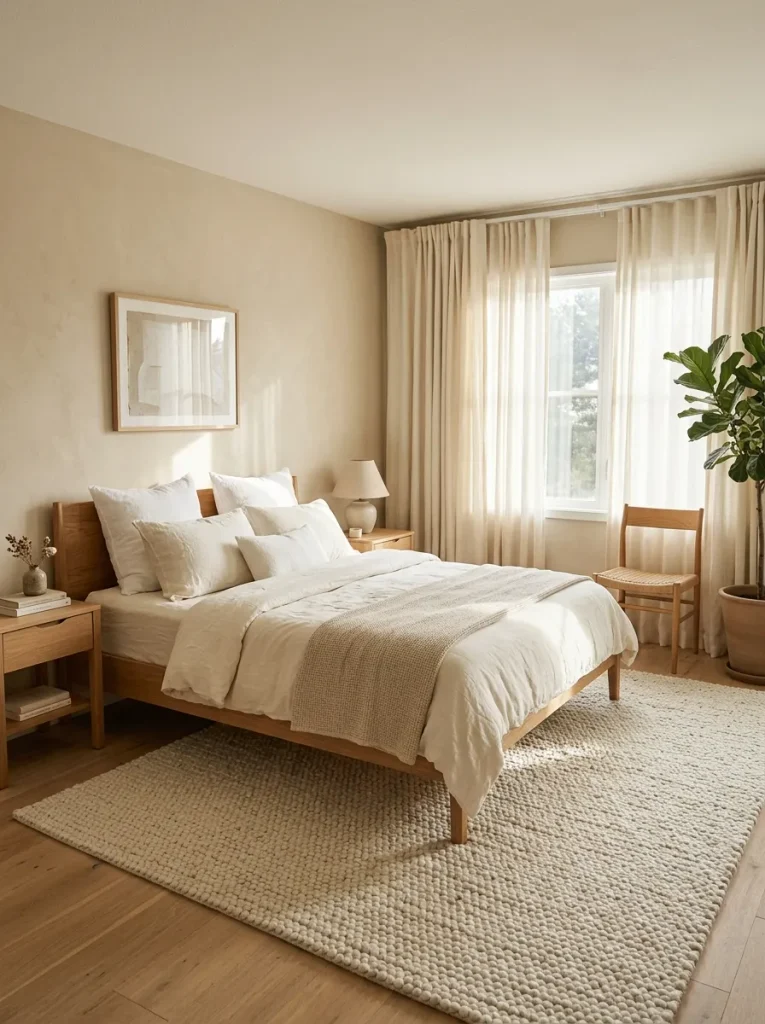
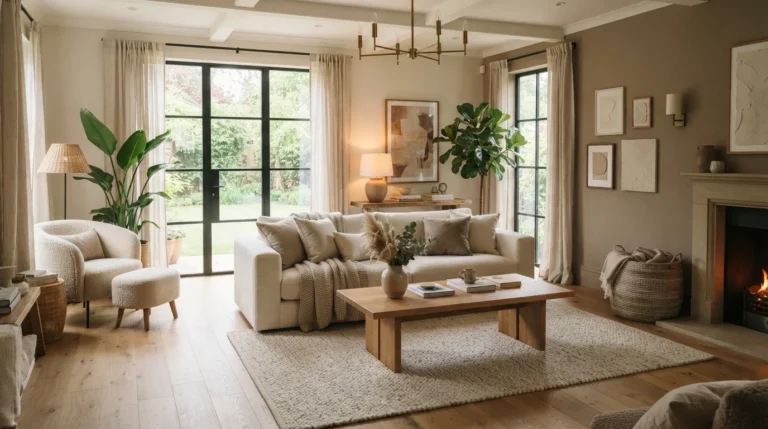
Soft neutrals create a bedroom that feels calm, spacious and easy to unwind in. Start with ivory bedding, beige walls and natural wood furniture. These gentle shades work together without making the room feel flat. Add a chunky knit throw or textured cushion to bring depth without introducing bold colors.
For a polished finish, mix materials rather than relying on matching shades alone. Linen curtains, a woven basket and a soft wool rug add subtle contrast. I’ve noticed that keeping larger pieces neutral also makes seasonal updates easier. A few new cushions or a different throw can refresh the entire look.
2. Layered Bedding
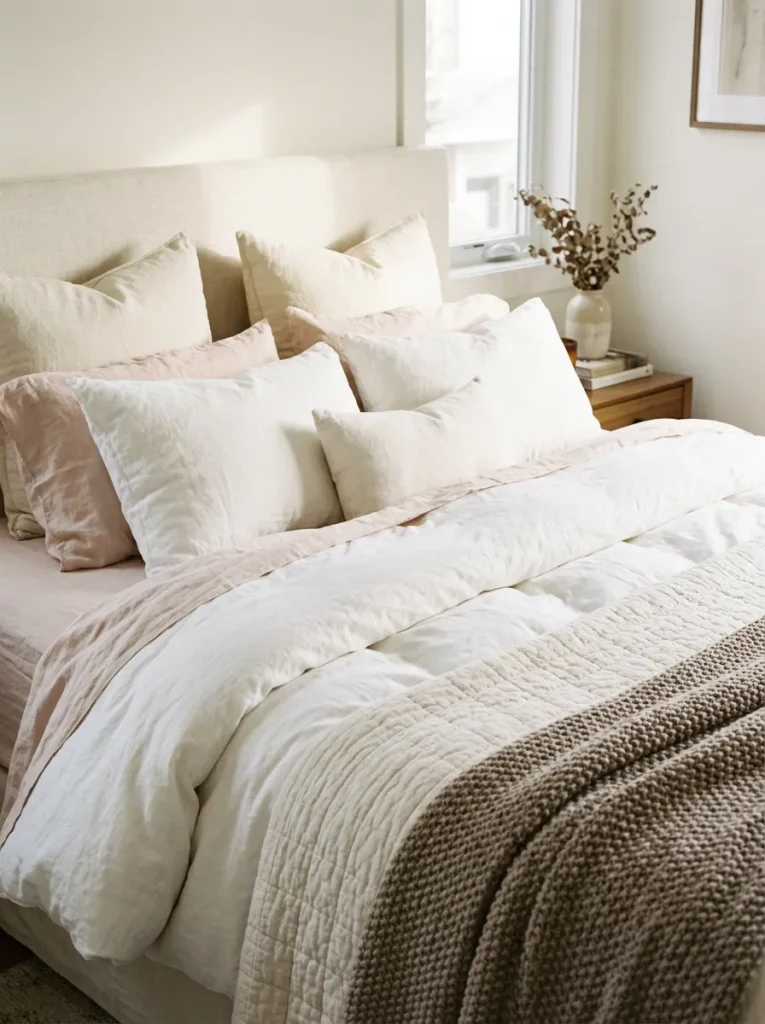
- Start with crisp sheets. White or cream bedding creates a clean base that makes other colors stand out.
- Add a duvet or comforter. Choose a fluffy insert for volume or a lightweight cover for a relaxed appearance.
- Mix pillow sizes. Place sleeping pillows at the back, decorative pillows in front and one smaller accent cushion near the center.
- Fold a textured throw. Drape it across the lower third of the bed for a finished look.
- Combine fabrics. Pair cotton, linen, velvet or chunky knits to create visual interest without clutter.
Layered bedding makes an ordinary bed feel inviting and thoughtfully styled. Keep the largest pieces in complementary shades, then introduce one accent color through a blanket or cushion. For everyday comfort, avoid piling on too many decorative pillows. The best arrangement looks appealing while remaining easy to maintain.
3. Warm Ambient Lighting
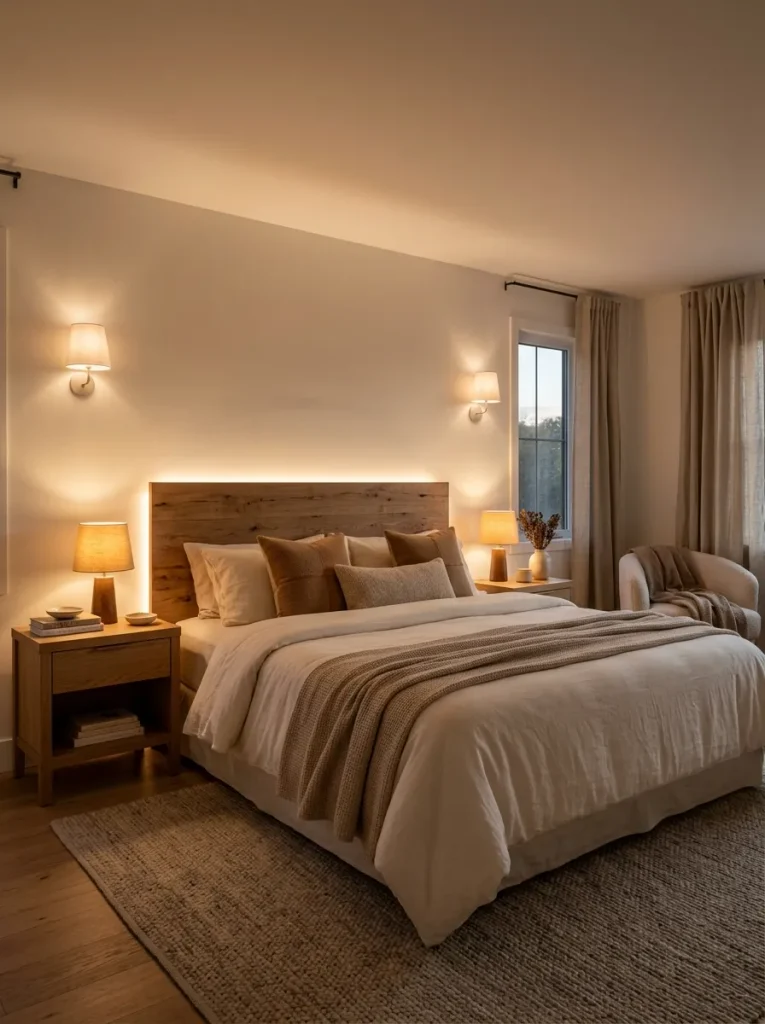
Quick Tip: Choose bulbs around 2700K to 3000K for a warm, relaxing glow. Place a lamp on each bedside table when possible and use dimmable lighting to adjust brightness for reading or winding down.
Warm lighting helps a bedroom feel comfortable after sunset, especially when overhead lights seem too harsh. Combine two or three light sources at different heights rather than relying on a single ceiling fixture. In smaller rooms, wall sconces free up nightstand space while creating a soft, hotel inspired atmosphere.
4. Statement Headboard
BEFORE
A plain bed against an empty wall can make the entire bedroom feel unfinished. Even attractive bedding may lack a clear focal point when the wall behind it looks bare.
AFTER
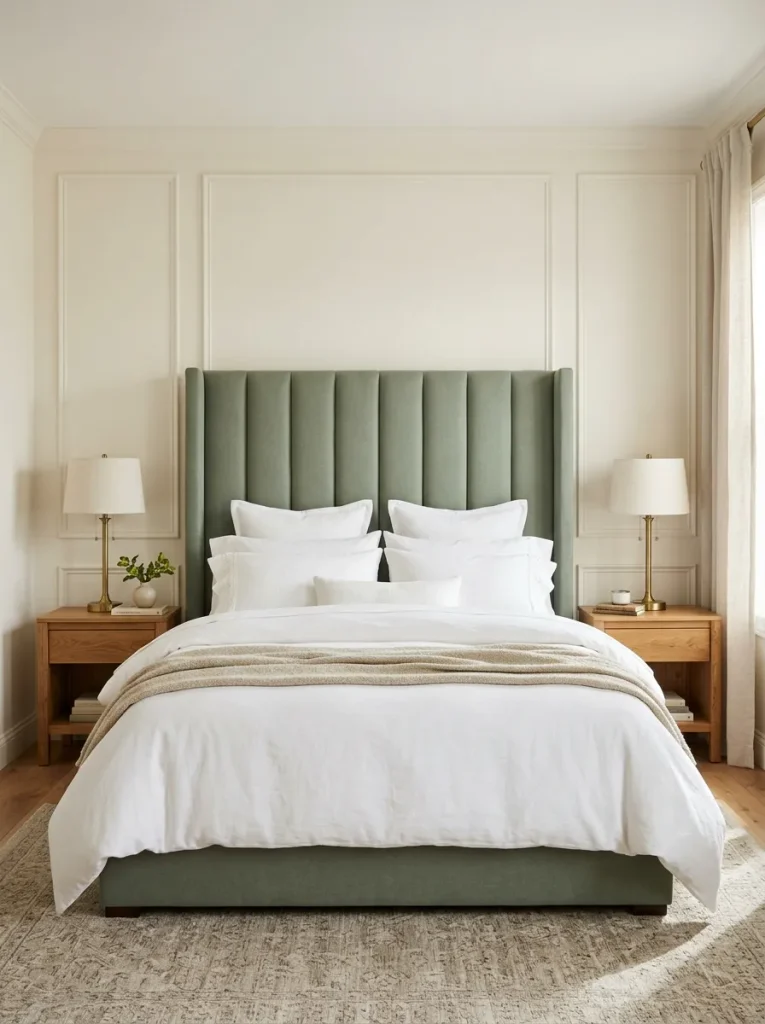
A statement headboard gives the bed visual weight and creates a natural centerpiece. Choose an upholstered design for softness, a curved silhouette for elegance or a wooden style for warmth.
A tall headboard works especially well in rooms with high ceilings, while a wide design can make a small bed feel more substantial. Keep nearby furniture simple so the headboard remains the main attraction. For a budget friendly update, consider a fabric covered panel instead of replacing the entire bed frame.
5. Floating Bedside Tables
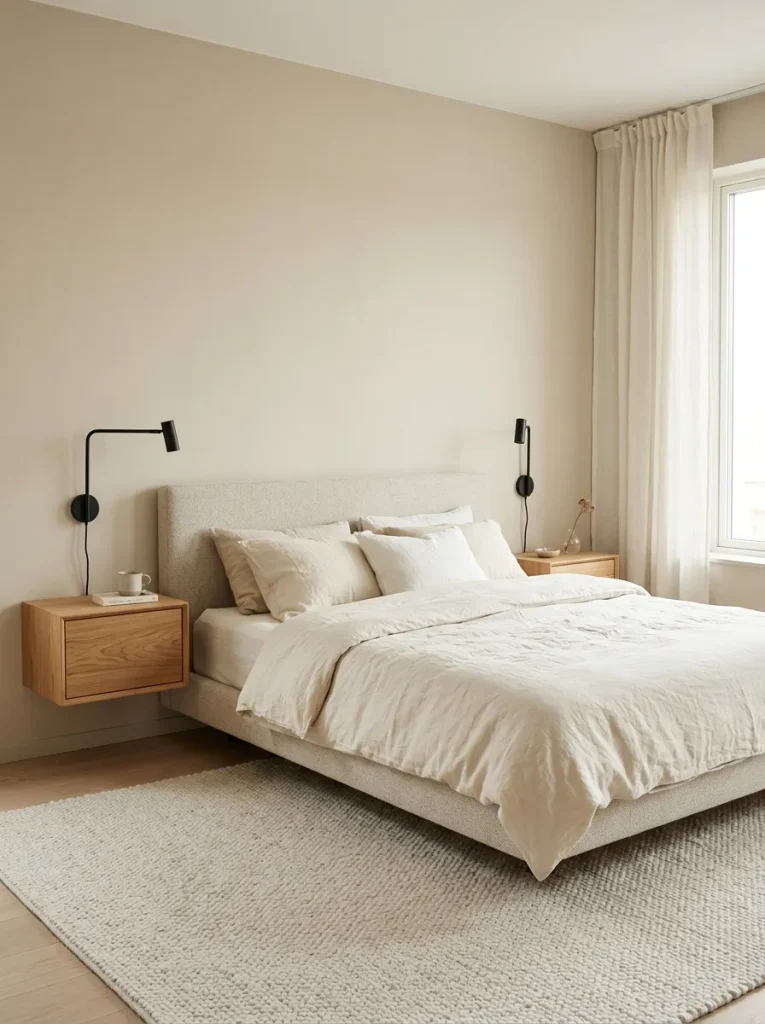
- Measure the bed height. Position each table so its top sits close to mattress level for easy access.
- Locate wall studs. Secure the mounting hardware properly to support the table and everyday essentials.
- Choose a compact design. A drawer keeps chargers, books and small personal items out of sight.
- Install bedside lighting. Wall mounted sconces leave more room for a water glass or alarm clock.
Floating nightstands create an open, airy appearance because the floor remains visible underneath. They are particularly useful in narrow bedrooms where traditional bedside furniture can feel bulky. Match the wood tone to another element, such as a headboard or dresser, for a connected look without making every piece identical.
6. Boho Textured Bedroom
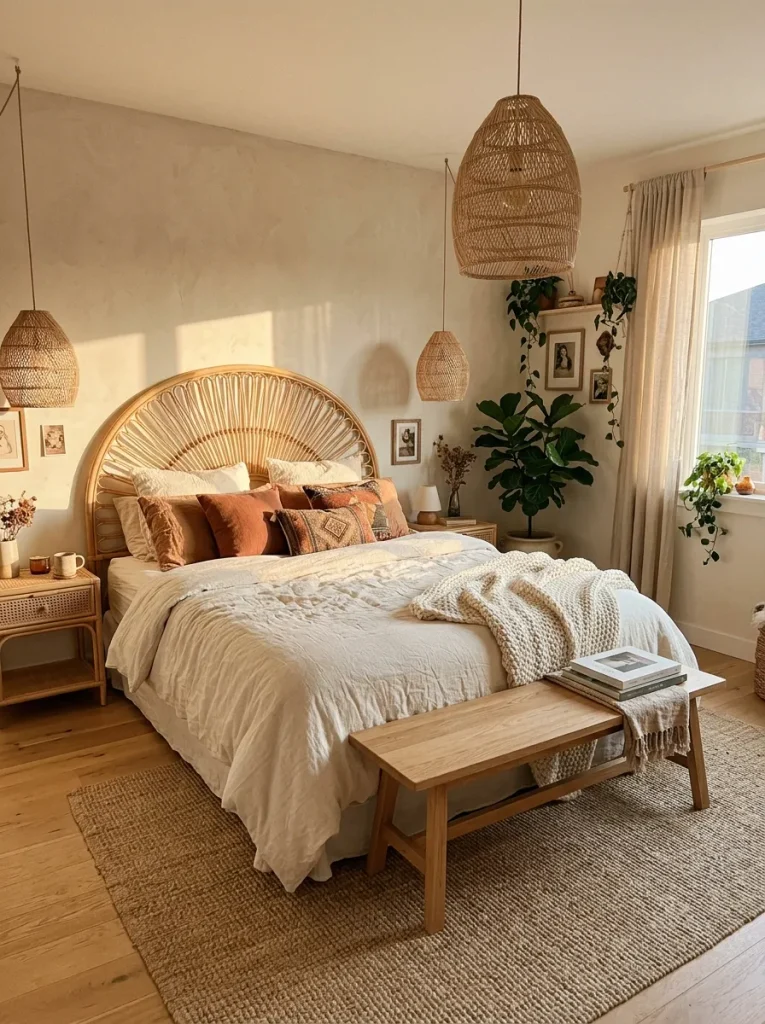
| Design Element | Option A | Option B |
|---|---|---|
| Color palette | Cream and terracotta | Beige and olive |
| Headboard | Natural rattan | Carved wood |
| Rug | Jute or sisal | Patterned cotton |
| Lighting | Woven pendant | Bamboo table lamp |
| Accessories | Handmade pottery | Macramé wall hanging |
A boho inspired bedroom feels collected rather than overly coordinated. Start with a neutral foundation, then introduce woven materials, earthy colors and a few handcrafted accents. Natural textures provide enough detail to keep the room interesting without covering every surface. Leave some empty space around decorations so the bedroom stays restful and practical.
7. Sage Green Walls
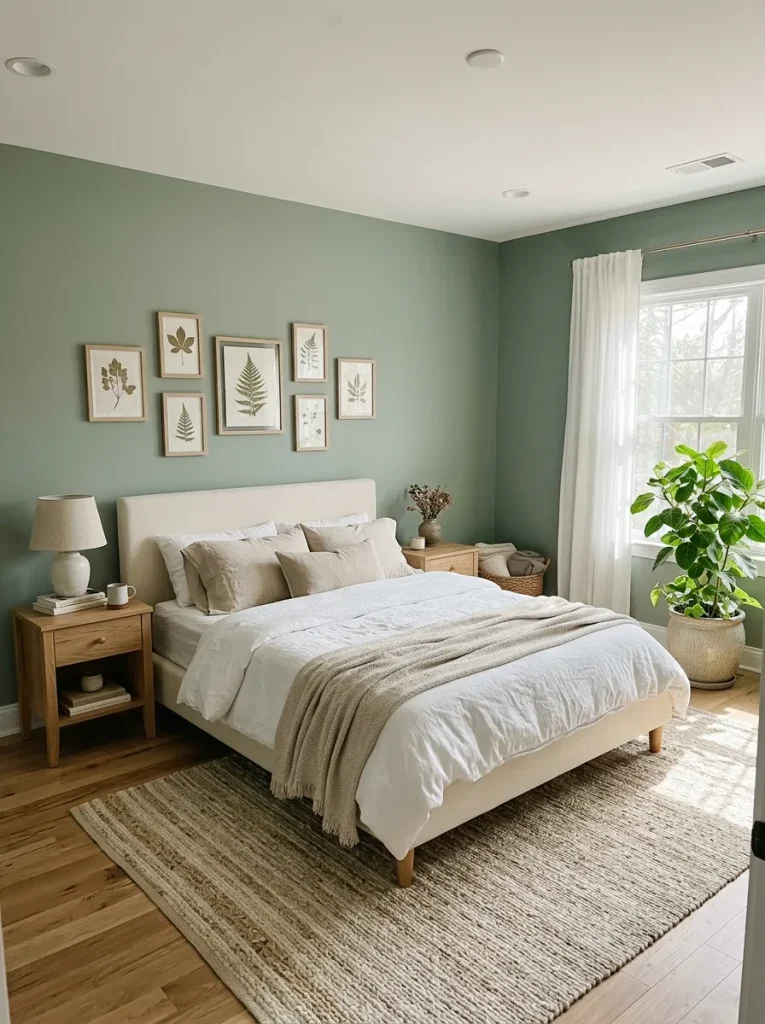
DO
- Paint the wall behind the bed sage green for a subtle focal point.
- Pair green walls with cream bedding and light oak furniture.
- Add botanical prints or a leafy plant to reinforce the natural palette.
- Use warm white lighting to keep the green shade welcoming at night.
DON’T
- Combine too many competing green shades in one small room.
- Choose a paint color without testing it in daylight and evening light.
- Overload the walls with busy botanical patterns.
- Ignore undertones when selecting curtains, rugs and bedding.
Sage green brings a gentle connection to nature without feeling overpowering. It works beautifully with warm neutrals, brushed brass and natural wood. Before painting the entire room, test a sample on different walls because daylight can change how the shade appears. For a smaller commitment, paint only the headboard wall.
8. Canopy Bed Styling
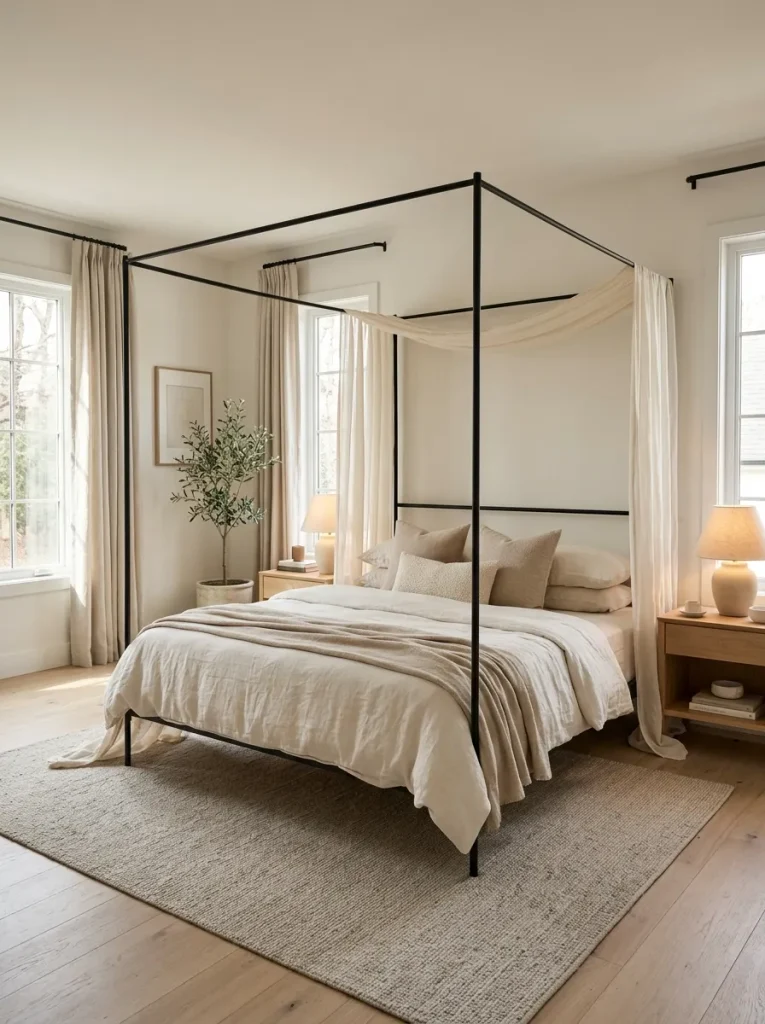
Cost: Moderate to high, depending on the bed frame and fabric.
Time: One afternoon for styling an existing canopy bed.
Skill Level: Beginner for draping fabric, intermediate for installing a new frame.
Best For: Bedrooms with enough clearance around the bed.
A canopy bed adds height and creates a strong focal point without requiring elaborate wall decorations. Choose a simple metal frame for a modern look or natural wood for a softer organic style. If you use fabric, select lightweight, washable material and secure it according to the manufacturer’s instructions. Keep the draping loose but tidy.
9. Cozy Reading Nook
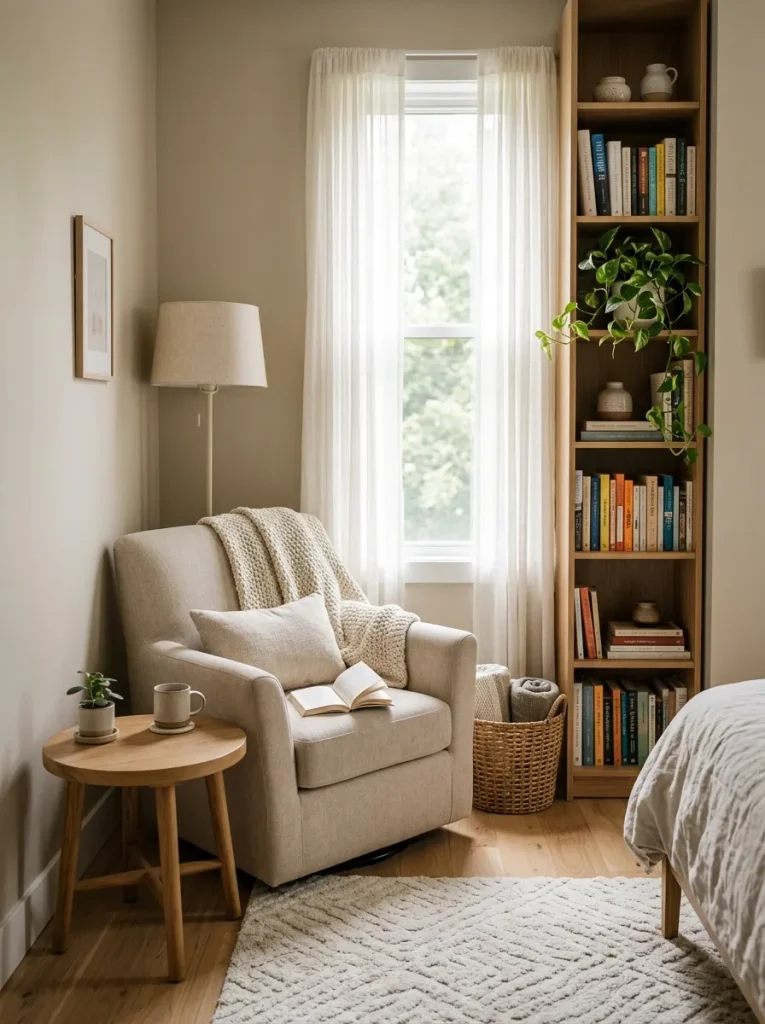
A quiet reading corner can make an unused bedroom space feel purposeful. Start by choosing a corner near a window, then add a comfortable chair with enough room to sit back and stretch your legs. A small side table keeps your current book and tea within reach.
For a compact room, choose a slim chair and a wall mounted reading light instead of a bulky floor lamp. Add a small cushion and a soft throw for comfort. Keep the surrounding floor clear so the nook feels relaxing rather than crowded, even when the rest of the bedroom is busy.
10. Minimalist White Bedroom
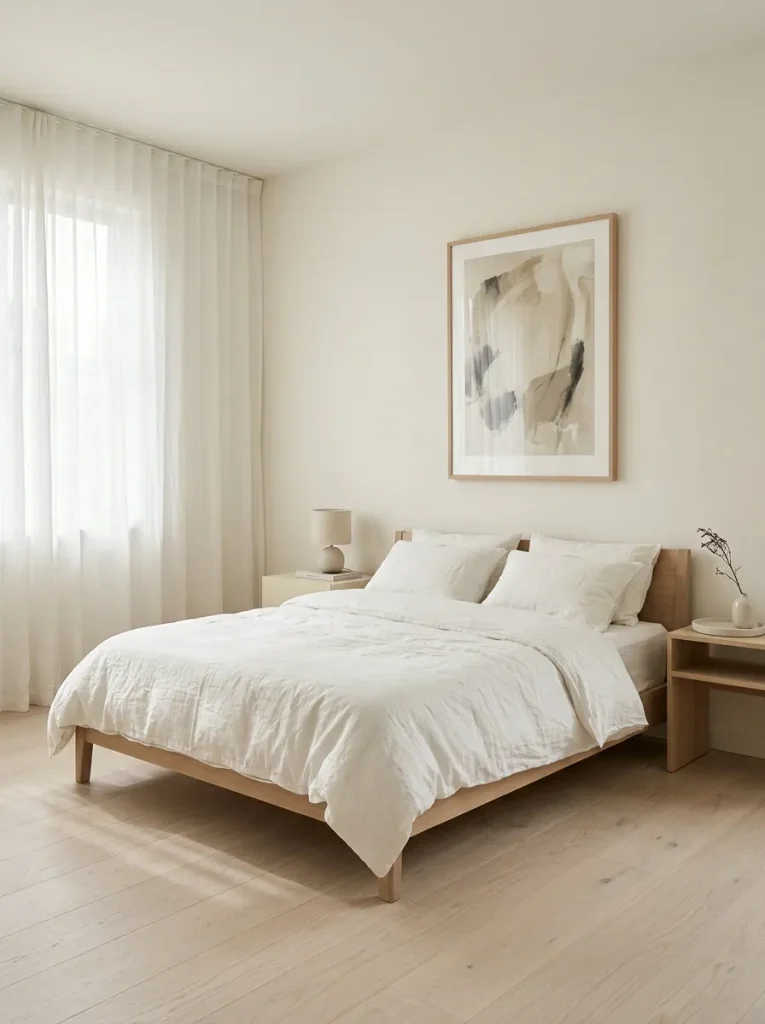
- Choose a restrained palette. Combine white, ivory and pale wood for a layered look that avoids a sterile appearance.
- Keep furniture simple. Select a bed frame and nightstands with clean lines and minimal ornamentation.
- Introduce subtle texture. Use quilted bedding, linen curtains and a woven rug to add depth.
- Limit decorative objects. Display one or two meaningful pieces instead of filling every available surface.
- Hide everyday clutter. Use under bed storage or closed drawers to maintain the room’s clean appearance.
A white bedroom feels especially spacious when natural light can move freely through the room. Rather than making every surface bright white, introduce a few warm materials to soften the overall effect. This approach suits small bedrooms, rented spaces and anyone who prefers a simple setting that is easy to refresh.
11. Floral Accent Wall
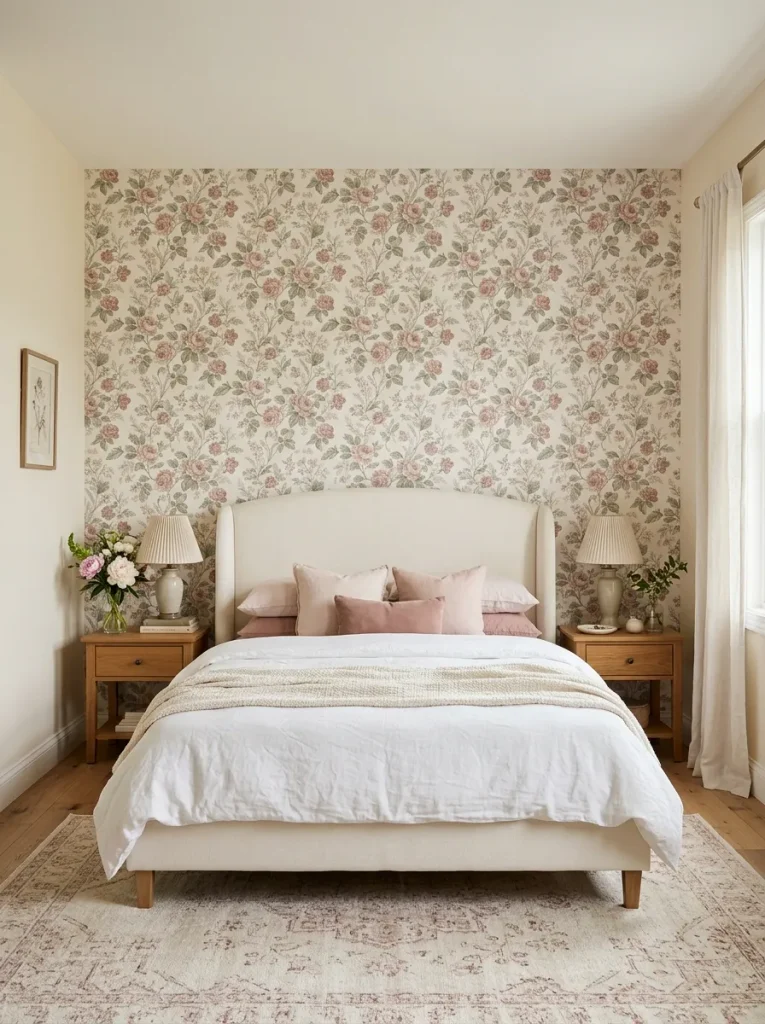
Quick Tip: Choose wallpaper with a background color that matches your bedding or curtains. If the floral pattern is bold, keep the remaining walls and larger furnishings simple to prevent visual competition.
A floral accent wall introduces color and personality without requiring a complete bedroom makeover. Small botanical prints create a delicate, cottage inspired atmosphere, while oversized blooms feel more dramatic and contemporary. Apply the pattern behind the headboard to establish a clear focal point. Before purchasing wallpaper, measure the wall carefully and check the pattern repeat to estimate how many rolls you need.
12. Rustic Wood Accents
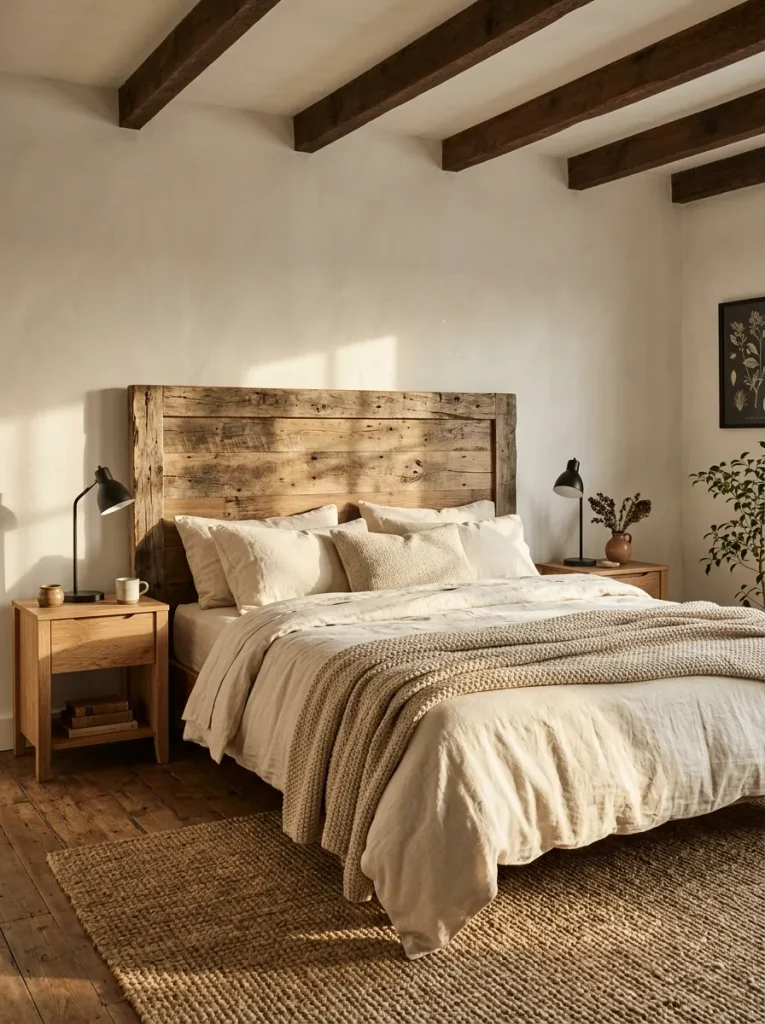
BEFORE
A bedroom filled with plain painted surfaces and matching furniture can sometimes feel flat. Without contrasting textures, even a well arranged space may lack warmth and visual character.
AFTER
Introduce a reclaimed wood headboard, a wooden bench or a pair of natural timber nightstands. These details add grain, warmth and an organic contrast to soft bedding and neutral walls.
You do not need to cover every surface with wood to achieve a rustic look. One prominent wooden feature paired with a few smaller accents is often enough. If your furniture already has different wood tones, repeat one of those shades in a frame or shelf to create a more connected appearance.
13. Blush Pink Bedroom
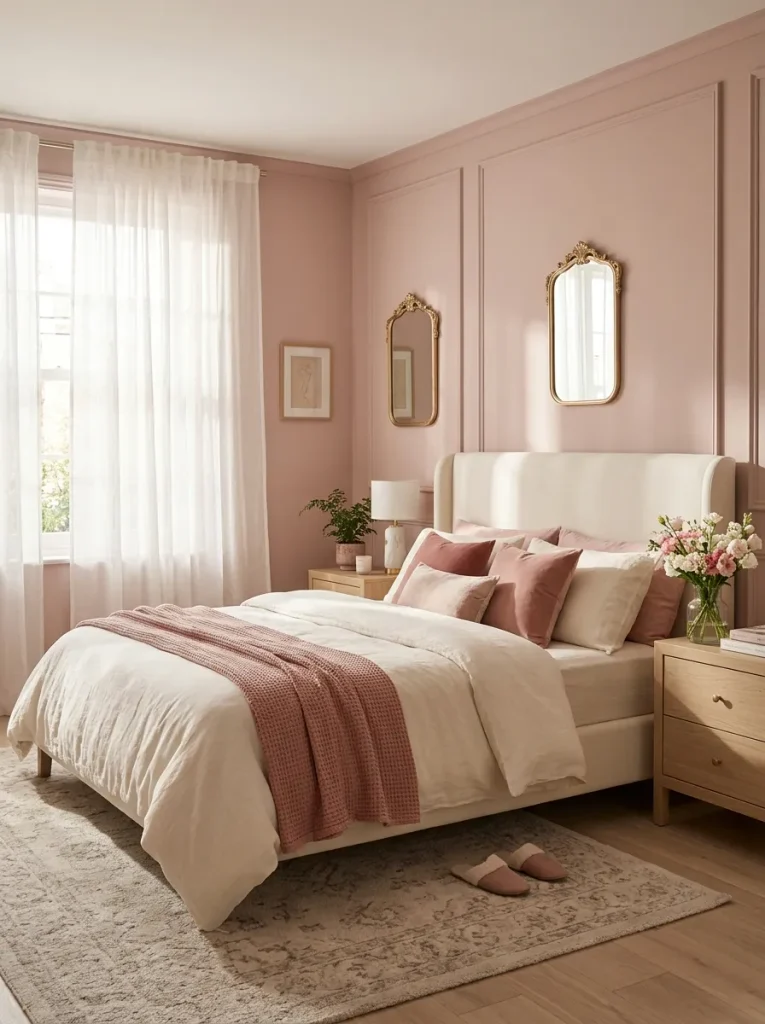
- Select a muted pink. Choose dusty rose or blush instead of an overly bright shade for a softer finish.
- Keep the bedding neutral. Cream, ivory and white prevent the room from feeling too saturated.
- Introduce warm metallics. Small brass or gold details complement pink without overwhelming it.
- Layer different textures. Combine linen sheets, a velvet cushion and a woven rug for depth.
Blush pink can feel sophisticated when balanced with natural materials and understated accessories. For a subtle update, keep the walls white and introduce pink through bedding, curtains or artwork. If you prefer a stronger look, paint the wall behind the bed and repeat the shade in just one or two smaller details.
14. Small Bedroom Storage
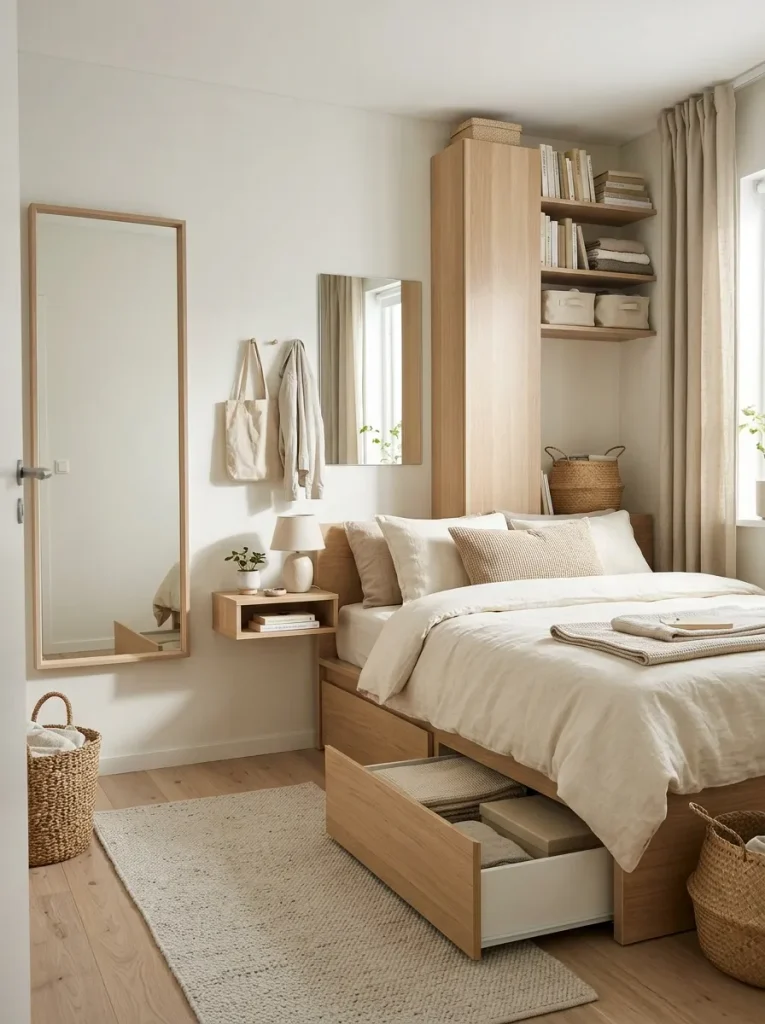
| Storage Solution | Option A | Option B |
|---|---|---|
| Under the bed | Pull out drawers | Lift up storage base |
| Bedside storage | Floating shelf | Narrow drawer unit |
| Clothing storage | Tall wardrobe | Under bed containers |
| Wall space | Open shelves | Closed cabinets |
Smart storage keeps a small bedroom comfortable without sacrificing its style. Choose furniture that serves more than one purpose, such as a bed with drawers or an ottoman that stores extra blankets. Use vertical space for items you need regularly and reserve higher shelves for seasonal belongings. Before buying anything, measure doorways and walking paths to ensure drawers can open fully.
15. Hotel Style Bedroom
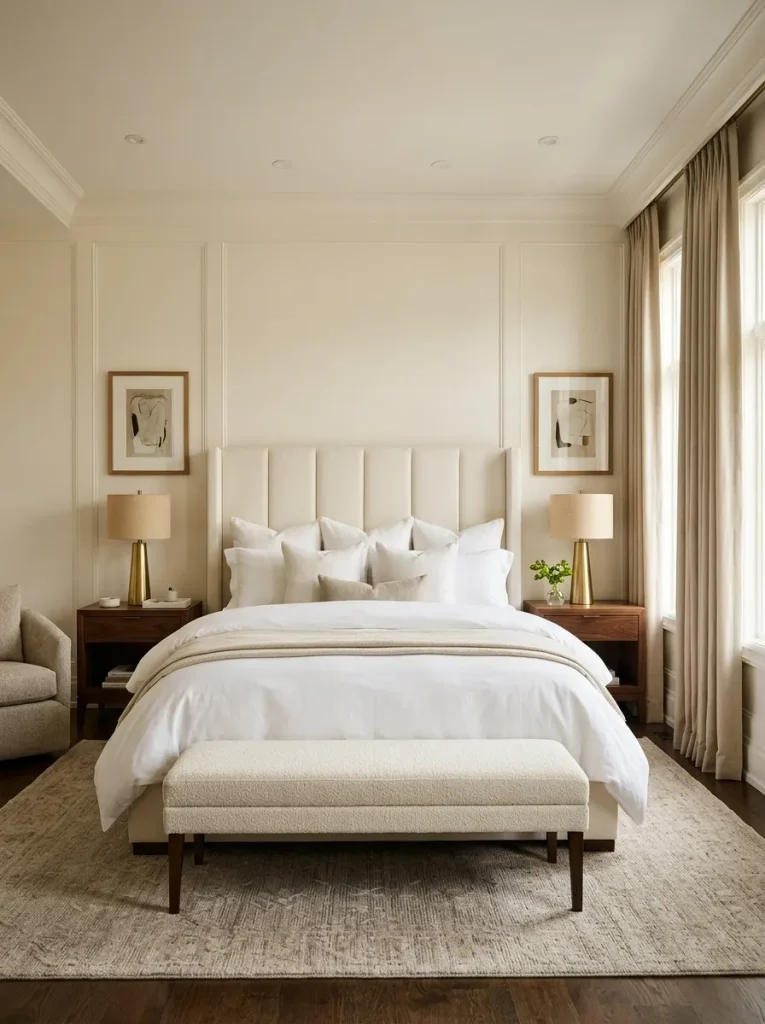
DO
- Use crisp white bedding with a neatly folded duvet.
- Arrange matching bedside lamps for visual balance.
- Hang curtains high to create the appearance of taller ceilings.
- Add a plush rug that extends beyond both sides of the bed.
DON’T
- Mix too many competing accent colors.
- Leave cables and everyday clutter visible on nightstands.
- Choose decorative pillows that make sleeping uncomfortable.
- Use lighting that is too harsh for a relaxing evening atmosphere.
A hotel inspired bedroom relies on thoughtful details rather than expensive furniture alone. Keep the main palette restrained, make the bed neatly and repeat a few materials throughout the room. In my experience, coordinated lighting and well pressed bedding create much of that polished feeling. Finish with one artwork or a simple vase instead of excessive accessories.
16. Moody Dark Bedroom
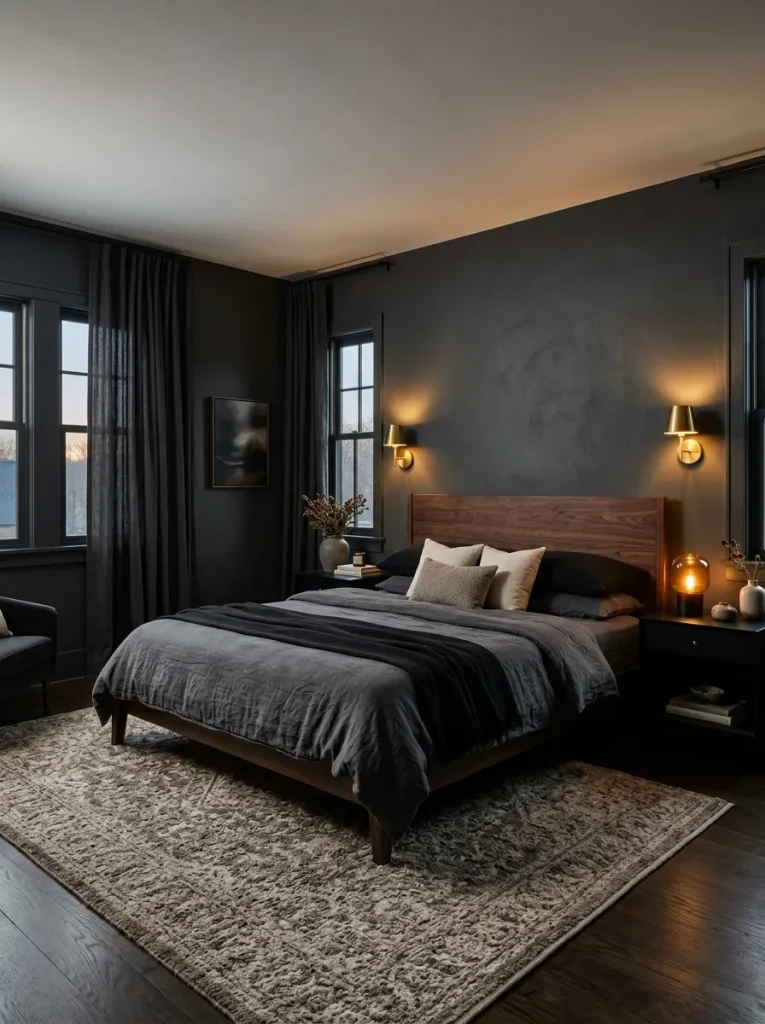
Cost: Low to moderate if you repaint existing walls and reuse furniture.
Time: One weekend for painting and restyling.
Skill Level: Beginner for decorating, intermediate for painting.
Best For: Bedrooms with layered lighting and contrasting textures.
Dark colors can make a bedroom feel intimate and restful when balanced with softer materials. Try charcoal, forest green or deep navy on the wall behind the bed, then introduce cream cushions or warm wood furniture to prevent the room from feeling too heavy. If natural light is limited, use lighter curtains and multiple warm lamps to maintain a comfortable atmosphere.
17. Scandinavian Bedroom
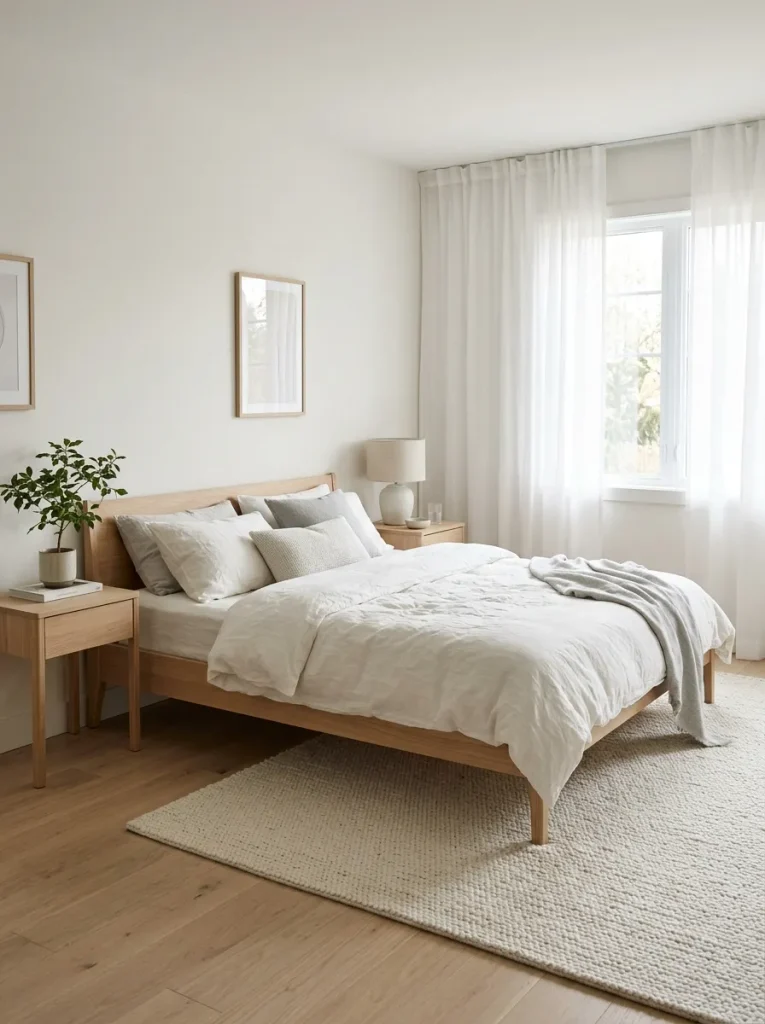
Scandinavian design makes a bedroom feel organized through simple furniture, practical storage and natural materials. Start with white or pale gray walls and a light wood bed frame. Add a soft rug and a few textured cushions to keep the space from feeling too plain.
Keep decorations purposeful rather than filling every empty surface. A small plant, a framed print or a ceramic bedside lamp can provide enough personality. This approach is especially useful for smaller bedrooms because low profile furniture and uncluttered walkways help the space feel more open.
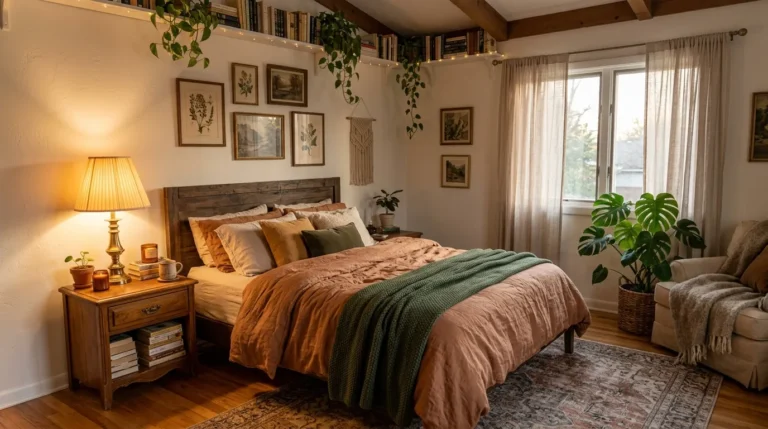
18. Earthy Terracotta Bedroom
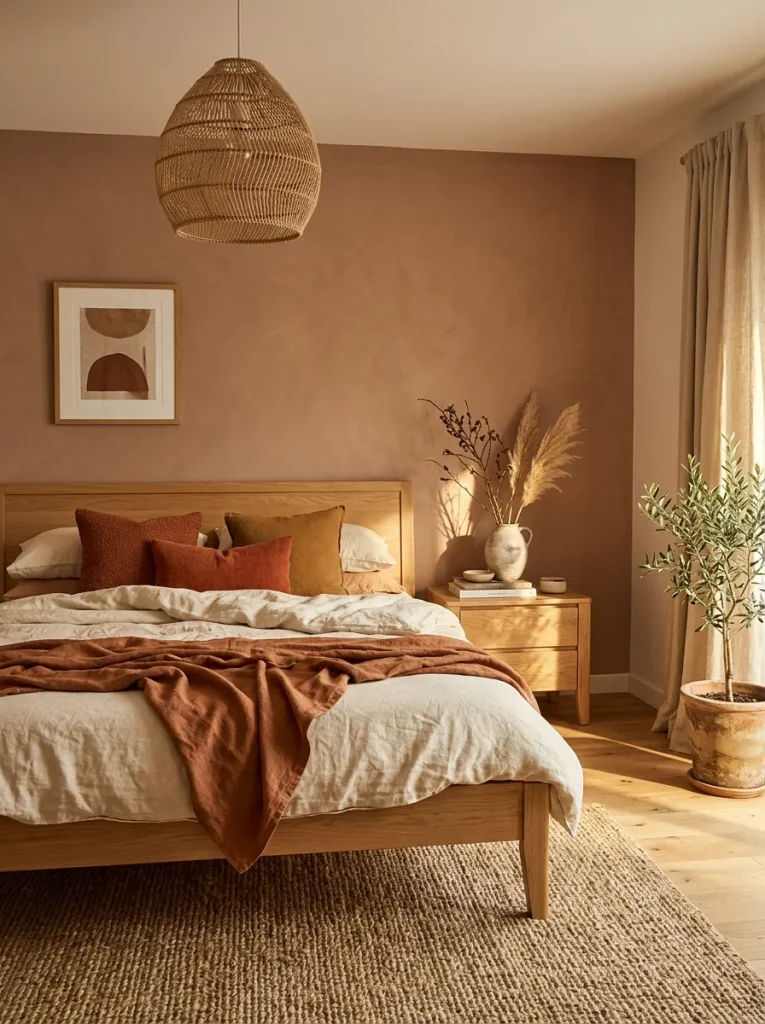
Quick Tip: Pair terracotta with warm white, sand and natural wood. Test your chosen paint shade under both daylight and evening lighting because some clay tones can appear much more orange in certain conditions.
Terracotta introduces warmth without relying on bright or overly saturated colors. For a balanced bedroom, use it on one wall or through bedding and decorative cushions, then keep larger furnishings neutral. Natural materials such as linen, jute and oak reinforce the earthy palette. A few carefully chosen accents will create a cohesive look without making the room feel visually crowded.
19. Luxury Velvet Bedroom
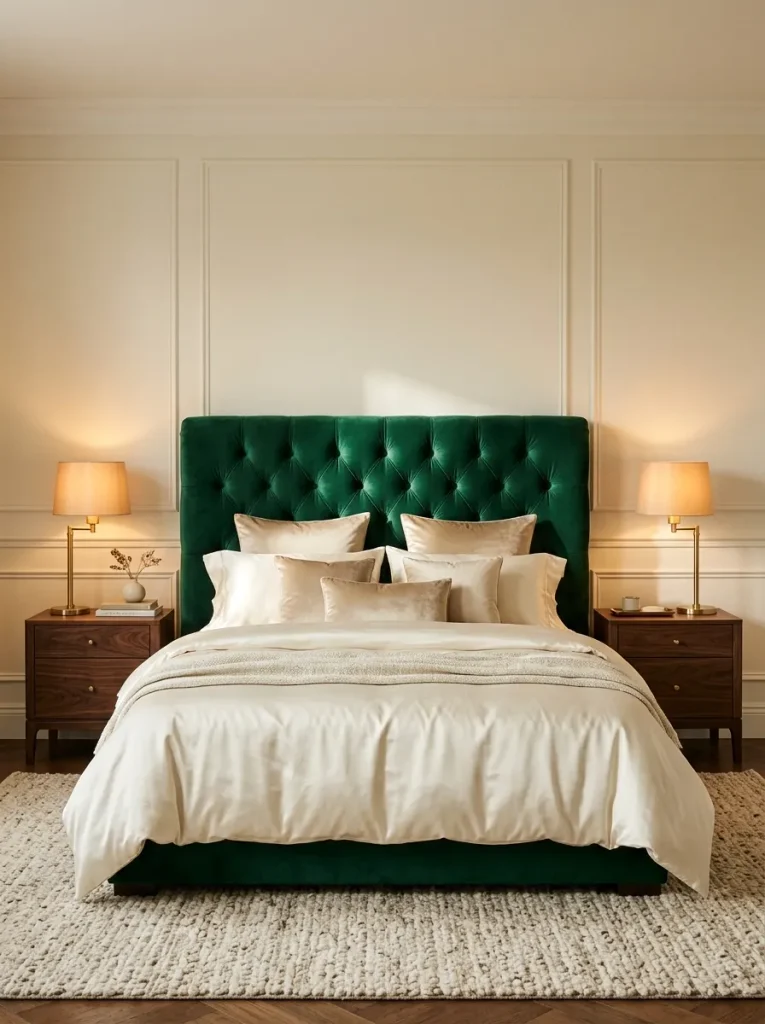
DO
- Choose a velvet headboard in emerald, navy or muted blush.
- Pair rich fabrics with simple cotton or linen bedding.
- Add brass or brushed gold lamps for a subtle polished finish.
- Keep the surrounding furniture understated to highlight the headboard.
DON’T
- Combine too many shiny fabrics in one room.
- Use velvet on every major surface.
- Overload the bed with decorative cushions.
- Ignore cleaning instructions when choosing upholstery.
Velvet adds depth through its soft texture and changing appearance under different lighting. A single velvet headboard or accent cushion can make a bedroom feel more luxurious without requiring a complete redesign. For everyday practicality, choose durable upholstery and check its care requirements before purchasing. Neutral bedding helps rich colors stand out without making the room feel heavy.
20. Attic Bedroom Charm
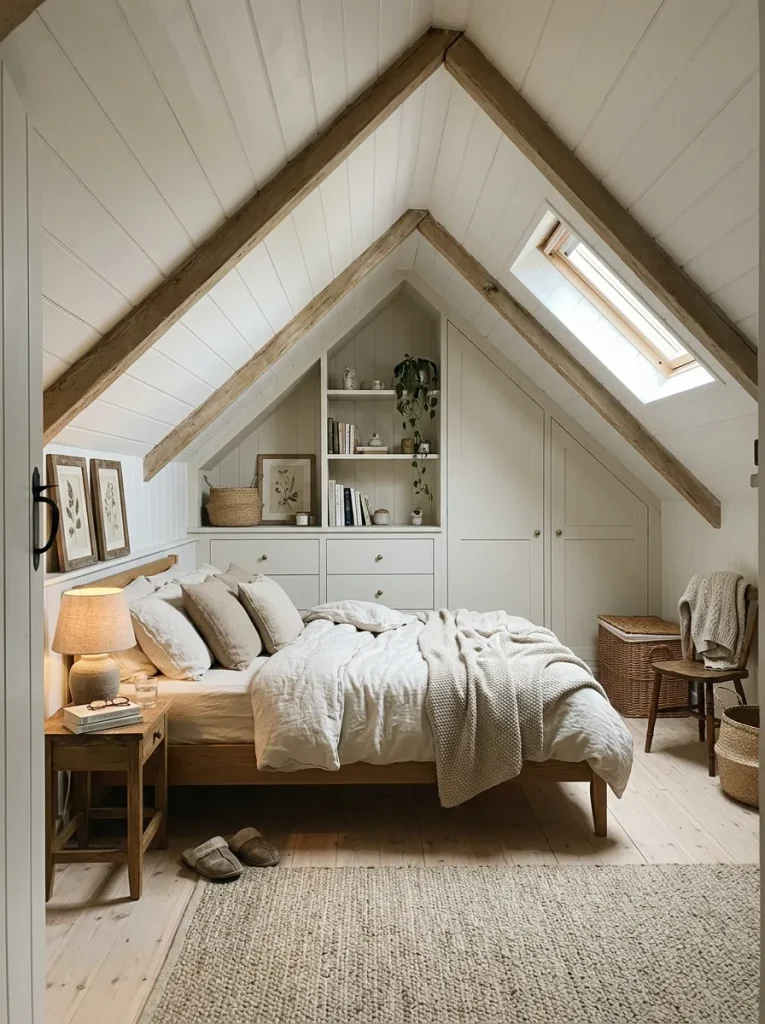
Cost: Moderate, depending on built in storage and furniture requirements.
Time: One to two days for a simple furniture rearrangement and styling update.
Skill Level: Beginner for decorating, intermediate for custom storage.
Best For: Loft conversions and bedrooms with sloped ceilings.
Sloped ceilings can make furniture placement challenging, but they also give an attic bedroom its distinctive character. Position a low bed beneath the highest part of the ceiling whenever possible, leaving comfortable headroom around the sides. Use the lower areas for drawers, baskets or custom cabinets that fit the available space.
Keep the palette light if the room has limited windows and use lamps to brighten darker corners. Skylights can provide valuable daylight, but measure carefully before placing furniture beneath them. The result is a bedroom that makes practical use of awkward angles rather than treating them as wasted space.
21. Coastal Blue Bedroom
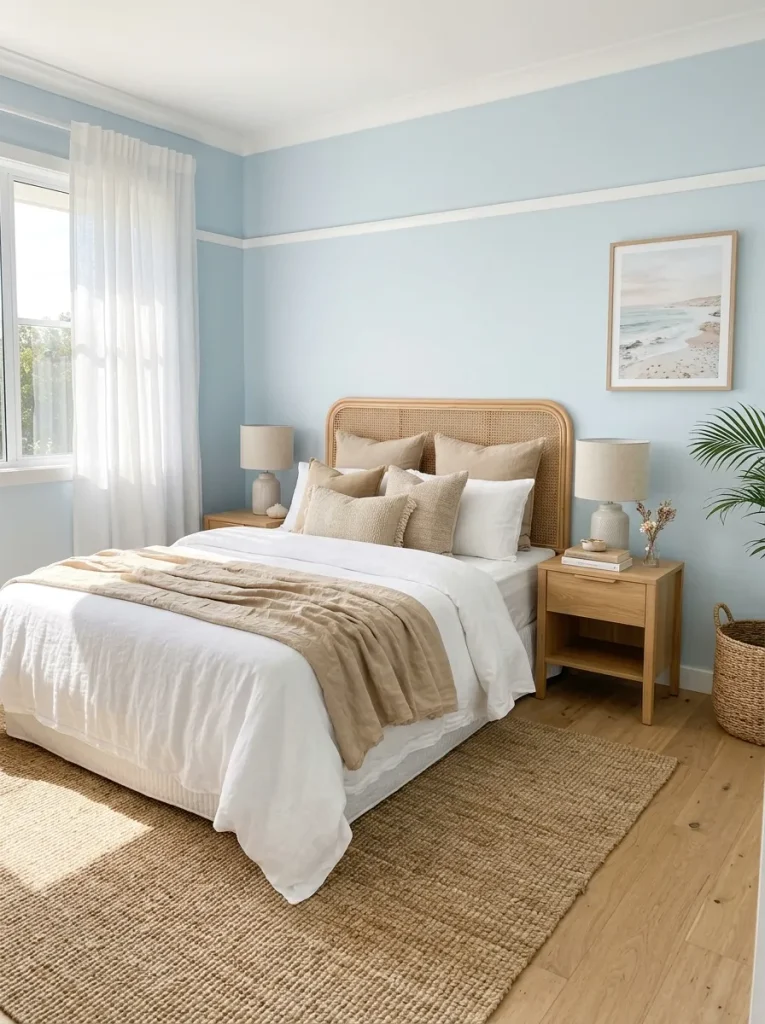
- Choose a blue shade. Pale blue or muted sea glass creates a gentle coastal foundation.
- Layer crisp white bedding. White sheets and a lightweight duvet keep the room feeling fresh.
- Introduce natural textures. Add rattan, jute or light wood through furniture and accessories.
- Use restrained decorations. Select one or two coastal prints rather than filling the room with themed ornaments.
- Keep window treatments light. Sheer curtains allow daylight to filter through while maintaining privacy when layered with suitable blinds.
A coastal bedroom borrows its relaxed palette from the sea, sky and sand without needing obvious nautical decorations. Balance blue with white and warm natural materials so the room feels inviting throughout the year. For a subtle refresh, change the cushions and bedding first. These smaller updates can introduce a coastal look without repainting the walls.
22. Japandi Bedroom Style
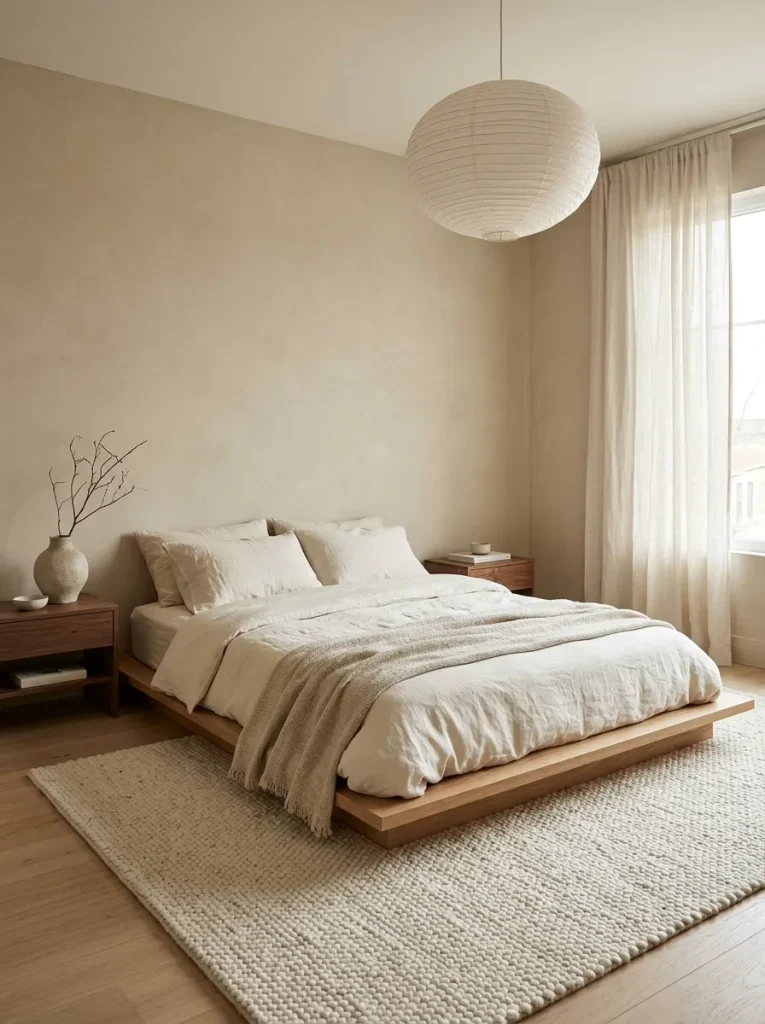
| Design Element | Option A | Option B |
|---|---|---|
| Bed frame | Low oak platform | Simple walnut frame |
| Color palette | Cream and beige | Taupe and warm gray |
| Lighting | Paper pendant | Minimal wood lamp |
| Decorations | Handmade pottery | Simple botanical artwork |
| Textiles | Linen bedding | Cotton and wool layers |
Japandi design combines the simplicity of Japanese interiors with the warmth of Scandinavian spaces. Start with a low profile bed, natural wood furniture and a restrained palette. Choose a few useful decorative objects rather than filling shelves with accessories. This approach works particularly well when you want a bedroom that feels intentional, uncluttered and comfortable for everyday living.
23. Gallery Wall Bedroom
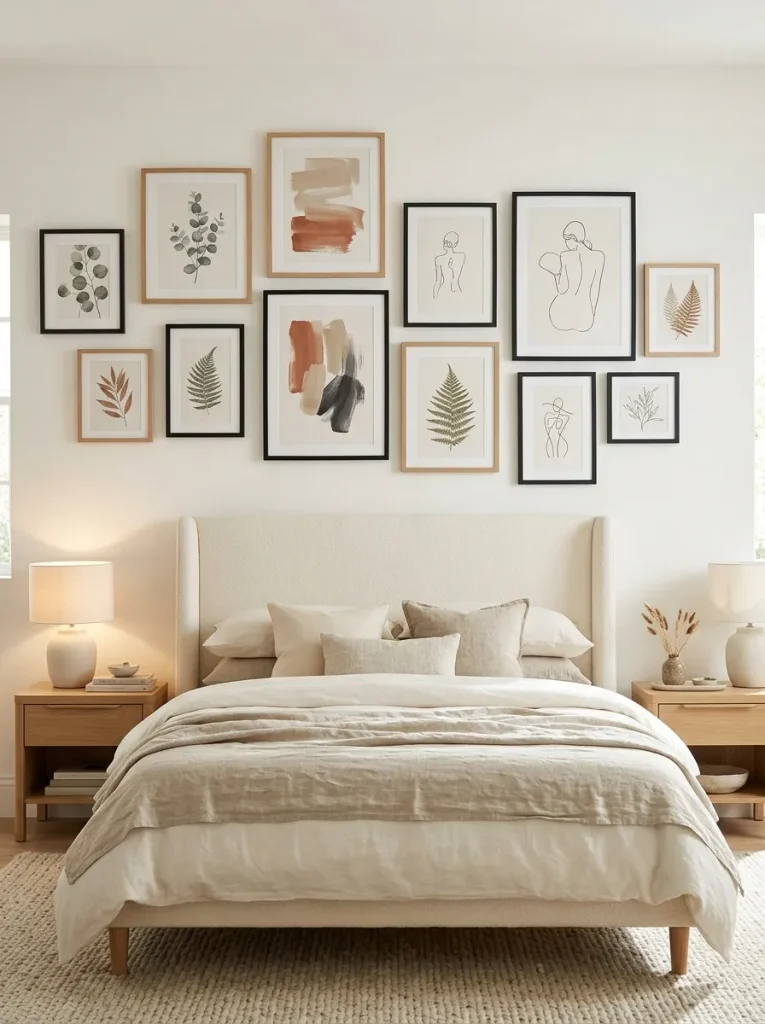
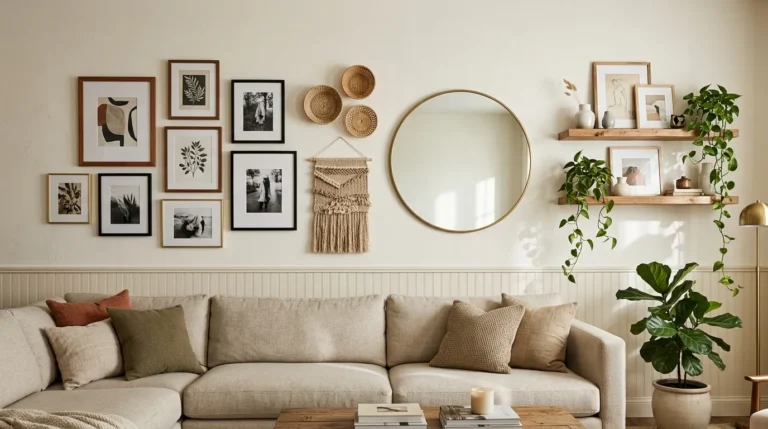
Quick Tip: Arrange your frames on the floor before hanging them. Keep spacing consistent and position the center of the overall arrangement at a comfortable viewing height above the headboard.
A gallery wall adds personality to a bedroom without requiring a bold paint color or expensive furniture. Combine two or three related artwork styles, then repeat a few frame finishes to make the arrangement feel connected. For a balanced result, align the collection with the width of the bed rather than spreading pieces randomly across the wall.
24. Canopy Curtain Bedroom
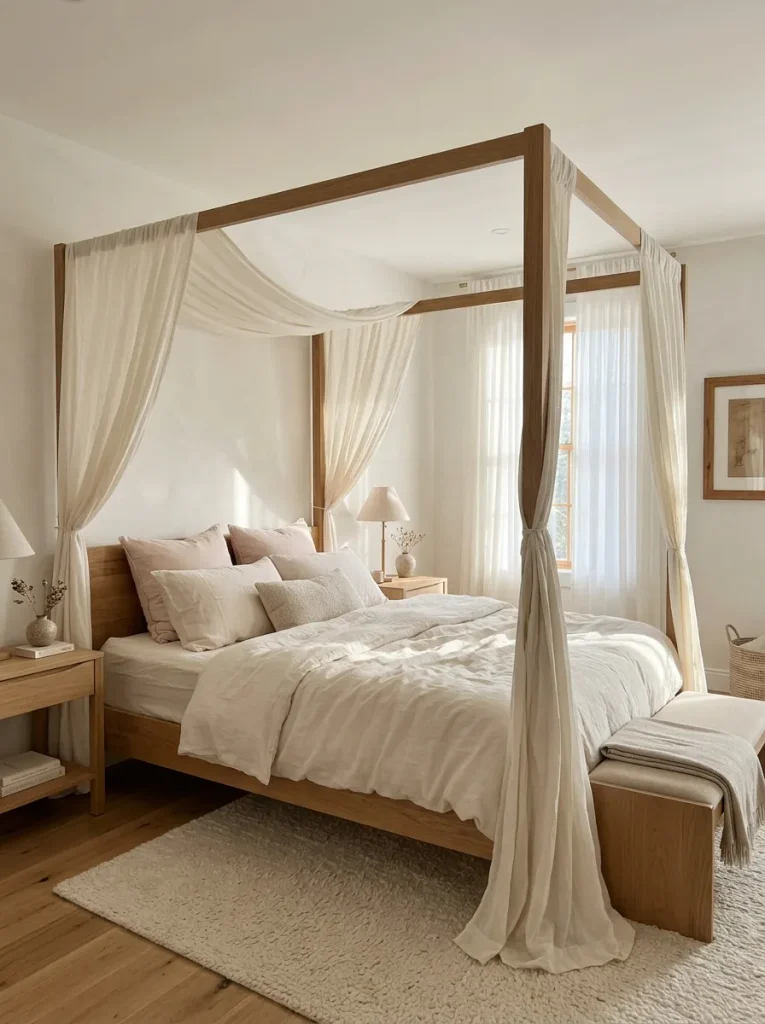
BEFORE
A standard bed frame can leave the sleeping area looking visually plain, especially in a bedroom with tall ceilings or minimal wall decoration. Heavy furniture and dark bedding may also make the space feel less airy.
AFTER
Lightweight curtains around a four poster frame create a softer focal point and add vertical interest. Choose sheer ivory fabric for an airy appearance or linen look panels for a slightly more relaxed finish.
Keep the surrounding decor simple so the curtains remain the main feature. Check the frame’s weight limits and secure all fabric away from heaters, candles and other heat sources. For renters, a freestanding canopy frame offers a way to achieve the look without permanent ceiling installations.
25. Black and White Bedroom
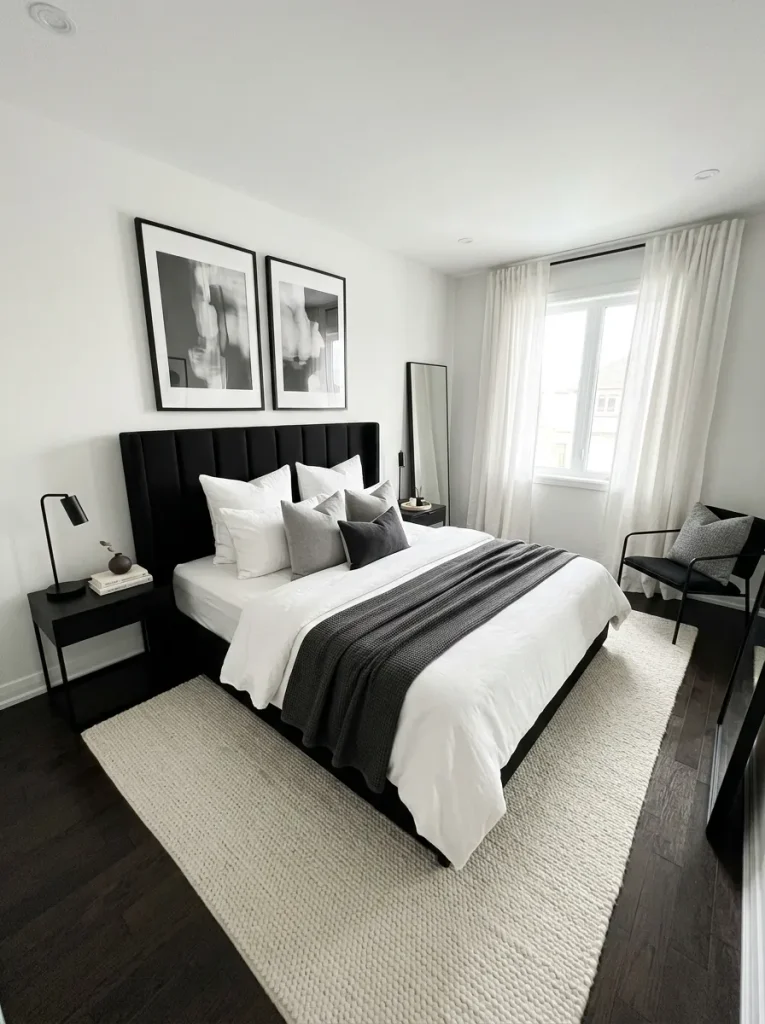
- Choose your dominant color. Use white as the base for a brighter room or black for a more dramatic effect.
- Introduce contrasting furniture. Pair a black bed frame with white bedding or a white headboard with dark nightstands.
- Layer soft textures. Add a knitted throw, quilted duvet or textured rug to soften the sharp contrast.
- Keep patterns restrained. Choose one geometric print or abstract artwork rather than several competing designs.
Black and white creates a timeless bedroom palette that is easy to update. The key is balancing contrast with comfortable textures so the room does not feel stark. In smaller bedrooms, use white across larger surfaces and reserve black for lamps, frames and hardware. This keeps the design crisp while allowing individual accents to stand out.
26. Vintage Bedroom Details
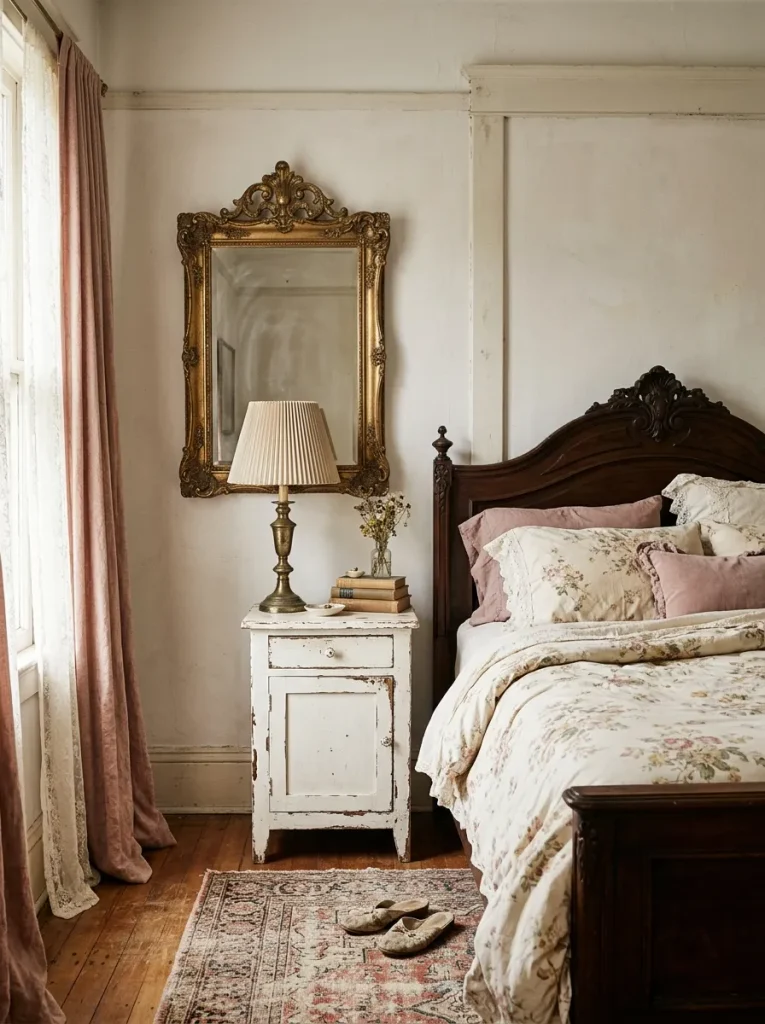
Cost: Low to moderate when decorating with secondhand finds.
Time: One afternoon for arranging accessories and updating bedding.
Skill Level: Beginner for styling, intermediate for refinishing furniture.
Best For: Cottage style rooms and bedrooms with traditional architectural details.
Vintage details bring character to a bedroom through pieces that feel distinctive rather than mass produced. Look for an old wooden mirror, a small bedside cabinet or a decorative lamp at a secondhand shop. Mix one or two older pieces with simple modern bedding to keep the room from feeling dated. Before buying used furniture, inspect drawers, joints and surfaces for damage, pests or strong odors.
27. Natural Greenery Bedroom
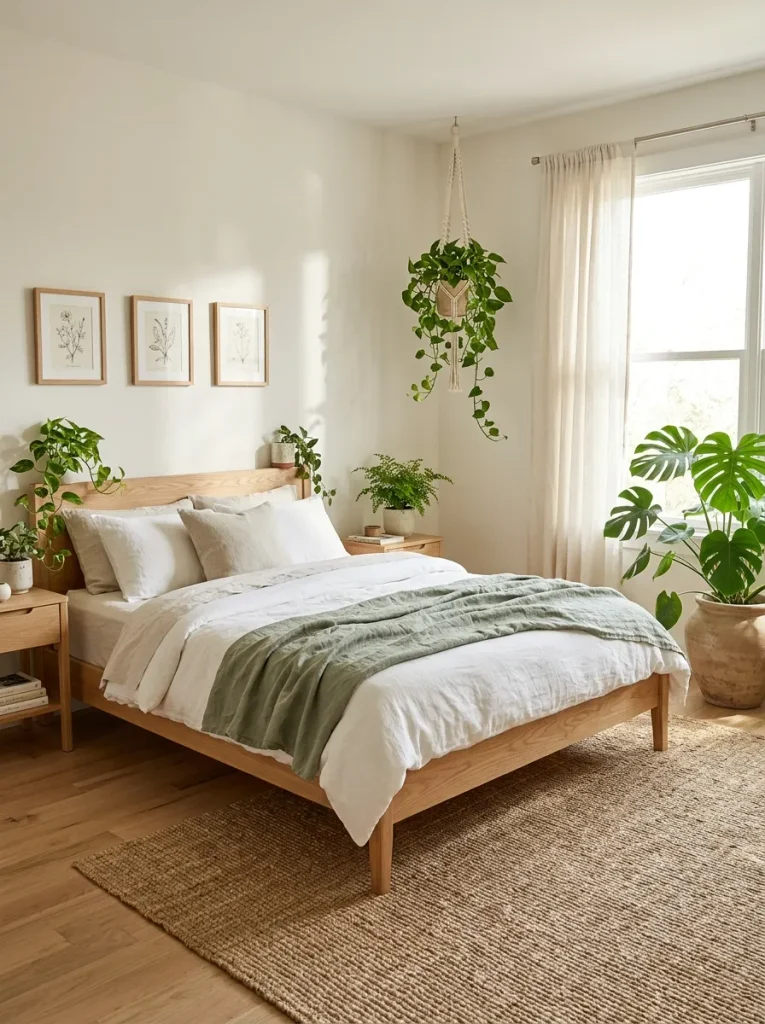
DO
- Choose plants suited to the light available in your bedroom.
- Use stable pots with drainage and suitable saucers.
- Group plants at different heights for a natural arrangement.
- Leave enough space around the bed and walkways for easy movement.
DON’T
- Buy plants based only on appearance without checking their care needs.
- Place heavy pots on narrow or unstable shelves.
- Overwater plants in containers without proper drainage.
- Choose toxic varieties if pets may chew on the leaves.
Greenery introduces natural color and texture without requiring new furniture or wall paint. A tall plant can fill an empty corner, while a small pot adds life to a bedside table. Match each plant to the available light and watering routine and avoid overcrowding the room. A few healthy plants usually look better than many struggling ones.
28. Romantic Candlelit Bedroom
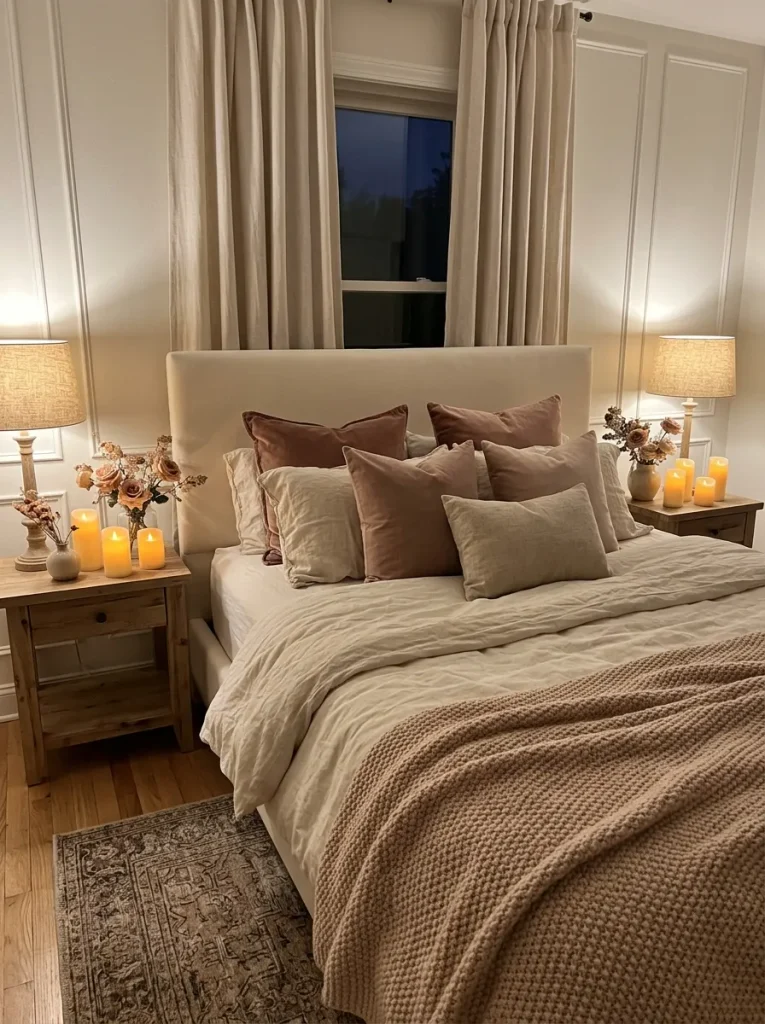
Cost: Low to moderate, depending on lighting and accessories.
Time: 30 to 60 minutes for a simple styling update.
Skill Level: Beginner.
Best For: Cozy bedrooms with warm colors and soft textures.
Warm lighting and delicate details can make your bedroom feel more intimate without changing the furniture. Place flameless candles on stable surfaces, add a warm bedside lamp and layer cream or blush textiles across the bed. Keep the arrangement simple so the room feels relaxing rather than overly decorated. For safety, never leave real candles burning unattended, especially near curtains or bedding.
29. Small Space Bedroom
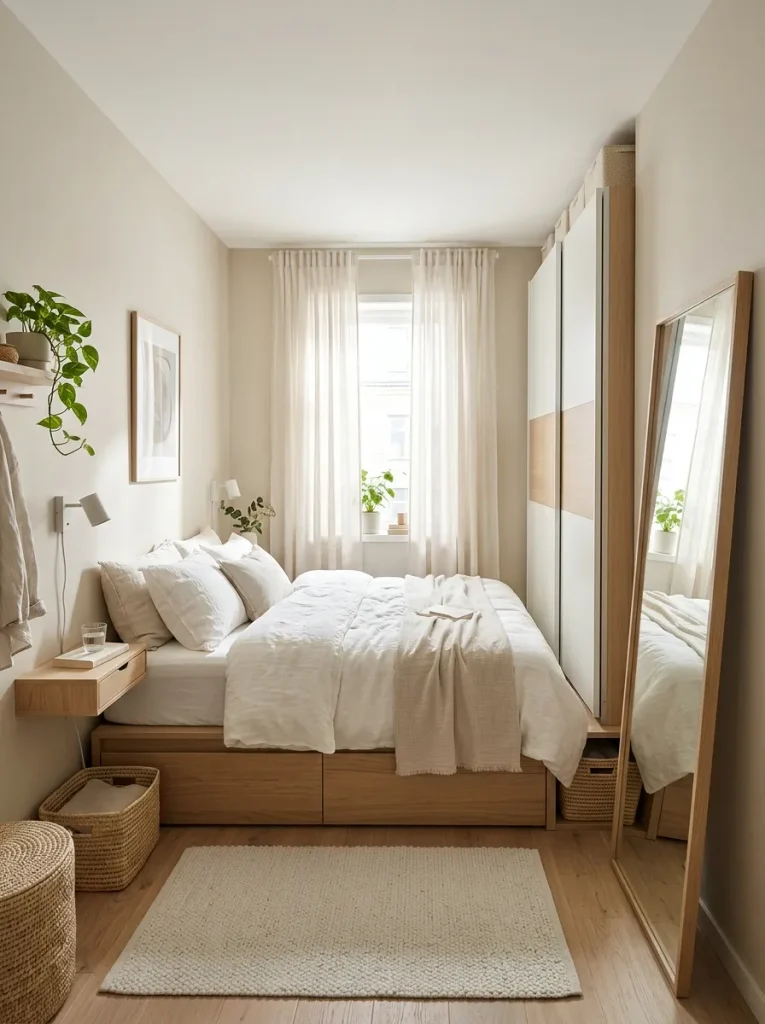
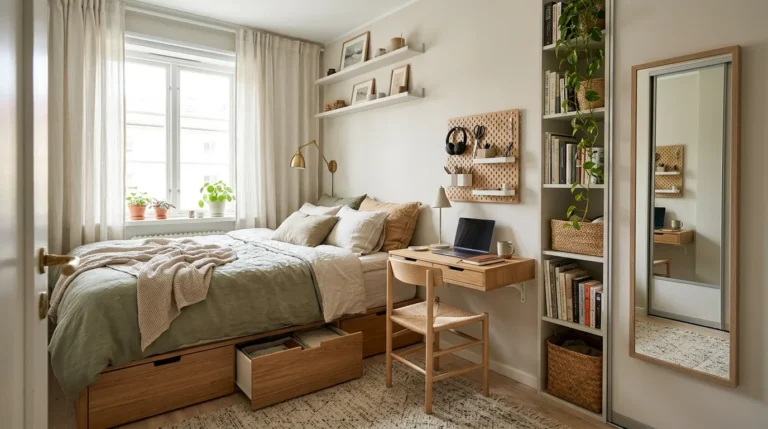
Small bedrooms benefit from furniture that creates storage without blocking valuable walking space. Start by measuring the room, then position the bed so drawers, doors and wardrobes can open comfortably.
Choose a bed with built in drawers, floating shelves instead of bulky nightstands and a tall mirror to reflect available light. Keep bedding light and decorations limited to a few useful pieces. Among practical Bedroom Ideas, this layout is especially helpful for apartments, guest rooms and narrow spaces where every inch matters.
30. Boho Macrame Decor
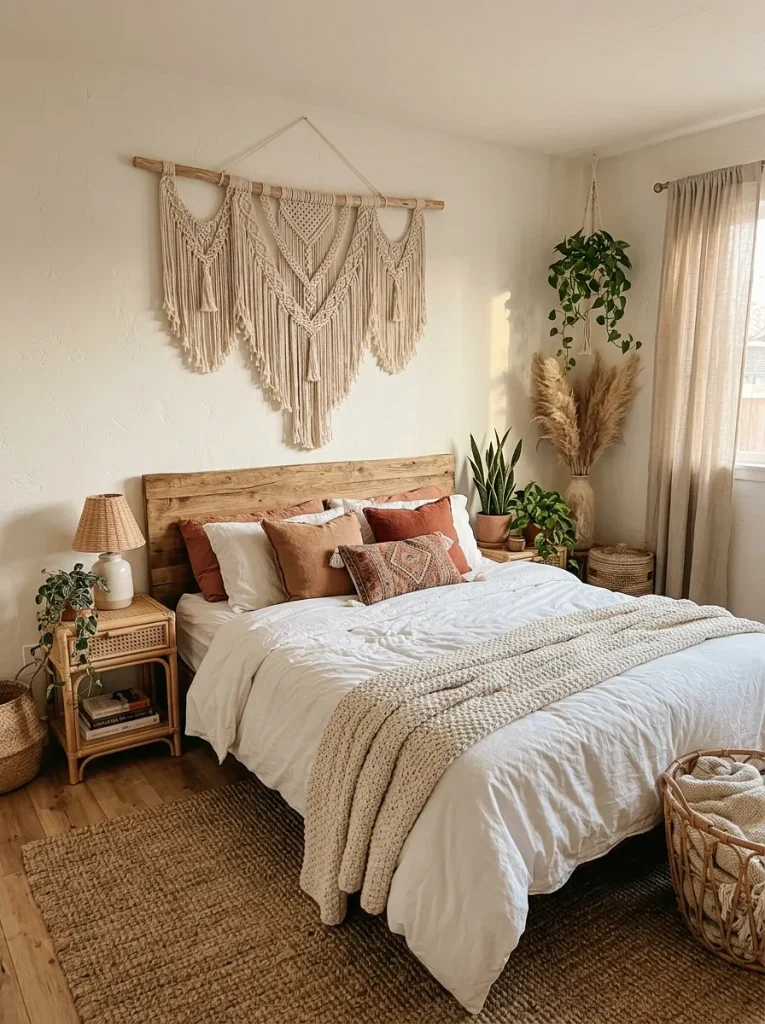
- Choose a focal point. Hang one substantial macrame piece above the headboard instead of scattering small decorations across every wall.
- Coordinate the colors. Combine cream, sand, rust and muted olive for a cohesive earthy palette.
- Add natural materials. Pair the wall hanging with a rattan lamp, woven basket or wooden bedside table.
- Keep the bed simple. Neutral bedding allows the handmade wall art to remain the main feature.
- Check the mounting hardware. Secure heavier pieces properly and keep hanging cords away from children and pets.
Macrame adds handcrafted character and soft texture to a bedroom, making it especially suitable for bohemian and earthy interiors. If you are decorating on a budget, a smaller handmade wall hanging can create a similar effect without filling the entire wall. Repeat its cream or natural fiber tones in a cushion or rug to connect the different elements.
31. Dreamy Fairy Light Bedroom
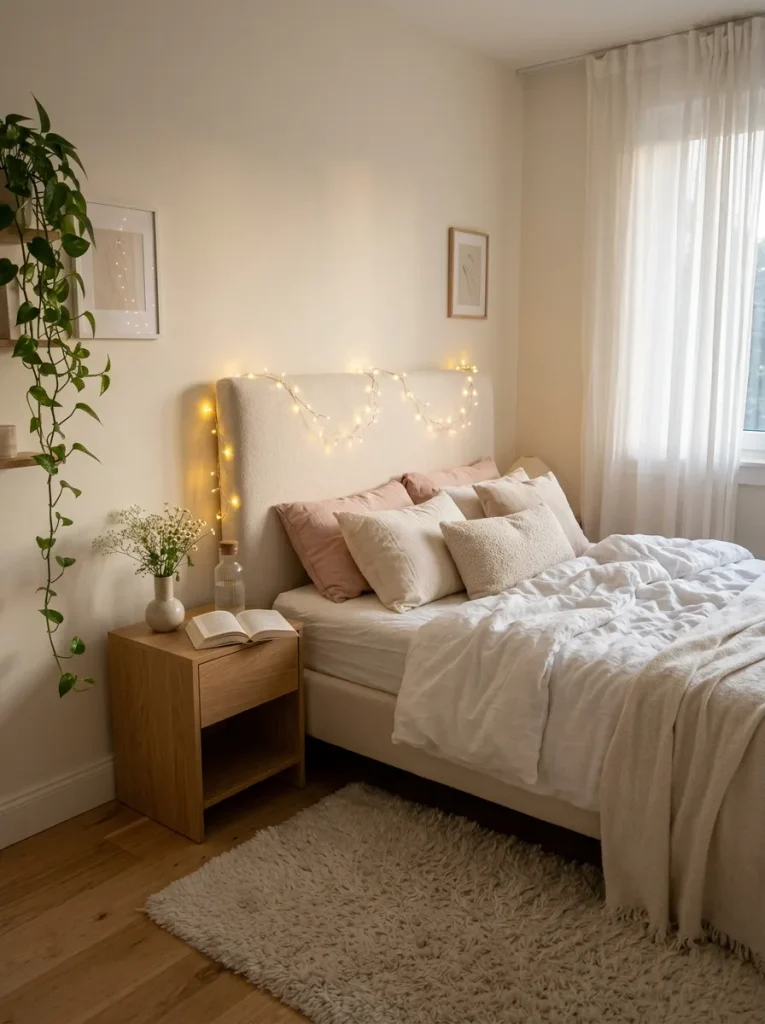
Soft fairy lights add a gentle glow that makes a bedroom feel cozy after dark. Drape battery operated lights around a headboard or arrange them along a curtain rod for a subtle decorative accent. Choose warm white bulbs rather than cool blue tones to complement cream bedding and neutral walls.
For a more polished finish, keep the arrangement neat and avoid covering every wall with lights. Combine them with a bedside lamp so you have enough illumination for reading and everyday tasks. Use lights designed for indoor use, follow the manufacturer’s instructions and keep electrical components away from bedding and fabric.
CONCLUSION
Creating a bedroom you love doesn’t require expensive furniture or a complete renovation. Sometimes, fresh bedding, softer lighting, natural textures or a thoughtful color change are all you need to make your space feel more personal and inviting.
These Bedroom Ideas offer inspiration for different styles, room sizes and budgets, so start with the look that speaks to you most. Save this article on Pinterest for your next decorating project, try one or two ideas at home and share it with a friend who loves beautiful interiors. Your dream bedroom can begin with one simple change today!