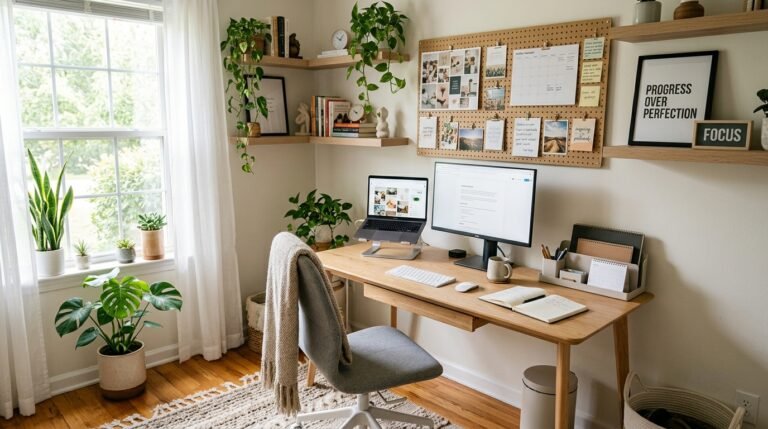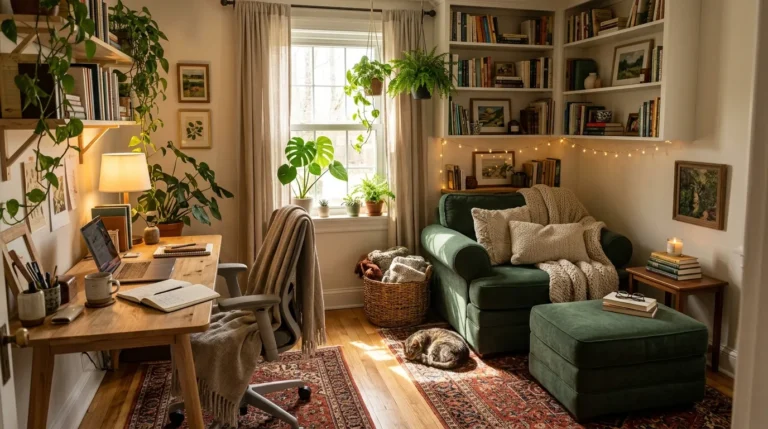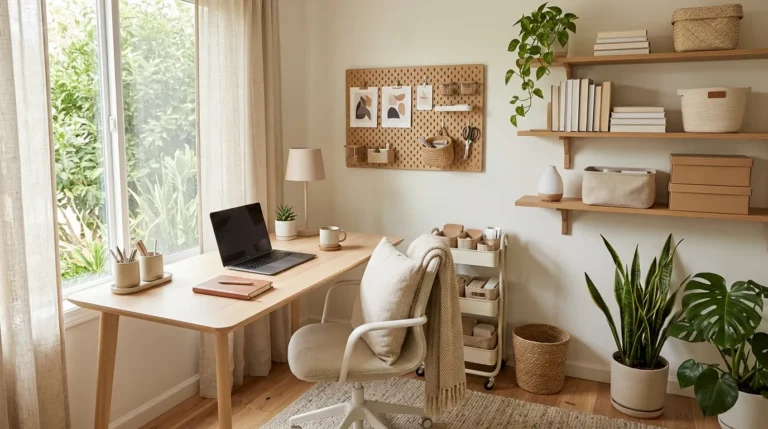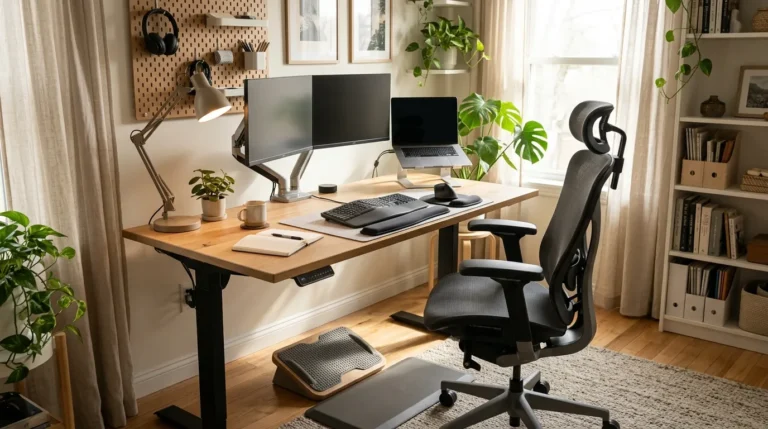
Minimalist Home Office Ideas: 31 Clutter Free Looks
A cluttered desk can make even the simplest workday feel overwhelming. A clean, peaceful workspace can help you think clearly, stay focused and enjoy your daily routine.
These Minimalist Home Office Ideas will show you how to create a beautiful organized workspace without filling it with unnecessary furniture or expensive accessories. From white desks and floating shelves to hidden storage and warm natural textures, you’ll discover practical ways to make your office feel lighter and more functional.
Whether you’re working from a small bedroom corner, a spare room or a compact apartment, the right setup can make a noticeable difference. I’ve noticed that keeping everyday essentials within reach while clearing unnecessary items from the desk makes a workspace easier to manage. Explore these 31 clutter-free looks to find inspiration that fits your space, budget and personal style.
Neutral Color Palette
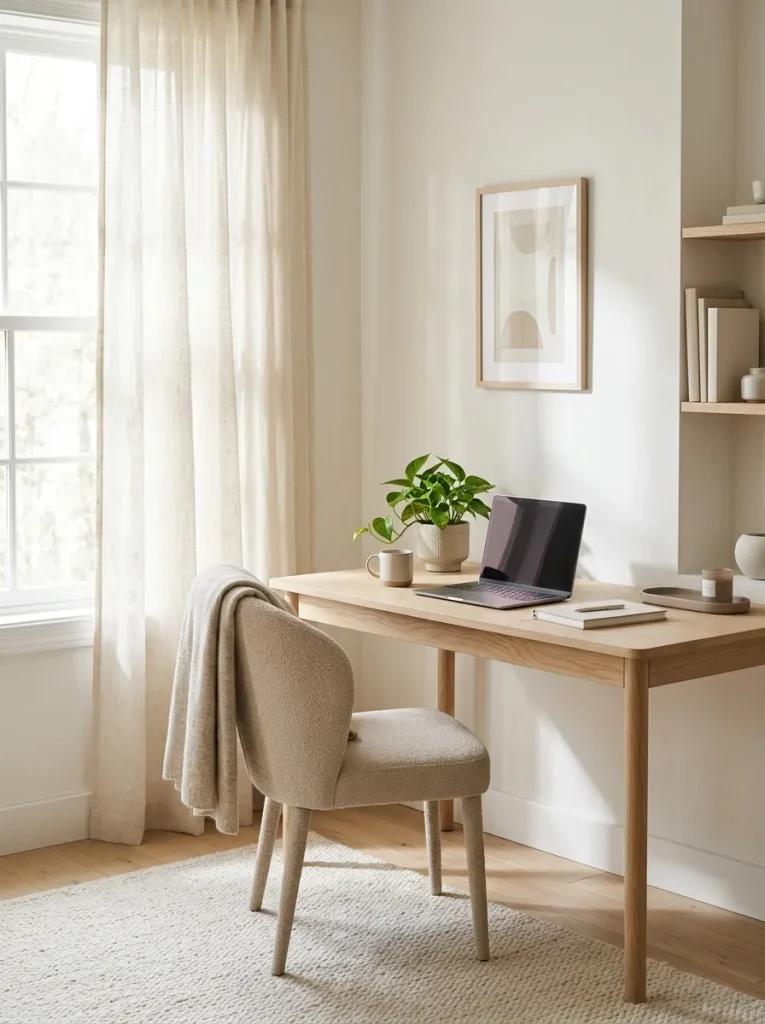
A calm workspace starts with colors that let your eyes rest. Warm white, beige, soft gray and pale wood create a clean background without making the room feel cold or empty. These shades also help different furniture pieces look coordinated, even when they come from separate collections.
Choose two main neutrals and one subtle accent color. For example, pair ivory walls with a light oak desk and a muted sage plant pot. Keep bold colors limited to small accessories so the room feels balanced. The result is a simple, cohesive office that stays visually quiet while you work.
Clear Desk Surface
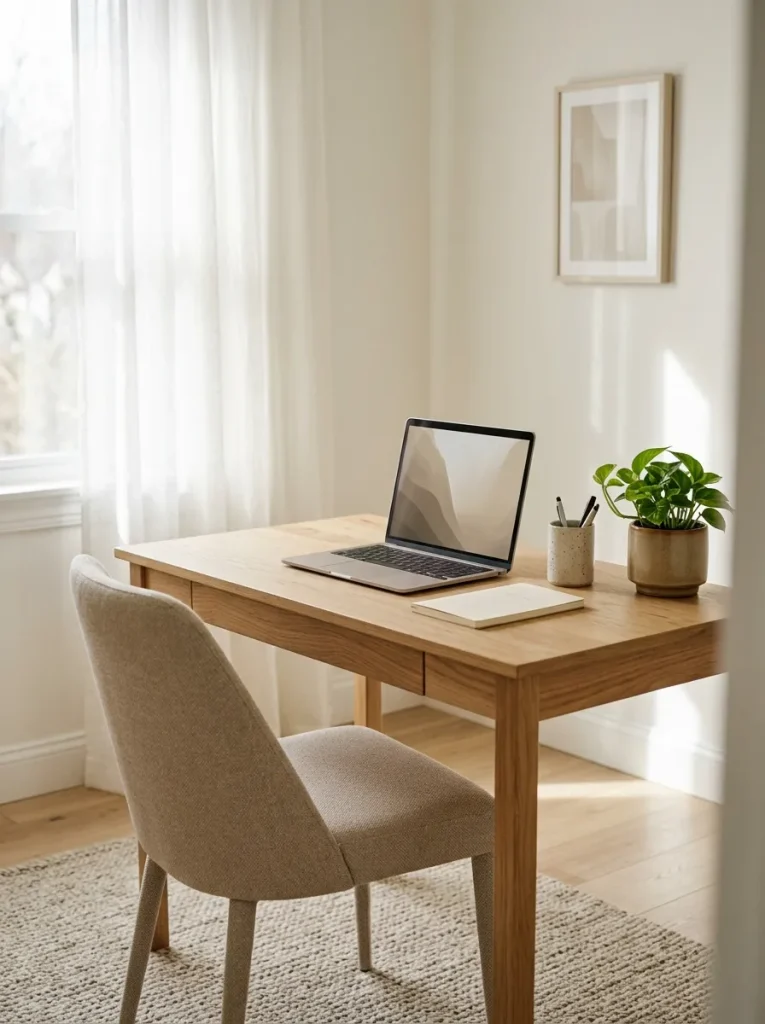
- Keep daily essentials: Leave only your computer, notebook and frequently used stationery on the desk.
- Create a paper tray: Place incoming documents in one slim organizer instead of spreading them across the surface.
- Hide spare supplies: Store extra pens, cables and sticky notes in a drawer or closed box.
- Set a reset routine: Spend two minutes clearing the desk at the end of each workday.
- Protect one open area: Leave enough empty space to write comfortably or review printed documents.
A clear desktop makes it easier to find what you need and gives a small office more breathing room. Start by removing everything, then return only the items you use regularly. Keep sentimental objects and decorative pieces to a minimum, so the desk supports your work instead of competing for attention.
Floating Wall Shelves
Quick Tip:
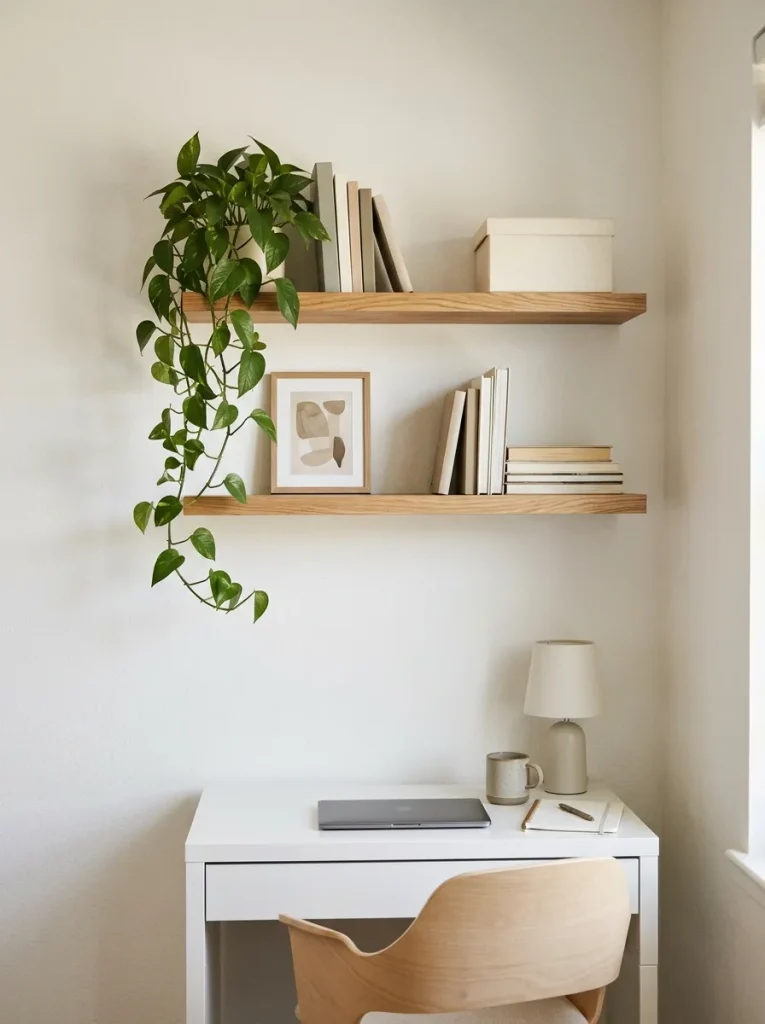
Mount one or two shallow shelves above your desk to use vertical space without adding bulky furniture. Keep heavier items within easy reach on properly installed shelves and leave some open space between objects so the arrangement stays light.
Floating shelves provide storage for books, notebooks and a few meaningful decorations while keeping the floor clear. Choose a finish that matches your desk or chair legs for a coordinated look. Before drilling, check for hidden wiring and pipes, use suitable wall fixings and confirm that the shelves can safely support their intended load.
Compact Writing Desk
BEFORE
A bulky desk fills most of the room, leaving little space to move the chair or walk comfortably. Extra drawers and wide legs make the workspace feel crowded.
AFTER
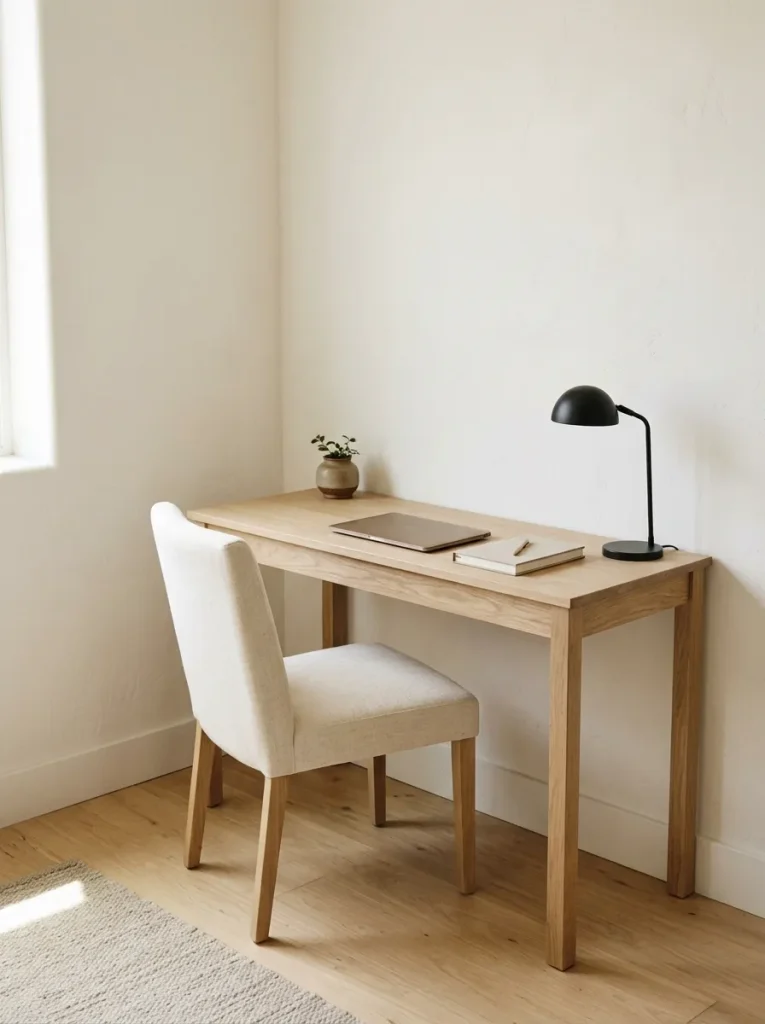
A slim writing desk creates a dedicated work zone without overwhelming the room. The chair slides underneath when not in use, leaving more visible floor space.
Measure the available wall before choosing a desk, including enough room to pull out your chair. Check the desktop depth against your equipment, especially if you use a separate monitor. A compact design works best when it supports your daily tasks without collecting unnecessary items.
Hidden Cable Storage
- Gather the cables: Identify the cords for your monitor, laptop, lamp and chargers.
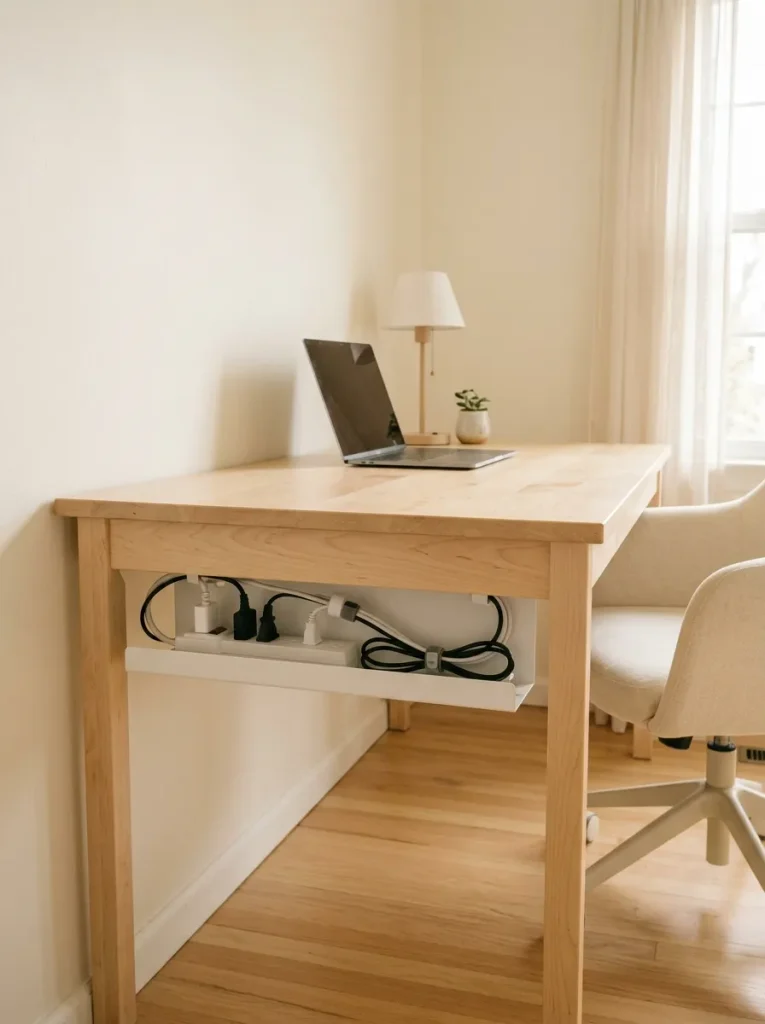
- Install a cable tray: Attach an under-desk tray suitable for your desk material and cable load.
- Group related wires: Use reusable cable ties to keep cords from tangling.
- Secure loose sections: Add cable clips along the desk leg to guide wires toward the outlet.
- Check access and airflow: Keep plugs reachable and avoid enclosing power adapters in tight spaces.
Concealed cables make a workspace look cleaner and reduce the chance of cords catching on your feet or chair. Choose organizers that fit your setup rather than forcing every wire into one bundle. Keep electrical connections accessible, avoid overloading outlets and leave ventilation around adapters to help prevent overheating.
Minimal Desk Accessories
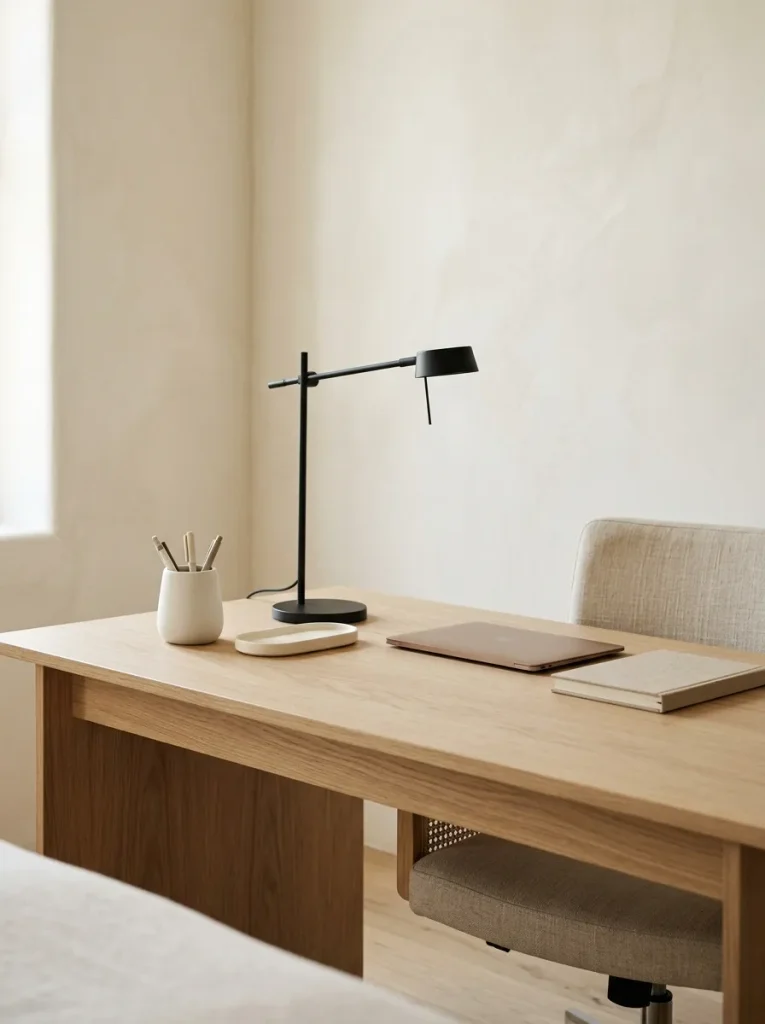
| Option A: Many Accessories | Option B: Essential Accessories |
| Several decorative objects | Two or three useful items |
| Mixed colors and materials | Coordinated neutral finishes |
| Less open writing space | More room for daily tasks |
| Frequent dusting and rearranging | Simple, quick cleaning |
Minimal accessories help your desk feel intentional without making it look bare. Choose objects that serve a purpose, such as a pen holder, a small tray or a task lamp. Repeating one or two finishes creates a coordinated look, while leaving empty space makes the entire workspace feel calmer and easier to maintain.
Closed Storage Cabinets
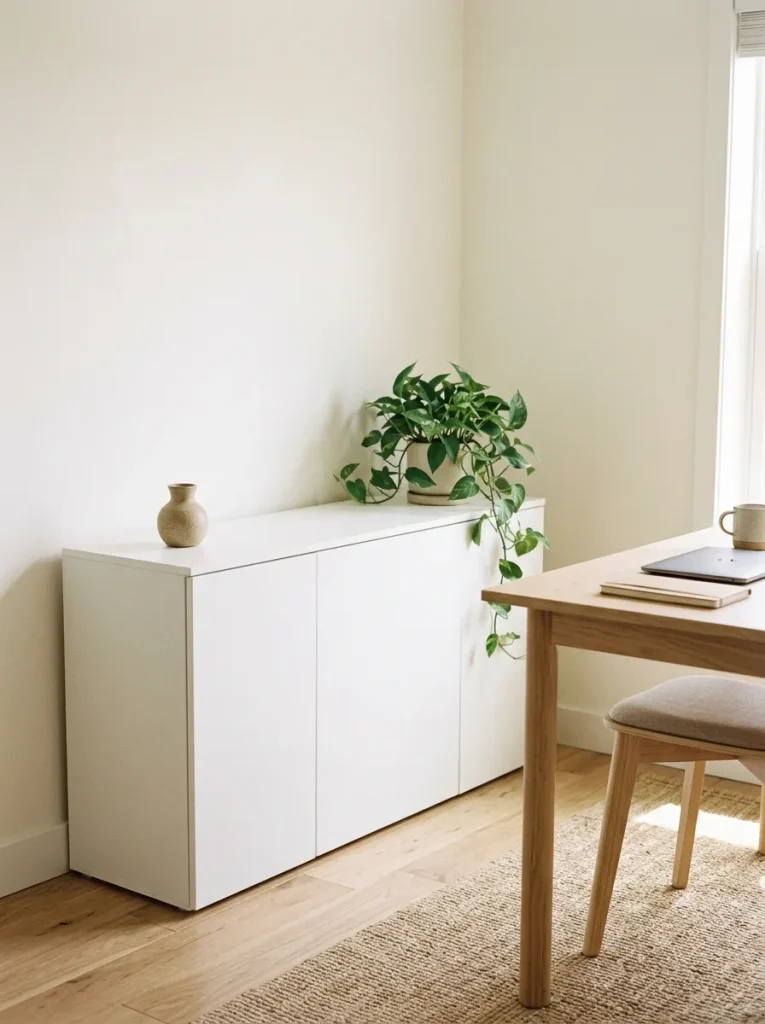
DO
- Choose a cabinet with simple, flat-front doors.
- Store paperwork, spare stationery and electronics inside labeled containers.
- Match the cabinet finish to your desk or wall color.
- Keep the cabinet top mostly clear for a clean appearance.
DON’T
- Fill every shelf with items you rarely use.
- Choose a cabinet that blocks drawers or walking paths.
- Leave loose papers piled on top.
- Buy a unit without measuring its depth and door clearance.
Closed cabinets keep everyday supplies out of sight, helping your office look calm even during a busy week. A low cabinet can also provide useful storage without dominating the room. Sort items by purpose before filling it and leave a little spare capacity so new supplies do not create clutter again.
Simple Wall Art
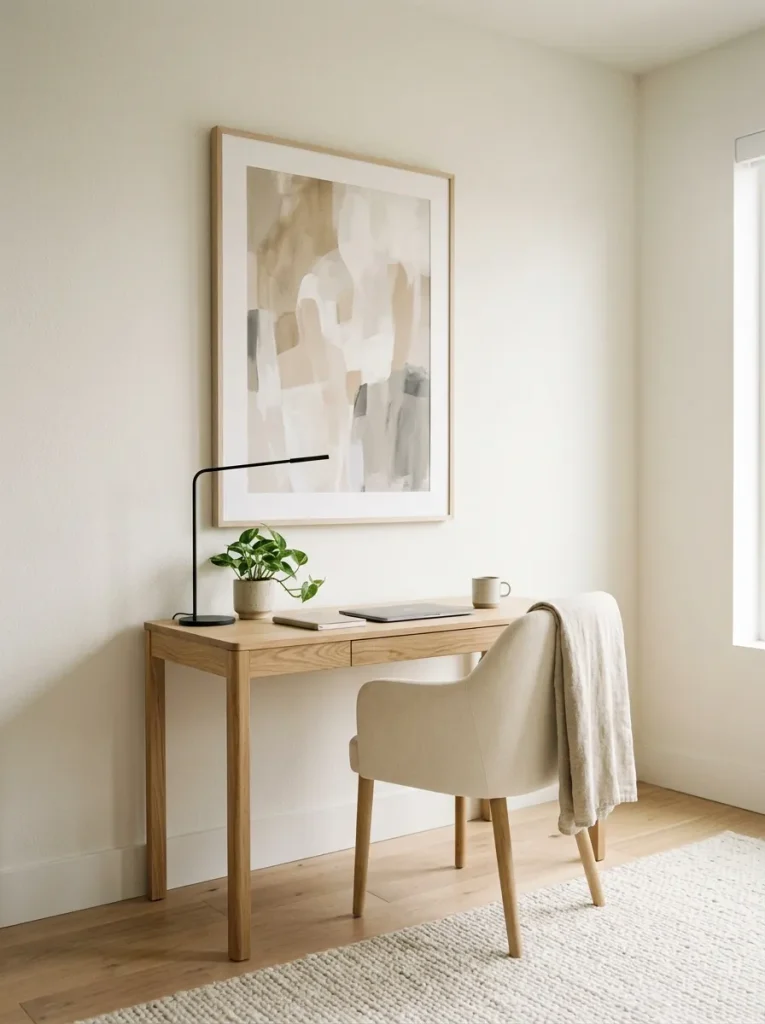
Cost: Low to moderate, depending on print size and framing.
Best For: Blank walls that feel unfinished or visually distracting.
Style: Abstract shapes, simple botanical artwork or muted landscape prints.
Placement: Center the artwork above the desk, leaving comfortable space between the frame and desktop.
One carefully chosen print can give a workspace personality without creating visual noise. Select artwork that repeats the colors already present in your room and avoid combining too many competing patterns. For a rental, use suitable removable hanging strips and check the weight limits before mounting your frame.
Minimal Window Treatments
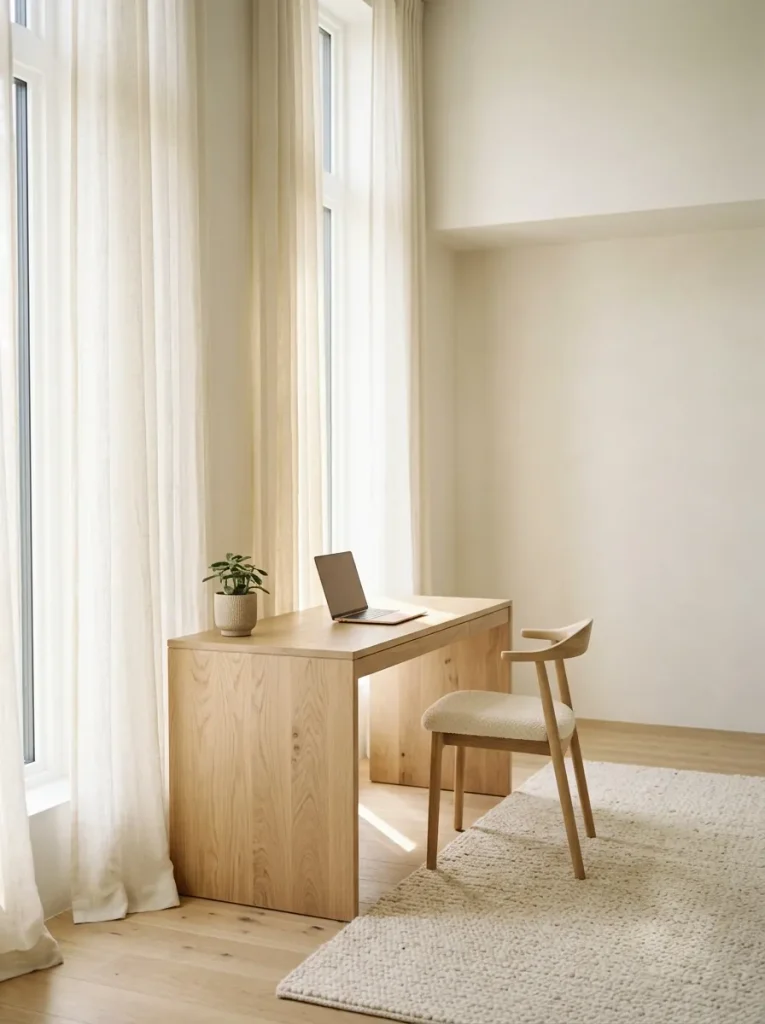
A bright window can become one of the most useful features in a small workspace. Lightweight curtains soften incoming light while keeping the room visually open.
Choose plain linen-look fabric or sheer ivory panels for a simple finish. Hang the curtain rod slightly above the window frame to create a taller appearance and make sure the fabric does not interfere with your desk or chair. If your screen catches glare, adjust the curtain coverage or add a practical blind.
Wall-Mounted Desk Lamp
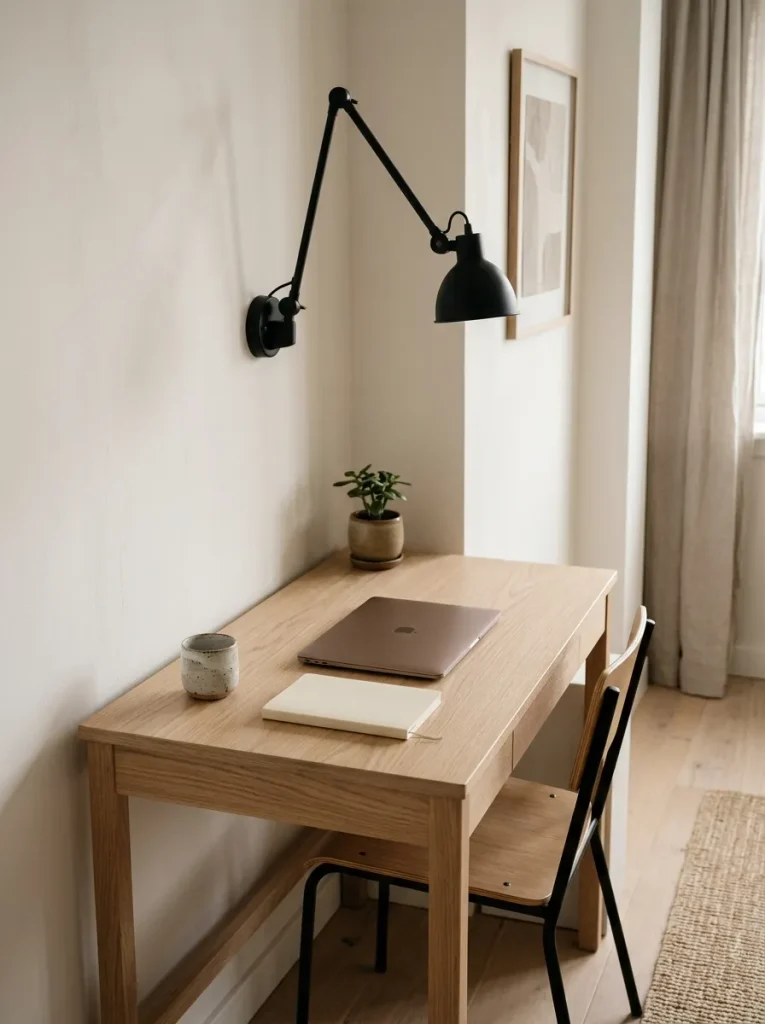
- Choose an adjustable arm: Direct light toward your notebook or keyboard when needed.
- Match the finish: Black, white or brushed metal works well with neutral furniture.
- Position it thoughtfully: Mount the lamp where it will not shine directly into your eyes or reflect on your screen.
- Manage the cord: Use suitable cable clips or a professional installation to keep wires tidy.
- Check the bulb: Select comfortable task lighting suited to reading and computer work.
A wall-mounted lamp frees up desk space that a traditional table lamp would occupy. It also helps keep your work area visually simple while providing useful focused light. Before installing one, check the wall structure and electrical requirements, especially if you prefer a hardwired fixture instead of a plug-in model.
Matching Storage Baskets
Quick Tip:
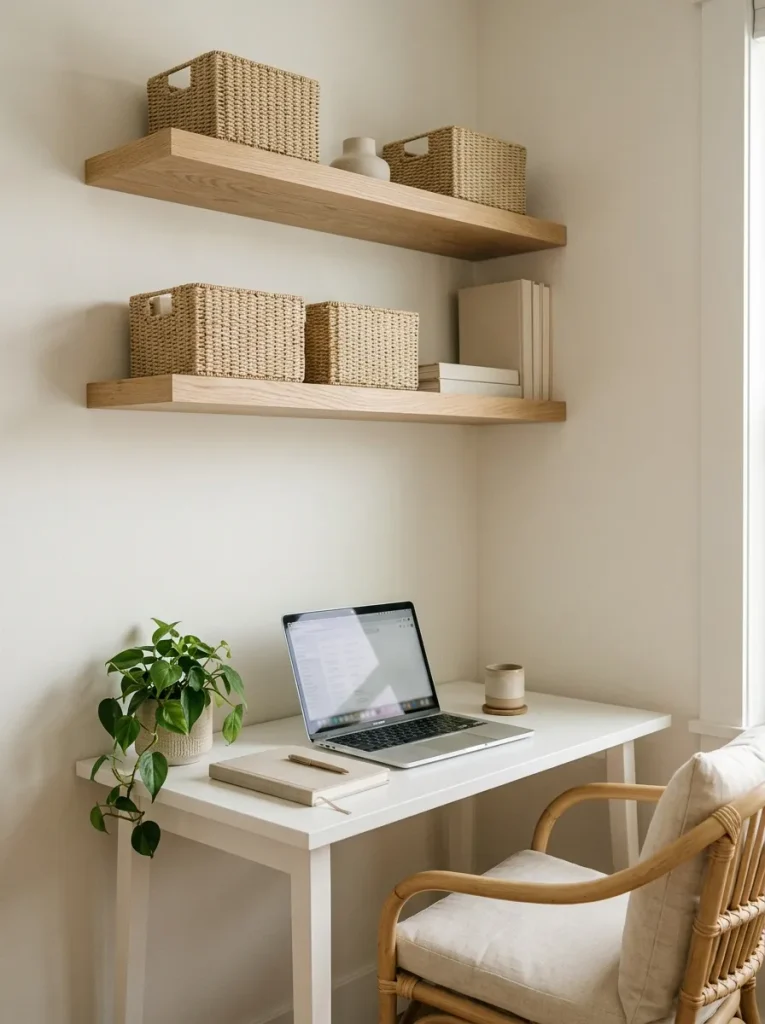
Use two or three matching baskets to group small office supplies by category. Measure your shelves first and choose baskets that slide in easily without sticking out beyond the edges.
Matching baskets hide visual clutter while keeping supplies easy to find. Use one for chargers, another for notebooks or stationery and a third for paperwork that needs attention. Natural woven textures add warmth to a minimalist room, while fabric or smooth plastic baskets offer a simpler look that is easy to wipe clean.
Minimalist Monitor Setup
BEFORE
A monitor sits low on the desk, with tangled cables and accessories spread around its base. The keyboard and mouse leave little room for writing.
AFTER
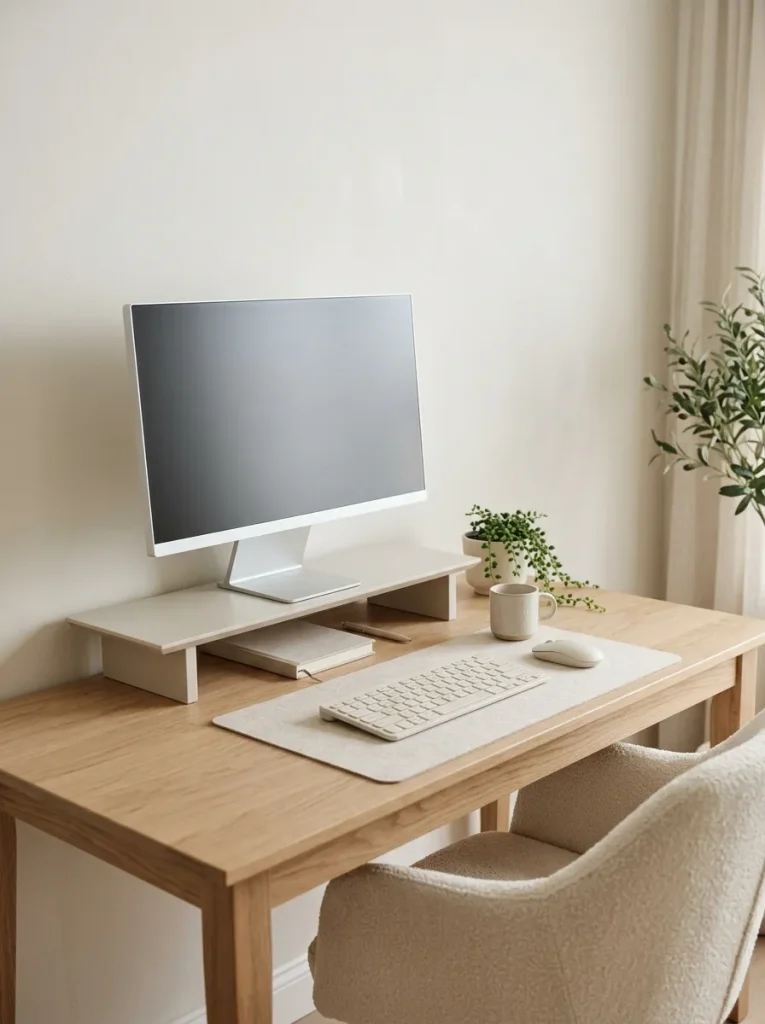
A simple monitor stand raises the screen and creates useful space underneath. A compact keyboard, mouse and organized cables leave more room for everyday tasks.
Place the monitor at a comfortable viewing height and distance for your body, adjusting the setup to suit your posture. Choose a stand with enough stability and weight capacity for your screen. If you use a laptop as your main computer, a separate keyboard and suitable laptop stand can also help create a more comfortable workstation.
Under-Desk Storage Drawers
- Measure the clearance: Check the space beneath your desk, including legroom and chair movement.
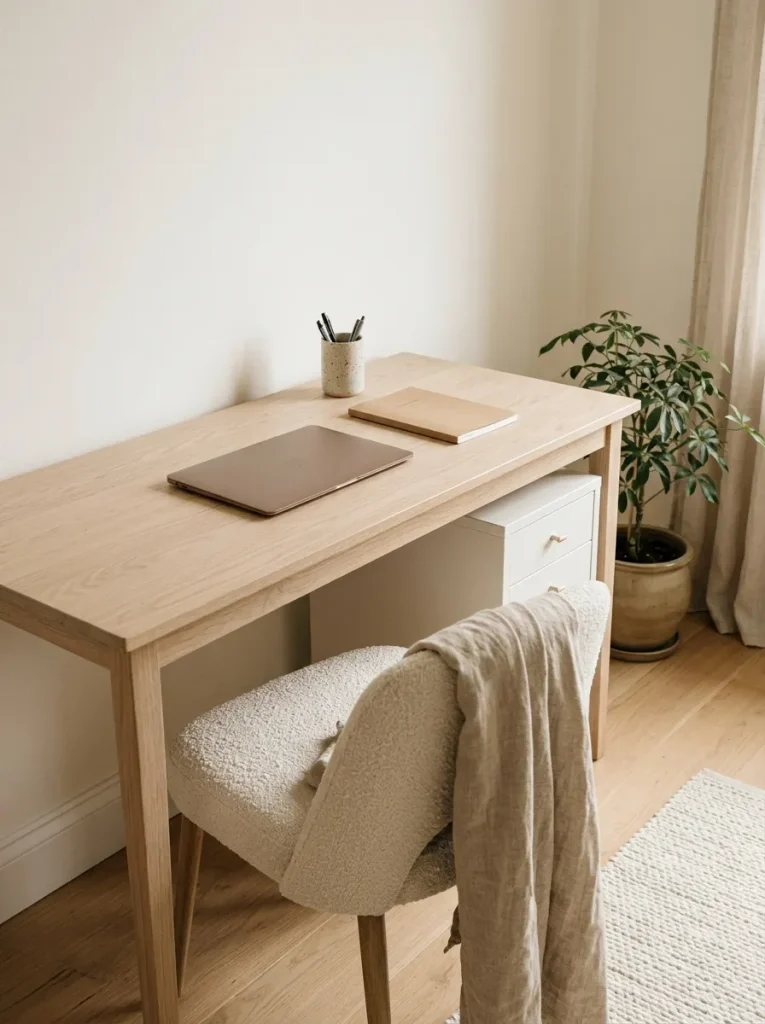
- Choose a compact unit: Select a slim drawer cabinet or an under-desk organizer that fits comfortably.
- Sort supplies: Keep stationery in the top drawer and less-used items in lower drawers.
- Use small dividers: Separate pens, charging cables, sticky notes and other tiny essentials.
- Keep the top clear: Return frequently used items to their assigned places after each work session.
Hidden drawers make it easier to maintain a tidy desktop without giving up useful storage. Before buying a unit, check the desk supports and available knee space so the drawers do not interfere with comfortable seating. A simple white or light wood finish keeps the storage visually connected to the rest of your office.
Monochrome Desk Styling
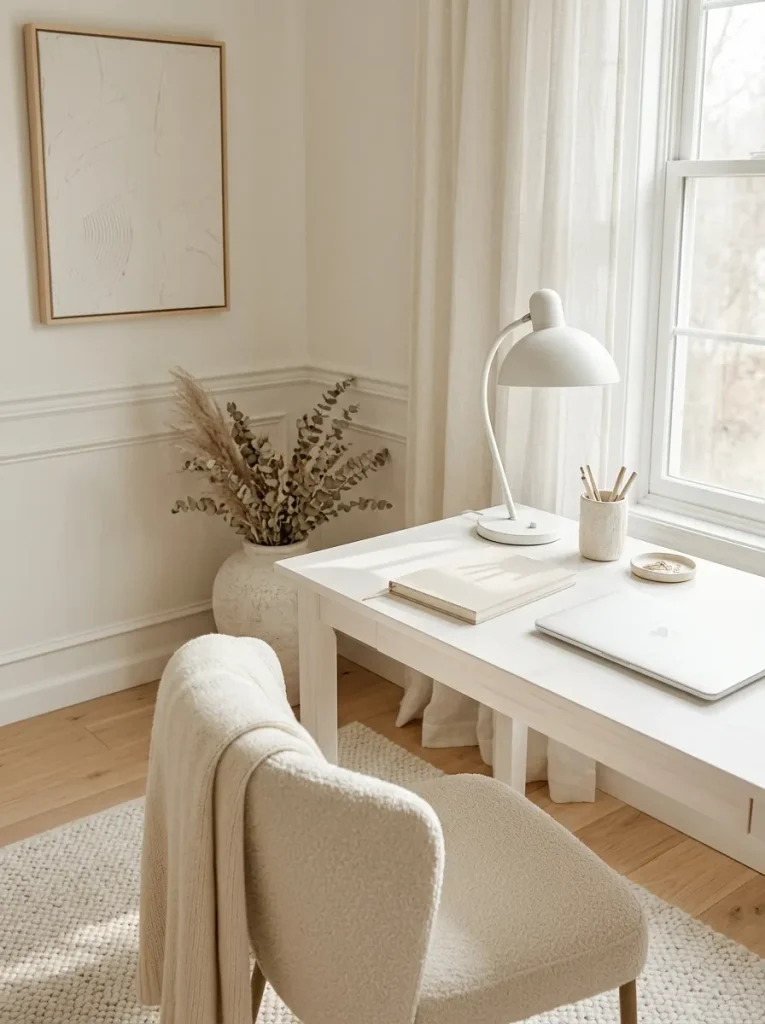
| Option A: Mixed Colors | Option B: Monochrome Styling |
| Several contrasting accessory colors | One main color family |
| Different finishes compete for attention | Similar finishes create visual unity |
| More decorative variety | Fewer, carefully selected pieces |
| Can look busy on a small desk | Creates a calm, consistent appearance |
A monochrome setup feels intentional when you combine slightly different shades and textures rather than choosing everything in exactly the same finish. Pair matte white accessories with cream fabric and pale wood to prevent the space from looking flat. Keep practical items within reach and let the coordinated palette do most of the decorating.
Minimalist Cable-Free Charging
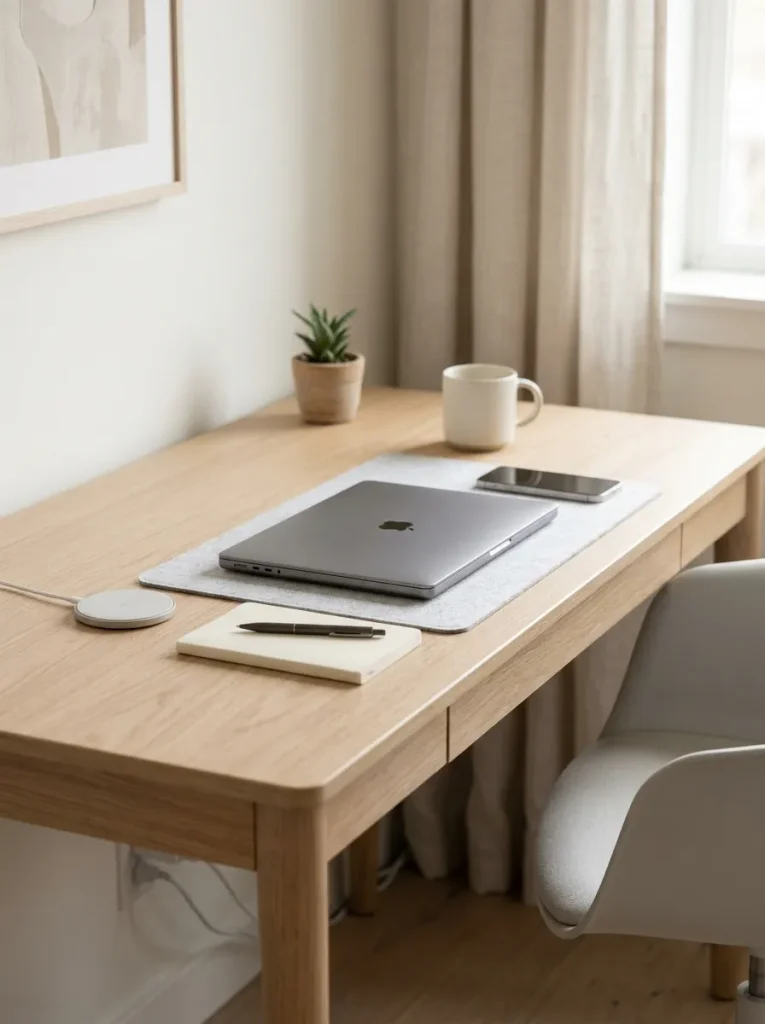
DO
- Use a wireless charging pad for compatible devices.
- Keep only the charging cables you need within reach.
- Route cables behind the desk using suitable clips.
- Place a small charging station in one designated spot.
DON’T
- Assume every phone or accessory supports wireless charging.
- Leave chargers scattered across the desktop.
- Cover charging devices with fabric or papers.
- Buy a charging station without checking device compatibility.
A designated charging area keeps phones and accessories from spreading across your workspace. Wireless charging can reduce visible cables for compatible devices, but your laptop and other equipment may still need wired connections. Choose a setup that suits your actual devices and keep chargers uncovered with enough space for heat to dissipate.
Minimalist Pegboard Organizer
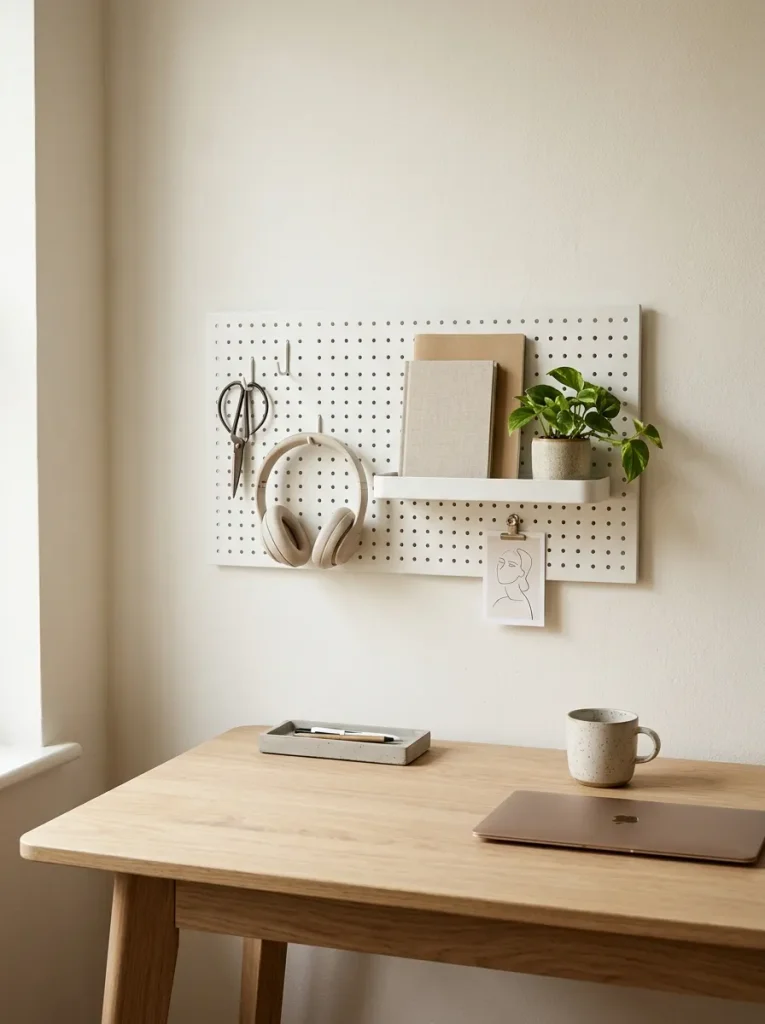
Cost: Low to moderate, depending on the pegboard material and accessories.
Installation Time: Usually a short DIY project, depending on wall type and mounting requirements.
Skill Level: Beginner-friendly with suitable tools and fixings.
Best For: Small offices that need vertical storage for frequently used supplies.
A pegboard keeps everyday tools visible without filling your desktop with containers. Arrange hooks and small shelves around your actual routine, leaving open spaces between groups of items. Before mounting it, check the wall structure and use appropriate fixings. Keep heavier objects within the board’s rated capacity to ensure the setup stays secure.
Warm Wood Accents
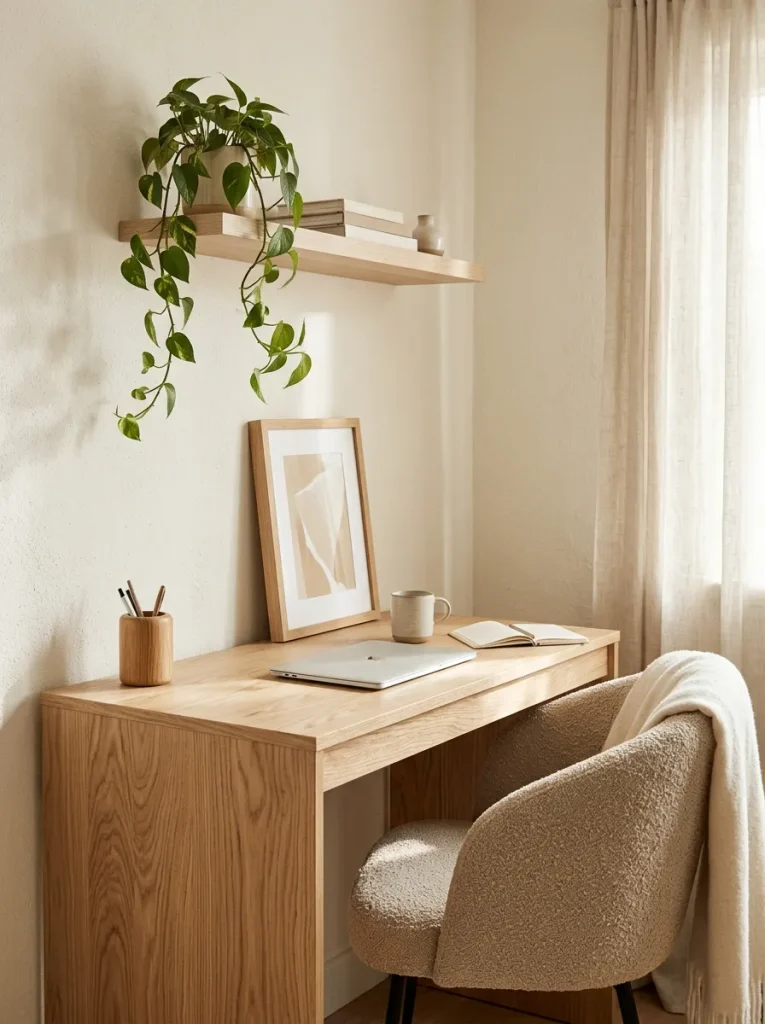
Warm wood brings natural character to a minimalist workspace without adding visual clutter. A desk, shelf or small accessory in oak, ash or birch can soften an otherwise white room.
I’ve noticed that repeating the same wood tone in two or three places helps separate pieces feel connected. If your desk is already wood, choose just one matching accent rather than introducing several competing finishes. Keep the grain and shapes simple for a balanced look.
Minimalist Desk Dividers
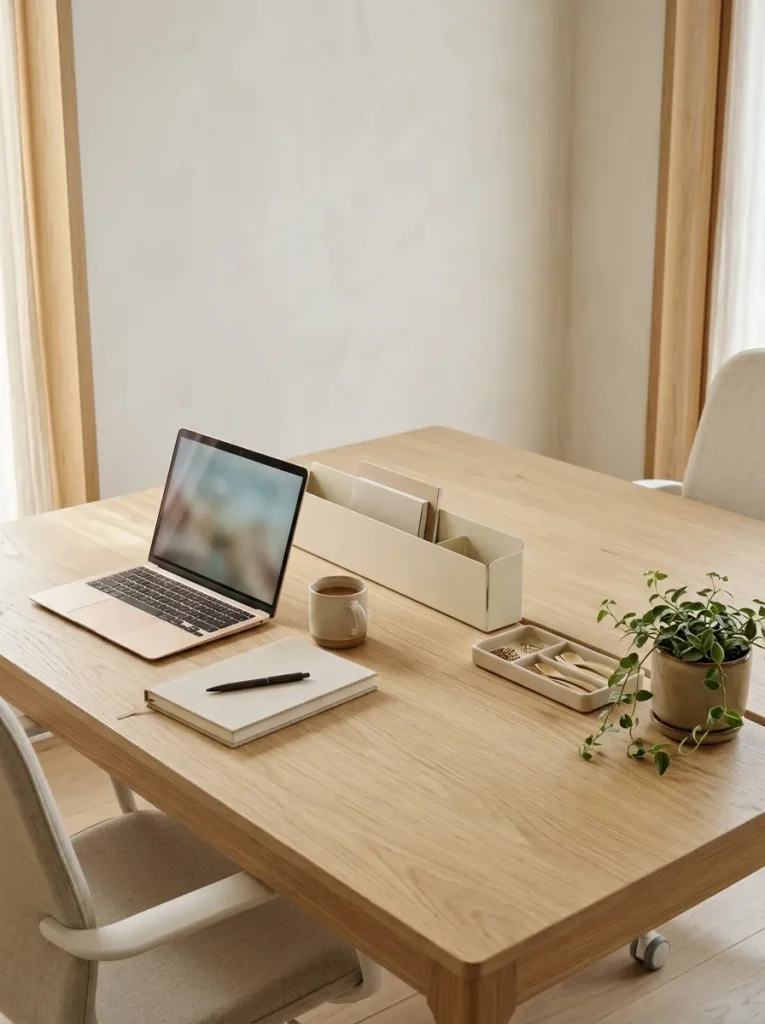
| Option A: One Shared Surface | Option B: Defined Desk Zones |
| Work items mix with stationery | Each group has a designated area |
| Supplies spread across the desktop | Small organizers contain loose items |
| Switching tasks can feel distracting | Work materials are easier to locate |
| Less structure for shared desks | Useful separation for different activities |
Small dividers and trays help create order without making your desk feel boxed in. Use one zone for computer work and another for writing or paperwork. Choose low-profile organizers that leave your screen visible and preserve enough room for your hands. If the desk is very narrow, a single tray may be all you need.
Slim Book Storage
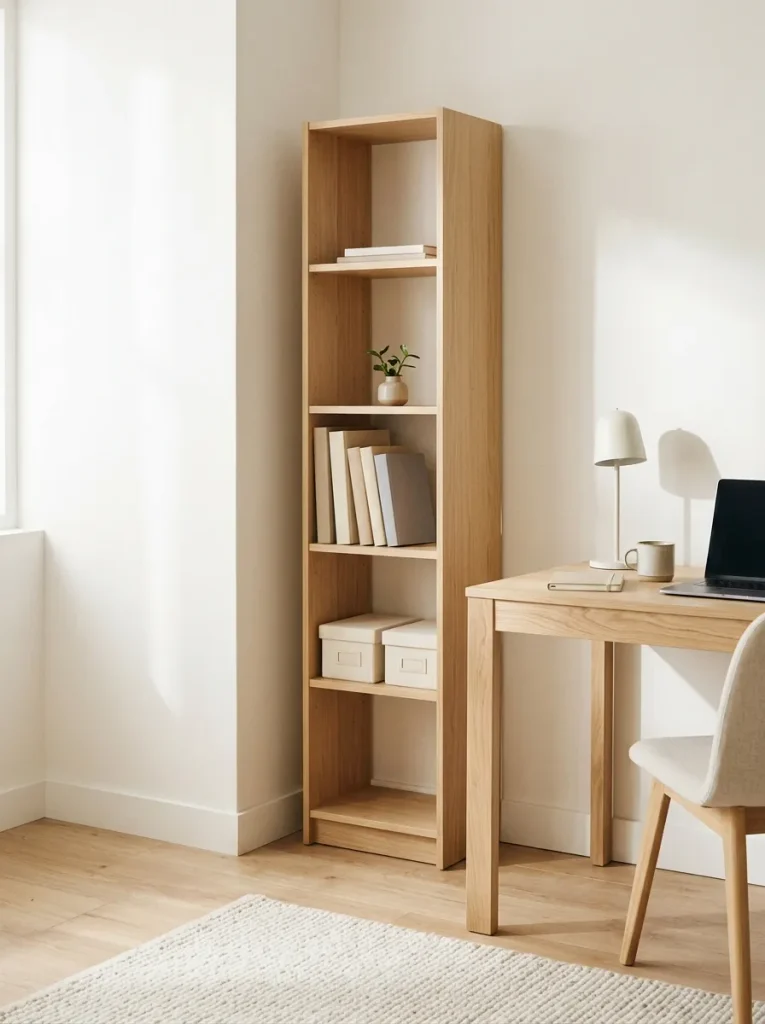
Quick Tip:
Choose a narrow bookcase that uses vertical space instead of spreading across the room. Keep your most-used reference books at eye level and group smaller items in matching boxes.
A slim bookshelf keeps useful reading materials close without taking over your workspace. Arrange books with a little breathing room and avoid filling every shelf to the edge. If the unit is tall, secure it according to the manufacturer’s instructions. A light finish helps it blend into the room rather than becoming a heavy visual feature.
Simple Desk Chair
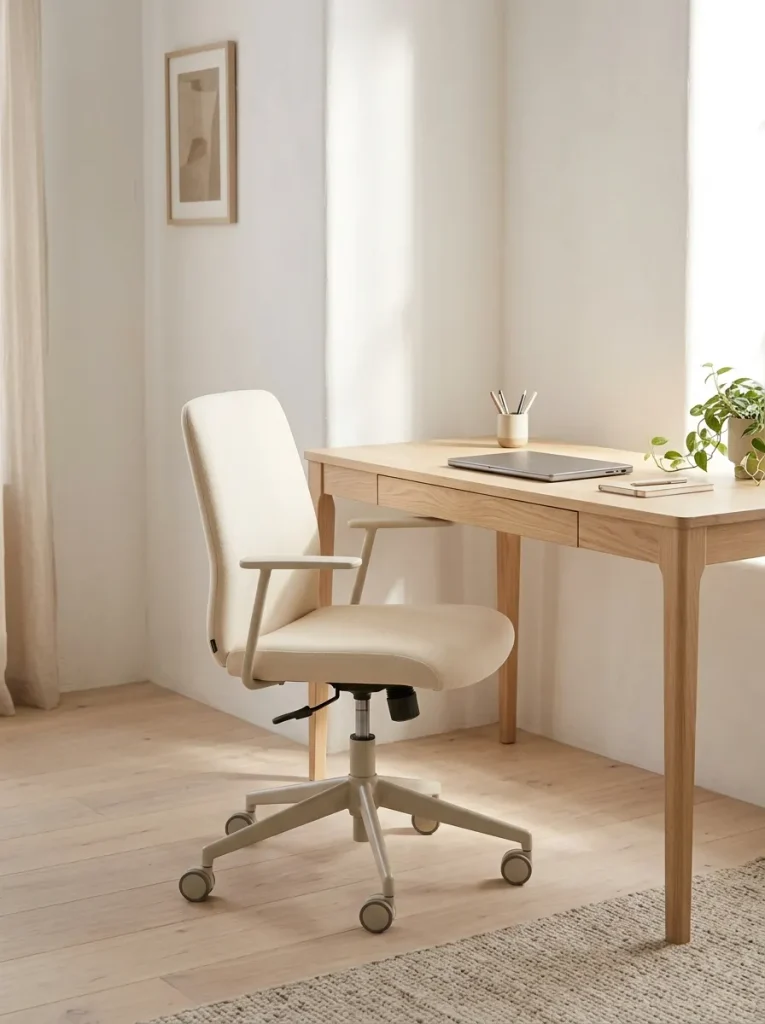
BEFORE
A bulky chair with oversized arms occupies much of the room and cannot slide fully beneath the desk. Its dark color also stands out against light furniture.
AFTER
A streamlined chair fits neatly under the desk when not in use. A neutral finish coordinates with the room, while suitable ergonomic adjustments support comfortable working.
Choose a chair based on comfort and adjustability, not appearance alone. Check seat height, lumbar support and desk clearance before buying. A simple silhouette can help preserve an airy look, but you should still be able to sit with your feet supported and your shoulders relaxed during longer work sessions.
Minimalist Wall Clock
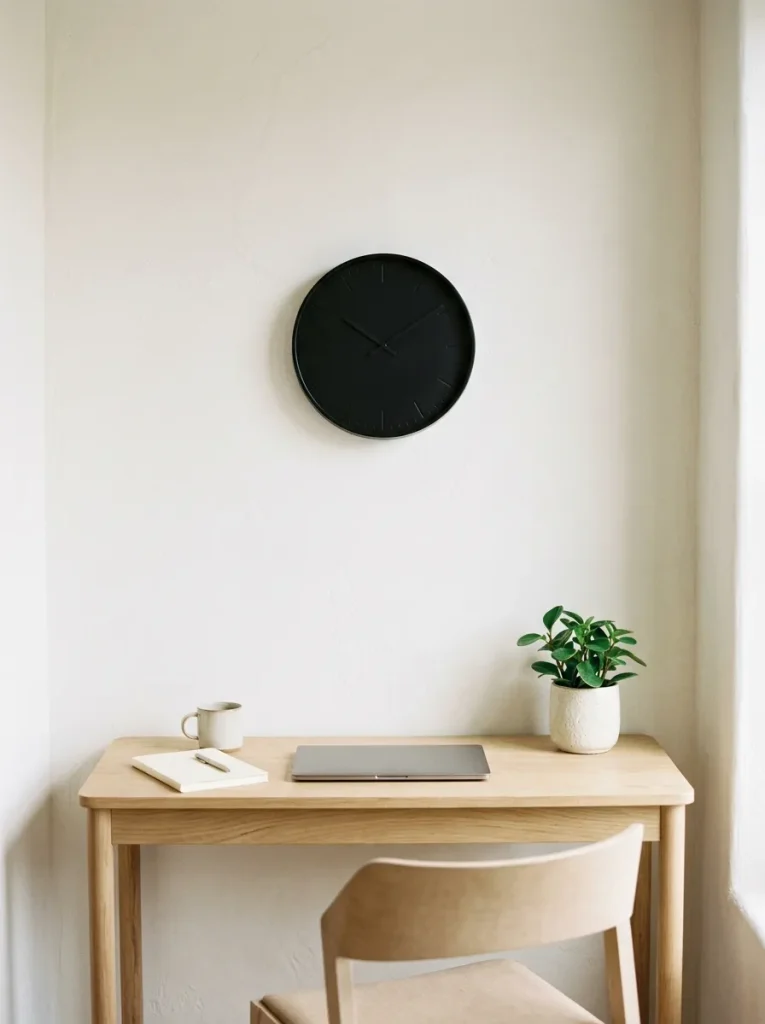
- Pick a simple face: Choose a clock with clean markings and an uncluttered design.
- Match the finish: Use black, white or natural wood to complement your existing furniture.
- Choose a visible position: Hang it where you can glance at the time without turning away from your work for long.
- Keep nearby decor minimal: Avoid crowding the clock with multiple frames or shelves.
A wall clock provides a practical way to check the time without reaching for your phone. Choose a size that suits the wall and remains easy to read from your chair. A quiet mechanism can be helpful if ticking sounds distract you, especially in a shared room or a small, quiet workspace.
Hidden Printer Station
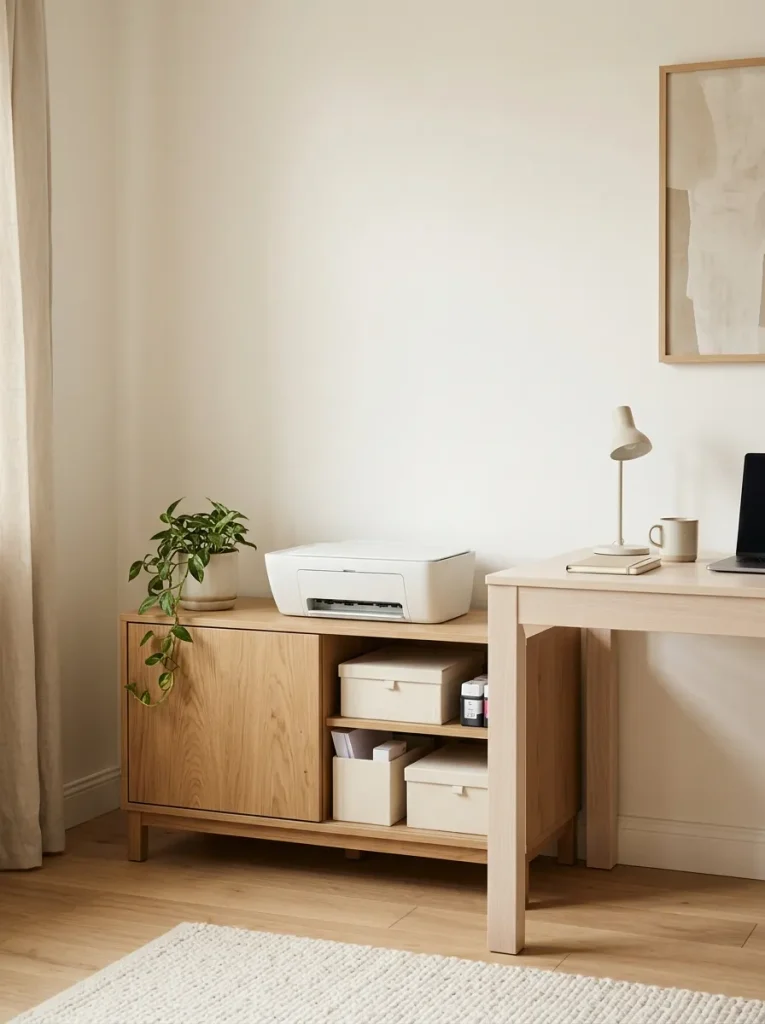
DO
- Place the printer on a stable cabinet or shelf that supports its weight.
- Store spare paper and ink in a nearby drawer or labeled box.
- Leave enough space for paper trays and ventilation.
- Keep printer cables routed neatly behind the furniture.
DON’T
- Hide the printer in a cramped space without checking airflow.
- Block access to paper trays or cartridge compartments.
- Stack heavy supplies on top of the machine.
- Store paper where moisture can damage it.
A dedicated printer station keeps bulky equipment from taking over your main work surface. A low cabinet can hold printing supplies while providing a consistent place for documents. Before choosing furniture, measure the printer with its trays open, so you can use it comfortably without moving everything around each time you print.
Minimalist Floor Lamp
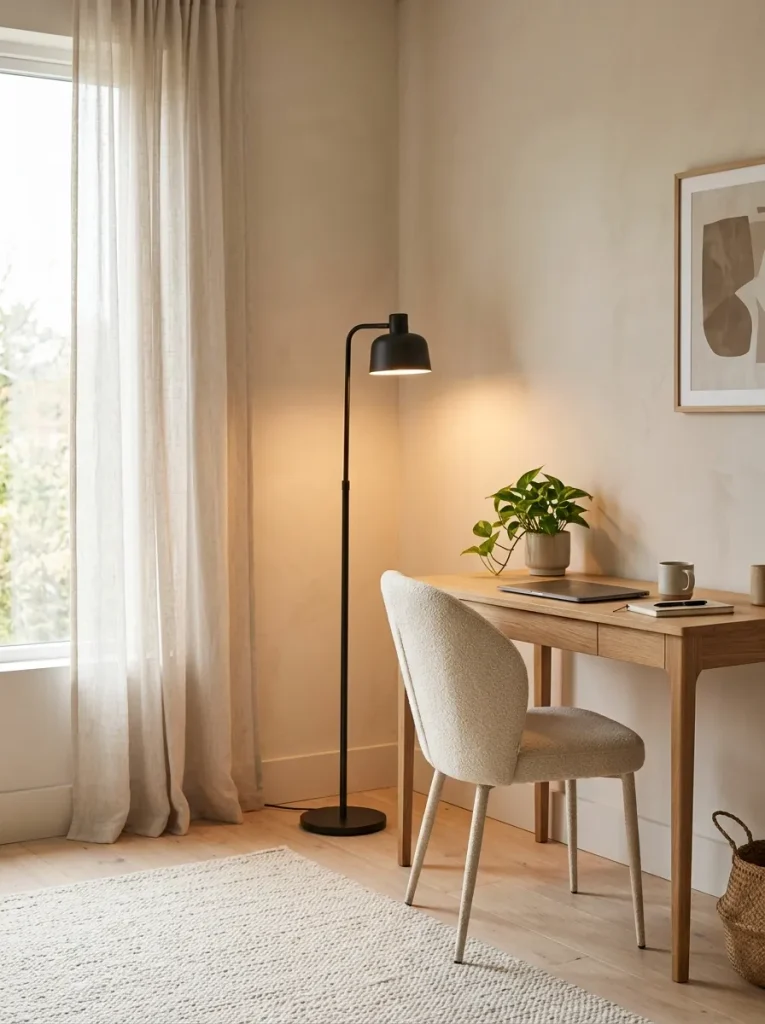
Cost: Low to moderate, depending on the lamp design and bulb.
Best For: Offices that need extra light without using desk space.
Style: Slim metal frames, simple shades and neutral finishes.
Placement: Position the lamp beside the desk where it will not obstruct movement or reflect directly on your screen.
A slender floor lamp adds useful lighting while keeping the desktop available for work. Choose an adjustable or directional shade if you need focused light for reading. Check the lamp’s footprint before buying and route its cord safely along a wall so it does not become a tripping hazard in a compact room.
One Statement Plant
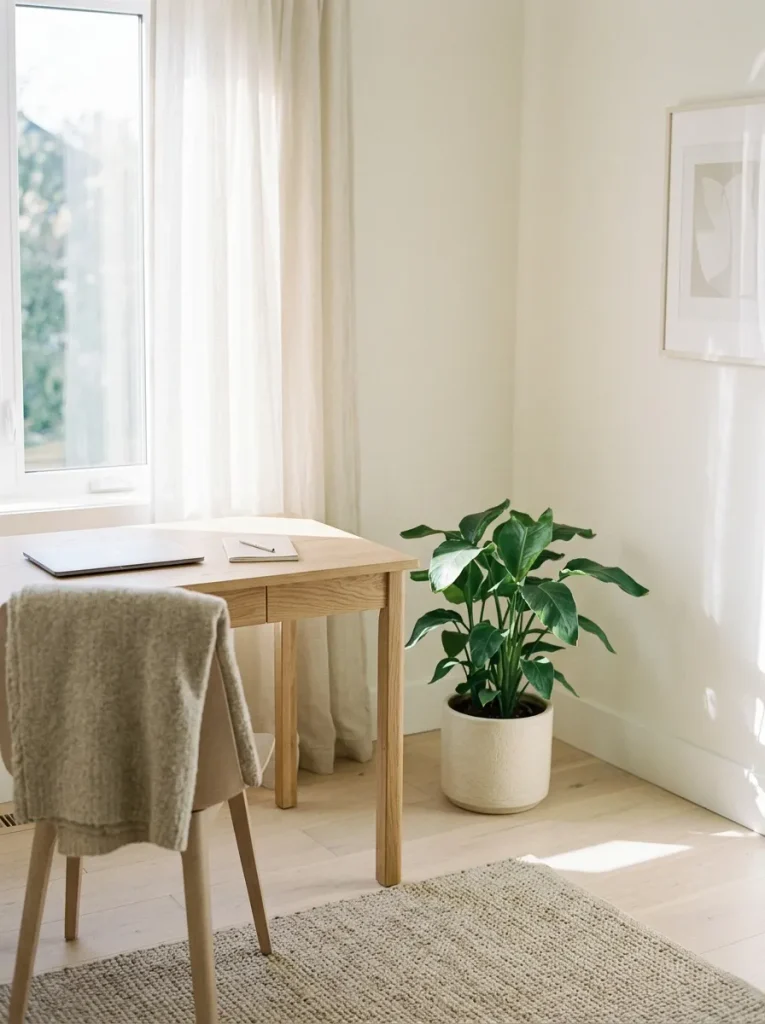
A single well-placed plant can bring life to a minimalist office without adding lots of decorative objects. Choose a variety suited to the available daylight and your willingness to care for it. A compact plant may work on a cabinet, while a taller floor plant can fill an unused corner.
Keep the pot simple and leave enough room around the leaves so the plant does not crowd your chair or desk. Use a saucer or waterproof tray to protect the floor from moisture. The goal is one natural focal point, not another collection of items to maintain.
Floating Desk Shelves
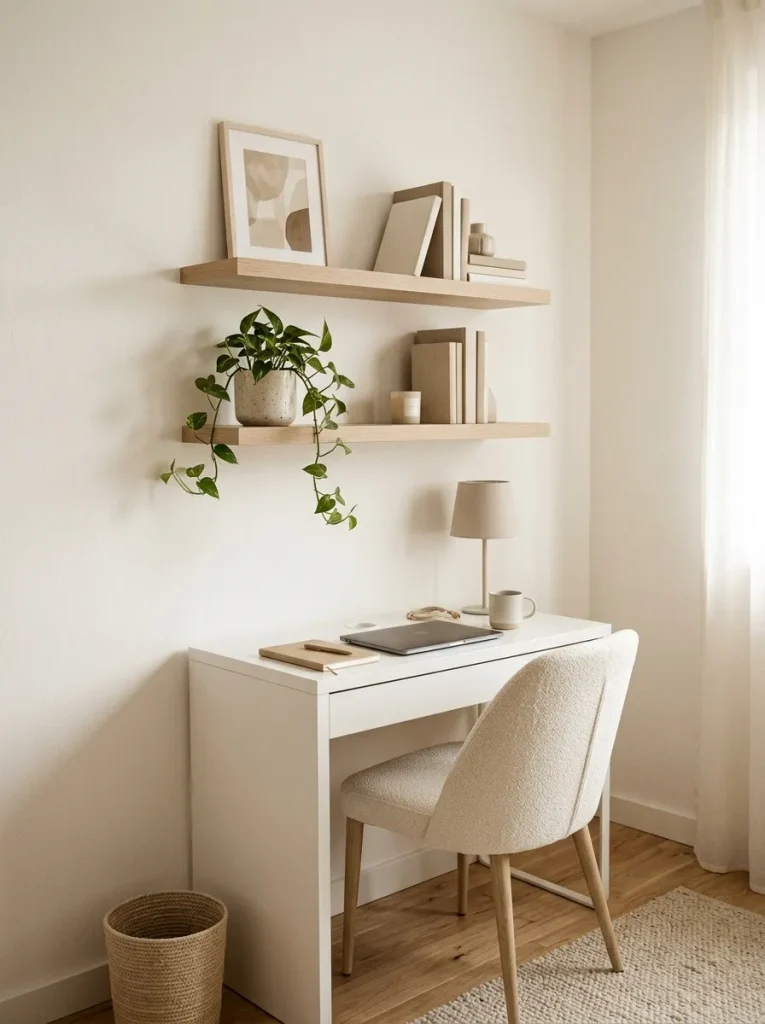
DO
- Install shelves above the desk to use vertical wall space.
- Keep frequently used books and supplies within easy reach.
- Match the shelf finish to your desk for a coordinated look.
- Leave some empty space between decorative objects.
DON’T
- Overload shelves with heavy items beyond their rated capacity.
- Place shelves so low that they interfere with your monitor.
- Mix too many colors and decorative styles.
- Install shelves without suitable wall fixings.
Floating shelves provide extra storage without taking up valuable floor space. They work particularly well in compact home offices where a traditional bookcase might feel too bulky. Arrange practical items alongside a few simple decorations to create a workspace that feels organized rather than crowded.
Neutral Desk Accessories
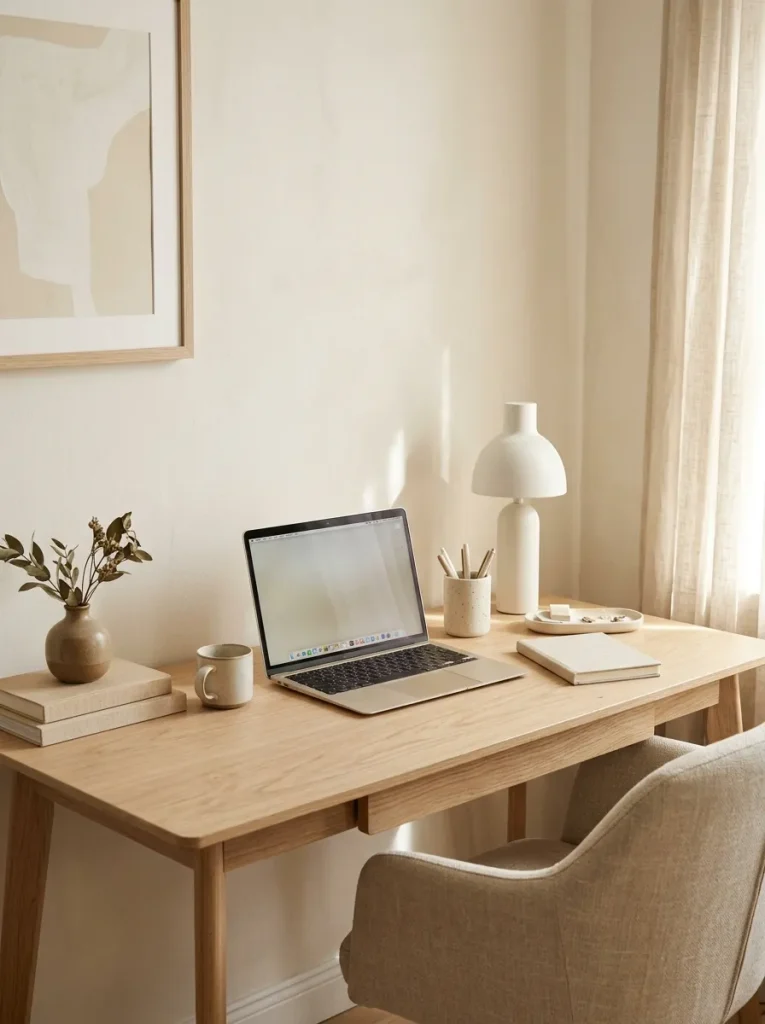
Cost: Low to moderate, depending on the accessories selected.
Best For: Workspaces that feel visually inconsistent or cluttered.
Style: Cream, beige, warm white and natural wood.
Placement: Group small accessories together on one side of the desk, leaving the main work area open.
Neutral accessories create a cohesive look without requiring new furniture. Start by choosing two or three complementary shades, then replace mismatched organizers only when necessary. Simple trays and pen holders can also give everyday items a designated place, making it easier to maintain a tidy desk after each work session.
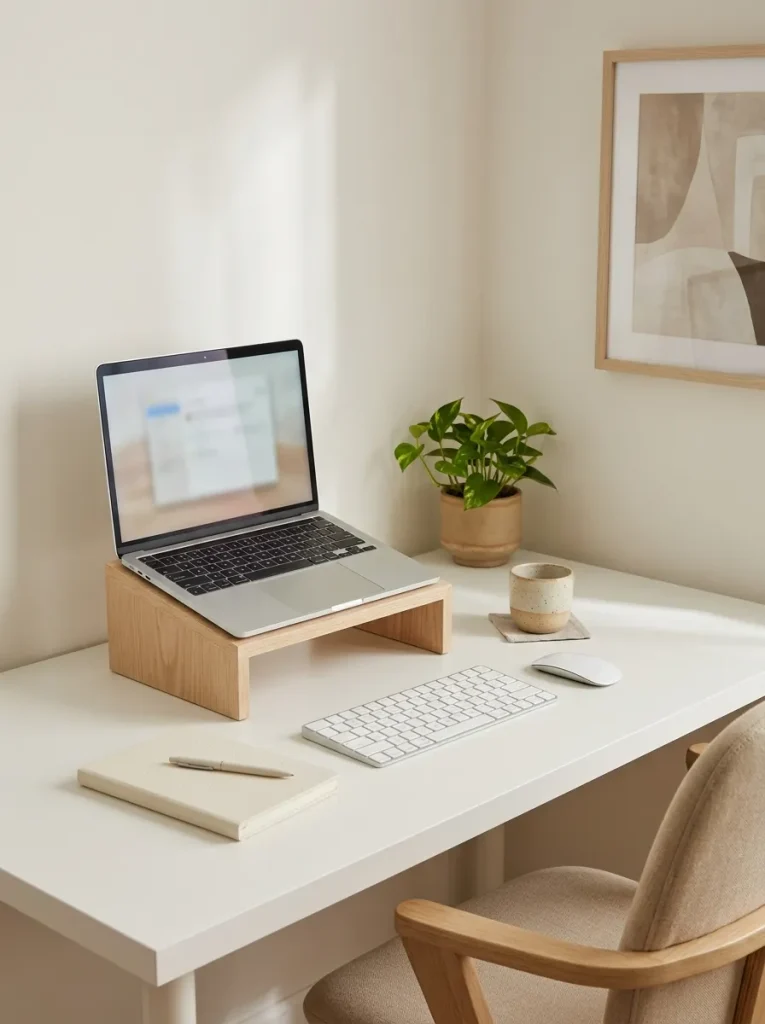
Minimalist Laptop Stand
Quick Tip:
Choose a laptop stand that raises your screen to a comfortable viewing height. If you use the laptop for extended periods, pair it with an external keyboard and mouse so you can position your hands comfortably.
A laptop stand helps create a more organized workstation while freeing up some space beneath the device. Select a stable model with suitable ventilation and enough support for your laptop’s size and weight. Keep the surrounding accessories minimal and route charging cables neatly to maintain the clean appearance of your workspace.
Minimalist Desk Mat
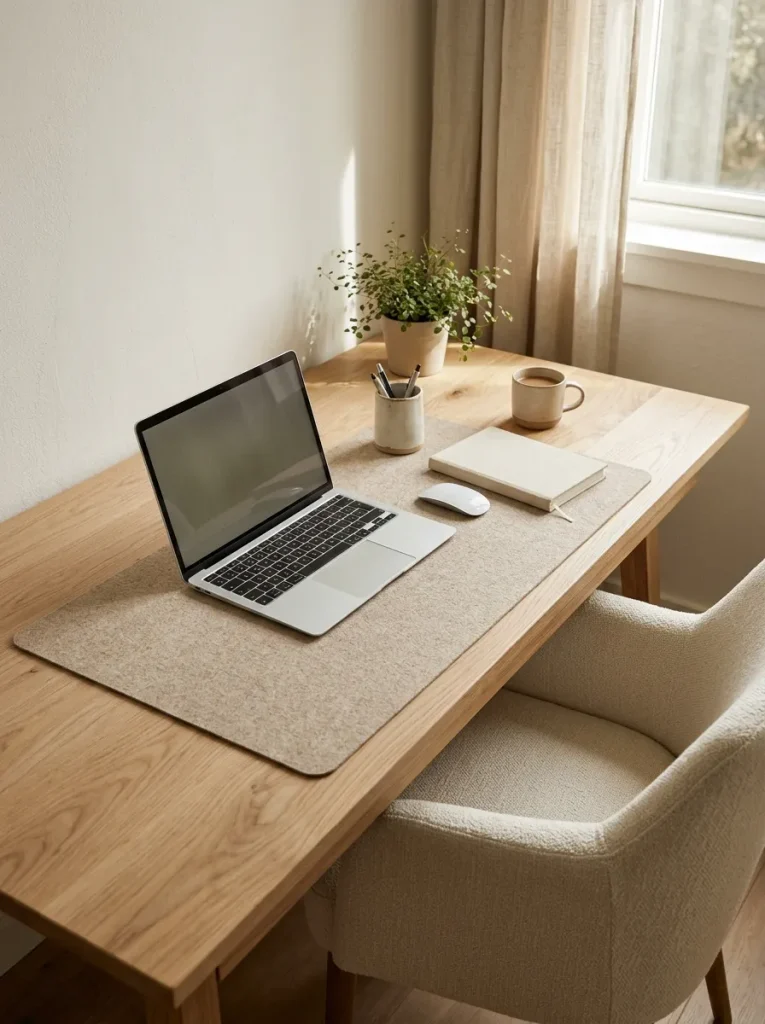
Cost: Low to moderate, depending on the material and size.
Best For: Protecting the desktop while creating a coordinated workspace.
Style: Beige leather-look, soft gray, warm white or natural neutral tones.
Placement: Center the mat beneath your main work equipment, leaving enough space for writing and mouse movement.
A desk mat creates a defined work area without adding bulky organizers or decorative objects. Choose a size that accommodates your keyboard, mouse and everyday accessories without covering the entire desktop. A neutral mat complements light wood furniture and makes the workspace feel more intentional. Clean it according to the manufacturer’s instructions to keep the surface looking fresh.
Minimalist Entryway Workspace
DO
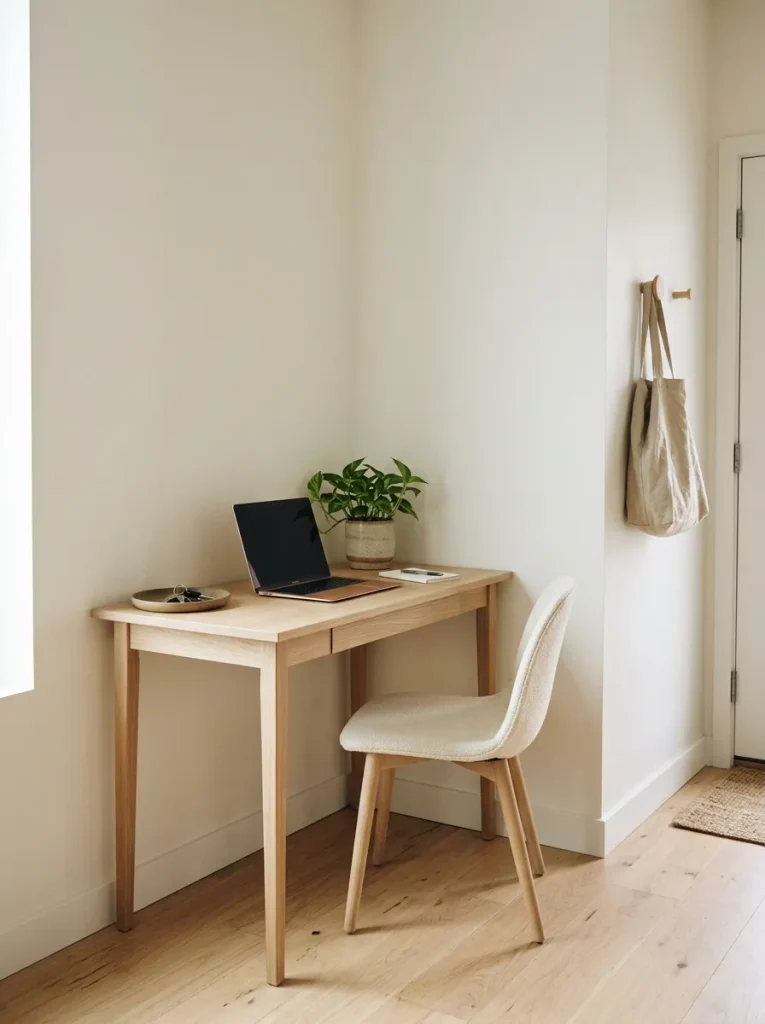
- Choose a narrow desk that fits comfortably into the available corner.
- Use a small tray to collect keys and other everyday essentials.
- Keep work supplies in closed storage to maintain a tidy appearance.
- Separate personal belongings from important work documents.
DON’T
- Block the main entrance or walking path with furniture.
- Allow bags, shoes and paperwork to accumulate around the desk.
- Place important electronics where they can easily be knocked over.
- Overcrowd the corner with unnecessary decorative pieces.
An entryway corner can become a useful work zone when a separate home office is not possible. A compact desk, a comfortable chair and a few carefully chosen accessories can create a functional setup without overwhelming the surrounding space. Keep the arrangement flexible, especially if the entryway is used frequently by other household members.
Minimalist Office with Natural Textures
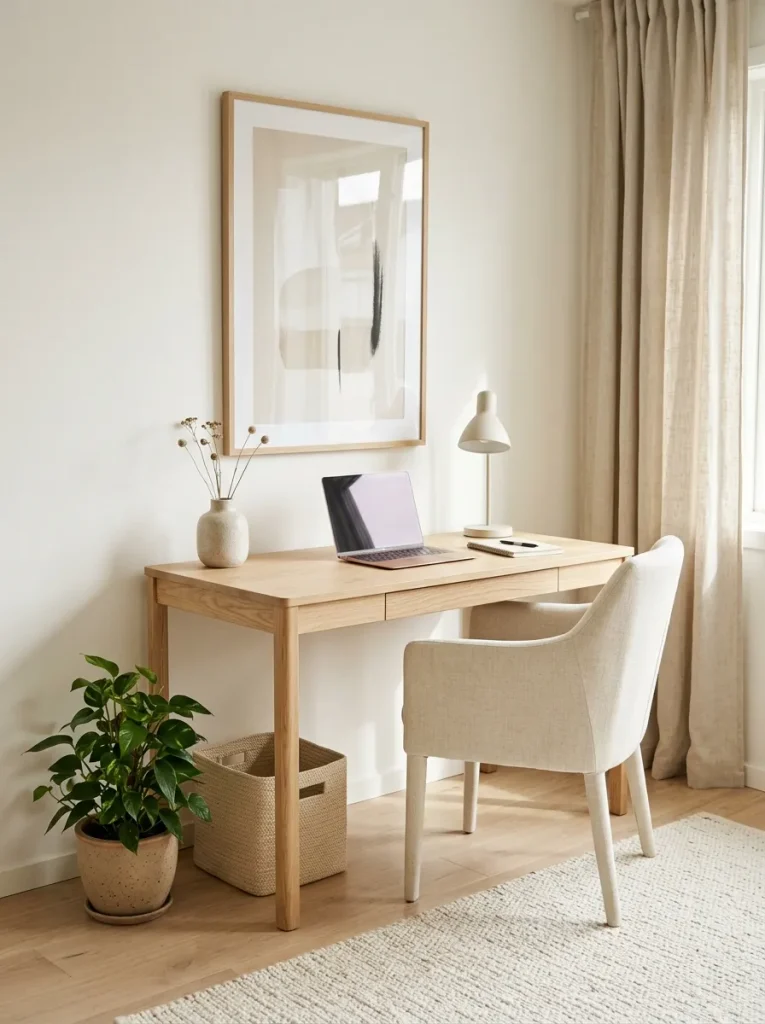
Cost: Low to moderate, depending on the furniture and natural materials selected.
Best For: Home offices that feel too plain, cold or visually flat.
Style: Pale oak, woven rattan, linen, cotton and warm neutral colors.
Placement: Introduce natural textures through a chair, storage basket, curtains or one decorative accent.
Natural materials add warmth and depth to a minimalist office without requiring lots of decorations. Combine smooth wood with soft textiles and a woven accessory to create subtle contrast. Keep the color palette consistent and choose items that serve a practical purpose whenever possible. The result is a workspace that feels calm, comfortable and visually balanced while remaining easy to organize.
Minimalist Corner Desk
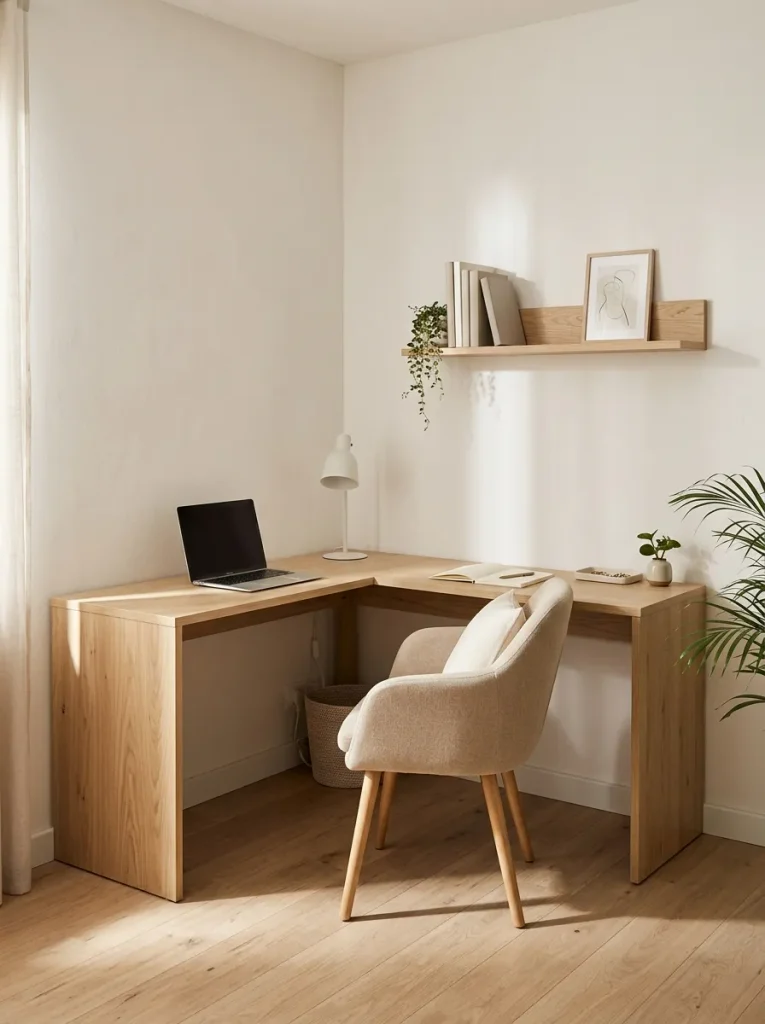
DO
- Choose a corner desk that fits the room without blocking movement.
- Position your monitor or laptop where you can work comfortably.
- Use one side for computer work and the other for writing.
- Keep cables organized along the desk edges.
DON’T
- Choose an oversized desk for a very small room.
- Fill both desk surfaces with unnecessary accessories.
- Place the chair where it blocks drawers or doorways.
- Ignore legroom when measuring the corner.
A corner desk makes practical use of space that might otherwise remain empty. Its L-shaped surface can create separate areas for computer work, writing and paperwork without requiring additional furniture. Keep the desktop simple and use vertical storage to make the most of the available room.
CONCLUSION
Creating a peaceful workspace doesn’t require a complete office makeover. Small changes, such as adding hidden storage, choosing a simple color palette clearing your desktop, can help your office feel more organized and inviting.
These Minimalist Home Office Ideas offer plenty of inspiration for building a workspace that supports focus, comfort and creativity. Start with one change that suits your needs, then adjust your setup as your routine evolves.
Save this article on Pinterest so you can revisit your favorite looks, try the ideas that inspire you most and share this guide with someone who wants a calmer, clutter-free workspace. Your ideal home office can begin with one simple step.