26 Motivating Home Office Decor Ideas to Boost Focus
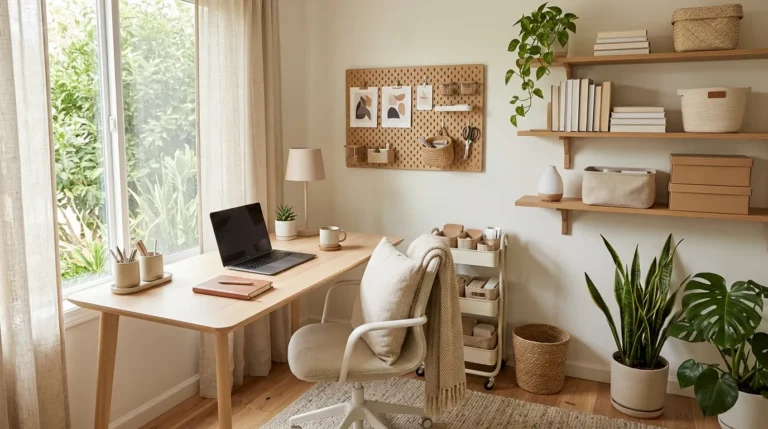
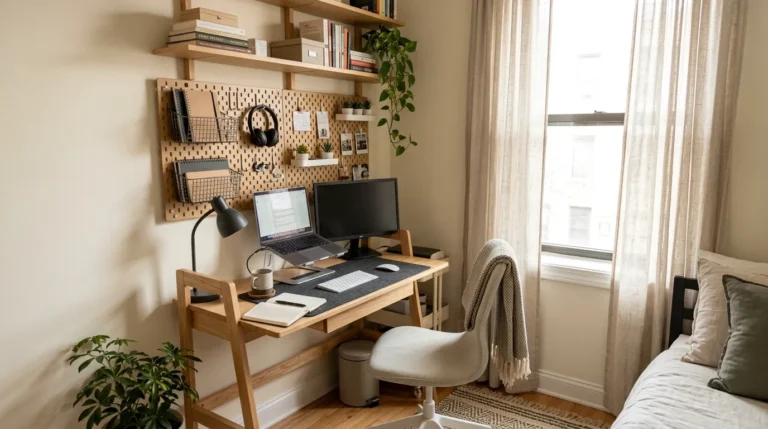
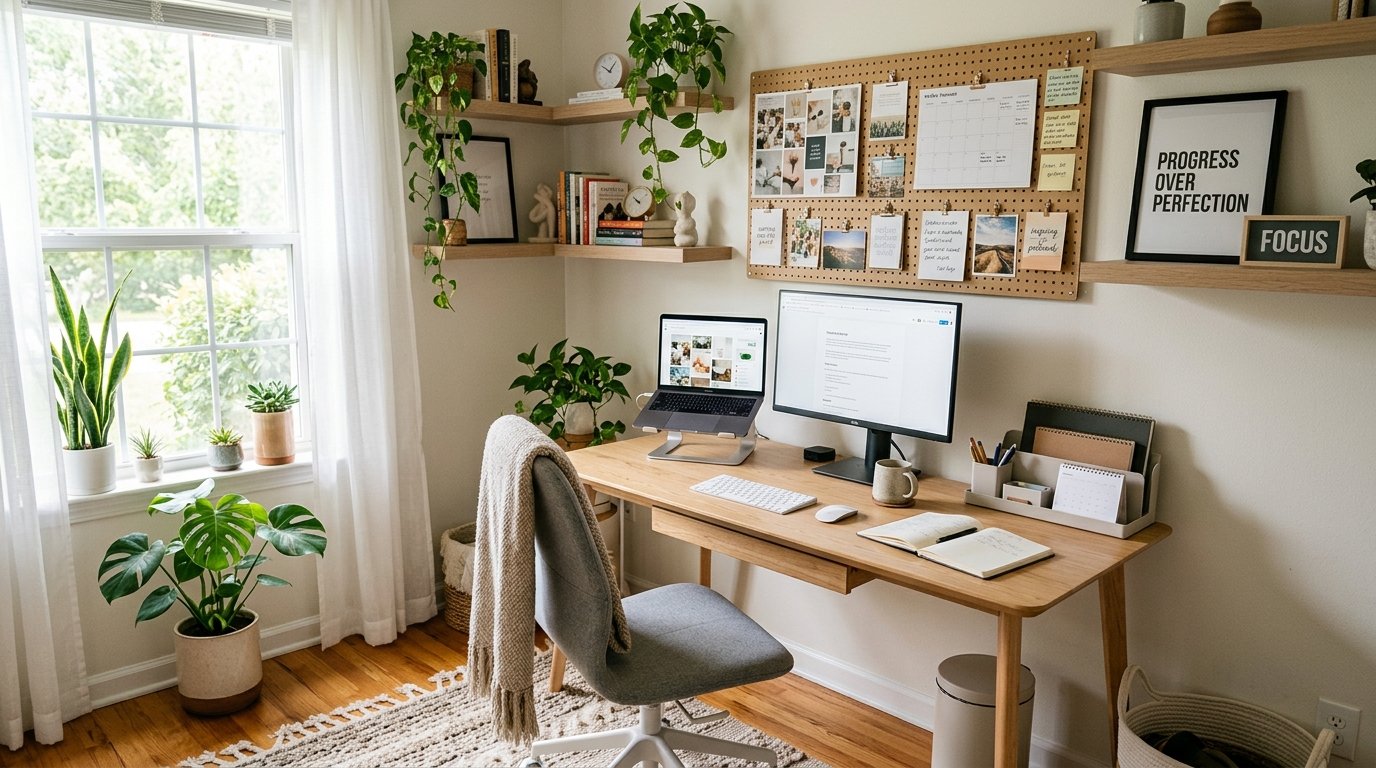
These Home Office Decor Ideas will help you create a workspace that feels motivating, looks beautiful and supports your daily routine. Whether you work from home full-time, study at your desk or manage personal projects, small changes can make your office feel more enjoyable without requiring a complete makeover.
From warm neutral colors and floating shelves to cozy reading corners and clever storage solutions, these ideas combine style with practical function. You will discover ways to make the most of your available space, reduce visual clutter and add personal touches that reflect your taste.
In my experience, a workspace does not need expensive furniture or elaborate decorations to feel special. Sometimes, better lighting, a comfortable chair and a few well-chosen accessories are enough to create a space where you genuinely enjoy spending time. Explore these ideas, choose the ones that suit your needs and start building a workspace that inspires you every day.
Warm Neutral Workspace
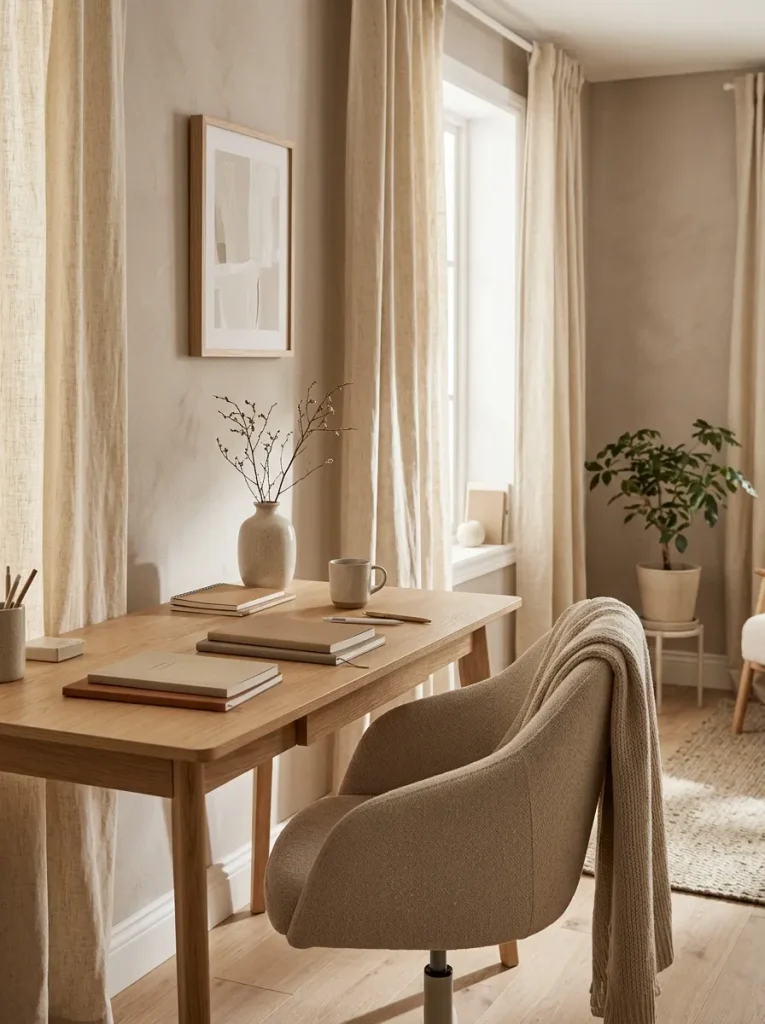
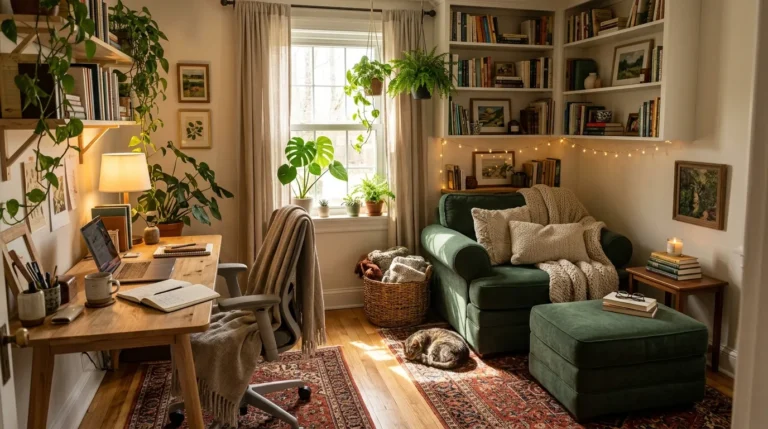
A warm neutral workspace can make your office feel calmer and more inviting from the moment you sit down. Start with a cream or beige wall, then introduce a light wood desk and a comfortable chair in a coordinating shade. These simple choices create a balanced foundation without making the room feel plain.
Layering different textures keeps the space visually interesting. Add a woven basket, a linen desk mat or a soft cushion for extra warmth. Keep everyday supplies within reach but limit visible clutter. The result is a peaceful workspace that encourages concentration without sacrificing comfort or personal style.
Floating Wall Shelves
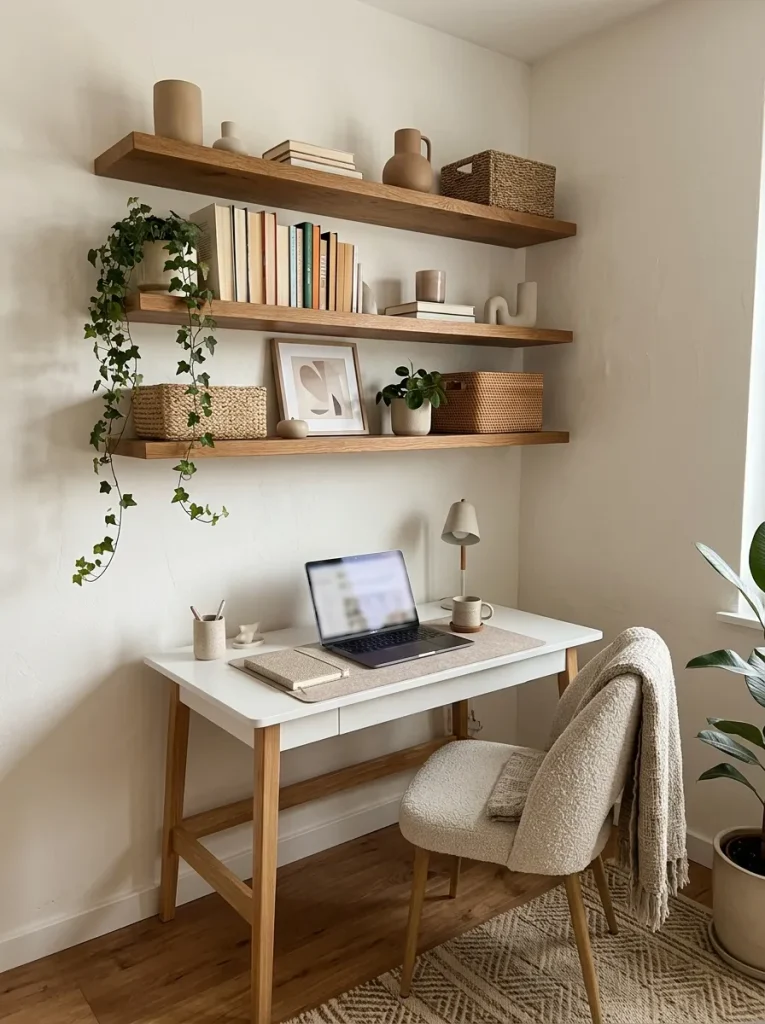
- Choose sturdy shelves: Install two or three floating shelves above your desk to use vertical wall space without adding bulky furniture.
- Arrange books vertically: Group reference books together and leave small gaps between stacks to keep the display organized.
- Add greenery: Place a small pothos or another suitable indoor plant on one shelf for a fresh touch.
- Use matching containers: Store pens, cables and loose supplies in simple baskets or boxes.
- Keep essentials accessible: Position frequently used items on the lowest shelf so you can reach them easily.
Floating shelves help keep your desktop clear while giving important items a dedicated place. Before installation, check the wall type and use suitable anchors or locate wall studs. Keep heavier objects securely supported and avoid overcrowding the shelves. A balanced arrangement makes the office feel organized while keeping useful supplies close at hand.
Focused Desk Lighting
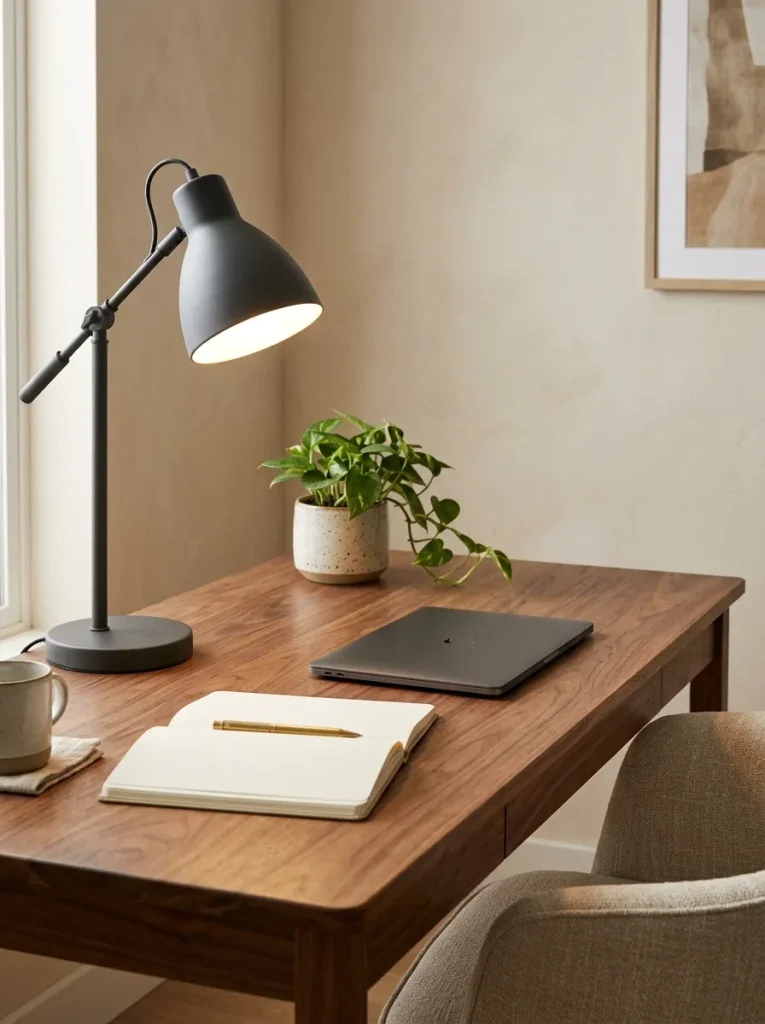
Quick Tip:
Position your desk lamp on the side opposite your writing hand to reduce shadows while taking notes. Choose an adjustable lamp so you can direct light onto paperwork without shining it into your eyes or reflecting it off your screen.
Good lighting makes everyday desk tasks more comfortable, especially during cloudy afternoons or late-night work sessions. Combine natural daylight with a task lamp that provides enough illumination for reading and writing. A warm, inviting finish can complement your decor, while neutral or adjustable light settings help you adapt to different tasks throughout the day.
Motivational Wall Art
BEFORE
A blank wall can make your workspace feel unfinished, while a crowded collection of decorations may compete for your attention. Without a personal touch, even a functional desk setup can feel uninspiring during long work sessions.
AFTER
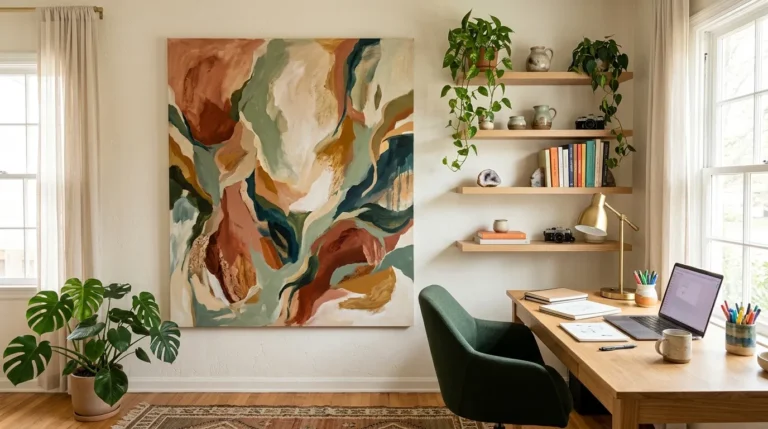
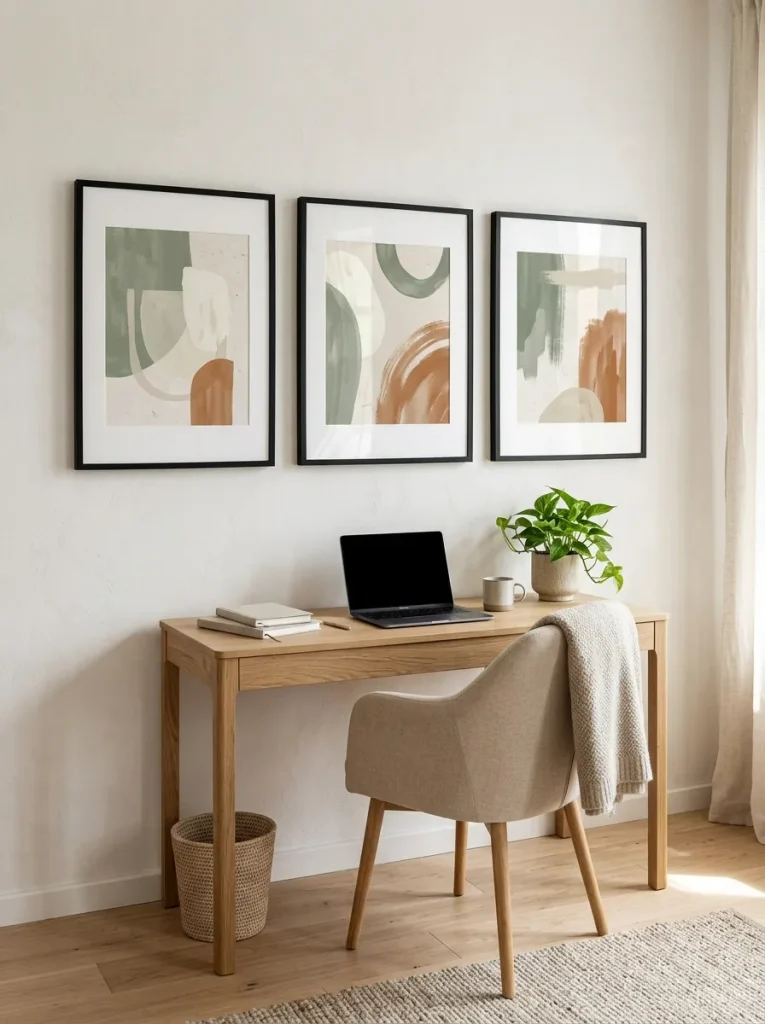
A few carefully chosen art prints create a more intentional backdrop. Muted colors, abstract shapes and simple botanical illustrations add personality without overwhelming the room.
Choose artwork that supports your mood rather than distracting you. Hang two or three coordinating frames above your desk, leaving enough empty space around them. Keep the designs visually calm, especially if your work already involves reading, writing or detailed computer tasks. Your workspace will feel more personal while remaining comfortable for focused work.
Green Plant Corner
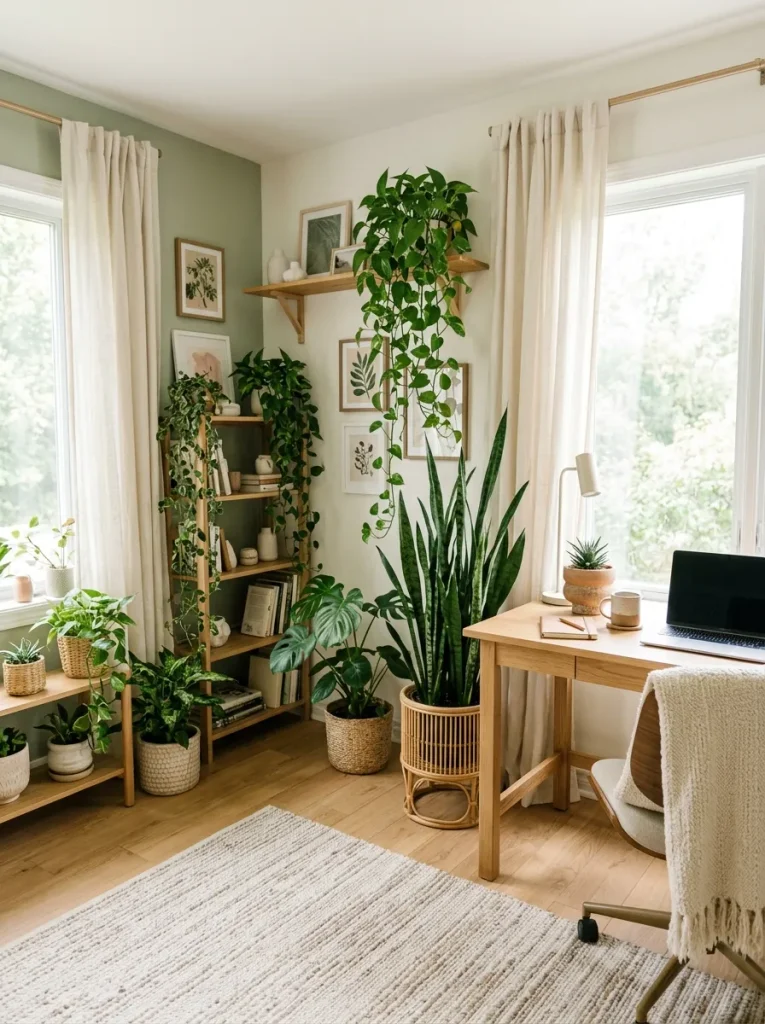
- Choose suitable plants: Select a snake plant, pothos or another variety that matches your room’s available light and care requirements.
- Vary the heights: Place a taller plant beside the desk, a medium plant on a stand and a small one on a shelf.
- Coordinate the pots: Use terracotta, woven baskets with suitable inner pots or simple ceramic planters for a consistent look.
- Protect your workspace: Add saucers or waterproof trays to catch excess water and prevent damage to furniture.
- Keep walkways clear: Arrange foliage where it adds greenery without blocking drawers, cables or your chair.
A small plant corner introduces natural color and softens the hard edges of office furniture. Start with just two plants if you are new to indoor gardening, then expand as you learn their needs. Check watering and light requirements rather than choosing plants by appearance alone. A healthy, well-placed plant adds life without creating unnecessary maintenance.
Minimalist Desk Setup
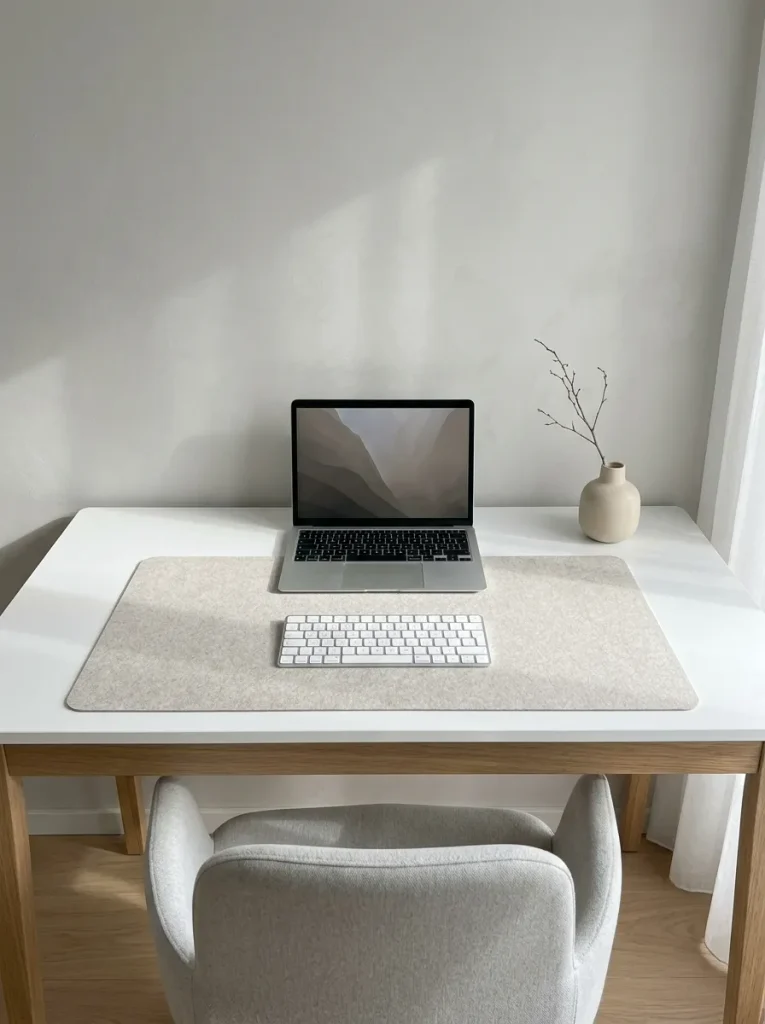
| Element | Option A: Cluttered Desk | Option B: Minimalist Desk |
| Desktop | Papers and unused accessories | Only daily essentials |
| Cable management | Loose cords in view | Cables secured out of sight |
| Decorations | Multiple competing objects | One or two meaningful accents |
| Storage | Supplies scattered around | Items grouped in drawers or trays |
A minimalist setup makes it easier to locate the tools you need and gives your eyes fewer objects to process. Begin by removing everything from the desktop, then return only the items you use regularly. Store occasional supplies nearby and leave a clear working area for your laptop, notebook or current project.
Cozy Reading Nook
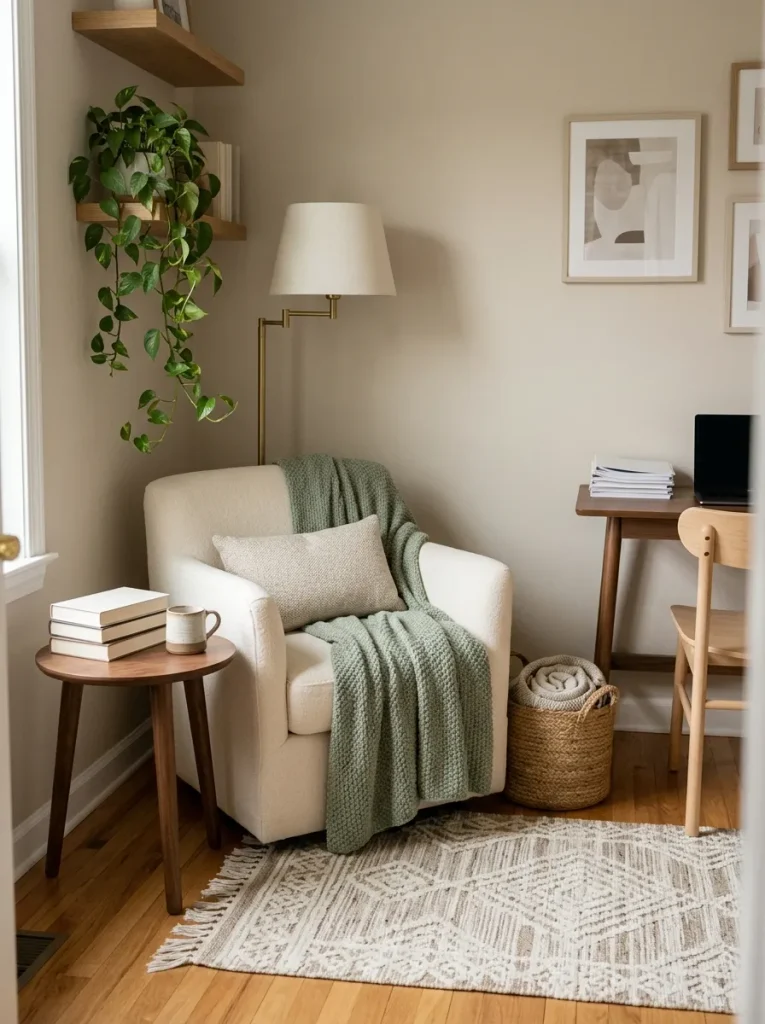
DO
- Choose a comfortable armchair that fits your available floor space.
- Add a small side table for books, a notebook or a cup of tea.
- Position a floor lamp nearby for comfortable reading after sunset.
- Use a soft throw or cushion to make the seating area inviting.
DON’T
- Block the main walkway with oversized furniture.
- Choose a chair that makes standing up uncomfortable.
- Leave loose books and blankets scattered across the floor.
- Place a lamp where its light creates distracting screen glare.
A reading nook gives you a separate place to review documents, brainstorm ideas or take a short break from your computer. Even a small corner can work with one chair and a compact table. Keep the area simple so it feels restful rather than becoming another spot for unfinished tasks.
Colorful Accent Wall
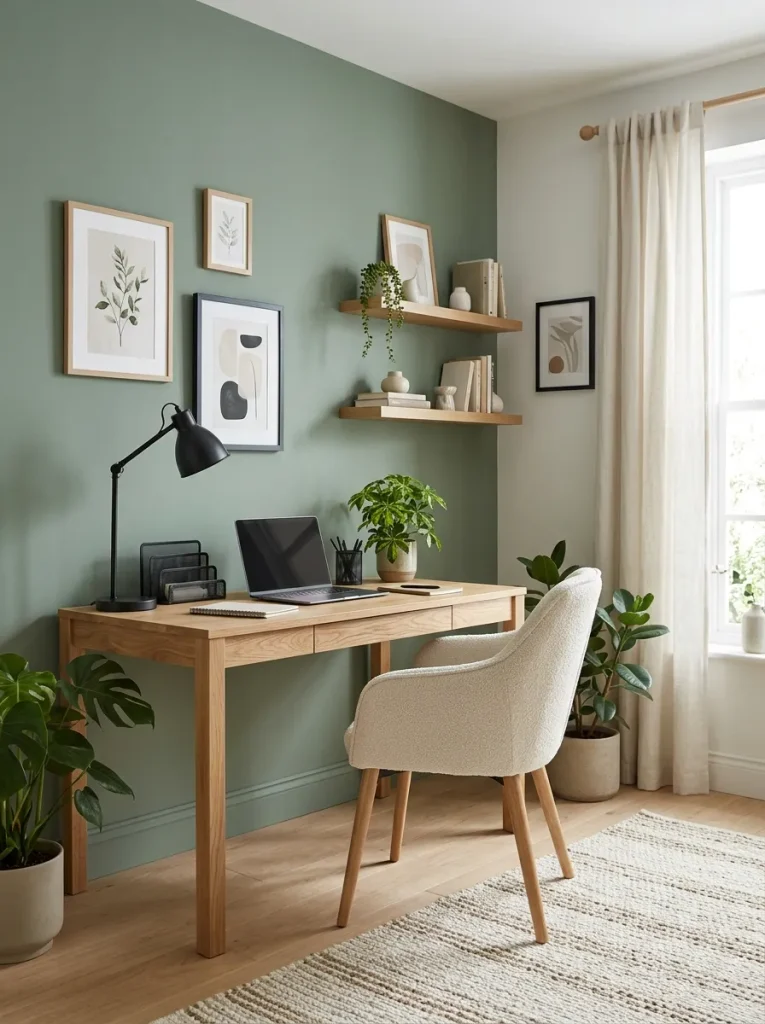
Cost: Low to moderate, depending on paint and supplies.
Time: A few hours to a weekend, including preparation and drying.
Skill Level: Beginner-friendly with basic painting tools.
Best For: Plain walls that need a defined focal point.
Result: A more distinctive workspace with coordinated colors.
A painted accent wall can give your office character without requiring new furniture or expensive accessories. Sage green, dusty blue and muted terracotta are useful starting points if you prefer a softer look. Test paint samples in daylight and under your evening lighting before committing to a full wall.
Natural Wood Furniture
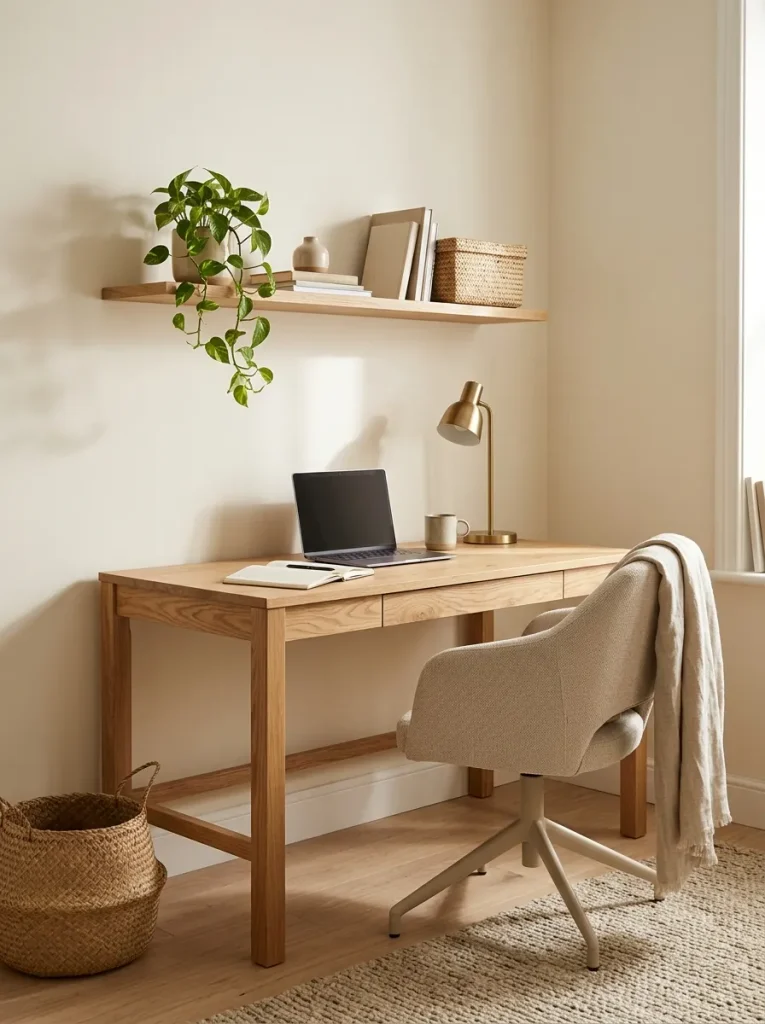
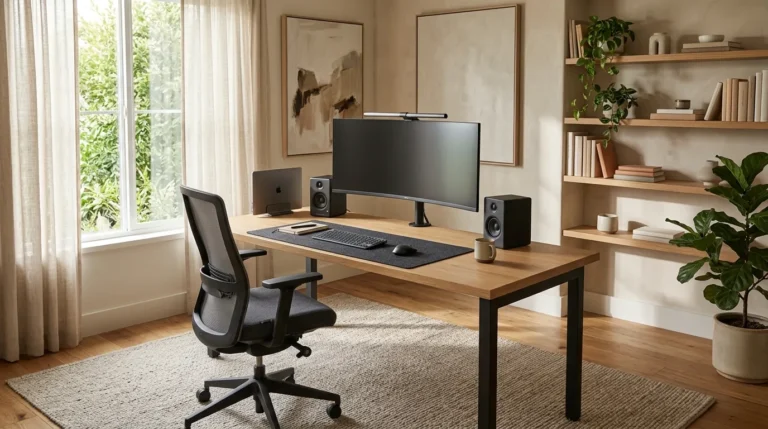
Natural wood brings warmth and visual texture to a home office, helping a practical workspace feel more welcoming. Choose a desk with a finish you enjoy, such as pale oak, honey-toned wood or walnut. Pair it with neutral accessories so the grain remains a noticeable feature without making the room feel busy.
You do not need to replace every piece of furniture to achieve a coordinated look. A wooden monitor stand, floating shelf or small storage unit can introduce the same effect at a lower cost. In my experience, repeating one or two wood tones makes mismatched furniture feel more intentional. Keep the desktop easy to maintain, especially if you use it daily.
Ergonomic Desk Chair
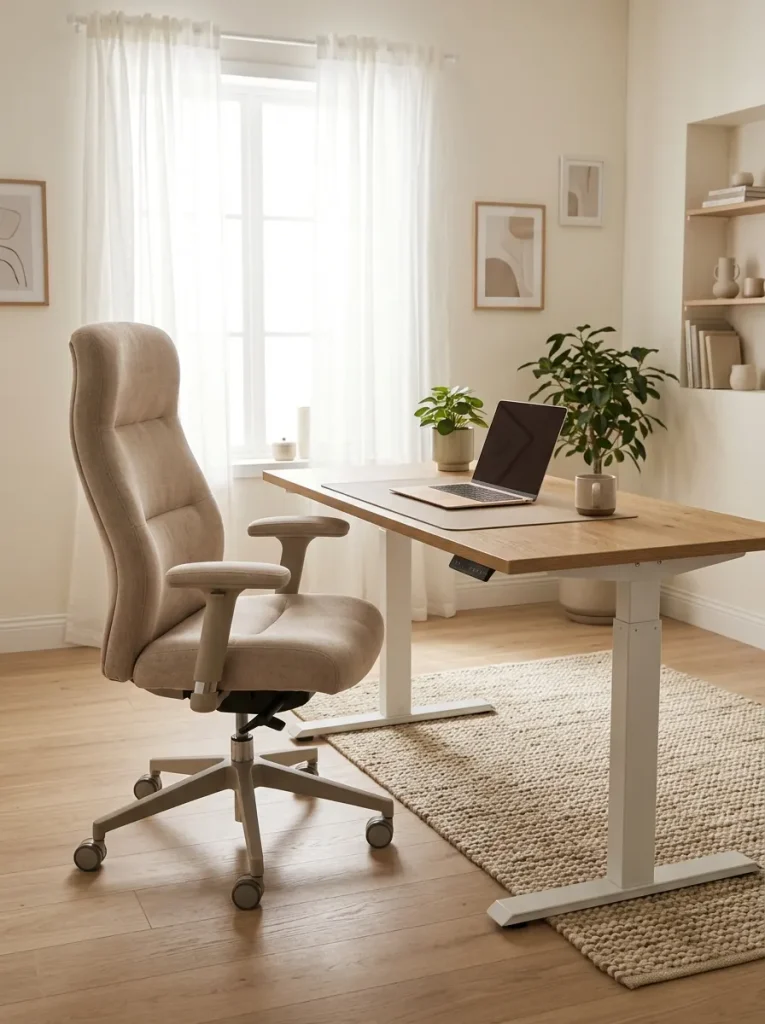
- Check seat height: Adjust the chair so your feet rest flat on the floor and your knees sit near hip level.
- Support your back: Look for a chair with lumbar support that fits the natural curve of your lower back.
- Position your arms: Keep your shoulders relaxed and elbows close to your body while typing.
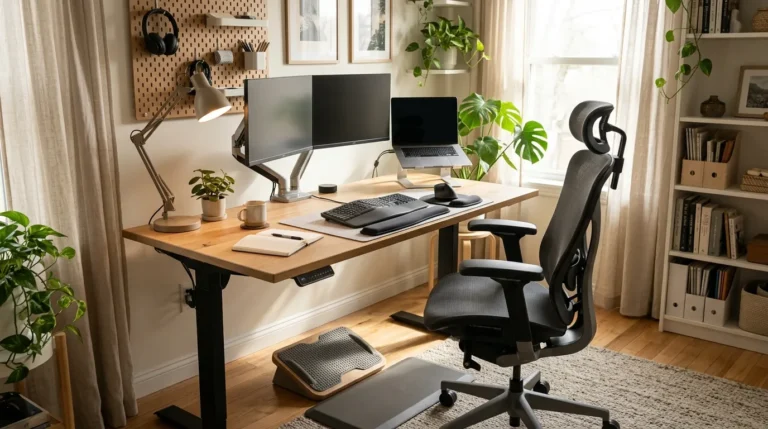
- Choose breathable materials: Mesh or breathable fabric can feel more comfortable during longer work sessions.
- Match the room: Select a neutral upholstery color that complements your desk and other furnishings.
A comfortable chair is one of the most useful investments for a home workspace. Even attractive decor cannot compensate for a seat that leaves you shifting constantly or struggling to maintain a comfortable position. Test the chair if possible and adjust your desk and screen to suit your body rather than forcing yourself to fit the furniture.
Soft Ambient Lighting
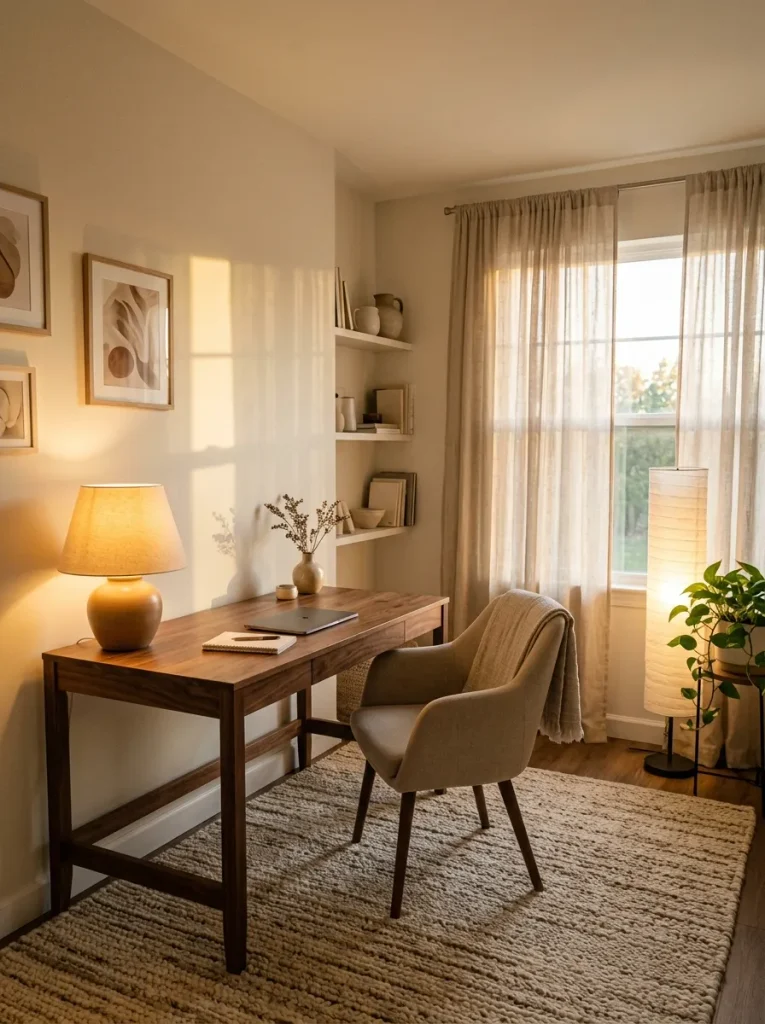
Quick Tip:
Use layered lighting instead of relying on a single overhead fixture. Combine a soft ambient lamp with focused task lighting and keep the light source positioned to avoid glare on your monitor.
Soft lighting can make an office feel more comfortable during early mornings and evening work sessions. Choose lampshades that diffuse light and bulbs suited to your activities. Warm light can create a relaxed atmosphere, while brighter task lighting helps with detailed work. Keep the overall room bright enough to see comfortably without creating harsh contrasts between your screen and surroundings.
Personalized Desk Accessories
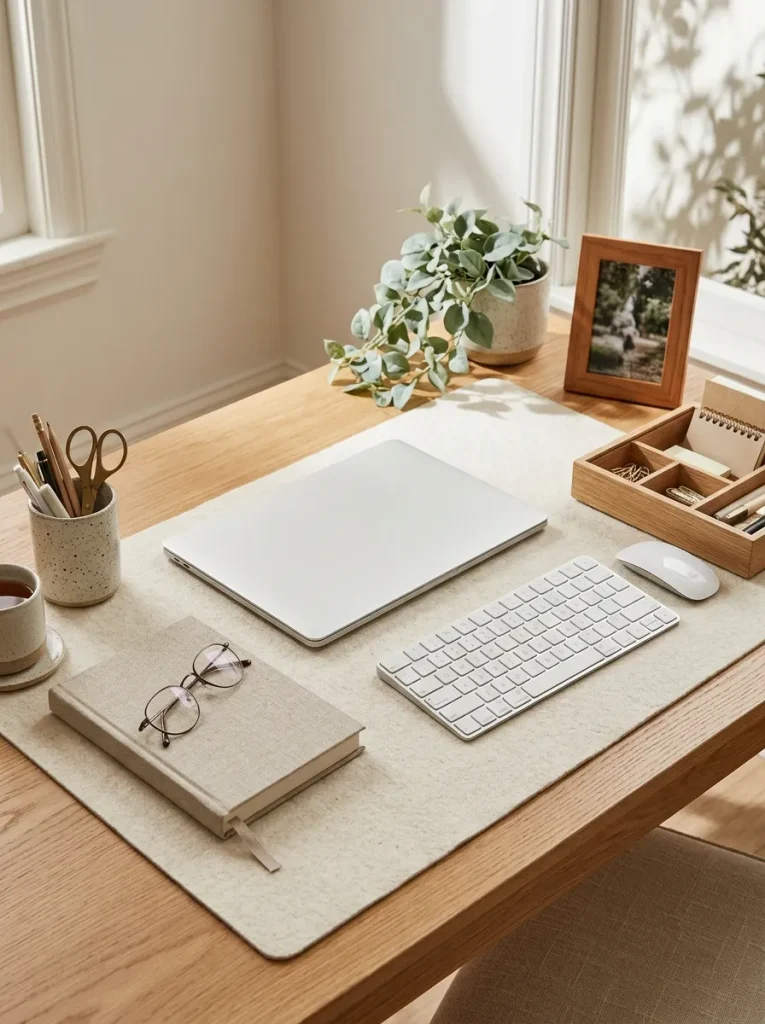
BEFORE
A desk filled with mismatched stationery, loose charging cables and scattered personal items can make it difficult to find everyday essentials. The workspace may feel functional but lack a consistent style.
AFTER
Coordinated accessories give frequently used items a proper home while adding personality. A matching pen holder, a simple notebook and one meaningful decorative object can make the desk feel organized and distinctly yours.
Start with accessories that solve real problems before buying decorative pieces. Use a small tray for daily essentials, a holder for pens and a cable clip to control loose cords. Keep personal items that make you smile, but leave enough open space for active work. A few thoughtful details can make your desk feel both useful and inviting.
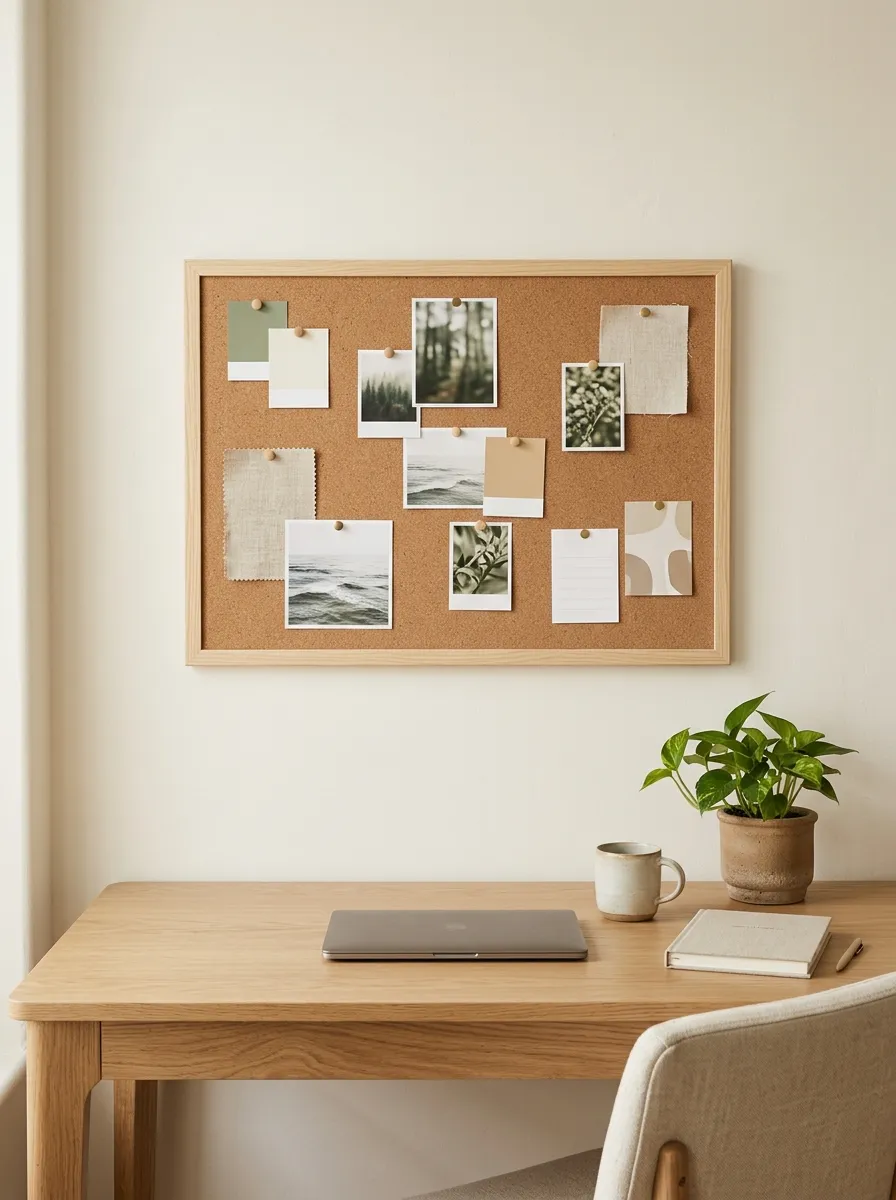
Inspiring Vision Board
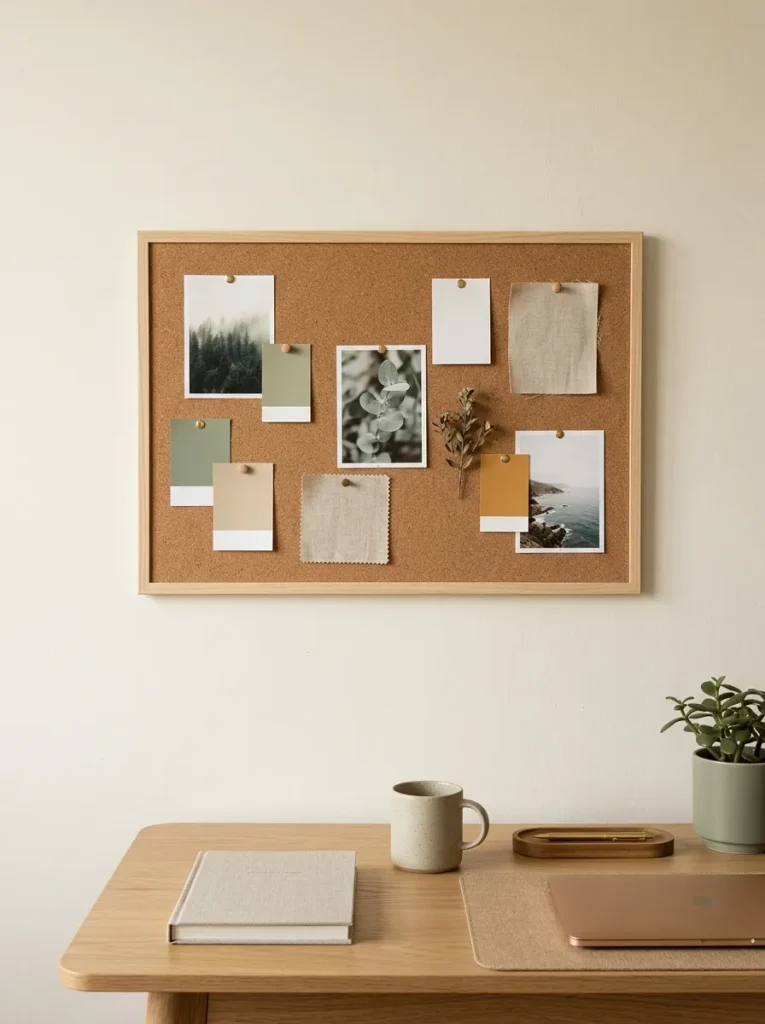
- Choose a board: Select a corkboard, magnetic board or fabric pinboard that fits comfortably above your desk.
- Gather visual references: Collect photographs, color samples and images that represent your current goals.
- Group related items: Arrange images into small clusters for career plans, creative projects or personal milestones.
- Leave breathing room: Keep some empty space so the board stays easy to scan.
- Refresh regularly: Replace outdated images when your priorities or projects change.
A vision board can help keep important goals visible during your daily routine. Focus on a few meaningful priorities rather than filling every inch with inspiration. Place the board where you can glance at it without turning away from your work for too long. The aim is to support motivation, not create another source of visual clutter.
Compact Storage Cabinets
| Feature | Option A: Open Storage | Option B: Closed Storage |
| Appearance | Supplies remain visible | Items stay out of sight |
| Access | Quick access to daily tools | Best for less-used supplies |
| Maintenance | Needs regular tidying | Helps maintain a cleaner look |
| Best Use | Books and attractive accessories | Paperwork, cables and spare stationery |
A compact storage cabinet helps keep supplies organized without taking over the room. Measure the available floor space, including the clearance needed to open doors or drawers. Choose a cabinet with adjustable shelves if your storage needs may change. For a cohesive finish, match its color to your desk or use a contrasting neutral shade.
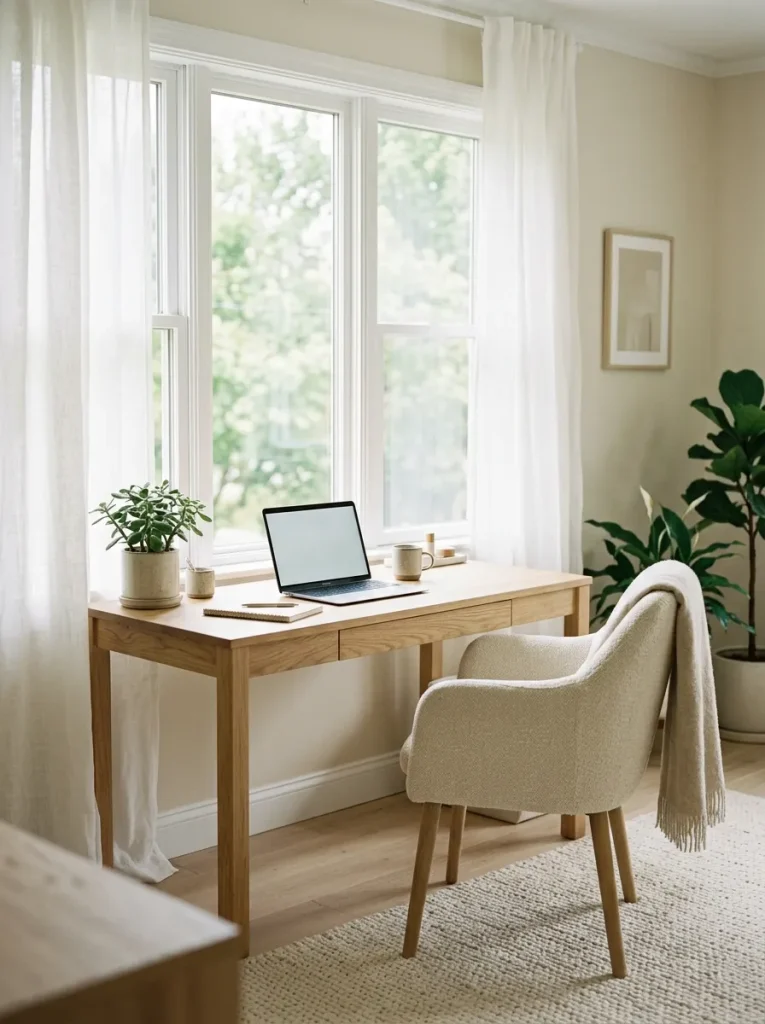
Window-Facing Desk
DO
- Position your desk near a window to benefit from natural daylight.
- Place the monitor perpendicular to the window when possible to reduce glare.
- Use adjustable curtains or blinds to manage direct sunlight.
- Keep the windowsill simple so it does not distract from your work.
DON’T
- Face a bright window if the contrast makes your screen difficult to read.
- Place your monitor where direct sunlight causes persistent reflections.
- Block the window with tall furniture or bulky storage.
- Ignore afternoon heat or glare when choosing the final desk position.
Natural daylight can make a workspace feel brighter and more pleasant throughout the day. Before moving heavy furniture, test the position at different times to see how sunlight changes. Adjust the monitor angle and window coverings as needed. A well-planned layout balances the benefits of daylight with comfortable screen visibility.
Floating Monitor Stand
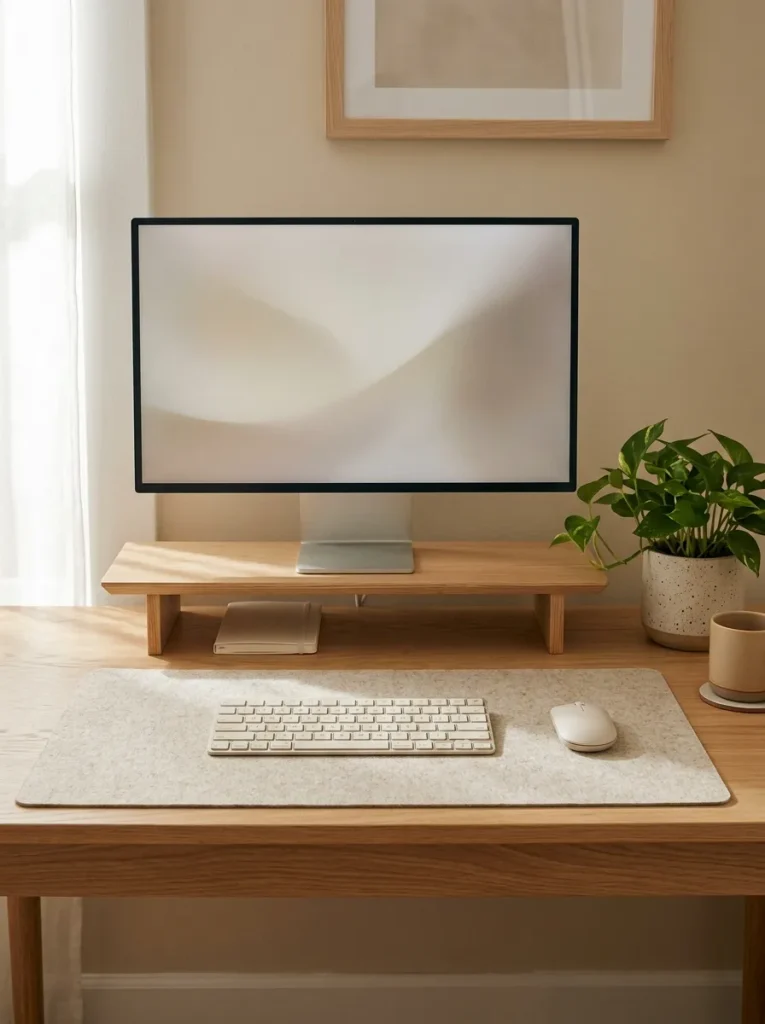
Cost: Low to moderate, depending on the material and design.
Time: Around 15 to 30 minutes for setup.
Skill Level: Beginner-friendly.
Best For: Desks with limited space and monitors that sit too low.
Result: A more organized desktop with additional room underneath the screen.
A monitor stand creates useful space for storing a keyboard, notebook or small accessories when they are not in use. Choose a sturdy stand rated for your monitor’s weight and check its height before purchasing. Position the screen so its top is around eye level, adjusting for your comfort and posture. Keep the area underneath accessible rather than filling every inch.
Coordinated Desk Organizers
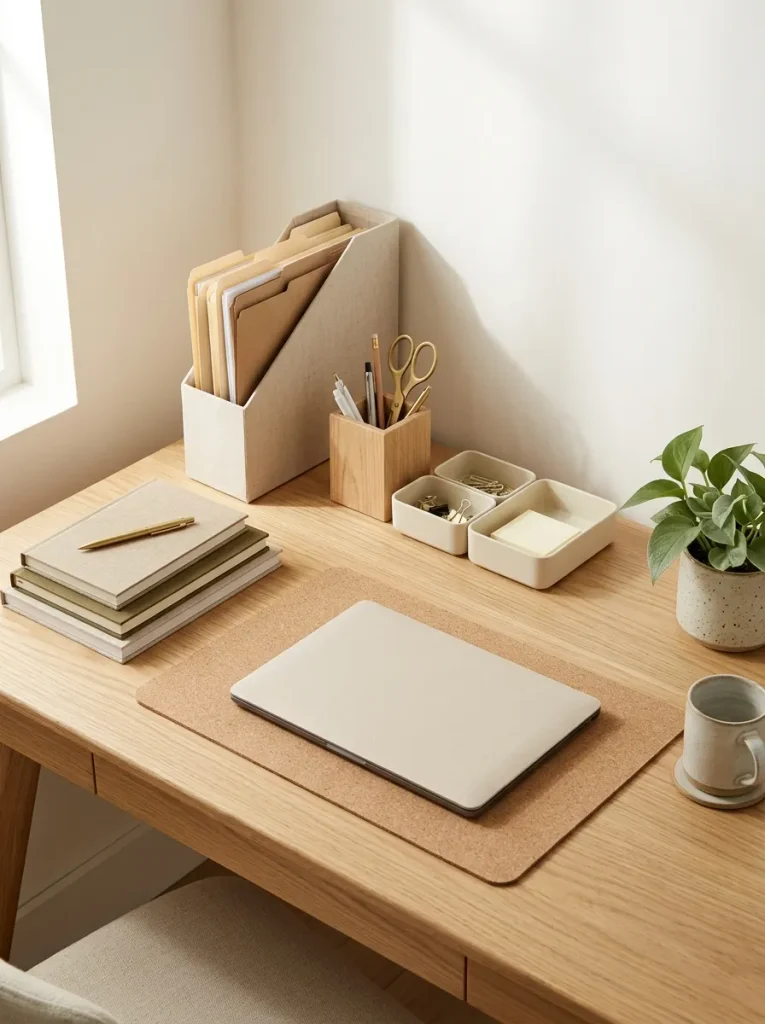
Small accessories can make a noticeable difference when every item has a designated place. Matching desk organizers create visual consistency while helping you manage stationery, paperwork and everyday supplies.
- Group similar items: Keep pens together, paperwork in one file holder and small accessories in a divided tray.
- Use vertical storage: Choose upright file organizers to reduce the amount of desktop space used.
- Label discreetly: Use small labels on drawers or containers if you need help finding supplies quickly.
- Match the finishes: Combine two or three materials, such as wood, ceramic and matte metal, for a coordinated look.
Before purchasing organizers, sort through your existing supplies and measure the space available. Too many containers can create more clutter instead of solving it. Start with the categories that cause the most mess, then add storage only where it serves a clear purpose. A tidy desktop makes it easier to begin each task without searching for basic tools.
Soft Textured Rug
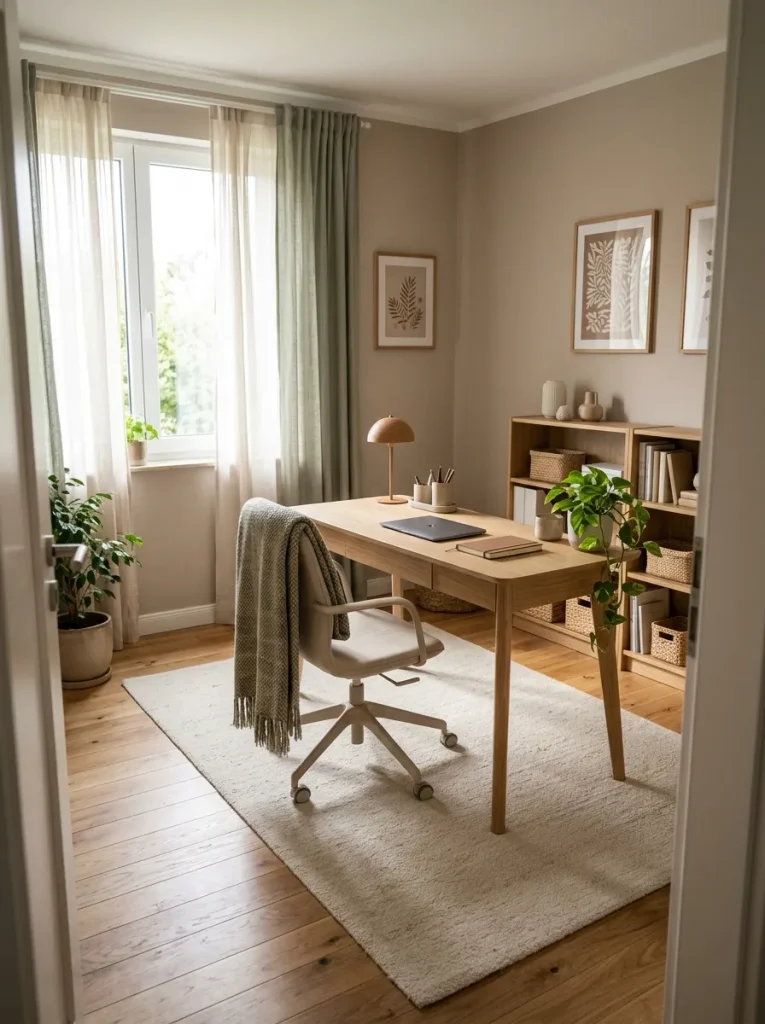
Quick Tip:
Choose a low-pile rug that allows your office chair to move easily. Use a suitable non-slip rug pad and check that the rug’s edges do not interfere with chair wheels or create a tripping hazard.
A textured rug can visually define your workspace, especially when your desk sits in a bedroom or living room. Select a color that complements the existing floor and furniture rather than competing with them. Neutral patterns help disguise everyday dust, while washable materials can simplify maintenance. Keep the rug large enough to anchor the desk area without obstructing nearby furniture.
Creative Pinboard Display
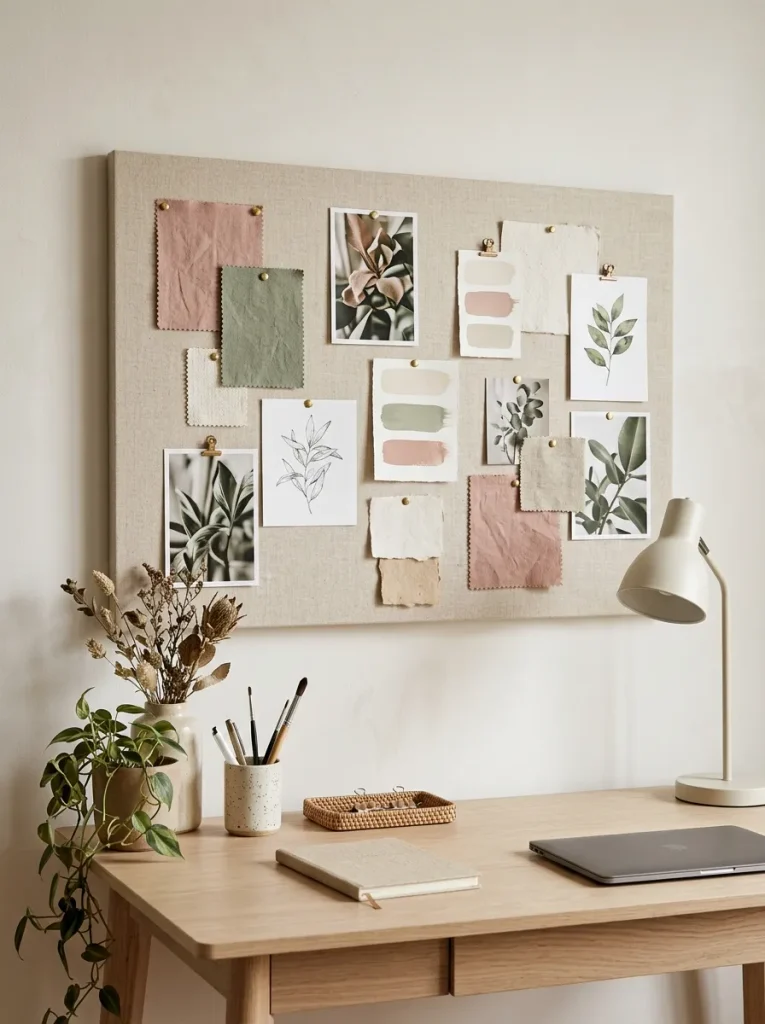
BEFORE
Loose notes, reference images and project reminders scattered across a desk can make it difficult to keep track of current tasks. Important papers may get buried beneath notebooks or forgotten in drawers.
AFTER
A dedicated pinboard brings useful visual references together in one accessible place. Group current projects, important reminders and inspiring images into separate areas to create a display that feels organized rather than crowded.
Choose a board size that suits your wall and the amount of information you need to display. Keep frequently referenced materials at eye level and remove outdated notes regularly. A fabric-covered board can add softness to the room, while cork provides a simple, practical surface. Reserve the board for genuinely useful items so it supports your work instead of distracting you.
Space-Saving Corner Desk
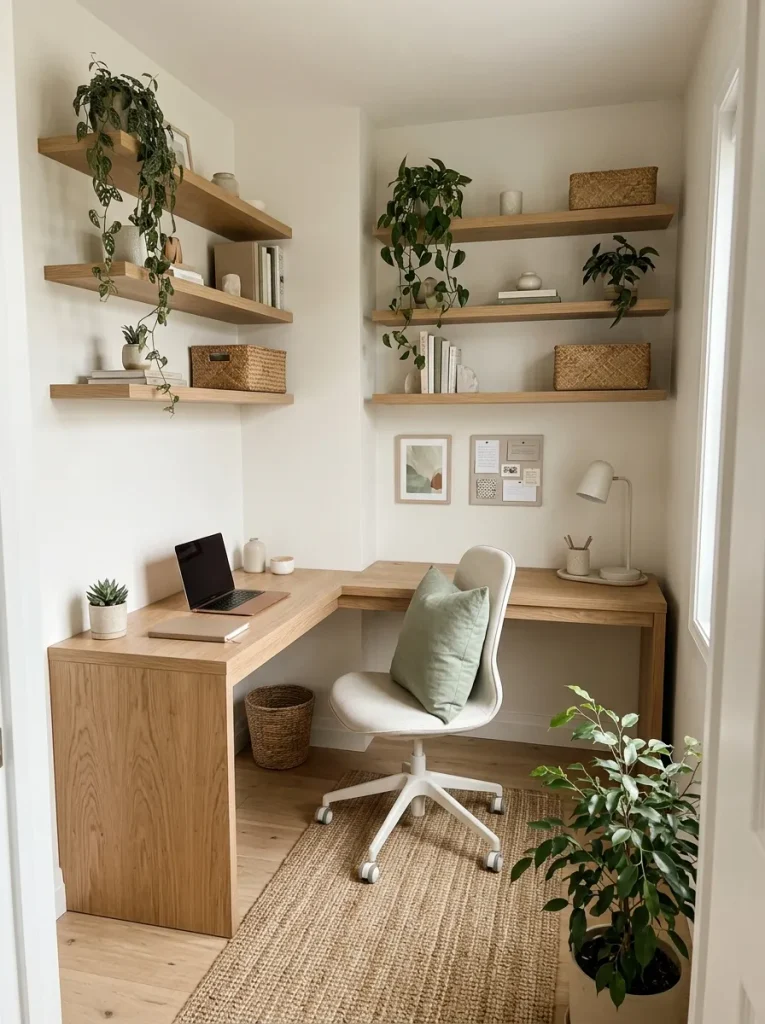
- Measure the corner: Check both wall lengths, desk depth and chair clearance before choosing furniture.
- Select a suitable shape: Consider an L-shaped desk for multiple work zones or a compact triangular design for a tight space.
- Use the walls: Install shelves above the desk to store books and supplies without occupying floor space.
- Manage the cables: Route cords along the desk edges and secure them with clips.
- Keep the center open: Arrange the chair and storage so you can move comfortably around the workstation.
A corner desk makes practical use of an area that might otherwise remain empty. It can separate computer work from writing or crafting, provided the surface is large enough for both activities. Before buying, check the position of power outlets and windows. A thoughtful layout creates a dedicated work zone without making a small room feel crowded.
Elegant Desk Accessories
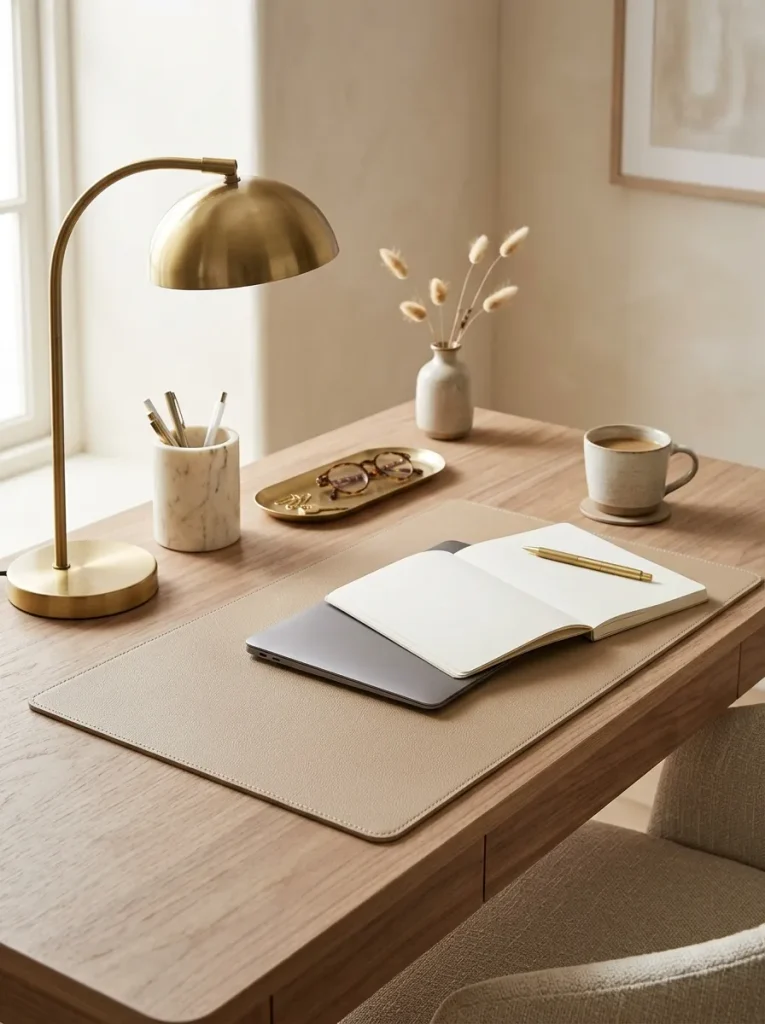
| Element | Option A: Mixed Accessories | Option B: Coordinated Accessories |
| Color palette | Many unrelated colors | Two or three complementary shades |
| Materials | Random finishes | Repeated wood, metal or ceramic details |
| Desktop | Several decorative objects | A few useful, attractive pieces |
| Overall effect | Visually busy | Polished and cohesive |
Elegant accessories can make your workspace feel finished without requiring expensive furniture. Choose a small number of useful pieces, such as a desk lamp, pen holder and catchall tray, then coordinate their finishes. Brass pairs nicely with warm wood, while matte black works well with cooler modern interiors. Keep comfort and functionality ahead of decoration.
Wall-Mounted Desk
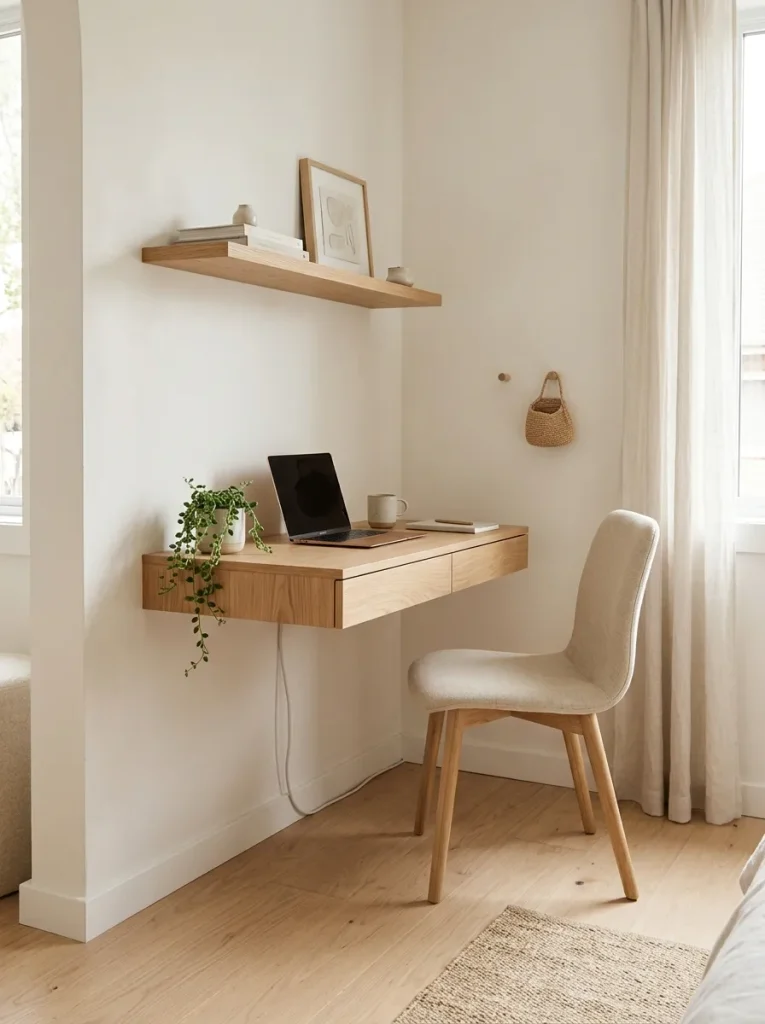
DO
- Measure the wall carefully before selecting a fold-down or fixed wall-mounted desk.
- Check the wall construction and use appropriate mounting hardware.
- Keep daily essentials in a nearby shelf or compact storage unit.
- Choose a finish that complements the room’s existing furniture.
DON’T
- Mount a desk without checking its weight capacity and wall support.
- Choose a surface too shallow for your laptop and working posture.
- Allow cables to hang where they can catch on your chair.
- Overload the desk with heavy equipment beyond its rated capacity.
A wall-mounted desk can free up valuable floor space in a small bedroom, apartment or multipurpose room. Fold-down versions offer even more flexibility when the workspace is not in use. Before installation, make sure the desk can safely support your equipment and provide enough depth for comfortable working. Pair it with a suitable chair for everyday use.
Calm Sage Green Decor
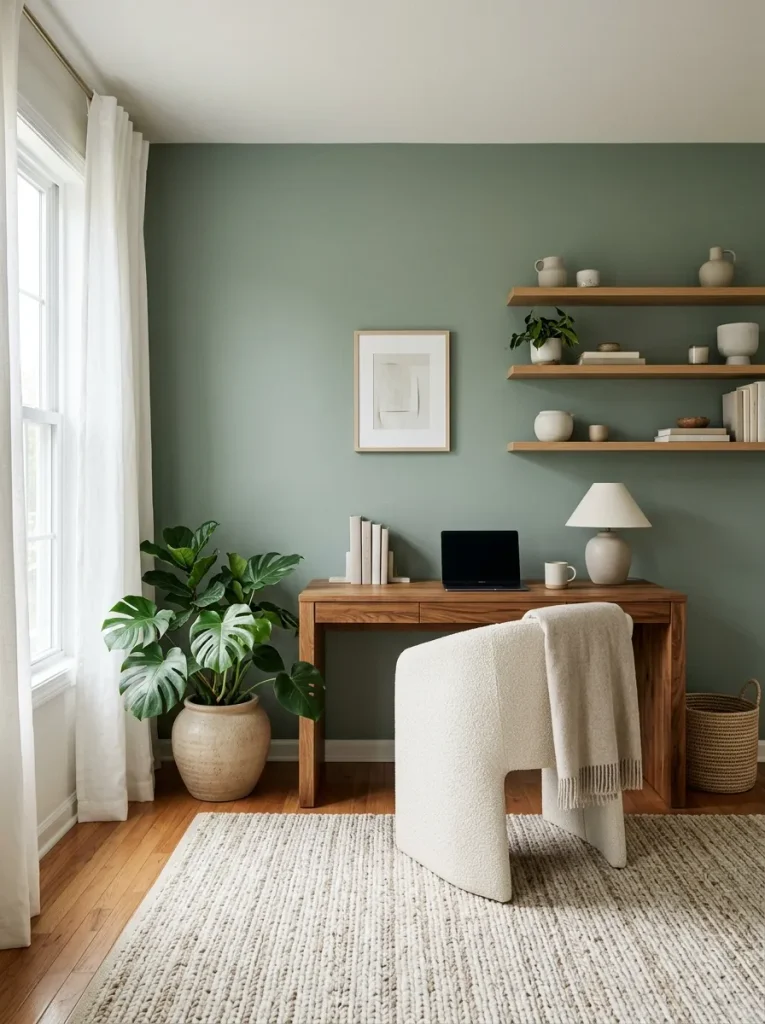
Cost: Low to moderate, depending on paint and accessories.
Time: A few hours for simple styling, longer if painting is required.
Skill Level: Beginner-friendly.
Best For: Neutral rooms that need a gentle touch of color.
Result: A cohesive workspace with a soft, nature-inspired palette.
Sage green offers a gentle alternative to bright accent colors and pairs naturally with cream, beige and light wood. You can introduce it through a painted wall, desk accessories, artwork or a chair cushion. Start with one or two green elements and repeat the shade subtly throughout the room. This creates visual harmony without making the space feel overly coordinated.
Hidden Cable Management
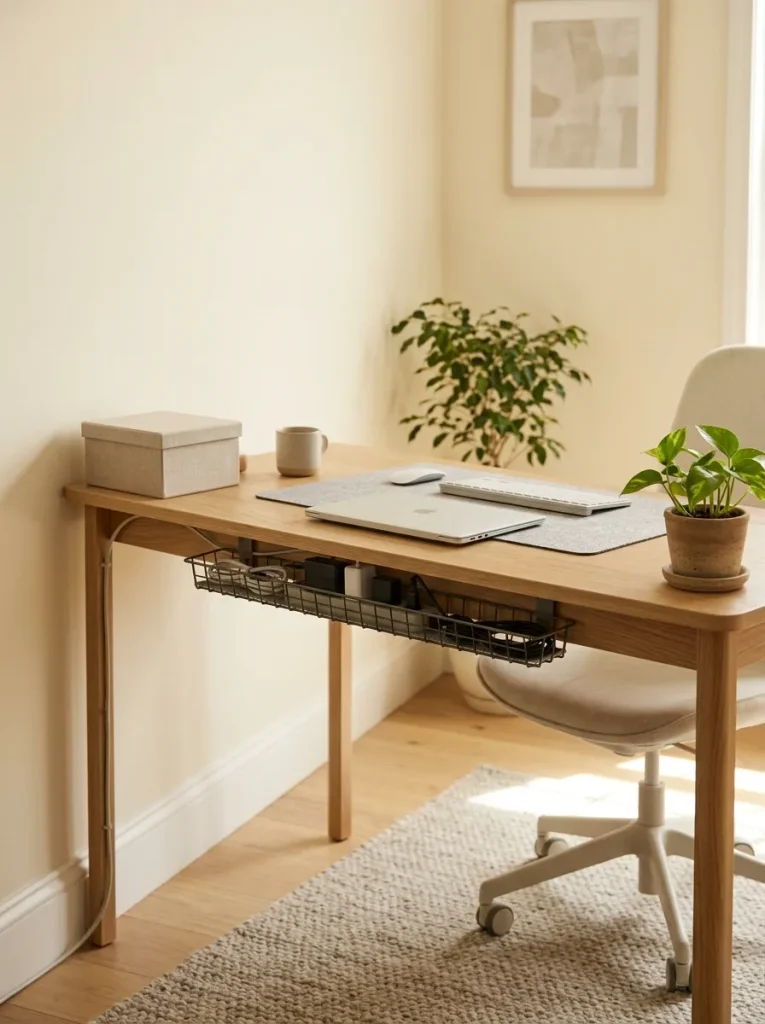
Loose cables can make even a beautifully decorated workspace look messy. Organizing them creates a cleaner visual finish and makes it easier to wipe the desk or move equipment when needed.
- Unplug unnecessary devices: Remove chargers and cables you no longer use.
- Group related cords: Use reusable cable ties to keep computer and accessory cables together.
- Secure cables underneath: Attach suitable cable clips or an under-desk tray to keep cords off the floor.
- Position the power strip safely: Keep it accessible for maintenance and away from spills or excessive heat.
- Leave enough slack: Allow room for adjustable equipment without pulling cables tight.
A few inexpensive accessories can help maintain a neat desktop for the long term. Keep power connections accessible, avoid overloading outlets and inspect cables for damage when rearranging equipment. For a particularly clean finish, combine wireless peripherals with discreet cable routing. The goal is a workspace that stays organized without making everyday setup or troubleshooting difficult.
Cozy Layered Textures
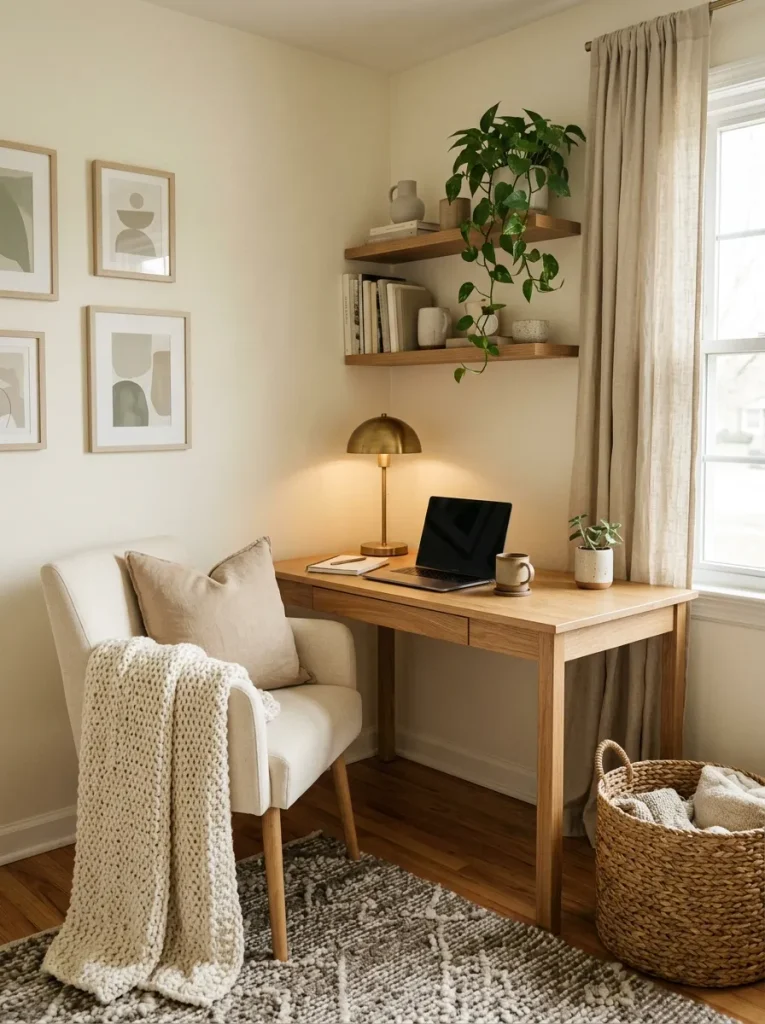
Soft textures can make a home office feel welcoming without adding more objects to your desk. Start with a comfortable chair cushion, a woven basket or a small textured rug. These elements introduce warmth while keeping the room functional.
Mix materials rather than relying on several matching fabrics. Pair a knitted throw with smooth wood, linen curtains and a woven storage basket for a balanced finish. Keep textiles away from electrical equipment and leave enough room to move your chair comfortably. A few carefully chosen layers create a cozy atmosphere without making the workspace feel crowded.
Personal Inspiration Shelf
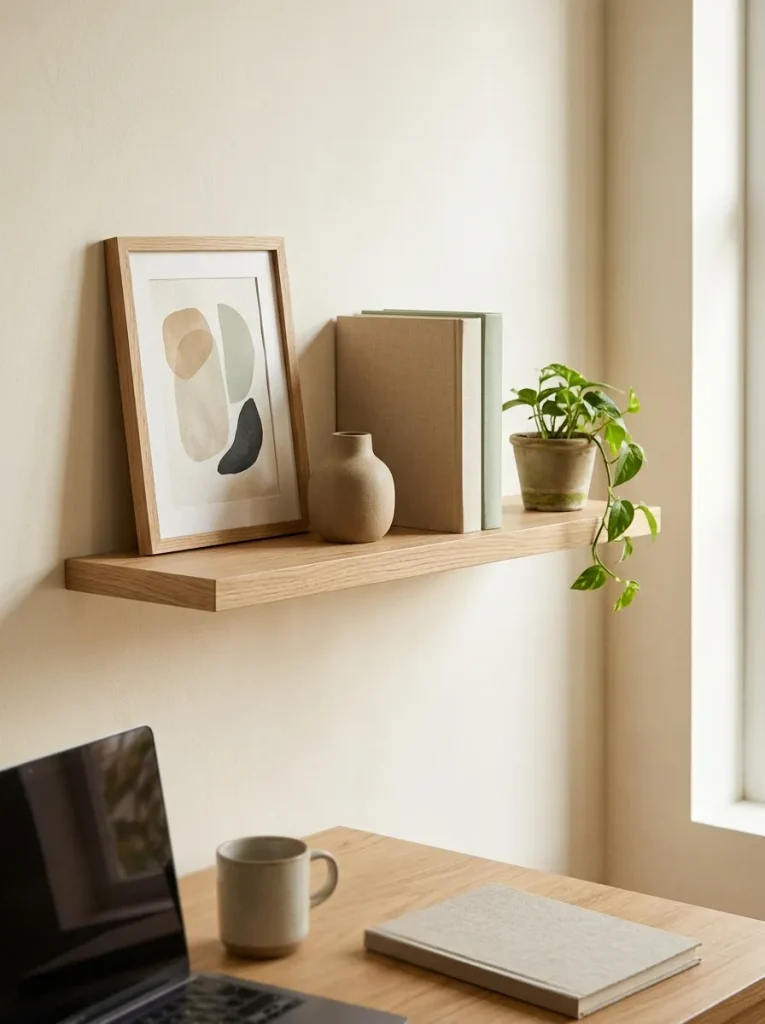
- Select meaningful objects: Display a few items connected to your interests, creative goals or favorite memories.
- Vary the heights: Combine a small vase, a short book stack and a framed print for visual balance.
- Keep the palette consistent: Repeat colors already present in your office to make the shelf feel connected to the room.
- Leave empty space: Avoid filling every inch so each object remains easy to see.
- Refresh occasionally: Rotate decorations when you want a change without buying more accessories.
A personal inspiration shelf adds character while keeping decorative objects off your main work surface. Choose sturdy shelving and secure it properly, especially if you plan to display heavier books or ceramics. Keep the arrangement simple enough to dust easily. The best display reflects your personality while allowing your attention to return naturally to the work in front of you.
CONCLUSION
Creating a workspace you love does not have to involve a big budget or a complete room makeover. These Home Office Decor Ideas offer practical ways to improve organization, introduce calming colors, add personality and make your desk feel more inviting.
Start with one change that addresses your biggest challenge, whether that means improving your lighting organizing cables or adding a comfortable reading corner. Build on your progress as your needs and preferences evolve.
Save this article on Pinterest so you can revisit your favorite ideas when you are ready to refresh your workspace. Share it with a friend who could use some inspiration and remember that even small changes can make your everyday work environment feel more comfortable and motivating.