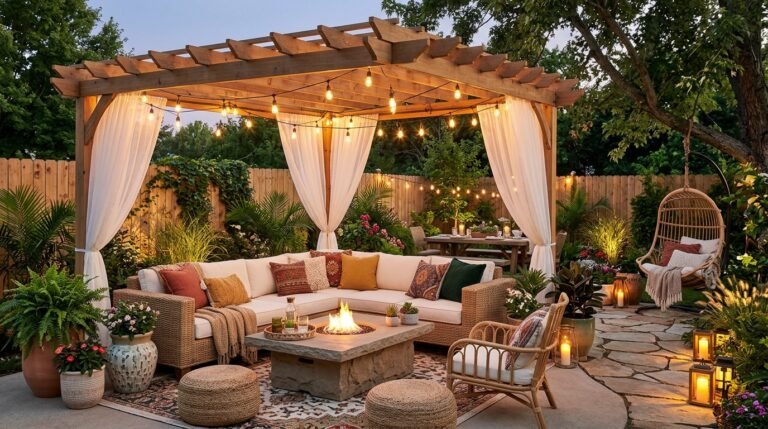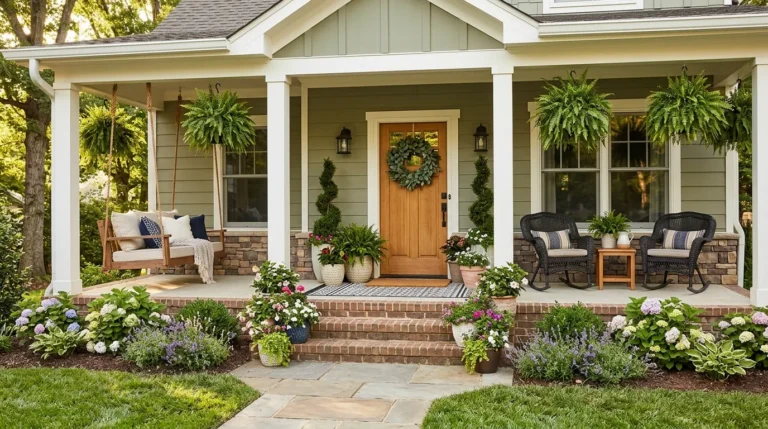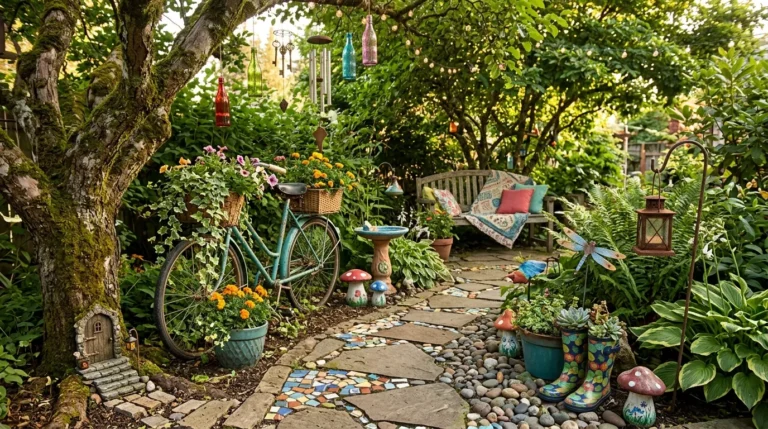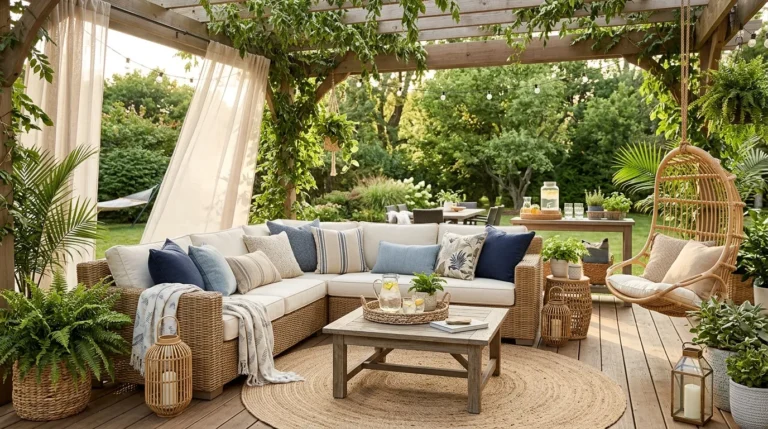
Small Patio Ideas: 29 Tiny Spaces Turned Into Retreats
A tiny patio can become your favorite place to relax, even when space is limited. You don’t need a big backyard or an expensive makeover to create something beautiful.
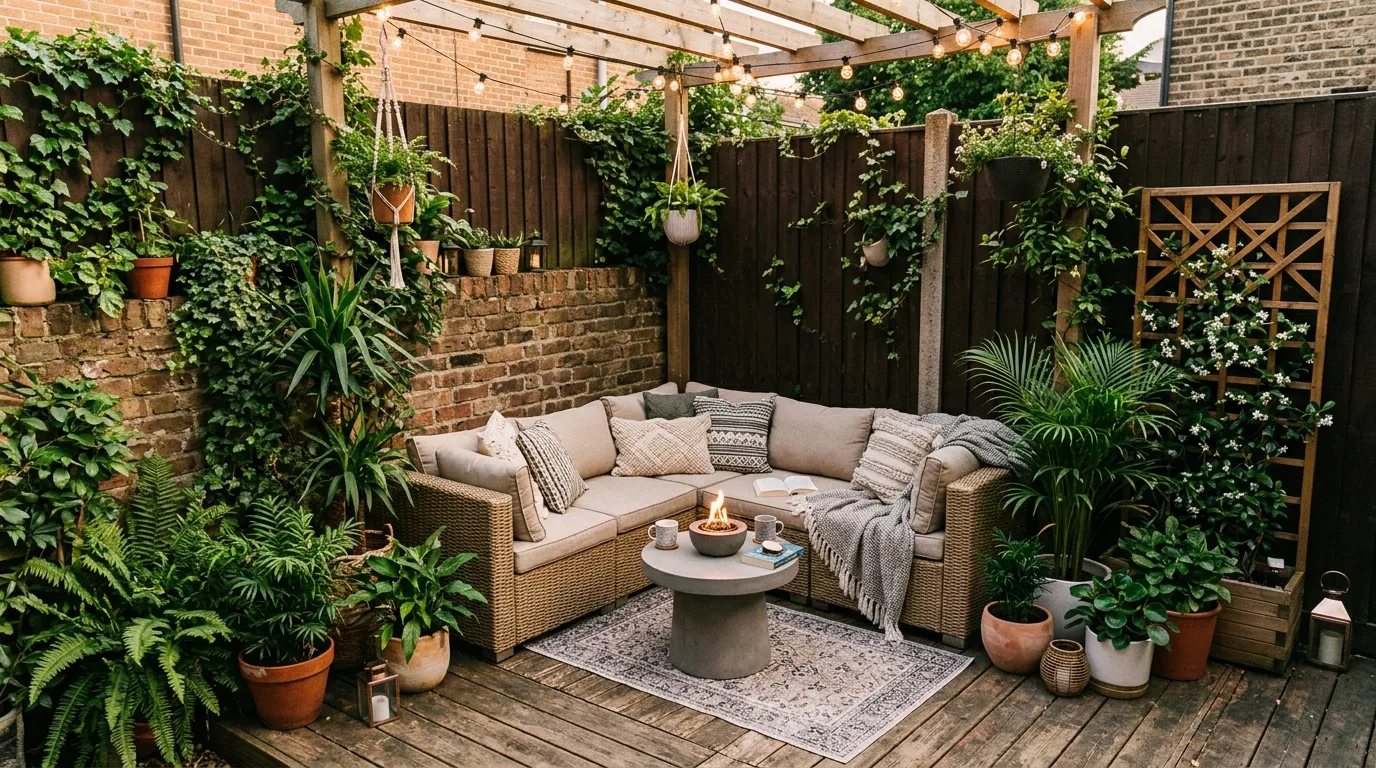
These Small Patio Ideas will help you turn an overlooked outdoor corner into a cozy retreat filled with style, comfort and personality. Whether you’re decorating a rental patio, refreshing a small backyard or making the most of a narrow outdoor area, you’ll find inspiration that works for your space.
Discover clever seating arrangements, charming greenery, creative lighting and practical storage solutions that make every inch count. Sometimes, a simple change like adding a compact bench, coordinating planters or soft outdoor lighting can make a noticeable difference. The key is choosing pieces that look lovely while serving a purpose. Get ready to explore inviting designs you can adapt to your budget, personal style and everyday needs.
Bistro Table Setup
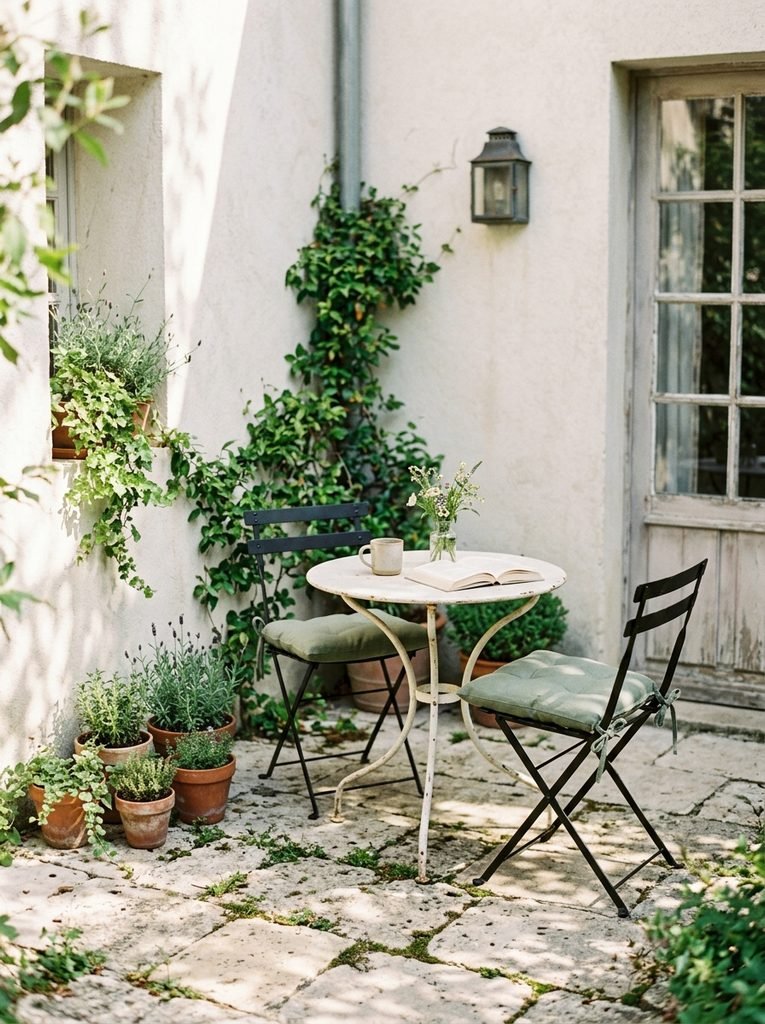
A tiny patio can become a charming outdoor dining spot with just a small table and two comfortable chairs. Choose a round bistro table because its curved edges make movement easier in tight spaces. White, black or natural wood finishes keep the arrangement visually simple.
Place the set near a wall or railing, leaving enough room to pull out the chairs. Add a small vase of flowers or a potted herb for a finishing touch. Suddenly, morning coffee and evening snacks have their own cozy outdoor corner.
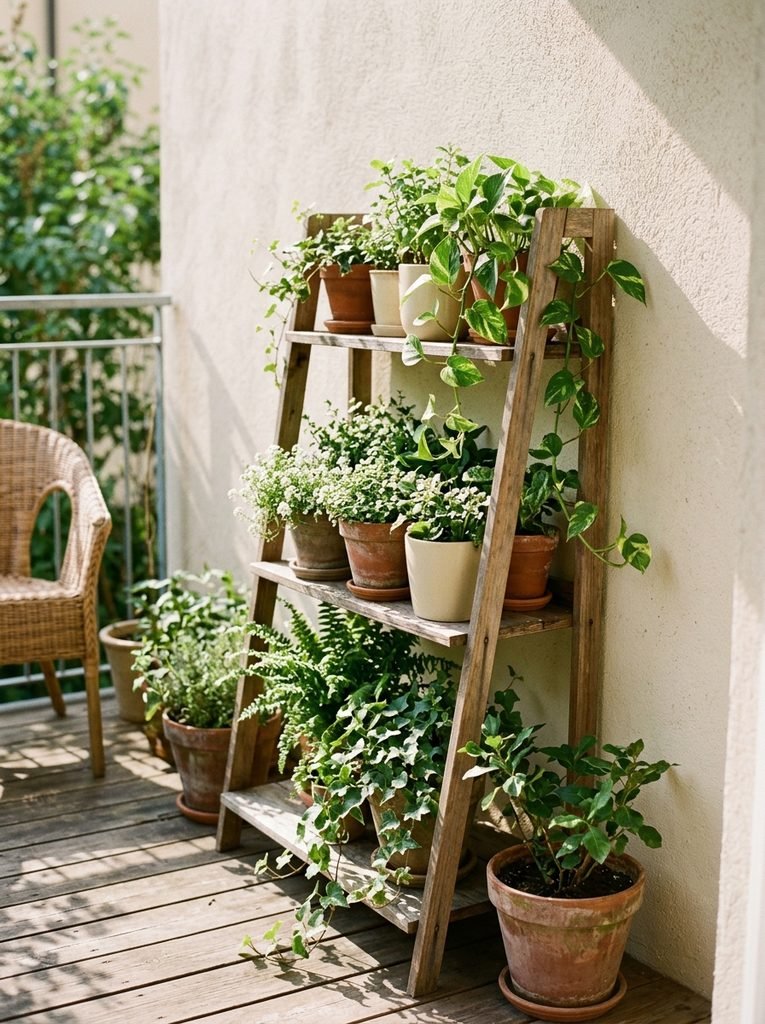
Vertical Plant Shelves
- Choose a slim shelf: A narrow vertical stand provides several planting levels without occupying much floor space.
- Mix plant heights: Combine upright foliage with trailing varieties for a layered appearance.
- Coordinate containers: Use terracotta, cream or muted green pots to keep the display cohesive.
- Check sunlight needs: Place sun-loving plants where they receive adequate light and keep shade-tolerant varieties in suitable spots.
- Protect the surface: Use a stable shelf and saucers where appropriate to manage drainage.
Vertical planting draws attention upward, making a compact outdoor area feel greener without filling every corner with pots. I’ve noticed that grouping plants at different heights often creates a fuller look than scattering them around randomly. Keep the shelf accessible for watering and leave nearby pathways clear so your patio remains practical as well as attractive.
Foldable Lounge Chairs
Quick Tip:
Measure the patio before choosing chairs, including the space needed when they are opened. Look for foldable designs with weather-resistant frames and comfortable cushions that can be removed and stored when rain is expected.
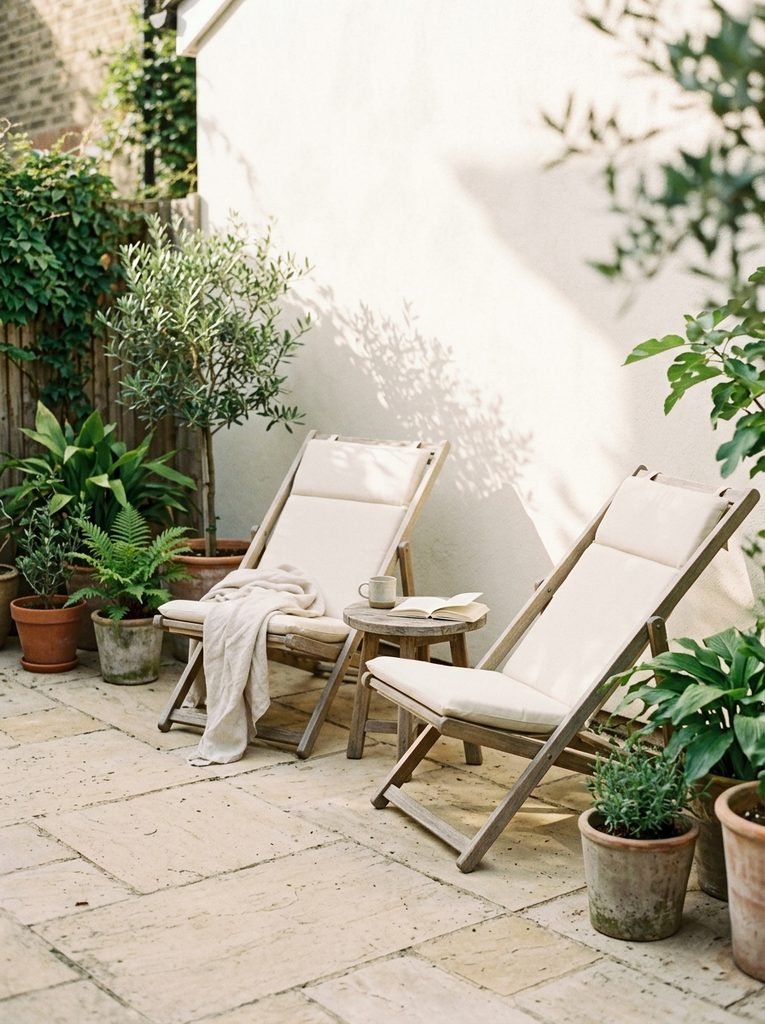
Foldable lounge chairs make a small patio more flexible because you can create a comfortable seating area when needed and reclaim floor space afterward. Pair them with a lightweight side table that can also be moved easily. Neutral cushions keep the look calm, while one sage or terracotta accent adds warmth. Check that the chairs lock securely into position and sit evenly on your patio surface before use.
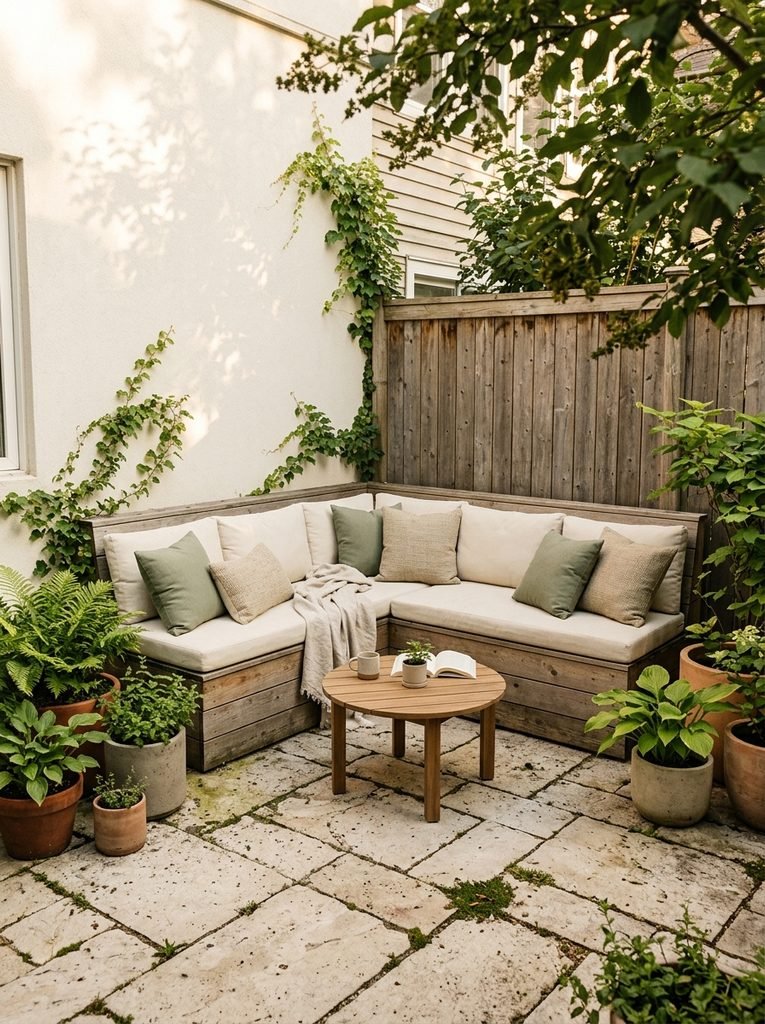
Built-In Corner Bench
BEFORE
A small patio with separate chairs can feel crowded, especially when furniture blocks the walking area. Unused corners often become awkward spaces that serve no clear purpose.
AFTER
An L-shaped corner bench turns that overlooked area into practical seating for relaxing or entertaining. Slim cushions and a small round table keep the arrangement comfortable without filling the center of the patio.
Measure both walls carefully before building or purchasing a corner bench. Leave enough clearance for doors and pathways and choose exterior-rated materials that can handle your local weather. If you’re renting, a freestanding corner bench offers a flexible alternative to permanent construction. Add storage beneath the seat only if the design allows proper ventilation and protection from moisture.
Hanging String Lights
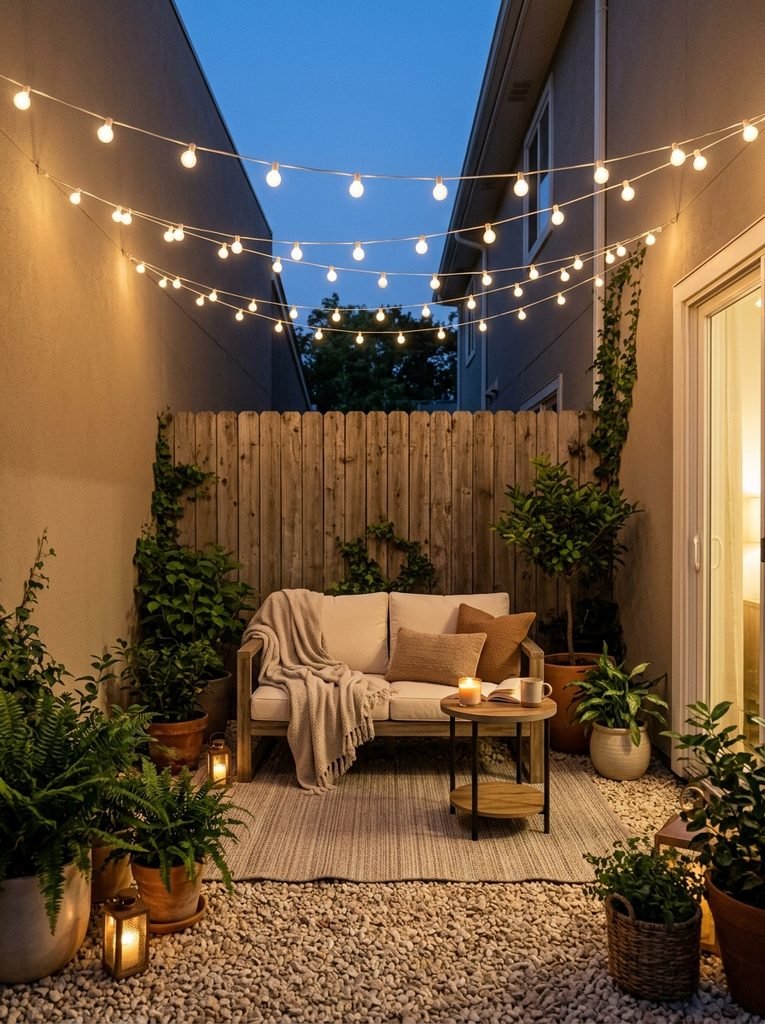
- Plan the layout: Decide whether lights will run along the wall, across the patio or around a pergola.
- Choose outdoor-rated lights: Select weather-suitable fixtures and follow the manufacturer’s installation instructions.
- Use secure supports: Attach lights to suitable hooks or structures that can support their weight.
- Keep the glow balanced: Warm-white bulbs create a cozy atmosphere without overwhelming a small seating area.
- Check the connections: Protect plugs and connections as directed by the manufacturer and keep cables away from walking paths.
Warm lighting helps a tiny patio feel inviting after sunset, especially when overhead space is limited. Keep the arrangement simple rather than covering every surface with lights. If the patio has no suitable overhead structure, wall-mounted fixtures or freestanding outdoor lamps can provide a similar evening glow. Always check electrical safety requirements for outdoor use, particularly in areas exposed to rain.
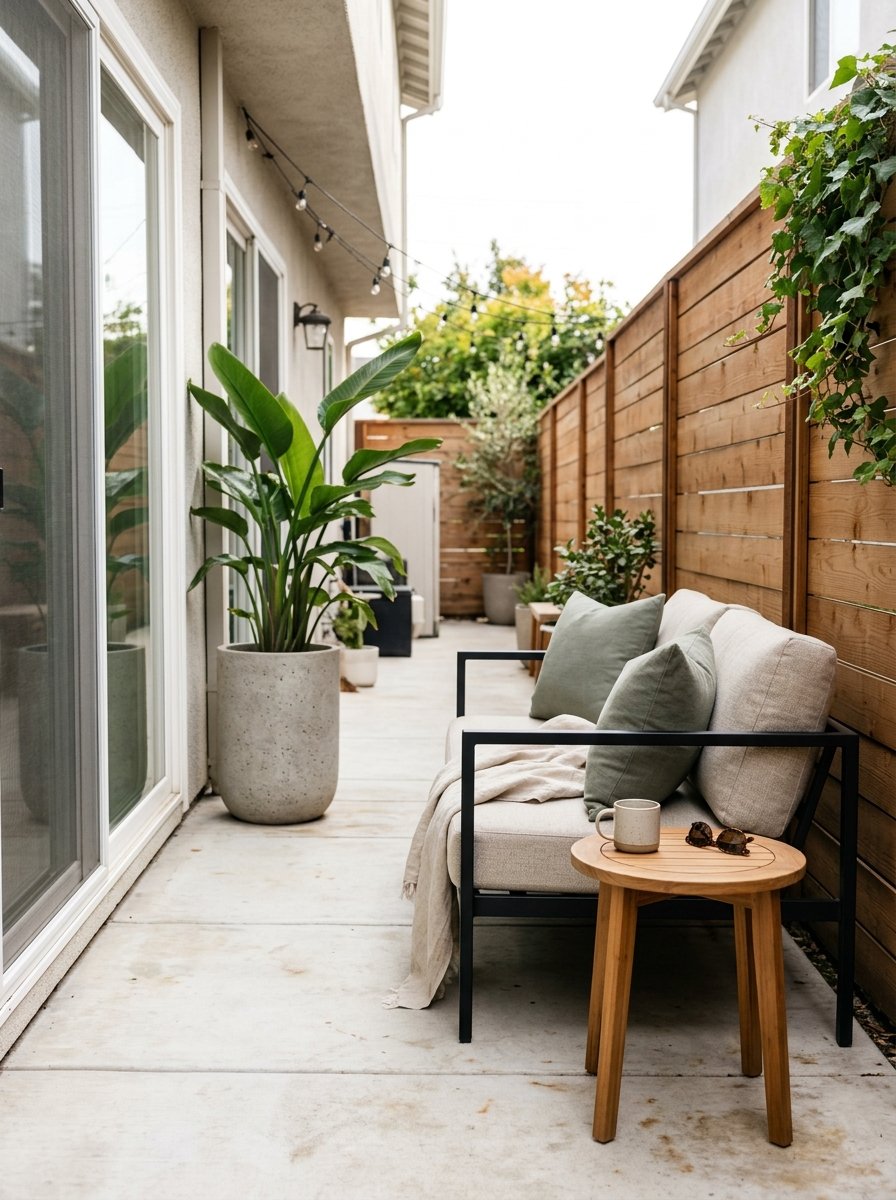
Slim Outdoor Sofa
| Feature | Option A: Slim Two-Seat Sofa | Option B: Separate Lounge Chairs |
| Seating style | One connected seating area | Flexible individual seats |
| Visual effect | Creates a defined lounge zone | Leaves more gaps between pieces |
| Flexibility | Usually stays in one position | Chairs can be moved as needed |
| Best fit | Narrow patios with a clear wall | Irregular layouts or multipurpose spaces |
A compact sofa can make a small patio feel like an outdoor living room without requiring a large furniture set. Measure the sofa’s full depth, including cushions and check that doors can open freely nearby. Choose a frame designed for outdoor conditions and removable cushion covers for easier care. Keep the remaining furniture minimal, using a small side table instead of a bulky coffee table if the walking space is tight.
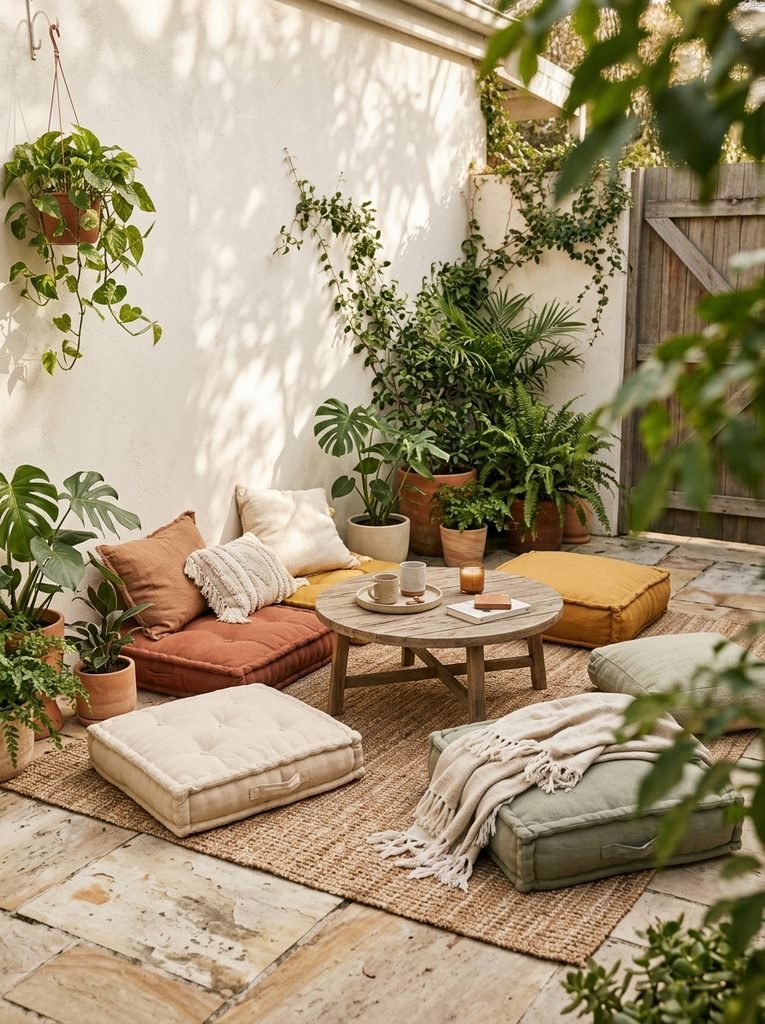
Colorful Floor Cushions
DO
- Choose outdoor-rated floor cushions with removable, washable covers.
- Combine two neutral shades with one or two brighter accent colors.
- Arrange cushions around a low table to create a casual conversation area.
- Store cushions in a dry place when rain is expected.
DON’T
- Don’t overcrowd the patio with more cushions than people can comfortably use.
- Don’t place soft cushions directly on wet or muddy surfaces.
- Don’t choose oversized designs that block doorways or narrow walkways.
- Don’t leave lightweight cushions unsecured during strong winds.
Floor cushions offer flexible seating without the visual bulk of several chairs. They work especially well for relaxed gatherings, reading corners and patios where permanent furniture would take up too much room. Use a weather-resistant rug to define the seating area and keep a storage basket nearby for smaller cushions. When the space is not being used, stacking the cushions frees up the patio for other activities.
Wall-Mounted Folding Table
Cost: Varies by material, size and installation method.
Space needed: Minimal when the tabletop is folded flat against the wall.
Best for: Narrow patios, apartment balconies and compact outdoor dining corners.
Skill level: Beginner for a ready-made unit; more advanced if wall installation requires drilling or structural support.
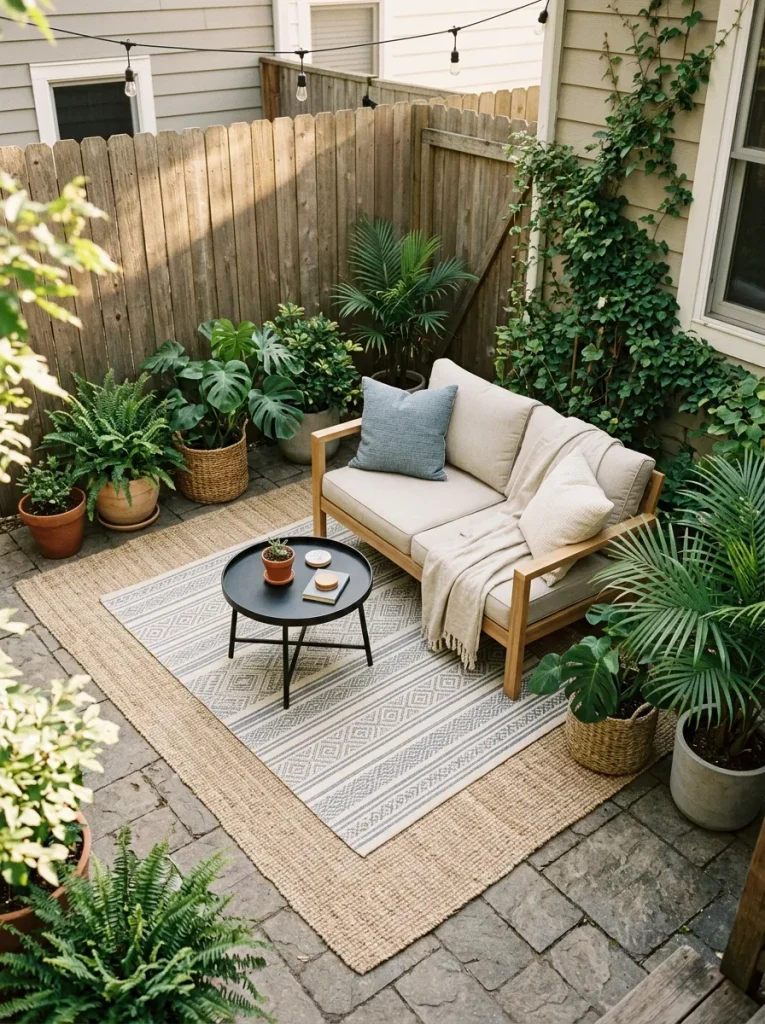
A folding table creates a useful surface for breakfast, working outdoors or setting down drinks without permanently taking up floor space. Choose a model with a secure locking mechanism and enough depth for its intended use. Before installing it, confirm that the wall and fixings can support the table and expected load. Renters may prefer a freestanding folding table that can be stored indoors after use.
Layered Outdoor Rugs
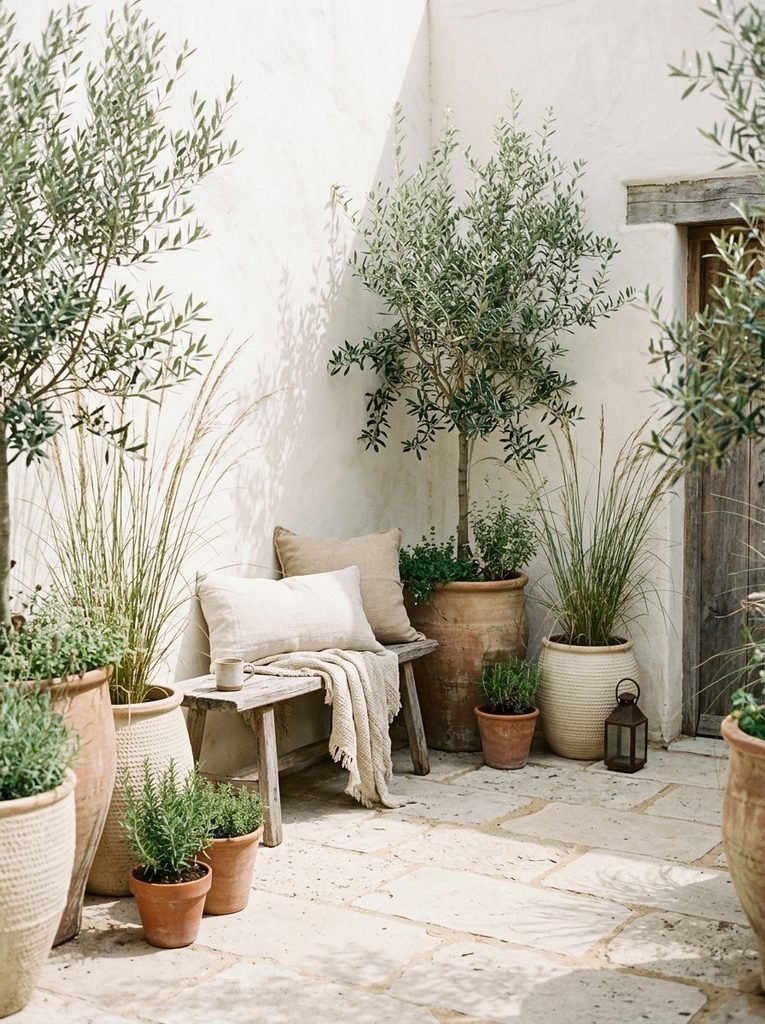
A layered rug arrangement can make a tiny patio feel more defined without adding extra furniture. Start with a larger neutral rug that fits beneath the front legs of your seating, then place a smaller patterned rug over it to introduce color and texture.
Choose rugs designed for outdoor conditions and make sure the layers lie flat to reduce tripping risks. Avoid covering drainage outlets or placing rugs where water remains trapped underneath. Stripes can visually lengthen a narrow patio, while small geometric patterns add interest without dominating the setting. Keep the cushions and accessories simple so the floor remains the focal point.
Tall Potted Greenery
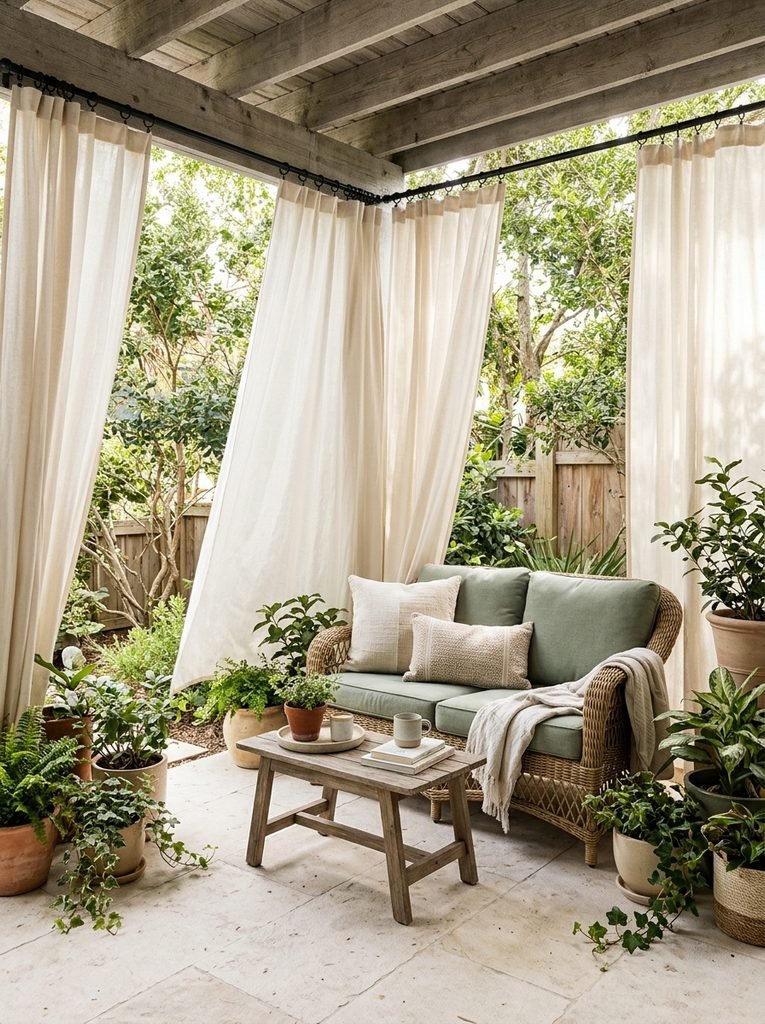
- Choose vertical plants: Olive trees, slender grasses or other locally suitable upright plants draw the eye upward.
- Use coordinated pots: Cream, terracotta and muted gray containers create a consistent palette.
- Group strategically: Place taller pots along a wall or in an unused corner to preserve walking space.
- Check growing conditions: Match each plant to the available sunlight, climate and container size.
- Keep drainage practical: Use suitable drainage holes and protect patio surfaces from excess water.
Tall greenery creates privacy, softens hard surfaces and adds a garden-like feeling without requiring a large planting bed. Choose plants according to your local climate rather than appearance alone, since container plants may need more frequent watering during hot weather. Keep larger pots stable in windy conditions and leave enough room around doors and furniture. A few carefully placed plants often look more spacious than many small pots scattered across the floor.
Outdoor Curtain Panels
Quick Tip:
Select curtain fabric labeled for outdoor use and choose a hanging system suitable for your patio structure. Leave the panels open during breezy weather and secure or remove them when strong winds are expected.
Curtains can soften a hard patio edge and provide a little visual separation from nearby spaces. Light cream or white fabric keeps a small area feeling bright, while muted sage adds a subtle touch of color. For privacy, choose panels with enough width to overlap when closed. Avoid blocking airflow or covering essential access points and check that the fabric and hardware can withstand the conditions where you live.
Compact Water Feature
BEFORE
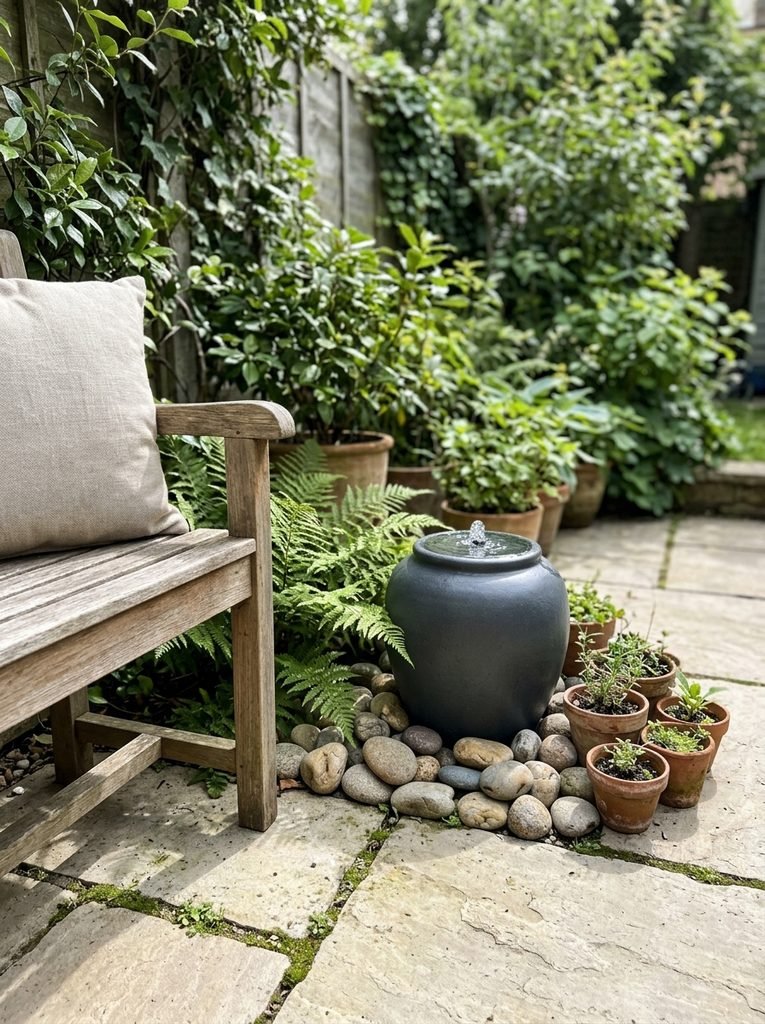
A small patio with bare paving and a plain wall can feel hard and unfinished. Without greenery or a focal point, the seating area may lack visual interest and a relaxing atmosphere.
AFTER
A compact water feature introduces movement and the gentle sound of flowing water. Surrounded by a few plants and smooth stones, it creates a calming focal point without needing a large pond or extensive landscaping.
Choose a self-contained fountain designed for outdoor use and position it on a level, stable surface near a suitable power source if required. Check water levels regularly, follow cleaning instructions and prevent standing water from becoming a mosquito breeding site. In colder conditions, follow the manufacturer’s guidance for draining or storing the fountain. Keep the design proportional to the patio so the feature enhances the space rather than crowding it.
Narrow Storage Bench
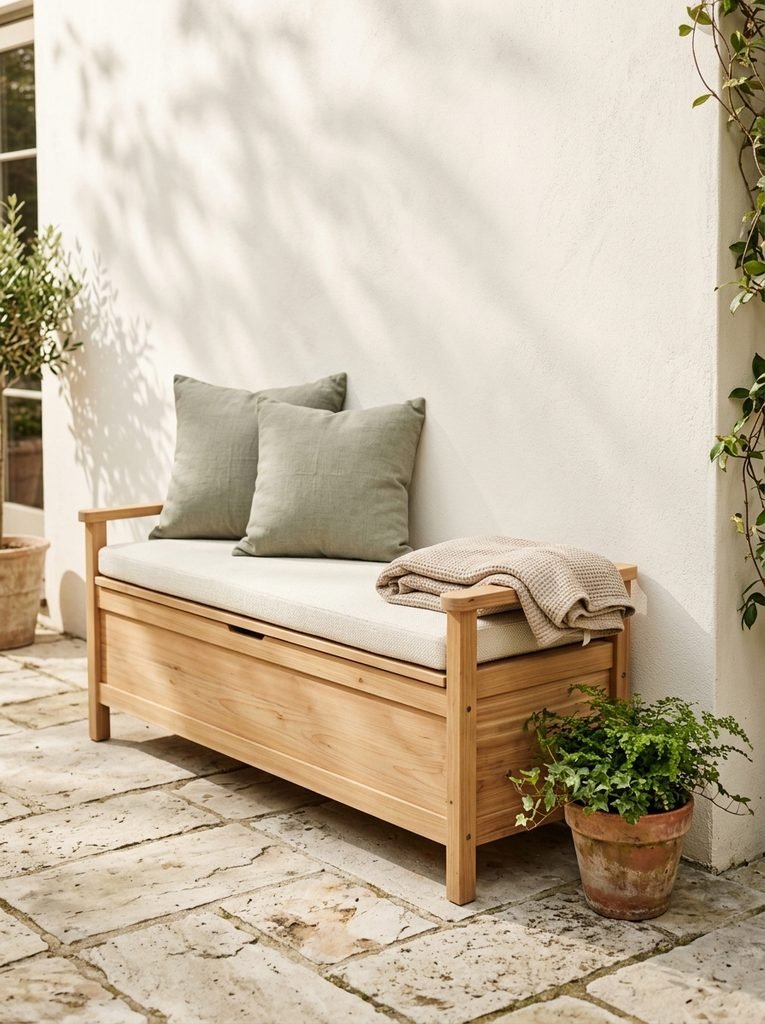
- Measure the available area: Check the bench depth and lid clearance so it doesn’t block doors or walkways.
- Choose weather-resistant materials: Look for outdoor-rated wood or durable resin designed to handle moisture.
- Add comfortable cushions: Use removable covers that can be stored separately during wet weather.
- Organize the interior: Keep small gardening tools, outdoor cushions or lightweight accessories in separate storage bags.
- Position it thoughtfully: Place the bench against a wall to preserve the center of the patio.
A storage bench serves two purposes in a compact outdoor area: comfortable seating and a place to keep useful items out of sight. Choose a model with ventilation and suitable weather protection to help prevent dampness inside. Avoid storing anything that must remain completely dry unless the bench is specifically designed for that purpose. A slim design can keep your patio tidy while leaving room for a small table or a couple of planters.
Round Pedestal Table
| Feature | Option A: Round Pedestal Table | Option B: Square Bistro Table |
| Shape | Curved edges soften the layout | Straight edges create a structured look |
| Leg placement | Central base leaves feet more flexible | Corner legs may limit chair placement |
| Visual style | Airy and relaxed | Modern and geometric |
| Best use | Small dining and coffee corners | Patios with straight walls or defined corners |
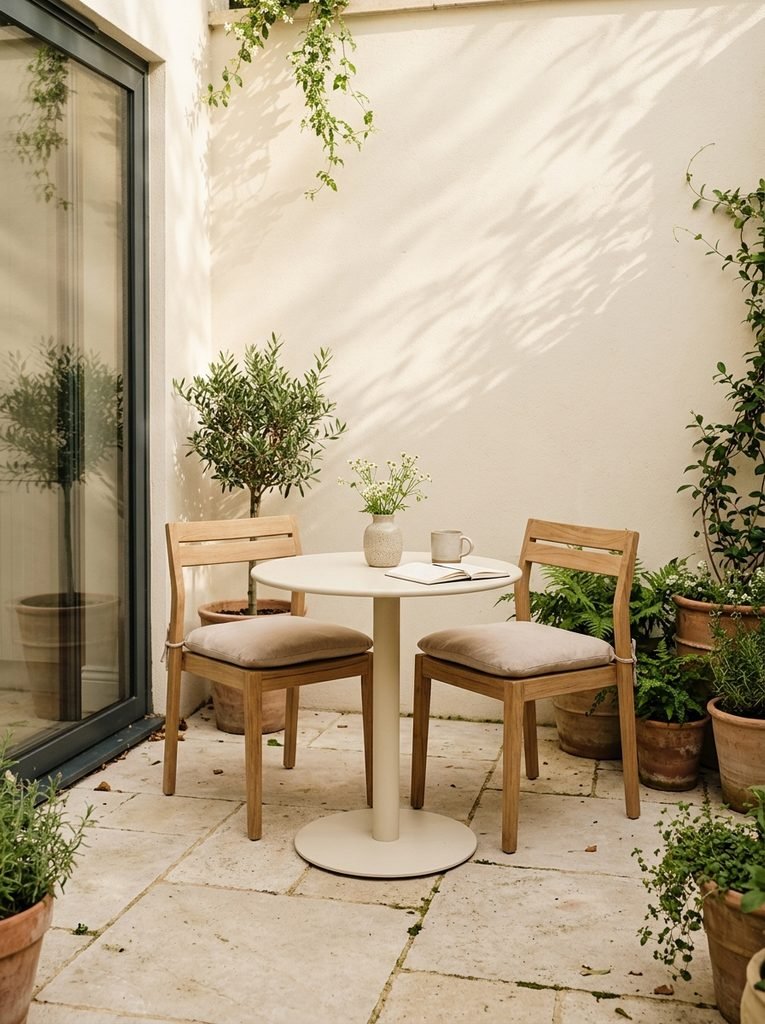
A round pedestal table can make a compact patio easier to navigate because it has no sharp corners and often allows flexible chair placement. Choose a tabletop size that fits your usual needs rather than buying the largest one available. Pair it with two lightweight chairs and keep the centerpiece low. Before purchasing, check the base stability and measure the space needed to sit down and stand up comfortably.
Painted Patio Floor
DO
- Clean and prepare the surface according to the coating manufacturer’s instructions.
- Select paint or a coating specifically designed for the existing outdoor flooring material.
- Test a small area first to confirm the color and finish.
- Choose a slip-resistant finish suitable for the amount of rain and foot traffic.
DON’T
- Don’t paint over damp, dirty or flaking surfaces.
- Don’t use ordinary interior wall paint on outdoor flooring.
- Don’t block drainage channels with paint or decorative patterns.
- Don’t walk on the finished surface before the recommended curing time.
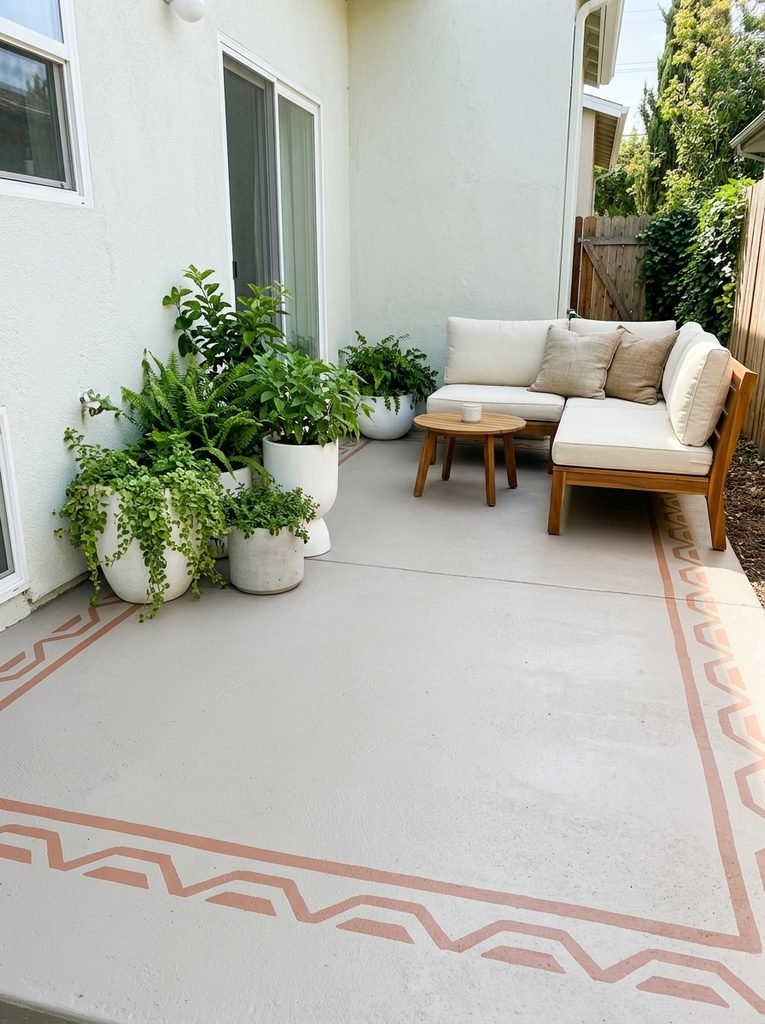
A fresh floor finish can make a small patio feel brighter and more intentional without replacing the entire surface. Light colors can help reflect daylight, while a subtle border gives the area a defined look. Check whether your concrete, tile or other flooring needs a primer or a specialized coating before starting. Good preparation and proper curing are essential for a finish that holds up to outdoor conditions.
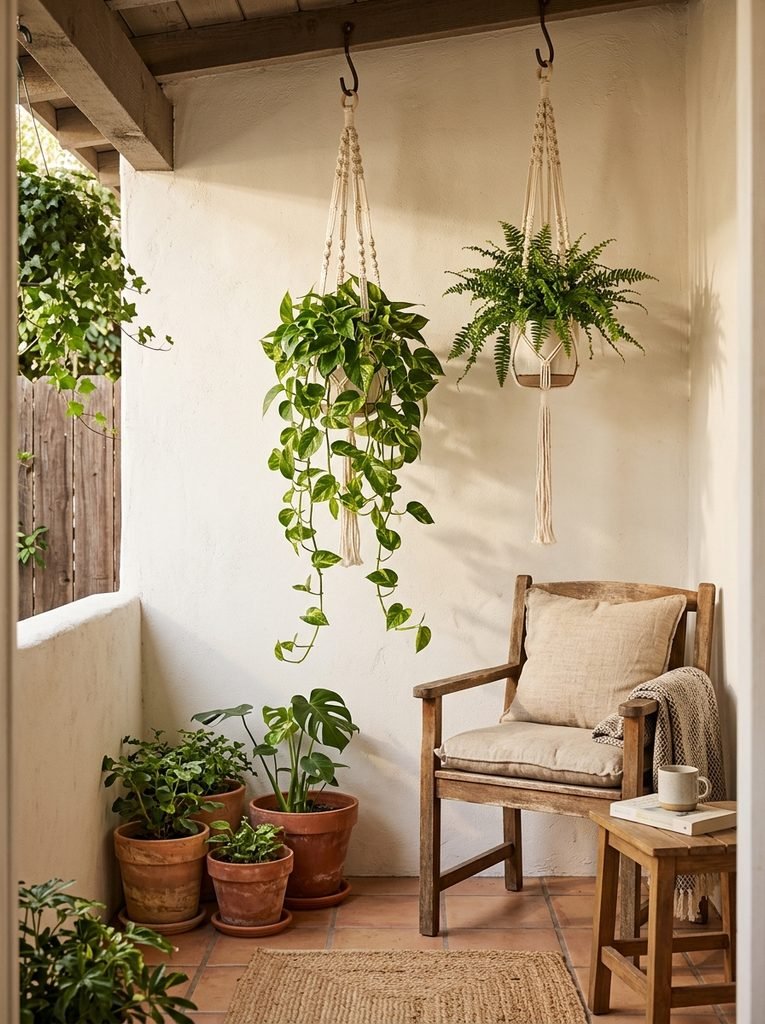
Hanging Macramé Planters
DO
- Hang planters from secure hooks rated for their combined weight.
- Choose lightweight pots with drainage trays or suitable liners.
- Mix trailing greenery with one compact upright plant.
- Keep hanging plants away from doorways and walking paths.
DON’T
- Don’t overload railings or ceiling fixtures that aren’t designed for hanging weight.
- Don’t let excess water drip onto furniture or neighboring spaces.
- Don’t use so many hangers that the patio feels crowded.
Hanging greenery draws the eye upward and adds a natural touch without taking up valuable floor space. Choose plants that suit the amount of sunlight your patio receives and check their watering needs before grouping them together. If you’re renting, consider a freestanding plant stand or an approved railing attachment instead of drilling into walls or ceilings.
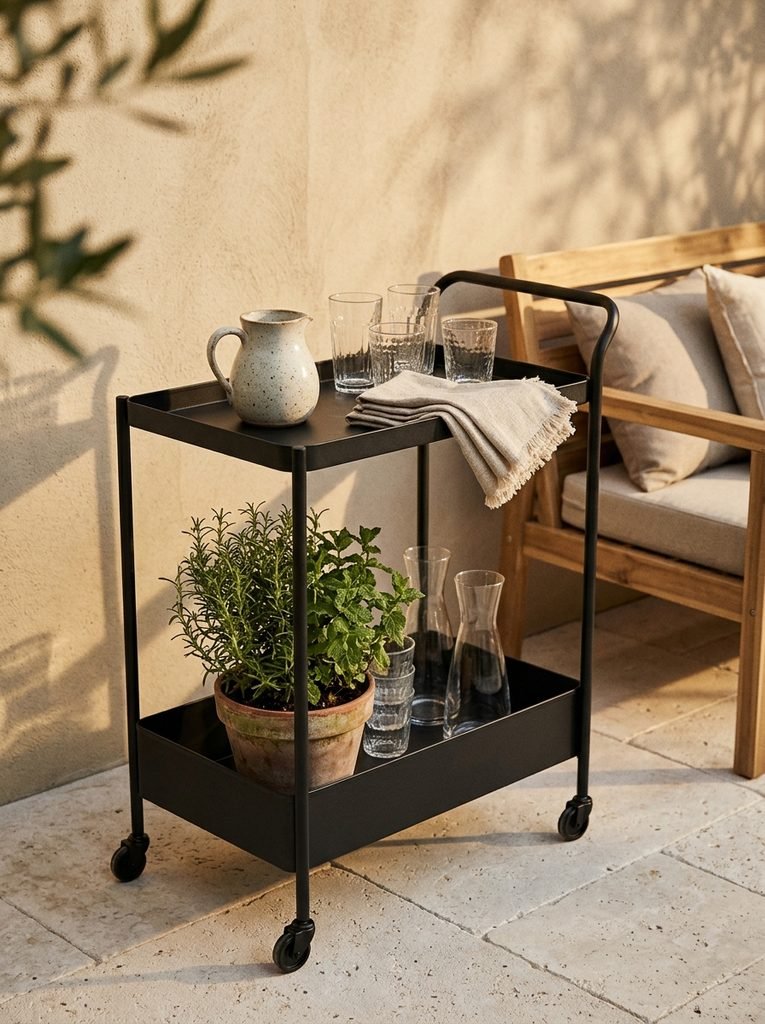
Outdoor Bar Cart
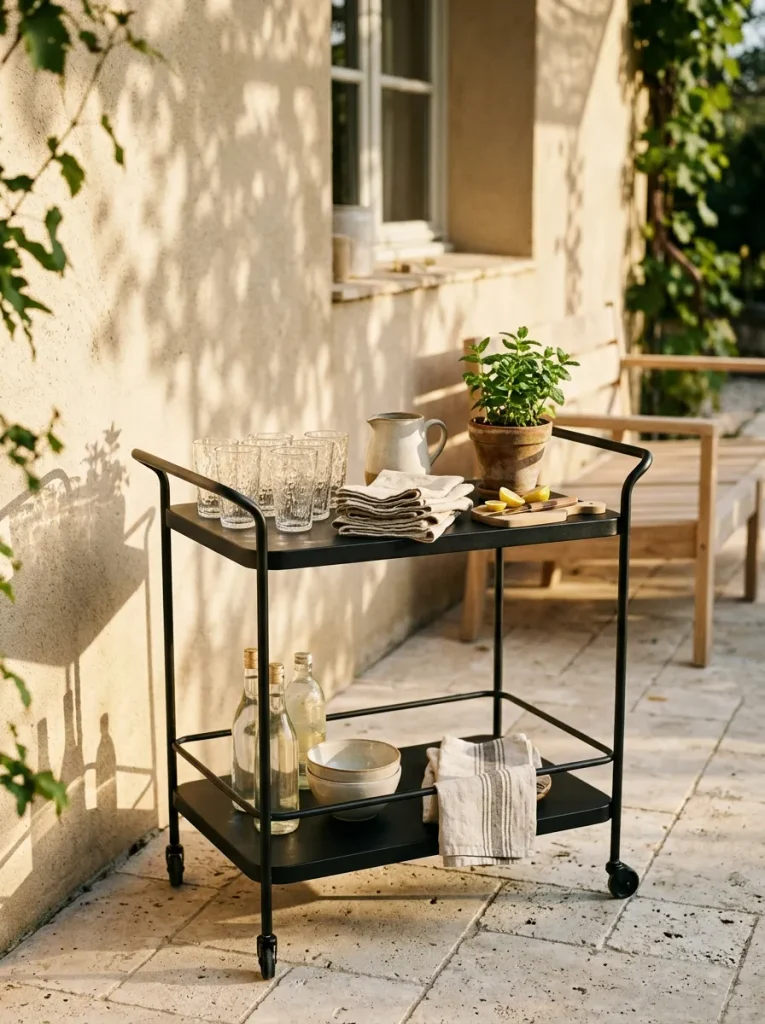
Quick Tip:
Choose a narrow cart with wheels and at least two shelves so drinks and serving accessories stay organized without occupying a permanent seating area. Measure doorways and storage corners before buying, especially if you plan to move it indoors during bad weather.
An outdoor cart can work as a refreshment station during gatherings and as a practical place for gardening supplies on ordinary days. Keep the top shelf reserved for frequently used items and store heavier objects on the lower shelf for stability. Select rust-resistant materials and avoid leaving delicate glassware outside overnight. When the patio needs more room, roll the cart against a wall or tuck it into a sheltered corner.
Raised Wooden Planter
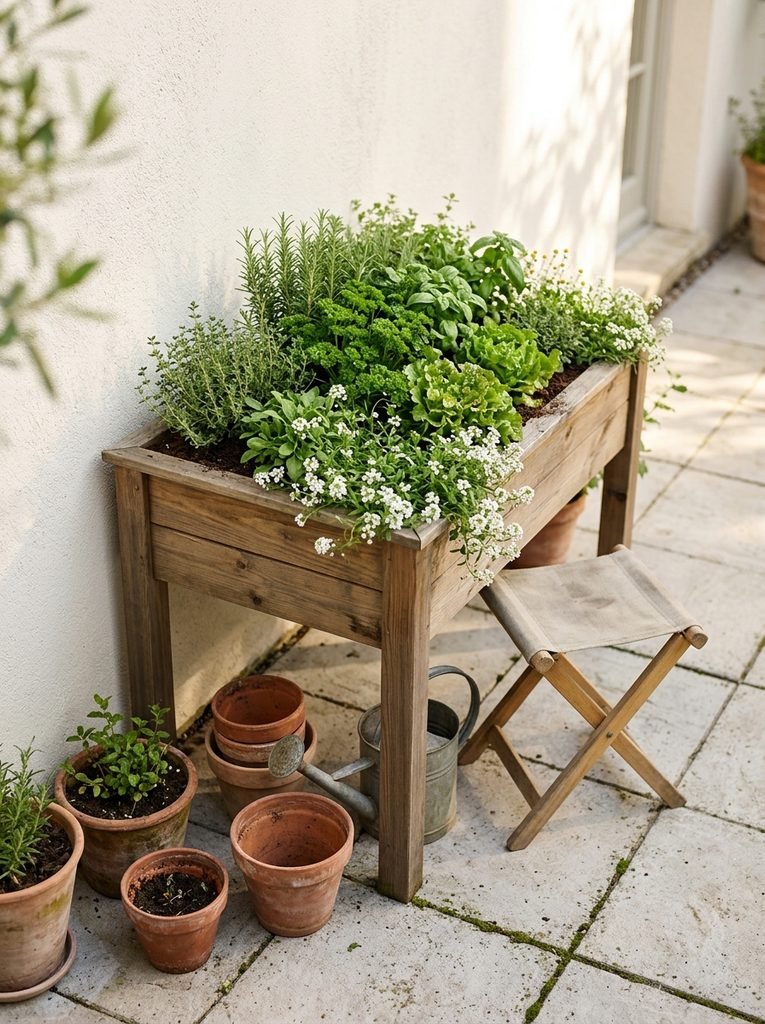
BEFORE
A tiny patio can feel underused when plants sit in scattered pots across the floor. Watering and trimming them may also become awkward when containers are tucked behind chairs or along narrow walkways.
AFTER
A raised wooden planter groups greenery into one defined area and makes plants easier to reach. Herbs and compact flowers create a lively focal point while keeping the surrounding floor clear for seating and movement.
Place the planter where plants receive suitable sunlight and choose a height that feels comfortable for everyday care. Use rot-resistant wood or a weather-resistant alternative, with drainage holes that allow excess water to escape. A liner can help protect the planter, but it should not trap standing water. Growing mint, basil or parsley together can make the patio attractive and useful, provided their light and watering needs are compatible.
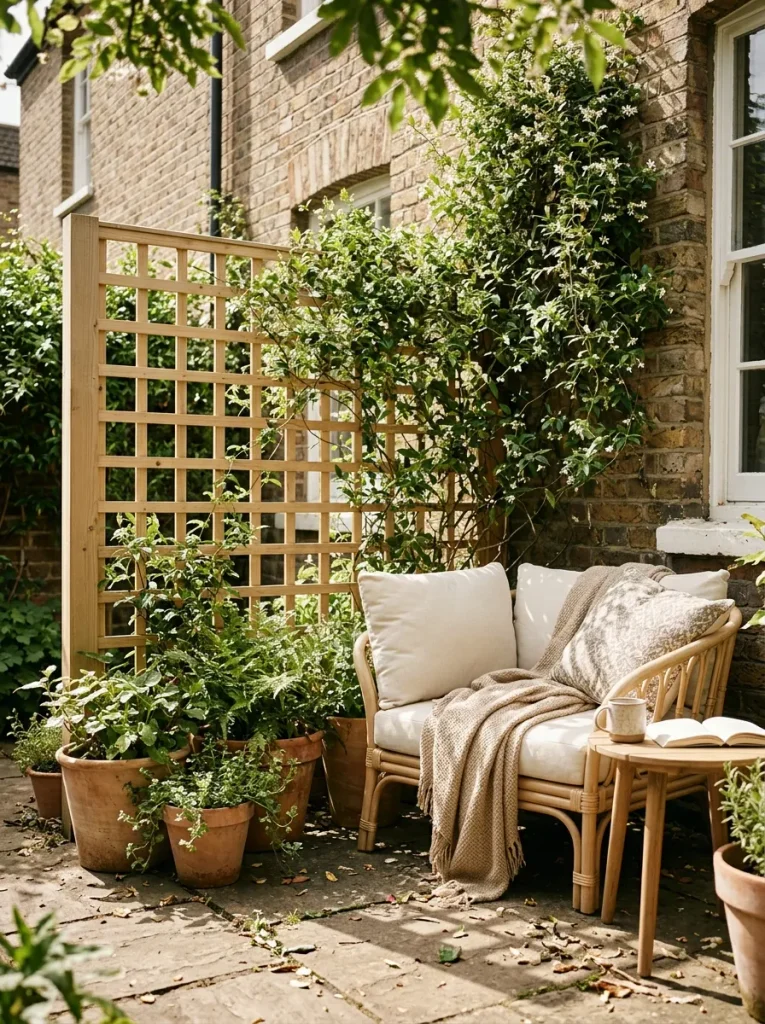
Privacy Trellis Screen
DO
- Choose a trellis height that provides privacy without blocking all natural light.
- Secure the screen properly according to its design and local wind conditions.
- Grow climbing plants suited to your climate and available sunlight.
- Leave enough space to water, prune and maintain the greenery.
DON’T
- Don’t attach a heavy trellis to a weak railing or unstable fence.
- Don’t allow vines to obstruct doors or narrow walking routes.
- Don’t plant aggressive climbers without checking their growth habits.
A trellis can separate your seating corner from nearby views while adding a beautiful backdrop for plants. If you prefer a low-maintenance option, leave the screen mostly bare and decorate it with a few lightweight hanging pots. Renters can look for freestanding screens that don’t require permanent installation. Keep the design open enough for airflow and check that the structure remains secure as climbing plants grow.
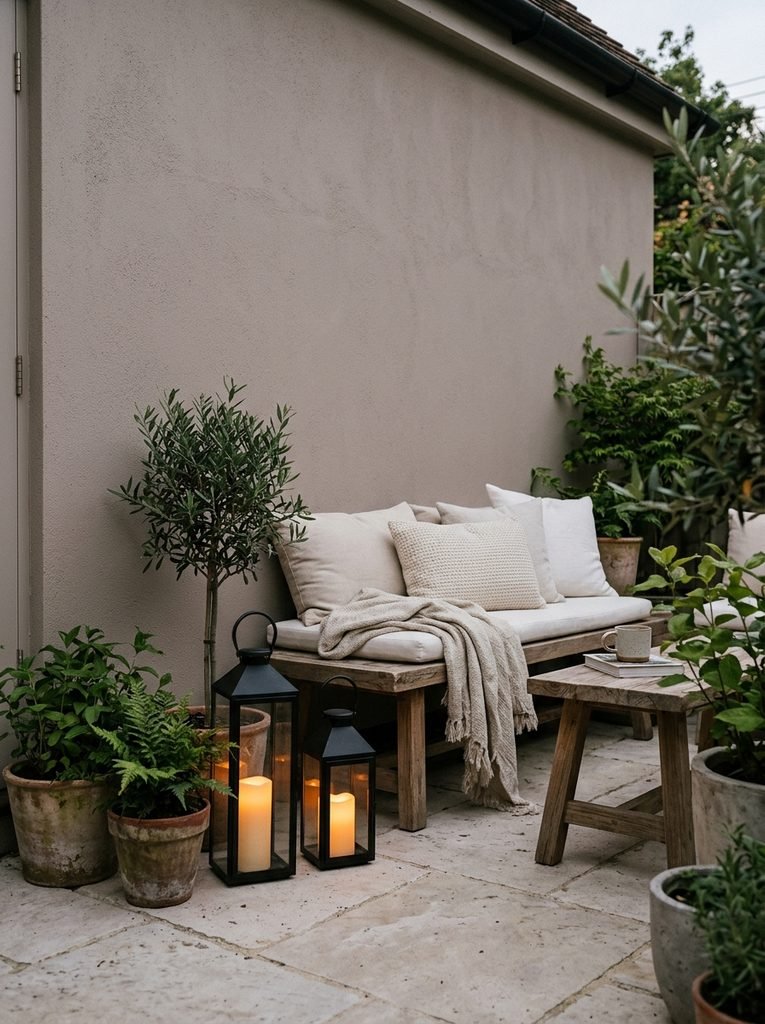
Outdoor Floor Lanterns
Quick Tip:
Use two or three lanterns of different heights to create a gentle glow without filling the patio with bulky accessories. Choose outdoor-rated lanterns with battery-operated LED candles, especially in windy areas or near fabric cushions. Keep pathways clear and position the lights where they won’t be easily knocked over.
Lanterns make a patio feel welcoming after sunset, even when there’s no room for a large lighting fixture. Black metal suits a modern look, while woven or natural-finish lanterns complement relaxed bohemian spaces. Group them beside a bench or near a wall rather than scattering them everywhere. For a balanced appearance, combine one taller lantern with a smaller companion and leave the remaining surfaces uncluttered.
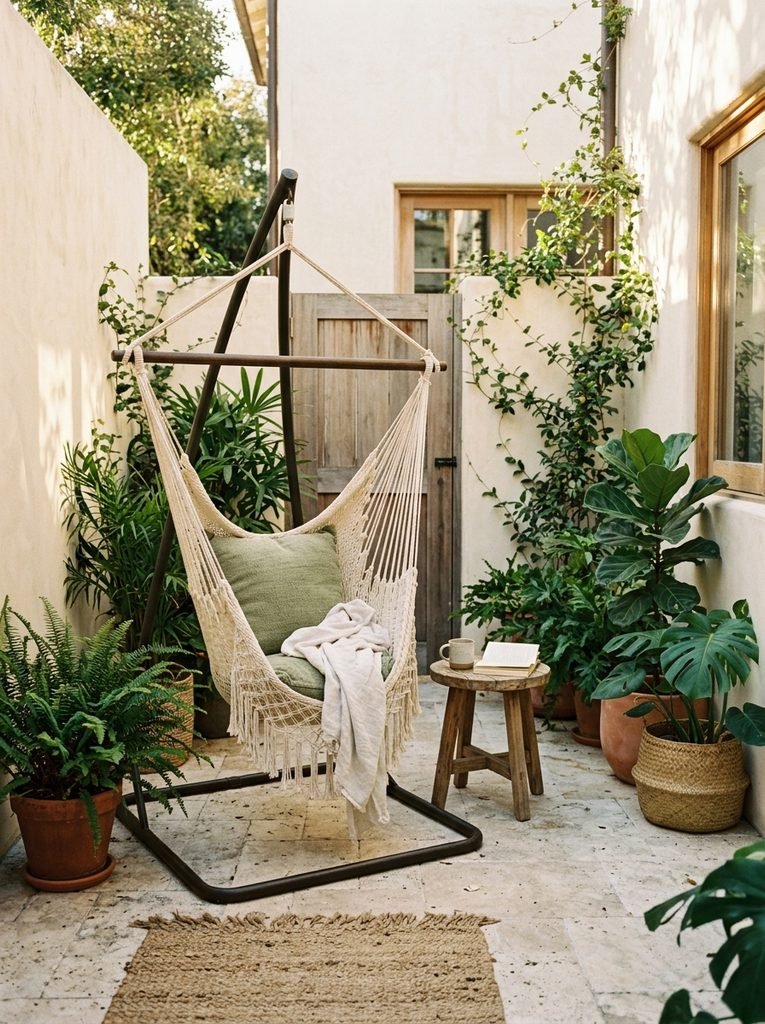
Compact Hammock Chair
BEFORE
A small patio with several bulky chairs can leave little room to stretch out or enjoy a quiet break. Traditional hammocks may also require more length and suitable anchor points than a compact outdoor area provides.
AFTER
A hammock chair creates a cozy lounging spot with a smaller footprint than many full-size outdoor loungers. A freestanding frame makes it easier to position the seat without drilling into walls, provided the frame fits safely within the available space.
Measure the full frame footprint and the chair’s swinging clearance before purchasing. Check the manufacturer’s weight limit, use the chair on stable level ground and leave enough room to get in and out comfortably. Weather-resistant fabric and removable cushions make maintenance easier, while a nearby side table keeps a book or drink within reach. When the chair isn’t in use, removable accessories can be stored to keep the patio open.
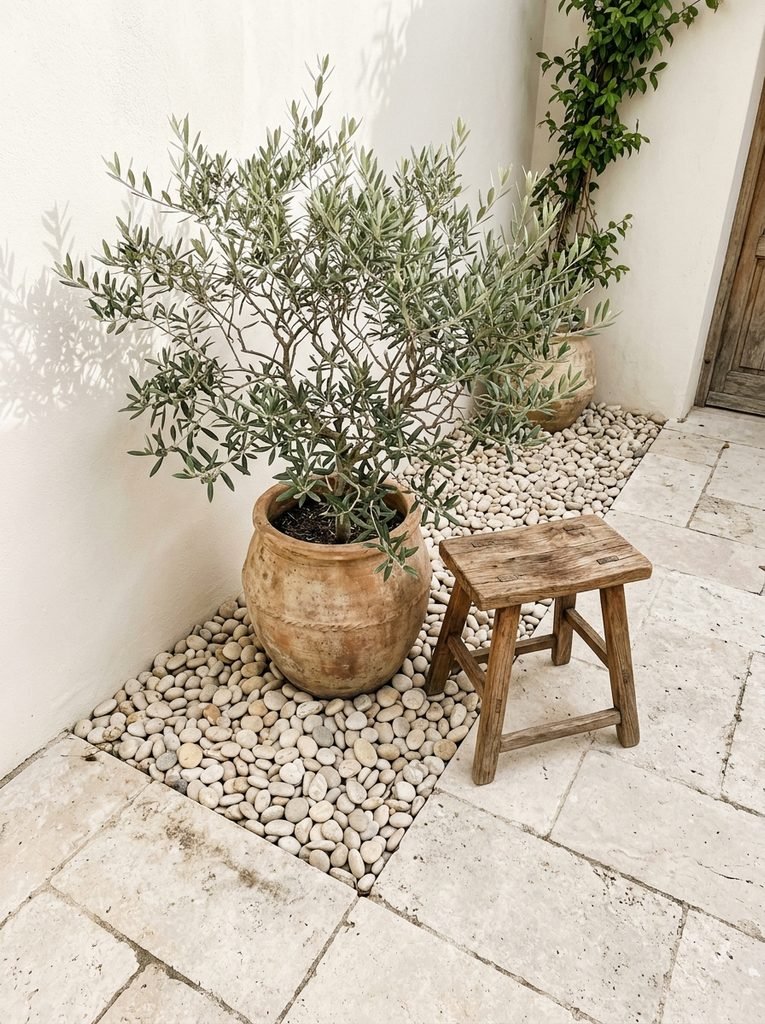
Pebble Accent Corner
DO
- Mark out a small corner before spreading decorative pebbles.
- Use suitable edging to keep stones from migrating onto the walkway.
- Choose pebble colors that complement your existing patio flooring.
- Prepare the base properly to support drainage and reduce weed growth.
DON’T
- Don’t cover drains or direct rainwater toward your home’s foundation.
- Don’t spread loose stones across frequently used walking areas.
- Don’t choose tiny pebbles that are difficult to maintain around pets or children.
A pebble accent corner adds texture without introducing another large piece of furniture. Keep the design simple by pairing one larger planter with stones in just one or two complementary shades. This works particularly well beside a wall, where the small feature can stand out without competing with the seating area. If you prefer a softer appearance, combine the pebbles with a wooden planter or a compact outdoor sculpture.
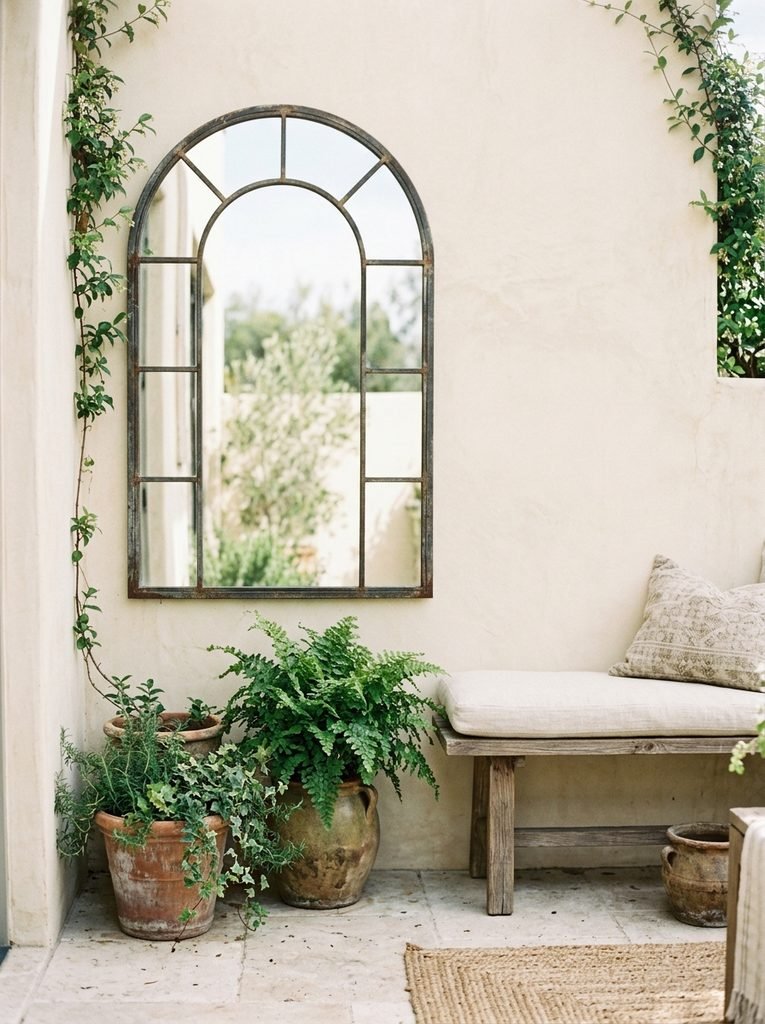
Outdoor Wall Mirror
Quick Tip:
Position an outdoor-rated mirror where it reflects greenery or a bright, attractive part of the patio rather than a blank wall. Check the manufacturer’s mounting requirements, secure it against wind and avoid placing it where reflected sunlight could create glare or unwanted heat.
A well-placed mirror can add visual depth to a small outdoor area without taking up floor space. Arched frames create a softer Mediterranean look, while simple rectangular designs suit modern patios. Choose a mirror specifically designed for outdoor exposure, since ordinary indoor mirrors may deteriorate in humidity and changing temperatures. Keep the surrounding decor minimal so the reflection contributes to the design instead of making the area feel visually busy.
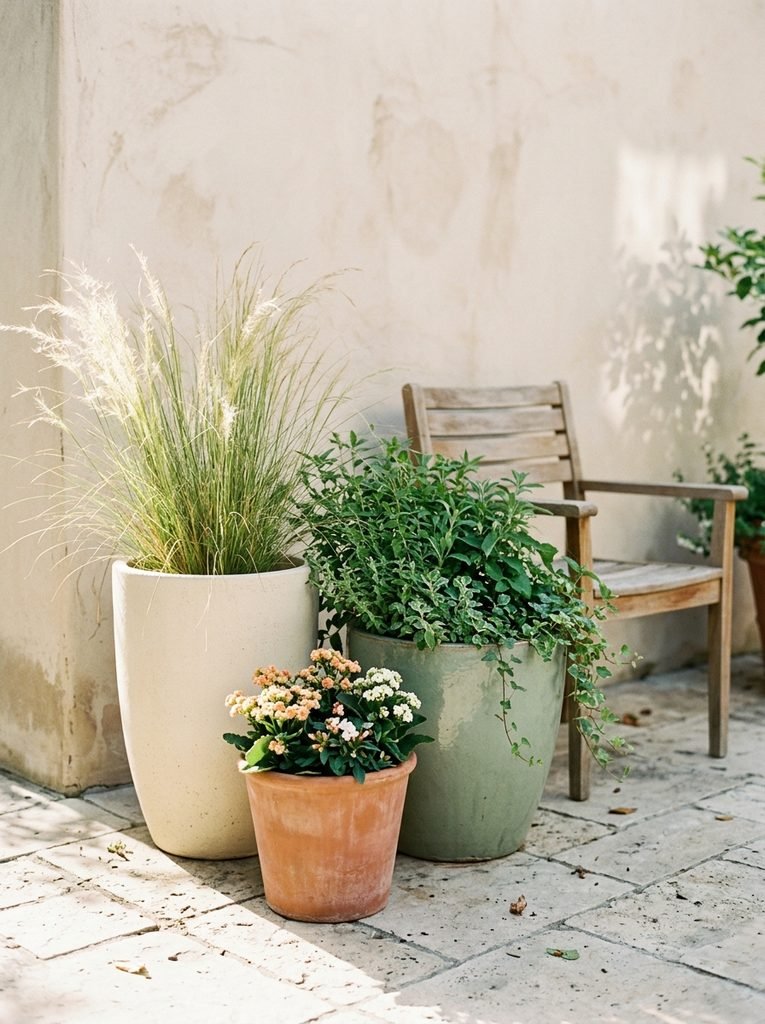
Coordinated Planter Trio
BEFORE
A patio can look cluttered when plant containers come in many unrelated colors, shapes and sizes. Even healthy greenery may feel disorganized if every pot competes for attention.
AFTER
A coordinated trio creates a clear focal point by repeating a small selection of colors and materials. Varying the heights adds dimension while keeping the arrangement compact and intentional.
Start with three containers that share a similar finish or color family, then vary their heights to create a natural arrangement. Choose plants with compatible sunlight and watering requirements and leave enough space around each pot for maintenance. Position the tallest container toward the back and the smallest toward the front when viewed from the seating area. This simple grouping adds greenery and structure without requiring extra furniture or a complicated decorating scheme.
Retractable Shade Canopy
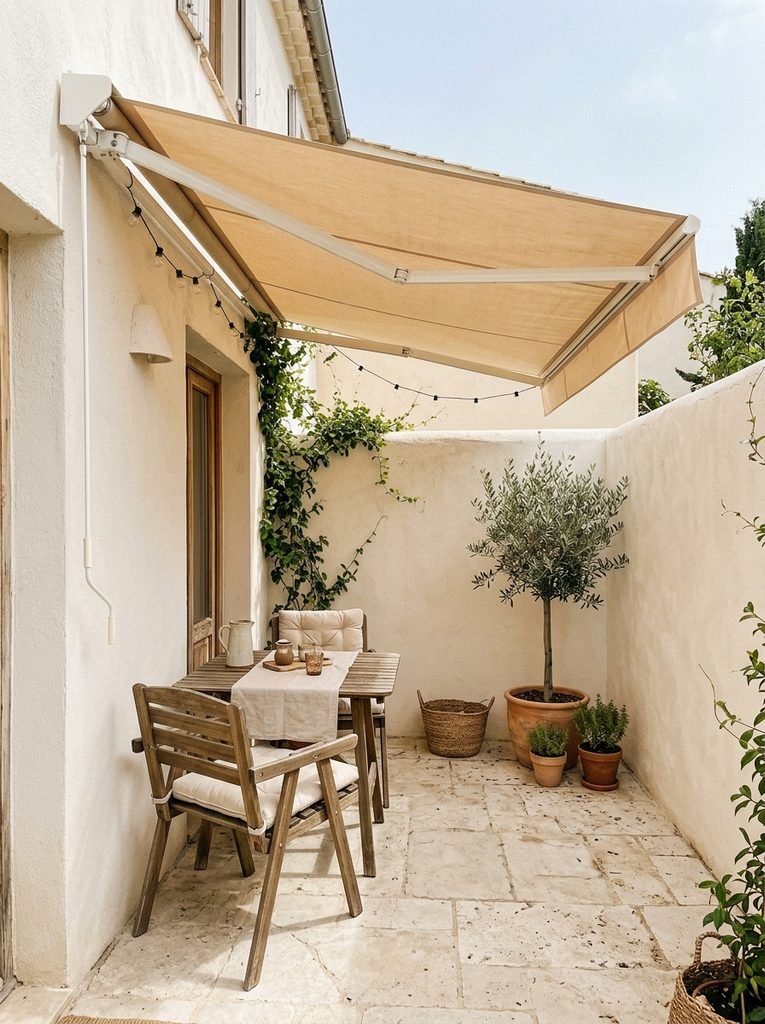
- Measure the coverage area: Check the patio dimensions and decide which seating or dining zone needs shade.
- Select suitable fabric: Look for outdoor-rated material with UV resistance and weather protection appropriate for your climate.
- Choose the mounting style: Wall-mounted systems need suitable structural support, while freestanding options may require a stable base.
- Check the operating mechanism: A simple manual design can work well for everyday use without complicated controls.
- Plan for windy weather: Retract the canopy when conditions exceed the manufacturer’s recommended limits.
A retractable canopy lets you adjust sunlight throughout the day without permanently darkening your outdoor area. Neutral fabric complements wood, greenery and light-colored paving, making the patio feel cohesive. Before installation, confirm that the wall or support structure can safely carry the system’s loads. If permanent fixtures aren’t suitable for your rental, consider a movable shade umbrella with a secure base and an appropriate footprint.
Woven Outdoor Poufs
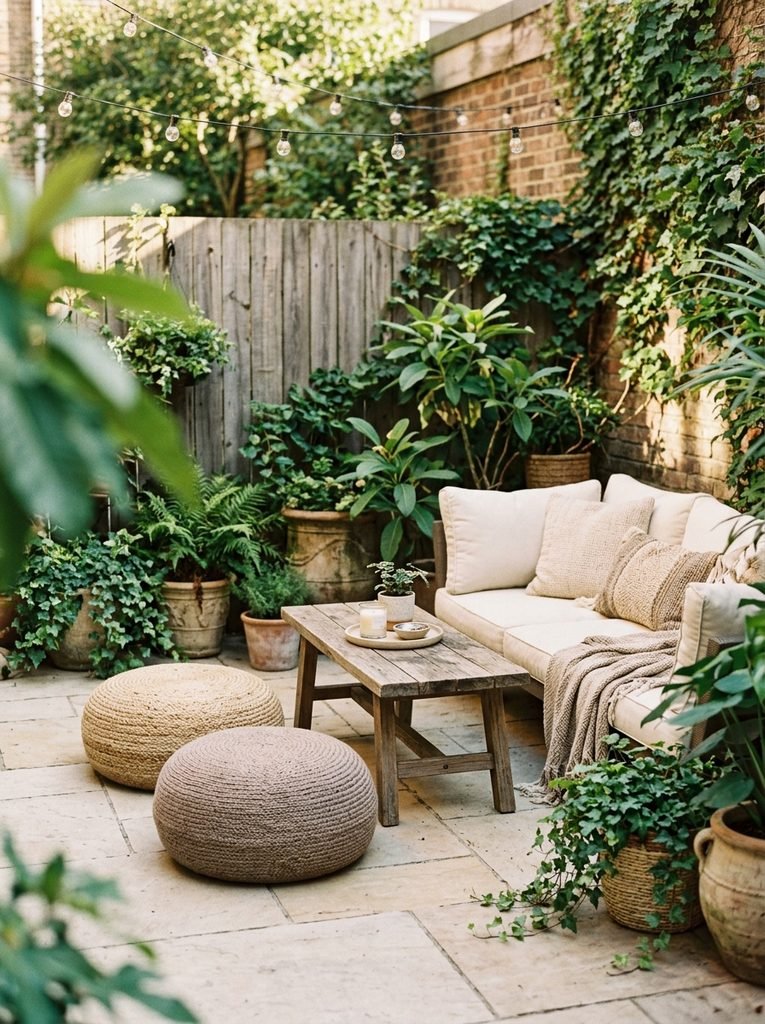
| Feature | Option A: Woven Outdoor Pouf | Option B: Compact Garden Stool |
| Comfort | Soft and relaxed for casual lounging | Firm surface for brief seating |
| Storage | Some lightweight models can be moved easily | Often stacks or tucks under a table |
| Appearance | Textured, cozy and informal | Clean, simple and structured |
| Extra use | Can serve as a footrest | Can double as a small side table if designed for it |
Woven poufs offer flexible seating without the visual bulk of another full-size chair. Choose an outdoor-rated version with a durable cover and filling that suits your weather conditions. Keep one beside a lounge chair for resting your feet, then move it near the table when guests arrive. If rain is common, select a model that dries quickly or can be carried indoors easily.
Herb Garden Corner
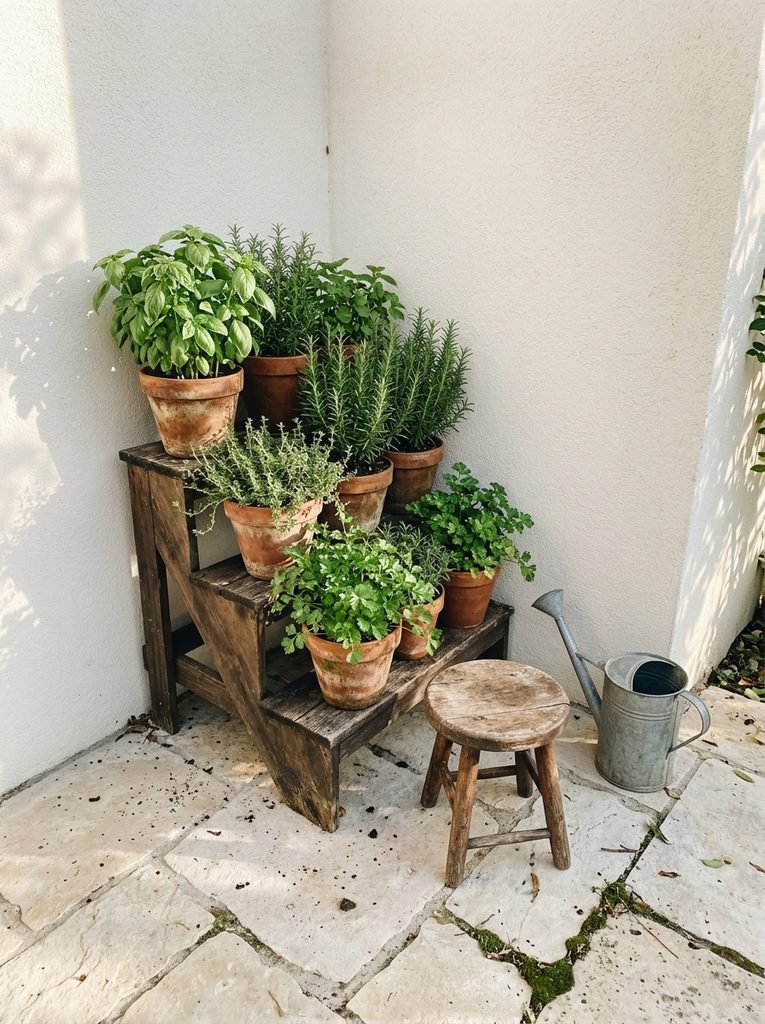
DO
- Group herbs according to their sunlight and watering needs.
- Label pots discreetly if you grow several similar-looking varieties.
- Use containers with drainage holes and suitable potting mix.
- Keep frequently harvested herbs within easy reach of the kitchen or seating area.
DON’T
- Don’t crowd pots so tightly that air cannot circulate around the leaves.
- Don’t leave water sitting in saucers for long periods.
- Don’t place shade-loving herbs in intense afternoon sun without checking their needs.
A dedicated herb corner brings useful greenery to a patio without requiring a traditional garden bed. Start with two or three herbs you actually cook with, then add more when you understand the light conditions. A tiered stand makes use of vertical space, while matching pots help the arrangement look tidy. Regular harvesting and simple maintenance can keep the corner productive and attractive through the growing season.
Cozy Fire Bowl
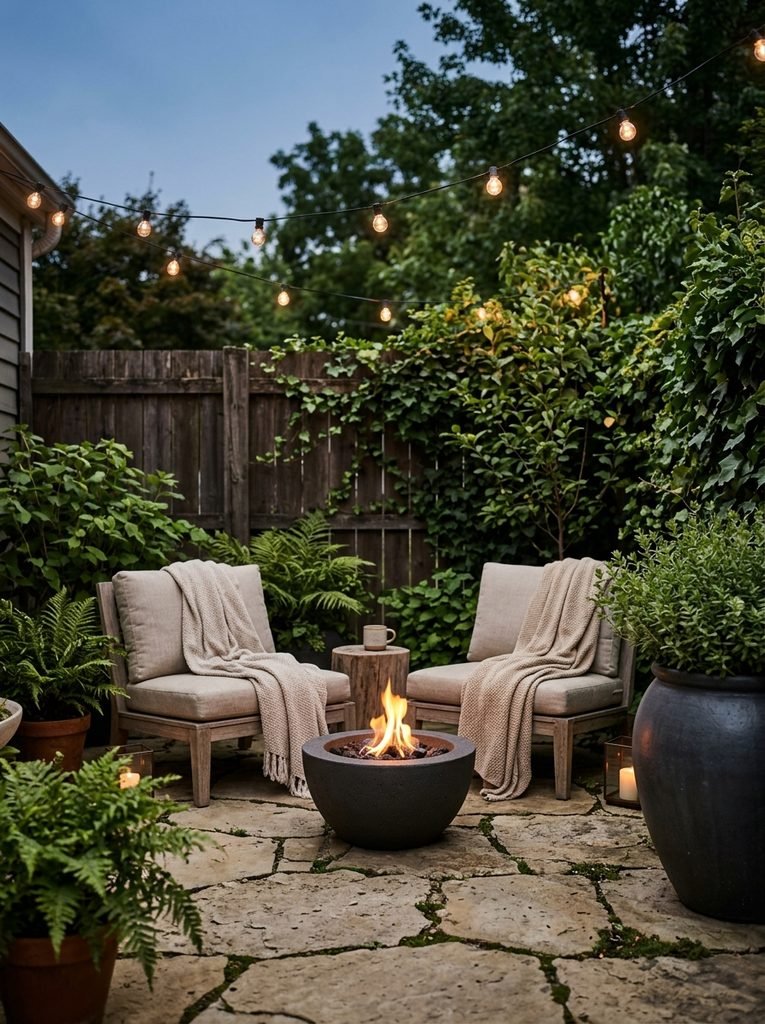
DO
- Choose a fire bowl approved for outdoor use and suitable for your patio size.
- Check local fire regulations and the manufacturer’s required clearance distances.
- Place the bowl on a stable, heat-resistant surface.
- Keep a suitable fire extinguisher or other recommended safety equipment nearby.
DON’T
- Don’t use a wood-burning fire bowl on a small balcony unless explicitly permitted and safe.
- Don’t place flames near curtains, cushions, plants or overhead structures.
- Don’t leave a fire unattended or move the bowl while it is hot.
A fire bowl can create a cozy focal point for cool evenings, but safety should determine whether it belongs in your outdoor space. For many tiny patios, an electric outdoor heater or a realistic LED fire feature may be a more practical alternative. Keep the surrounding furniture minimal, preserve clear walking routes and check building rules before buying any flame-producing equipment.
Fresh White and Green Palette
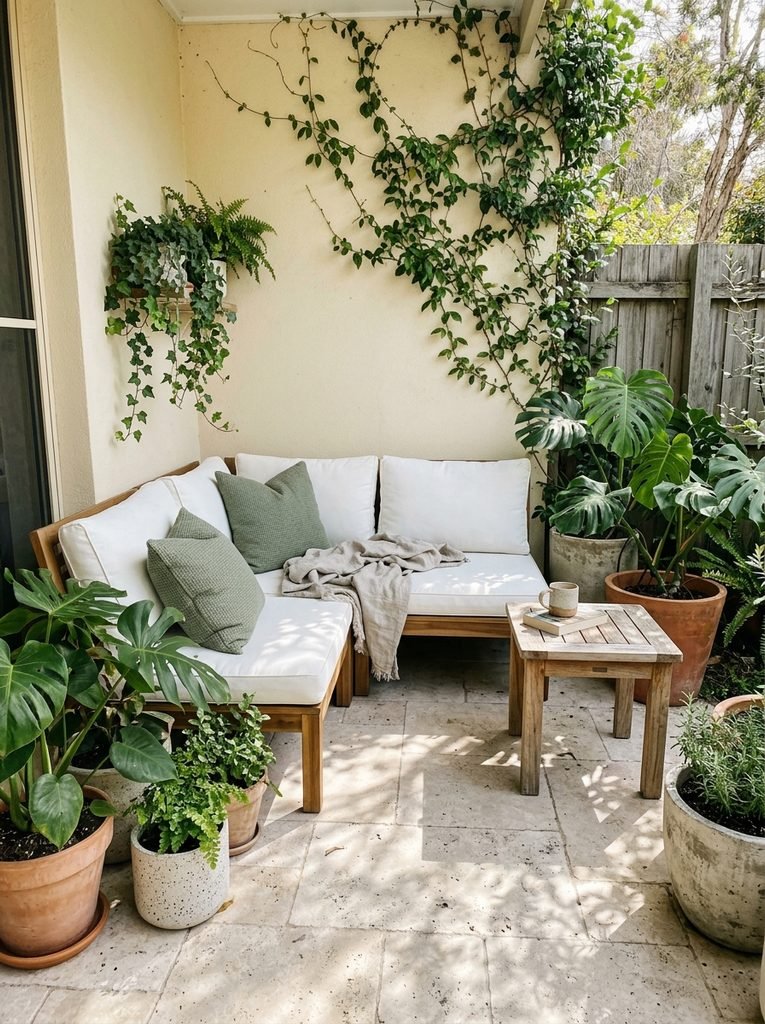
Quick Tip:
Use white as the main color, green for natural accents and wood or woven textures to add warmth. Choose washable outdoor cushion covers and weather-resistant accessories so the light palette stays practical. Repeat the same two or three shades across seating, planters and small decor pieces for a coordinated finish.
A white-and-green scheme makes a compact patio feel fresh without requiring lots of decorative objects. White reflects daylight, while plants add contrast and a natural sense of depth. If maintaining bright cushions feels difficult, use cream or warm ivory as the base color and reserve pure white for smaller accessories. Finish with one wooden accent to prevent the arrangement from looking too stark, keeping the overall design calm, inviting and easy to maintain.
CONCLUSION
Creating a beautiful outdoor retreat doesn’t depend on how much space you have. With these Small Patio Ideas, you can make a tiny patio feel more inviting through smart furniture choices, layered textures, greenery, soft lighting and thoughtful details.
Start with one change that suits your space and budget, then build from there. You might add a cozy seating corner, introduce matching planters or create a relaxing spot for your morning coffee. Small improvements can make outdoor spaces feel more useful and enjoyable. Save this article on Pinterest for inspiration, try your favorite ideas and share it with someone who wants to refresh their patio. Your little outdoor retreat is waiting to take shape!