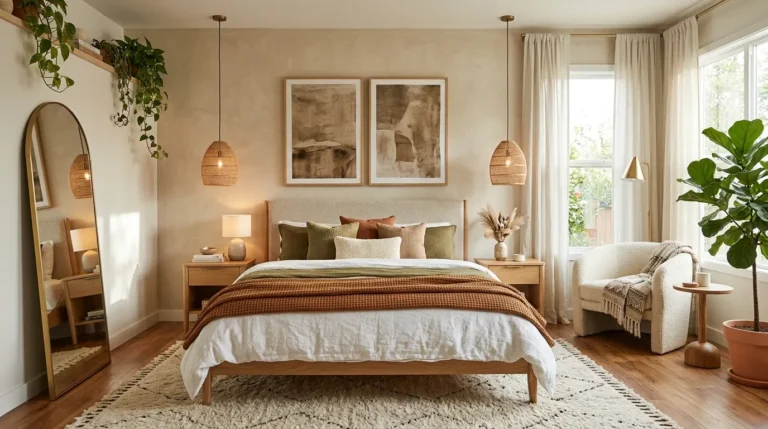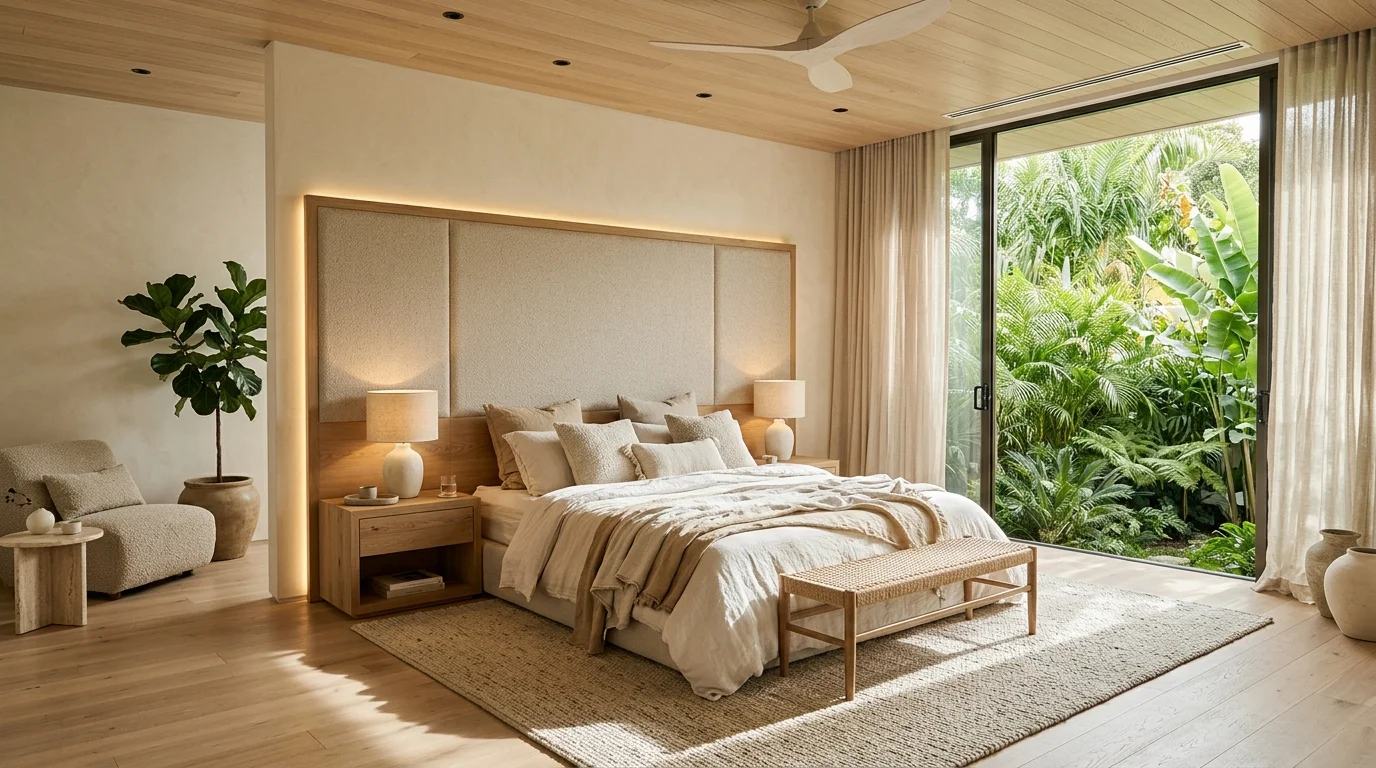
26 Master Bedroom Ideas for a Resort-Style Sanctuary
Your bedroom should feel like more than just a place to sleep it should be a peaceful retreat where you can unwind, recharge and escape the stress of everyday life. With the right combination of soothing colors, luxurious textures, thoughtful lighting and elegant furniture, you can create a space that feels as relaxing as a five-star resort. Whether you prefer a modern minimalist look or a warm, tropical inspired atmosphere, the right design choices can transform your master bedroom into a personal sanctuary.
The beauty of resort style bedrooms lies in their balance of comfort and sophistication. Think plush bedding, oversized upholstered headboards, natural wood accents, flowing curtains, soft ambient lighting and carefully chosen decorative details. These elements work together to create a calming atmosphere without making the room feel overly decorated. Even small changes, such as layering neutral linens or adding a cozy seating area, can make your bedroom feel more inviting and luxurious.
If you’re looking for inspiration, these 26 master bedroom ideas for a resort-style sanctuary will help you discover beautiful ways to elevate your space. From spa-inspired retreats and tropical touches to contemporary elegance and timeless neutral palettes, you’ll find ideas to suit different styles, layouts and budgets.
Neutral Resort Palette
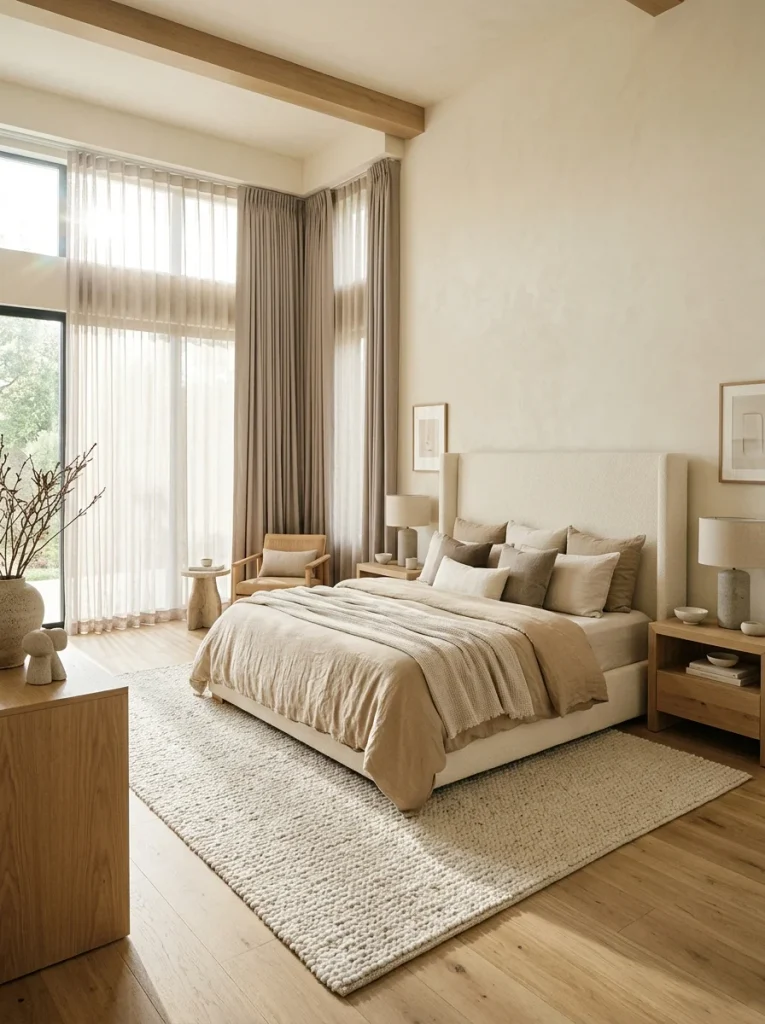
A calm color palette sets the foundation for a resort-style retreat. Start with warm white walls, beige bedding and soft taupe accents to create a bedroom that feels open and restful. These shades reflect natural light beautifully and make even a modest room feel more spacious.
Layer different textures to keep neutral colors from looking flat. Combine a linen duvet, cotton sheets, a woven rug and wooden bedside tables. In my experience, mixing soft fabrics with natural materials creates a more inviting result than matching every item in the same shade.
Layered Luxury Bedding
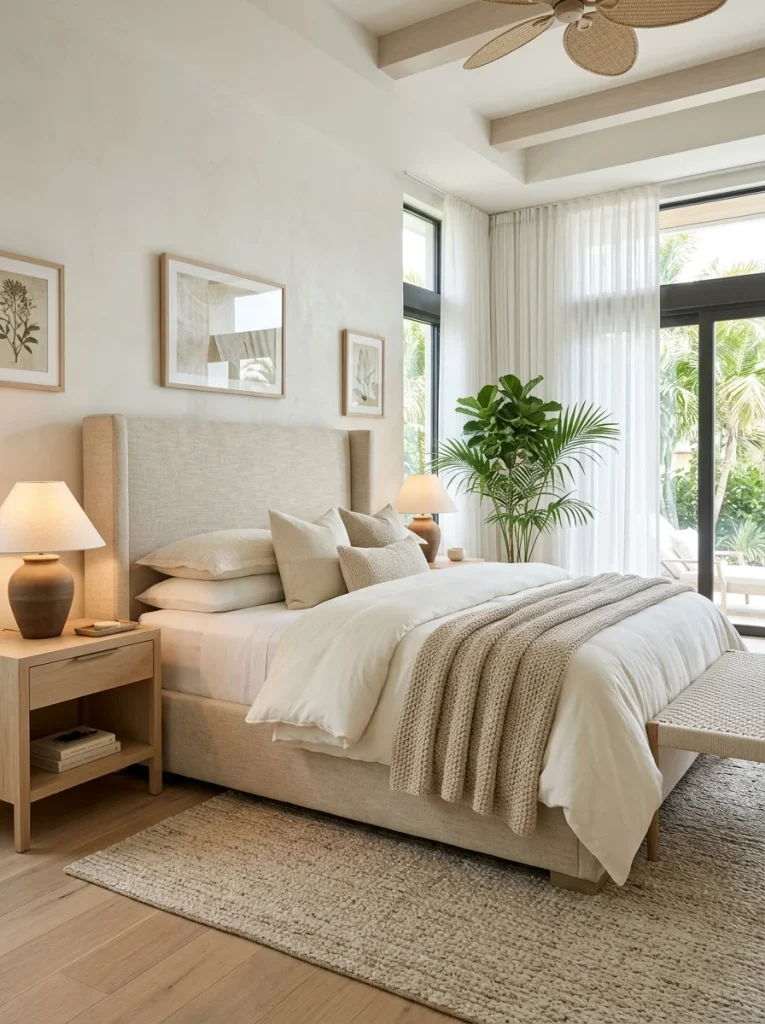
- Start with crisp sheets: Choose breathable cotton in white or warm ivory for a fresh hotel-style foundation.
- Layer the duvet: Add a fluffy comforter or duvet insert with a neatly folded cover.
- Mix pillow sizes: Arrange sleeping pillows at the back, decorative pillows in front and one lumbar cushion for variety.
- Add a textured throw: Drape a knitted or lightweight woven blanket across the foot of the bed.
- Keep colors coordinated: Combine two or three complementary shades for a polished finish.
The secret to luxurious bedding is fullness without clutter. Choose fabrics that feel comfortable against your skin, especially if you live in a warm climate. A lightweight cotton duvet and breathable sheets can deliver the same refined appearance as heavier hotel bedding while keeping you comfortable throughout the night.
Natural Wood Accents
Quick Tip:
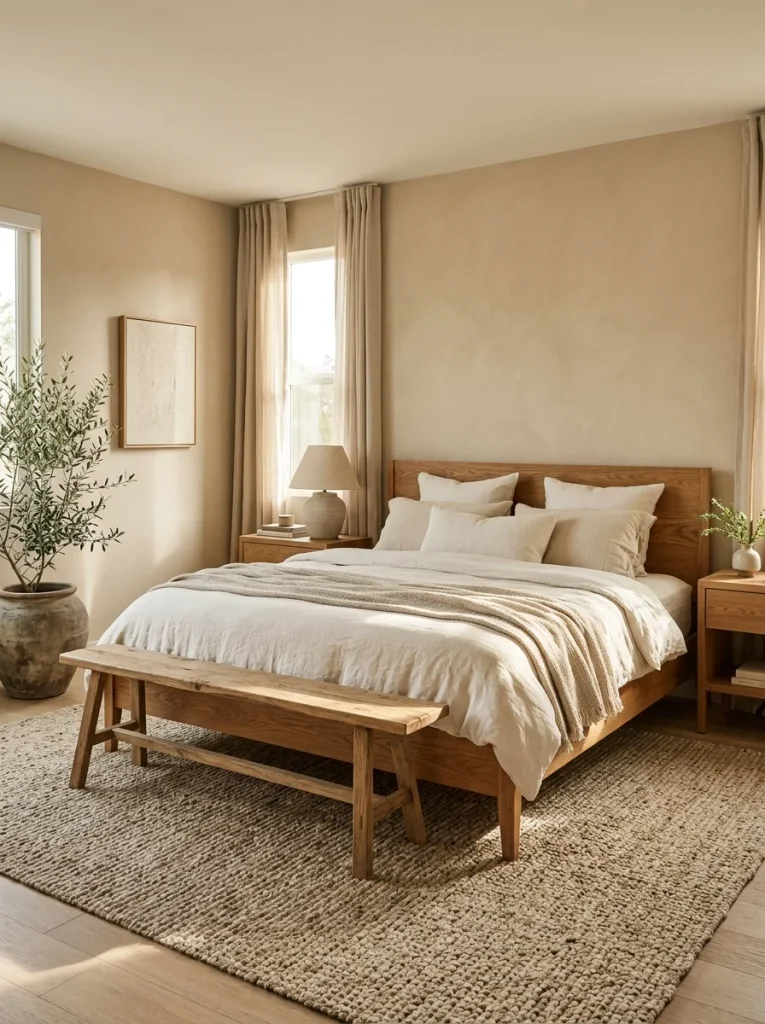
Choose one dominant wood tone for the bed and larger furniture pieces. Introduce a second wood finish only through smaller accessories, such as a tray or decorative stool. Keep the undertones similar so the room feels coordinated rather than mismatched.
Natural wood brings warmth to a bedroom filled with pale fabrics and neutral colors. A timber headboard or pair of wooden nightstands adds texture without requiring bold patterns or expensive decorations. For a cohesive look, repeat the same wood tone in two or three places around the room.
Floor-to-Ceiling Curtains
BEFORE
Short curtains can make a bedroom window appear smaller and leave the walls feeling visually disconnected. Heavy fabrics may also block natural light, making the room feel darker than necessary.
AFTER
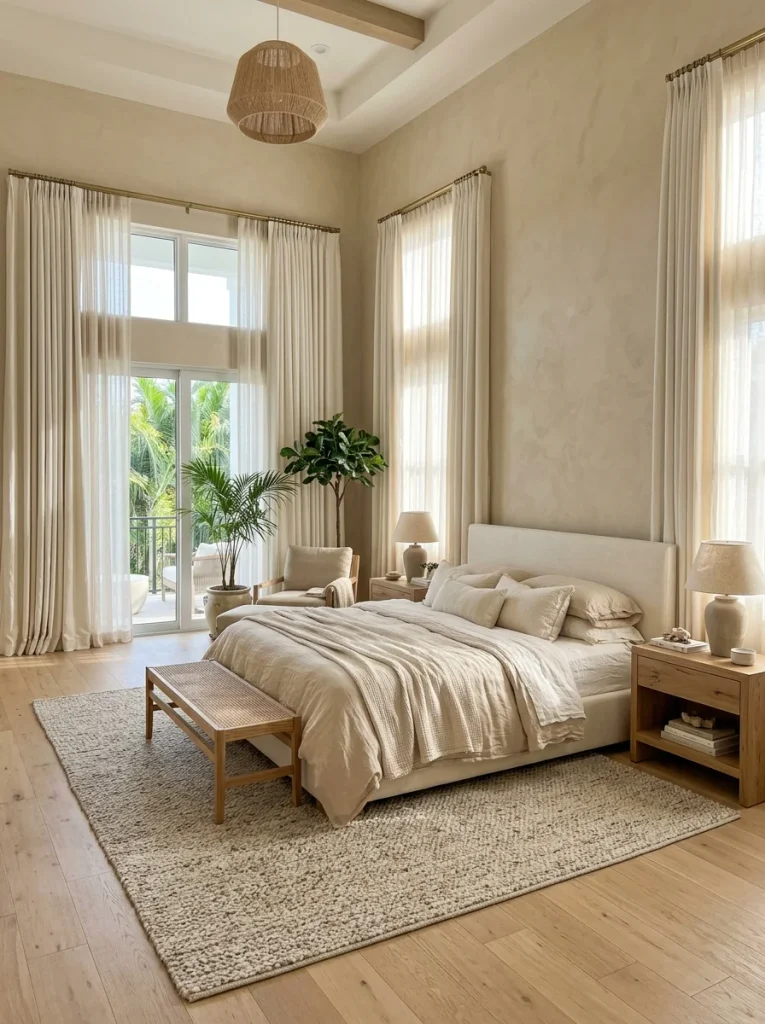
Hang curtains close to the ceiling and let them reach the floor. Choose lightweight linen or sheer ivory panels to create height, soften the windows and allow daylight to spread throughout the room.
For the best result, extend the curtain rod beyond the window frame so the panels can sit mostly outside the glass when open. This simple adjustment makes the window feel wider without changing its structure. Pair sheer curtains with blackout liners if you need privacy and darkness for better sleep.
Upholstered Statement Headboard
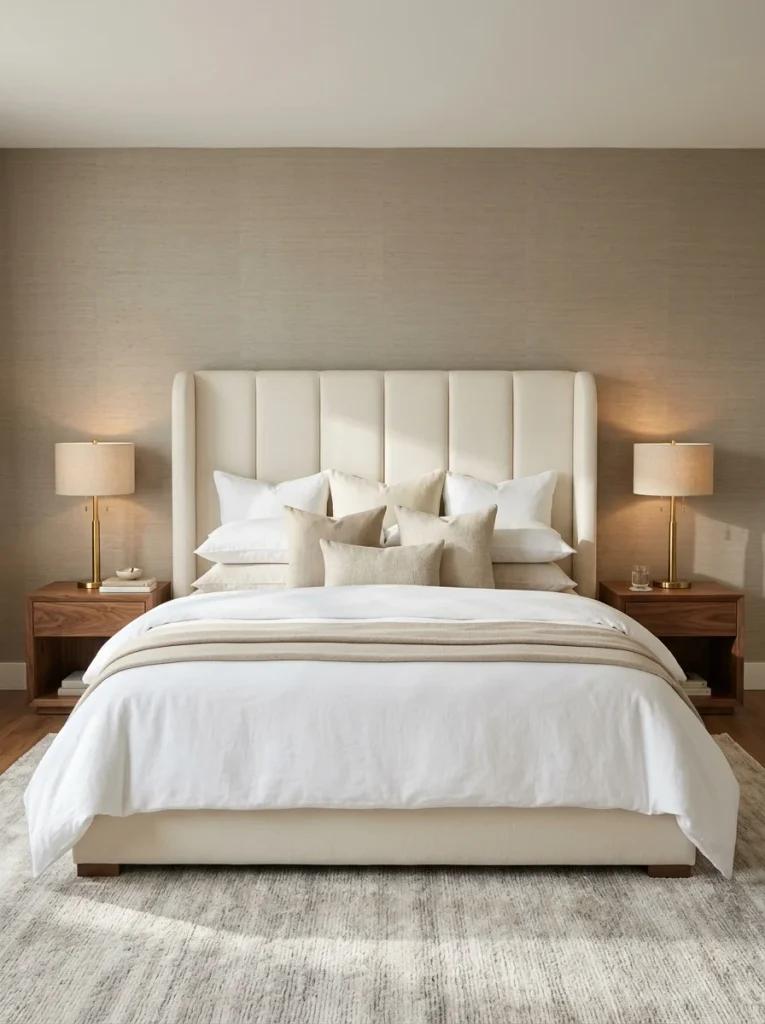
- Choose the shape: Select a curved, channel-tufted, or rectangular headboard that complements your bedroom style.
- Pick a fabric: Linen-look upholstery offers a relaxed finish, while velvet creates a richer appearance.
- Check the proportions: Choose a headboard wide enough to balance your bed and bedside tables.
- Coordinate the lighting: Place matching lamps on both sides to frame the headboard.
- Keep bedding simple: Use solid-colored sheets and a few textured cushions so the headboard remains the focal point.
A statement headboard gives the bed a finished, designer-inspired appearance without requiring a complete room makeover. In a smaller bedroom, choose a light-colored design with clean lines to avoid visual heaviness. For busy households, performance fabric or a removable, washable cover can make everyday maintenance easier.
Symmetrical Bedside Styling
| Design Element | Option A: Mismatched | Option B: Coordinated |
|---|---|---|
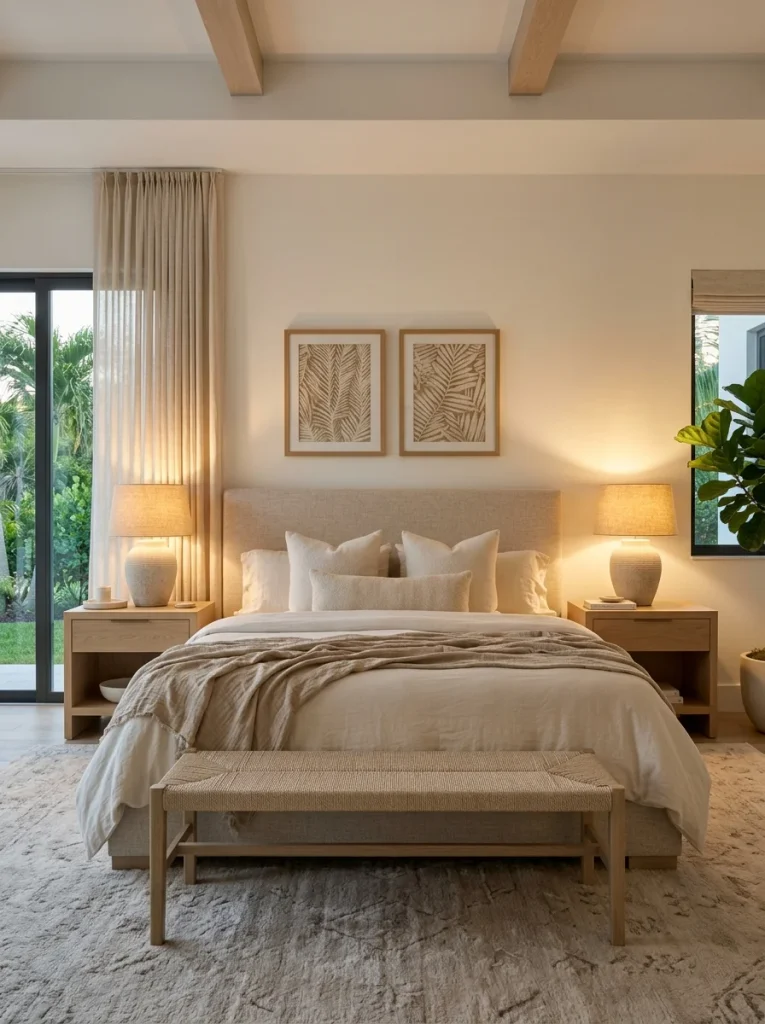
| Nightstands | Different shapes and heights | Matching or similar proportions |
| Lighting | Mixed lamp styles | Complementary bedside lamps |
| Accessories | Many unrelated objects | Two or three simple pieces |
| Overall look | Casual and eclectic | Calm and hotel-inspired |
Symmetry creates an immediate sense of order around the bed. Matching furniture is not essential, but keeping both sides similar in height and visual weight helps the room feel balanced. Add a small vase, a book, or a decorative tray to each nightstand, leaving enough clear space for everyday essentials.
Soft Ambient Lighting
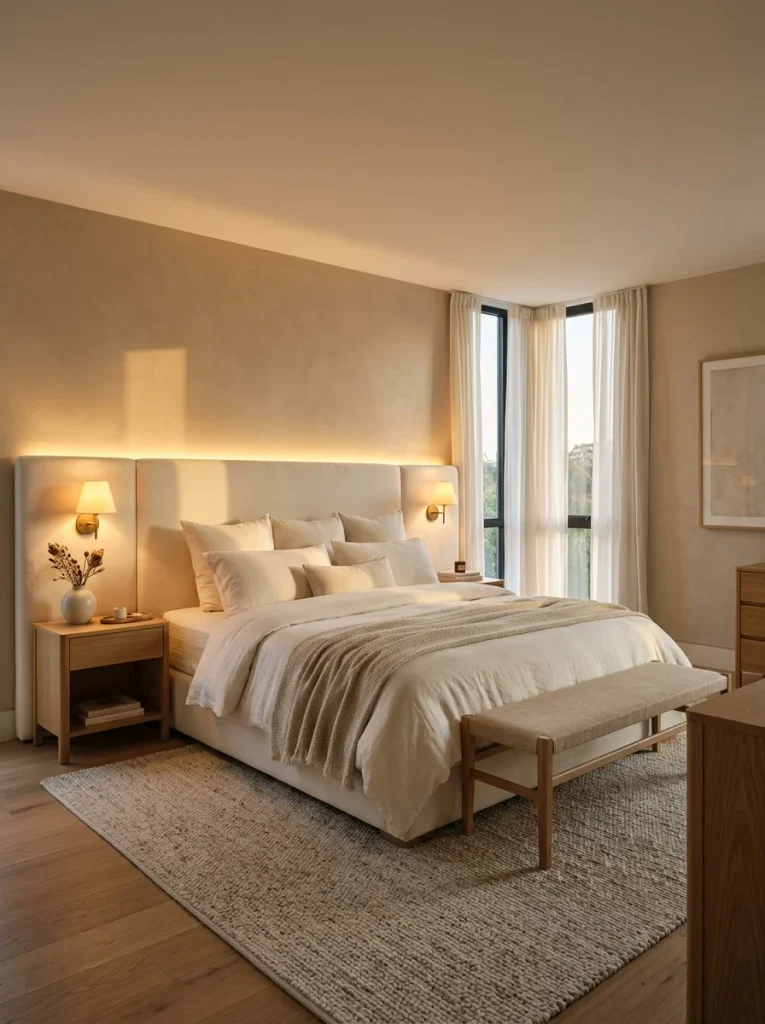
DO
- Install warm-white bulbs around 2700K to create a cozy evening atmosphere.
- Add wall sconces beside the bed to free up nightstand space.
- Use dimmable lamps for reading and relaxing.
- Layer bedside lighting with a ceiling fixture for flexible illumination.
DON’T
- Use harsh, cool-white bulbs throughout the bedroom.
- Place bright lights directly in your eyes while lying in bed.
- Rely on one ceiling light for every activity.
- Leave visible cords tangled around bedside furniture.
Thoughtful lighting makes a bedroom feel more restful after sunset. Keep brighter task lighting near reading areas and softer illumination around the bed. If you rent your home, plug-in wall sconces and portable lamps offer a practical alternative to permanent electrical changes while maintaining a polished resort-inspired look.
Indoor Tropical Greenery
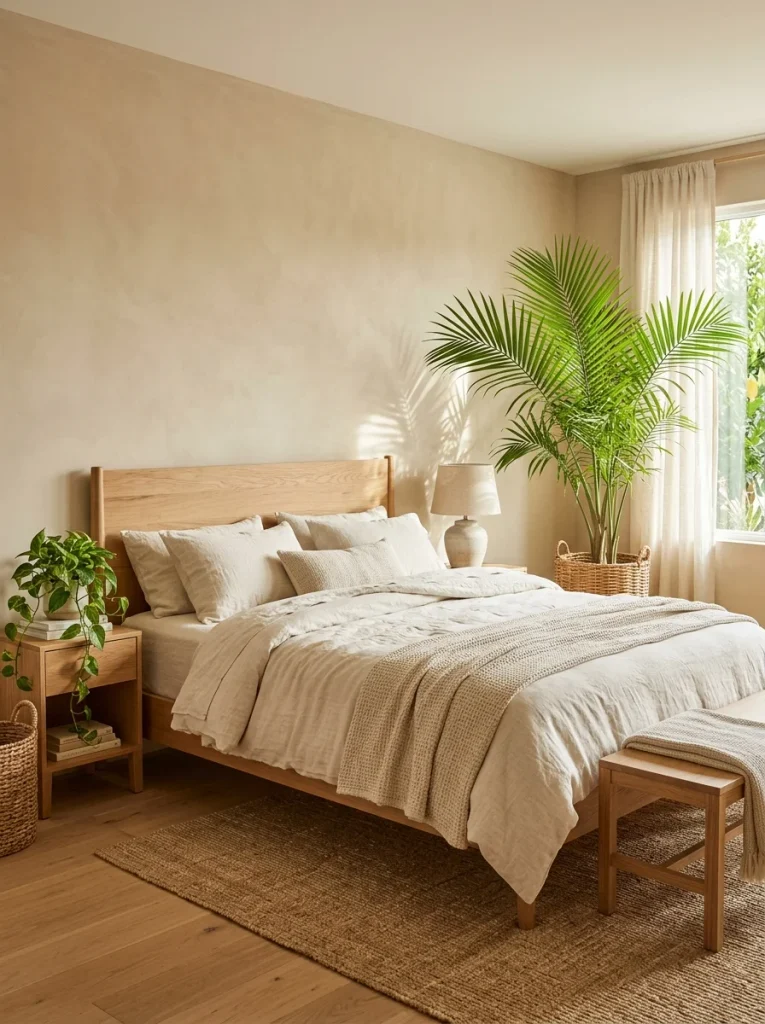
Best For: Bedrooms with natural light and available floor space.
Plant Choices: Areca palm, parlor palm, or other indoor plants suited to your light conditions.
Placement: Beside a window, in an empty corner, or on a stable bedside surface.
Maintenance: Match each plant to your room’s light, watering needs and humidity.
Greenery introduces a fresh, natural element that balances warm neutrals and soft fabrics. Choose one larger plant to anchor an empty corner instead of scattering many small pots around the room. If pets share your home, check plant toxicity before buying and use stable pots that cannot tip easily.
Textured Accent Wall
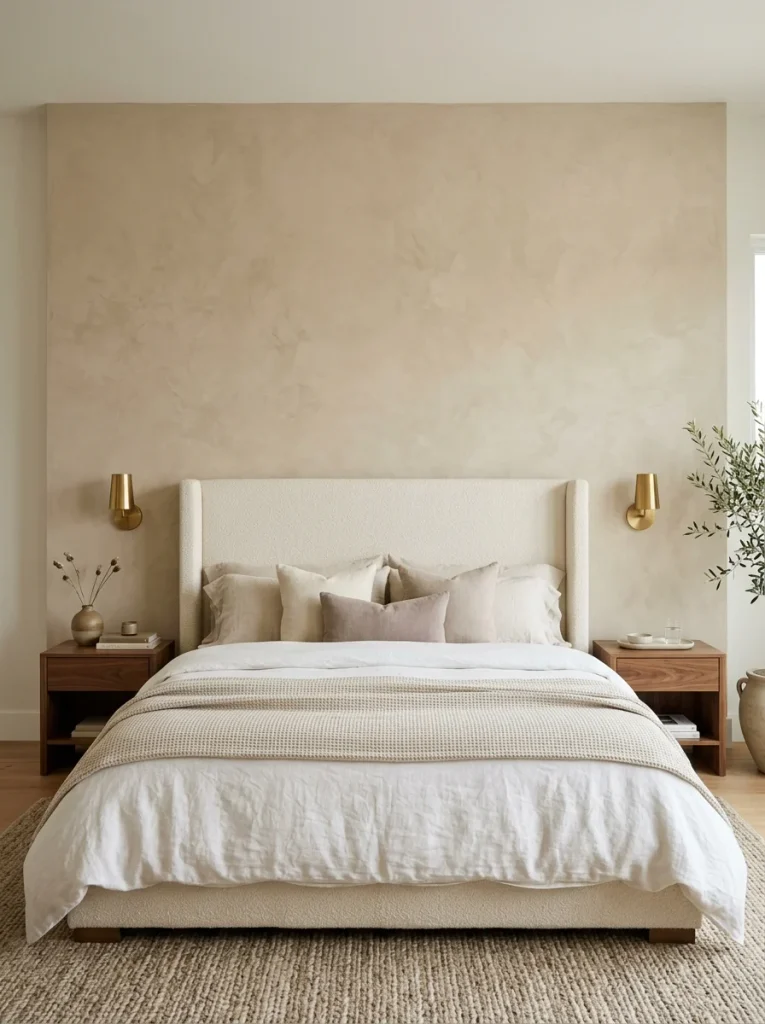
A textured wall adds depth without relying on bold colors or busy patterns. Consider a limewash finish, subtle grasscloth wallpaper, or narrow vertical wood panels behind the headboard. Each option creates a different effect, from softly organic to modern and architectural.
Choose the finish according to your room’s existing features. Vertical wood slats can emphasize ceiling height, while a matte plaster effect works beautifully with linen bedding and rounded furniture. Test paint or wallpaper samples beside your flooring first, because natural and artificial light can change how beige undertones appear.
Private Seating Nook
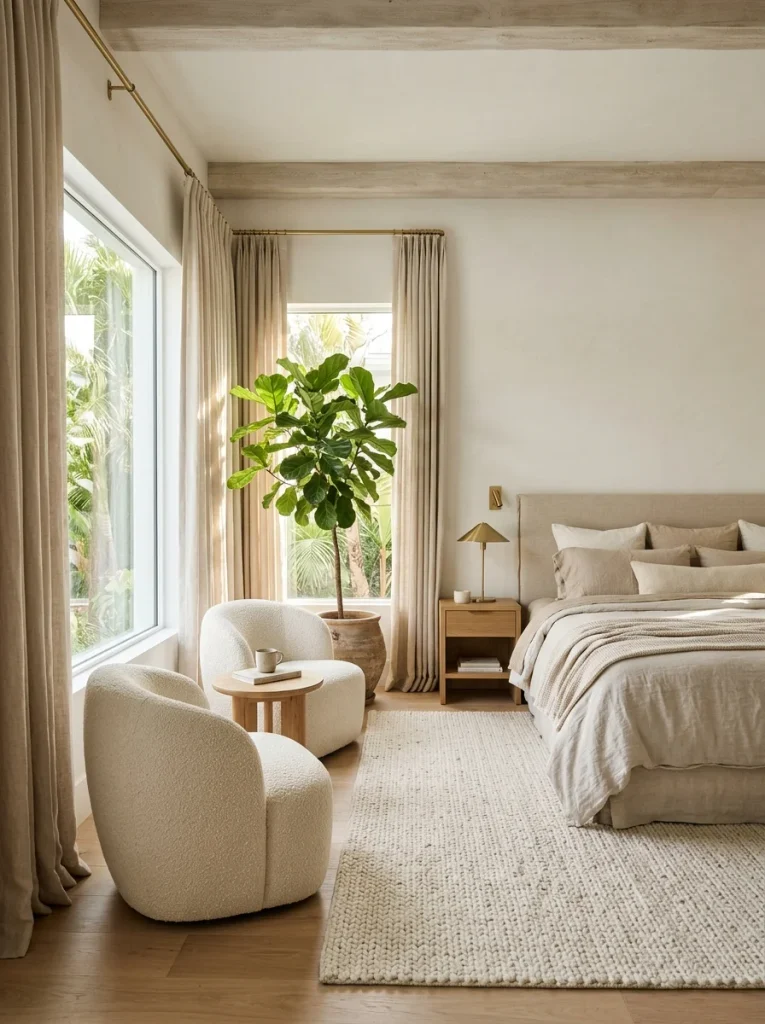
A small seating area can make your bedroom feel more like a private hotel suite. Place a comfortable armchair near a window, add a compact side table and keep a soft throw within reach. Even a single chair can create a useful spot for morning coffee or quiet reading.
Measure the available floor space before choosing furniture. Leave enough room to walk comfortably between the bed and seating area. In smaller bedrooms, a rounded accent chair with slim legs takes up less visual space than a bulky recliner. Finish the nook with one cushion in a color that complements your bedding.
Natural Stone Details
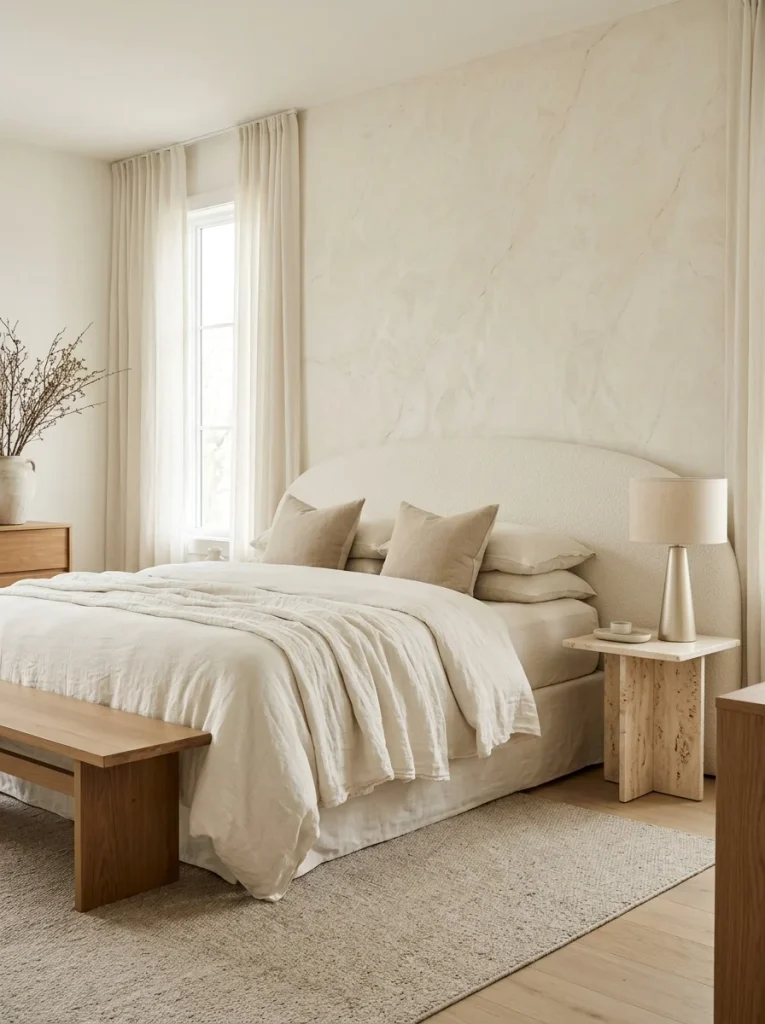
- Travertine side table: Introduces natural variation and a sophisticated, earthy finish.
- Marble bedside accessories: Add subtle veining without requiring expensive stone furniture.
- Stone-effect wall finish: Creates a focal point behind the bed with less weight than solid stone.
- Ceramic decorative objects: Provide a budget-friendly way to repeat the natural material palette.
- Neutral color coordination: Pair stone details with cream, sand and light wood.
Natural stone details work best when they have room to stand out. Instead of covering every surface, choose one or two accents, such as a bedside table and a small decorative tray. If solid stone exceeds your budget, stone-effect ceramic or laminate finishes can create a similar visual impression with easier maintenance.
Canopy Bed Elegance
BEFORE
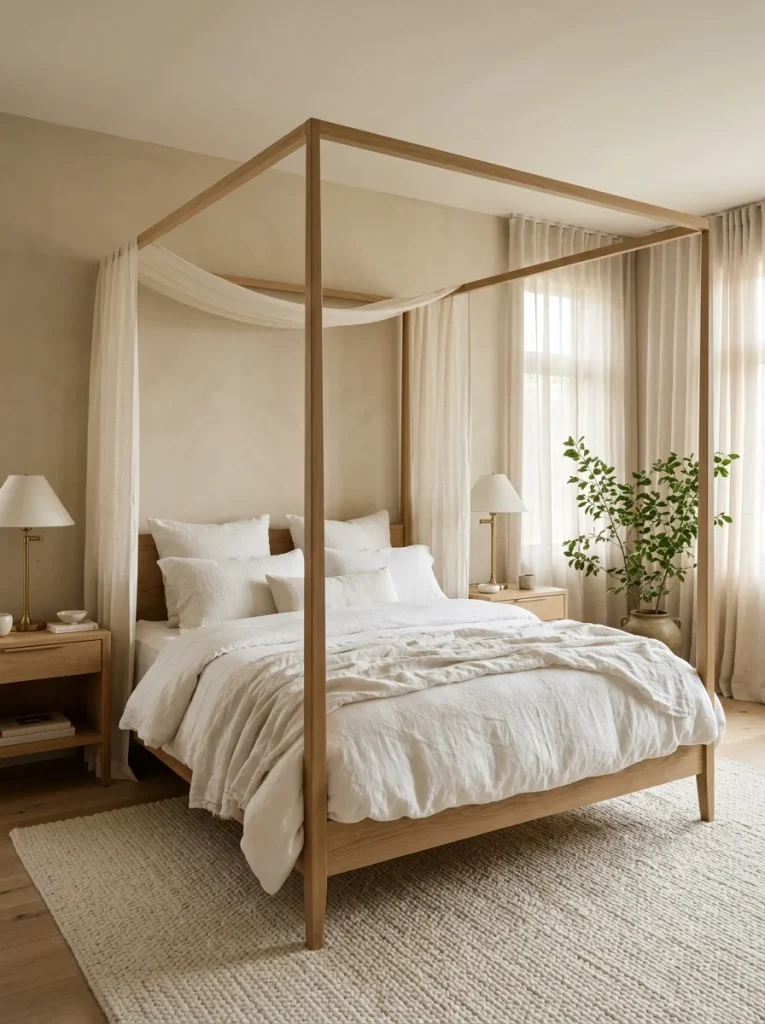
A standard bed frame can sometimes feel visually plain, especially in a large bedroom with high ceilings. The sleeping area may lack a clear focal point, leaving the furniture feeling disconnected from the rest of the room.
AFTER
A canopy bed creates a defined centerpiece and adds architectural interest. Choose a slim wood or metal frame in a finish that complements your furniture. Leave the frame open for a modern look or add light fabric panels for a softer, more romantic atmosphere.
Before buying, measure your ceiling height and check the frame’s dimensions against ceiling fans, pendant lights and window placement. In compact rooms, a minimalist canopy frame usually feels less overwhelming than a heavy four-poster design. Keep the bedding simple so the structure remains the main feature.
Floating Bedside Tables
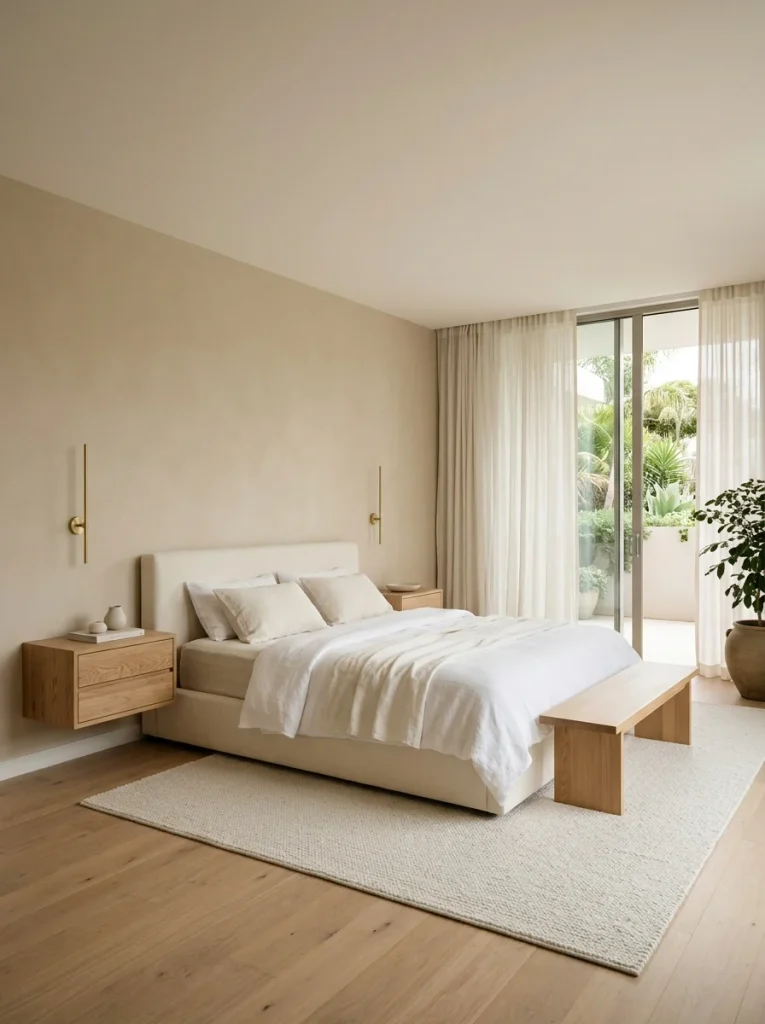
- Measure the bed height: Position each floating table close to mattress height for convenient access.
- Choose a finish: Natural oak or warm walnut complements neutral resort-inspired interiors.
- Locate wall studs: Secure the mounting hardware properly to support the table and everyday essentials.
- Add wall lighting: Install suitable sconces above the tables to keep the surfaces clear.
- Style minimally: Display a small book, a ceramic dish, or a compact vase.
Floating bedside tables create a lighter appearance by leaving the floor visible underneath. This makes them especially useful in smaller bedrooms where bulky furniture can interrupt the visual flow. Keep drawers or hidden storage for charging cables and personal items and confirm that the wall can safely support the chosen installation.
Layered Natural Rugs
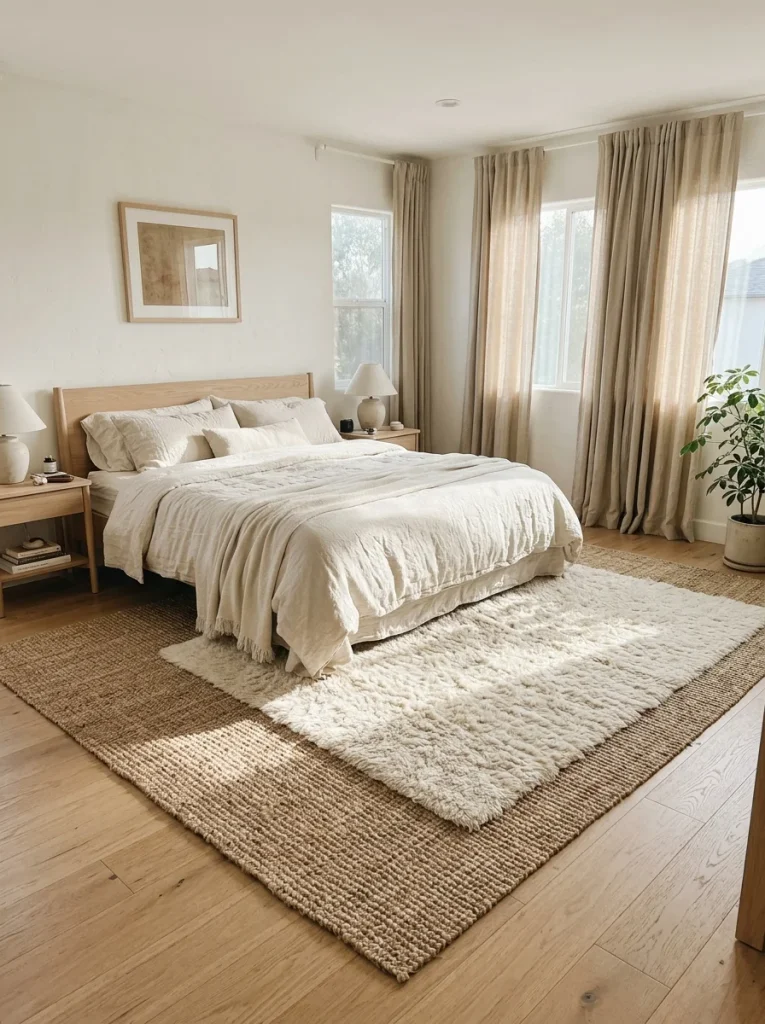
- Start with a large base: Choose a jute or flat-weave rug that extends beyond both sides of the bed.
- Add a soft layer: Place a smaller wool or cotton rug where your feet touch the floor.
- Coordinate the colors: Combine sandy beige, ivory and warm tan for a natural palette.
- Keep proportions balanced: Ensure the smaller rug does not look lost beneath the bed.
- Check the backing: Use a suitable non-slip rug pad to reduce movement and tripping risks.
Layered rugs introduce the tactile comfort associated with luxury hotel bedrooms. The contrast between woven natural fibers and a softer top layer makes the floor feel more interesting without adding busy patterns. For easy maintenance, select washable or low-pile materials if your bedroom receives heavy daily use.
Resort-Inspired Ceiling Fan
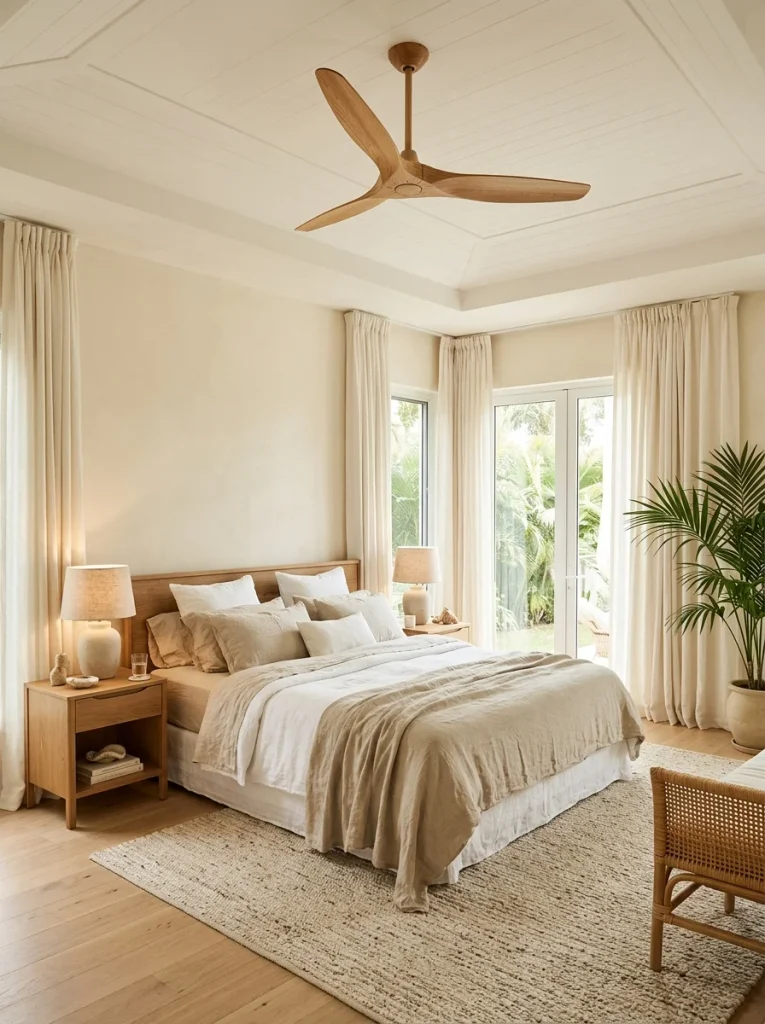
| Design Feature | Option A: Basic Fan | Option B: Resort Style |
|---|---|---|
| Blade finish | Plain white | Natural wood or warm neutral |
| Light fixture | Bright exposed bulb | Soft, diffused integrated lighting |
| Overall design | Functional and simple | Decorative and coordinated |
| Room atmosphere | Practical | Relaxed and cohesive |
A thoughtfully chosen ceiling fan combines everyday comfort with a finished interior design. Match its blade finish to your furniture or flooring so it feels intentional rather than like an afterthought. Check the fan’s size against your room dimensions and ensure the installation provides adequate clearance from the ceiling, lights and nearby furniture.
Soft Coastal Colors
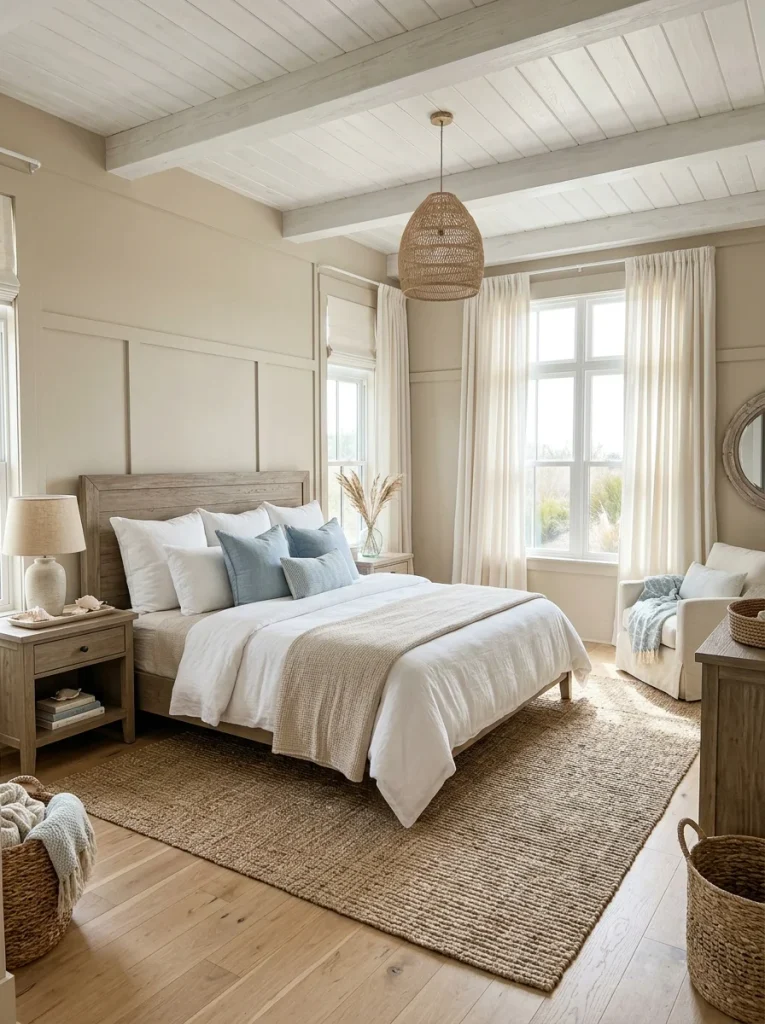
DO
- Pair soft blue with warm white and sandy beige.
- Choose light wood furniture with a natural, slightly weathered finish.
- Add striped cushions or a subtle coastal-patterned throw.
- Keep window treatments lightweight to maximize daylight.
DON’T
- Fill the room with obvious nautical decorations.
- Combine too many competing shades of blue.
- Use glossy finishes that overpower the relaxed aesthetic.
- Cover every surface with decorative accessories.
Coastal colors bring a fresh, breezy feeling to master bedroom ideas without requiring a beach-themed makeover. Keep the main furniture neutral and introduce pale blue through pillows, artwork, or bedding. This approach makes seasonal updates simple because you can change a few accessories without replacing expensive furniture.
Elegant Bedroom Fireplace
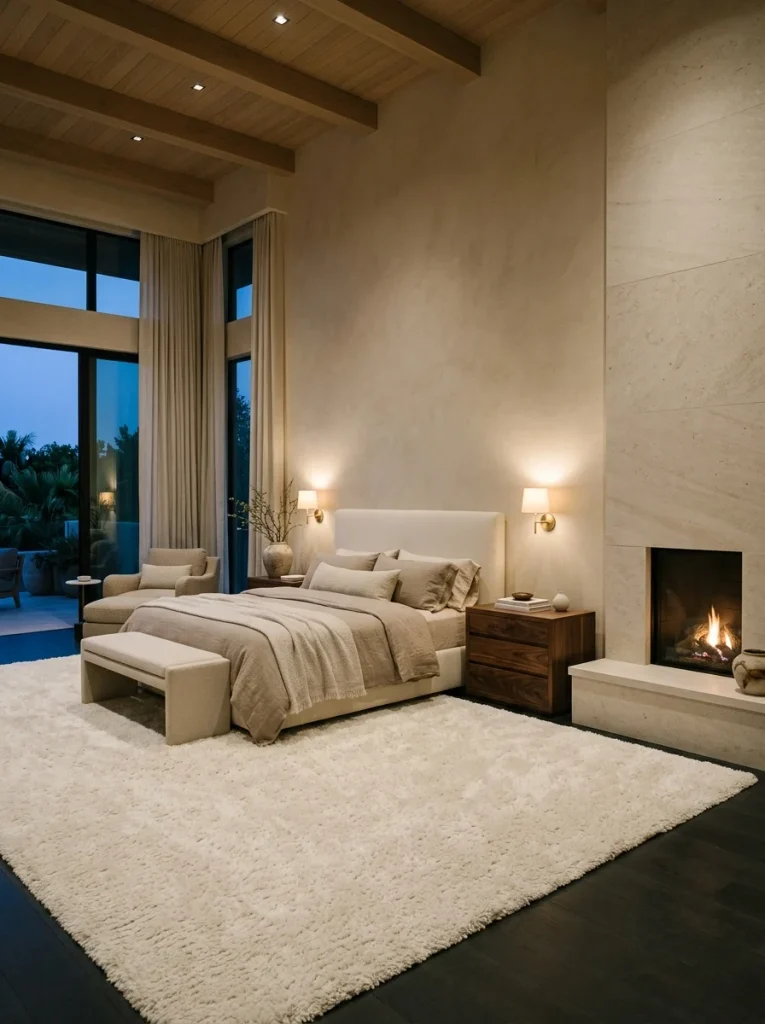
Quick Tip:
Choose a fireplace design that suits your home’s structure and ventilation requirements. If a traditional fireplace is impractical, consider a properly installed electric model with a realistic flame effect and independent heat controls.
A fireplace creates a natural focal point and gives a spacious bedroom the atmosphere of a private suite. Position the bed and seating so the feature remains visible without blocking walkways. Keep combustible fabrics and furniture at the clearances specified by the manufacturer and use professional installation for gas or wood-burning models.
Minimalist Luxury Decor
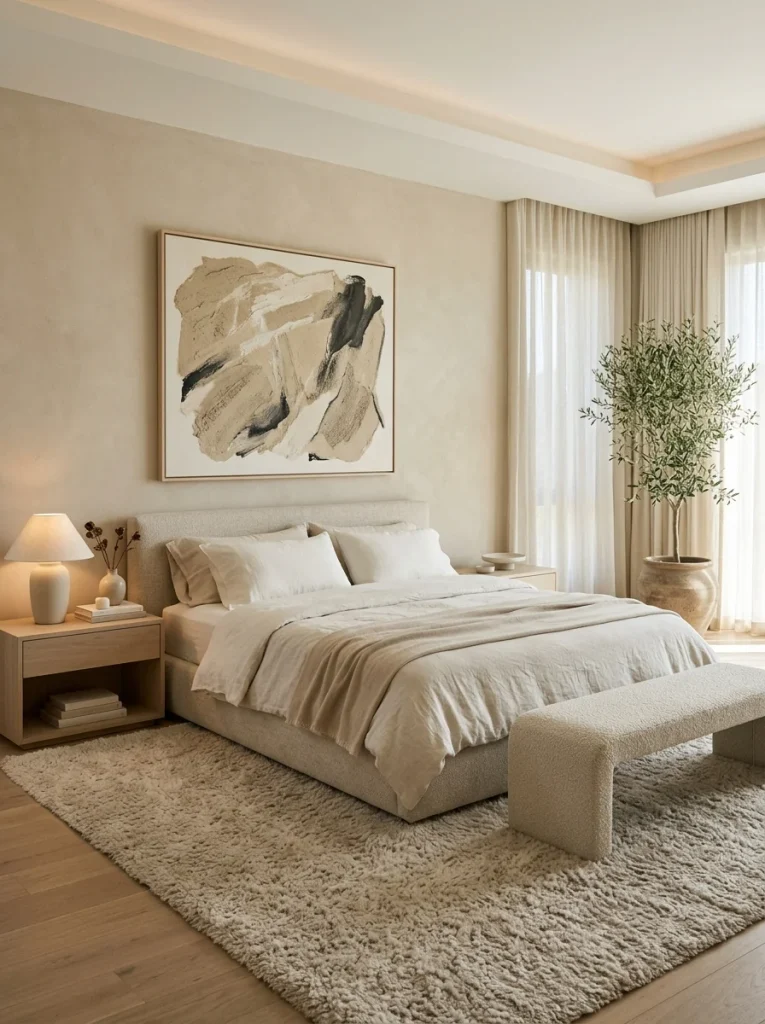
BEFORE
Crowded nightstands, excessive decorative pillows and unrelated accessories can make a bedroom feel busy. Even expensive furniture may lose its impact when every surface competes for attention.
AFTER
Keep the bed as the main focal point, limit bedside accessories to a few useful pieces and leave some surfaces completely clear. Choose a cohesive palette of ivory, sand and natural wood to connect the room visually.
Minimalist luxury depends on thoughtful choices rather than an empty room. Invest in comfortable bedding, attractive lighting and furniture with pleasing proportions before buying decorative extras. Leave enough space around the bed for easy movement and display only objects you use or genuinely enjoy seeing every day.
Floor-to-Ceiling Headboard Wall
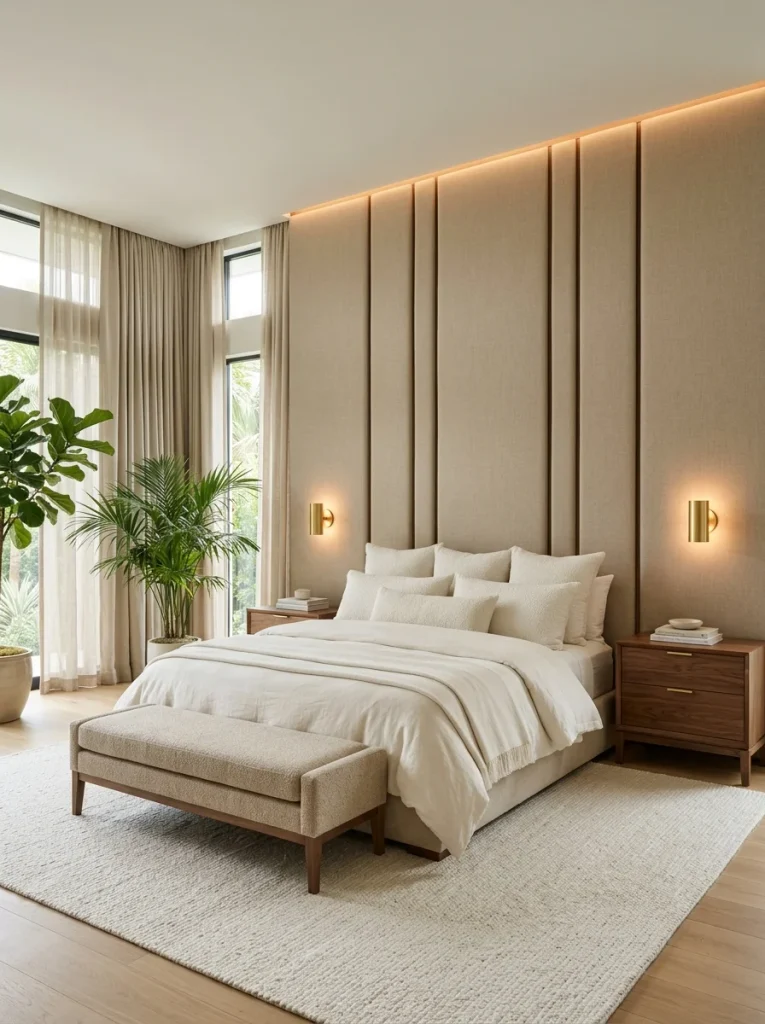
- Measure the wall: Determine the width behind the bed and the available ceiling height.
- Choose the material: Consider upholstered panels, decorative wood slats, or painted wall molding.
- Plan the lighting: Position sconces and electrical outlets before installing the panels.
- Coordinate the colors: Match the wall finish with your bedding and existing furniture.
- Keep accessories restrained: Let the large headboard wall provide the main decorative impact.
A full-height headboard wall creates a strong architectural feature without requiring artwork across the entire space. Upholstered panels introduce softness, while vertical wood details add warmth and visual height. For a budget-friendly alternative, paint the wall behind the bed in a slightly deeper shade than the surrounding walls.
Private Balcony Connection
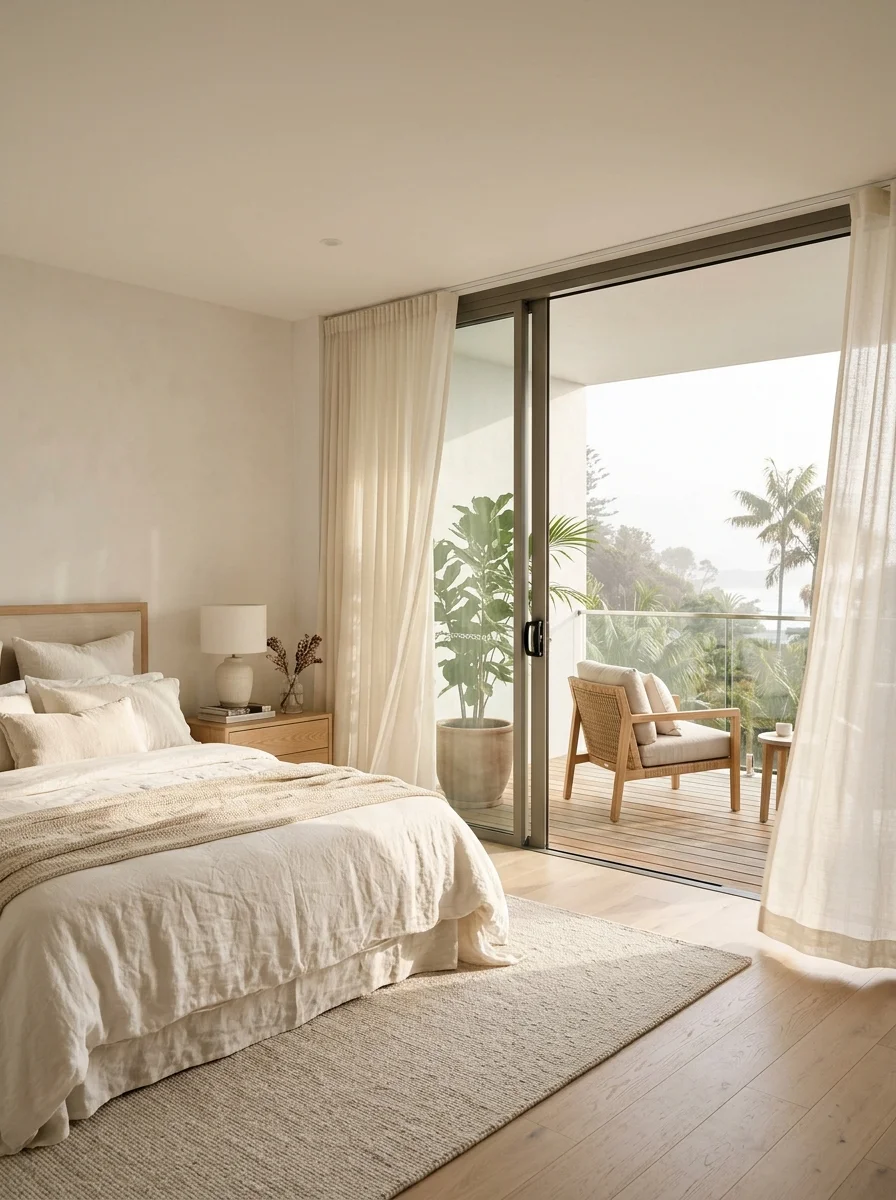
- Keep the doorway clear: Arrange the bed and furniture to preserve an easy route to the balcony.
- Choose lightweight curtains: Sheer panels soften daylight, while blackout curtains improve nighttime privacy.
- Repeat outdoor colors: Echo balcony greenery or natural wood through small bedroom accessories.
- Use weather-resistant furniture outdoors: Select suitable materials for your local climate and exposure.
- Prioritize safety: Maintain secure balcony doors and suitable barriers, especially in homes with children or pets.
A balcony can make a master bedroom feel more open by connecting the sleeping area with fresh air and outdoor views. Keep the transition uncluttered and choose indoor fabrics that complement the balcony furniture. If your bedroom has no balcony, a comfortable chair near a large window can create a similar sense of openness.
Warm Metallic Accents
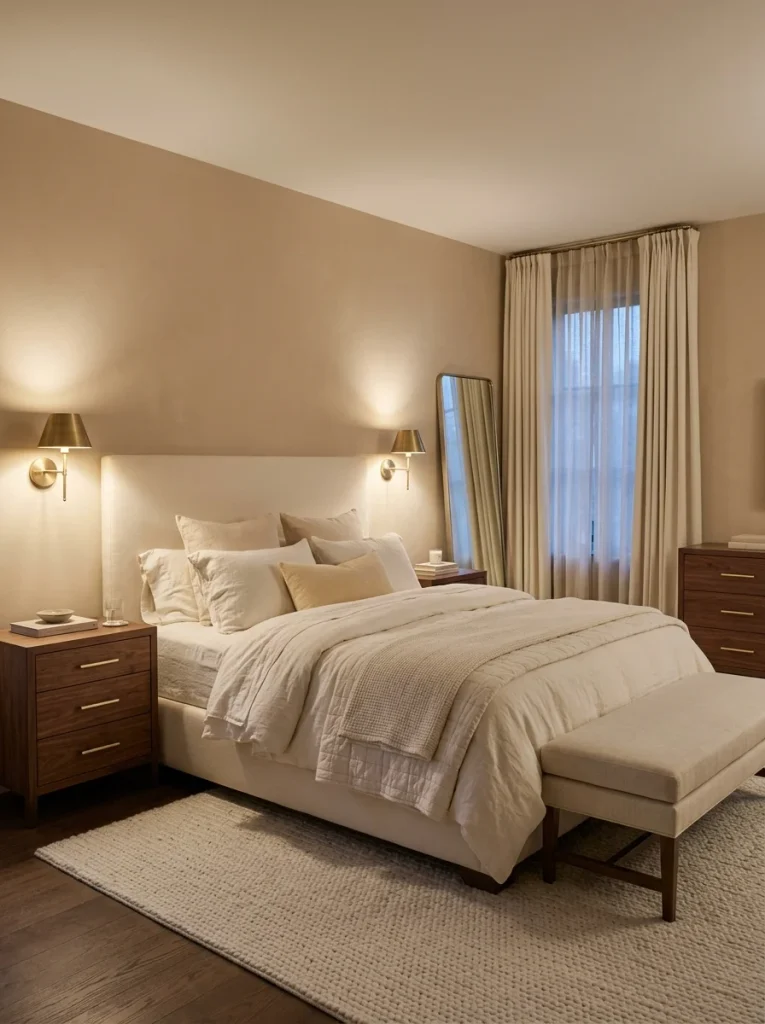
| Design Element | Option A: High Shine | Option B: Brushed Finish |
|---|---|---|
| Appearance | Reflective and glamorous | Soft and understated |
| Best pairing | Contemporary statement decor | Natural wood and linen |
| Maintenance | Fingerprints may show easily | Often less visually distracting |
| Overall effect | Bold luxury | Relaxed sophistication |
Metallic details can make neutral bedrooms feel more finished without adding another strong color. Choose one primary finish, such as brushed brass and repeat it in two or three places for a coordinated look. Pair warm metals with cream bedding and natural wood, keeping larger surfaces matte so the accents remain subtle.
Oversized Bedroom Artwork
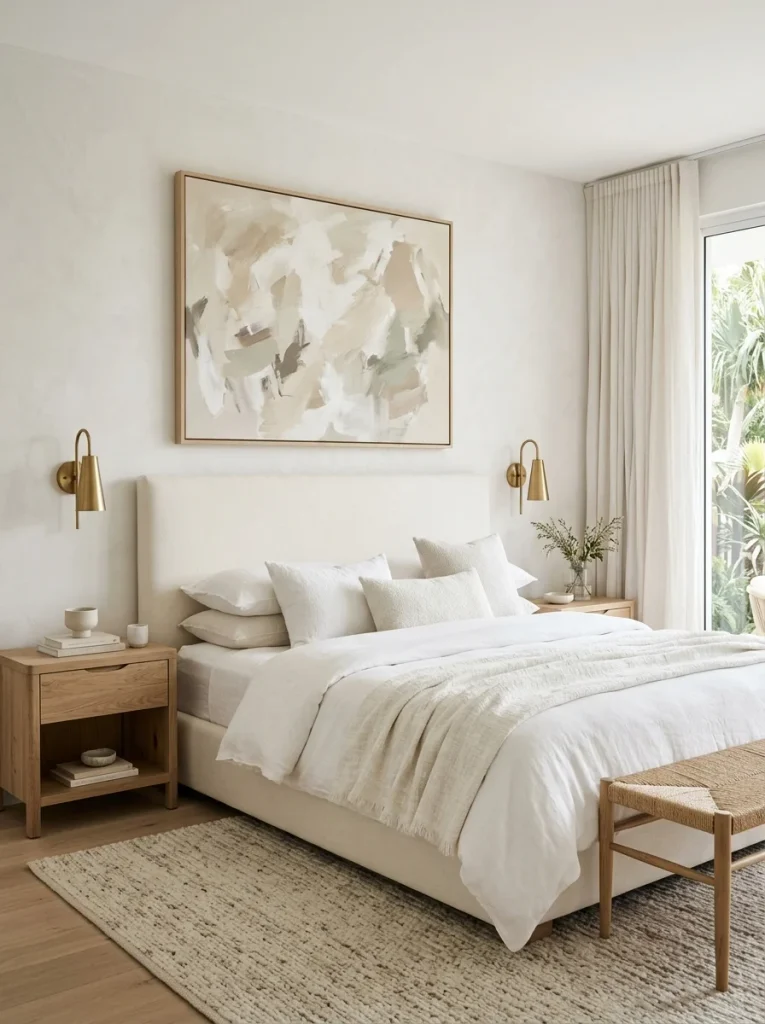
DO
- Choose one large artwork that complements your bedding and wall colors.
- Center the piece above the headboard for a balanced arrangement.
- Select abstract landscapes, soft botanical prints, or textured neutral artwork.
- Use a frame that coordinates with your furniture or lighting.
DON’T
- Hang artwork so high that it feels disconnected from the bed.
- Combine several competing colors and patterns.
- Choose a frame that overwhelms a small bedroom.
- Hang heavy artwork without secure, appropriate mounting hardware.
Oversized artwork gives the bedroom a clear focal point without requiring multiple decorative accessories. Aim for a piece that occupies roughly two-thirds of the headboard’s width, adjusting for the artwork’s proportions and the room’s layout. For an affordable update, choose a large printable design and place it in a simple frame.
Built-In Bedroom Storage
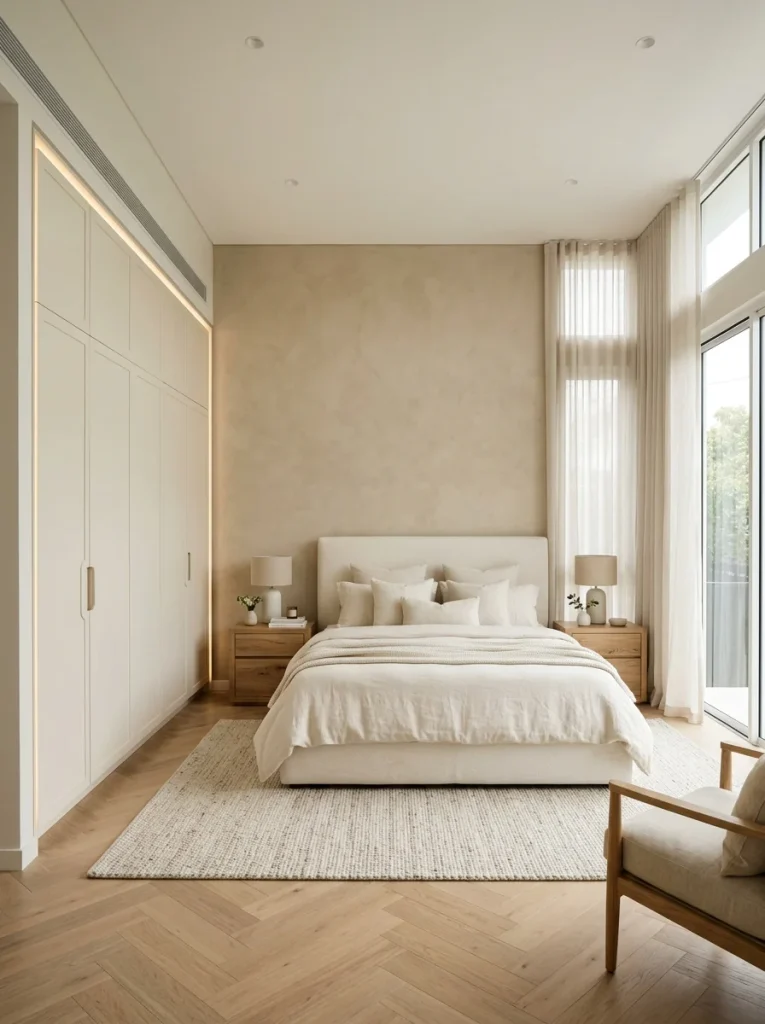
Quick Tip:
Plan storage around the items you actually own. Include hanging space for longer garments, shelves for folded clothes and drawers for smaller essentials. Measure carefully before ordering built-in cabinetry.
Built-in storage keeps everyday belongings out of sight and helps maintain the calm appearance associated with luxury hotel rooms. Matching the cabinet finish to the walls can make large wardrobes feel less imposing. If custom joinery is outside your budget, freestanding wardrobes with simple doors and coordinated hardware can create a similarly tidy effect.
Plush Upholstered Bench
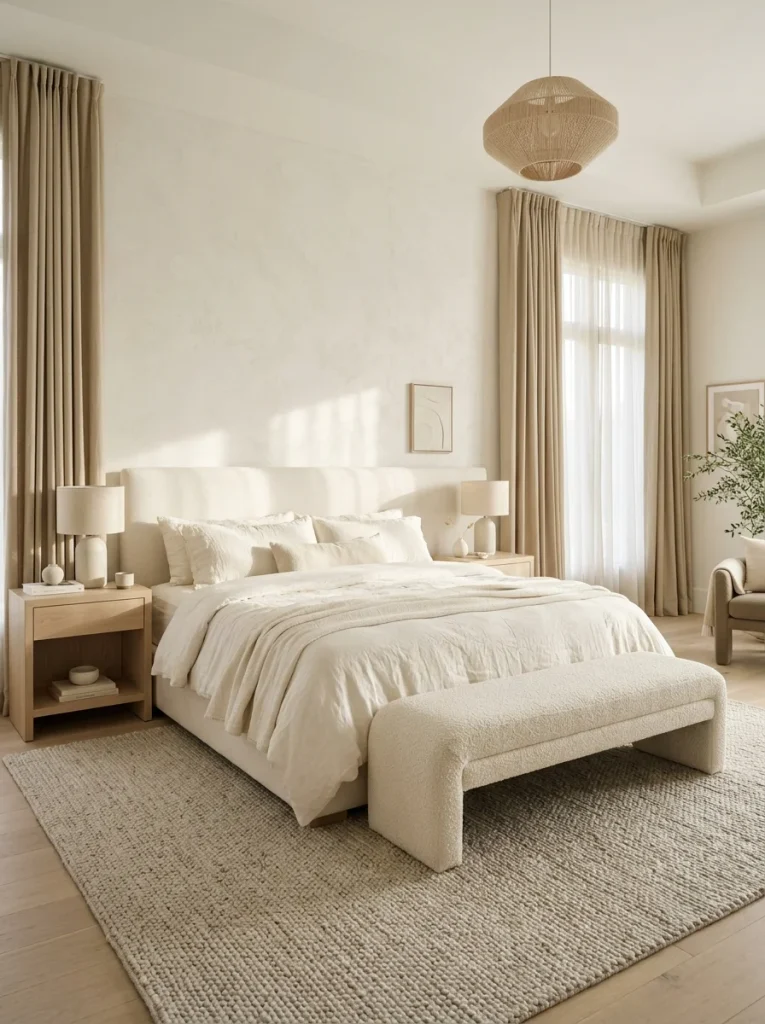
BEFORE
An empty space at the foot of the bed can feel unfinished, while clothing or spare blankets may end up scattered across the room.
AFTER
Add a slim upholstered bench that complements the headboard and bedding. Use it for sitting while getting dressed or laying out clothes and choose a design with hidden storage if you need extra space.
Measure the distance between the bed and the opposite wall before selecting a bench. Leave enough room to walk comfortably, open drawers and reach nearby furniture. In compact bedrooms, a narrow bench with exposed legs keeps the floor visible and provides useful seating without making the room feel crowded.
Spa-Inspired Ensuite Bathroom
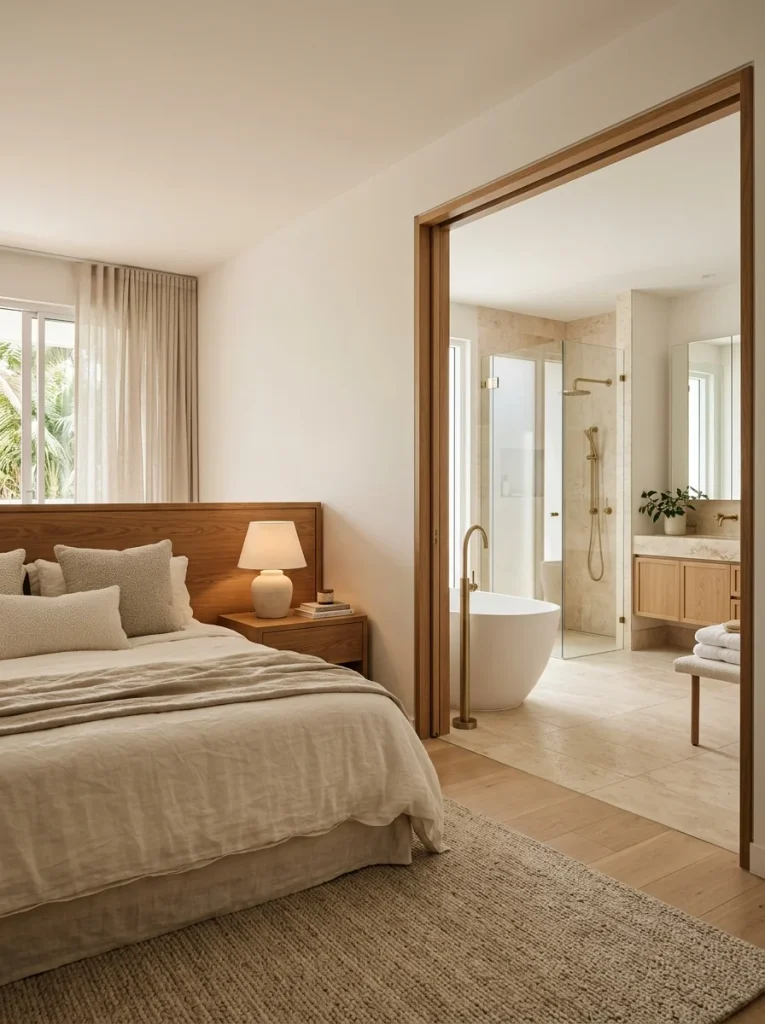
- Coordinate the materials: Repeat wood tones, stone finishes, or metal accents between the bedroom and bathroom.
- Choose soft lighting: Use warm bedside lamps and suitable bathroom lighting for a consistent atmosphere.
- Keep surfaces uncluttered: Store toiletries in drawers and use matching dispensers for everyday essentials.
- Add natural textures: Introduce folded cotton towels, a wooden stool, or a simple ceramic accessory.
- Maintain privacy: Use appropriate doors, window coverings and ventilation for the bathroom layout.
A connected bathroom can make a master suite feel more cohesive when both spaces share a similar palette and material style. You do not need a complete renovation to achieve this effect. Matching towels, coordinated hardware and consistent lighting finishes can create visual continuity, even when the bedroom and bathroom have separate entrances.
Layered Hotel-Style Finishing Touches
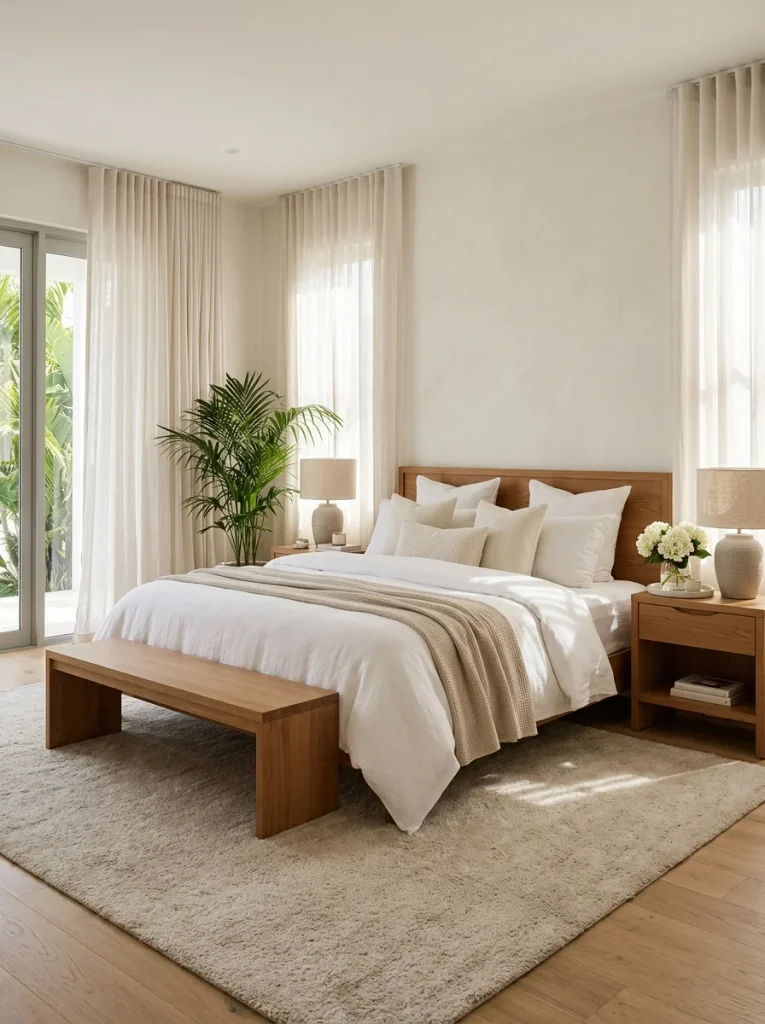
- Make the bed neatly: Smooth the duvet, arrange pillows by size and fold a throw across the foot.
- Style the nightstands: Add a lamp, a small tray and one useful personal item.
- Introduce fresh greenery: Use a small vase of flowers or a suitable indoor plant.
- Hide everyday clutter: Store chargers, remotes and loose belongings in drawers or baskets.
- Check the final balance: Remove anything that makes the room feel crowded or difficult to maintain.
The finishing touches bring all your bedroom design choices together. Focus on clean bedding, comfortable textures, warm lighting and a few carefully chosen accessories rather than filling every corner with decor. These simple habits help your master bedroom maintain its restful, resort-inspired appearance throughout the week without requiring expensive purchases.
CONCLUSION
Creating a resort-style bedroom doesn’t have to mean spending a fortune or starting from scratch. Small changes, such as softer lighting, layered bedding, natural wood accents, or a thoughtfully styled bedside table, can make your space feel calmer and more luxurious.
These Master Bedroom Ideas are a starting point for creating a bedroom that reflects your taste while supporting everyday comfort. Choose one idea to try first, then build on it as your budget and time allow.
Save this article on Pinterest for future inspiration and share it with someone planning a bedroom refresh. Your peaceful sanctuary can begin with one simple change!