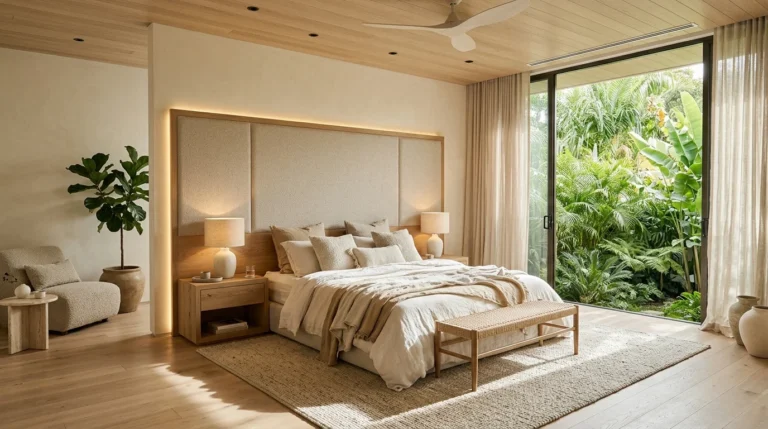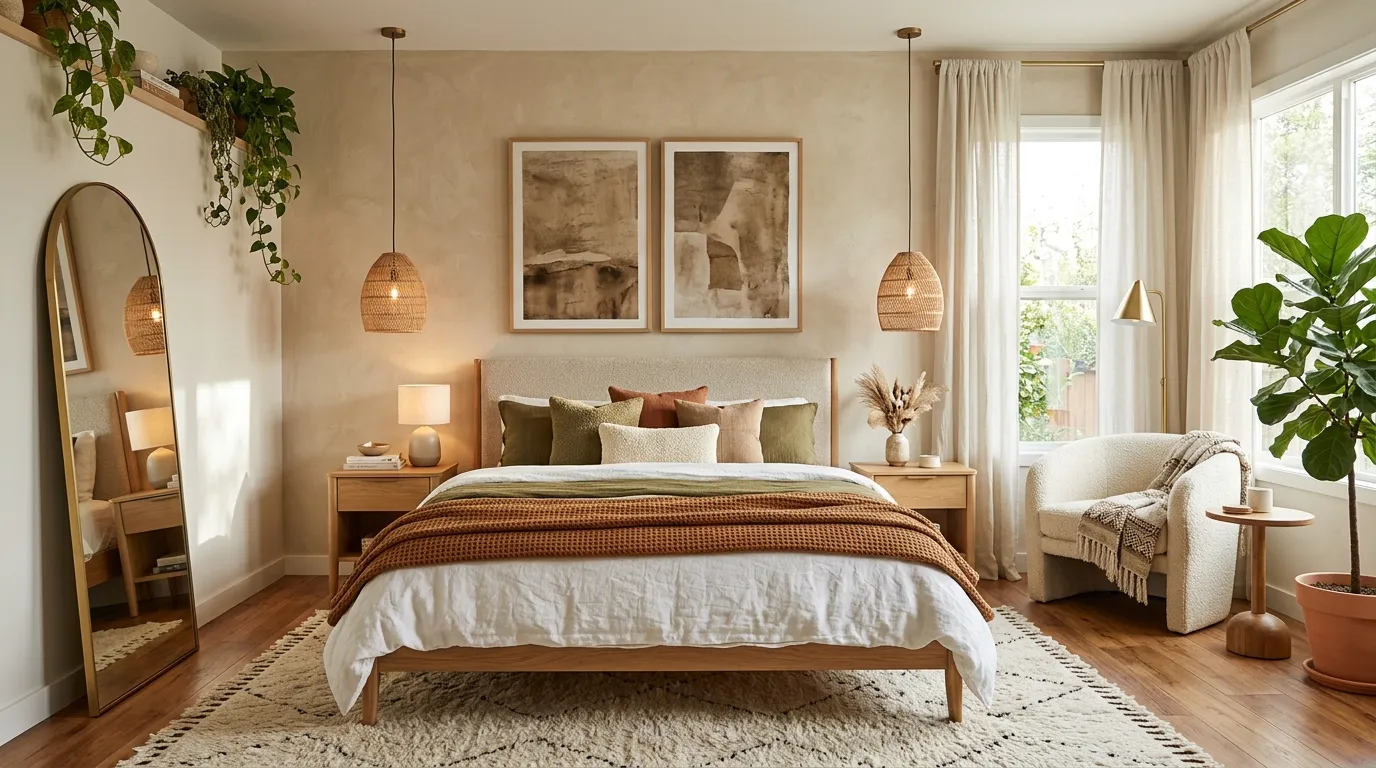
27 Inviting Bedroom Decor Ideas for Restful Nights
A bedroom should feel like the easiest place in your home to slow down. Small changes can make a tired, cluttered room feel calmer, warmer and much more inviting.
These Bedroom Decor Ideas bring together practical styling tips, cozy textures, thoughtful lighting, smart storage and simple decorative touches that help create a space you genuinely enjoy returning to each night. You do not need a large budget or a complete makeover to see a difference. Sometimes, changing your bedding, clearing a nightstand, adding softer lighting or introducing natural textures is enough to shift the mood. In my experience, the most comfortable bedrooms balance beauty with everyday function. As you explore these ideas, you will find approachable ways to make your room feel more restful while keeping it personal and easy to maintain.
Warm Layered Bedding
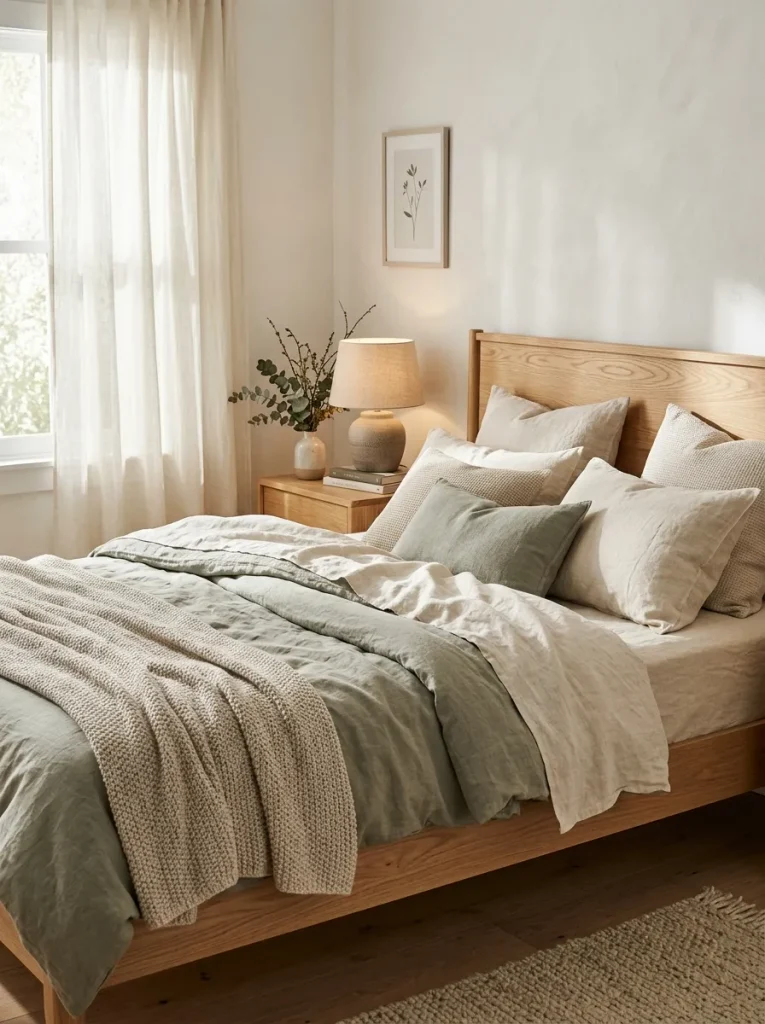
The bed becomes far more inviting when several soft textures work together. Start with crisp cotton sheets, add a lightweight linen or quilted cover, then finish with a folded throw across the lower third. Mix two or three pillow textures without overcrowding the headboard.
Keep the palette within three related shades so the layers feel intentional rather than busy. In my experience, breathable fabrics make the bed more comfortable while still giving it that styled Pinterest look. Choose washable materials if the room gets daily use, especially in warmer climates.
Soft Bedside Lighting
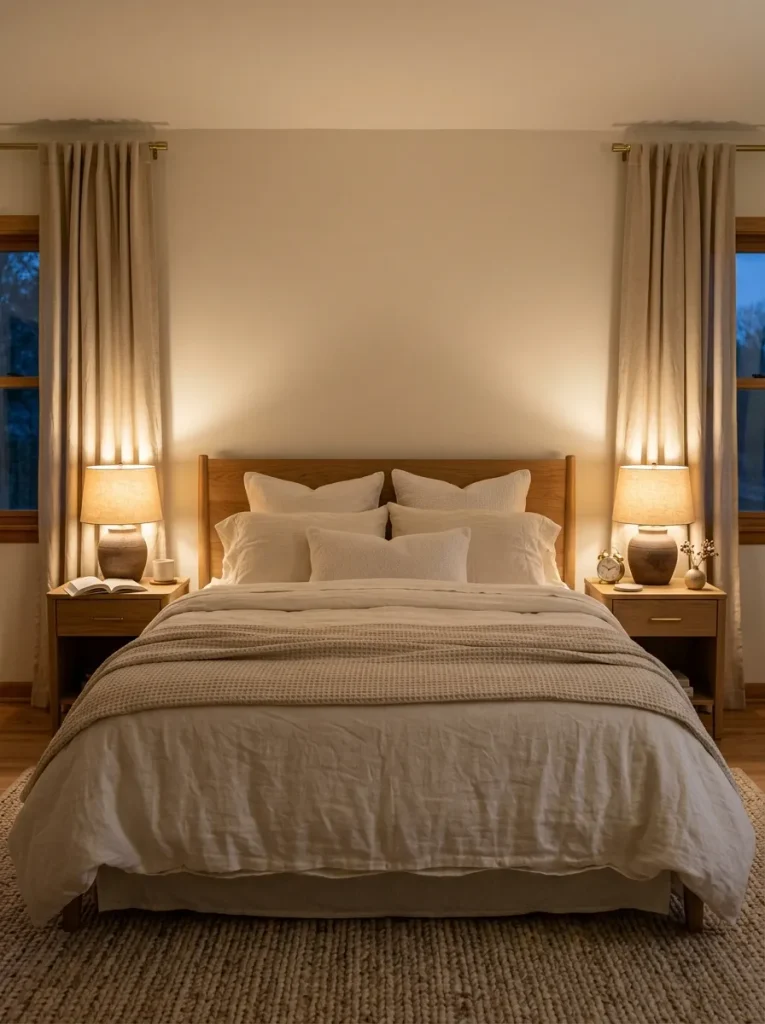
- Choose bulbs around 2700K to create a warm, relaxing glow.
- Place lamps where the switch is easy to reach from bed.
- Use matching lamps for symmetry or similar shapes for a relaxed look.
- Keep shades proportional to the bedside tables.
- Add dimmable bulbs when possible for flexible nighttime lighting.
Good lighting can change the entire feel of a bedroom after sunset. Keep the main ceiling light softer and let bedside lamps handle reading or winding down. For smaller rooms, wall mounted sconces can free valuable table space while keeping the sleeping area visually balanced.
Calm Neutral Palette
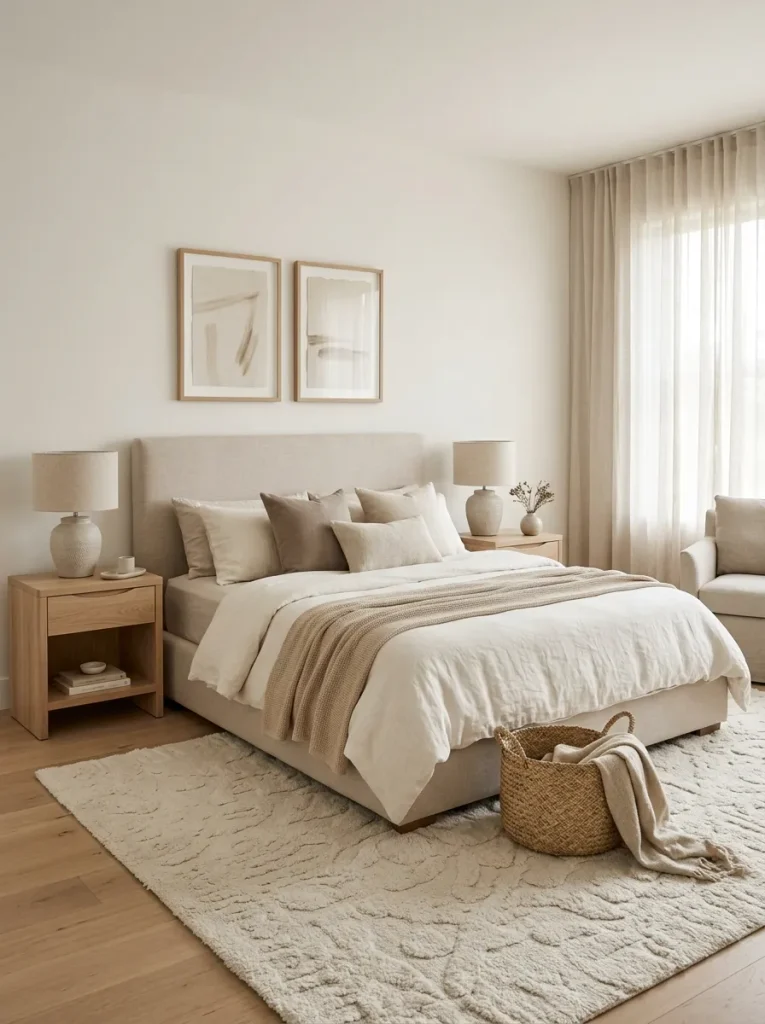
Quick Tip: Build your palette from one warm neutral, one lighter shade and one subtle accent. Repeat each color at least twice through bedding, curtains, artwork or accessories so the room feels connected rather than flat.
A calm color scheme works especially well around the bed because it reduces visual distractions before sleep. Warm whites and earthy neutrals also make natural materials stand out beautifully. I’ve noticed that adding texture through linen, wool, rattan or woven cotton gives neutral rooms depth without making them feel cluttered.
Textured Accent Wall
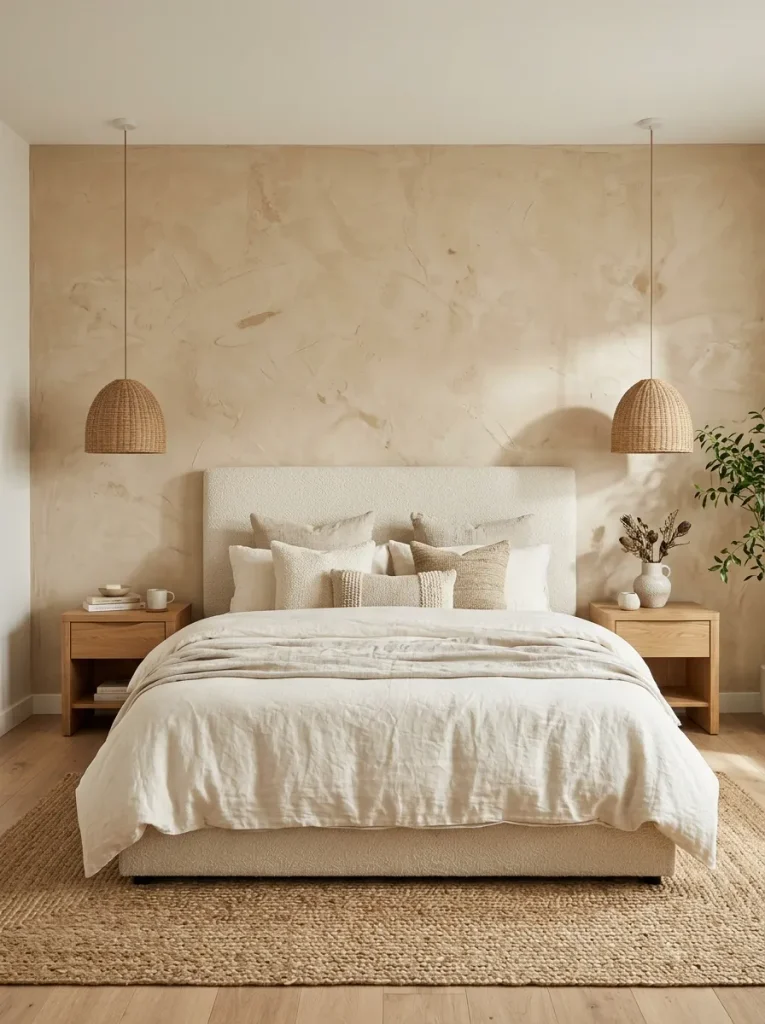
BEFORE: The wall behind the bed feels plain and unfinished, with little visual depth. The room may have attractive furniture, but the sleeping area lacks a clear focal point.
AFTER: A softly textured accent wall gives the bed a defined backdrop and adds character without filling the room with accessories. The neutral finish keeps the atmosphere restful and easy to style.
Choose subtle plaster, limewash or textured wallpaper rather than heavily patterned finishes. Keep nearby furniture simple so the wall remains the main feature. For renters, removable textured wallpaper can create a similar effect without permanent changes.
Layered Reading Nook
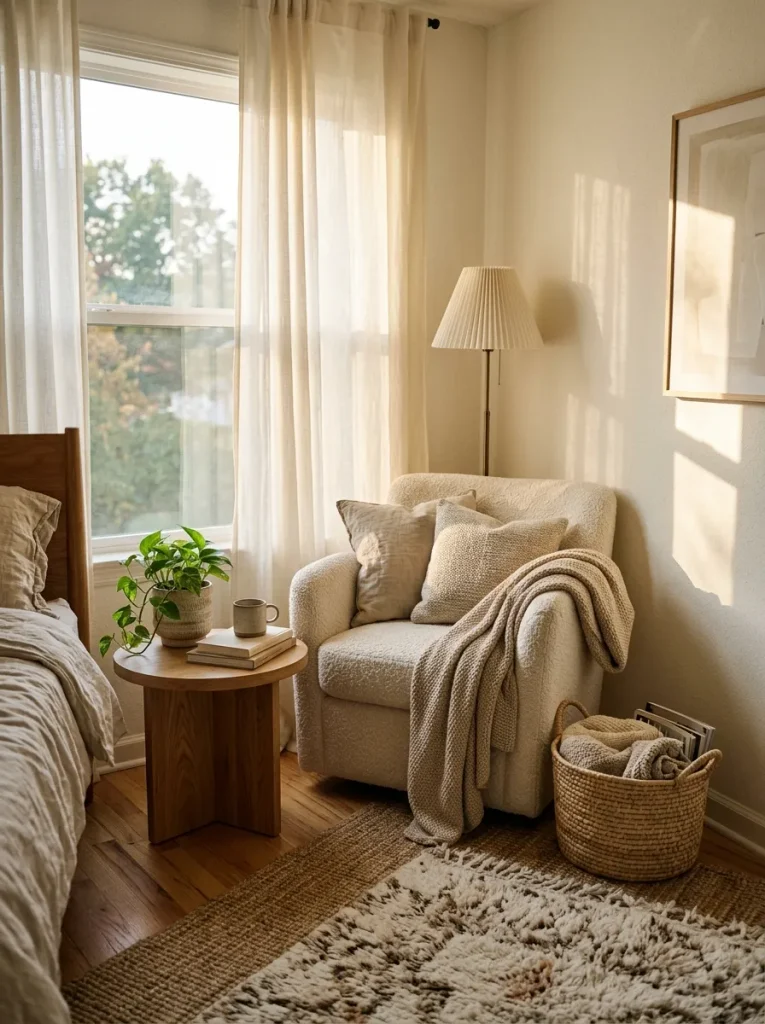
- Choose the corner: Select an unused area near a window or beside a wardrobe where the chair will not interrupt movement.
- Add comfortable seating: Pick a compact upholstered chair with enough depth for relaxed reading.
- Include a light source: Position a floor or table lamp beside the chair for evening use.
- Finish with texture: Add a small throw, cushion and woven basket for books or magazines.
A dedicated reading corner gives an otherwise overlooked part of the room a useful purpose. Keep the setup compact, especially in smaller bedrooms. A narrow chair and small round table usually provide enough function without making the floor plan feel crowded. Add only the items you will actually use.
Natural Wood Accents
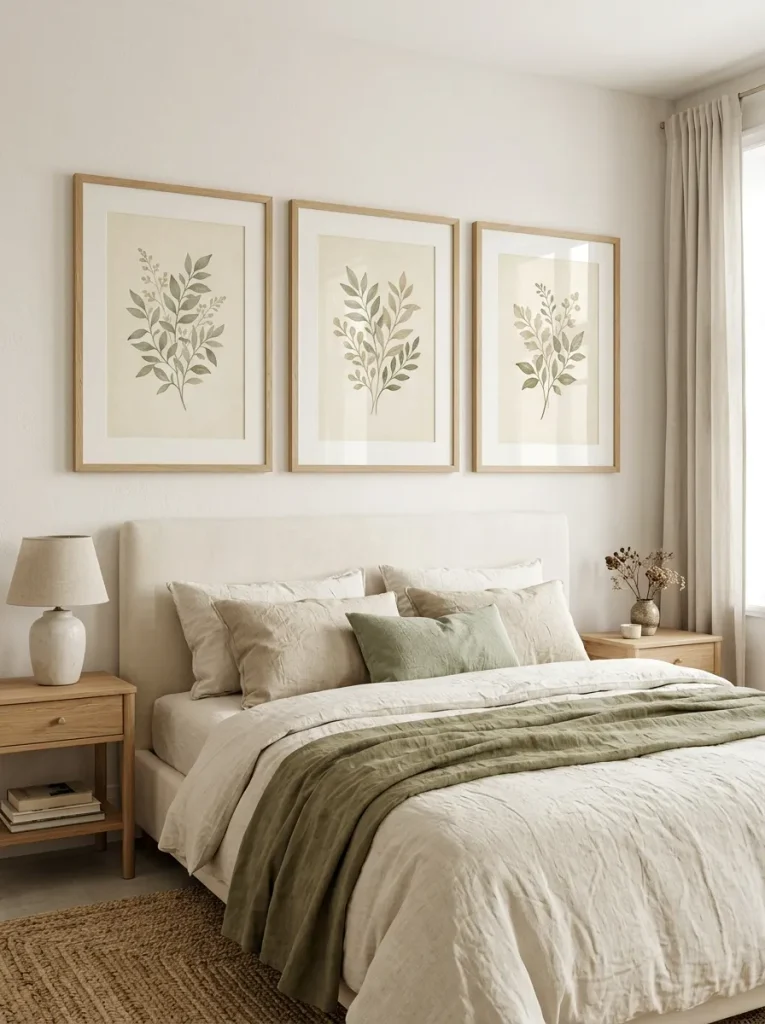
| Feature | Option A: Light Wood | Option B: Dark Wood |
|---|---|---|
| Overall feel | Airy and relaxed | Rich and grounded |
| Best pairing | Cream and soft beige | Ivory and warm neutrals |
| Room effect | Makes spaces feel open | Adds visual depth |
| Maintenance | Shows less dust | May show more dust |
Natural wood brings warmth to bedrooms without requiring many decorative accessories. Light oak works especially well in compact rooms because its pale finish keeps the space feeling open. Darker wood can create a cozier atmosphere, particularly when balanced with lighter bedding and walls. Choose one main wood tone and repeat it sparingly.
Woven Storage Baskets
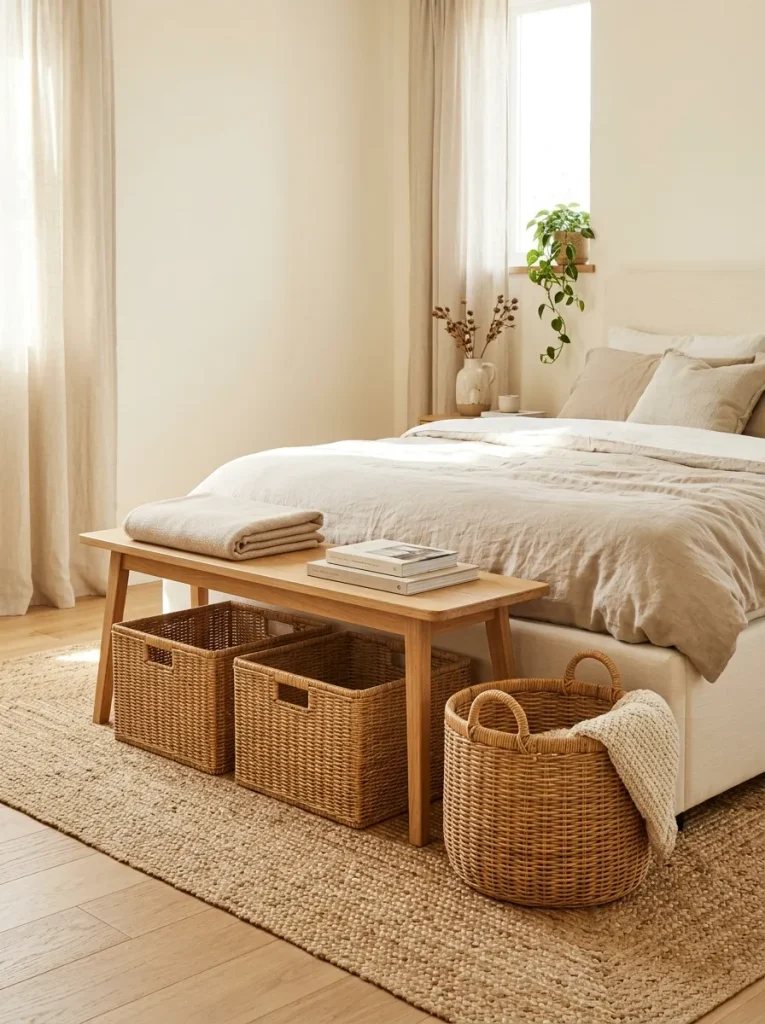
DO:
- Choose baskets with lids for items you want hidden.
- Match basket tones with other natural materials in the room.
- Place them where extra blankets or pillows are easy to reach.
- Use different sizes for flexible storage.
DON’T:
- Overfill baskets until they become difficult to move.
- Mix too many unrelated basket colors.
- Place storage where it blocks walking paths.
- Use open baskets for items that create visual clutter.
Woven storage keeps everyday essentials organized while adding warmth and texture. I’ve noticed that placing one basket near the bed and another near a seating area makes tidying faster. Use them for throws, extra bedding, books or accessories so surfaces stay clear and the room feels calmer.
Statement Headboard
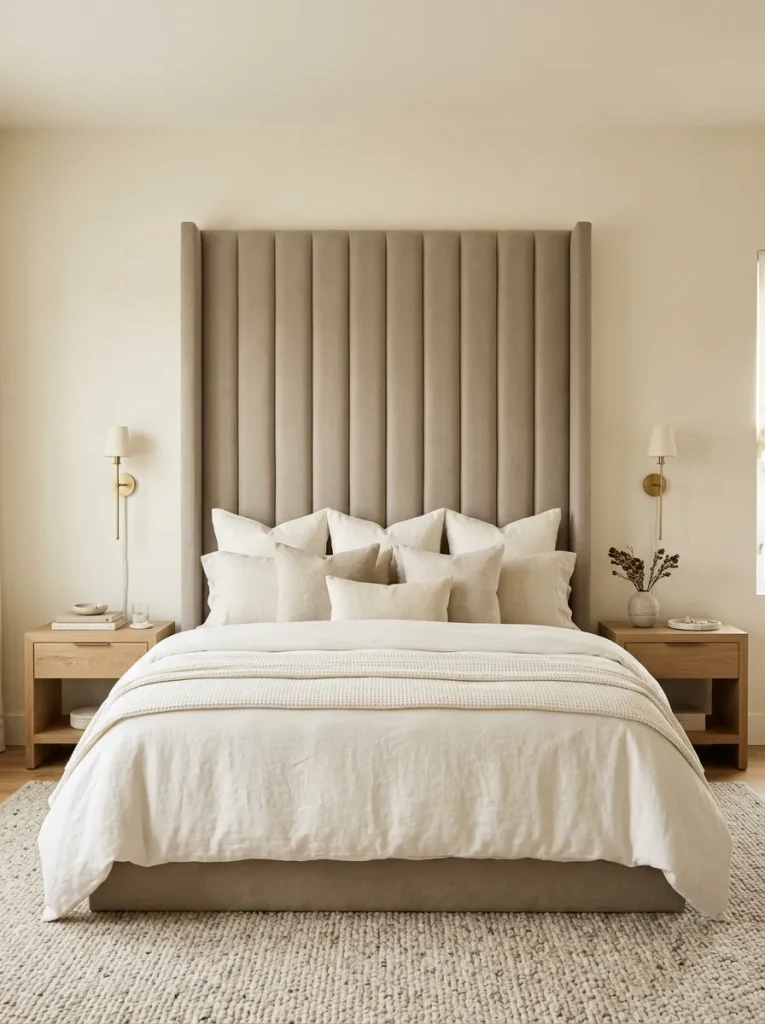
Cost: Medium to high | Time: One day | Skill Level: Beginner | Best For: Plain bedroom walls
A statement headboard can give the sleeping area a finished appearance without adding numerous decorations. Choose a tall upholstered design for softness or a fluted wood style for texture. Keep the surrounding artwork and accessories restrained so the headboard remains the strongest visual element.
Floating Nightstands
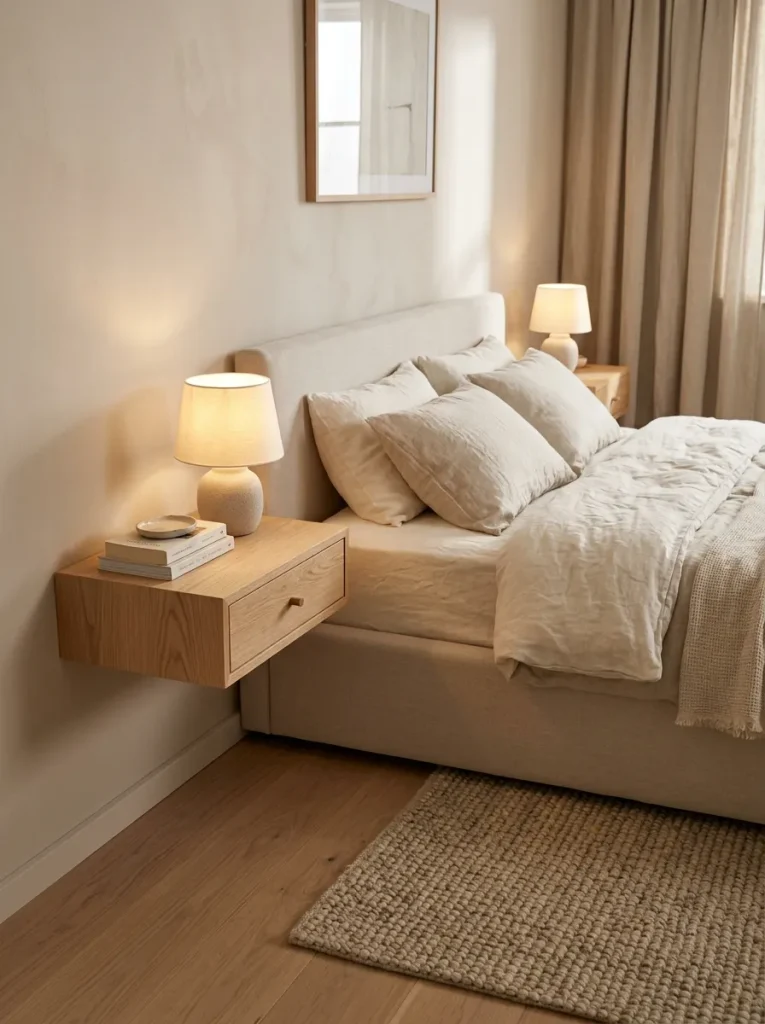
Floating nightstands create useful storage while keeping the floor underneath visually open. Mount them at a comfortable height beside the mattress and leave enough clearance for bedding. I’ve seen this setup work especially well in compact rooms because the exposed floor makes cleaning easier and helps the sleeping area feel less crowded.
Framed Botanical Prints
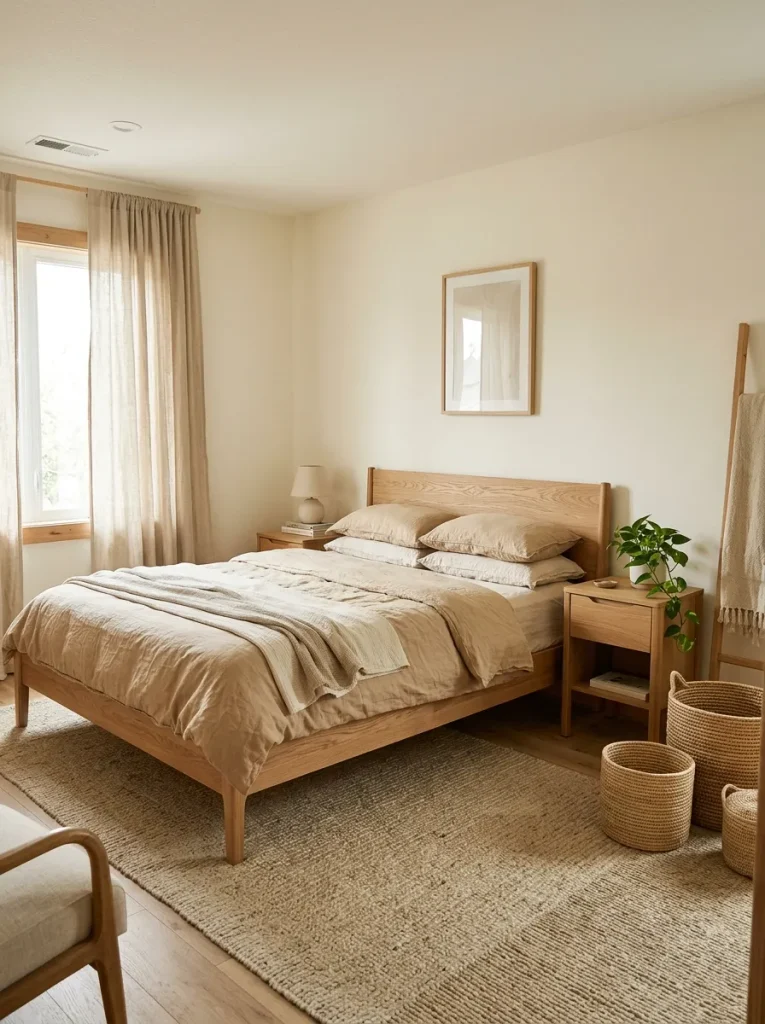
Botanical artwork brings a gentle connection to nature without overwhelming the room. Choose prints with soft greens and earthy neutrals, then repeat one or two of those shades in cushions or bedding. A simple three piece arrangement above the bed can create a finished focal point while keeping the overall look relaxed.
Layered Window Curtains
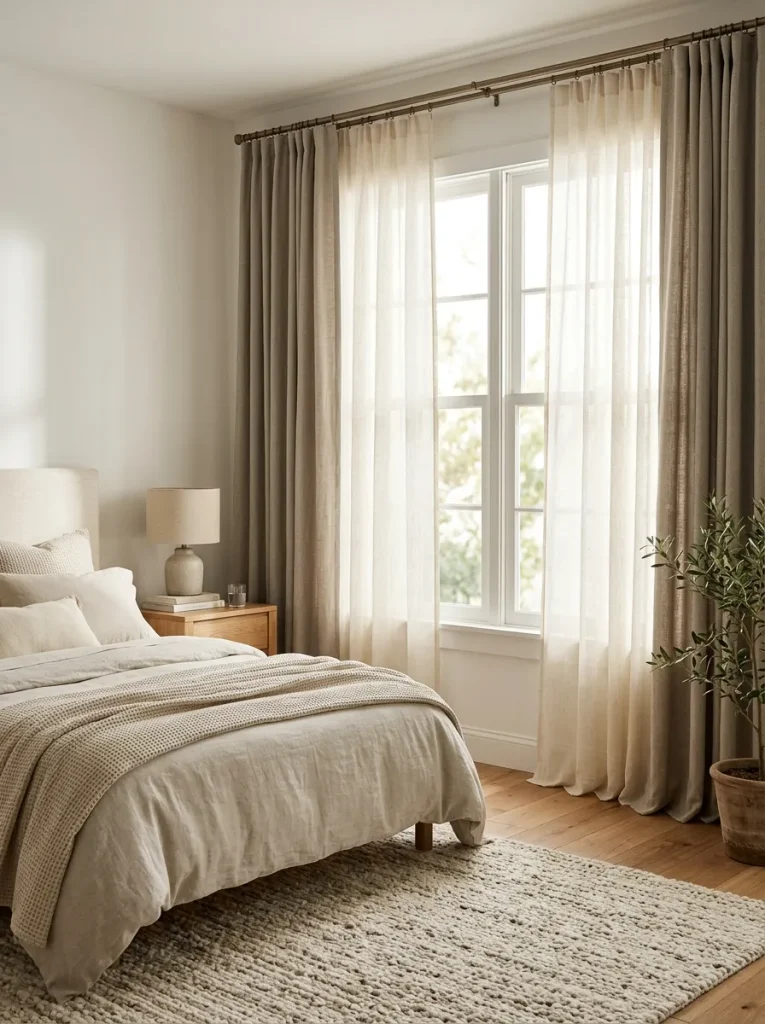
- Hang the curtain rod several inches above the window frame to create visual height.
- Let sheer panels soften daylight while heavier curtains provide privacy.
- Extend the rod beyond the window edges so the glass area feels wider.
- Choose floor length panels that lightly skim the floor.
- Repeat the curtain color in one small bedroom accessory for cohesion.
Window treatments affect both the appearance and comfort of a sleeping space. Layering two fabrics gives you control over daylight, privacy and warmth throughout the day. For a polished result, keep the curtain hardware simple and let the fabric fall naturally rather than using excessive decorative details.
Soft Area Rug
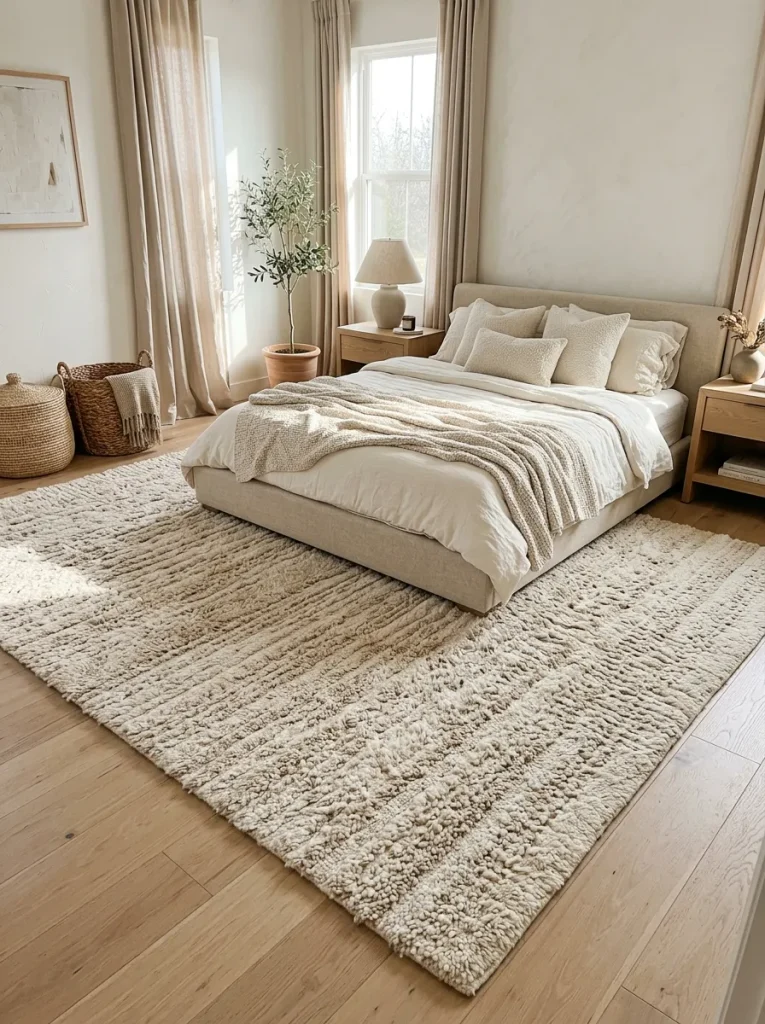
Stepping onto a soft rug beside the bed can make mornings feel warmer and more comfortable, especially on hard flooring. Choose a size that extends beyond the sides of the bed so both feet land on the rug when you get up. Low pile designs are easier to clean and maintain.
For a calm bedroom, look for subtle textures or simple patterns in neutral shades rather than busy designs. Make sure the rug has a secure non slip backing or use an appropriate rug pad underneath. A properly sized rug also helps visually connect the bed, nightstands and surrounding furniture into one cohesive area.
Upholstered Bench
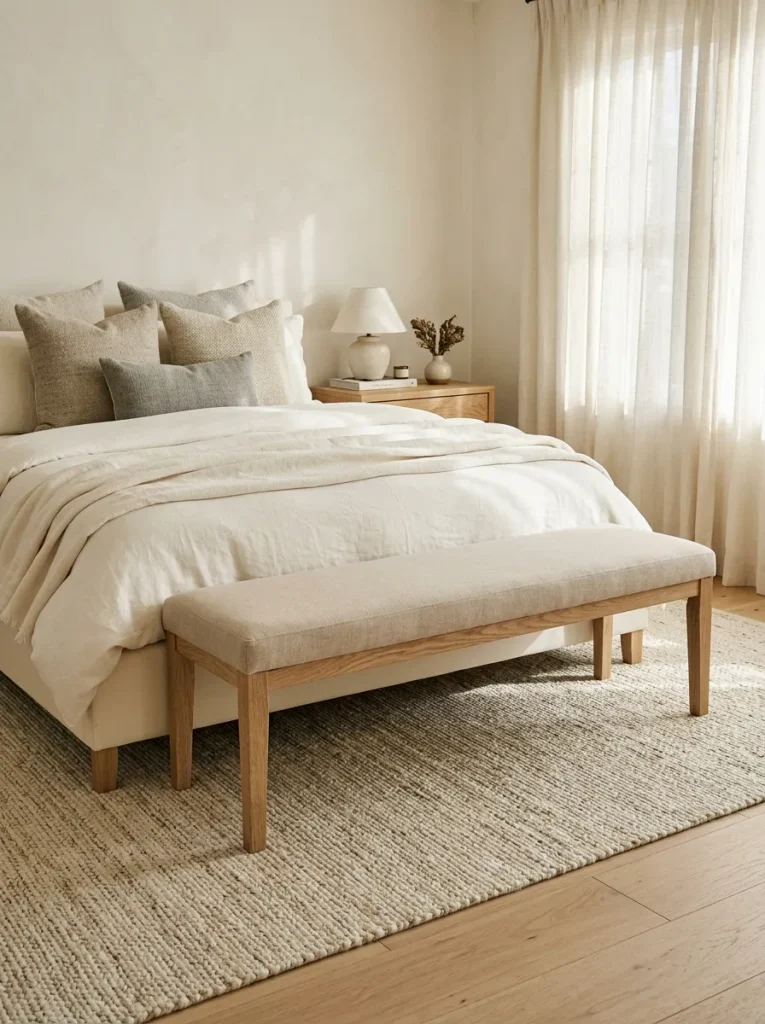
A bench at the foot of the bed adds a practical landing spot without requiring much space. Choose a narrow design that leaves a comfortable walkway around it. Use the surface for sitting while dressing, folding blankets or placing decorative pillows before bedtime. Keep the upholstery easy to clean for everyday use.
Minimal Bedside Decor
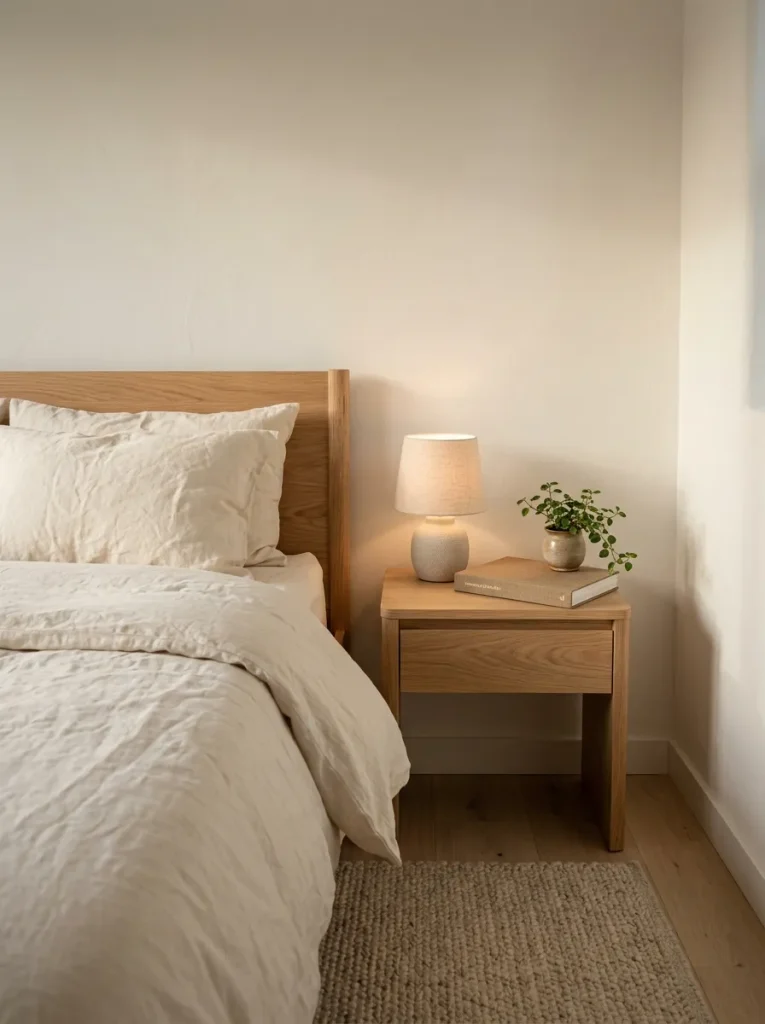
- Clear the surface: Remove unused items and keep only things needed near bedtime.
- Add one lamp: Choose a compact lamp that provides comfortable reading light.
- Include one natural element: A small plant or single branch adds softness without clutter.
- Leave open space: Keep part of the tabletop completely clear for practical use.
A simplified nightstand can make the whole sleeping area feel more peaceful. Keep essentials within reach, such as reading glasses, a book or a charging cable, but avoid turning the table into a storage pile. A small tray can group loose items and make the surface quicker to tidy.
Cozy Throw Blanket
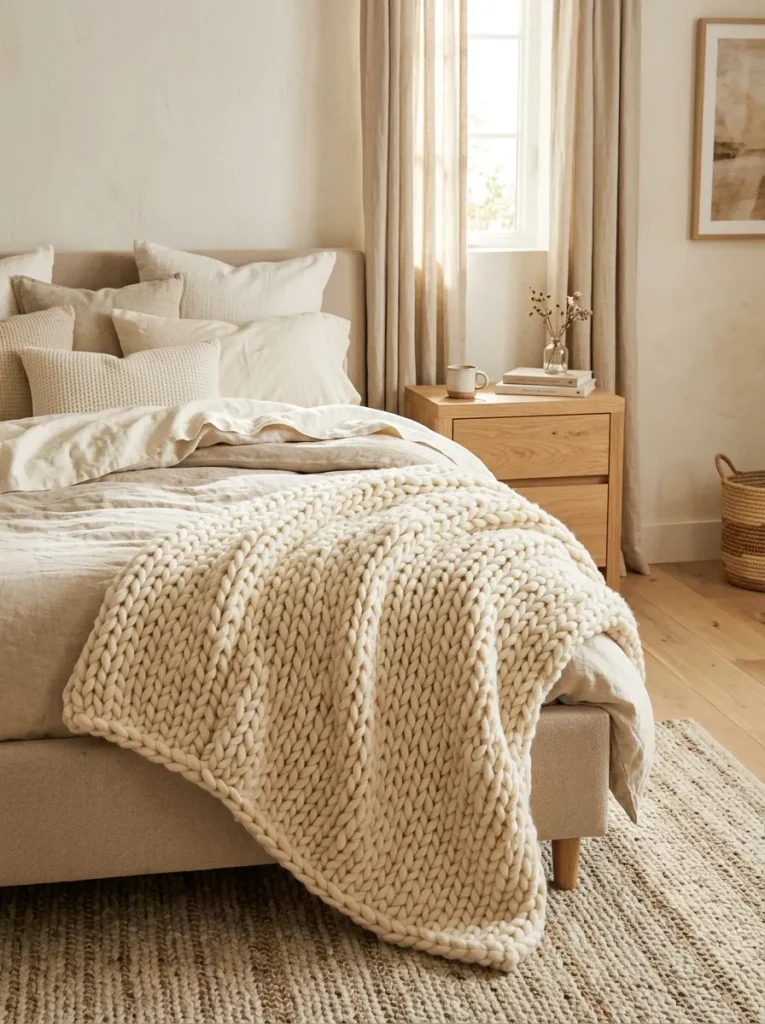
Quick Tip: Choose a throw that contrasts slightly with your bedding texture rather than introducing a completely different color. Fold it loosely over the lower third of the bed or drape one corner for a relaxed finish.
A soft throw adds warmth and visual texture without requiring major changes to the room. For warmer climates, choose lightweight cotton or linen instead of heavy knits. Keep one within easy reach for cool evenings and select a washable fabric if it will be used regularly.
Arched Wall Mirror
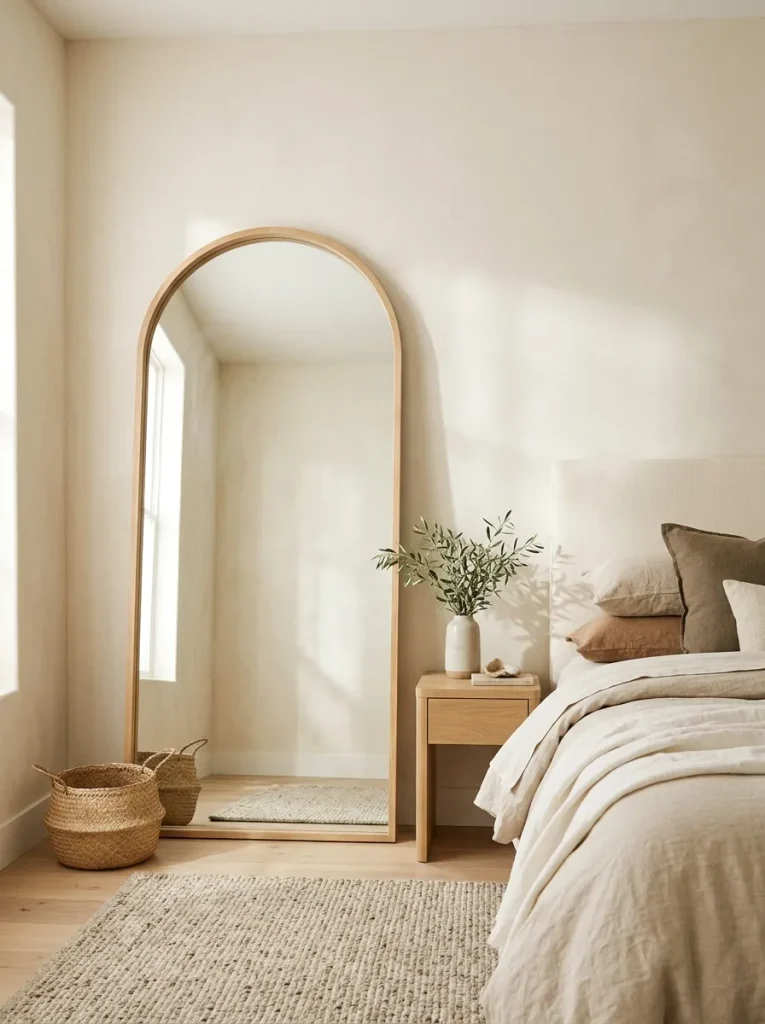
BEFORE:
A blank wall can leave the bedroom feeling visually unfinished, especially beside a wardrobe or near the entry. Dark corners may also make a smaller room appear more enclosed.
AFTER:
A tall arched mirror adds height, reflects available light and provides a practical spot for checking an outfit. Leaning it against the wall keeps installation simple and gives the room a relaxed, contemporary character.
Position the mirror where it can reflect a window or another bright area rather than a cluttered corner. Leave enough clearance around it for comfortable use. For households with children or pets, secure a large leaning mirror to the wall using appropriate anti tip hardware.
Candlelit Accent Shelf
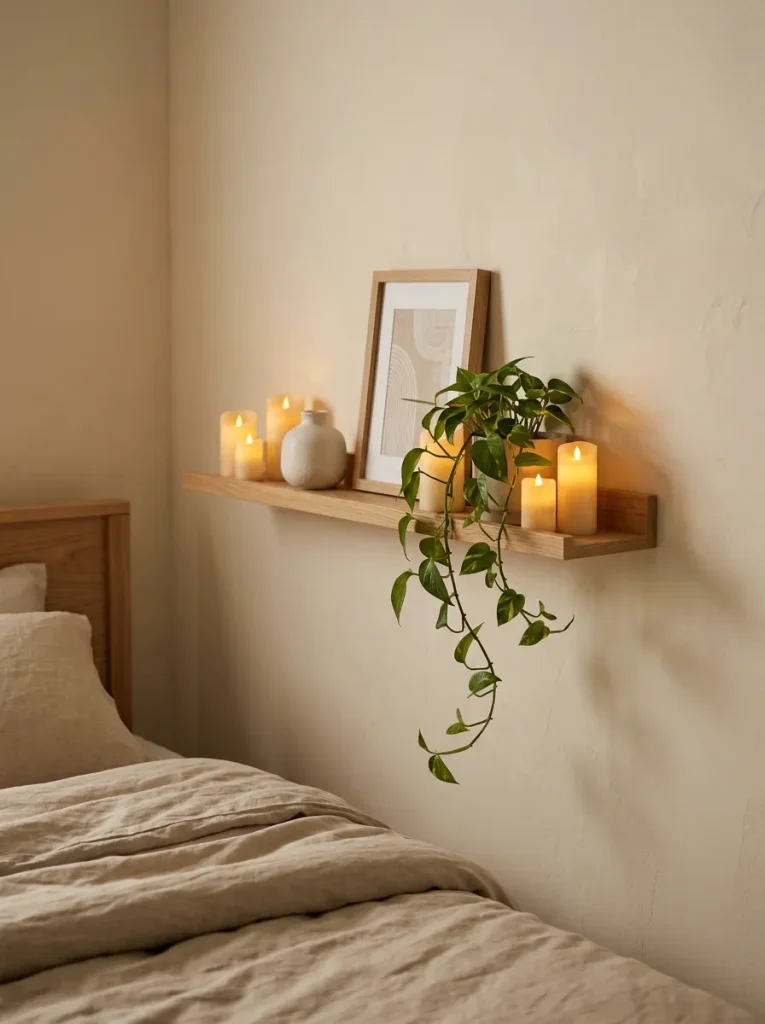
A small accent shelf can turn an empty bedroom wall into a useful decorative display without taking up floor space. Arrange a few flameless candles with a ceramic vase, framed print or small plant to create gentle visual layers. Keep the display simple so it feels restful rather than cluttered.
Choose flameless candles for a safer bedroom setup, especially on shelves above or near the bed. Vary the height of each item to create dimension, but leave some open space between pieces. I’ve noticed that repeating one or two colors already present in the bedding helps the shelf feel naturally connected to the rest of the room.
Soft Wall Sconces
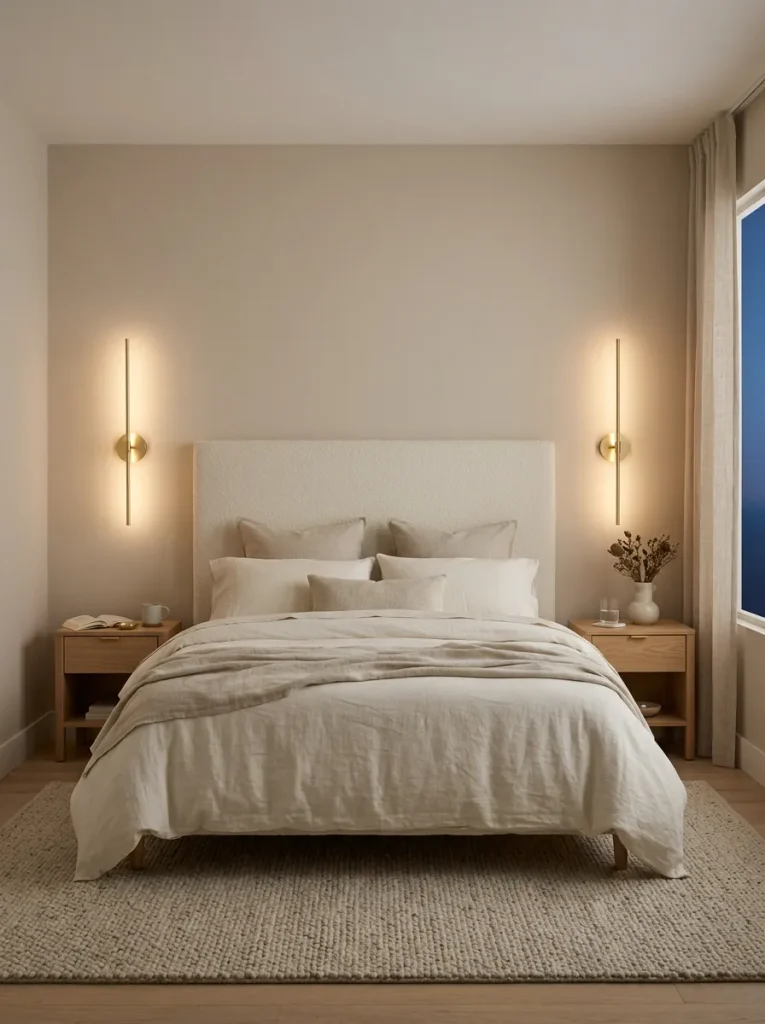
- Mount each sconce at a comfortable reading height beside the bed.
- Choose adjustable shades when you want focused reading light.
- Use warm bulbs around 2700K for a softer nighttime atmosphere.
- Keep the fixtures visually proportional to the headboard.
- Hide visible cords whenever possible for a cleaner finish.
Wall sconces free the nightstands from bulky lamps while creating balanced lighting around the bed. In my experience, adjustable fixtures are especially useful because they let you direct light toward a book without brightly illuminating the entire room. Keep their design simple so they support the room rather than compete with other details.
Natural Linen Bedding
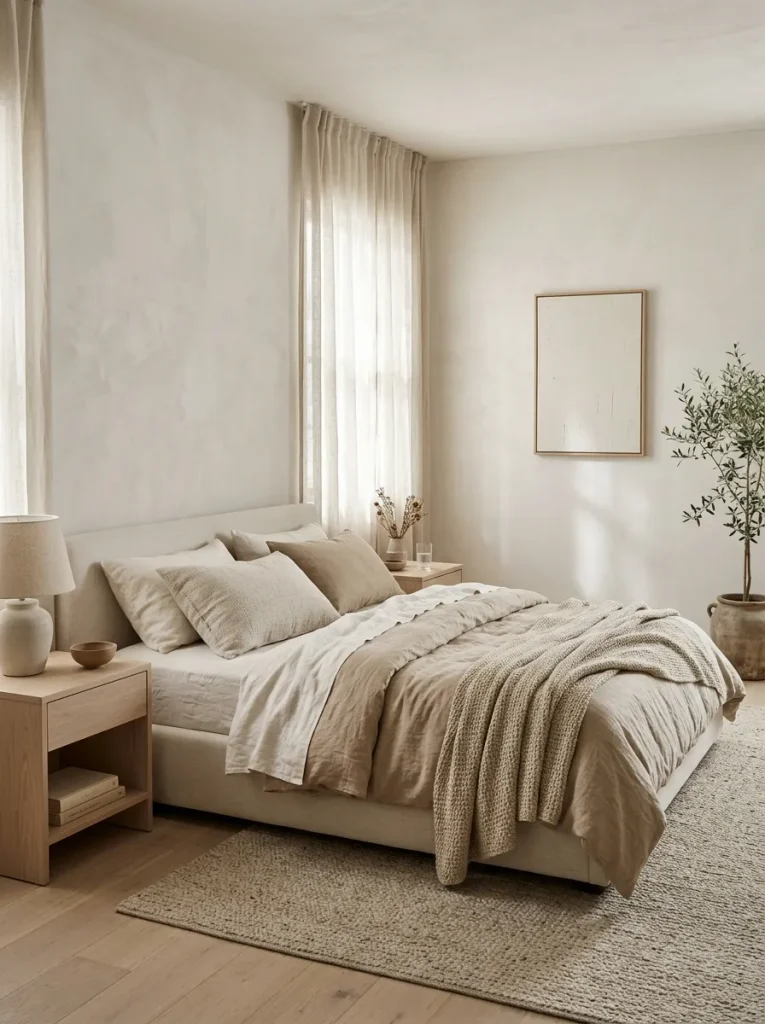
Quick Tip: Choose pre washed linen for a softer, relaxed appearance and better everyday comfort. Keep the bedding slightly rumpled instead of tightly arranged if you prefer an informal, lived-in bedroom style.
Linen works well for restful bedrooms because its natural texture adds depth without requiring bold patterns. Keep the colors close in tone and vary the fabric finishes instead. I’ve noticed that combining smooth sheets with textured linen covers and a woven throw creates enough visual interest while maintaining a calm sleeping environment.
Closed Clothing Storage
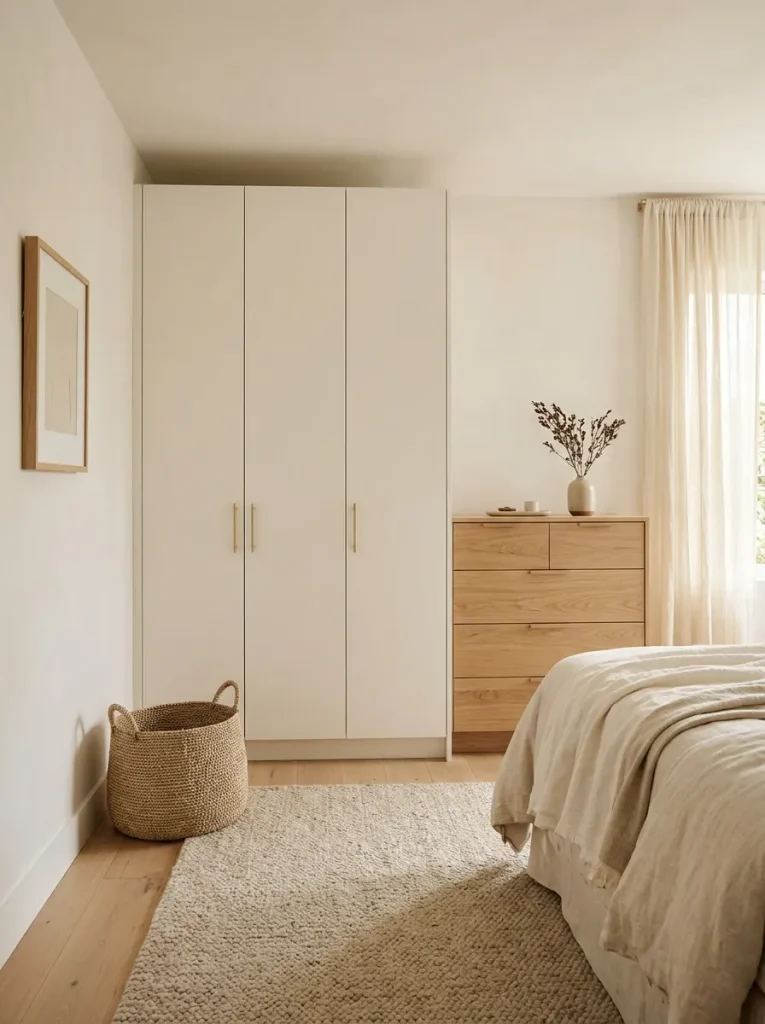
BEFORE: Open clothing racks and overfilled shelves leave garments visible from across the room. The bedroom can quickly feel busy, even when the rest of the decor is simple.
AFTER: Closed storage conceals clothing and accessories, creating cleaner visual lines around the sleeping area. Matching doors in a soft neutral shade help larger storage pieces blend into the room.
Group frequently worn clothes at eye level and place seasonal pieces higher or toward the back. Add slim organizers inside drawers to prevent small accessories from becoming messy. This approach works especially well in bedrooms where limited storage makes clutter noticeable quickly.
Bedside Reading Lamp
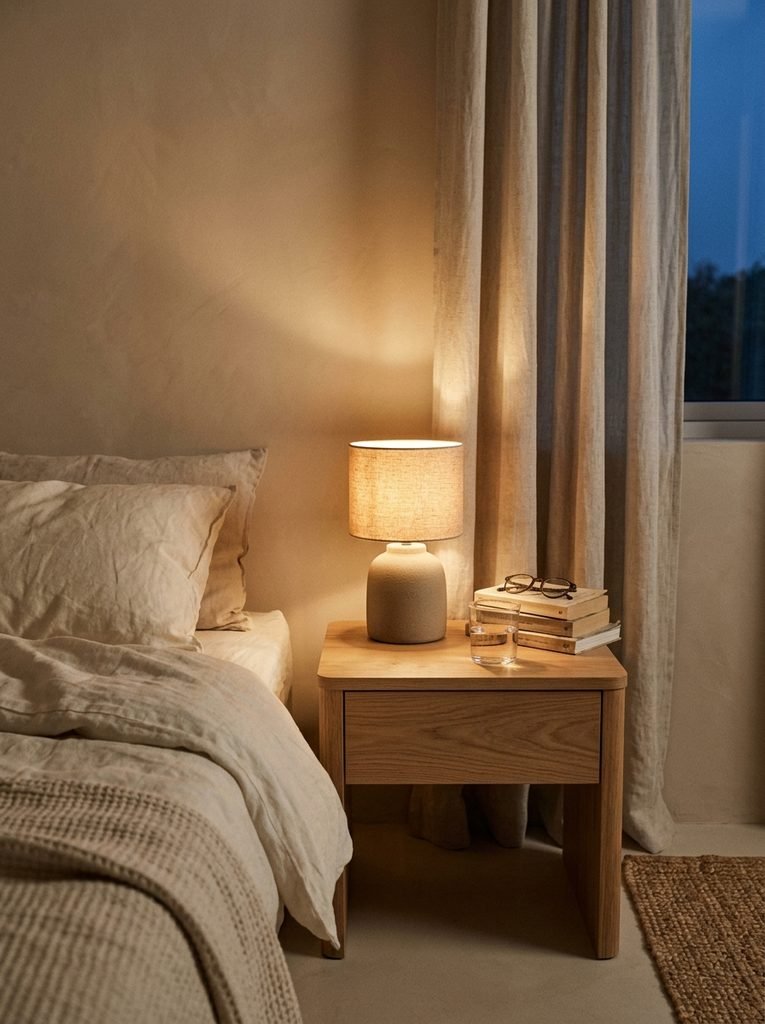
- Measure the table: Check the available surface before choosing a lamp.
- Select the shade: Pick a shade wide enough to distribute comfortable reading light.
- Position the lamp: Keep it close enough to reach without stretching from bed.
- Test the brightness: Use a warm, low glare bulb suitable for nighttime reading.
A dedicated reading lamp makes bedtime routines more comfortable while adding a small decorative detail. Choose a compact fixture if your nightstand is narrow. Keep the base stable and the cord safely positioned away from areas where it can snag or become tangled during regular use.
Soft Upholstered Headboard
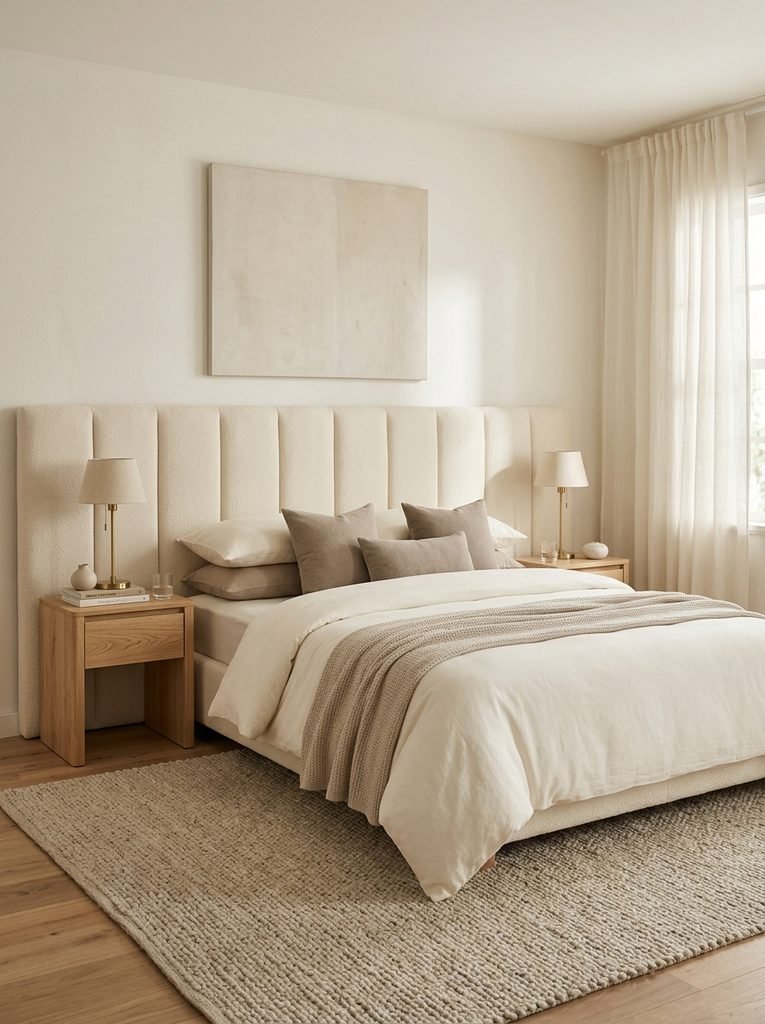
A soft upholstered headboard instantly adds comfort and visual warmth around the bed. Choose a fabric such as linen, cotton or performance upholstery in a neutral shade that works with your existing bedding. A slightly taller design can also give the sleeping area a stronger focal point.
Look for a headboard with firm padding if you like sitting up to read or watch something in bed. Keep surrounding decor simple so the upholstery remains the main feature. For everyday practicality, choose a durable, easy clean fabric, especially if the headboard will receive frequent contact from pillows or bedding.
Curtain Canopy Bed
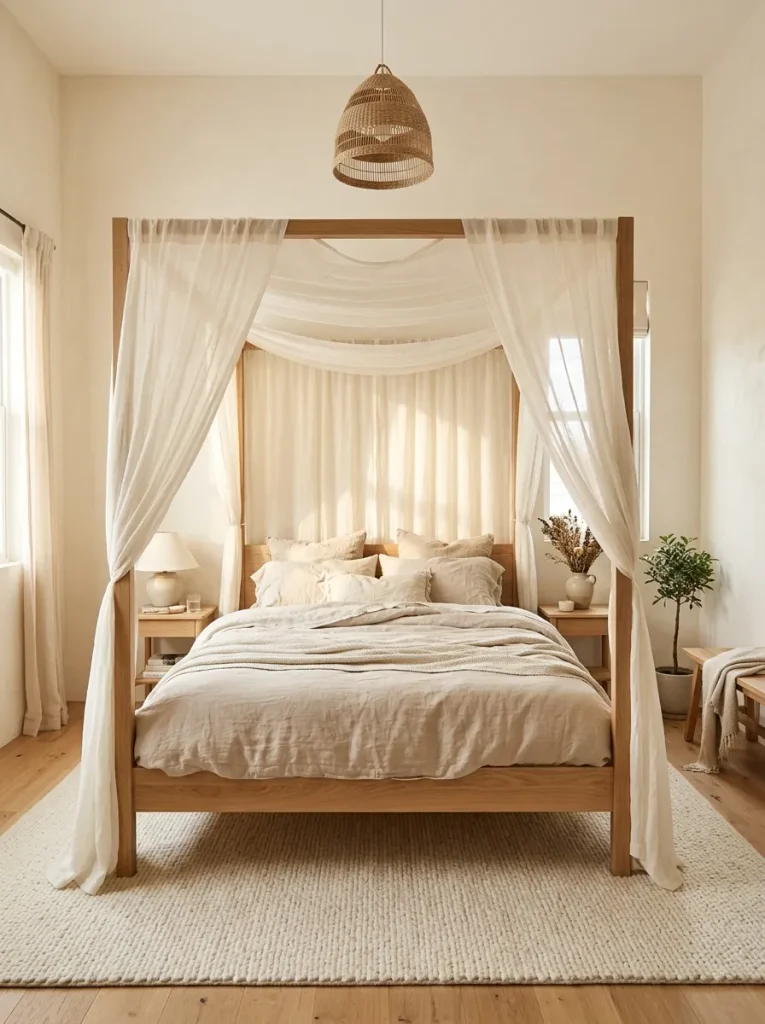
Cost: Medium | Time: One afternoon | Skill Level: Beginner | Best For: Cozy bedroom styling
A curtain canopy adds softness and visual height around the bed without requiring elaborate furniture. Use lightweight panels that can move freely and leave the foot of the bed open. For a cleaner look, keep the bedding simple and let the flowing fabric provide most of the decorative detail.
Gallery Wall
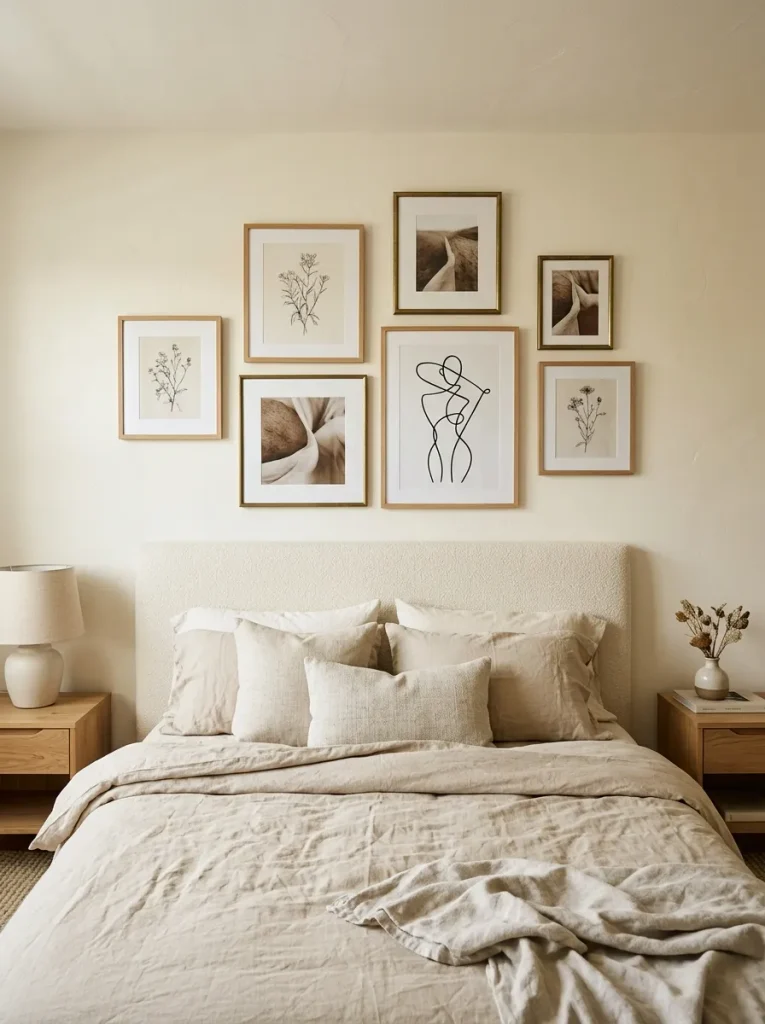
A carefully arranged gallery wall gives the bedroom personality without taking up floor space. Start by choosing artwork that shares two or three colors, then vary frame sizes for visual interest. Leave consistent gaps between pieces so the arrangement feels intentional rather than crowded. Keep the collection above the headboard at a comfortable viewing height.
Accent Pillow Mix
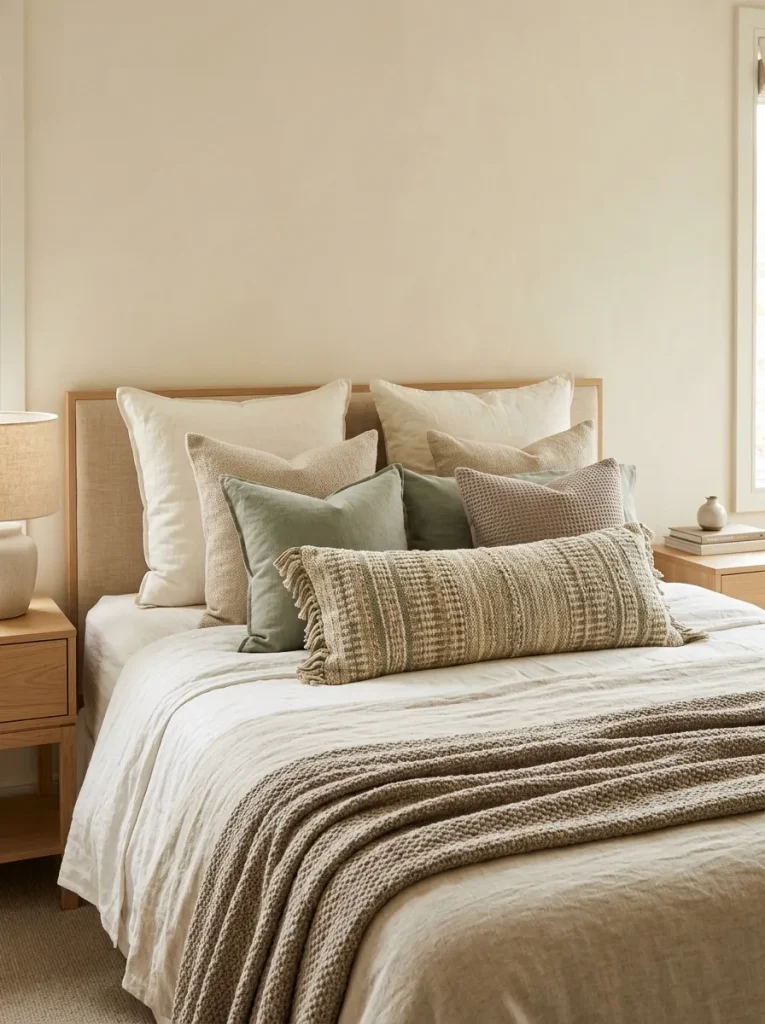
A thoughtful pillow mix can make a simple bed look layered and inviting without adding permanent decor. Start with larger sleeping pillows at the back, then add two medium cushions and one smaller lumbar pillow in front. Vary the textures while keeping the colors within the same calm palette.
Avoid filling the entire headboard with pillows that need to be removed every night. Choose washable covers for everyday practicality, especially for cushions placed close to your face. In my experience, three to five decorative pillows are usually enough to create a styled appearance while keeping the bed comfortable and easy to reset.
Wooden Ceiling Detail
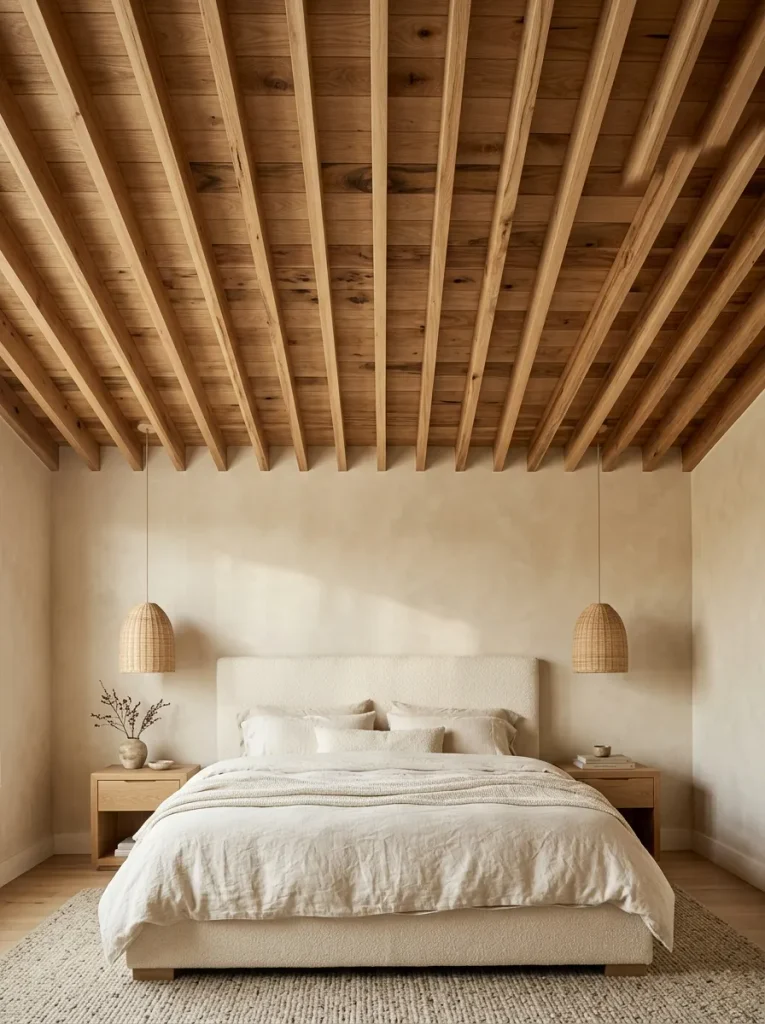
DO:
- Keep beam tones close to other wood finishes in the room.
- Use narrow beams when the ceiling is low.
- Space beams evenly for a balanced appearance.
- Pair the wood with lighter walls and bedding.
DON’T:
- Use too many competing wood tones.
- Add heavy beams that visually lower a small room.
- Overdecorate beneath the ceiling detail.
- Ignore existing ceiling fixtures when planning the layout.
A ceiling detail draws the eye upward and gives the bedroom architectural character. Natural wood works especially well against soft neutral walls because it adds warmth without relying on bold decoration. For a rental, lightweight faux beams or wood look panels can provide a similar visual effect without major structural changes.
Bedside Wall Art
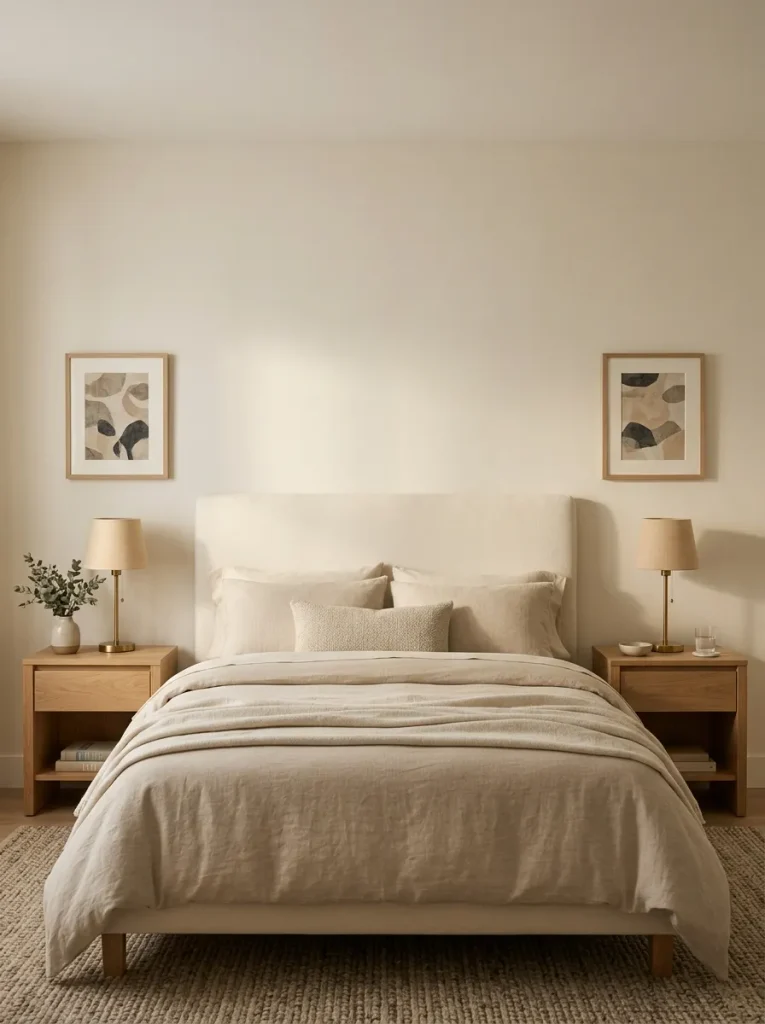
Cost: Low to medium | Time: 1 to 2 hours | Skill Level: Beginner | Best For: Empty bedside walls
Small artwork can fill unused wall space while keeping the sleeping area visually balanced. Choose pieces with simple shapes or muted botanical details rather than highly energetic imagery. Keep the frames aligned with the nightstands or lamps so the arrangement feels connected to the furniture below.
CONCLUSION
A restful bedroom does not require expensive furniture or a dramatic renovation. The right combination of textures, lighting, storage, colors and personal details can make the space feel noticeably more comfortable and inviting. These Bedroom Decor Ideas give you simple starting points, whether you are refreshing one corner or redesigning the entire room.
I’ve seen how small changes can completely shift the way a space feels. Pick one idea that fits your room, try it this week and build from there. Save this post on Pinterest for later and share it with someone who could use a little bedroom inspiration too.