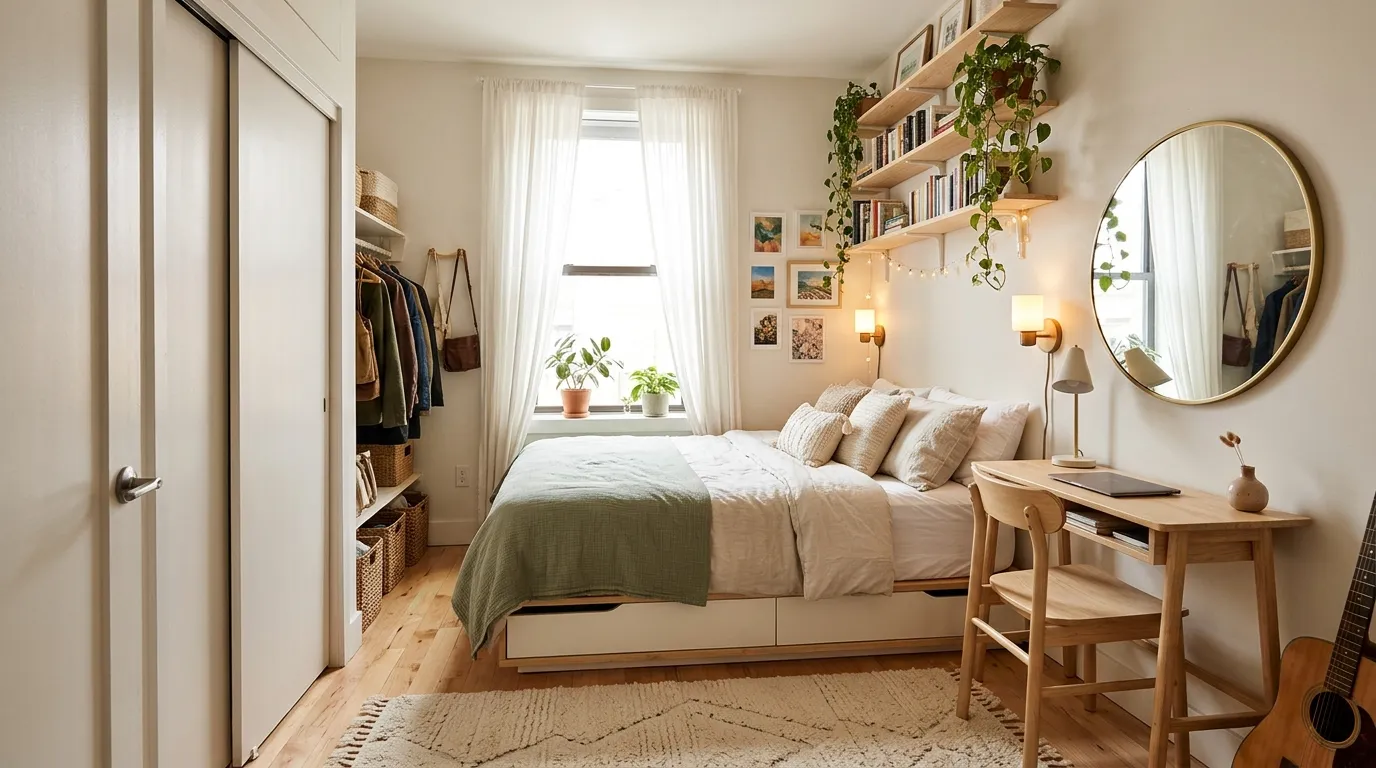
29 Small Bedroom Decorating Ideas That Feel Spacious
A small bedroom can feel cramped even when it has everything you need. The secret to making it feel bigger isn’t always more space. Sometimes, it’s a smarter layout, lighter colors and a few thoughtful decorating choices.
These Small Bedroom Decorating Ideas will help you create a room that feels brighter, more organized and genuinely comfortable without requiring a complete makeover. From floating bedside shelves and floor length curtains to hidden storage and layered neutral bedding, each idea offers a practical way to make better use of your space.
If your bed takes up most of the room or clutter seems to return every day, you’re not alone. I’ve noticed that simple changes, such as clearing bedside surfaces or choosing slimmer furniture, can make a bedroom feel much easier to live in. You’ll discover inspiring ideas for different budgets, layouts and decorating styles, with realistic tips you can try at home. Get ready to create a bedroom that feels open, cozy and completely your own.
1. Light Neutral Palette

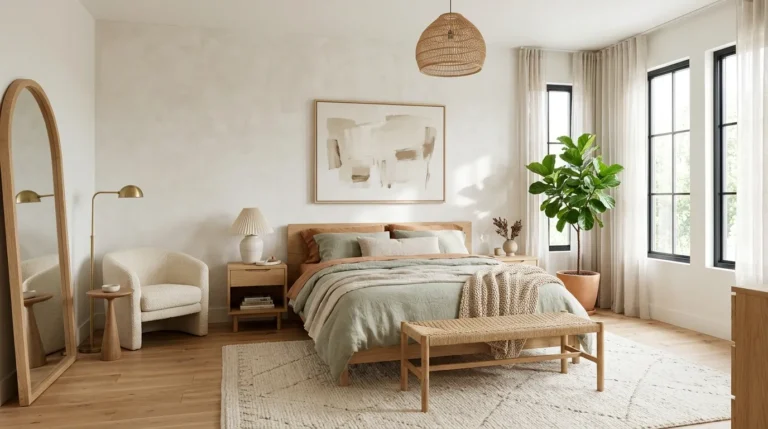
Light colors can make a compact bedroom feel noticeably more open without changing its size. Start with warm white, soft beige or pale greige for the walls, then repeat those shades across your bedding and curtains. Keeping the largest surfaces similar in tone creates a smooth visual flow instead of dividing the room into smaller looking sections.
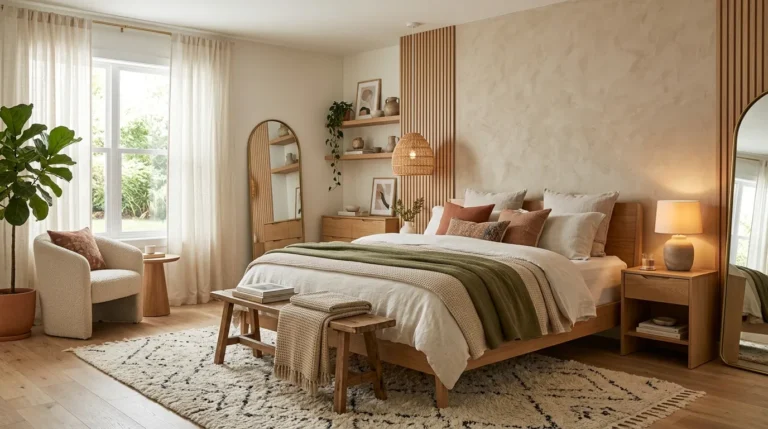
You can still introduce personality through textured cushions, a natural wood bedside table or a muted green throw. In my experience, combining two or three complementary neutrals looks more inviting than using plain white everywhere. Choose warm undertones if you want the room to feel cozy rather than cold.
2. Floor Length Curtains
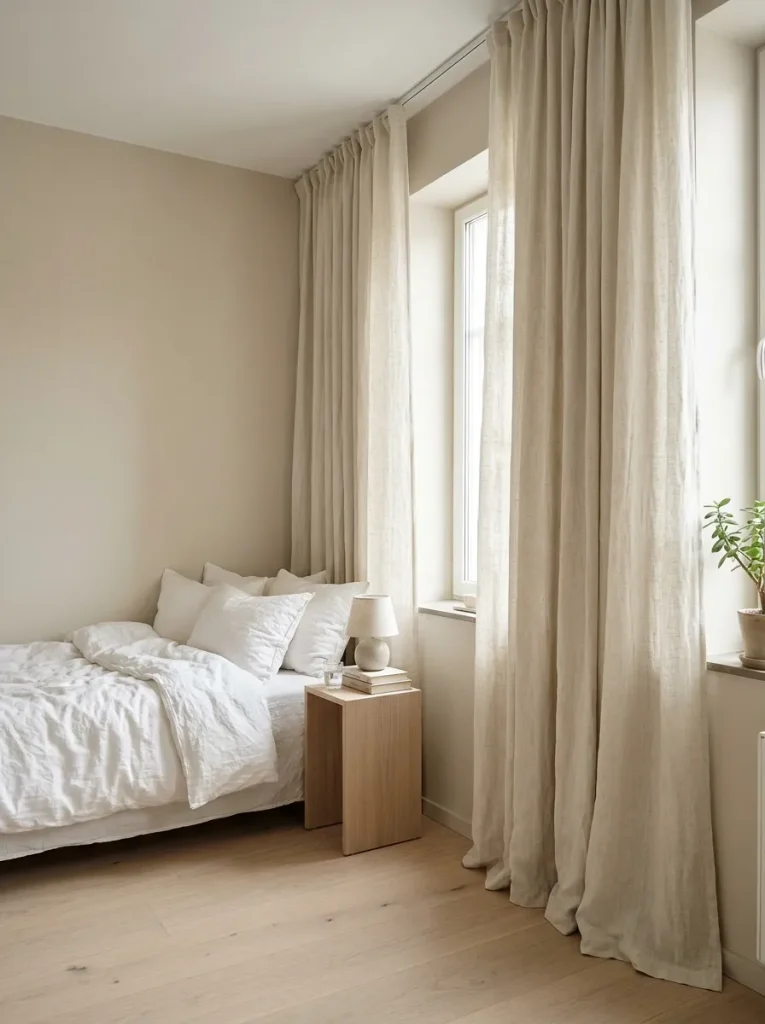
- Mount curtains higher: Install the curtain rod several inches below the ceiling to draw the eye upward.
- Extend the rod: Let it reach beyond both sides of the window to create a wider appearance.
- Choose lightweight fabric: Linen or sheer cotton allows natural light to filter through.
- Match the walls: Curtains in a similar shade help the window area blend into the room.
- Keep hems tidy: Let the fabric just touch the floor for a clean, finished look.
Heavy, dark curtains can make a small room feel enclosed, especially when they cover much of the window. For better results, choose a light fabric with a simple weave and avoid bulky valances. If privacy is important, layer sheer curtains with a discreet blackout lining so you can control light without sacrificing the airy appearance.
3. Floating Bedside Shelves
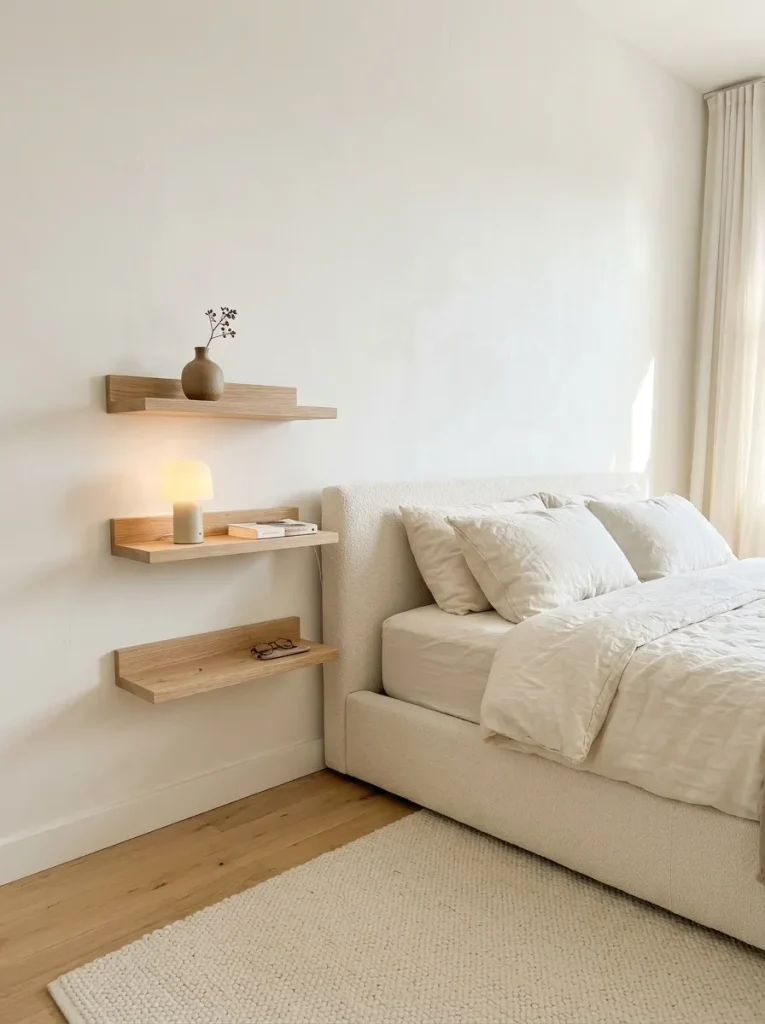
Quick Tip:
Mount each shelf close to mattress height so your phone, book and water glass remain within easy reach. Before drilling, check the wall construction and use suitable fixings. Keep the shelf depth modest to avoid bumping into it when getting in and out of bed.
Floating shelves free up floor space while providing the everyday storage a bedside table usually offers. Choose a design wide enough for your essentials, but leave decorative objects to a minimum. A small wall mounted lamp above the shelf can replace a bulky table lamp, creating a cleaner arrangement that works especially well beside narrow beds.
Read More: Luxury Bedroom Ideas: 25 Opulent Touches to Splurge On
4. Under Bed Storage Drawers
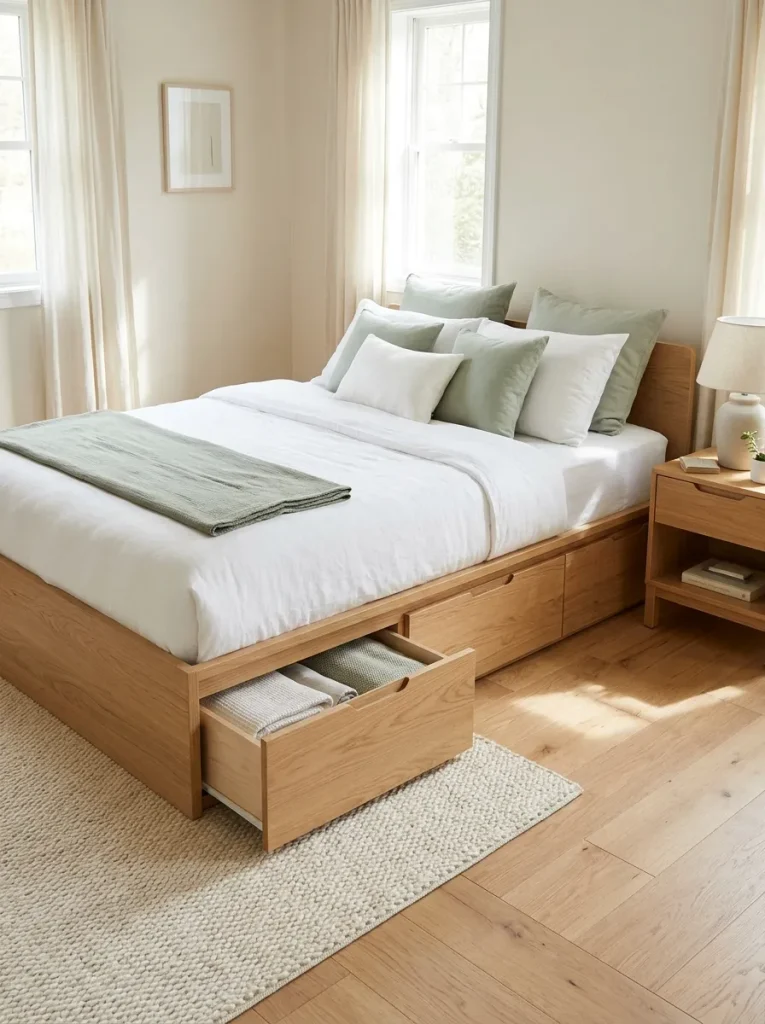
BEFORE
Shoes, spare blankets and seasonal clothes spill out of closets or collect in baskets around the bed. The visible clutter makes the bedroom feel tighter and leaves less room to walk comfortably.
AFTER
Under bed drawers keep those belongings hidden while preserving valuable floor space. The bedroom looks tidier and everyday essentials remain easy to reach.
Choose drawers that slide smoothly and measure the clearance beneath your bed before buying them. For beds without built in storage, flat fabric containers with lids work well for extra linens and of season clothing. Label each container so you can find things quickly without pulling everything out.
5. Wall Mounted Reading Lights
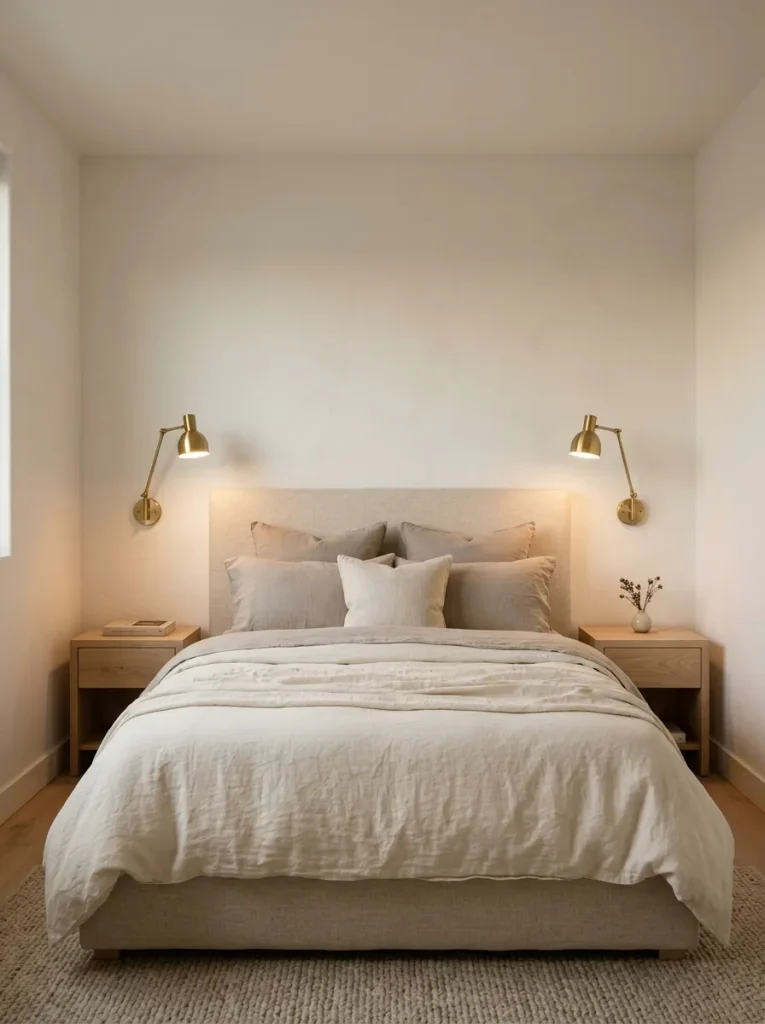
- Choose the fixture: Select a slim sconce or adjustable reading light that suits your bedroom style.
- Measure the height: Position the light where you can comfortably read while sitting against your pillows.
- Check the wiring: Use existing wall outlets, plug in sconces or hire a qualified electrician for hardwired fixtures.
- Keep the bedside clear: Remove bulky table lamps and leave room for only your daily essentials.
Wall mounted lighting gives a small bedroom a more open and organized appearance. Adjustable fixtures are particularly useful if two people share the room and have different reading habits. Choose warm white bulbs for a relaxing atmosphere and check that the light falls on your book rather than shining directly into your eyes.
6. Mirrors Across From Windows
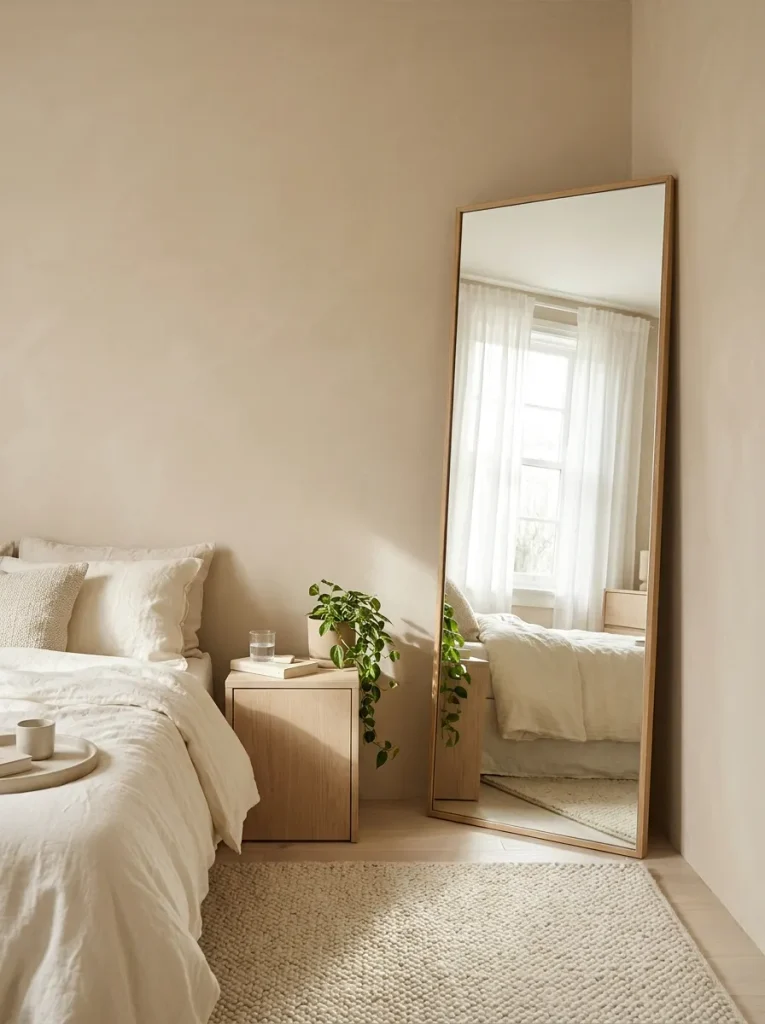
| Design Choice | Option A | Option B |
|---|---|---|
| Mirror shape | Tall rectangular mirror | Small decorative mirror |
| Placement | Across from a window | On a side wall |
| Visual effect | Reflects more daylight and room depth | Adds a smaller reflective accent |
| Best use | Dark or narrow bedrooms | Rooms with limited wall space |
A well placed mirror can make a compact bedroom feel brighter by reflecting daylight and showing more of the room. Position it to capture an attractive view, such as a window or a light colored wall. Before mounting it, check the reflection from your bed and doorway. Secure heavy mirrors with appropriate wall anchors, especially in homes with children or pets.
7. Vertical Wall Storage

DO
- Install narrow shelves above a desk or dresser to use empty wall space.
- Store books, folded accessories and small baskets on higher shelves.
- Keep frequently used items at a comfortable reaching height.
- Choose finishes that coordinate with your existing furniture.
DON’T
- Fill every shelf with decorative objects.
- Place heavy items on shelves without suitable wall fixings.
- Install deep shelves where they obstruct movement.
- Mix too many colors and finishes in one small area.
Vertical storage draws the eye upward and keeps useful belongings off crowded surfaces. Arrange heavier items on lower shelves and lighter decor above them. A few open spaces between objects help the arrangement feel intentional rather than busy. This approach works particularly well in bedrooms with limited closet space.
8. Slim Profile Furniture
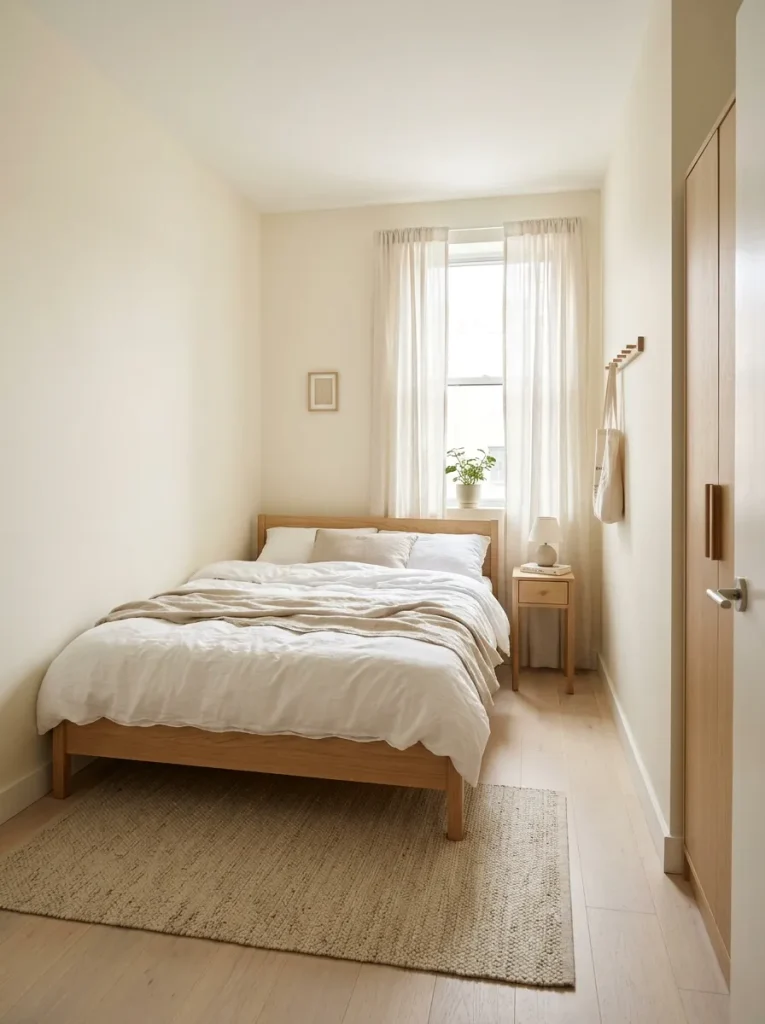
Cost: Moderate, depending on existing furniture and replacements.
Time: One afternoon to rearrange and measure.
Skill Level: Beginner.
Best For: Narrow bedrooms and tight walking paths.
Bulky furniture can consume valuable floor space even when the room contains very few pieces. Choose a bedside table with a narrow footprint, a bed frame with simple lines and a wardrobe that fits neatly against the wall. Before buying anything, measure door openings, drawer clearance and the space needed to walk around the bed.
I’ve noticed that furniture with exposed legs often makes a room feel lighter because more flooring remains visible underneath. You don’t need to replace everything at once. Start with the largest obstruction, then adjust smaller pieces until the layout feels comfortable and easy to navigate.
9. Layered White Bedding
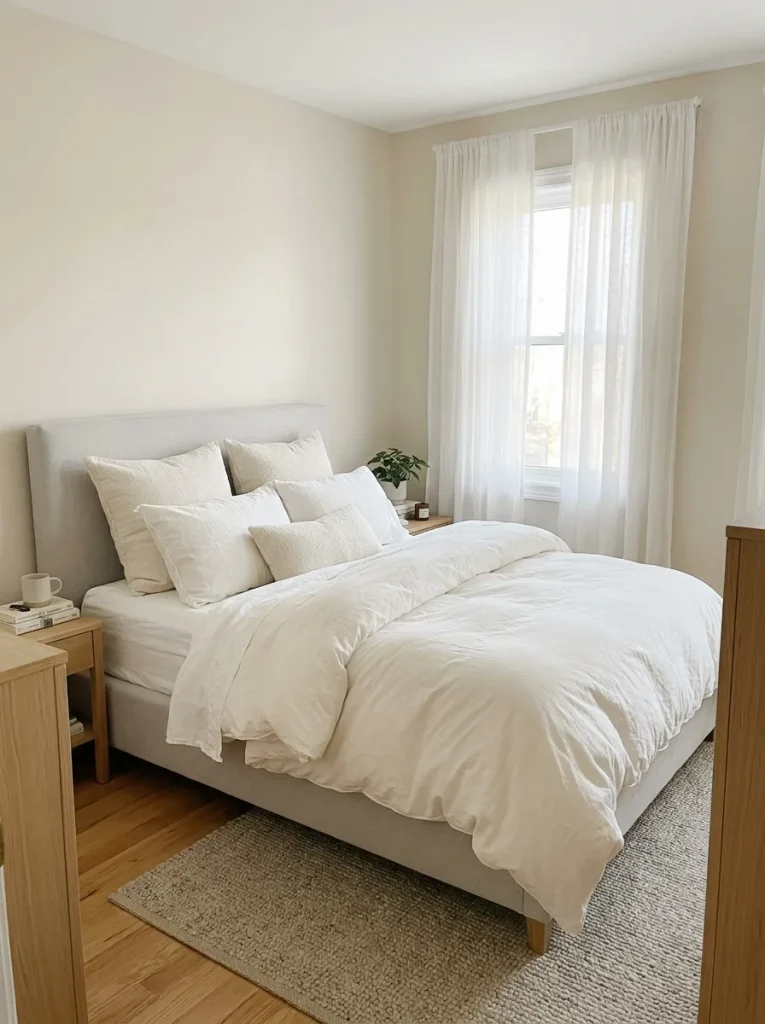
A bed covered in soft white layers can become the brightest feature in a small bedroom. Start with crisp cotton sheets, add a lightweight duvet and finish with two sleeping pillows and one or two textured accent cushions. Mixing subtle fabrics adds depth without introducing too many competing colors.
For a practical everyday setup, choose bedding that washes easily and doesn’t require constant arranging. A cream knitted throw folded across the foot of the bed adds warmth, while matching pillowcases keep the overall look cohesive. If the room already has patterned wallpaper or colorful artwork, simple bedding helps balance the visual activity.
10. Wall Mounted Folding Desk

- Measure the wall: Choose a position that allows the desk to open fully without blocking the bed or doorway.
- Select a compact design: Look for a shallow desktop with secure folding brackets and a simple finish.
- Add vertical storage: Install a narrow shelf above the desk for notebooks and small supplies.
- Choose a lightweight chair: Use a chair that slides beneath the desk when the surface is folded away.
- Keep essentials nearby: Store stationery in one small container instead of spreading items across the desktop.
A folding desk creates a useful work area without permanently occupying valuable floor space. When your work is finished, fold it against the wall and return the bedroom to its main purpose: rest. Check the desk’s weight rating and mount it securely into suitable wall supports, especially if you plan to use a laptop or monitor.
11. Soft Ambient Lighting
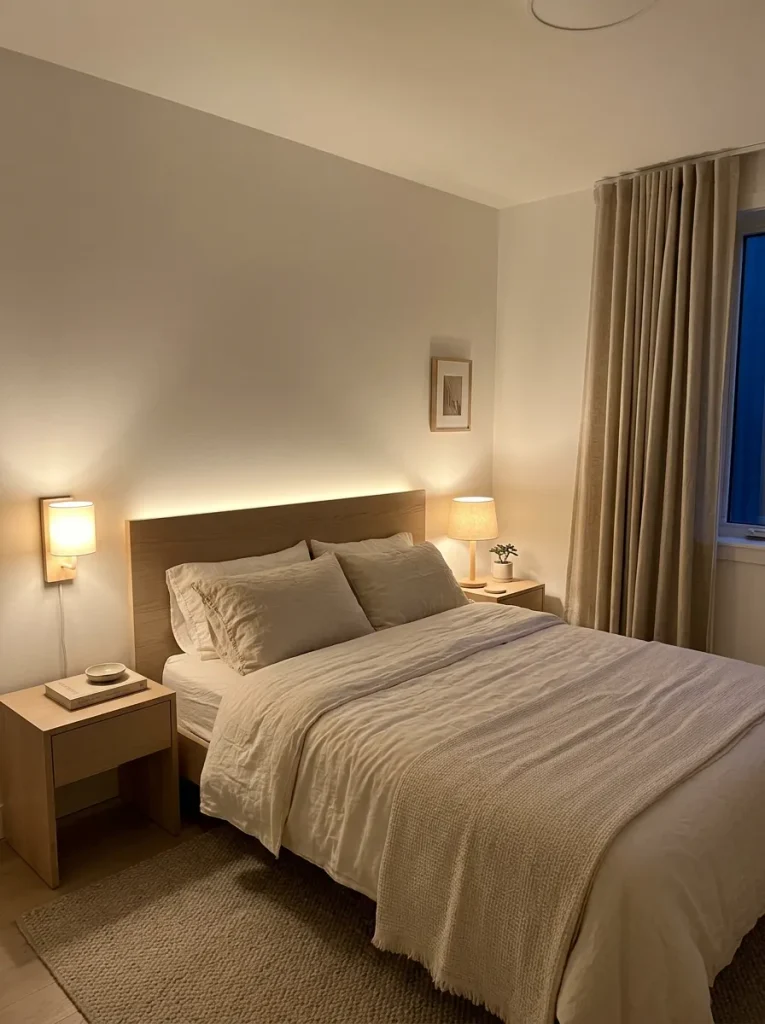
Quick Tip:
Use warm white bulbs around 2700K to create a relaxing evening atmosphere. Combine one main light with a bedside lamp or wall sconce and choose dimmable bulbs where possible. Avoid placing several bright lights at the same level, which can make a compact room feel visually harsh.
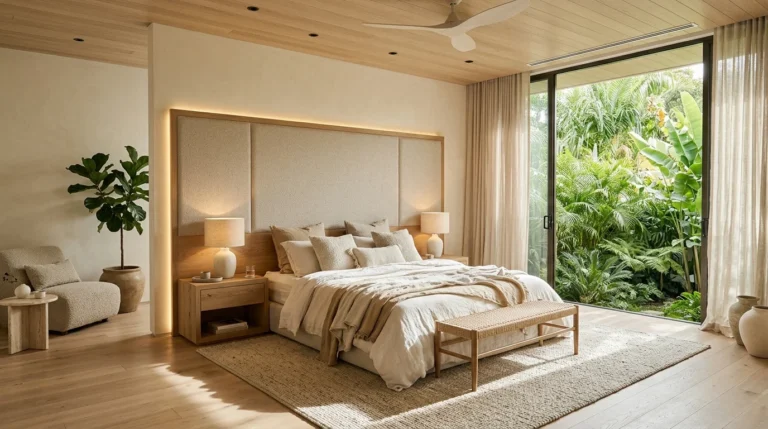
Thoughtful lighting adds depth to a bedroom without taking up extra floor space. A wall mounted lamp frees the bedside surface, while indirect light behind a headboard can create a gentle glow. Keep fixtures simple and position them to illuminate darker corners. The result is a room that feels welcoming at night and remains practical for everyday routines.
12. Low Profile Bed Frame
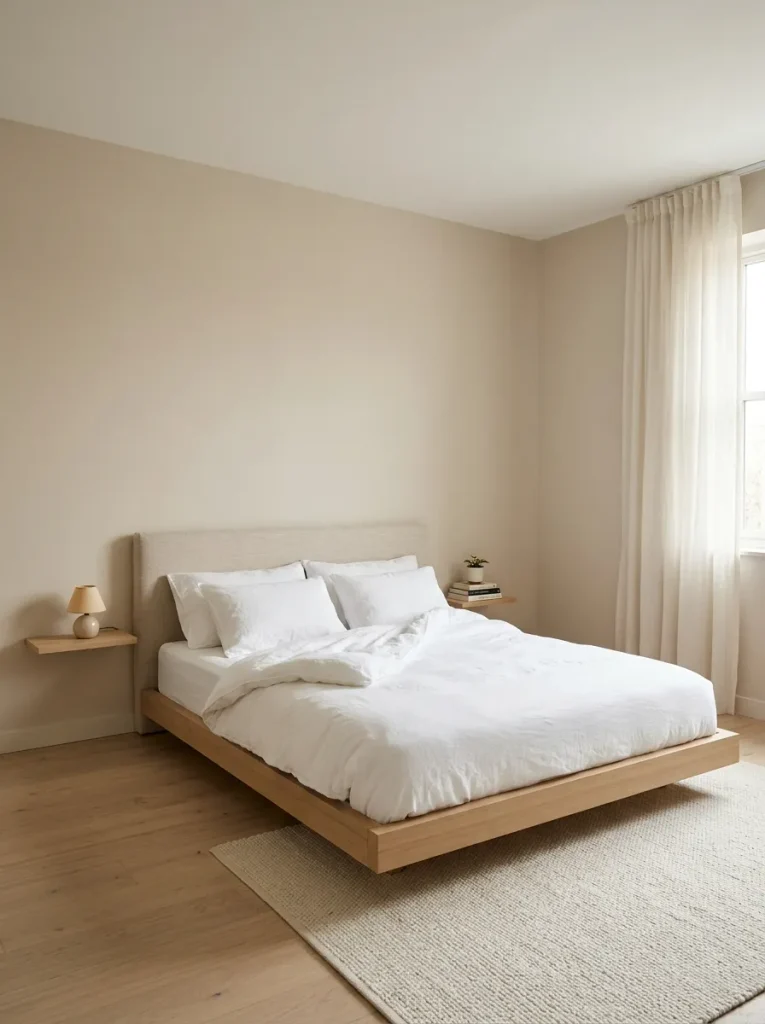
BEFORE
A tall, bulky bed frame with a thick footboard can dominate a small bedroom. When the bed takes up most of the visual space, the room may feel crowded even if the walking paths are clear.
AFTER
A low profile frame creates a lighter silhouette and leaves more of the walls visible. The simpler outline helps the bed feel less imposing, especially when paired with pale bedding and streamlined furniture.
Before purchasing a new frame, measure the mattress height and consider how easily you can get in and out of bed. A lower design isn’t suitable for everyone, so comfort matters as much as appearance. Choose a sturdy frame with clean lines and keep the surrounding furniture visually simple to maintain a balanced layout.
13. Built In Wardrobe Storage
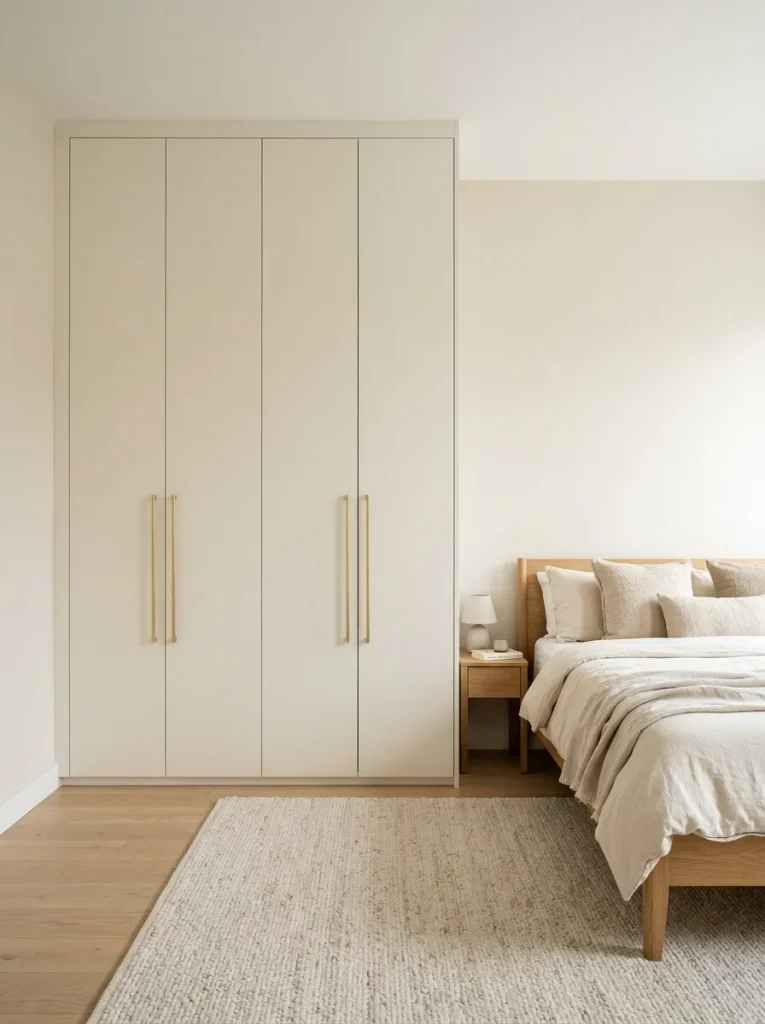
- Measure the available wall: Check the width, height and depth before planning the wardrobe.
- Choose simple doors: Flat panels in a light shade create a quieter visual appearance.
- Organize the interior: Add adjustable shelves, hanging rails and small drawers for different belongings.
- Use the full height: Store seasonal items on upper shelves and everyday clothes within easy reach.
Built in storage can make a small bedroom feel more organized because it reduces the need for separate cabinets and dressers. If custom cabinetry isn’t within your budget, a standard wardrobe with matching doors can create a similar effect. Keep the top free of loose boxes and choose internal organizers that make the most of every shelf.
14. Mirrored Wardrobe Doors
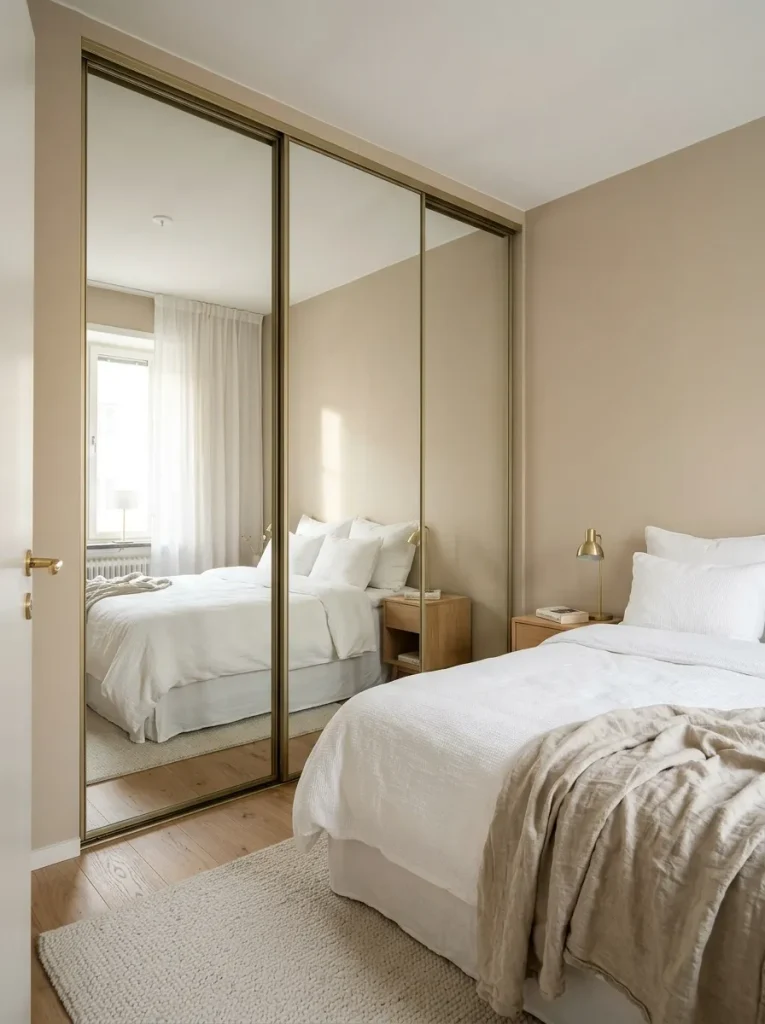
| Design Choice | Option A | Option B |
|---|---|---|
| Door finish | Full height mirror | Matte ivory panel |
| Light reflection | Reflects nearby daylight | Reflects little light |
| Visual effect | Creates a stronger sense of depth | Creates a quiet, understated look |
| Maintenance | Needs regular cleaning | Usually shows fewer fingerprints |
Mirrored wardrobe doors combine a functional dressing mirror with a surface that reflects light across the room. They are particularly useful when there isn’t enough wall space for a separate full length mirror. Position the wardrobe opposite a window or a bright section of the room for the best effect and keep the reflected area tidy so it doesn’t appear visually cluttered.
15. Hidden Laundry Hampers
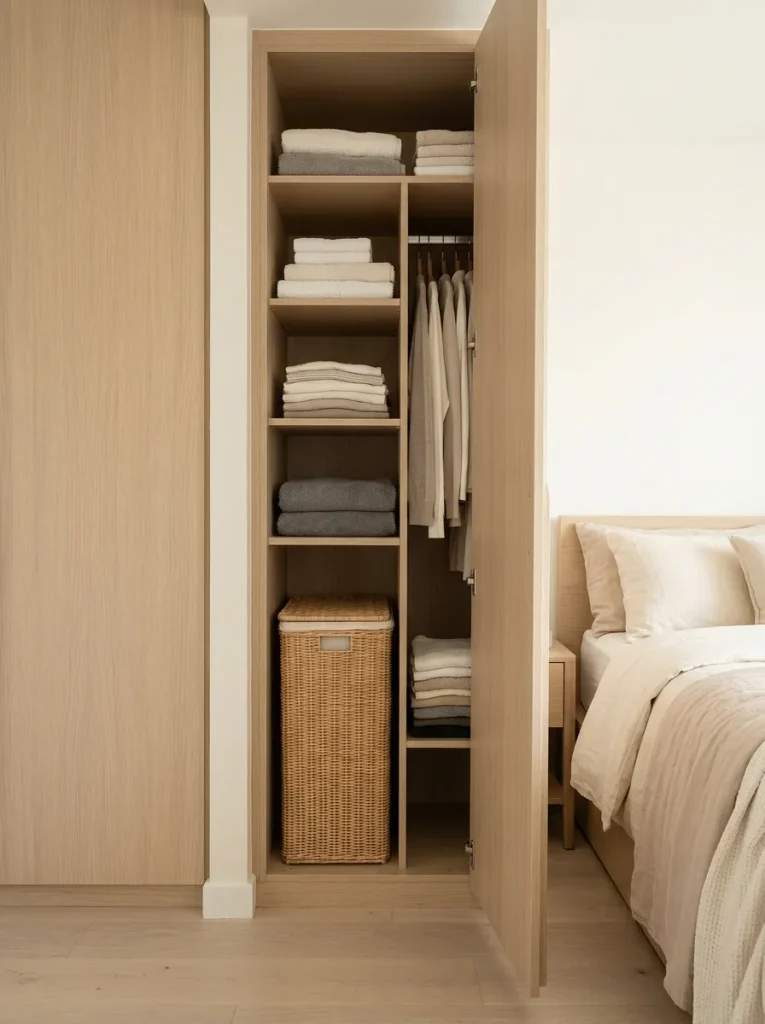
DO
- Choose a slim hamper that fits inside a wardrobe or beside a dresser.
- Use a breathable fabric or woven design for everyday laundry.
- Separate light and dark clothing with removable washable bags if needed.
- Empty the hamper regularly to prevent overflow.
DON’T
- Leave laundry baskets in the main walking path.
- Choose a hamper that blocks wardrobe doors or drawers.
- Store damp towels in a sealed container for long periods.
- Buy an oversized design that occupies valuable floor space.
Loose clothing and laundry baskets can quickly make a small bedroom look untidy. A designated hidden hamper gives worn clothes a consistent place without adding visual clutter. Measure the available gap before choosing one and select a removable liner that is easy to wash. Even a narrow space beside the wardrobe can provide enough room for a compact design.
16. Wall to Wall Headboard

Cost: Moderate to high, depending on materials and installation.
Time: One afternoon for a simple DIY panel project.
Skill Level: Beginner to intermediate.
Best For: Narrow bedrooms that need a unified focal point.
A wide headboard can make a small bedroom feel more thoughtfully designed by connecting the bed and bedside areas into one visual feature. Upholstered panels add softness, while slim wood panels create a cleaner, more architectural look. Choose a shade close to the wall color to keep the overall appearance calm.
For a budget friendly version, mount a padded panel behind the bed and use small floating shelves on either side. Keep the headboard relatively shallow so it doesn’t eat into the room’s usable depth. Measure the wall carefully before installing anything, especially if outlets or switches sit behind the bed.
17. Compact Corner Seating
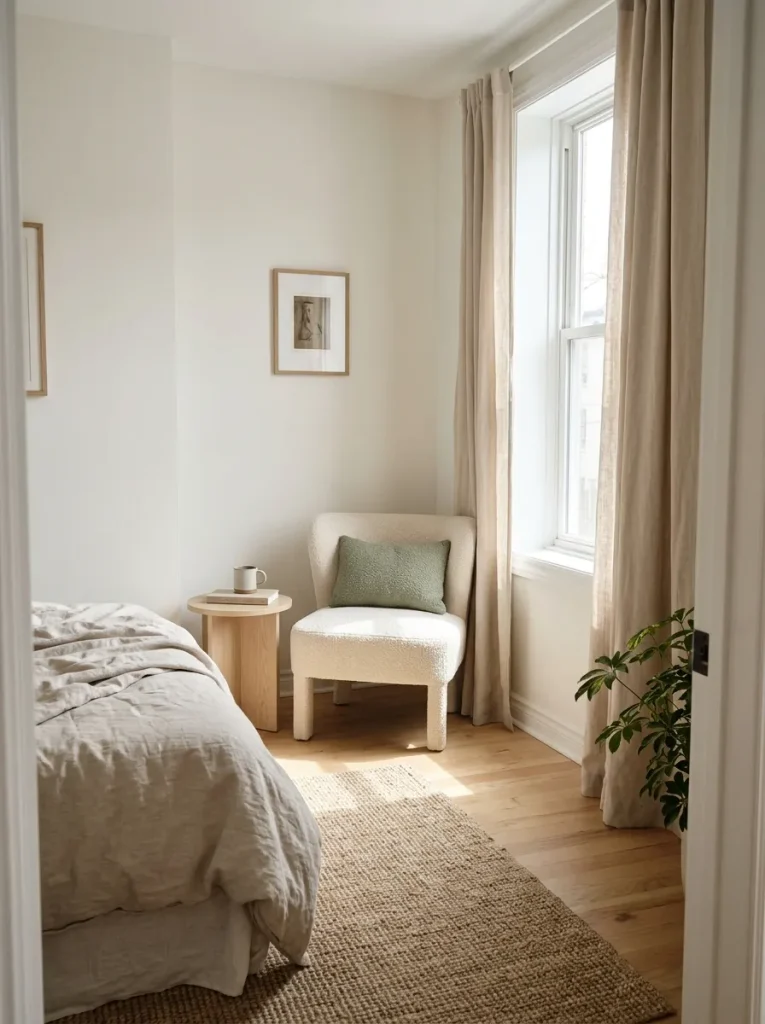
A quiet corner can become a useful retreat without requiring a full sized lounge chair. Choose a narrow accent chair with exposed legs, then pair it with a small round side table that leaves enough room to move around comfortably.
Keep the arrangement simple with one cushion and a lightweight throw. If the bedroom is especially tight, a small backless stool or cushioned bench may work better than a chair with wide arms. Measure the available floor area before shopping and make sure the seating doesn’t obstruct drawers, do or the path around the bed.
18. Consistent Wood Finishes
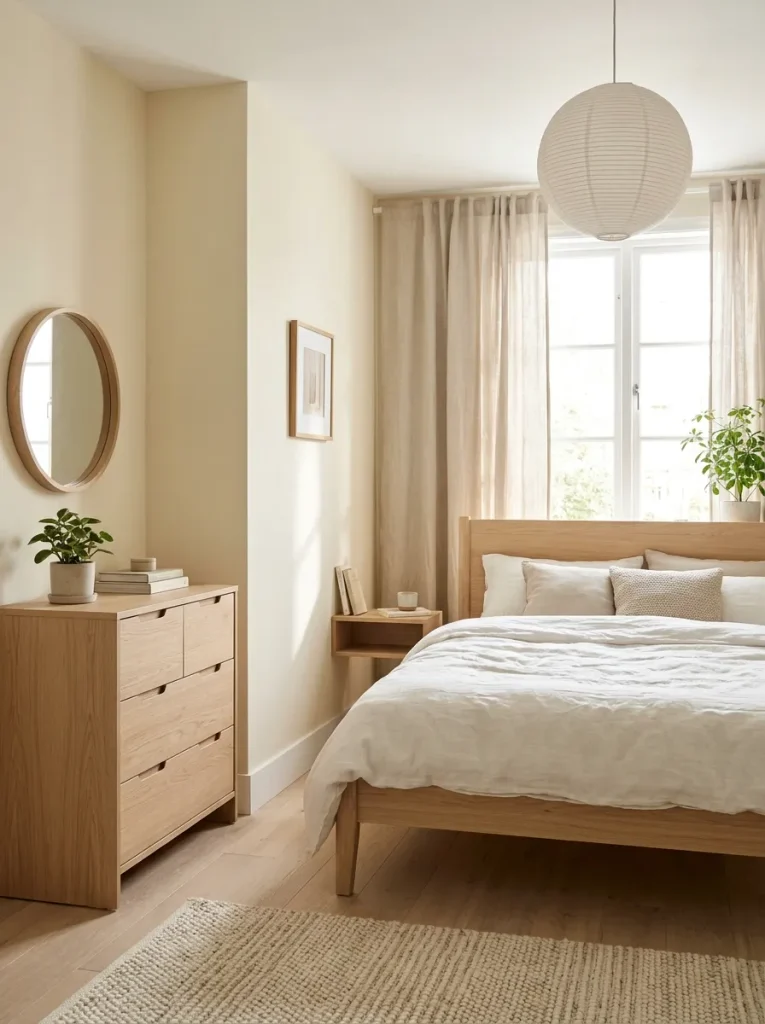
Quick Tip:
Choose one main wood tone for your bed and largest furniture pieces. If you already own different finishes, connect them with similar undertones or repeat one wood shade in smaller accessories.
Consistent wood finishes help a small bedroom feel organized because the eye moves naturally between furniture pieces instead of stopping at every contrasting surface. You don’t need an exact match across everything. Pale oak, for example, can work with slightly darker natural wood when the colors share warm undertones. Keep larger pieces coordinated and introduce contrast through textiles, artwork or hardware.
19. Minimalist Wall Art
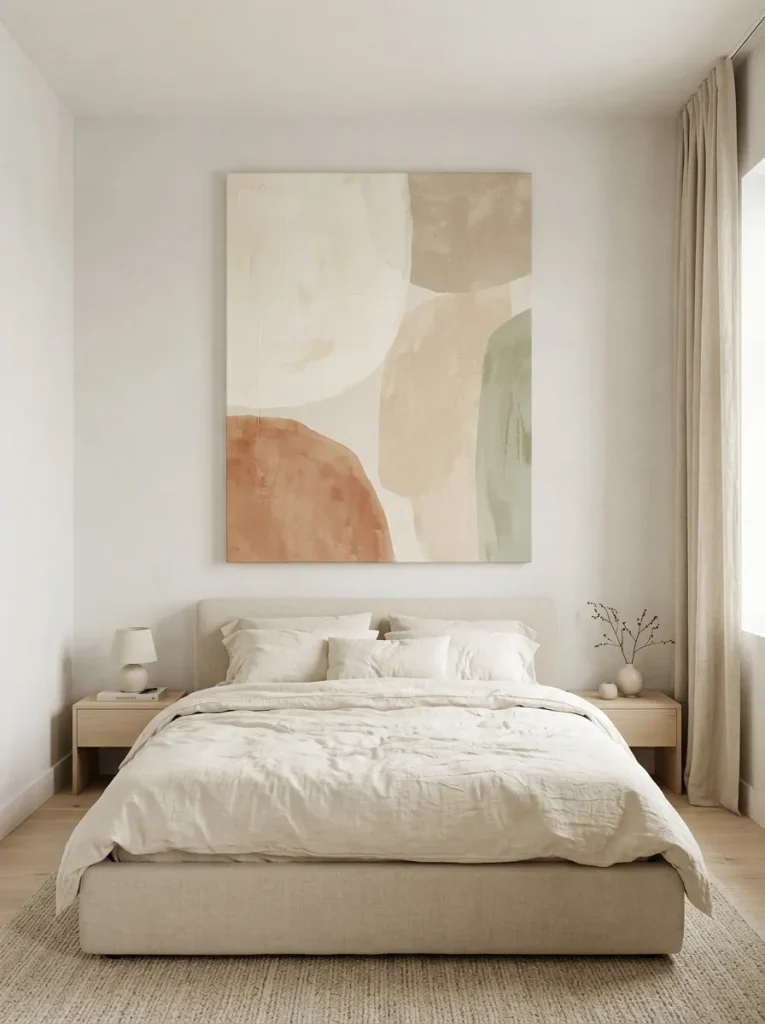
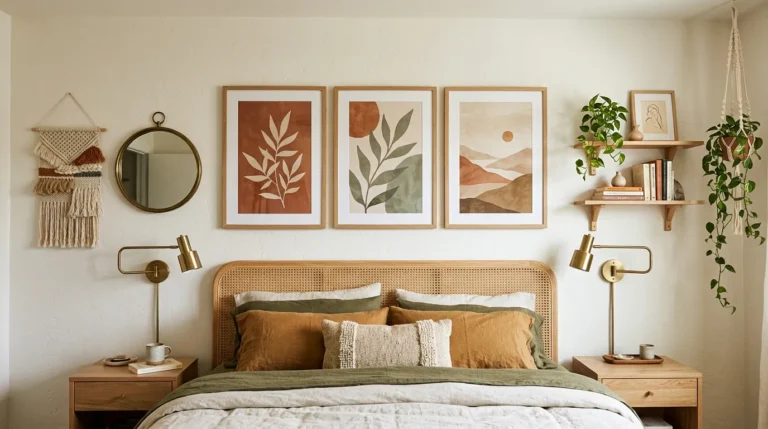
- Choose one focal piece: A single medium or large artwork creates a clear visual anchor above the bed.
- Keep colors coordinated: Repeat two or three shades from your bedding or curtains.
- Hang it at the right height: Position the artwork comfortably above the headboard without leaving an awkward gap.
- Use slim frames: Light wood or simple white frames keep the display visually understated.
- Leave breathing room: Avoid filling every empty wall with small prints and decorative objects.
Too many small pictures can make a compact bedroom feel busy, especially when the walls already contain shelves or mirrors. A carefully chosen artwork gives the room personality without adding physical clutter. Abstract prints, subtle botanical illustrations and simple landscape photography work well with neutral interiors. If you rent, lightweight frames and removable picture hanging strips may be practical alternatives to drilling.
20. Space Saving Bedside Caddies
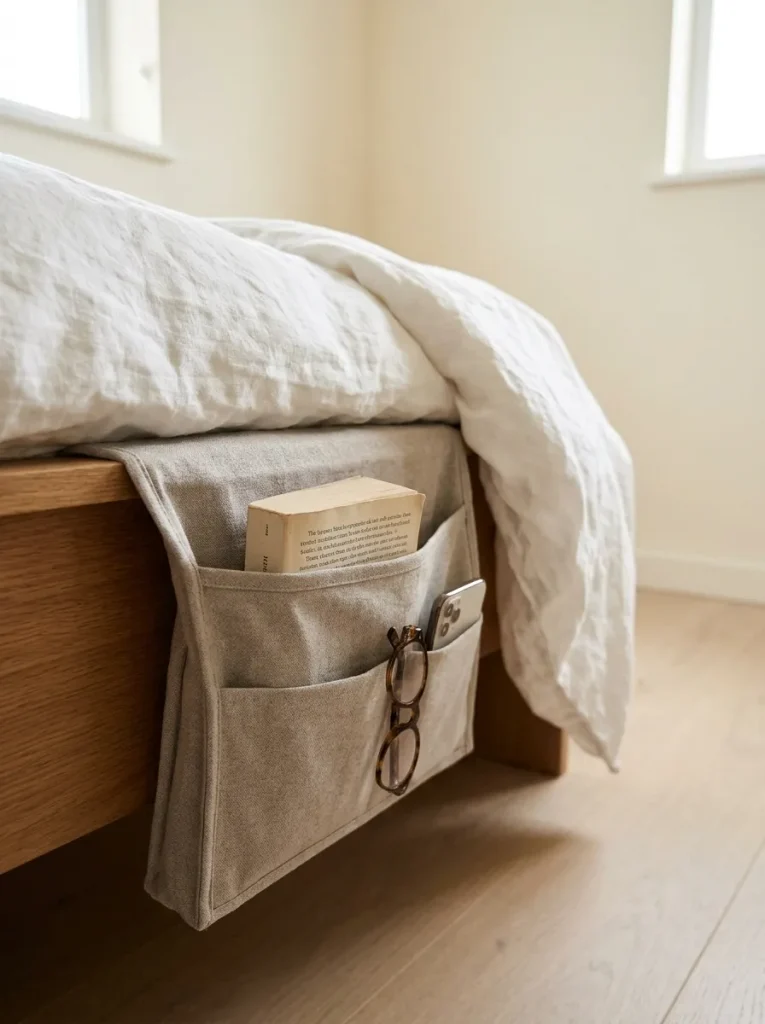
Quick Tip:
Choose a caddy with separate pockets for your phone, glasses and reading material. Check that its straps fit securely beneath your mattress and that the pockets don’t hang where they could catch your feet.
A bedside caddy is useful when there’s no room for a conventional nightstand. It keeps small essentials within reach without occupying any additional floor area. Fabric versions are lightweight and easy to move, making them particularly helpful in shared bedrooms, dorm rooms and rental homes. Keep only a few items inside so the pockets remain easy to use.
21. Clear Furniture Accents

| Design Choice | Option A | Option B |
|---|---|---|
| Bedside table | Clear acrylic | Solid wood |
| Visual weight | Appears light and unobtrusive | Creates a stronger visual block |
| Cleaning | Shows fingerprints and dust | Usually hides minor marks better |
| Best placement | Beside a narrow bed | Where extra visual warmth is needed |
Transparent furniture can help preserve a sense of openness because it doesn’t visually interrupt the floor or surrounding decor as much as a solid piece. A clear bedside table or small acrylic stool can provide useful function without making the room feel crowded. Choose sturdy furniture with smooth edges and avoid adding several transparent pieces if the room starts to feel cold or overly glossy.
22. Striped Bedding Patterns
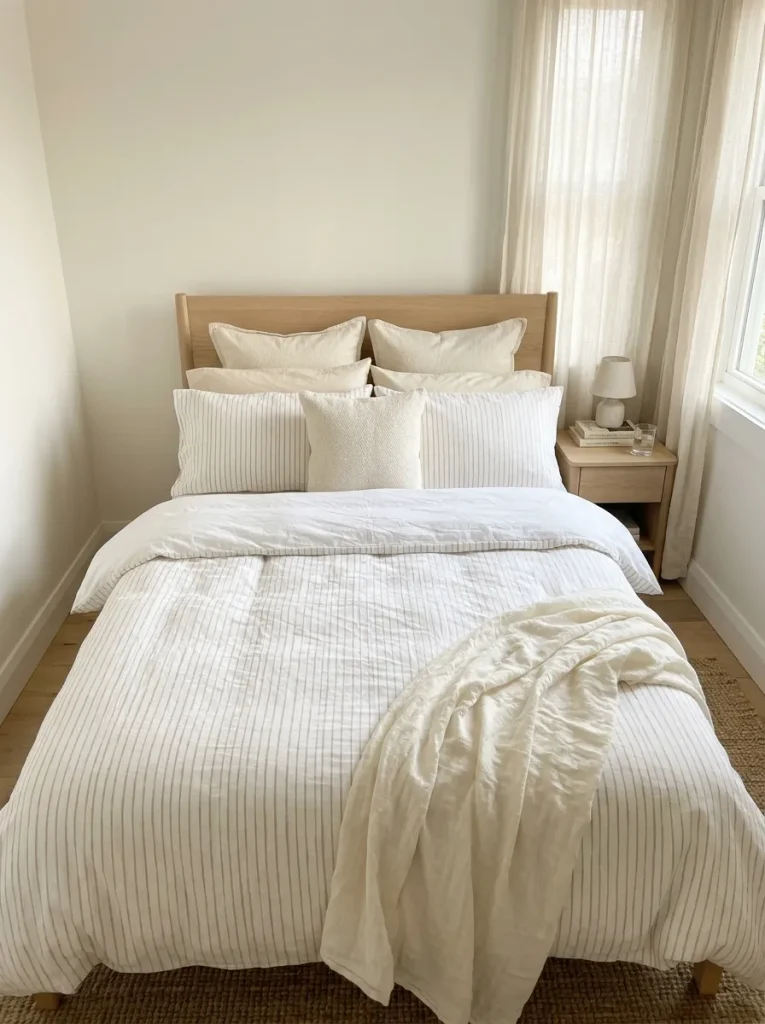
DO
- Choose narrow stripes in white, beige or soft gray.
- Keep the walls and curtains relatively plain.
- Repeat one stripe color in a cushion or throw.
- Use lightweight cotton bedding for a relaxed finish.
DON’T
- Mix several bold patterns across the bed.
- Choose oversized stripes in very dark colors if you want a subtle look.
- Add too many contrasting decorative cushions.
- Ignore the scale of the pattern in relation to the bed.
Fine stripes introduce visual interest without overwhelming a small bedroom. Vertical stripes can draw the eye along the length of the bed, while narrow horizontal stripes create a softer, classic look. The effect depends on the pattern and placement, so treat stripes as a styling detail rather than a guaranteed way to change the room’s proportions.
23. Ceiling Height Shelving

Cost: Low to moderate, depending on shelf type.
Time: Two to four hours for a simple installation.
Skill Level: Beginner to intermediate.
Best For: Bedrooms with limited closet or floor storage.
Tall shelving makes better use of vertical space instead of spreading storage across the room. Install a narrow bookcase or secure wall shelves above a dresser to keep books, folded linens and decorative pieces organized. Place frequently used belongings within easy reach and reserve the highest shelves for seasonal items.
To keep the arrangement from looking crowded, leave a little empty space between groups of objects and use matching storage baskets. Secure tall furniture to the wall according to the manufacturer’s instructions, particularly in homes with children or pets. A simple, coordinated shelf display can provide substantial storage without requiring a larger bedroom.
24. Bedside Wall Niches
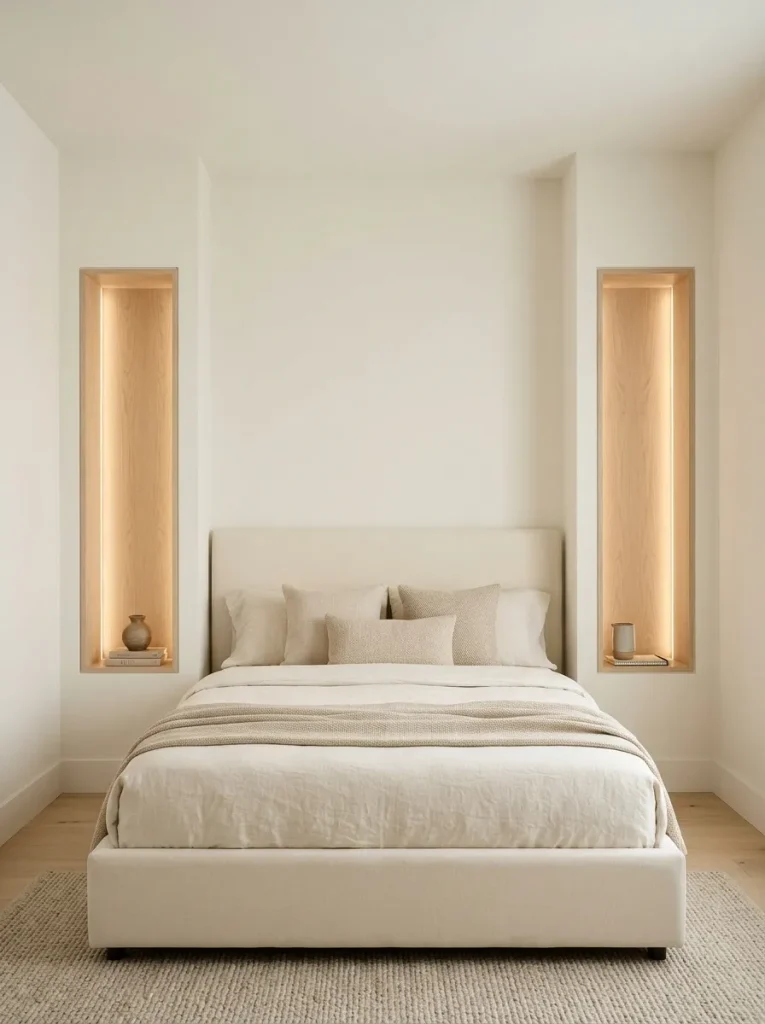
BEFORE
Separate bedside tables occupy floor space on both sides of the bed. Books, chargers and small accessories collect on their surfaces, making narrow walkways feel even tighter.
AFTER
Recessed wall niches provide a dedicated place for bedtime essentials without projecting into the room. Integrated lighting can replace table lamps, leaving the bedside area visually cleaner.
Wall niches work best when planned during renovation or new construction because they require suitable wall depth and careful attention to wiring and structural elements. If building into the wall isn’t practical, a shallow wall mounted box shelf can offer a similar function. Keep each niche simple and measure its depth to ensure your everyday items fit comfortably.
25. Foldable Storage Ottomans
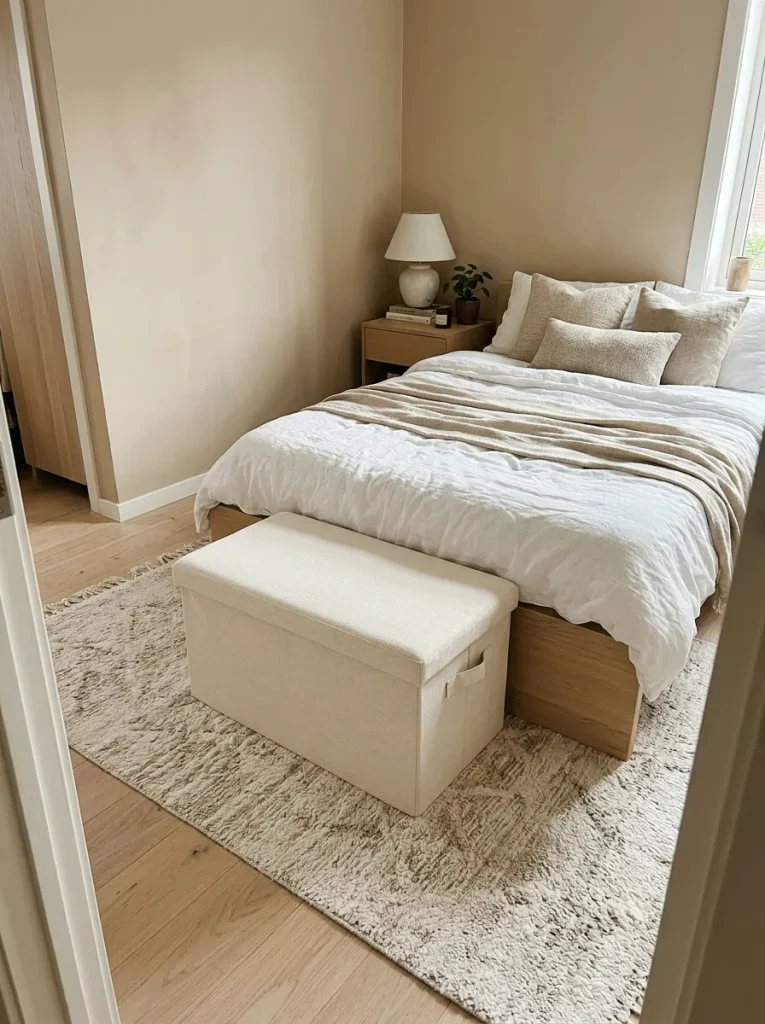
- Measure the available space: Leave enough room to walk comfortably between the ottoman and nearby furniture.
- Choose a compact shape: A rectangular ottoman works well at the foot of the bed, while a small square design suits a corner.
- Match the upholstery: Select cream, beige or a shade that coordinates with your bedding.
- Store useful items: Keep spare blankets, extra pillowcases or seasonal accessories inside.
- Check the lid: Choose a sturdy, easy to open design that suits your everyday needs.
A storage ottoman gives you two useful features in one piece: a place to sit and a hidden compartment for bedroom essentials. It can reduce the need for extra storage baskets while making the foot of the bed feel finished. Choose a size that leaves a comfortable walking path and avoid filling it with items you rarely use.
26. Monochromatic Bedroom Styling
Cost: Low if you reuse existing decor.
Time: One to three hours for restyling.
Skill Level: Beginner.
Best For: Small bedrooms with mismatched colors or visually busy decor.
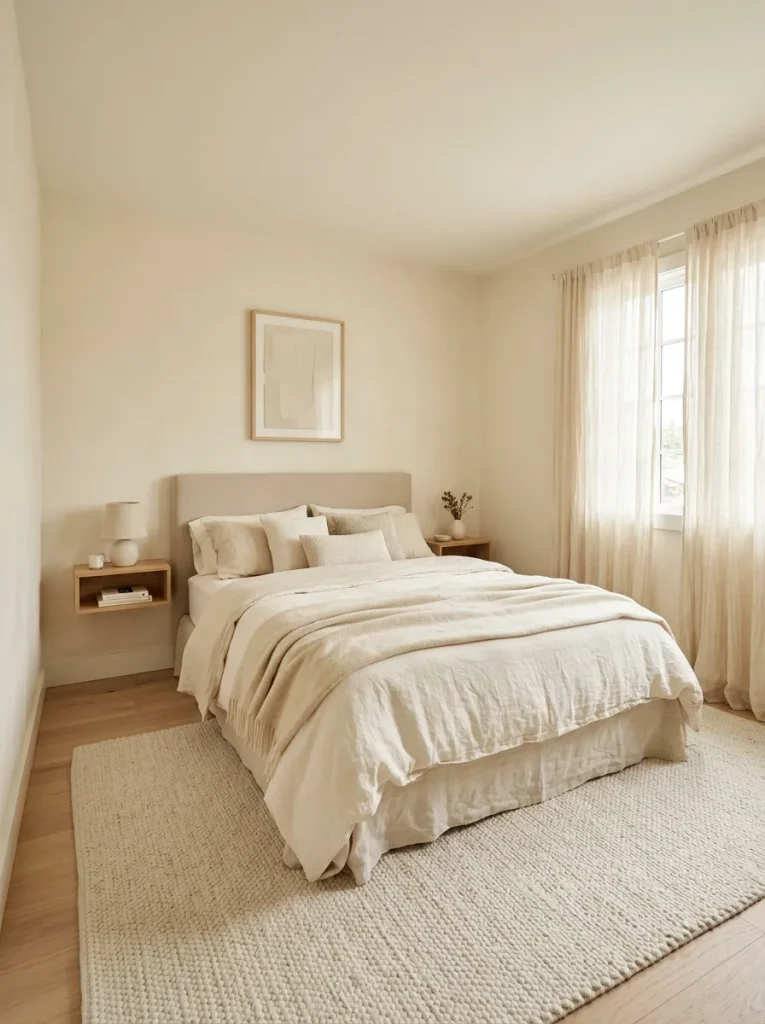
A monochromatic palette creates visual continuity by using different shades of one main color instead of several competing hues. For example, combine cream bedding, beige curtains and warm ivory walls with a slightly darker taupe cushion. The room gains depth through tonal variation without appearing fragmented.
Texture is essential to making this approach feel inviting. Mix linen, cotton, knitted fabric and natural wood so the space doesn’t become flat or overly uniform. You can also introduce one small accent, such as muted sage or brushed brass, while keeping the overall palette restrained.
27. Window Side Bed Placement
DO
- Measure the window, bed and available walking paths before rearranging furniture.
- Keep curtains easy to open and close.
- Use a slim bedside shelf where space beside the bed is limited.
- Check that the new position allows comfortable access to wardrobes and drawers.
DON’T
- Block a window that serves as an important exit.
- Place the bed where it obstructs heating or cooling vents.
- Push furniture against curtains so fabric cannot move freely.
- Sacrifice comfortable access just to make the layout look symmetrical.
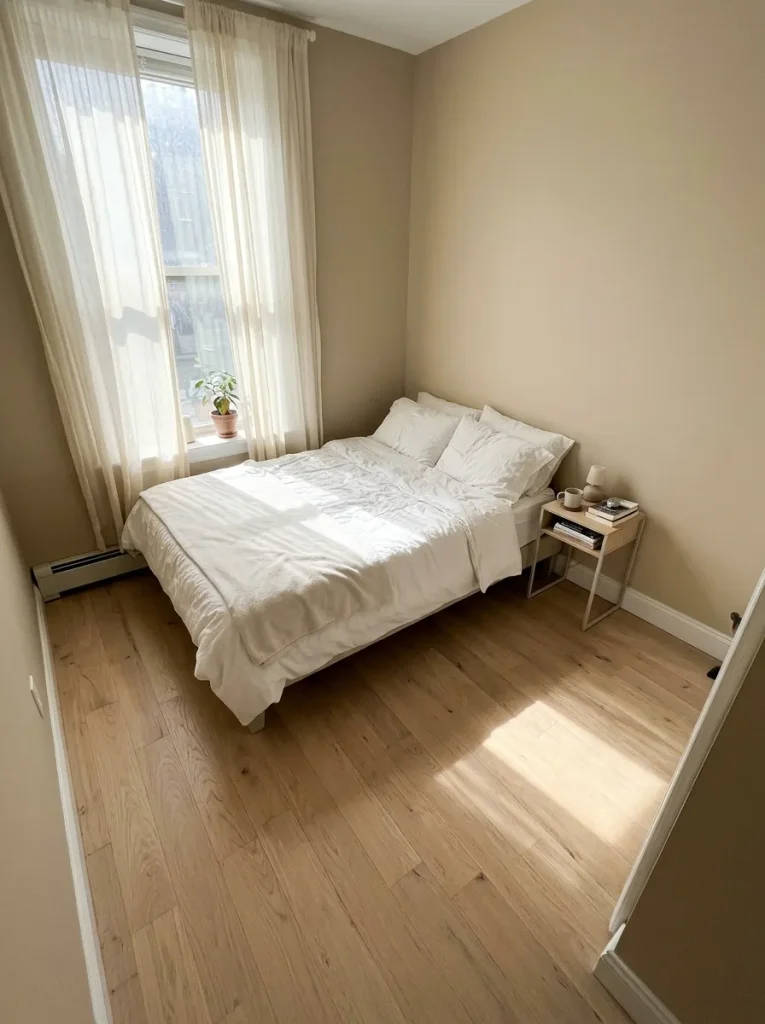
Placing a bed near a window can free up a more useful wall for a wardrobe, dresser or desk. However, the best position depends on the room’s doors, window acces and heating arrangements. Keep the window functional and maintain clear routes through the bedroom. Even shifting the bed a short distance may improve the layout without requiring new furniture.
28. Recessed Ceiling Lighting
Cost: Moderate, depending on wiring and ceiling work.
Time: Several hours to one day for professional installation.
Skill Level: Professional installation recommended.
Best For: Bedrooms needing even lighting without bulky fixtures.
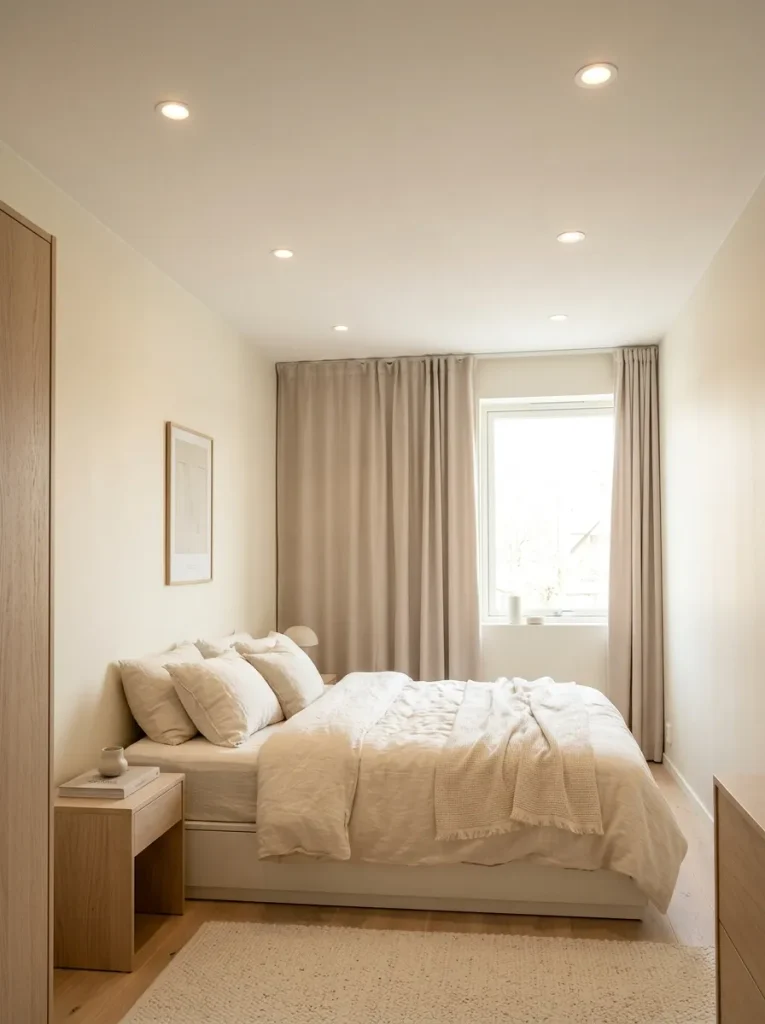
Recessed lights keep the ceiling visually clean because the fixtures sit within the ceiling rather than hanging into the room. Evenly spaced lighting can brighten darker corners and make the bedroom feel more balanced. Choose warm white bulbs for a relaxing atmosphere and use dimmers if you want softer illumination before bedtime.
You don’t necessarily need a renovation to achieve a similar effect. Flush mount ceiling lights offer a practical alternative for existing bedrooms, especially where ceiling height is limited. Whatever fixture you choose, combine general lighting with a bedside reading light so the room remains comfortable for different activities.
29. Clutter Free Bedside Styling
Quick Tip:
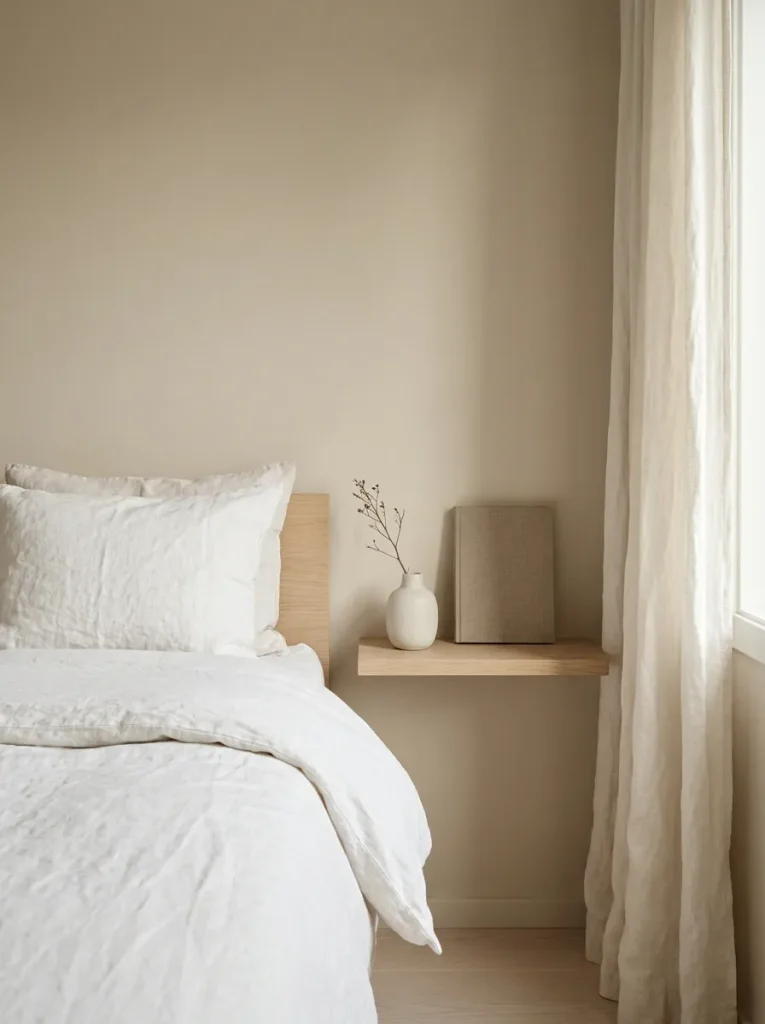
Keep only three essentials on your bedside surface: a light source, one item you use daily and one small decorative accent. Move chargers, spare products and extra books into drawers or a designated storage basket.
A clear bedside area helps the entire bedroom feel calmer because it removes small distractions from one of the most visible parts of the room. Start by emptying the surface completely, then return only the items you genuinely need. A small tray can group loose essentials neatly, while a wall mounted lamp frees up even more space.
The goal isn’t to remove every personal touch. A favorite book, a small framed photograph or a simple vase can make the room feel welcoming without creating clutter. Spend two minutes resetting the bedside area each evening and the room will be easier to maintain throughout the week.
CONCLUSION
A small bedroom can still feel beautiful, comfortable and spacious with the right decorating choices. From smart storage and soft lighting to coordinated colors and space saving furniture, small changes can make your everyday surroundings feel more organized and inviting.
Start with one idea that solves your biggest challenge, whether that’s clutter, limited storage or a cramped layout. These Small Bedroom Decorating Ideas can help you create a room that works better for your needs without spending more than necessary.
Save this article on Pinterest for inspiration, try your favorite ideas and share it with someone who could use a little extra bedroom space. Your dream bedroom can start with one simple change!

One Comment