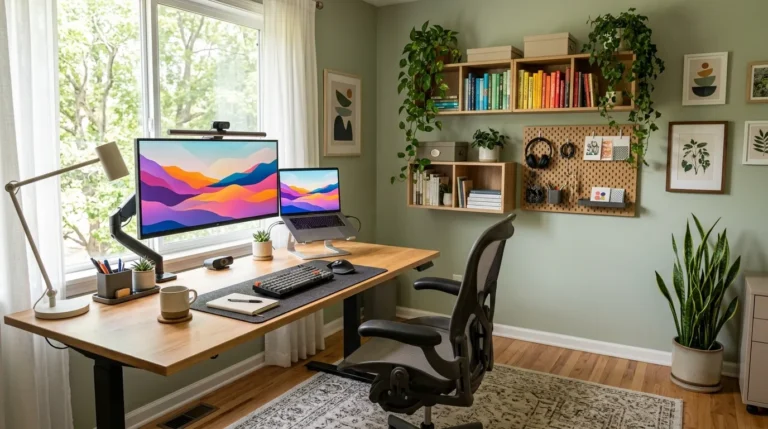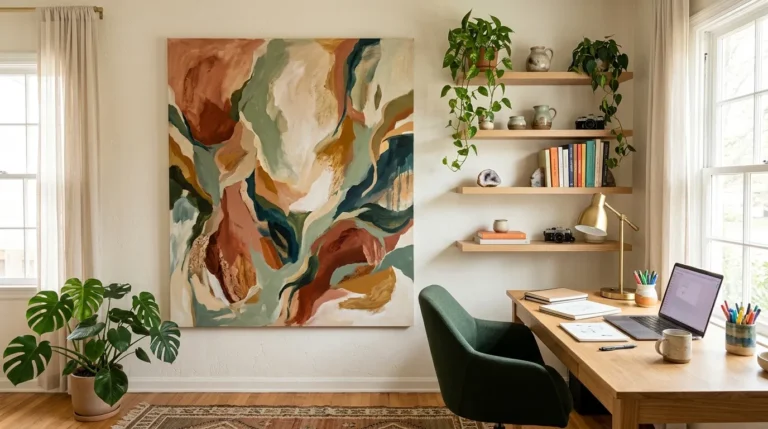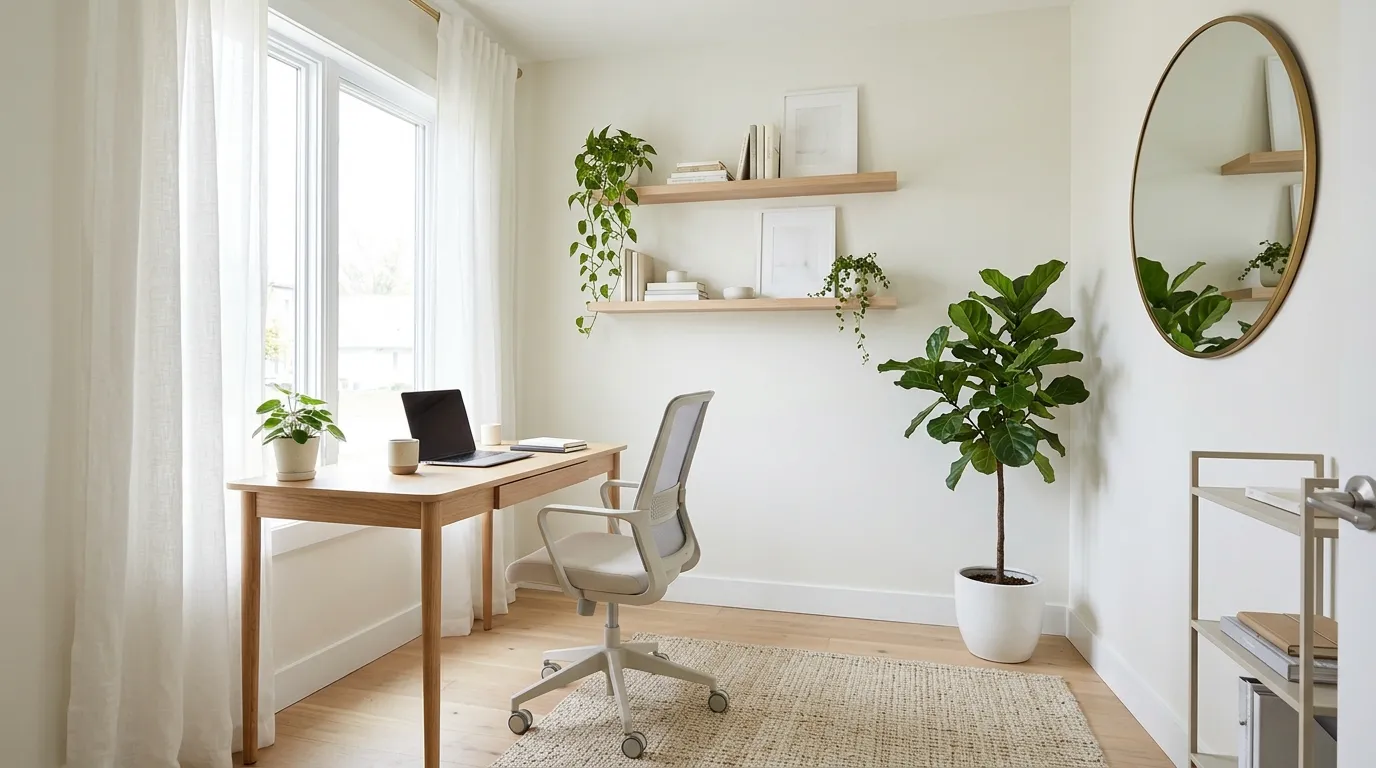
28 Small Office Decorating Ideas to Make It Feel Airy
A small office can feel bright, beautiful and comfortable without taking up much space. The secret is choosing the right colors, furniture, lighting and storage.
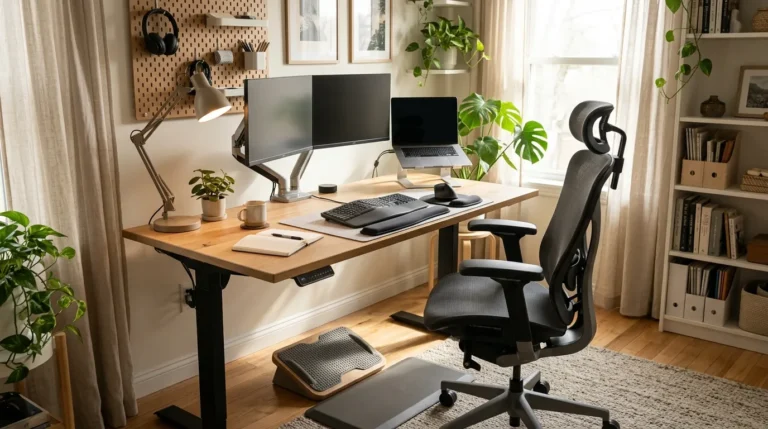
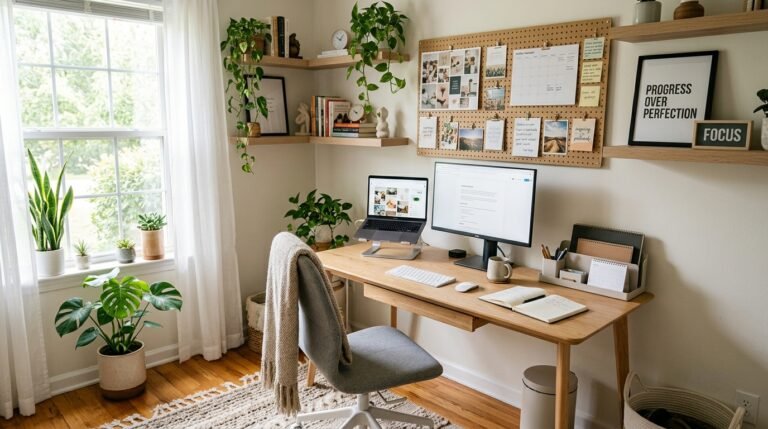
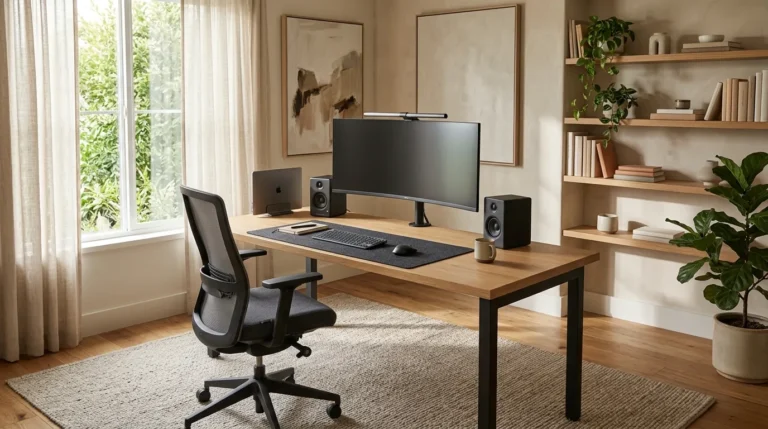
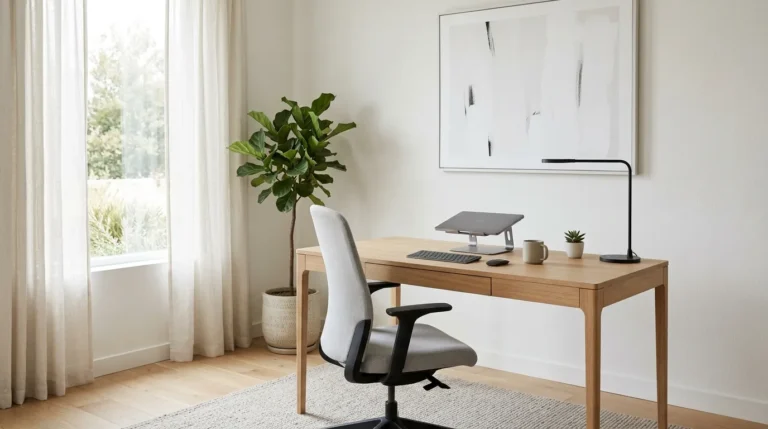
These Small Office Decorating Ideas will help you create a workspace that feels more open organized and inspiring, even if you’re working with a tiny corner of your bedroom or a shared room. From floating shelves and compact desks to soft green accents and clever cable storage, each idea offers a practical way to make better use of your space.
You don’t need a complete makeover or an expensive shopping list to get started. Small changes, such as clearing your desk, adding a mirror or choosing lighter furniture, can make a noticeable difference. Explore these ideas, find the styles that suit your needs and create a workspace you’ll enjoy using every day.
Light Neutral Palette
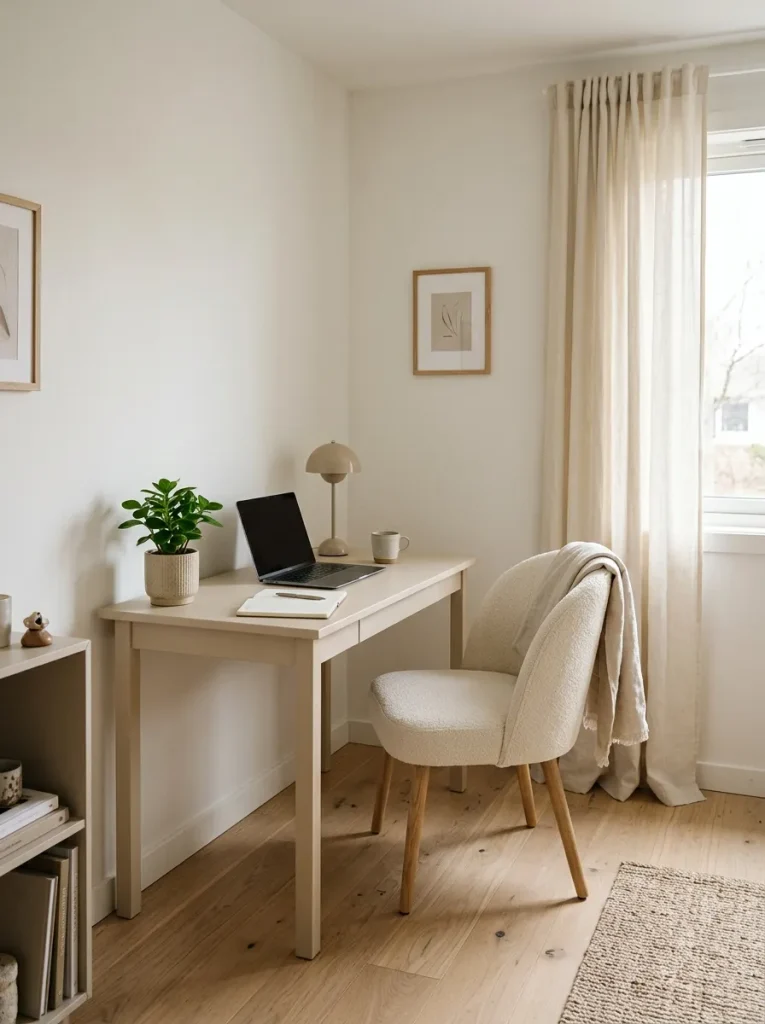
A light color palette can make a compact office feel more open without changing its layout. Start with warm white, cream or pale beige on the largest surfaces, such as walls, curtains and furniture. These shades reflect available daylight and help the room feel less visually crowded.
Keep the look interesting by mixing textures instead of introducing too many colors. A linen chair cushion, a pale wood desk and one leafy plant add warmth without making the space feel busy. In my experience, repeating two or three light shades creates a calmer, more connected workspace.
Floating Wall Shelves
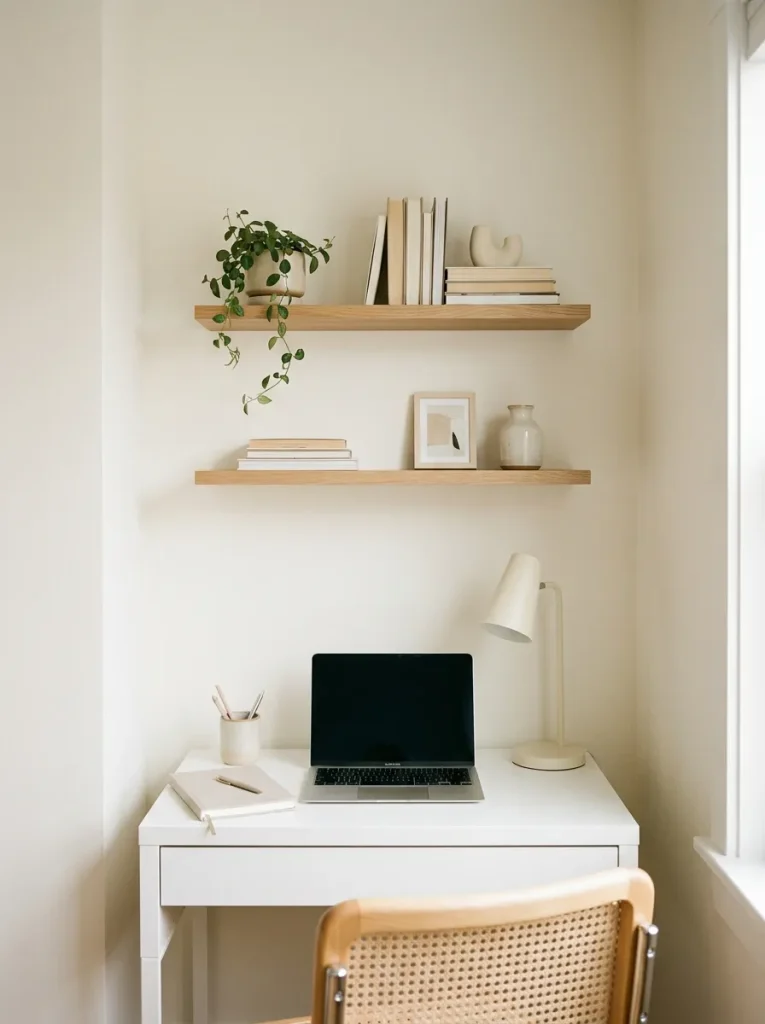
- Use vertical space: Install narrow shelves above the desk to free up valuable surface area.
- Choose slim designs: Shallow shelves provide storage without projecting too far into the room.
- Limit decorative items: Mix a few books with one plant and two small accessories.
- Keep essentials accessible: Place frequently used supplies on the lowest shelf.
- Match your furniture: Repeat the desk’s wood tone or white finish for a coordinated look.
Floating shelves draw the eye upward and make a small office feel more organized. Leave some empty space between objects so the display does not become visually heavy. Before installation, check the wall structure and use suitable fixings for the shelf and its intended load.
Compact Corner Desk
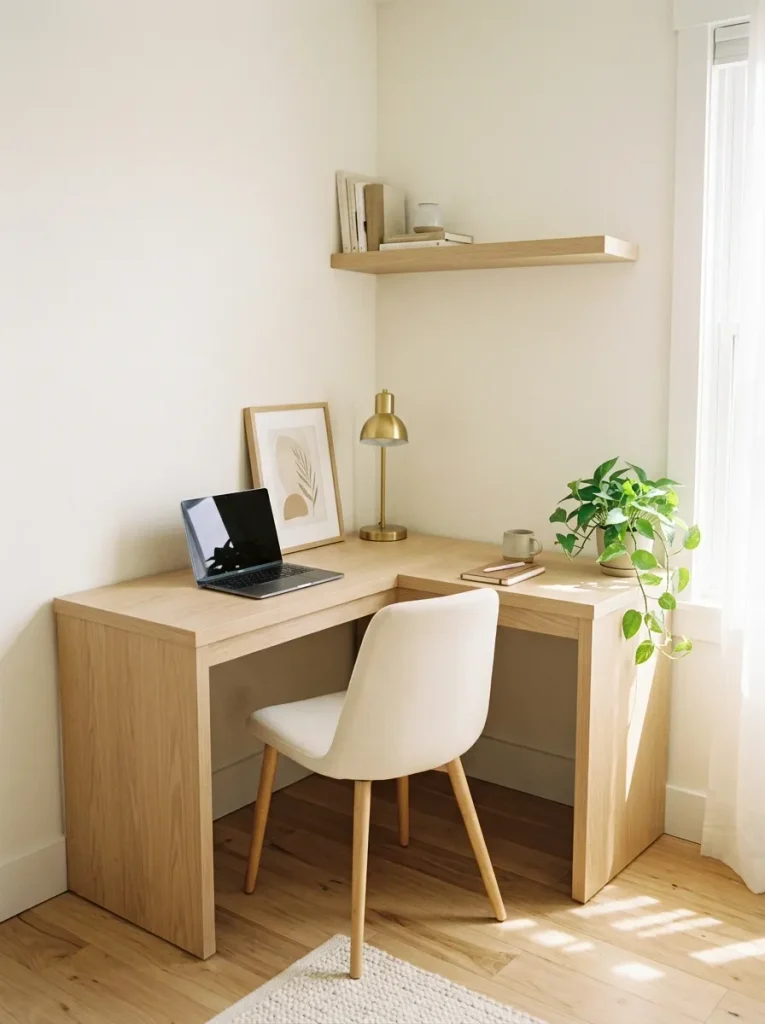
Quick Tip:
Measure both walls and the chair’s movement area before choosing a corner desk. Keep the desktop shallow enough to preserve walking space and place your laptop or monitor where daylight will not create distracting screen glare.
A corner desk uses an overlooked area while leaving more of the room open for movement. Choose a design with built-in drawers or a narrow shelf if you need storage. For very small rooms, a simple tabletop with wall-mounted supports can provide a useful workspace without bulky legs or cabinets.
Glass Desk Surface
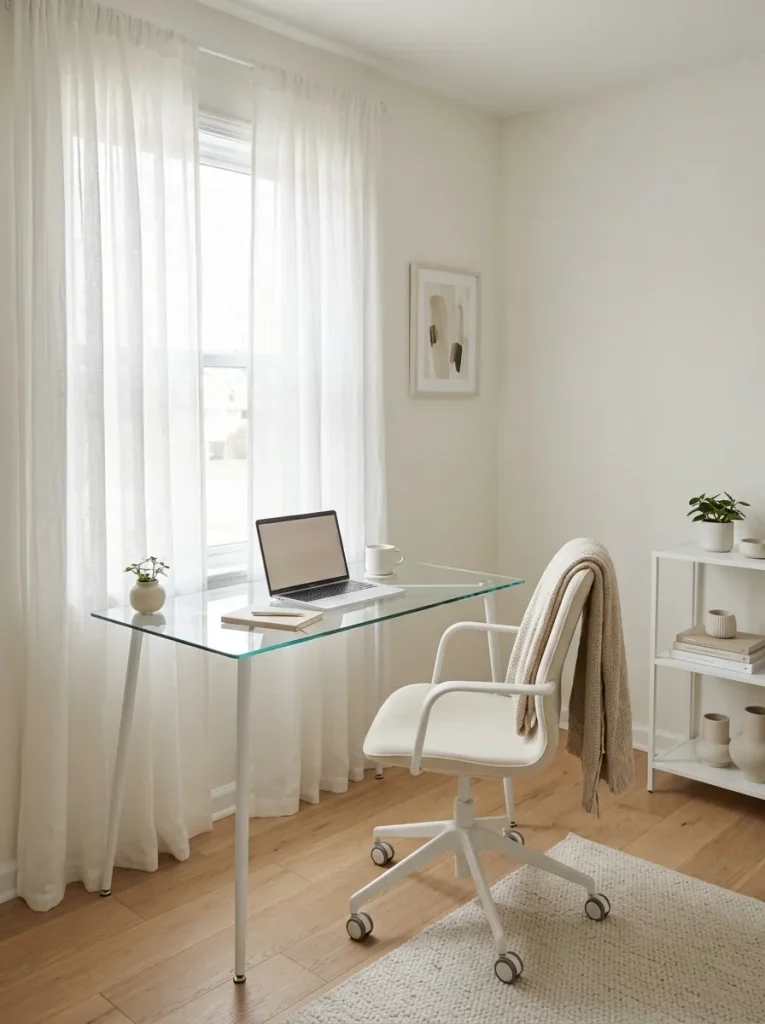
BEFORE
A bulky desk with thick panels and dark finishes can make a small office feel crowded. Large visual blocks may compete with the limited floor space and make the room appear heavier than it really is.
AFTER
A clear glass desktop allows more of the room to remain visible, creating a lighter visual effect. Slim legs and a compact chair help preserve an open appearance without sacrificing a functional work surface.
Choose tempered glass designed for desk use and check its weight capacity before placing equipment on it. Keep the surface free from unnecessary accessories, since fingerprints and clutter show easily on glass. If you prefer a softer look, pair the desk with warm wood accents and a fabric chair.
Wall-Mounted Desk
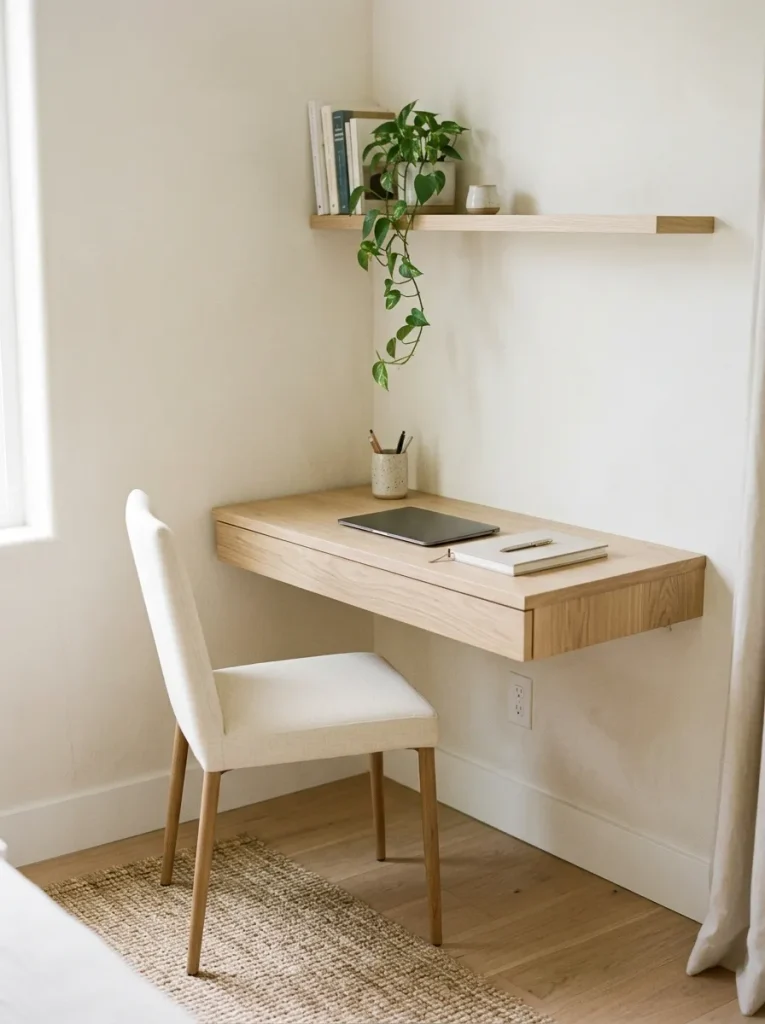
- Measure the wall: Check the available width and leave enough room for comfortable seating.
- Choose a sturdy design: Select a desk with a suitable weight rating and secure mounting system.
- Plan cable access: Position power outlets and charging cables where they remain easy to reach.
- Add compact storage: Use a slim drawer or wall shelf for supplies.
- Keep the floor clear: Choose a chair that tucks neatly beneath the desk when not in use.
A wall-mounted desk can free up floor space in a bedroom, apartment or narrow home office. It also makes the room easier to clean because there are fewer bulky legs and cabinets. Before installation, confirm that the wall and fixings can safely support the desk, computer and other equipment.
Sheer Window Curtains
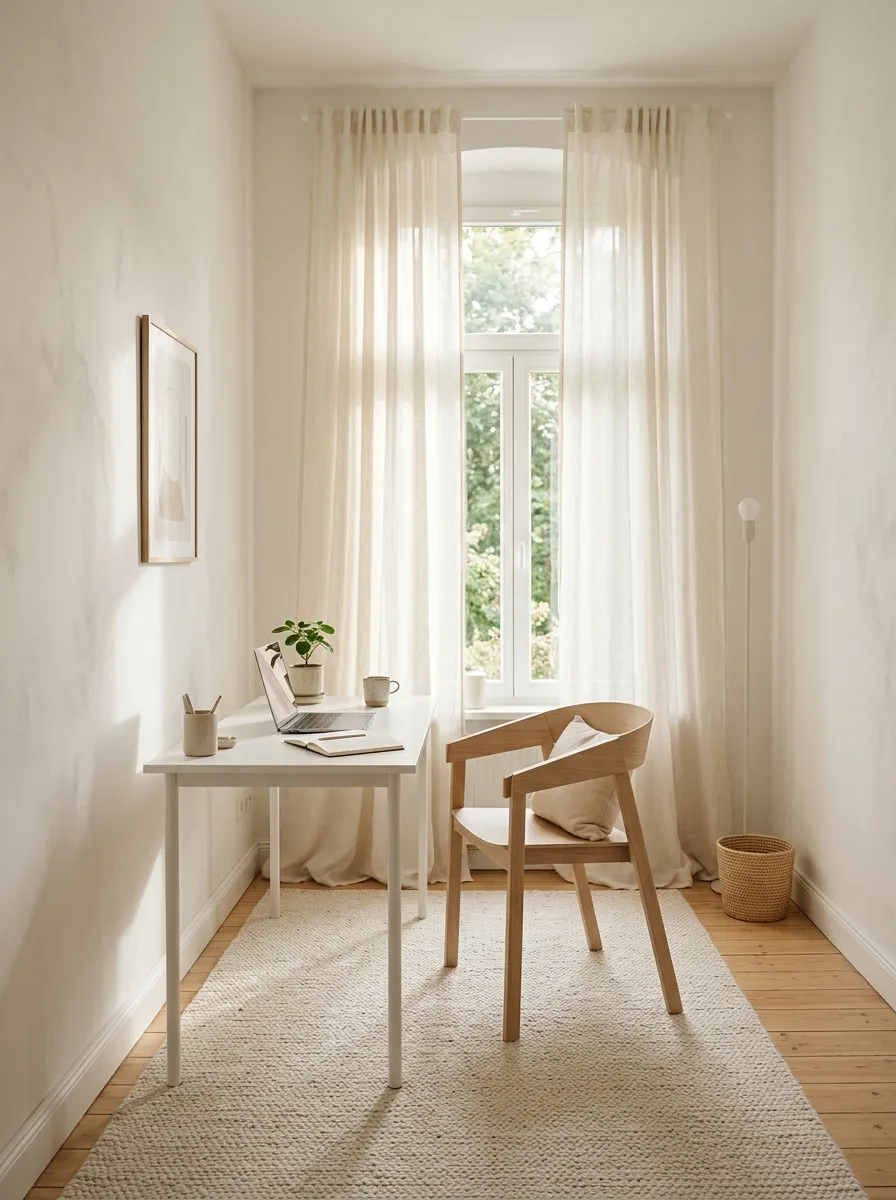
| Feature | Option A: Sheer Curtains | Option B: Heavy Curtains |
| Natural light | Allows filtered daylight | Blocks more daylight |
| Visual weight | Light and delicate | Fuller and more substantial |
| Privacy | Limited, especially at night | Usually offers greater privacy |
| Best use | Bright rooms needing softness | Rooms needing stronger light control |
Sheer curtains help soften window light while keeping a small office bright and open. Hang the curtain rod slightly above the window frame to create a taller visual line and choose a fabric that complements your wall color. If you need privacy or screen-glare control, pair the sheers with adjustable blinds rather than relying on fabric alone.
Slim Floor Lamp
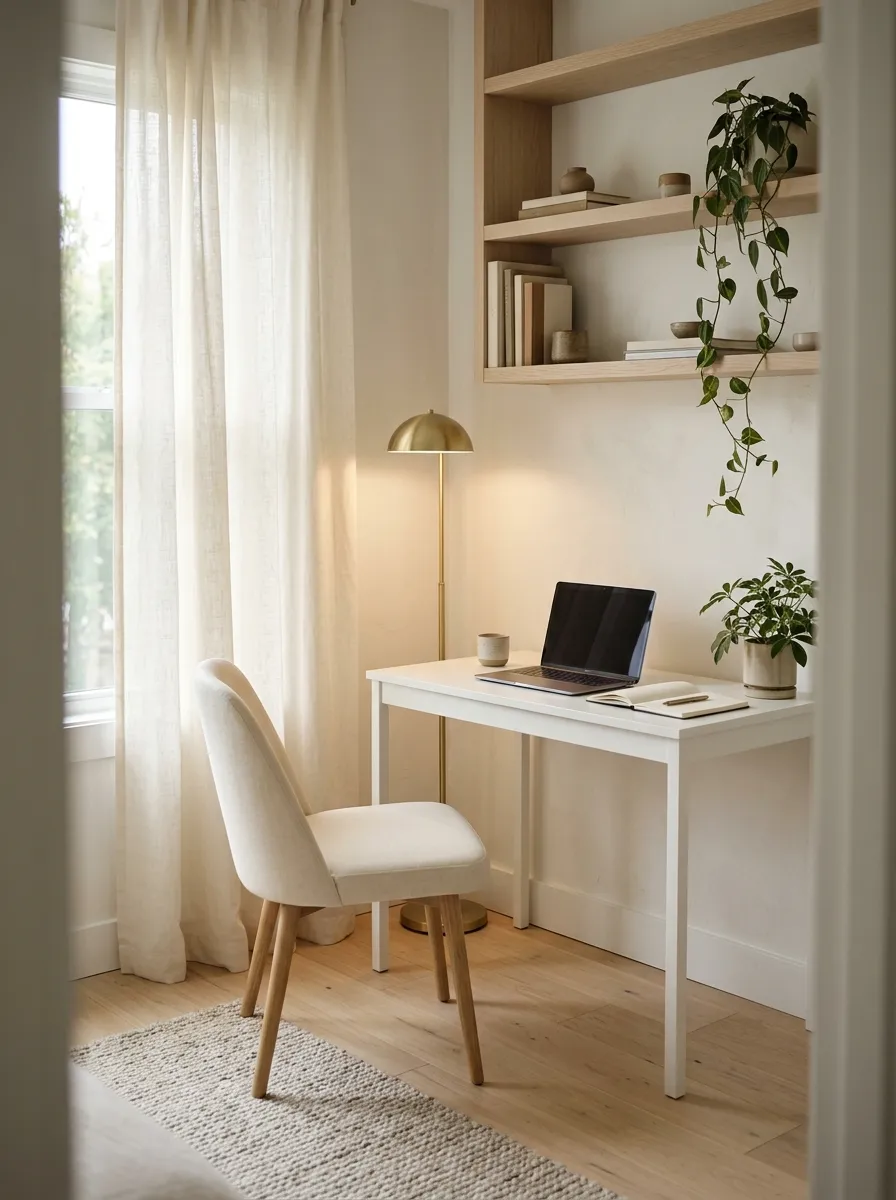
DO
- Choose a narrow lamp base that fits beside the desk without blocking movement.
- Select an adjustable head to direct light toward your work.
- Match the lamp finish with existing hardware or desk accessories.
- Position the lamp where its cord can be secured safely.
DON’T
- Use an oversized lamp that crowds a small corner.
- Place the light where it reflects directly onto your screen.
- Leave electrical cords stretched across walking paths.
- Fill the area around the lamp with unnecessary furniture.
A slim floor lamp provides useful lighting without taking up much desk space. Choose a simple silhouette that blends with your furniture instead of competing for attention. For evening work, combine focused task lighting with gentle ambient light so the room remains comfortable without relying on a harsh overhead fixture.
Vertical Storage Tower
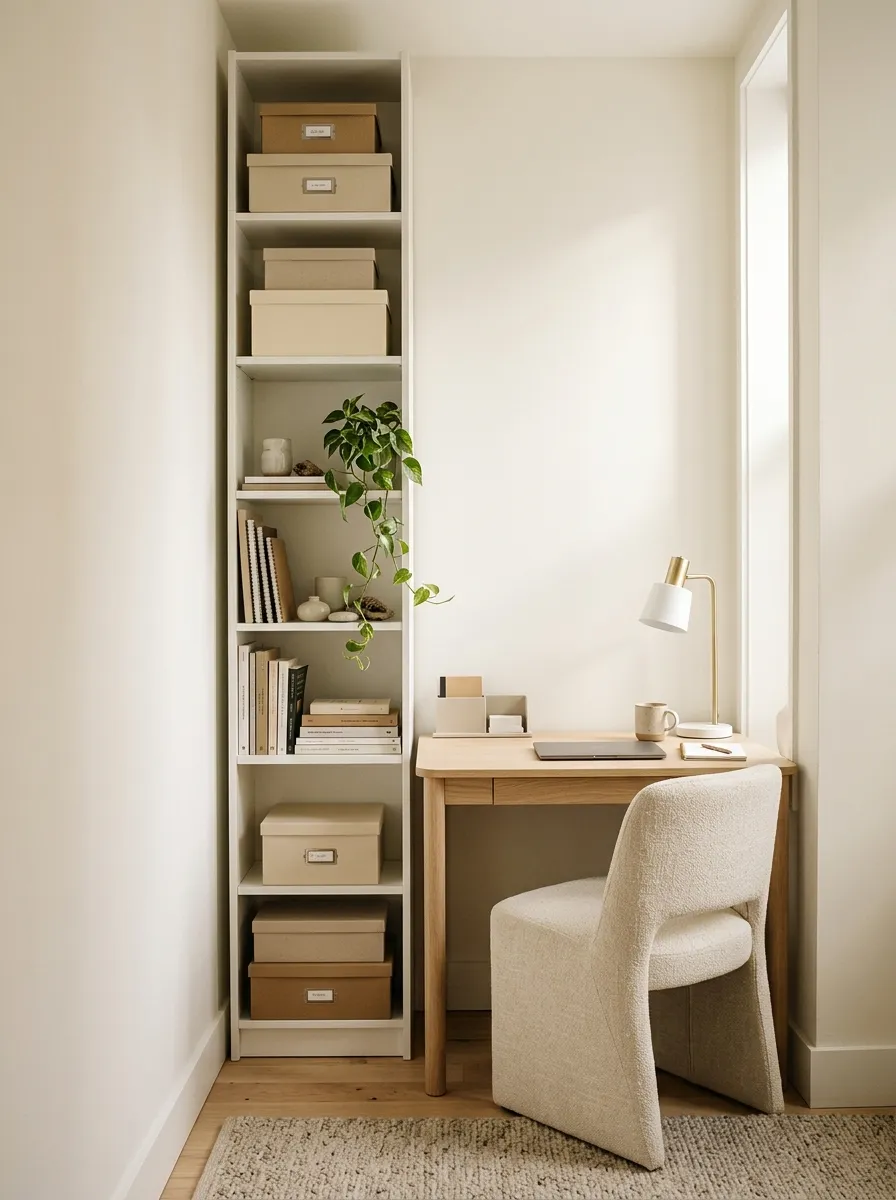
Cost: Moderate, depending on the height and material.
Space: Uses vertical wall area instead of spreading storage across the floor.
Best For: Small offices with limited desk drawers or cabinet space.
Styling: White, pale oak and soft beige keep the shelving visually light.
A narrow storage tower can hold office supplies while preserving valuable working space. Place frequently used items on the middle shelves and reserve the top for lightweight decor or occasional supplies. Secure tall furniture according to the manufacturer’s instructions, especially in homes with children or pets and leave enough clearance for drawers and doors.
Minimal Desk Styling
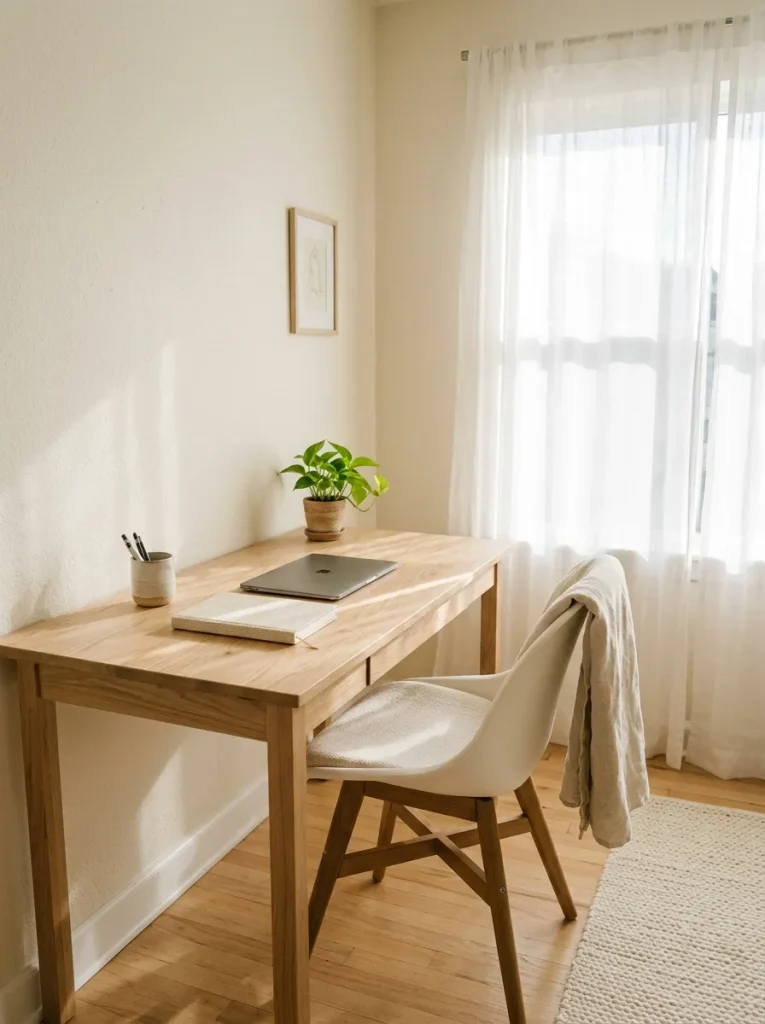
A clear desk can make even a very small office feel more spacious. Keep only the items you use daily within reach, then store extra stationery, cables and paperwork in a drawer or nearby organizer. This simple habit creates more room for working and prevents decorative objects from taking over the surface.
Choose accessories with similar finishes so the arrangement feels connected rather than scattered. A pale desk mat can define your working area, while a small plant adds color without taking up much space. Leave one section of the desktop completely clear for writing, sorting papers or setting down your laptop.
Wall-Mounted Lighting
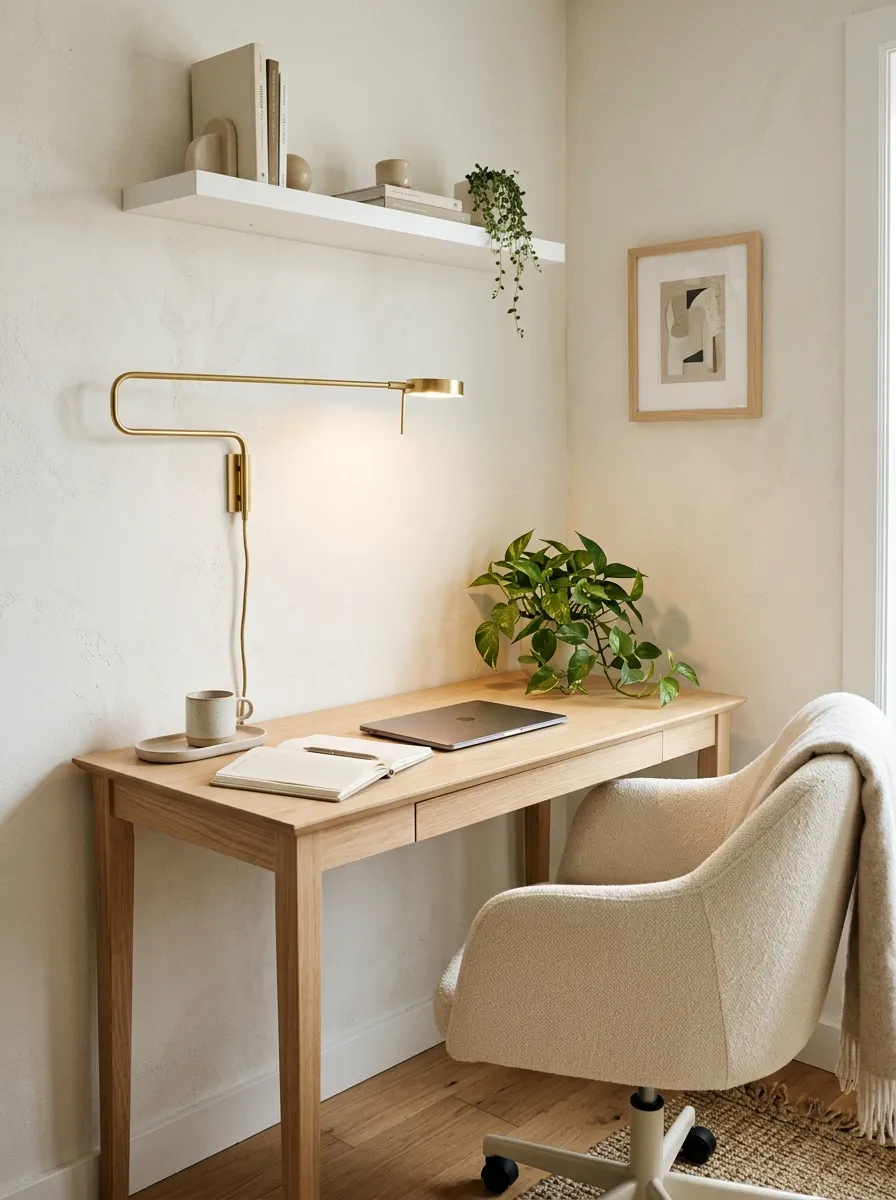
- Free up desk space: Mount the lamp above or beside your work surface instead of using a table lamp.
- Choose an adjustable arm: Direct light toward books, paperwork or your keyboard when needed.
- Keep the finish simple: White, brushed brass or matte black can complement a small office.
- Plan the placement: Make sure the lamp does not obstruct shelves or create distracting screen reflections.
- Manage the cord: Secure visible wiring neatly or choose a professionally installed hardwired fixture.
Wall-mounted lighting keeps the desktop open while providing practical illumination for everyday tasks. It works particularly well above a narrow desk where every inch matters. Renters can look for suitable plug-in models, but should check mounting restrictions and route cords safely to avoid creating clutter.
Pale Wood Furniture
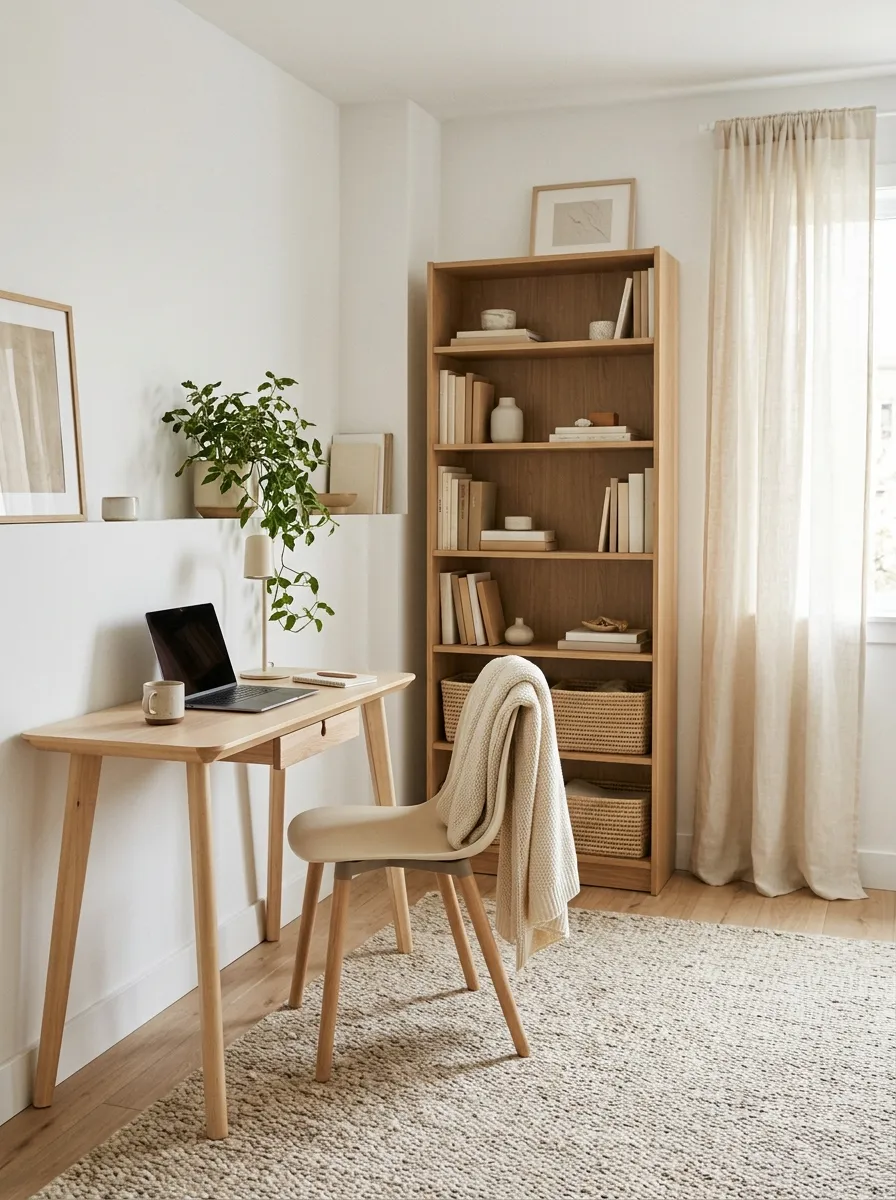
Quick Tip:
Choose pale oak, ash or light birch furniture with simple lines and visible natural grain. Pair it with white walls and soft neutral fabrics to keep the room bright without making it feel cold.
Repeating the same wood tone in two or three places helps the office feel coordinated. A pale desk paired with a matching shelf can visually connect the room, while slim furniture legs allow more floor area to remain visible. If replacing furniture is not practical, a light wood desk organizer can introduce the same effect.
Large Wall Mirror
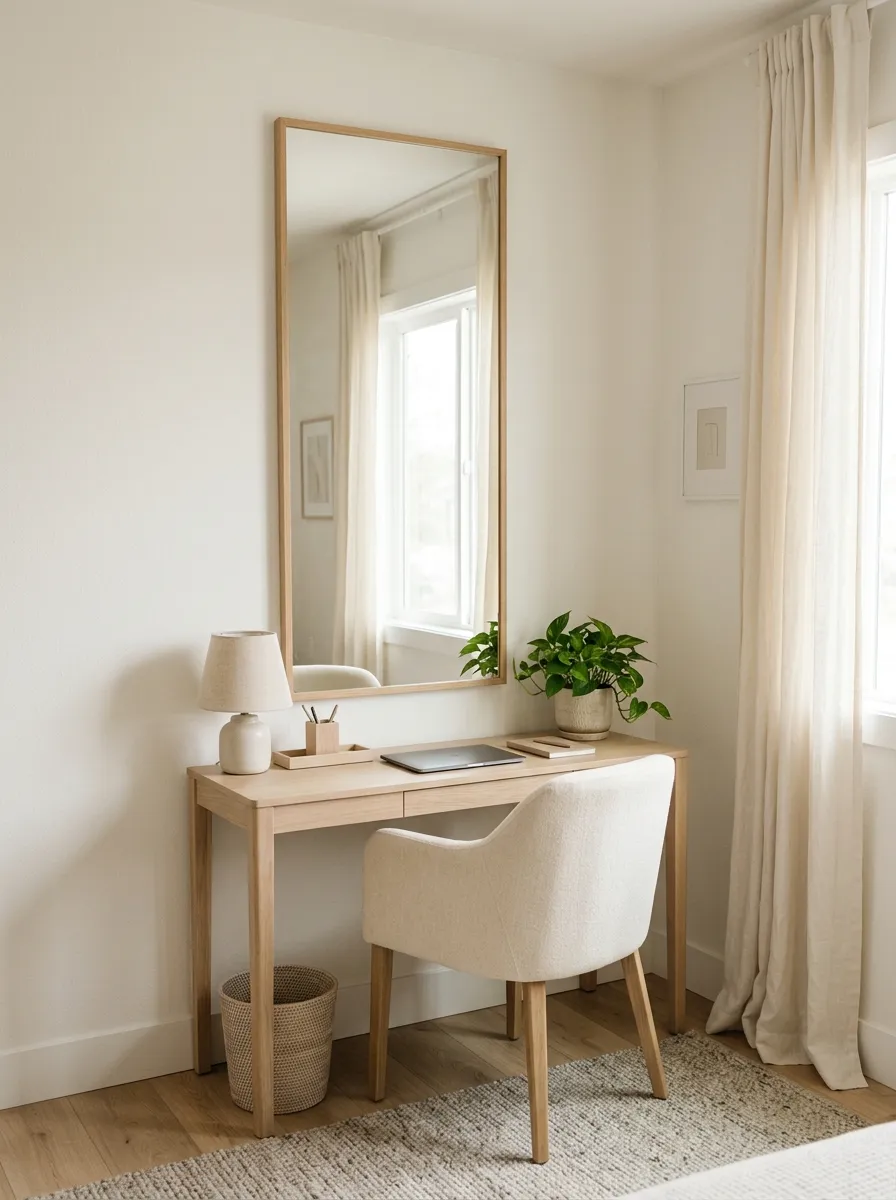
BEFORE
A small office with limited windows or dark corners can feel closed in, especially when furniture occupies most of the visible space. Blank walls may also make the room feel flat and unfinished.
AFTER
A well-positioned mirror reflects available light and gives the room a greater sense of depth. A simple frame keeps the wall visually clean, while the reflected view can make the workspace feel more open.
Place the mirror where it reflects a window or a bright part of the room rather than a cluttered storage area. Choose a secure mounting method suitable for the mirror’s weight and avoid positioning it where reflected sunlight creates uncomfortable glare on your screen.
Under-Desk Drawer Unit
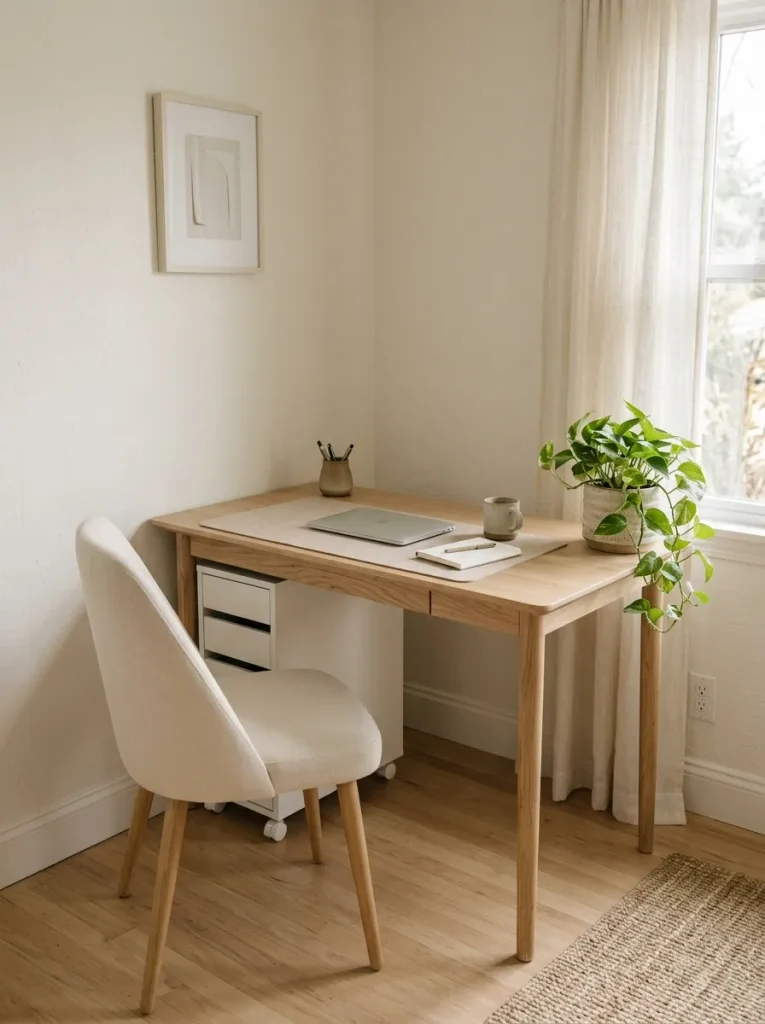
- Measure the desk clearance: Check the available height and width before buying a drawer unit.
- Sort your supplies: Separate stationery, paperwork, chargers and personal items into categories.
- Use drawer organizers: Keep small objects easy to find instead of letting them pile up.
- Choose a light finish: White or pale wood helps the storage blend into a compact room.
A drawer unit provides hidden storage without requiring a separate cabinet. Slide it beneath the desk to keep paperwork and supplies nearby while preserving a clean desktop. Choose a model with smooth drawers and lockable wheels if you need to move it occasionally for cleaning or rearranging your workspace.
Foldable Office Furniture
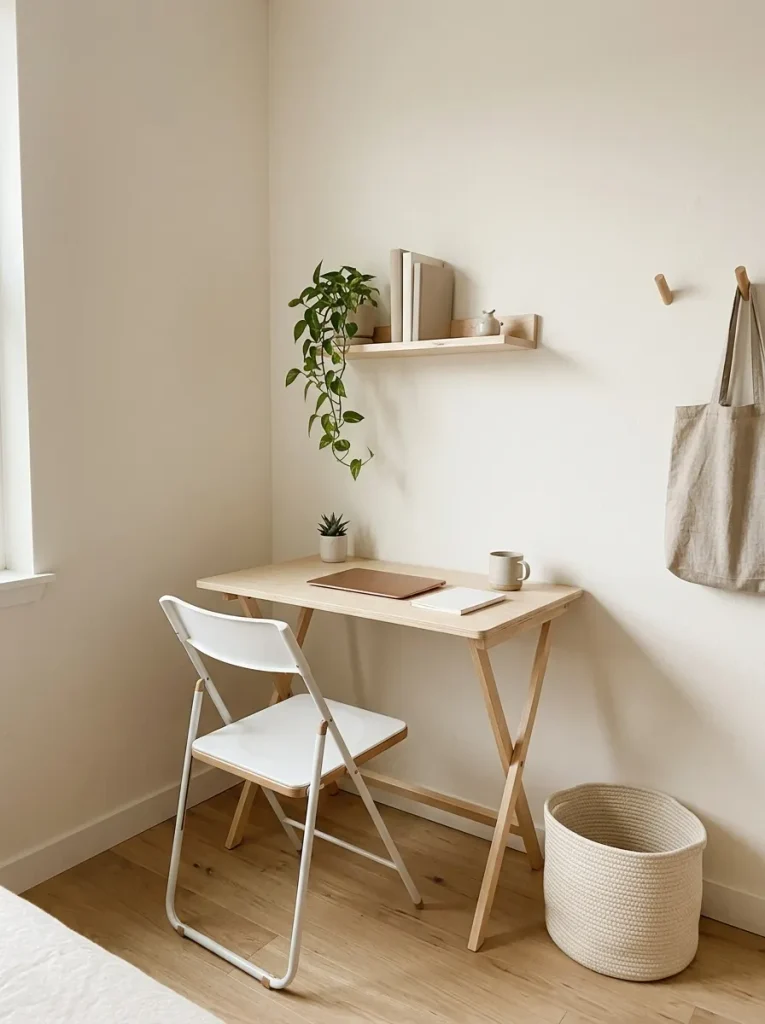
| Feature | Option A: Fixed Desk | Option B: Foldable Desk |
| Daily stability | Usually more substantial | Depends on the design |
| Floor space | Occupies a permanent area | Can free space when folded |
| Storage | May include drawers | Often needs separate storage |
| Best use | Dedicated office | Shared or multipurpose room |
Foldable furniture works well when your office shares space with a guest room, bedroom or living area. Choose a desk with a stable working surface and a secure locking mechanism, then test its setup before placing a laptop or monitor on it. Keep a nearby basket for supplies so the workspace is easy to pack away.
Monochrome White Office
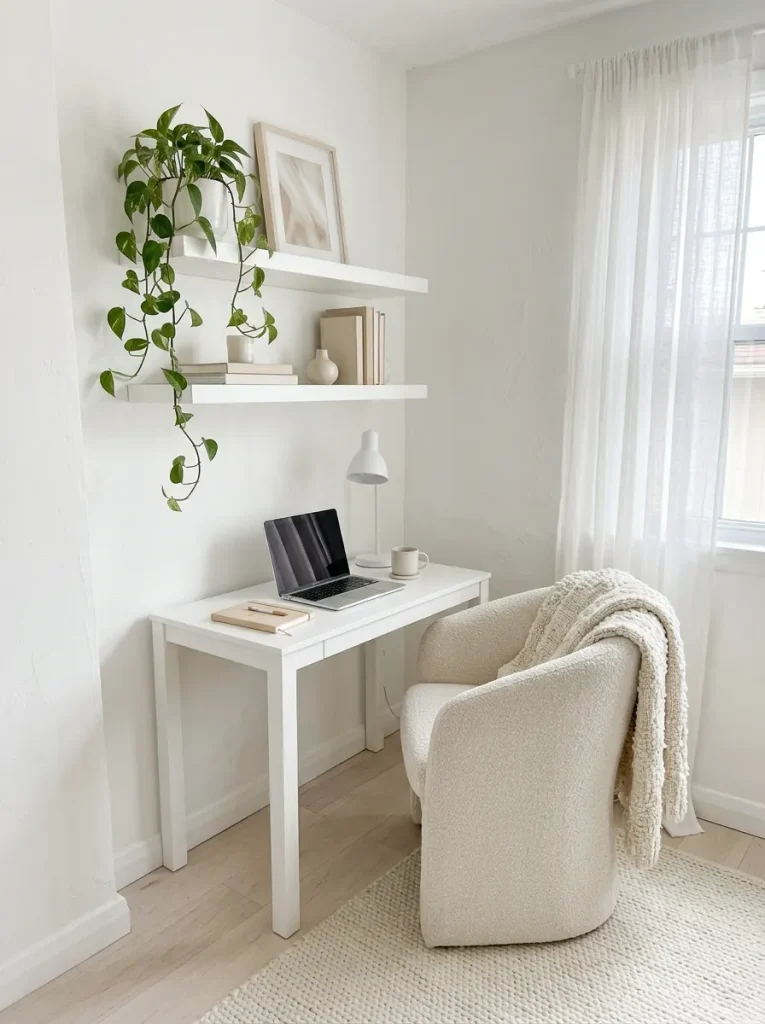
DO
- Use warm white on the walls and main furniture for a bright appearance.
- Mix matte finishes, linen and woven textures to add depth.
- Add one or two natural accents, such as pale wood or greenery.
- Keep frequently used supplies inside drawers or matching organizers.
DON’T
- Mix too many competing shades of white without checking their undertones.
- Fill every shelf with decorative objects.
- Ignore practical cleaning needs when choosing finishes.
- Rely on white alone to make the room feel comfortable.
A mostly white office can create a clean, open feeling, especially in a room with limited natural light. Warm textiles and a few natural materials prevent the space from feeling stark. If you use white furniture, choose durable finishes that are easy to wipe clean and keep the desktop free from unnecessary items.
Clear Acrylic Accessories
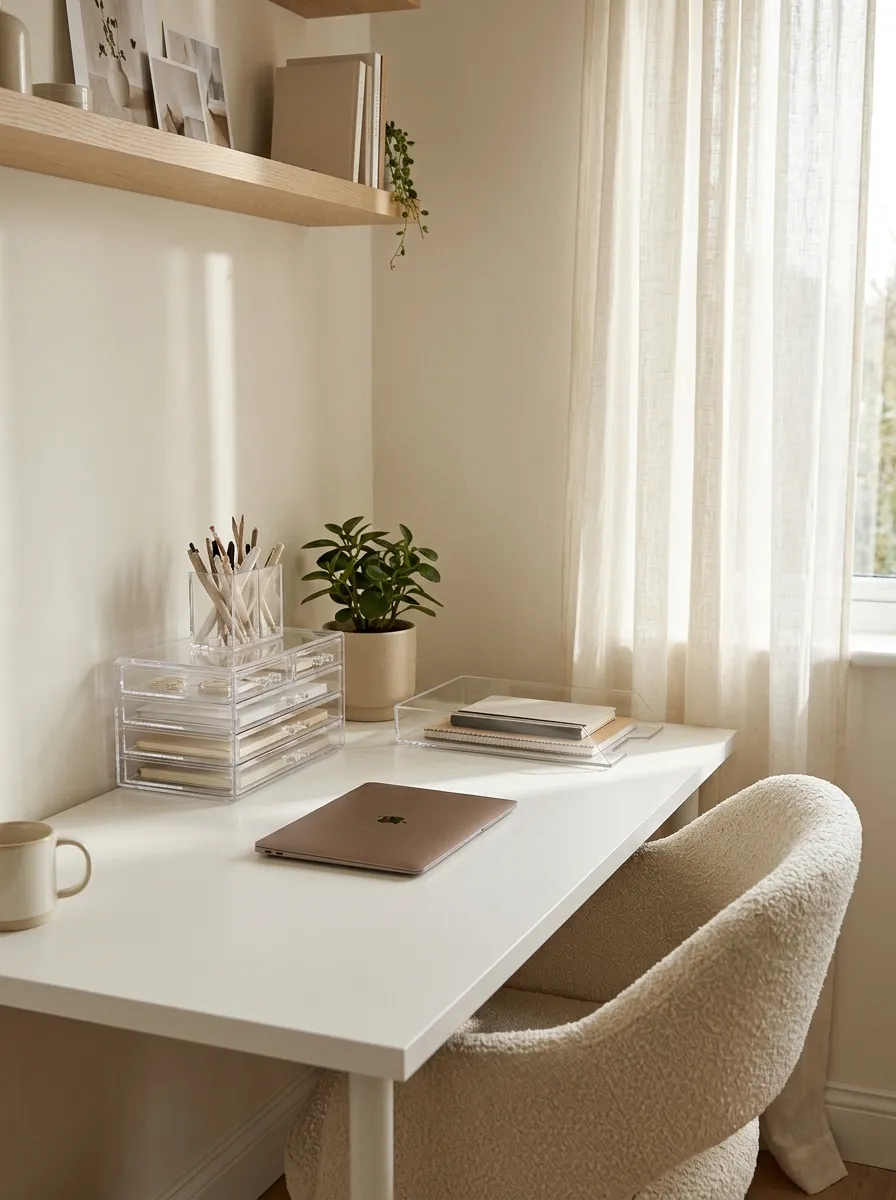
Cost: Low to moderate, depending on the number and quality of accessories.
Best For: Small desks that need organization without bulky visual details.
Color Palette: Clear acrylic, white, pale oak and soft beige.
Result: Supplies remain visible and organized while the desktop keeps a light appearance.
Transparent organizers let you store pens, sticky notes and small office supplies without introducing another strong color or heavy visual block. Group similar items together and limit the number of containers on your desk. Clear acrylic works especially well with light furniture, but regular wiping helps prevent fingerprints and dust from becoming noticeable.
Corner Floating Shelves
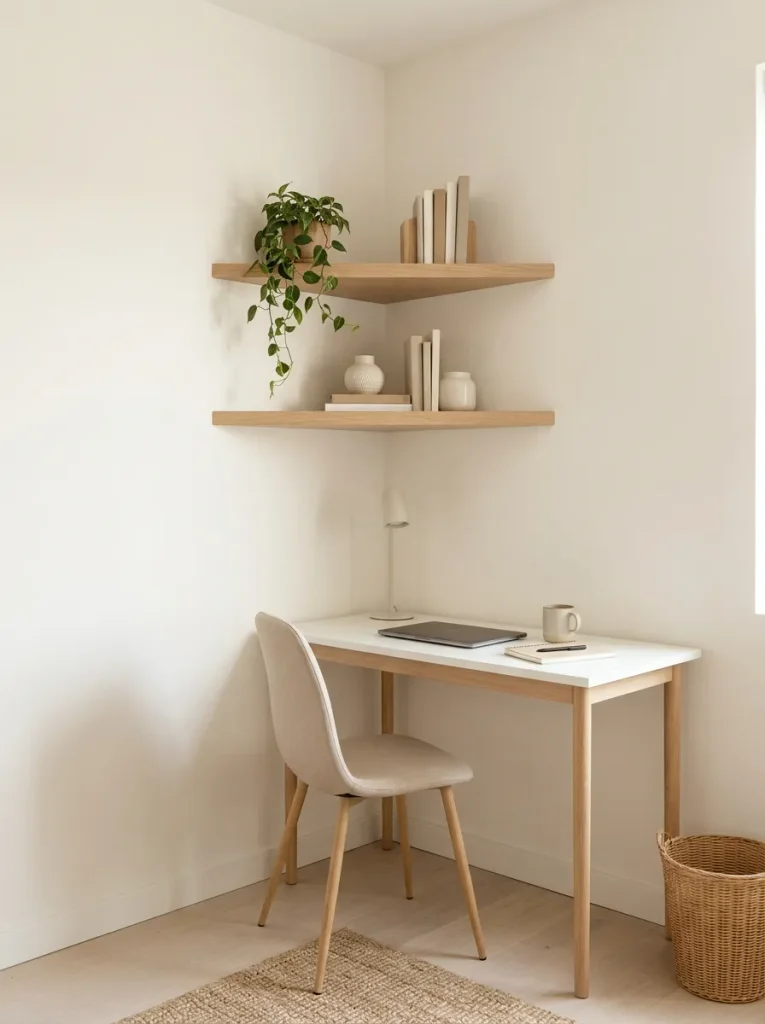
An empty corner can become useful storage without taking up floor space. Corner shelves fit neatly above a desk and provide a place for books, small plants or a few decorative accessories. Choose shallow shelves that suit the available wall area and leave enough room to work comfortably beneath them.
Arrange heavier everyday items on shelves with suitable support and keep fragile objects away from the desk edge. Repeating a pale wood finish or white paint helps the shelves blend into the room. For a balanced look, display a few useful objects and leave some shelf space empty.
Light Striped Wallpaper
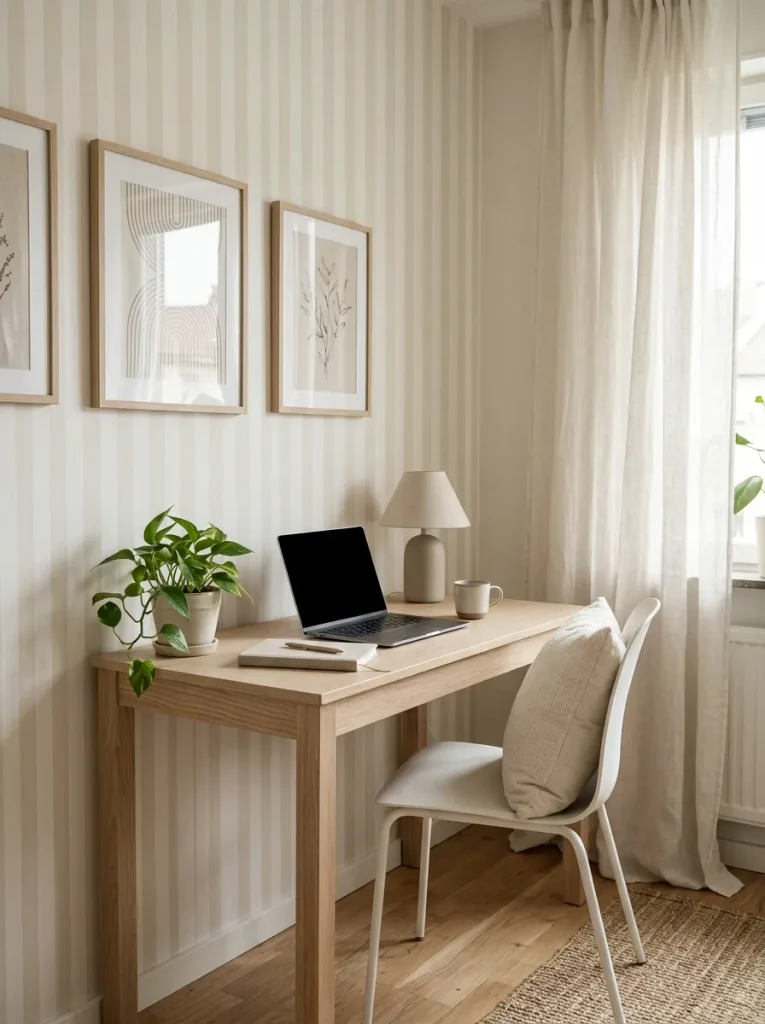
| Feature | Option A: Vertical Stripes | Option B: Horizontal Stripes |
| Visual effect | Can make walls feel taller | Can make walls feel wider |
| Best placement | Short or low-feeling walls | Narrow walls |
| Pattern strength | Fine stripes feel subtle | Fine stripes feel subtle |
| Styling approach | Pair with simple furniture | Keep surrounding decor restrained |
Light striped wallpaper adds interest without requiring bulky decor or dark paint. Choose a low-contrast pattern in cream and white so the walls remain visually calm. Test a sample in both daylight and evening light before committing, since the pattern and undertones may look different at various times of day.
Compact Rolling Cart
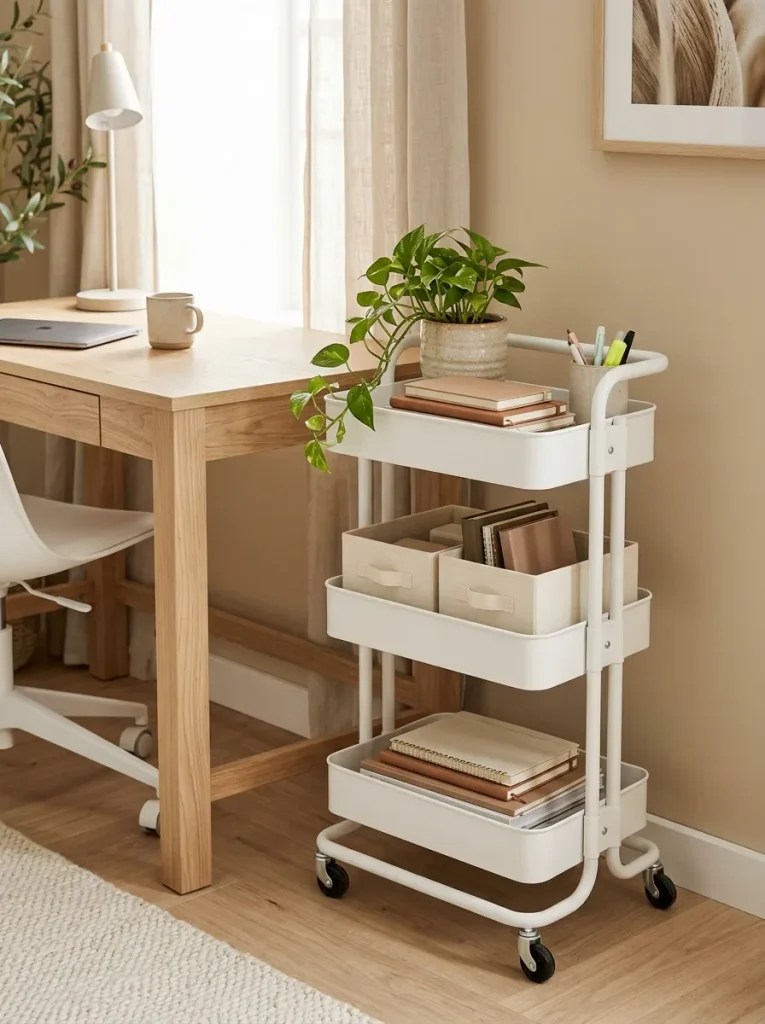
DO
- Choose a narrow cart that fits beside or beneath your desk.
- Assign each tier a purpose, such as stationery, paperwork or chargers.
- Use small containers to keep loose items organized.
- Select locking wheels if the cart needs to stay in place.
DON’T
- Overfill the cart until it becomes difficult to move.
- Store heavy objects on unstable upper tiers.
- Block your chair or the main walking path.
- Leave loose cords hanging where wheels can catch them.
A rolling cart offers flexible storage for small offices that lack drawers or cabinets. Move it beside your desk during work and roll it elsewhere when you need more floor space. Choose a light-colored design that blends with your furniture and keep the top tier reserved for items you reach for most often.
Light Reflective Flooring
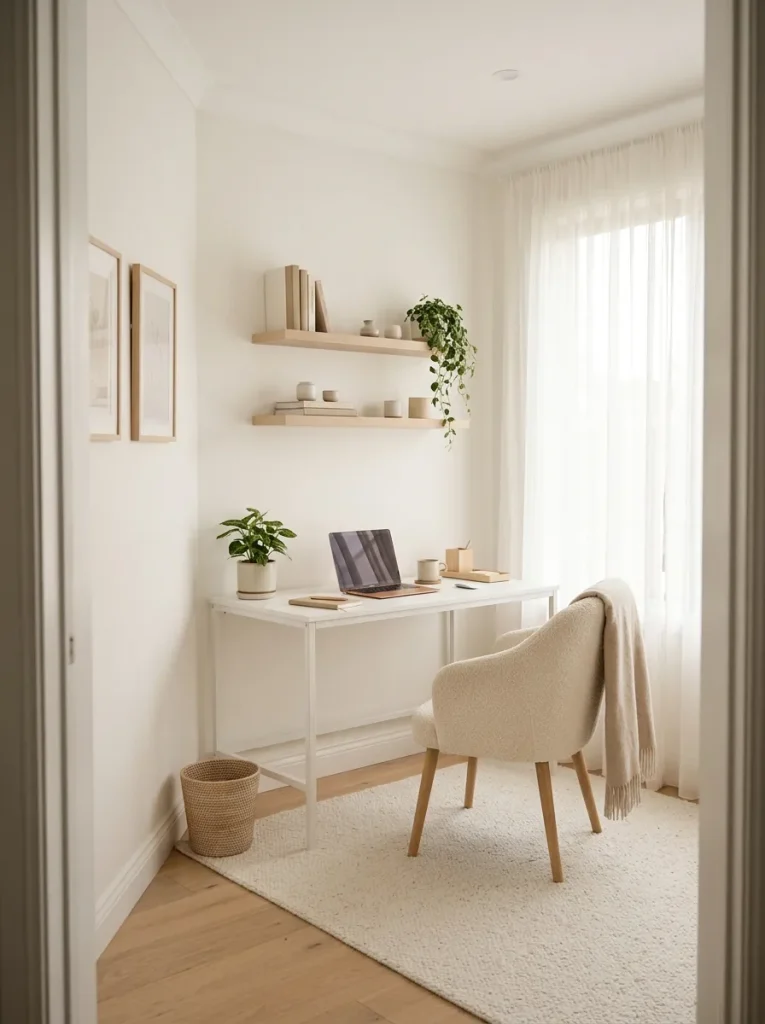
Cost: Varies widely depending on whether you use existing flooring, a rug or new materials.
Best For: Offices with dark floors or limited natural light.
Color Choices: Pale oak, light beige, warm gray or soft ivory.
Practical Note: Choose durable finishes that suit your cleaning routine and the amount of foot traffic.
Light flooring can help a compact office feel brighter by reflecting more available light. If replacing the floor is not practical, use a light-colored rug to soften the area beneath your desk. Keep patterns subtle and select a rug size that allows the furniture to sit comfortably without making the room feel crowded.
Desk Facing the Wall
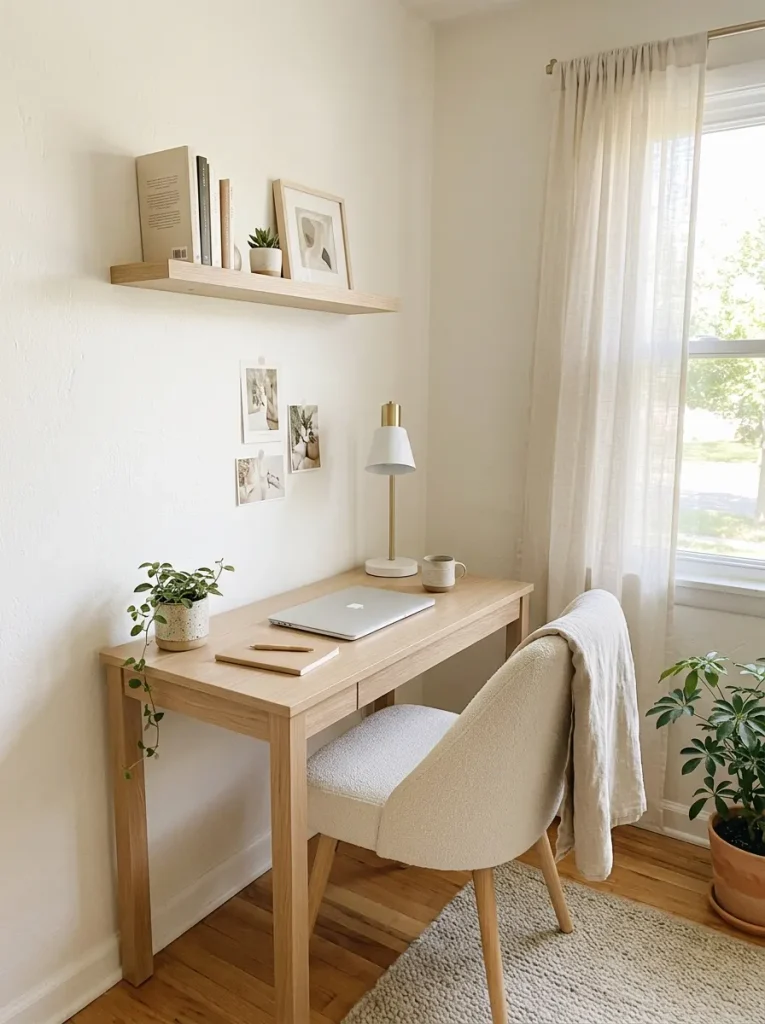
A desk facing the wall can help define a work zone in a shared or compact room. It keeps furniture grouped along one side and leaves more open floor space in the center. This arrangement also gives you a simple backdrop for a small shelf, calendar or understated artwork.
Leave enough distance between the desk and wall for cables, plugs and any equipment that needs ventilation. If the setup feels too enclosed, place the desk near a side window or add a small mirror elsewhere in the room. Keep the wall display simple so your attention stays on the work in front of you.
Soft Green Accents
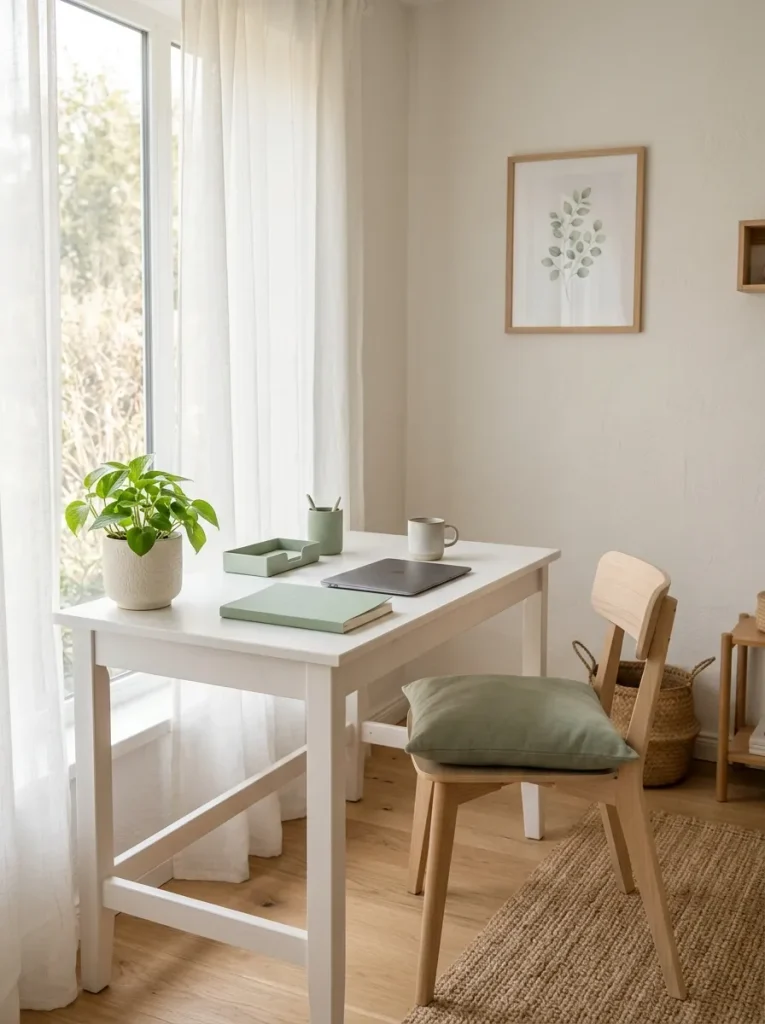
Quick Tip:
Use sage green, muted olive or soft eucalyptus as a small accent rather than the dominant color. Repeat the shade in two or three places, such as a cushion, pen holder or plant pot.
Soft green accents bring a natural, calming touch to a compact workspace without making it feel busy. Pair them with warm white walls, pale wood and simple fabrics for a balanced look. If you prefer a neutral office, start with one green accessory and add more only if the room still feels open.
Hidden Cable Storage
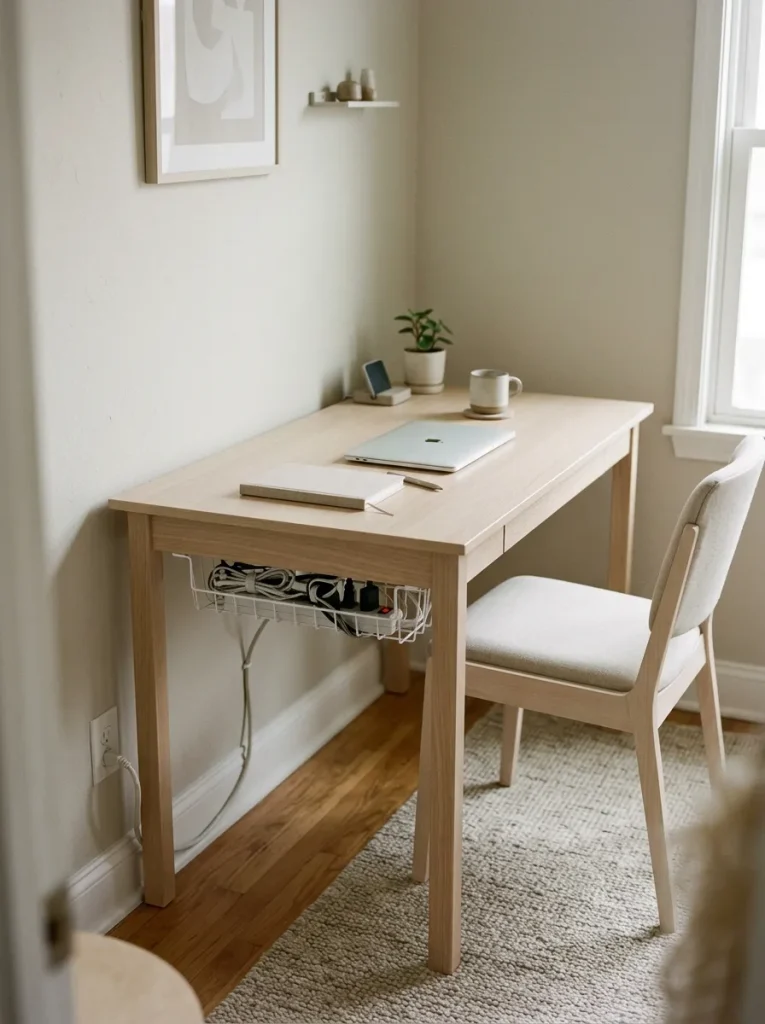
BEFORE
- Power cords hang visibly behind the desk.
- Chargers and adapters collect on the floor.
- Loose cables make cleaning and moving furniture harder.
AFTER
- A cable tray gathers wires beneath the desk.
- Reusable ties group cables by device.
- A small charging station keeps adapters together.
Neat cable storage makes a small office feel more organized because the floor and desk edges stay visually clear. Before buying organizers, check how many devices you use and where the nearest outlet sits. Keep power connections accessible, avoid overloading outlets and leave enough ventilation around adapters and other electrical equipment.
Narrow Writing Desk
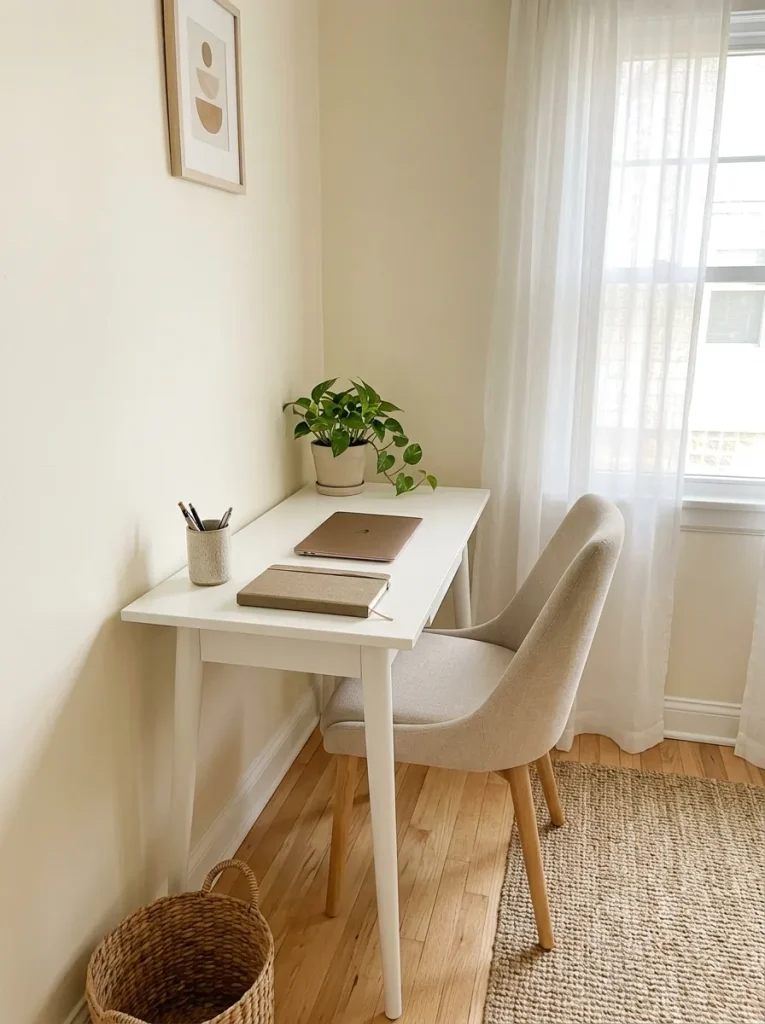
- Measure the space: Check the available wall width and the room needed for your chair.
- Choose a slim design: Look for a narrow desktop with enough depth for your laptop or monitor.
- Check legroom: Make sure drawers, supports and nearby furniture do not restrict movement.
- Add only essentials: Keep daily supplies within reach without covering the entire surface.
A narrow writing desk is useful when a full-size workstation would overwhelm the room. Choose a model that suits your actual tasks, whether you mainly use a laptop, write in a notebook or study with a few books. Pair it with a chair that fits underneath to preserve valuable floor space.
Layered Window Lighting
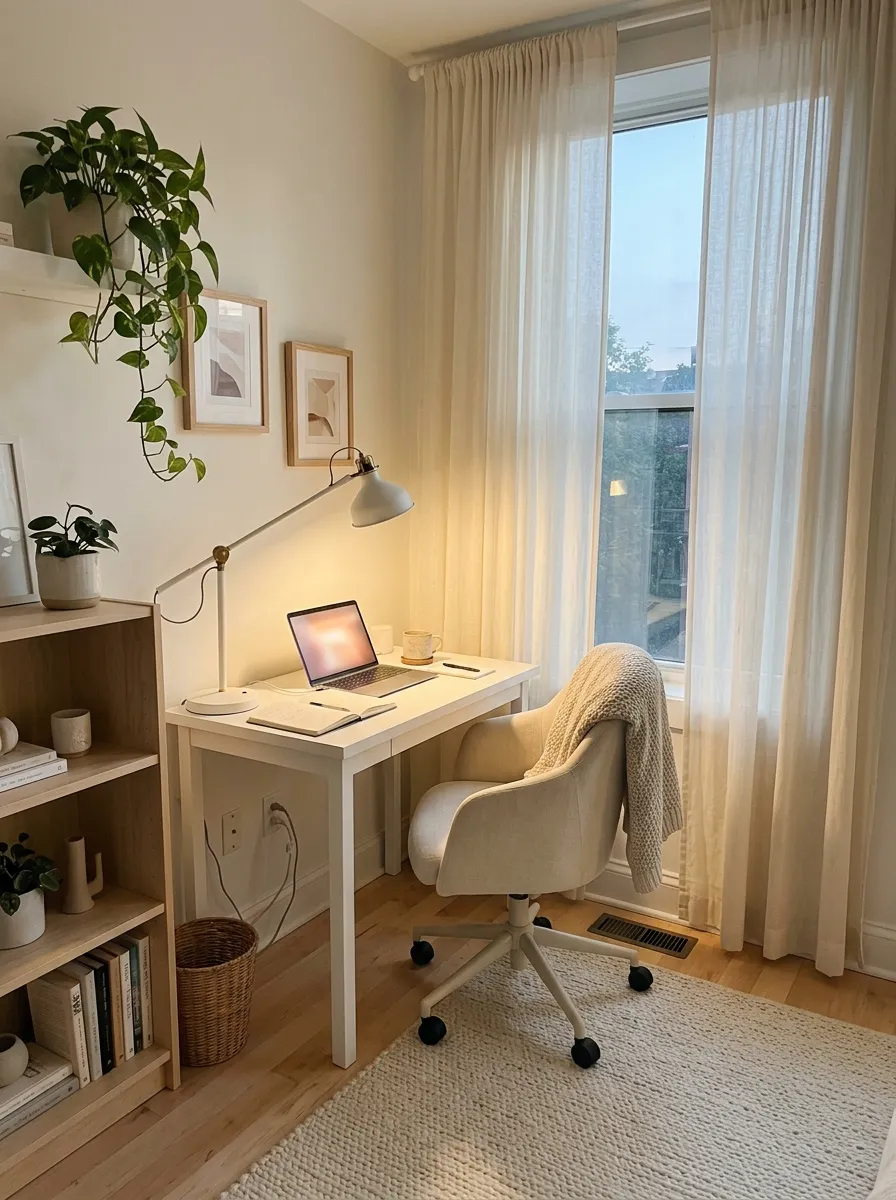
Best Daytime Setup: Use natural window light with sheer curtains to soften harsh sunlight.
Best Evening Setup: Add an adjustable desk lamp with a warm, comfortable glow.
Best Desk Position: Place your screen where window reflections are minimal.
Best Space-Saving Choice: Choose a compact lamp with an adjustable arm or a wall-mounted design.
Layered lighting helps a small office work well throughout the day. Natural light can brighten the room, while a desk lamp provides focused illumination after sunset. Position lights to reduce screen glare and harsh shadows and choose bulbs suited to reading and computer work rather than relying on decorative lighting alone.
Simple Wall Calendar
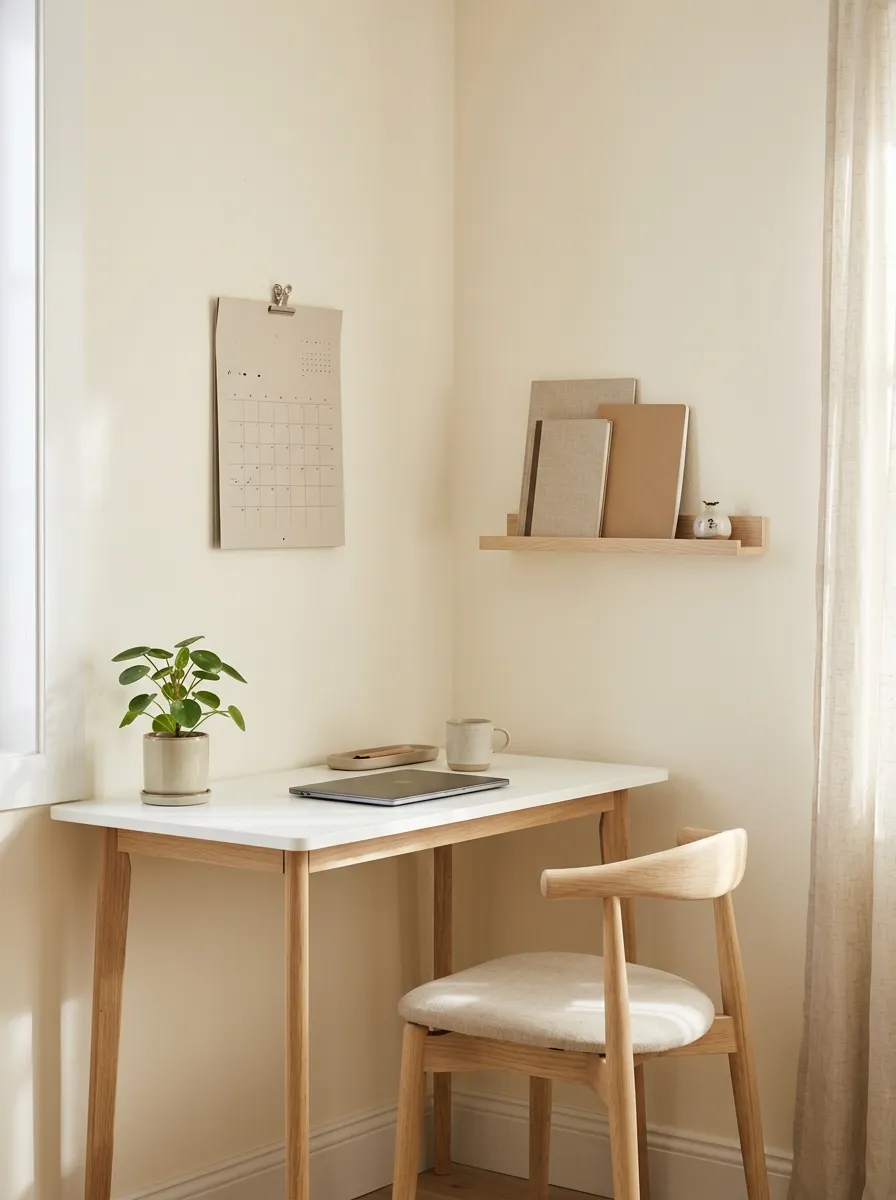
A wall calendar keeps important dates visible without taking up precious desk space. Choose a compact design with a clean layout and hang it near your usual work area. A simple frame or magnetic calendar can fit neatly into a small office without competing with the rest of your decor.
Keep the calendar useful by marking deadlines, appointments and a few weekly priorities rather than filling every square with notes. If you need extra writing space, pair it with a small wall pocket for loose papers. Matching the calendar frame to your desk or shelves helps the workspace feel coordinated.
Small Desk Plant
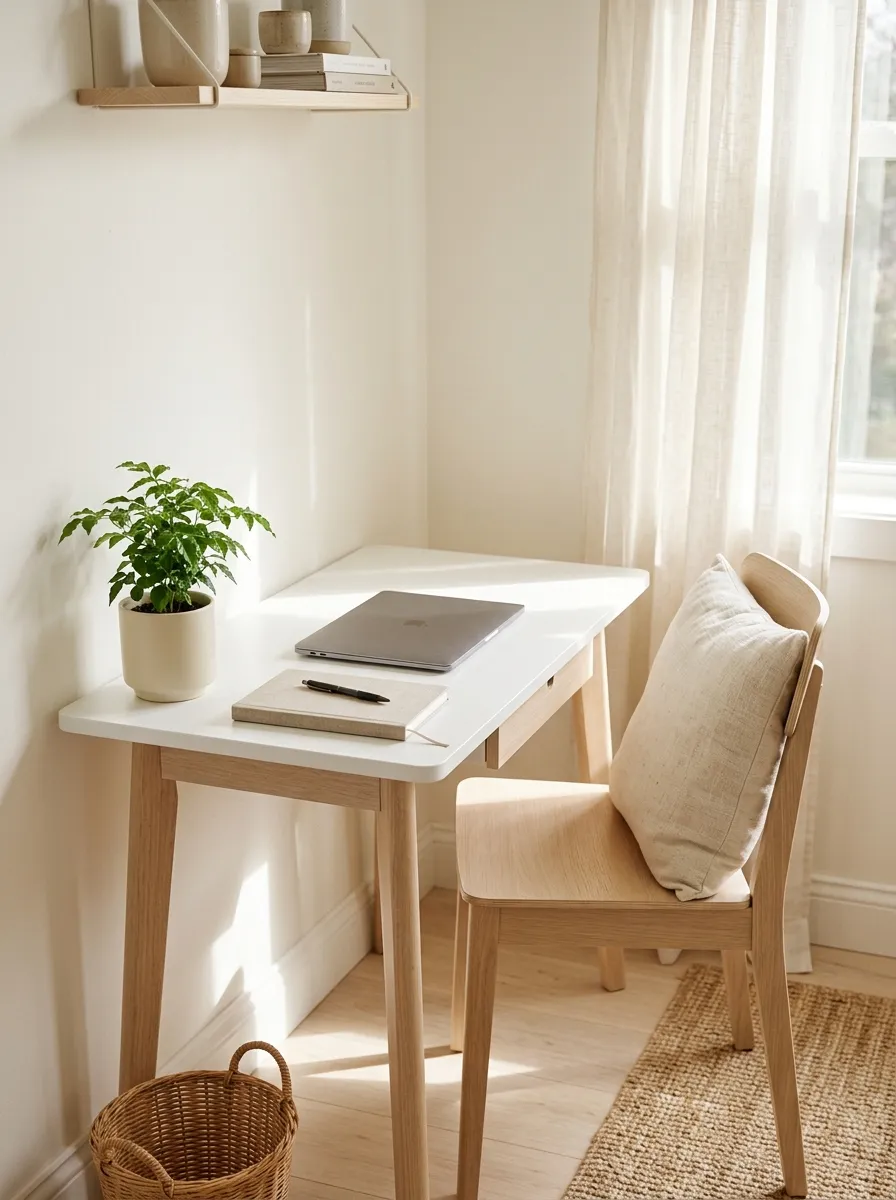
DO
- Choose a small plant that suits the light available in your office.
- Use a compact pot with a saucer or waterproof tray.
- Place it where leaves will not interfere with your screen or work area.
- Consider a low-maintenance plant if you have a busy schedule.
DON’T
- Choose a large plant that blocks a window or walking path.
- Leave excess water on a wooden desk.
- Place delicate plants in strong direct sunlight without checking their needs.
- Add so many pots that the desk becomes crowded.
A small plant adds a natural touch without requiring a full shelf of decorations. Place it near a window if its light needs allow or choose another suitable spot where it can thrive. A single plant in a simple pot often provides enough color to soften a neutral workspace while keeping the desktop practical.
Open Desk Shelving
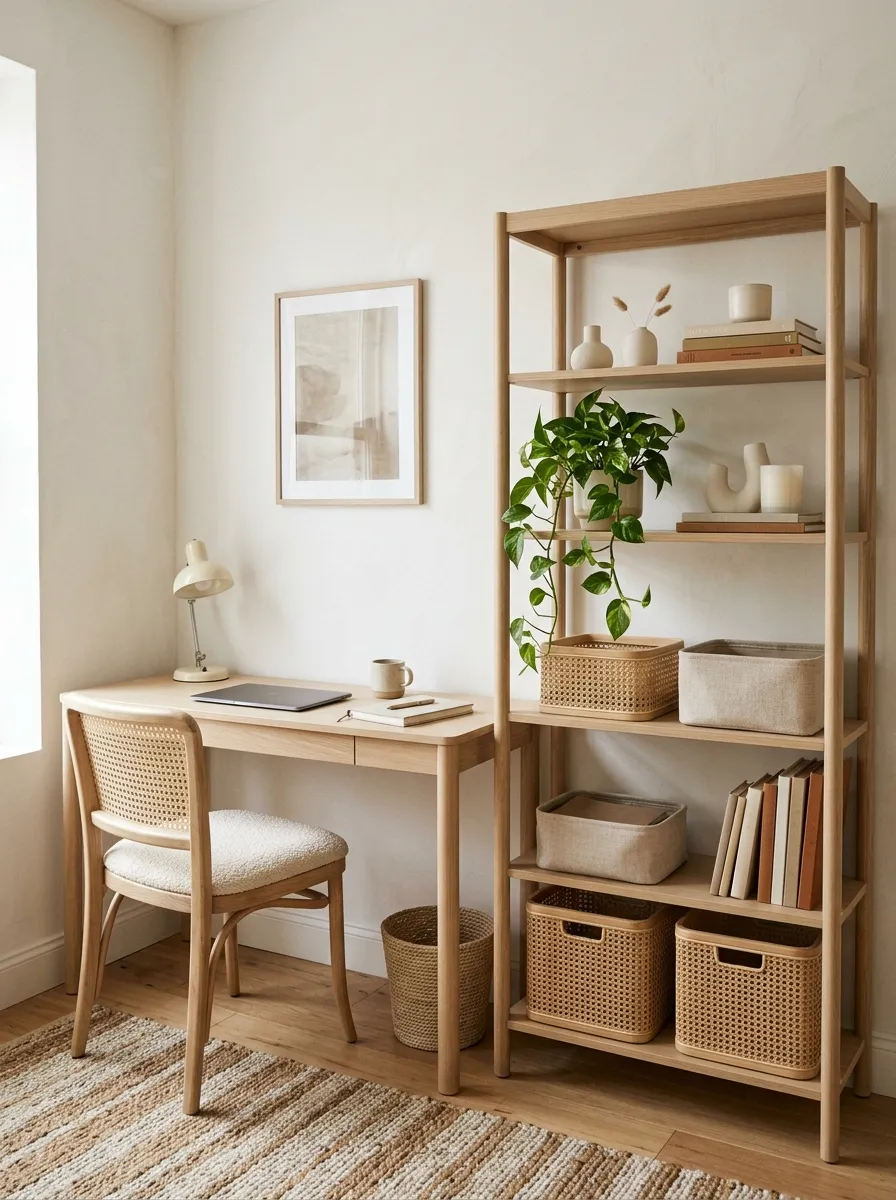
Quick Tip:
Choose open shelves with a narrow frame and light finish so they complement your desk without making the room feel heavy.
Keep frequently used items on the easiest-to-reach shelves and move occasional supplies higher up. Matching baskets can hide small objects while maintaining a tidy appearance. Leave some shelf space empty to prevent visual clutter and secure tall shelving to the wall according to the manufacturer’s instructions.
Open shelving works well when your office needs extra storage but has little room for bulky cabinets. It keeps supplies visible and accessible while allowing you to organize items by purpose. Pairing the shelves with a compact desk creates a practical workstation, especially when both pieces share similar colors and materials.
CONCLUSION
Creating a brighter, more organized workspace starts with a few thoughtful choices. These Small Office Decorating Ideas show how light colors, space-saving furniture, smart storage and simple decor can make even the smallest room feel more comfortable and inviting.
You don’t have to try every idea at once. Start with one change that solves your biggest challenge, then build on it as your needs and budget allow. Save this article on Pinterest so you can revisit your favorite designs and share it with someone who needs a little workspace inspiration. Your small office can become a place where focus and creativity flourish.