Small Living Room Decorating Ideas: 28 Smart Fixes
A small living room can feel crowded, cluttered and difficult to decorate, but the right changes can make a surprising difference. You don’t need a bigger home to create a space that feels open, cozy and stylish.
These Small Living Room Decorating Ideas offer 28 practical fixes to help you make the most of every corner without sacrificing comfort or personality. From floating shelves and clever storage to light color palettes, space-saving furniture and layered lighting, you’ll find inspiration for different budgets and decorating styles.
The secret is choosing pieces that work harder, arranging furniture thoughtfully and keeping the room visually balanced. Even simple changes, such as hanging curtains higher or choosing a round coffee table, can improve how your space looks and functions. Whether you’re decorating a tiny apartment or refreshing a compact family living room, these ideas will help you create a welcoming space that feels like home.
Floating Shelves
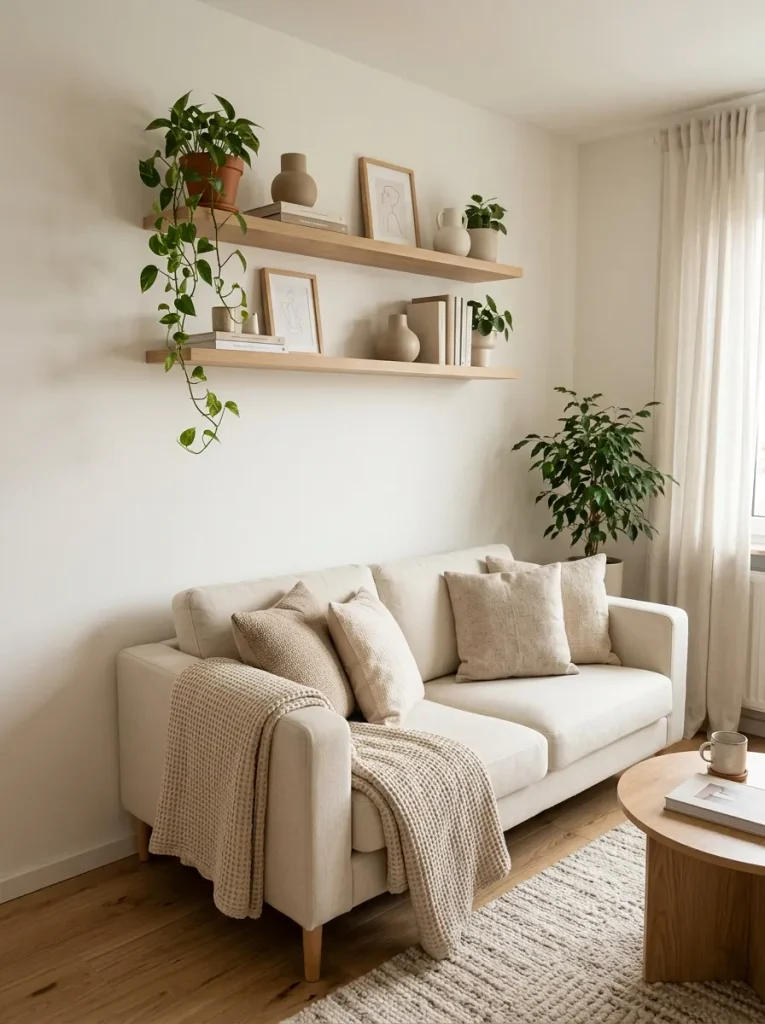
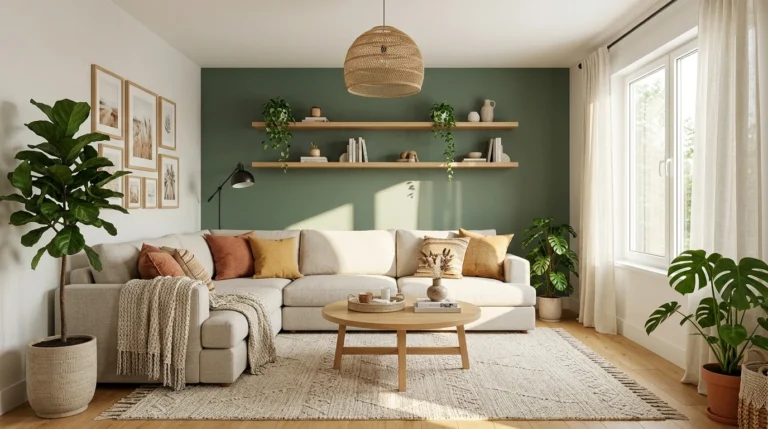
Small living rooms often lack storage, but bulky cabinets can make the space feel even tighter. Floating shelves provide a practical way to display your favorite things without taking up valuable floor space. Choose slim wooden shelves that complement your furniture and wall color.
Arrange a few books, small plants, framed prints, or decorative bowls across two or three shelves. Keep some open space between objects so the display feels light rather than cluttered. Positioning shelves above a sofa or beside a window makes use of overlooked wall space while keeping everyday essentials within easy reach.
Light Color Palette
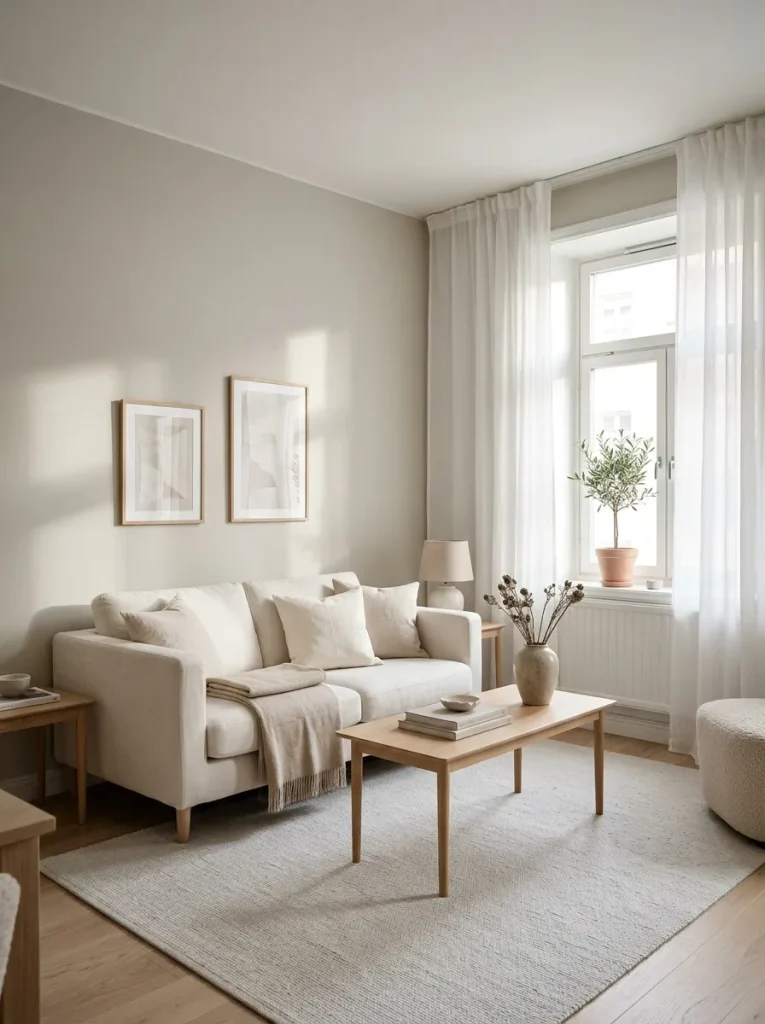
- Paint the walls: Choose warm white, soft ivory, or pale greige to create a brighter backdrop.
- Select light upholstery: Cream or beige seating helps the room feel visually open.
- Layer neutral textiles: Combine ivory cushions, a pale rug and linen curtains for subtle depth.
- Add natural wood: Light oak furniture introduces warmth without making the palette feel heavy.
- Repeat accent colors: Use small touches of sage green, dusty blue, or muted terracotta for personality.
A light palette works especially well in rooms with limited natural light. Rather than making everything the same shade, combine slightly different neutrals and textures to keep the space interesting. For a practical finish, choose washable cushion covers and a rug that can handle everyday use.
Wall Mounted Lighting
Quick Tip:
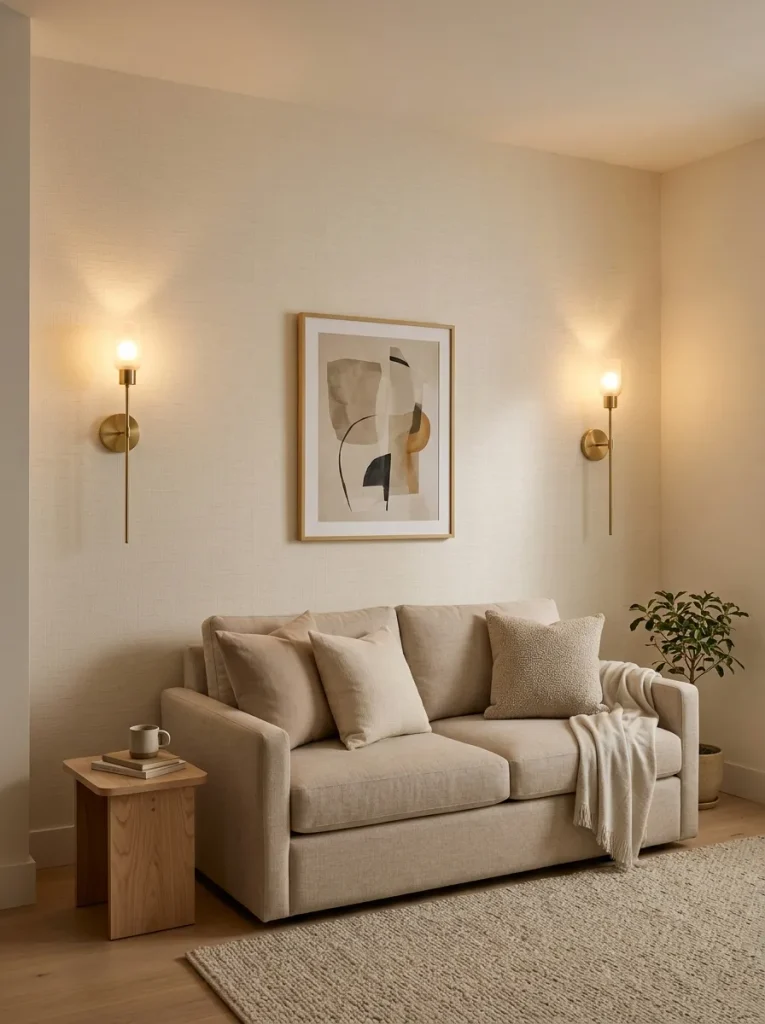
Choose wall sconces with adjustable arms if you enjoy reading on the sofa. Warm white bulbs around 2700K to 3000K create a comfortable evening atmosphere. If you rent, plug-in sconces can offer a useful alternative to hardwired fixtures.
Wall-mounted lighting frees up space that table lamps would otherwise occupy on side tables and consoles. Place a sconce beside the sofa, near a favorite reading chair, or on either side of a focal point. Match the fixture finish to existing hardware for a coordinated look and check the mounting requirements before purchasing.
Compact Furniture Layout
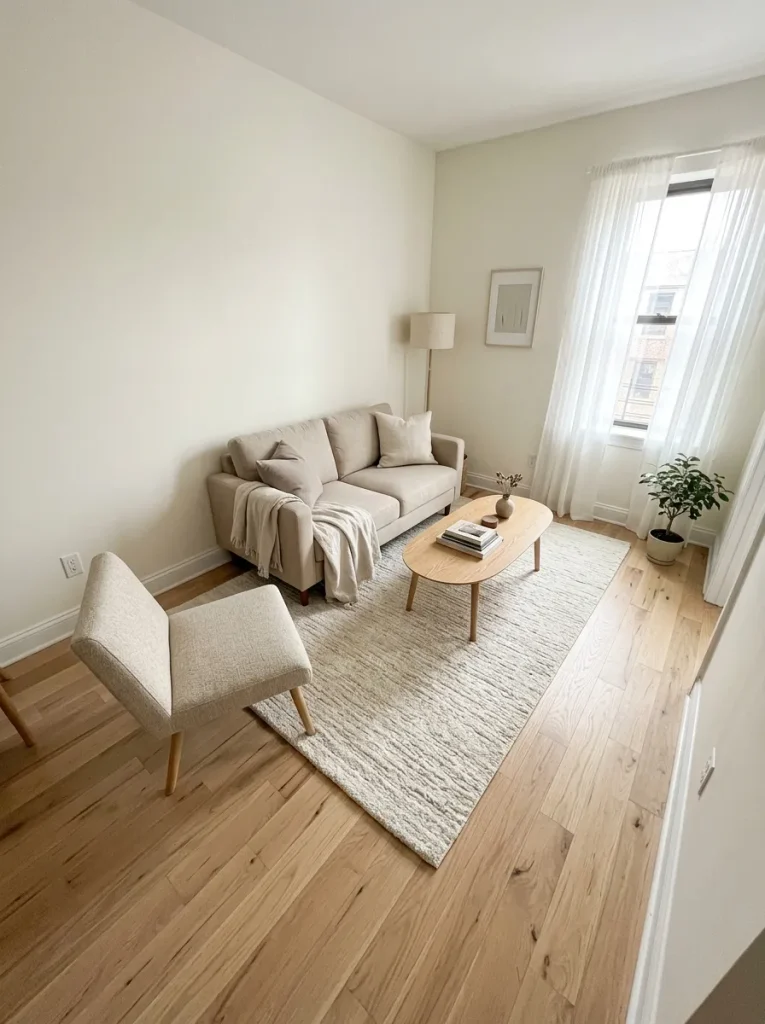
BEFORE
Oversized seating fills the room, leaving little space to walk between the sofa, coffee table and doorway. Furniture feels crowded, even when there are only a few pieces.
AFTER
A compact sofa, slim accent chair and narrow coffee table create a more balanced arrangement. Clear pathways make the room easier to navigate.
Measure your room before buying furniture, including doorways and walking routes. Leave roughly 30 to 36 inches for main walkways when possible, adjusting to your layout. A well-planned arrangement can make even a tiny apartment living room feel more comfortable without requiring additional square footage.
Round Coffee Table
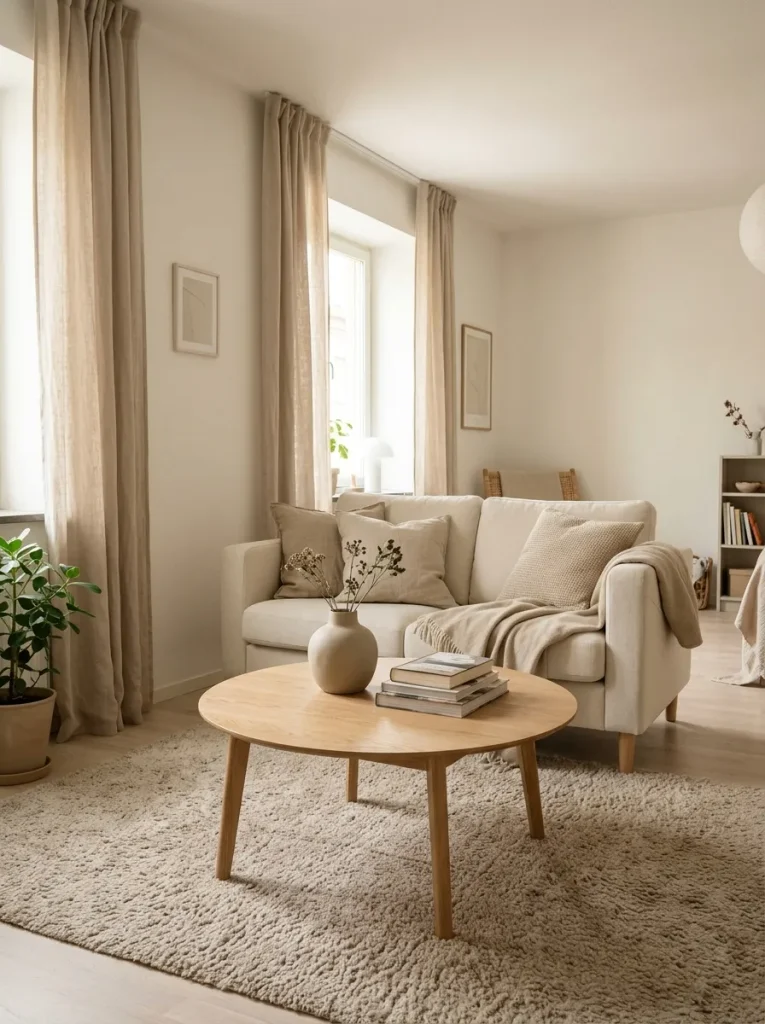
- Measure the seating area. Choose a table that fits comfortably between your sofa and other furniture.
- Check the height. Aim for a tabletop close to the height of your sofa seat or slightly lower.
- Choose a slim base. Open legs or a pedestal design keep the table from appearing bulky.
- Keep the styling simple. Use one small tray, a vase, or two books instead of a large decorative arrangement.
Sharp corners can make tight walkways feel awkward, especially when people move around the coffee table frequently. A round design creates softer visual lines and makes it easier to navigate around the seating area. Glass or pale wood finishes can also help maintain an open appearance in a compact living room.
Glass Coffee Table
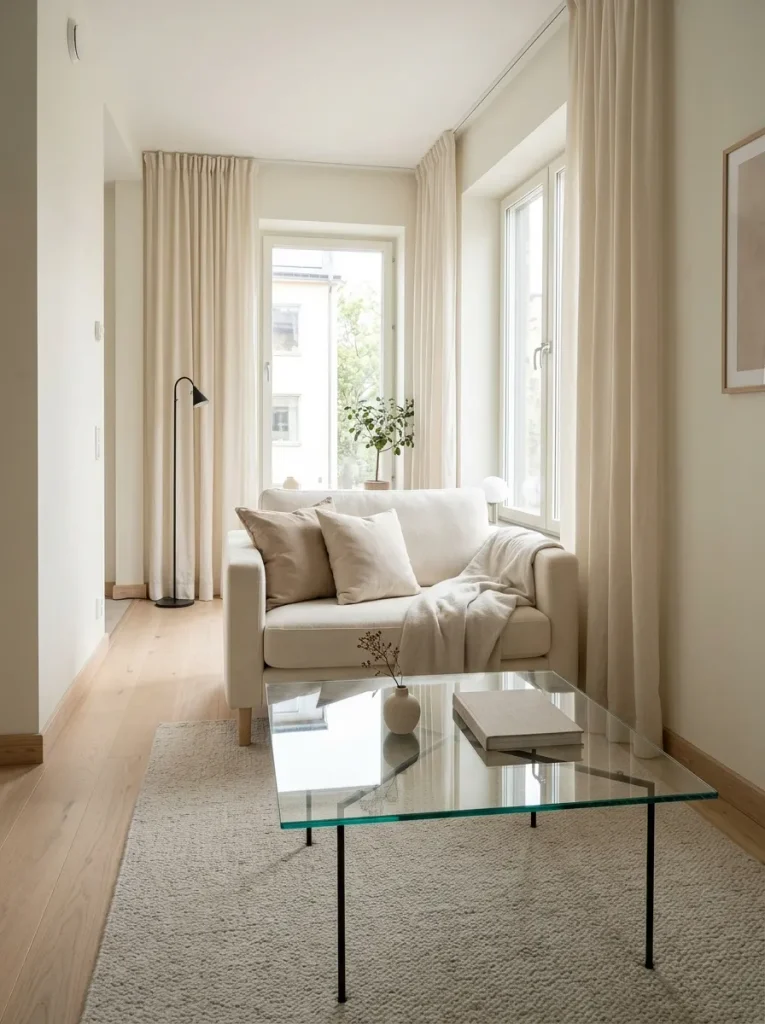
| Feature | Option A: Solid Table | Option B: Glass Table |
|---|---|---|
| Visual weight | Can look substantial | Appears lighter |
| Light flow | Blocks some sightlines | Allows light through |
| Maintenance | May hide fingerprints | Shows smudges more easily |
| Best use | Extra storage or display | Open-looking seating areas |
A glass coffee table is useful when you want the room to feel less crowded without removing a functional surface. Pair it with a compact sofa and a simple rug so the furniture remains easy to see. Choose tempered safety glass with stable legs, especially in homes with children or active pets.
Floor Length Curtains
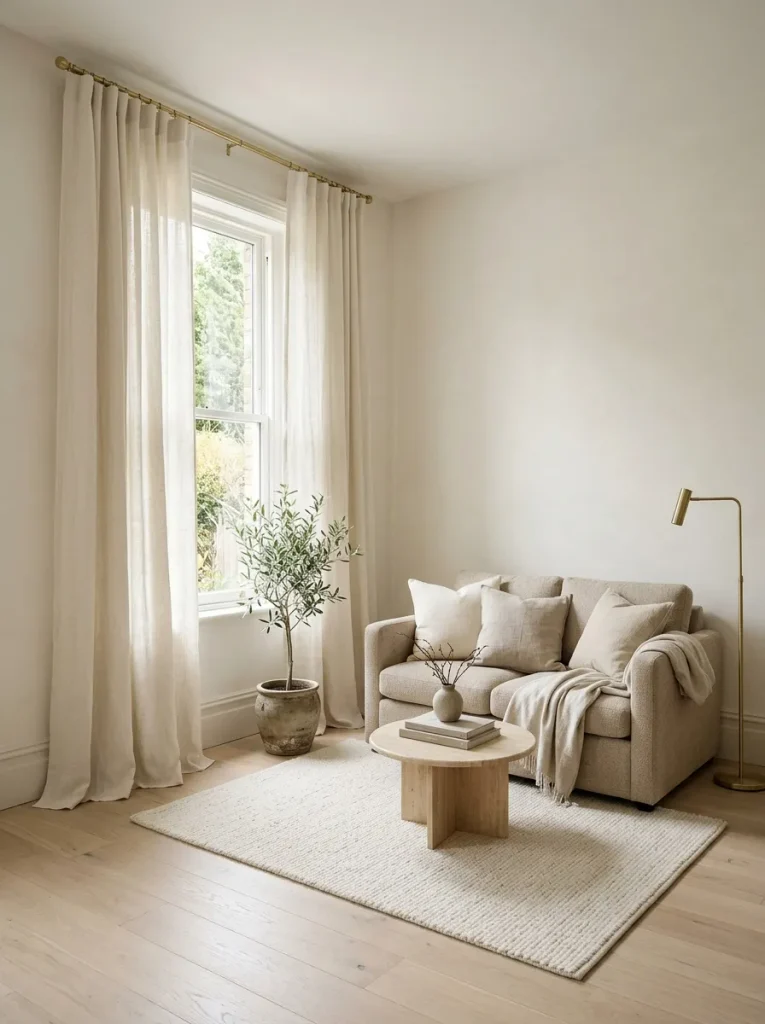
DO
- Mount the curtain rod close to the ceiling to emphasize vertical height.
- Extend the rod beyond the window frame so the curtains do not block much daylight.
- Choose lightweight linen or sheer fabric for a soft, airy finish.
- Let the panels reach the floor neatly without excessive fabric pooling.
DON’T
- Hang the rod directly against the top of the window frame.
- Choose heavy, dark curtains for an already dim room.
- Allow long panels to bunch up and collect dust.
- Cover most of the glass with thick, bulky fabric.
Floor-length curtains draw the eye upward and make windows feel more generous. In my experience, a simple curtain upgrade can change the proportions of a room without replacing any furniture. Choose a fabric that complements your sofa and keep the window area relatively uncluttered to maximize natural light.
Large Area Rug
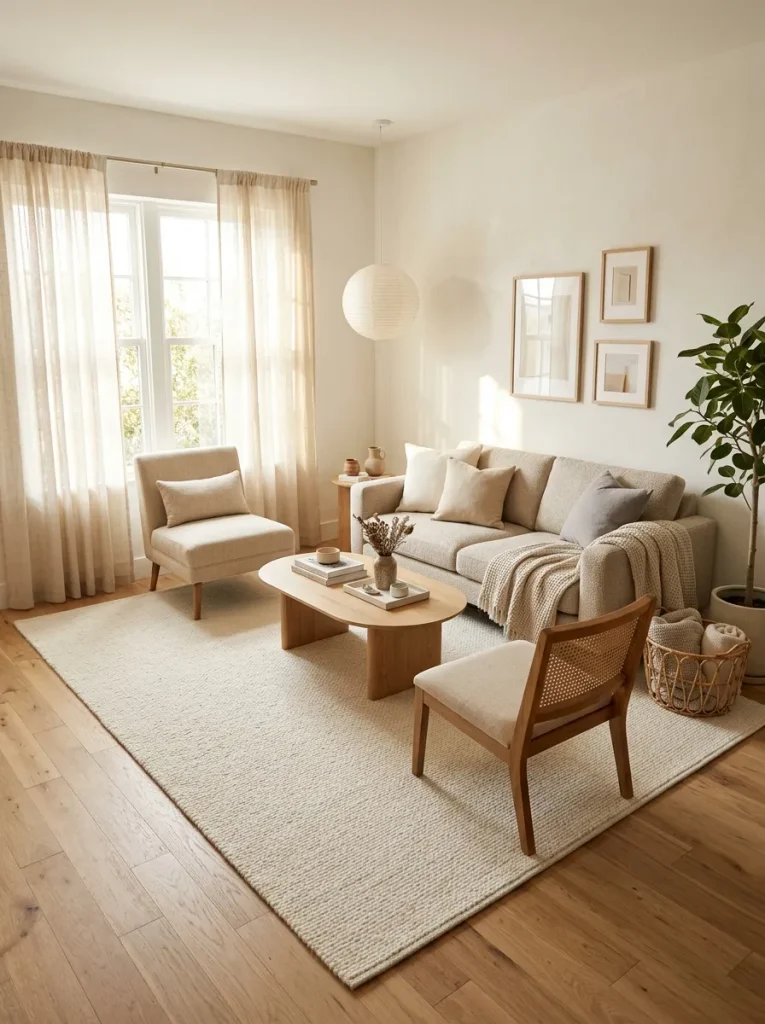
Cost: Moderate, depending on size and material.
Time: Around 30 minutes to position and style.
Skill Level: Beginner.
Best For: Rooms where separate furniture pieces feel disconnected.
Result: A more unified and visually balanced seating area.
A rug that is too small can make a living room feel fragmented, with each piece of furniture appearing isolated. Choose a size that allows at least the front legs of your main seating pieces to rest on it. Before buying, measure the seating arrangement and use masking tape to outline the rug dimensions on the floor.
Slim Console Table
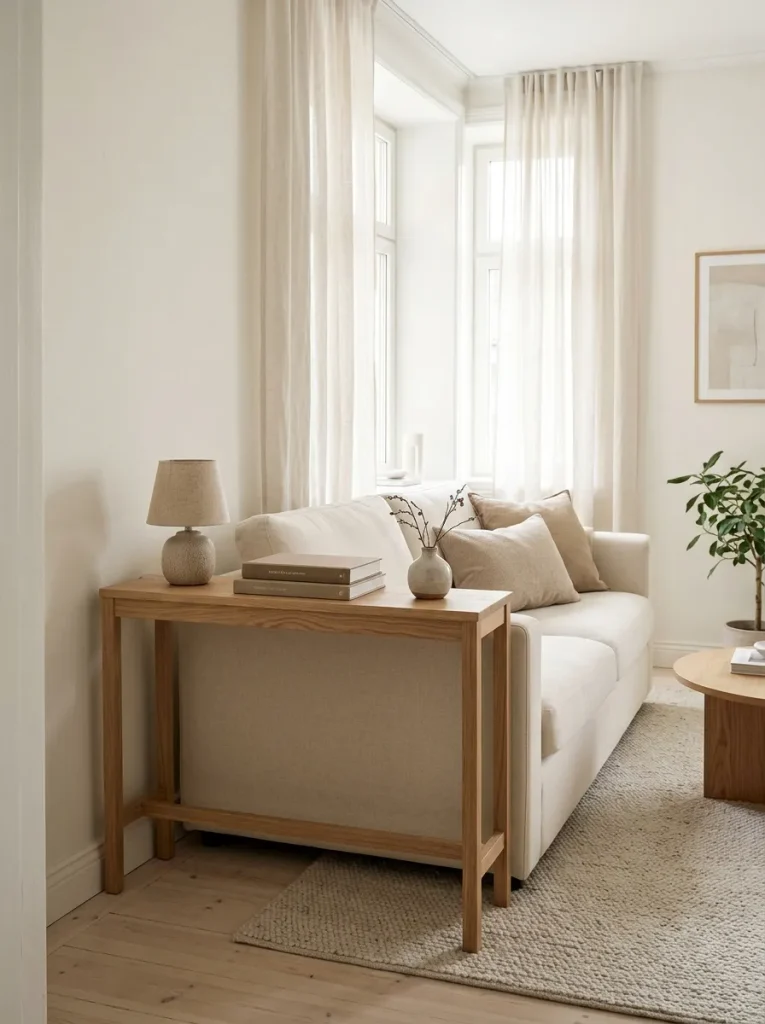
A narrow console can provide useful storage and display space without dominating a small living room. Look for a design with a shallow depth, especially if the sofa sits close to a walkway. A model with a lower shelf or discreet drawer can hold remotes, notebooks and other everyday items.
Keep the top surface simple with a small lamp, a decorative bowl, or a framed photograph. If the console sits behind a sofa, check that there is enough clearance for people to move comfortably. The best furniture pieces earn their space by offering both function and visual appeal.
Storage Ottoman
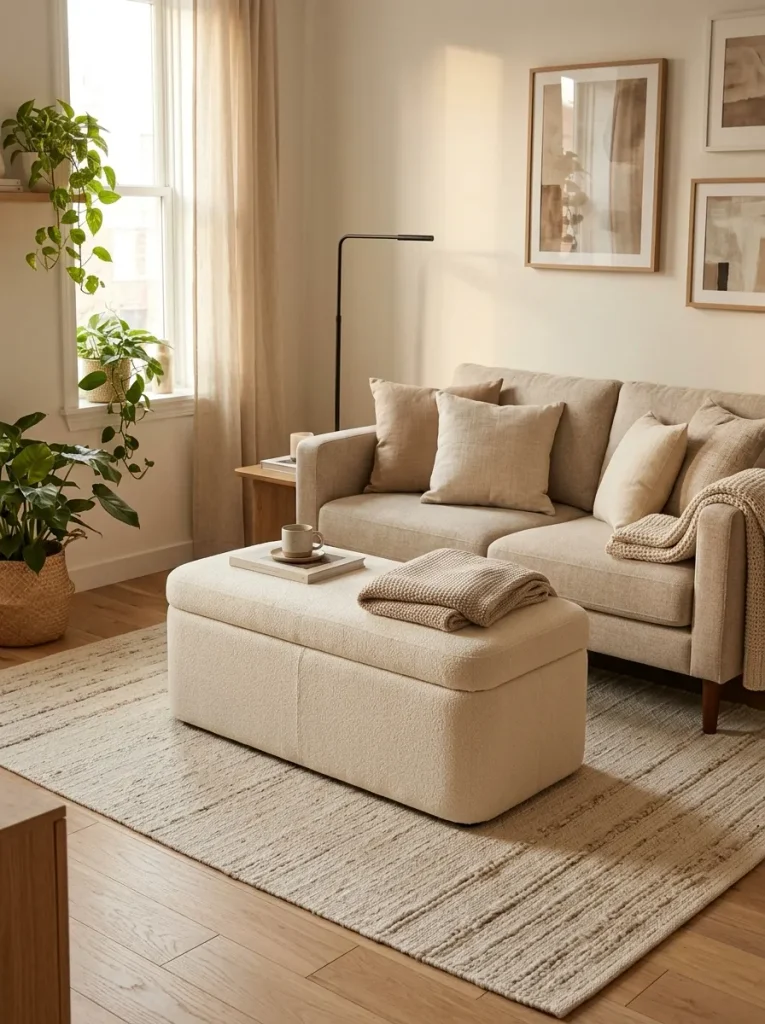
- Choose a dual-purpose design: A storage ottoman provides a footrest, extra seat and hidden storage.
- Store bulky textiles: Keep blankets, spare cushions and seasonal accessories inside.
- Use a tray: A stable tray can turn the ottoman into a temporary coffee table.
- Match your upholstery: A neutral fabric helps the piece blend with your existing seating.
- Check the lid mechanism: A smooth, secure lid makes daily access more convenient.
Small living rooms benefit from furniture that performs more than one job. An ottoman can replace a separate footstool while hiding items that would otherwise clutter shelves or baskets. Choose a size that leaves enough room to walk around it and avoid placing drinks directly on soft upholstery when the lid is not designed as a table.
Mirror Accent Wall
Quick Tip:
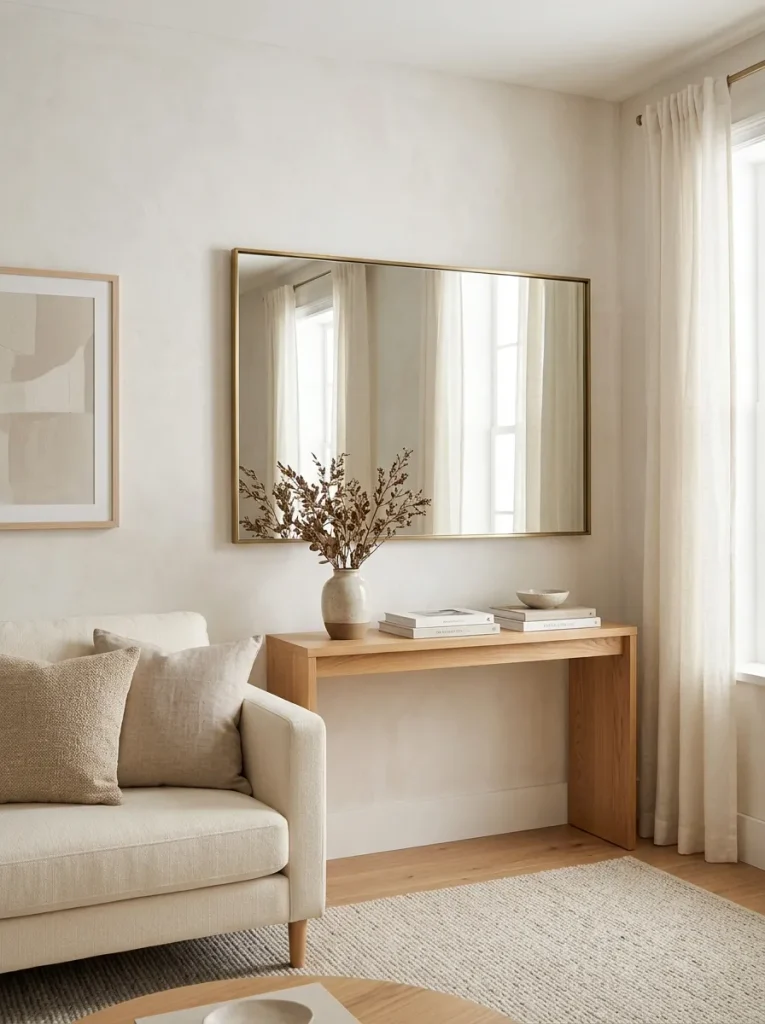
Place a large mirror opposite or adjacent to a window where it can reflect daylight into the room. Check what appears in the reflection before hanging it, since a mirror also doubles the visual presence of whatever it faces.
A thoughtfully positioned mirror can make a compact room feel brighter and more open by extending sightlines. Choose one generous mirror rather than arranging many tiny mirrors across the same wall. A slim frame keeps the look understated, while a rounded or arched shape adds softness to a room filled with straight furniture lines.
Corner Seating Nook
BEFORE
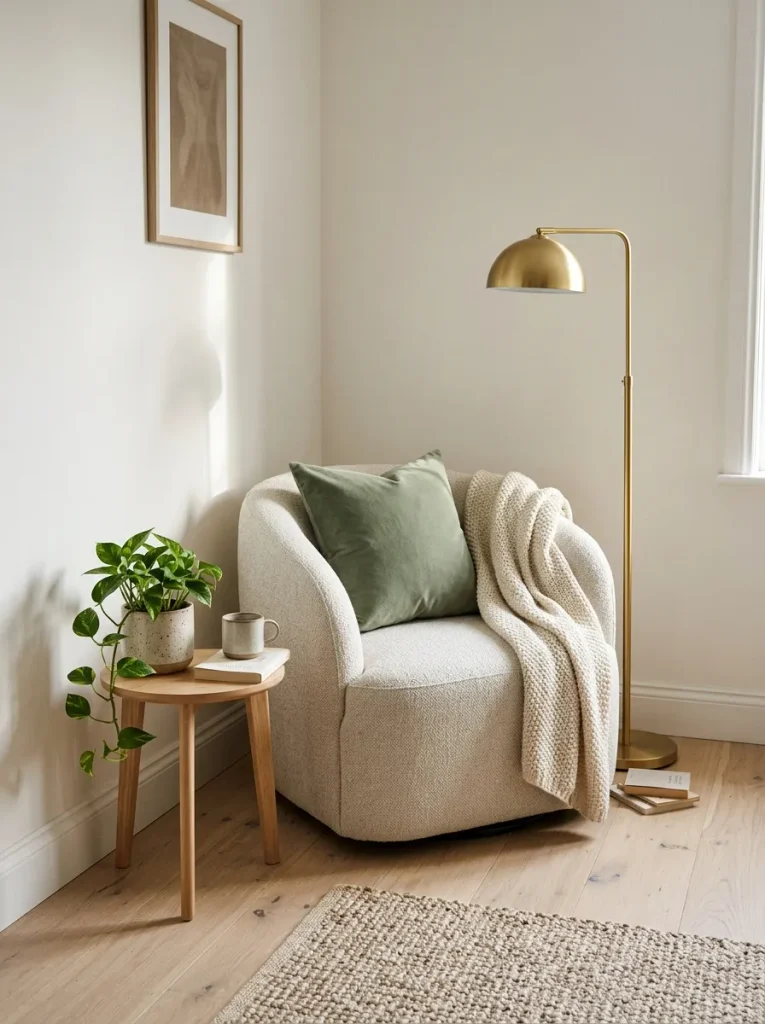
An unused corner collects random items or remains empty while the main seating area feels cramped. The room lacks a comfortable place to read, relax, or enjoy a quiet moment.
AFTER
A compact chair, petite side table and slender lamp create a purposeful seating nook. The corner becomes useful without requiring a complete furniture rearrangement.
Measure the corner before selecting a chair and consider rounded silhouettes that are easier to navigate around. A wall-mounted reading light can free the side table from a bulky lamp. Keep accessories limited to a cushion, throw, or plant so the nook feels intentional rather than like another storage area.
Wall Mounted TV
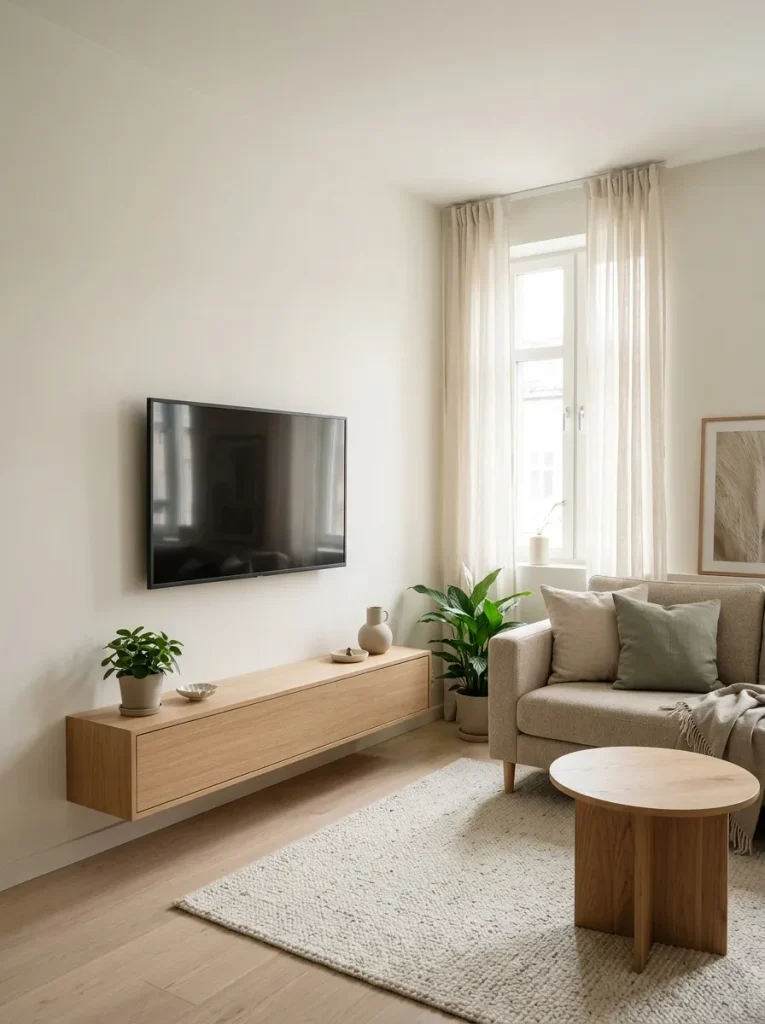
- Choose the viewing wall. Position the television where it can be seen comfortably from the main sofa.
- Measure the mounting height. Aim for a screen position that keeps viewing comfortable while seated.
- Plan cable management. Use suitable cable covers or professional in-wall installation where permitted.
- Add a slim console. Keep streaming devices and accessories organized without bulky cabinets.
Mounting the television can free up valuable surface space and make a narrow room feel less crowded. It also creates a clear focal point for the seating arrangement. Before drilling, check wall construction, mounting compatibility and cable locations. Renters should choose a solution that complies with their lease and avoids unnecessary wall damage.
Floating Media Console
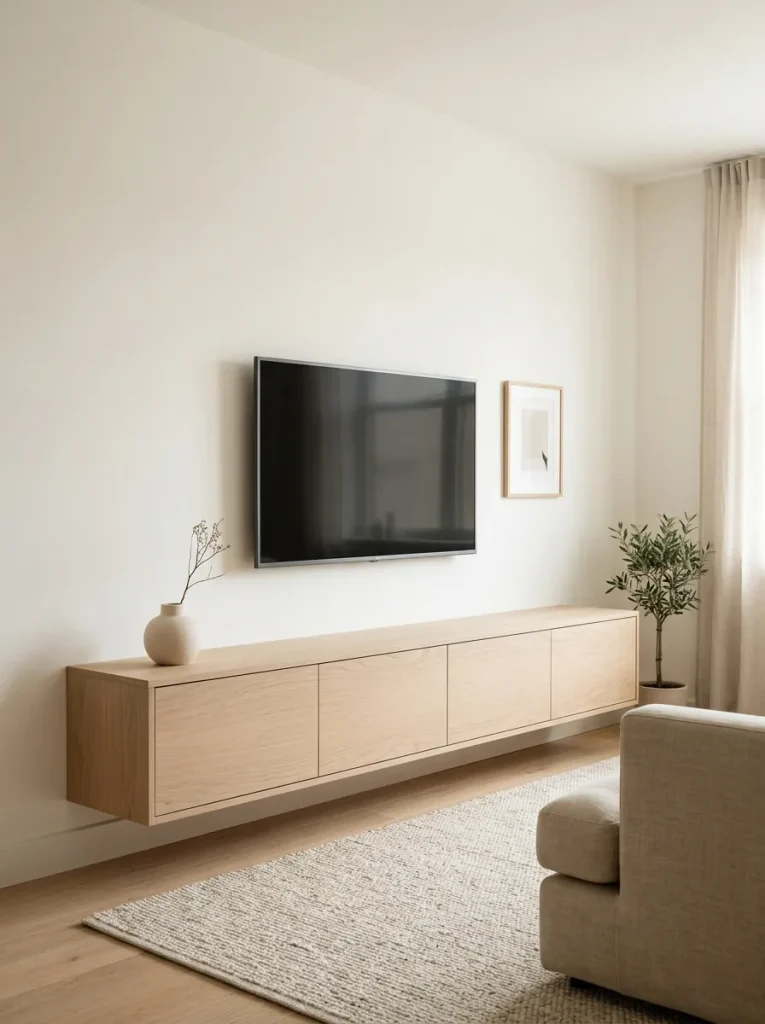
| Feature | Option A: Floor Standing Unit | Option B: Floating Console |
|---|---|---|
| Floor visibility | Covers more floor | Leaves the floor visible underneath |
| Storage | Often offers more capacity | Usually provides moderate storage |
| Cleaning | May require moving items around the base | Easier access beneath the unit |
| Installation | Often simpler to position | Requires secure wall mounting |
A floating media console creates a streamlined look and keeps the floor beneath it accessible for cleaning. Choose a model deep enough for your equipment, with ventilation for electronic devices and openings for cables. Confirm the wall can support the unit and its contents before installation. This design works especially well in contemporary apartments with limited floor space.
Vertical Plant Display
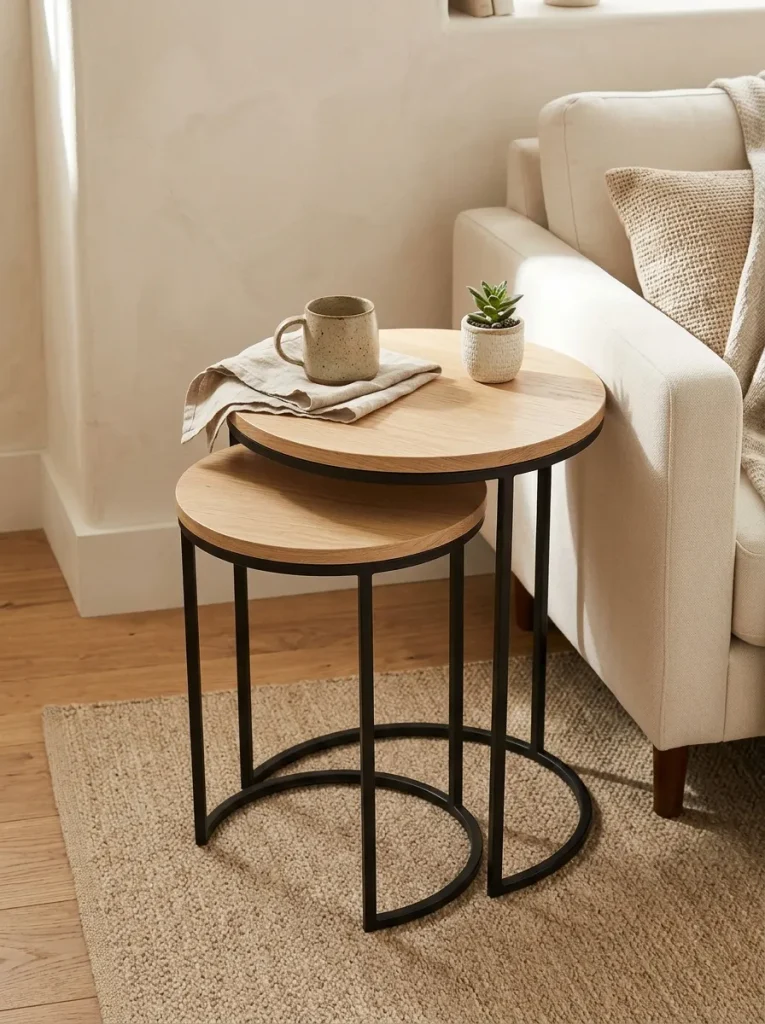
DO
- Select compact plants suited to the light available in your room.
- Use sturdy shelves and secure mounting hardware appropriate for the wall.
- Place trailing varieties where their leaves will not obstruct walkways.
- Group pots in a limited palette for a cohesive display.
DON’T
- Overload shelves with heavy pots and wet soil.
- Place moisture-sensitive plants in dark corners without checking their needs.
- Allow water to drip onto furniture or flooring.
- Arrange so many plants together that the wall looks crowded.
Plants introduce color, texture and a connection to nature without requiring extra floor space. A vertical arrangement can draw attention upward while keeping the main seating area clear. Start with two or three plants and observe how they respond to the available light before expanding the display. Choose easy-care varieties if your schedule is busy.
Nesting Side Tables
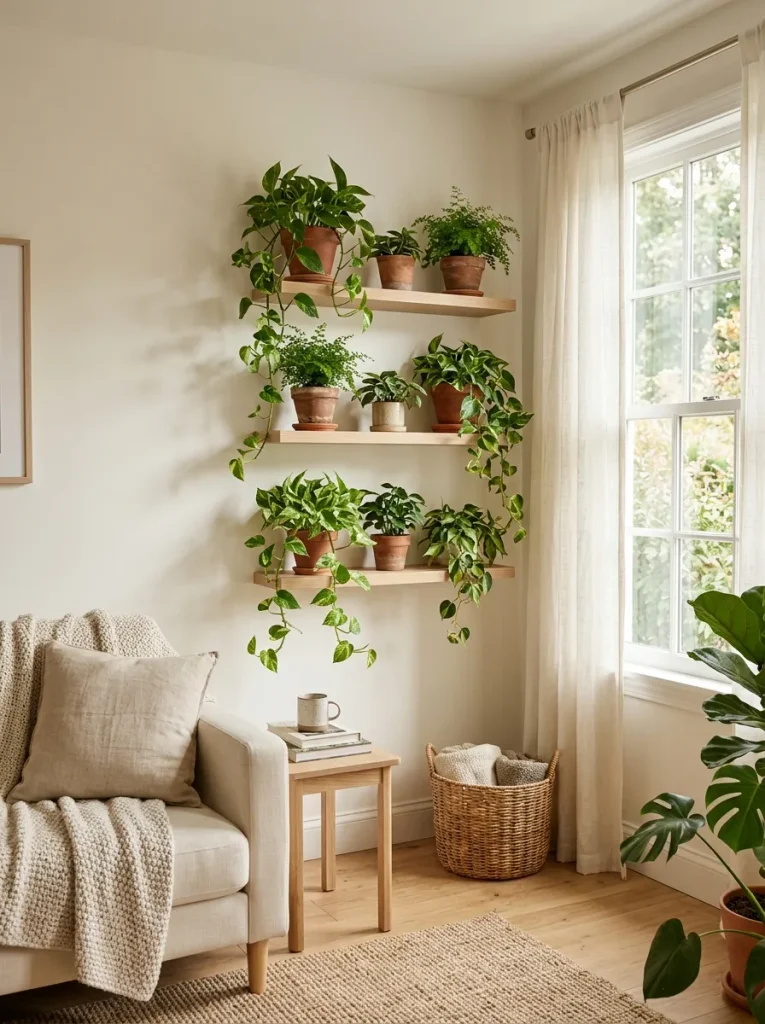
Cost: Low to moderate, depending on material.
Time: Around 15 minutes to arrange.
Skill Level: Beginner.
Best For: Small apartments, flexible seating areas and rooms with limited tabletop space.
Result: Extra surfaces when needed without permanently occupying the same floor area.
Nesting tables provide flexibility that a single bulky side table cannot offer. Keep the smaller table tucked away during everyday use, then pull it out when guests arrive or when you need space for snacks. Choose lightweight tables that are easy to move, but make sure their bases remain stable on your flooring.
Sofa Against the Wall
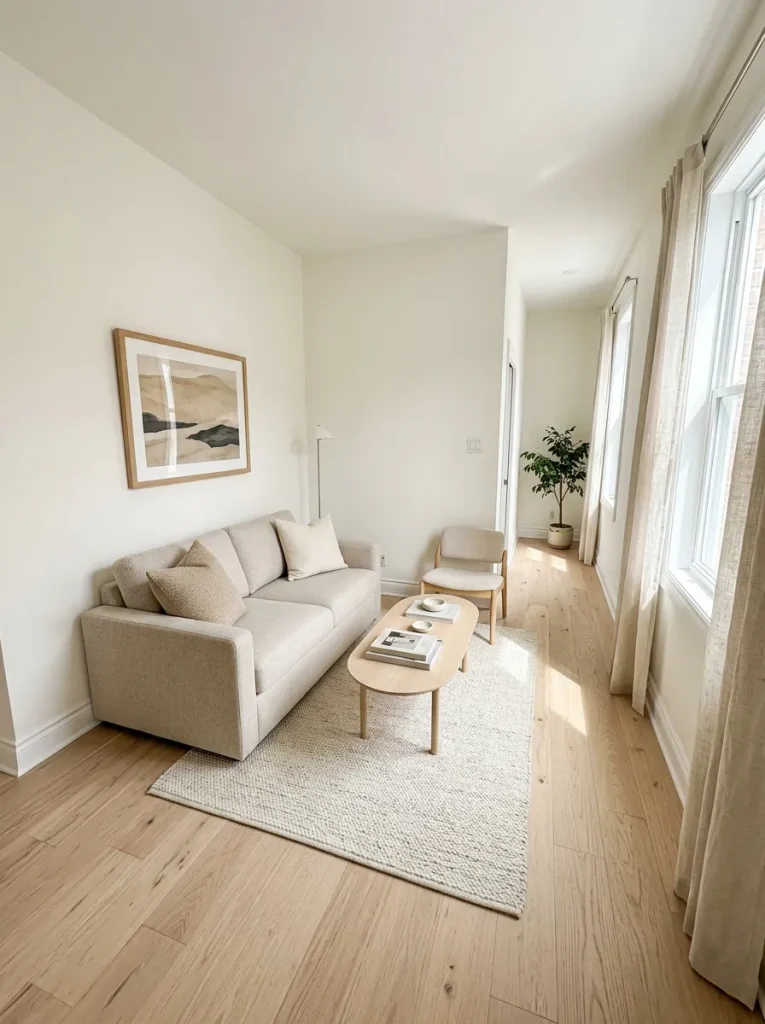
Positioning the sofa against a wall can open up the center of a small living room and make movement easier. This arrangement is particularly useful in rectangular apartments where every inch matters. Keep the sofa slightly away from the wall if needed for curtains, ventilation, or cleaning, rather than forcing it into an awkward position.
Balance the arrangement with a small coffee table and a single accent chair if space allows. Avoid filling every remaining corner with furniture. Leaving some floor area visible helps the room feel less congested and gives you more flexibility when entertaining guests or rearranging the layout.
Multifunctional Sofa Bed
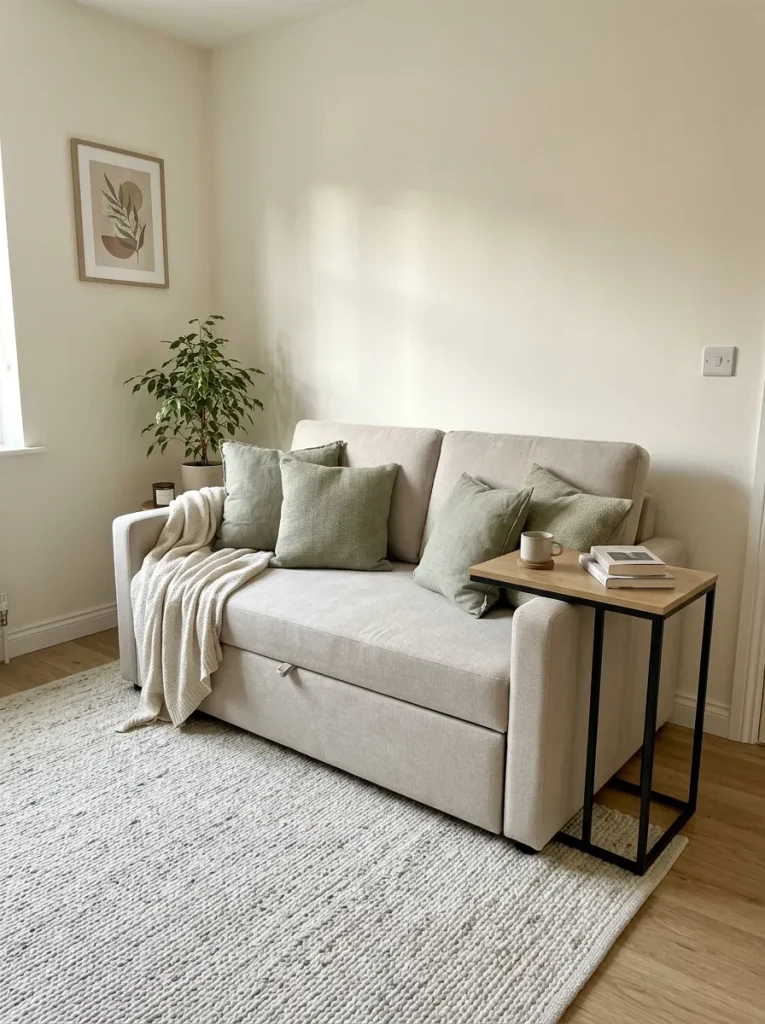
- Measure the open position: Check the full bed length and width before purchasing.
- Choose easy-to-clean upholstery: Removable, washable covers are useful for everyday living.
- Look for simple conversion: A mechanism that opens easily makes frequent use more practical.
- Consider hidden storage: A model with a storage compartment can hold bedding and pillows.
- Keep access clear: Leave enough room to open the bed without moving several heavy pieces.
A sofa bed helps a living room serve as a guest room without dedicating permanent space to a spare bed. It is especially useful in studio apartments and homes without a separate guest bedroom. Check mattress comfort, opening clearance and the effort required to convert it before choosing a design.
Hidden Storage Baskets
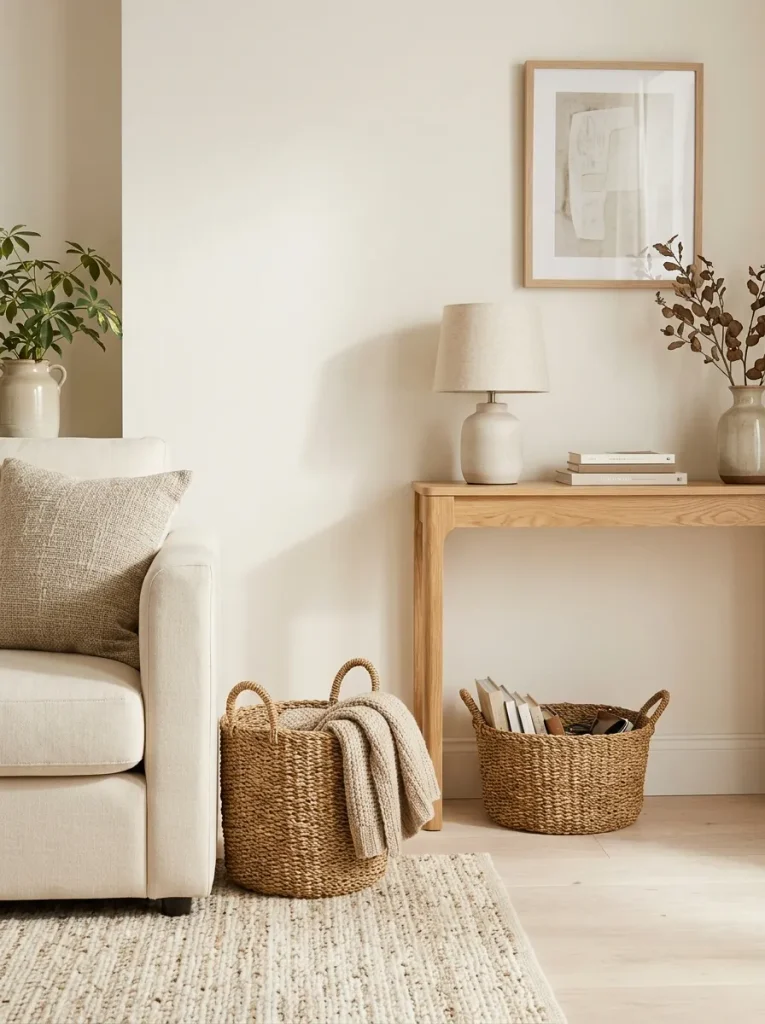
Quick Tip:
Assign each basket a specific purpose, such as blankets, children’s toys, or remote controls. Choose baskets that fit beneath your console or beside your sofa and use lids when you want a tidier appearance.
Open shelves can become visually messy when everyday belongings are scattered across them. Storage baskets group these items into neat, accessible containers while introducing natural texture. Match the basket size to the objects you intend to store and avoid filling every available surface. A few well-placed baskets are more useful than a collection that creates additional clutter.
Wall Mounted Desk
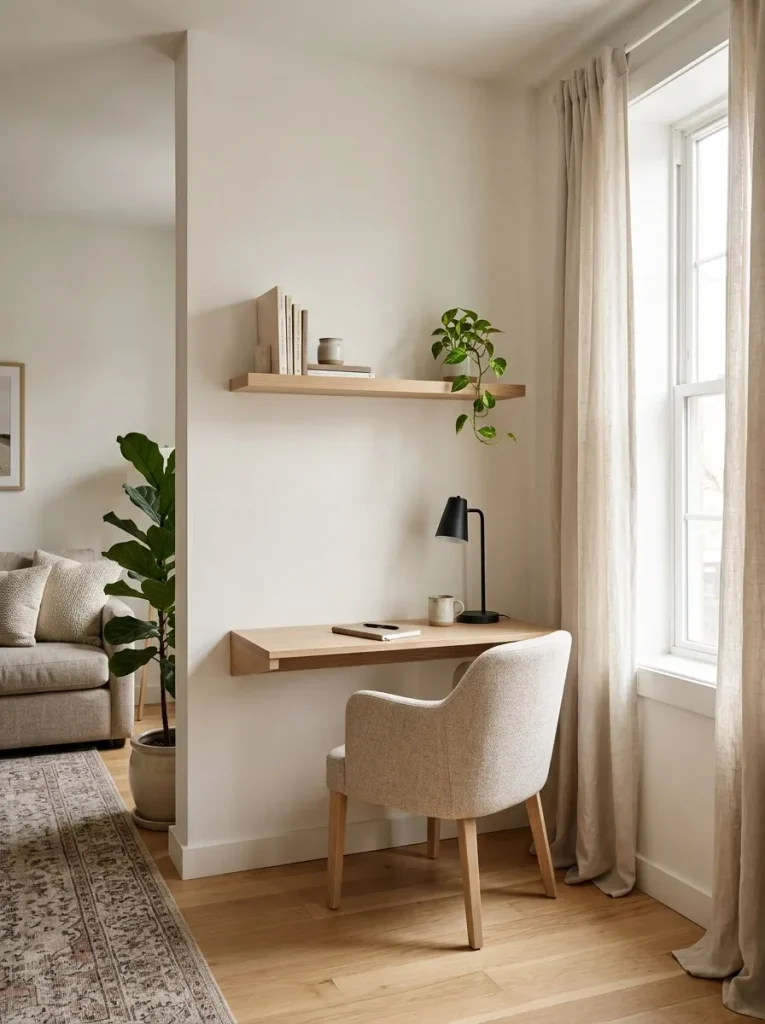
BEFORE
A bulky desk and office chair occupy the living room, leaving limited room for relaxation. Work materials spread across the coffee table, making the space feel disorganized.
AFTER
A shallow wall-mounted desk creates a dedicated work area without the footprint of a traditional desk. A compact chair can slide underneath when the workspace is not in use.
Choose a desk depth that suits your computer and work habits and confirm the wall can safely support the load. Position the screen to reduce window glare and use a cable organizer to keep wires tidy. If you need to work from home regularly, prioritize comfortable seating and proper desk height rather than choosing the smallest option available.
Layered Warm Lighting
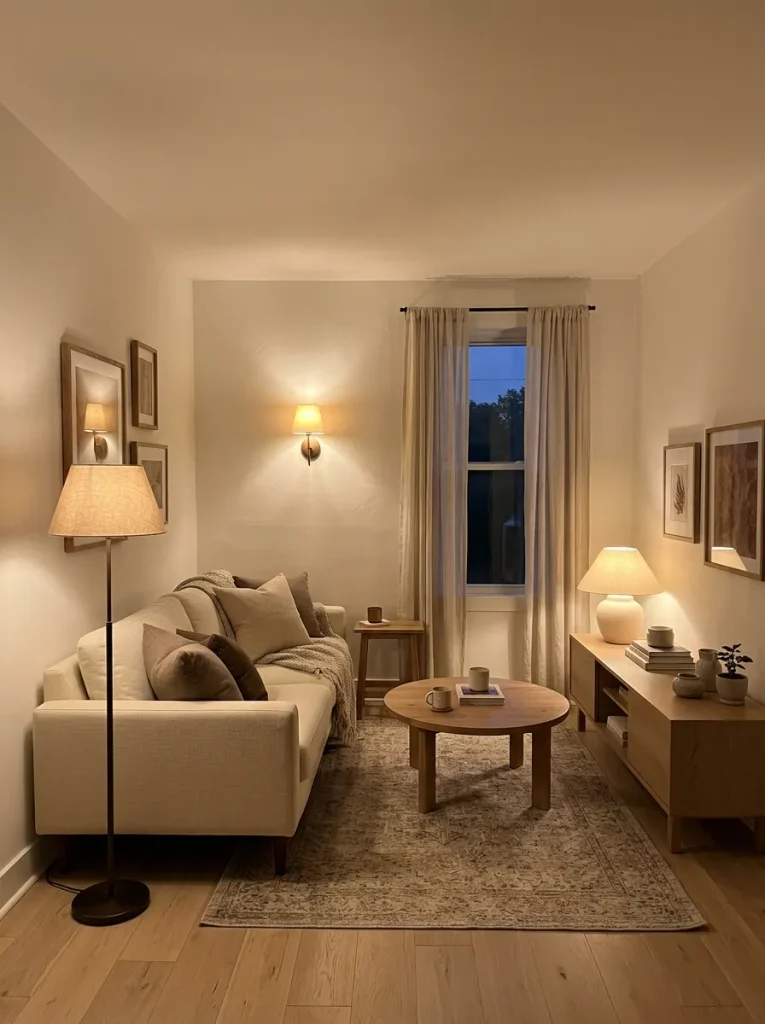
- Start with ambient light. Use a ceiling fixture or general room lighting for everyday visibility.
- Add task lighting. Place a reading lamp beside the sofa or favorite chair.
- Include accent lighting. Use a small lamp or wall sconce to highlight artwork or a corner.
- Match bulb warmth. Choose compatible warm white bulbs for a comfortable, coordinated atmosphere.
A single bright ceiling light can make a living room feel flat, particularly after dark. Layered lighting creates different levels of brightness for reading, entertaining and relaxing. Use dimmable fixtures where practical and check bulb compatibility before purchasing. The goal is a room that feels welcoming in the evening without relying on harsh overhead illumination.
Built In Wall Storage
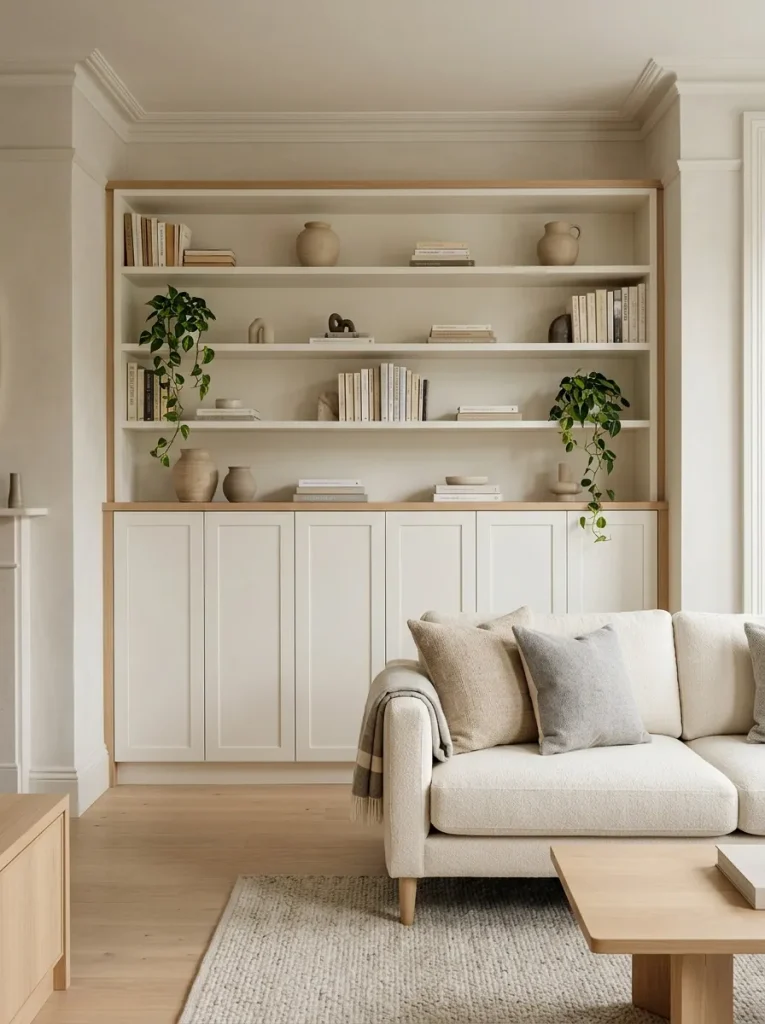
| Feature | Option A: Freestanding Shelves | Option B: Built-In Storage |
|---|---|---|
| Floor area | May project farther into the room | Can be designed to fit the wall |
| Appearance | Flexible and movable | Integrated and streamlined |
| Cost | Often more affordable | Usually higher installation cost |
| Best advantage | Easy to rearrange | Makes use of specific wall dimensions |
Built-in storage can use awkward wall sections that standard furniture does not fit well. Combine closed cabinets for everyday clutter with open shelves for books and a few decorative pieces. In rental properties, freestanding modular alternatives may be more suitable. Before committing to built-ins, check the budget, wall structure and any electrical or plumbing services behind the wall.
Minimal Wall Art
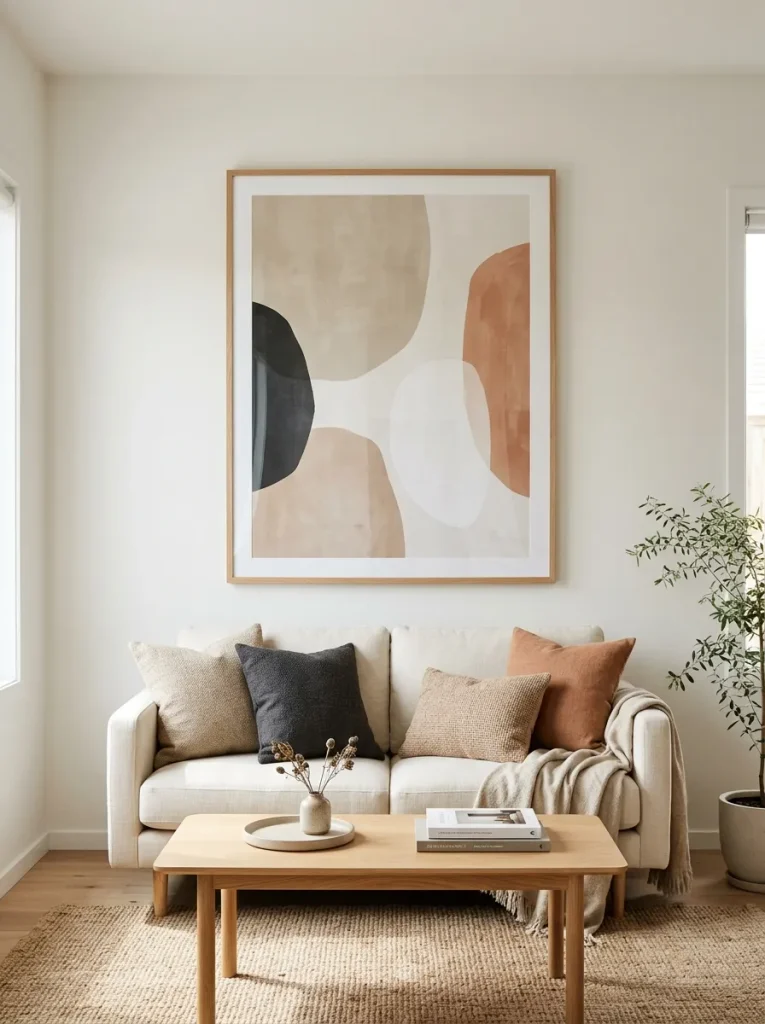
DO
- Choose one medium or large artwork that suits the wall and sofa width.
- Repeat one or two colors from the artwork in your cushions or rug.
- Hang the piece at a comfortable viewing height.
- Use a simple frame to keep the arrangement visually light.
DON’T
- Fill every available wall with small decorative pieces.
- Choose artwork that is too tiny for a large blank wall.
- Mix too many competing colors and patterns.
- Hang heavy frames without suitable wall fixings.
Artwork gives a small living room personality without using valuable floor space. A single well-proportioned piece can create a focal point and make the seating area feel intentional. If you prefer a gallery wall, arrange the frames on the floor first to test the spacing. Keep the overall composition balanced with the furniture below it.
Transparent Accent Chairs
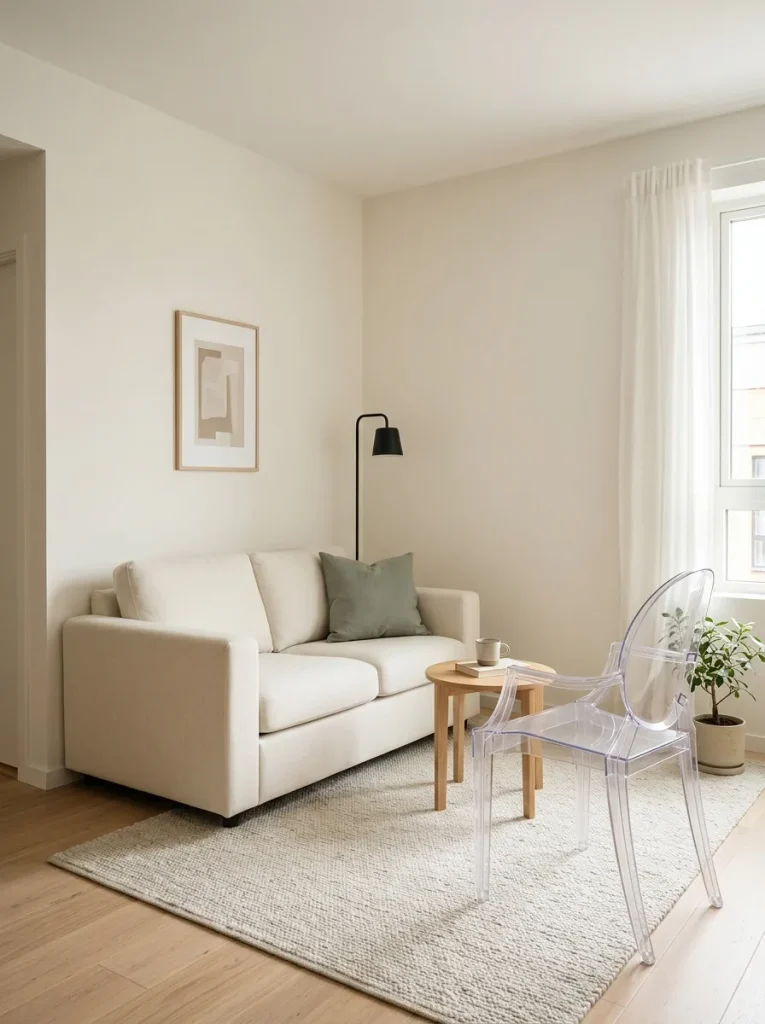
Cost: Moderate, depending on material and design.
Time: Around 20 minutes to position.
Skill Level: Beginner.
Best For: Tight seating areas that need an additional chair.
Result: Extra seating with less visual bulk than a solid, oversized chair.
Transparent acrylic chairs allow the eye to travel through the furniture, helping a crowded room appear more open. Pair one with a neutral sofa and a small side table so it feels connected to the rest of the decor. Check the chair’s weight capacity, stability and comfort before buying, since transparent furniture is not automatically the most practical choice.
Striped Area Rug
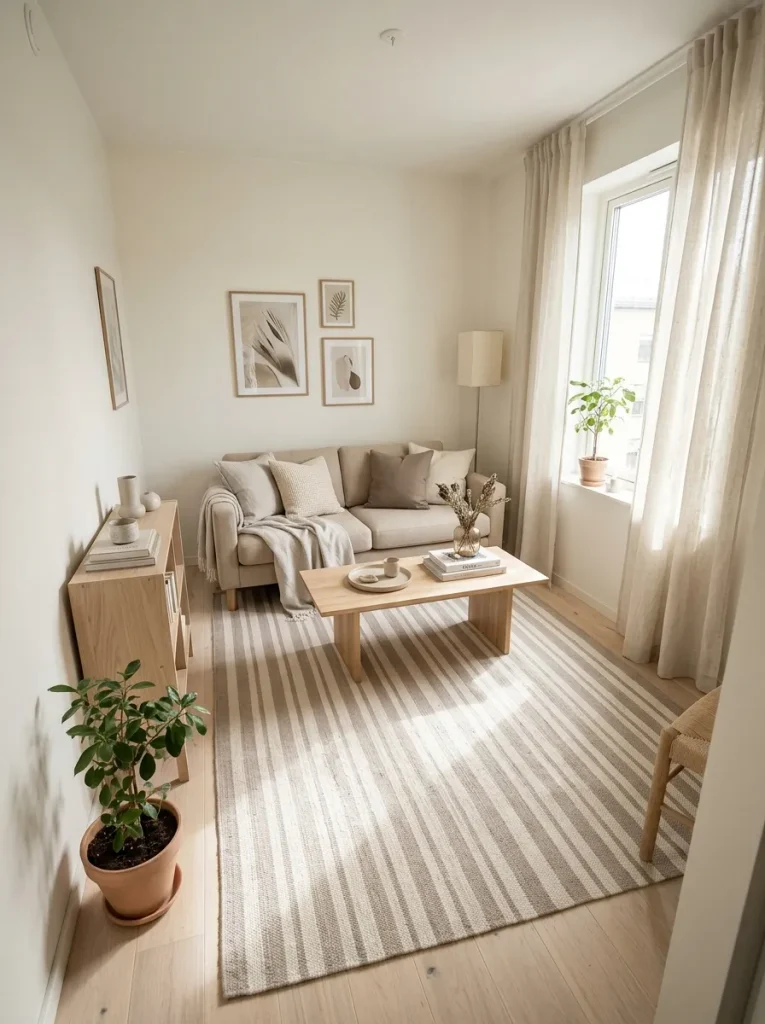
Stripes can guide the eye along the length of a narrow room, helping the layout feel more directional and organized. Choose a rug with subtle stripes if you prefer a calm, neutral interior, or use stronger contrast to introduce a little character.
Place the rug in line with the room’s longest dimension, making sure it sits naturally beneath the seating area. Avoid combining bold stripes with several competing patterns in a small space. A low-pile rug is often easier to maintain beneath frequently used furniture and can reduce tripping around table legs.
Foldable Furniture Pieces
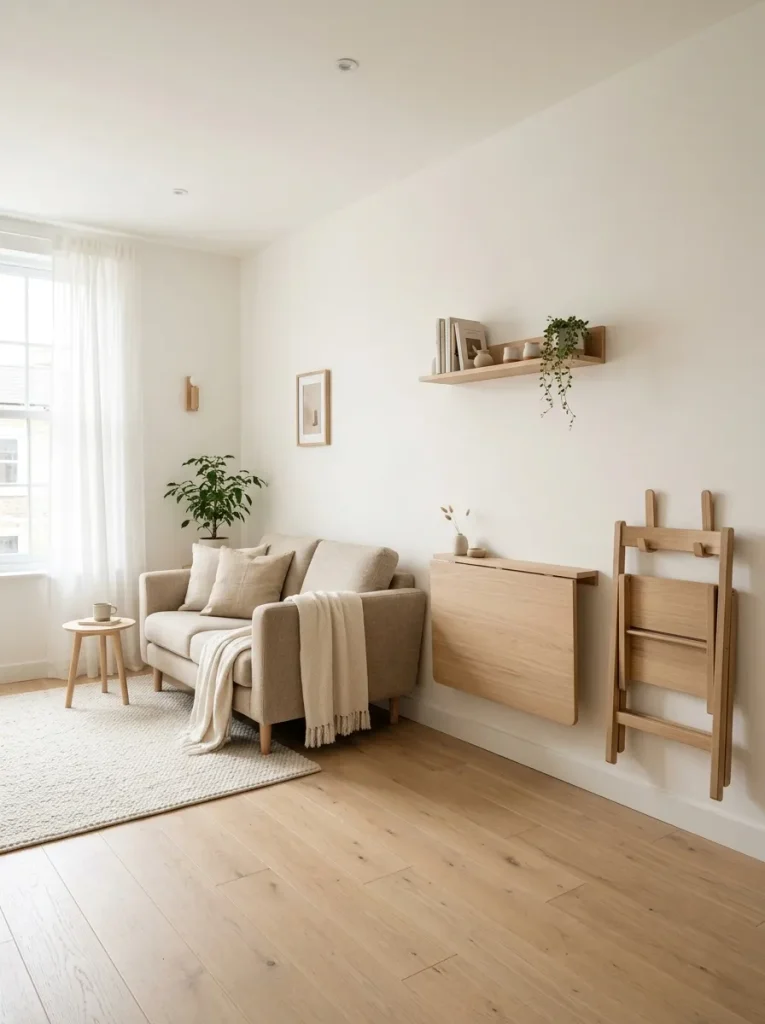
- Folding table: Open it for meals or projects, then fold it away when finished.
- Folding chairs: Store extra seats in a closet or behind a door when not needed.
- Expandable furniture: Choose a compact table that extends when guests arrive.
- Lightweight stools: Use stackable stools that can serve as occasional seating or side tables.
- Wall-mounted options: Consider a fold-down desk if you need a temporary work surface.
Flexible furniture helps a living room adapt to different activities throughout the day. It is especially useful in studio apartments, where the same area may serve as a lounge, dining space and workspace. Before purchasing, check the folded dimensions and storage location. Furniture that is difficult to open or put away may end up staying in the way.
Neutral Cushion Layers
Quick Tip:
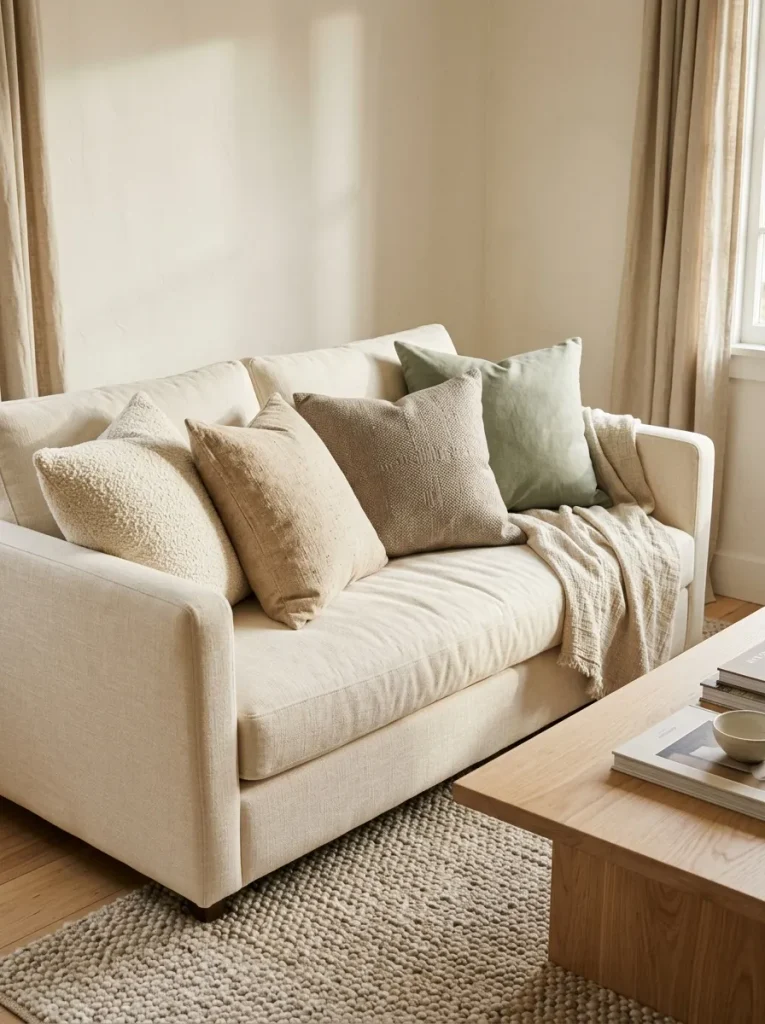
Start with two larger cushions at the back and add one or two smaller cushions in front. Mix textures instead of introducing too many colors and leave enough seating space for people to sit comfortably.
Cushions can make a simple sofa feel inviting without requiring a furniture upgrade. In a small room, a limited color palette keeps the arrangement coordinated, while different fabrics add depth. Choose removable covers that can be washed easily, especially if the sofa gets daily use. Store seasonal cushion covers in a basket rather than keeping every variation on display.
Decluttered Open Space
BEFORE
The coffee table is covered with miscellaneous objects, extra furniture blocks the walkway and decorative items compete for attention. Even useful belongings make the room feel smaller when everything remains on display.
AFTER
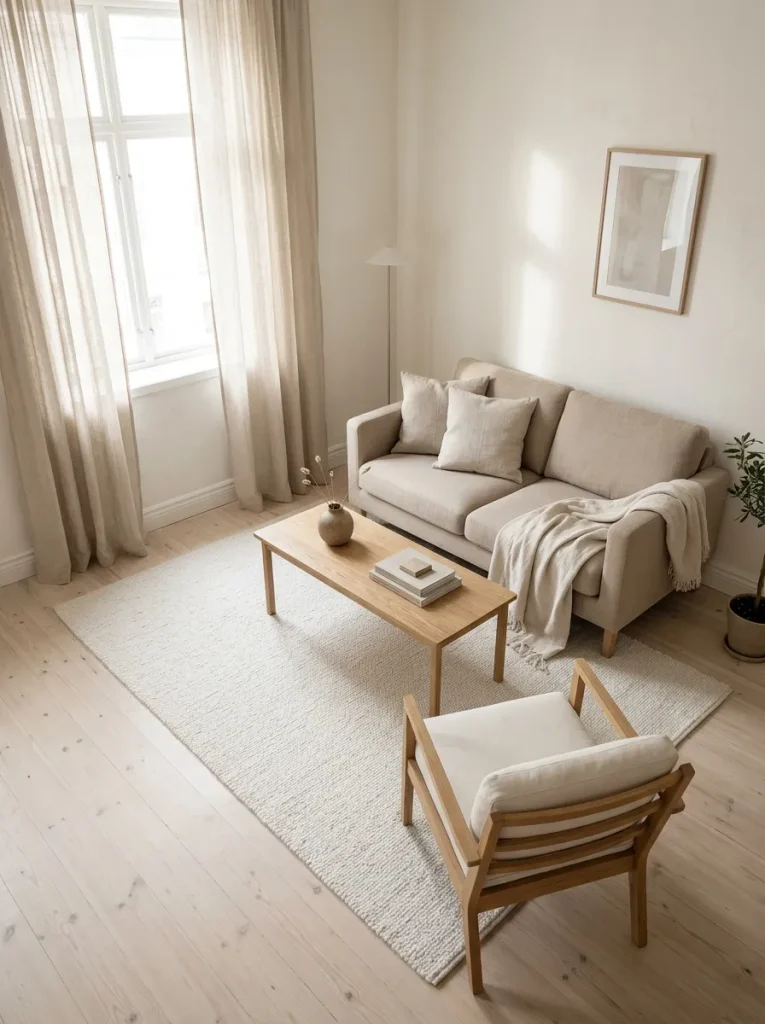
The main surfaces are clear, unnecessary furniture has been removed and everyday belongings have designated storage spots. The room feels easier to navigate and more relaxing to use.
Start by removing items you no longer use, then organize the remaining belongings by purpose. Keep frequently used objects accessible and store occasional items in baskets, drawers, or closed cabinets. Leave some empty space on shelves and tabletops rather than filling every gap. A small living room often benefits more from thoughtful editing than from buying additional decor.
Conclusion
A small living room doesn’t have to feel cramped or lack personality. With thoughtful furniture choices, clever storage, warm lighting and a balanced color palette, you can create a room that feels more spacious, comfortable and inviting.
Start with one or two Small Living Room Decorating Ideas that suit your needs and budget. Rearrange your furniture, clear a crowded surface, or introduce a mirror to reflect natural light. Small improvements can add up to a room you’ll enjoy every day.
Save this article on Pinterest for inspiration, try your favorite ideas and share it with someone looking to make the most of a small living space.