Small Living Room Ideas: 30 Genius Ways to Open Up
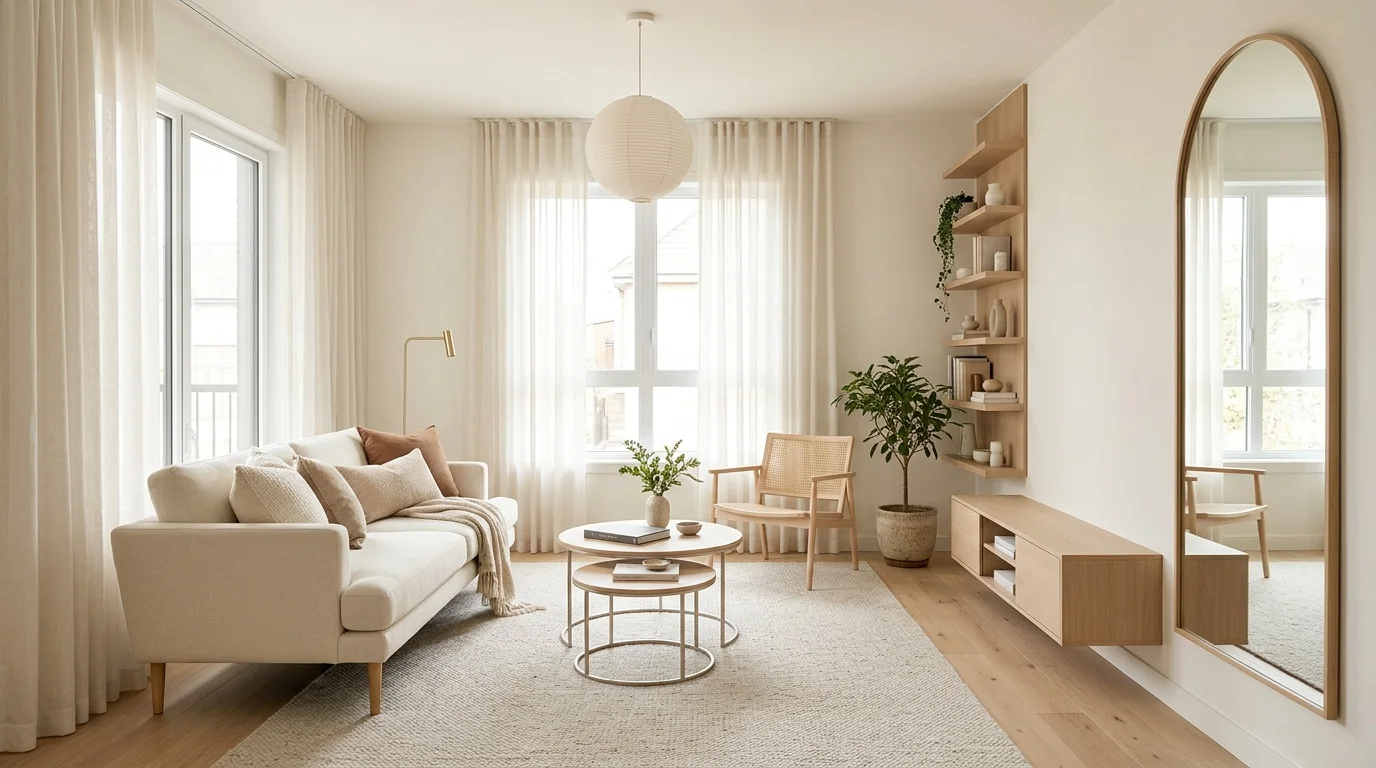
Small living rooms can feel cramped, cluttered and difficult to arrange, but the right choices can change how the entire space feels. Small Living Room Ideas can help you create a room that looks brighter, feels more open and still works comfortably for everyday life.
The secret is not simply adding less furniture. It is choosing the right scale, improving the layout, using wall space wisely and keeping visual clutter under control. From slim furniture and large rugs to clever storage, reflective surfaces and better lighting, small changes can have a noticeable effect.
I’ve noticed that even a modest room can feel surprisingly spacious when the walking paths are clear and every piece has a purpose. These ideas will help you make better decorating decisions while creating a warm, welcoming space that feels like home.
Slimline Furniture
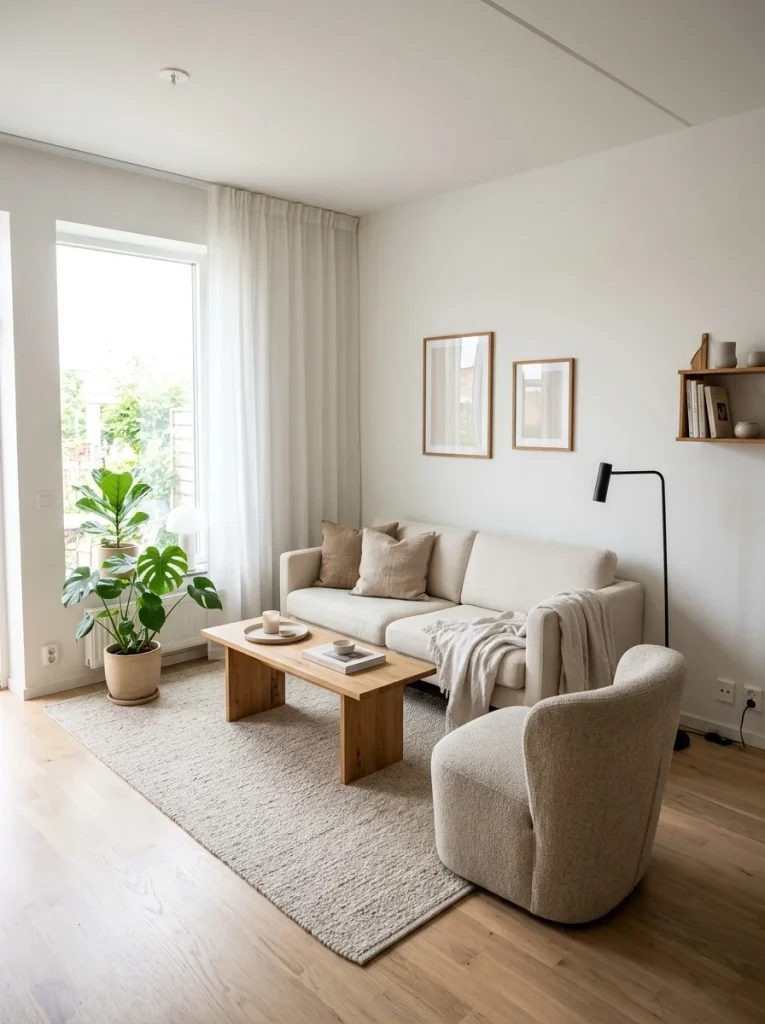
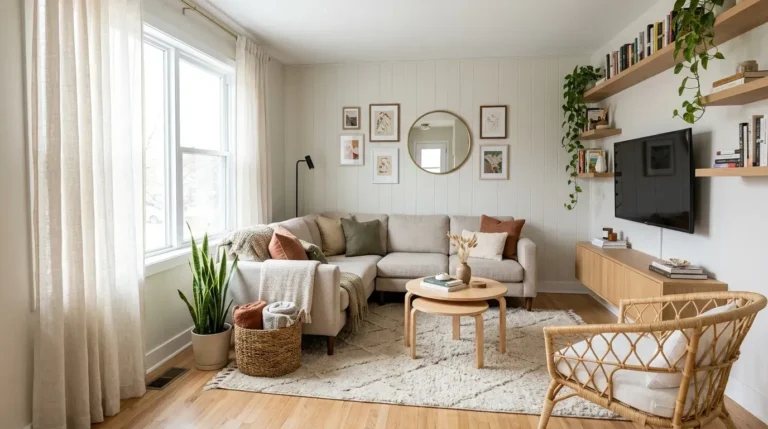
A bulky sofa can make a compact room feel crowded almost immediately. Choose furniture with slimmer arms, raised legs and a smaller overall footprint. A sofa around 80 to 90 inches wide can provide comfortable seating without dominating the room. Keep enough walking space around it so the layout feels open.
I’ve noticed that furniture with visible legs works especially well in smaller rooms because you can see more of the floor underneath. That extra visual space makes the entire arrangement feel lighter. Pair the sofa with one compact chair instead of several large pieces and keep the coffee table proportionate to the seating.
Wall-Mounted Storage
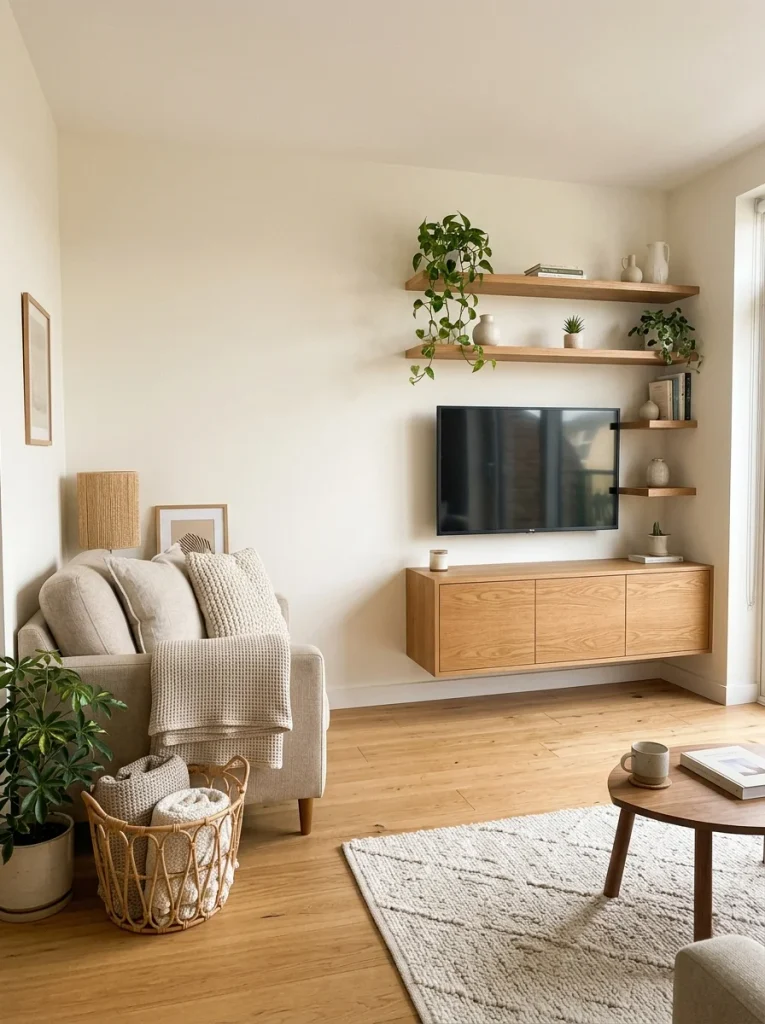
- Mount the television instead of using a bulky entertainment unit.
- Install floating shelves for books and small decorative objects.
- Choose shelves with enough depth for your actual storage needs.
- Keep lower walls visually open whenever possible.
- Use matching baskets to hide smaller items.
Wall-mounted storage moves everyday belongings upward without taking valuable floor space. It also gives you more flexibility underneath for a slim console, floor lamp, or open walking area. For beginner homeowners, floating storage is particularly useful because you can organize the room without filling every corner with furniture.
Large Area Rug
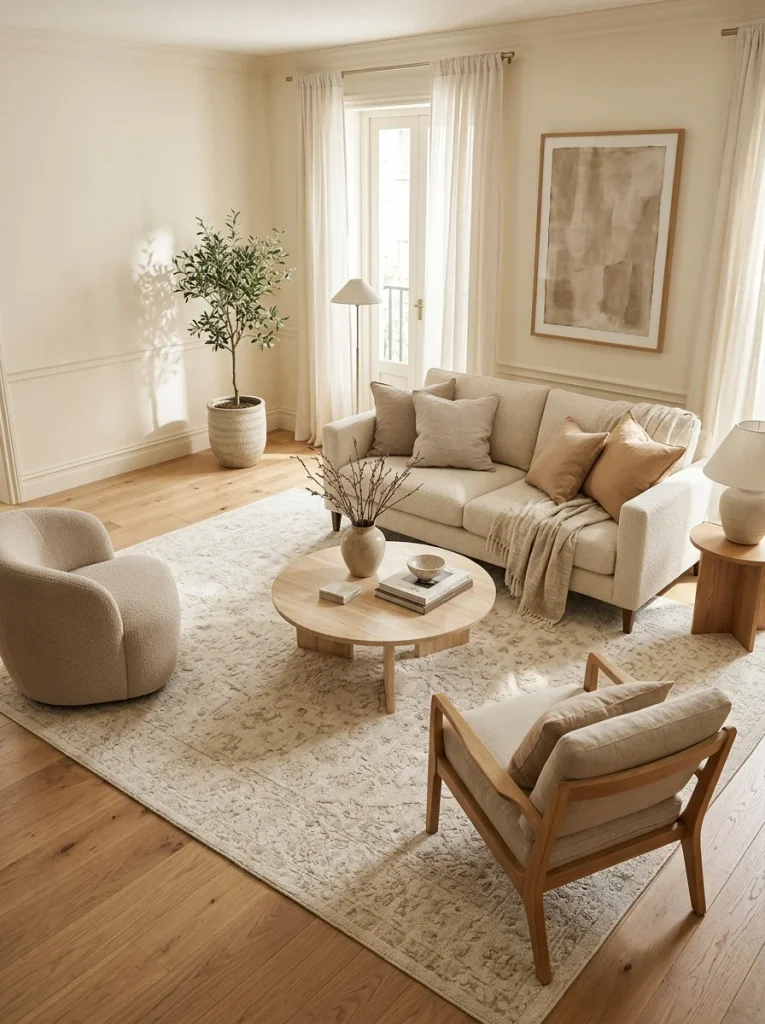
Quick Tip:
Choose a rug large enough for at least the front legs of your main seating pieces to sit on it. A rug that is too small can visually divide the room into disconnected sections. Light patterns and soft neutral colors can add interest without making the floor feel busy.
A properly sized rug creates one connected seating zone instead of several scattered pieces. I’ve seen small rooms look surprisingly larger after replacing a tiny rug with a larger one. Leave a little visible flooring around the outer edges so the room still feels balanced rather than completely covered.
Mirror Accent Wall
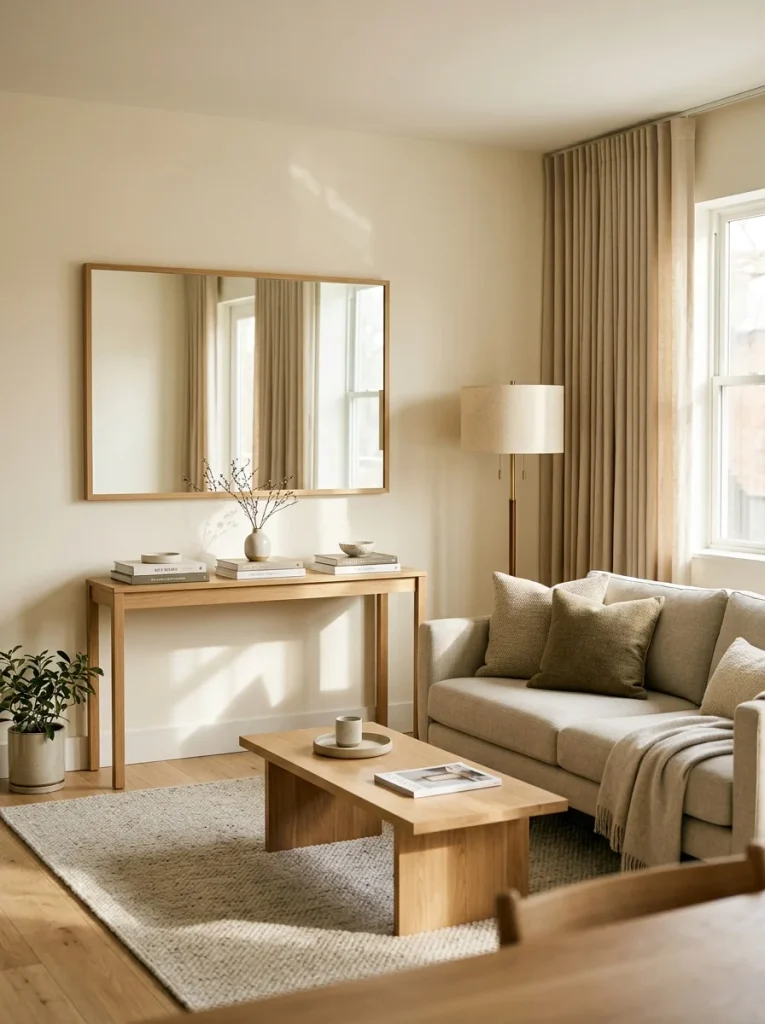
BEFORE: A small room with plain walls and limited natural light can feel closed in, especially when large furniture occupies most of the floor.
AFTER: A generously sized mirror reflects daylight and nearby furnishings, creating greater visual depth. Placing it opposite or near a window can make the room feel brighter without adding another bulky object.
Choose a simple frame that complements the room rather than competing with it. A vertical mirror can emphasize ceiling height, while a wide horizontal design can visually stretch a narrow wall. Keep the surrounding console slim and lightly decorated.
Raised-Leg Sofa
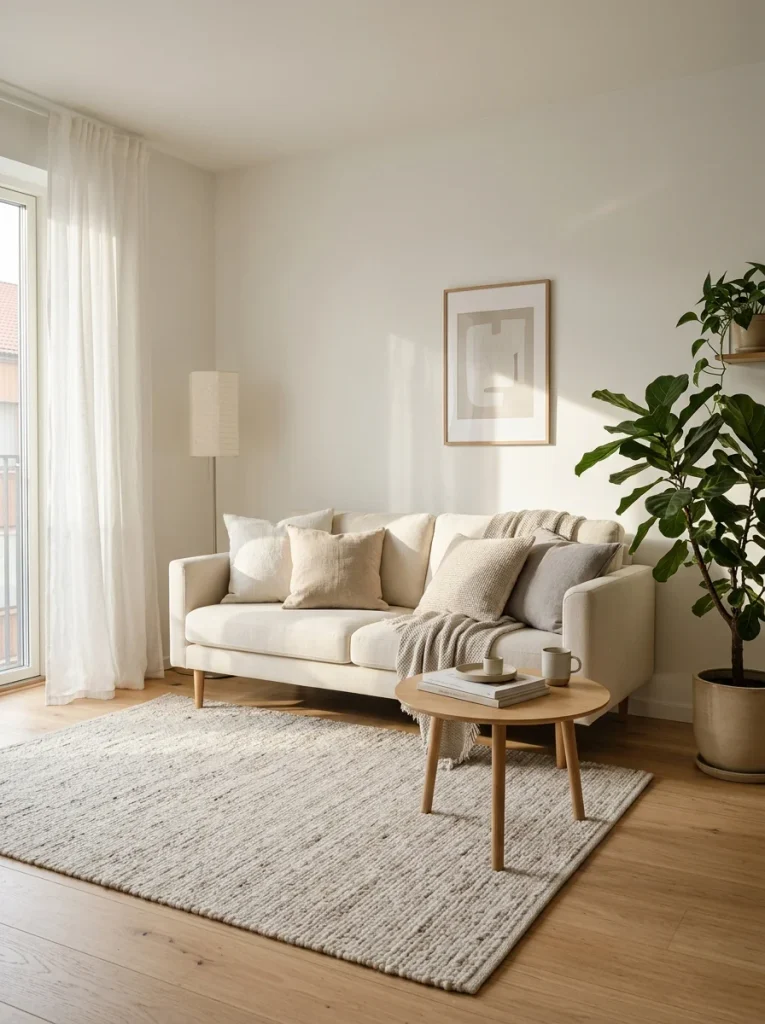
- Choose an elevated frame: Look for a sofa with visible legs and an open base.
- Check the depth: A shallower seat leaves more walking space in front.
- Keep nearby furniture light: Pair it with slim tables or a compact chair.
- Show the flooring: Avoid baskets or boxes directly underneath unless necessary.
A raised sofa exposes more flooring and creates a lighter visual footprint. This small detail can make a meaningful difference when every inch matters. For a particularly tight room, select a sofa with narrow arms and moderate depth so the seating remains comfortable without projecting too far into the space.
Round Coffee Table
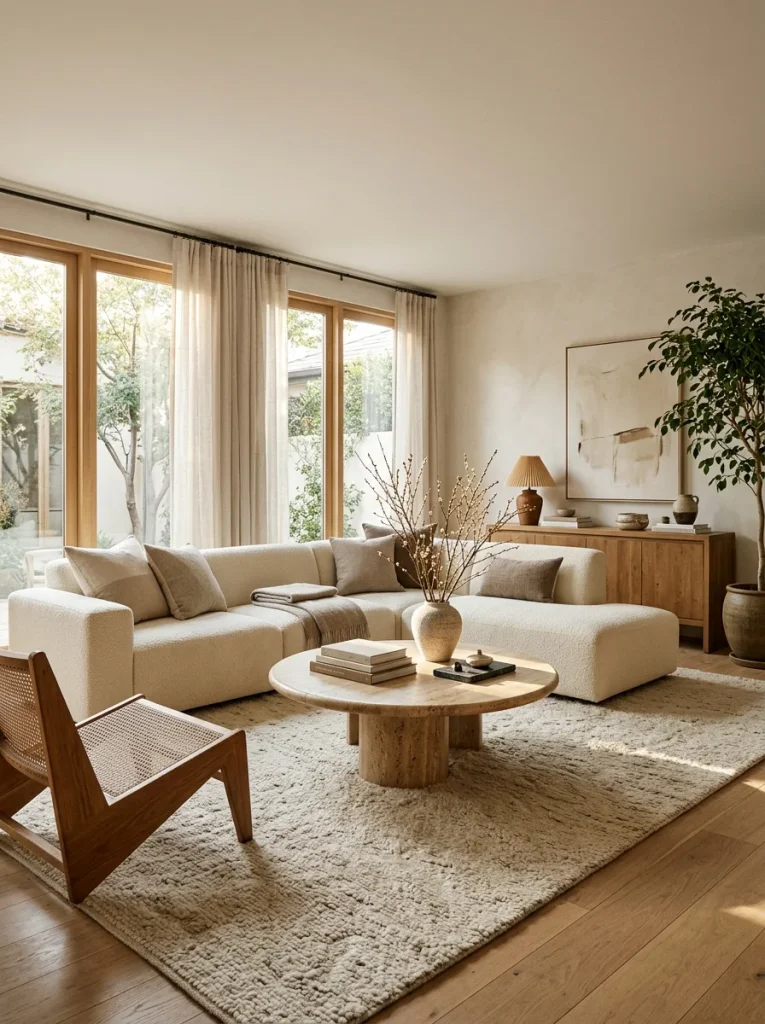
| Comparison | Option A: Square Table | Option B: Round Table |
|---|---|---|
| Walking flow | Sharp corners | Easier movement |
| Visual weight | More structured | Softer appearance |
| Small rooms | Can feel bulky | Usually feels lighter |
| Seating access | Corner spaces | Easy access from all sides |
A round coffee table can improve movement through a compact seating area because there are no sharp corners interrupting the walking path. Choose a table that leaves roughly 16 to 18 inches between the table and sofa when possible. A glass or light-wood top can further reduce visual heaviness.
Curtain Height
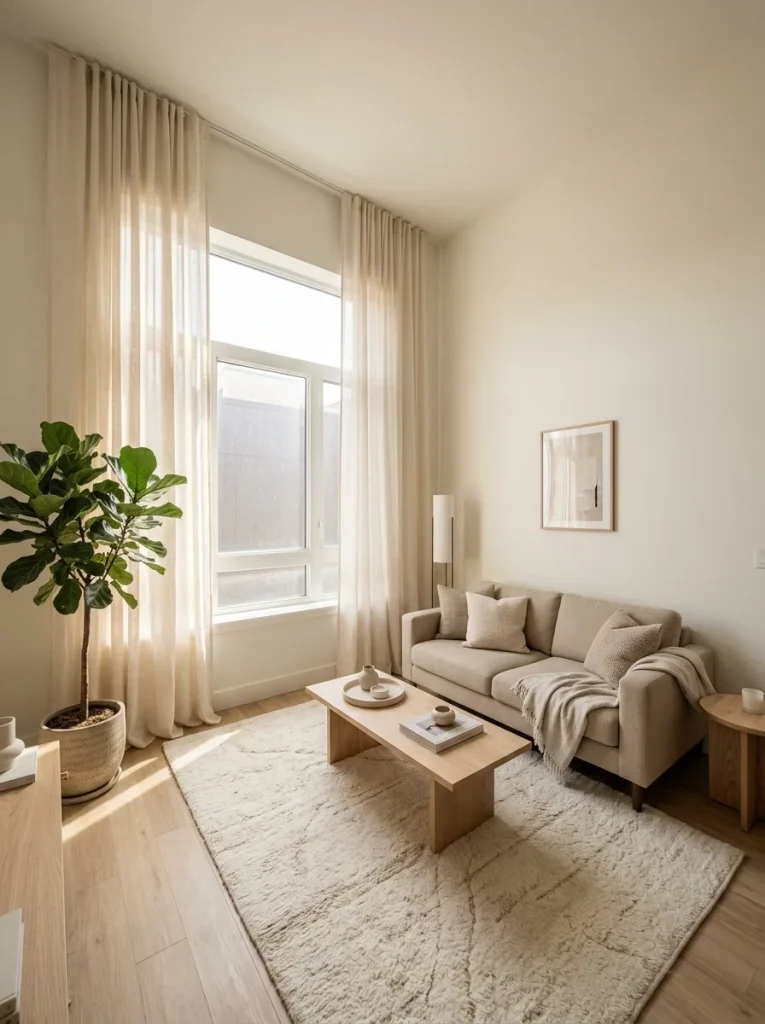
DO:
- Mount curtain rods several inches above the window frame.
- Let curtains reach close to the floor.
- Choose lightweight linen or cotton-look fabrics.
- Extend the rod beyond the window edges.
DON’T:
- Hang short curtains halfway down the wall.
- Use extremely heavy fabrics in a tiny room.
- Block most of the window with thick panels.
- Choose a busy pattern that competes with the furniture.
Long curtains draw the eye upward and can make the ceiling feel taller. Keeping the fabric close to the floor creates a finished appearance without adding clutter. I’ve noticed that simple cream or warm-white curtains are especially useful because they soften the room while allowing plenty of daylight through the windows.
Vertical Decor
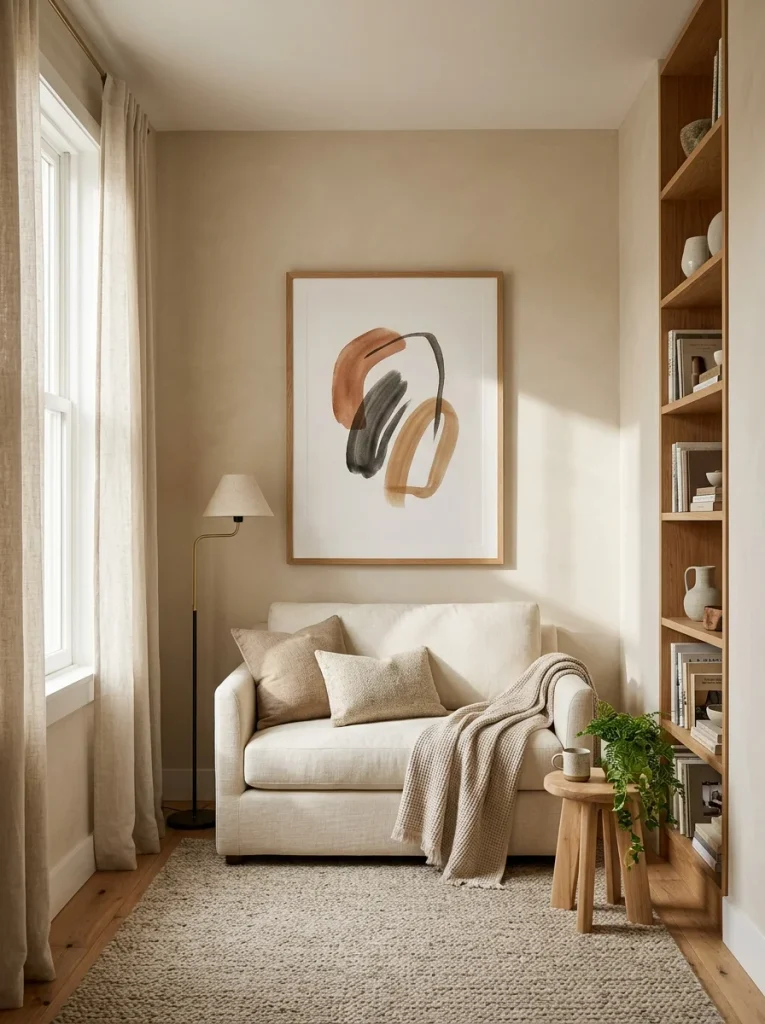
Cost: Low to medium | Time: One afternoon | Skill Level: Beginner
Best For: Low ceilings and narrow rooms | Result: Greater visual height
Vertical decorating directs attention upward rather than across the floor. Try a tall artwork arrangement, narrow bookcase, or slim floor lamp beside the sofa. These elements use wall height efficiently while keeping the floor relatively clear. The result is a room that feels taller and more organized without requiring major furniture changes.
Floating Media Console
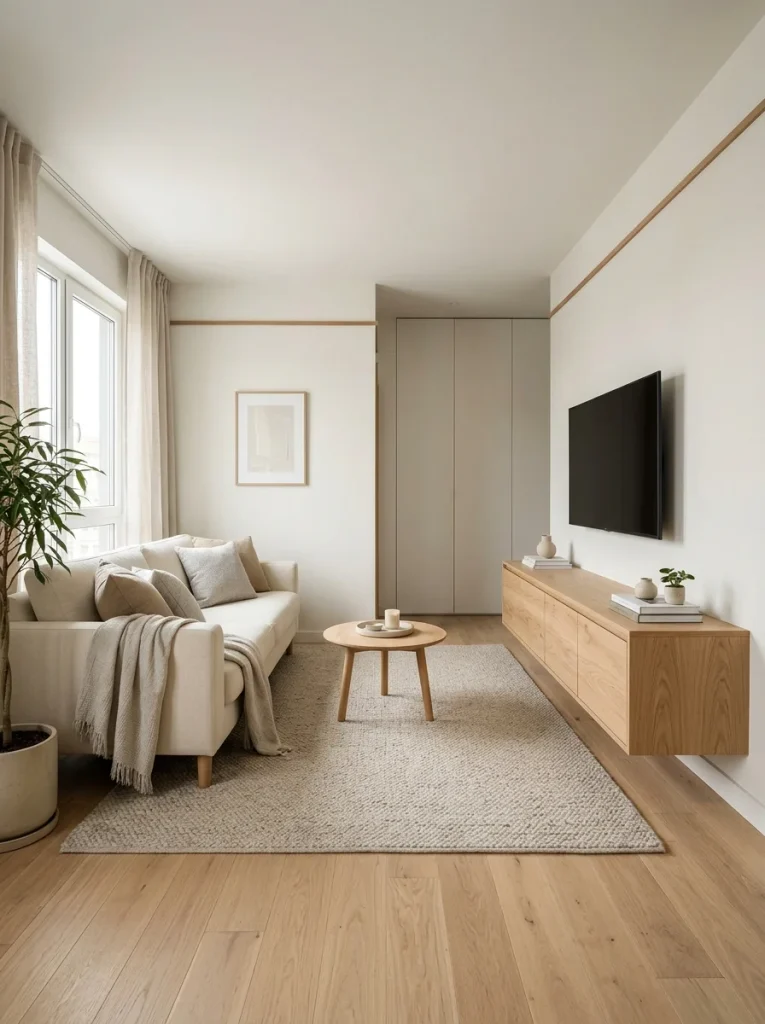
The wall beneath a television often becomes wasted space or gets filled with a large cabinet. A floating console solves both problems by providing useful storage while keeping the floor visible. Choose a unit with closed compartments for remotes, electronics, games and other items that can quickly make a small room look untidy.
Mount the console at a comfortable height and keep its styling restrained. One or two decorative objects are usually enough. The open floor underneath also makes cleaning easier and keeps the room visually lighter, particularly when the flooring continues uninterrupted beneath the furniture.
Glass Side Table
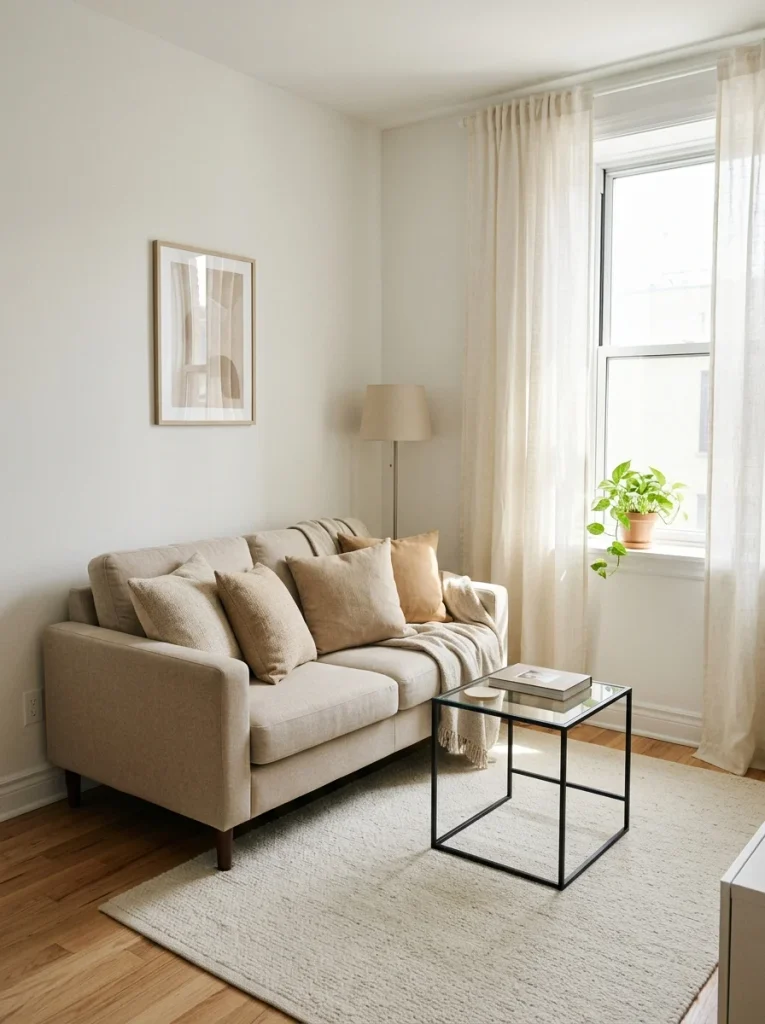
- Select a small round or oval glass tabletop.
- Choose a slim metal or wood base.
- Keep the table close enough for practical use.
- Style it with only one lamp, book, or small plant.
- Leave visible floor around the table.
Transparent furniture works because it provides function without creating another solid visual block. A glass side table can hold a drink, lamp, or book while allowing the eye to continue through the room. For homes with limited floor area, this is an easy swap that improves both practicality and openness.
Built-In Shelving
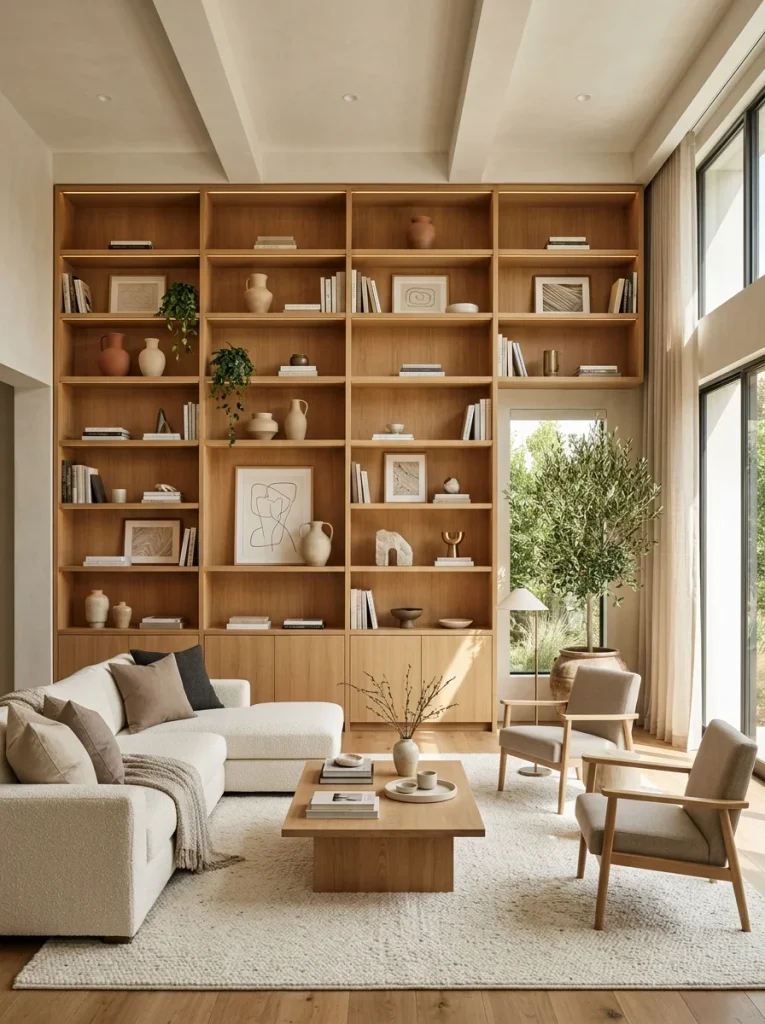
| Feature | Basic Freestanding Shelf | Built-In Shelf |
|---|---|---|
| Floor footprint | Takes floor space | Uses wall depth |
| Storage | Flexible | Highly efficient |
| Appearance | More separate | More integrated |
| Best use | Temporary setup | Long-term solution |
Built-in shelving makes use of awkward wall space that might otherwise remain empty. If a renovation is not practical, you can create a similar effect with narrow modular shelving fitted closely to the wall. Keep frequently used items within reach and use closed storage for anything visually distracting.
Light Color Palette
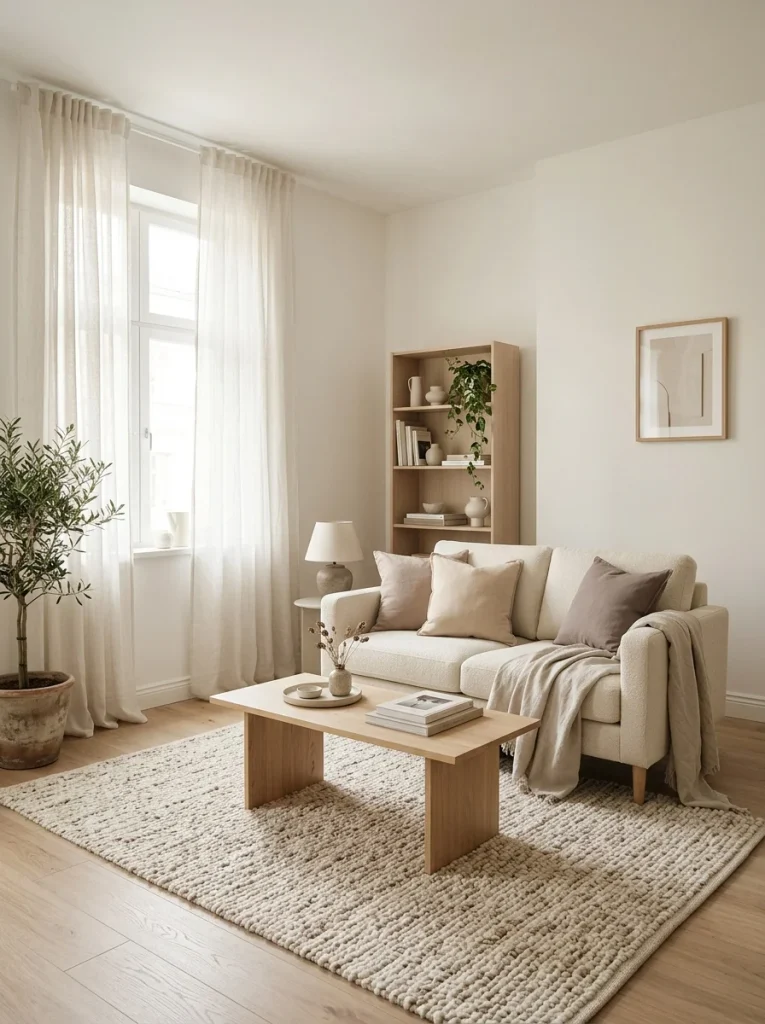
Quick Tip:
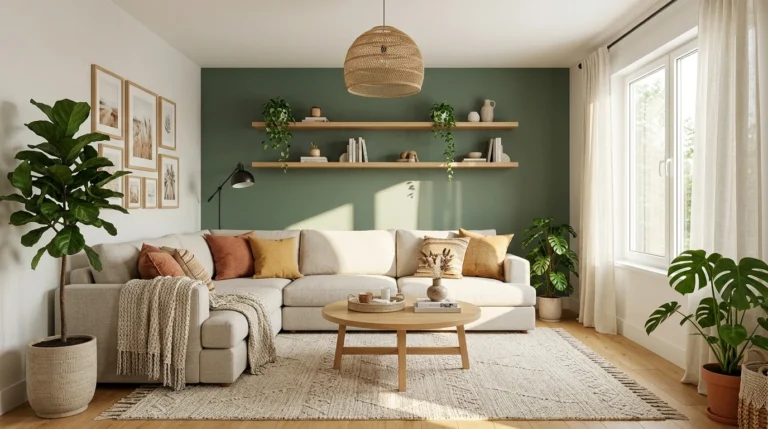
Use two or three closely related light shades instead of covering everything in stark white. Warm ivory walls, cream upholstery, pale wood and beige textiles create depth while keeping the room visually bright. Add small amounts of darker color through frames, lamps, or cushions for contrast.
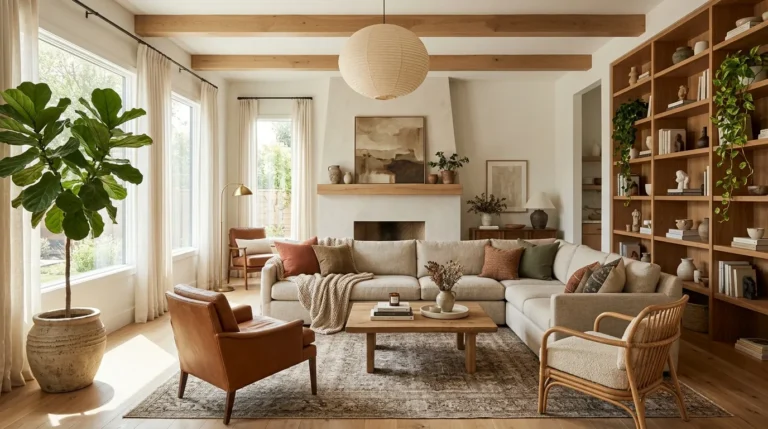
Light colors reflect available daylight and reduce the visual weight of large surfaces. They do not have to make the room feel bland. Mix matte, woven, wood and linen textures so the palette feels layered. This approach is especially useful when the room has only one small window.
Corner Seating
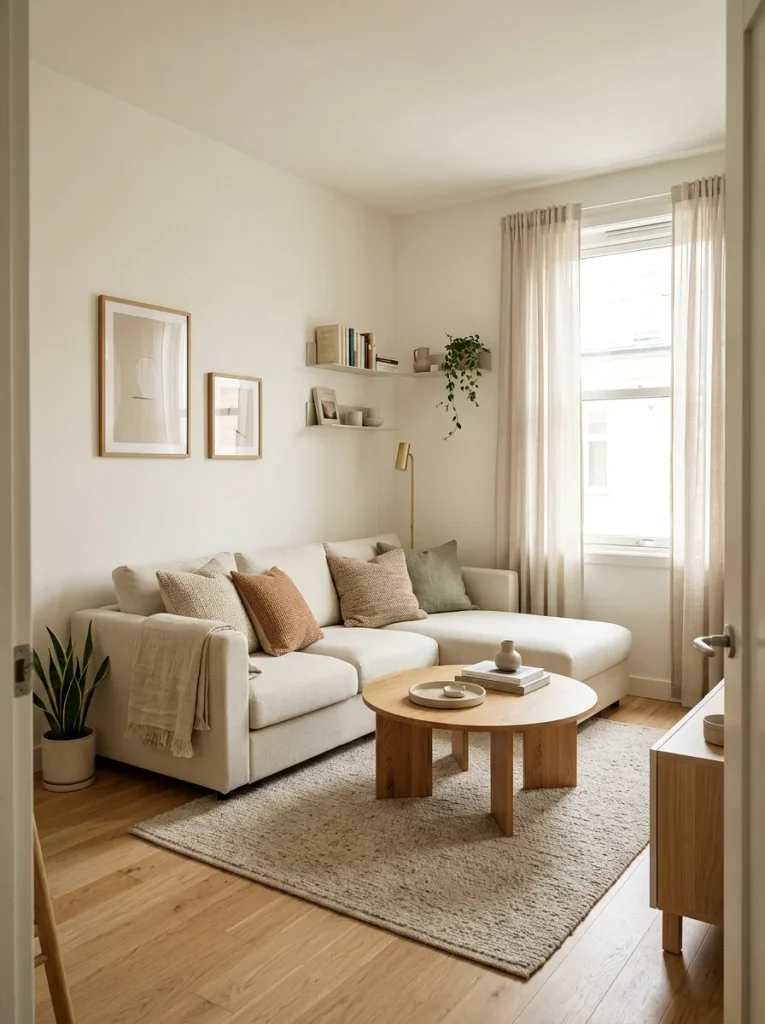
BEFORE: Seating sits away from the walls, leaving awkward gaps and reducing the usable walking area.
AFTER: An L-shaped sofa fits tightly into a corner and creates a defined seating zone. The center of the room remains available for a compact coffee table and clear circulation.
Corner seating can be especially effective in square or rectangular rooms where conventional sofas leave unusable spaces behind them. Keep the sectional appropriately scaled. An oversized chaise can quickly create the opposite problem by consuming too much floor area.
Wall-Mounted Lighting
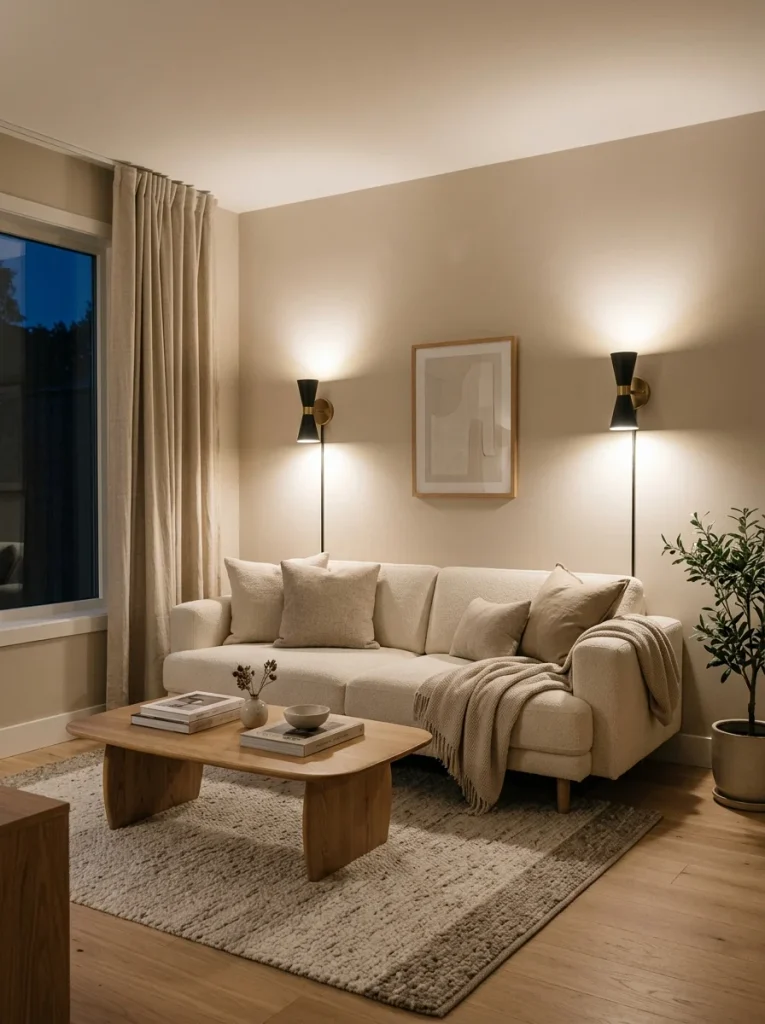
- Identify the dark areas: Note where additional lighting is actually needed.
- Select compact sconces: Choose designs that project minimally from the wall.
- Install at practical height: Position them for comfortable reading or ambient light.
- Use warm bulbs: A warm white tone creates a softer evening atmosphere.
Replacing a floor lamp with a wall-mounted fixture can free a surprisingly useful patch of floor. Use sconces beside the sofa, near artwork, or around a reading chair. If hardwiring is not possible, plug-in wall lights can provide a similar effect without a major electrical project.
Nesting Tables
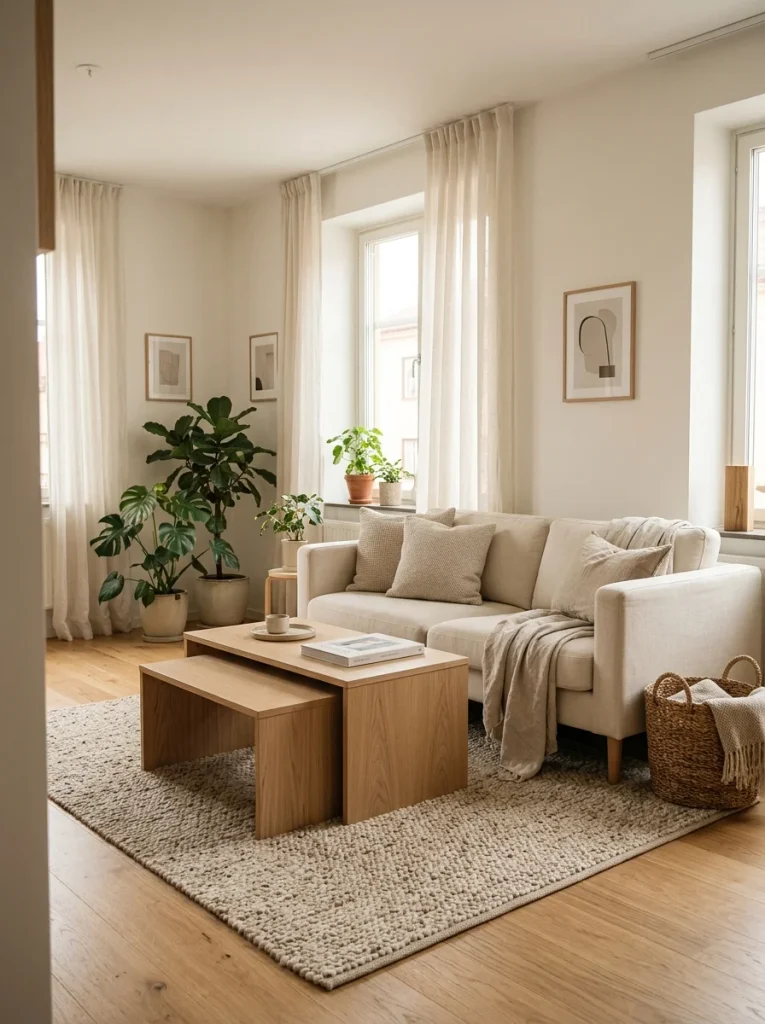
Cost: Medium | Time: One hour | Skill Level: Beginner
Best For: Flexible seating areas | Space Saving: Excellent
Nesting tables give you two surfaces without requiring the full footprint of two separate tables. Keep the smaller table tucked away during everyday use and pull it out when guests arrive. Choose rounded or lightweight designs that are easy to move. This simple setup provides flexibility without permanently filling the room.
Hidden Storage Ottomans
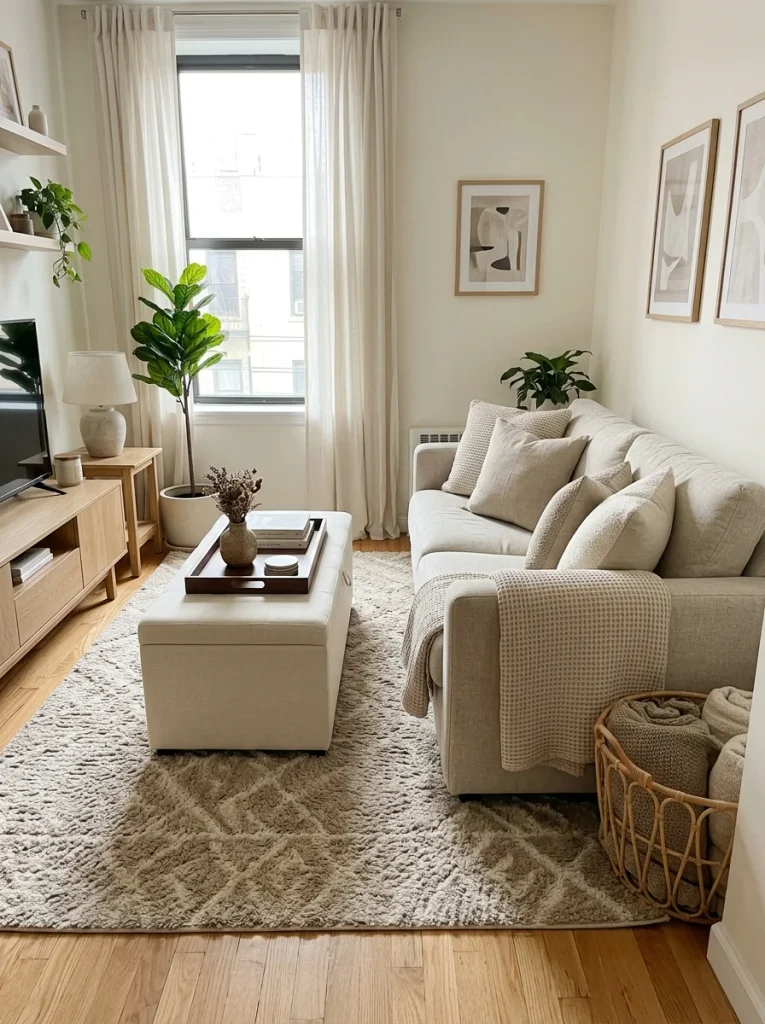
DO:
- Choose an ottoman with a hinged or removable top.
- Store blankets, games and seasonal items inside.
- Use a tray to create a stable tabletop.
- Pick upholstery that matches the seating.
DON’T:
- Overfill the interior until the lid becomes difficult to close.
- Choose an oversized ottoman that blocks circulation.
- Leave loose storage containers around the room.
- Use the ottoman as a permanent dumping area.
A storage ottoman can perform several jobs at once: footrest, extra seat, coffee table and hidden storage. That makes it particularly valuable in compact homes. A rectangular design can work well in front of a sofa, while a round version softens rooms filled with straight furniture lines.
Monochromatic Styling
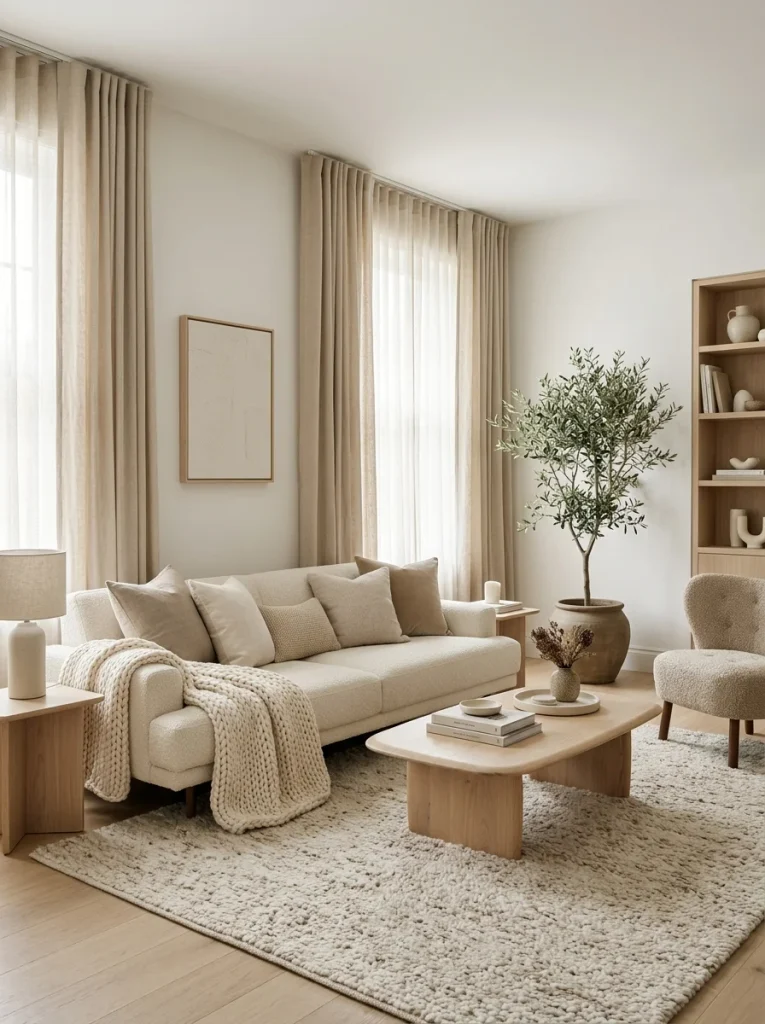
A room with too many competing colors can feel visually fragmented. A monochromatic scheme connects the major elements and creates a calmer overall view. Choose one base family, then vary the shades through upholstery, curtains, rugs, wood, ceramics and artwork rather than matching everything exactly.
Texture keeps a restrained palette from looking flat. Combine a woven rug with linen curtains, smooth wood, knitted cushions and a softly textured sofa. In my experience, this approach makes small rooms feel more intentional because the eye moves through the space without constantly stopping at strong color changes.
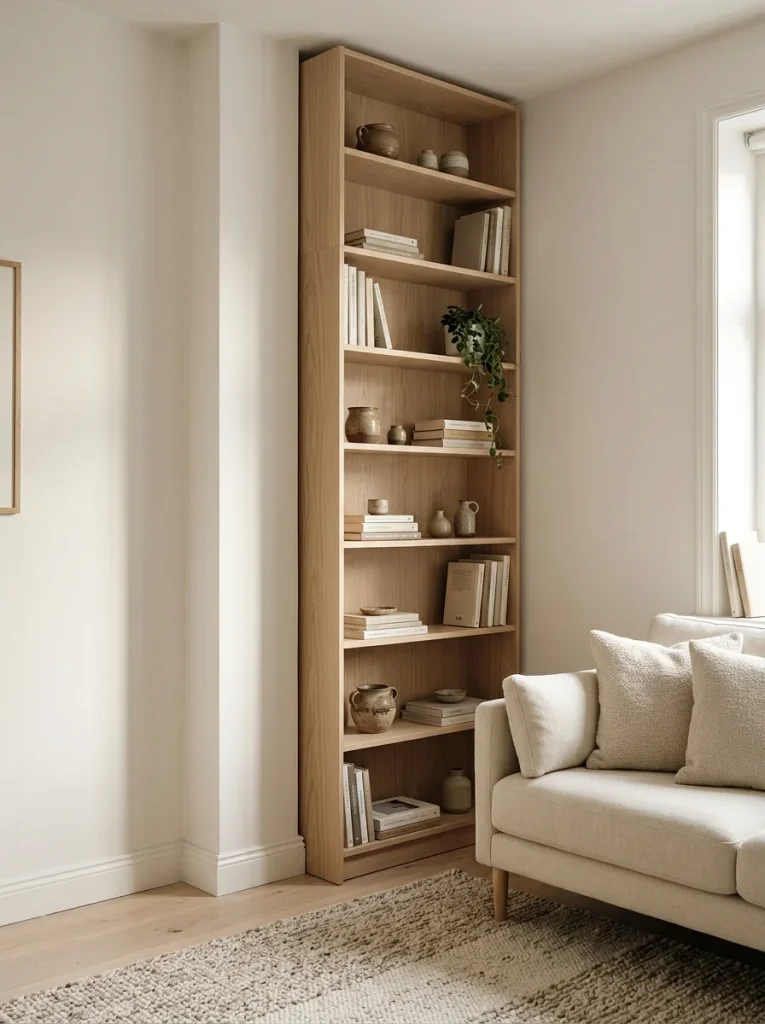
Slim Bookcase
Quick Tip:
Choose a bookcase that is tall rather than wide. A narrow unit with adjustable shelves can provide substantial storage while occupying very little floor space. Keep roughly one-third of the shelves partially open so the arrangement does not become visually heavy.
A slim bookcase can turn an unused wall edge into useful storage. Arrange books horizontally and vertically, then add a few small decorative pieces for variety. Avoid filling every shelf completely. Leaving small areas of empty space gives the eye a place to rest and keeps the room feeling organized.
Clear Walking Paths
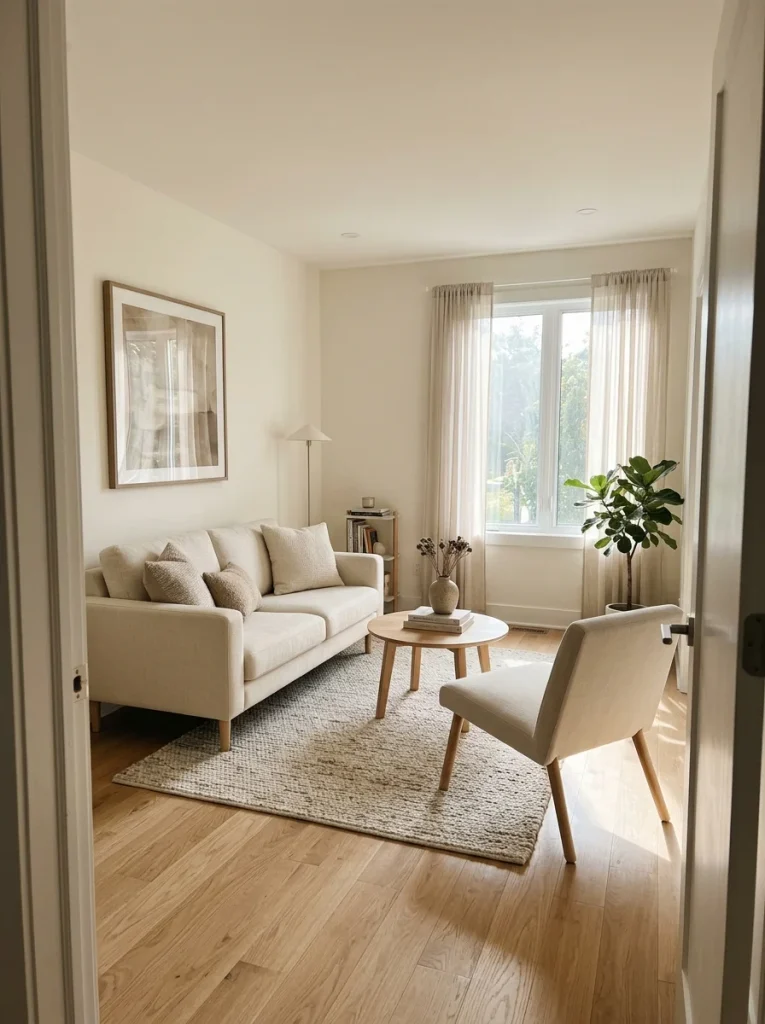
BEFORE: Furniture overlaps the main route through the room, forcing people to squeeze between the sofa, table and doorway.
AFTER: Seating is shifted slightly toward the walls, leaving a direct and comfortable pathway through the space. The room immediately feels easier to navigate.
Before buying another decorative item, check your circulation. A clear route often improves a small room more than additional styling does. Aim to maintain comfortable walking space around major furniture and avoid placing tables directly in front of frequently used doors or passageways.
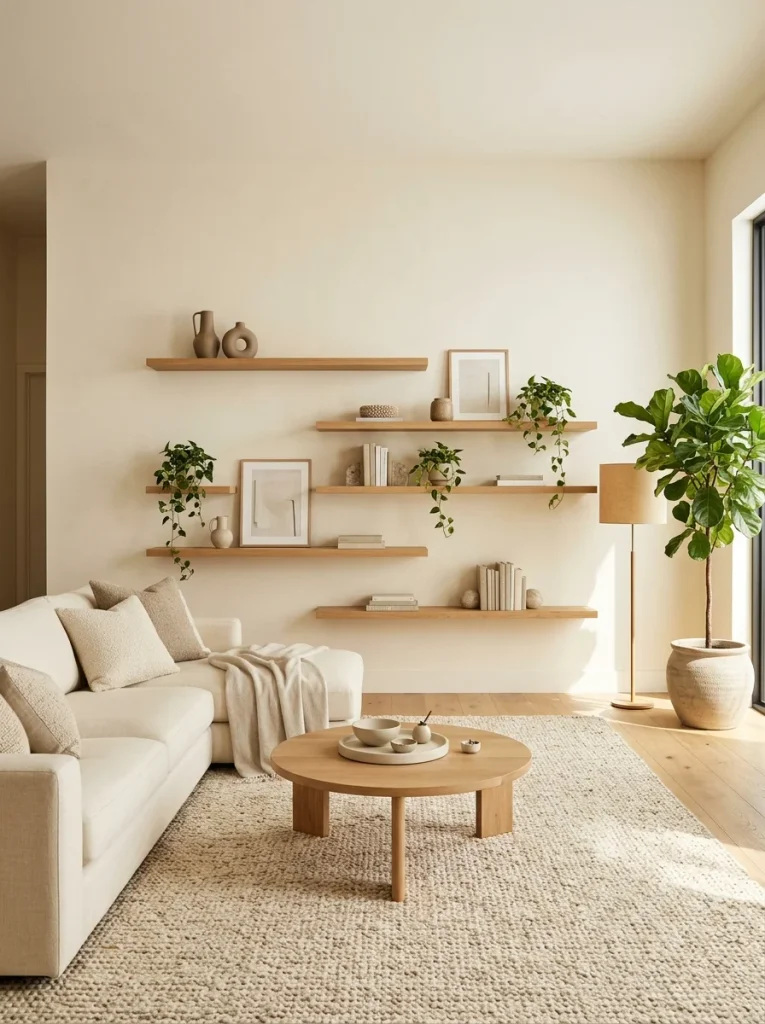
Floating Wall Shelves
| Approach | Traditional Cabinet | Floating Shelves |
|---|---|---|
| Floor usage | Moderate to high | Minimal |
| Storage type | Mostly concealed | Mostly open |
| Visual weight | Heavier | Lighter |
| Installation | Simple placement | Wall mounting required |
Floating shelves are useful when you need display space but cannot spare another cabinet. Install two or three shelves vertically rather than spreading them across the entire wall. Keep heavier objects lower and lighter decorative pieces higher. This creates useful storage while directing attention upward.
Lightweight Window Treatments
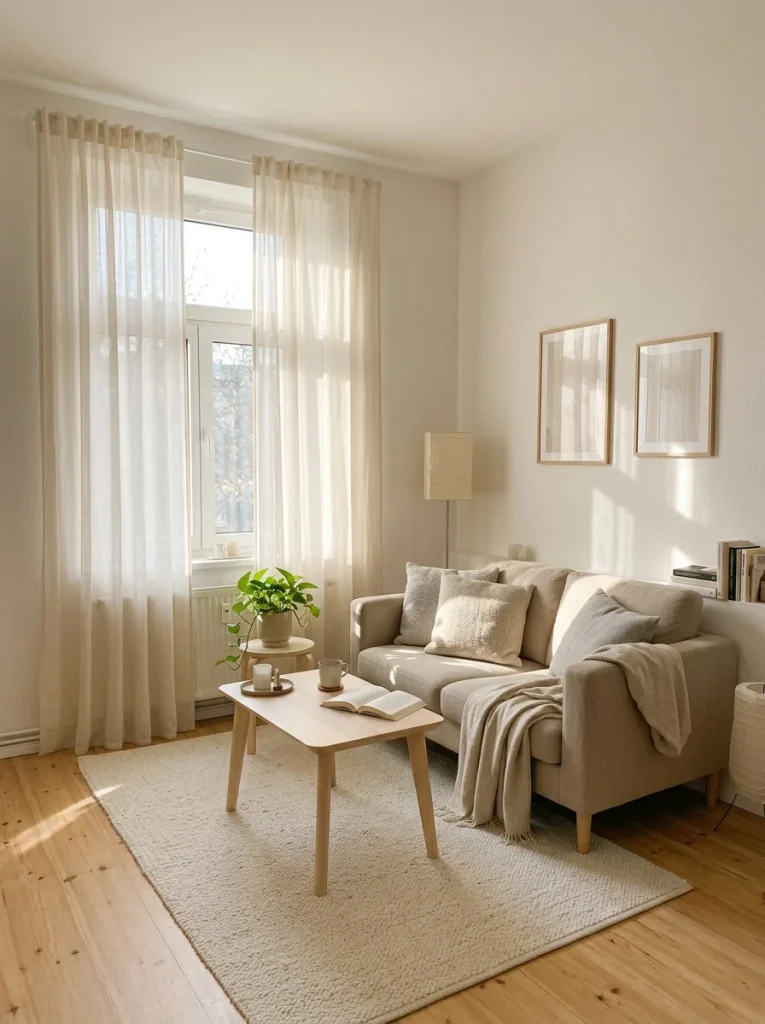
Cost: Low to medium | Time: One afternoon | Skill Level: Beginner
Best For: Dark or narrow rooms | Result: More daylight
Heavy curtains can absorb valuable natural light. Lightweight linen-look or sheer panels allow daylight to spread deeper into the room while still adding softness around the window. Mounting the rod slightly wider than the window also lets you pull the curtains fully aside, keeping as much glass visible as possible.
Multifunctional Furniture
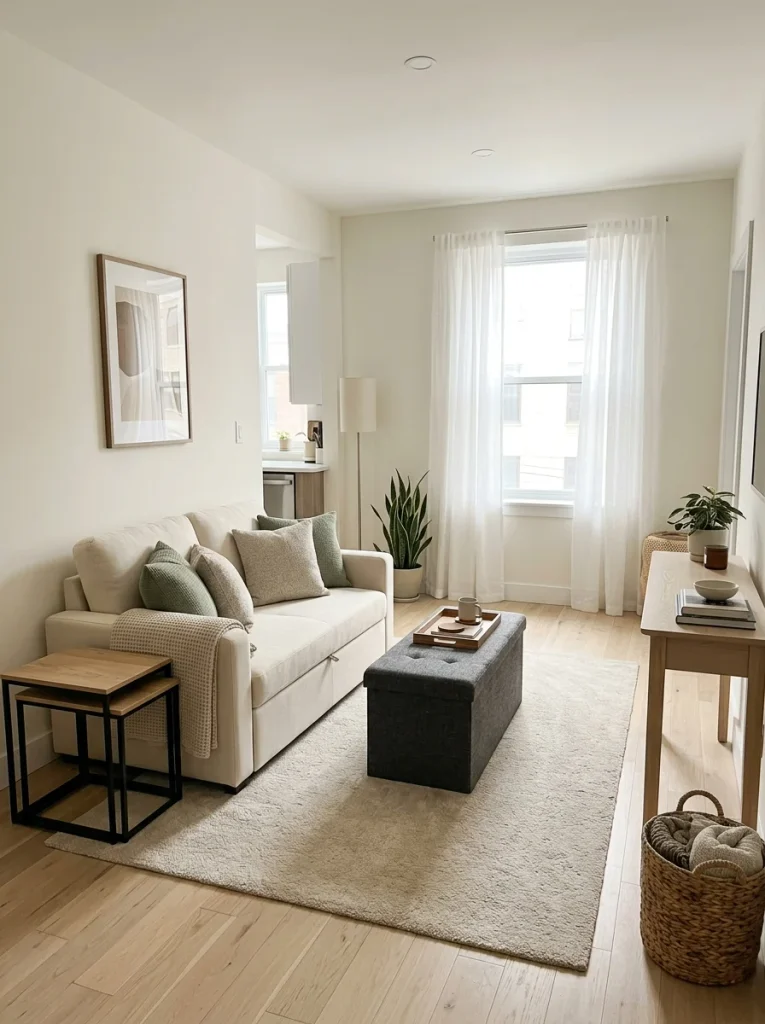
Quick Tip:
Prioritize pieces that serve at least two purposes. A storage ottoman can provide seating and hidden storage, while a sofa bed can support overnight guests without requiring a separate guest room. Multifunctional furniture is especially valuable when the living room has to support several daily activities.
Think about what your room needs before shopping. If you regularly work there, a narrow desk may be more useful than an extra chair. If children use the space, closed storage may matter more than decorative shelving. Every piece should earn its footprint through practical use.
Open Leg Furniture
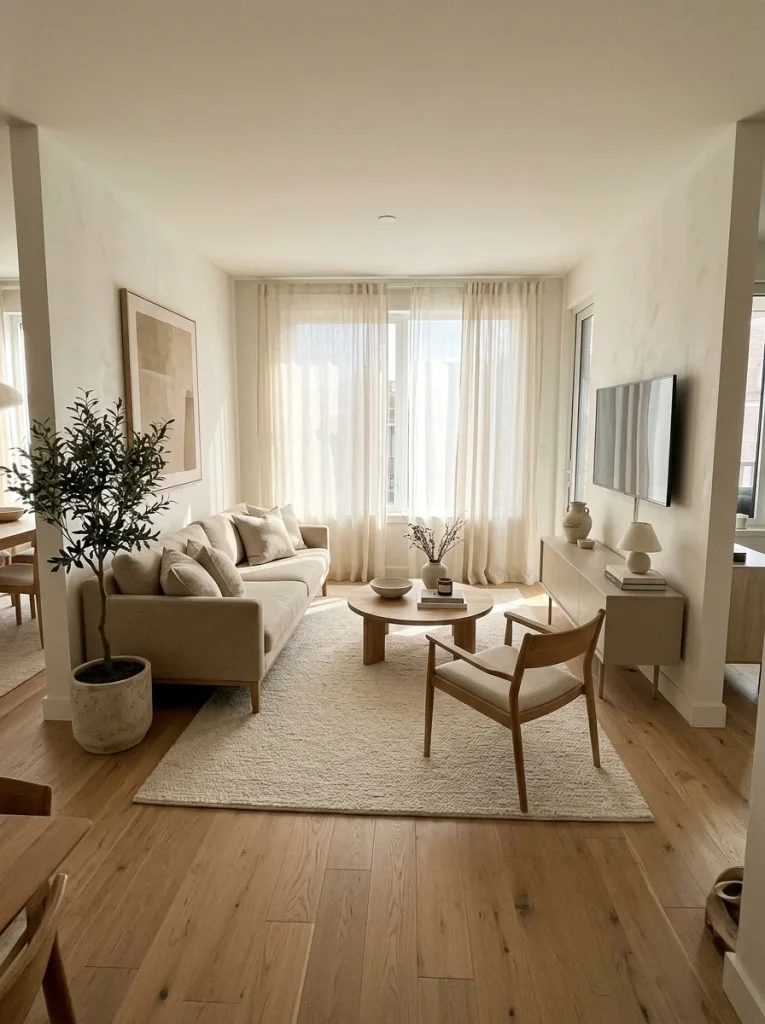
BEFORE: Solid furniture bases create large visual blocks across the lower half of the room.
AFTER: Raised furniture exposes more flooring and allows light and sightlines to continue underneath the pieces. The lower portion of the room feels less crowded.
Open-leg furniture is a subtle design trick that works particularly well when several large pieces are already necessary. Look for sofas, chairs, consoles and cabinets with visible legs. Avoid placing storage boxes underneath everything, because covering the open area reduces the benefit.
Tone-on-Tone Textiles
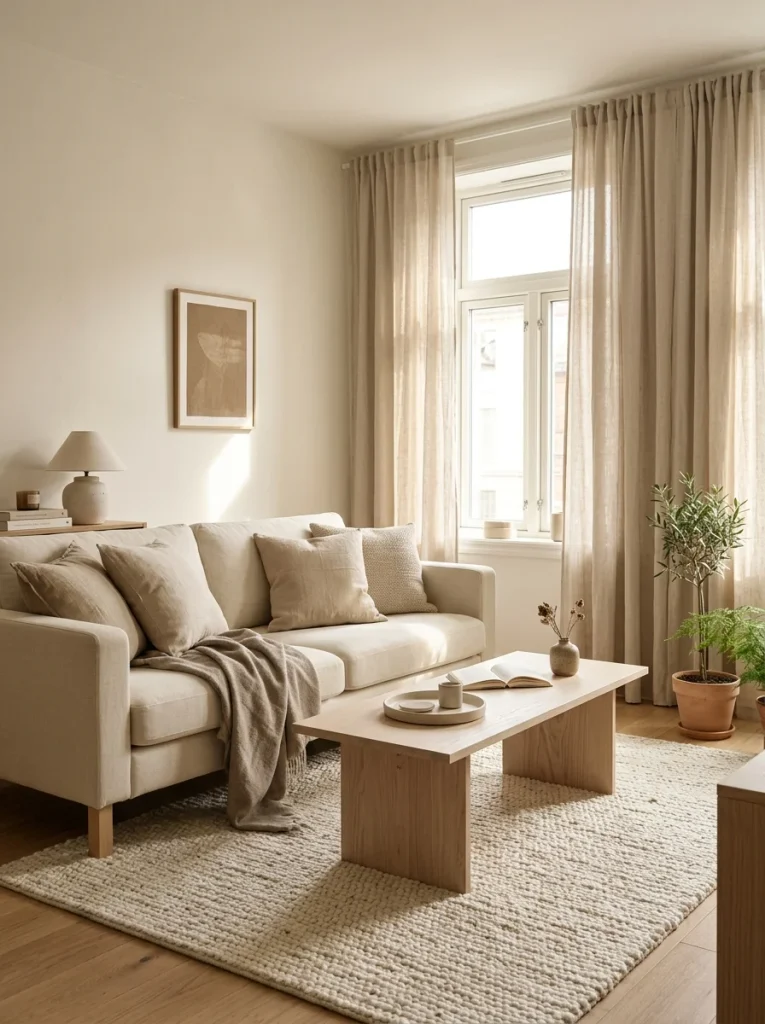
- Start with one neutral base such as cream or warm beige.
- Add two slightly darker shades through cushions and throws.
- Mix at least three textures.
- Keep patterns small and restrained.
- Repeat one tone in different materials.
Tone-on-tone textiles add depth without introducing visual clutter. Linen, boucle, cotton, wool-look and woven fabrics can all provide variation while staying within one color family. This approach is especially helpful when you want the room to feel cozy but do not want multiple bold patterns competing for attention.
Compact Armchair
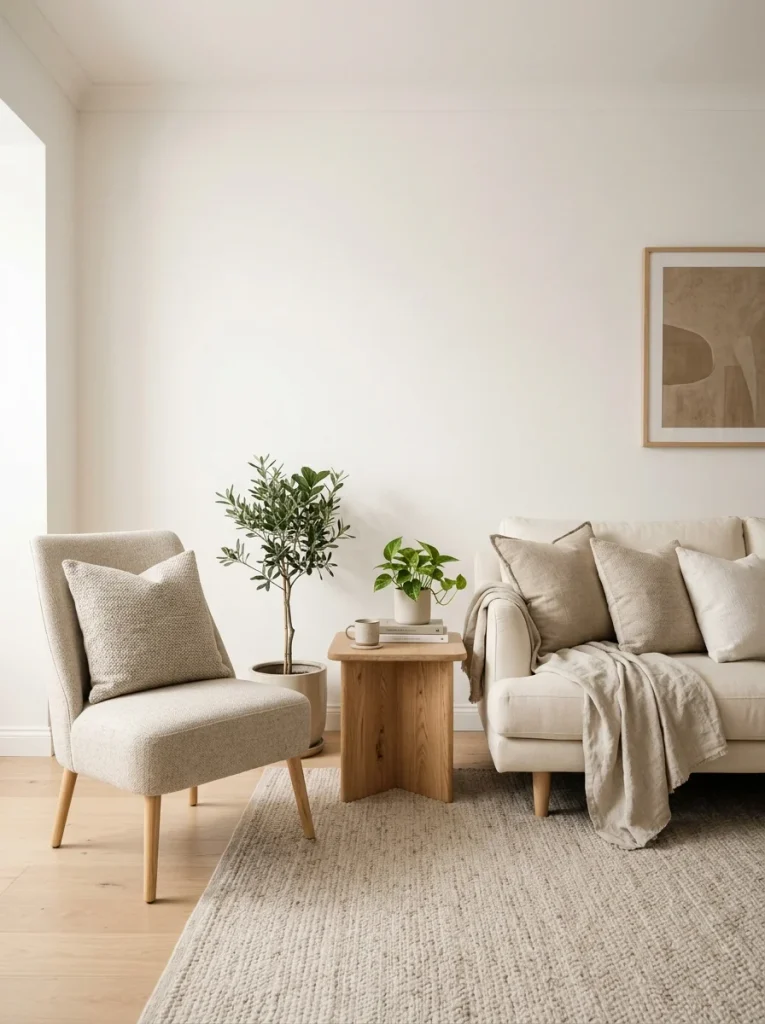
Cost: Medium | Time: One hour | Skill Level: Beginner
Best For: Extra seating | Footprint: Small
A compact armchair can add a second seating position without the bulk of a loveseat. Look for narrow arms, a shallow frame and visible legs. Place it at an angle to the sofa rather than directly facing it if the room is narrow. This arrangement keeps conversation comfortable while preserving circulation.
Ceiling-Height Decor
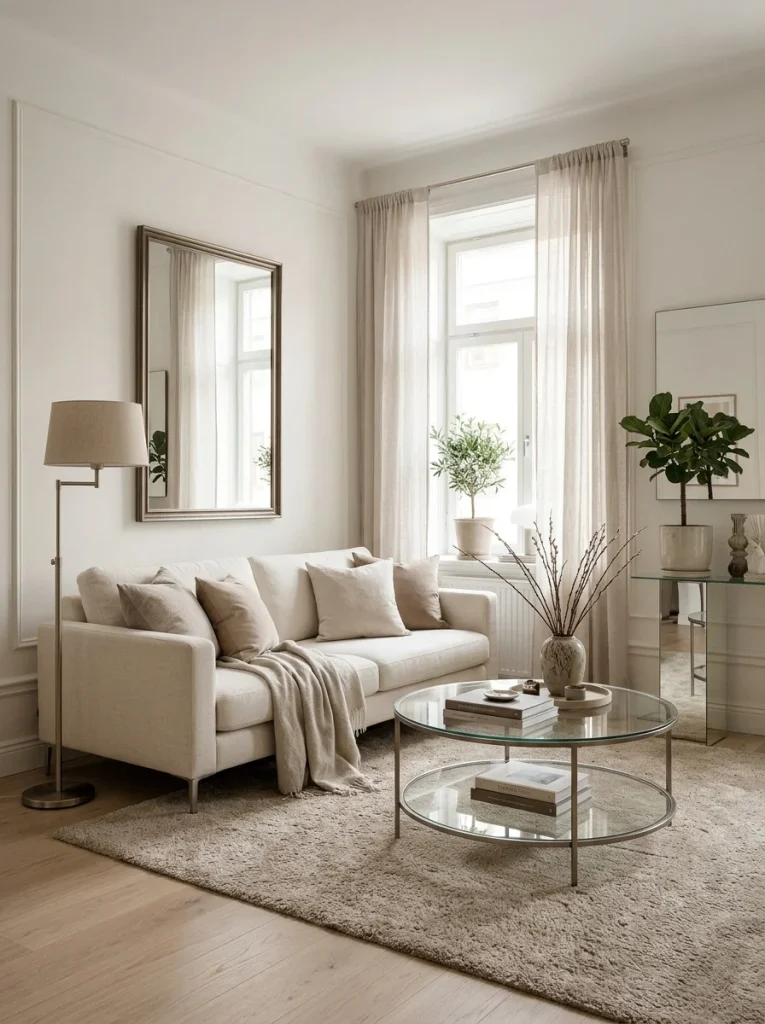
DO:
- Use tall plants with narrow profiles.
- Hang artwork vertically when the wall allows it.
- Position curtains close to ceiling height.
- Choose tall lamps with slim bases.
DON’T:
- Fill the room with short decorative objects.
- Hang every frame at different heights.
- Use an oversized plant with a wide canopy.
- Ignore the upper portion of the walls.
Drawing attention upward can make a compact room feel more spacious without changing its actual dimensions. Tall elements create stronger vertical lines and help balance low furniture. Keep the lower half of the room relatively simple so the upward visual movement remains clear rather than competing with floor-level clutter.
Hidden Cable Management
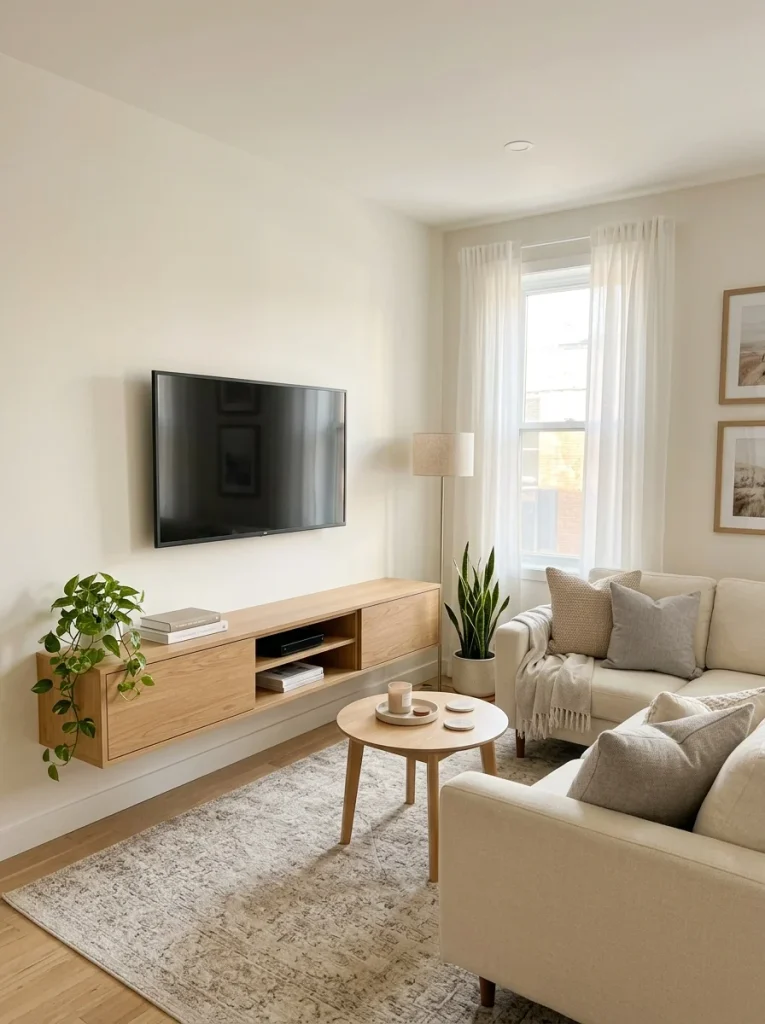
Cost: Low | Time: One afternoon | Skill Level: Beginner
Best For: TV areas | Result: Cleaner appearance
Visible cables create small lines of visual clutter that become especially noticeable in compact rooms. Use cable sleeves, adhesive clips, or a properly installed wall channel to keep cords together. Store chargers and remotes inside one drawer or basket. A cleaner media area can make the entire room feel more organized.
Minimal Coffee Table Decor
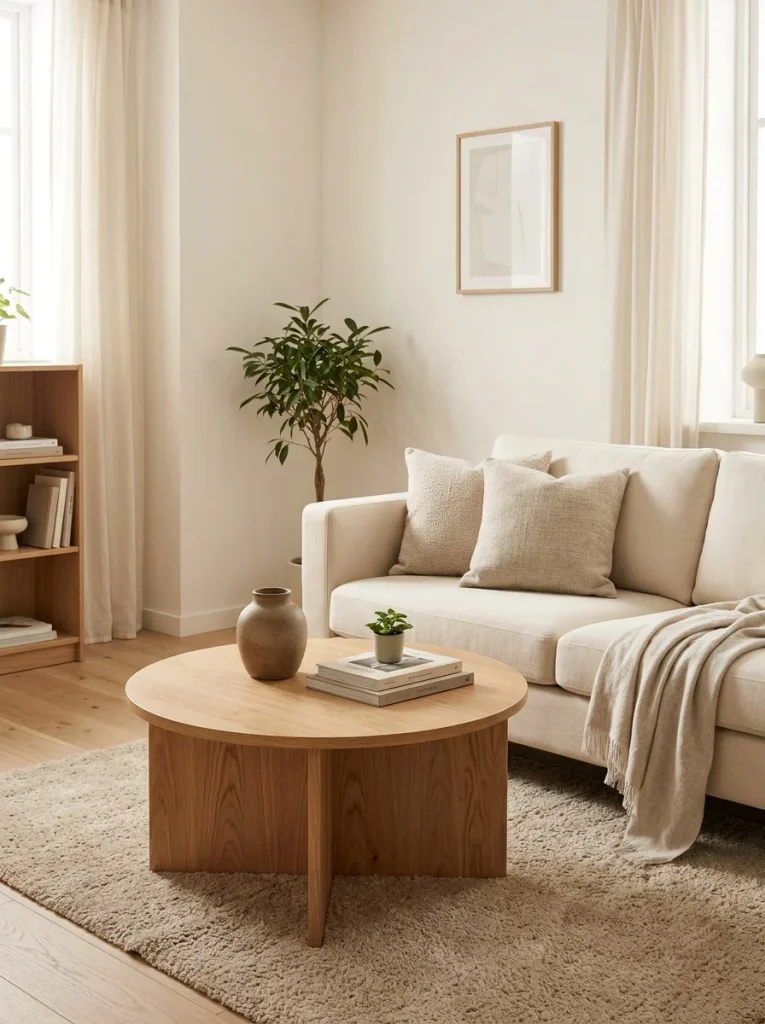
Quick Tip:
Keep the coffee table to three main elements: something natural, something useful and something decorative. For example, combine a small plant, two books and a ceramic bowl. Leave plenty of tabletop visible so the surface remains practical and does not become another crowded display area.
Coffee tables quickly become collection points for remotes, cups, mail, books and decorative objects. Limiting the styling makes the room feel cleaner and also leaves space for everyday use. Use a small tray if you need to group several items and move them easily when guests arrive.
Continuous Flooring
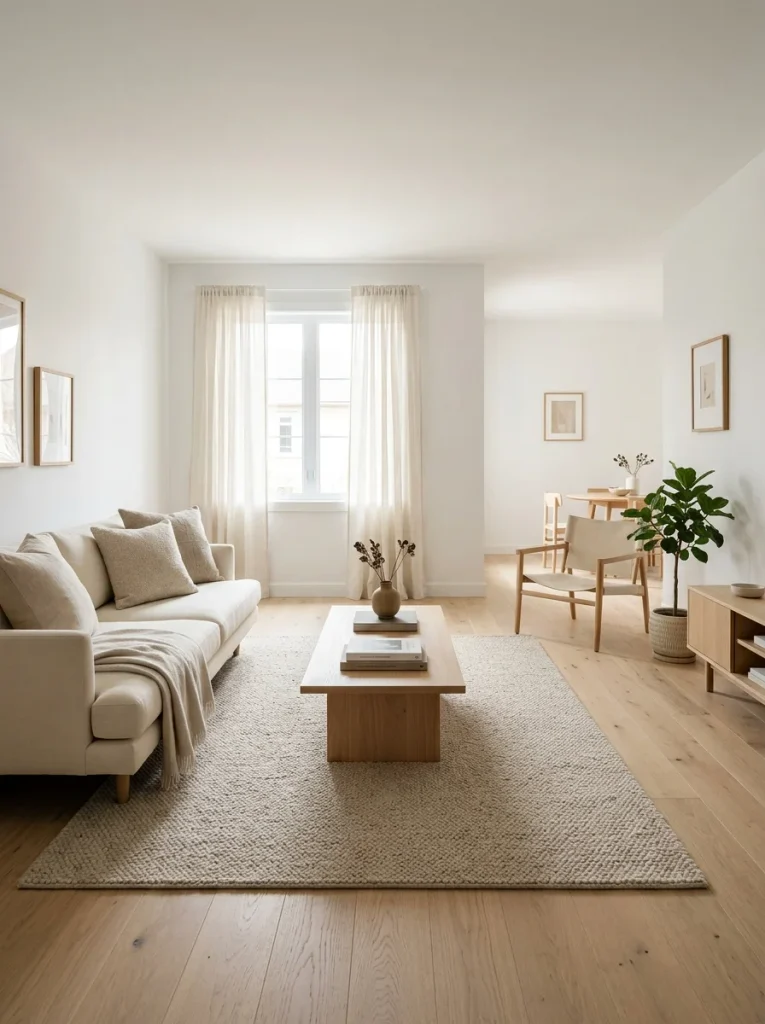
BEFORE: Different flooring colors or materials visually divide the small room into separate sections.
AFTER: One continuous flooring material creates a smoother visual connection between areas. The uninterrupted surface makes the available floor appear larger and helps the room feel more cohesive.
If you are renovating, continuing the same flooring through connected spaces can make a noticeable difference. For renters, you can create a similar effect by choosing rugs that share related colors and keeping their edges aligned with the room’s furniture zones rather than creating random visual boundaries.
Layered Lighting
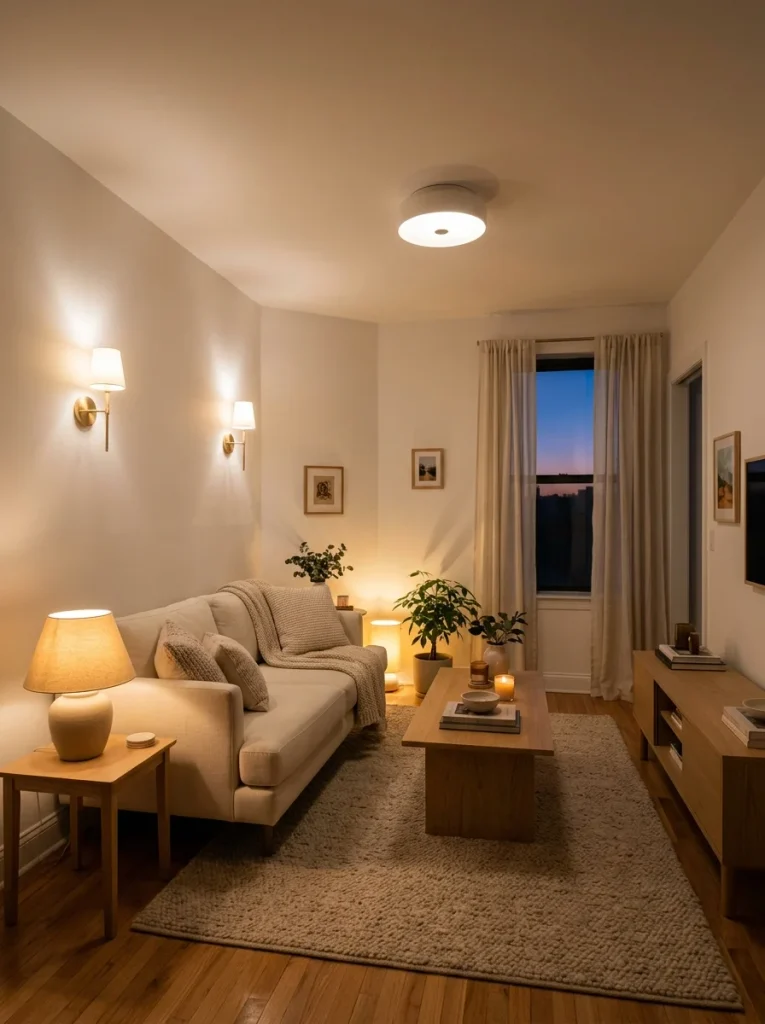
- Start with overhead lighting: Use it for general illumination.
- Add task lighting: Place a lamp near a reading chair or sofa.
- Add accent lighting: Highlight artwork, shelves, or architectural details.
- Use warm bulbs: Keep the light comfortable and consistent.
- Turn layers on selectively: Use only the lighting you need at each moment.
A single bright ceiling fixture can make a small room feel flat and harsh. Layered lighting creates depth by illuminating different areas at different levels. Wall sconces, table lamps and small accent lights also let you create a softer atmosphere in the evening without relying entirely on one overhead source.
Conclusion
A small living room does not have to feel limited. With thoughtful furniture placement, practical storage, lighter colors, better lighting and carefully chosen decor, you can make the space feel more comfortable and open without a major renovation.
The best Small Living Room Ideas are the ones that improve both appearance and everyday function. Start with one change, such as replacing a bulky table, clearing a walkway, or adding wall-mounted storage, then build from there.
I’ve seen how small adjustments can completely change the way a room feels. Save this article on Pinterest for your next decorating project, try the ideas that fit your space and share it with someone planning a small-room makeover.