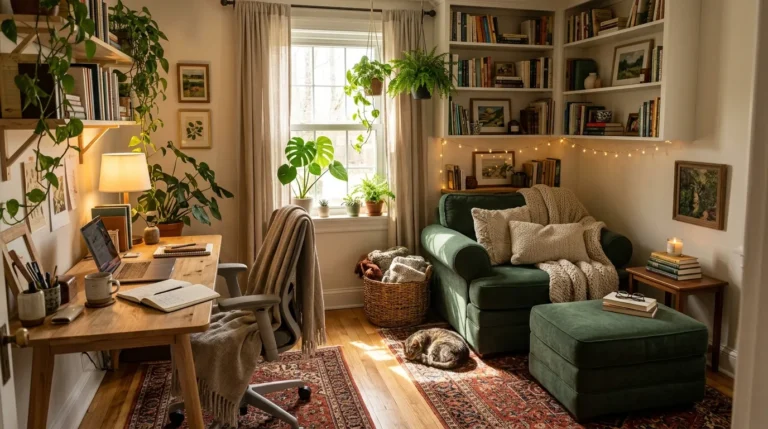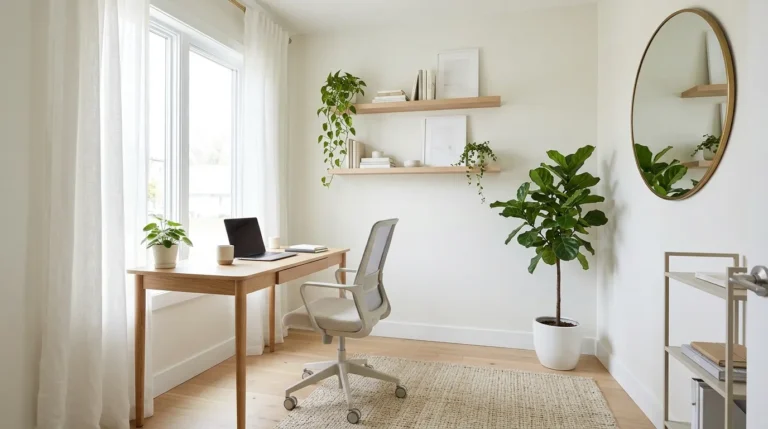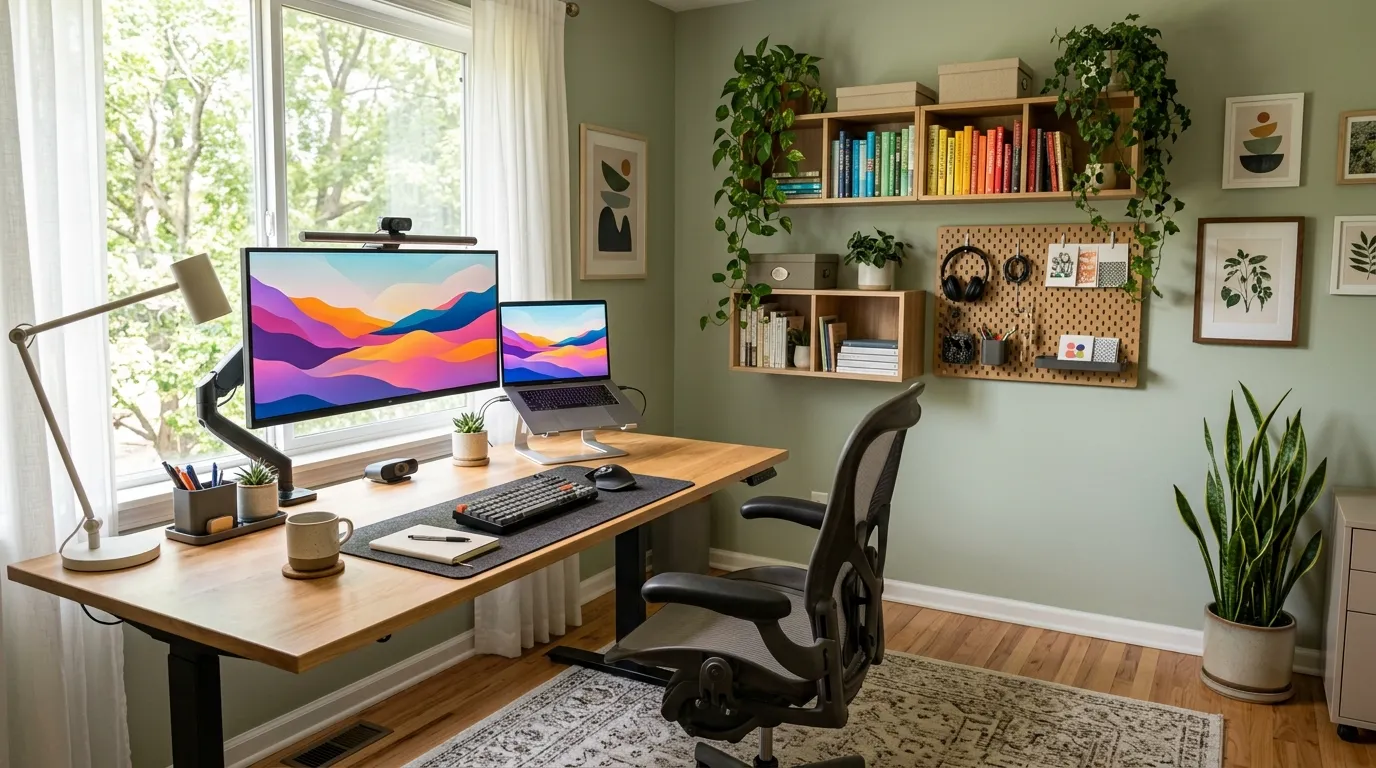
Home Office Ideas: 33 Productive Spaces to Recreate
Your workspace should inspire you to feel focused, comfortable and ready to tackle the day. Even a small corner can become a beautiful office with the right ideas.
These Home Office Ideas will help you create a productive workspace that fits your style, budget and available space. Whether you’re working from a spare bedroom, a compact apartment or a shared living area, you’ll find plenty of inspiration to make your setup more functional and inviting.
From minimalist desks and cozy neutral corners to creative mood boards and space-saving built-in offices, each idea offers practical ways to improve your work environment. I’ve noticed that small changes, such as better lighting, smarter storage and a more comfortable chair, can make a workspace feel much easier to use every day.
Explore these 33 inspiring setups, discover the details that suit your needs and find simple ways to make your office feel like your own. You don’t need a complete renovation to create a space you’ll enjoy working in.
Minimalist Desk Setup
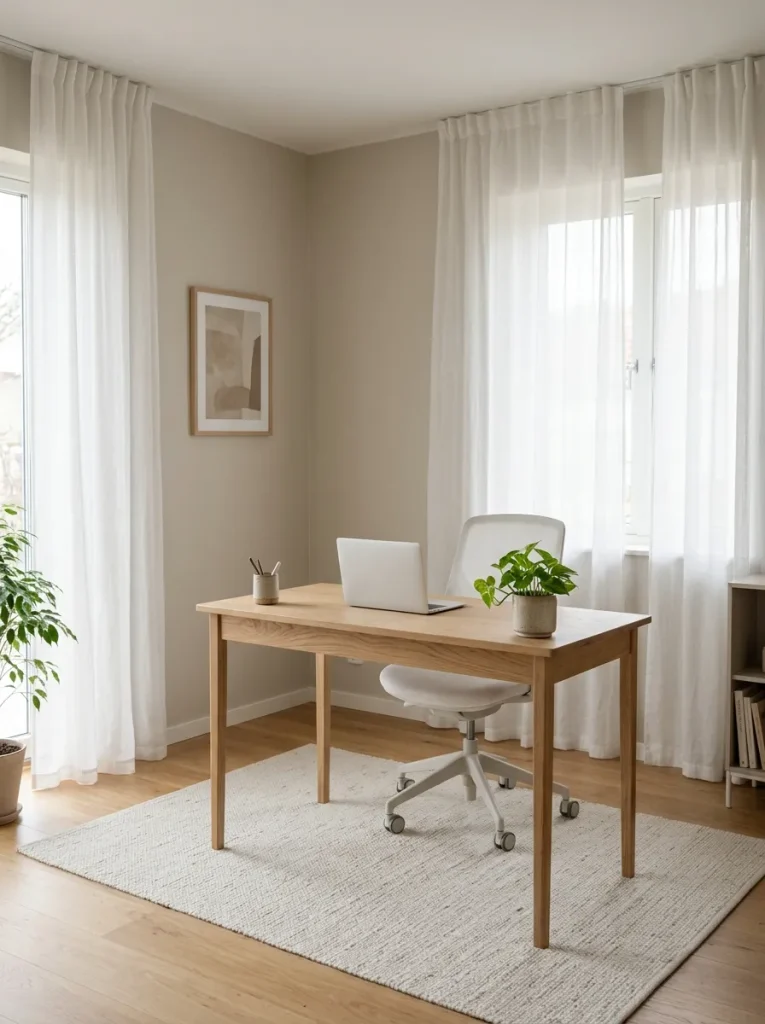
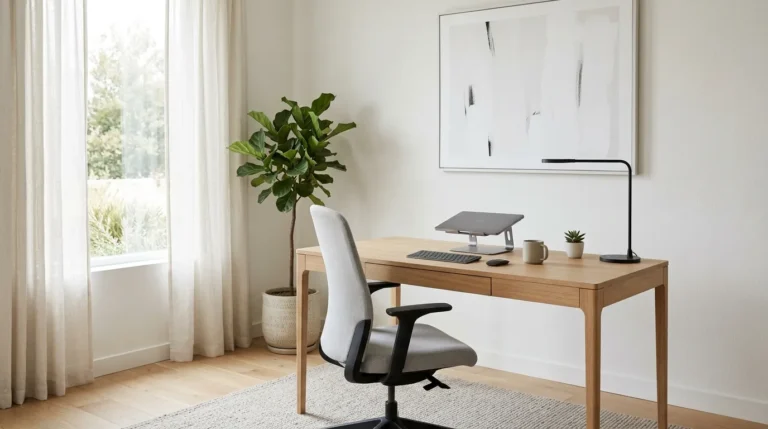
A clutter-free workspace makes it easier to focus on the task in front of you. Start with a simple wooden desk, a comfortable chair and only the essentials you use every day. Keep your laptop, notebook and favorite pen within reach, then move everything else into a drawer or storage basket.
The secret to a productive minimalist setup is giving every item a purpose. Choose one small plant or framed print to add personality without creating visual noise. I’ve noticed that keeping the desktop clear also makes quick resets easier, especially when your home office doubles as a guest room or shared living space.
Cozy Neutral Workspace
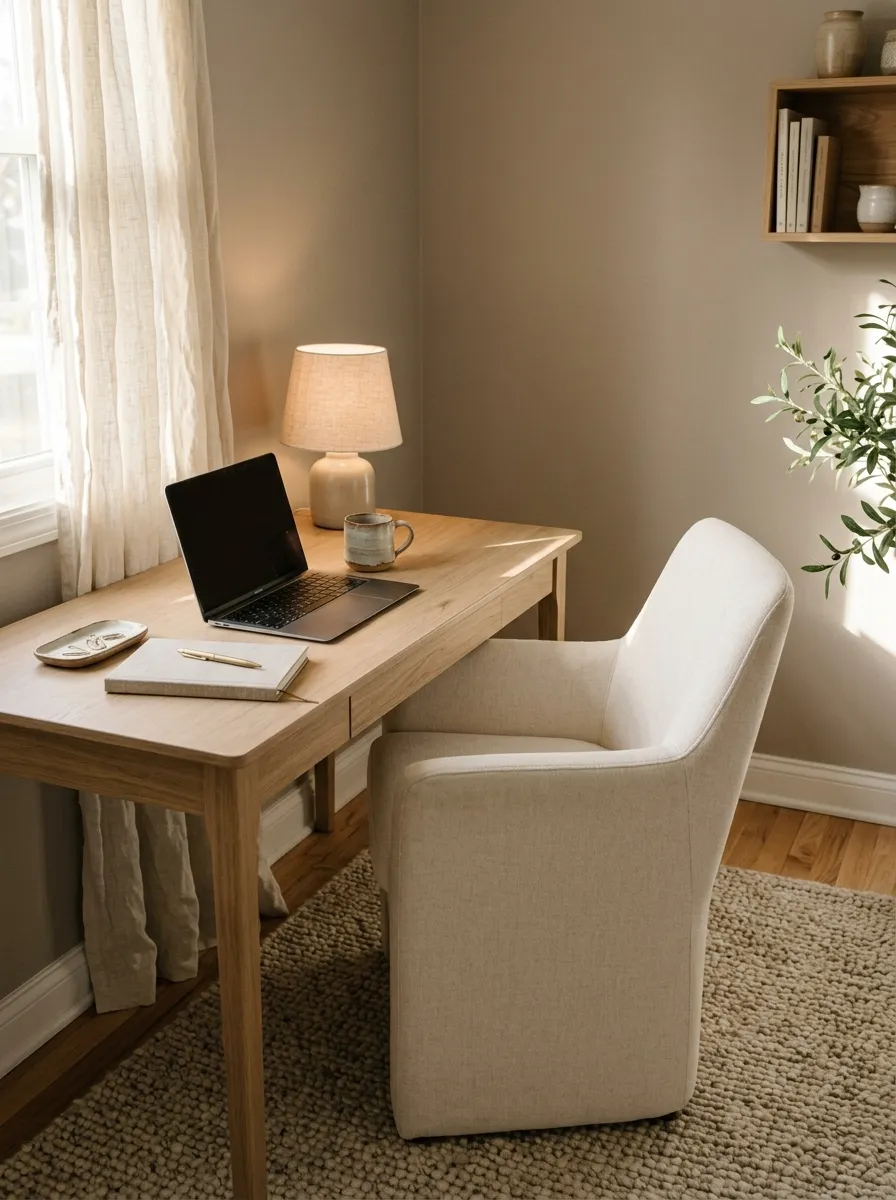
- Choose warm colors: Combine cream, beige, soft brown and muted white for a soothing atmosphere that feels welcoming throughout the workday.
- Layer soft textures: Add a woven rug, linen curtains or a boucle cushion to make the workspace feel comfortable without looking crowded.
- Add warm lighting: Place a table lamp beside your monitor for cloudy afternoons and evening work sessions.
- Keep accessories simple: Use a ceramic mug, a small vase or a wooden tray to introduce character without overwhelming the desk.
- Bring in greenery: A small pothos or snake plant adds a fresh touch and breaks up the neutral palette.
A cozy workspace is especially useful when you want your office to feel like a natural extension of your home. Choose fabrics that are easy to clean and a chair that supports your back during longer sessions. Keep decorative pillows away from your main working area so comfort never comes at the expense of function.
Small Corner Office
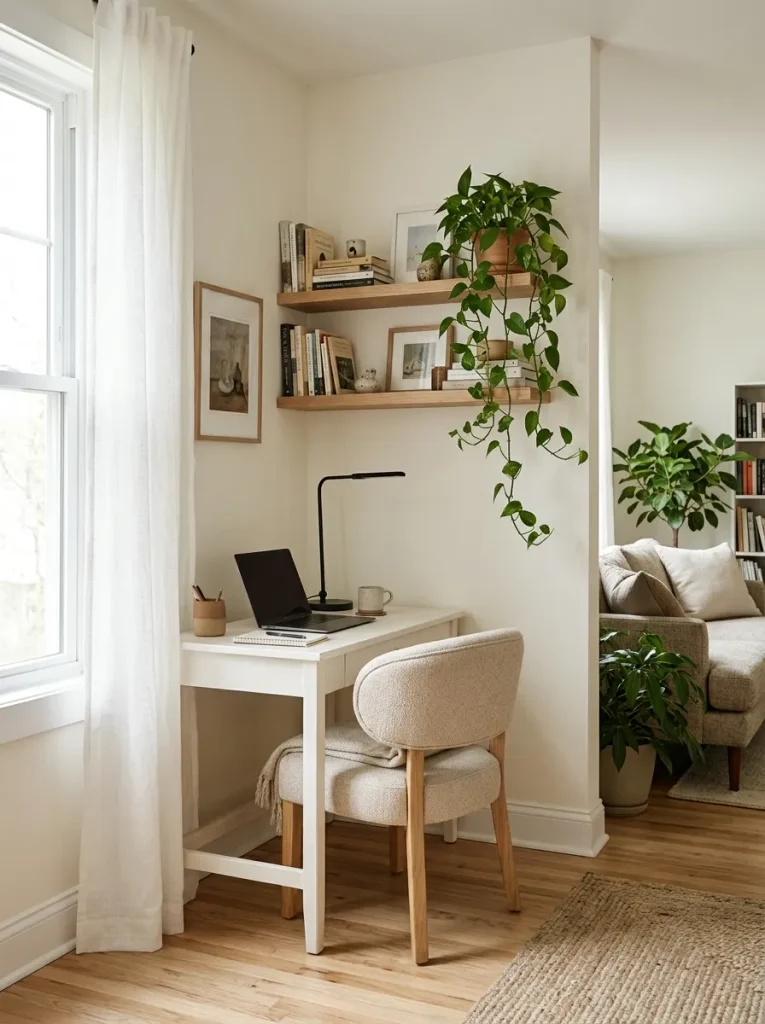
Quick Tip:
Measure the available corner before buying furniture. A desk around 36 to 48 inches wide may work well for a laptop-based setup, depending on your room layout. Look for a design with shallow depth and use wall-mounted shelves to store books and supplies without taking up valuable floor space.
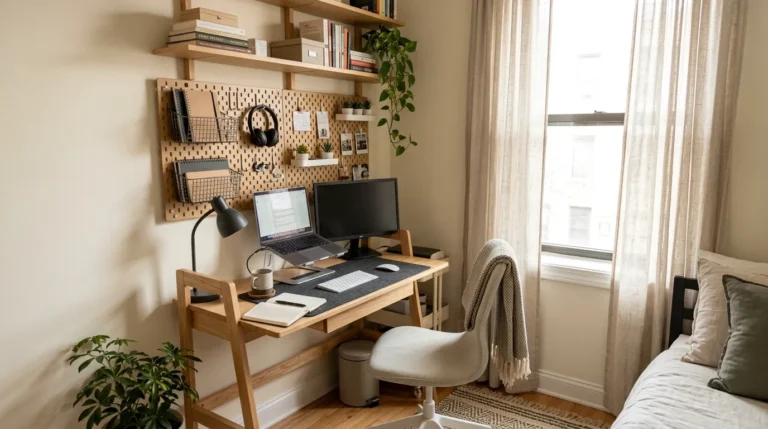
Small spaces can still support a comfortable daily routine when every inch has a clear purpose. Position the desk near a window if possible, but avoid screen glare by adjusting the monitor angle or adding a sheer curtain. A compact rolling drawer unit can hold paperwork and slide beneath the desk when it is not needed.
Rustic Wood Office
BEFORE:
A workspace with mismatched furniture and bare walls can feel unfinished. Papers may pile up, while plastic organizers and random accessories compete for attention.
AFTER:
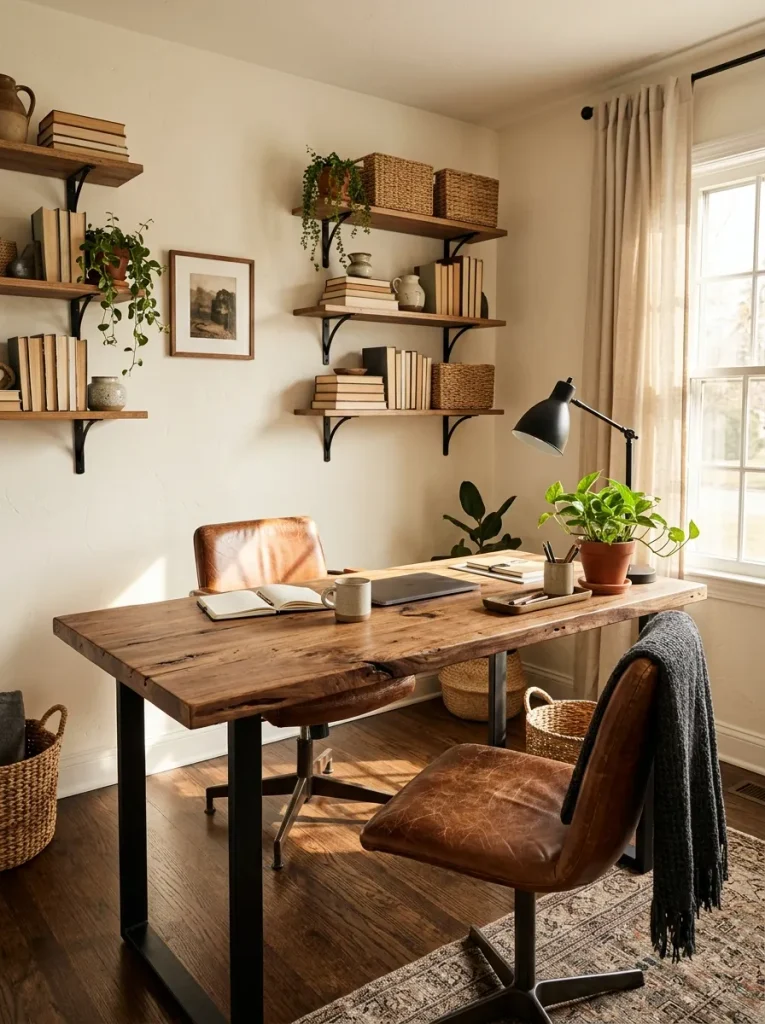
A sturdy wooden desk, coordinated storage and a few natural textures create a grounded, inviting atmosphere. Matching wood tones across shelves or frames helps the room feel intentional without requiring a complete renovation.
Rustic style works especially well if you enjoy warm materials and a relaxed setting. Start with one prominent wooden piece, then introduce black metal accents, woven baskets and a neutral rug. Reclaimed wood can add character, but check that the surface is smooth, stable and comfortable for everyday work.
Floating Shelf Workspace
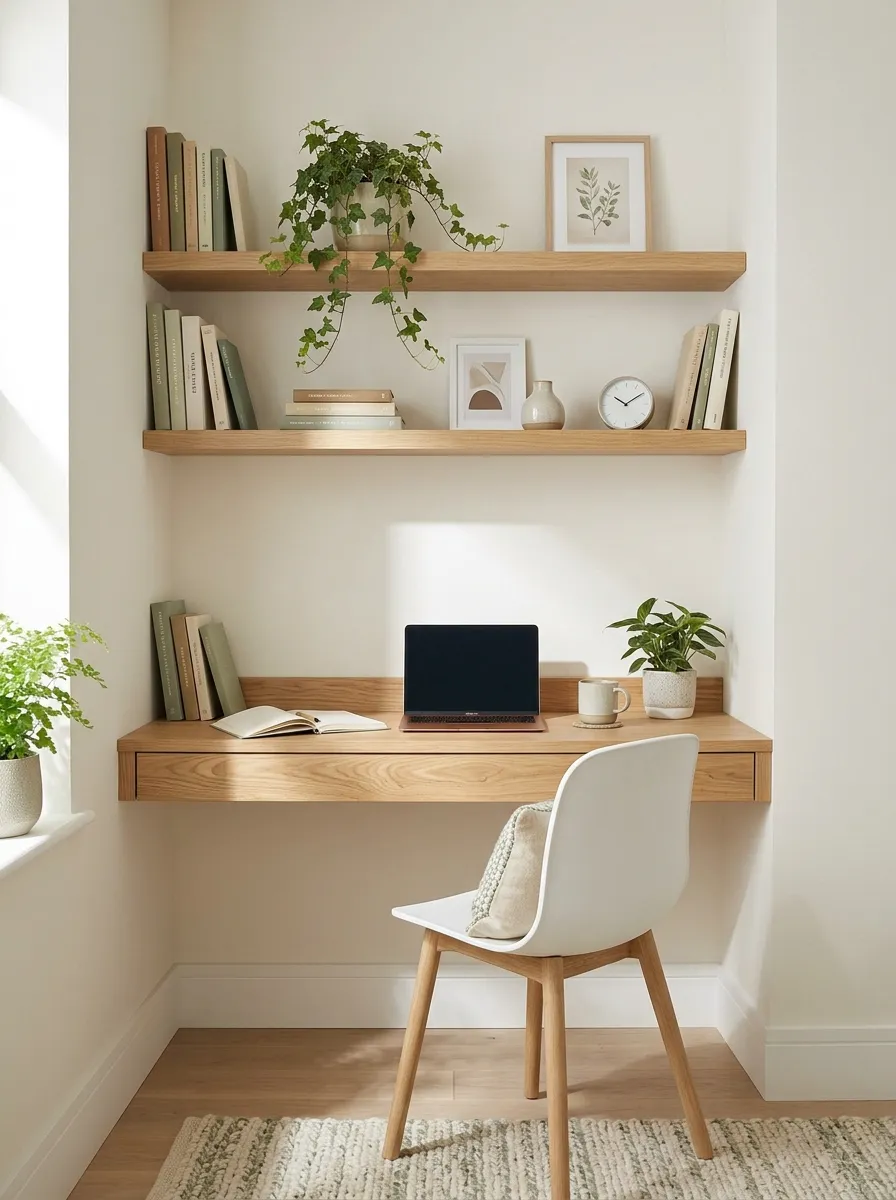
- Measure the wall: Mark the available width and desk height before selecting a floating desk. Leave enough space for your legs and chair.
- Secure the desk: Attach the desk to suitable wall studs or use hardware rated for the wall type and expected load.
- Install upper shelves: Position shelves where books and supplies remain accessible without blocking your head or monitor.
- Organize by frequency: Keep everyday items on the lowest shelf and occasional-use supplies higher up.
- Manage cables: Use adhesive cable clips or an under-desk cable tray to keep wires away from your knees.
Floating furniture keeps the floor visible, making a compact office feel less crowded. It also creates a clean backdrop for video calls and gives you room to move a chair out of the way after work. Check the manufacturer’s weight limits before installing equipment, especially if you plan to use a heavy monitor or multiple screens.
Dual Monitor Station
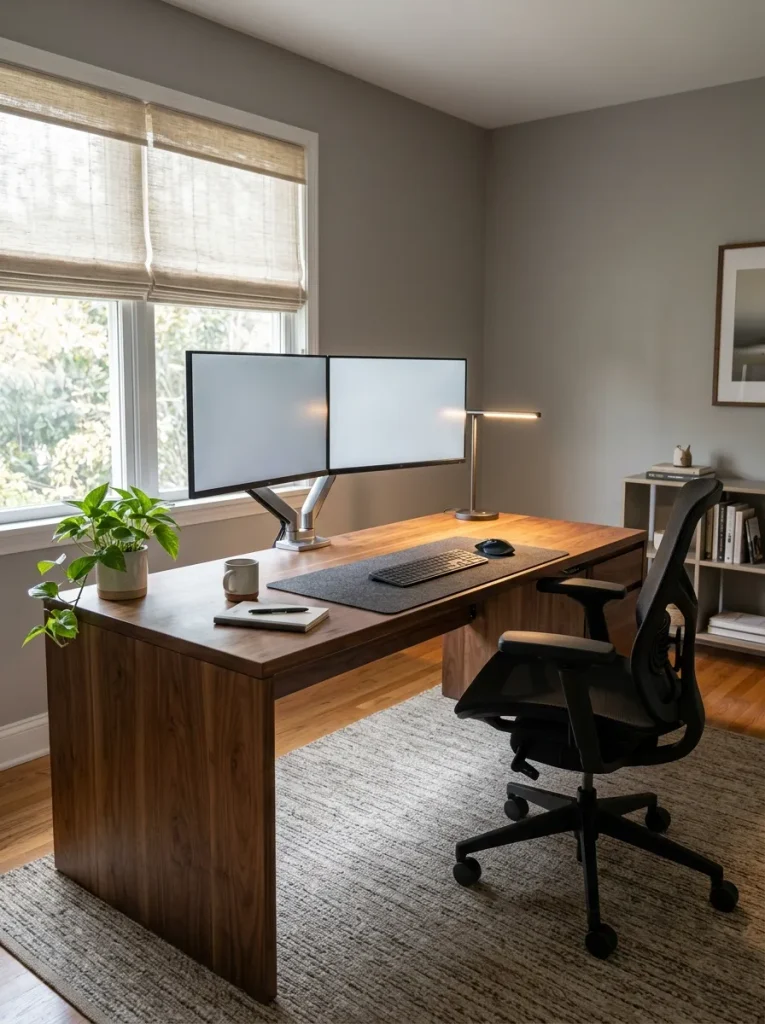
| Setup Detail | Option A: Basic | Option B: Dual Monitor |
| Screen arrangement | One central screen | Two side-by-side screens |
| Desk space | Smaller surface | Wider surface recommended |
| Best suited for | Writing and everyday tasks | Research, spreadsheets and multitasking |
| Main consideration | Simple setup | More cables and screen adjustment |
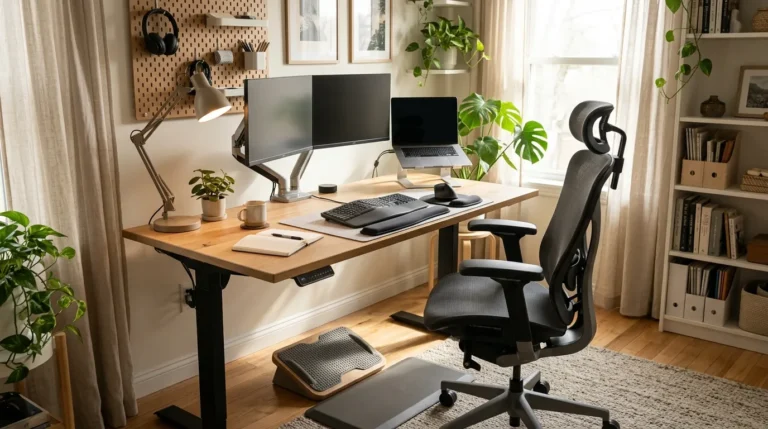
A dual-monitor station can reduce constant window switching when your work involves comparing documents, managing spreadsheets or attending video calls while taking notes. Position both screens at a comfortable viewing distance, with their top edges around eye level. If one monitor is your primary display, place it directly in front of you to limit repeated neck turning.
Boho Home Office
DO:
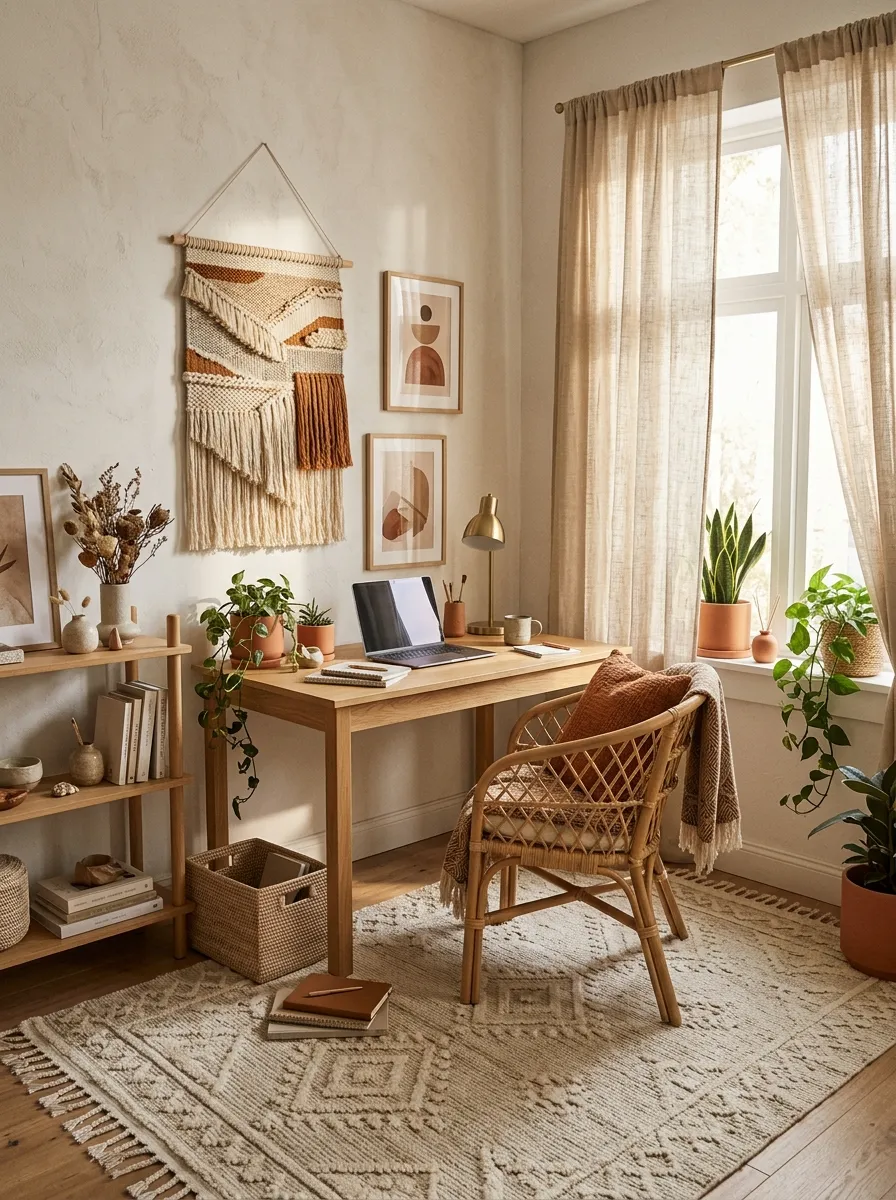
- Choose a rattan chair or woven storage basket to introduce natural texture.
- Add a terracotta pot with a leafy plant beside the desk.
- Layer a neutral rug beneath the workspace to define the area.
- Display one or two handmade objects that reflect your personal style.
DON’T:
- Cover every wall with decorative pieces that compete for attention.
- Choose a chair that looks attractive but lacks proper back support.
- Place trailing plants where their leaves interfere with your keyboard.
- Let decorative baskets become catchalls for paperwork and unused supplies.
Boho styling brings warmth and personality to a work area without requiring expensive furniture. Start with a neutral foundation, then introduce terracotta, woven textures and a little greenery. Keep the desk surface relatively open so your creative accessories add character without distracting you from the work that needs to get done.
Modern Black Workspace
Cost: Moderate, depending on desk and chair quality.
Time: One afternoon for arranging furniture and accessories.
Skill Level: Beginner-friendly, with basic cable organization.
Best For: Modern interiors, focused work and compact professional setups.
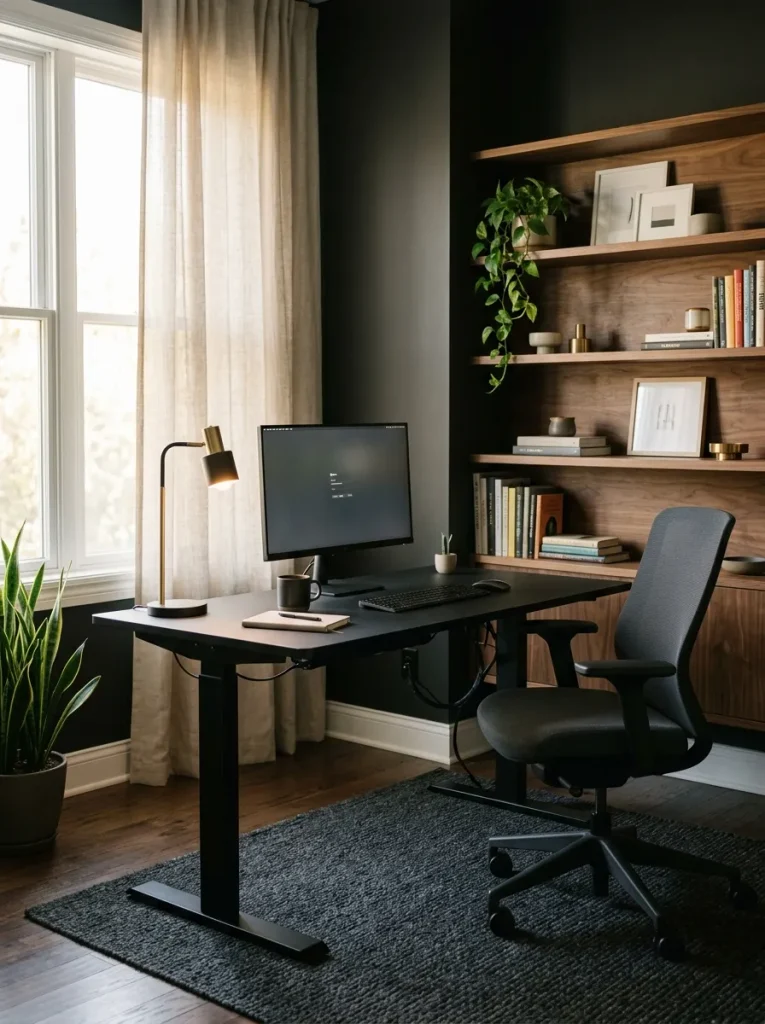
Dark furniture can make a workspace feel polished and visually cohesive, especially when paired with warm wood and a few lighter accents. Choose a matte finish to reduce distracting reflections and avoid relying on a single overhead light. A dedicated task lamp and adequate natural light help keep the desktop comfortable for reading, typing and video calls.
Window Desk Nook
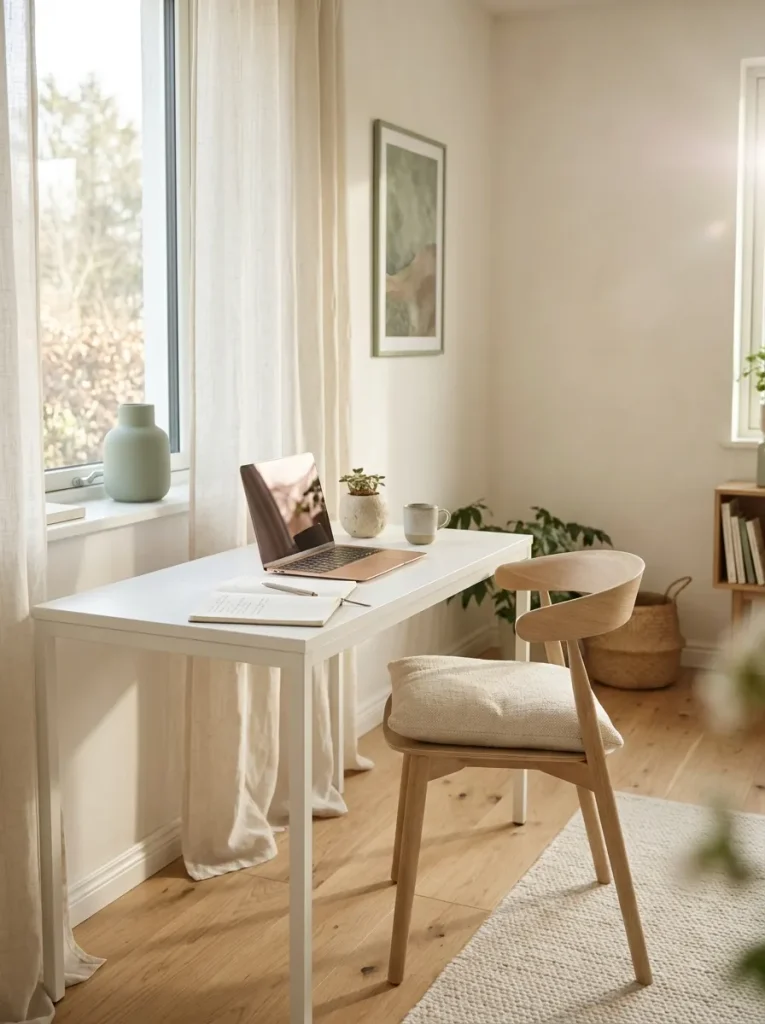
Two things can make a window-side workspace especially appealing: natural light and a pleasant view. Position your desk so daylight reaches the work surface without shining directly into your eyes or reflecting off the monitor. If the window faces a busy street, sheer curtains can soften the view while allowing plenty of light into the room.
For a practical setup, leave enough clearance to open the window and reach the curtains. Keep the monitor perpendicular to the window when possible and add an adjustable desk lamp for darker hours. A small plant or notebook tray can finish the nook without blocking the view. The goal is a bright, comfortable workspace that supports concentration throughout the day.
Small Bedroom Office
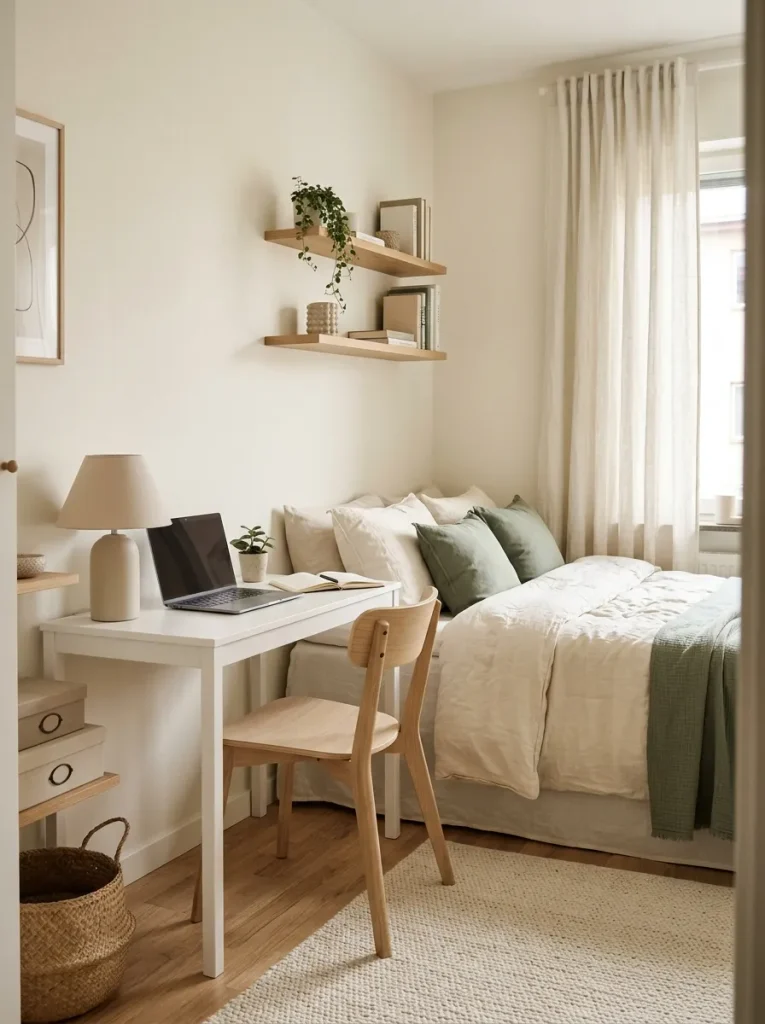
- Use a narrow desk: Choose a compact design that fits beside the bed without blocking walkways or wardrobe doors.
- Match the bedroom palette: Repeat two or three existing colors so the office feels connected to the rest of the room.
- Add vertical storage: Install floating shelves above the desk for books, stationery and a small decorative object.
- Separate work and rest: Use a desk mat, task lamp or small rug to visually distinguish the office from the sleeping area.
- Hide work supplies: Store cables, paperwork and chargers in drawers or labeled boxes at the end of the day.
A bedroom workspace needs thoughtful boundaries because work can easily spill into your downtime. Keep your desk facing away from the bed if the layout allows and choose storage that closes to conceal unfinished tasks. A compact lamp and comfortable chair make daily work easier without allowing the office to dominate the room.
DIY Desk Organization
Quick Tip:
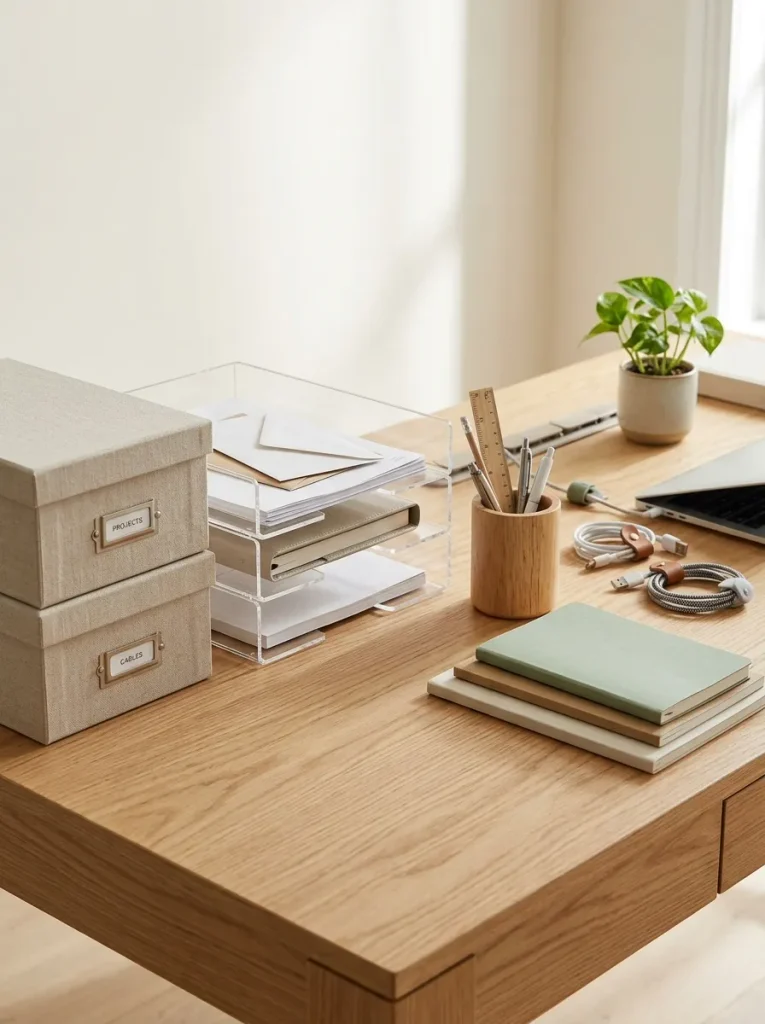
Before purchasing organizers, empty your drawers and group supplies by purpose. Measure the available space, then reuse small boxes, jars or trays you already own. Keeping frequently used items within arm’s reach and occasional supplies in drawers makes daily tidying faster.
A well-organized desk saves time because you spend less energy searching for pens, chargers, notes and paperwork. Start with the items you use every day, then give everything else a designated home. Clear containers help you spot supplies quickly, while opaque boxes conceal visual clutter. Label only the containers that hold items you regularly forget where you stored.
Built-In Office Wall
BEFORE:
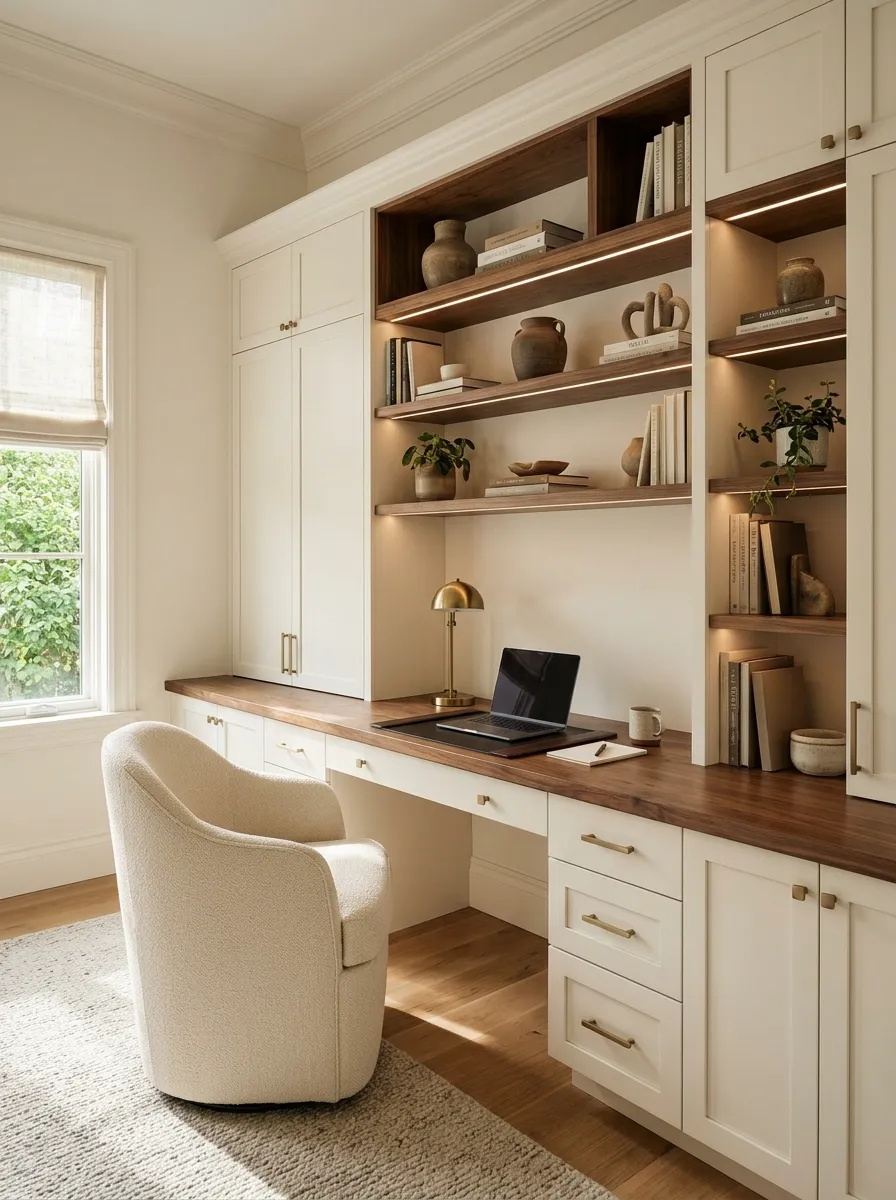
A spare wall filled with separate bookcases, loose storage boxes and a small desk can feel fragmented. Useful supplies occupy valuable floor space and the furniture may leave awkward gaps.
AFTER:
A continuous desktop, coordinated cabinetry and carefully arranged shelves create a unified workstation. Closed cupboards hide paperwork, while open shelves display a few books and accessories that add personality.
Built-in storage is especially useful for a dedicated home office or a shared family workspace with plenty of supplies. For a lower-cost alternative, combine freestanding cabinets with a countertop cut to fit the wall. Plan power outlets, cable routes, chair clearance and monitor placement before installation so the finished space works as well as it looks.
Farmhouse Office Style
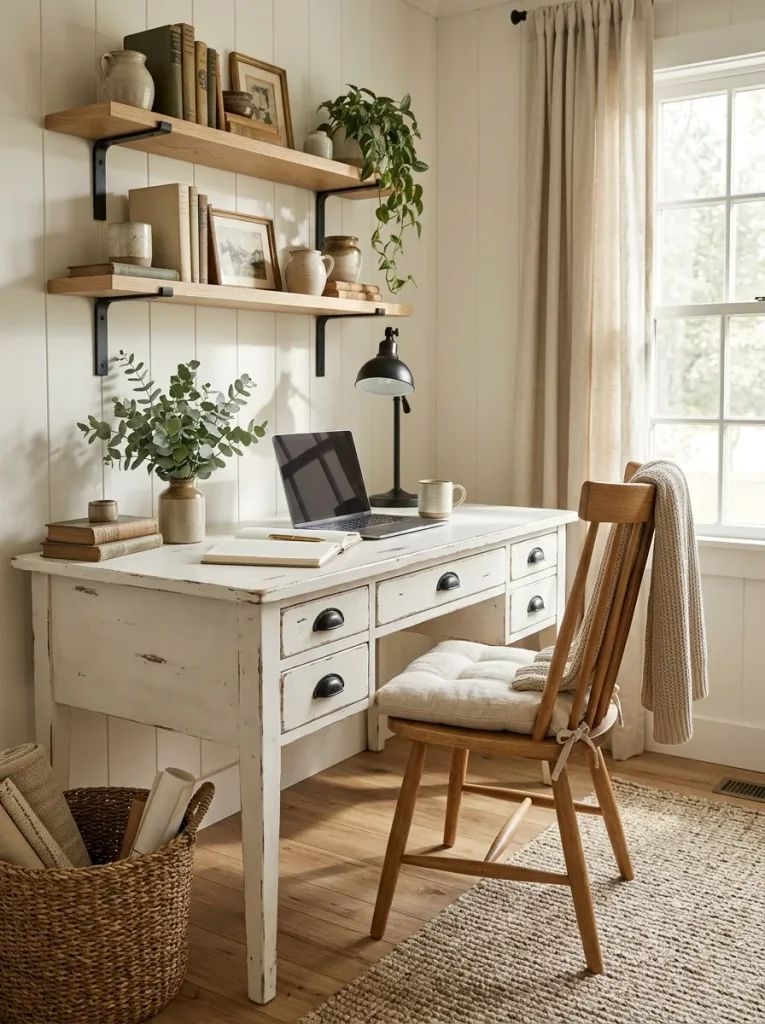
- Start with a wooden desk: Choose a farmhouse-style desk with natural grain, a painted finish or simple turned legs.
- Mix old and new: Pair a vintage-inspired accessory with modern storage to keep the room practical.
- Add woven baskets: Store paperwork, chargers and spare stationery in baskets that fit neatly beneath shelves.
- Introduce soft textiles: Use a neutral cushion or small rug to make the office feel warm and comfortable.
Farmhouse style works best when natural materials and simple finishes do most of the decorating. You do not need distressed furniture in every corner. One character-filled desk, a few black metal accents and warm wood shelves can establish the look without making the room feel dated. Choose a supportive chair, even if it has a traditional appearance.
Standing Desk Setup
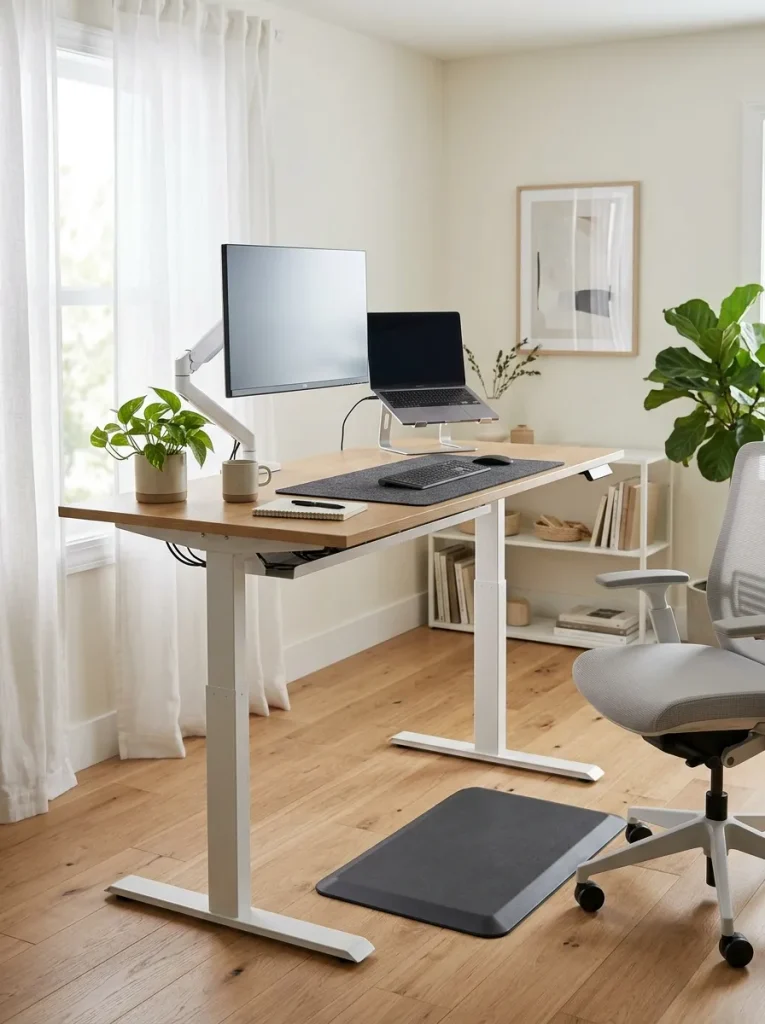
| Setup Detail | Option A: Fixed Desk | Option B: Standing Desk |
| Working position | Primarily seated | Alternates between sitting and standing |
| Furniture cost | Often lower | Usually higher |
| Height adjustment | Limited | Adjustable on many models |
| Main benefit | Simple, stable workspace | More flexibility throughout the day |
An adjustable desk gives you the option to change positions instead of remaining seated for every task. Set the keyboard around elbow height and keep your wrists in a comfortable, neutral position. Alternate between sitting and standing as needed rather than standing for hours continuously. A stable monitor arm and organized cables help the workstation remain comfortable at both heights.
Creative Mood Board Desk
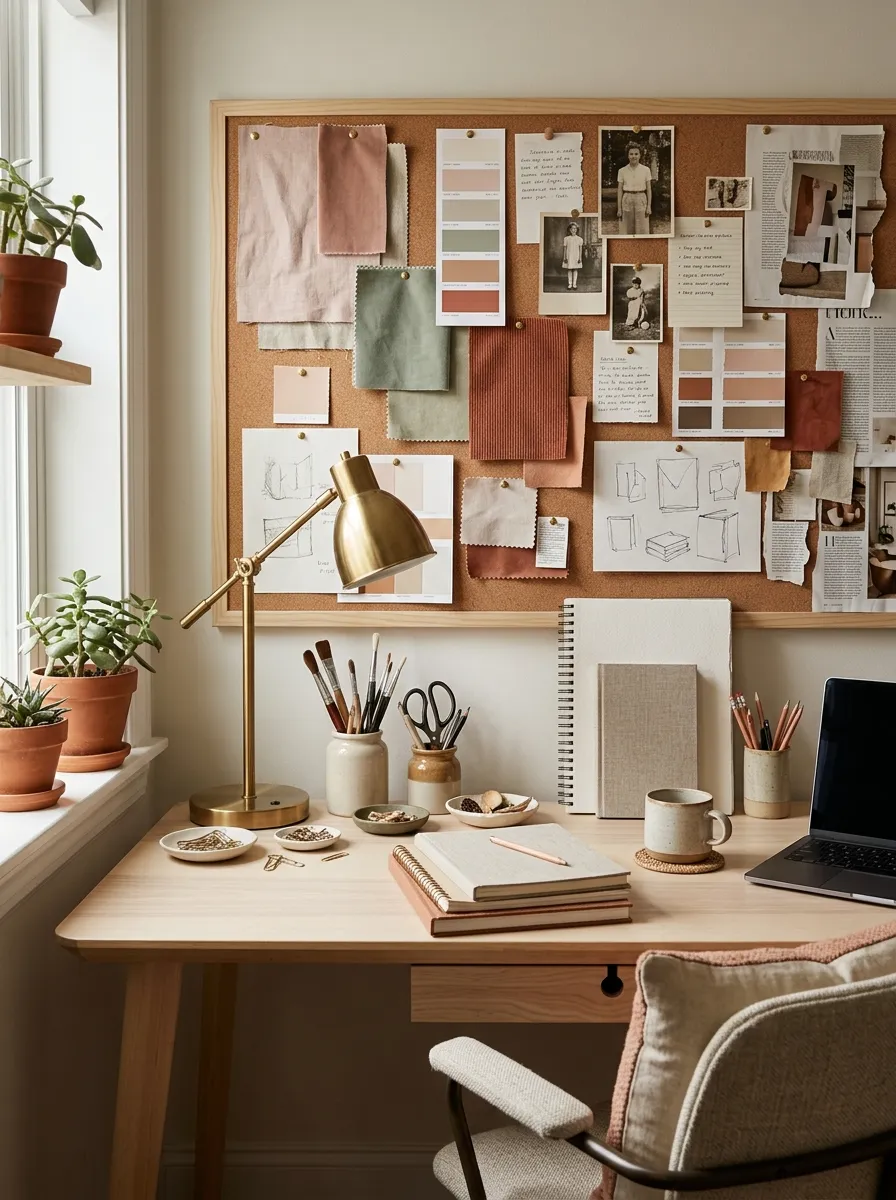
DO:
- Arrange reference images around a clear color palette or project theme.
- Keep frequently used sketchbooks, pens and scissors in accessible desk organizers.
- Leave a clean section of the board for new ideas and changing priorities.
- Use removable pins or clips so materials can be updated easily.
DON’T:
- Fill every inch of the board with unrelated images.
- Mix too many colors without a unifying theme.
- Store heavy objects on lightweight adhesive hooks without checking their limits.
- Let decorative supplies crowd the space needed for actual work.
A mood board can help designers, writers, students and creative professionals keep visual references close at hand. Group related images together and leave some empty space so the board remains easy to scan. For a flexible setup, use a corkboard or magnetic board that lets you rearrange inspiration as projects develop. Keep your current project at eye level.
Scandinavian Office Design
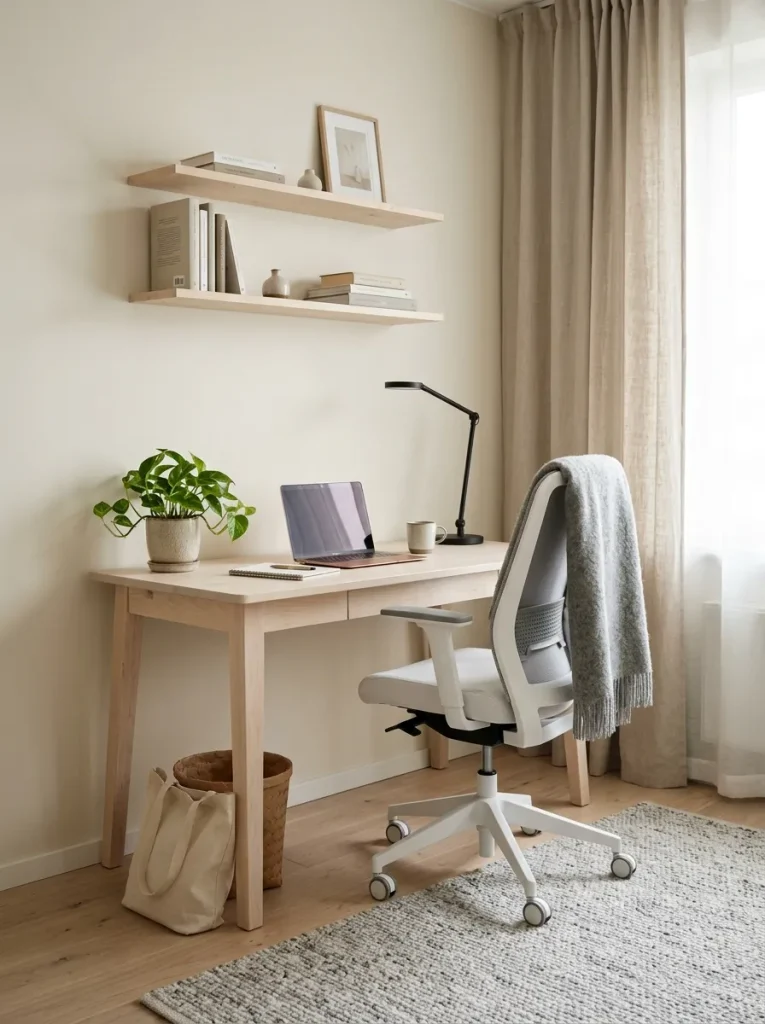
Cost: Low to moderate, depending on furniture choices.
Time: A few hours to rearrange and style the workspace.
Skill Level: Beginner-friendly.
Best For: Small rooms, bright interiors and people who prefer simple surroundings.
Scandinavian design combines practical furniture with natural materials and a light, uncluttered appearance. Choose a desk with clean lines, add one comfortable chair and limit accessories to useful items. A pale wood surface helps reflect light, while a small plant or framed print prevents the room from feeling too plain. Prioritize comfort and storage over decorative extras.
Minimalist Desk Setup
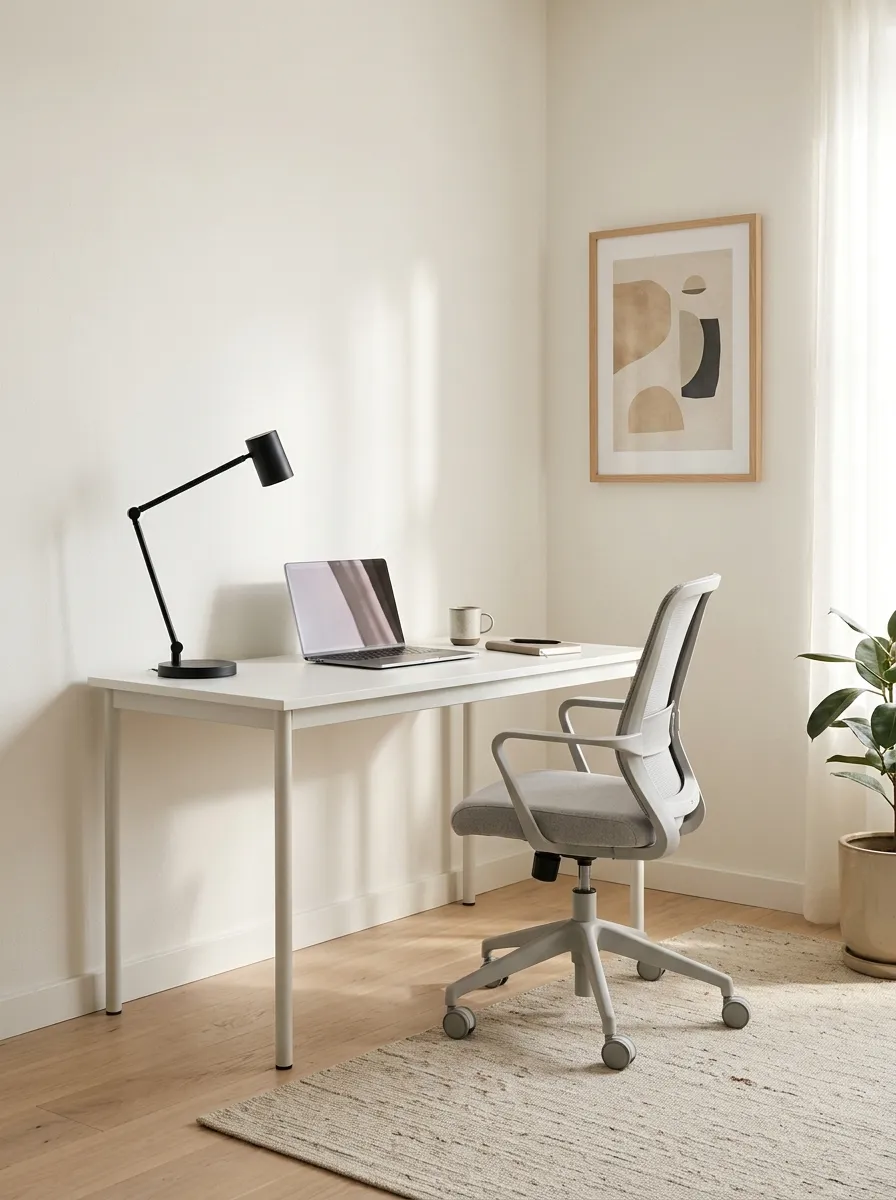
A clear desk can make starting your workday feel much easier. Keep only your laptop or monitor, keyboard, notebook and one or two daily essentials on the main surface. Move spare cables, old paperwork and unused accessories into a drawer so they do not compete for your attention.
The key is to create a routine you can maintain. Spend two minutes at the end of each day returning items to their designated places. I’ve found that simple organizing habits are often more sustainable than elaborate storage systems. Choose furniture with a drawer or add a small organizer if your everyday supplies need a home.
Compact Closet Office
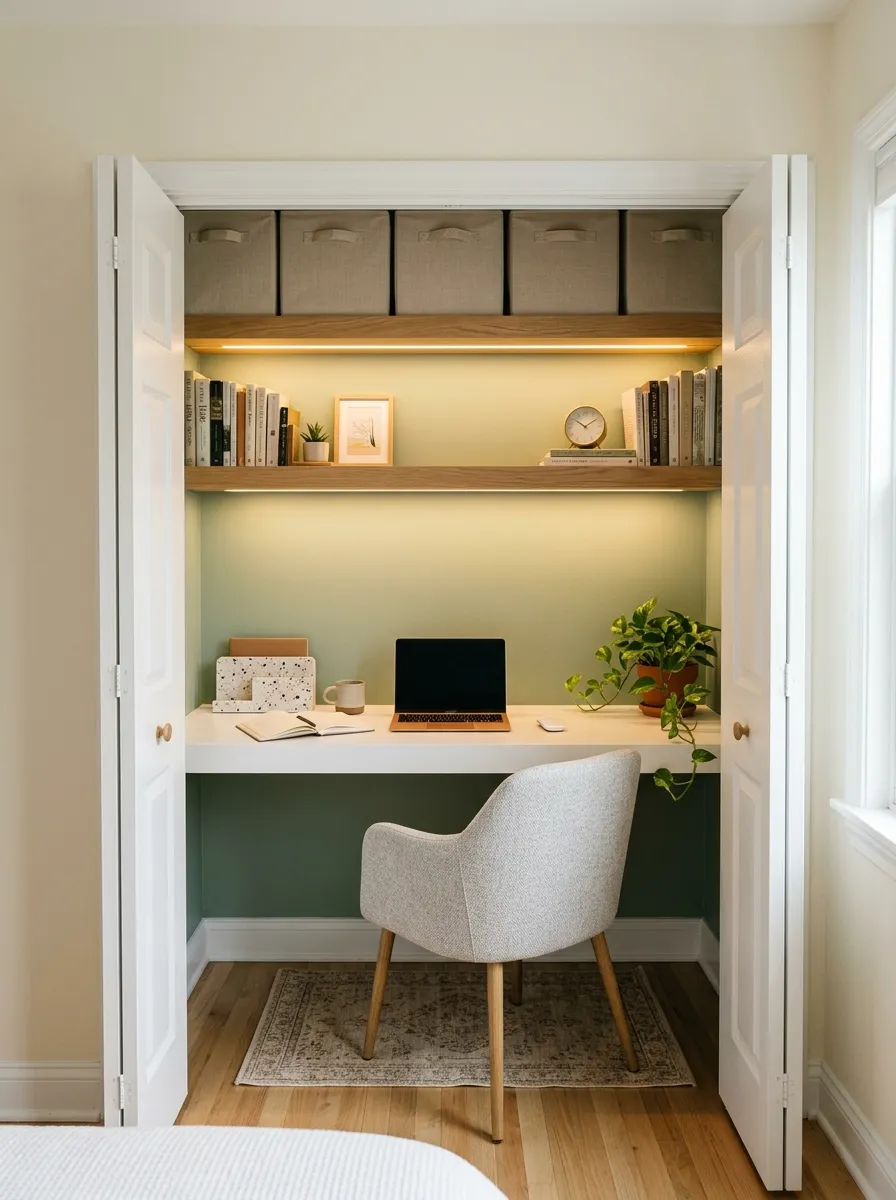
- Clear the closet: Remove unused items and measure the interior width, depth and height before planning the layout.
- Install a work surface: Fit a sturdy desktop at a comfortable height, allowing enough room for your legs and chair.
- Use vertical storage: Add shelves for notebooks, stationery and lightweight office supplies.
- Plan ventilation and lighting: Use suitable task lighting and ensure the enclosed area does not become uncomfortably warm.
- Create a closing routine: Store your laptop and paperwork, push in the chair and close the doors when your workday ends.
A closet office can reclaim space in a bedroom or apartment where a separate room is not available. Keep the desk shallow enough to preserve legroom and choose a chair that fits inside when not in use. Check electrical access before installation and avoid enclosing heat-producing equipment in a poorly ventilated cabinet.
Pink Feminine Workspace
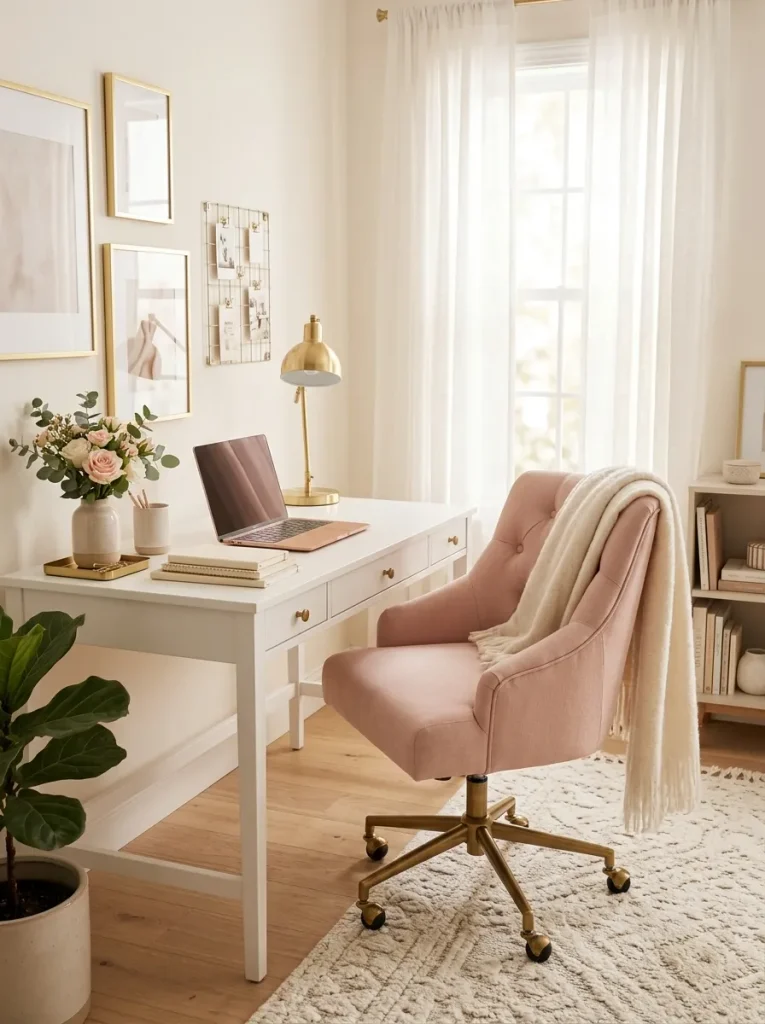
Quick Tip:
Choose one shade of pink as your main accent and balance it with white, cream or light wood. Before buying accessories, check how the color looks in your room’s natural light. A blush chair or desk organizer can provide enough color without overwhelming the workspace.
A pink workspace can feel stylish and professional when the colors remain balanced. Start with practical furniture in white or pale wood, then introduce blush through a chair, stationery or a small framed print. Keep your monitor and keyboard in comfortable positions and leave enough open desk space for daily tasks. The result is a personalized office that feels cheerful without becoming distracting.
Industrial Home Office
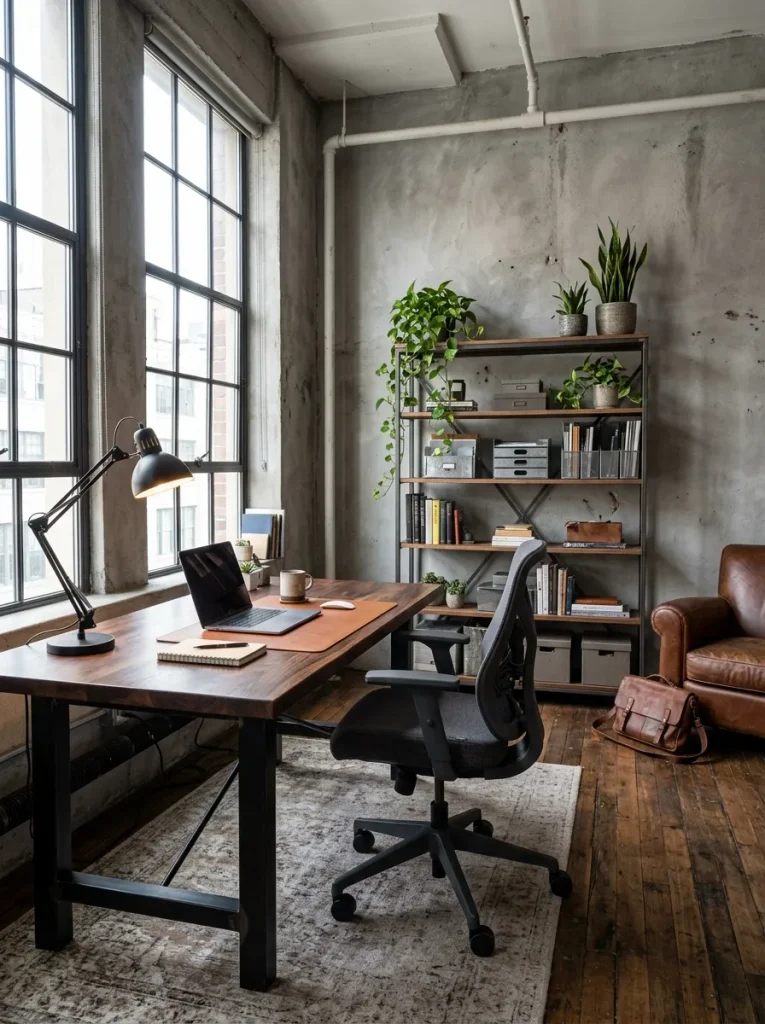
BEFORE:
A workspace with unrelated furniture, visible cables and scattered accessories can lack the cohesive character associated with industrial interiors. Dark furniture may also make a small room feel heavier when there is little natural light.
AFTER:
A coordinated wood-and-metal desk, simple black lighting and streamlined shelves create a more unified look. A lighter rug, warm wood accents and a few neutral accessories soften the harder finishes.
Industrial style suits people who enjoy clean lines and sturdy materials. Start with a desk featuring metal legs, then add one open shelf and a task lamp with an adjustable arm. If the room is small, balance dark finishes with pale walls and bright lighting. Keep heavy shelves securely anchored and route cables away from walkways.
Shared Home Office
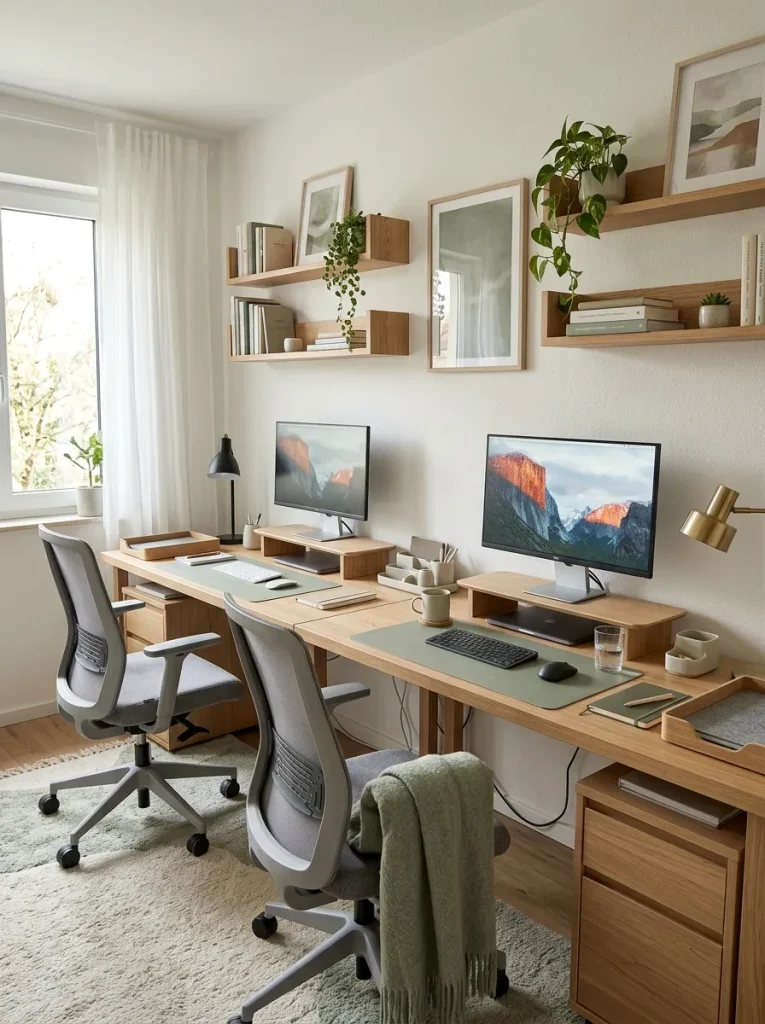
- Measure for two workstations: Allow enough width for each person’s monitor, keyboard and writing space.
- Assign individual zones: Give each person a designated drawer, storage tray or desk organizer.
- Coordinate equipment: Use matching monitor stands or similar accessories for a cohesive appearance.
- Control distractions: Position screens thoughtfully and consider headphones for calls or focused work.
- Manage shared cables: Label chargers and route cords along the back of the desk.
A shared office works best when both people have enough personal space and a clear way to store their belongings. Agree on where shared supplies belong and which areas should remain free of clutter. If video calls happen frequently, separate task lighting and a little distance between microphones can help reduce interruptions and make the arrangement more comfortable.
Greenery-Filled Office
| Setup Detail | Option A: Minimal Greenery | Option B: Plant-Filled Office |
| Number of plants | One or two | Several plants in different sizes |
| Maintenance | Lower | Requires more regular care |
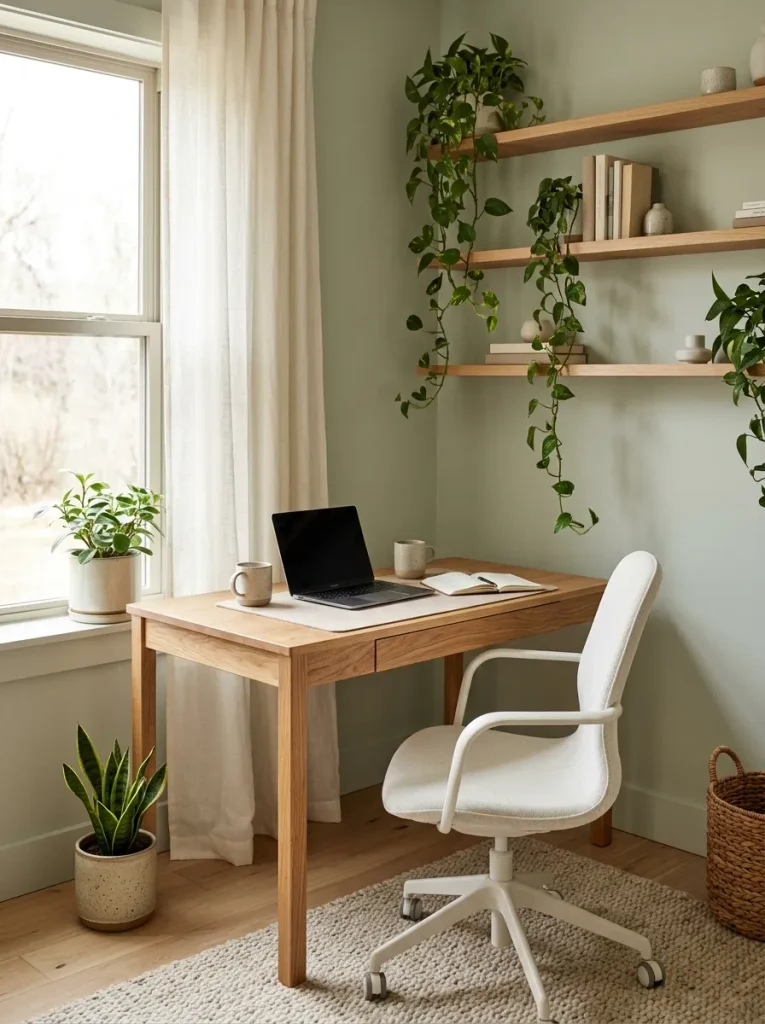
| Visual effect | Subtle, clean accents | Lush, nature-inspired atmosphere |
| Best placement | Desk corner or windowsill | Shelves, floor corners and window areas |
Plants can soften the look of a workspace and introduce natural color without requiring a complete redesign. Start with one or two easy-care varieties suited to your room’s light conditions. Keep leaves away from keyboards and electrical equipment, use leak-resistant saucers and choose plant locations that do not block daylight or interfere with your movement.
Luxury Executive Office
Quick Tip:
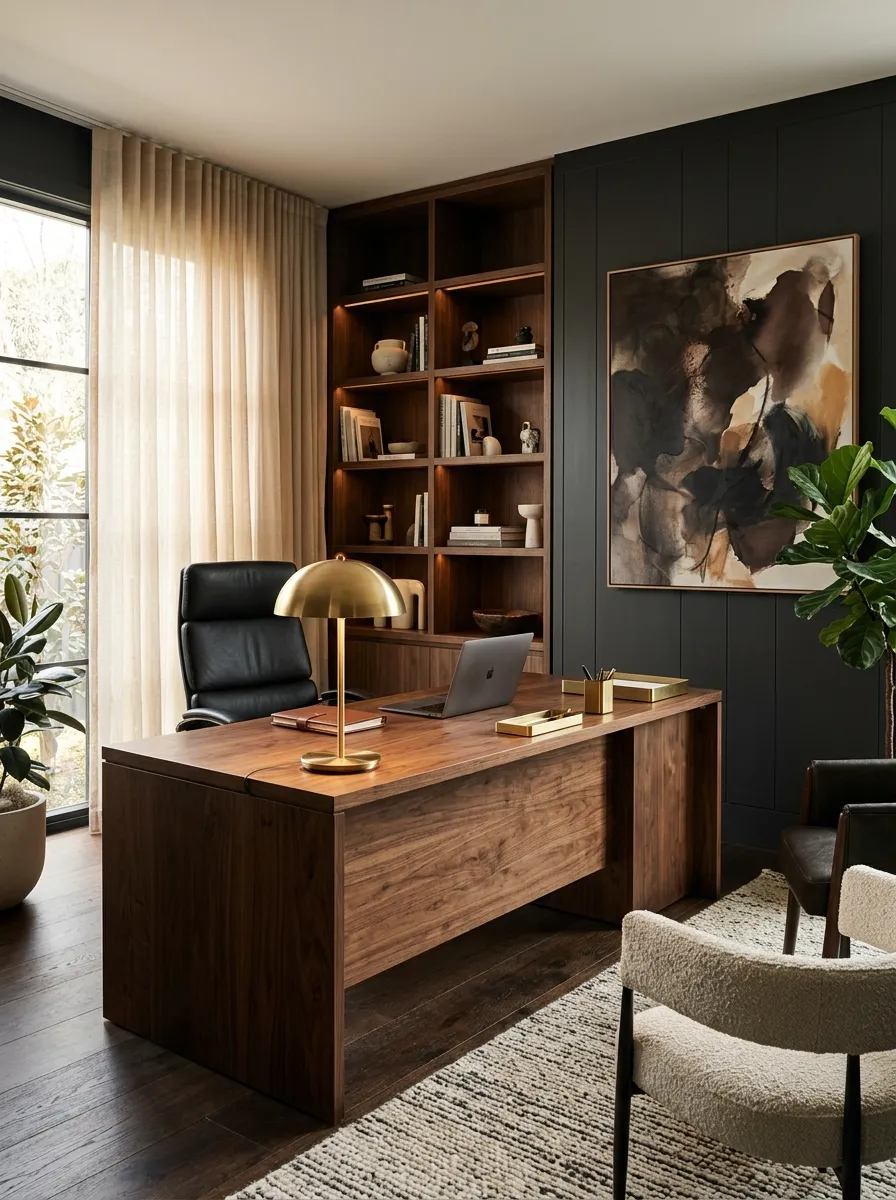
Focus on three elements for a polished executive look: a substantial desk, a supportive chair and coordinated lighting. Choose finishes that complement one another, such as walnut wood with matte black hardware. A few quality accessories will usually look more refined than a desk crowded with decorative objects.
An executive-style workspace can feel sophisticated without requiring an expensive renovation. Invest first in furniture that supports your daily routine, then add details such as a leather desk mat, a brass pen holder or framed artwork. Keep paperwork in closed storage and leave the main surface relatively clear. The overall effect should feel organized, comfortable and professional rather than overly formal.
Budget-Friendly Office
BEFORE:
A limited budget can make furnishing an office feel overwhelming. An empty corner may become crowded with temporary furniture, loose supplies and items purchased without a clear plan.
AFTER:
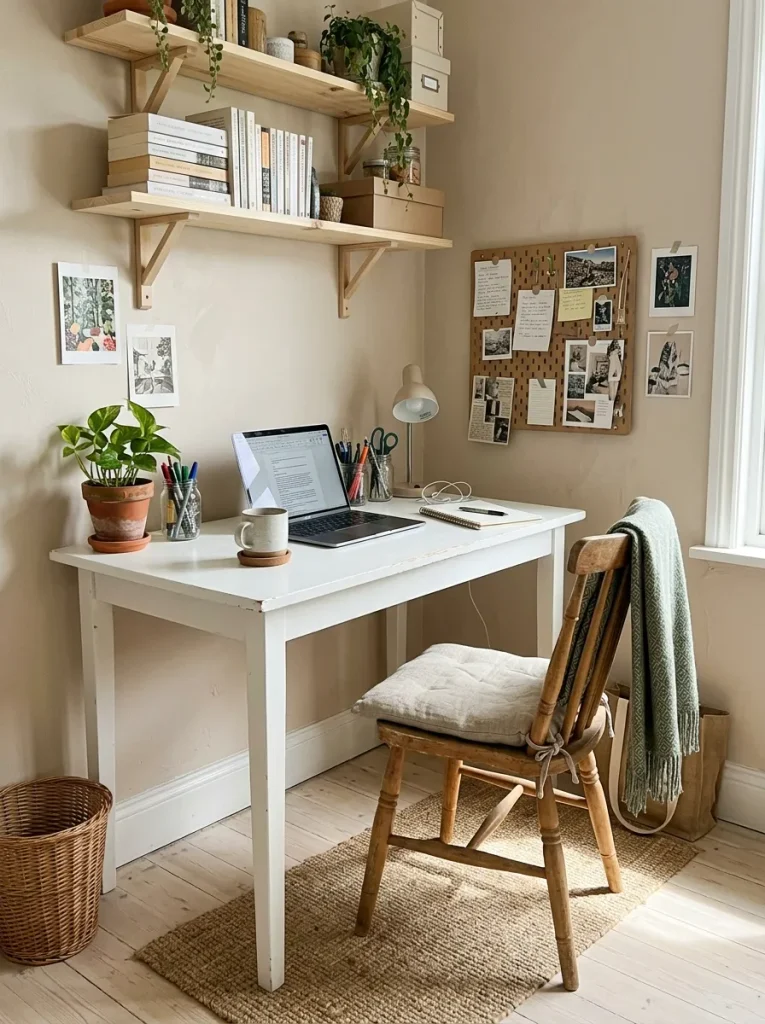
A simple desk, a comfortable chair, repurposed organizers and a few coordinated accessories create a functional workspace. Reusing existing furniture frees up money for the things that matter most during long work sessions.
Start by shopping your own home for a spare table, storage box or lamp that can serve a new purpose. Check secondhand listings for sturdy desks, but inspect them for wobbling, damage and missing hardware. Spend strategically on an adjustable chair or suitable lighting before buying decorative accessories. A well-planned low-cost setup can be just as practical as a more expensive room.
Monochrome Home Office
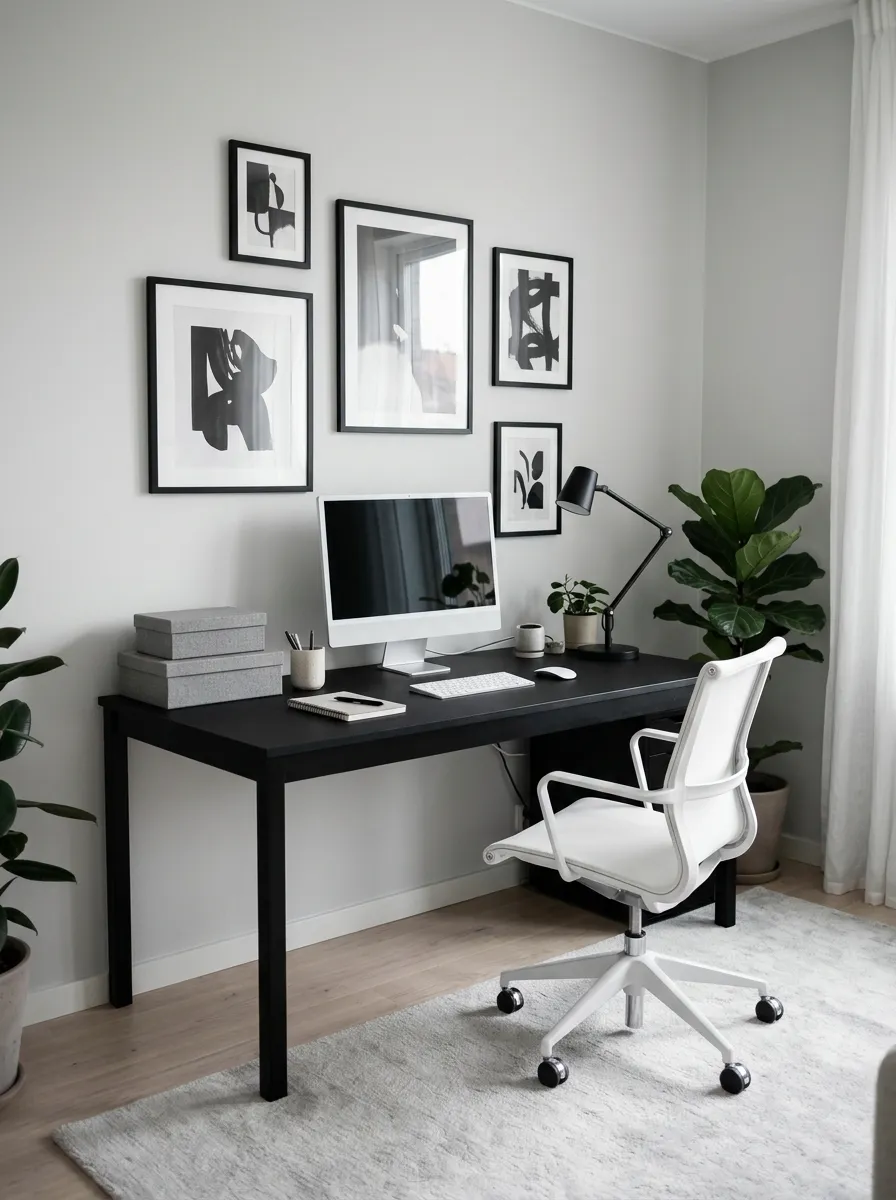
- Choose your base colors: Start with white walls, a black desk or a gray backdrop to establish a simple foundation.
- Repeat key finishes: Match your lamp, monitor stand and drawer handles in black or brushed metal.
- Introduce contrasting textures: Combine matte surfaces, smooth metal and woven fabric to prevent the room from looking flat.
- Add one soft accent: Use a pale rug, a light cushion or a small green plant to balance the stronger tones.
A monochrome workspace looks polished because the limited palette creates visual consistency. It is also easy to update without replacing every accessory. Keep the desk surface light enough to see paperwork clearly and avoid placing a dark monitor against an overly dark wall if you find the contrast tiring. A thoughtful balance of black, white and gray keeps the space practical as well as stylish.
Vintage Home Office

Cost: Low to high, depending on whether you use secondhand finds or restored antiques.
Time: A weekend to source pieces, arrange furniture and style shelves.
Skill Level: Beginner-friendly, with optional furniture restoration.
Best For: Traditional interiors, book lovers and people who appreciate character-filled furniture.
Vintage pieces give a workspace a sense of history and individuality. Start with one standout item, such as a wooden writing desk or an old-fashioned lamp and pair it with modern equipment for everyday convenience. Check that secondhand furniture is stable and that drawers open smoothly. A comfortable chair and reliable lighting matter more than matching every item to a particular era.
Under-Stair Office
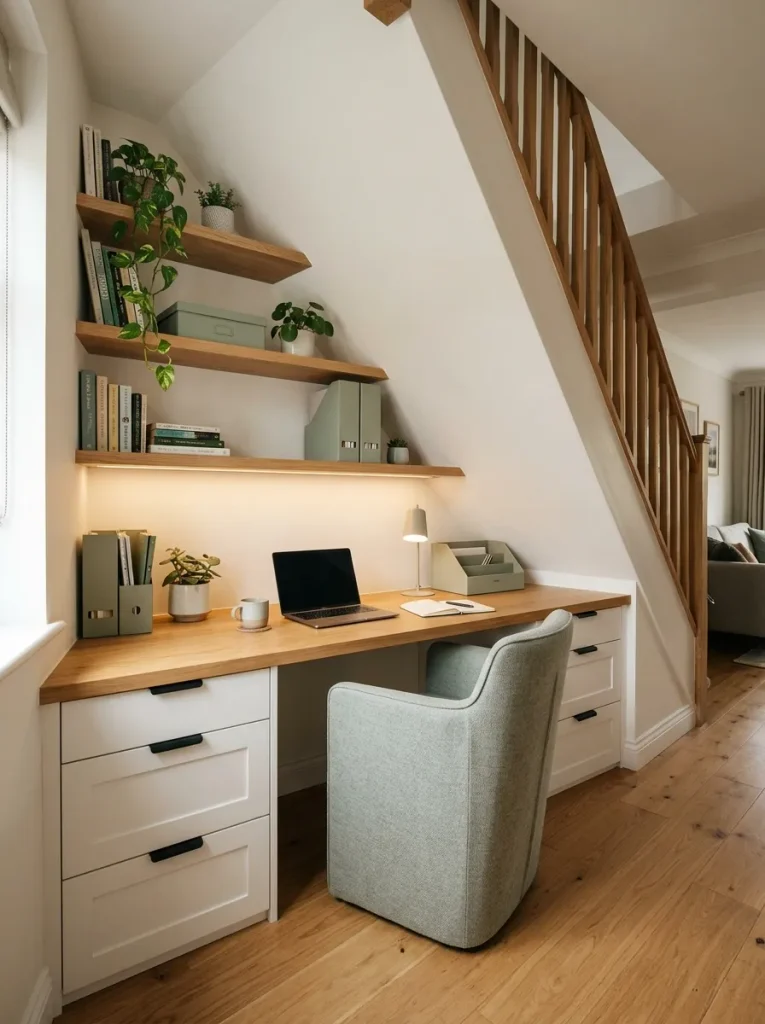
- Measure the usable area: Check the height, width and depth at the exact spot where the desk and chair will sit.
- Fit the desk to the slope: Use a custom-cut desktop or modular furniture that accommodates the changing ceiling height.
- Store supplies vertically: Install shelves in the taller section and use drawers beneath the work surface.
- Plan task lighting: Add a focused desk lamp or suitable integrated lighting to compensate for limited daylight.
- Keep the walkway clear: Position the chair and storage so people can still move safely through the surrounding area.
An under-stair office can turn an awkward part of the home into a useful workstation. The tallest section usually works best for the chair and computer, while lower areas can hold drawers or closed storage. Check headroom before committing to a permanent installation and make sure electrical outlets and cable routes are accessible without creating trip hazards.
Coastal Home Office
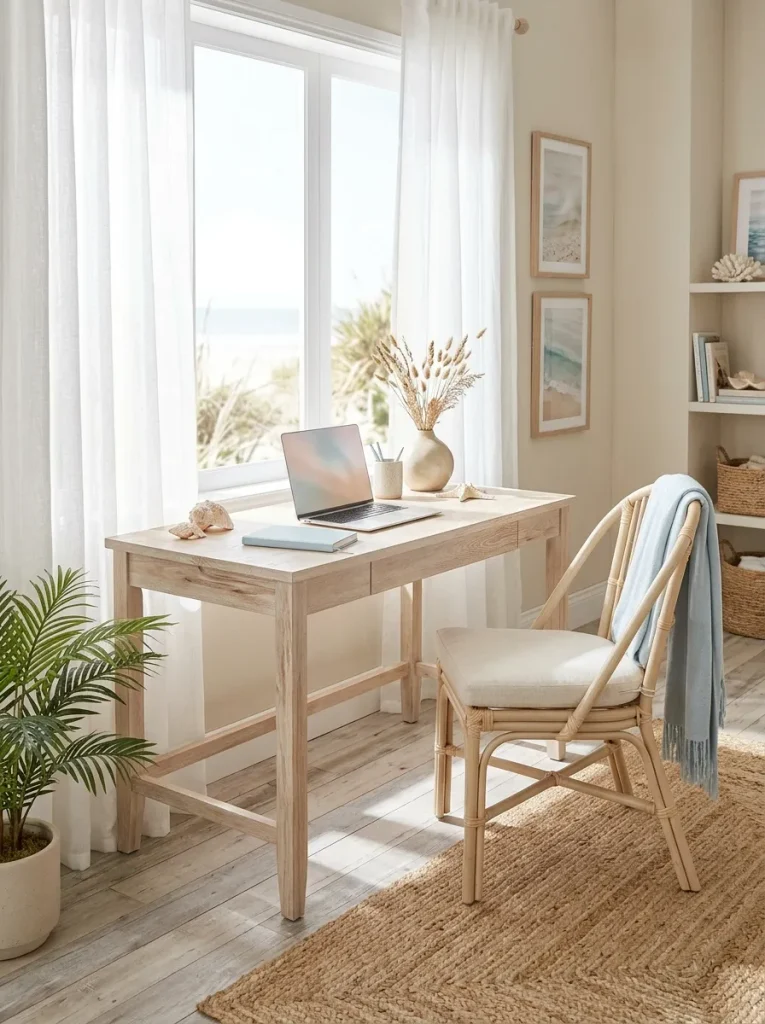
Cost: Low to moderate, depending on furniture and accessories.
Time: One afternoon to refresh an existing workspace.
Skill Level: Beginner-friendly.
Best For: Bright rooms, relaxed interiors and people who enjoy light coastal colors.
Coastal styling creates an airy workspace through pale colors, natural textures and plenty of light. Begin with white or light wood furniture, then introduce soft blue through a desk mat, framed print or storage box. Keep seaside decorations understated so the room feels sophisticated rather than themed. A woven basket can provide practical storage while reinforcing the relaxed coastal look.
Industrial Loft Workspace

A loft-inspired workspace combines sturdy materials with practical, open storage. Start with a wood desktop and black metal frame, then add shelves for books, office supplies and a few decorative objects. If you do not have exposed brick, a simple textured wall or muted gray paint can suggest the same aesthetic without major renovations.
Lighting deserves extra attention in rooms with dark finishes. Combine daylight with a focused task lamp and keep the monitor positioned to reduce reflections. Use cable clips beneath the desk to preserve the clean industrial look. A few strong materials and well-planned storage can create the style without making the workspace feel crowded.
Hidden Office Cabinet
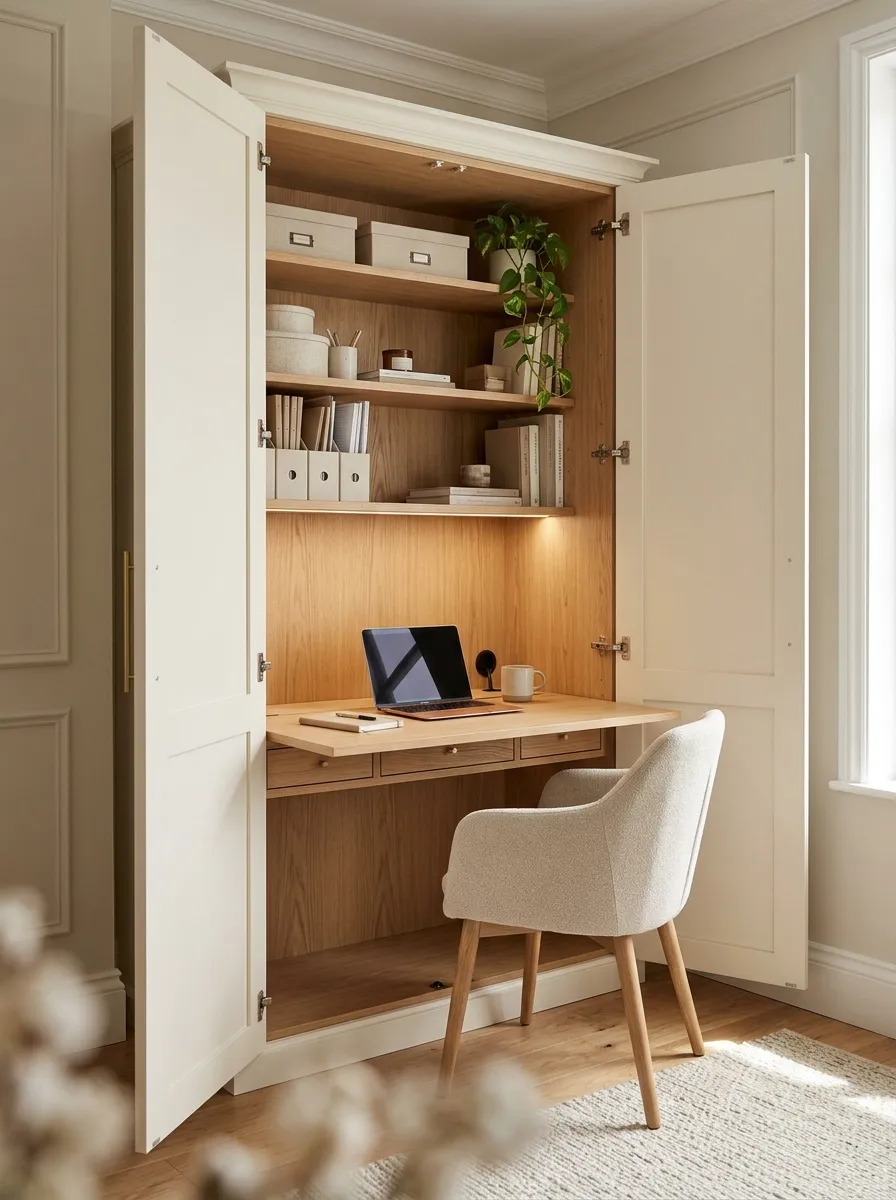
DO:
- Measure the cabinet interior to confirm the desktop accommodates your laptop and essential supplies.
- Check that the doors and work surface open fully without obstructing nearby furniture.
- Add a task light and accessible power source suitable for your equipment.
- Use small drawers or labeled containers to keep supplies organized.
DON’T:
- Close the cabinet around equipment that is still producing significant heat.
- Choose a work surface that leaves insufficient legroom.
- Route power cables through sharp edges or pinch points.
- Store heavy objects on shelves that are not designed to support their weight.
A hidden office cabinet is useful when your workspace shares a living room, bedroom or multipurpose area. Close the doors at the end of the workday to conceal equipment and create a cleaner visual environment. Before buying or building one, check ventilation, electrical access and ergonomic requirements. A cabinet should conceal the office when it is not in use without making daily work uncomfortable.
Art Deco Home Office
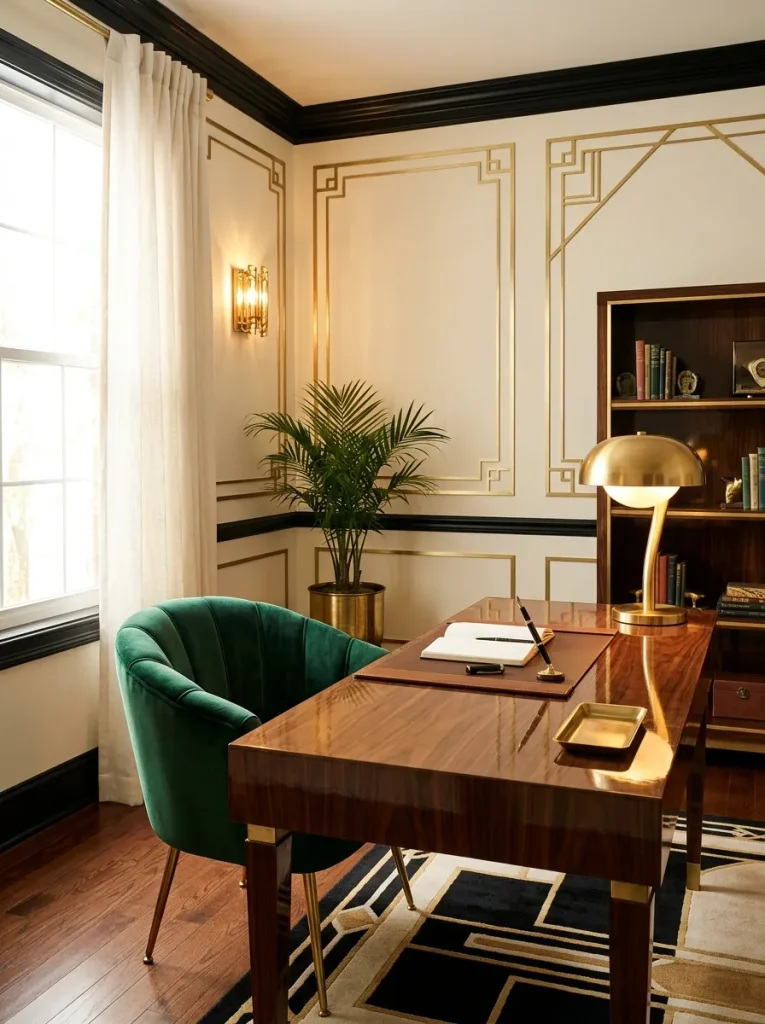
Art Deco style brings bold shapes and luxurious finishes into a practical workspace. Start with a desk featuring clean geometric lines, then add brass accessories, a patterned frame or a velvet chair in emerald or navy. Keep the main work surface relatively simple so decorative details do not interfere with everyday tasks.
You do not need expensive furniture to achieve the look. A gold-finish lamp, a geometric print and one rich accent color can establish the aesthetic on a modest budget. Balance shiny surfaces with matte finishes and choose a chair that provides proper support during longer sessions. The result feels distinctive without sacrificing comfort.
Attic Home Office
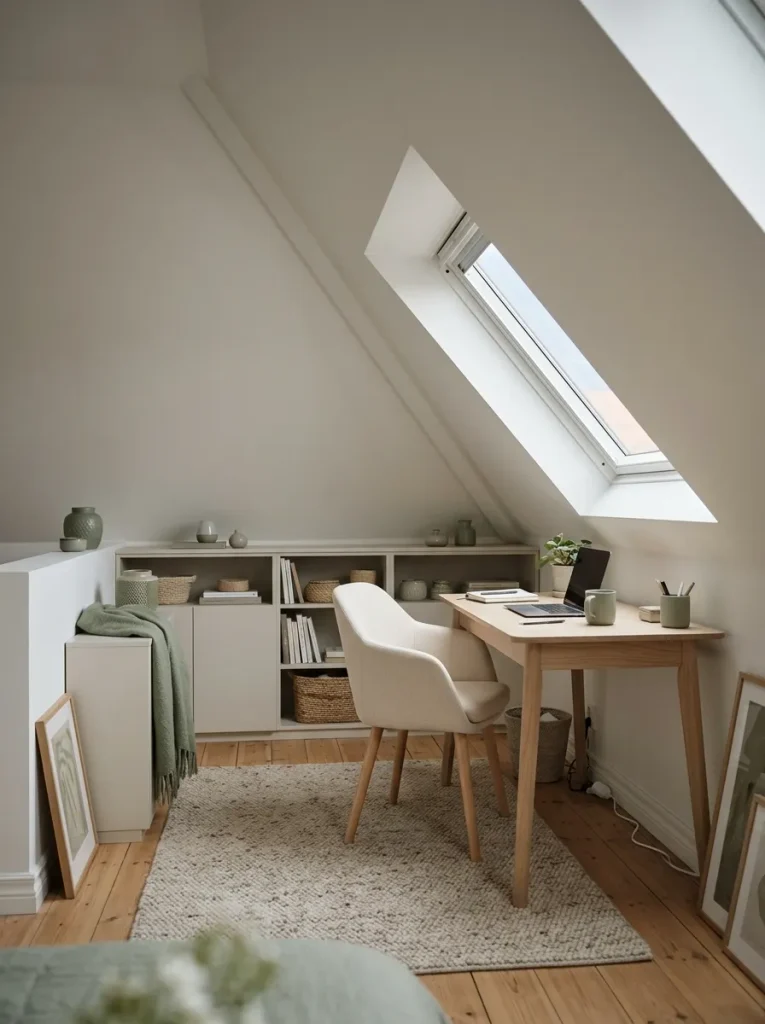
Cost: Moderate, depending on existing furniture and attic modifications.
Time: One weekend for furniture placement and basic organization.
Skill Level: Beginner-friendly for styling, with professional help potentially needed for structural or electrical work.
Best For: Homes with unused attic space and people who want a separate work area.
An attic can become a comfortable office when the desk fits the room’s unusual angles. Place low storage beneath the sloping ceiling and reserve the tallest area for your chair and movement. A skylight can bring in valuable daylight, but position the monitor to reduce glare and consider blinds for bright afternoons.
Temperature and ventilation are important in attic workspaces, which can become hot or cold more quickly than other rooms. Check insulation, lighting, electrical access and safe movement before investing in furniture. Use a compact desk and a supportive chair to make the most of the available floor space without crowding the room.
Personalized Gallery Office
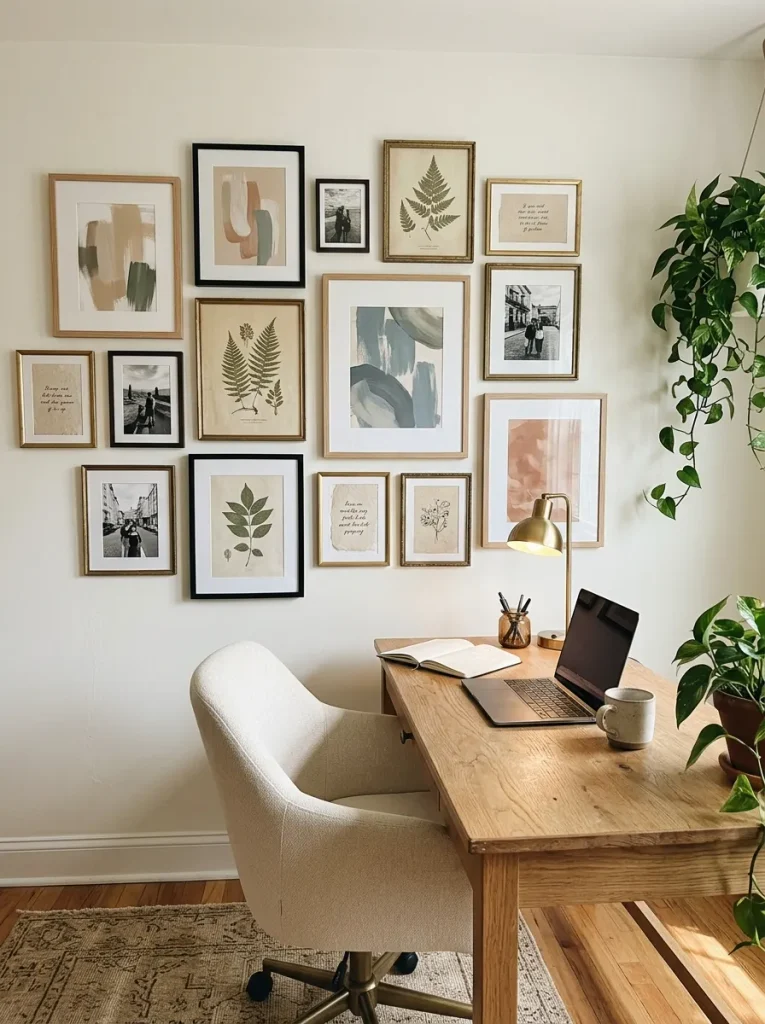
- Choose a color palette: Select two or three recurring colors from your artwork to keep the gallery wall visually connected.
- Arrange frames before hanging: Lay the pieces on the floor or use paper templates to test spacing and composition.
- Mix sizes thoughtfully: Combine one larger focal print with smaller photographs or illustrations.
- Hang artwork at a comfortable height: Keep the main pieces visible from your seated position without crowding the monitor.
- Leave the desk uncluttered: Let the wall provide the visual interest while your work surface remains practical.
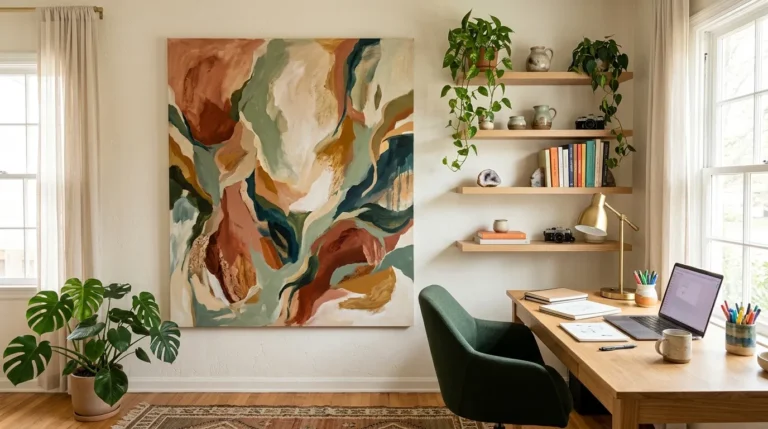
A gallery wall can make a home office feel personal and motivating without requiring a full room makeover. Include artwork that reflects your interests, meaningful photographs or prints that help establish the mood you want for your workday. Keep the arrangement balanced and secure, especially above your desk. When your tastes change, swapping a few prints is an easy way to refresh the space.
Conclusion
Creating a workspace you love doesn’t require a large room or an expensive makeover. The right furniture, thoughtful lighting and simple organization can make even the smallest corner more comfortable and productive.
These 33 Home Office Ideas offer inspiration for every style, from cozy farmhouse spaces to sleek modern desks and creative, personalized offices. Start with one change that solves your biggest challenge, then build your setup around the way you work best.
Save your favorite ideas on Pinterest, try a setup that fits your space and share this article with someone who needs workspace inspiration. Your ideal office can start with one small, thoughtful change.