Small Home Office Ideas: 24 Compact Setups That Work
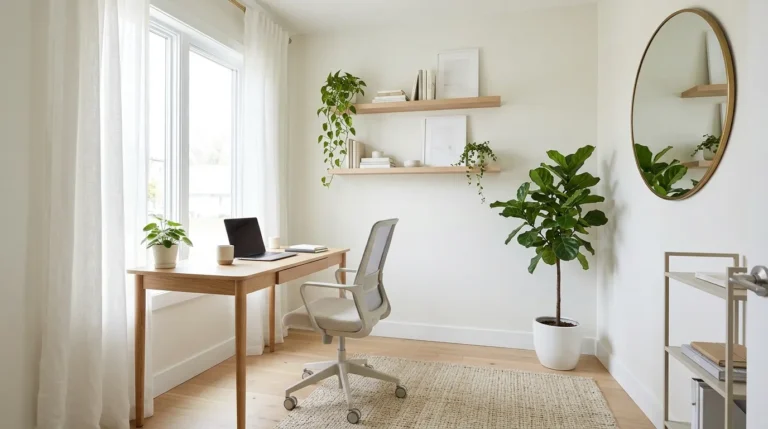
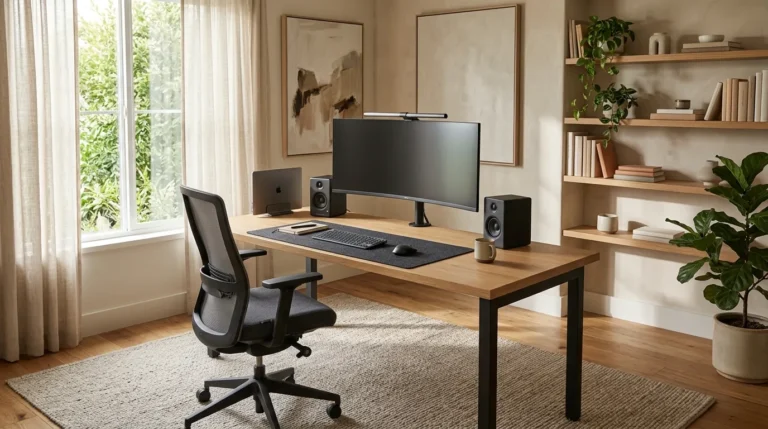
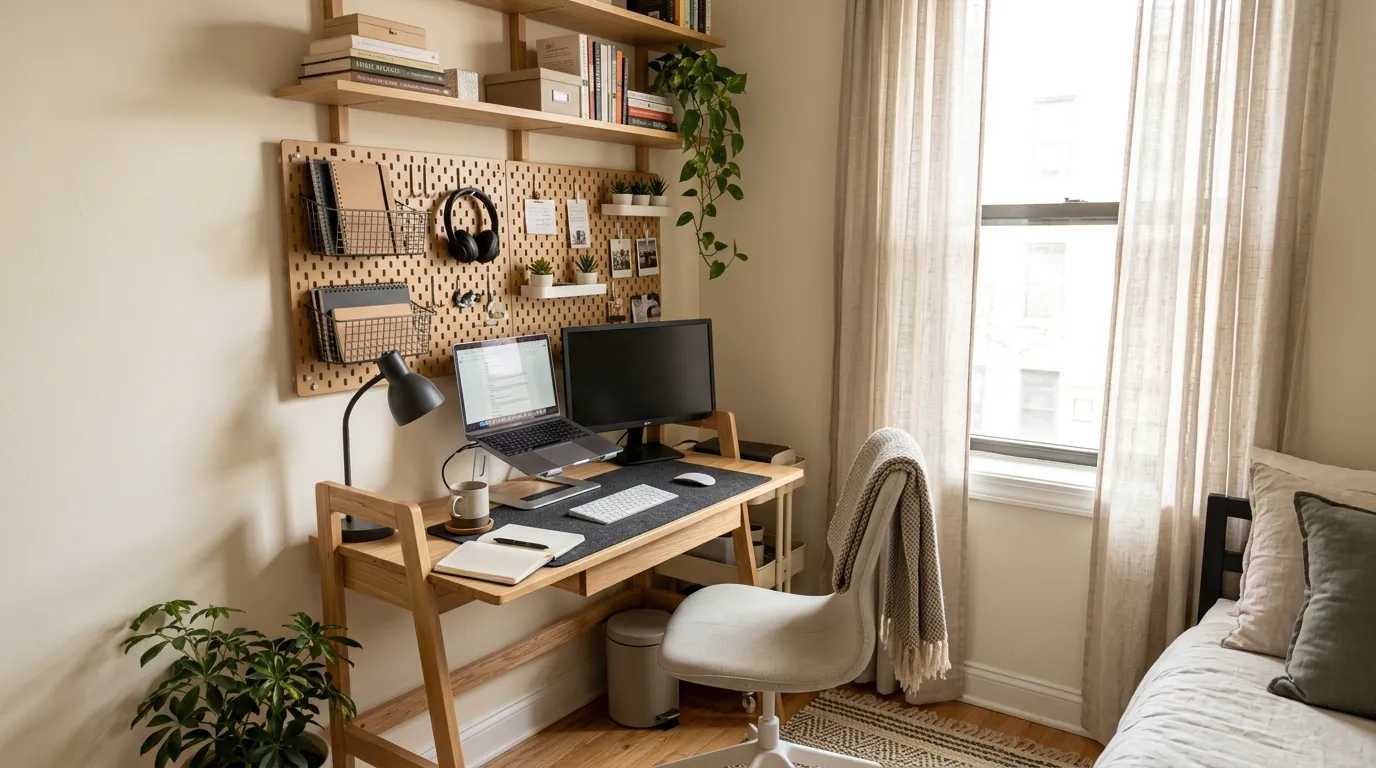
These Small Home Office Ideas will help you make the most of limited space without making your room feel crowded. Whether you’re working from your bedroom, living room or a compact apartment, you’ll find practical setups that combine function with beautiful design.
From floating desks and vertical shelves to cozy office nooks and clever closet conversions, each idea offers inspiration you can adapt to your home and budget. I’ve noticed that keeping a workspace organized and choosing furniture that fits the room can make everyday tasks feel much more manageable.
Explore these 24 compact setups to discover ways to organize your essentials, improve comfort,and create a workspace you’ll enjoy using. You don’t need a complete room makeover to get started. Sometimes, one thoughtful change is all it takes.
Floating Wall Desk
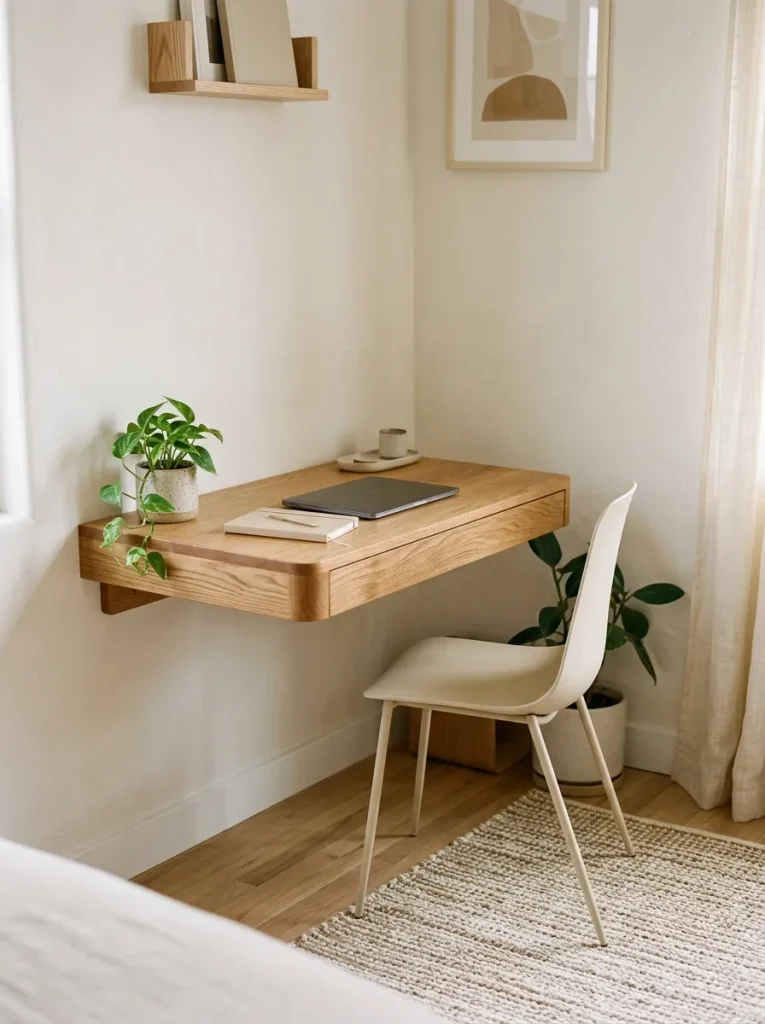
A floating desk gives you a dedicated workspace without taking up valuable floor space. Mounted directly to the wall, it creates a clean, open look that works especially well in bedrooms, studio apartments or unused hallway corners. Choose a sturdy design with enough depth for your laptop and everyday essentials.
Keep the desktop simple with a small desk lamp, a pen holder and one decorative accent. Before installing it, check the wall structure and follow the mounting instructions carefully. The result is a practical work area that feels intentional rather than squeezed into an already crowded room.
Window Side Workspace
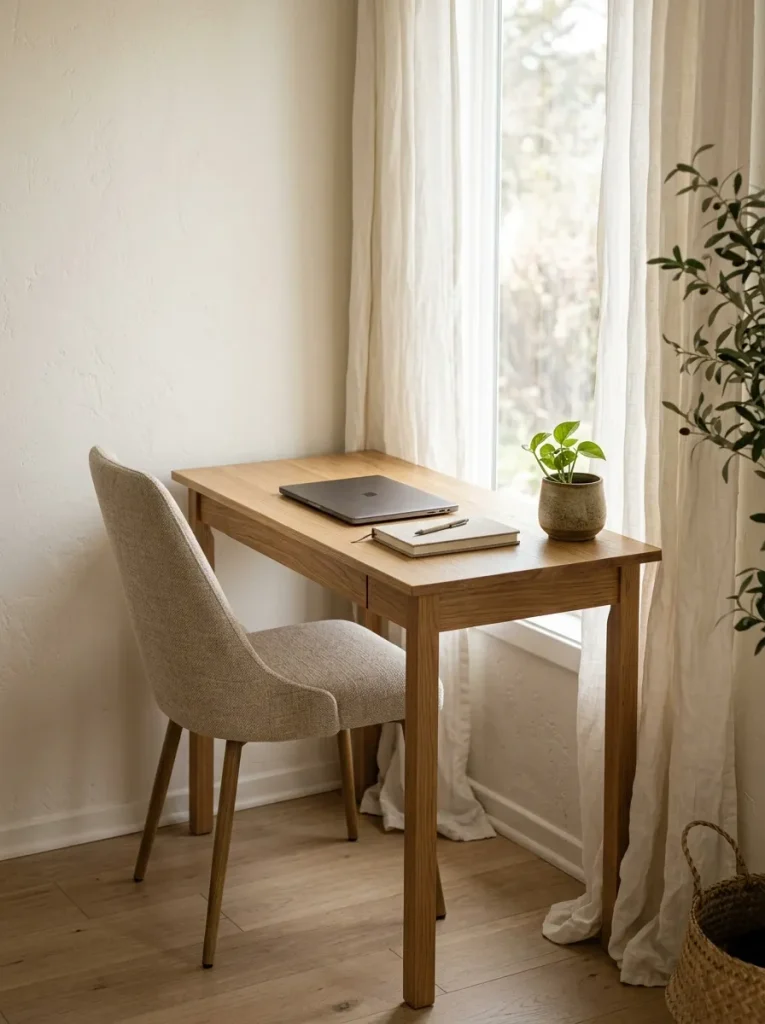
- Position the desk near the window. Natural daylight can make reading and computer work more comfortable during the day.
- Choose a narrow tabletop. A compact desk leaves room for movement without blocking the window.
- Hang lightweight curtains. Sheer or linen panels soften harsh sunlight while keeping the corner bright.
- Add a comfortable chair. Select a model that fits beneath the desk when not in use.
- Control screen glare. Adjust the monitor or laptop angle if direct sunlight makes the display difficult to see.
A window-side workstation makes a small room feel brighter and more inviting. Keep frequently used supplies within arm’s reach, but avoid covering the entire sill with decorations. If the window receives strong afternoon sun, add an adjustable blind so the workspace stays comfortable throughout the day.
Corner Desk Setup
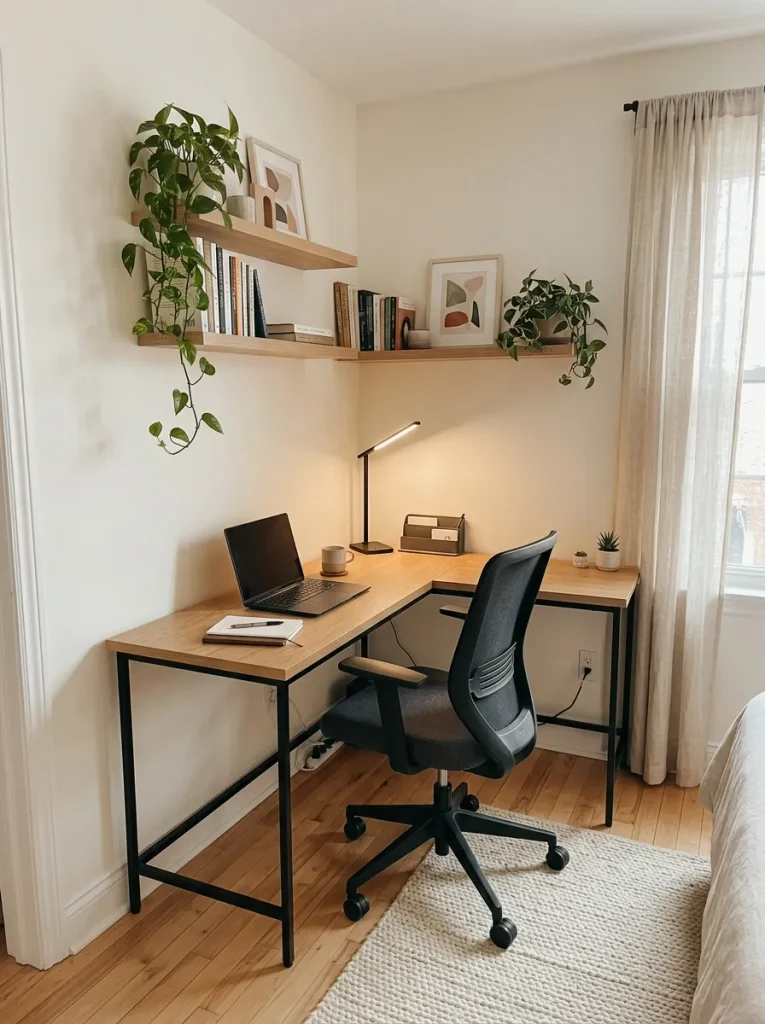
Quick Tip:
Measure both walls before purchasing a corner desk and leave enough clearance for the chair to slide out comfortably. Choose a design with built-in drawers or a raised shelf if you need extra storage without adding another piece of furniture.
A corner workstation turns an often-wasted area into a useful place to focus. Keep the main desktop reserved for your computer and current task, then place notebooks or small accessories along the shorter side. This arrangement separates work essentials from decorative items while preserving valuable floor space. It works particularly well in bedrooms and shared living areas.
Wall Mounted Shelves
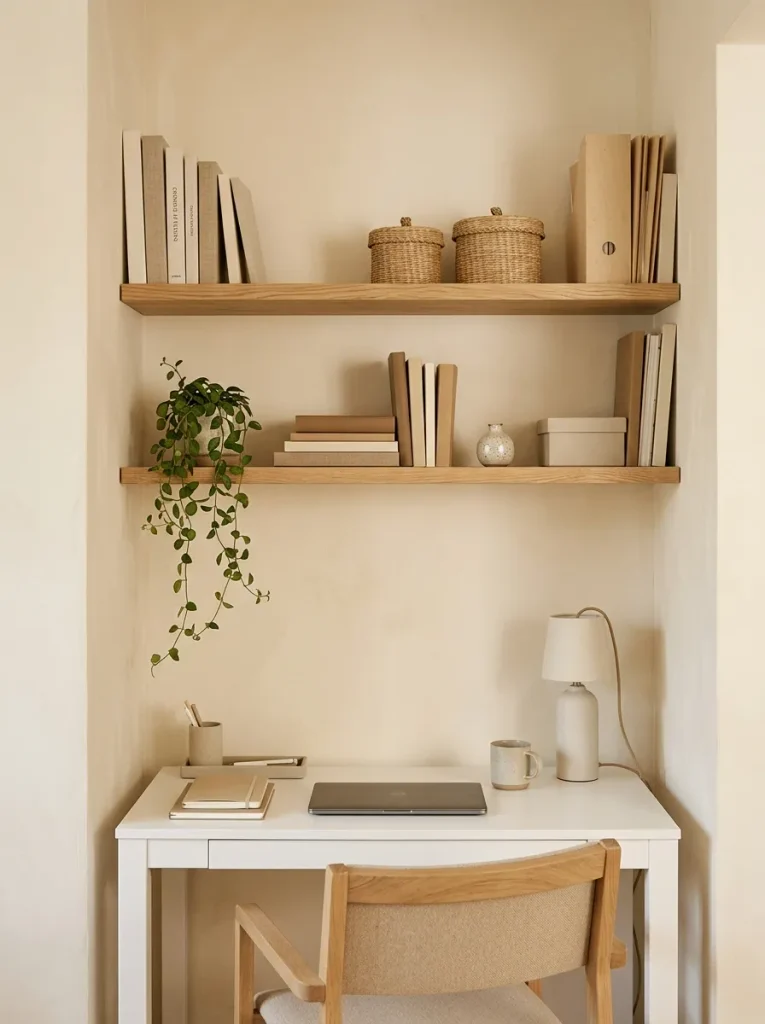
BEFORE
A small desk can quickly become crowded with notebooks, chargers, stationery and other everyday supplies. When everything sits on the desktop, there is little room left to work comfortably.
AFTER
Two or three wall-mounted shelves move those items upward while keeping them within easy reach. The desk stays clearer and the entire corner looks more organized without sacrificing floor space.
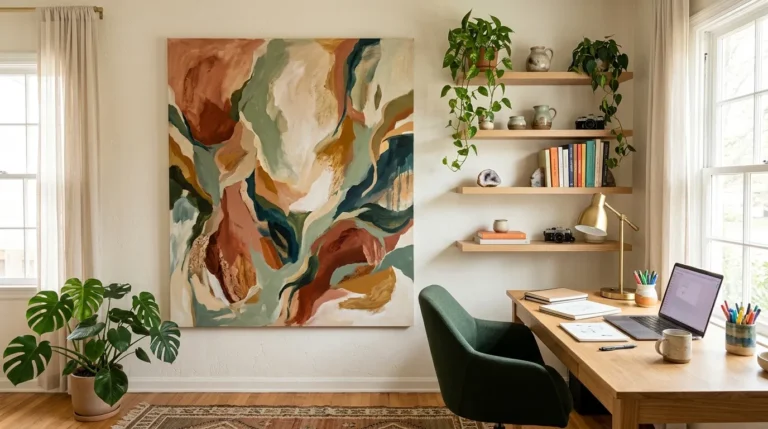
Wall shelves work best when each level has a purpose. Keep frequently used supplies on the lowest shelf and reserve higher shelves for books or decorative pieces. Use sturdy brackets and suitable wall fixings, especially when storing heavier items. A consistent mix of baskets and open space keeps the arrangement practical rather than cluttered.
Slim Desk With Drawers
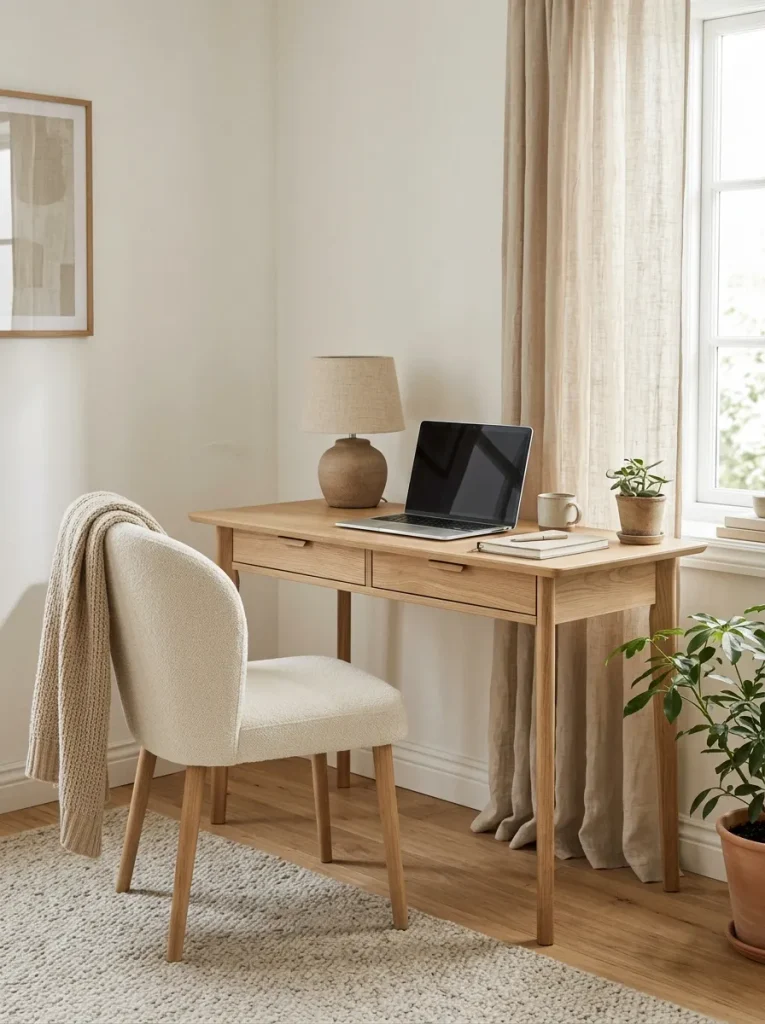
- Measure the available width. Choose a desk that leaves enough space to walk past and pull out the chair.
- Check the drawer depth. Make sure the drawers can hold notebooks, cables, pens and other daily essentials.
- Keep the desktop simple. Place only your computer, a lamp and the items needed for your current task.
- Organize each drawer. Use small dividers to separate stationery, chargers and paperwork.
- Slide the chair underneath. A compact chair that fits beneath the desktop helps free up floor space after work.
Built-in drawers reduce the need for extra storage furniture, making this setup useful for bedrooms and multipurpose rooms. In my experience, assigning a specific place to small accessories also makes daily tidying much easier. Look for smooth drawer movement and enough legroom before buying, since a stylish desk is only useful when it feels comfortable to work at.
Fold Down Wall Desk
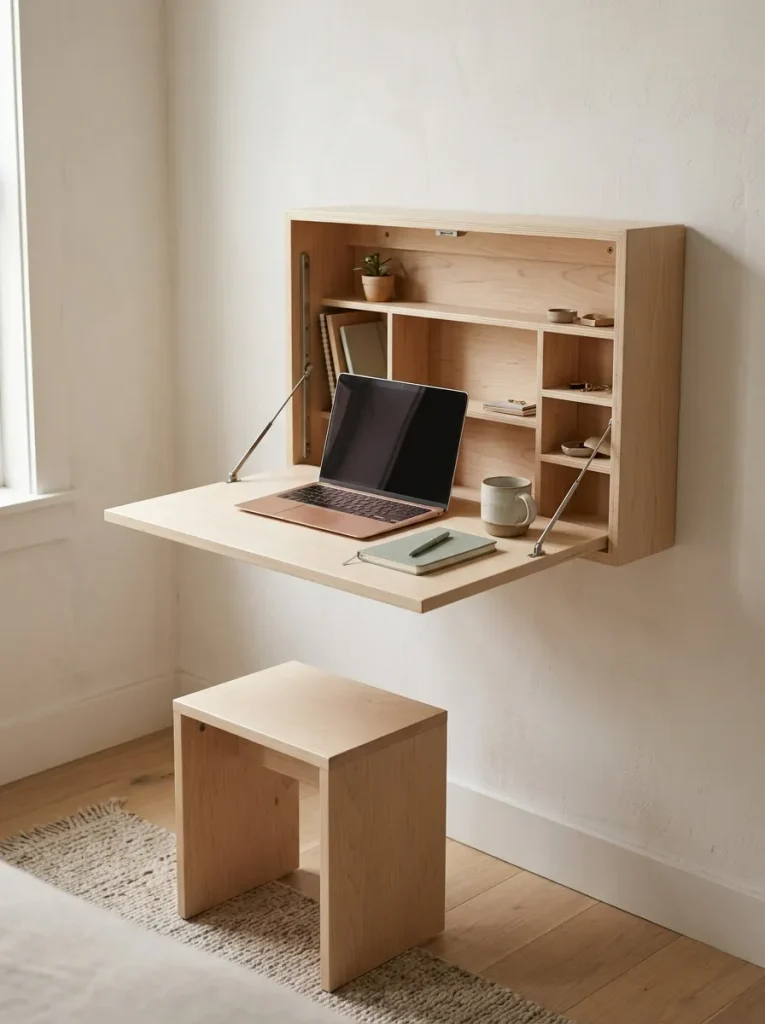
| Feature | Option A: Fixed Desk | Option B: Fold Down Desk |
| Floor space | Occupies space permanently | Frees floor space when folded |
| Work surface | Always available | Available when opened |
| Storage | Often includes drawers | May include shallow compartments |
| Best use | Frequent, longer work sessions | Occasional work in tight rooms |
A fold-down desk is especially useful when your office shares space with a bedroom, dining area,or living room. Open it when you need to work, then fold it away to reclaim the area. Choose a model with a secure locking mechanism and install it according to the manufacturer’s instructions. Keep the surrounding wall clear so the desk can open fully without hitting furniture.
Built In Desk Nook
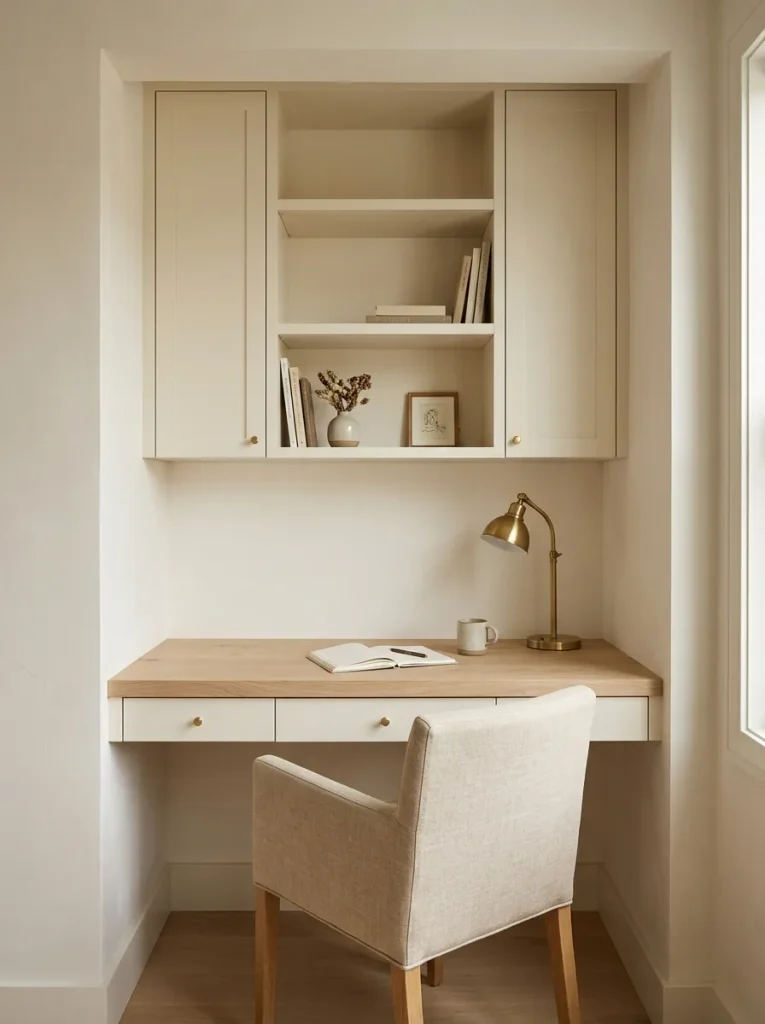
DO:
- Measure the alcove carefully before choosing or building the desktop.
- Use the full available width for a practical work surface.
- Add shallow drawers or cabinets to keep supplies organized.
- Install task lighting if the nook receives limited daylight.
DON’T:
- Choose a desktop so deep that it blocks the walkway.
- Fill every shelf with decorative objects.
- Ignore ventilation around computers and other electronics.
- Forget to plan cable access before installation.
A built-in nook makes an awkward recess feel like a dedicated office rather than wasted space. Matching the desk finish to nearby cabinetry creates a cohesive appearance, while a contrasting chair adds personality. Keep the most-used supplies close at hand and leave enough legroom to sit comfortably during longer work sessions.
Vertical Storage Station
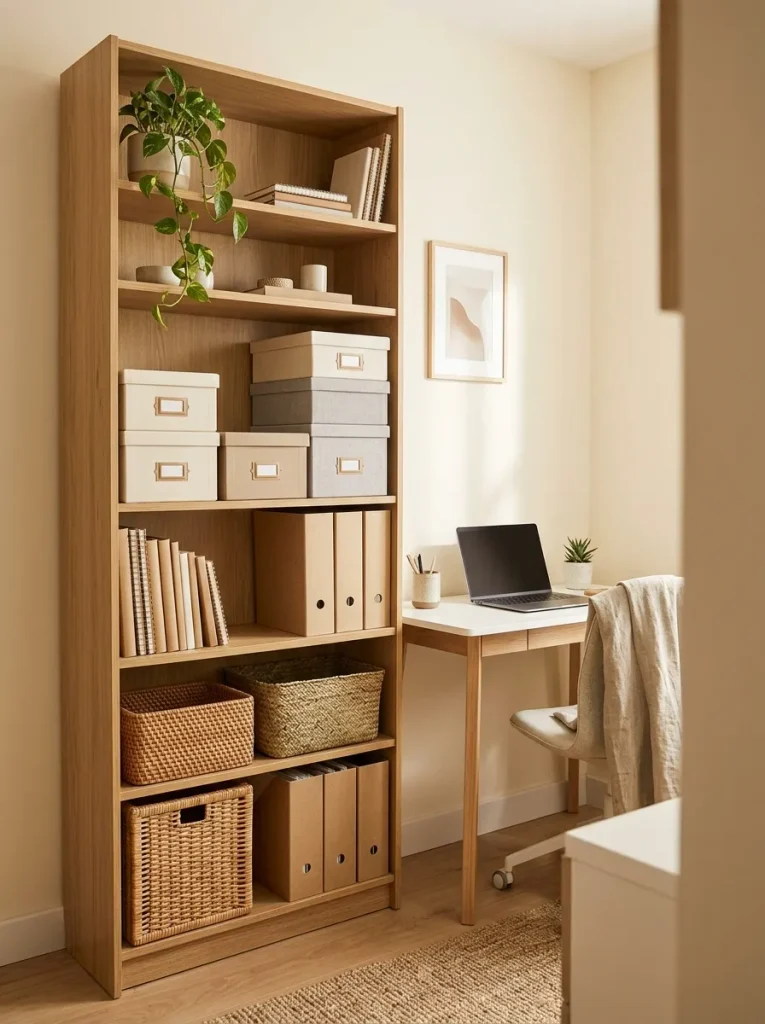
Storage Capacity: High for its footprint
Best For: Small bedrooms and apartment offices
Budget: Varies by shelf material and size
Skill Level: Beginner-friendly with a ready-made unit
Vertical storage helps you keep more supplies without spreading furniture across the room. Place a tall shelf beside or behind your desk, with everyday essentials on the middle shelves and rarely used items higher up. Store loose cables and small accessories in matching boxes to reduce visual clutter. Secure tall shelving to the wall when required by the manufacturer, especially in homes with children or pets.
Minimalist Laptop Station
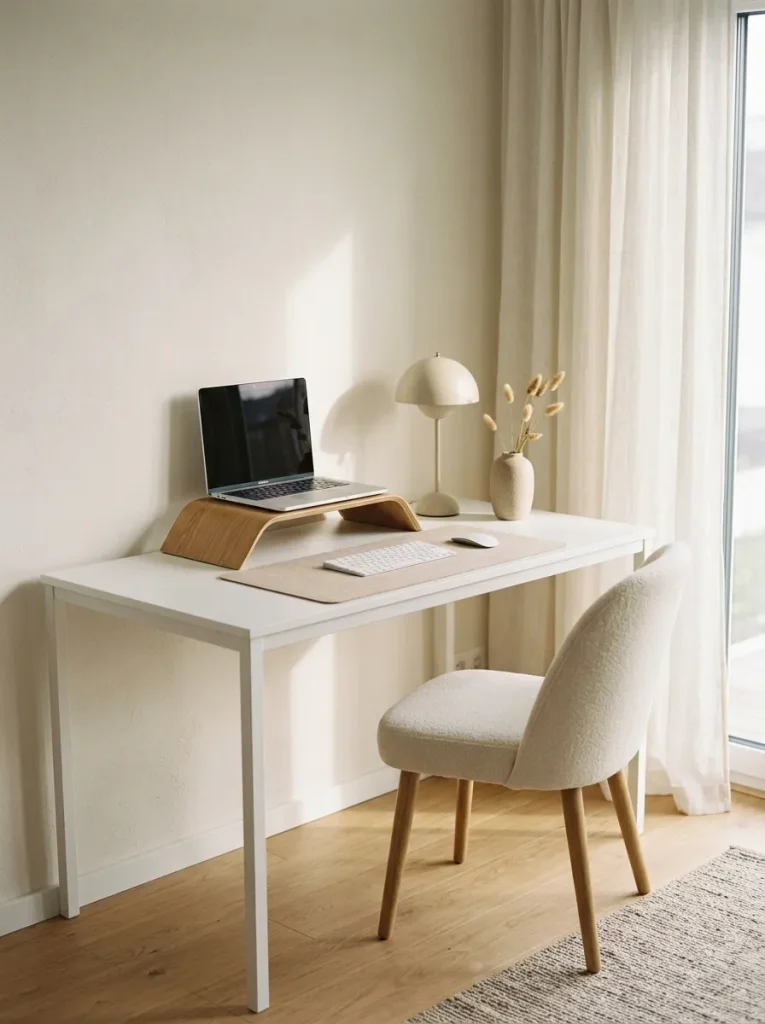
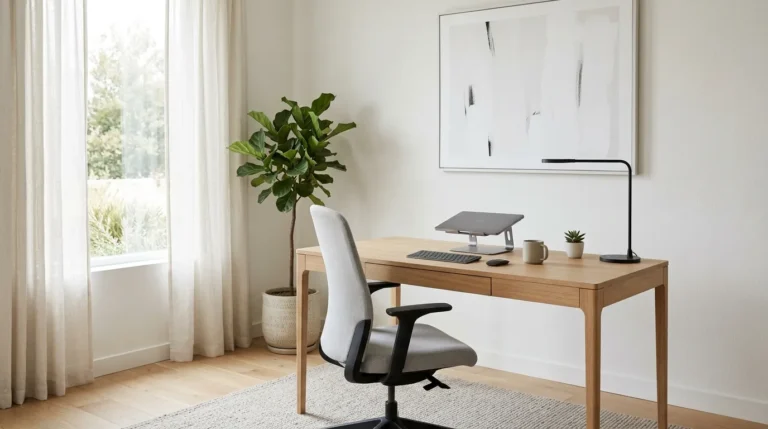
A clear desktop can make even the smallest office feel more spacious. Start with the essentials: your laptop, a comfortable chair, suitable lighting and one small organizer for daily supplies. Keep decorative items limited so they do not compete with your work area.
For regular computer use, check that your screen sits at a comfortable height and your shoulders remain relaxed while typing. A separate keyboard and mouse can help when using a raised laptop. This simple arrangement suits shared rooms, small apartments and anyone who prefers a calm workspace with fewer distractions.
Desk Beside Wardrobe
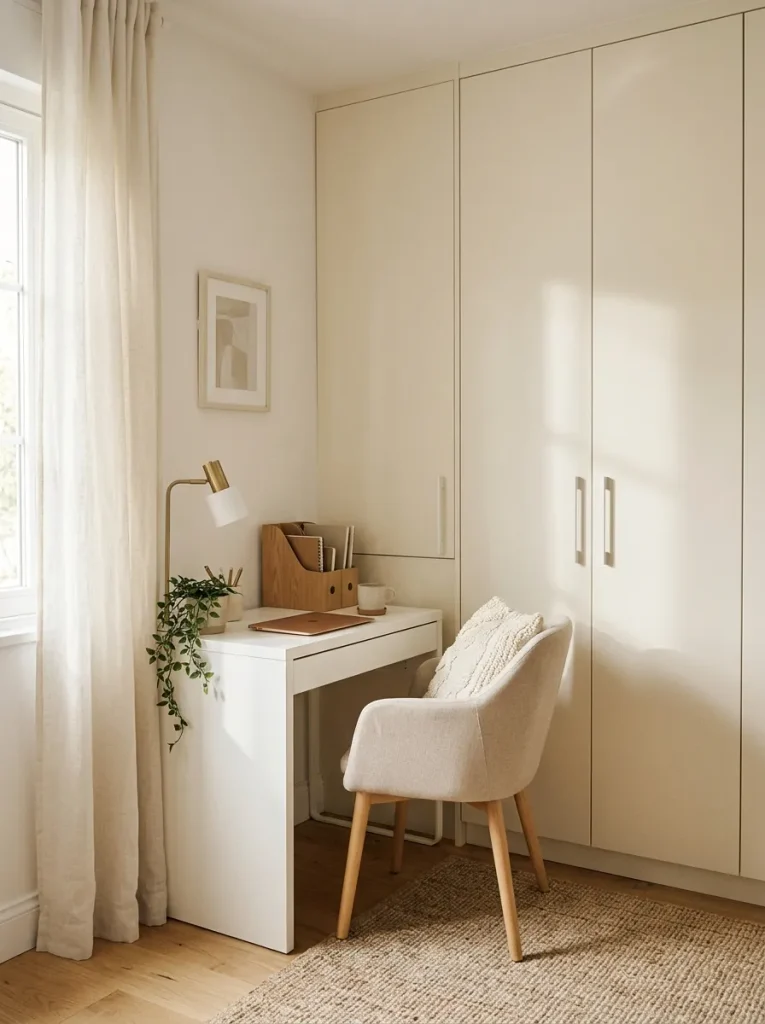
- Position the desk beside the wardrobe where doors and drawers can still open fully.
- Choose a narrow tabletop that leaves enough room to move around comfortably.
- Match the desk finish to the wardrobe for a coordinated appearance.
- Use a small desktop organizer for pens, notebooks and charging cables.
- Add a wall-mounted lamp if the wardrobe blocks natural light.
Combining a desk with existing bedroom furniture saves space and reduces the need for another large storage unit. Keep the work area visually separate by placing a small desk mat beneath your laptop and accessories. Before settling on the layout, check the chair clearance and make sure wardrobe doors will not hit the desk when opened.
Under Stair Workspace
Quick Tip:
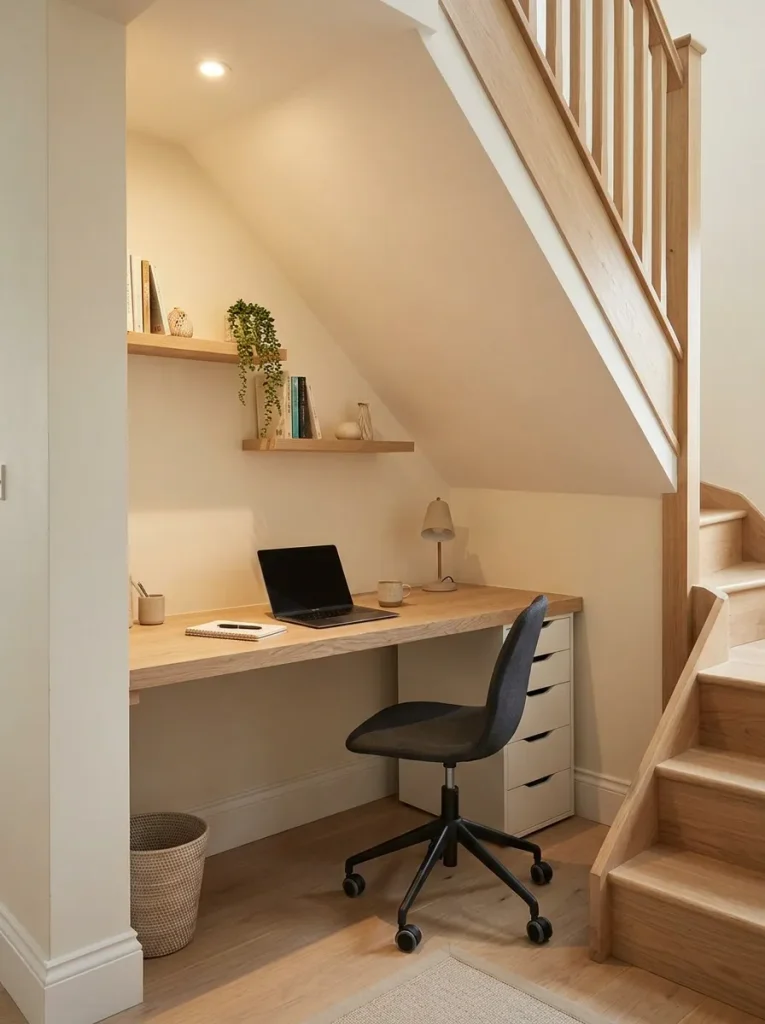
Measure the ceiling height at the front and back of the staircase before choosing your desk position. Place the chair and main working area where you have enough headroom to sit down and stand up comfortably.
An under-stair nook can turn an awkward corner into a useful work zone without taking over a bedroom or living room. Fit the desk into the widest section and use the lower end for closed storage or baskets. Good task lighting is important because staircases can block daylight. Keep cables secured and avoid placing equipment where it could be bumped by passing family members.
Compact Desk With Pegboard
BEFORE
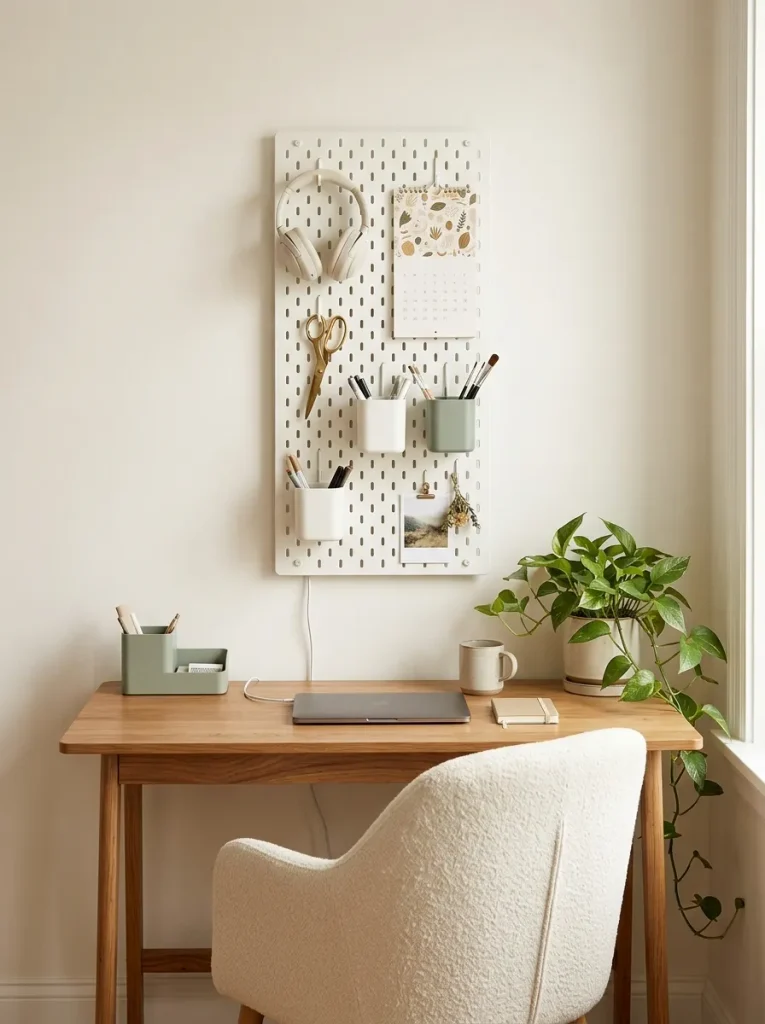
Small office supplies often spread across the desk, leaving little room for writing or using a laptop. Drawers may be unavailable and adding another cabinet can make the room feel cramped.
AFTER
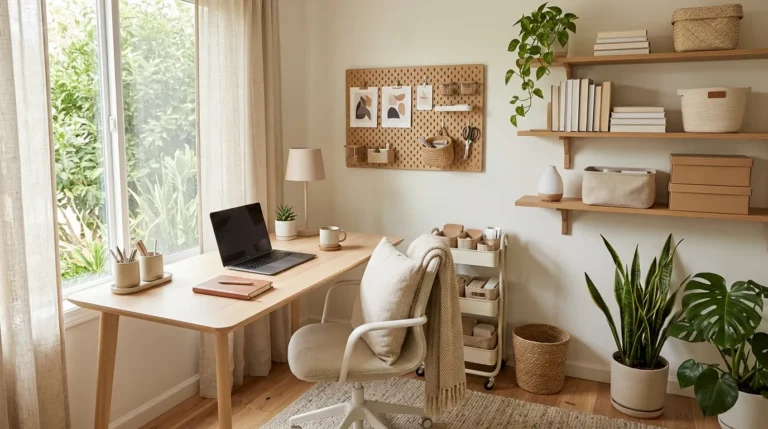
A wall-mounted pegboard keeps lightweight tools, headphones and frequently used accessories organized above the work surface. The desktop becomes clearer and items remain visible instead of disappearing into crowded drawers.
Choose a pegboard with accessories that match your actual needs rather than filling every available hole. Keep heavier items within the board manufacturer’s weight limits and mount it securely to the wall. Leave the area directly above your monitor relatively simple to reduce visual distractions while working.
Murphy Desk Setup
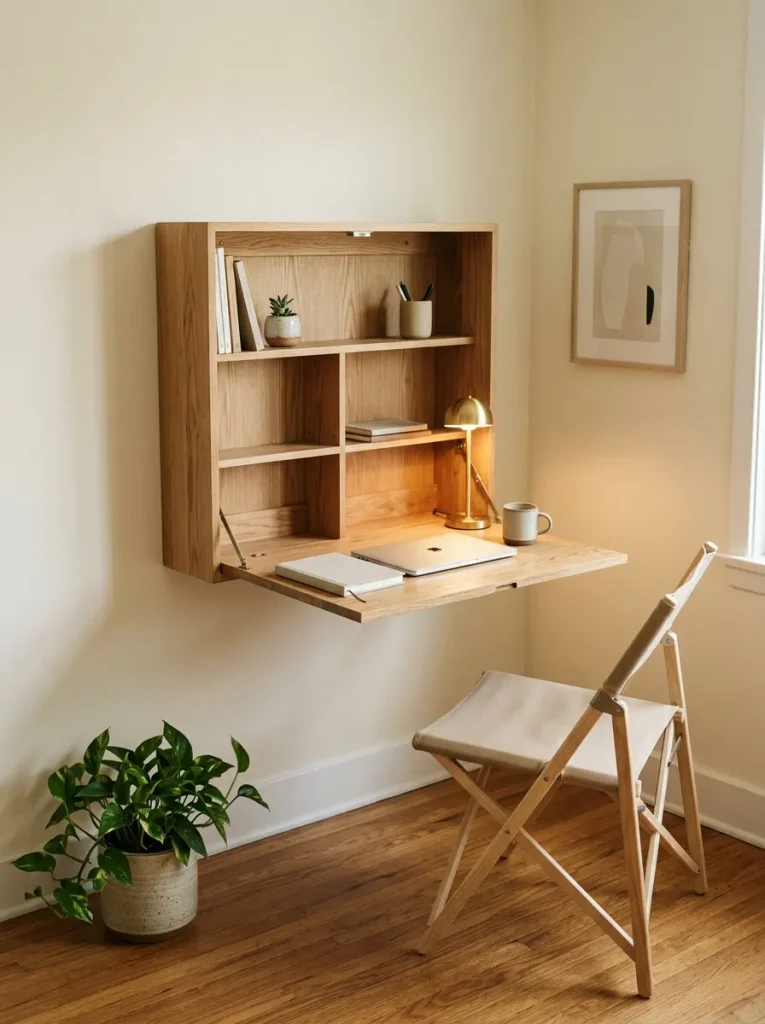
- Choose a suitable wall. Check the available width and ensure the desk can open fully without hitting nearby furniture.
- Measure the folded depth. Confirm that the closed unit leaves enough room for doors and walkways.
- Plan the storage. Select a model with small compartments for notebooks, pens and charging accessories.
- Secure the unit properly. Follow the manufacturer’s installation requirements and wall-fixing instructions.
A Murphy desk creates a functional office that can disappear when the workday ends. It is especially useful in studio apartments, guest bedrooms and multipurpose spaces where a permanent desk would feel intrusive. Keep the desktop lightweight and organized so closing the unit is quick. Check the hardware regularly and never fold the desk away with objects that could fall or become trapped.
Desk With Rolling Cart
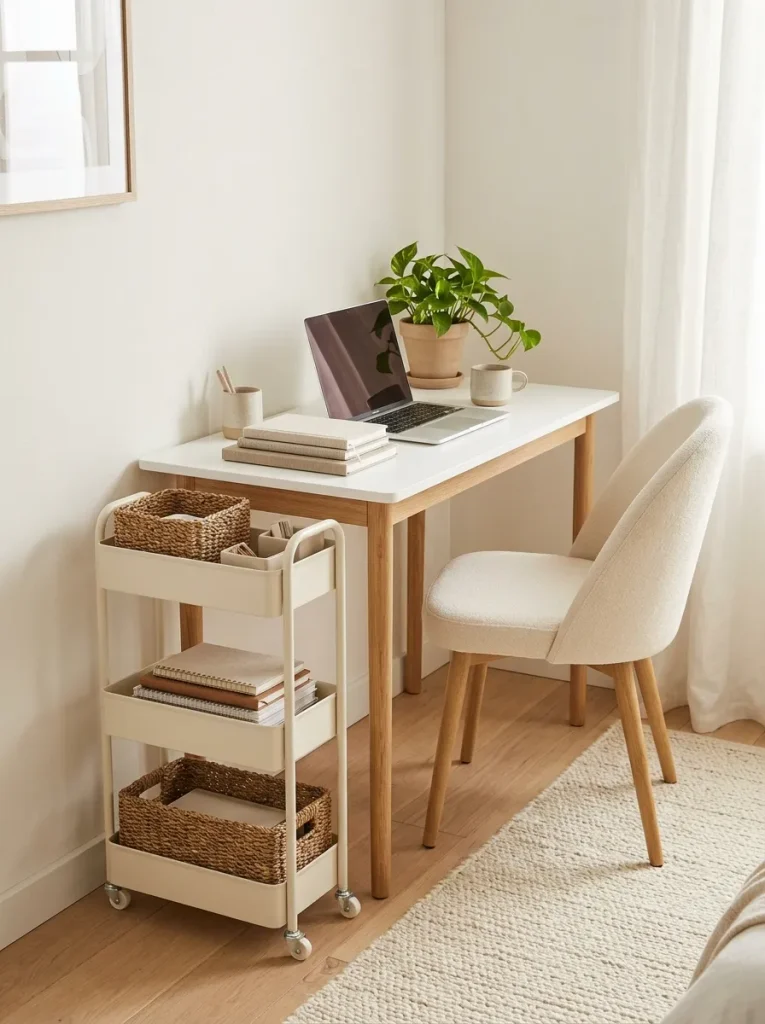
| Feature | Option A: Fixed Drawers | Option B: Rolling Cart |
| Placement | Attached to the desk | Can move around the room |
| Storage | Integrated into furniture | Separate shelves or baskets |
| Flexibility | Stays in one position | Can be moved when needed |
| Best use | Permanent office setups | Shared or changing workspaces |
A rolling cart adds storage without requiring a larger desk. Keep pens and chargers on the top tier, notebooks in the middle and less frequently used supplies on the bottom. Choose a cart that fits beneath or beside your desk and lock its wheels while working if the model allows it. This setup works well when you need to move supplies between rooms or clear the floor quickly.
Neutral Scandinavian Office
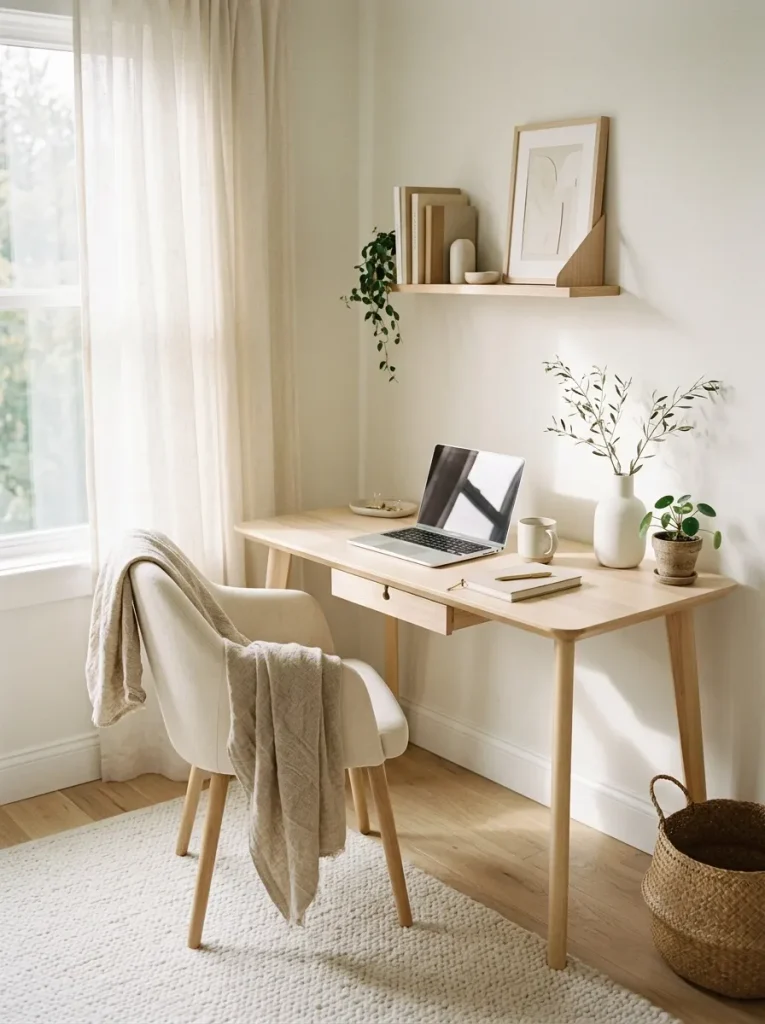
DO:
- Choose light wood and warm white furniture to keep the room visually airy.
- Add one or two natural textures, such as linen or woven storage.
- Use a simple desk lamp with comfortable task lighting.
- Keep everyday supplies in a matching organizer.
DON’T:
- Mix too many competing wood finishes.
- Cover the desktop with unnecessary decorations.
- Choose a chair based on appearance alone.
- Rely on dim decorative lighting for computer work.
A Scandinavian-inspired workspace feels calm because every object has a clear purpose. Combine a light desk with soft textiles and a small green plant for warmth without creating clutter. You do not need to replace all your furniture to achieve this look. Start with a tidy desktop, coordinated accessories and comfortable lighting, then add pieces only when they serve a practical need.
Desk Facing the Wall
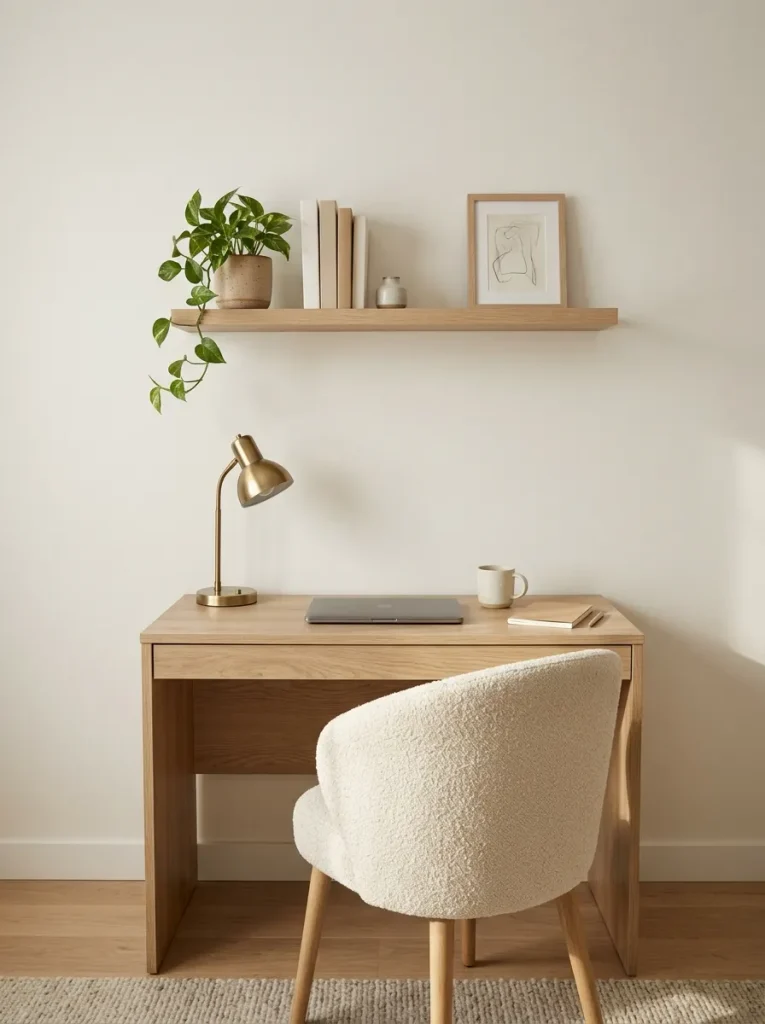
Cost: Low to moderate, depending on the desk and chair.
Time: A few hours for setup and organization.
Skill Level: Beginner-friendly.
Best For: Bedrooms, small apartments and shared living spaces.
Placing your desk against a wall creates a defined work zone without using the center of the room. It also gives you a convenient surface for mounting a small shelf or task light. Keep the desktop at a comfortable height and leave enough space for your chair. If the wall feels bare, add one small framed print or a simple pinboard without crowding the area.
Desk Behind the Sofa
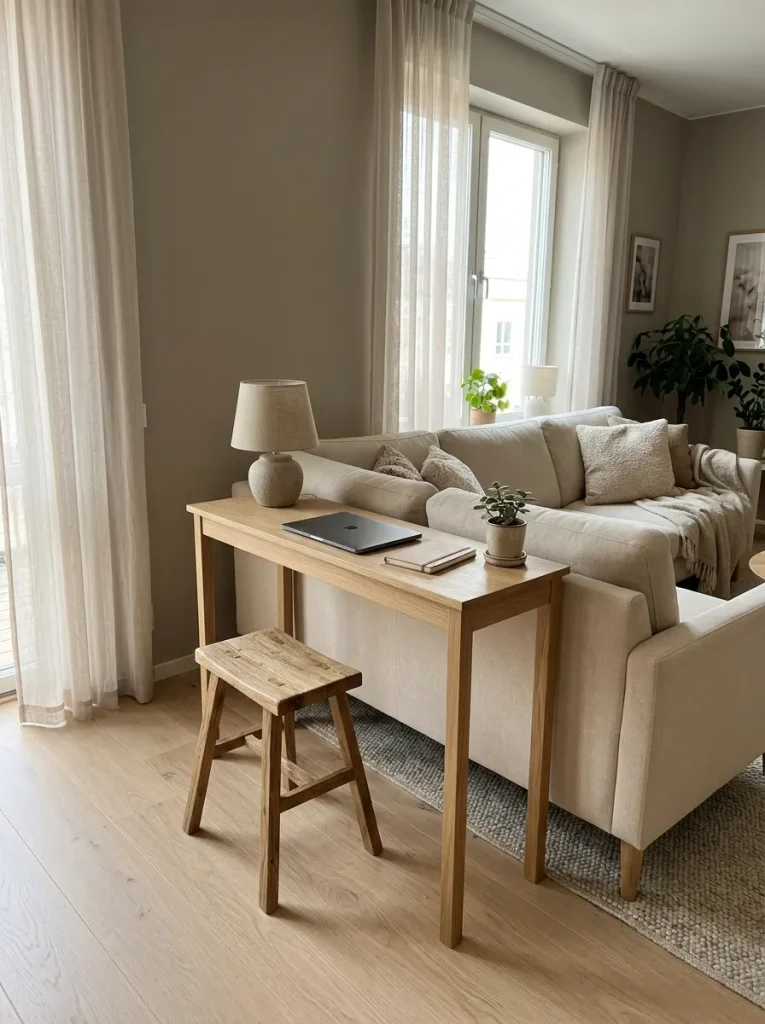
A narrow desk behind the sofa can create a useful work zone in an open-plan living room without requiring a separate office. Choose a console-style table with enough depth for your computer and writing space and make sure it does not obstruct the main walkway.
Keep the chair or stool easy to move and use a small cable organizer to prevent cords from trailing across the floor. For comfortable computer work, check that the desk height and seating position support a relaxed posture. This layout works best when the sofa sits away from the wall and there is enough clearance behind it.
Bedroom Desk Divider
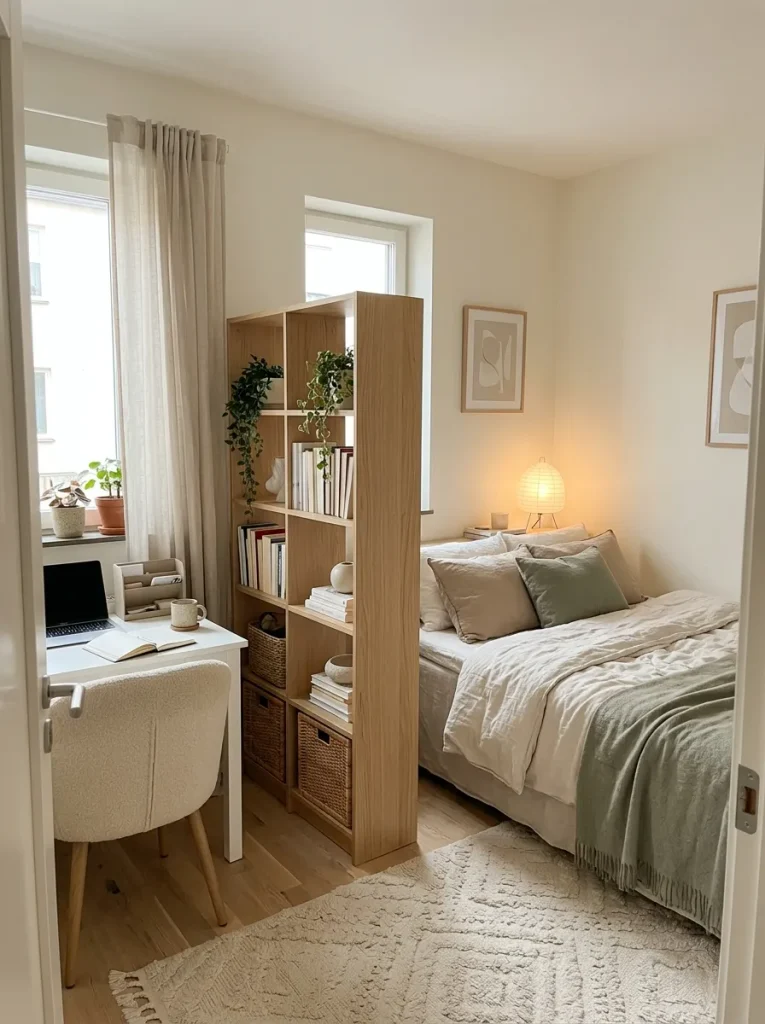
Quick Tip:
Use an open shelving unit or a narrow bookcase to separate the desk from the bed without blocking daylight. Keep the divider low or open enough to maintain an airy feeling and avoid placing heavy furniture where it narrows the route to the door.
A subtle divider helps your bedroom feel more organized by giving work and rest separate visual areas. Position the desk so the computer faces away from the bed when possible, then use matching storage baskets to keep office supplies contained. The arrangement is especially helpful in studio apartments or shared bedrooms, where a complete separate office may not be practical.
Closet Office Conversion
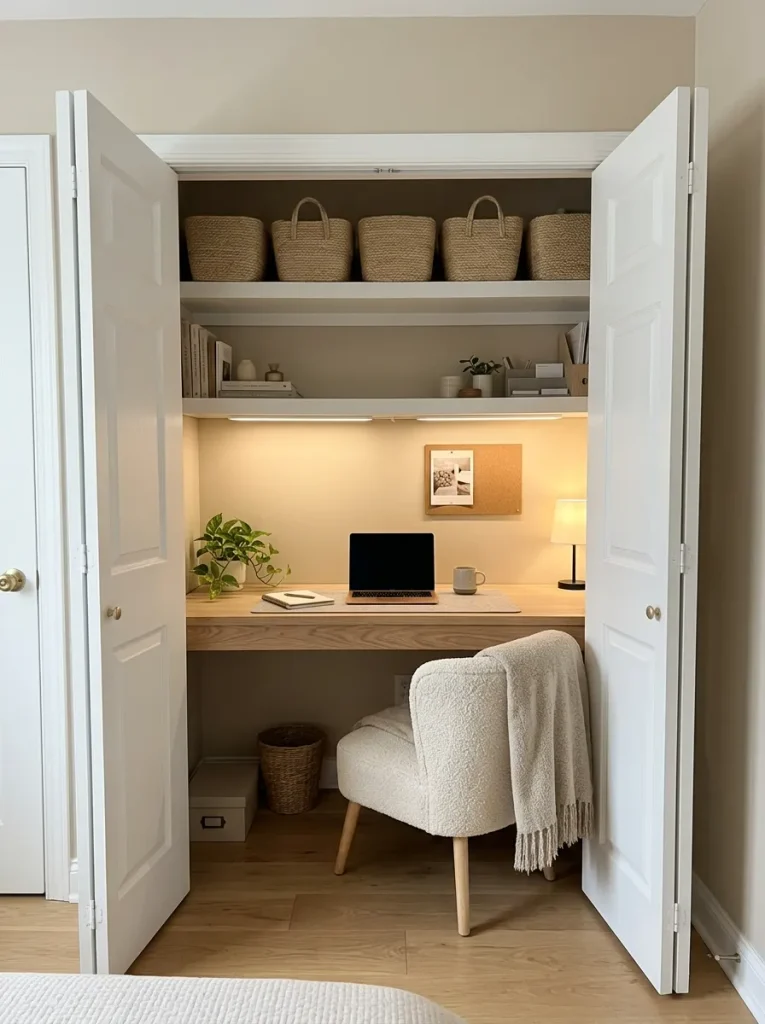
- Empty the closet first. Remove unused items and measure the available width, depth and height.
- Install a sturdy desktop. Choose a surface that accommodates your laptop and leaves enough room for comfortable typing.
- Add vertical storage. Use upper shelves for notebooks, baskets and supplies you do not need constantly.
- Plan the lighting. Fit suitable task lighting so the enclosed workspace is bright enough for computer work.
- Manage cables carefully. Keep cords organized and follow electrical safety guidance, especially in a confined space.
A closet office makes use of space that might otherwise hold forgotten belongings. Keep the chair compact enough to slide away when the workspace is not in use and leave sufficient room for your legs. If you plan to close the closet doors after working, check ventilation and heat buildup around electronic equipment before finalizing the design.
Dual Purpose Console Desk
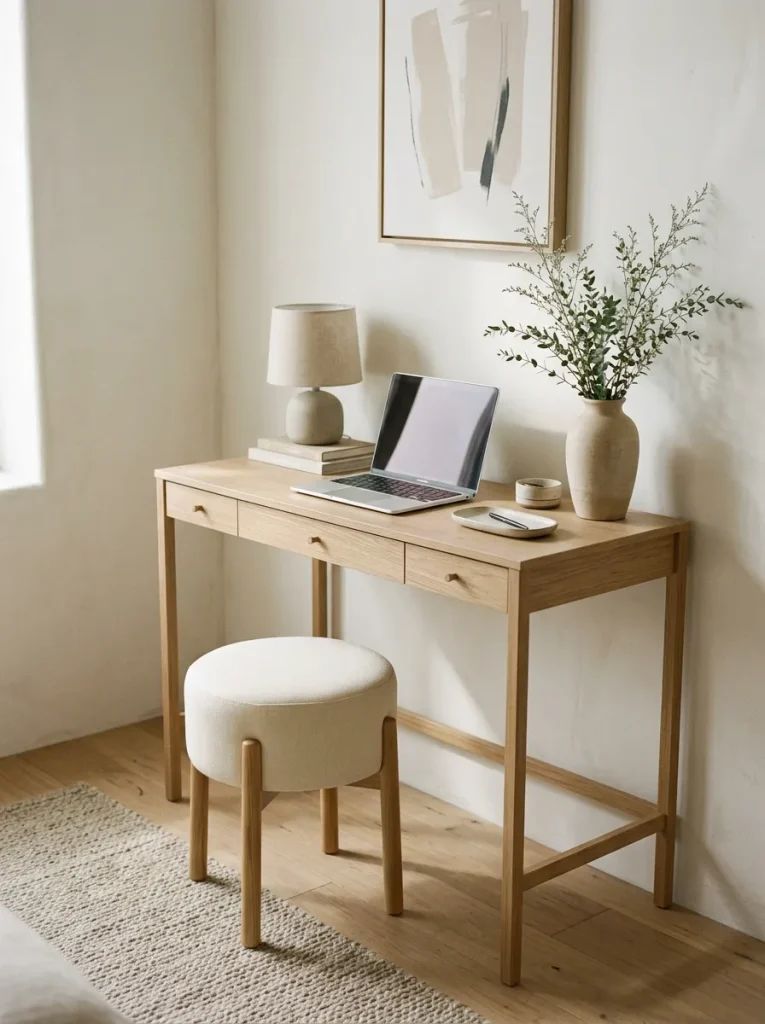
Cost: Low to moderate, depending on the furniture selected.
Space Needed: A narrow wall section with enough chair clearance.
Best For: Living rooms, hallways and studio apartments.
Result: A work surface that can double as an entryway or display console.
A console desk provides a practical compromise when a traditional office desk feels too bulky. Choose a model with a stable top and enough depth for your laptop, then keep decorative objects grouped at one end. During work hours, move the stool into position; afterward, tuck it away to restore the room’s everyday function. Check the desk height before buying to ensure it supports a comfortable typing position.
Under Window Built In Desk
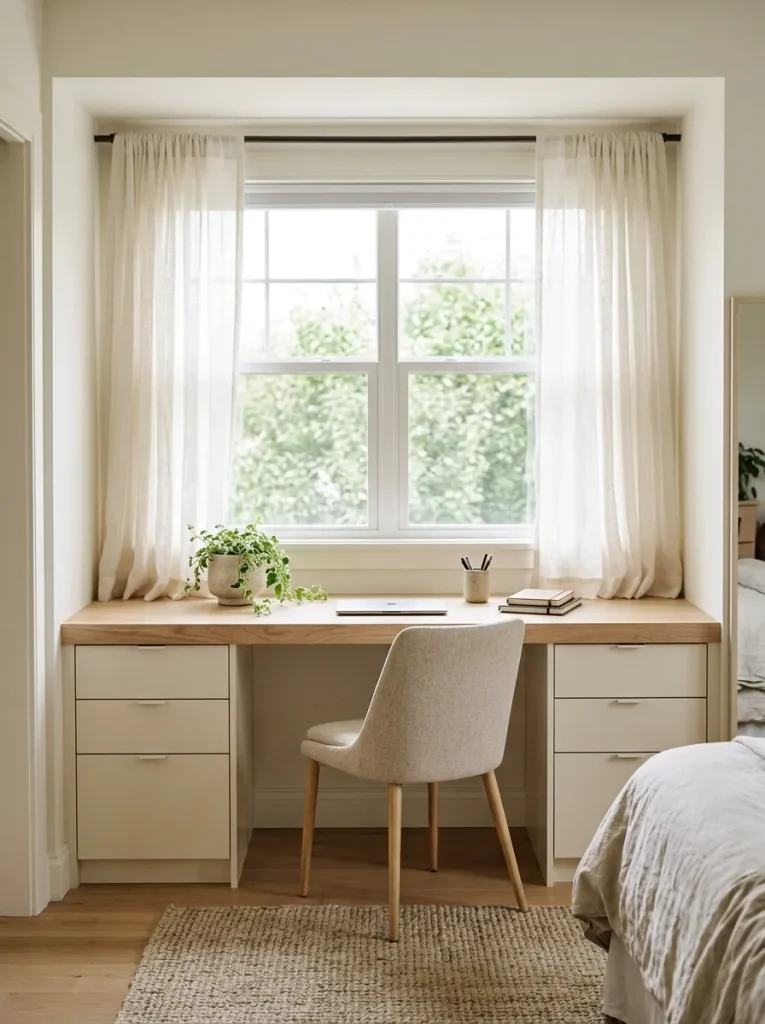
A built-in desk beneath a window makes efficient use of a wall that might otherwise remain empty. The long countertop provides room for a laptop, notebooks and a small work lamp, while cabinets below keep supplies hidden. Measure the window sill, available legroom and radiator clearance before installation so the desk fits the space properly.
For a balanced appearance, keep the finish light and the accessories minimal. Avoid placing a computer where direct sunlight creates persistent screen glare and choose window coverings that let you adjust brightness throughout the day. This arrangement is particularly useful for anyone who needs a longer work surface but cannot accommodate a full-sized office desk.
Compact Standing Desk
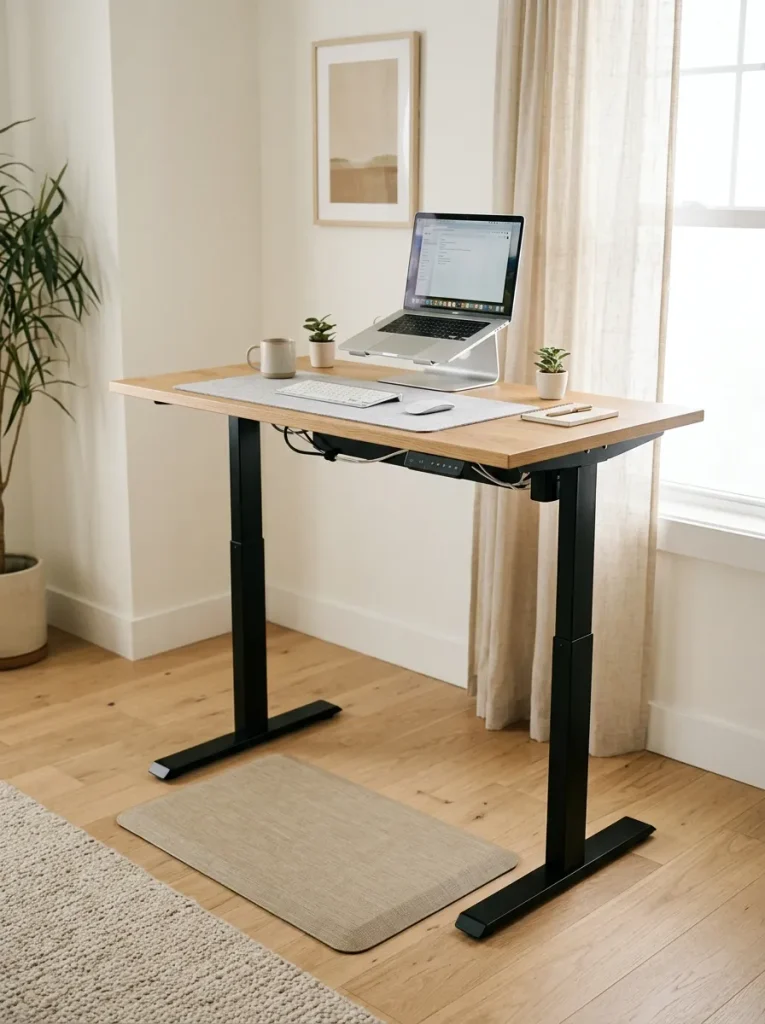
- Measure your work area. Choose a compact standing desk that fits the available wall space without narrowing the walkway.
- Set the correct height. Adjust the desk so your elbows remain near a right angle while typing.
- Position your screen. Keep the top of the display around eye level, adjusting for your posture and comfort.
- Organize your essentials. Use a small cable tray and keep frequently used accessories within reach.
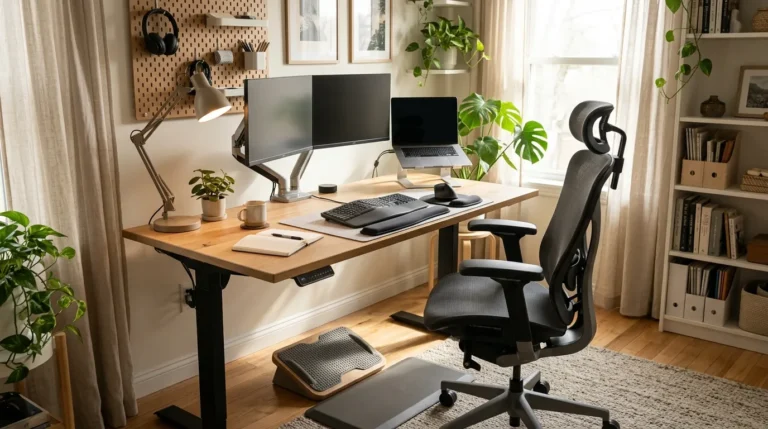
A standing desk offers flexibility when sitting for long periods becomes uncomfortable. Alternate between sitting and standing according to your comfort rather than remaining in one position all day. A compact adjustable model can be useful in a bedroom office or small apartment, especially when it replaces a bulky traditional desk. Check the desk’s stability at standing height before placing your computer on it.
Floating Corner Shelves
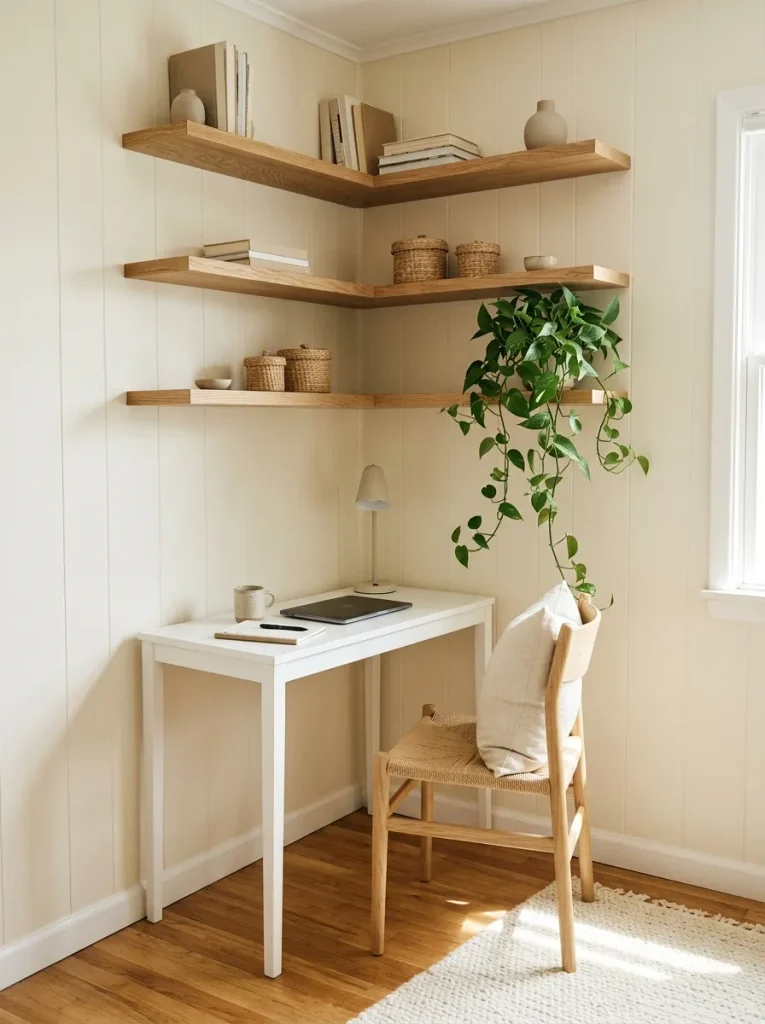
| Feature | Option A: Freestanding Bookcase | Option B: Floating Corner Shelves |
| Floor space | Uses part of the floor | Leaves the floor clear |
| Storage | Often offers more total capacity | Best for selected essentials |
| Installation | Usually simple to position | Requires secure wall mounting |
| Visual effect | Creates a larger furniture presence | Keeps the corner feeling open |
Floating corner shelves make use of vertical space that is often overlooked in a small office. Install them above or beside the desk, keeping the most frequently used items on the lowest shelf. Match the shelf finish to your desktop for a coordinated look and confirm that the wall fixings can support the intended load. A few useful objects and open spaces will look neater than tightly packed shelves.
Cozy Small Office Nook
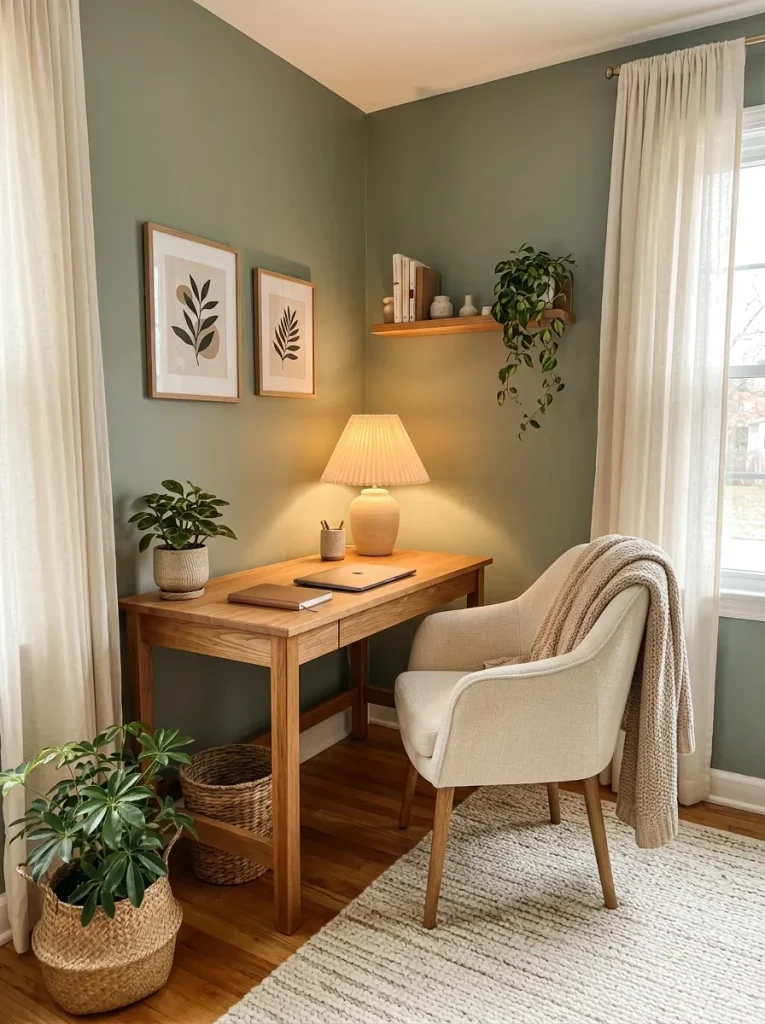
A comfortable office nook proves that a small workspace can still feel welcoming and practical. Start with a compact desk and a supportive chair, then introduce softness through a cushion, a small rug or neutral fabric accessories. Keep the computer and daily supplies easy to reach so decorative touches never interfere with your work.
For a balanced setup, combine warm lighting with daylight whenever possible. Store extra paperwork in a drawer or basket instead of leaving it on the floor and keep the chair area clear enough to move freely. Small Home Office Ideas work best when they balance appearance with everyday comfort, helping you create a workspace you will actually enjoy using.
CONCLUSION
Creating a functional workspace doesn’t require a separate room or expensive furniture. With these 24 Small Home Office Ideas, you can turn an unused corner, a narrow wall or a small bedroom area into a space that supports your daily routine. Start with one simple improvement, such as adding a floating desk organizing your supplies vertically or clearing unnecessary items from your desktop. Small changes can make your workspace feel more comfortable and organized. Save this article on Pinterest for inspiration, try the ideas that suit your home and share it with someone who needs a smarter workspace. Your perfect little office can start today!