Modern Home Office Ideas: 30 Streamlined Setups to Pin
Your home office should be more than a desk and a chair. It should be a space where you feel comfortable, focused and ready to tackle your day.
These Modern Home Office Ideas will help you create a workspace that looks beautiful while supporting your everyday routine. Whether you’re working with a spacious spare room, a small bedroom corner or a compact apartment, you’ll find inspiration to make the most of your available space.
From minimalist desks and warm neutral palettes to clever storage, ergonomic furniture and natural lighting, these setups offer practical ways to combine style and function. I’ve noticed that even small changes, such as clearing a crowded desktop or adding better lighting, can make a workspace feel much more inviting. You’ll discover options for different layouts, budgets and personal tastes, making it easier to choose a design that suits your needs.
As you browse these ideas, save your favorite looks on Pinterest and consider which details would work best in your own home. You don’t need to redesign everything at once. A few thoughtful choices can help you build a workspace that feels organized, inspiring and uniquely yours.
Minimalist Modern Desk
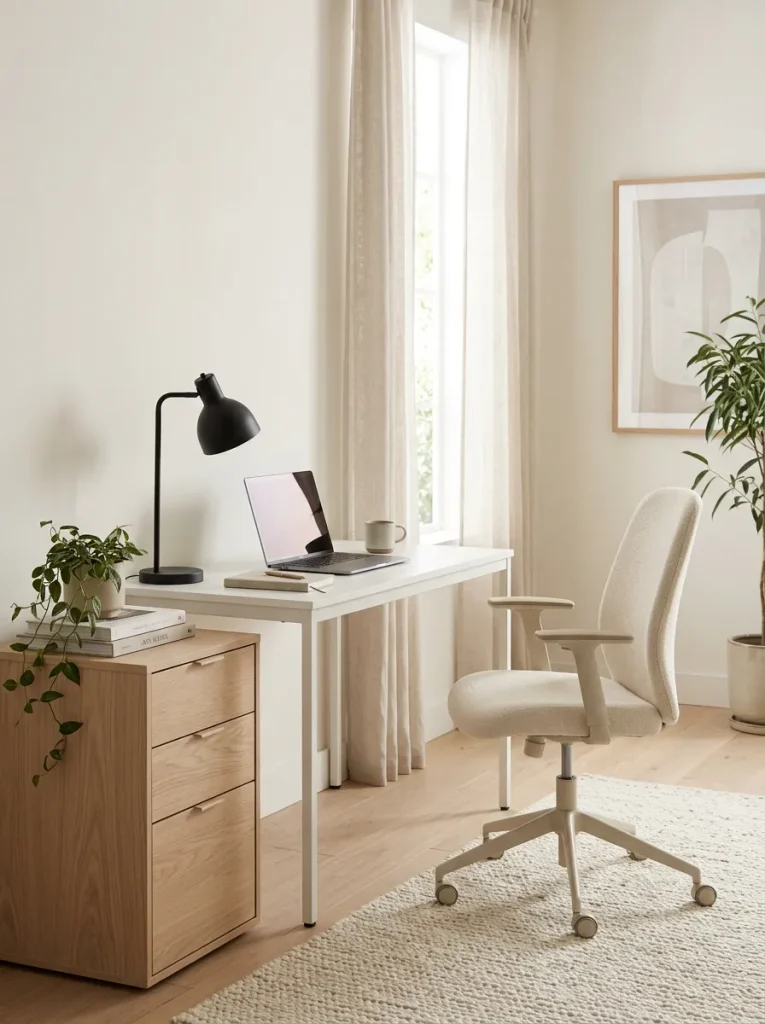
A clean desk can make your workday feel more manageable before you even open your laptop. Start with a streamlined desk, a comfortable chair and a few essential accessories in matching colors. Keep notebooks, chargers and spare supplies inside drawers instead of spreading them across the surface.
The secret to modern minimalism is choosing function over decoration. A small plant or simple framed print adds personality without creating clutter. In my experience, a workspace with fewer distractions is also easier to tidy at the end of a busy day. Give every item a home and your office will stay practical as well as polished.
Neutral Contemporary Workspace
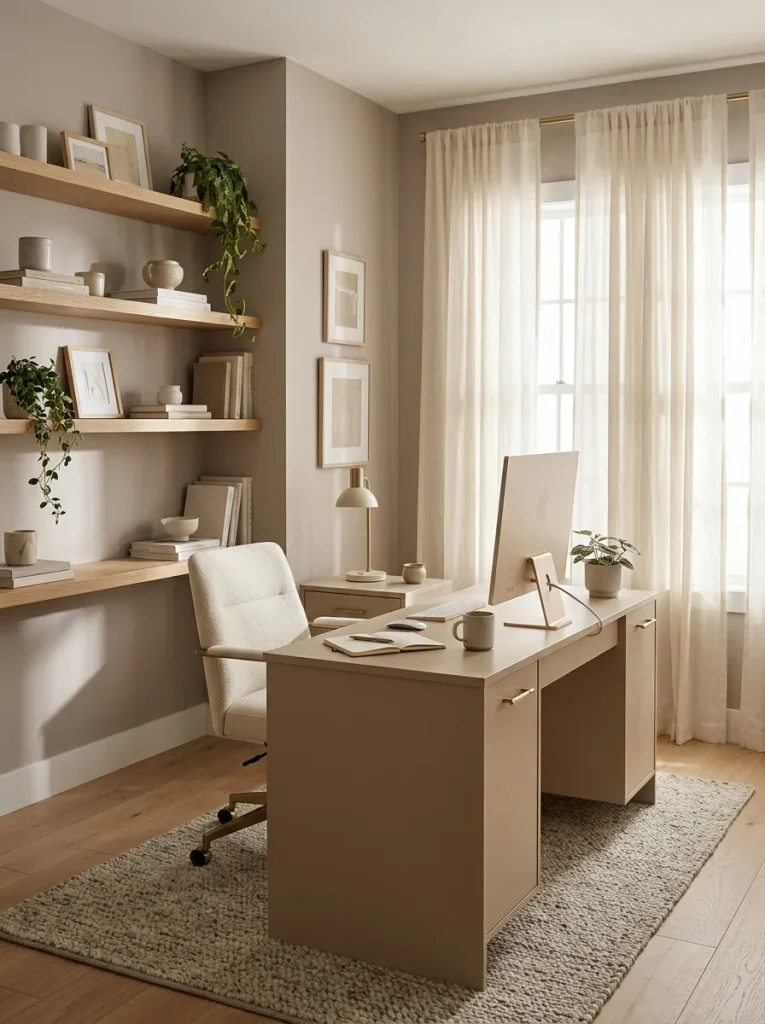
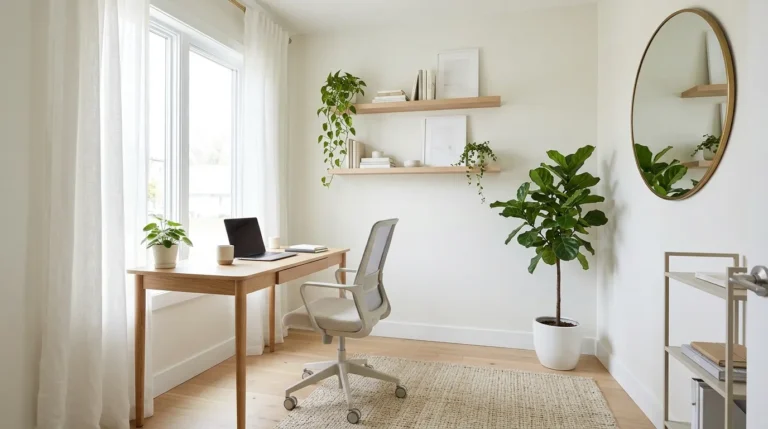
- Choose a restrained palette: Combine ivory, beige, taupe and light wood for a cohesive appearance that feels calm rather than plain.
- Mix materials: Pair a smooth desktop with a textured rug, linen curtains or a woven storage basket.
- Use layered lighting: Combine natural daylight with a focused desk lamp for cloudy afternoons and evening tasks.
- Keep accessories coordinated: Select a matching pen holder, desk mat and storage tray to reduce visual noise.
- Add one organic detail: A small leafy plant or wooden frame brings warmth to the clean design.
Neutral colors work especially well when you want your office to complement the rest of your home. Varying textures keeps the space from feeling flat, even when the palette stays simple. Choose a chair that supports your back and leave enough clear desk space for writing, typing and organizing daily tasks.
Floating Desk Design
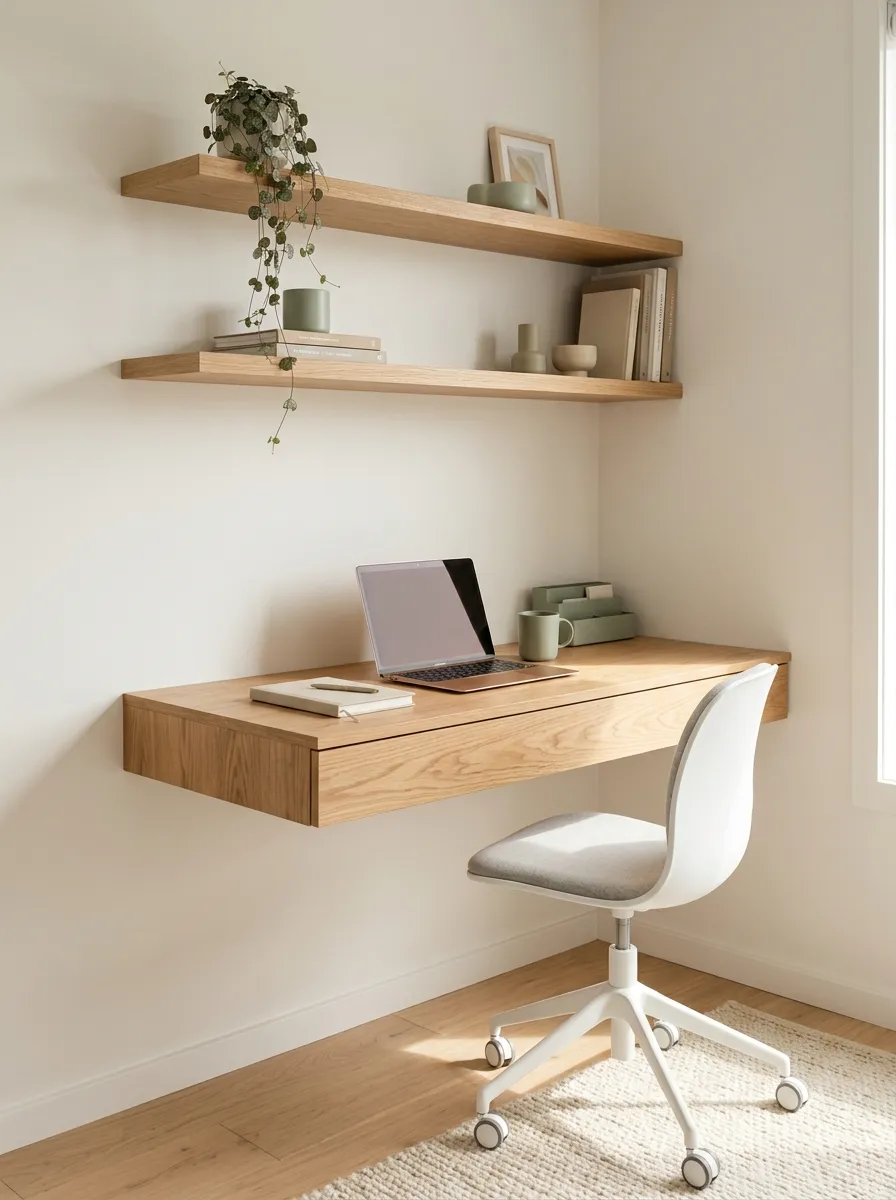
Quick Tip:
Measure your wall and available legroom before choosing a floating desk. Secure the desktop with hardware suited to your wall construction and check the manufacturer’s weight limits before placing heavy equipment on it. Keep frequently used supplies on the lowest shelf for easy access.
Floating furniture keeps the floor visible, which can help a small room feel more open. It also makes it easier to sweep or vacuum beneath the workstation. Position the desk near a window when possible, but adjust your screen to minimize glare. A cable tray underneath completes the streamlined look and prevents loose wires from distracting you.
Black and Wood Office
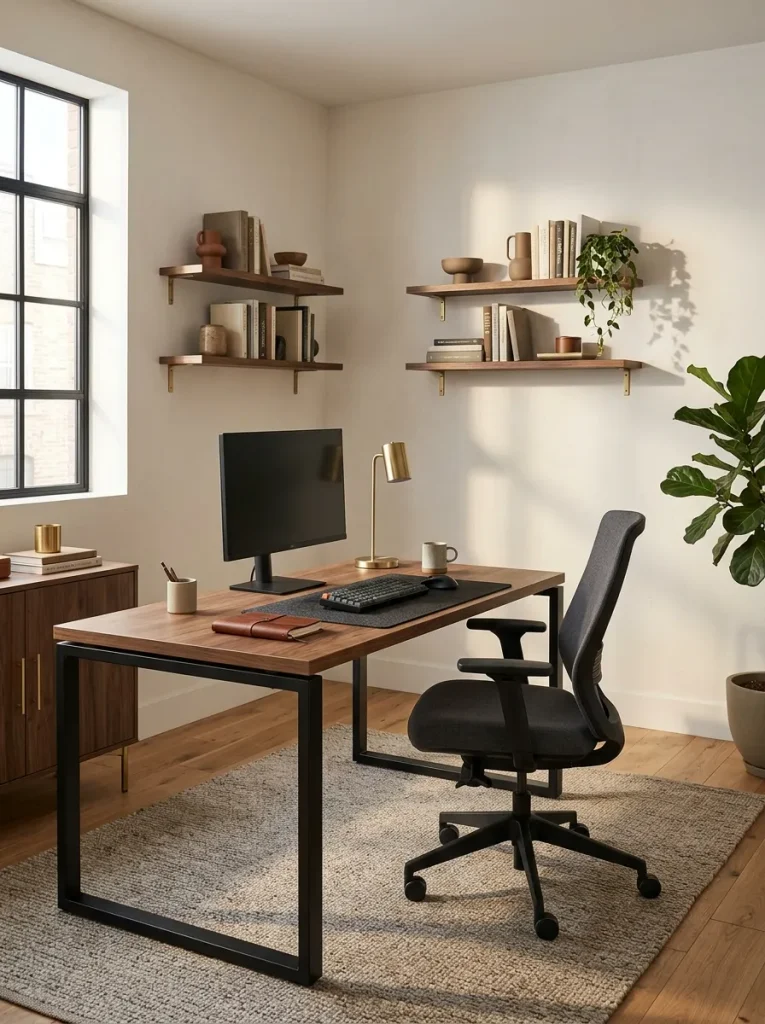
BEFORE
A workspace with mismatched furniture and scattered accessories can feel visually busy. Dark furniture may also make the room seem smaller when every surface has the same heavy finish.
AFTER
A black metal desk frame paired with a warm walnut top creates contrast without adding unnecessary decoration. Coordinated shelves and a simple desk lamp make the setup feel intentional, while lighter walls keep the overall room bright.
The combination of black and wood suits modern interiors because it balances clean lines with natural warmth. Start with one contrasting furniture piece, then repeat its finishes in smaller details. If your room receives limited daylight, keep the walls light and add focused task lighting. A supportive chair and tidy cables will make the setup practical for daily use.
Dual Monitor Workspace
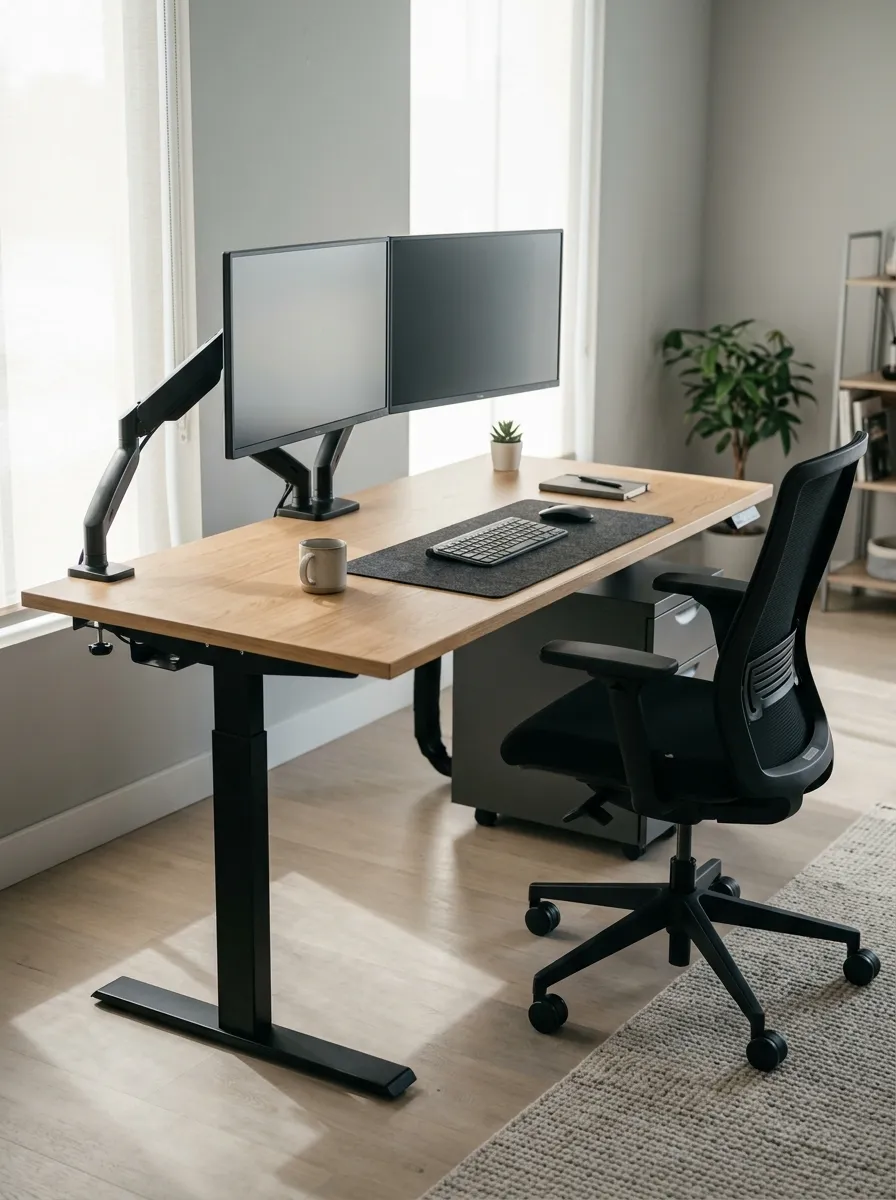
- Measure the desk: Make sure the surface accommodates both screens, your keyboard and enough space for writing.
- Position the monitors: Place the primary screen directly in front of you and the second beside it at a comfortable angle.
- Adjust screen height: Keep the top of each screen around eye level, adjusting for your posture and monitor size.
- Organize the cables: Use an under-desk tray and clips to keep wires away from your legs.
- Add focused lighting: Position a desk lamp so it illuminates paperwork without creating screen glare.
A dual-monitor setup is useful for tasks that involve comparing documents, researching, coding or managing spreadsheets. It can reduce the need to switch repeatedly between open windows. Keep the screens at a comfortable viewing distance and avoid placing the secondary monitor so far to one side that you must repeatedly twist your neck.
Compact Modern Office
| Setup Detail | Option A: Freestanding Desk | Option B: Wall-Mounted Desk |
| Floor space | Requires room for legs and desk frame | Keeps the floor beneath the desk open |
| Installation | Usually simple to assemble | Requires secure wall mounting |
| Storage | Drawers may be built in | Shelves or separate storage may be needed |
| Best suited for | Flexible room layouts | Small offices and narrow corners |
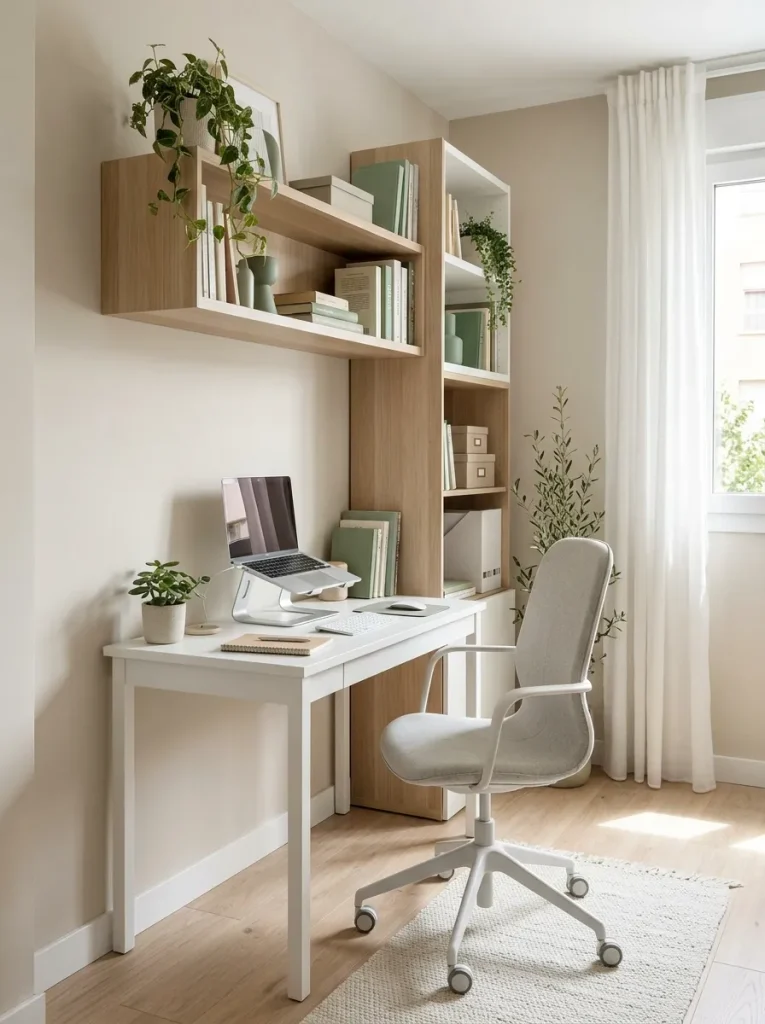
A compact office works best when each piece earns its place. Measure the room before buying furniture, including the space needed to pull out your chair and open nearby doors. Use vertical shelves for supplies and keep the desktop limited to daily essentials. A bright color palette and carefully managed cables help the area feel organized rather than cramped.
Ergonomic Modern Setup
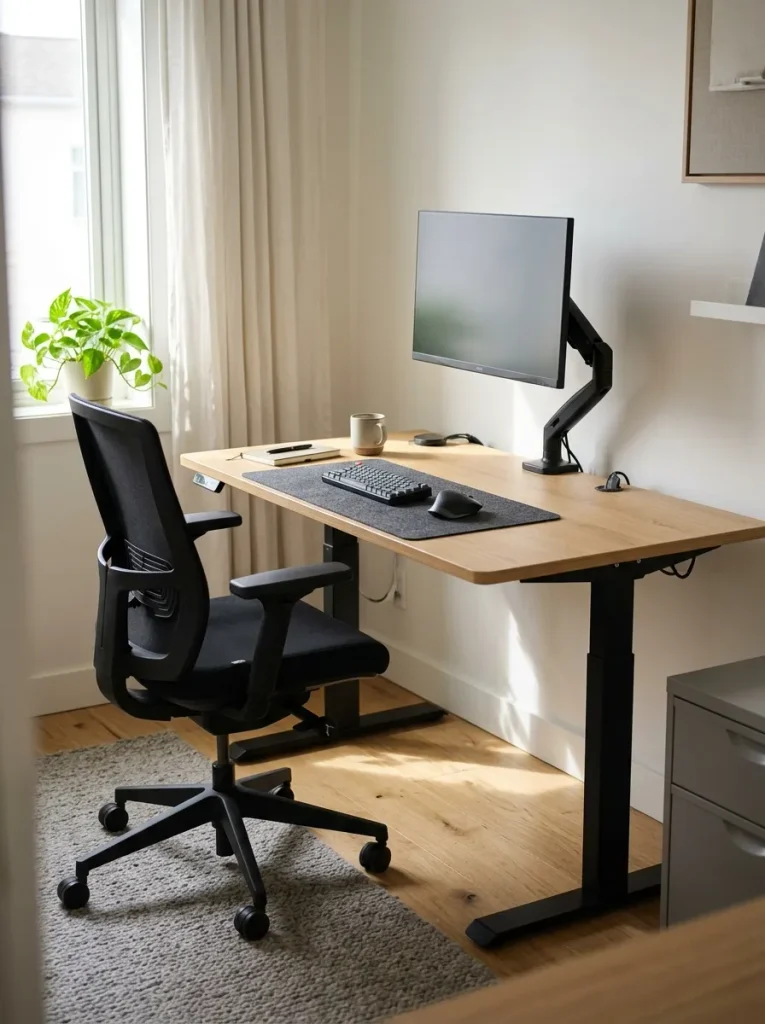
Cost: Moderate to high, depending on the desk and chair.
Time: Two to four hours for assembly and adjustment.
Skill Level: Beginner, with basic assembly skills.
Best For: Remote workers, students and people spending long hours at a desk.
Comfort deserves as much attention as appearance in a productive workspace. Choose a chair that supports your lower back and allows your feet to rest flat on the floor. Adjust your monitor to a comfortable viewing height, then position your keyboard and mouse so your shoulders remain relaxed. An adjustable desk can provide another working position throughout the day, although regular movement and breaks still matter.
Warm Minimalist Workspace
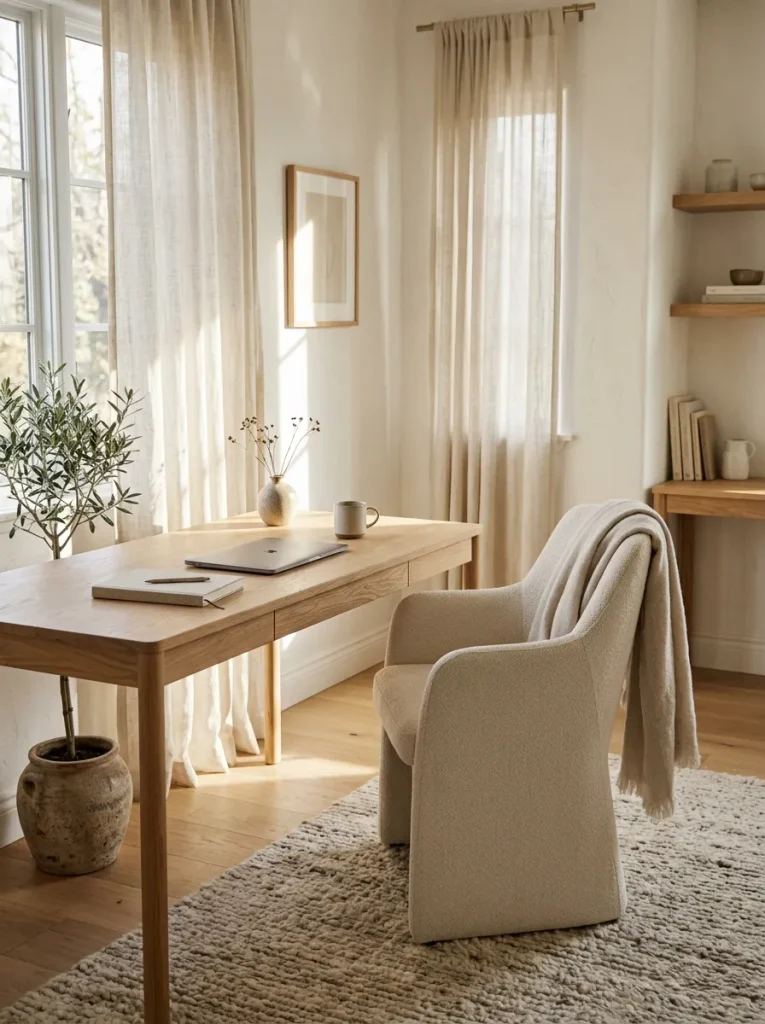
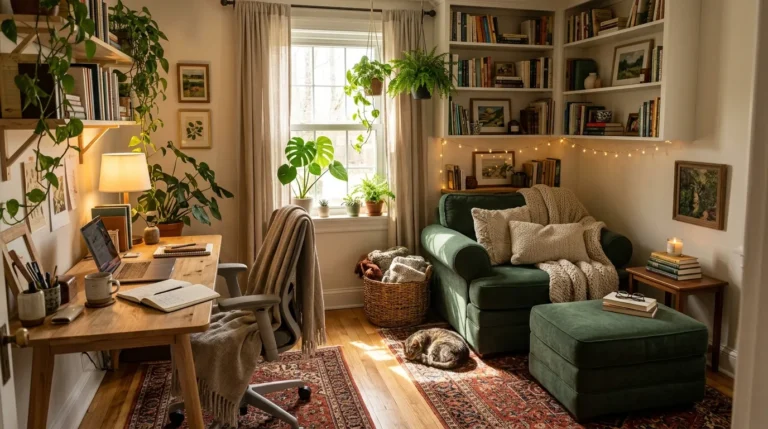
A warm, uncluttered workspace can make even an ordinary corner feel welcoming. Start with natural wood furniture, creamy textiles and a few accessories in earthy shades.
Choose one or two decorative pieces rather than filling every surface. A linen lampshade, woven basket or handmade ceramic cup introduces texture without overwhelming the room. For a cohesive finish, repeat the same warm tones in your artwork and storage. Keep everyday work supplies within reach and reserve one small area for personal touches that make the office feel like yours.
Modern Office with Greenery
DO
- Choose suitable plants: Select varieties that match your room’s natural light and your available care time.
- Use varied heights: Combine a small desk plant with a taller floor plant to create visual balance.
- Pick coordinated planters: Neutral ceramic, woven or matte-finish pots complement modern furniture.
- Protect your workspace: Use waterproof saucers or plant trays to prevent moisture damage.
DON’T
- Crowd the desktop: Keep plants away from your main writing and typing area.
- Block natural light: Position taller plants where they will not shade your workstation.
- Ignore maintenance: Remove fallen leaves and check soil moisture regularly.
- Place water near electronics: Keep watering tools and damp pots away from computers and power strips.
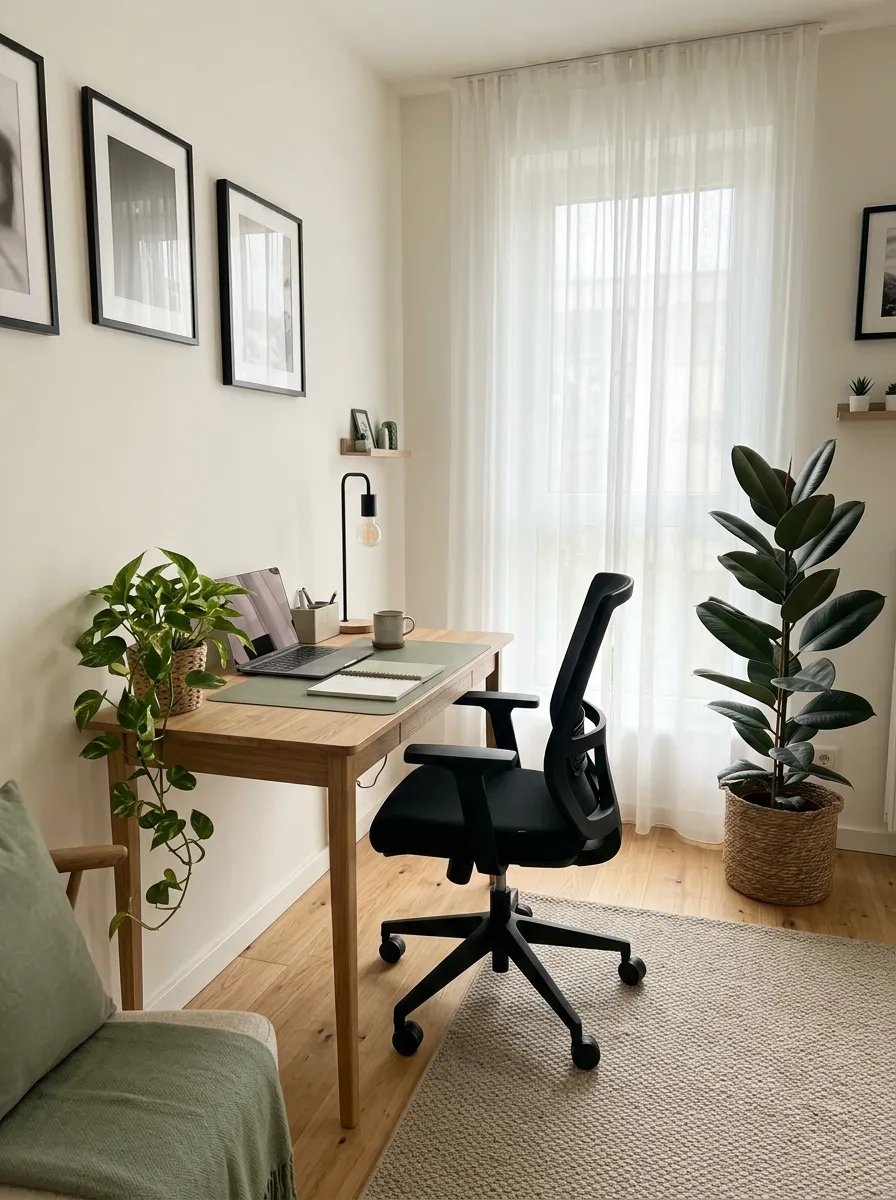
Greenery adds color and texture to a modern office without requiring a complete redesign. If your desk sits near a window, consider a light-loving plant that suits the conditions. For darker corners, choose a suitable low-light variety or use a quality grow light. Even one healthy plant can soften straight furniture lines and make the workspace feel more connected to nature.
Glass Desk Workspace
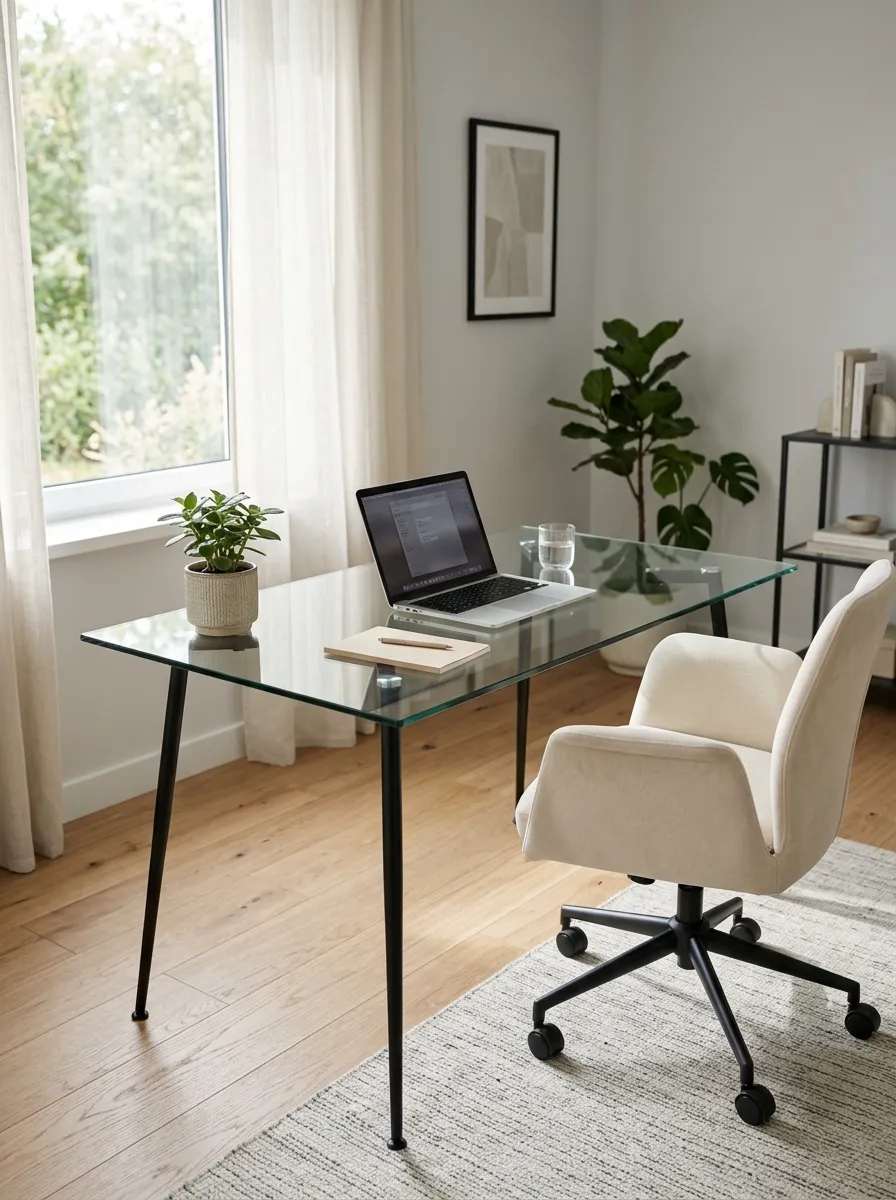
A glass desk can make a small office feel lighter because its transparent surface allows more of the room to remain visible. Pair it with a simple chair and understated accessories to maintain a clean, contemporary appearance.
Keep the setup practical: Choose tempered glass designed for desk use, check its weight capacity and avoid placing heavy equipment near unsupported edges. Fingerprints and dust are more noticeable on glass, so keep a microfiber cloth nearby. A desk mat can define your work area, reduce keyboard noise and protect the surface without hiding the desk’s elegant design.
Built-In Office Storage
Quick Tip:
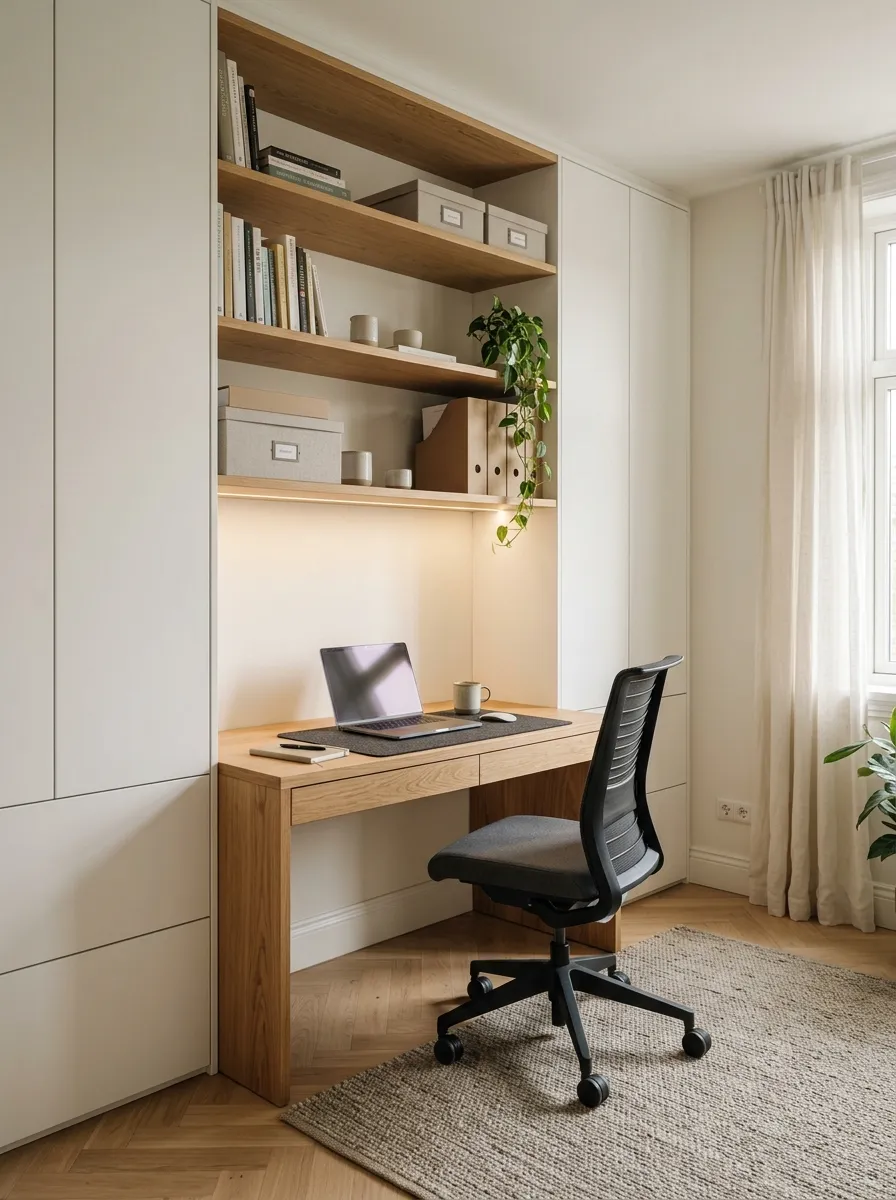
Divide built-in storage into three zones: frequently used supplies at arm’s reach, reference materials on nearby shelves and rarely used items in higher cabinets. Measure your equipment before planning shelves so printers, folders and charging accessories fit comfortably.
Built-in cabinetry creates a cohesive look while making use of wall space that might otherwise remain empty. If custom carpentry is outside your budget, combine ready-made bookcases with a separate desk in similar finishes. Use closed cabinets to hide visual clutter and open shelves for a few attractive items. Leave some shelf space empty so the arrangement stays easy to maintain as your work needs change.
Small Corner Workstation
BEFORE
An unused corner can quickly become a dumping ground for spare bags, papers and miscellaneous household items. Without a clear layout, even a small desk may feel awkward or difficult to use.
AFTER
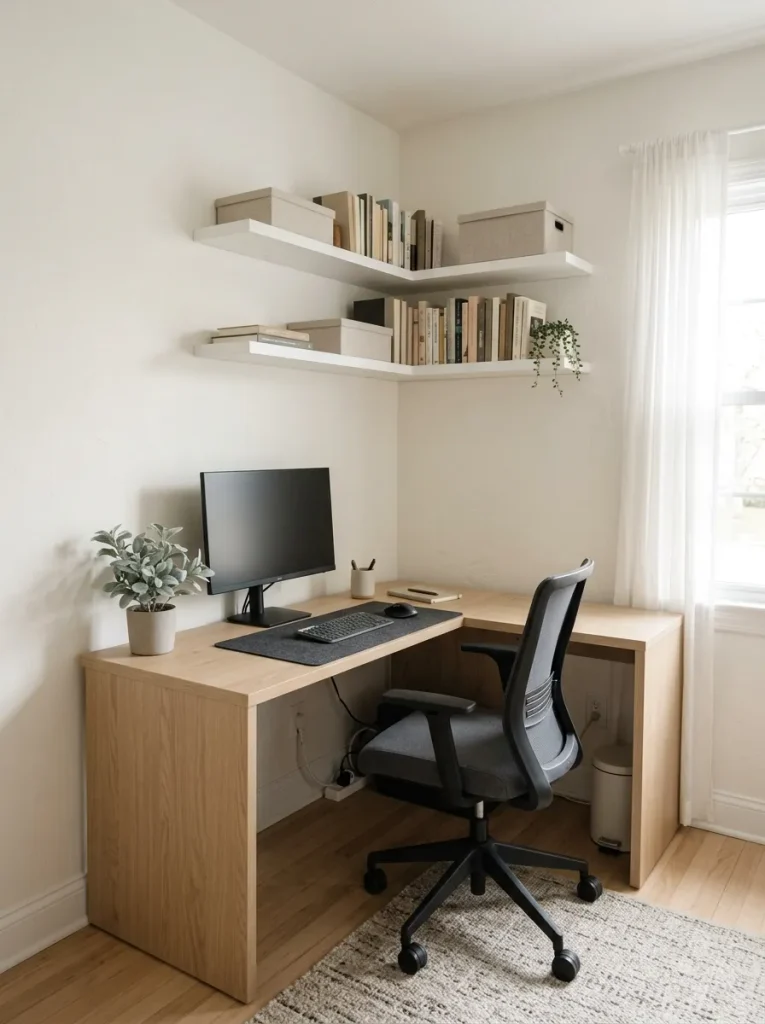
A compact corner workstation gives the area a clear purpose. An L-shaped desk can provide separate spaces for computer work and paperwork, while floating shelves keep supplies off the floor. A focused desk lamp helps the corner remain useful after daylight fades.
Measure both walls before selecting furniture and check that drawers and doors can open fully. If an L-shaped desk feels too bulky, a narrow rectangular desk may be a better fit. Keep the chair easy to move and route cables along the wall to prevent tripping. A consistent palette and a single piece of artwork can make the corner feel connected to the rest of your home.
Scandinavian Office Style
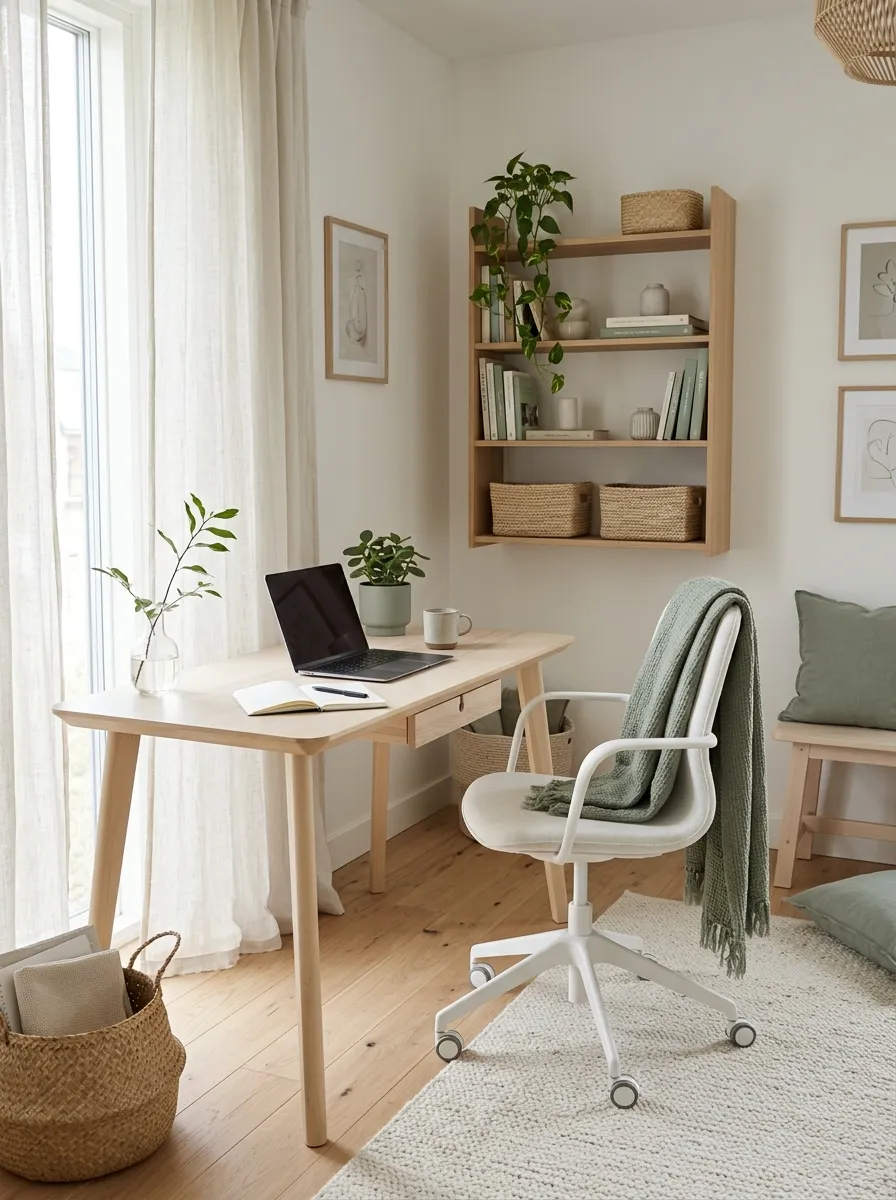
- Start with light wood: Choose a birch, ash or pale oak desk to establish a natural foundation.
- Keep the palette simple: Combine white, soft gray, beige and one muted accent color.
- Prioritize comfort: Select an ergonomic chair with a supportive back and adjustable height.
- Add natural textures: Use a woven basket, linen curtains or a wool-blend rug for warmth.
- Edit your accessories: Display a few useful or meaningful items instead of filling every surface.
Scandinavian design blends simplicity with everyday comfort, making it a practical choice for a home workspace. The key is balancing open surfaces with enough storage to keep essentials organized. Choose furniture with clean lines, then soften the room with natural materials and gentle lighting. This approach works especially well in bright rooms, apartments and multipurpose spaces where visual calm matters.
Modern Office Lighting
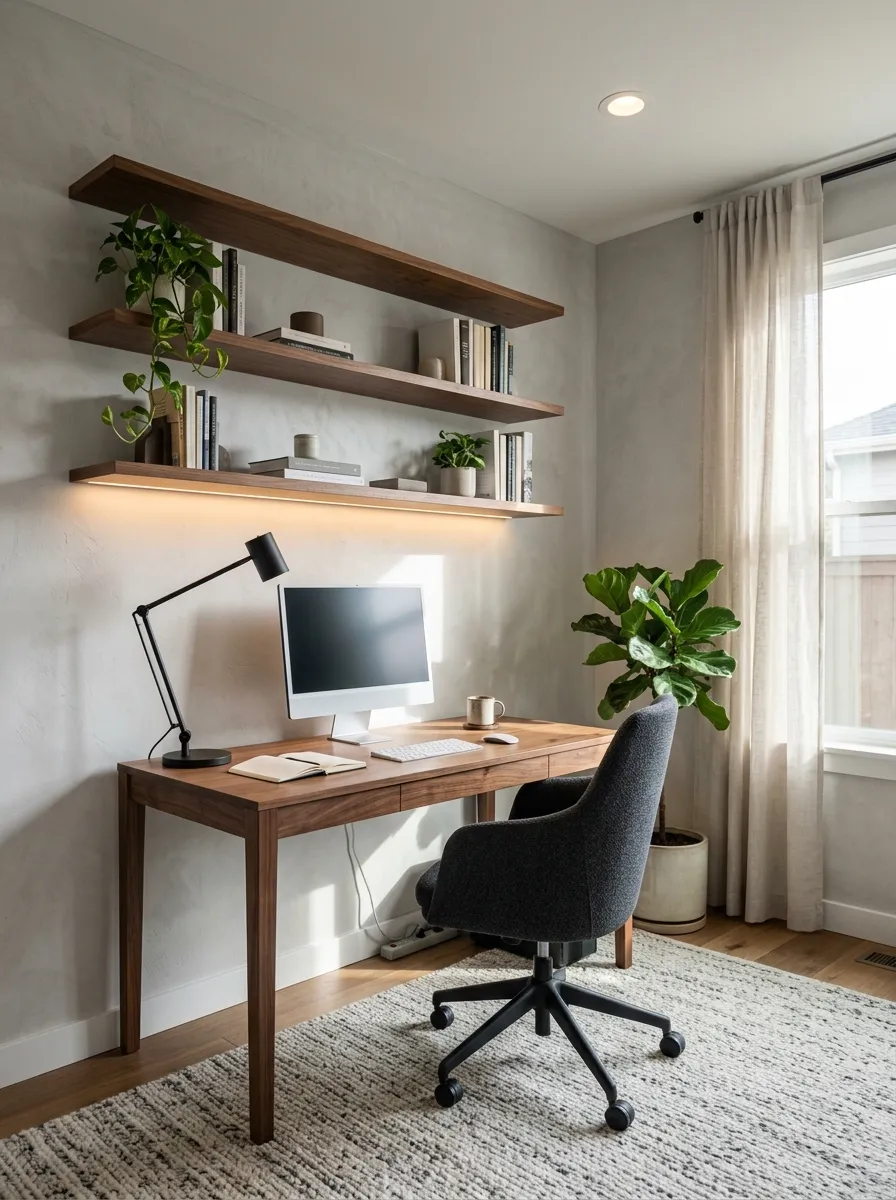
Cost: Low to moderate, depending on the lighting fixtures.
Time: One to two hours for arranging lamps and adjusting placement.
Skill Level: Beginner for plug-in lighting; professional help may be needed for new wiring.
Best For: Home workers who use their office throughout the day and evening.
Good lighting helps your workspace feel comfortable and makes reading, writing and screen work easier. Start by positioning your desk to take advantage of natural daylight without creating distracting reflections on your monitor. Add an adjustable task lamp for focused activities and softer ambient lighting for the rest of the room. Choose bulbs with a comfortable color temperature and keep cords secured away from walkways. A balanced lighting plan supports both function and a polished modern appearance.
Modern Office with Shelving
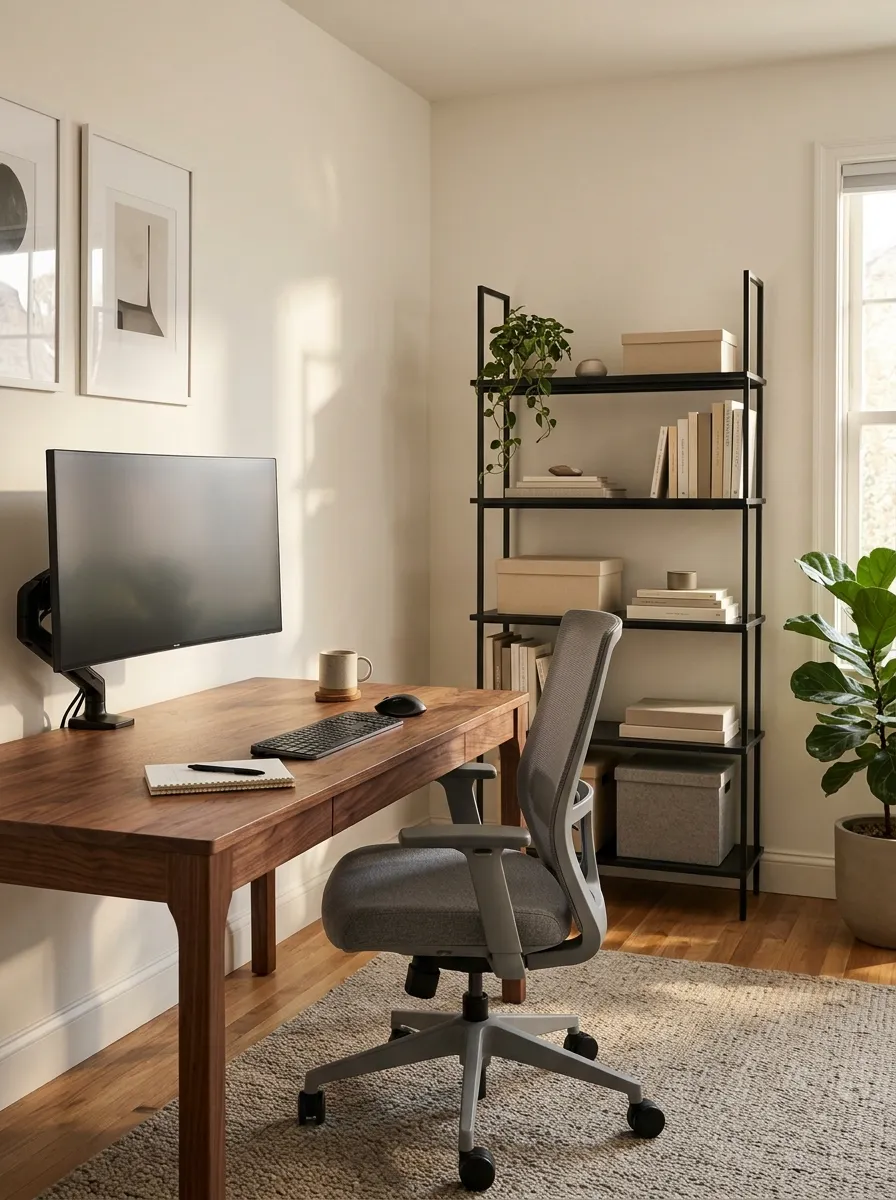
| Shelf Style | Open Shelving | Closed Cabinets |
| Visual effect | Airy and decorative | Clean and concealed |
| Accessibility | Items are easy to reach | Contents stay protected |
| Maintenance | Requires regular dusting | Usually less visible dust |
| Best use | Books and attractive accessories | Paperwork and miscellaneous supplies |
A thoughtful shelving system makes it easier to organize your work without crowding the desk. Use open shelves for frequently referenced books, a few decorative objects and attractive storage boxes. Reserve closed cabinets or drawers for paperwork and supplies that do not need to remain visible. Arrange heavier items on lower shelves, secure tall units properly and leave a little empty space so the overall design feels intentional rather than crowded.
Modern Monochrome Office
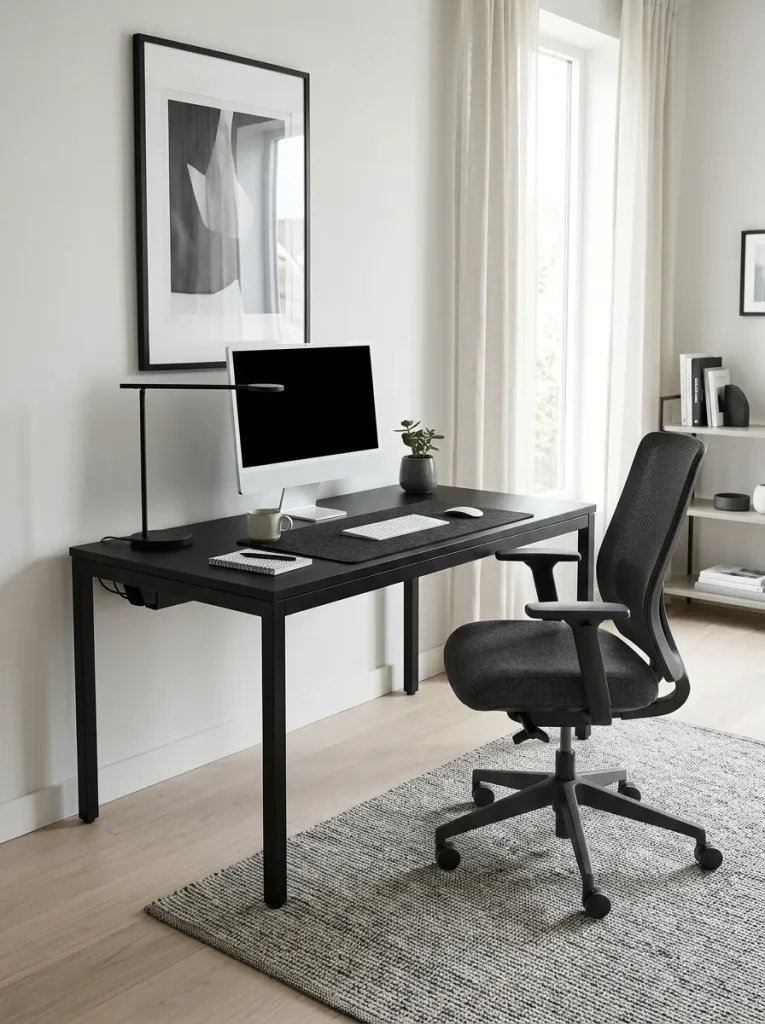
Cost: Moderate, depending on furniture quality and accessories.
Time: Two to three hours for setup and styling.
Skill Level: Beginner.
Best For: People who prefer a polished workspace with a consistent color scheme.
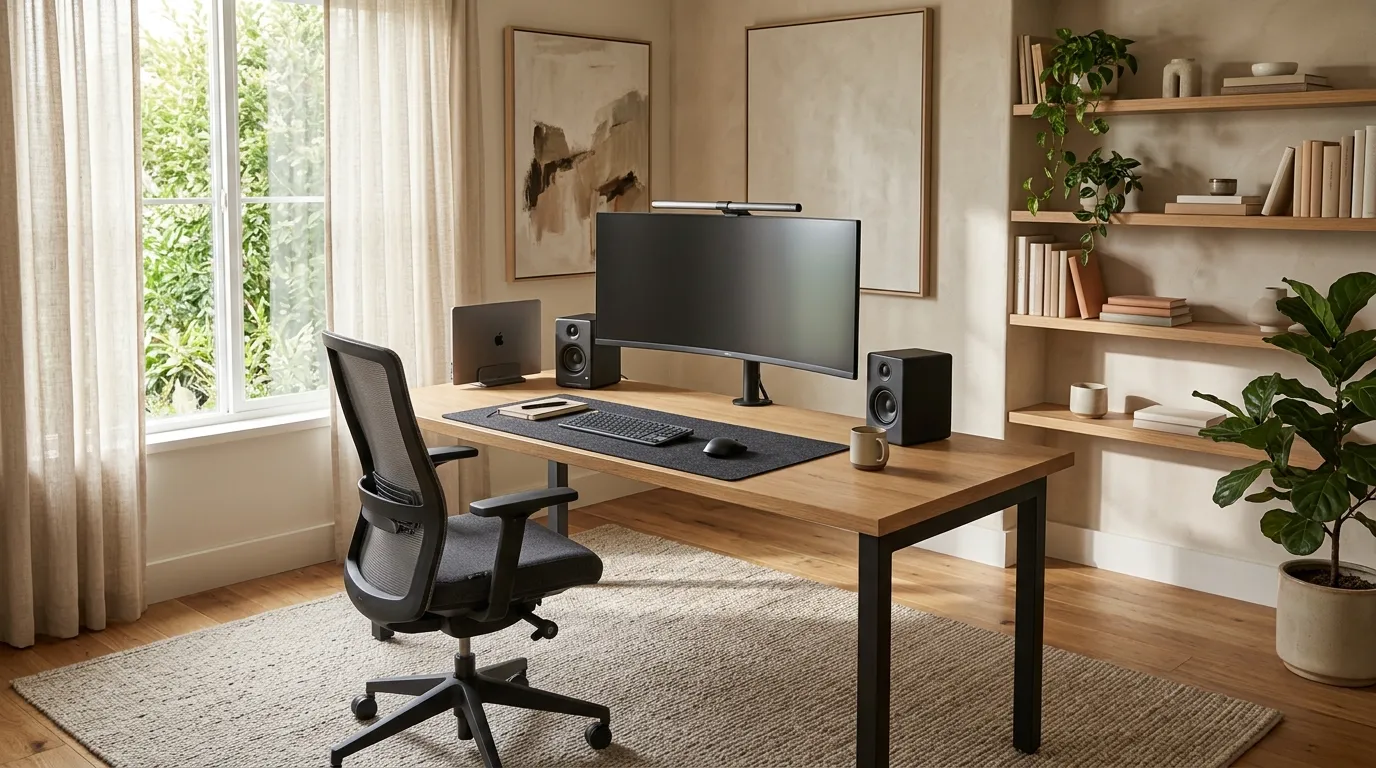
A monochrome palette creates a cohesive office without requiring many decorative pieces. Combine black, white and gray in different proportions to keep the room balanced. For example, use a white wall as the backdrop, a black desk as the focal point and gray textiles to soften the contrast. Introduce varied finishes, such as matte metal and textured fabric, so the space feels inviting rather than stark. Keep your desk accessories coordinated for a clean, professional look.
Natural Wood Workstation
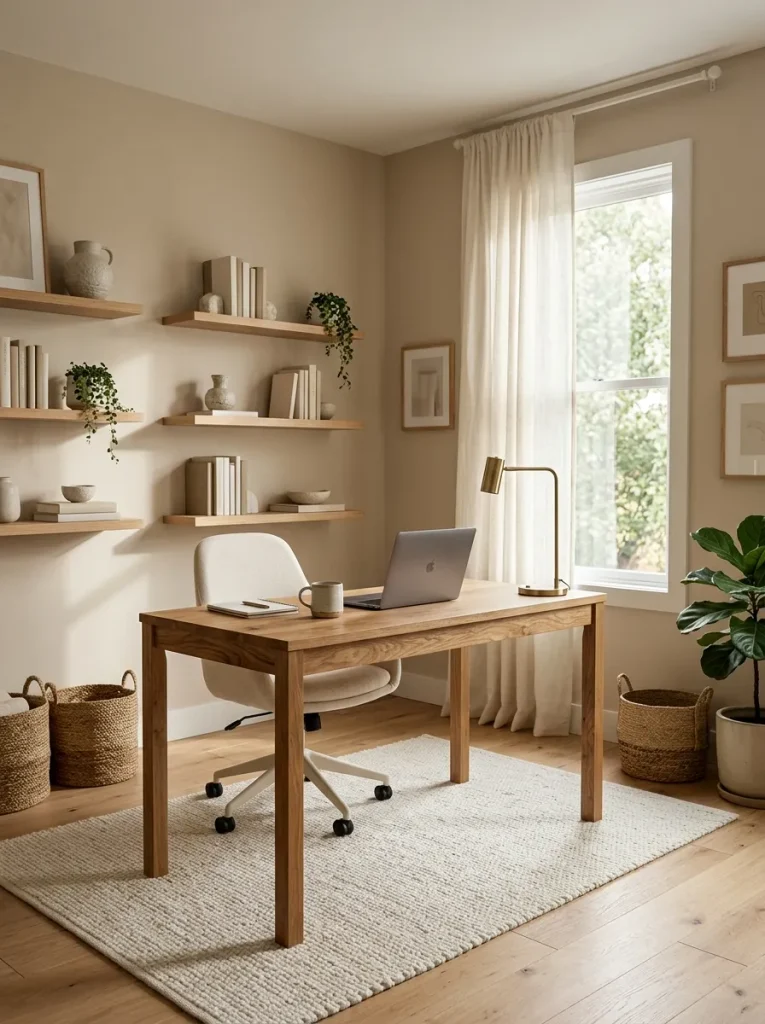
Natural wood brings warmth to a modern workspace while keeping the overall design simple. Choose a desk with a finish you enjoy, whether that is pale oak, honey-toned ash or deeper walnut.
Pair the wood with neutral walls and a comfortable chair to let its texture stand out. A fabric desk mat, ceramic pencil holder or woven basket adds another layer of interest without creating clutter. If you want a coordinated look, repeat the desk’s wood tone in one other element, such as shelving or a picture frame. This subtle connection helps the room feel thoughtfully arranged.
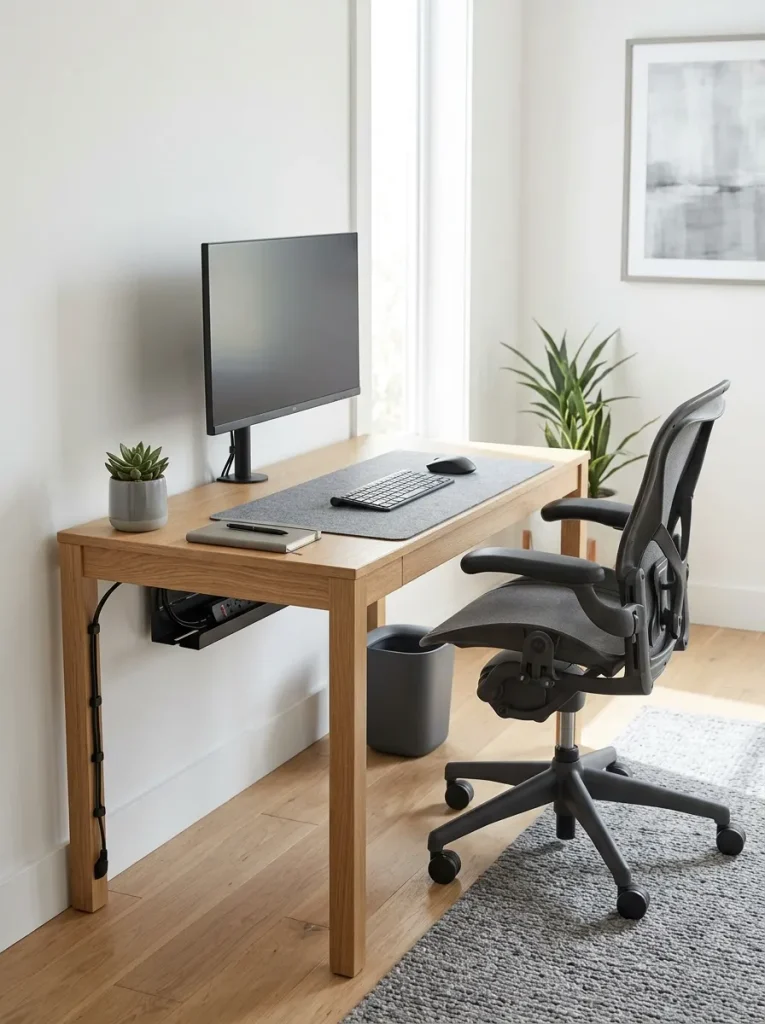
Modern Office with Hidden Cables
DO
- Use an under-desk tray: Gather power cords and adapters into one organized location.
- Attach cable clips: Guide individual wires along desk legs or the rear edge.
- Label power cables: Make it easier to identify chargers when equipment needs replacing.
- Choose suitable cable lengths: Reduce excess loops that collect dust or catch on furniture.
DON’T
- Overload power strips: Follow the manufacturer’s electrical ratings and safety instructions.
- Pinch cables: Keep wires clear of moving desk parts and chair wheels.
- Block ventilation: Leave sufficient airflow around adapters and electronic equipment.
- Hide damaged cords: Replace frayed or damaged cables instead of covering them.
A tidy cable setup makes a noticeable difference to the appearance and usability of a modern office. Start by identifying every device that needs power, then group the wires according to their destination. Secure cables without pulling them tight and keep connections accessible for maintenance. Wireless accessories can reduce desktop clutter, but reliable cable management remains useful for monitors, lamps and other essential equipment.
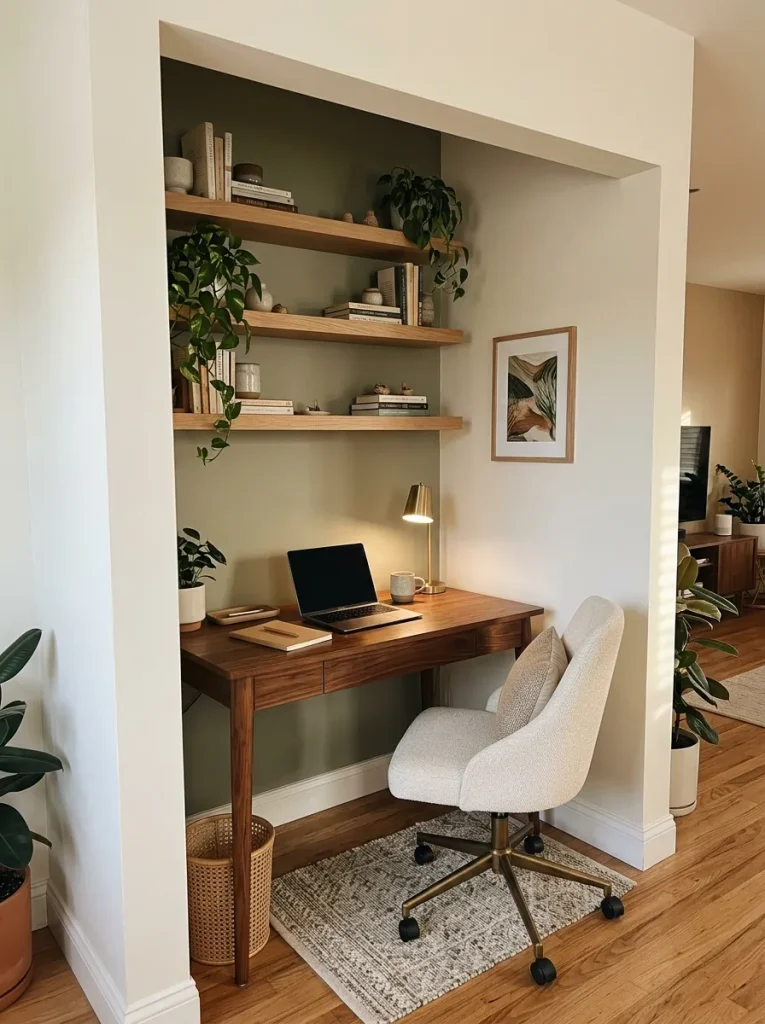
Modern Home Office Nook
Quick Tip:
Measure the width and depth of your nook before purchasing a desk and allow enough room to pull out your chair comfortably. If the area has limited natural light, choose a light desktop and add an adjustable task lamp.
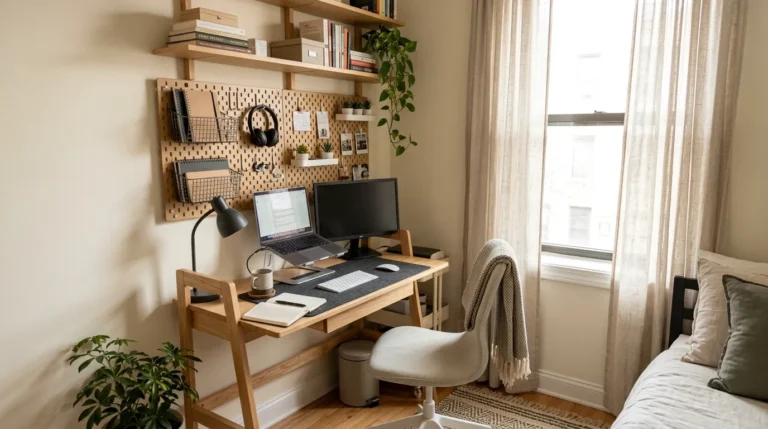
A dedicated office nook helps separate work from everyday household activities without requiring an entire room. Use the wall above the desk for shallow shelves, a pinboard or a small piece of artwork. Keep supplies organized in drawers or matching containers so the nook remains tidy when you finish working. If the workspace shares a living room or bedroom, coordinate its colors with the surrounding decor to create a natural visual connection.
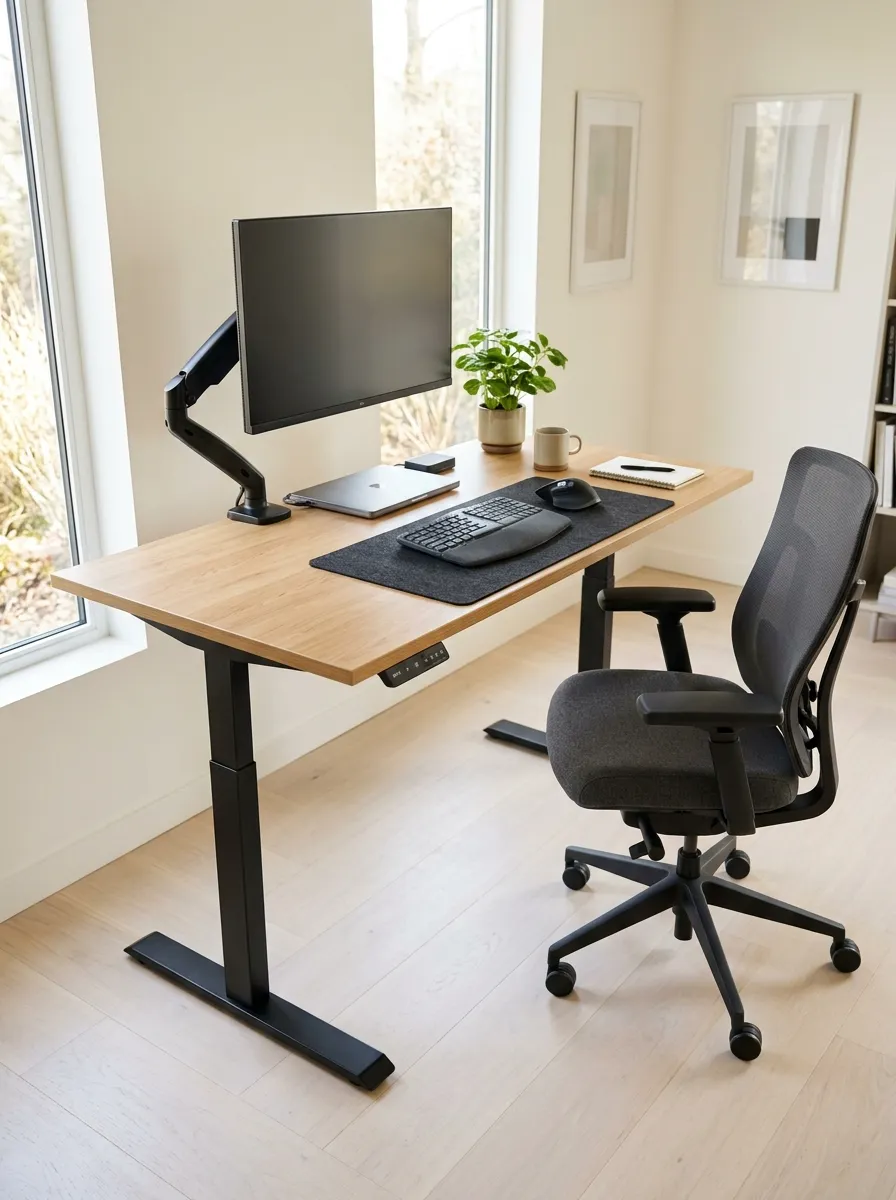
Modern Standing Desk
BEFORE
Working in one position for hours can leave a home office feeling restrictive, especially when the desk and chair cannot be adjusted to suit your posture. A cluttered surface may also make switching between sitting and standing inconvenient.
AFTER
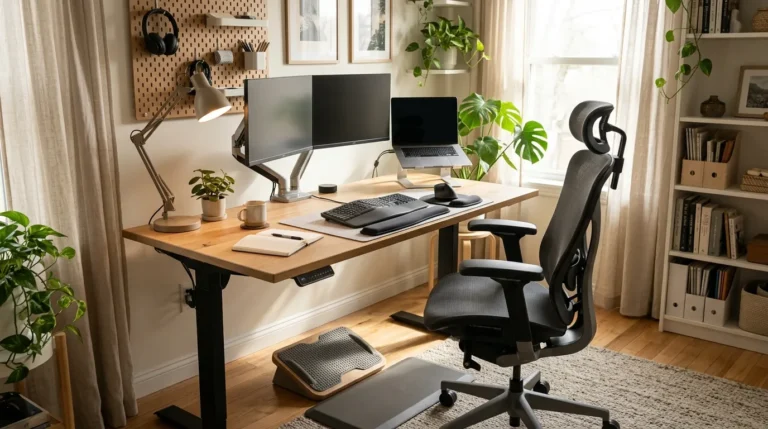
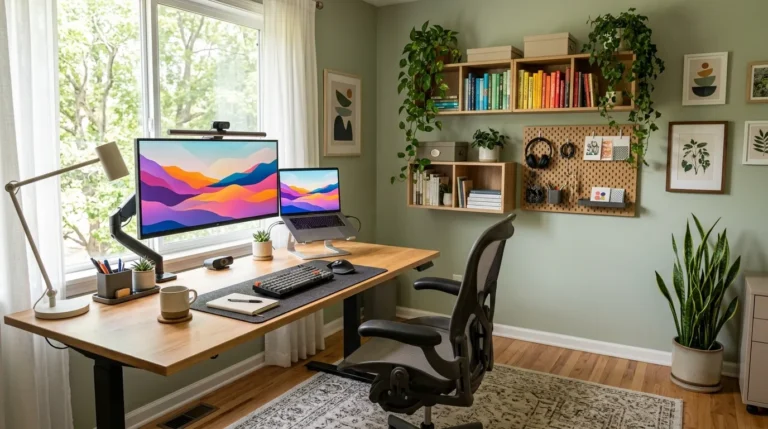
An adjustable standing desk creates the option to change working positions throughout the day. A monitor arm, accessible controls and neatly managed cables make transitions easier, while a supportive chair remains available for seated tasks.
Set the desk height so your elbows stay comfortably near a right angle when typing, whether sitting or standing. Keep the monitor at a comfortable viewing height and position frequently used items within easy reach. Alternate positions according to your comfort rather than standing continuously and take regular movement breaks. A simple desk mat can also provide a defined standing area without adding visual clutter.
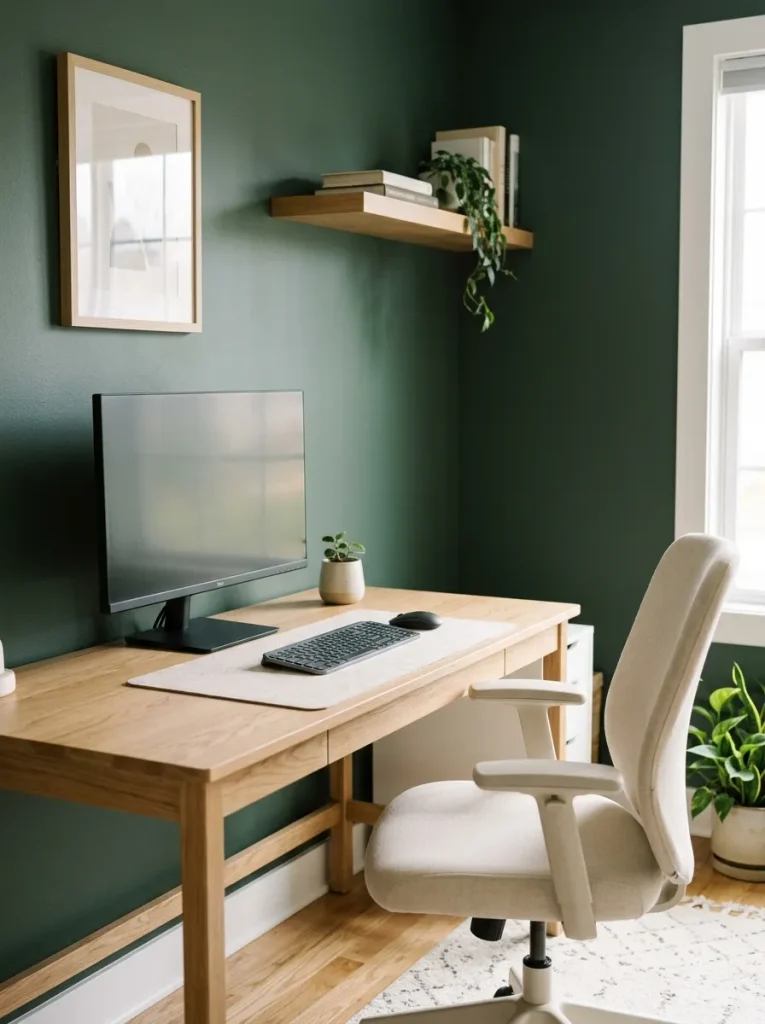
Modern Office with Accent Wall
Cost: Low to moderate, depending on paint and decor choices.
Time: One afternoon for painting and arranging furniture, excluding additional drying time.
Skill Level: Beginner for a simple painted wall.
Best For: Anyone who wants a distinctive workspace without replacing existing furniture.
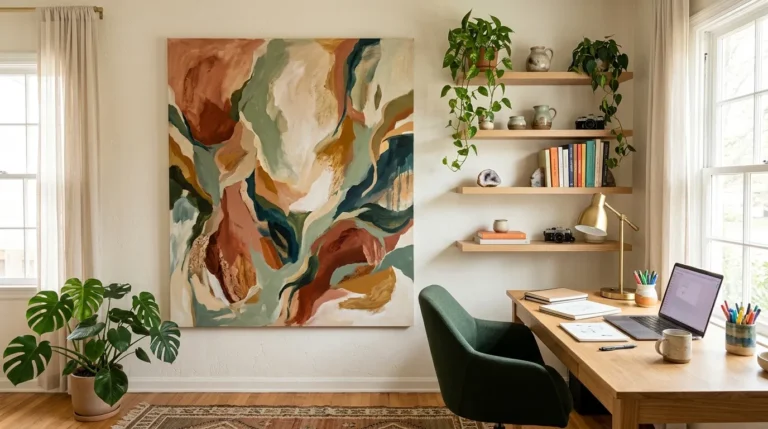
An accent wall gives your office a focal point while allowing the rest of the room to remain simple. Deep green, muted blue, warm taupe and charcoal can all complement modern furniture. Before choosing a shade, test a sample in both daylight and artificial light because colors can look different throughout the day. Keep nearby accessories restrained so the wall remains the main feature. If painting is not practical, removable wallpaper or a large framed artwork can create a similar sense of definition.
Modern Office with Personal Touches
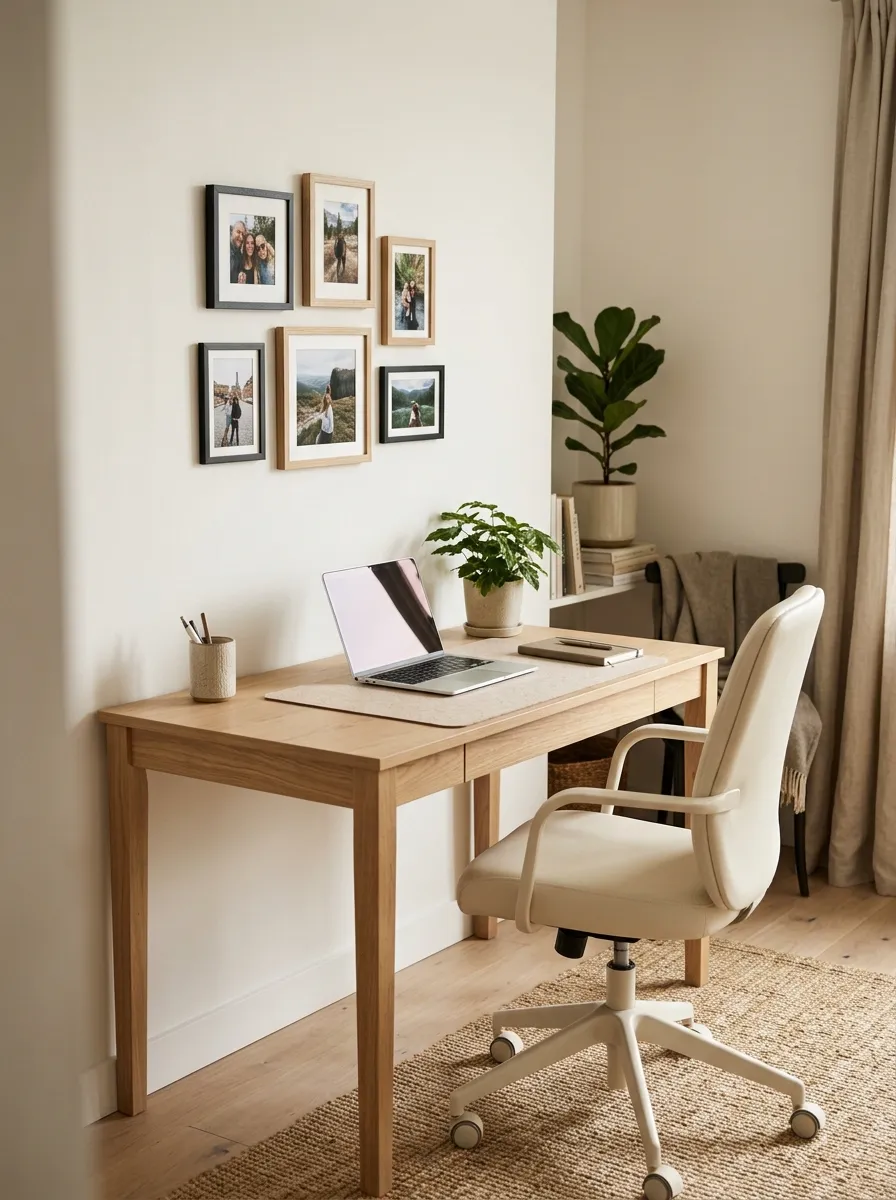
DO
- Display meaningful items: Choose a favorite photograph, travel keepsake or piece of artwork that makes you smile.
- Use coordinated frames: Matching black, white or natural wood frames keep personal displays visually consistent.
- Add a favorite color: Repeat one accent shade in a notebook, cushion or small desk accessory.
- Keep useful items visible: Let your everyday essentials contribute to the room’s personality while remaining practical.
DON’T
- Overfill the desk: Leave enough clear space for writing, typing and spreading out documents.
- Mix too many styles: A few complementary finishes usually look more cohesive than unrelated decorations.
- Block your workspace: Keep sentimental objects away from your keyboard, monitor and frequently used supplies.
- Forget function: Choose decorations that fit the available space and are easy to clean around.
A personal workspace should reflect your taste while supporting your daily routine. Start with a neutral foundation, then add a few objects that have genuine meaning to you. A framed photograph or favorite print can make the office feel welcoming without distracting from your tasks. Rotate smaller decorations occasionally if you enjoy refreshing your surroundings. The goal is a workspace that feels individual, comfortable and organized rather than overly styled.
Modern Office with Soft Neutrals
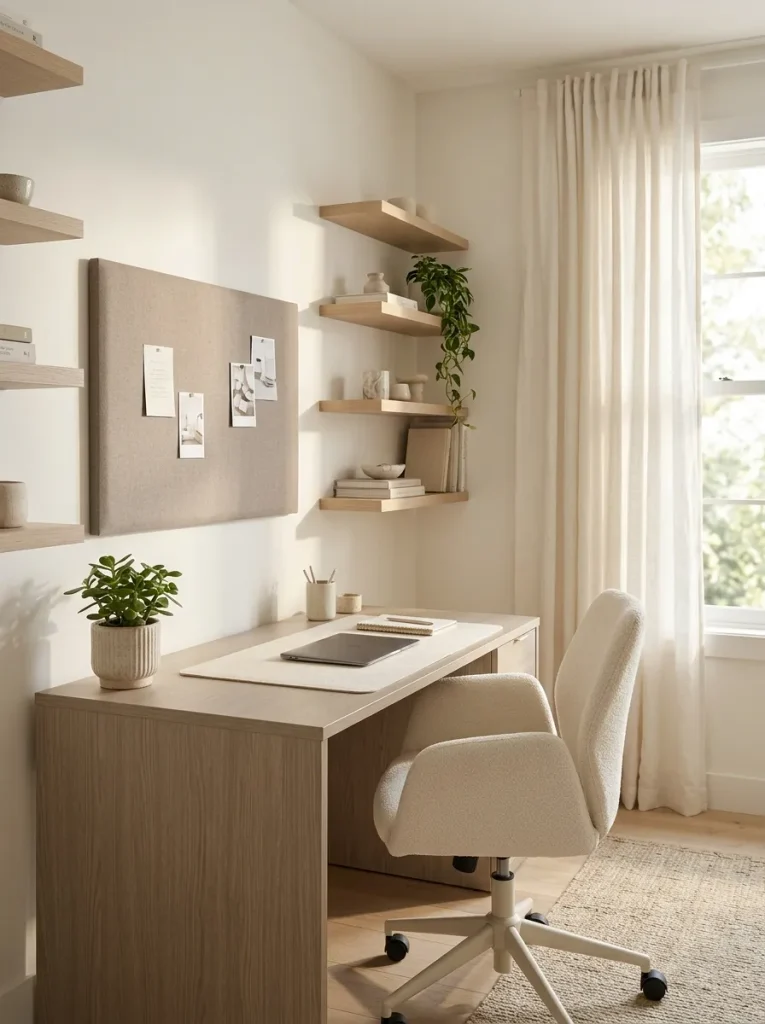
Soft neutrals can make a workspace feel calm without sacrificing visual interest. Combine warm white, oatmeal, beige and light wood rather than relying on a single flat shade.
Choose textures carefully. A linen curtain, woven storage basket, boucle chair or subtly textured rug adds depth while preserving the understated look. Use darker accents sparingly through a desk lamp, monitor frame or picture frame to give the room definition. If you already own a desk in a different finish, neutral accessories can help it blend with the rest of the space. This flexible palette also makes seasonal updates simple because small changes can refresh the room without replacing major furniture.
Modern Office with Dual Zones
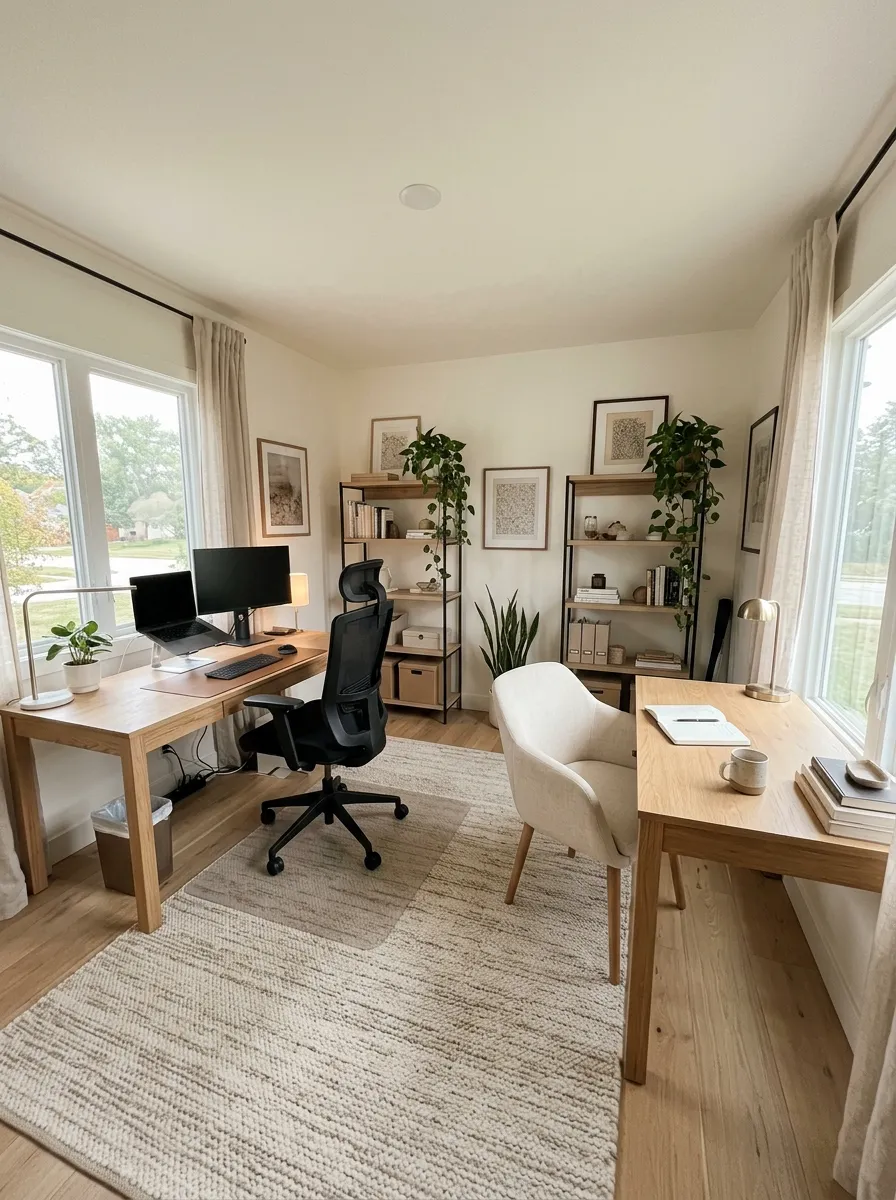
Cost: Moderate, depending on whether a second desk is needed.
Time: Two to four hours for planning, arranging furniture and organizing supplies.
Skill Level: Beginner.
Best For: People who switch between computer work, reading, writing or creative projects.
Creating separate work zones can help you organize different activities without making the room feel divided. Place your computer desk near the strongest reliable light source, then use a smaller table for paperwork, planning or creative tasks. A shared color palette keeps both areas visually connected, while rugs or shelving can subtly define each zone. Before arranging the furniture, check that you can move comfortably between the two work surfaces. Keep the tools for each activity close to its designated area to reduce unnecessary clutter.
Modern Office with Floating Shelves
Quick Tip:
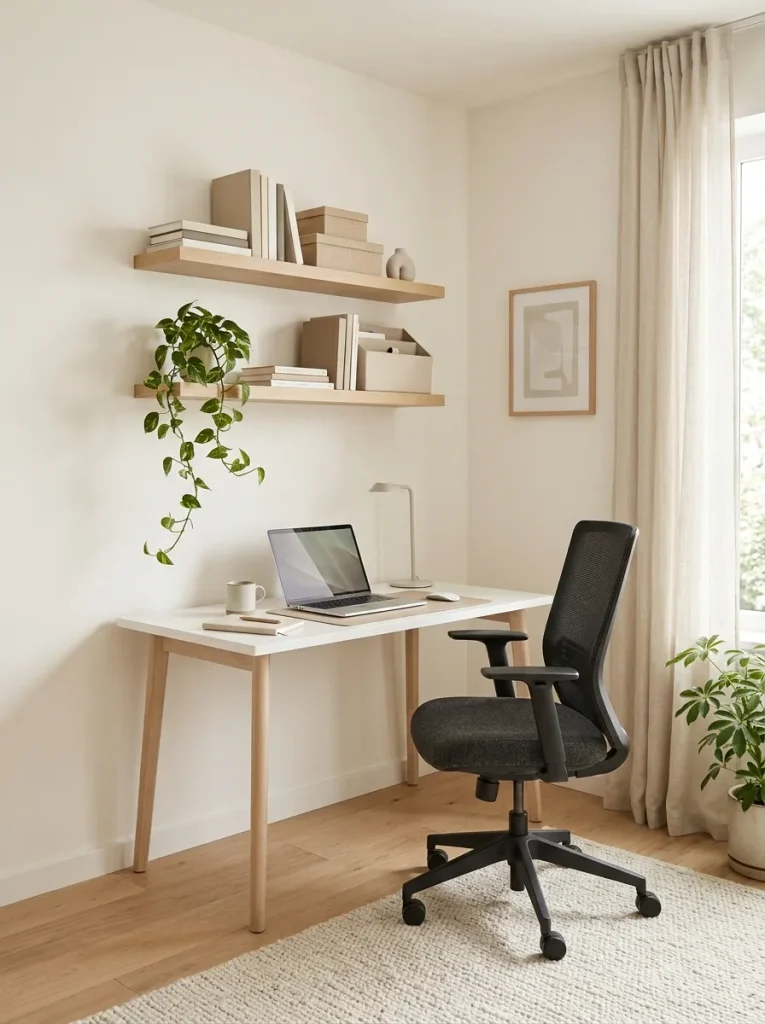
Measure the wall space above your desk before installing floating shelves and leave enough room for your monitor and comfortable head movement. Use wall anchors or mounting hardware appropriate for your wall type and the shelf’s expected load.
Floating shelves offer practical storage without taking up valuable floor space. Arrange frequently used books and supplies on the lower shelf, then reserve higher shelves for lighter items and simple decorations. Repeat the desk’s wood tone or another finish to create a cohesive appearance. Avoid overcrowding the shelves, since a little open space makes the whole workspace feel lighter. If you rent your home, consider a freestanding shelving unit that provides a similar look without permanent wall changes.
Modern Office with a Cozy Rug
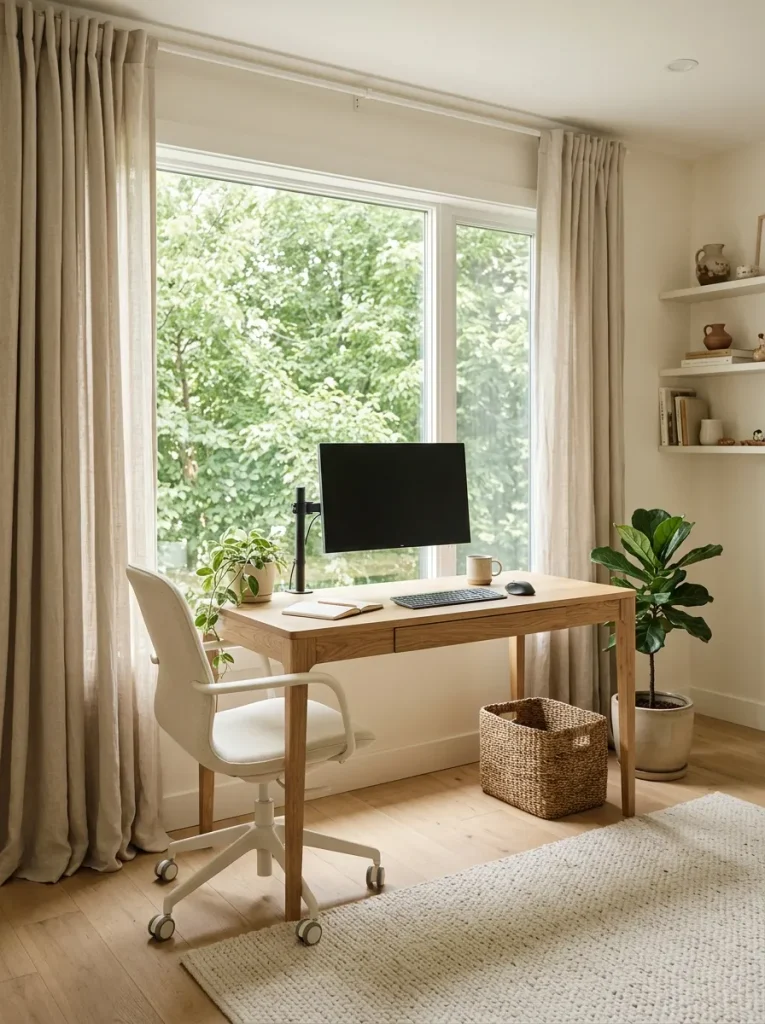
A rug can make a home office feel more connected to the rest of your interior while softening hard flooring. Choose a low-pile design that allows your chair to move easily, especially if you use rolling casters.
For a balanced modern look, try a subtle geometric pattern, a textured neutral weave or a muted accent color. Make sure the rug is large enough to sit securely beneath the desk area without bunching under the chair. A suitable nonslip pad can help keep it in place. If you prefer a minimalist setup, let the rug provide the room’s texture while keeping the desk accessories simple and coordinated.
Modern Office with Smart Storage
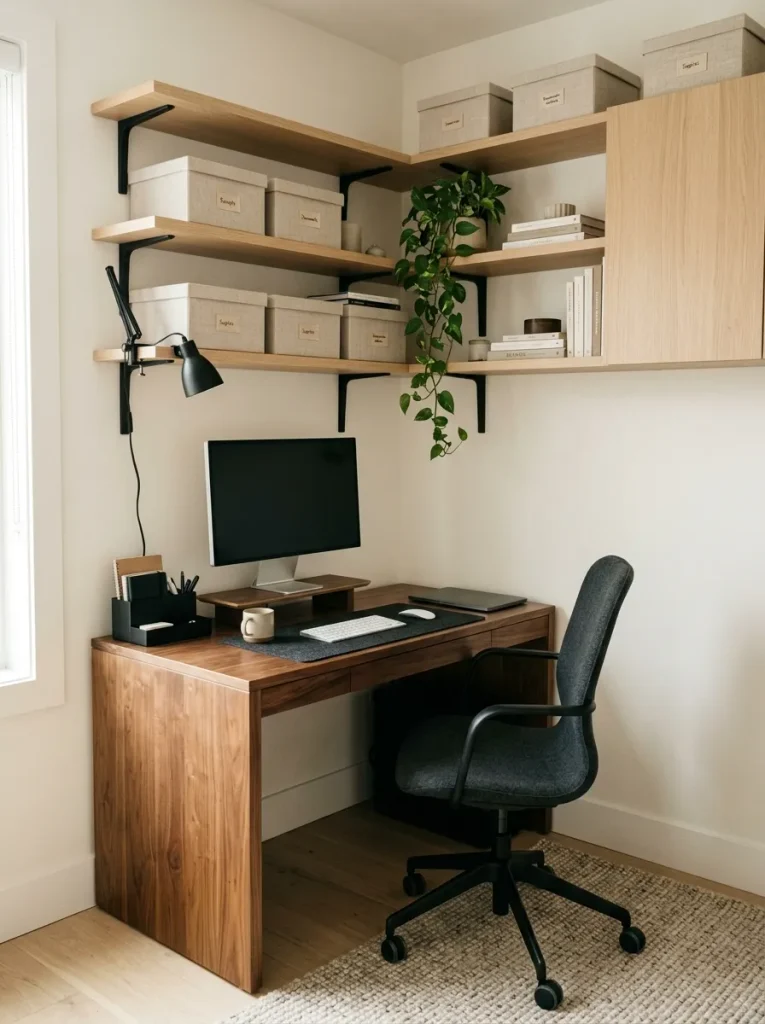
| Storage Solution | Best Use | Main Benefit |
| Desk drawers | Pens, chargers and daily supplies | Keeps essentials close at hand |
| Wall cabinets | Paperwork and less-used equipment | Frees up desktop and floor space |
| Modular organizers | Small accessories and stationery | Makes items easier to sort |
| Labeled boxes | Cables, files and spare supplies | Simplifies finding stored items |
Smart storage works best when every category of item has a consistent place. Begin by sorting your supplies into daily essentials, occasional-use materials and items that can be stored elsewhere. Keep the first group close to your desk, then use drawers, cabinets or labeled boxes for the rest. Choose storage that fits the furniture you already own instead of buying organizers before measuring. A simple weekly reset can prevent paperwork and accessories from gradually taking over your workspace.
Modern Office with Natural Light
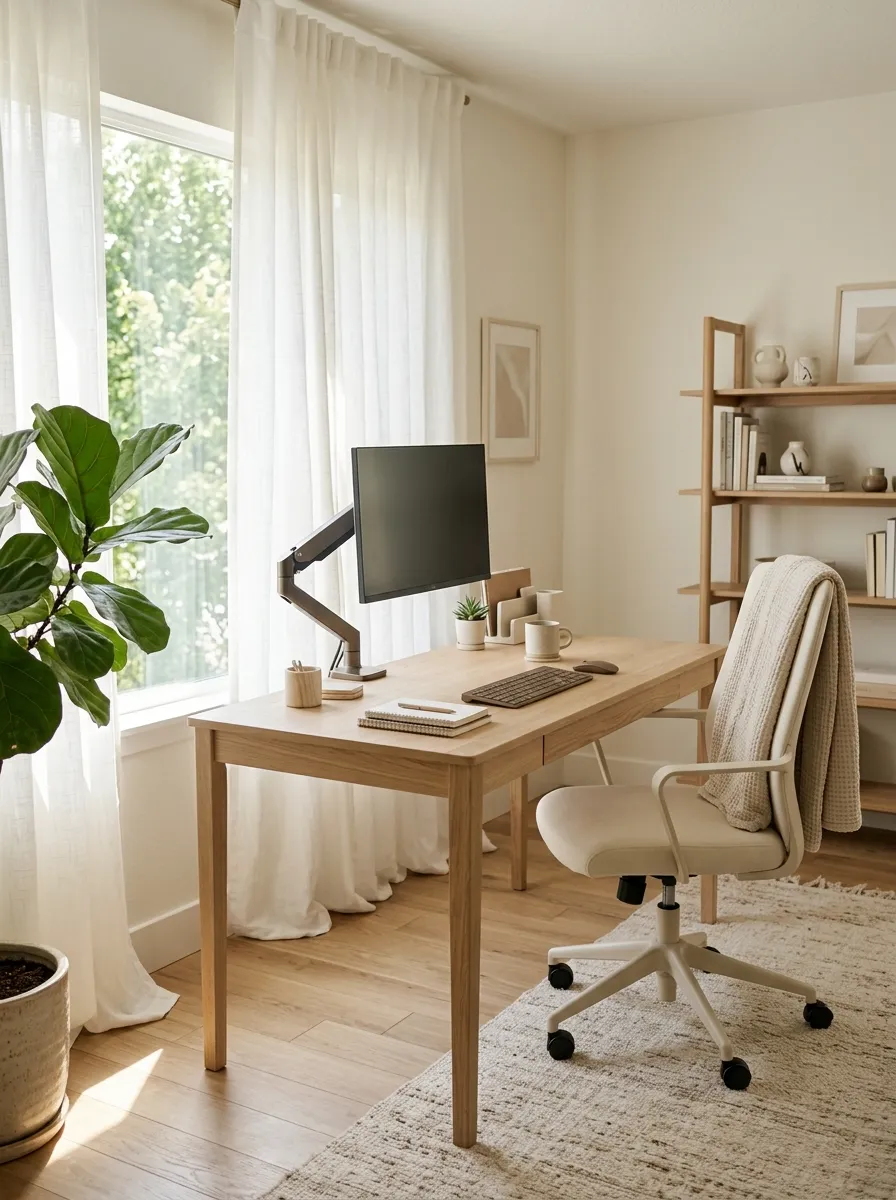
DO
- Position your desk thoughtfully: Place it near a window where daylight reaches your work area without causing distracting screen reflections.
- Use sheer curtains: Filter strong sunlight while allowing natural brightness into the room.
- Choose a light palette: White walls and pale wood finishes help reflect available daylight.
- Add adjustable task lighting: A desk lamp provides focused illumination when clouds or evening hours reduce natural light.
DON’T
- Face direct glare: Avoid placing your monitor where bright sunlight reflects straight into your eyes or across the screen.
- Ignore changing sunlight: Check the window at different times of day before finalizing your layout.
- Block the window: Keep tall furniture away from the main source of daylight when possible.
- Rely on daylight alone: Maintain comfortable artificial lighting for early mornings and evening work.
Natural light can make a workspace feel more open and pleasant, particularly in smaller rooms. Position your monitor perpendicular to the window when practical, then adjust curtains and screen brightness to reduce glare. A light desktop and restrained decor help preserve the airy effect. If your office has only a small window, combine the available daylight with layered artificial lighting to create a comfortable setup throughout the day.
Modern Office with Minimal Decor
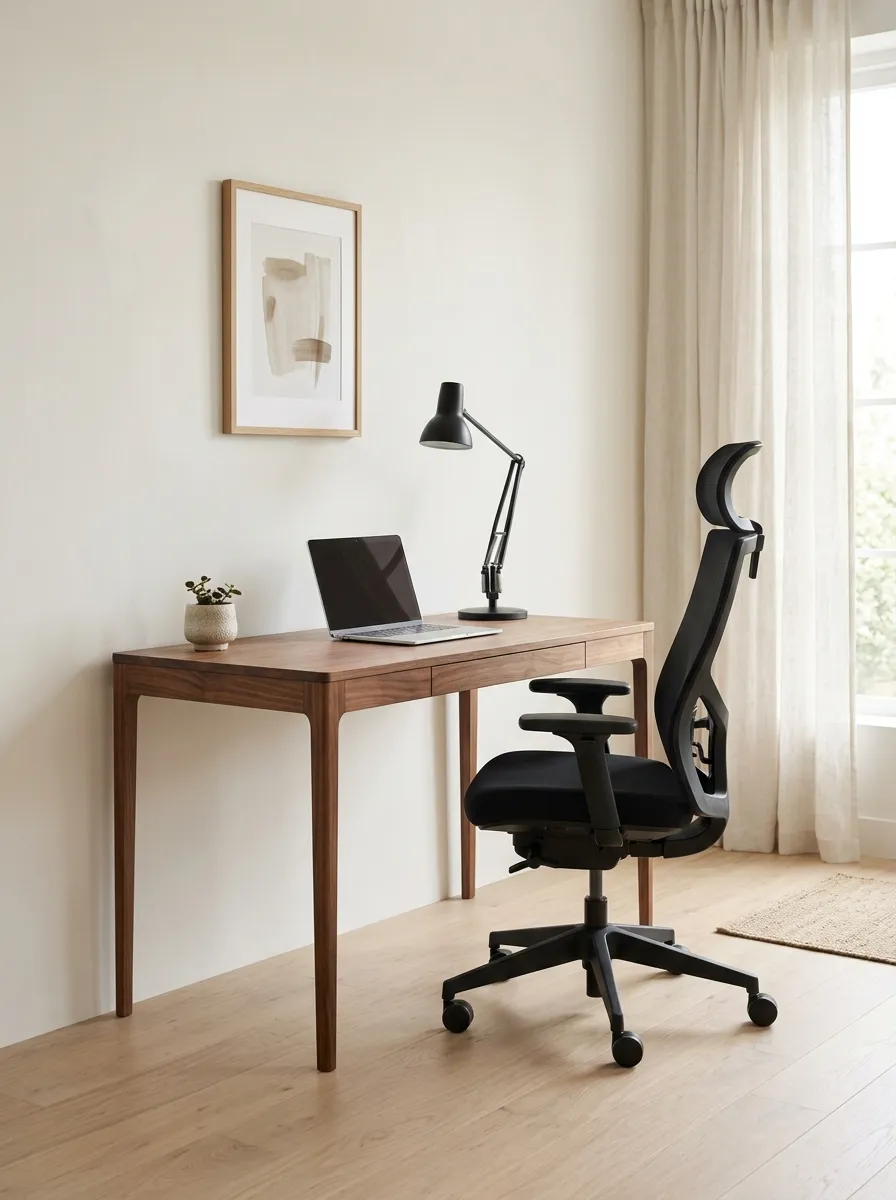
A few well-chosen details can make your office feel finished without competing for your attention. Start with functional furniture, then add one or two decorative accents that complement its shape and finish.
Keep the essentials visible. A lamp, notebook and small plant can provide enough personality for a clean modern workspace. Store extra stationery, spare cables and paperwork in drawers so the desktop remains easy to use. If the room feels too plain, introduce interest through texture or a single artwork rather than adding lots of small objects. This approach makes cleaning simpler and helps the office maintain its polished appearance during busy weeks.
Modern Office with a View
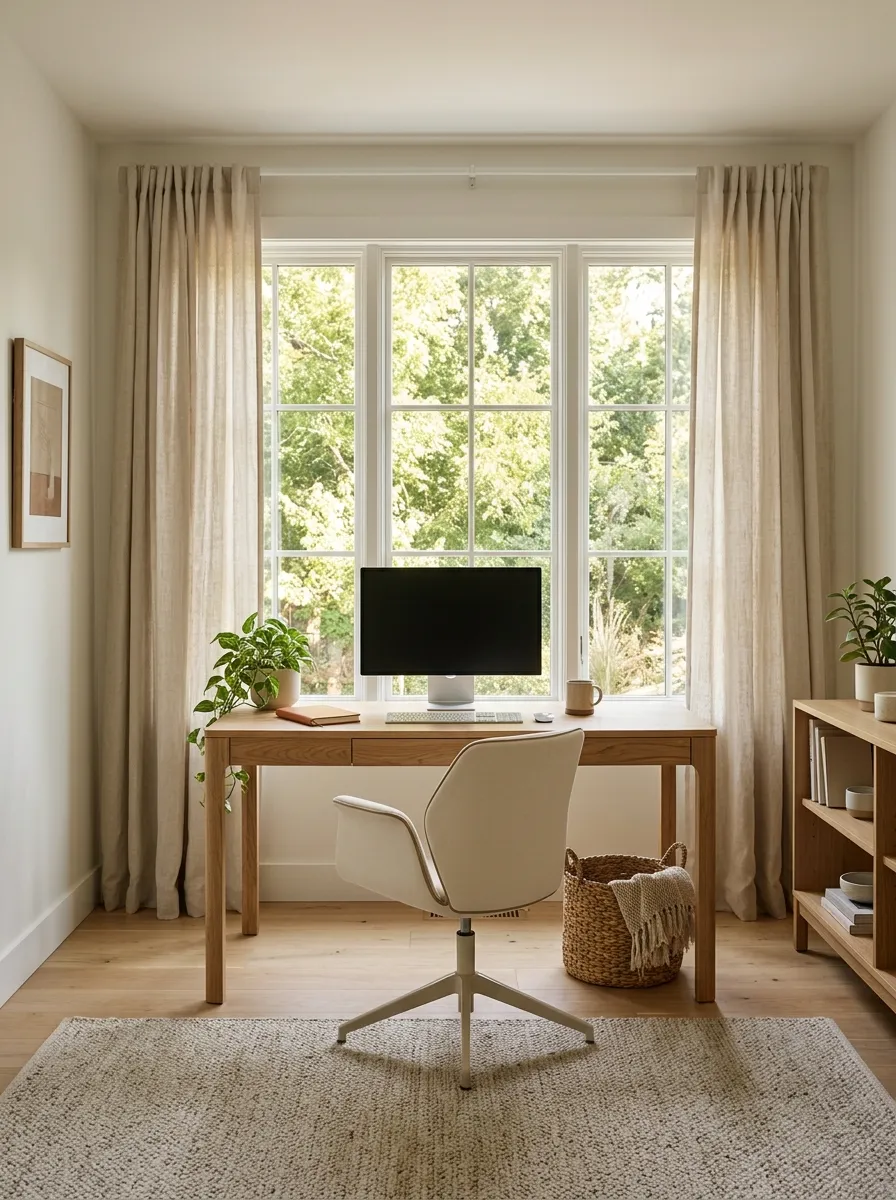
Cost: Moderate, depending on the desk, chair and window treatments.
Time: Two to three hours for arranging furniture and styling the workspace.
Skill Level: Beginner.
Best For: Anyone with a pleasant outdoor view or a window overlooking a garden, courtyard or leafy street.
A window view can give your workspace a welcome visual break during a busy day. If the layout allows, position your desk so you can enjoy the scenery without turning your neck repeatedly or creating screen glare. Choose simple curtains that provide privacy while allowing daylight into the room and keep the window area free from bulky furniture. If the view is limited, a leafy plant or nature-inspired artwork can create a similar sense of connection. Pair these details with comfortable seating and practical storage to keep the office attractive and functional.
CONCLUSION
Creating a workspace you love doesn’t require a complete home makeover or an expensive furniture budget. The right Modern Home Office Ideas can help you make better use of your space, improve organization and bring a fresh sense of inspiration to your daily routine.
Start with one change, whether it’s adding floating shelves, improving your lighting, choosing a comfortable chair or simplifying your desk. Save this article on Pinterest so you can revisit your favorite designs when you’re ready to refresh your office. Share it with a friend who needs workspace inspiration, too.
Your ideal home office starts with one thoughtful step.