31 Kitchen Ideas That Will Make You Fall in Love Again
The right Kitchen Ideas can help you create a room that feels warmer, more organized and beautifully suited to your lifestyle, even if you’re working with a small budget.
Whether your kitchen needs a simple refresh or a more noticeable update, these 31 inspiring ideas offer plenty of ways to make it feel new again. From warm wood cabinets and statement pendant lights to colorful finishes, clever storagen and cozy breakfast corners, you’ll discover options for different tastes and spaces.
I’ve noticed that small, thoughtful changes can often make a room feel more inviting without requiring a complete renovation. Explore these ideas, save your favorites on Pinterest and find the details that make your kitchen feel like home.
Warm Wood Cabinets
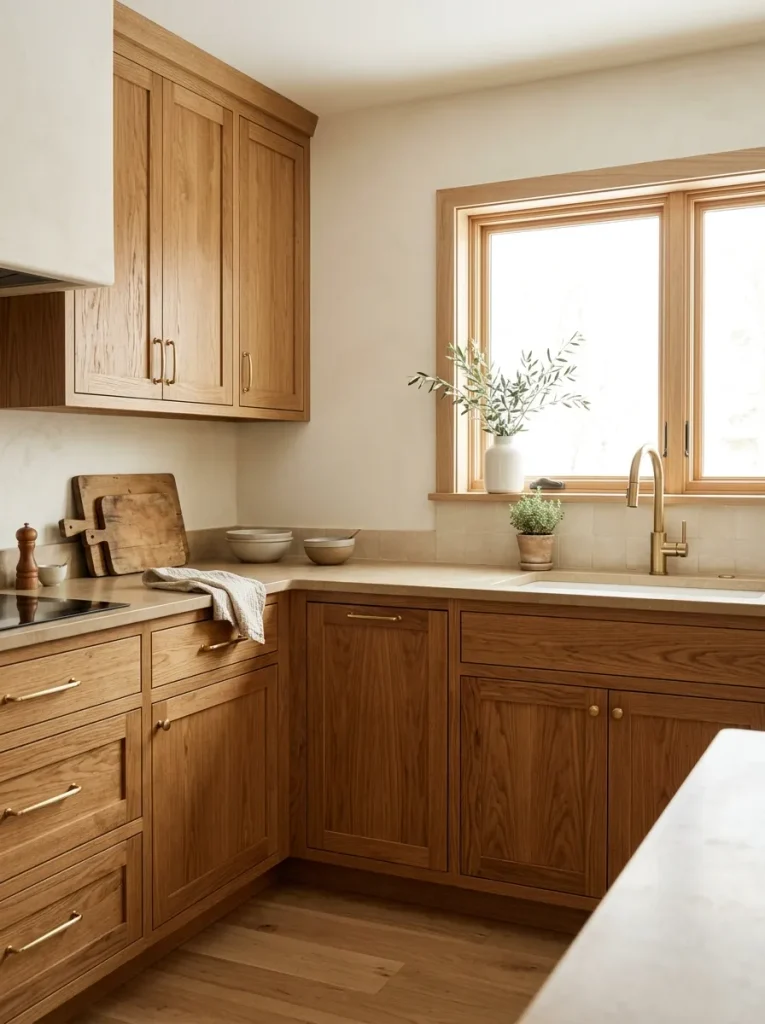
Warm wood cabinets bring a natural softness to the kitchen, making the entire space feel more welcoming. Honey oak, light walnut and natural maple each offer a slightly different look, so choose a finish that complements your flooring and countertops.
In my experience, pairing wood cabinets with cream walls and simple hardware keeps the room feeling fresh rather than heavy. Leave some countertop space clear and add a small plant or ceramic bowl for a lived-in touch. The result feels warm, timeless and easy to maintain.
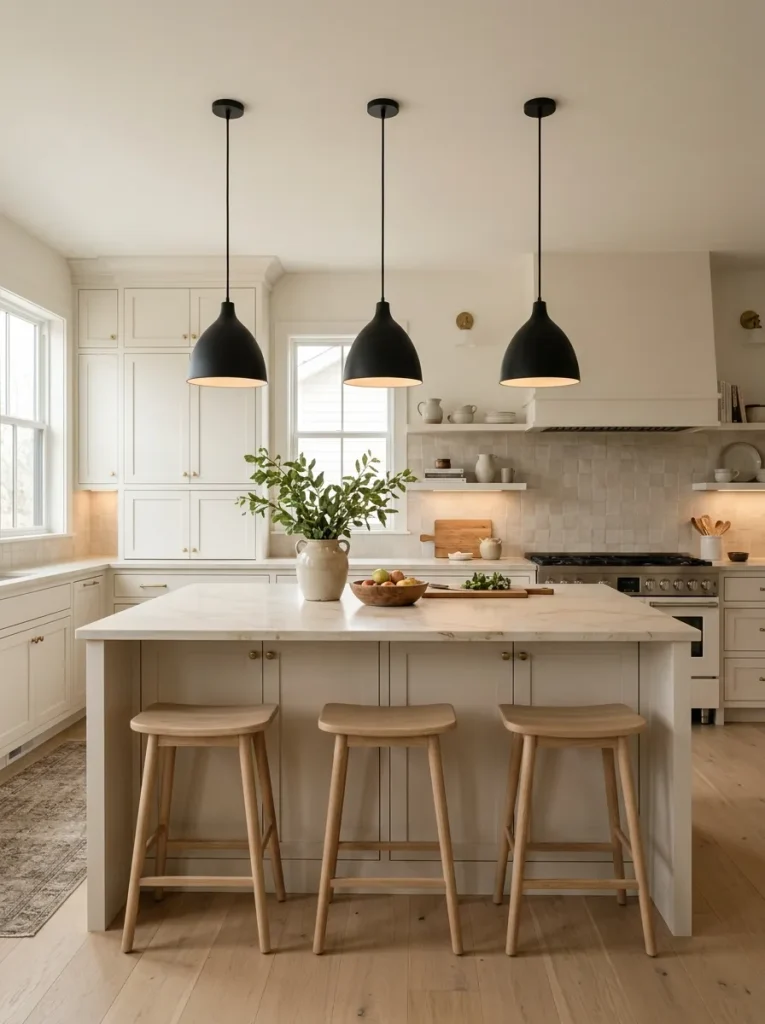
Creamy White Finishes
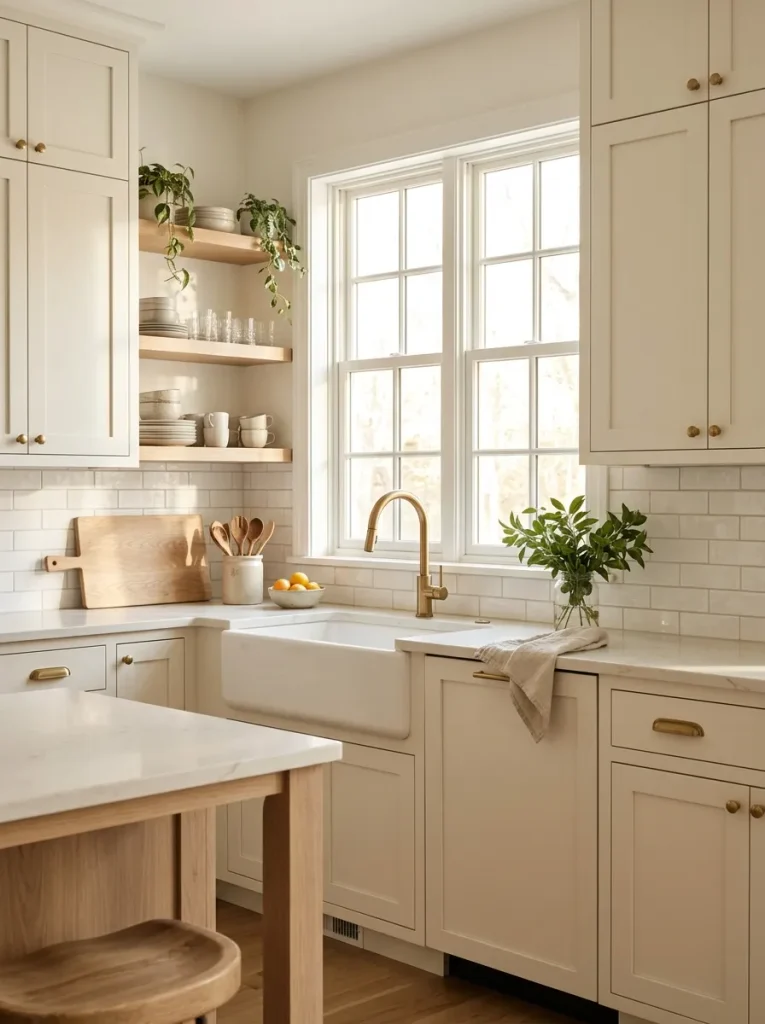
- Choose warm whites: Cream and ivory tones create a softer atmosphere than stark, cool white.
- Pair with natural wood: Wooden stools or open shelves add contrast without making the palette feel busy.
- Add subtle hardware: Brushed brass or champagne finishes bring warmth to cabinet doors.
- Layer different textures: Combine smooth quartz, matte paint and gently textured backsplash tiles.
- Keep counters simple: Display only a few useful items to preserve the clean appearance.
The secret to this look is balancing similar shades rather than matching everything exactly. A slightly warmer countertop can complement creamy cabinetry, while natural light keeps the room from feeling dull. Before choosing paint, test samples at different times of day because window direction can change how white finishes appear.
Statement Pendant Lights
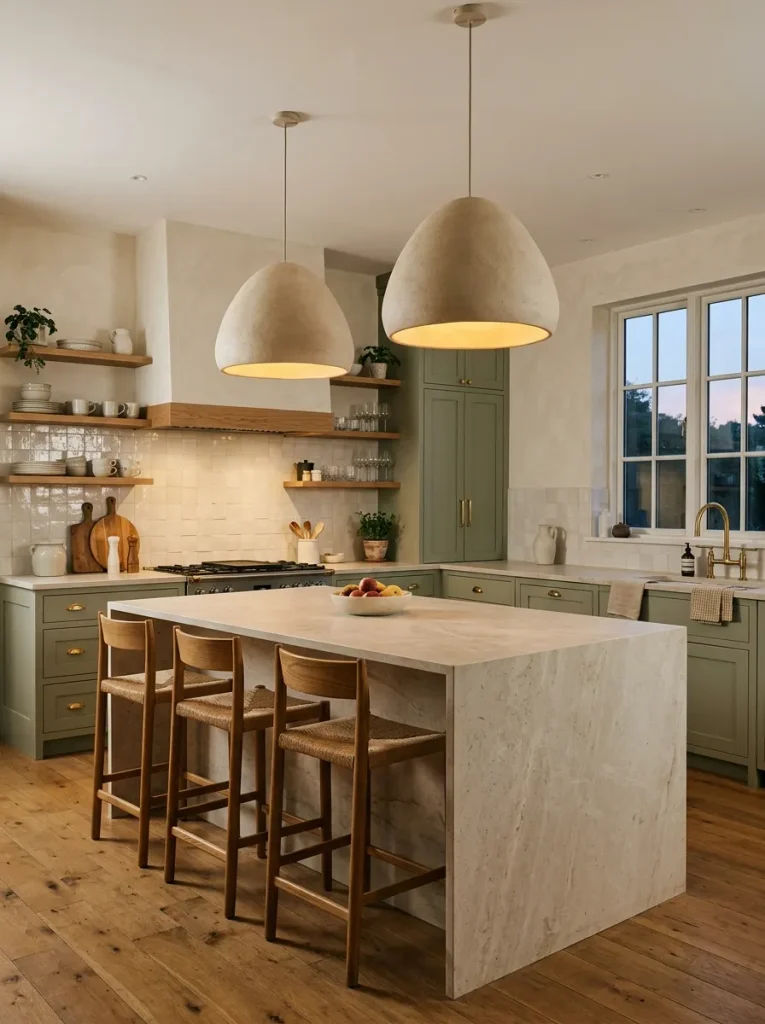
Quick Tip:
Hang pendant lights low enough to illuminate the island without blocking conversations across it. As a starting point, leave around 30 to 36 inches between the countertop and the bottom of each fixture, then adjust for ceiling height and sightlines.
Statement lighting can make an ordinary kitchen feel thoughtfully designed without replacing cabinets or countertops. Choose two or three fixtures that suit the island’s length and keep their finishes consistent with nearby hardware. Dimmable bulbs offer flexibility, letting you switch from bright task lighting during meal preparation to a softer glow for relaxed evenings.
Open Wooden Shelving
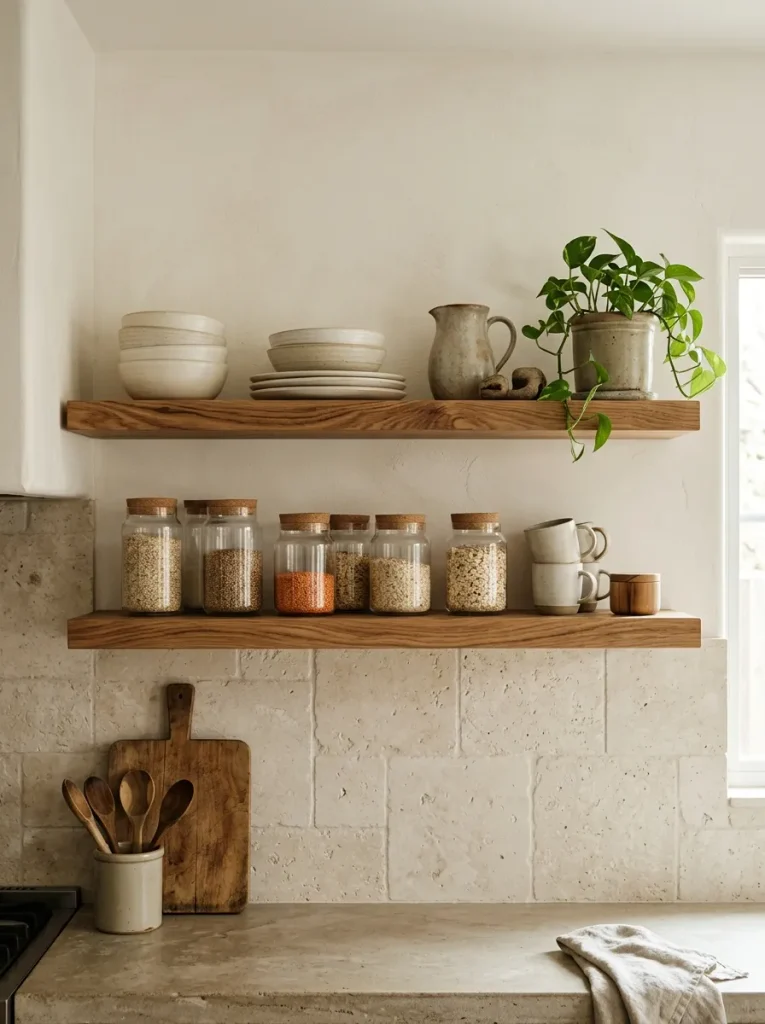
BEFORE
Bulky upper cabinets can make a small kitchen feel crowded, especially when dark finishes cover most of the wall. Everyday dishes may also become difficult to reach when shelves are packed tightly.
AFTER
Floating wooden shelves create a more open appearance while keeping frequently used plates and cups accessible. A few carefully arranged pieces add warmth without overwhelming the room.
Open shelving works best when you display items you use regularly and keep the arrangement simple. Store mismatched cookware and less attractive supplies behind closed doors. For safety, secure shelves into appropriate wall supports and avoid placing heavy dishes above busy walkways.
Two-Tone Cabinets
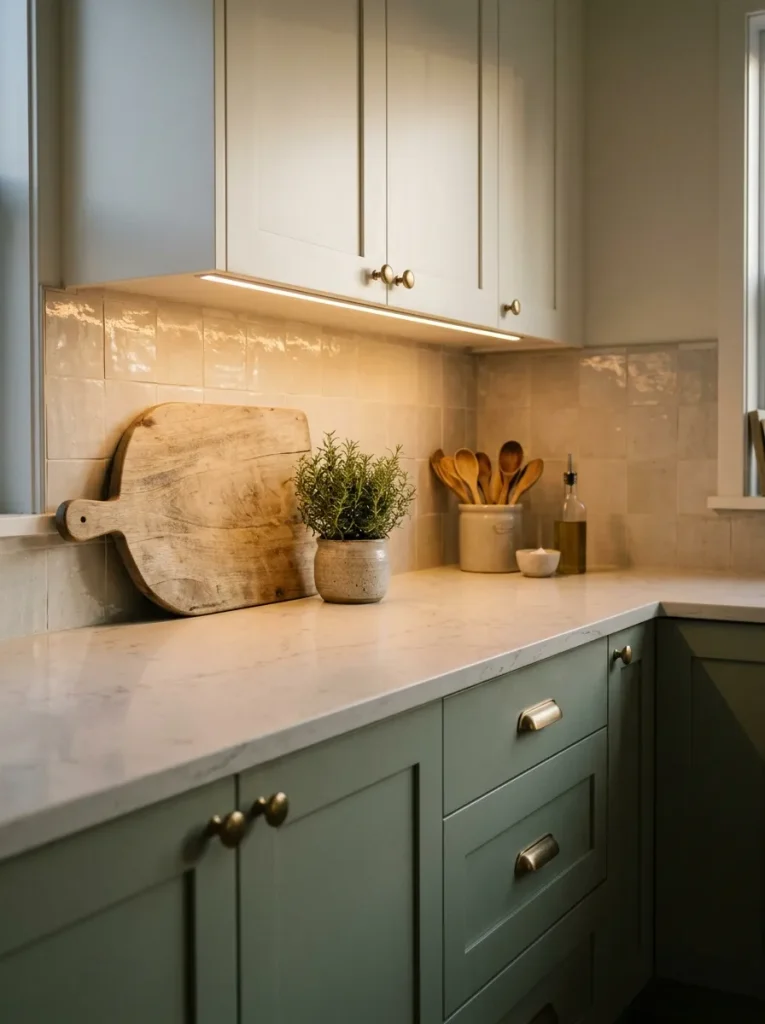
- Select two complementary colors. Pair sage green with cream, navy with white or charcoal with pale gray.
- Keep darker shades below. Deep colors on lower cabinets create visual weight without making the upper walls feel crowded.
- Repeat one finish. Use matching handles or knobs to connect both cabinet colors.
- Balance the countertop. Choose a light or softly patterned surface if your cabinets already provide strong contrast.
Two-tone cabinetry adds personality without requiring complicated patterns or decorative details. The contrast helps define different areas of the kitchen and gives plain cabinet doors more visual interest. Before committing, test both paint colors beside your flooring and backsplash to ensure they look balanced in your kitchen’s actual lighting.
Natural Stone Backsplash
| Design Detail | Option A: Subtle Stone | Option B: Bold Stone |
| Veining | Fine, delicate lines | Strong, dramatic patterns |
| Overall mood | Calm and understated | Luxurious and striking |
| Best pairing | Colorful or detailed cabinets | Simple, neutral cabinetry |
| Visual effect | Quiet background | Eye-catching focal point |
A natural stone backsplash adds depth through its unique veining and surface texture. Marble creates a classic appearance, while some granite and quartzite options offer distinctive patterns and different performance characteristics. Check the stone’s maintenance requirements before purchasing, especially near the stove and sink. A full-height backsplash can also create a more continuous look behind the countertop.
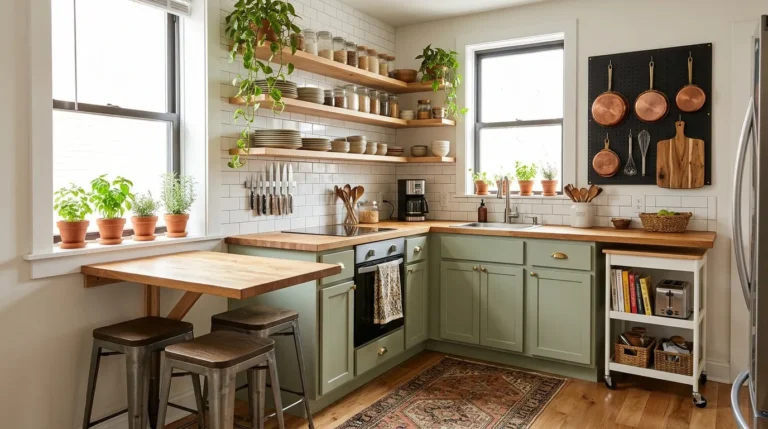
Sage Green Cabinets
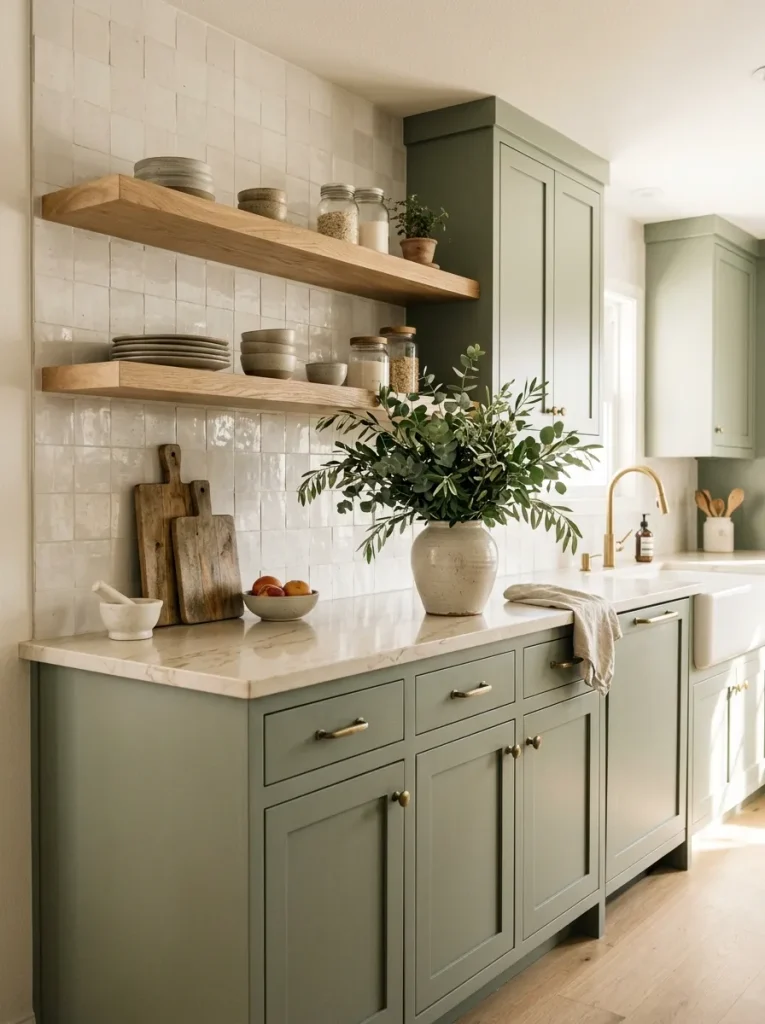
DO
- Pair sage cabinets with warm white walls for a balanced, airy look.
- Choose brass or brushed nickel hardware that complements your other fixtures.
- Add oak stools or cutting boards to introduce natural warmth.
- Test paint samples in morning and evening light before deciding.
DON’T
- Combine too many competing green shades in one room.
- Choose a countertop with busy patterns that overpower the cabinets.
- Ignore the undertones of nearby flooring and wall colors.
- Forget to use a durable cabinet finish suited to kitchen cleaning.
Sage green brings a gentle touch of color without overwhelming the room. It works particularly well with cream, natural wood and soft stone surfaces. For a cohesive result, repeat the green in just one or two small accessories rather than matching every detail. The finished kitchen feels fresh, grounded and inviting.
Cozy Breakfast Nook
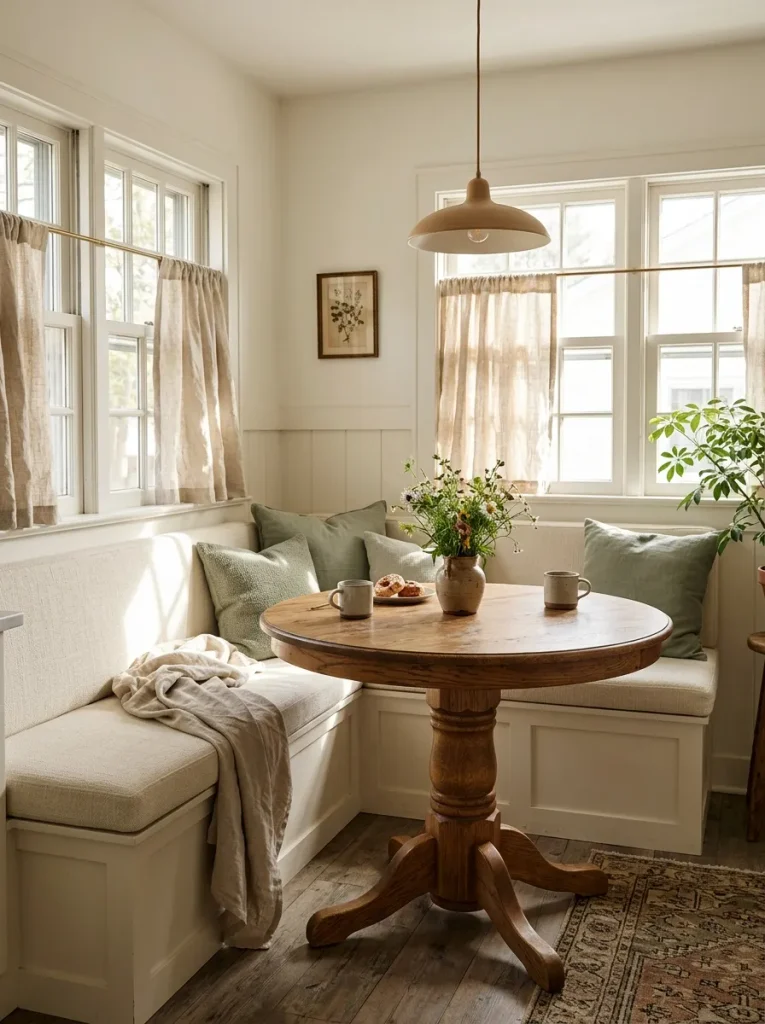
Cost: Moderate, depending on seating and carpentry needs.
Space: Best suited to an unused corner or window alcove.
Furniture: Round pedestal table, cushioned bench and compact chairs.
Lighting: Natural daylight with a warm pendant or wall sconce.
Best For: Quick breakfasts, casual meals and morning coffee.
A breakfast nook creates a comfortable place to eat without needing a separate dining room. In my experience, a round table makes tight corners easier to navigate because it has no sharp edges jutting into the walkway. Add washable cushion covers and a small pendant light to make the seating area practical for everyday use.
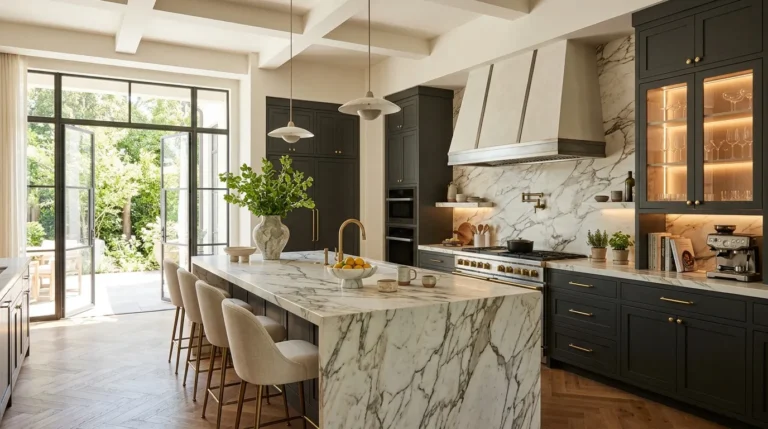
Marble Kitchen Island
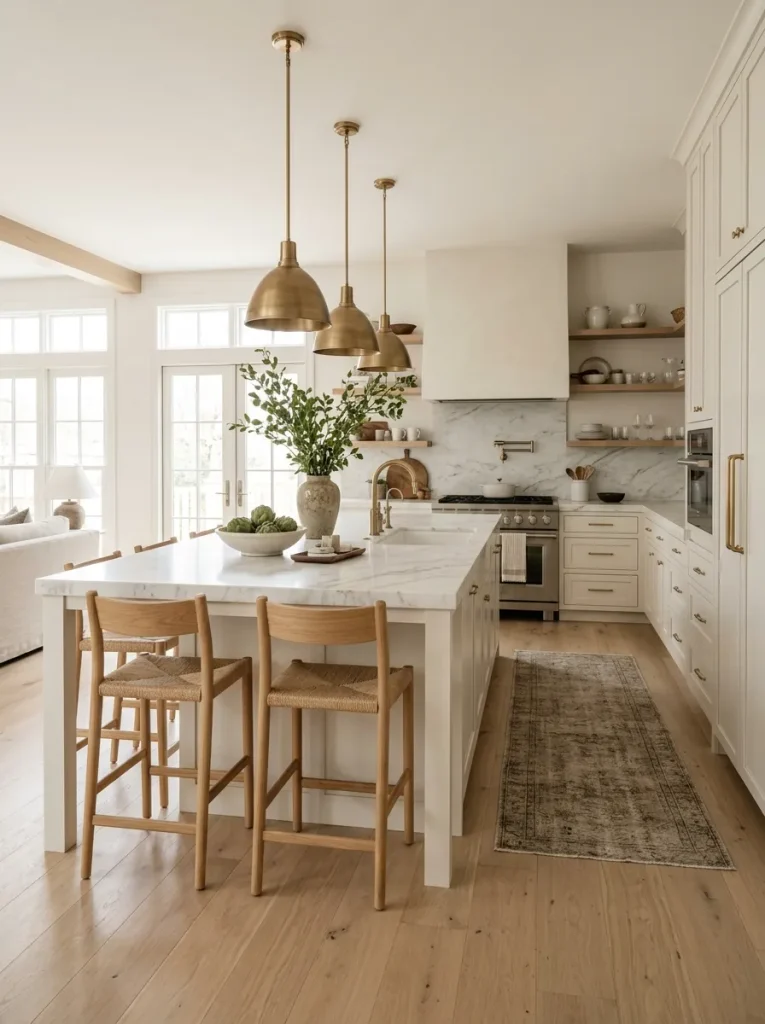
A striking island can become the visual centerpiece of the entire kitchen. Choose marble with subtle veining for a calm, timeless appearance or select stronger patterns if the surrounding cabinetry is simple. Keep nearby accessories minimal so the stone remains the main attraction.
For everyday cooking, consider how the surface will handle spills, acidic ingredients and frequent cleaning. Marble can etch when exposed to acids such as lemon juice or vinegar and it generally requires more care than some alternatives. If you love its appearance but need easier maintenance, compare engineered quartz or other suitable countertop materials before making your choice.
Glass-Front Cabinets
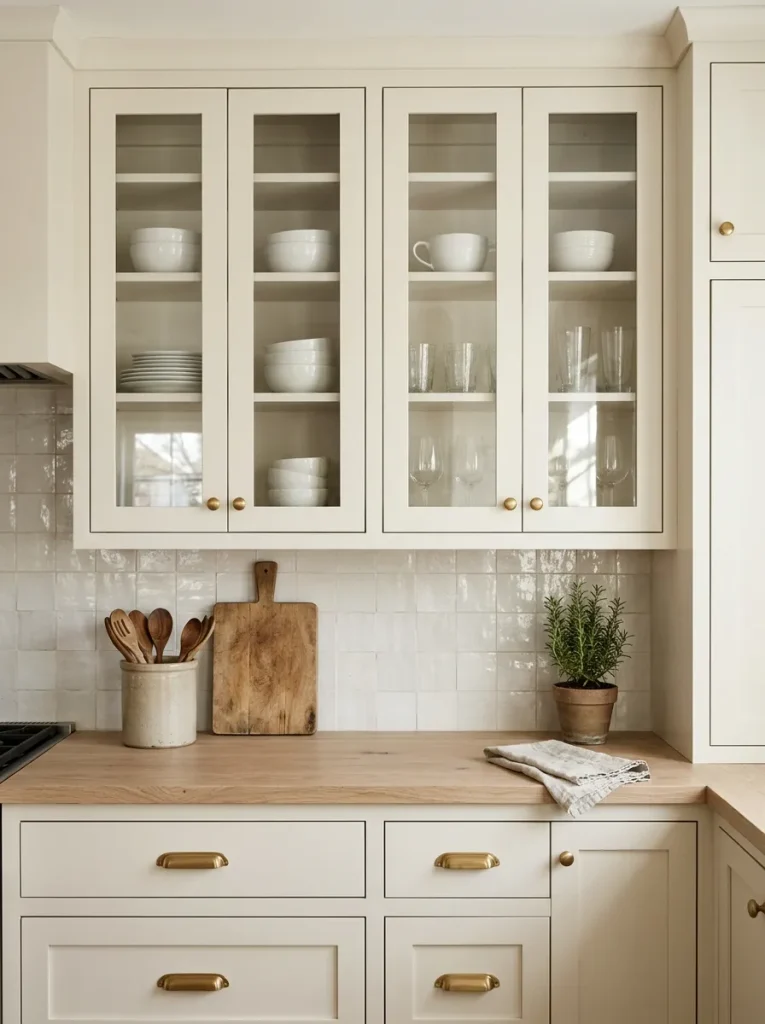
- Choose the right doors: Clear glass creates an open look, while ribbed or frosted glass softly conceals cabinet contents.
- Arrange dishes by color: Group white plates, neutral bowls and matching glasses for a tidy display.
- Add interior lighting: Small warm LED lights can make glass cabinets feel inviting after sunset.
- Keep essentials accessible: Place frequently used dishes on middle shelves for easier everyday use.
- Clean the glass regularly: Fingerprints and water spots become more noticeable on transparent surfaces.
Glass-front cabinets break up solid cabinetry and give the kitchen a lighter appearance. They work particularly well on a short section of upper cabinets rather than across every wall. For a polished result, keep the visible contents organized and avoid overcrowding shelves with packaging, mismatched containers or rarely used appliances.
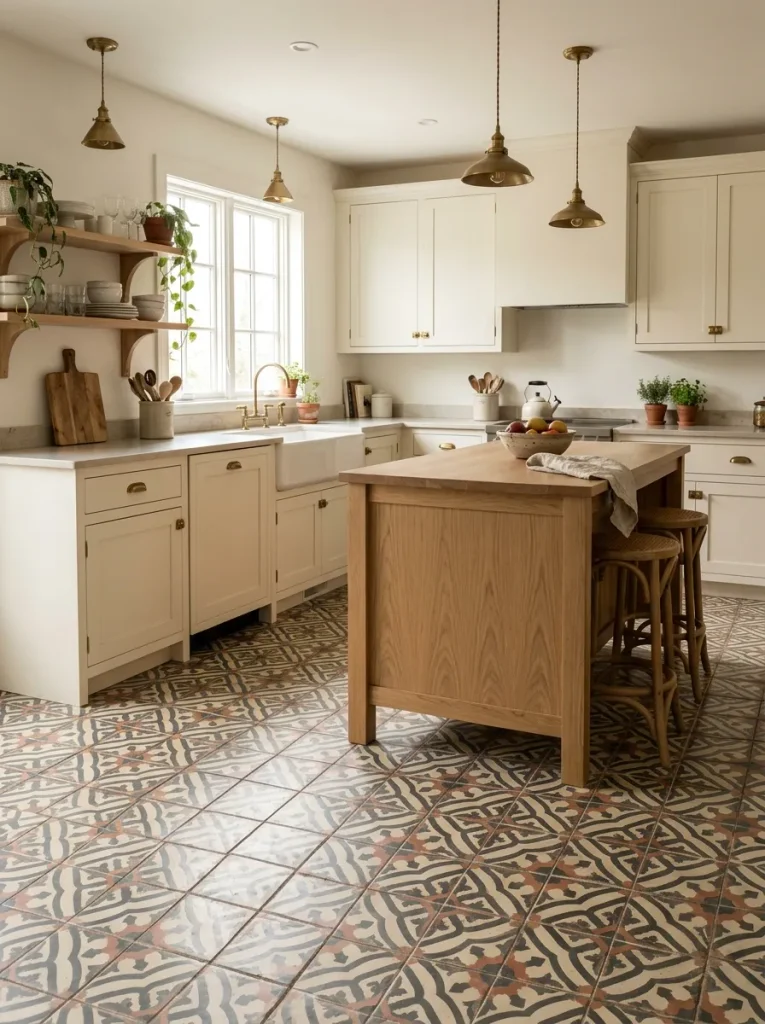
Patterned Floor Tiles
Quick Tip:
Choose floor tiles after considering your cabinet color, countertop pattern and grout shade. If the flooring has a bold geometric design, keep the surrounding surfaces relatively simple so the room feels balanced.
Patterned tiles bring personality to a kitchen without requiring colorful cabinets or decorative walls. Geometric designs suit contemporary interiors, while floral and traditional motifs work beautifully in cottage-inspired spaces. Check the tile’s slip resistance, cleaning requirements and suitability for kitchen floors before buying. A sample laid beside your cabinets can help you judge the pattern at full scale.
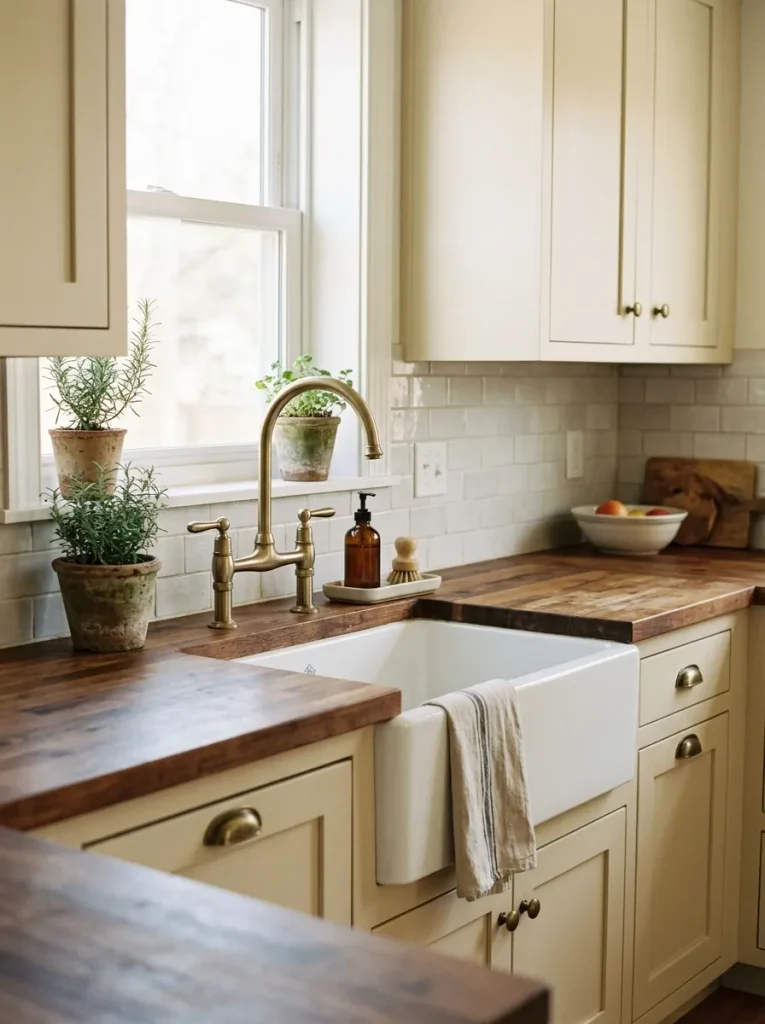
Farmhouse Sink Style
BEFORE
A shallow or cramped sink area can make washing large pots, baking trays and everyday dishes frustrating. A standard sink may also blend into the countertop without adding much visual character.
AFTER
A deep apron-front sink creates a distinctive focal point while providing room for many oversized kitchen items. Paired with warm cabinetry and a classic faucet, it adds a relaxed farmhouse feel.
Before choosing this style, measure the cabinet opening, countertop cutout and available plumbing space. Farmhouse sinks can be heavy, particularly in fireclay or cast iron, so the cabinet may need additional support. Also consider how far the apron projects into the room to maintain comfortable access while working.
Built-In Appliance Wall
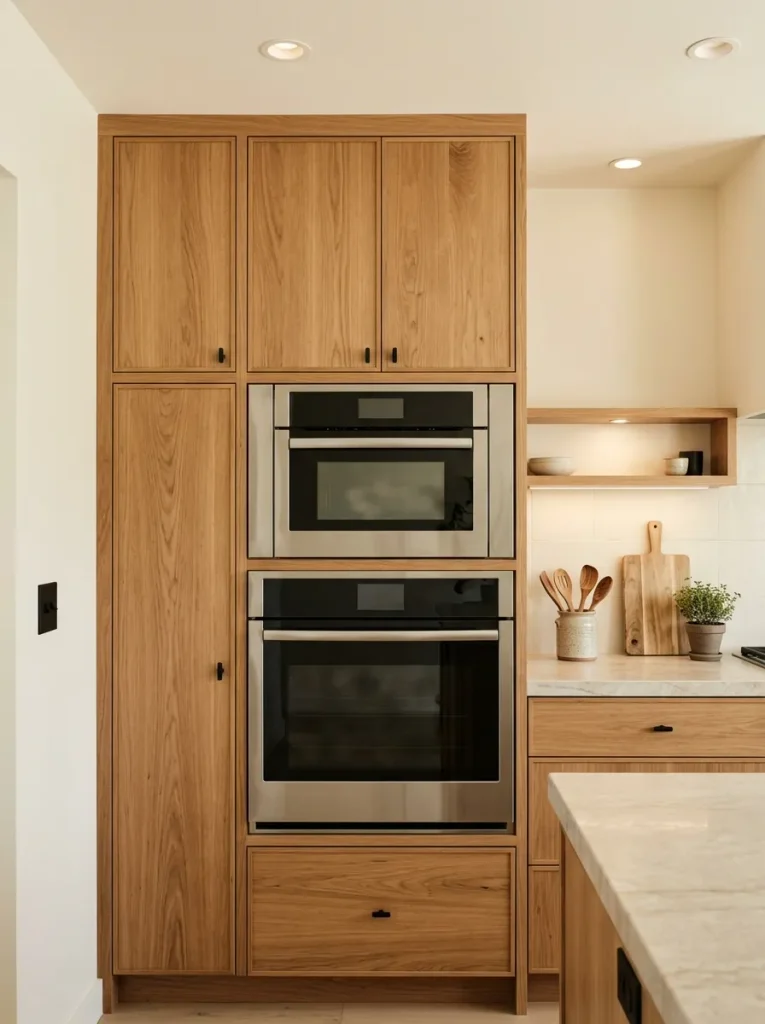
- Measure your appliances. Confirm the height, width, depth and ventilation requirements before planning the cabinet openings.
- Choose a location. Place the appliance wall near your main preparation area without obstructing walkways.
- Coordinate finishes. Match appliance colors with cabinet hardware and nearby fixtures for a cohesive appearance.
- Plan storage nearby. Keep baking trays, oven mitts and frequently used cookware within easy reach.
A built-in appliance wall gives the kitchen a more organized, streamlined appearance while keeping essential equipment together. It can also free up countertop space by moving certain appliances into dedicated cabinets. Make sure the layout allows safe access to hot oven doors and follows the manufacturer’s installation and ventilation requirements.
Pendant Lights Over Island
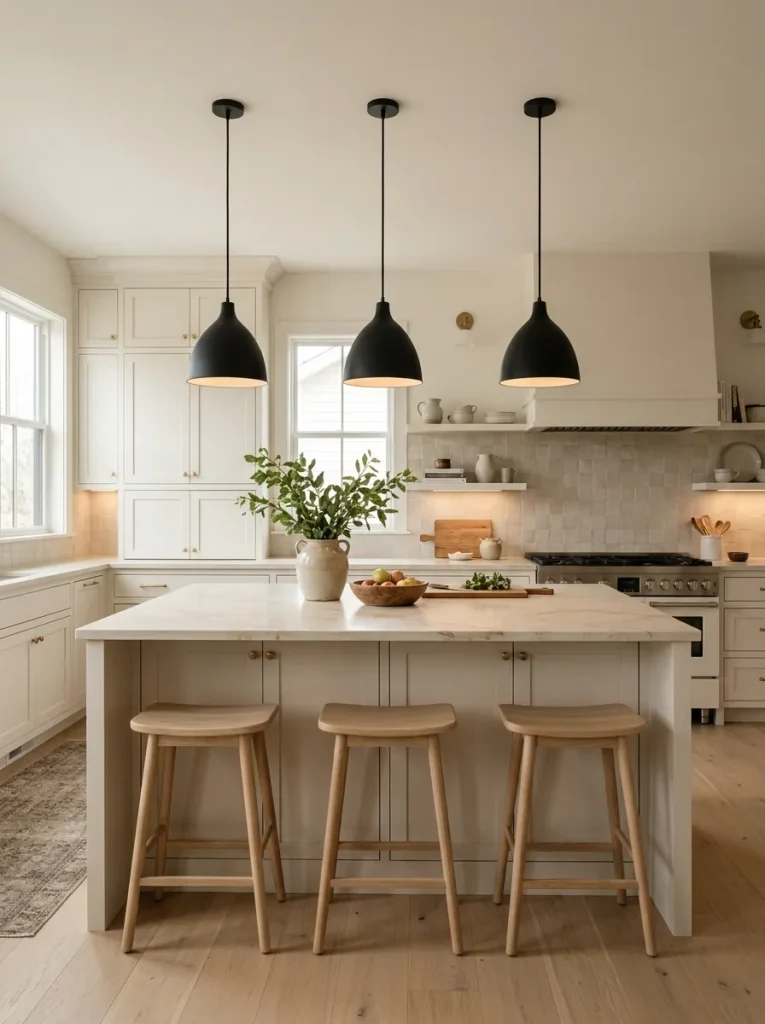
| Design Feature | Option A: Single Large Pendant | Option B: Multiple Pendants |
| Visual style | Bold and sculptural | Balanced and decorative |
| Island size | Small to medium | Medium to large |
| Light distribution | Concentrated focal point | More evenly spread |
| Overall effect | Minimal and dramatic | Layered and coordinated |
Lighting above an island should balance appearance with everyday function. A single oversized fixture creates a strong focal point, while two or three smaller pendants can distribute light across a longer work surface. Check fixture dimensions and spacing before installation and combine pendants with general ceiling lighting to avoid dark corners.
Open Concept Kitchen
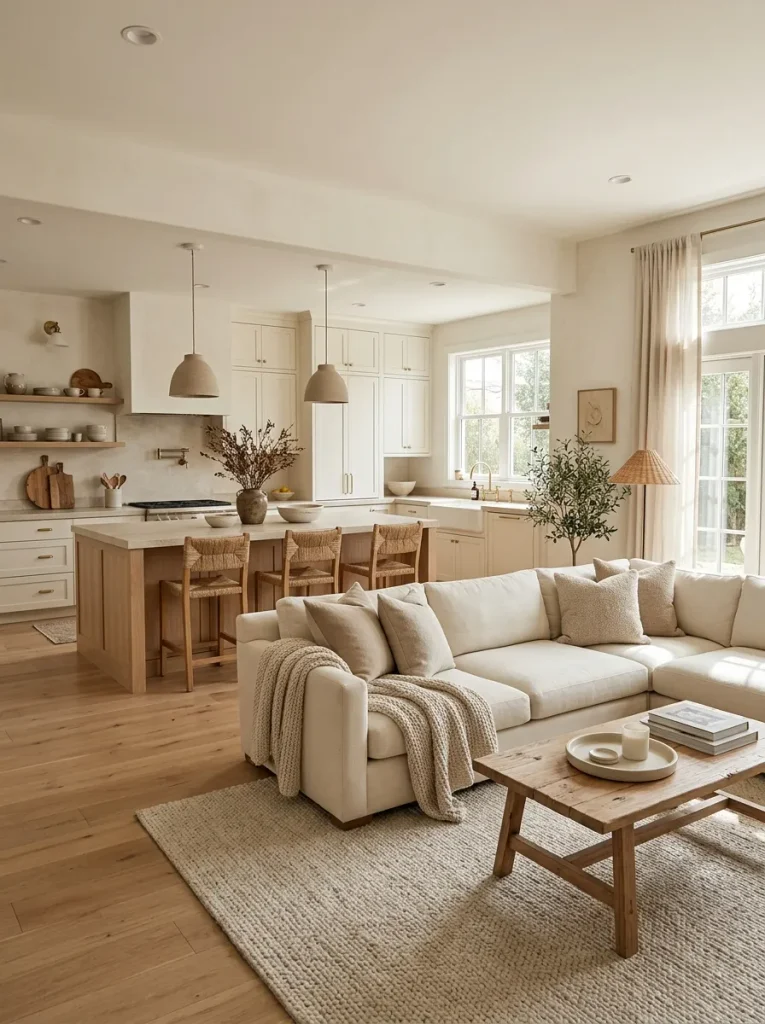
DO
- Repeat two or three colors across the kitchen and living room.
- Use an island or peninsula to define the cooking area.
- Position seating to encourage conversation without blocking kitchen access.
- Add rugs and pendant lights to distinguish different functional zones.
DON’T
- Choose completely unrelated cabinet and living room finishes.
- Place furniture where it interrupts the main walking route.
- Leave every surface bare if the combined space feels cold.
- Ignore cooking odors and noise when planning the layout.
An open layout feels cohesive when the kitchen and living area share a consistent palette while serving different purposes. For example, oak cabinetry can connect with a wooden coffee table, while cream upholstery complements light countertops. A carefully positioned island creates a natural boundary without closing off the room, helping the entire space feel connected and comfortable.
Colorful Kitchen Cabinets
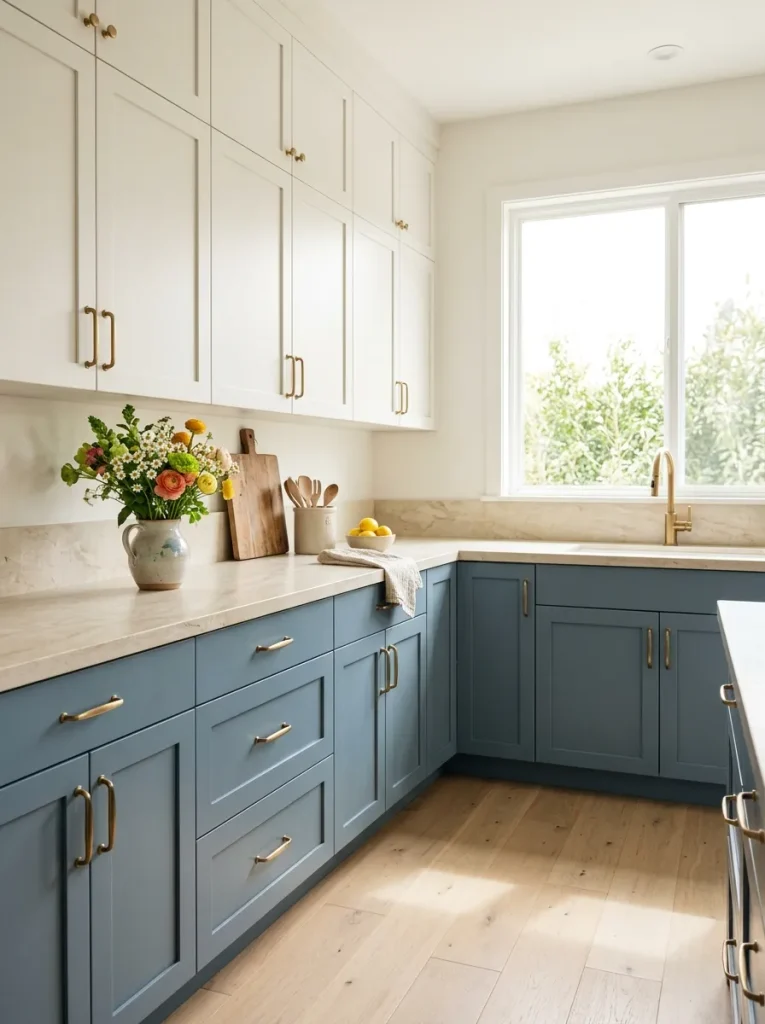
Cost: Moderate, especially if repainting existing cabinets.
Time: Several days, depending on preparation and drying.
Skill Level: Beginner to intermediate for painting; professional help may be needed for a durable finish.
Best Colors: Dusty blue, muted olive, terracotta and soft butter yellow.
Result: A personalized kitchen with more character and visual interest.
Colorful cabinets let you express your style without replacing every surface. Start with one cabinet section or a kitchen island if you’re unsure about committing to a bold shade. Pair stronger colors with quieter countertops and backsplash materials so the finished room feels balanced rather than visually crowded.
Coffee Station Corner
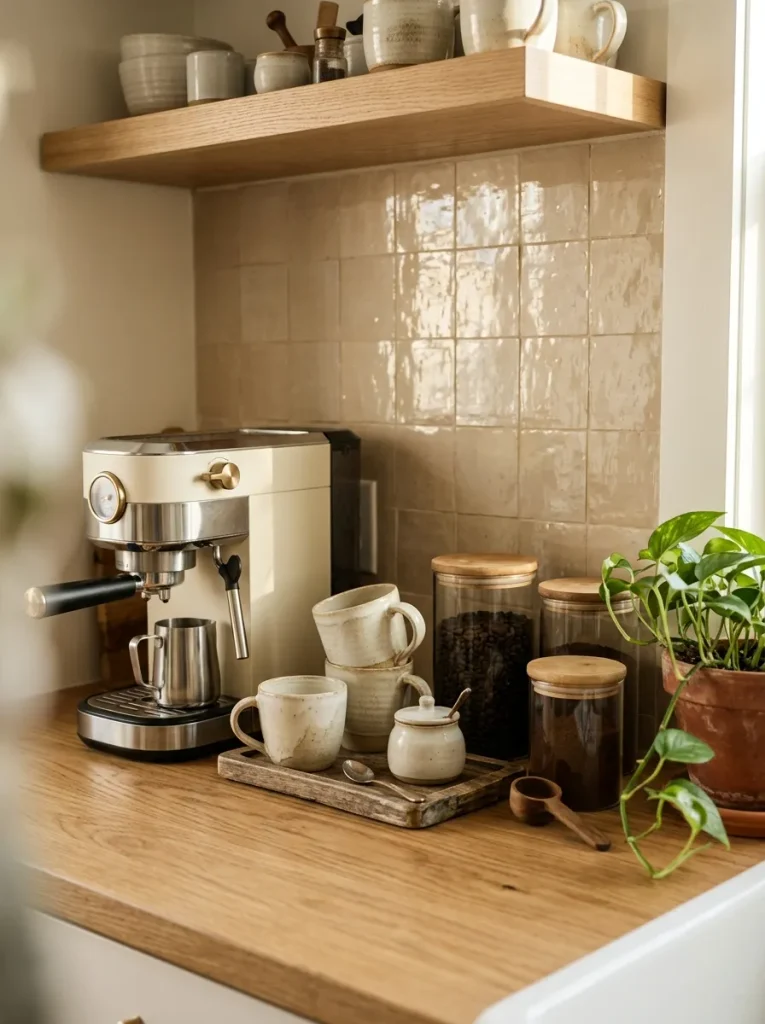
A dedicated coffee corner can make busy mornings feel more organized and enjoyable. Instead of spreading mugs, coffee supplies and appliances across the kitchen, gather everything in one convenient spot.
- Choose a location: Use an unused countertop corner or a sturdy cabinet shelf near an electrical outlet.
- Group essentials: Keep your coffee machine, mugs, beans and sweeteners together.
- Add a small tray: Contain loose accessories and make daily cleanup easier.
- Use vertical storage: Install a mug rail or a small shelf if counter space is limited.
- Protect the surface: Wipe up spills and keep electrical appliances away from splashing water.
The best coffee station is convenient rather than complicated. Store frequently used supplies at the front and reserve decorative jars for items you actually use. If your kitchen is small, a compact tray can define the station without sacrificing valuable preparation space.
Under-Cabinet Lighting
Quick Tip:
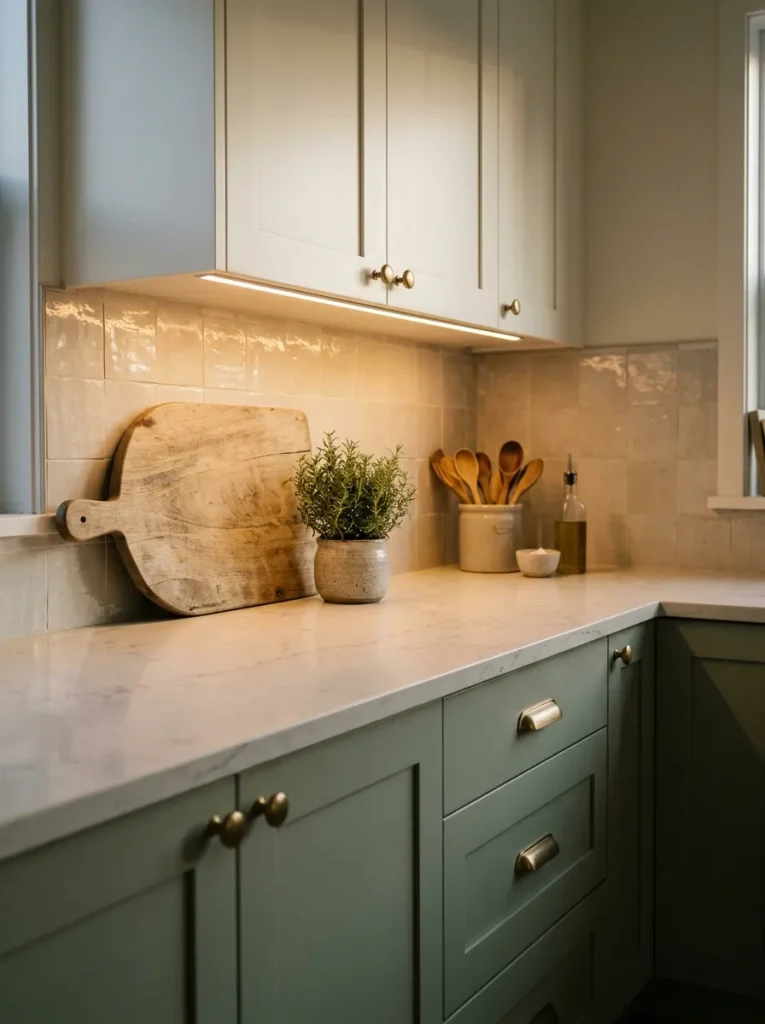
Choose under-cabinet LED lighting with a warm or neutral white color temperature that complements your existing kitchen lights. Continuous light strips usually create a smoother glow than widely spaced individual fixtures and dimmable options provide more control.
Under-cabinet lighting makes chopping, reading recipes and cleaning countertops easier by illuminating areas that overhead lights may leave in shadow. Select fixtures designed for kitchen use, conceal visible wires where practical and check that the installation is compatible with your cabinets and electrical setup. The gentle evening glow also adds depth to the backsplash without requiring a major renovation.
Butcher Block Countertops
BEFORE
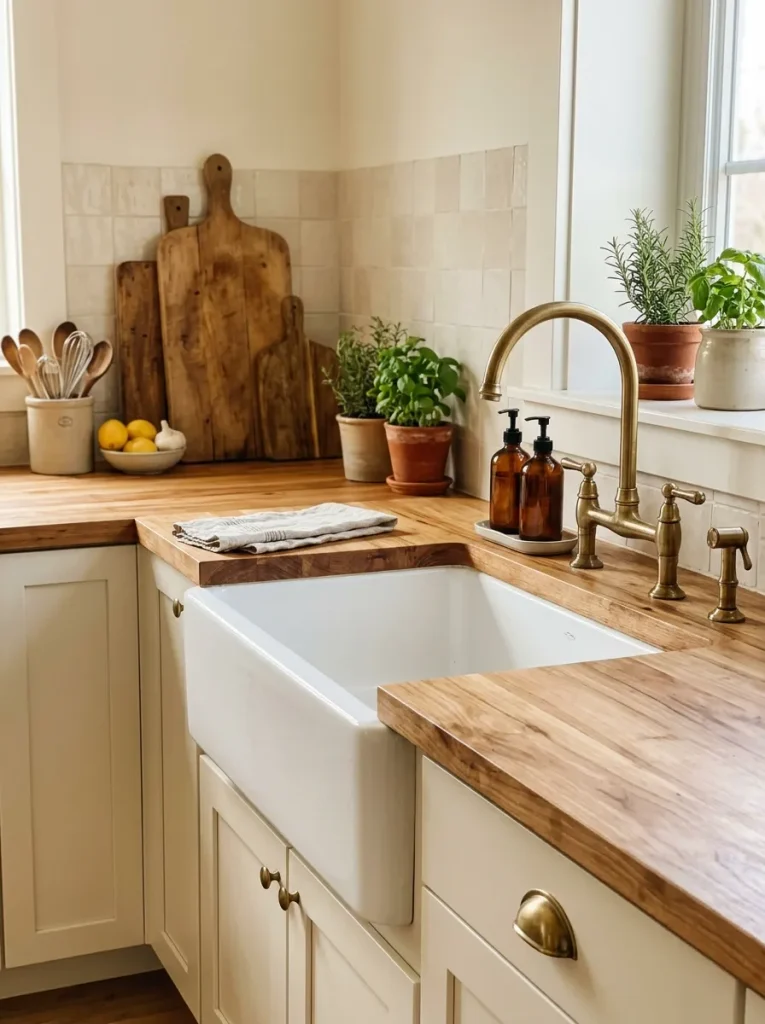
Cool, uniform countertops can sometimes make an otherwise functional kitchen feel plain. The work surfaces may lack the natural texture that helps connect cabinetry, flooring and decorative accents.
AFTER
Butcher block introduces visible wood grain and a warmer color palette. It pairs beautifully with white cabinets, muted green finishes and simple ceramic accessories.
Choose a wood species and finish suited to your intended use and follow the manufacturer’s care instructions. Wood countertops require regular cleaning and appropriate sealing or oiling, depending on the product. Keep standing water away from seams and sink edges, where moisture can cause damage over time.
Minimalist Countertop Styling
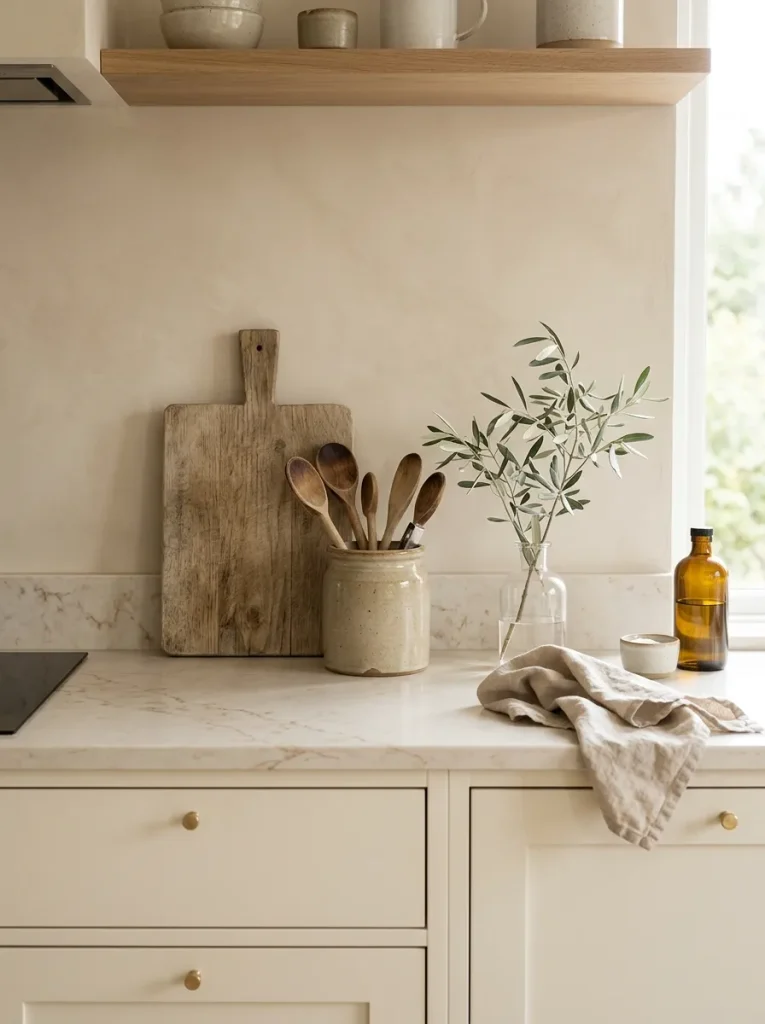
- Clear unnecessary items. Remove appliances and accessories that rarely serve a daily purpose.
- Group useful essentials. Place cooking oils, utensils or frequently used ingredients together on a small tray.
- Add one natural accent. Use fresh herbs, a small plant or a simple vase for a gentle touch of color.
- Leave preparation space. Keep the main chopping and cooking areas open for everyday tasks.
A thoughtfully styled countertop can make the entire kitchen feel cleaner without requiring new furniture or expensive accessories. Focus on items that are both useful and attractive, then leave enough empty surface for meal preparation. This approach is especially helpful in compact kitchens, where every available inch needs to work hard.
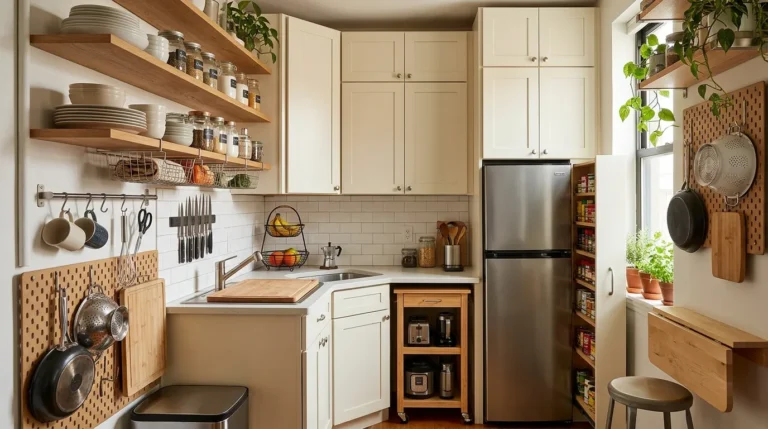
Hidden Kitchen Storage
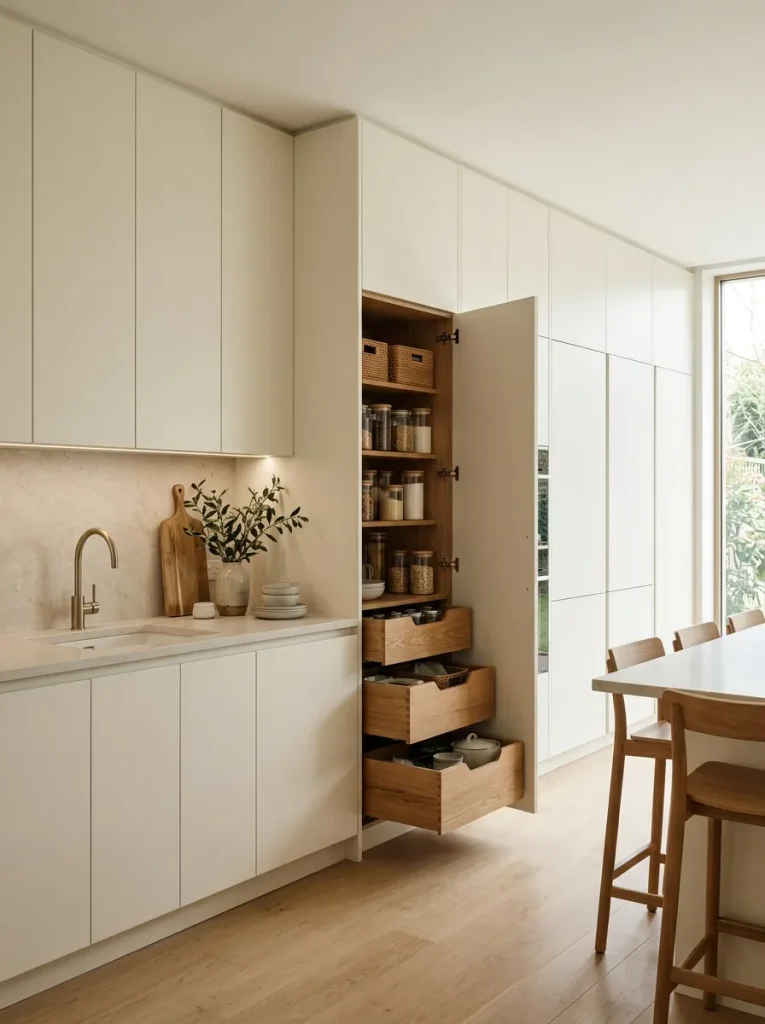
| Storage Feature | Option A: Open Storage | Option B: Hidden Storage |
| Appearance | Decorative and visible | Clean and streamlined |
| Best Items | Everyday dishes and attractive jars | Appliances, packaging and supplies |
| Maintenance | Requires frequent tidying | Keeps visual clutter out of sight |
| Accessibility | Quick visual access | Depends on drawer and cabinet layout |
Hidden storage helps a kitchen look calmer while keeping essential supplies close at hand. Pull-out pantry drawers, deep utensil organizers and appliance garages can make awkward spaces more useful. Before installing new fittings, measure the cabinet interiors and check door clearance. The most effective storage system makes everyday items easy to reach rather than simply hiding everything away.
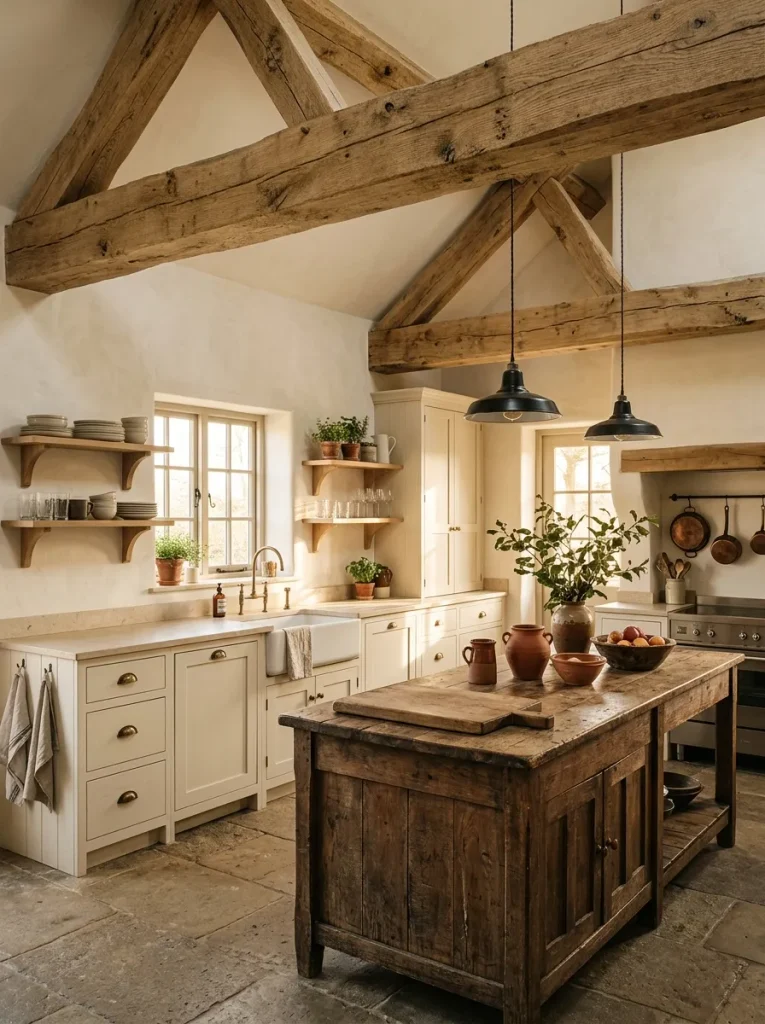
Rustic Exposed Beams
DO
- Use natural wood beams to introduce warmth and architectural character.
- Pair darker beams with light walls to create gentle contrast.
- Repeat the wood tone in stools, shelves or ceiling details.
- Choose finishes that complement existing floors and cabinetry.
DON’T
- Add too many competing wood tones in one room.
- Install heavy beams without checking the ceiling structure.
- Use oversized beams that overwhelm a low ceiling.
- Assume decorative beams can support structural loads.
Exposed beams bring a sense of character and craftsmanship to a kitchen. In rooms with high ceilings, they can make the space feel more grounded, while lighter finishes help maintain an airy appearance. If your home lacks original beams, lightweight decorative versions may provide a similar look, provided they are installed securely and suit the room’s proportions.
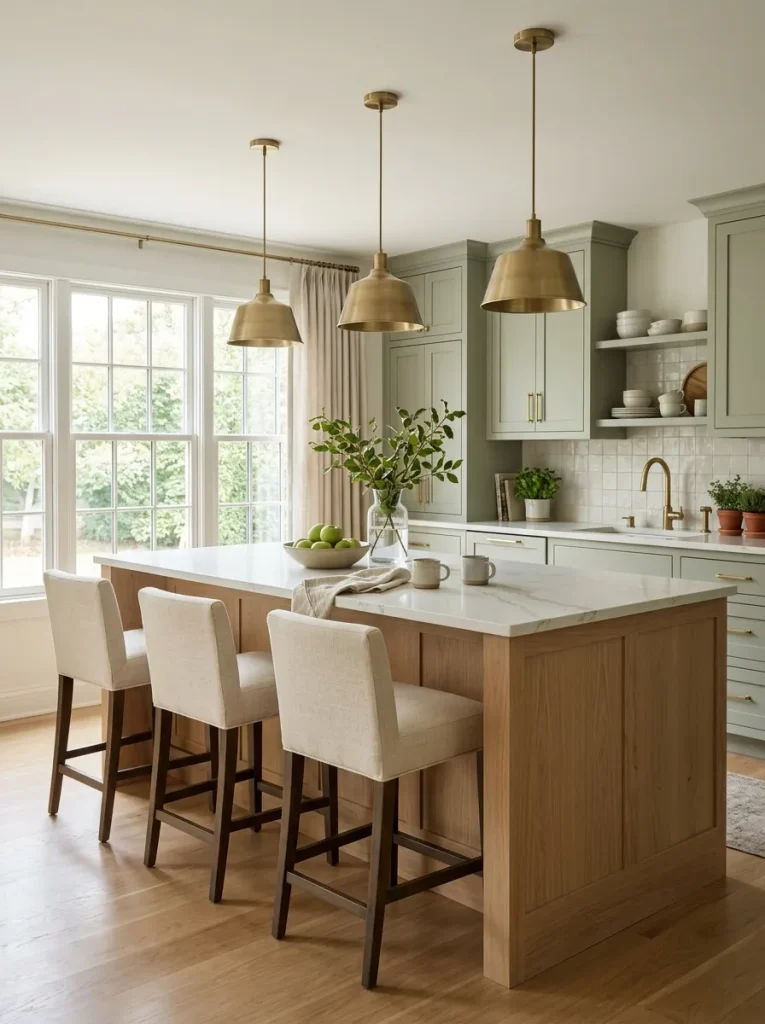
Breakfast Bar Seating
Quick Tip:
Allow roughly 24 inches of counter width per person as a starting point for comfortable seating, then adjust for stool design and the island layout. Check the counter height before buying stools because standard counter-height and bar-height seating require different seat heights.
A breakfast bar provides a casual place for quick meals, homework or conversations while dinner is being prepared. Choose stools with footrests and enough clearance to slide in comfortably. If space is tight, backless stools that tuck fully beneath the counter can keep the kitchen walkway open when the seats are not in use.
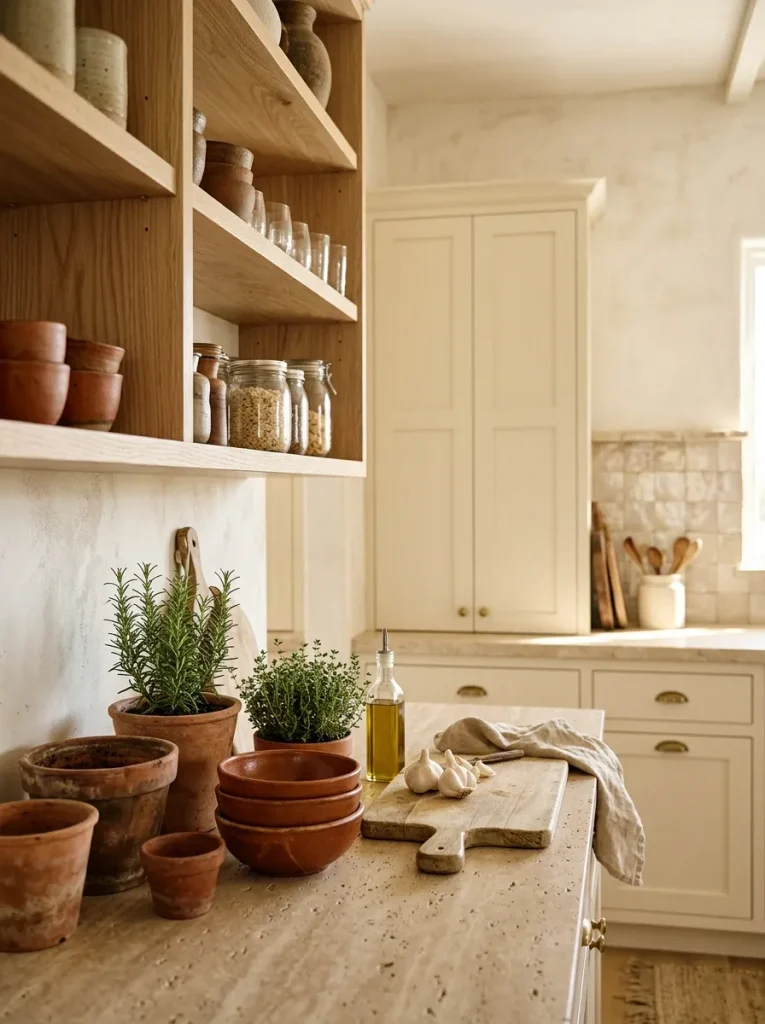
Terracotta Kitchen Accents
BEFORE
A kitchen decorated entirely in white, gray or beige can sometimes feel flat, especially when the finishes have similar textures and little color variation.
AFTER
Terracotta accessories introduce earthy orange and reddish-brown tones that bring warmth without requiring permanent changes. A few clay pots, serving bowls or ceramic vases can create a more layered appearance.
Start with two or three terracotta pieces and repeat their warm color in small details such as woven placemats or wooden accessories. This shade works particularly well with cream, olive green and natural oak. Keep the larger surfaces neutral if you prefer a subtle look and choose food-safe ceramics for items used in serving meals.
Large Kitchen Windows
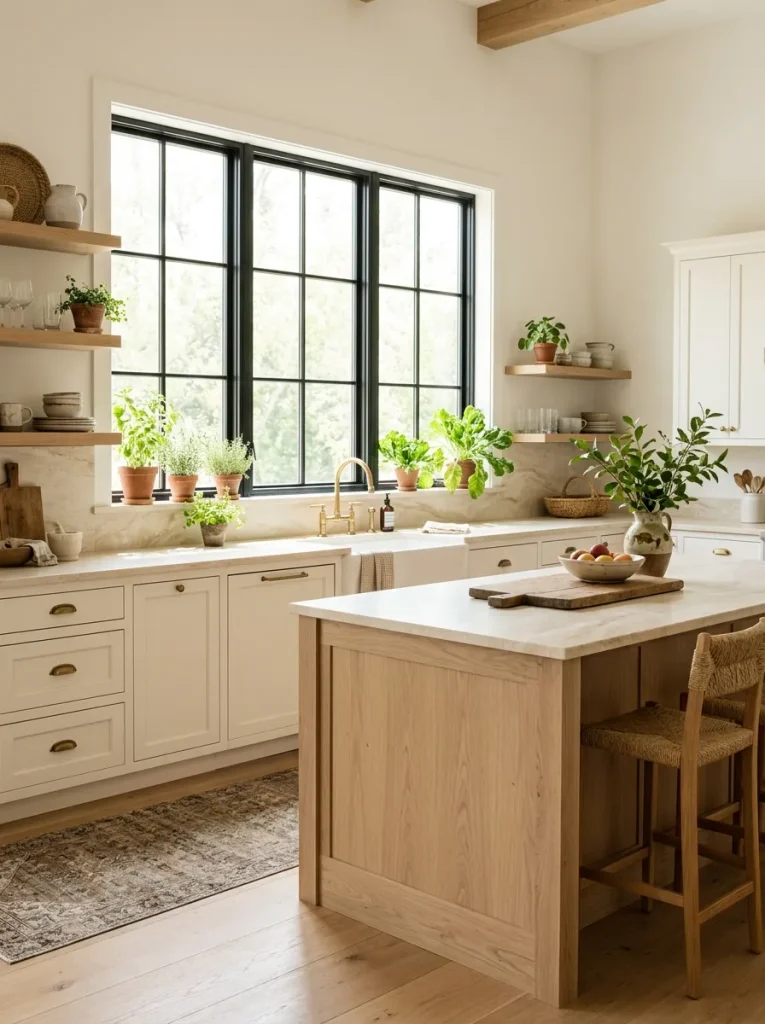
- Assess the wall space. Check whether the existing window can be enlarged without affecting structural supports or essential services.
- Keep window treatments simple. Choose light linen curtains or discreet shades that allow daylight to enter.
- Position the sink thoughtfully. A window above the sink can provide an enjoyable view during everyday chores.
- Coordinate the frames. Match black, white or wood-toned frames to the kitchen’s existing finishes.
Large windows make a kitchen feel brighter and help natural materials look more vibrant throughout the day. They can also create a pleasant connection with a garden or outdoor seating area. Before changing window sizes, consider privacy, insulation, glare and structural requirements. If a major renovation is not practical, clearing existing windowsills can still help maximize available daylight.
Mixed Metal Finishes
| Design Detail | Option A: Matching Metals | Option B: Mixed Metals |
| Overall look | Coordinated and classic | Layered and distinctive |
| Hardware | One consistent finish | Two or three complementary finishes |
| Styling approach | Simple and uniform | Intentional contrast |
| Best for | Traditional or minimalist kitchens | Contemporary or transitional kitchens |
Mixing metal finishes adds depth without introducing extra colors or patterns. For example, brushed brass cabinet pulls can pair nicely with a chrome faucet and matte black lighting. Keep one finish dominant and repeat the others in a few places so the combination feels intentional. Check the undertones and sheen of each finish together before purchasing multiple fixtures.
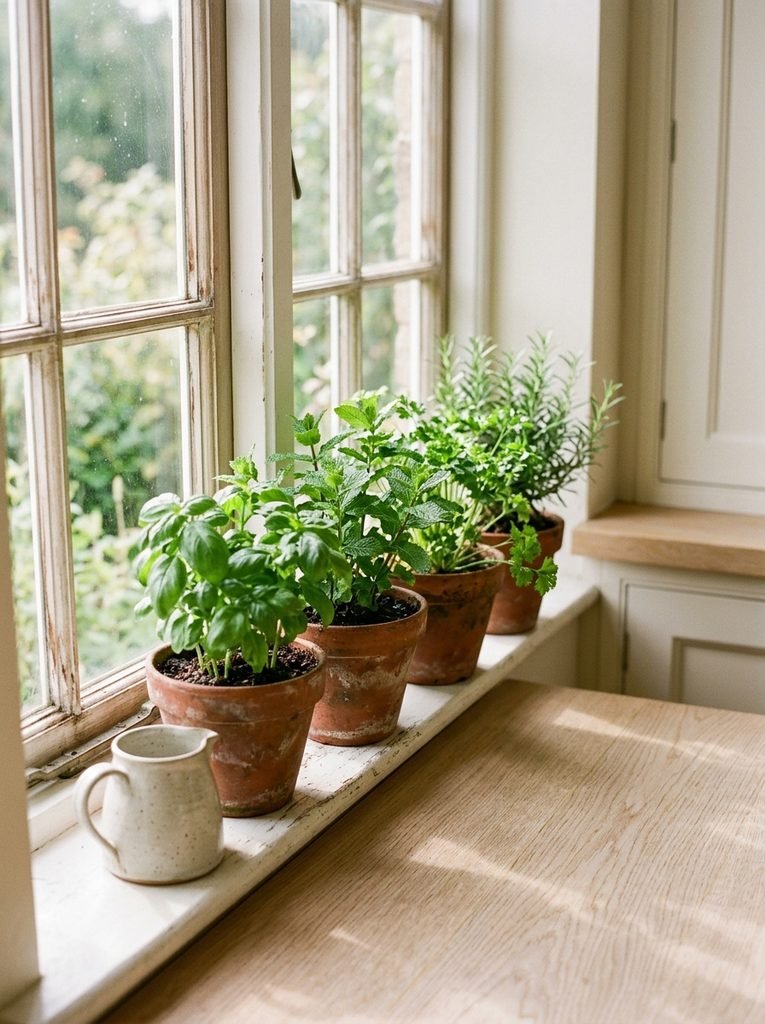
Indoor Herb Garden
DO
- Place herbs near a bright window with suitable light for their needs.
- Use pots with drainage holes and trays to protect the countertop.
- Label containers with simple physical markers if you grow similar-looking herbs.
- Trim leaves regularly to encourage healthy, useful growth.
DON’T
- Leave roots sitting in water for long periods.
- Place plants beside intense heat that dries them out quickly.
- Water every pot on the same schedule without checking the soil.
- Crowd plants so tightly that air cannot circulate between their leaves.
An indoor herb garden brings fresh greenery and practical flavor to your kitchen. Basil, parsley, mint and rosemary can be useful choices, although their light and watering needs differ. Start with two or three herbs you regularly use in cooking and position them where you can check the soil easily. A small collection is simpler to maintain than a crowded windowsill.
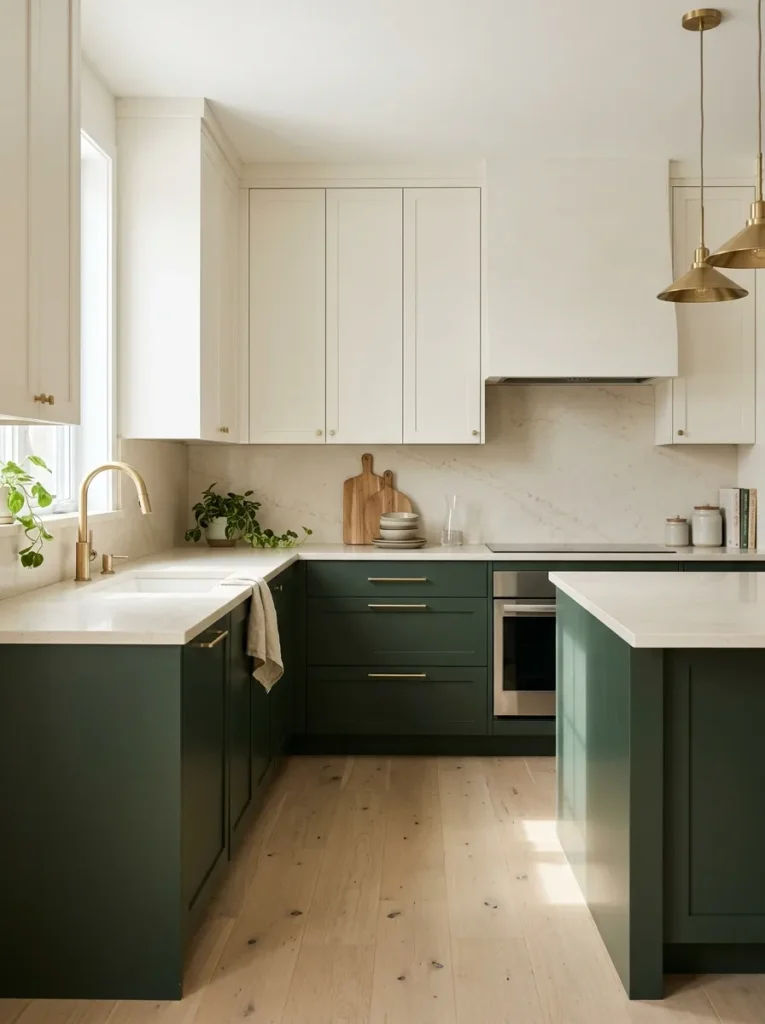
Dramatic Dark Cabinets
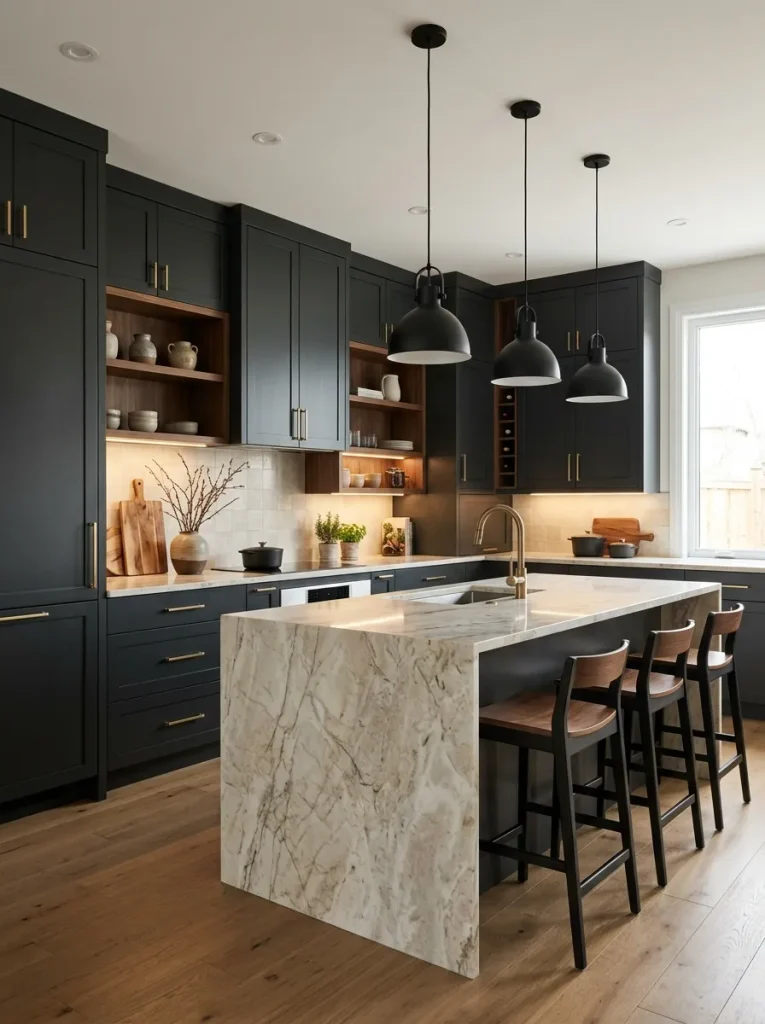
Dark cabinetry can give a kitchen a rich, sophisticated appearance without adding complicated decorative details. Charcoal, deep navy and forest green are versatile choices that pair beautifully with warm wood and lighter countertops.
For a balanced result, use lighter finishes on at least some large surfaces and make sure the room has adequate task lighting. I’ve noticed that dark cabinets look especially striking when their surroundings have varied textures, such as smooth stone, brushed metal and natural timber. Test cabinet samples in your own lighting before choosing a final shade.
Decorative Kitchen Range Hood
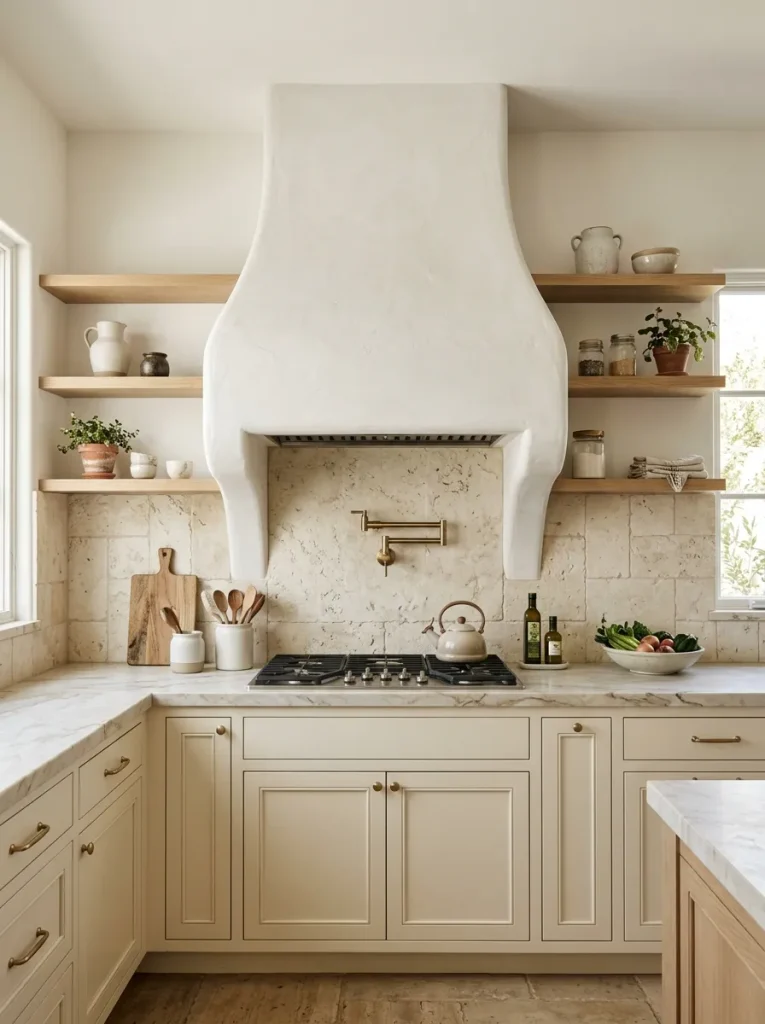
- Choose a shape: A gently curved hood suits Mediterranean kitchens, while a clean rectangular design complements contemporary spaces.
- Coordinate the finish: Match plaster or painted finishes with the surrounding cabinets and walls.
- Add subtle contrast: Natural wood trim or a stone backsplash can help the hood stand out.
- Check ventilation needs: Select equipment suited to your cooking habits and follow the manufacturer’s installation requirements.
A decorative range hood creates a natural focal point above the cooking area. Because it occupies a prominent position, its shape and finish can influence the overall character of the kitchen. Keep nearby shelves and accessories relatively simple so the hood remains the main feature and prioritize effective ventilation over appearance alone.
Kitchen Window Seating
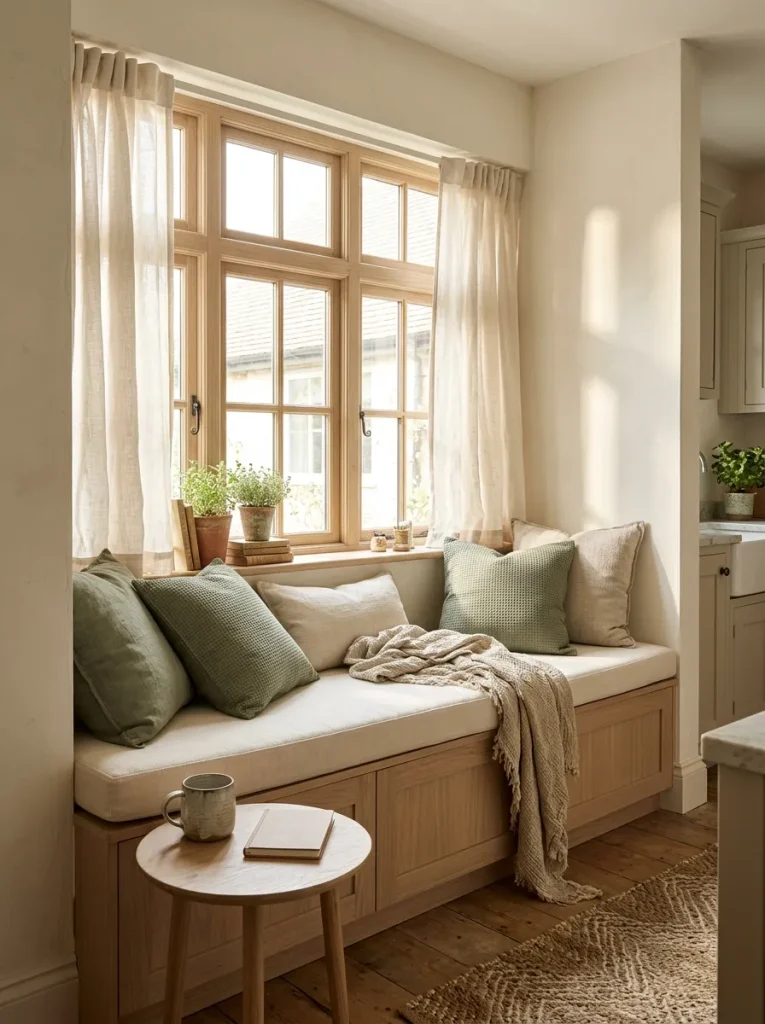
Cost: Moderate, depending on whether custom carpentry is needed.
Space: Best for a wide window alcove or an unused kitchen corner.
Furniture: Cushioned bench, compact side table and washable pillows.
Storage: Optional drawers or lift-up compartments beneath the seat.
Best For: Casual breakfasts, reading or enjoying a cup of tea.
Window seating adds a comfortable place to pause without requiring a separate dining area. A built-in bench can also use space that might otherwise remain empty, while storage underneath offers room for table linens or less frequently used kitchen items. Choose durable, washable fabrics and maintain enough clearance around nearby doors, appliances and walkways.
Layered Kitchen Lighting
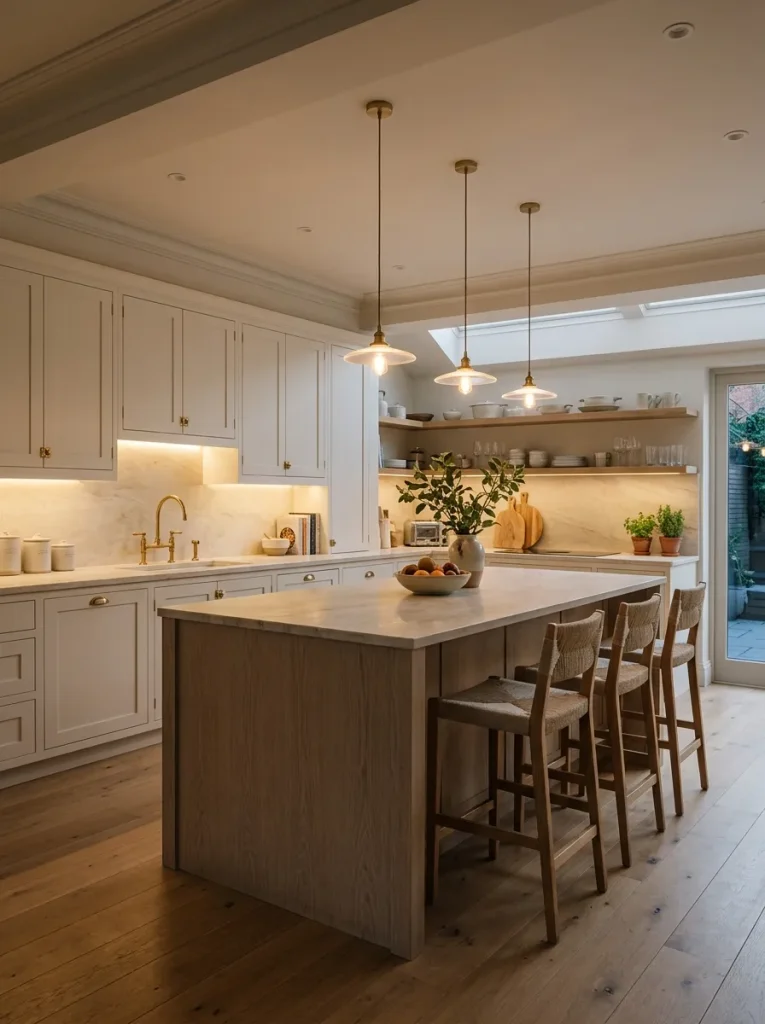
A well-lit kitchen needs more than one overhead fixture. Combining different light sources makes everyday tasks easier while creating a comfortable atmosphere for dining and relaxing.
- Ambient lighting: Use ceiling fixtures or recessed lights to illuminate the entire room.
- Task lighting: Install under-cabinet lights to brighten chopping and food preparation areas.
- Accent lighting: Highlight open shelves, glass cabinets or architectural details.
- Decorative lighting: Hang pendants above an island or breakfast bar for a defined focal point.
Choose compatible bulbs with consistent color temperatures so the lighting feels coordinated. Dimmers are useful for adjusting brightness throughout the day, while appropriately positioned task lights help reduce shadows on work surfaces. Plan fixture placement around cabinets, seating and preparation areas before installation.
CONCLUSION
Creating a kitchen you love doesn’t have to mean starting from scratch. Sometimes, a fresh cabinet color, better lighting, natural wood accents or a more organized countertop is all you need to make the space feel different.
These 31 Kitchen Ideas offer inspiration for every style, from cozy farmhouse charm to clean, modern finishes. Start with one change that fits your budget, your needs and the way you use your kitchen every day.
Save this article on Pinterest so you can revisit your favorite ideas when you’re ready to make a change. Share it with someone planning a kitchen refresh and remember that even small updates can bring new warmth and joy to your home.