Kitchen Decor Ideas: 30 Warm Touches That Feel Homey
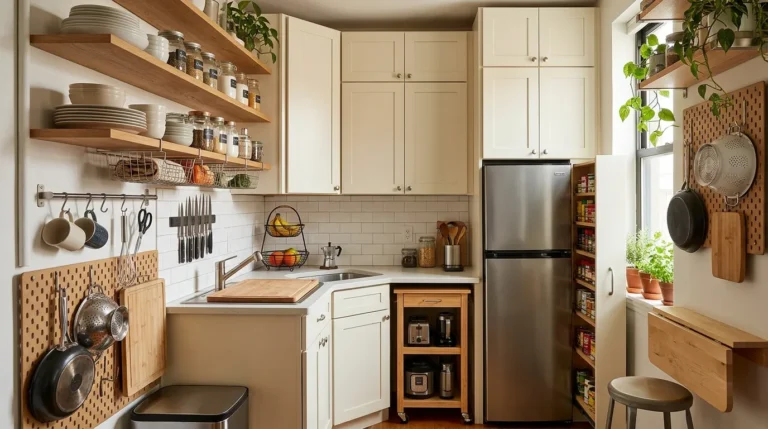
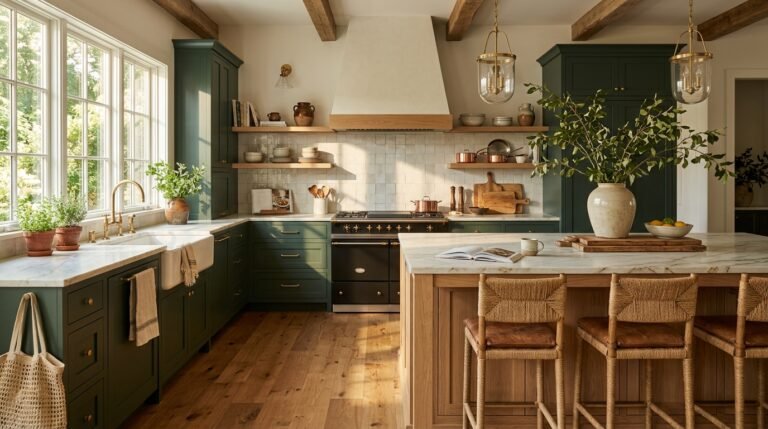
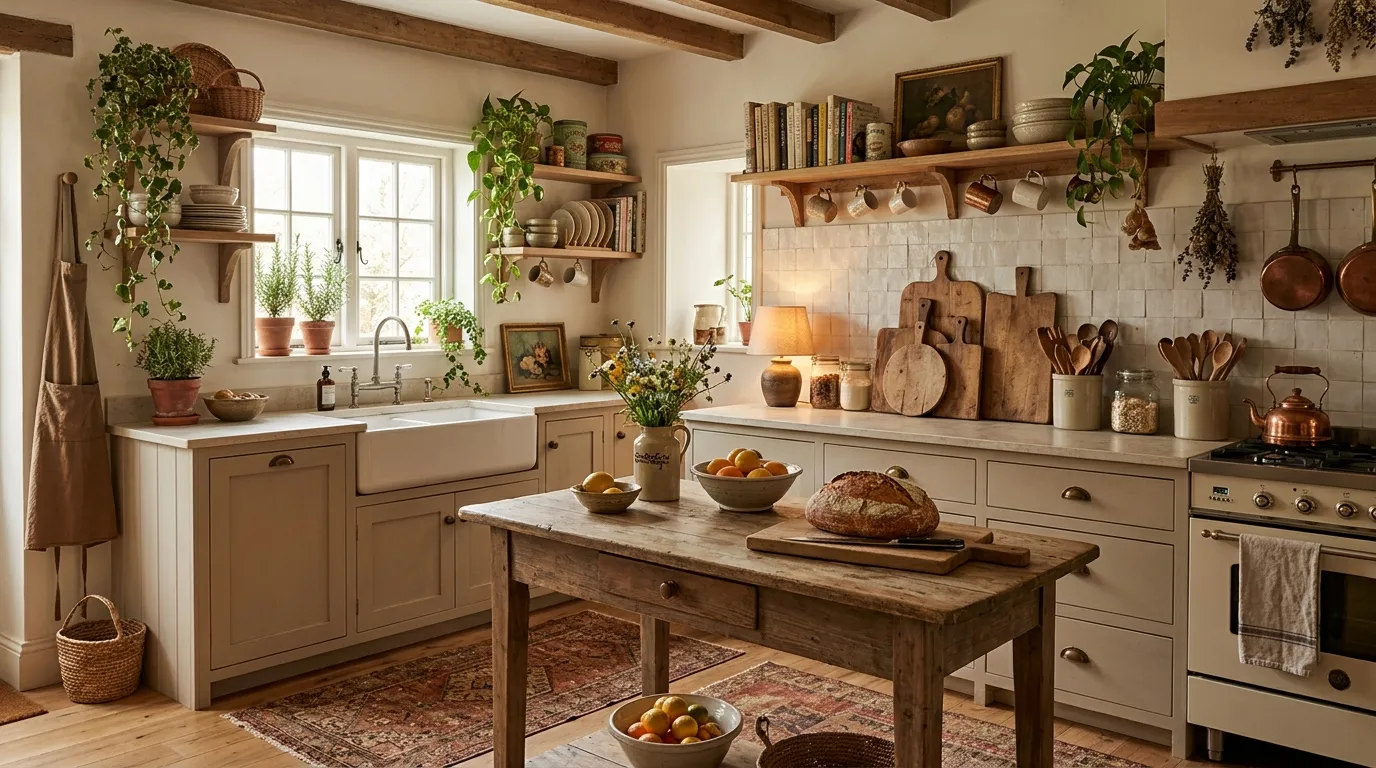
The right Kitchen Decor Ideas can make your space feel warmer, brighter and more inviting without requiring an expensive renovation.
Whether you’re decorating a small apartment kitchen or refreshing a spacious family home, simple details can make a noticeable difference. Think warm wooden accents, creamy cabinets, fresh herbs, soft lighting and beautiful countertop arrangements that combine style with everyday function.
I’ve noticed that the most welcoming kitchens often aren’t the most expensive ones. They’re the spaces where natural textures, practical storage and personal touches work together. In this collection, you’ll discover 30 inspiring ways to create that comfortable, lived-in feeling while keeping your kitchen organized and functional. Choose the ideas that fit your budget, your style and the way you use your kitchen every day
Warm Wooden Accents
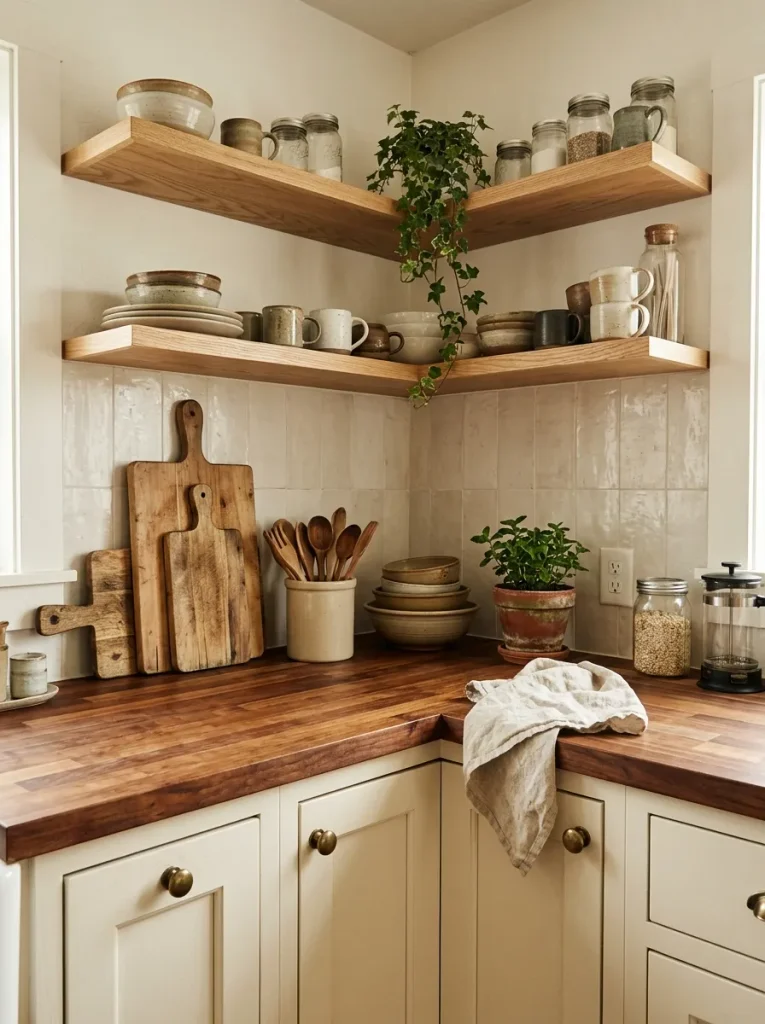
Warm wood can make a kitchen feel more welcoming without requiring a complete renovation. Even a few natural wooden details add depth and soften the appearance of sleek cabinets, stone countertops or stainless steel appliances.
Start with a wooden cutting board displayed against the backsplash, then introduce a matching utensil holder or a small oak tray. Keep the tones similar for a coordinated look or mix light oak with darker walnut for contrast. These simple touches bring warmth to everyday cooking spaces.
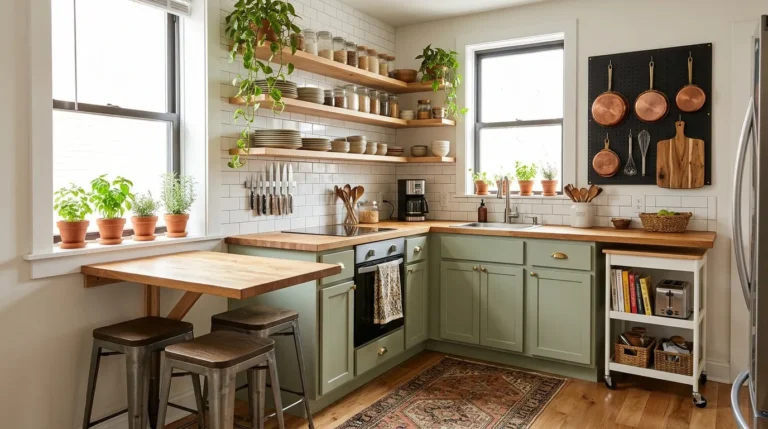
Open Wooden Shelves
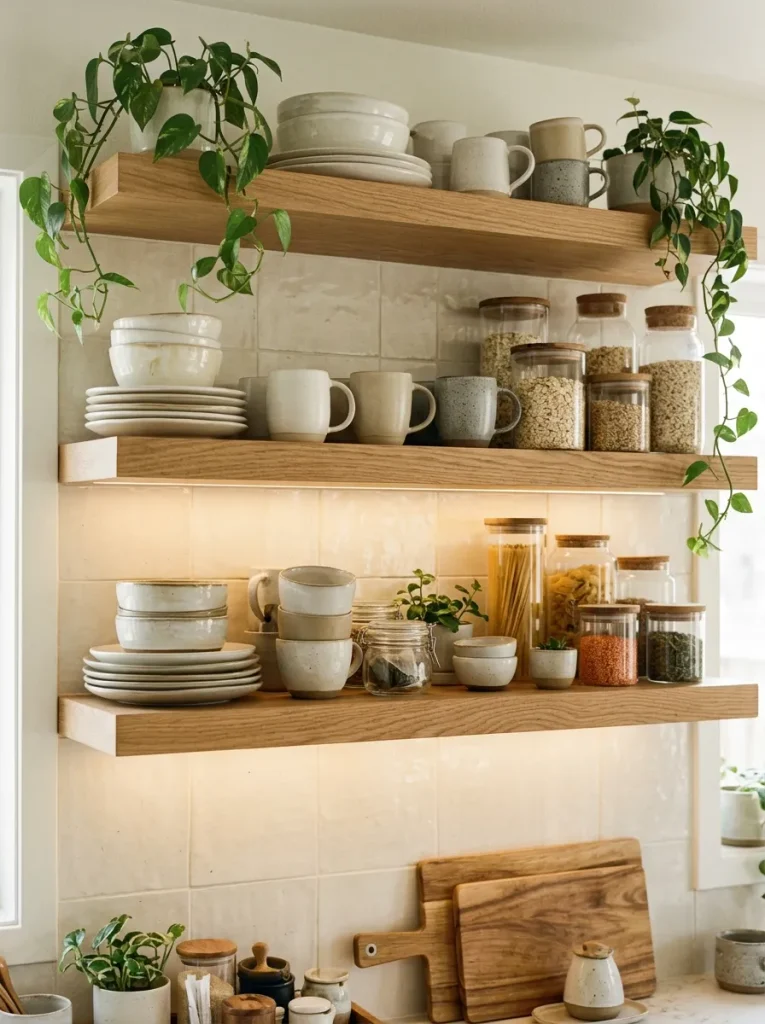
- Display everyday dishes: Arrange frequently used plates and bowls in neat, accessible stacks.
- Mix materials: Combine ceramic mugs, clear glass jars and wooden serving boards for visual variety.
- Add greenery: Place a small potted herb or trailing plant on one end of a shelf.
- Leave breathing room: Avoid filling every inch with objects, which can make shelves look crowded.
- Repeat colors: Choose cream, beige, soft green and natural wood for a consistent palette.
Open shelving makes useful kitchen items part of the decor while keeping them within easy reach. In smaller kitchens, a single shelf above the counter can create an airy appearance without taking up floor space. Store less attractive supplies in closed cabinets and keep displayed dishes clean because open shelves collect dust and cooking residue.
Cozy Countertop Styling
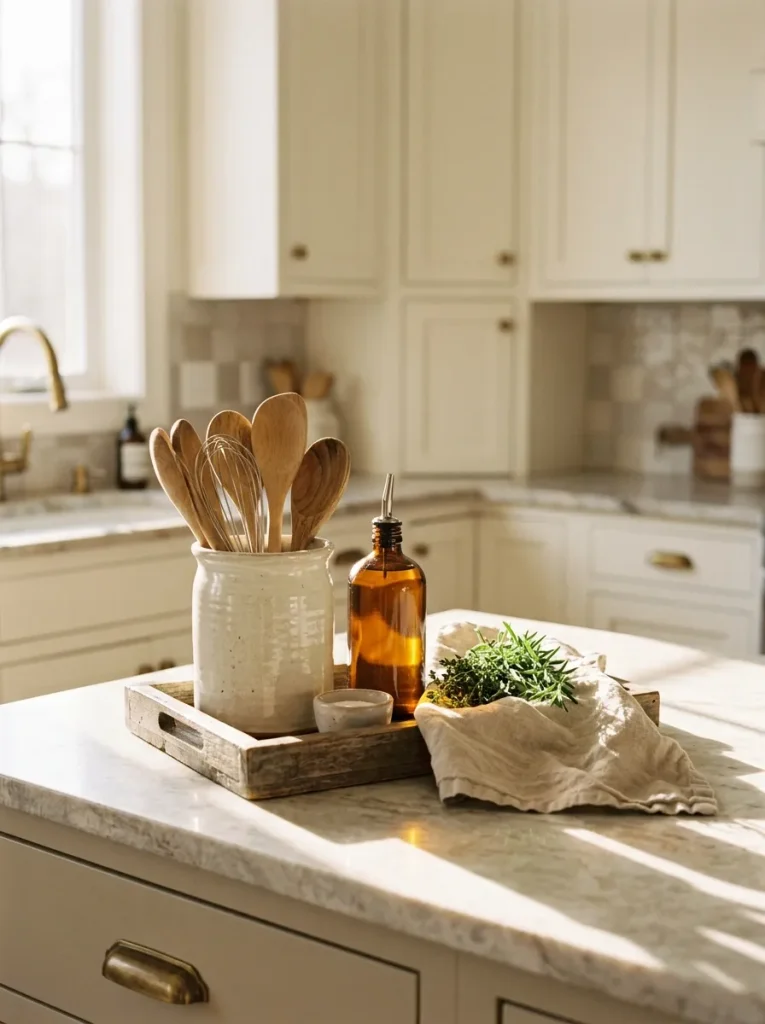
Quick Tip:
Group three to five useful items on a small tray instead of scattering decorations across the countertop. Keep the arrangement away from the stove and leave enough clear space for food preparation.
A thoughtfully styled counter makes daily routines feel calmer while giving the kitchen a finished appearance. Choose items you genuinely use, such as olive oil, a salt cellar or a utensil crock. Add one natural accent, like fresh rosemary, to soften hard surfaces. The result feels homey without sacrificing valuable workspace.
Creamy Neutral Cabinets
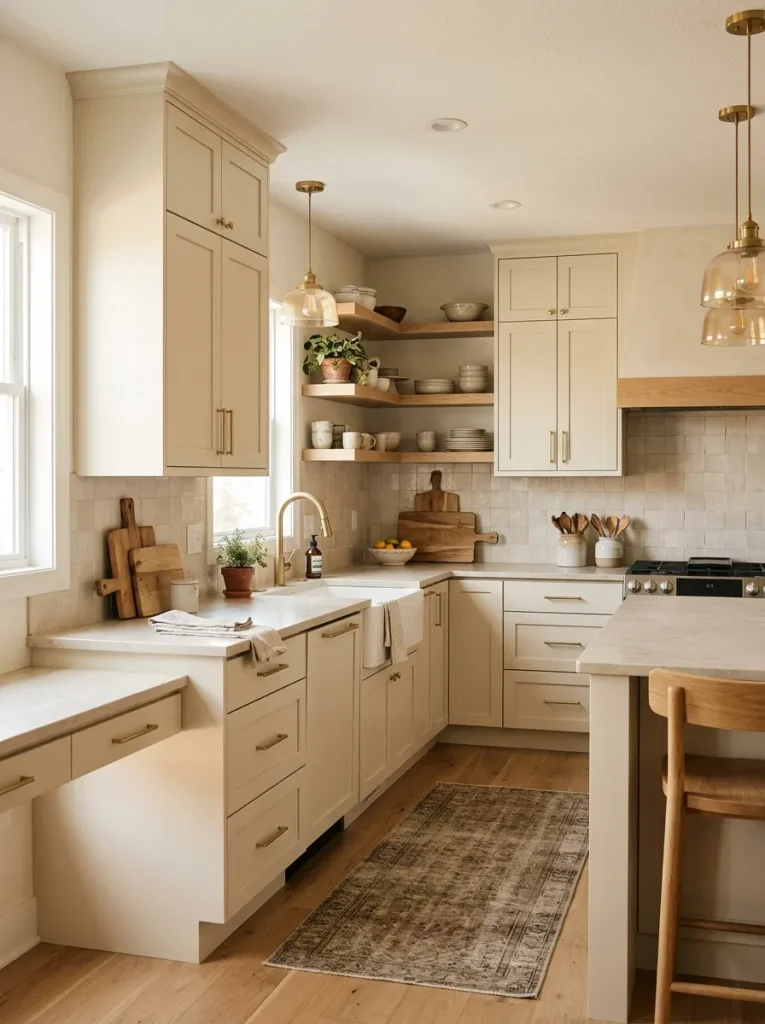
BEFORE
Dark or mismatched cabinet colors can make a kitchen feel visually busy, especially when the room has limited natural light. Worn finishes and contrasting hardware may also distract from the other decorative details.
AFTER
Warm cream cabinets create a softer, brighter appearance while keeping the room timeless. Pair them with natural wood, brushed brass handles and a subtle beige backsplash for a coordinated finish.
For a budget-friendly update, repaint existing cabinets rather than replacing them. Clean and prepare the surfaces properly, use a suitable cabinet primer and choose a durable finish designed for kitchen conditions. Test a sample in different lighting before committing to the entire room.
Warm Pendant Lighting
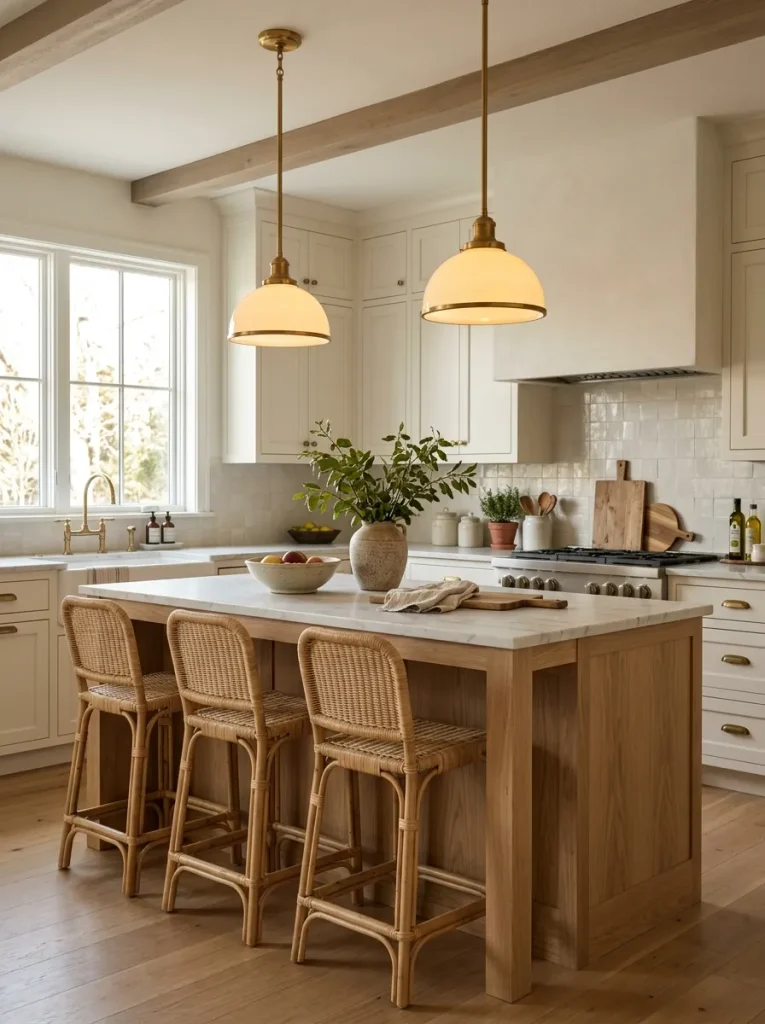
- Choose the right location: Hang pendant lights above a kitchen island or breakfast counter where focused illumination is useful.
- Select warm bulbs: Look for bulbs around 2700K to 3000K for a comfortable, inviting glow.
- Match the finishes: Coordinate brass, black metal or glass details with existing kitchen hardware.
- Check the height: Position fixtures high enough to preserve clear sightlines and avoid obstructing everyday activities.
Lighting can change how kitchen colors and materials appear throughout the day. Warm pendants create a comfortable evening atmosphere, while natural daylight keeps the space feeling fresh in the morning. For the most practical result, combine decorative fixtures with adequate task lighting so food preparation areas remain bright and easy to use.
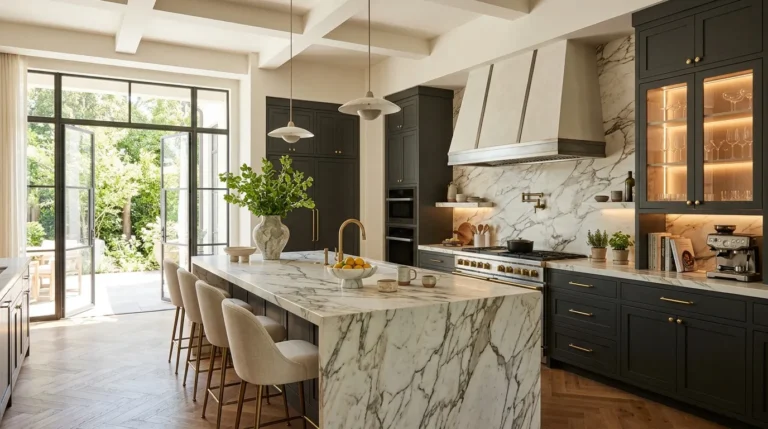
Natural Stone Backsplash
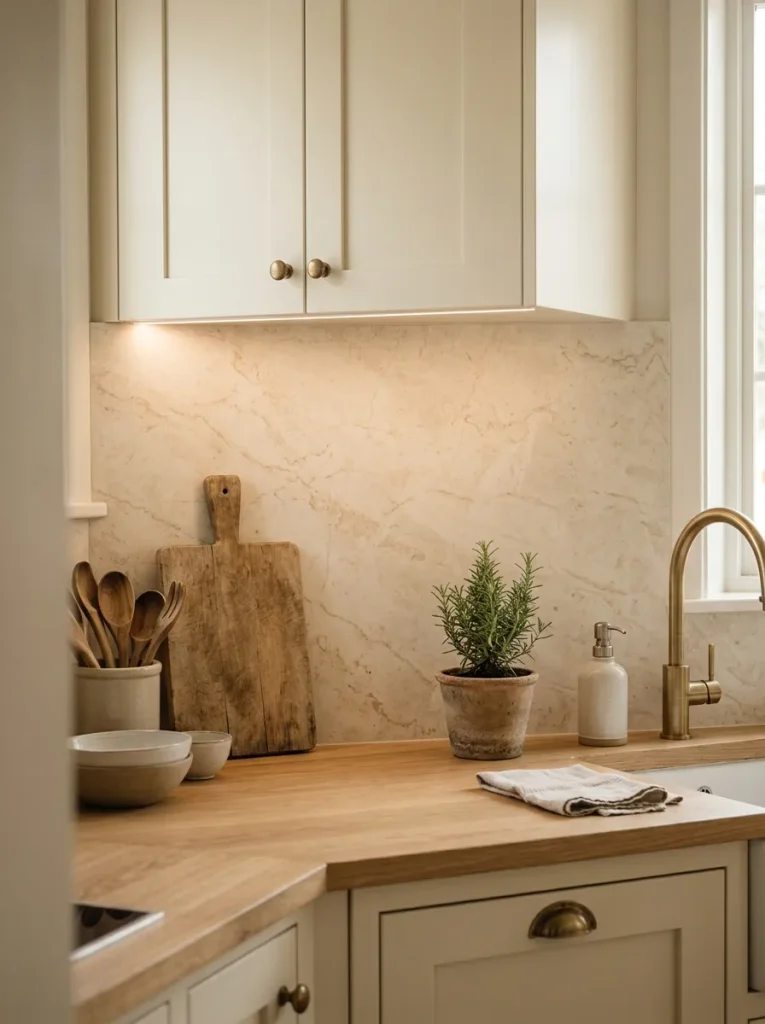
| Feature | Option A: Subtle Stone | Option B: Bold Stone |
| Appearance | Soft beige or ivory veining | Dramatic, contrasting patterns |
| Overall mood | Calm and understated | Striking and expressive |
| Best pairing | Cream cabinets and oak | Simple cabinets and minimal accessories |
| Maintenance | Depends on the stone and finish | Depends on the stone and finish |
A natural stone backsplash adds texture and visual interest without relying on extra decorations. For a warm, homey kitchen, choose creamy limestone tones, softly veined marble or a suitable stone-look porcelain tile. Consider your budget, cleaning habits and cooking needs before choosing a material. Proper sealing may be necessary for some natural stones.
Vintage Ceramic Displays
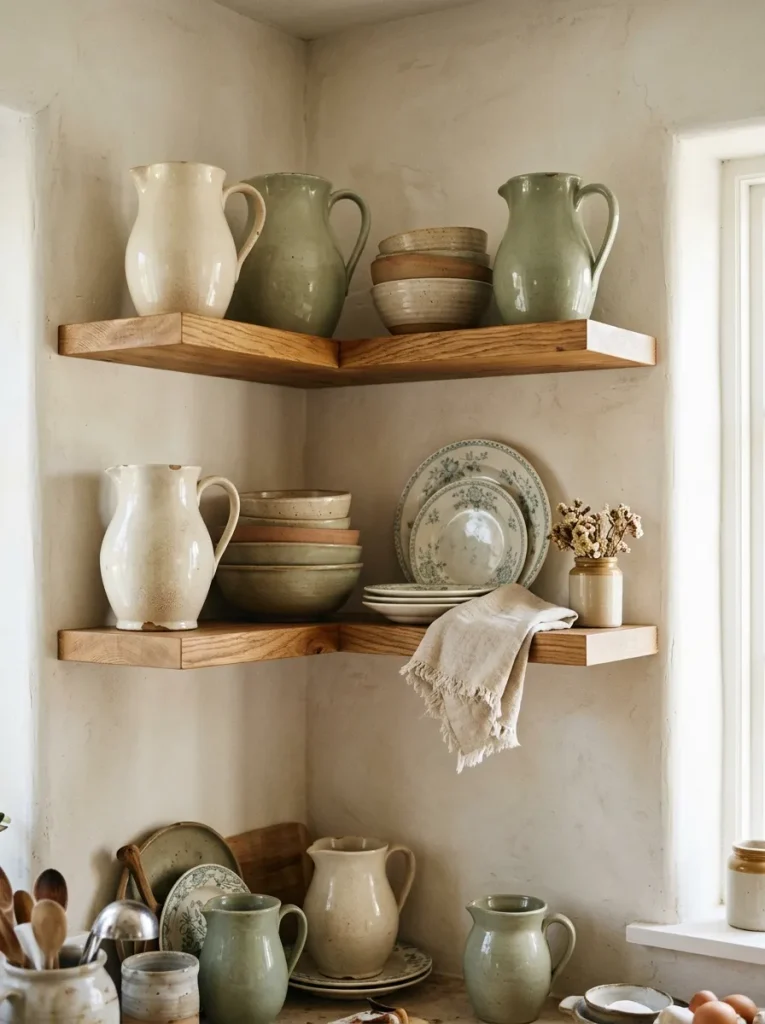
DO
- Display two or three ceramic pieces in complementary colors.
- Mix smooth glazed pottery with lightly textured handmade finishes.
- Place frequently used pitchers and bowls on accessible shelves.
- Combine vintage finds with simple modern kitchen accessories.
DON’T
- Fill every shelf with unrelated colors and patterns.
- Place delicate ceramics near busy cooking areas.
- Stack heavy pottery where it could fall easily.
- Choose decorative pieces that leave no room for practical storage.
Vintage ceramics bring character to a kitchen because their subtle imperfections and varied finishes make the space feel personal. Look for pieces at thrift stores, flea markets or local craft shops. A small collection of cream, sage and dusty blue pottery can create a cohesive display without making the shelves feel cluttered.
Fresh Herb Garden
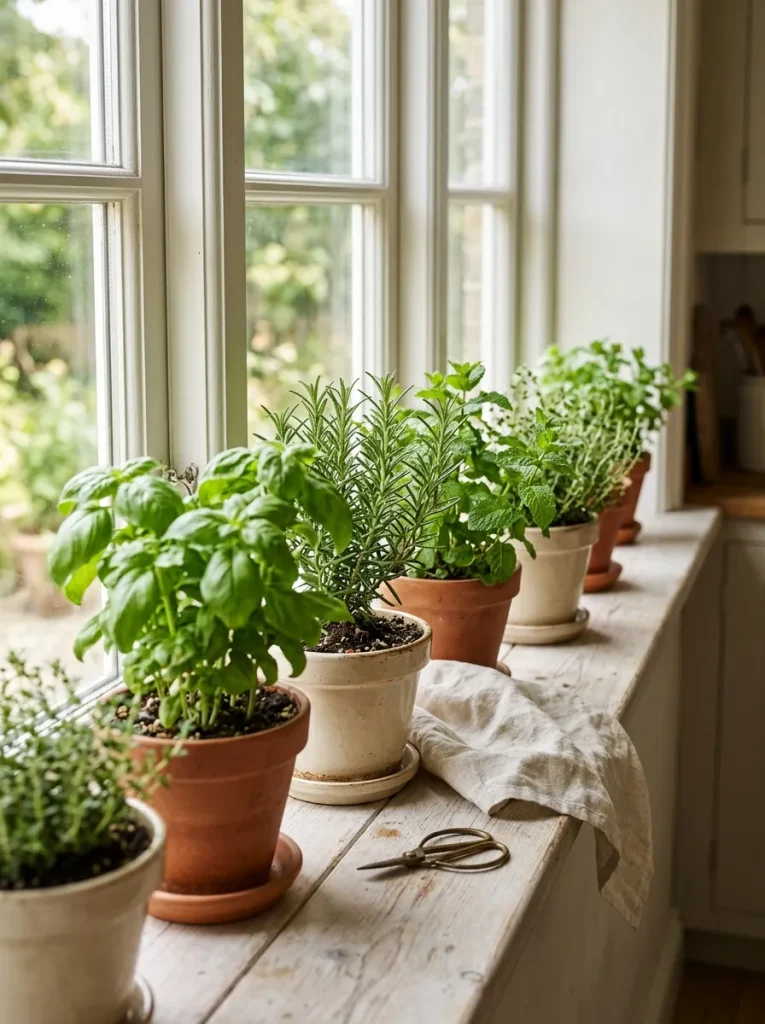
Cost: Low to moderate, depending on pots and plants.
Time: Around 20 to 30 minutes for initial setup.
Skill Level: Beginner-friendly.
Best For: Sunny kitchen windowsills, bright counters and small open shelves with adequate light.
Fresh herbs add natural color and make a kitchen feel lively while providing useful ingredients for everyday meals. Place basil, parsley or thyme near a bright window where each plant receives suitable light. Use pots with drainage holes and matching saucers to protect the surface. Check moisture regularly, since indoor herbs can struggle in overly wet soil.
Woven Basket Storage
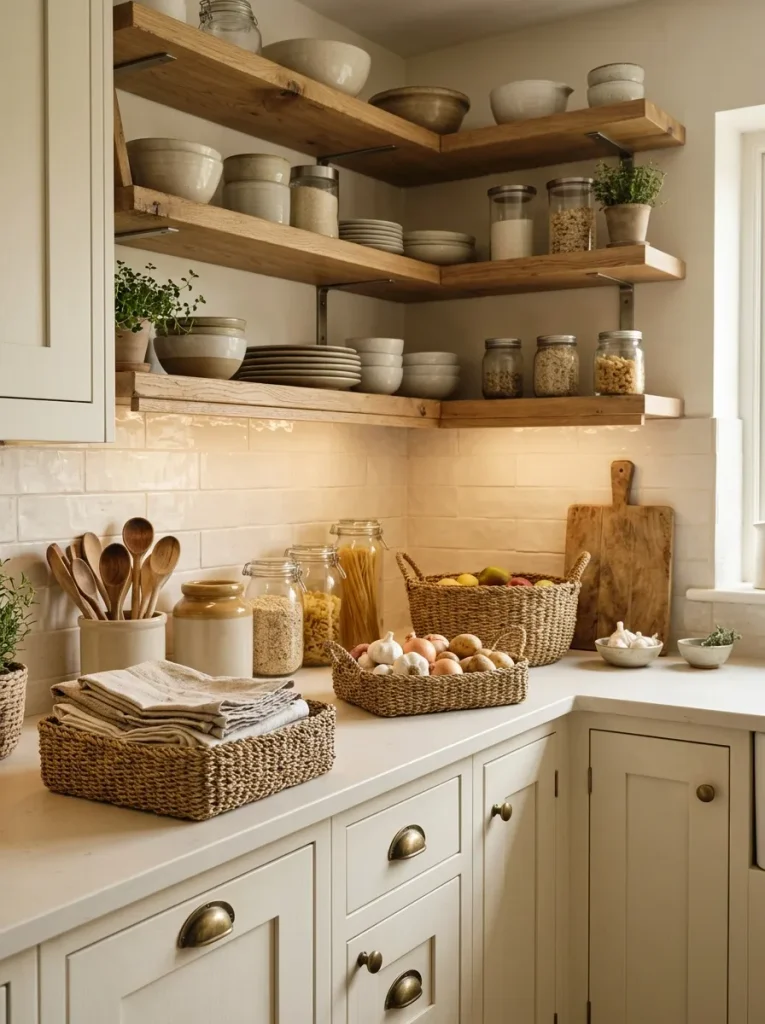
Natural woven baskets can make everyday kitchen storage look decorative rather than cluttered. Their warm textures soften smooth cabinet doors and stone countertops, creating a comfortable balance between practical organization and homey style.
Choose baskets that fit your shelves or lower cabinets before purchasing them. Use smaller containers for tea towels, napkins or packaged snacks and reserve breathable baskets for produce that benefits from airflow. Keep baskets away from damp areas and clean them regularly to prevent crumbs and dust from collecting between the fibers.
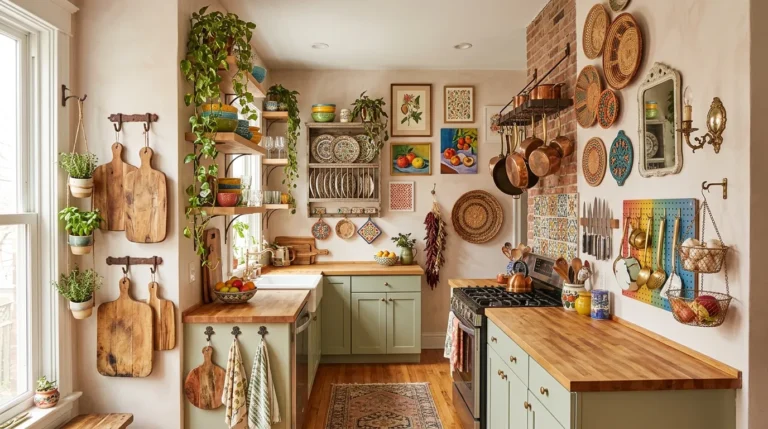
Rustic Wooden Cutting Boards
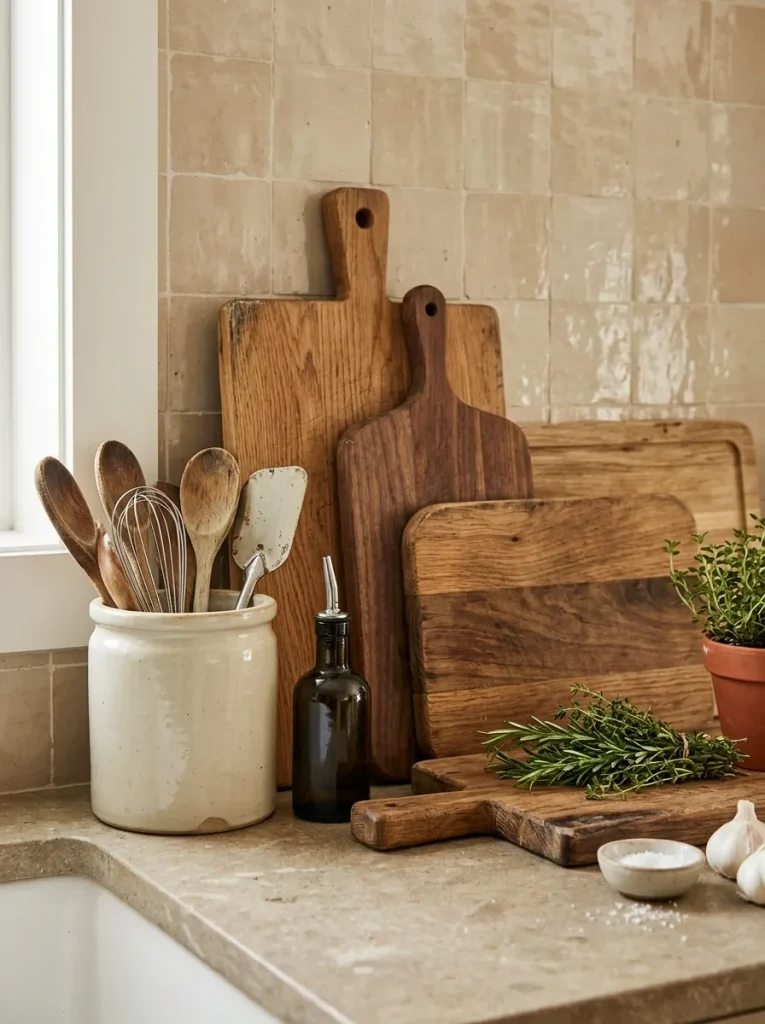
- Choose varied shapes: Combine one rectangular board with a round or paddle-shaped design.
- Layer carefully: Lean larger boards against the backsplash and place smaller ones in front.
- Coordinate wood tones: Pair oak, walnut or other natural finishes with existing kitchen accents.
- Add a useful detail: Include a small ceramic bowl or a potted herb nearby.
- Keep the arrangement practical: Leave enough counter space for chopping and meal preparation.
Wooden cutting boards bring natural warmth to a kitchen while serving a useful purpose. Choose boards with attractive grain patterns, smooth edges and sizes suited to your cooking habits. Keep decorative boards away from direct heat and moisture and clean food-contact surfaces according to the manufacturer’s instructions. A simple layered arrangement works especially well against pale backsplashes.
Soft Under-Cabinet Glow
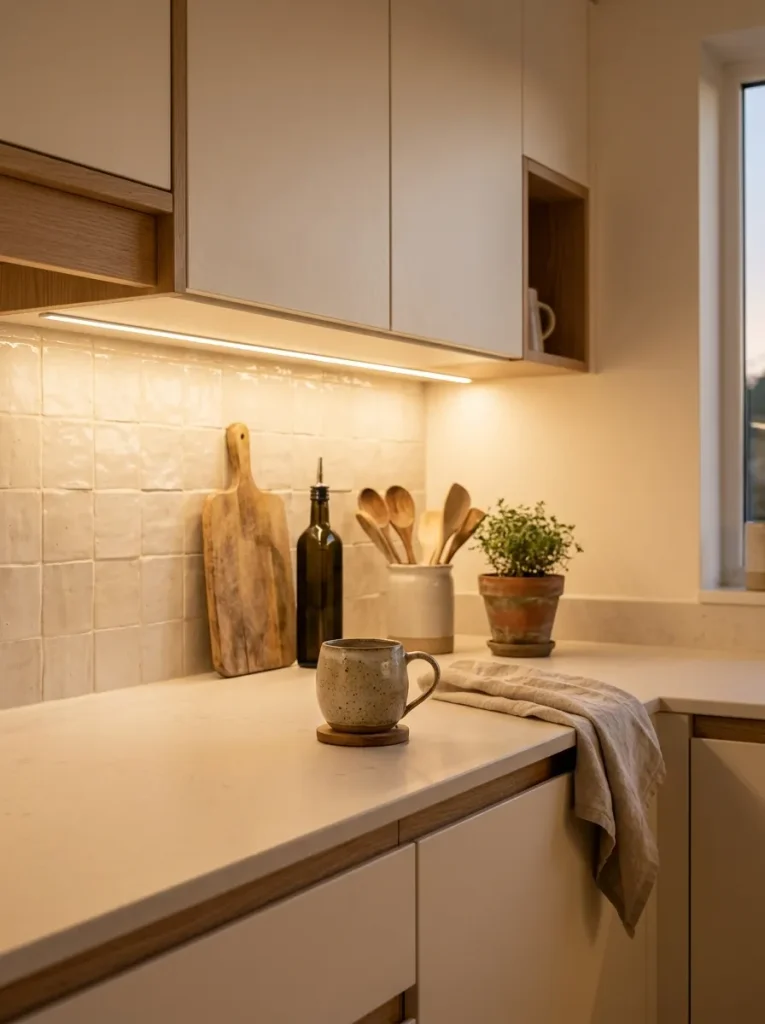
Quick Tip:
Choose under-cabinet LED strips with a warm color temperature around 2700K to 3000K. Use diffused fixtures to reduce visible hotspots and check that the lighting adequately illuminates your work surface.
Under-cabinet lighting adds depth to a kitchen while making everyday tasks easier after sunset. The gentle glow highlights backsplash textures, countertop details and carefully arranged accessories without relying entirely on overhead lights. For flexibility, consider dimmable fixtures so you can use brighter illumination while cooking and softer light during relaxed evenings.
A Wooden Breakfast Nook
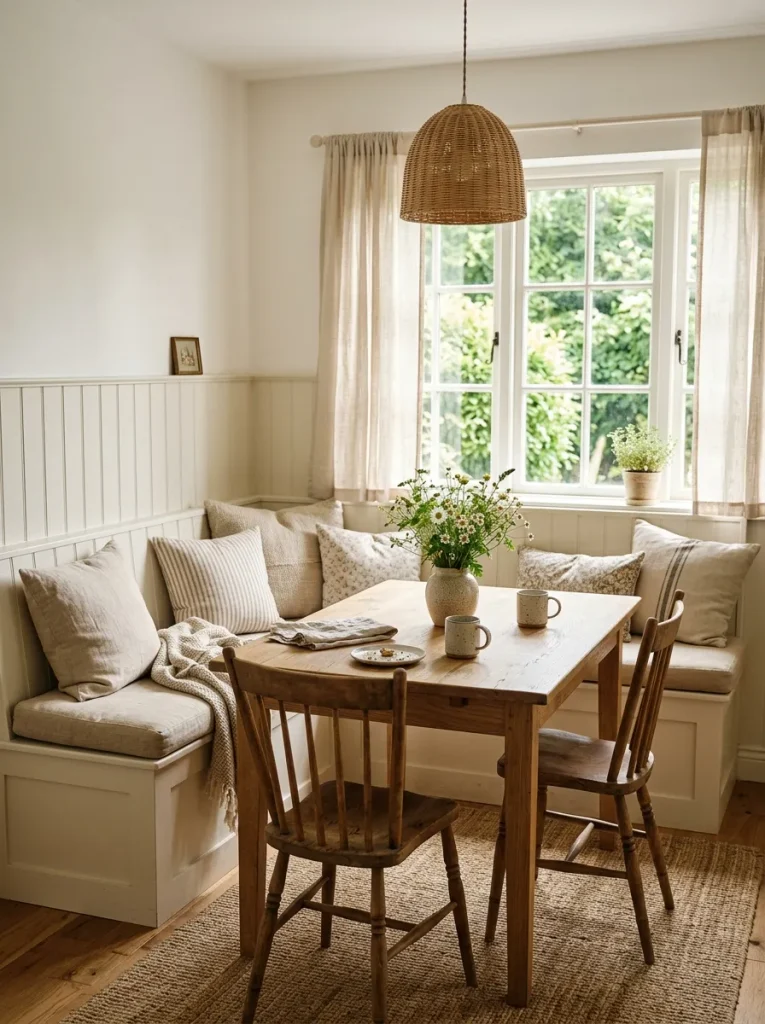
BEFORE
An unused kitchen corner can become a catch-all for shopping bags, paperwork and miscellaneous household items. Without a clear purpose, the area may feel disconnected from the rest of the room.
AFTER
A compact wooden table, comfortable bench and two or three soft cushions turn the corner into a welcoming spot for breakfast, coffee or casual conversation. Natural wood and neutral fabrics help it blend with the kitchen.
Measure the available floor space before choosing furniture and leave enough clearance for chairs, drawers and walkways. A small vase or pendant light can finish the nook without overcrowding it. Even a modest corner can become one of the most frequently used areas in the home.
Linen Kitchen Curtains
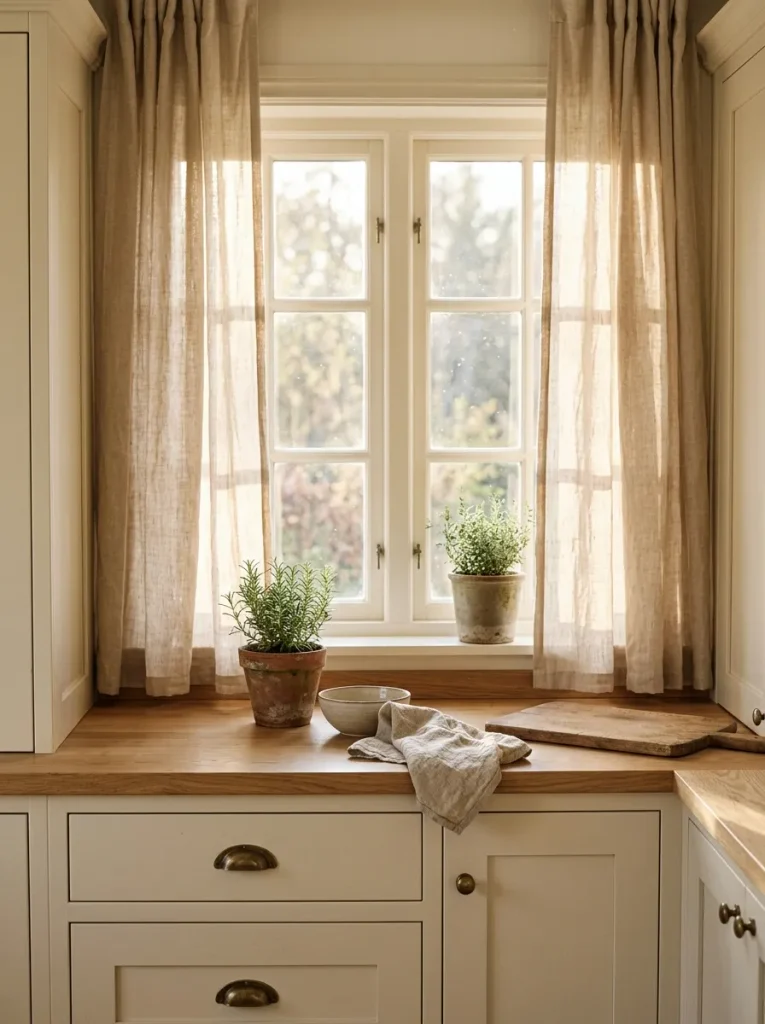
- Measure the window: Check the width and height before purchasing fabric to ensure the curtains provide suitable coverage.
- Choose a natural texture: Select cotton or linen in ivory, oatmeal or muted sage.
- Install a simple rod: Choose wood or brushed brass to complement your kitchen hardware.
- Adjust the length: Keep fabric clear of countertops, sinks and cooking surfaces.
Soft curtains introduce texture and make a kitchen window feel more finished. Light-filtering fabrics maintain a bright atmosphere while reducing harsh sunlight, although the amount of privacy depends on the weave. In my experience, understated patterns and natural colors are easier to coordinate with changing seasonal decorations than bold prints.
Coordinated Ceramic Canisters
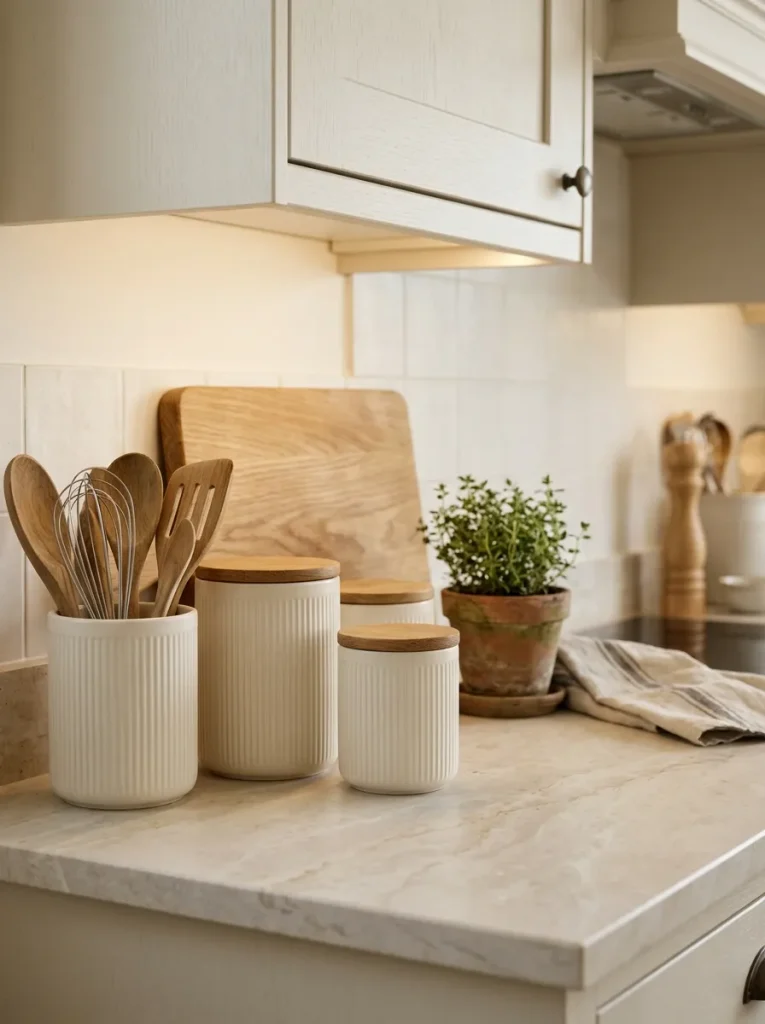
| Feature | Option A: Matching Canisters | Option B: Mixed Containers |
| Visual effect | Calm and coordinated | Eclectic and varied |
| Materials | Matching ceramic or stoneware | Glass, metal, ceramic or wood |
| Best placement | Open counters and visible shelves | Pantry shelves and mixed displays |
| Styling approach | Repeat shapes and finishes | Repeat one color for unity |
Coordinated canisters make everyday ingredients look organized while reducing the visual clutter of assorted packaging. Choose sizes that suit the flour, sugar, coffee or tea you actually store. Make sure each container seals properly for its contents and label the lids discreetly if needed. Keep the group together on a tray for easier cleaning and movement.
A Warm Coffee Station
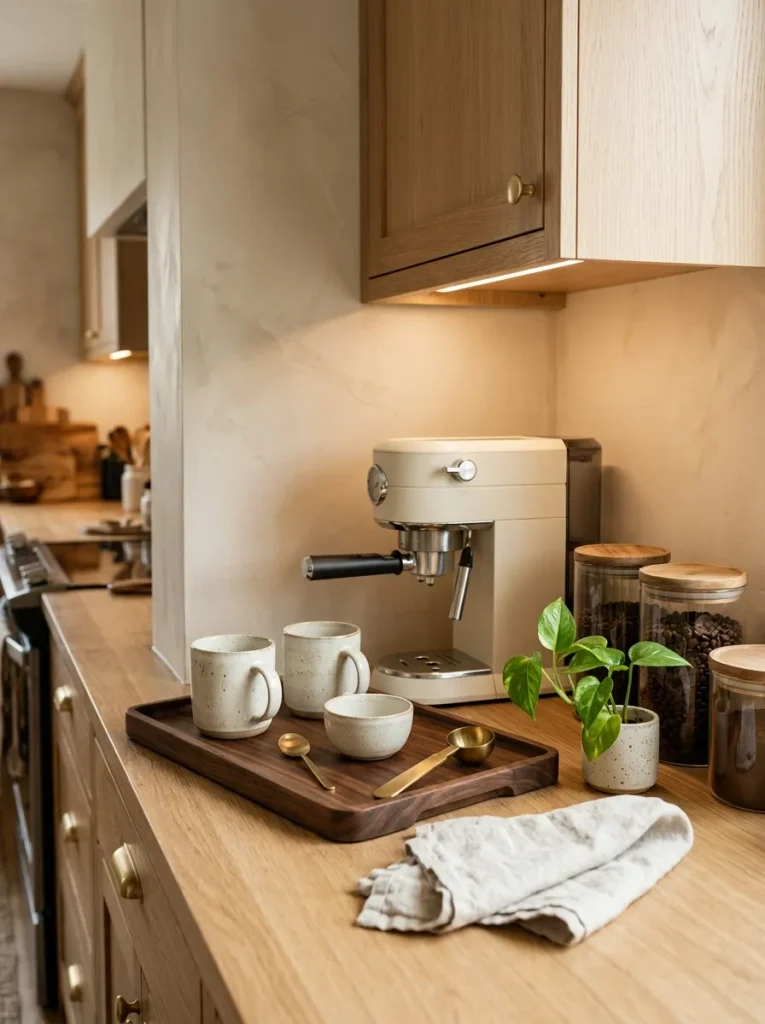
DO
- Group the coffee machine, mugs and supplies in one dedicated area.
- Use a wooden tray to keep small accessories organized.
- Store coffee beans in an airtight container away from heat and sunlight.
- Add one decorative accent, such as a small plant or ceramic bowl.
DON’T
- Place the station where it blocks food preparation space.
- Store electrical appliances beside splashing water.
- Overfill the counter with unrelated decorations.
- Leave spills or coffee grounds to accumulate.
A dedicated coffee station creates a small daily ritual without requiring a full renovation. A quiet corner of the counter can hold everything needed for morning coffee while keeping the rest of the kitchen clear. Choose accessories that complement your cabinetry and leave sufficient space around appliances for safe use and easy cleaning.
Brass Cabinet Hardware
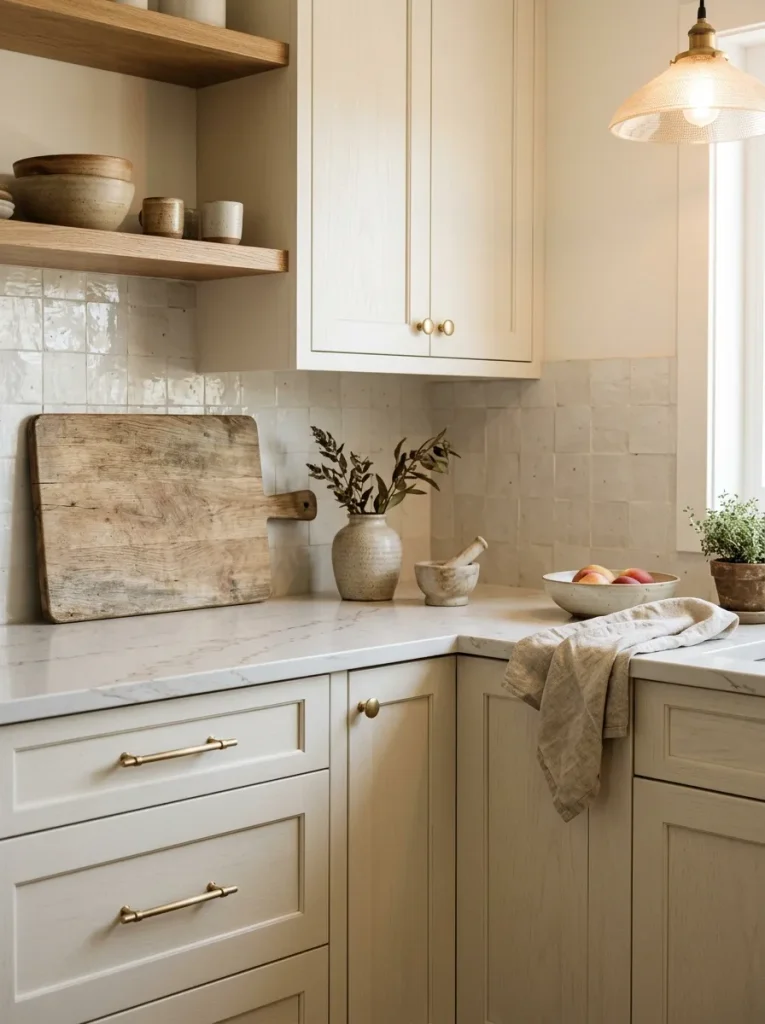
Cost: Low to moderate, depending on hardware quality and quantity.
Time: A few hours for a typical small kitchen, depending on the number of handles.
Skill Level: Beginner-friendly with basic tools and careful measuring.
Best For: Cream, white, sage green and natural wood cabinetry.
Brass hardware adds a warm metallic accent that helps kitchen cabinets feel more finished. Brushed or satin finishes generally create a softer appearance than highly polished gold. Before purchasing, measure existing hole spacing and check the screw sizes. Replacing handles is a simple update, but filling and drilling new holes requires extra care to achieve a neat result.
Layered Kitchen Textiles
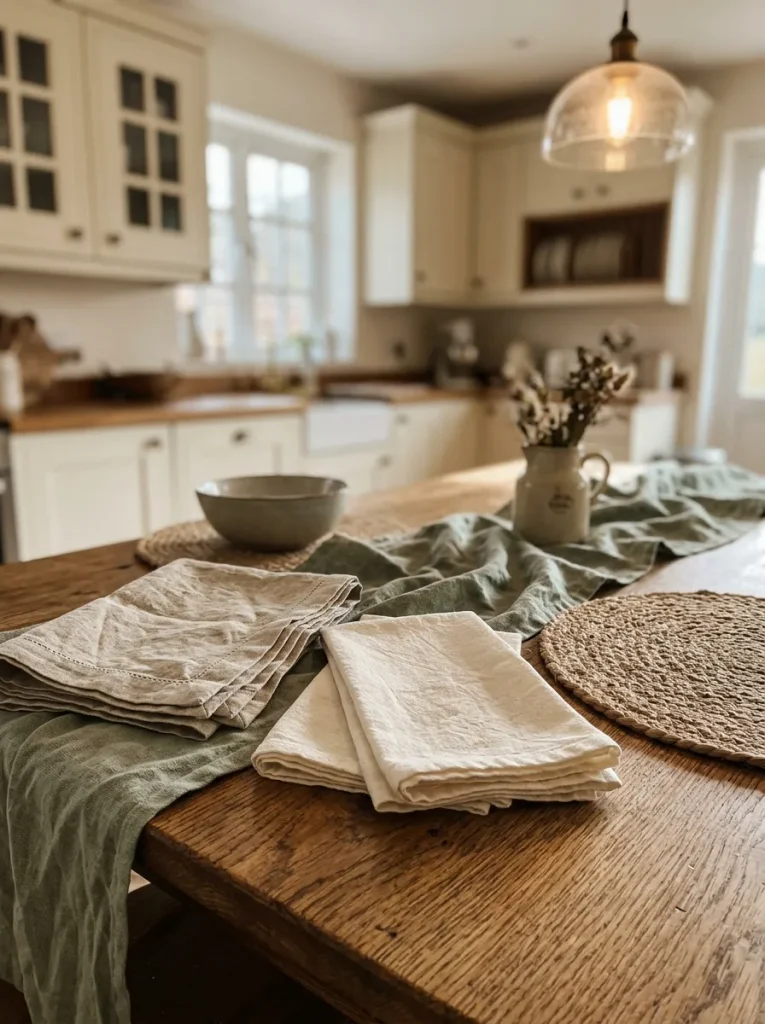
Soft textiles can make a kitchen feel warmer without taking up valuable counter space. A few coordinated fabrics introduce color, texture and a lived-in quality that hard surfaces alone may lack.
Start with two complementary tea towels, such as oatmeal linen and muted sage cotton. Add a small runner to a breakfast table or island if it does not interfere with food preparation. Wash kitchen textiles regularly and keep towels, runners and loose fabrics safely away from open flames and hot cooking surfaces.
A Seasonal Fruit Bowl
Quick Tip:
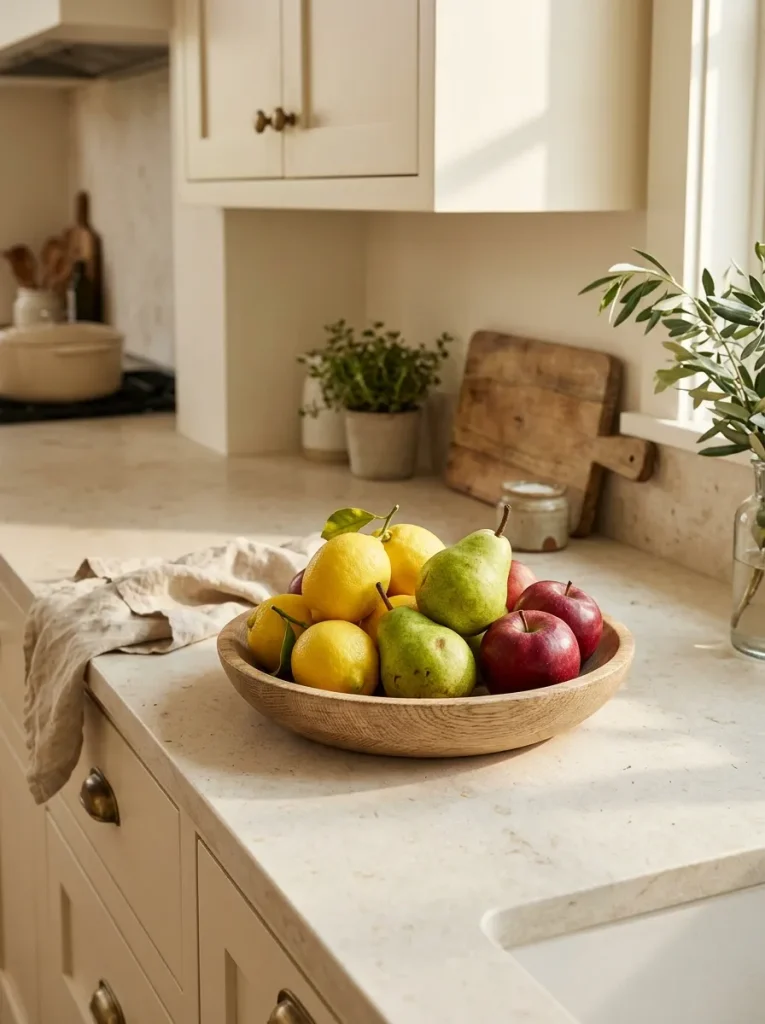
Choose a fruit bowl with enough room for air to circulate and display only the amount of produce your household will use soon. Keep fruits that need refrigeration in the fridge rather than leaving everything on the counter.
A bowl of colorful fruit adds a natural focal point to a kitchen while keeping everyday snacks visible and accessible. Wooden bowls suit rustic spaces, while ceramic designs work well in more traditional kitchens. Select seasonal produce in two or three complementary colors and remove overripe pieces regularly to keep the display fresh and tidy.
Farmhouse Sink Styling
BEFORE
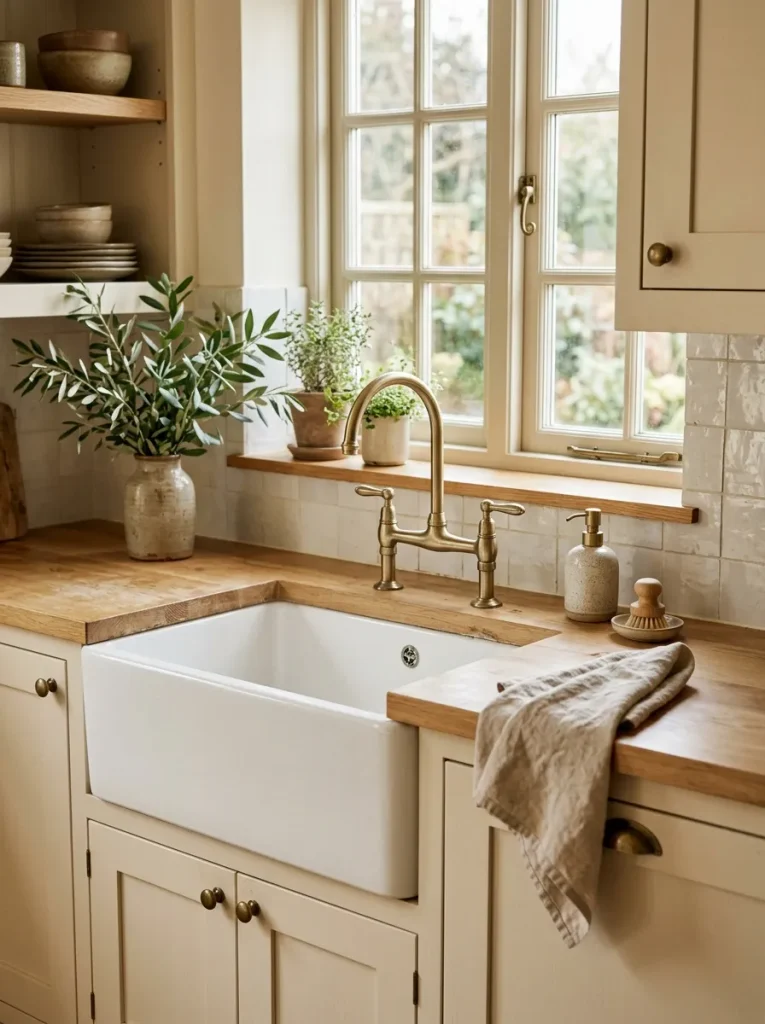
A sink area filled with mismatched soap bottles, sponges and cleaning supplies can make an otherwise beautiful kitchen feel untidy. Wet cloths and scattered accessories also take up valuable counter space.
AFTER
A coordinated ceramic soap dispenser, a compact sponge holder and a neatly folded hand towel create a cleaner, more intentional appearance. Brass or matte black fixtures can provide a subtle finishing detail.
Keep the arrangement simple because the sink needs room for washing dishes and preparing food. Choose washable accessories, dry the surrounding surface regularly and avoid placing decorative objects where they can collect grime. These small adjustments help the sink area feel organized throughout the day.
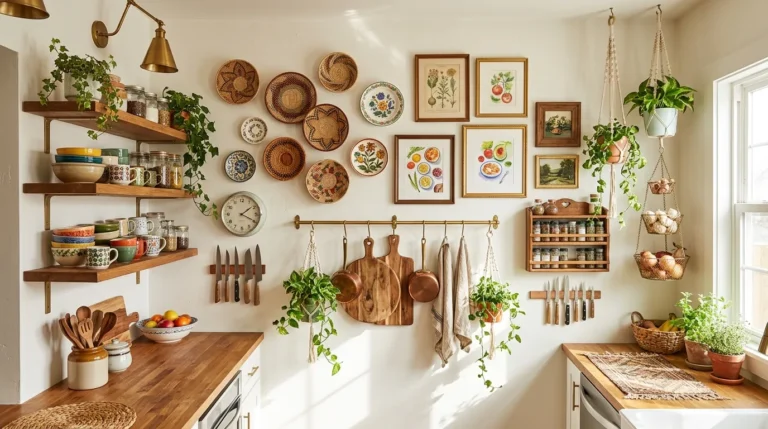
Warm Kitchen Wall Art
- Choose a suitable wall: Select a clear area away from direct heat, steam and frequent splashes.
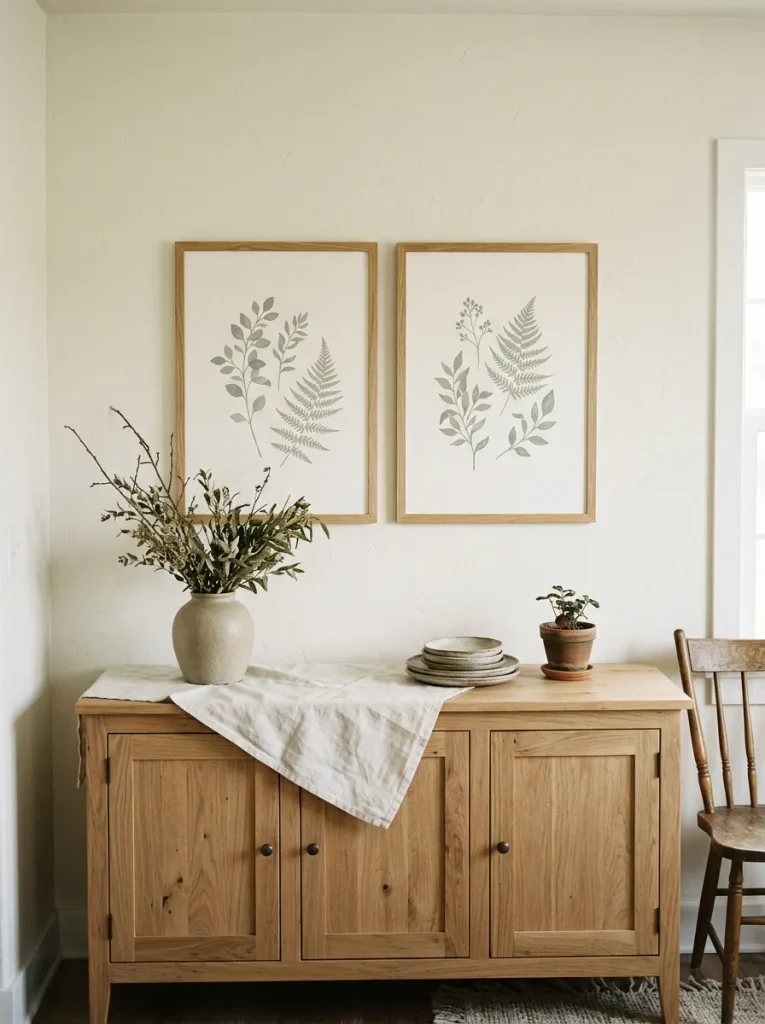
- Pick a theme: Botanical illustrations, fruit studies or vintage food-inspired artwork suit a homey kitchen.
- Match the frames: Use oak, walnut or simple black frames that complement nearby finishes.
- Plan the arrangement: Measure the wall and test the spacing before hanging each piece.
Wall art introduces personality without using valuable worktop space. Botanical prints and soft food-inspired illustrations complement natural materials and neutral cabinets, while a consistent frame finish keeps the display cohesive. Use suitable hanging hardware for the wall type and choose easy-to-clean frames if the artwork is close to an area exposed to cooking residue.
A Rustic Kitchen Island
| Feature | Option A: Rustic Wood Island | Option B: Painted Island |
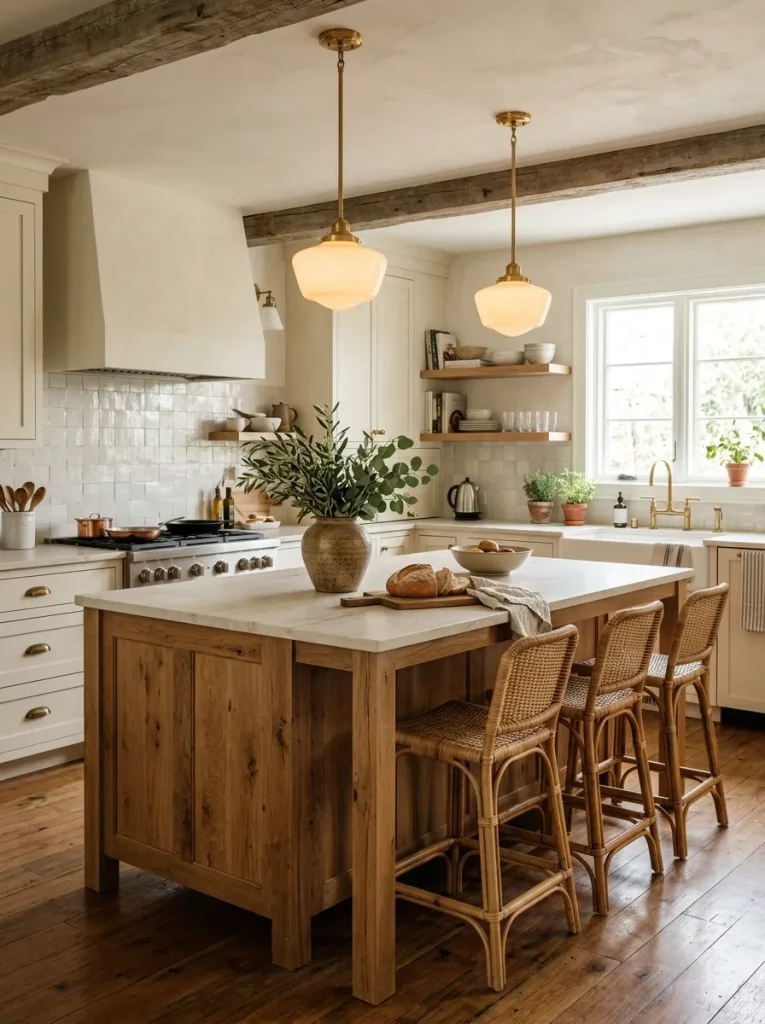
| Visual effect | Natural grain and organic warmth | Smooth, colorful focal point |
| Color palette | Oak, walnut, beige, cream | Sage, navy, cream or charcoal |
| Styling | Woven stools and ceramic accessories | Coordinated hardware and simple decor |
| Best suited to | Natural, farmhouse and organic styles | Traditional and transitional kitchens |
A kitchen island can become the room’s central gathering point, offering space for meal preparation, casual dining and decorative accents. Natural wood adds warmth, while a painted base introduces contrast. If a permanent island is impractical, consider a movable kitchen cart with a wooden top. Always preserve comfortable walkways and enough clearance for cabinet doors and appliances.
Muted Sage Green Accents
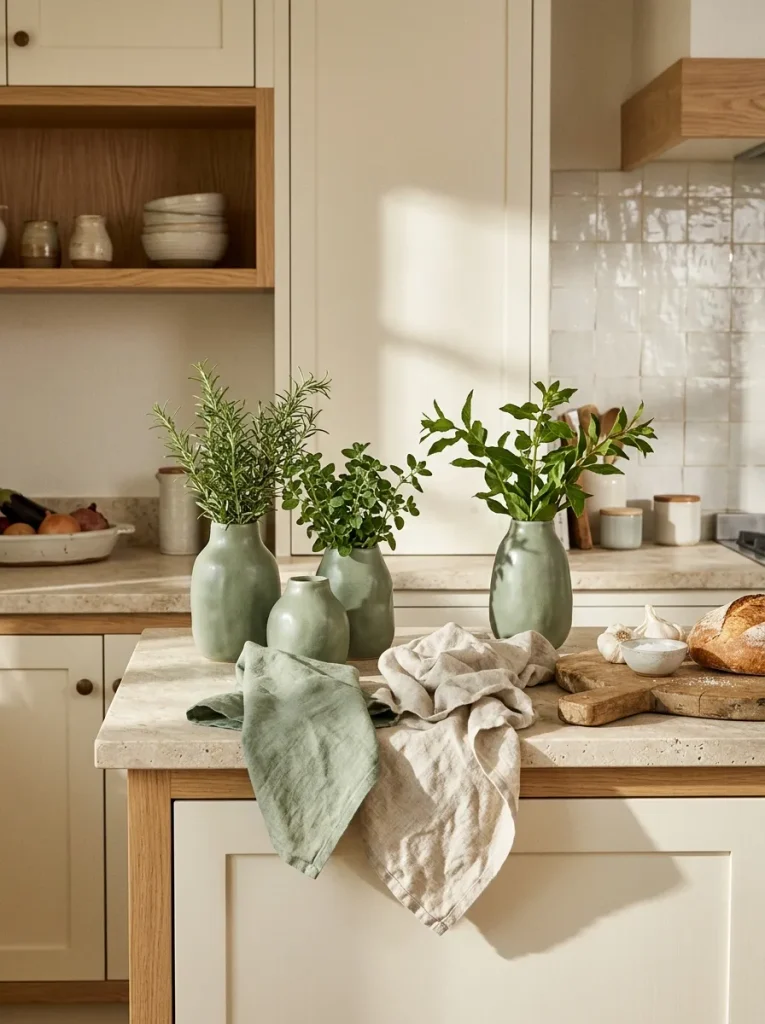
DO
- Introduce sage green through tea towels, pottery or small planters.
- Pair muted green with warm cream, beige and natural oak.
- Repeat the shade in two or three places for a connected look.
- Choose matte finishes for a soft, understated appearance.
DON’T
- Mix too many competing green shades in one small area.
- Cover every available surface with decorative accessories.
- Ignore the existing undertones of your cabinets and countertops.
- Choose delicate fabrics for areas exposed to frequent splashes.
Muted sage green brings a gentle touch of color without making a kitchen feel busy. It works especially well alongside natural wood, creamy walls and warm metallic hardware. Start with inexpensive accessories before committing to painted cabinets or a new backsplash. This approach lets you test the color in changing daylight and adjust the balance easily.
A Cozy Window Seat
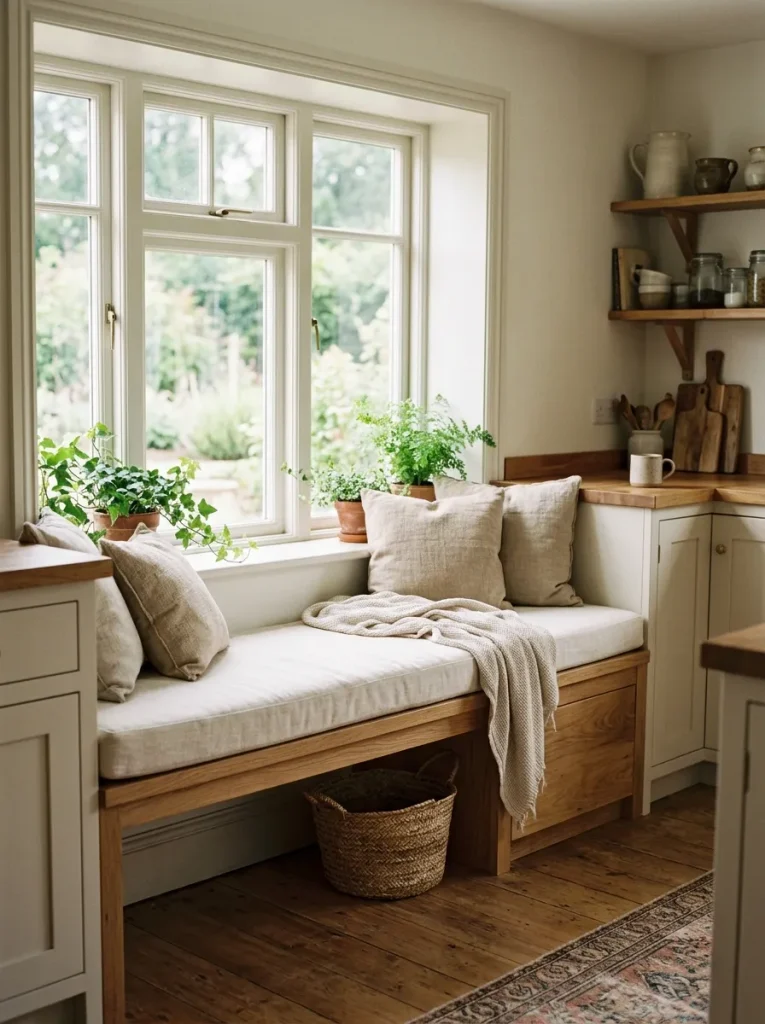
Cost: Moderate to high for built-in seating; lower for a freestanding bench.
Time: A few hours for simple styling, longer for custom construction.
Skill Level: Beginner-friendly for movable furniture; advanced for built-ins.
Best For: Kitchens with a suitable window alcove or unused corner.
A window seat creates a comfortable place for morning coffee, reading or watching family life unfold in the kitchen. Choose washable cushion covers and pillows that complement nearby textiles. If storage is useful, a bench with drawers or lift-up seating can hold table linens and other small items. Check that the seating does not obstruct windows, radiators or walkways.
A Wooden Pot Rack
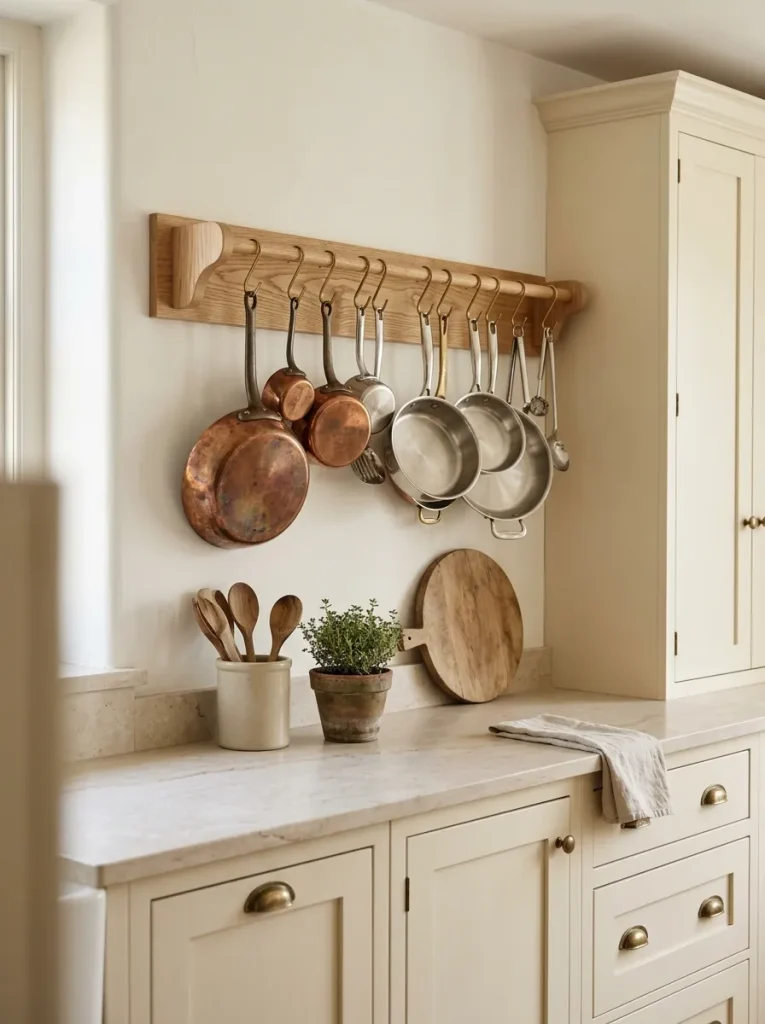
A wooden pot rack combines practical storage with the warmth of natural materials. Hanging frequently used pans can free up cabinet space while creating a purposeful focal point in the kitchen.
Choose a rack designed to support the combined weight of your cookware and secure it to suitable wall studs or structural supports using the correct hardware. Keep hanging pans away from the stove’s flames and hot surfaces. For a smaller kitchen, a compact wall-mounted rack may be more practical than an overhead design.
Textured Neutral Backsplash
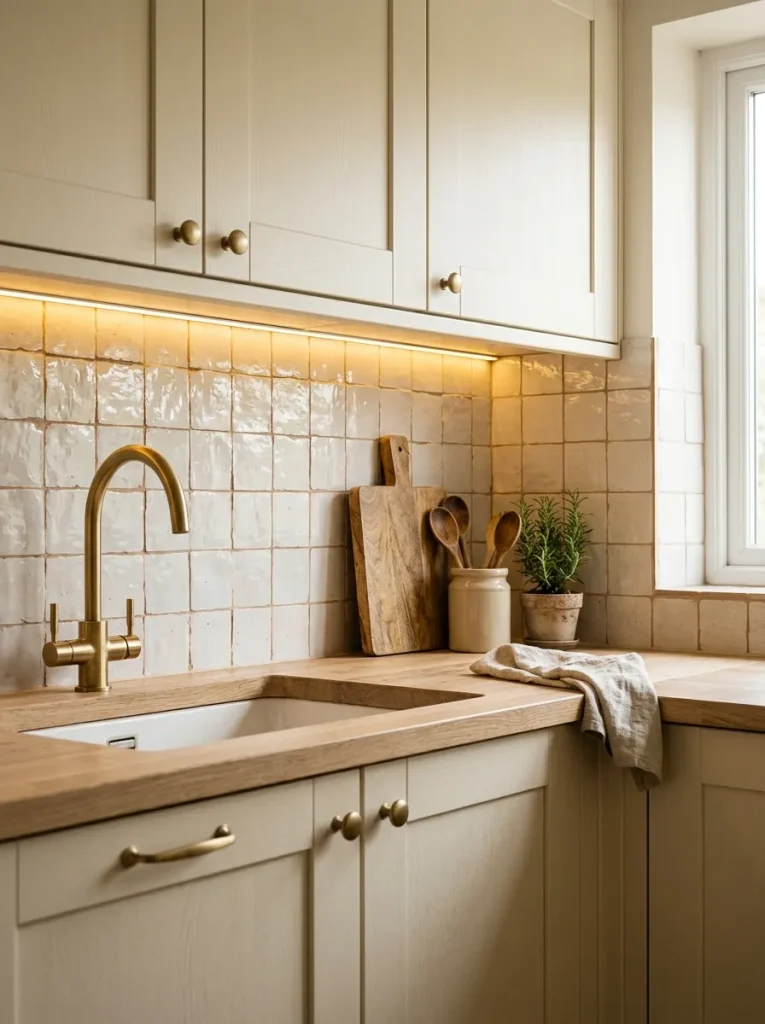
Cost: Moderate, depending on tile material and installation.
Time: One to several days, depending on the backsplash area and preparation.
Skill Level: Beginner-friendly for styling choices; intermediate to advanced for tile installation.
Best For: Kitchens with simple cabinetry that need subtle visual interest.
A textured backsplash adds depth without relying on bold colors or busy patterns. Handmade-look tiles, softly irregular edges and warm ivory shades complement wooden accessories and neutral cabinets. Before choosing a finish, collect tile samples and view them under both daylight and kitchen lighting. Select a surface that suits your cleaning routine, especially behind the stove and sink.
A Cozy Dining Corner
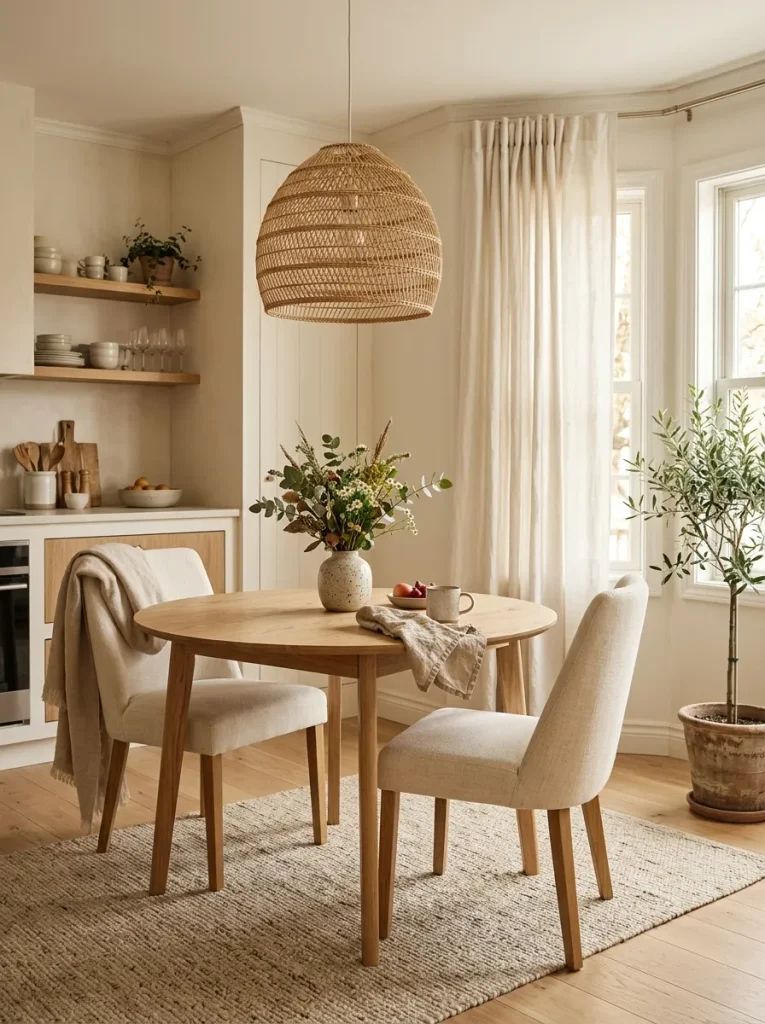
A small dining corner can make the kitchen feel more inviting by creating a dedicated place for meals and conversation. Round tables are particularly useful in compact rooms because they soften the layout and eliminate sharp corners along busy walking routes.
- Choose compact furniture: Measure the available floor space before selecting a table and chairs.
- Add comfortable seating: Use washable cushions or upholstered chairs in neutral fabrics.
- Create a simple centerpiece: A small vase or shallow fruit bowl is usually enough.
- Keep circulation clear: Make sure chairs can move without blocking cabinets or appliances.
Warm Glass Pendant Shades
Quick Tip:
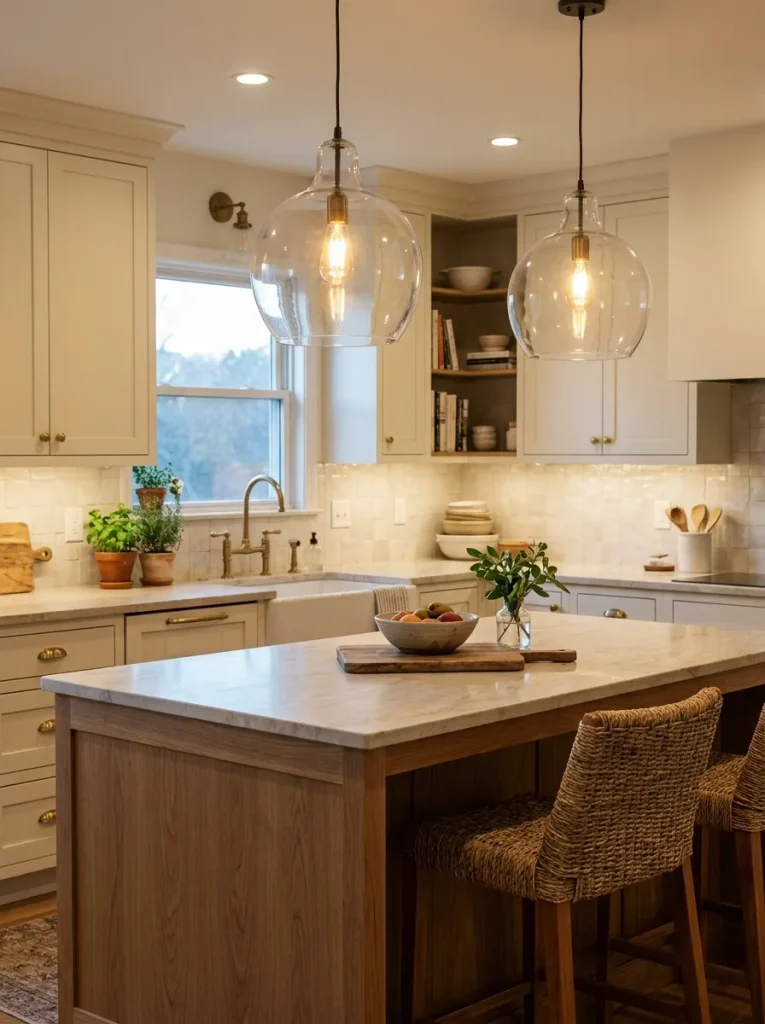
Choose clear or lightly tinted glass shades with warm bulbs to create a gentle glow. Check the fixture’s dimensions and hanging height before installation and use a qualified electrician when wiring changes are required.
Glass pendants keep the kitchen feeling visually open while adding a decorative detail above an island or dining area. Clear shades suit smaller rooms because they do not create a heavy visual block, while amber glass introduces extra warmth. Wipe the shades regularly to remove dust and cooking residue and make sure the bulbs provide enough light for the tasks below.
Natural Wooden Bar Stools
BEFORE
A kitchen island with mismatched seating can feel unfinished, especially when the surrounding decor follows a consistent color palette. Bulky stools may also make a compact kitchen feel crowded.
AFTER
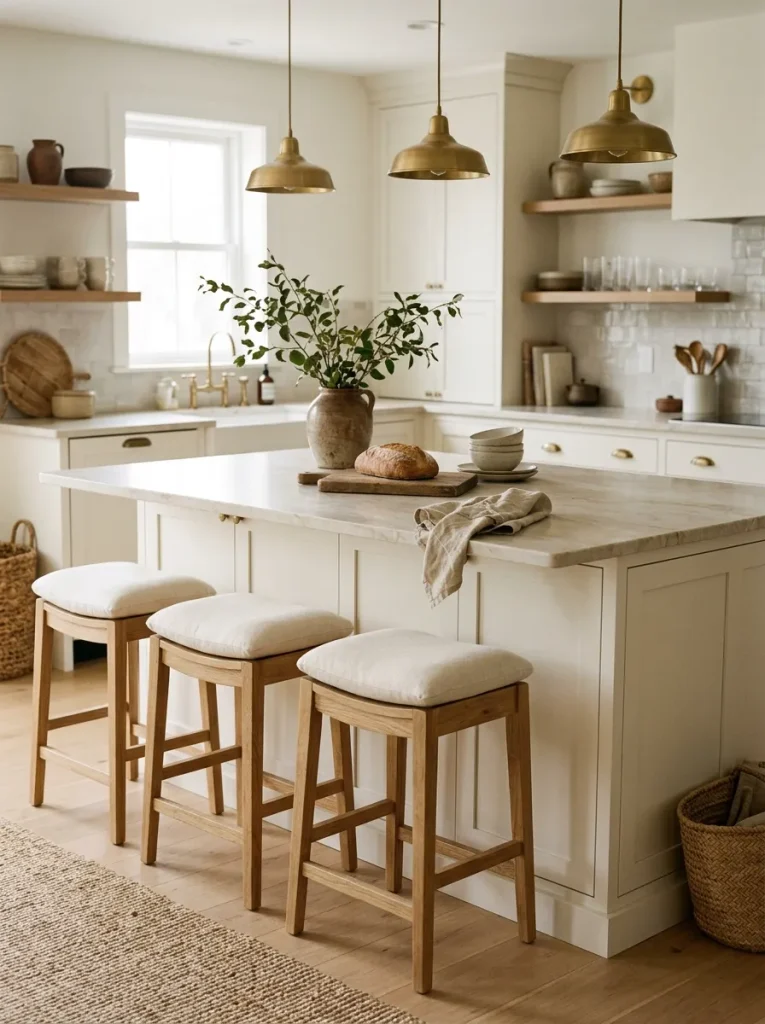
Matching wooden bar stools introduce natural warmth and create a more unified appearance. Light oak works beautifully with cream cabinets, while darker walnut adds contrast to pale countertops.
Measure the counter height before buying stools and check that there is enough knee room beneath the overhang. Choose wipeable finishes for busy family kitchens and leave sufficient space between seats for comfortable dining. A simple wood design can make the island feel welcoming without adding unnecessary decoration.
Decorative Kitchen Trays
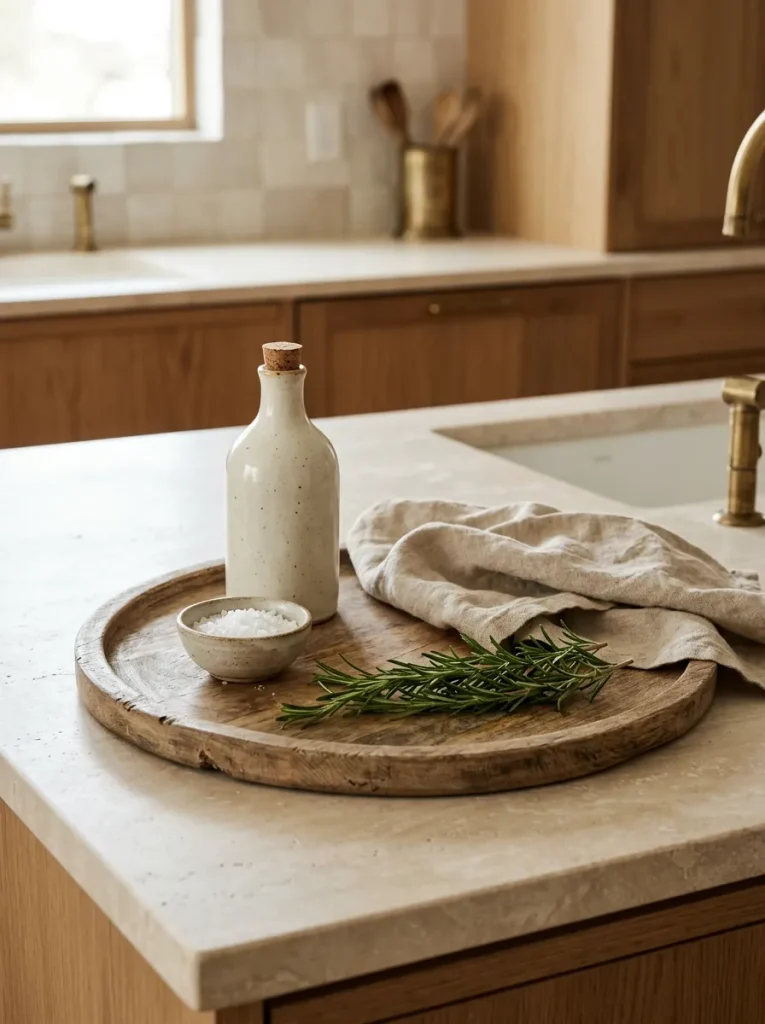
- Select a suitable tray: Choose wood, ceramic or woven material that complements your kitchen finishes.
- Group useful items: Arrange cooking oils, salt or frequently used accessories together.
- Vary the heights: Combine a taller bottle with a low bowl and a small plant.
- Leave empty space: Avoid filling the tray until the objects feel crowded.
- Clean underneath: Lift the tray regularly to wipe away crumbs and spills.
A decorative tray gives everyday kitchen essentials a defined place, making the countertop appear more organized. It also allows you to move a group of objects quickly when preparing meals. Keep the arrangement away from stove burners and other heat sources and choose a washable tray if it will hold ingredients or items exposed to grease.
Warm White Kitchen Decor
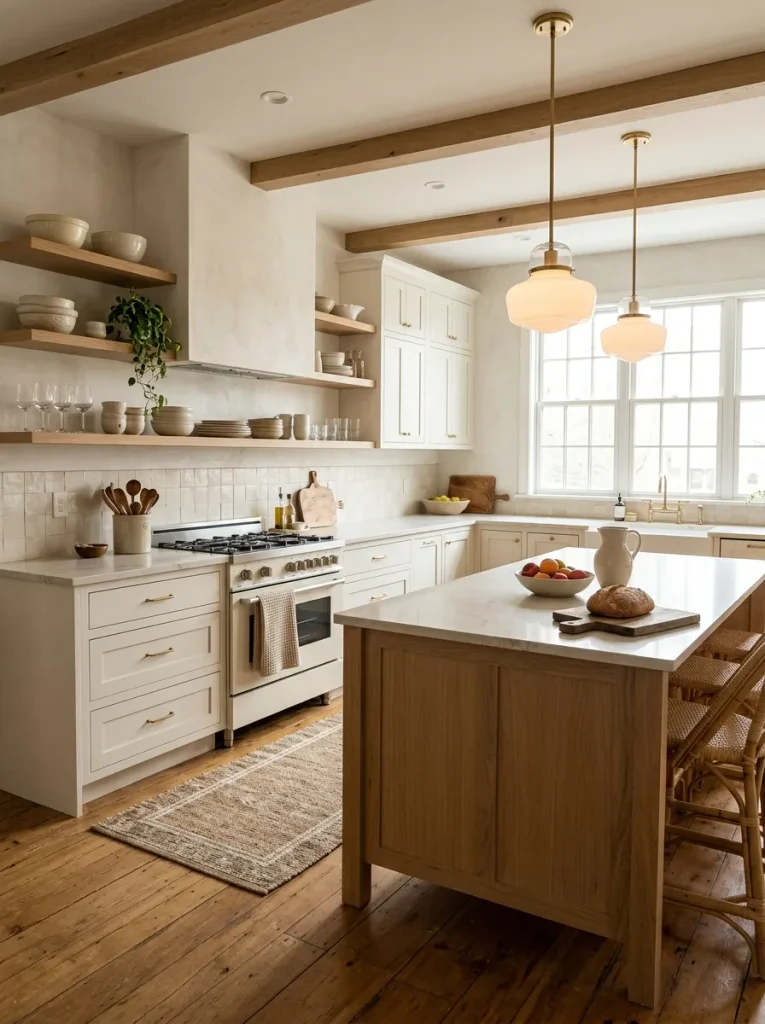
| Feature | Option A: Cool White | Option B: Warm White |
| Undertone | Blue or gray | Cream, beige or subtle yellow |
| Overall mood | Crisp and contemporary | Soft and welcoming |
| Wood pairing | Ash, gray oak or cooler finishes | Honey oak, walnut or natural wood |
| Styling accents | Chrome and cool gray | Brass, linen and earthy ceramics |
Warm white decor creates a bright kitchen without the stark appearance that some cooler whites can produce. Repeat creamy tones in pottery, curtains and linens, then introduce natural wood to add depth. Before choosing paint or accessories, compare samples against your countertops and flooring. Consistent undertones help the finished room feel comfortable and thoughtfully coordinated.
CONCLUSION
Creating a warm, welcoming kitchen doesn’t require a complete makeover or a big decorating budget. Small changes, such as adding wooden accents, displaying fresh herbs, updating cabinet hardware or introducing soft lighting, can make your space feel more comfortable and personal.
The best Kitchen Decor Ideas are the ones that balance beauty with everyday practicality. Start with one corner, experiment with textures and colors and build a look that feels natural to you.
Save this article on Pinterest for inspiration, try your favorite ideas and share it with someone who loves a cozy home. Your dream kitchen can begin with one simple change.