Modern Kitchen Ideas: 31 Bold Designs Without the Cold
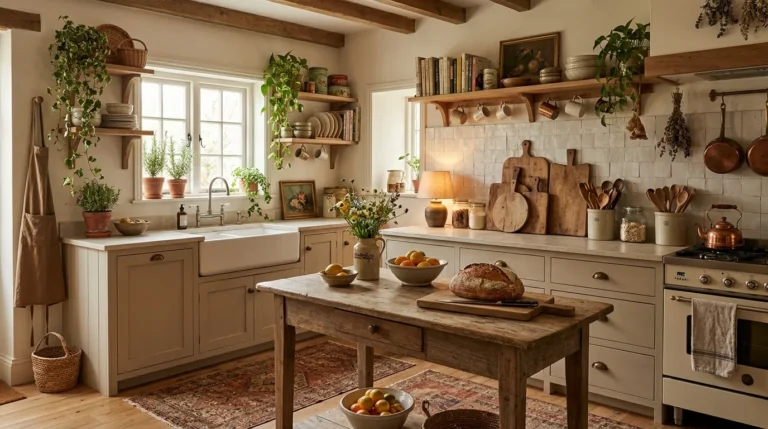
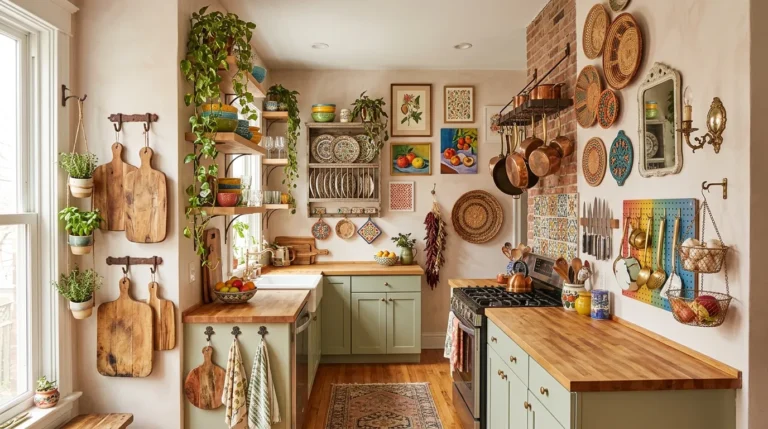
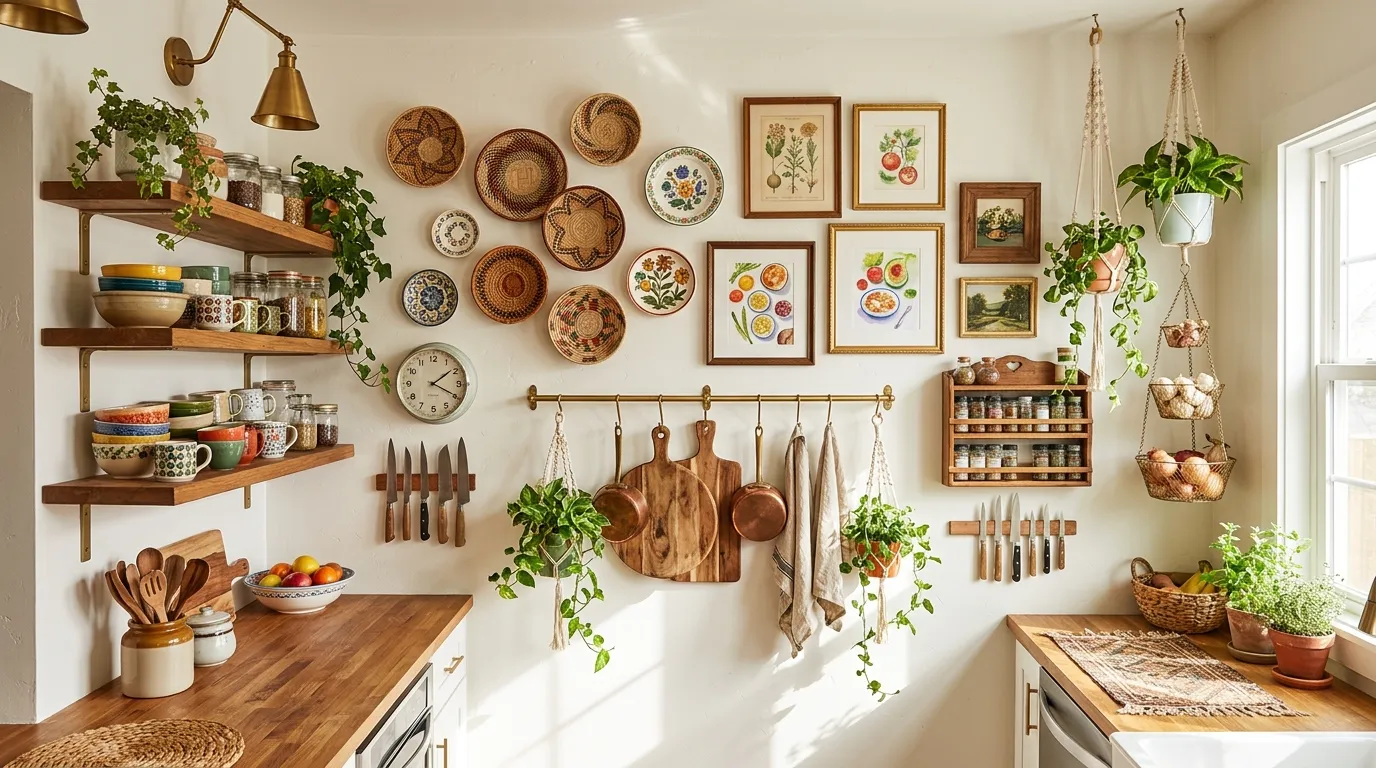
A modern kitchen can look beautiful without feeling cold, sterile or impersonal. The secret is finding the right balance between clean lines, warm textures and thoughtful details.
These Modern Kitchen Ideas will help you create a space that feels stylish, welcoming and practical for everyday life. From rich green cabinets and sculptural islands to warm wood accents and statement lighting, each design offers inspiration for making your kitchen feel more personal. You don’t need to renovate everything to achieve a noticeable difference, either. Sometimes, changing your lighting, updating cabinet hardware or introducing natural materials can make a room feel completely different. Whether you’re planning a full remodel or looking for simple decorating updates, these ideas will help you explore fresh possibilities, choose finishes that work together and create a kitchen you’ll love spending time in.
Warm Wood Accents
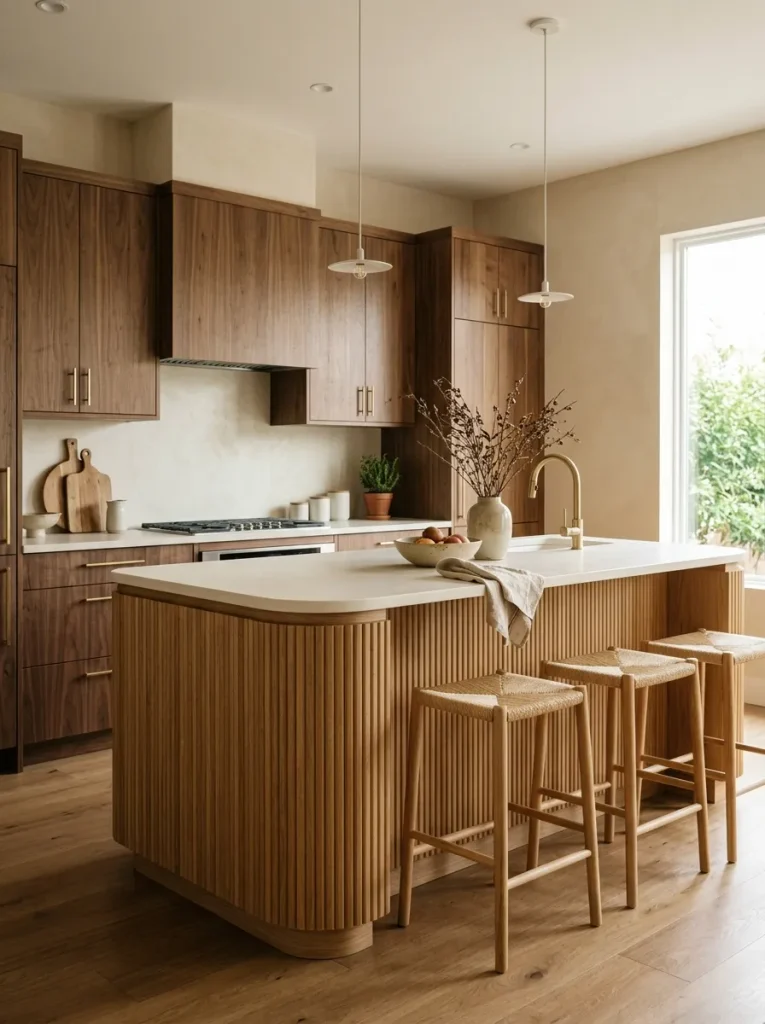
Warm wood accents keep a modern kitchen from feeling too sleek or sterile. Walnut cabinets, oak shelves or a timber island introduce natural color and texture that soften clean architectural lines.
Pair medium-toned wood with creamy white surfaces and warm metallic hardware for a balanced palette. If your kitchen already has wooden flooring, choose a complementary shade rather than an exact match. This creates depth while keeping the finishes connected. Even a few wooden stools or cutting boards can bring warmth to an otherwise minimal design.
Matte Black Fixtures
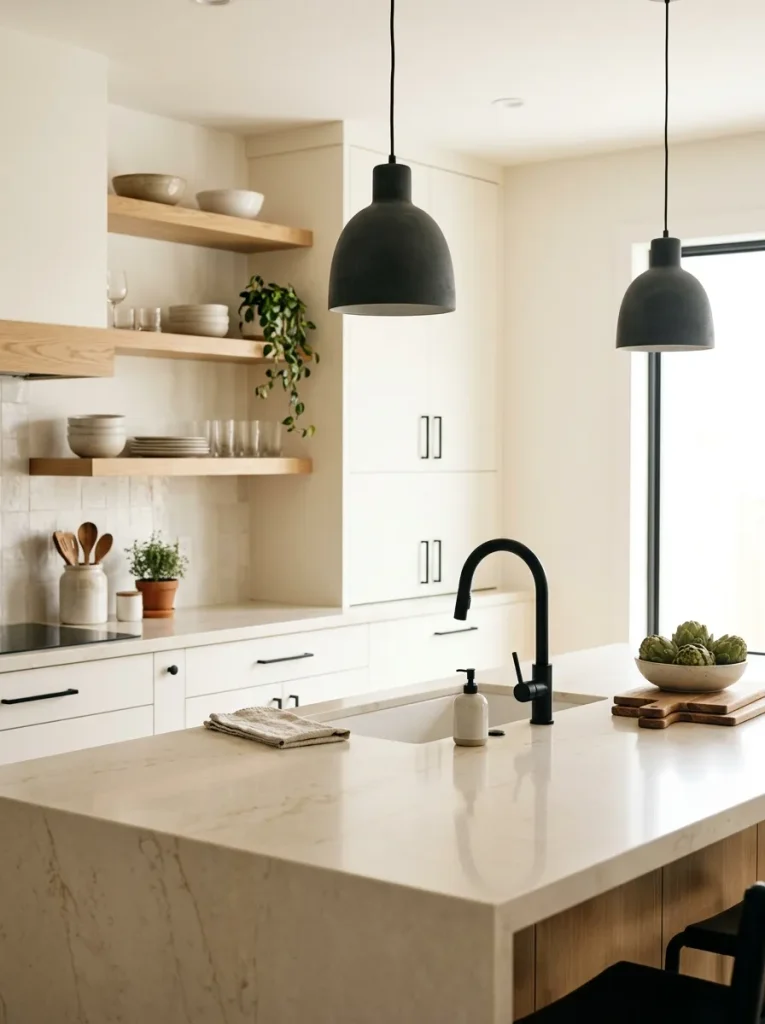
- Choose simple hardware: Slim black handles create crisp lines against light-colored cabinets.
- Coordinate the faucet: Repeat the black finish at the sink for a connected appearance.
- Add dark lighting: Pendant fixtures can echo the hardware without dominating the room.
- Balance with warm materials: Oak, beige stone and cream finishes prevent the contrast from feeling harsh.
- Check cleaning needs: Matte finishes can show fingerprints or water marks depending on their quality and location.
Matte black details give a kitchen definition without requiring bold colors across large surfaces. Keep the finish consistent across a few prominent elements, then let natural textures soften the contrast. This approach works especially well in modern kitchens with simple cabinet doors, uncluttered counters and plenty of daylight.
Warm Ambient Lighting
Quick Tip:
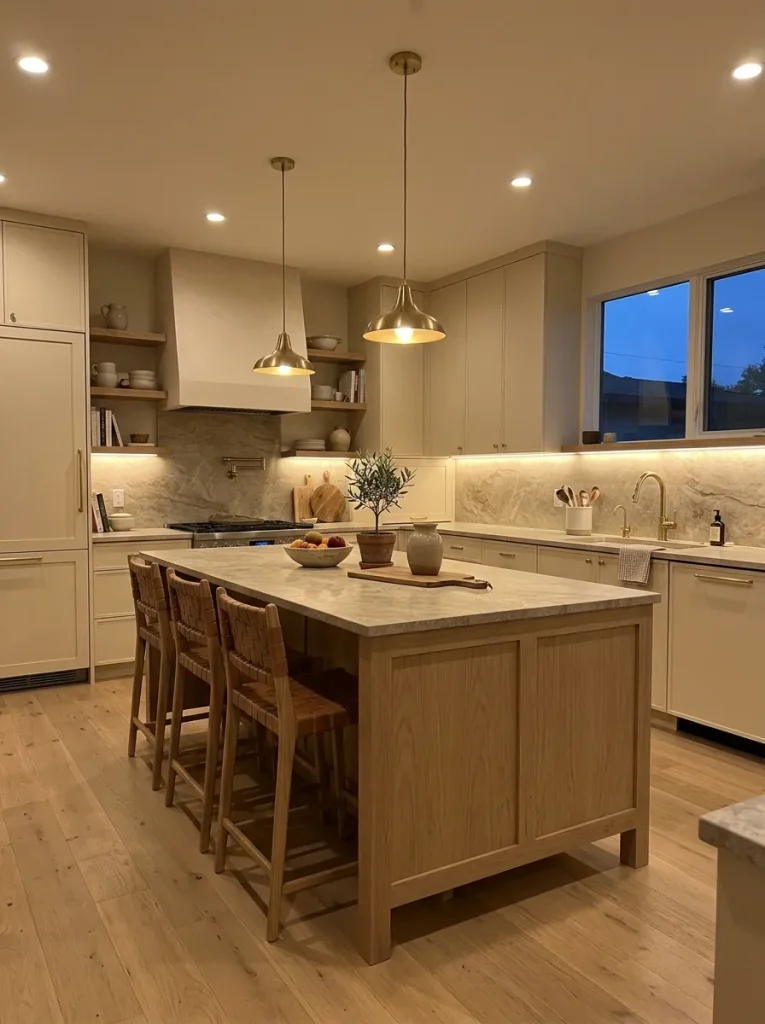
Choose warm-white bulbs around 2700K to 3000K for a comfortable evening atmosphere. Keep task lighting bright enough for safe food preparation and use dimmers where compatible to adjust the mood throughout the day.
Layered lighting gives a modern kitchen warmth while making it more practical. Pendant lights define the island, under-cabinet strips illuminate work surfaces and ceiling fixtures provide general brightness. Plan the placement before installation so your body does not cast shadows across the areas where you chop, mix and cook. The result feels inviting without sacrificing function.
Cream and Charcoal Contrast
BEFORE
An all-white kitchen can feel flat when every surface has the same brightness and texture. Without contrast, cabinet lines and architectural details may blend together.
AFTER
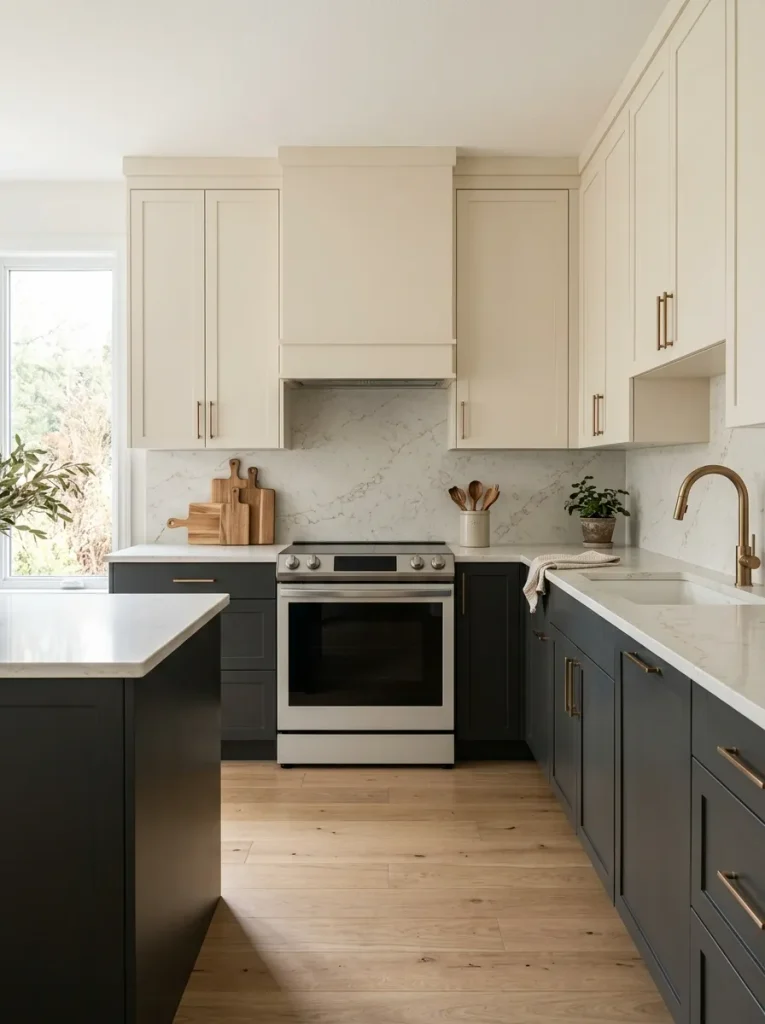
Cream upper cabinets paired with charcoal lower cabinets create definition without making the room feel overly dark. Light countertops and warm wood flooring connect both colors.
For the best balance, use charcoal on the island or lower cabinets and keep the upper portion lighter. Test paint samples beside your countertop because some grays have cool blue undertones while others appear warmer. This combination suits kitchens that need a little drama but still feel welcoming and easy to live in.
Sculptural Kitchen Island
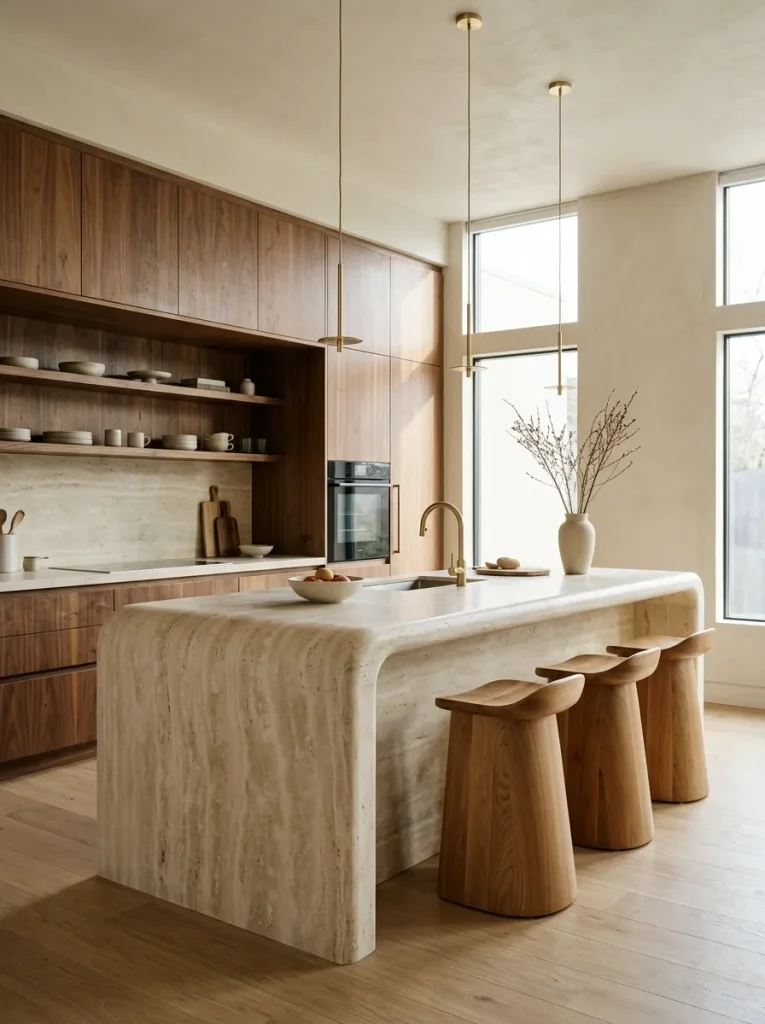
- Choose the island shape. Consider a waterfall edge, rounded corners or a simple rectangular silhouette.
- Select a durable surface. Compare quartz, natural stone and other materials based on maintenance and budget.
- Plan comfortable seating. Allow enough knee clearance and space between stools.
- Keep the surrounding palette simple. Neutral cabinets let the island become the main focal point.
A sculptural island brings architectural interest to a kitchen without relying on extra decoration. Rounded edges soften a room filled with straight cabinet lines, while a waterfall countertop creates a continuous visual statement. Before finalizing the design, check circulation space, appliance doors and preparation zones so the island looks striking and remains practical.
Fluted Cabinet Details
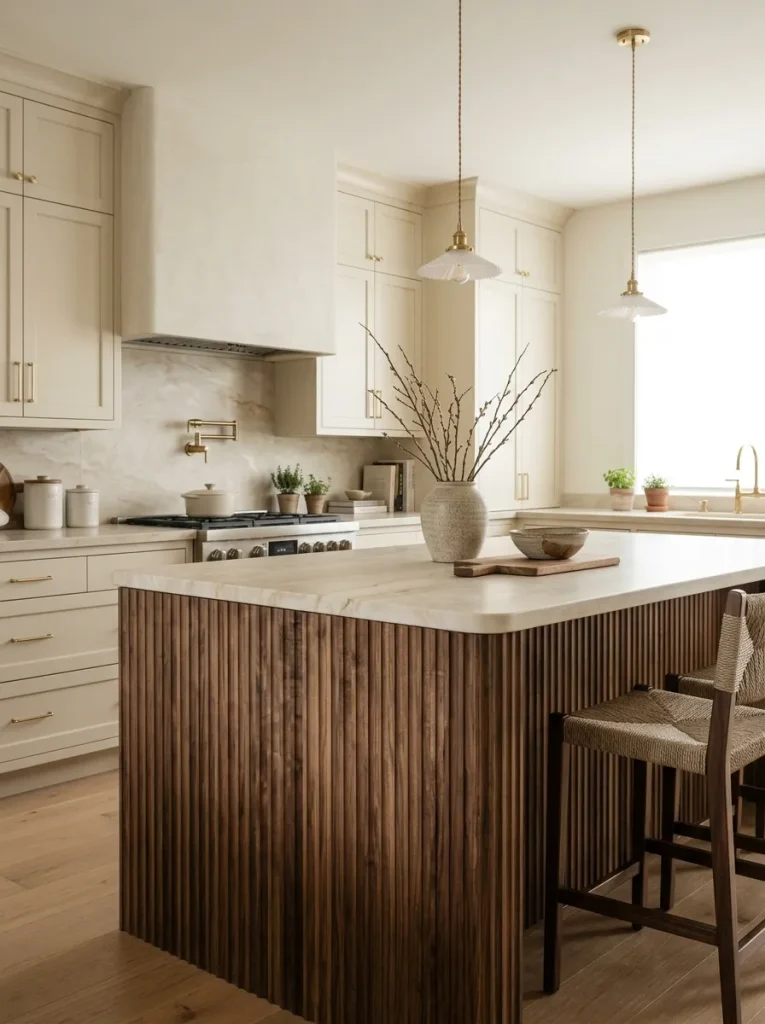
| Design Detail | Option A: Flat Panels | Option B: Fluted Panels |
| Surface | Smooth and simple | Textured with vertical grooves |
| Visual effect | Clean, understated lines | Added depth and dimension |
| Best placement | Full cabinet runs | Island fronts or selected sections |
| Maintenance | Generally easier to wipe | Grooves may collect dust and grease |
Fluted cabinetry introduces texture while preserving a modern, uncluttered palette. It works especially well on an island or a single cabinet section, where the grooves can stand out without overwhelming the room. Choose a finish that suits your cleaning routine, particularly near cooking areas where grease can settle into narrow grooves.
Statement Pendant Lights
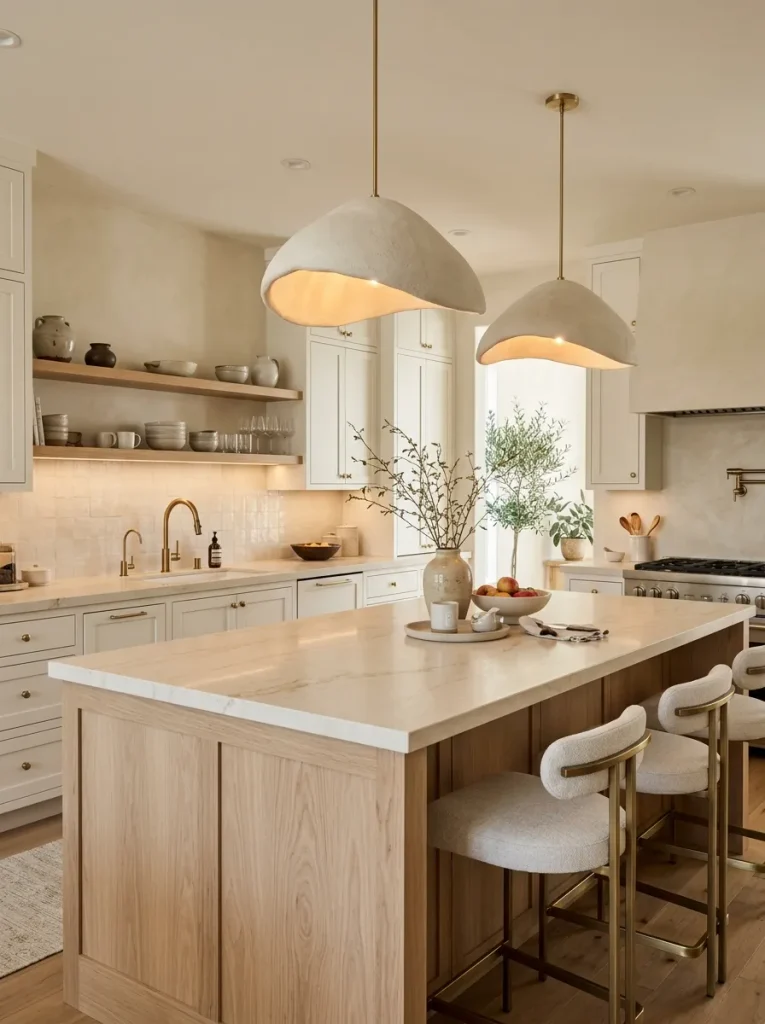
DO
- Choose pendant lights that complement the island’s length and overall kitchen proportions.
- Hang fixtures at a height that provides useful illumination without blocking conversation across the island.
- Repeat a finish from your cabinet hardware or faucet for a coordinated look.
- Use dimmable bulbs when compatible to create a softer atmosphere in the evening.
DON’T
- Select oversized fixtures that make a small kitchen feel crowded.
- Mix too many competing shapes, finishes and decorative styles.
- Forget to check the light output before choosing a fixture based on appearance alone.
Statement pendants add personality to a kitchen while helping define the island as a gathering place. A pair of matching fixtures creates symmetry, while one larger sculptural pendant can make a stronger focal point. Keep surrounding finishes relatively simple so the lighting stands out without making the room feel visually busy.
Hidden Appliance Storage
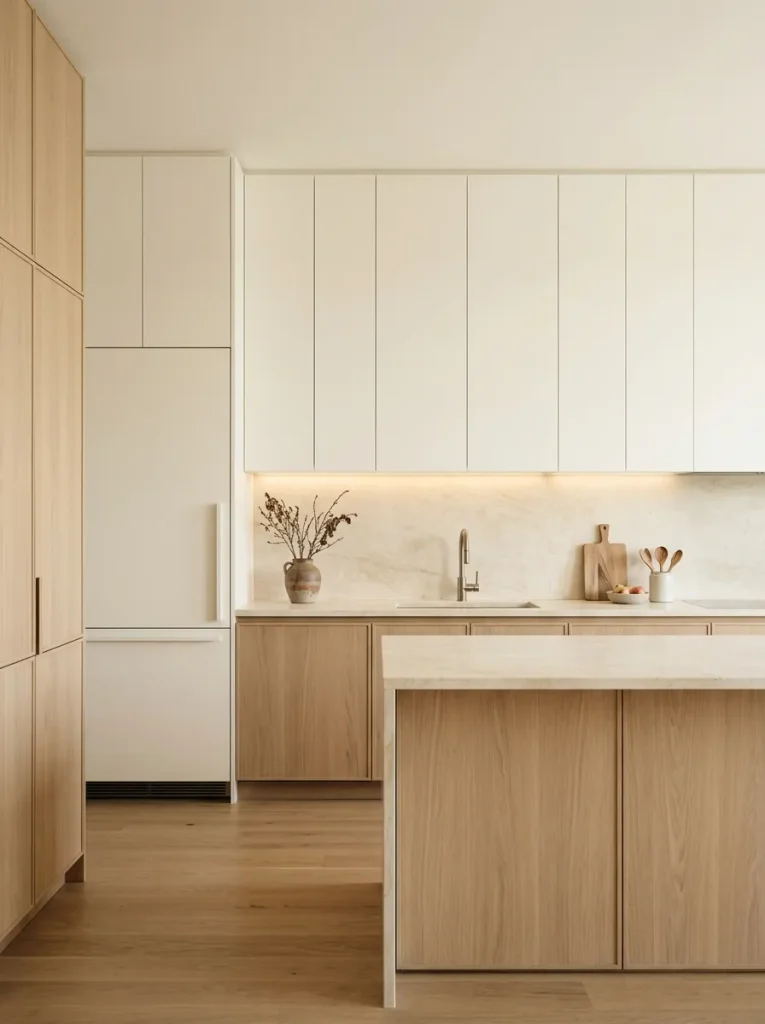
- List everyday appliances. Identify which items stay on the counter and which can be stored away after use.
- Measure before planning. Check appliance dimensions, ventilation needs, plug locations and cabinet depth.
- Create an appliance zone. Dedicate a cabinet or countertop nook to the coffee machine, toaster or blender.
- Plan easy access. Use pull-out shelves or pocket doors where suitable, ensuring doors do not obstruct nearby work areas.
- Keep essentials nearby. Store mugs, utensils and frequently used ingredients close to the appliances they support.
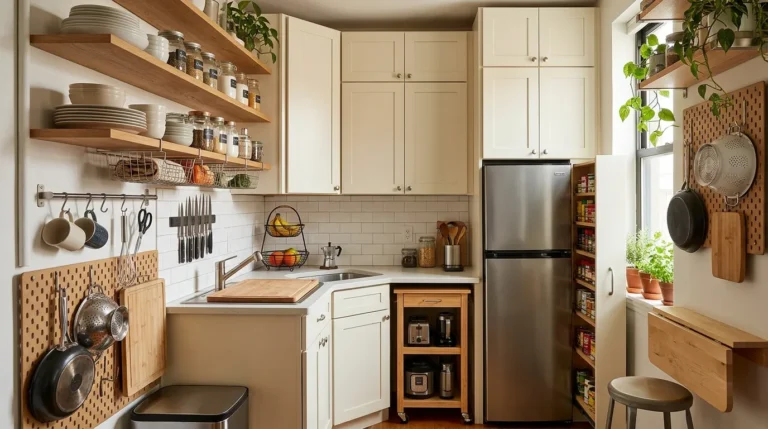
Concealed storage gives a modern kitchen a cleaner appearance by reducing visible clutter. Integrated refrigerator panels and dedicated appliance cabinets help maintain consistent lines across the room. You do not need to hide everything; keeping a few attractive daily essentials on display can make the kitchen feel personal while leaving preparation surfaces more open.
Natural Stone Surfaces
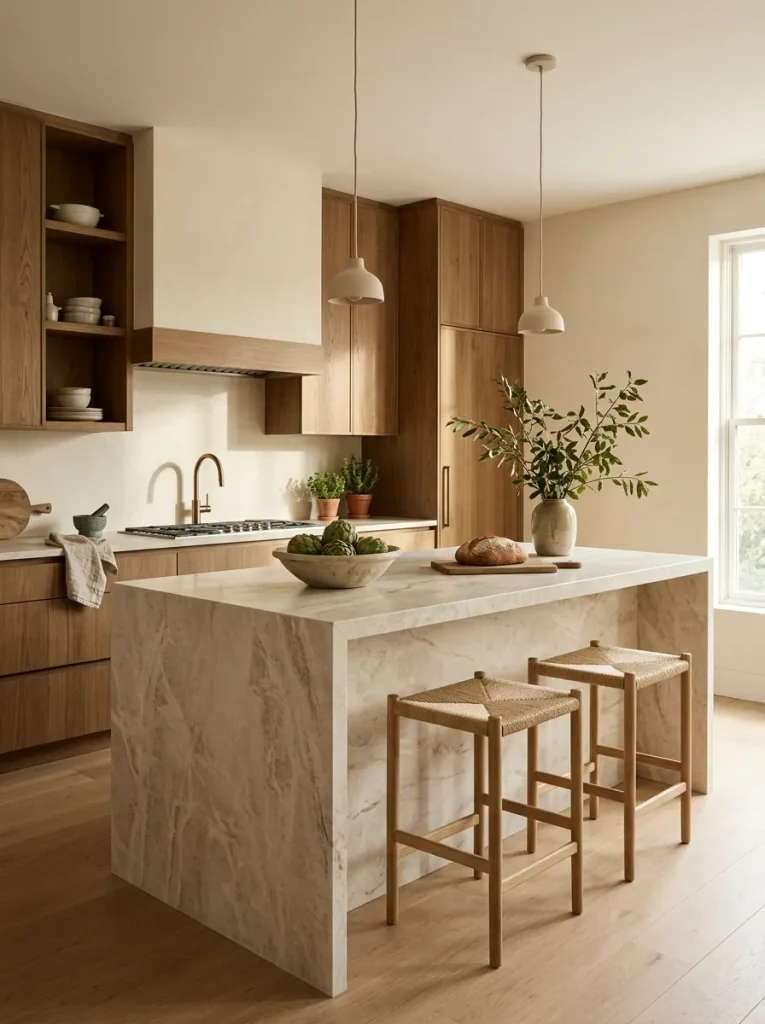
| Surface | Appearance | Practical Consideration |
| Marble | Distinctive natural veining | Can stain and etch, often requiring careful maintenance |
| Granite | Varied natural patterns | Durability and sealing needs depend on the stone |
| Quartzite | Often dramatic, stone-like veining | Confirm the exact material and its care requirements |
| Engineered quartz | Consistent colors and patterns | Heat tolerance varies, so use trivets as recommended |
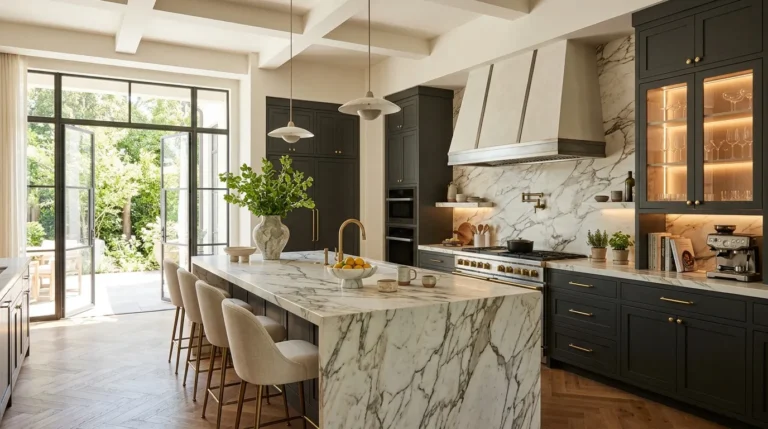
Natural stone brings unique pattern and character to a modern kitchen. A veined island can become the main focal point, especially when paired with understated cabinetry and warm wood. Before choosing a slab, view the actual material in person and ask about sealing, cleaning, stain resistance and long-term maintenance.
Open Floating Shelves
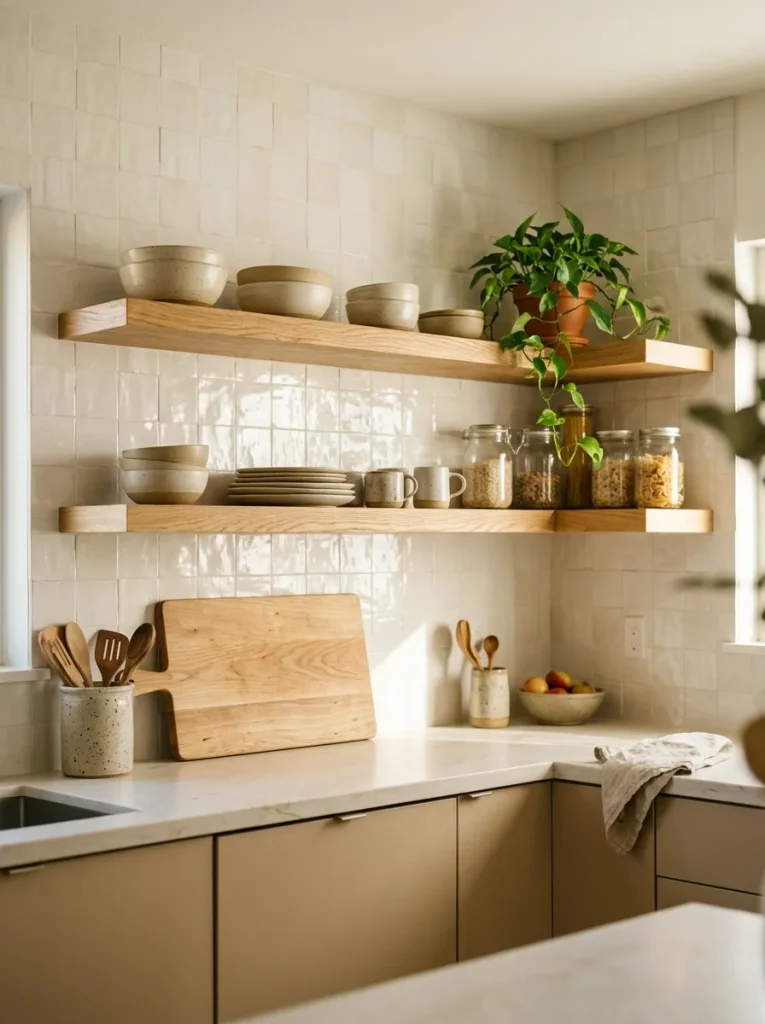
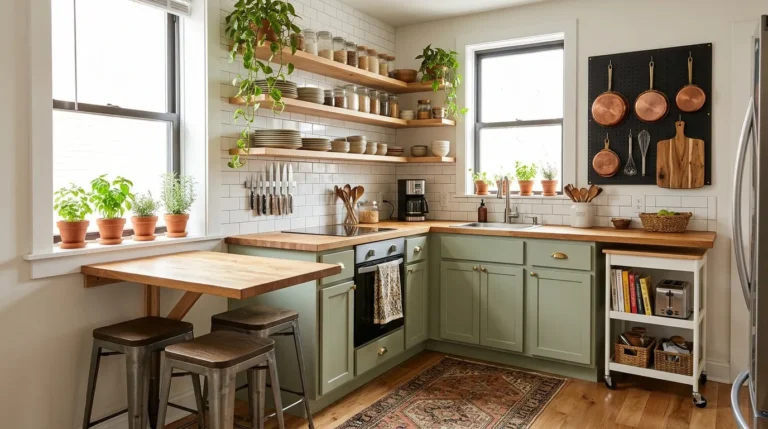
Floating shelves can make a kitchen feel lighter by opening up the wall above the counter. Use them to display everyday dishes, a few favorite mugs or simple ceramic pieces rather than filling every inch with decoration.
For a balanced look, keep the heaviest items on lower shelves and leave small gaps between objects. Match the shelf finish to your cabinetry or flooring for a connected appearance. Since open storage collects dust and cooking residue, place it away from heavy splatter zones and display items you use regularly. This keeps the arrangement attractive without creating extra cleaning work.
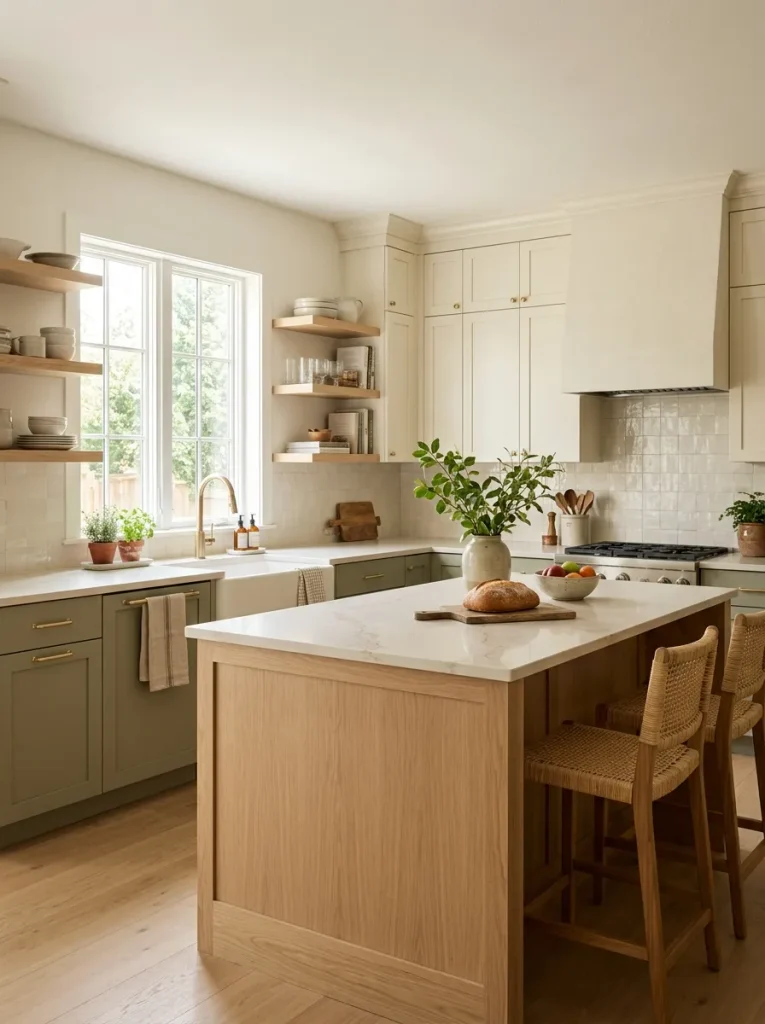
Two-Tone Cabinetry
Quick Tip:
Choose one cabinet color as the main shade and use the second to create contrast. For example, sage-green lower cabinets paired with ivory uppers can add personality while keeping the room bright. Test both colors beside your countertop and flooring before committing, because lighting can change how paint appears throughout the day.
Two-tone cabinetry adds depth without requiring patterned walls or bold accessories. You can also use a contrasting island to separate the cooking area visually from the rest of an open-plan space. Keep the hardware and countertop finishes coordinated so the different cabinet colors feel intentional rather than disconnected.
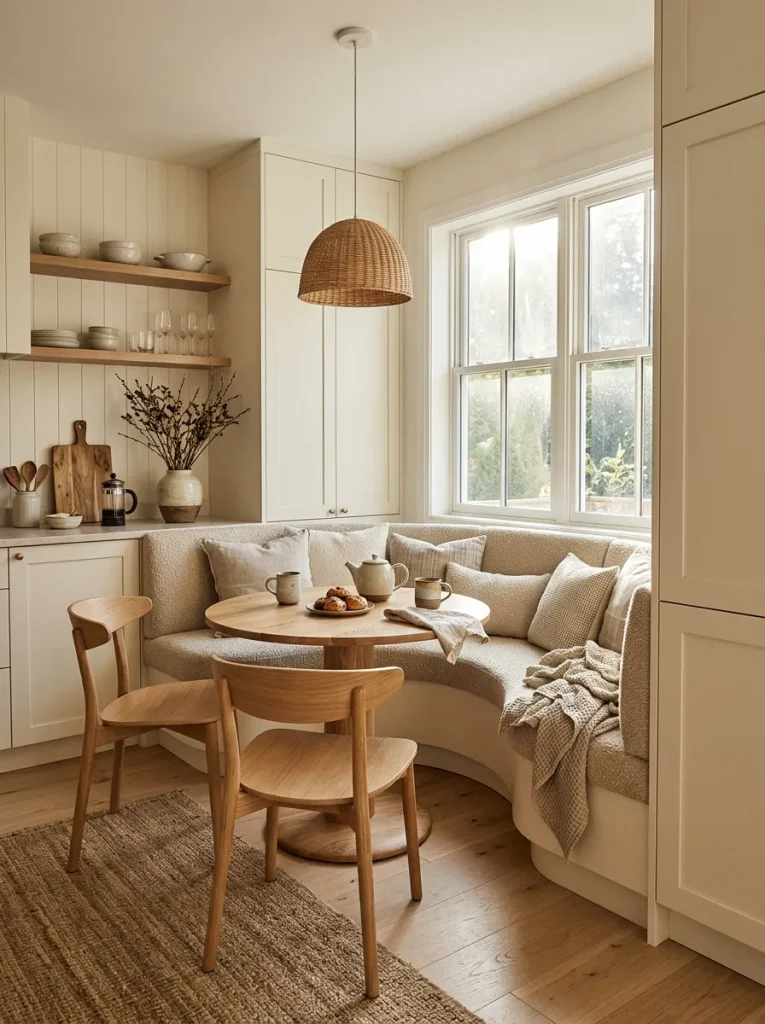
Built-In Breakfast Nook
BEFORE
A small kitchen corner may become wasted space, especially when a large dining table does not fit comfortably. Extra chairs can interrupt walkways and make the room feel crowded.
AFTER
A built-in breakfast nook turns that corner into a useful place for morning coffee, casual meals or a quick work session. A bench can fit neatly against the wall, while a round table helps soften the layout and makes movement easier around the seating area.
Measure the available space carefully and check that the table leaves enough room for people to sit down and move comfortably. Choose washable upholstery or removable cushion covers to make everyday spills easier to manage. Add a pendant or wall light nearby to make the nook feel connected to the kitchen.
Minimalist Backsplash
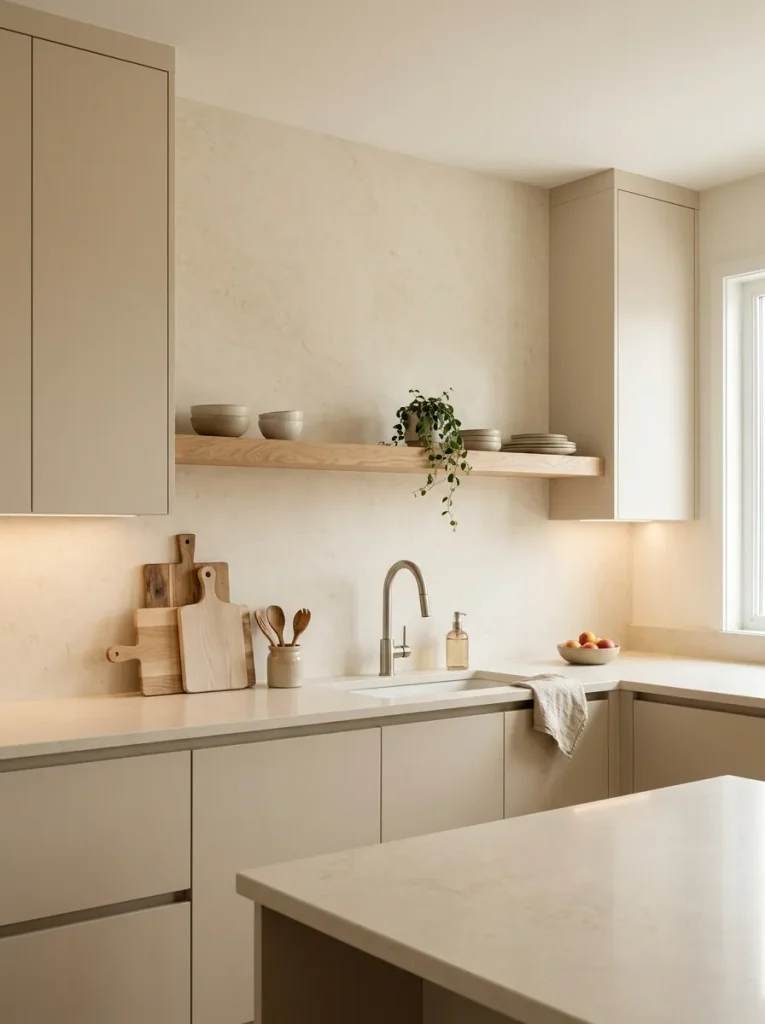
- Choose a simple finish: Large-format porcelain slabs or understated tiles create a clean, continuous appearance.
- Coordinate the undertones: Match the backsplash’s warmth or coolness to the cabinets and countertops.
- Consider grout carefully: A close color match creates a quieter look, while contrasting grout highlights the tile pattern.
- Plan for cleaning: Smooth, nonporous surfaces are often easier to wipe down around the stove and sink.
A minimalist backsplash allows cabinet finishes, lighting and countertops to take center stage. For a subtle design, choose warm white or soft beige instead of a stark, bright white. Extend the backsplash higher behind the cooking area if you want a more continuous look and confirm that the selected material suits your cleaning needs.
Integrated Breakfast Bar
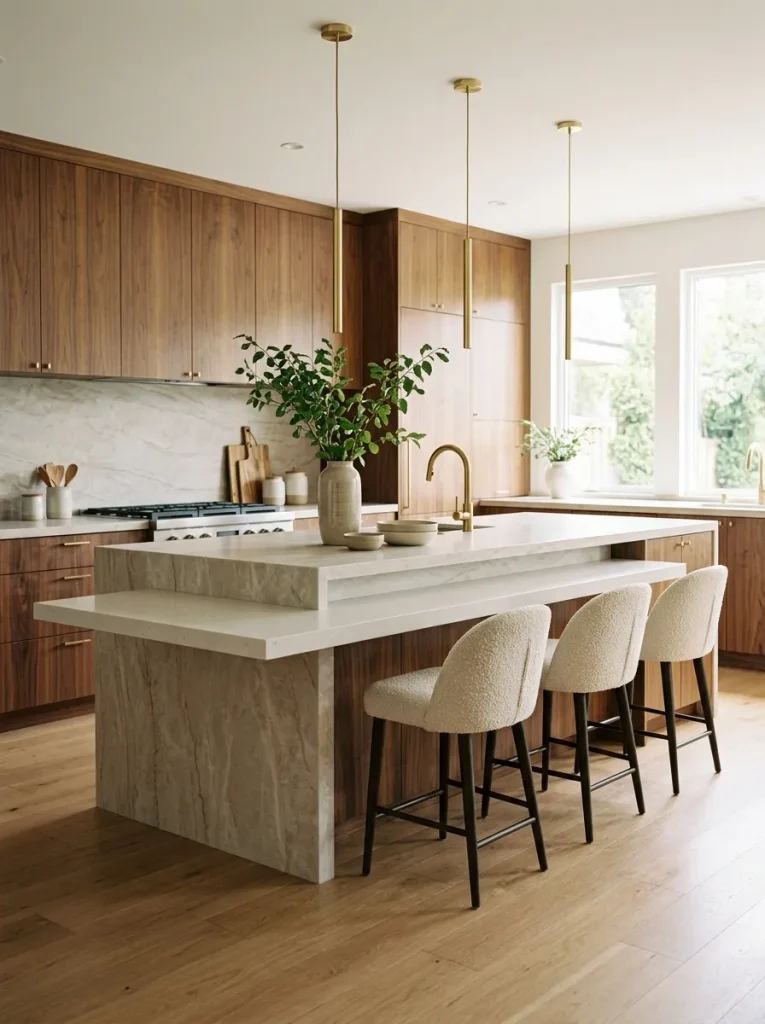
Quick Tip:
Allow enough countertop overhang for comfortable seating and check the required knee clearance before choosing stools. Measure the distance between seats so everyone has room to sit without bumping elbows. If the bar doubles as a food preparation area, keep a clear section of counter available for chopping and serving.
An integrated breakfast bar gives the kitchen a casual dining spot without requiring a separate table. It works well for quick breakfasts, homework or chatting while someone prepares dinner. Coordinate the stools with your cabinet finish, but introduce a different texture, such as woven seats or soft upholstery, to make the area feel inviting.
Glass Cabinet Doors
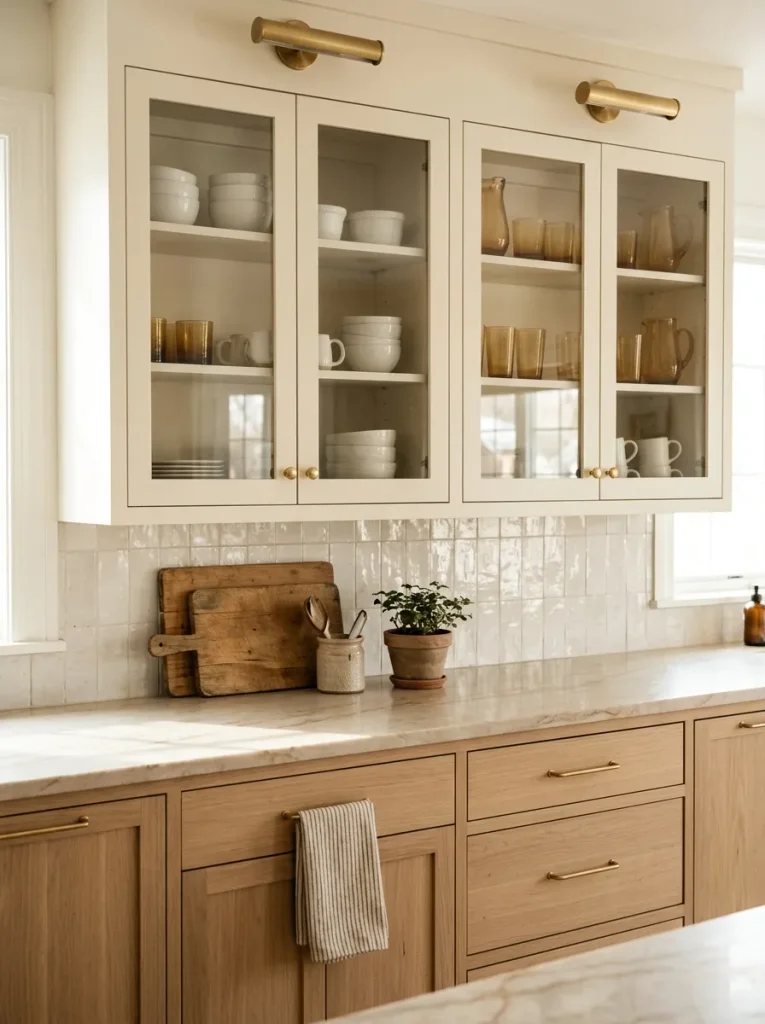
Glass cabinet doors can break up a long stretch of solid cabinetry and make the kitchen feel more open. They also let you display attractive dishes without leaving everything exposed to cooking residue.
For a polished result, group similar items together and avoid overcrowding each shelf. Clear glass creates an airy appearance, while ribbed or frosted glass offers a softer view of the contents. Consider adding interior cabinet lighting if you want the display to stand out in the evening. Keep everyday clutter behind solid doors so the glass-front sections remain neat and easy to maintain.
Warm Neutral Palette
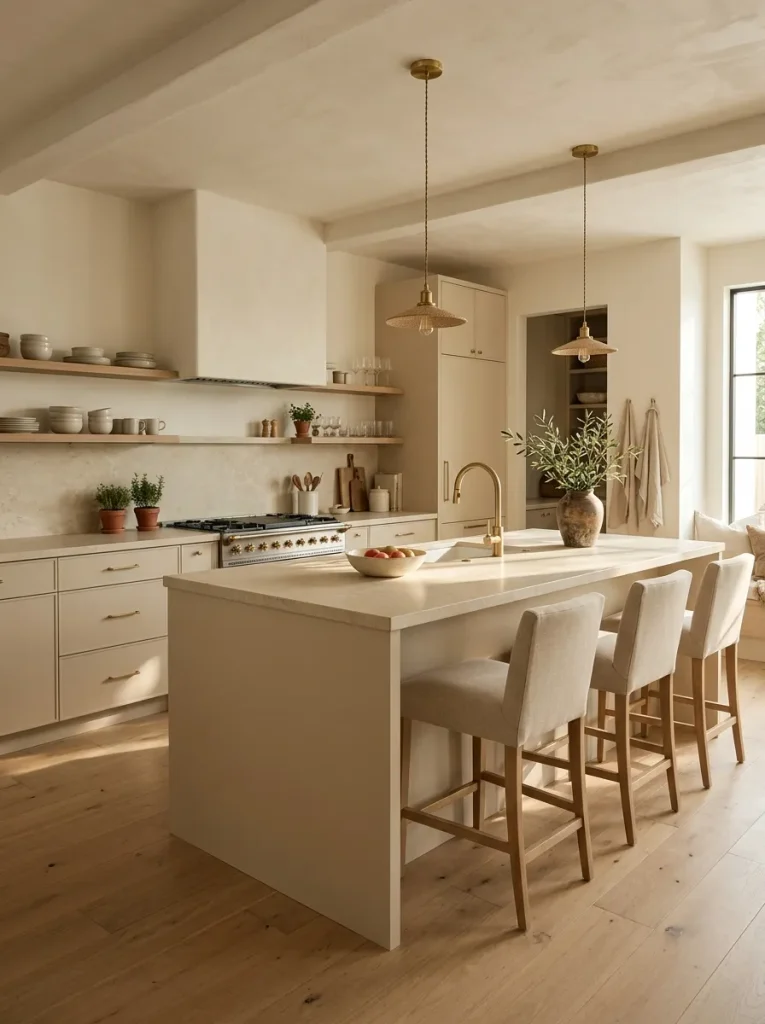
A warm neutral palette creates a modern kitchen that feels calm rather than cold. Combine cream, sand, taupeand natural wood instead of relying on a single shade of white. Different finishes help these similar colors feel layered and interesting.
- Use cream for large cabinet surfaces.
- Add beige or sandy tones through the backsplash and countertops.
- Introduce oak through stools, shelving or flooring.
- Choose brushed brass or bronze hardware for subtle warmth.
- Include linen, pottery or greenery to soften harder surfaces.
The secret is mixing textures instead of adding too many colors. Matte cabinets, gently veined stone and visible wood grain provide enough variation to keep the room from looking flat. Test samples in both natural and artificial light before making final decisions, since warm neutrals can appear very different throughout the day.
Cozy Window Seating
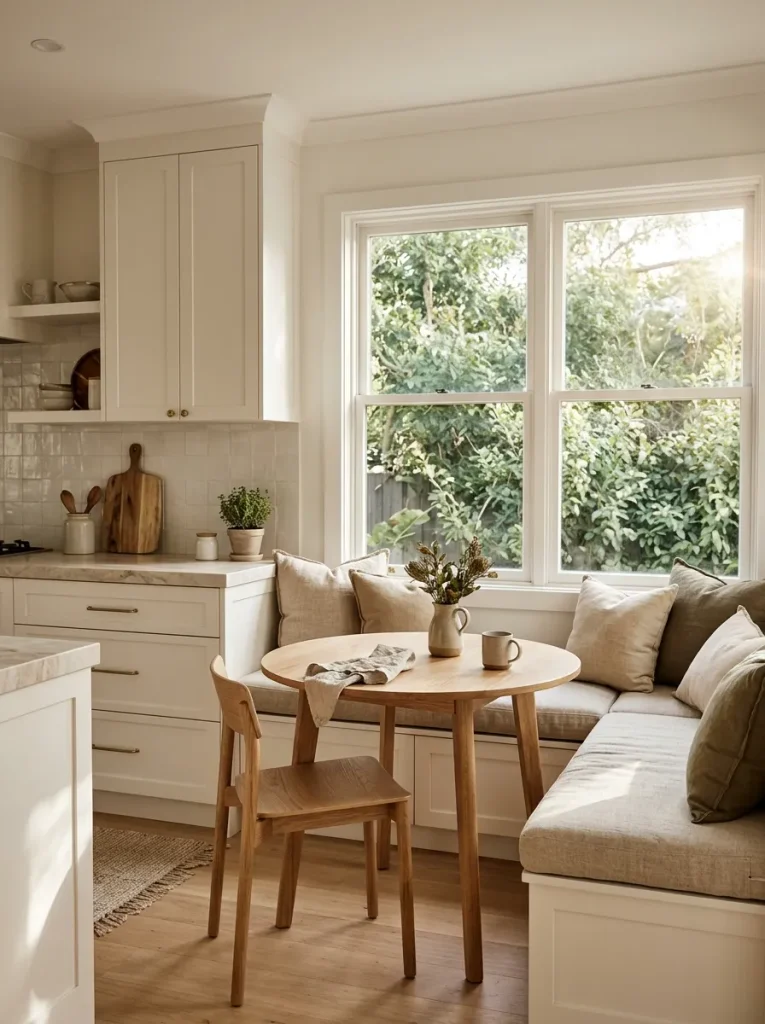
Quick Facts:
- A window bench can turn an unused corner into a comfortable dining spot.
- Built-in seating can make better use of narrow kitchen layouts.
- Removable cushion covers are useful for handling everyday spills.
- Storage drawers beneath the bench can hold table linens or kitchen accessories.
- Window treatments should allow enough daylight while providing privacy when needed.
Window seating brings a softer, more residential feeling to a modern kitchen. Keep the bench depth comfortable and measure the table height carefully so people can sit without feeling cramped. If the window is close to a sink or cooking zone, choose moisture-resistant finishes and washable fabrics.
Finish the nook with one or two cushions in complementary colors rather than filling the bench with accessories. A simple pendant or wall light nearby can make this corner feel welcoming after sunset, while a small plant adds a natural touch during the day.
Seamless Waterfall Island
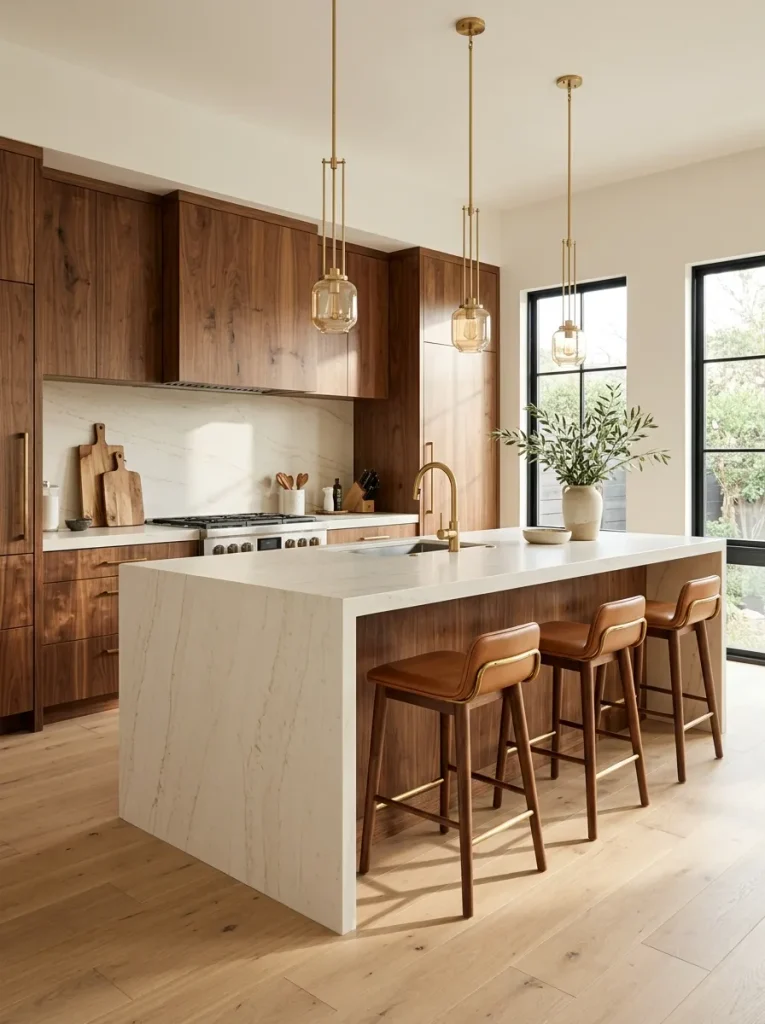
Do
- Select a countertop material that creates an attractive continuous edge down the island sides.
- Keep nearby cabinet finishes relatively simple so the island remains the focal point.
- Check slab dimensions and vein placement before fabrication, especially when using patterned stone.
- Confirm the island’s dimensions leave comfortable room for walking and opening appliances.
Don’t
- Assume every countertop material has the same durability or maintenance requirements.
- Choose a dramatic pattern without reviewing how it will look across the top and sides.
- Sacrifice useful storage or seating space just to achieve a particular shape.
A waterfall island gives a kitchen a strong architectural feature by extending the countertop material down both sides. The continuous finish can make the island feel substantial and visually connected. For a warmer result, pair pale stone with walnut cabinetry, textured stools or brass accents instead of surrounding it with only cool, glossy surfaces.
Hidden Range Hood
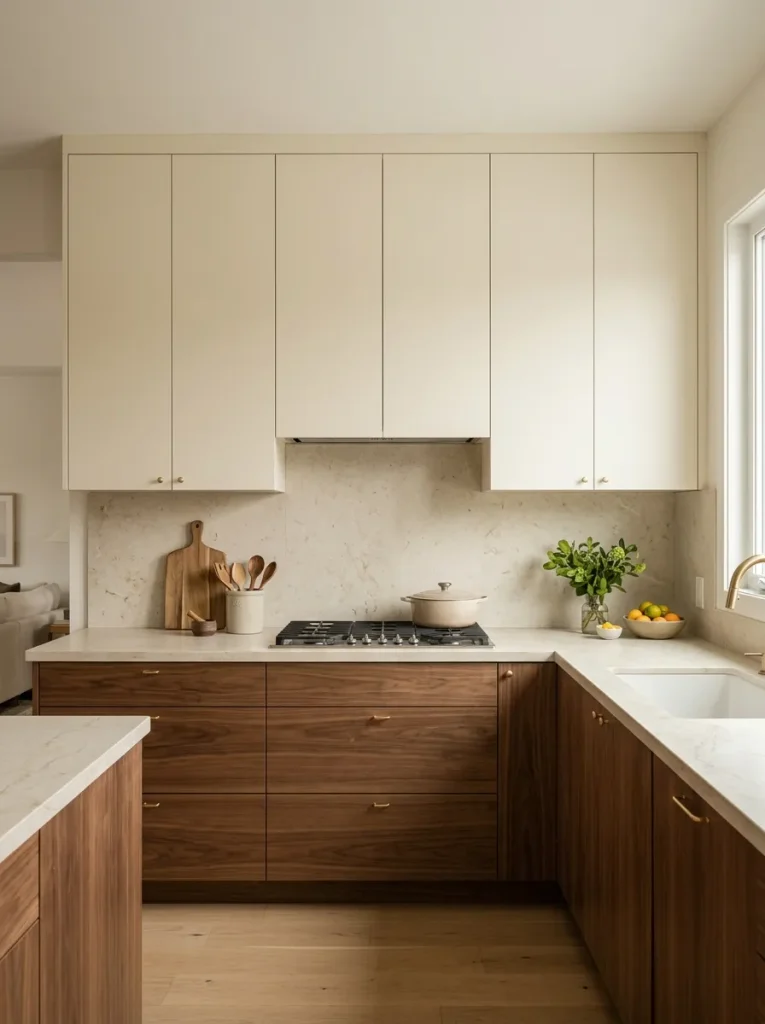
A hidden range hood creates a streamlined appearance by keeping bulky equipment out of sight. When the hood blends into the surrounding cabinetry, the backsplash and cabinet lines become the main visual features.
Before choosing this design, confirm the hood’s ventilation capacity, ducting requirements and clearance above the cooking surface. A concealed unit still needs to perform effectively, so select equipment suited to your cooktop and kitchen layout. Match the cabinet finish to nearby doors for a cohesive look and make sure filters remain accessible for regular cleaning.
This approach works especially well in kitchens with simple cabinet fronts, continuous backsplashes and restrained hardware. The result feels considered without adding another decorative feature to the room.
Textured Kitchen Walls
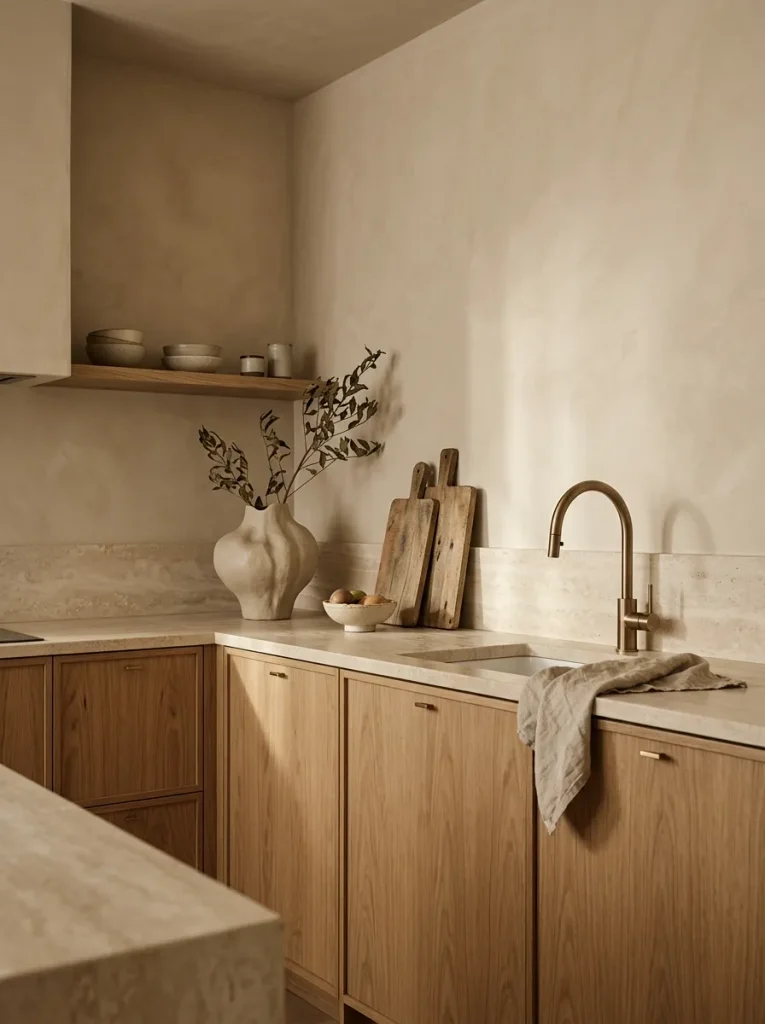
- Choose the wall area. Consider a breakfast nook, a dry wall beside the cabinets or a section away from direct cooking splashes.
- Select the texture. Limewash-inspired finishes, subtle plaster effects or textured tiles can add dimension without busy patterns.
- Coordinate the colors. Warm beige, soft ivory and muted taupe work well with natural wood and stone.
- Check maintenance needs. Use a suitable washable or sealed finish in areas exposed to moisture and grease.
Textured walls add depth to a modern kitchen without introducing another strong color or complicated pattern. Gentle variations in the surface catch daylight and create interest beside smooth cabinetry. Keep the texture subtle if your countertops already have prominent veining and choose finishes appropriate for the wall’s exposure to steam, splashes and frequent cleaning.
Mixed Metal Finishes
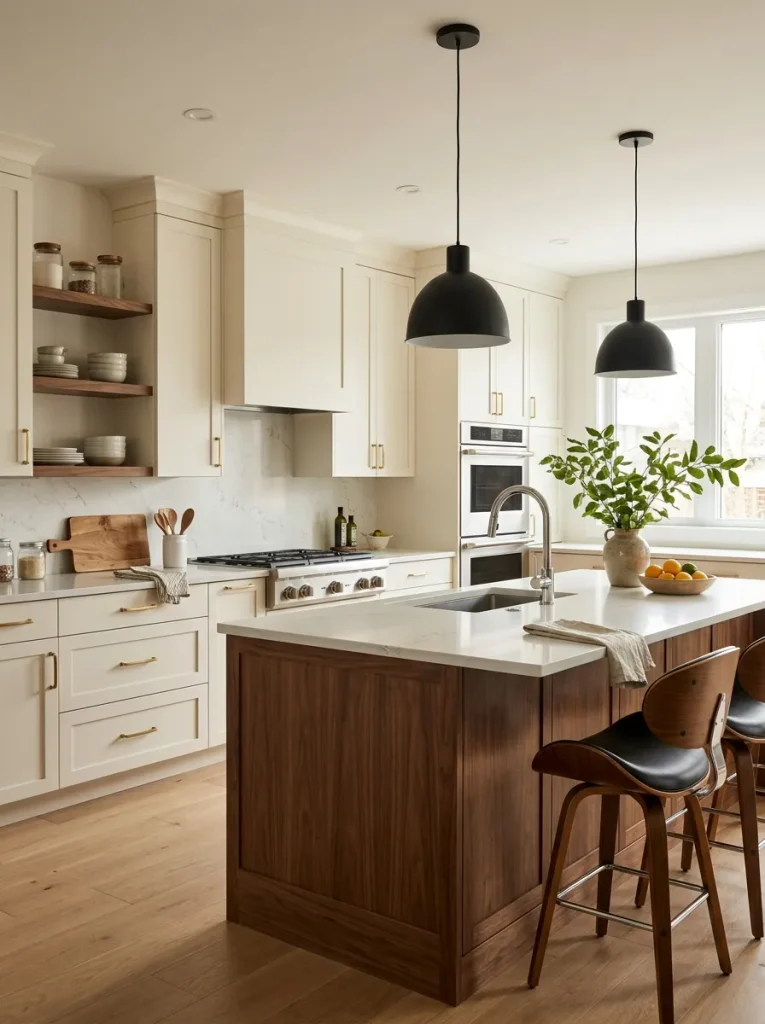
Quick Tip:
Start with one dominant metal finish, then introduce one or two complementary finishes in smaller amounts. For example, brushed brass handles can pair with a stainless steel faucet and black lighting when the shapes and surrounding colors feel connected. Repeat each finish at least once so the mix appears intentional rather than accidental.
Mixing metals gives a kitchen more depth and personality than using the same finish on every fixture. The key is creating a visual relationship between the pieces through color, shape or placement. Keep cabinet hardware consistent across the main cabinetry, then use lighting or plumbing fixtures to introduce contrast. Check samples together in your kitchen’s actual lighting before purchasing everything.
Rich Green Cabinets
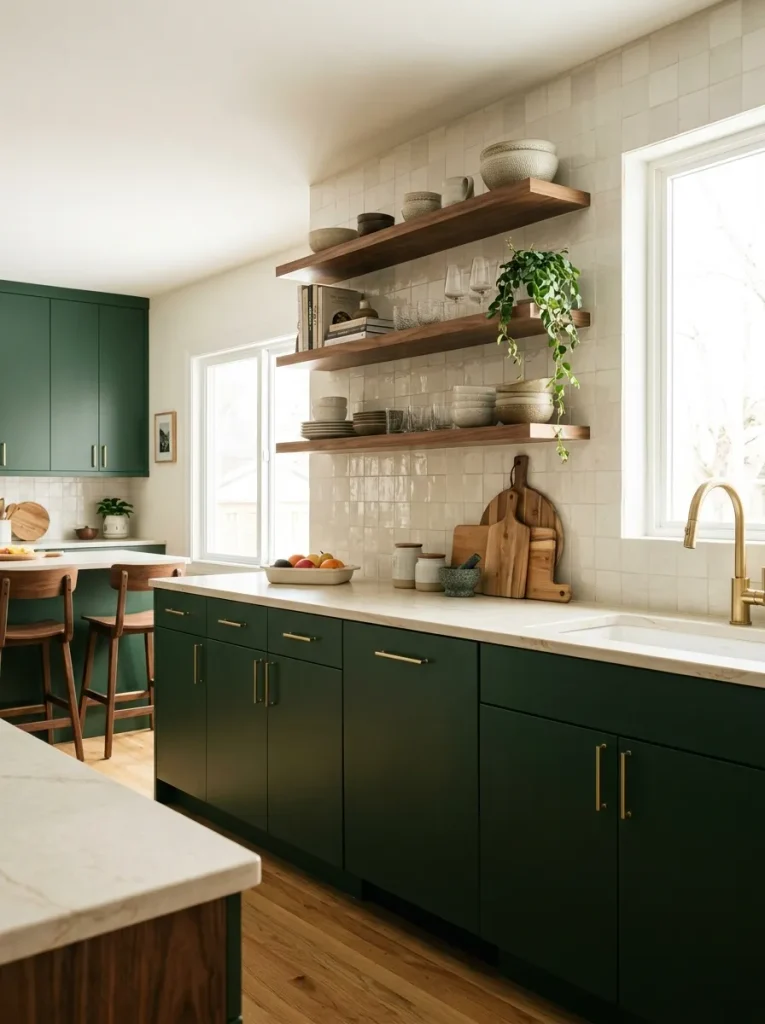
Before: Pale cabinets and neutral walls can make a kitchen feel understated, but sometimes the room lacks a distinctive focal point.
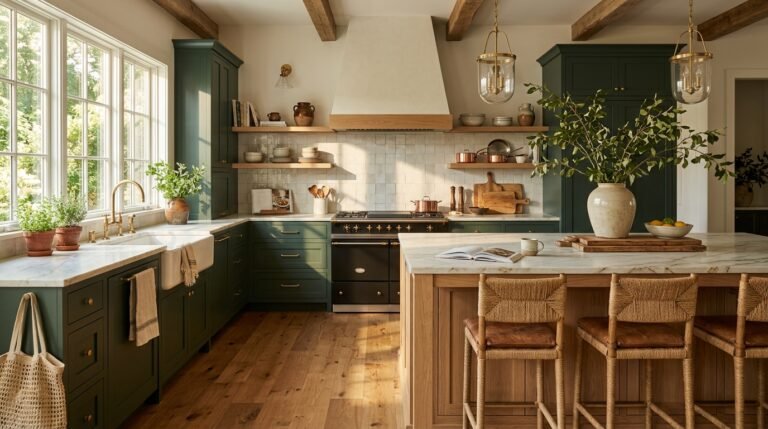
After: Deep green cabinetry adds color and character while maintaining a sophisticated, modern appearance. Pair forest green with warm white countertops and natural wood to prevent the darker shade from dominating the room.
If you have a smaller kitchen, consider using green on the island or lower cabinets and keeping the upper cabinets light. In a larger, brighter space, full-height green cabinetry can create a richer look. Test paint samples under morning and evening lighting before choosing a shade, since deep greens can appear almost black in dim corners.
Under-Cabinet Lighting
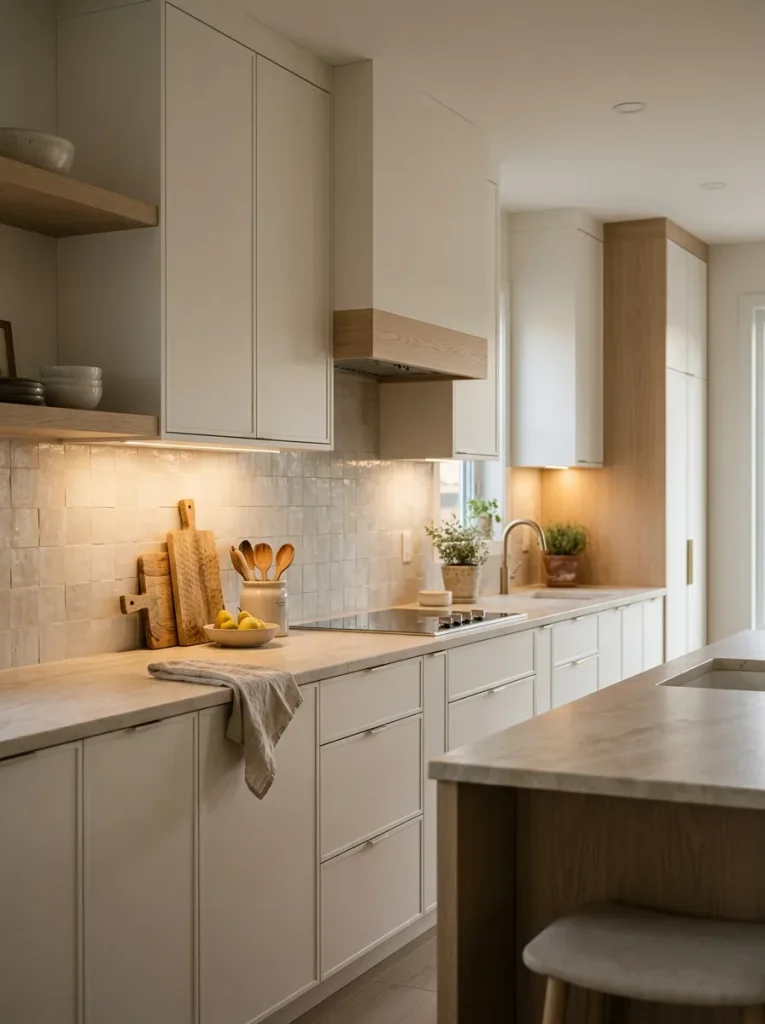
- Measure the work areas. Identify the countertop sections that need better visibility, especially near the sink and preparation zone.
- Choose the lighting type. LED strips provide a continuous glow, while individual puck lights create more focused pools of light.
- Select a suitable color temperature. Warm-white lighting around 2700K to 3000K often feels cozy, while neutral white can make detailed tasks easier to see.
- Plan the controls. Separate switches or compatible dimmers allow you to adjust task lighting and evening ambience.
- Hide the light source. Position fixtures so the counter is illuminated without creating distracting glare.
Under-cabinet lighting improves everyday kitchen use while adding a soft layer of light after sunset. It highlights the backsplash, makes food preparation easier and helps the room feel more welcoming when the main ceiling lights are switched off. Choose fixtures suited to kitchen conditions and follow the manufacturer’s installation guidance, particularly around sinks and other damp areas.
Natural Wood Ceiling
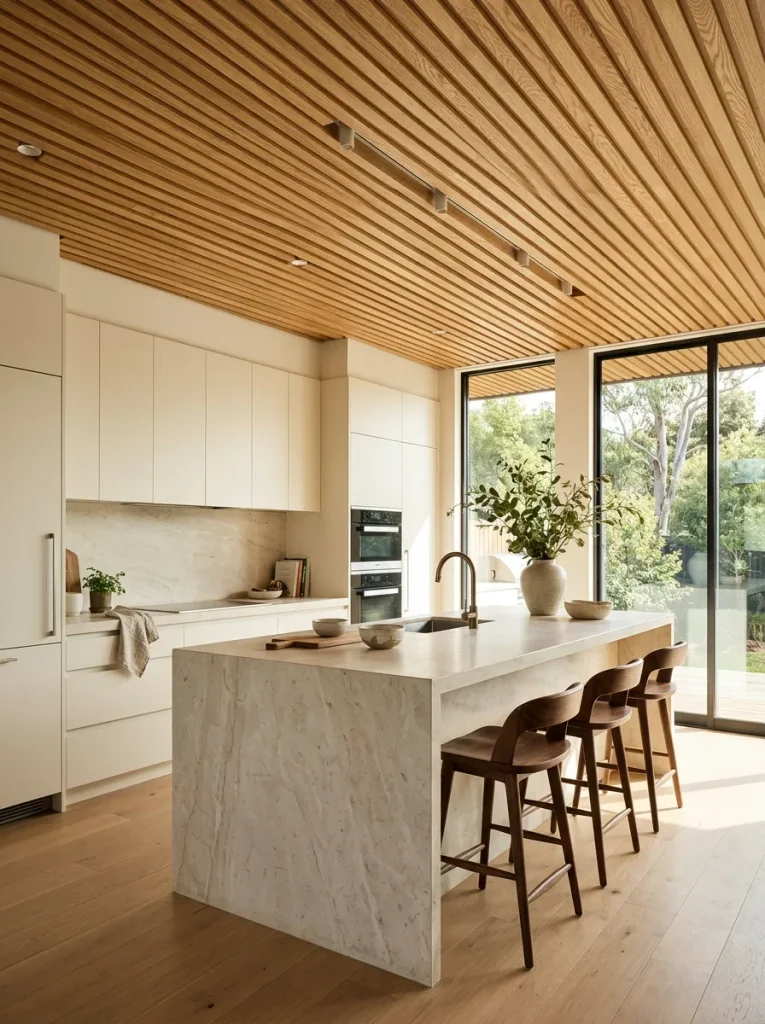
Do
- Use a wood tone that complements the flooring, cabinetry or island accents.
- Consider wood slats or panels in a defined area if covering the entire ceiling feels overwhelming.
- Plan lighting placement before installation to avoid awkward gaps or visual clutter.
- Confirm that the selected material and installation method are suitable for the kitchen’s heat and humidity conditions.
Don’t
- Combine too many competing wood tones without a clear visual connection.
- Ignore ceiling height, since dark finishes can make a low room feel more enclosed.
- Choose materials without checking their cleaning, fire-safety and maintenance requirements.
A natural wood ceiling introduces warmth from above, balancing the hard surfaces commonly found in modern kitchens. Oak or similarly light-toned finishes can make the room feel inviting while preserving a clean, contemporary style. If a full wood ceiling is outside your budget, a smaller ceiling feature or exposed wood beam detail can create a related effect.
Modern Open Shelving
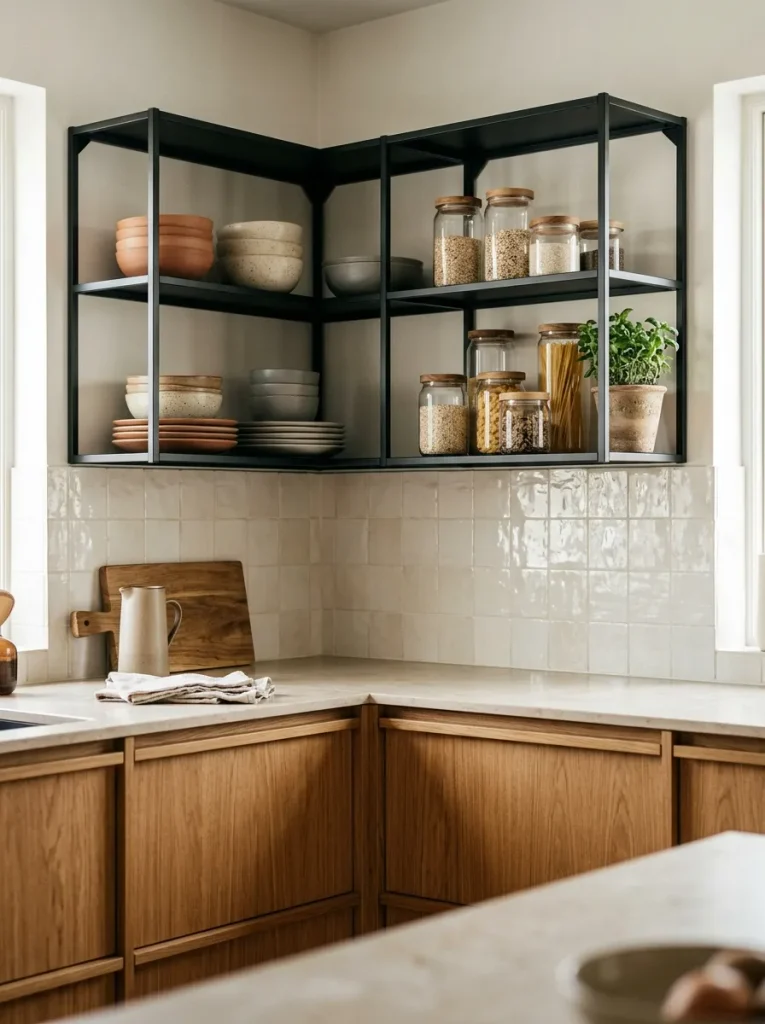
Open shelving can make a kitchen feel more spacious while keeping everyday essentials within easy reach. Slim shelves in black metal or warm wood create a lighter visual effect than a full wall of upper cabinets.
- Keep essentials accessible: Store frequently used mugs, bowls and cooking ingredients on the easiest-to-reach shelves.
- Group similar objects: Repeating colors and materials makes the display look organized.
- Leave breathing room: Empty spaces between items help prevent a crowded appearance.
- Protect delicate items: Place fragile pieces away from the stove and busy preparation zones.
For a balanced layout, combine open shelves with closed cabinets so you can display attractive items without exposing every kitchen essential. Choose sturdy shelving and secure mounting appropriate for the wall and expected weight. Regularly used dishes are often the most practical choice because they get cleaned frequently rather than sitting unused and collecting dust.
Curved Kitchen Details
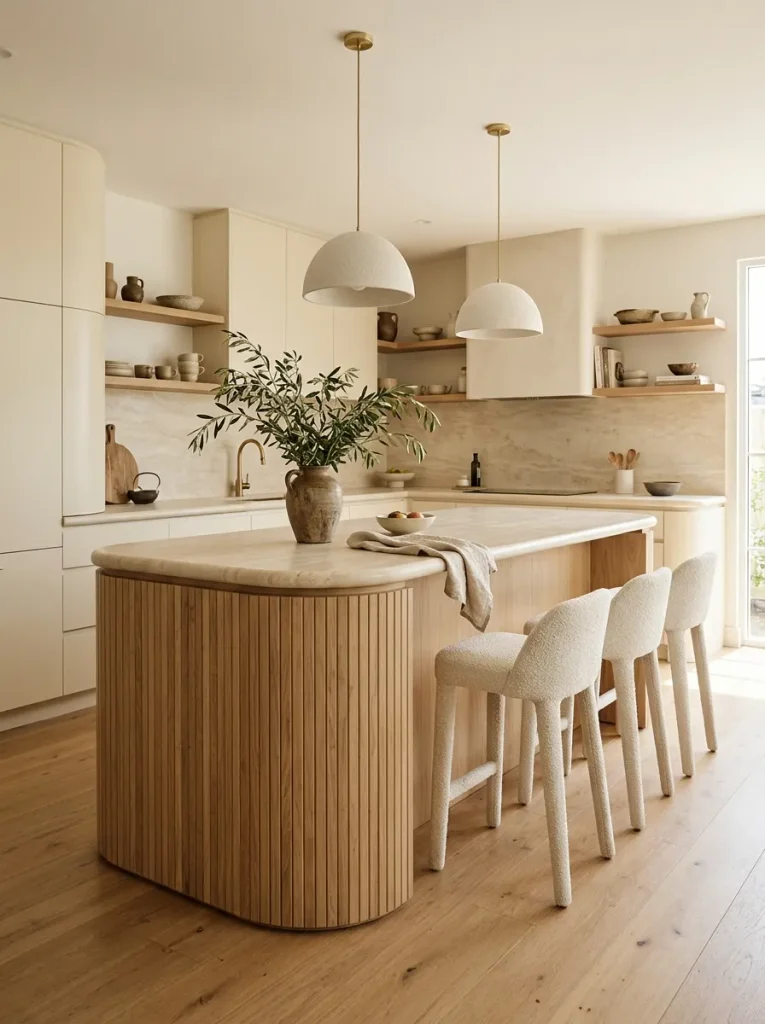
Quick Tip:
Introduce one or two curved elements rather than rounding every feature in the room. A rounded island corner, curved bar stools or an arched display niche can soften a kitchen dominated by straight cabinet lines. Check circulation space and countertop dimensions carefully so the design remains comfortable and practical.
Curved details make a modern kitchen feel softer and more inviting without sacrificing its clean appearance. Rounded island edges can also reduce sharp corners in busy walkways, although the actual benefit depends on the design and placement. Pair curved shapes with simple cabinet fronts and restrained finishes so the details remain noticeable rather than competing with one another.
Statement Stone Backsplash
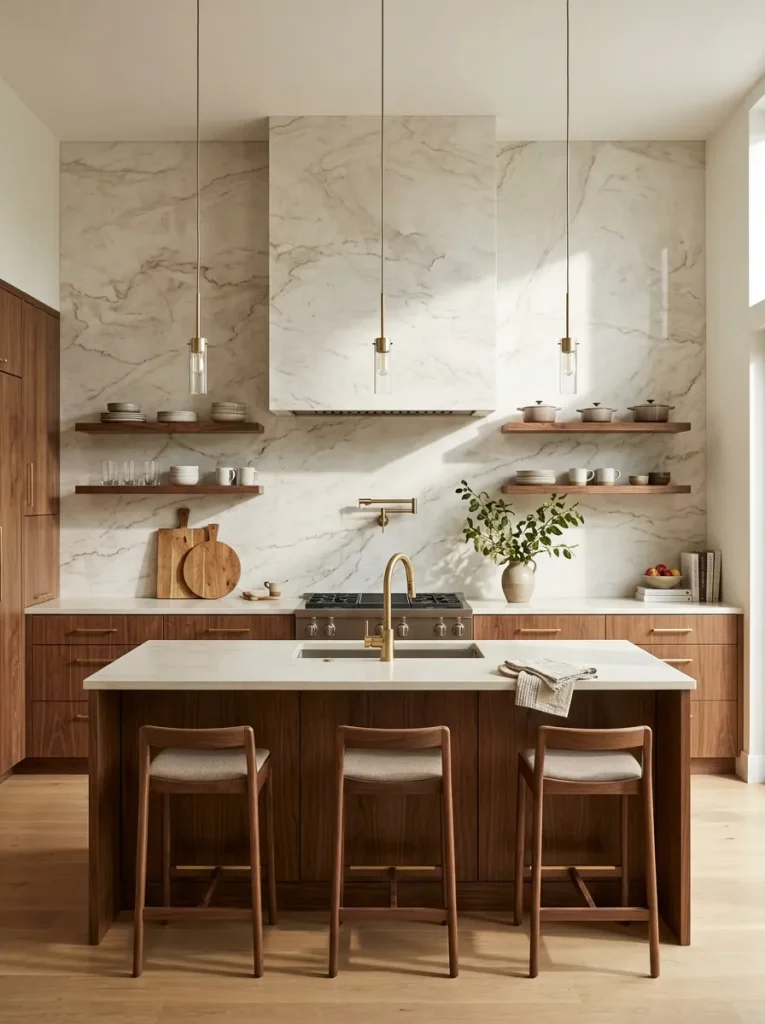
Quick Facts
- A full-height backsplash can create a stronger focal point than a short strip behind the countertop.
- Natural stone slabs offer individual patterns, while engineered surfaces can provide more consistent designs.
- Veining direction and slab placement affect how continuous the finished wall appears.
- Stone near cooking areas may need specific cleaning products or sealing, depending on the material.
- A quieter cabinet finish helps a dramatic backsplash remain the main visual feature.
A statement stone backsplash adds character through natural-looking movement and texture. Choose a slab that complements the countertop instead of making both surfaces compete for attention. If the countertop already has strong veining, a simpler backsplash may provide better balance. Before installation, review the full slab and discuss seams, edge details, maintenance and suitability for the area with your fabricator.
Layered Natural Textures
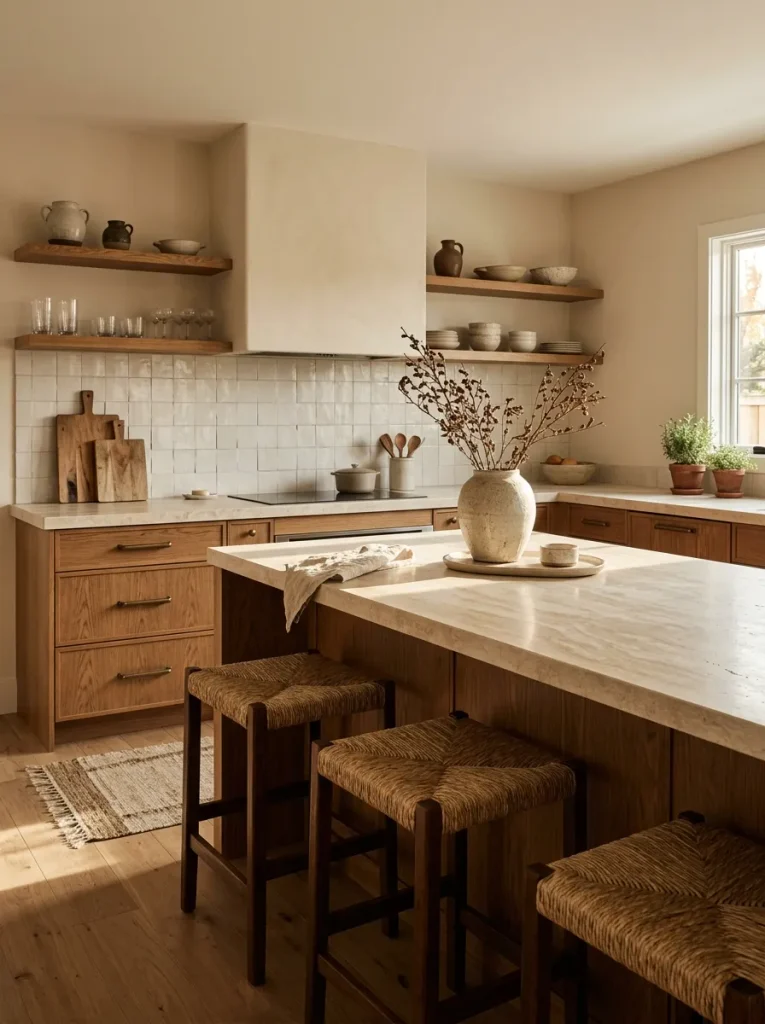
Layering natural textures is a simple way to make a modern kitchen feel warm and welcoming without adding unnecessary decoration. Combine smooth stone countertops with visible wood grain, woven seating and a few handmade ceramic accessories to create subtle visual interest.
Start with the permanent finishes, such as cabinetry, flooring and countertops, then add smaller details that complement them. For example, oak stools can soften a pale stone island, while a textured vase introduces character to an otherwise uncluttered counter.
Keep the color palette connected through cream, beige, warm brown and muted earthy tones. Vary the materials rather than adding too many colors and leave enough open space for the kitchen to remain practical.
Elegant Marble Shelves
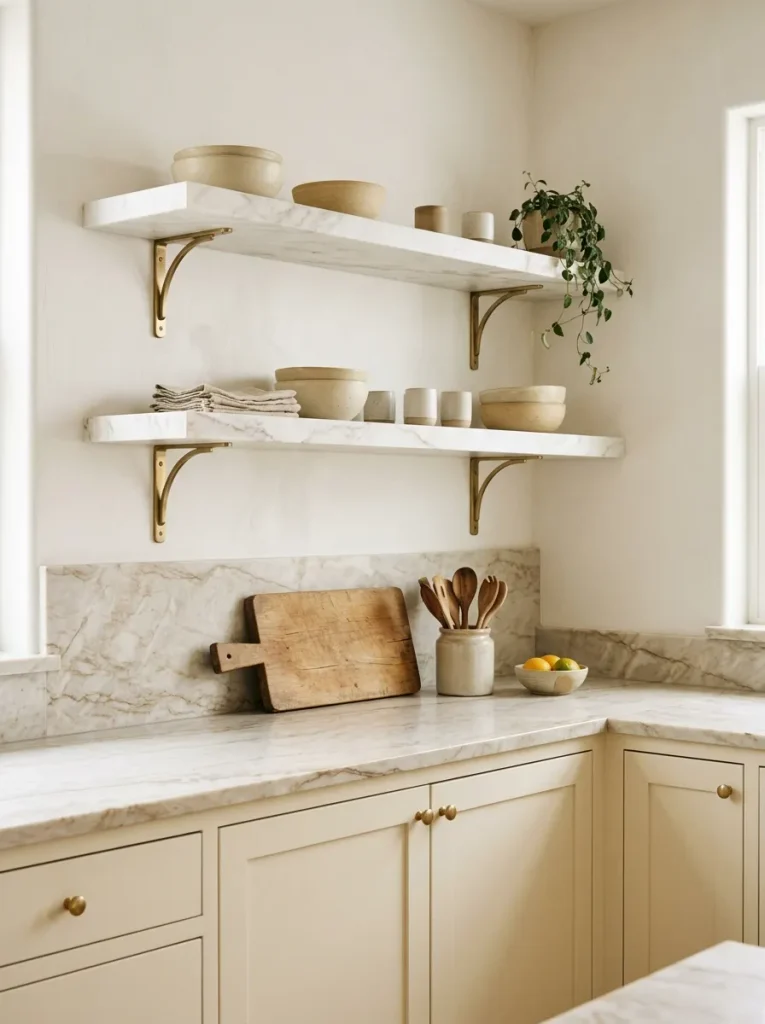
Marble shelves add a refined touch to a modern kitchen while creating space to display everyday dishes and decorative pieces. Choose marble that complements your countertop or backsplash so the finishes feel connected rather than competing.
Keep the shelves lightly styled with neutral ceramics, clear glassware and one small plant. Before installation, confirm the wall can support the shelf’s weight and choose secure mounting hardware. Since marble requires appropriate care, clean spills promptly and follow the supplier’s maintenance recommendations.
Modern Kitchen Herb Garden
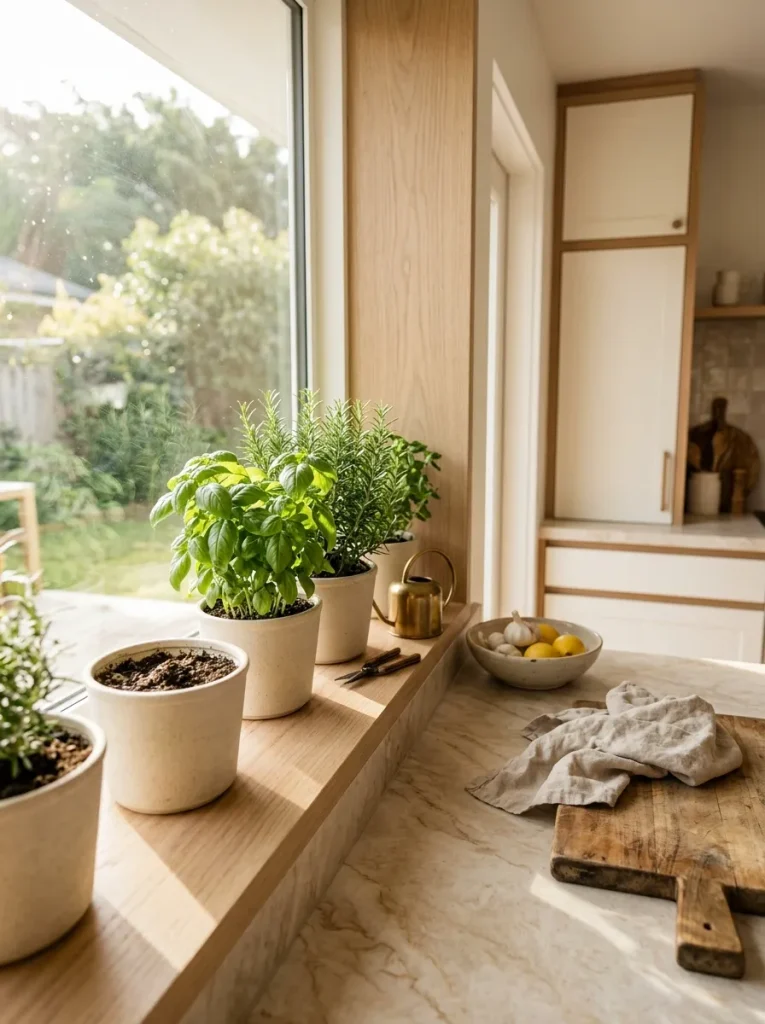
A small indoor herb garden brings natural color and freshness into a modern kitchen. Basil, mint, parsley and rosemary can look beautiful in matching pots while keeping useful ingredients close to your cooking area.
Place the herbs near a window that provides suitable light for their needs and use containers with drainage or an appropriate watering system. Keep the arrangement compact so it doesn’t take over your preparation space. Choose simple ceramic or terracotta pots that complement your kitchen’s existing colors and materials.
Stylish Kitchen Bar Stools
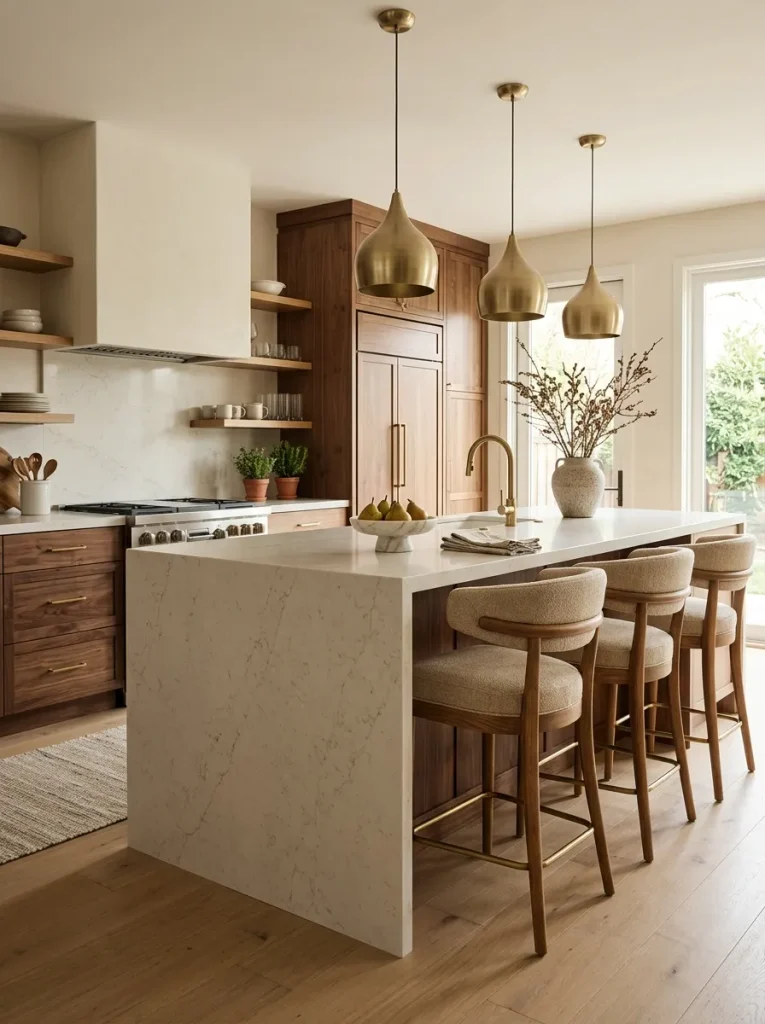
Stylish bar stools can make a modern kitchen island feel more welcoming while adding texture and personality. Upholstered seats create a softer look, while wood or metal frames help connect the seating to your cabinets, lighting or hardware.
Measure the island height before choosing stools and allow enough space between each seat for comfortable movement. Select durable, easy-to-clean upholstery if the kitchen is used frequently by children or guests. For a cohesive appearance, repeat one existing color or material instead of introducing several unrelated finishes.
CONCLUSION
Creating a kitchen you love starts with choosing details that reflect your style while making everyday tasks easier. From warm neutral palettes and natural stone surfaces to bold cabinetry and clever storage, these ideas offer plenty of ways to balance modern design with a welcoming atmosphere. Start with one change that fits your space and budget, then build on it as your needs evolve. Save this article on Pinterest so you can revisit your favorite designs when you’re ready to make updates. Share it with someone planning a kitchen refresh and let these Modern Kitchen Ideas inspire a space that feels beautiful, comfortable and uniquely yours.