Small Kitchen Ideas: 29 Brilliant Ways to Gain Space
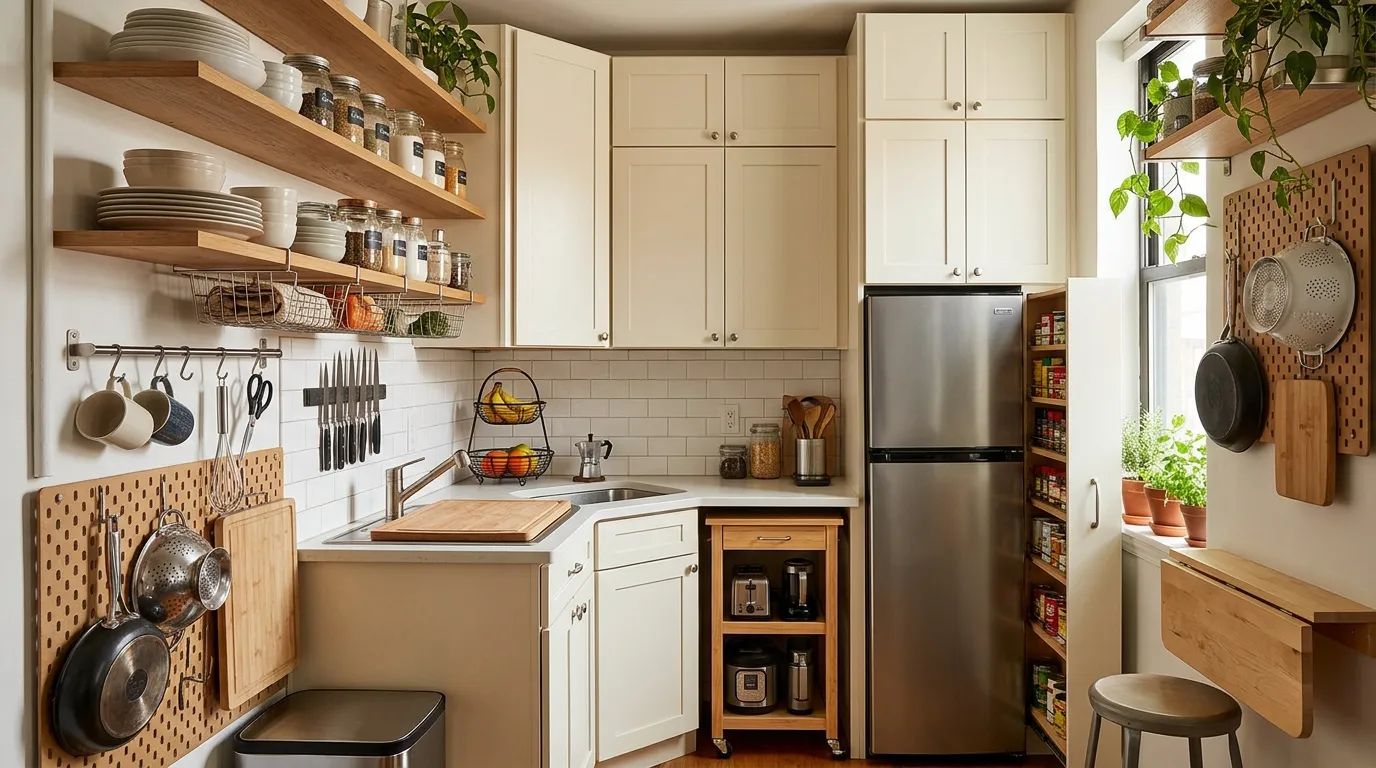
A small kitchen doesn’t have to feel crowded, cluttered or difficult to use. With a few clever changes, even the tiniest cooking space can feel brighter, more organized and surprisingly spacious.
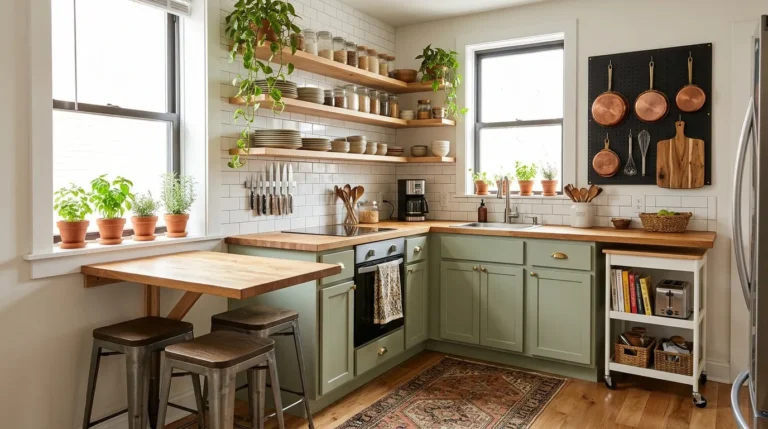
These Small Kitchen Ideas will help you make the most of every corner, from unused cabinet space and narrow wall gaps to compact furniture and smart storage solutions. Whether you’re working with a tiny apartment kitchen or simply want more room to prepare meals, you’ll find practical inspiration that fits your space and budget.
Sometimes, the biggest improvements come from small adjustments. Adding drawer dividers, clearing countertops,or choosing lighter finishes can make everyday cooking feel easier. I’ve noticed that when frequently used items have a clear place, a kitchen often feels calmer and more functional. Explore these 26 ideas to discover simple ways to create a kitchen that looks lovely and works better for your daily routine.
Open Wall Shelving
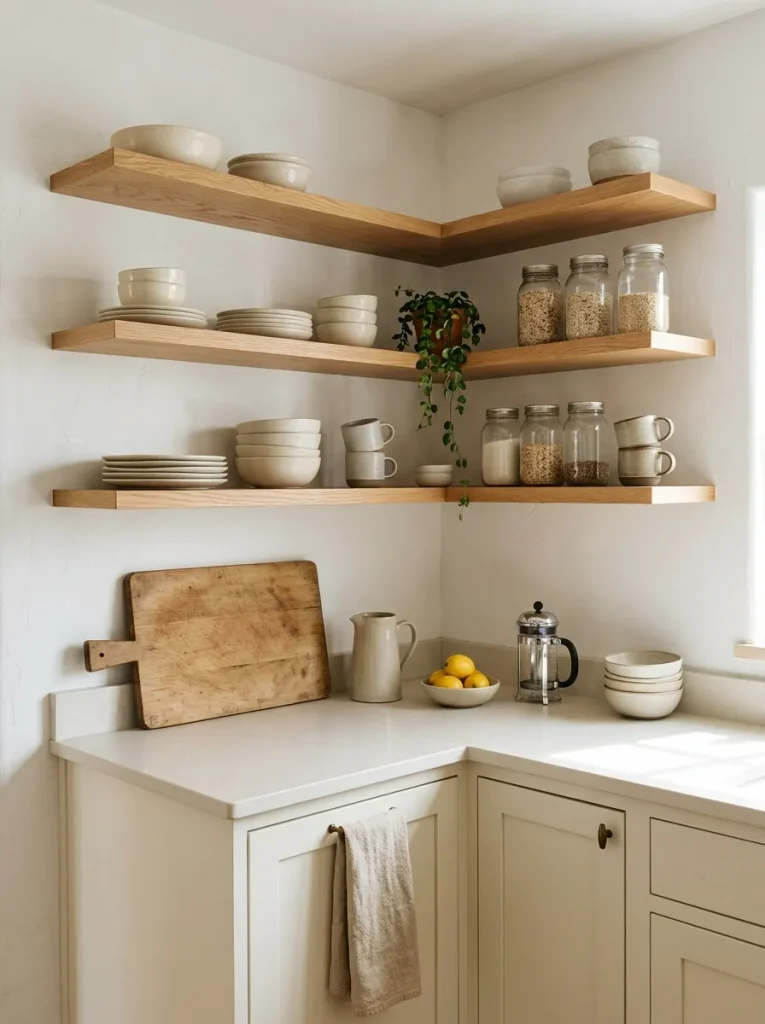
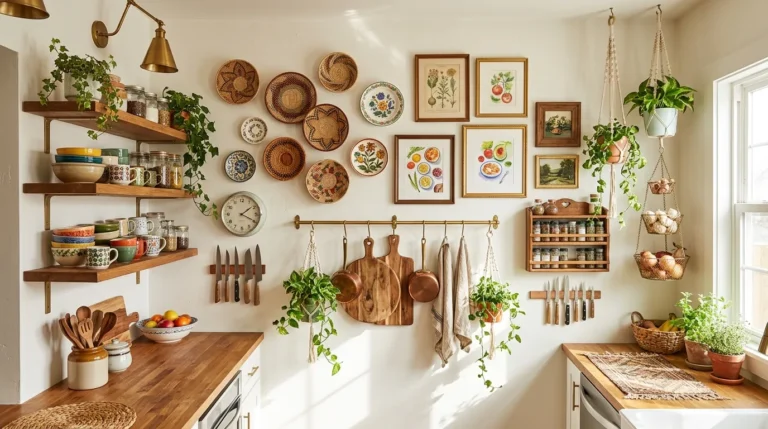
Open wall shelving helps a small kitchen feel more spacious by making use of vertical space instead of valuable countertop areas. Everyday dishes and glassware stay within reach, while the absence of bulky upper cabinets can create a lighter, airier appearance.
Start with one or two shelves above a clear section of counter. Arrange frequently used plates together, group matching mugs and leave some empty space between objects. Keep heavier items securely stored and avoid displaying too many colors. A simple combination of cream ceramics, clear glas and natural wood creates an organized look without visual clutter.
Vertical Cabinet Organizers
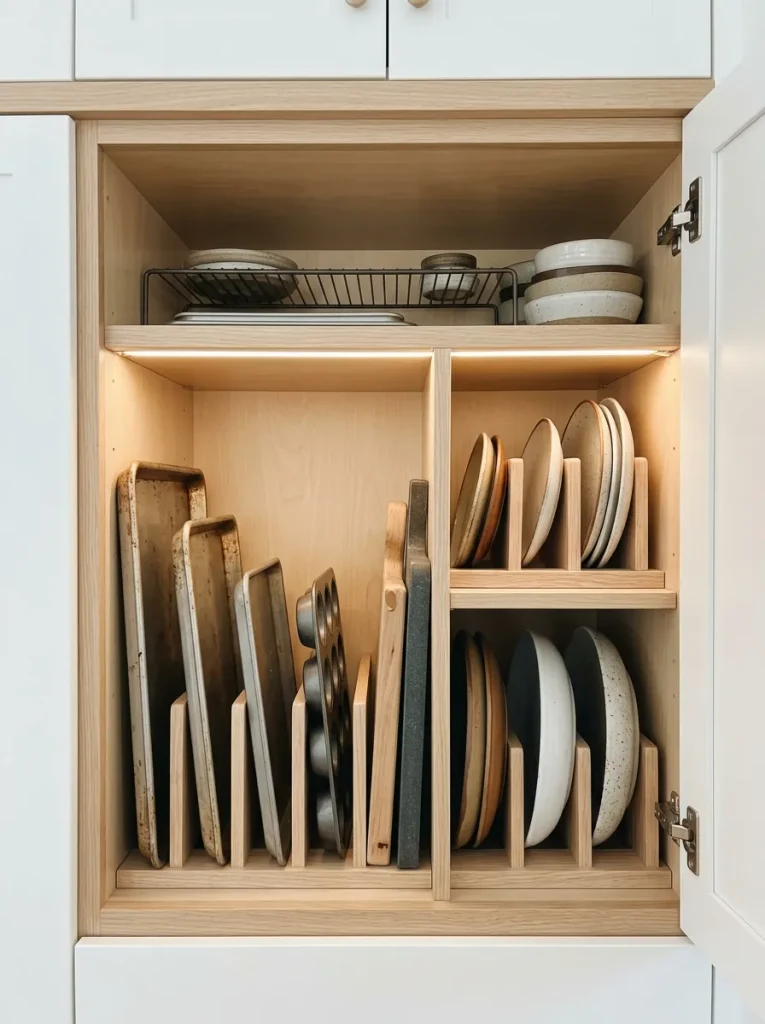
- Separate baking trays: Store cutting boards, cookie sheets and oven trays vertically in a suitable divider.
- Organize pot lids: Use an adjustable rack to keep lids upright and easy to identify.
- Create shelf levels: Add stackable shelves for cups, bowls or smaller plates.
- Group similar items: Keep baking supplies together instead of spreading them across several cabinets.
- Measure before buying: Check cabinet width, depth,and shelf clearance to ensure organizers fit properly.
Vertical storage makes better use of the space between cabinet shelves and reduces the need to stack everything in piles. It also helps prevent the familiar problem of removing several pans just to reach one at the back. Choose sturdy organizers suited to the weight of your cookware and keep frequently used items at comfortable heights.
Magnetic Refrigerator Storage
Quick Tip:
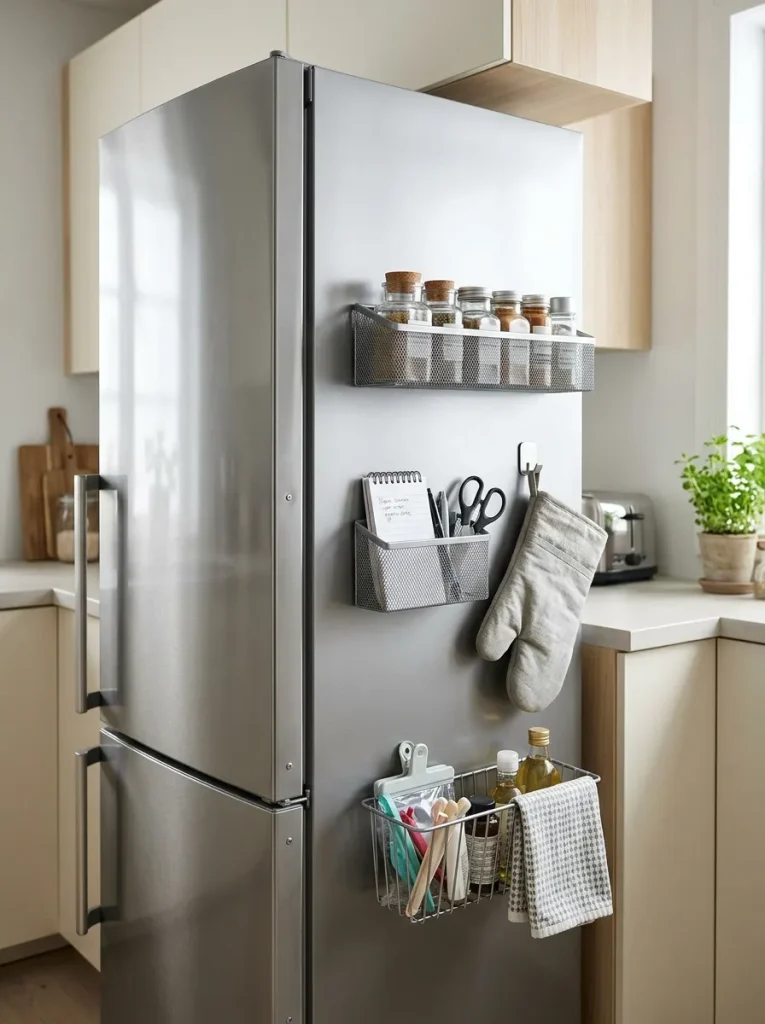
Use magnetic baskets or containers only on refrigerator surfaces confirmed to be compatible with magnets. Check their weight limits and keep vents, door seals and appliance controls unobstructed.
The refrigerator’s side can provide useful storage in a kitchen where every cabinet matters. Lightweight spice containers, clips and small accessories can stay accessible without occupying a drawer or countertop. Choose slim organizers that sit close to the appliance and avoid placing heavy glass containers high above busy work areas. A tidy arrangement makes everyday cooking supplies easier to find.
Slim Rolling Kitchen Cart
BEFORE
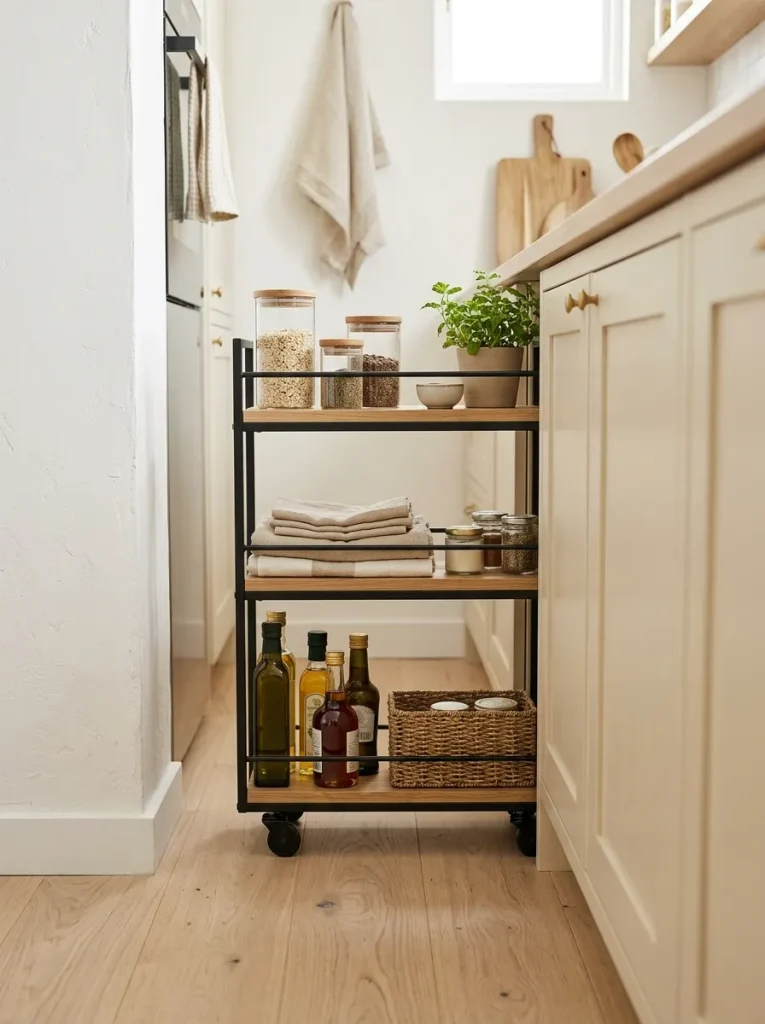
A narrow gap beside the refrigerator or cabinets often becomes wasted space. Meanwhile, cooking oils, pantry items and small appliances compete for limited countertop room.
AFTER
A slim rolling cart turns that unused gap into practical storage. Its shelves can hold spices, canned goods or frequently used supplies, while wheels make everything easy to move when cleaning or cooking.
Measure the gap carefully, including clearance for cabinet doors and nearby appliances. Choose a cart with sturdy shelves and locking wheels if it will hold heavier items. Keep the most frequently used supplies at the top so you can reach them quickly without bending or searching.
Under-Sink Storage Bins
- Clear the cabinet: Remove everything and discard empty containers or products you no longer need.
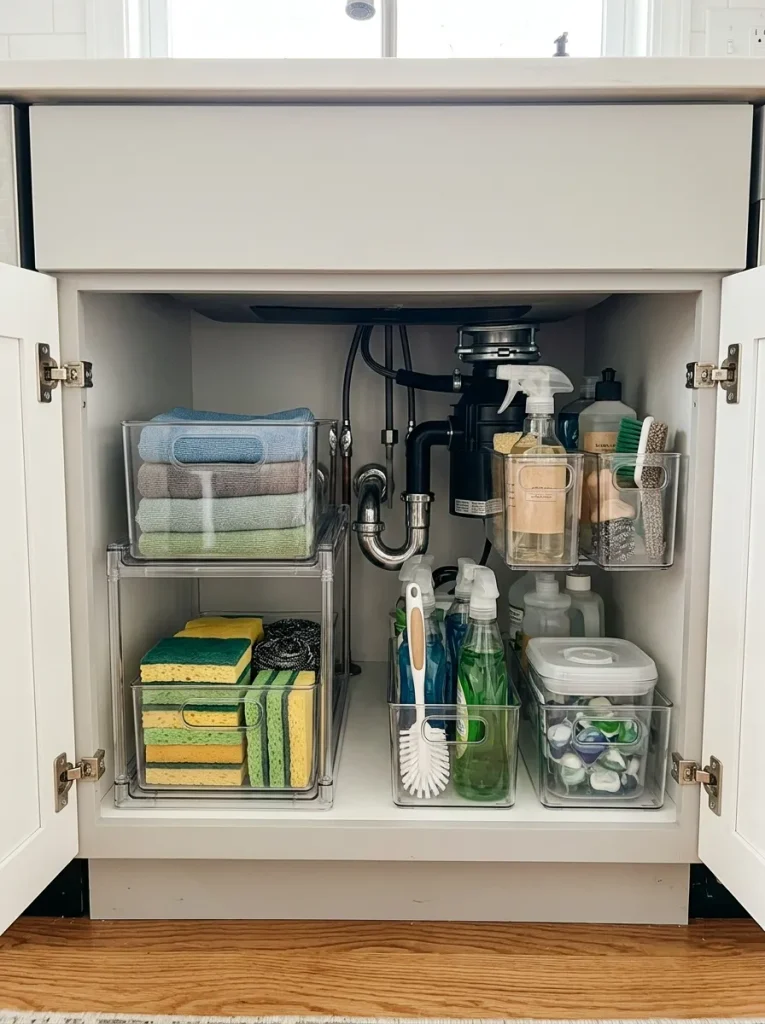
- Check the plumbing: Measure around pipes and the garbage disposal before selecting organizers.
- Group supplies: Separate dishwashing products, cleaning cloths and spare rubbish bags.
- Add pull-out bins: Choose containers that slide out easily without catching on pipes.
- Protect the base: Use a waterproof liner to help catch minor drips and make cleaning easier.
The area beneath the sink can hold far more than a jumble of bottles when every item has a designated place. Clear bins make supplies easier to identify, while pull-out organizers reduce the need to reach into dark corners. Store products securely, keep chemicals away from food and children and check the cabinet regularly for leaks.
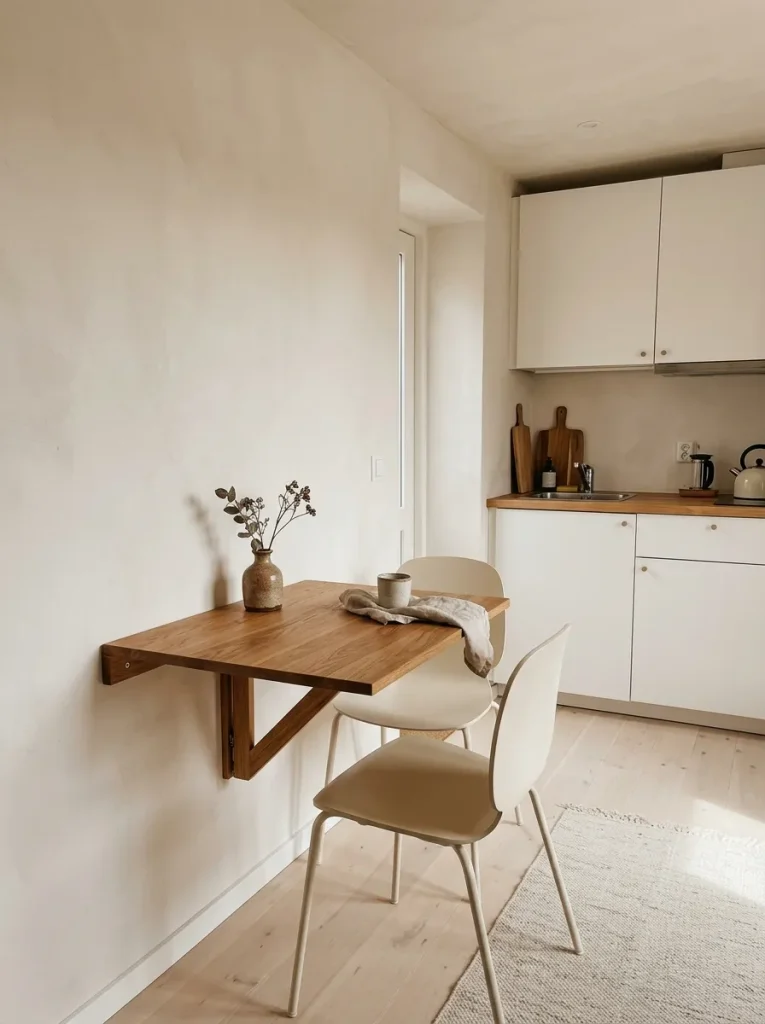
Fold-Down Dining Table
| Feature | Option A: Fixed Dining Table | Option B: Fold-Down Table |
| Floor space | Occupies space permanently | Frees space when folded |
| Best placement | Larger kitchen or dining area | Narrow kitchens and studio apartments |
| Seating | Often accommodates more people | Usually suited to one or two people |
| Installation | Simple if freestanding | Requires secure wall mounting |
A fold-down table creates a useful eating or prep surface without permanently taking up valuable floor space. Choose a size that suits your daily needs and confirm that the wall and mounting hardware can safely support the table. Measure the unfolded footprint before installation, allowing enough room for chairs and comfortable movement through the kitchen.
Ceiling-High Cabinets
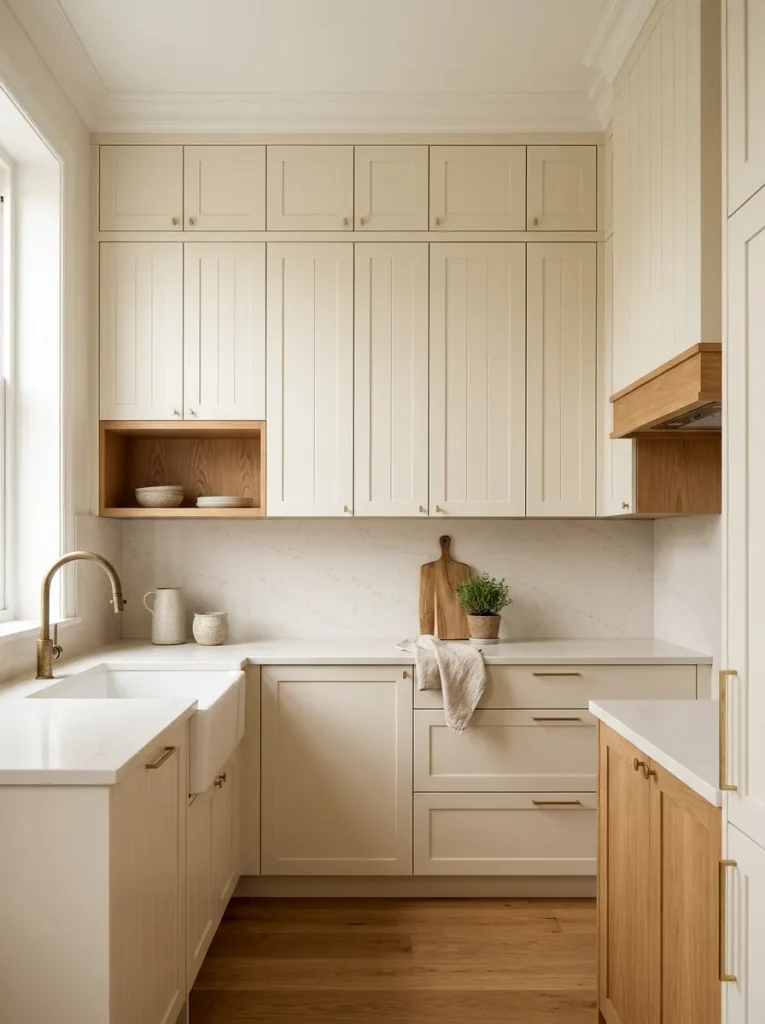
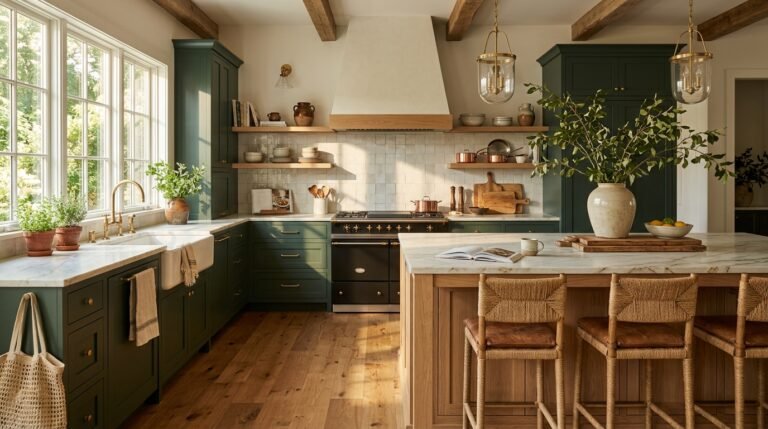
Tall cabinets make use of wall space that often goes unused above standard kitchen cupboards. Store everyday plates, glasses and cooking supplies on the lower shelves, then reserve the highest sections for seasonal dishes, serving platters or appliances you rarely need.
- Extend cabinets upward: Use ceiling-height cabinetry when renovating or replacing existing units.
- Add matching upper cupboards: Fill the gap above current cabinets with properly fitted storage.
- Store seasonal items high: Keep rarely used belongings out of your main working area.
- Use labeled containers: Make stored ingredients and accessories easier to identify.
- Plan safe access: Use a stable step stool and avoid storing heavy items overhead.
For a cohesive appearance, choose cabinet fronts that match your existing kitchen. Light colors can help tall units feel less imposing, while simple handles keep the design clean. Keep the most-used items within comfortable reach so extra storage does not make everyday cooking harder.
Drawer Divider Systems
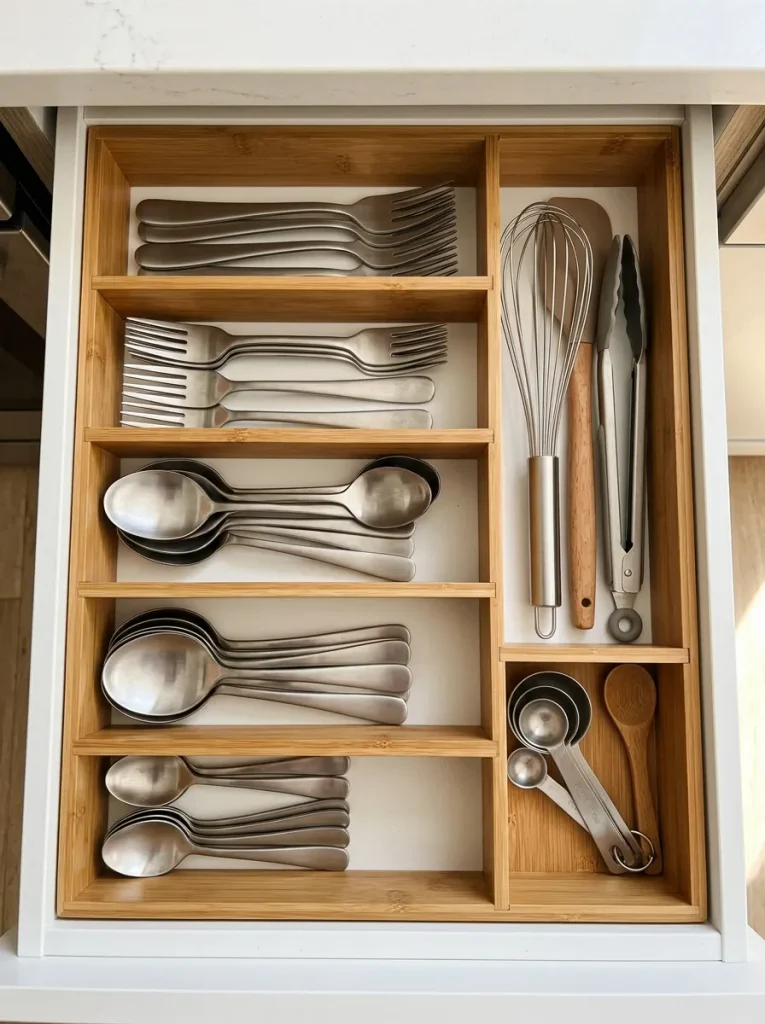
- Empty the drawer: Remove utensils and set aside duplicates you rarely use.
- Measure the interior: Check the drawer’s width, depth and usable height.
- Choose adjustable dividers: Select bamboo or plastic inserts that fit the available space.
- Group similar tools: Keep cutlery together and separate larger cooking utensils.
- Leave room to close: Check that handles and dividers do not catch when sliding the drawer shut.
Organized drawers help you find kitchen tools quickly without adding another countertop container. Adjustable dividers are especially useful when drawer dimensions are unusual or your collection includes oversized utensils. Keep everyday items near the food preparation area and place occasional-use gadgets in a separate drawer to prevent clutter from building up again.
Reflective Backsplash Tiles
| Backsplash Style | Visual Effect | Practical Consideration |
| Glossy white tile | Reflects light and feels airy | Water spots may be noticeable |
| Pale glass tile | Creates a sleek, luminous finish | Shows fingerprints and splashes |
| Light marble-look tile | Adds gentle pattern and elegance | Grout needs regular cleaning |
| Matte cream tile | Offers a softer, understated look | Reflects less light than glossy finishes |
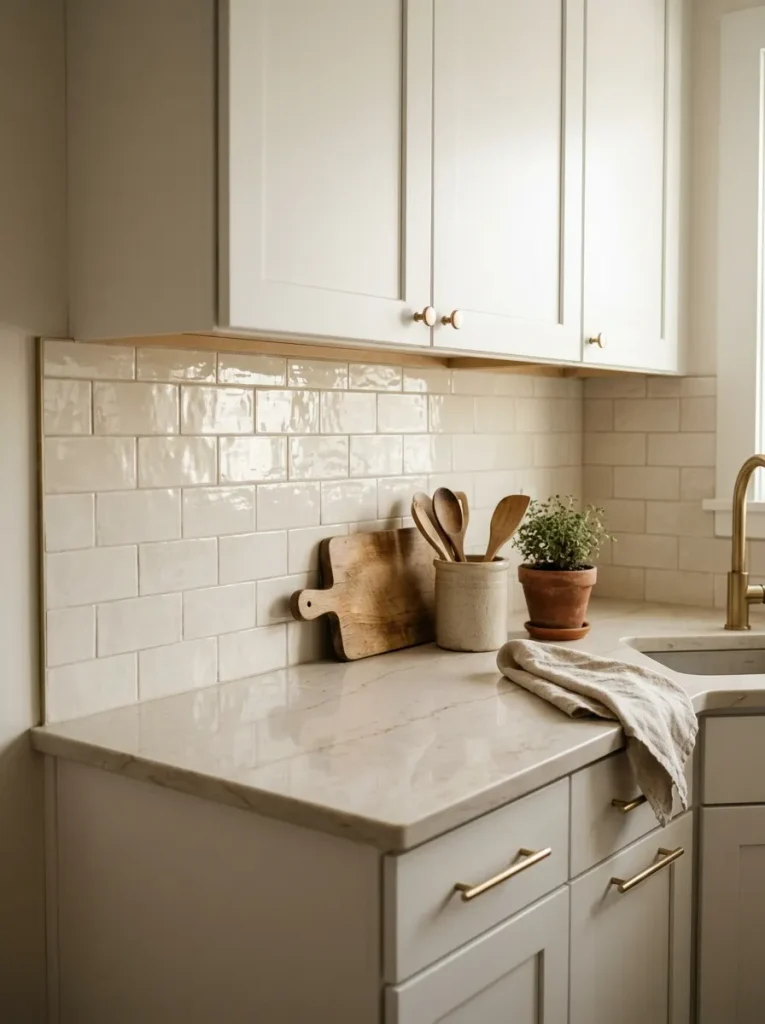
A reflective backsplash can make a small kitchen feel brighter by bouncing available light around the room. Choose a finish that complements your cabinets and countertop instead of introducing too many competing patterns. For easier maintenance, select tiles with practical grout lines and wipe cooking splashes regularly to preserve their fresh appearance.
Corner Cabinet Solutions
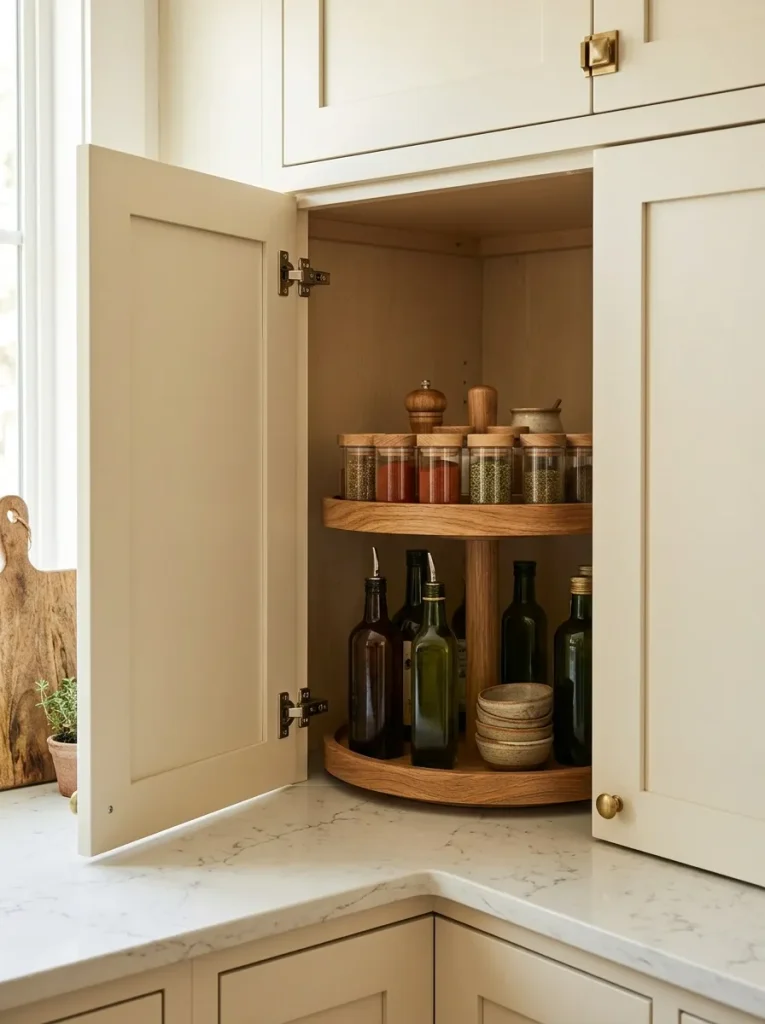
DO
- Use a rotating tray to bring items at the back within reach.
- Choose tiered corner organizers for spices and small containers.
- Group similar items together so everything has a clear place.
- Measure the cabinet opening before purchasing pull-out hardware.
DON’T
- Push frequently used ingredients into unreachable corners.
- Overload rotating trays with heavy glass bottles.
- Buy organizers without checking door and hinge clearance.
A well-organized corner cabinet can reclaim storage space that often goes unused. Lazy Susans work especially well for oils, sauces and seasonings, while fitted pull-out systems can make deeper cabinets easier to access. Keep heavier cookware on lower shelves and leave enough room for doors to open without knocking into nearby drawers.
Hanging Pot Racks
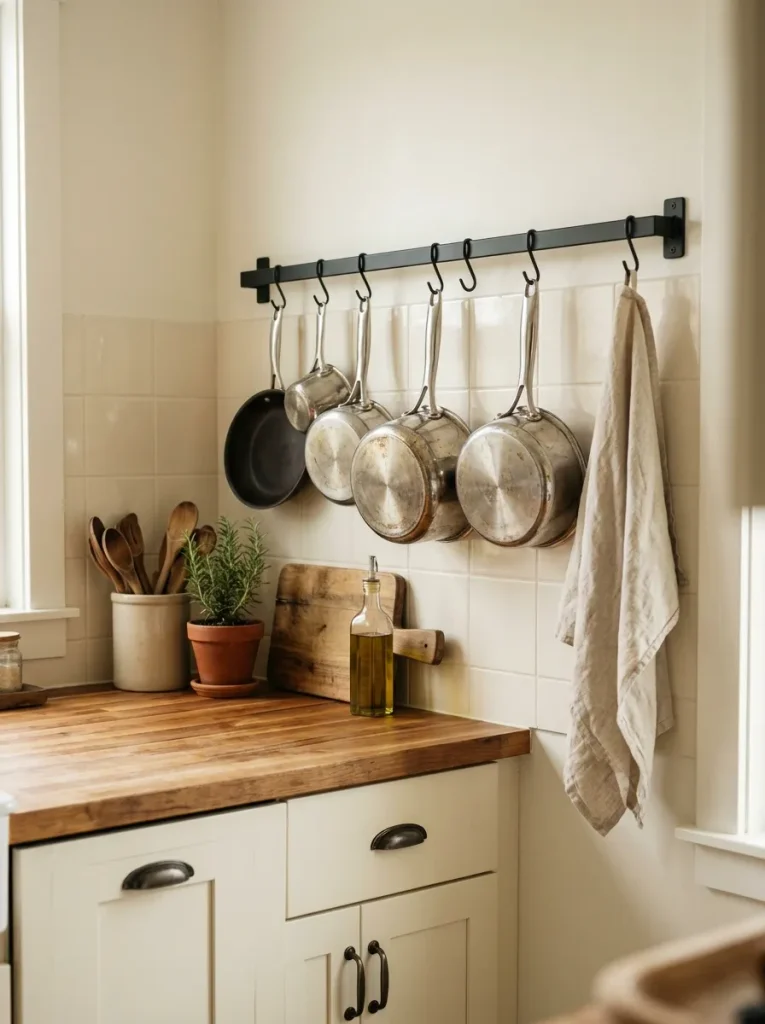
Quick Tip:
Install a wall-mounted pot rail only where the wall structure and fixings can safely support the cookware’s weight. Keep it away from open flames and hot cooking zones and leave enough clearance for handles to avoid bumps while moving around the kitchen.
Hanging pots frees cabinet shelves for food containers, dishes or small appliances. A simple rail also makes frequently used cookware easy to grab while adding a practical decorative detail. Arrange heavier pans on secure hooks and lighter utensils toward the ends. If wall space is limited, consider mounting the rail inside a pantry or on a suitable cabinet side.
Compact Appliance Choices
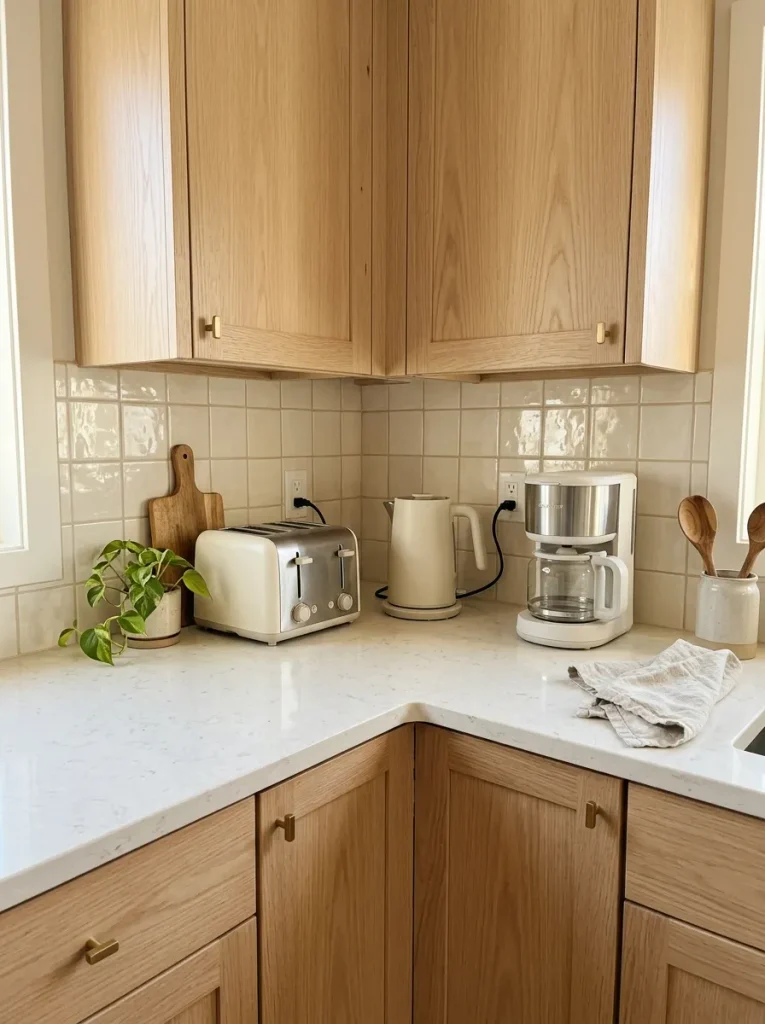
| Appliance Type | Compact Option | Best For |
| Toaster | Two-slice model | Small households |
| Coffee maker | Slim single-serve machine | Quick daily drinks |
| Microwave | Compact countertop model | Limited counter or shelf space |
| Food processor | Mini processor | Small chopping and mixing tasks |
Compact appliances can reduce countertop crowding without sacrificing everyday convenience. Before buying, measure the appliance footprint and check the clearance needed for ventilation, opening lids and safe operation. Choose models that match your actual cooking habits rather than purchasing several single-purpose gadgets. Store occasional-use appliances in a cabinet when practical, leaving the counter clear for meal preparation.
Clear Countertop Zones
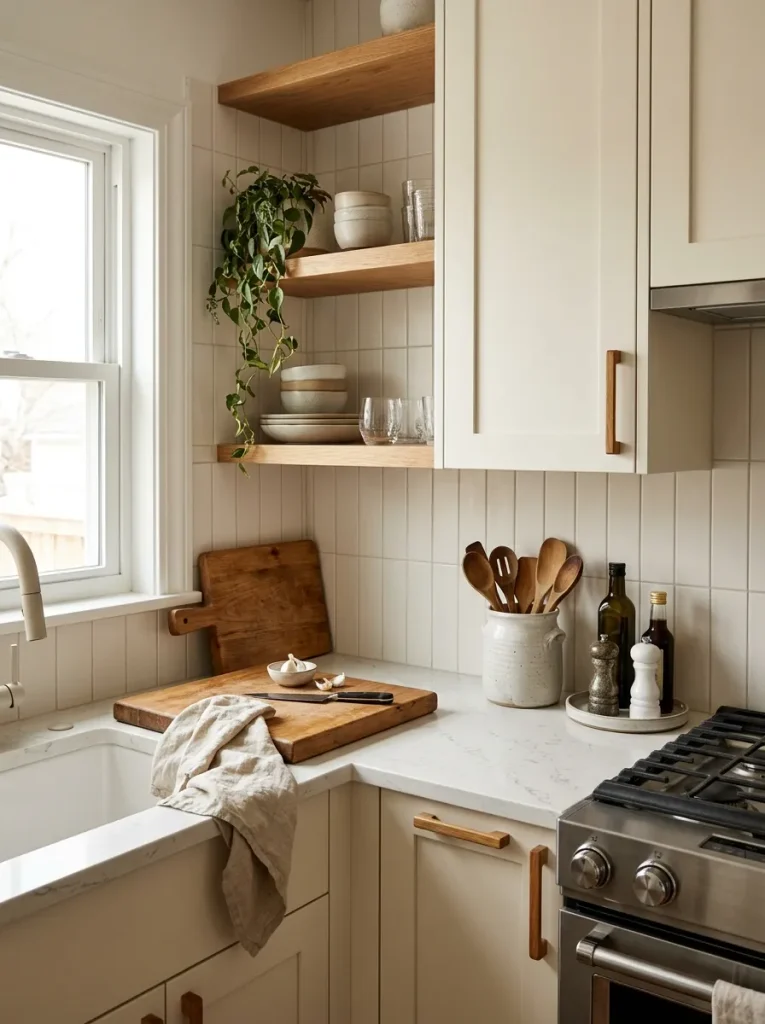
A crowded countertop can make even a tidy kitchen feel cramped. Creating small work zones helps you keep essential items nearby while leaving enough open space to prepare meals comfortably.
- Create a prep zone: Keep a cutting board and a few everyday tools together.
- Group cooking essentials: Place cooking oil and frequently used seasonings near the stove, away from direct heat.
- Choose one coffee corner: Keep your coffee maker, mugs and supplies in one compact area.
- Use a small tray: Group loose items so they look intentional rather than scattered.
- Clear unused appliances: Store gadgets you rarely use to reclaim valuable workspace.
The goal is not to remove everything, but to give each item a sensible home. Keep the busiest work surface as open as possible and return tools to their zones after cooking. This simple habit makes daily cleanup easier and helps a compact kitchen feel calmer.
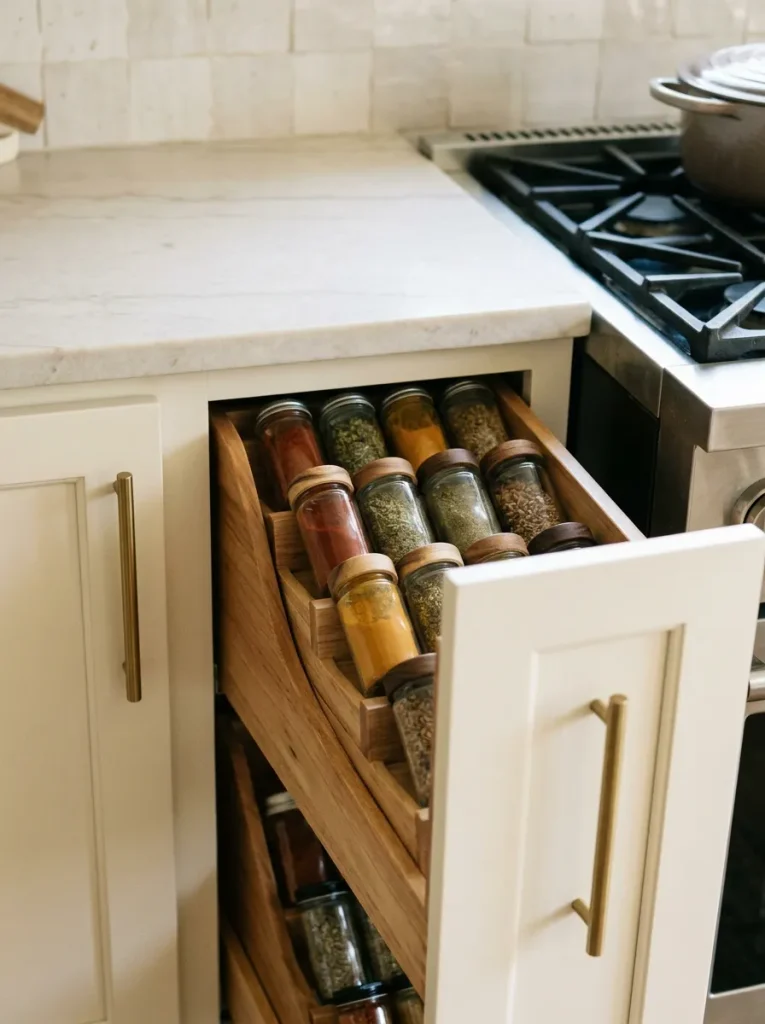
Pull-Out Spice Drawers
Quick Tip:
Arrange spice jars with their labels facing upward or toward the front so you can identify them without moving several containers. Measure the drawer carefully before choosing tiered inserts and keep spices away from direct heat and steam to help preserve their flavor.
A narrow pull-out drawer can turn an awkward gap beside a cabinet into useful storage. Place frequently used spices near the front and less common seasonings farther back. Matching jars can create a coordinated look, but they are optional. The most important thing is to keep everything visible, easy to reach and simple to return after cooking.
Light Reflective Flooring
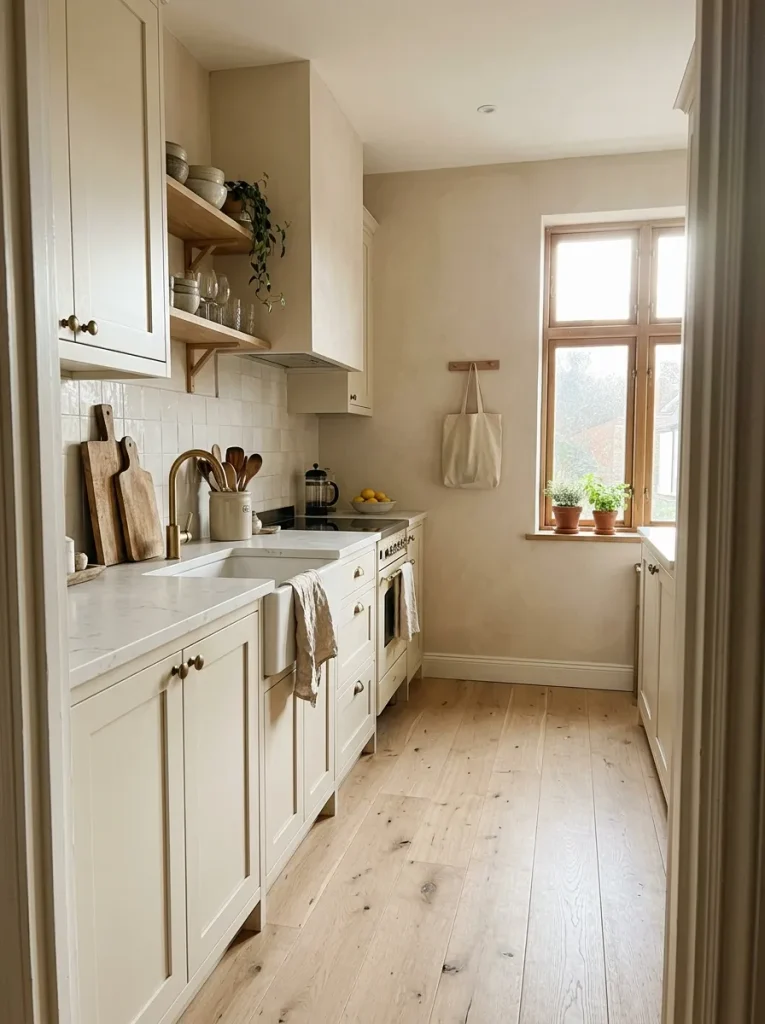
| Flooring Choice | Visual Effect | Practical Consideration |
| Pale oak-look vinyl | Bright and warm | Check water resistance and wear rating |
| Light porcelain tile | Clean and reflective | Can feel hard underfoot |
| Beige stone-look tile | Soft, natural appearance | Choose a slip-resistant finish |
| Light wood flooring | Adds warmth and continuity | Confirm suitability for kitchen moisture |
Light-colored flooring can help a compact kitchen feel more open, especially when it complements the cabinets and walls. Choose a durable, easy-to-clean surface suited to spills and regular foot traffic. A matte or gently textured finish can provide a practical balance between brightness and grip, while consistent flooring across adjoining rooms can create a more connected appearance.
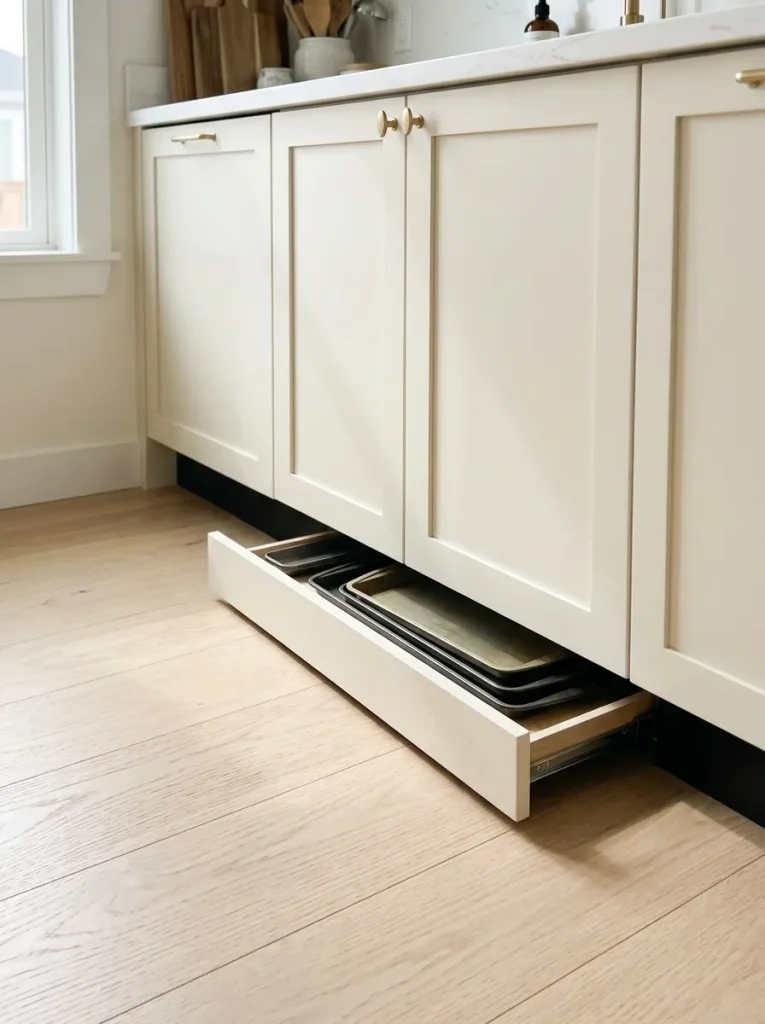
Toe-Kick Drawers
DO
- Use toe-kick drawers for flat baking trays, placemats or thin kitchen accessories.
- Check the available depth and height before planning the installation.
- Choose sturdy drawer runners designed for frequent opening.
- Keep stored items lightweight and easy to retrieve.
DON’T
- Store heavy cookware in shallow toe-kick compartments.
- Block the drawer with flooring trim or nearby cabinet hardware.
- Attempt a retrofit without checking the cabinet construction.
The narrow space beneath base cabinets can offer useful hidden storage when designed properly. Toe-kick drawers are particularly helpful for items that do not need much height, keeping them out of sight without taking up a regular cupboard shelf. Consider this feature during a kitchen renovation and have the installation checked to ensure it remains stable and functional.
Wall-Mounted Mug Hooks
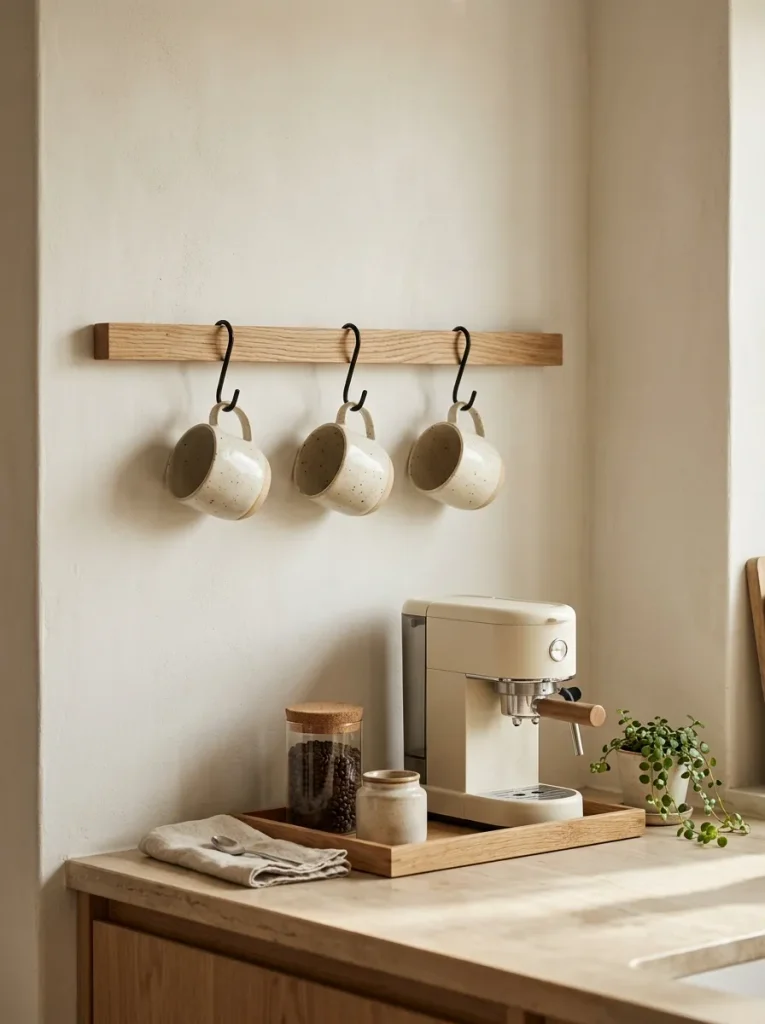
- Choose the location: Select a convenient spot near your coffee or tea station.
- Check the wall: Confirm the surface and fixings can safely support the rail and mugs.
- Measure the spacing: Leave enough room between hooks so handles do not overlap.
- Install securely: Use suitable hardware for the wall material and expected weight.
- Arrange thoughtfully: Hang everyday mugs within easy reach and keep the rail uncluttered.
A wall-mounted mug rail frees cabinet space while turning everyday drinkware into a simple decorative feature. Wooden rails bring warmth, while black metal hooks suit modern kitchens. Start with only the mugs you regularly use and avoid placing the rail where mugs could be knocked by cabinet doors or people moving through a narrow walkway.
Glass Cabinet Doors
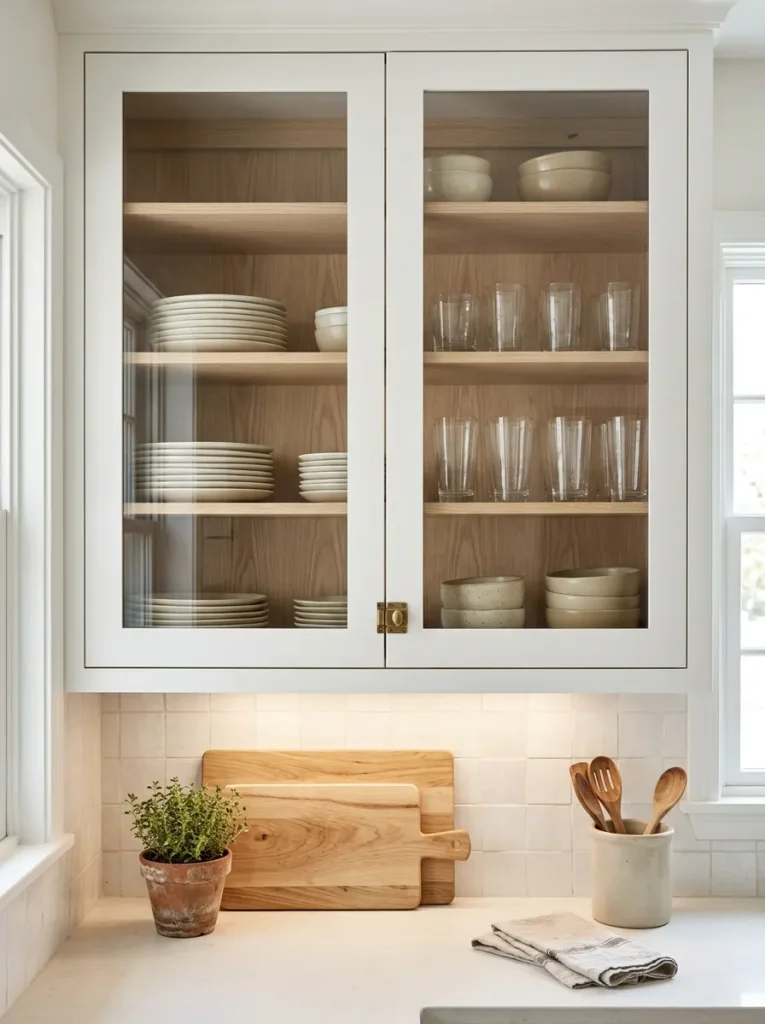
| Cabinet Style | Appearance | Best Use |
| Clear glass doors | Open and airy | Coordinated everyday dishes |
| Frosted glass doors | Soft and understated | Partially concealing cabinet contents |
| Solid cabinet doors | Simple and uncluttered | Mixed or mismatched kitchen items |
| Open shelving | Accessible and casual | Frequently used, attractive pieces |
Glass-front cabinets can make a small kitchen feel less visually heavy than a wall of solid doors. They work best when the contents are arranged neatly, with similar dishes grouped together and some breathing room between stacks. If you prefer to hide everyday clutter, use frosted glass or combine a few glass-front cabinets with solid doors for a balanced look.
Narrow Kitchen Island
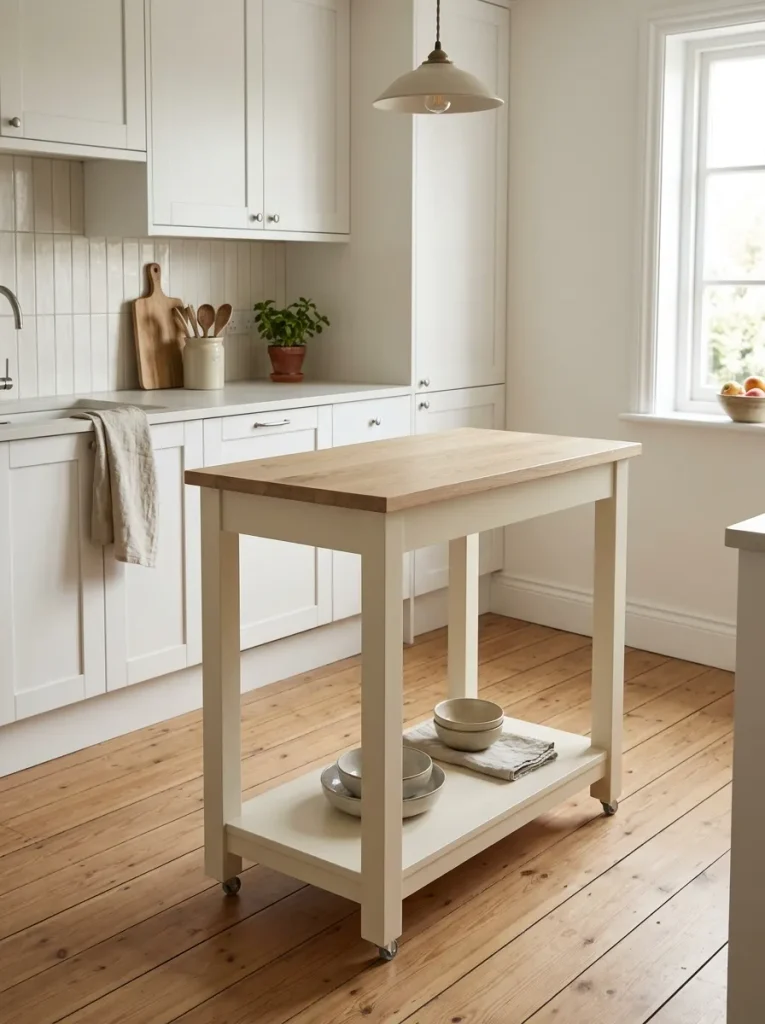
A narrow island can provide extra preparation space without overwhelming a compact kitchen. Choose a slim design that suits the room’s proportions, ideally with storage underneath for bowls, cutting boards or everyday cooking tools.
- Measure the walkway: Leave enough clearance for cabinet doors, appliances and comfortable movement.
- Choose a compact footprint: A narrow rectangular island often fits better than a bulky square model.
- Add useful storage: Look for a shelf or drawers beneath the worktop.
- Consider mobility: Lockable wheels make it easier to move the island when extra floor space is needed.
- Keep the surface simple: Store only a few essentials on top so the island remains useful for food preparation.
Before purchasing, mark the island’s dimensions on the floor with removable tape and walk around the outline. This helps you judge whether the kitchen will still feel comfortable. If the available space is too tight, a small rolling cart may provide similar benefits with greater flexibility.
Over-Door Storage Racks
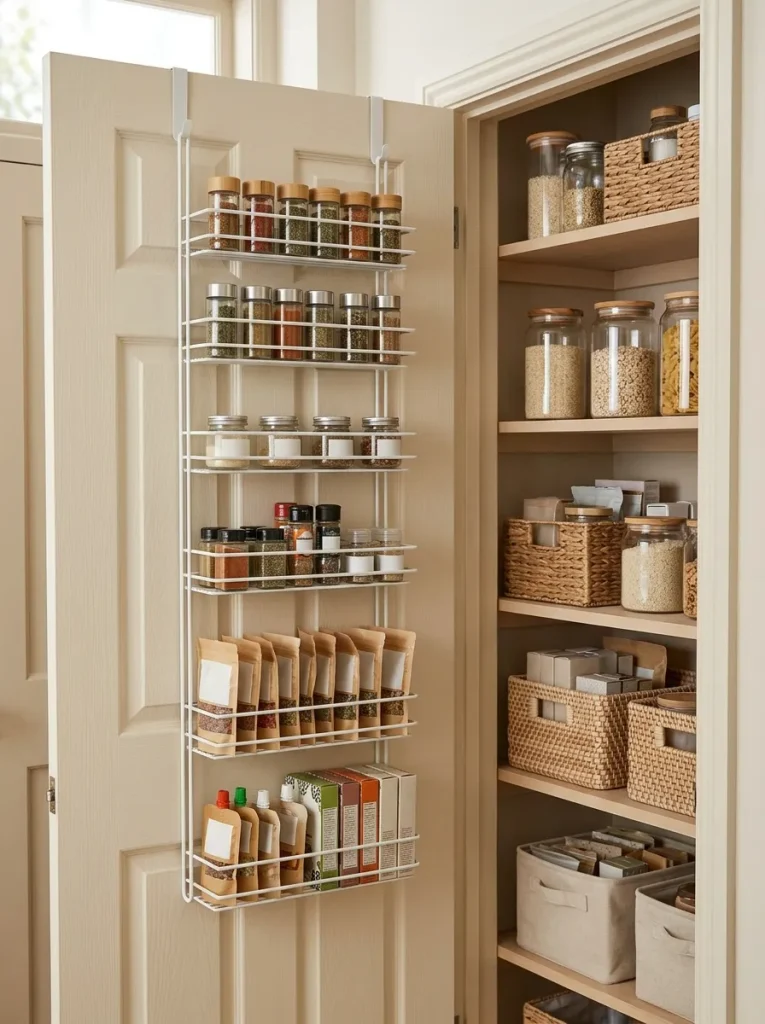
Quick Tip:
Check the door’s thickness, hinge clearance and weight limit before choosing an over-door rack. Make sure the rack does not prevent the door from closing properly and avoid storing heavy glass containers where they could shift or fall.
Over-door racks make use of a surface that usually provides no storage at all. They can hold lightweight pantry goods, wraps, packets or small kitchen accessories while leaving shelves and countertops free. Choose adjustable baskets if your supplies vary in size and arrange frequently used items at a comfortable height to make everyday cooking easier.
Coordinated Storage Containers
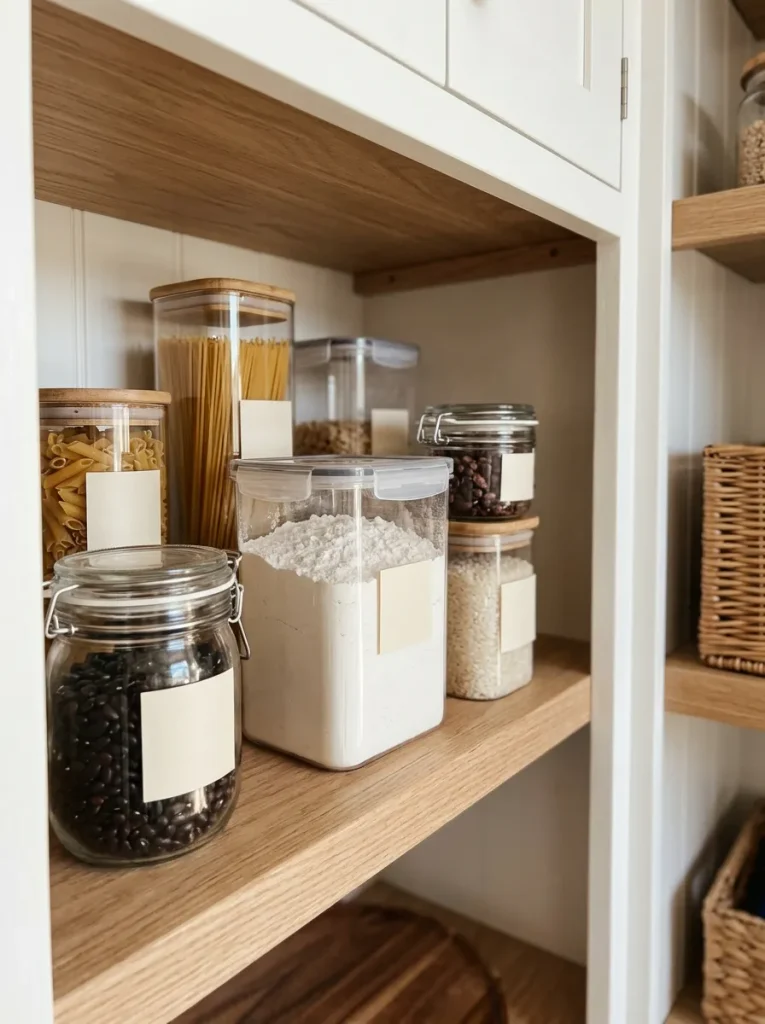
| Container Type | Main Benefit | Best For |
| Clear airtight containers | Easy visibility and freshness | Flour, rice, pasta and cereal |
| Stackable plastic bins | Lightweight and space-efficient | Packets and small pantry items |
| Square containers | Fit neatly side by side | Shelves with limited depth |
| Glass jars | Durable and visually appealing | Frequently used dry ingredients |
Coordinated containers can make a small pantry easier to navigate because ingredients are visible and grouped neatly. Choose shapes that fit your actual shelf dimensions rather than buying a large matching set immediately. Airtight lids help protect dry foods, while removable labels can identify contents and dates. Keep containers within easy reach and store heavier ingredients on lower shelves.
Recessed Wall Shelves
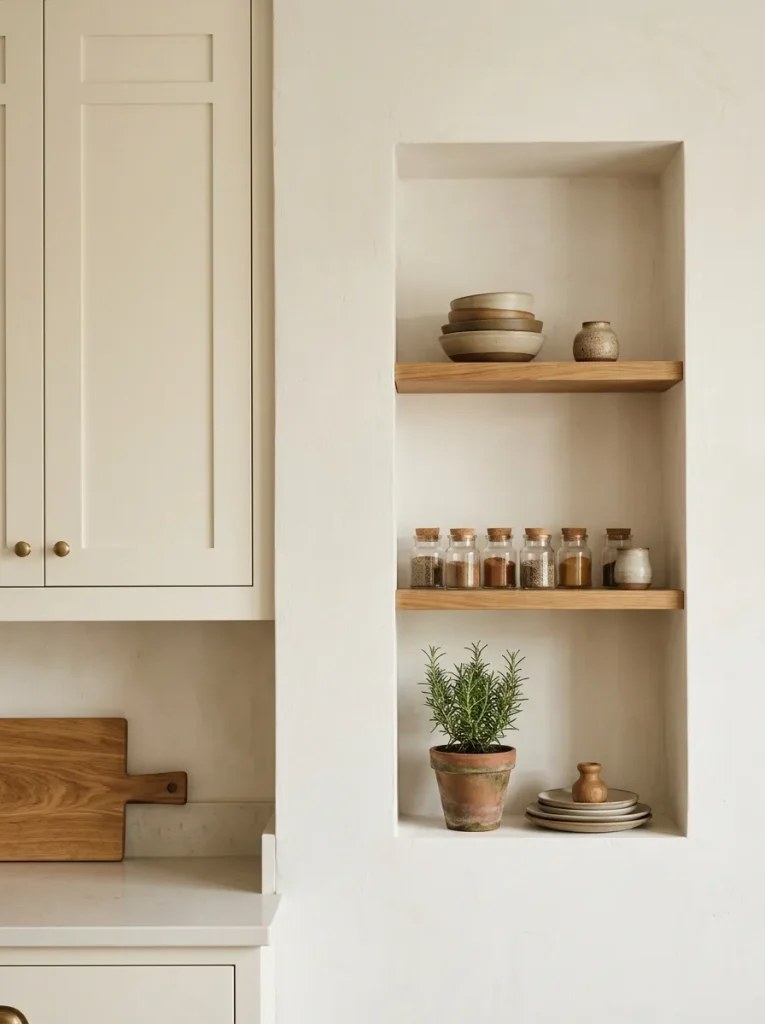
DO
- Use recessed shelves where the wall structure allows safe installation.
- Store lightweight dishes, spices or small decorative kitchen essentials.
- Keep frequently used items at a comfortable reaching height.
- Match shelf finishes to nearby cabinets for a cohesive appearance.
DON’T
- Cut into walls without checking for wiring, plumbing or structural supports.
- Overfill narrow shelves with oversized containers.
- Place fragile items where they could be bumped during cooking.
Recessed shelving can add storage without projecting into a narrow walkway. It works especially well in suitable wall niches or during a planned renovation, when the depth and layout can be designed around your needs. Keep the arrangement simple, use sturdy shelf materials and reserve deeper storage for items that genuinely require more room.
Under-Cabinet Lighting
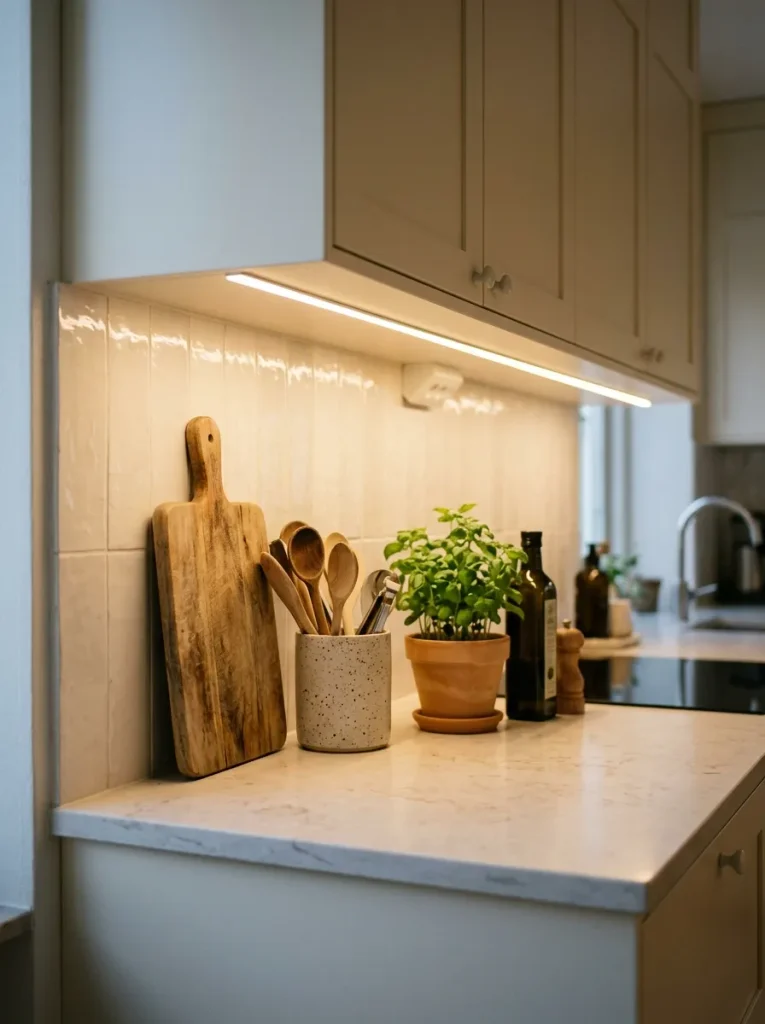
- Measure the cabinet length: Determine how much lighting is needed for your main work surfaces.
- Choose the light color: Warm white creates a cozy atmosphere, while neutral white offers a crisp working light.
- Select a suitable fixture: Consider LED strips or compact bars designed for kitchen use.
- Plan the power source: Check outlet access and follow the manufacturer’s installation instructions.
- Position the lights carefully: Aim illumination toward the countertop to reduce shadows while preparing food.
Under-cabinet lighting improves visibility in areas where overhead lights may leave dark patches. It can also make a small kitchen feel more welcoming after sunset without requiring bulky lamps on the counter. Choose fixtures with an appropriate brightness and a finish that blends with your cabinets and use products rated for the kitchen environment.
Sliding Pantry Doors
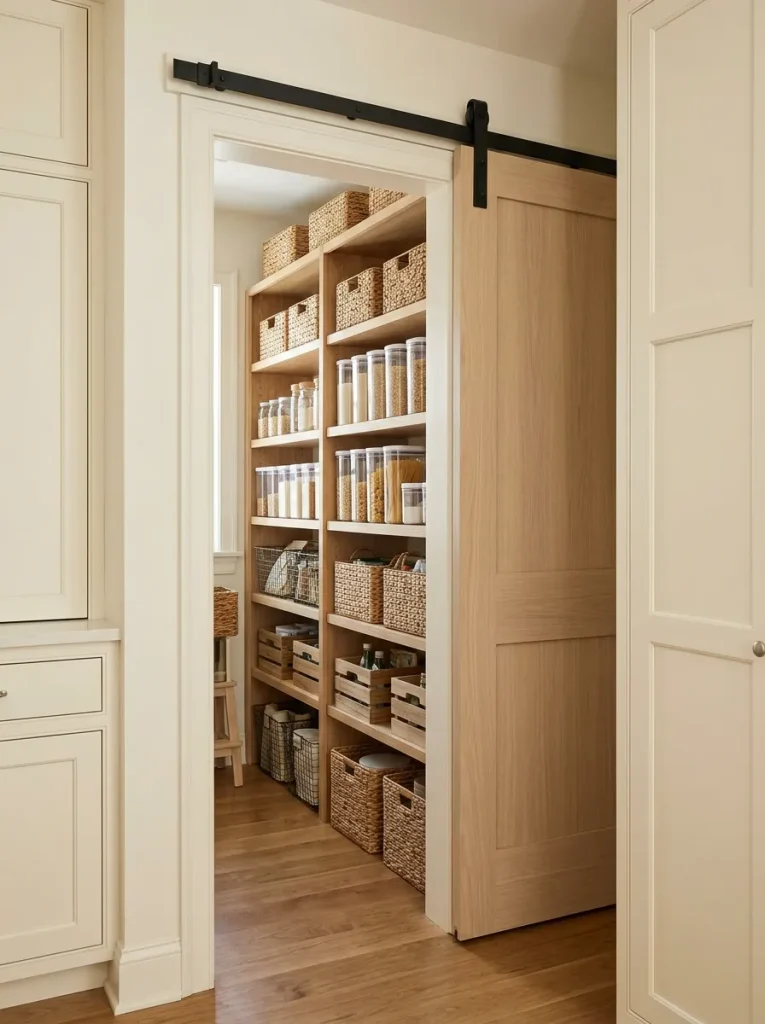
| Door Style | Space Requirement | Best Feature |
| Traditional hinged door | Needs swing clearance | Simple, familiar access |
| Sliding barn-style door | Needs clear wall space beside the opening | Decorative and space-conscious |
| Pocket door | Requires suitable wall construction | Slides into the wall |
| Bifold door | Needs some folding clearance | Useful for narrower openings |
A sliding pantry door can make a tight kitchen easier to navigate because it avoids the wide swing of a traditional door. Choose a style that suits your available wall space and pantry opening. Before installation, check that the door will not cover light switches, obstruct nearby cabinets or interfere with appliances when opened.
Foldable Kitchen Stools
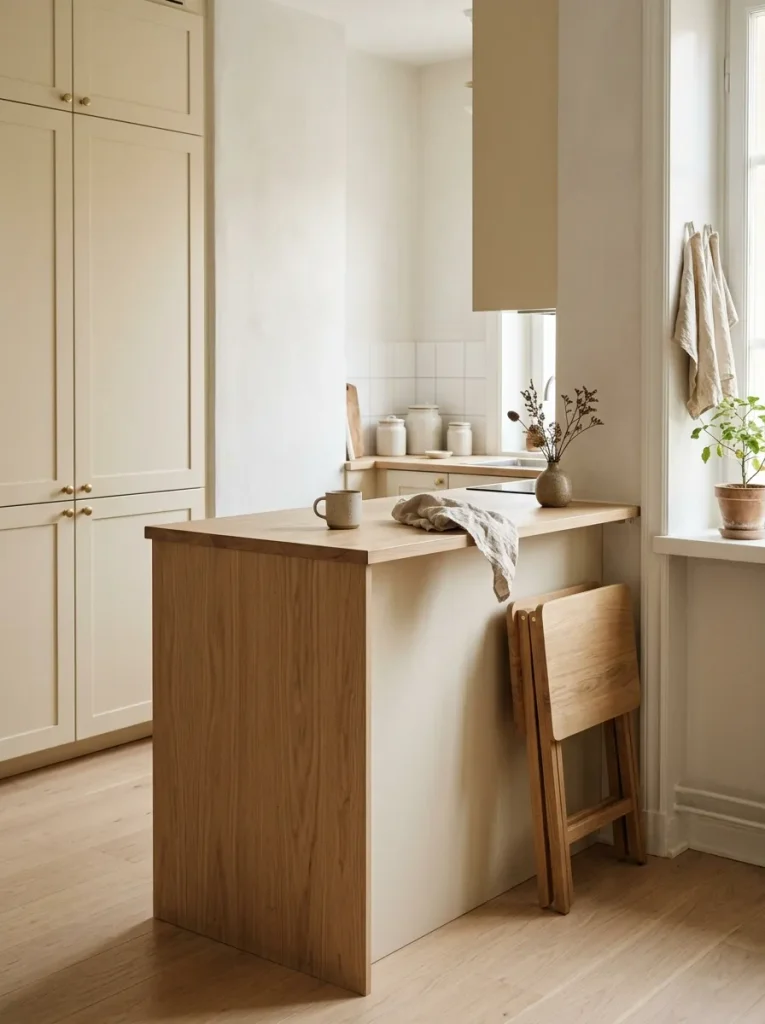
Quick Tip:
Choose foldable stools that lock securely when opened and have a stable, nonslip base. Measure the space where you plan to store them and check the counter height before buying. Keep folded stools away from walkways and make sure they can be retrieved without moving heavy appliances.
Foldable seating gives you flexibility when a compact kitchen needs occasional extra places to sit. Use the stools at a breakfast counter, for quick meals or when guests visit, then fold them away to restore open floor space. Lightweight designs are easier to move, while neutral wood or metal finishes blend naturally with most kitchen styles.
Minimalist Kitchen Styling
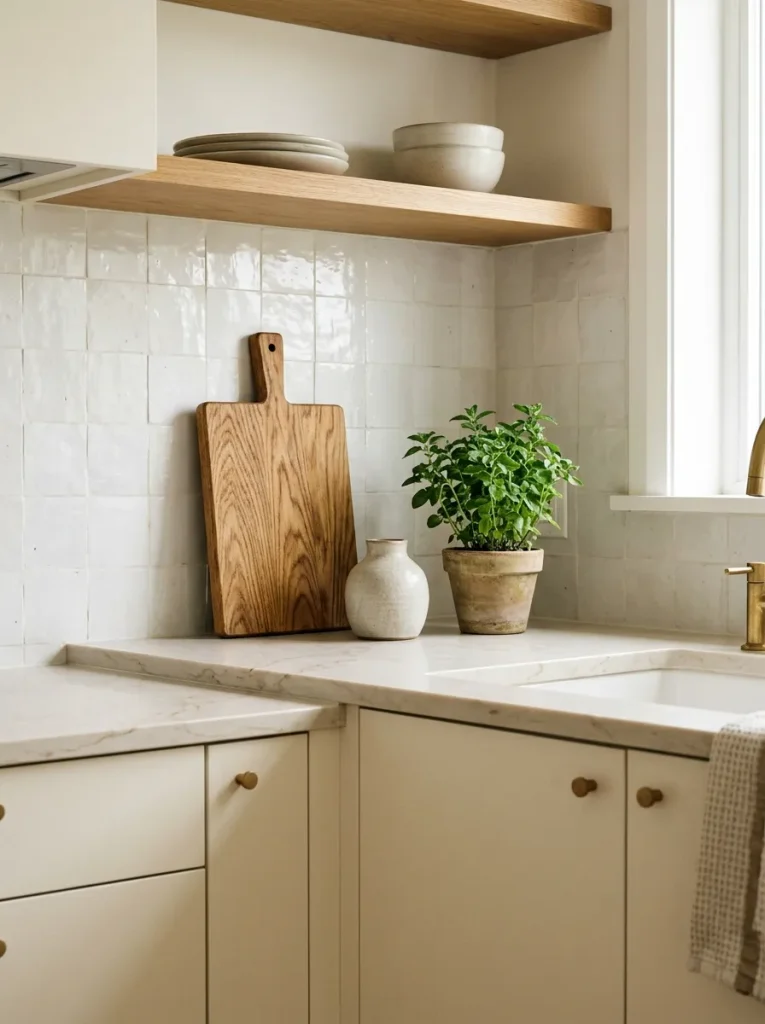
| Styling Choice | Visual Result | Practical Benefit |
| A few useful accessories | Calm, uncluttered surfaces | More preparation space |
| Matching neutral tones | Cohesive appearance | Easier to coordinate items |
| One or two plants | A natural, fresh touch | Adds color without bulky decor |
| Clear countertops | More open visual space | Faster everyday cleaning |
Minimalist styling is about keeping what serves a purpose and making the remaining pieces feel intentional. Choose a small palette of complementary colors, display a few items you genuinely use,and store the rest behind cabinet doors. You do not need to replace everything to create a fresh look. Regularly clearing unnecessary objects can make your kitchen feel more spacious and easier to maintain.
Pegboard Kitchen Storage
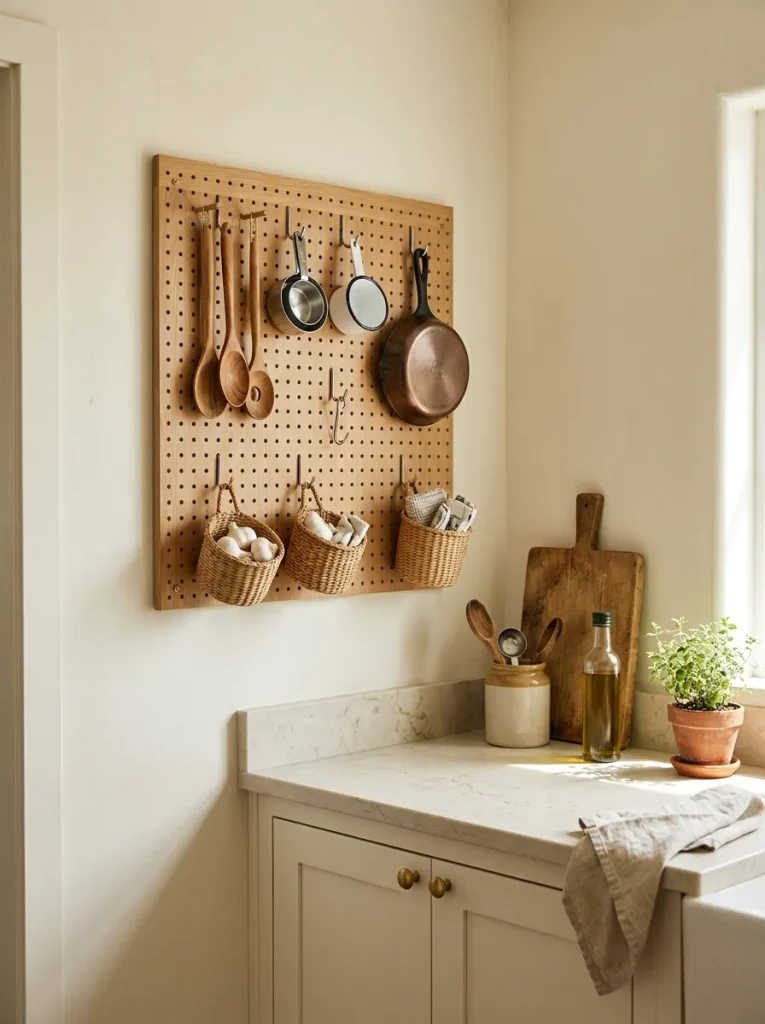
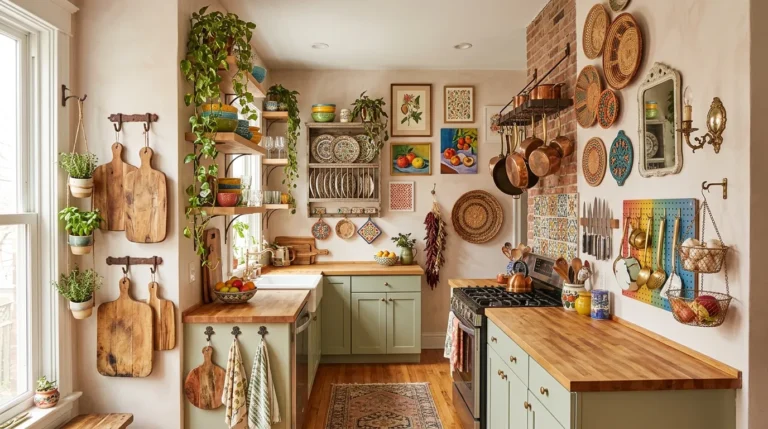
A wall-mounted pegboard creates flexible storage for kitchen tools without taking up valuable drawer or countertop space. You can arrange hooks and small baskets to hold frequently used utensils, measuring cups and lightweight accessories.
Choose a pegboard that complements your kitchen’s colors, such as natural wood or white. Secure it properly to a suitable wall and check the weight limits before hanging anything. Keep the tools you use most often within easy reach and leave some open space so the arrangement looks neat instead of crowded.
Narrow Pull-Out Pantry
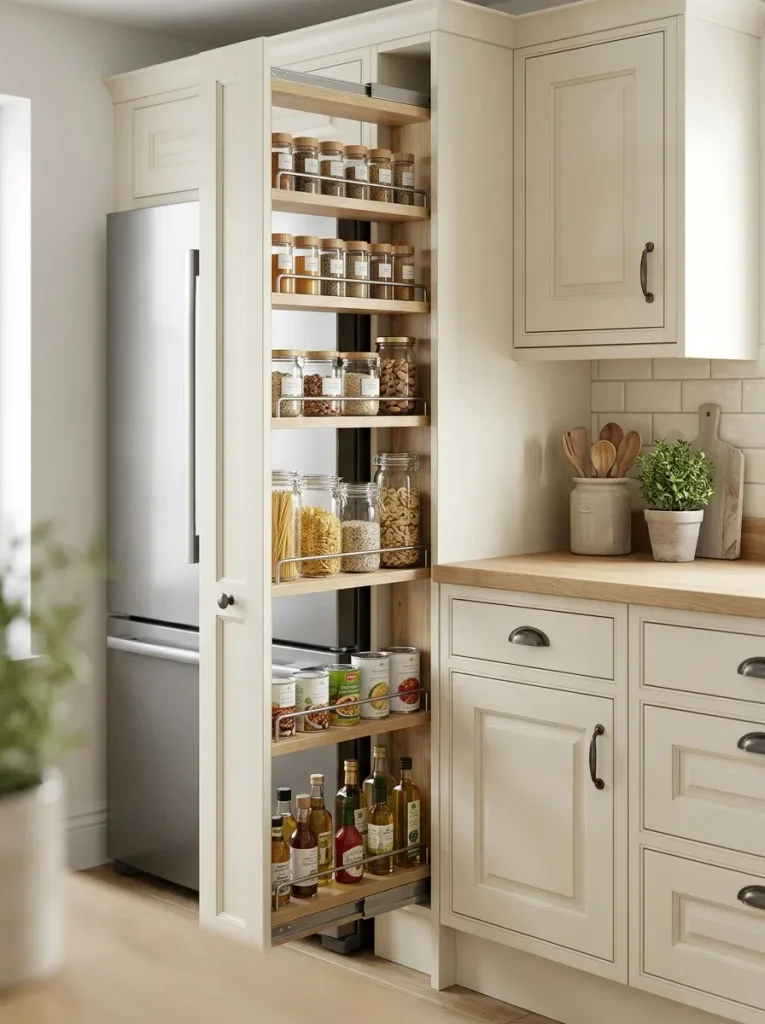
A narrow pull-out pantry can turn an unused gap between cabinets or appliances into valuable storage. Its slim shelves make it easier to organize canned foods, spices, cooking oils and other pantry essentials without needing a full-size cupboard.
Measure the available gap carefully before choosing a unit and check that nearby doors and appliances can still open comfortably. Use sturdy shelves with smooth runners and keep heavier items on the lower levels. Group similar ingredients together to make meal preparation quicker and prevent small items from disappearing at the back.
Window Herb Planters
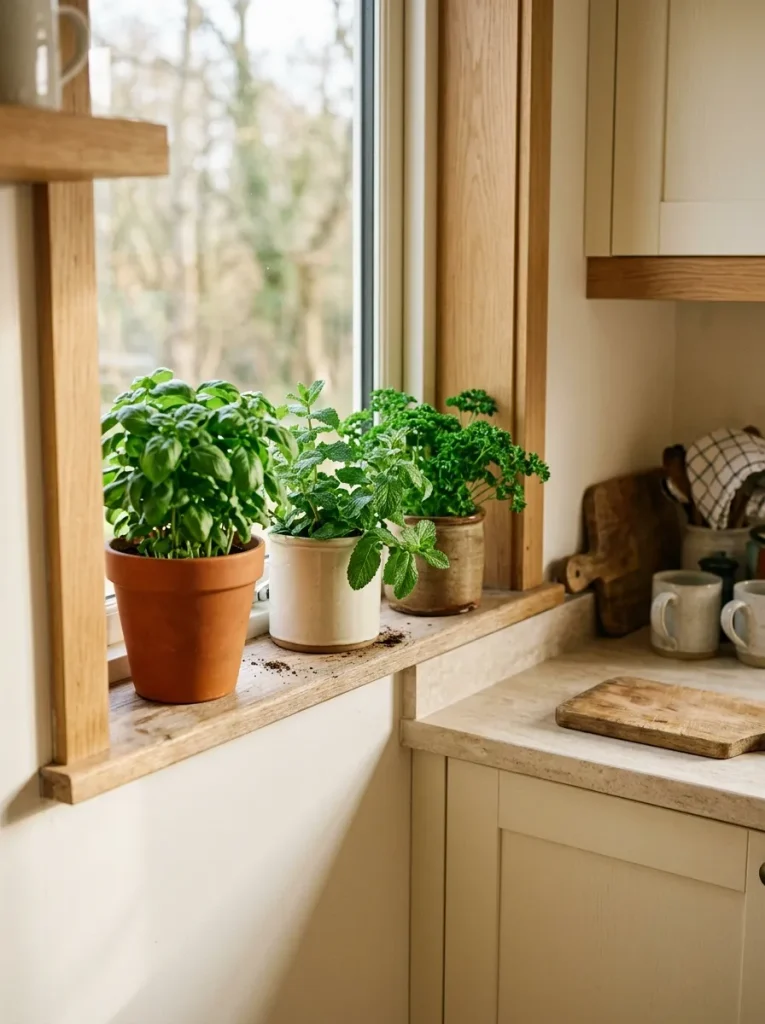
Window herb planters bring greenery into a small kitchen while keeping fresh herbs close to your cooking area. Basil, parsley, mint and other suitable herbs can add natural color without requiring a large shelf or extra countertop furniture.
Choose compact pots that fit securely on the windowsill and provide suitable drainage. Check how much sunlight your chosen herbs need and avoid blocking windows or nearby work areas. Matching pots can create a coordinated look, while a simple terracotta finish adds warmth to a neutral kitchen.
CONCLUSION
Making the most of a small kitchen starts with thoughtful choices, not a complete renovation. From vertical storage and foldable furniture to brighter finishes and organized drawers, these ideas can help you create a space that feels open, practical and welcoming. Start with one change that solves your biggest daily frustration, then build on your progress as time and budget allow. Save this collection of Small Kitchen Ideas on Pinterest so you can revisit your favorites and share the article with anyone who could use extra kitchen space. Your dream kitchen can begin with one simple, smart improvement.