Cozy Home Office Ideas: 32 Comfy Corners to Linger In
Your home office should be more than a place to finish tasks. It should be a corner where you feel comfortable, focused and happy to spend your time. Even small changes can make a big difference!
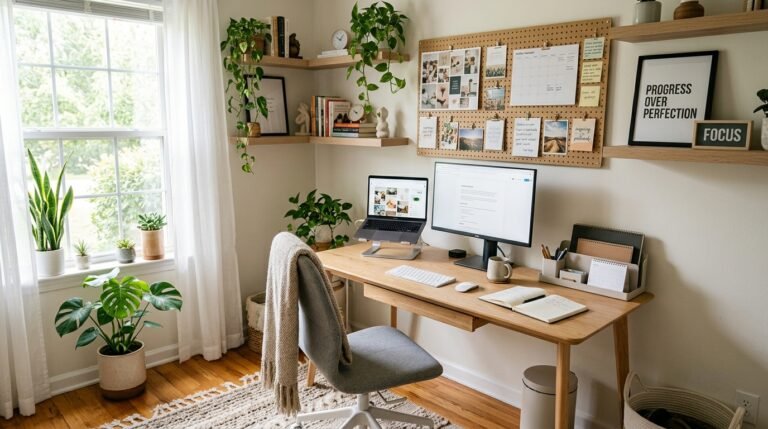
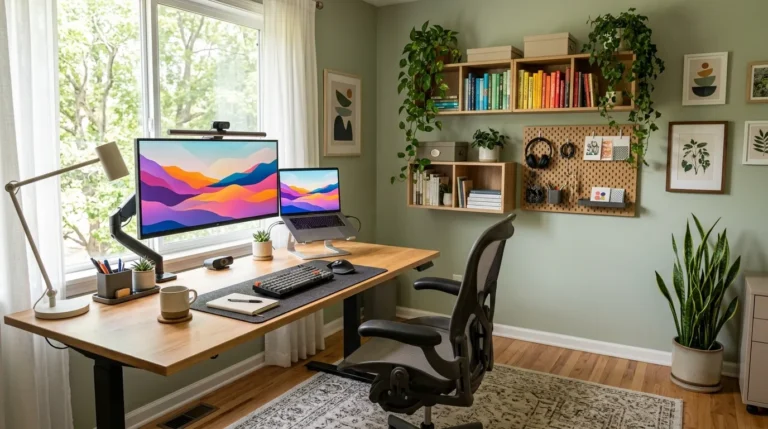
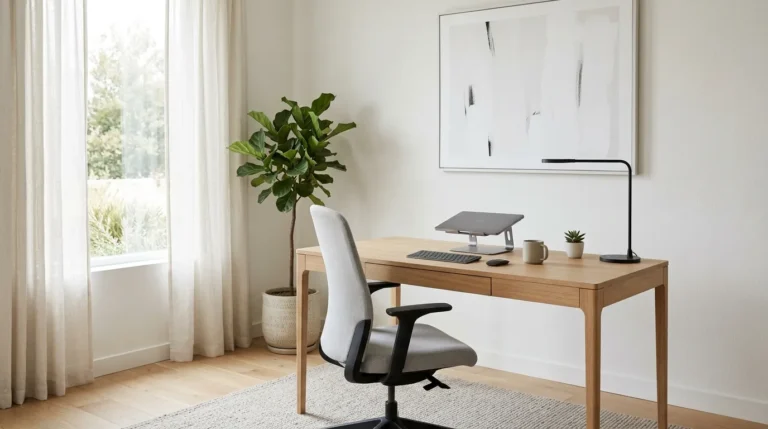
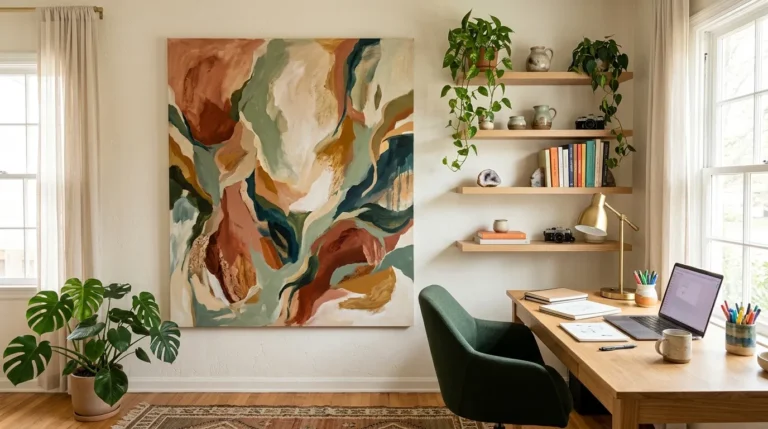
These Cozy Home Office Ideas will help you create a workspace that feels warm and inviting without sacrificing functionality. From plush chairs and soft lighting to natural wood desks, woven baskets and peaceful reading corners, you’ll find inspiration for different room sizes, budgets and decorating styles.
If you work remotely, study at home or simply need a dedicated spot for everyday tasks, the right details can make your space feel more personal. I’ve noticed that comfortable seating, thoughtful lighting and less clutter can make a workspace feel much more welcoming. You don’t need a complete makeover to get started. Choose a few ideas that suit your needs, use what you already own and build a cozy corner one simple step at a time.
Plush Accent Chair
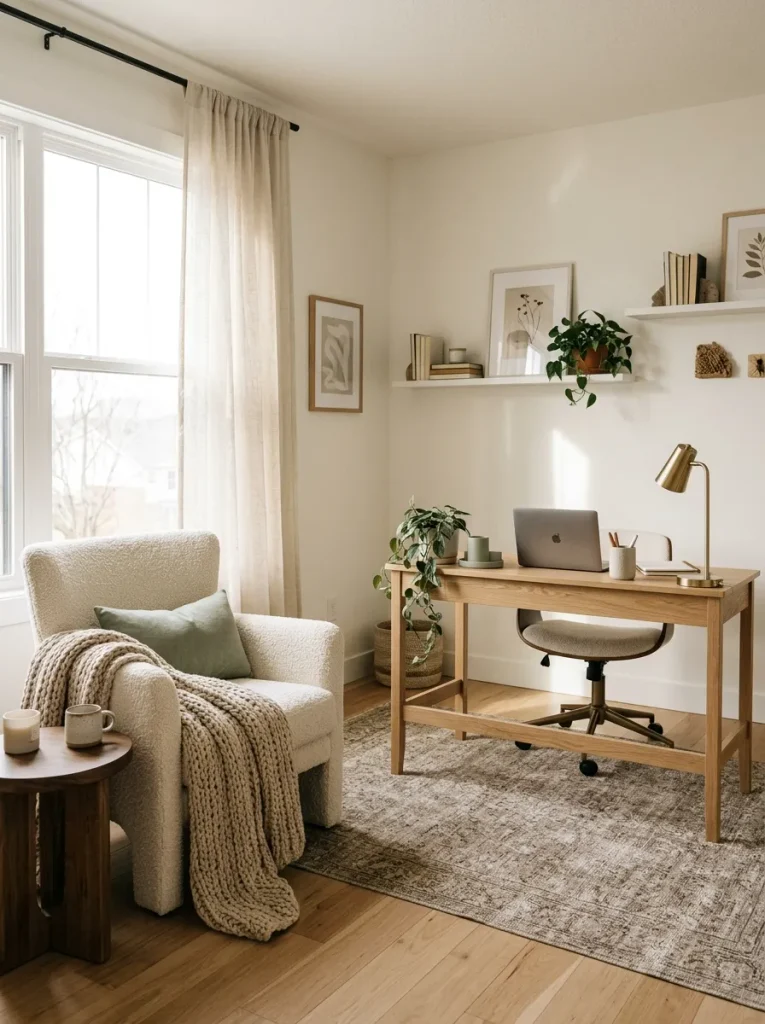
A comfortable chair can make your home office feel like a place where you actually want to spend time. Choose a plush accent chair with supportive cushioning and soft upholstery in cream, beige or warm gray. Place it near your desk to create a cozy corner for reading, brainstorming or taking short breaks between tasks.
Layer a textured throw over one arm and add a small cushion for extra comfort. Keep a side table nearby for your coffee, notebook or favorite book. In my experience, separating a relaxation seat from the main desk helps make breaks feel more intentional without requiring a separate room.
Warm Wood Desk
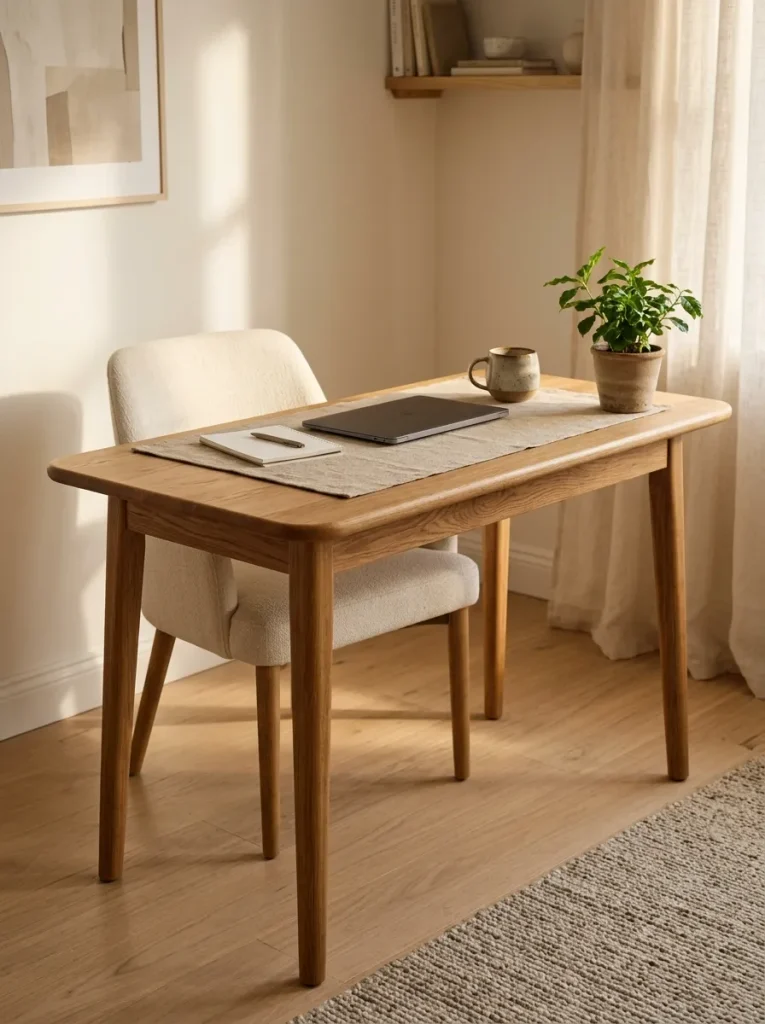
- Choose natural finishes: Oak, walnut and other warm wood tones help create a welcoming atmosphere.
- Look for practical storage: A drawer or compact cabinet keeps everyday supplies out of sight.
- Add soft accessories: Pair the desktop with a fabric desk mat and a comfortable chair cushion.
- Keep the surface balanced: Display only a few useful items, such as a lamp, plant and notebook.
- Match nearby furniture: Repeat the wood tone in a shelf, picture frame or side table.
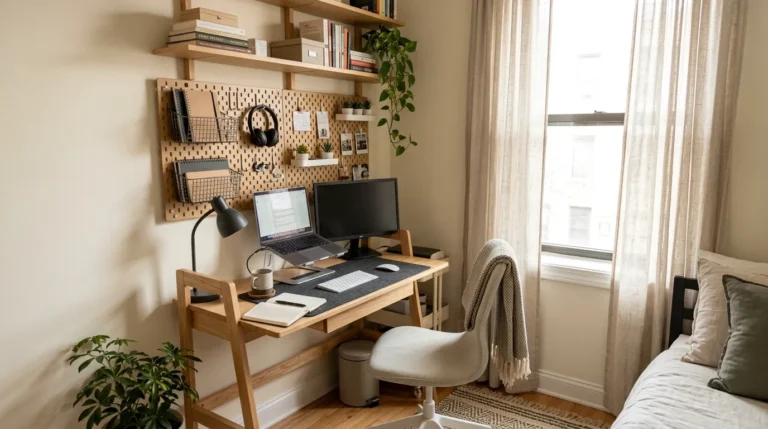
A wooden desk can soften the appearance of technology-heavy workspaces while providing a durable everyday surface. Before buying, measure your room and leave enough space to move your chair comfortably. A compact desk with rounded corners works particularly well in a small bedroom office or an unused living room corner.
Layered Soft Lighting
Quick Tip:
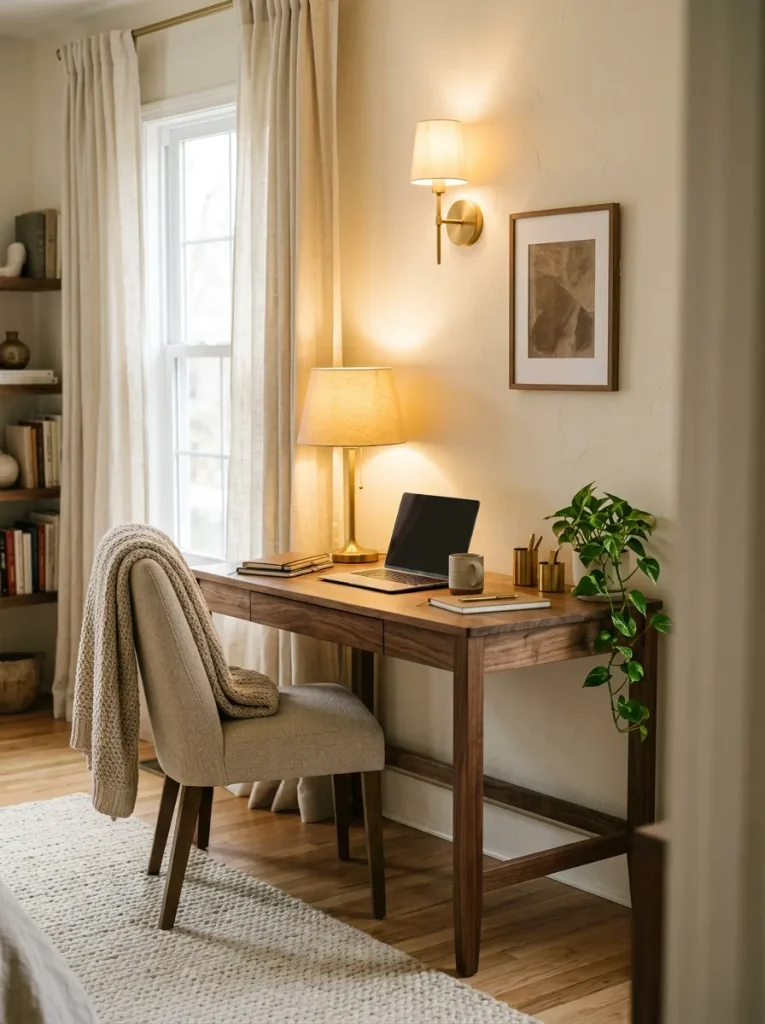
Combine three types of lighting: natural daylight, a focused task lamp and a softer ambient light source. Choose warm bulbs for relaxing areas, but make sure your desk lighting provides enough brightness for reading and detailed work.
Layered lighting helps your office feel comfortable throughout the day instead of relying on one harsh overhead fixture. Position your task lamp to reduce shadows on your work and adjust the ambient lighting for evening use. If you spend long hours at a screen, avoid placing bright lights where they create distracting reflections.
Cozy Window Nook
BEFORE
An unused window corner can feel empty or become a spot where random items collect. Without comfortable seating or thoughtful styling, it may not serve any real purpose in your home office.
AFTER
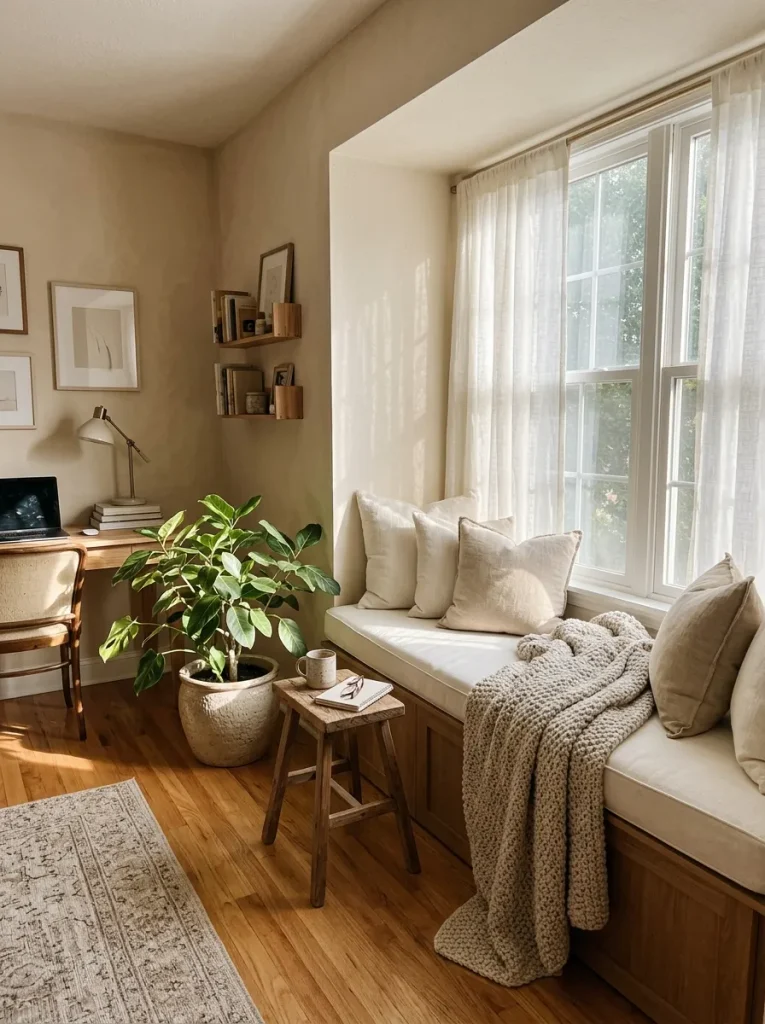
A cushioned window nook creates a welcoming place to read, review notes or take a quiet break. Soft pillows, warm textiles and natural daylight make the corner feel connected to the rest of your workspace.
Start with a seat that fits the window’s width, then add two supportive cushions and a washable throw. Keep the surface nearby simple with a small table for books or tea. If the nook doubles as storage, choose a bench with drawers or lift-up compartments to keep blankets and supplies tucked away.
Chunky Knit Textures
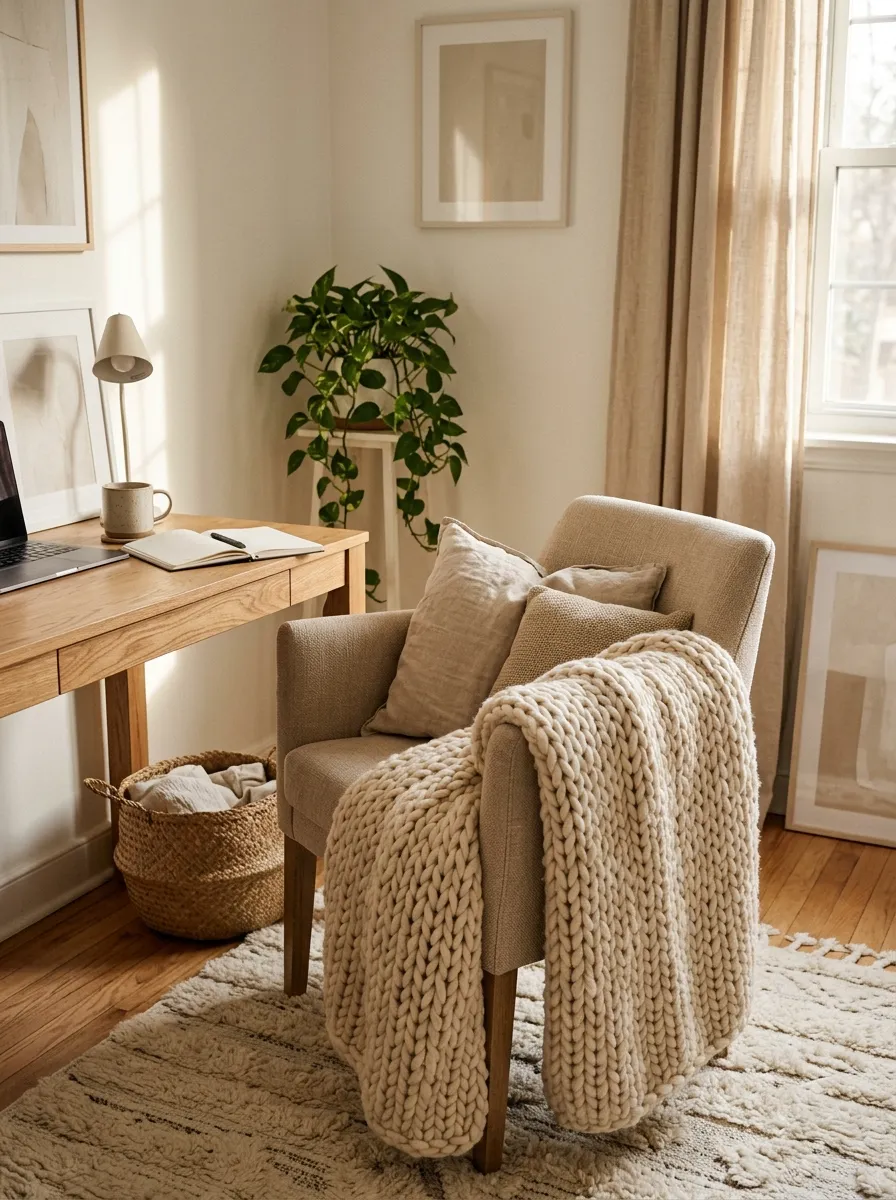
- Choose a main texture: Start with a chunky knit throw or a soft woven cushion.
- Add contrasting materials: Combine knitted fabric with smooth wood, linen or matte ceramic accessories.
- Keep colors connected: Use cream, oatmeal, taupe or muted brown for a cohesive palette.
- Layer selectively: Place a textured rug beneath the desk or a cushion on your reading chair.
Soft textures make a workspace feel less formal and more comfortable, especially when your office shares space with a bedroom or living room. Keep bulky blankets away from chair wheels and walking paths. If your room is small, focus on two or three tactile details rather than layering every surface.
Neutral Color Palette
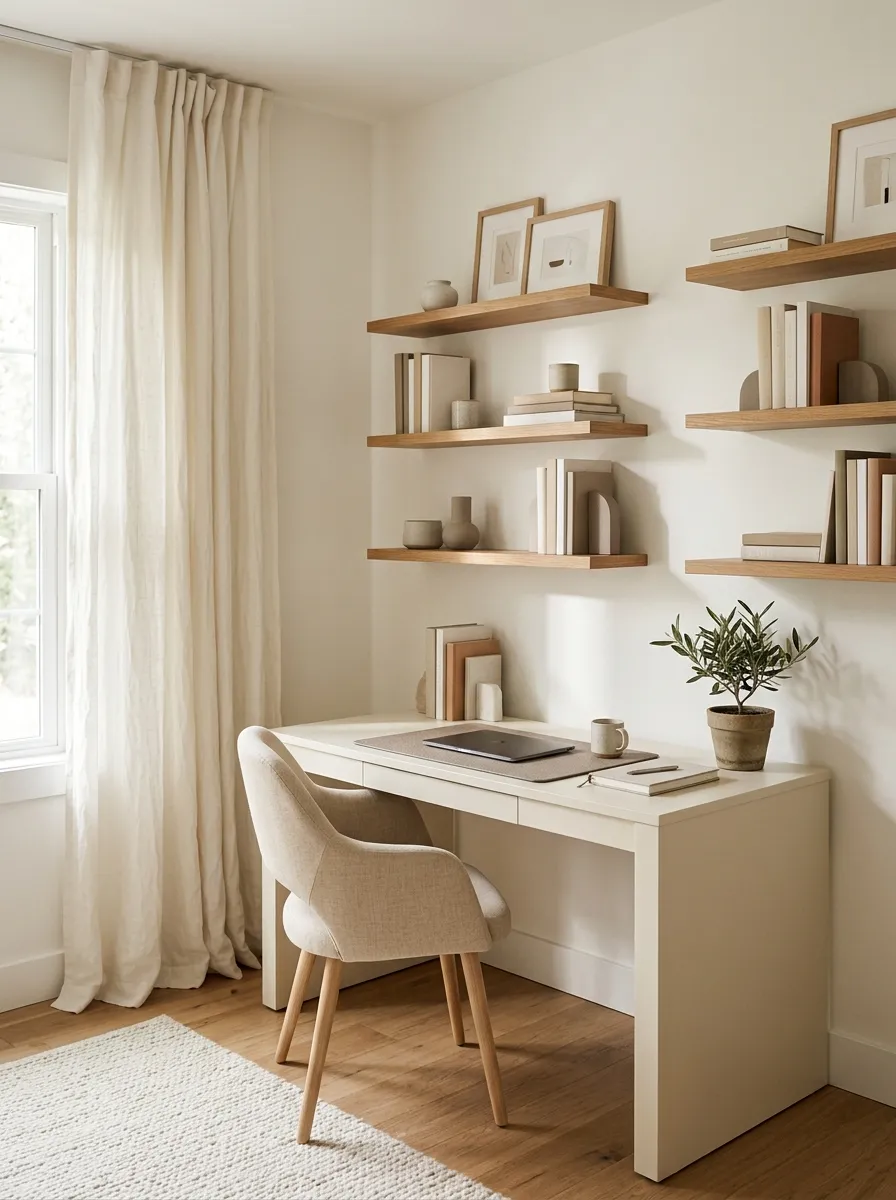
| Feature | Option A: Cool Neutrals | Option B: Warm Neutrals |
| Main colors | Gray, white, pale blue | Cream, beige, taupe |
| Wood finish | Ash or pale oak | Honey oak or walnut |
| Overall feeling | Crisp and airy | Soft and inviting |
| Accent colors | Sage or muted blue | Terracotta or olive green |
A warm neutral palette creates a calm visual foundation without making the office feel plain. Repeat two or three shades across your desk accessories, curtains, chair and rug to help the room feel connected. Introduce different materials, such as linen and natural wood, so the colors have depth instead of blending into one flat surface.
Floating Wooden Shelves
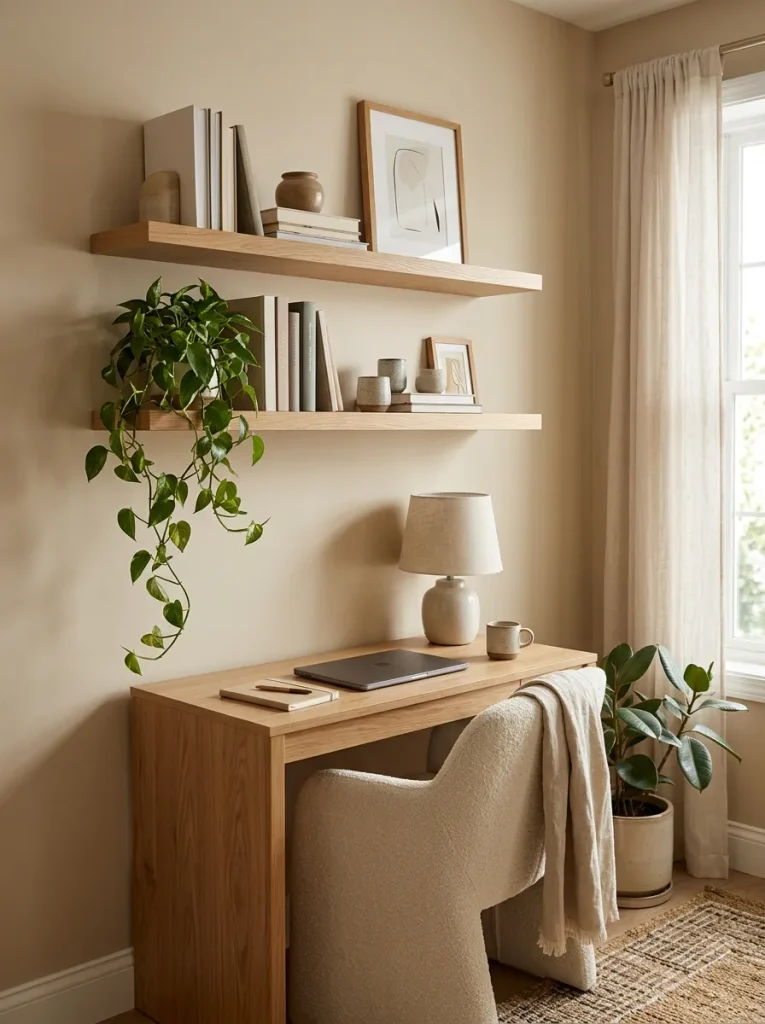
DO
- Install shelves above the desk to use vertical wall space.
- Mix books with a few decorative objects for visual balance.
- Leave some open space between displayed items.
- Repeat the shelf’s wood tone in another piece of furniture.
DON’T
- Fill every inch with decorations.
- Place heavy objects where they could fall onto your workspace.
- Store frequently used supplies on hard-to-reach shelves.
- Mix too many colors and finishes in one small area.
Floating shelves give your office personality while keeping the desk clear for daily work. Arrange practical items at eye level and reserve higher shelves for lightweight decor. If you work in a rental, check whether removable shelving or freestanding bookcases would be a better fit for your walls.
Soft Linen Curtains
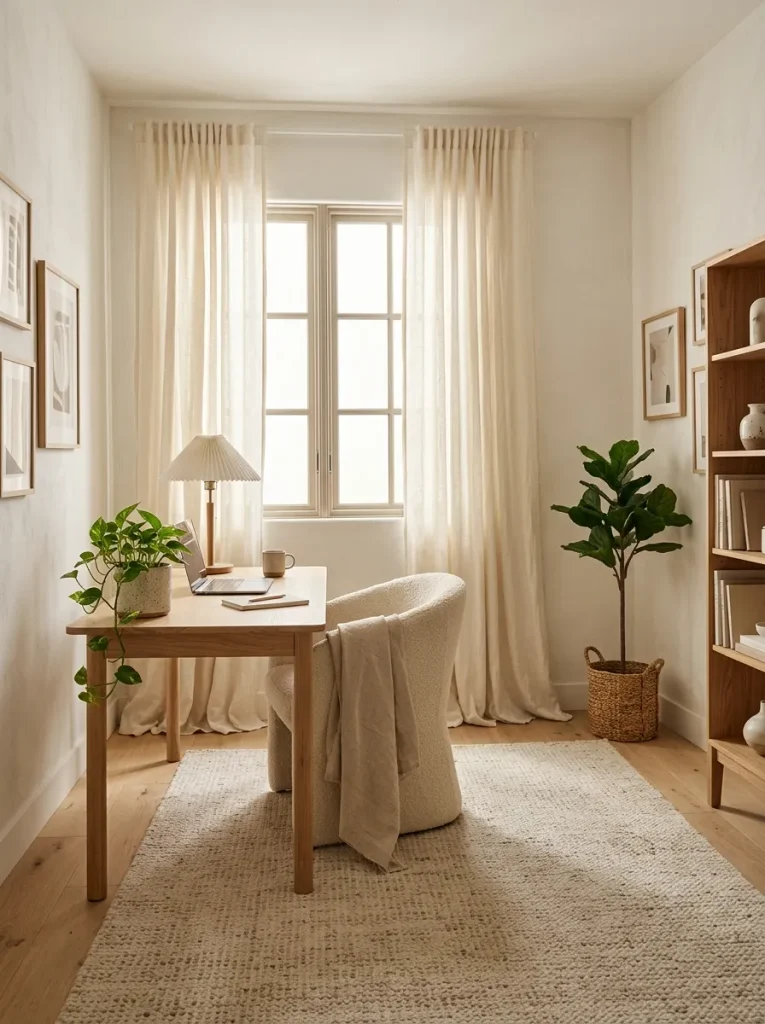
Fact 1: Light control: Sheer linen curtains soften bright daylight without making the room feel closed in.
Fact 2: Added texture: Natural fabric brings a relaxed, comfortable quality to plain walls and windows.
Fact 3: Color choice: Ivory, oatmeal and light beige work well with warm wood furniture.
Fact 4: Practical length: Floor-length panels can make a room feel taller, while shorter curtains may suit desks positioned beneath windows.
Soft curtains can make a home office feel more settled, especially when the workspace has hard surfaces and computer equipment. Choose a fabric weight that suits your lighting needs. If glare affects your screen, combine decorative curtains with blinds so you can adjust the light throughout the day.
Comfy Footrest Corner
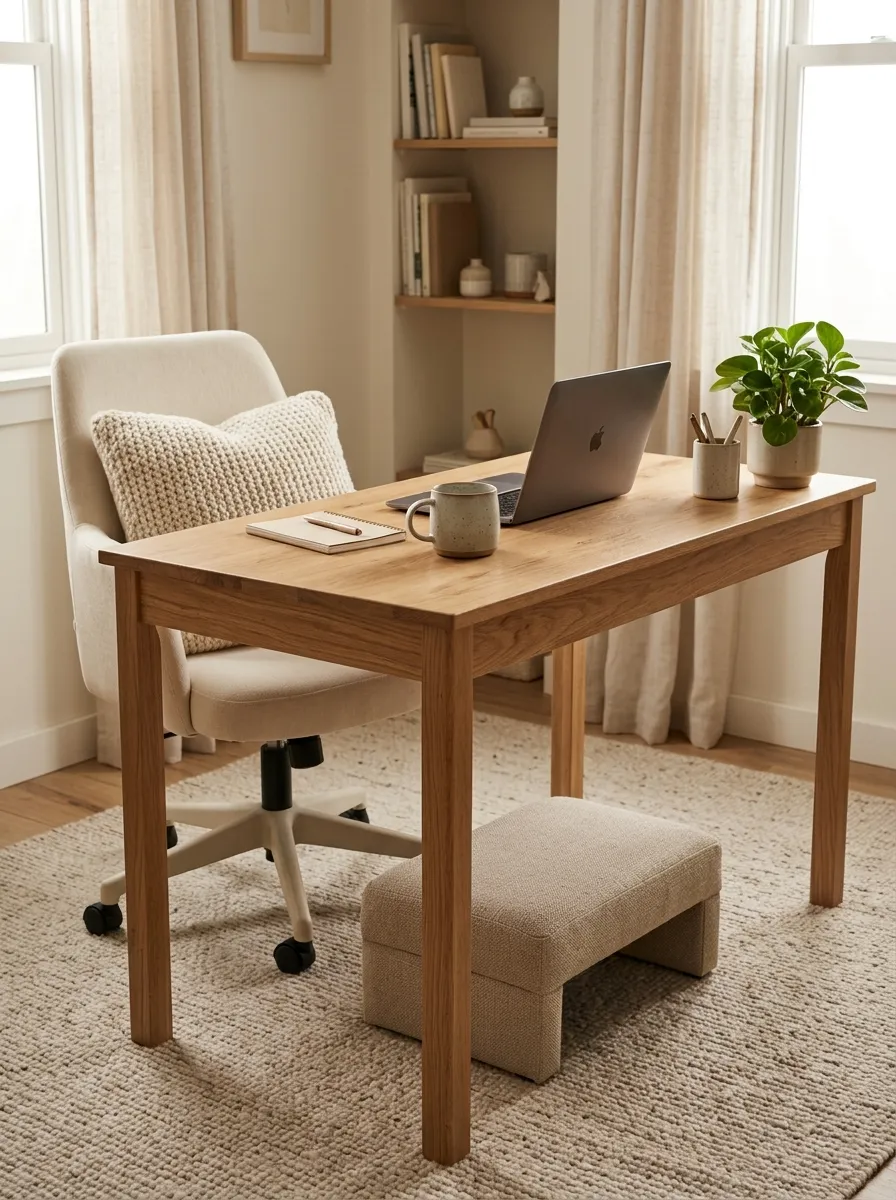
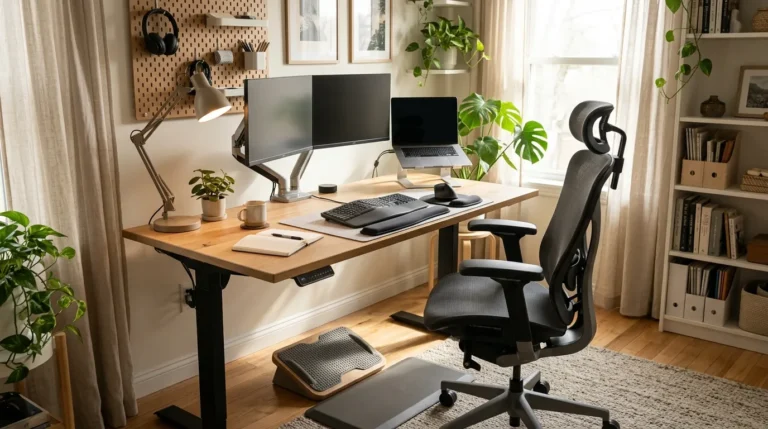
A small footrest can make long desk sessions feel more comfortable, especially when your feet do not rest flat on the floor. Choose a padded design that fits beneath your desk without blocking your chair or reducing legroom.
Place the footrest on a stable, nonslip surface and adjust your chair so your shoulders remain relaxed while typing. A simple fabric-covered model can blend into a cozy room, while a wooden footrest suits a natural decor style. Keep the surrounding floor clear so you can move freely between tasks.
Sage Green Accents
Quick Tip:
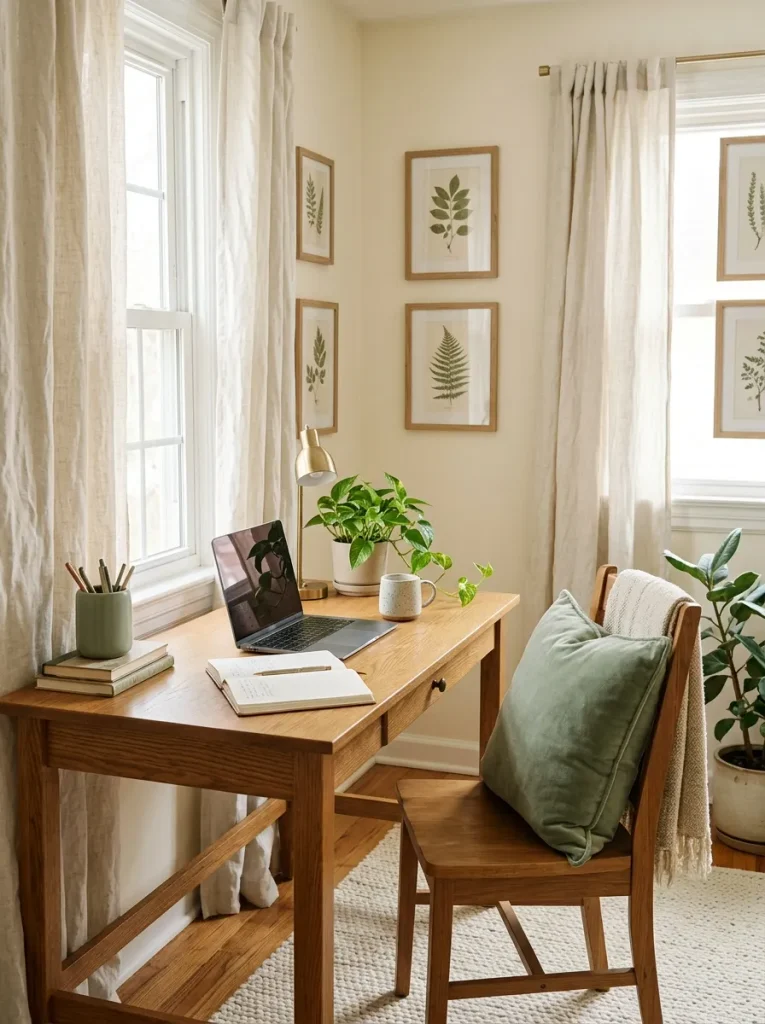
Use sage green as an accent rather than covering every surface in the color. Pair it with cream, warm wood and soft beige to create a relaxed atmosphere that still feels bright.
Start with small items such as a cushion, planter, desk organizer or artwork. These details can connect the workspace without requiring new furniture or paint. If you already have neutral decor, sage green offers a simple way to introduce color while keeping the room peaceful and visually consistent.
Personal Photo Display
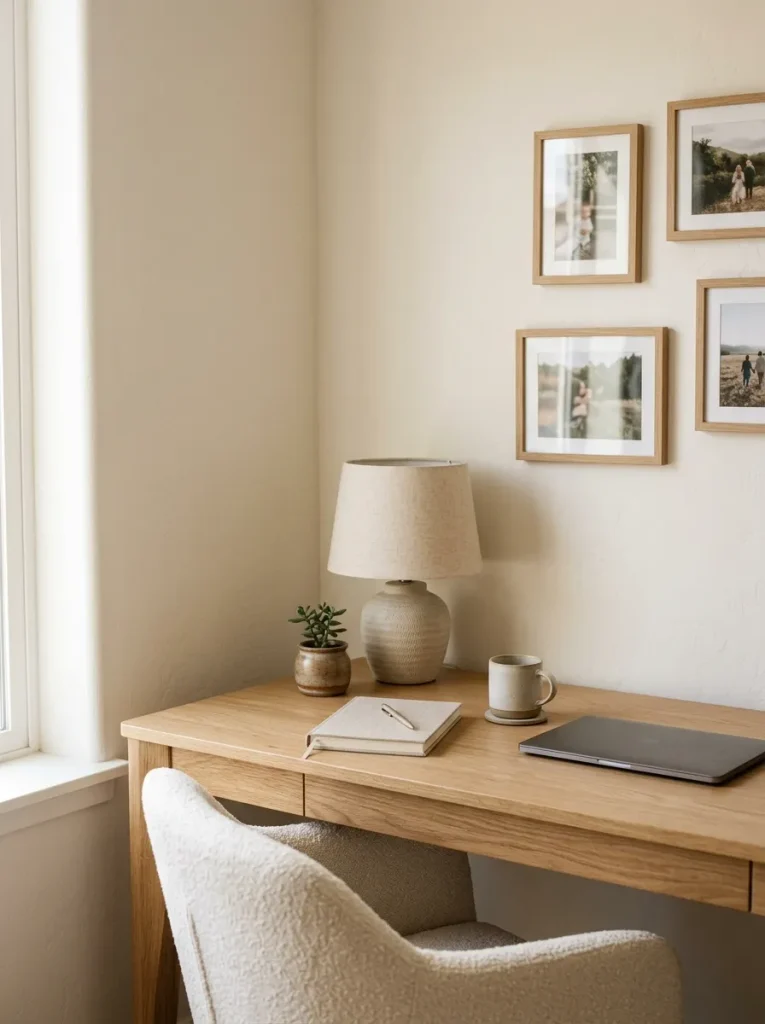
1. Select meaningful photos: Choose a few favorite memories, travel photographs or pictures of loved ones.
2. Pick matching frames: Natural wood, white or thin black frames help keep the display cohesive.
3. Plan the arrangement: Lay the frames out on a table before hanging them on the wall.
4. Keep the display balanced: Leave enough space around the photographs so the wall does not feel crowded.
Personal photographs can make a home office feel more connected to your life beyond work. Arrange them where you can enjoy them without creating distractions directly behind your screen. If drilling is not an option, use a freestanding photo stand or place a few frames on a shelf.
Under-Desk Soft Rug
| Feature | Option A: Low-Pile Rug | Option B: Plush Rug |
| Chair movement | Easier for rolling chairs | May resist chair wheels |
| Texture | Flat and lightly woven | Thick and soft |
| Maintenance | Usually easier to clean | May need more frequent care |
| Best use | Active desk workspace | Stationery chair or reading area |
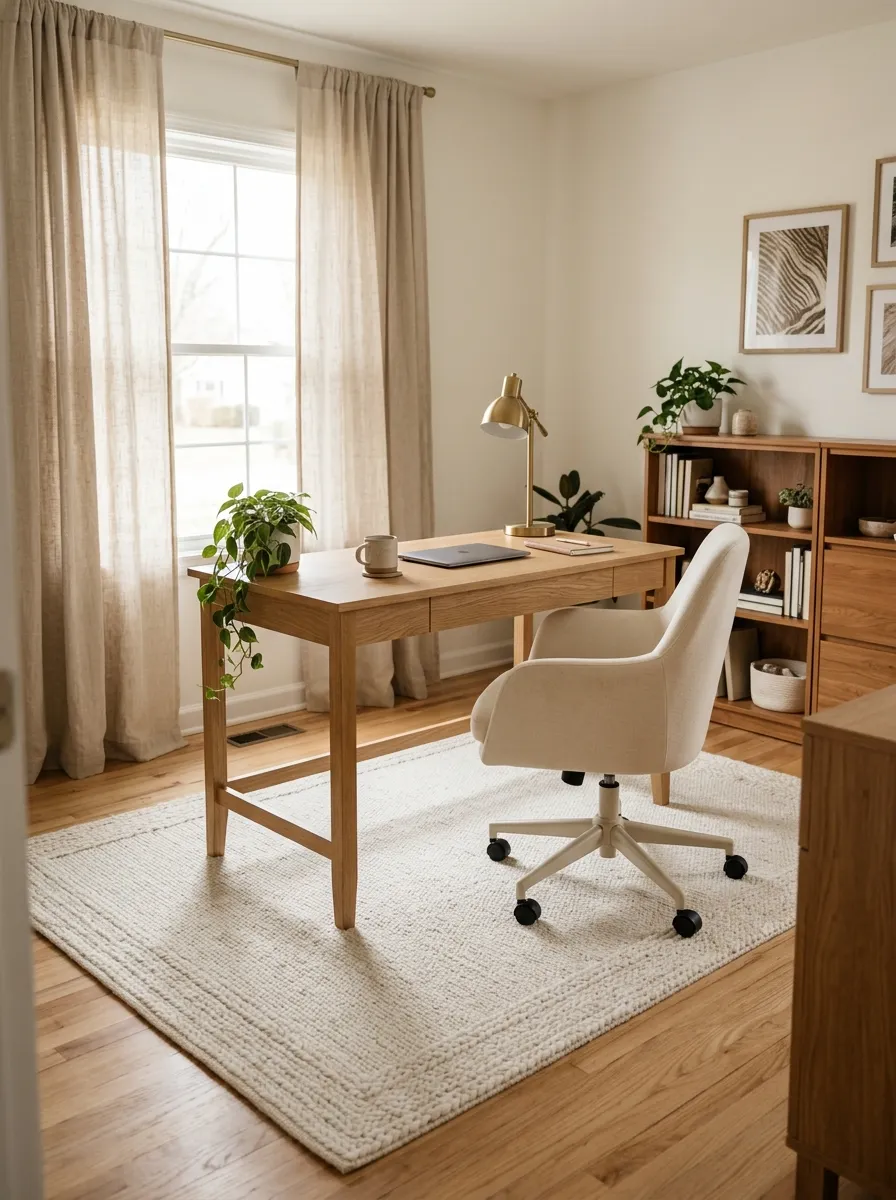
A soft rug adds warmth underfoot and helps define your office within a larger room. Measure the desk area before choosing a size, making sure the rug does not curl at the edges or catch beneath chair legs. For rolling office chairs, a low-pile rug or protective chair mat can provide a more practical surface.
Built-In Book Nook
BEFORE
A plain wall behind the desk may leave useful vertical space empty. Books, paperwork and decorative objects can also take over the desktop when there is nowhere else to store them.
AFTER
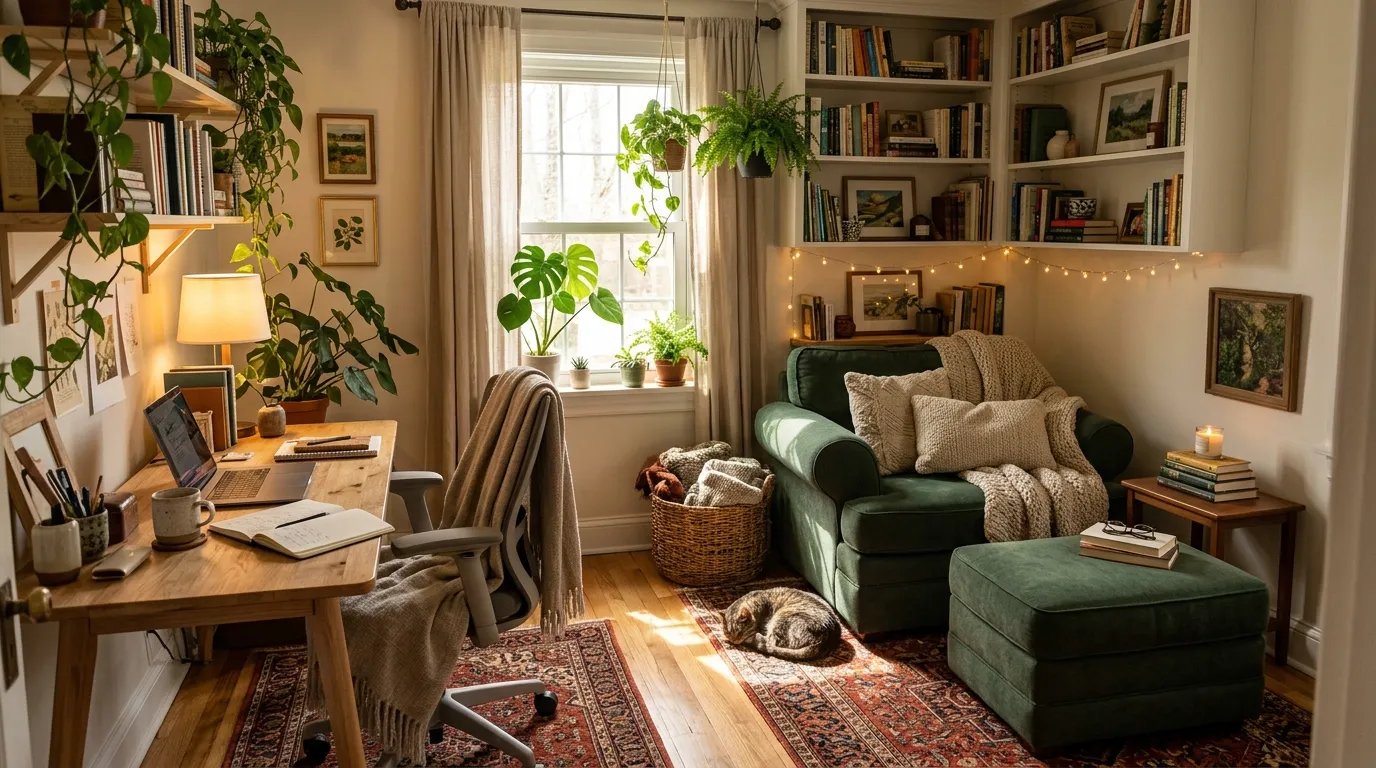
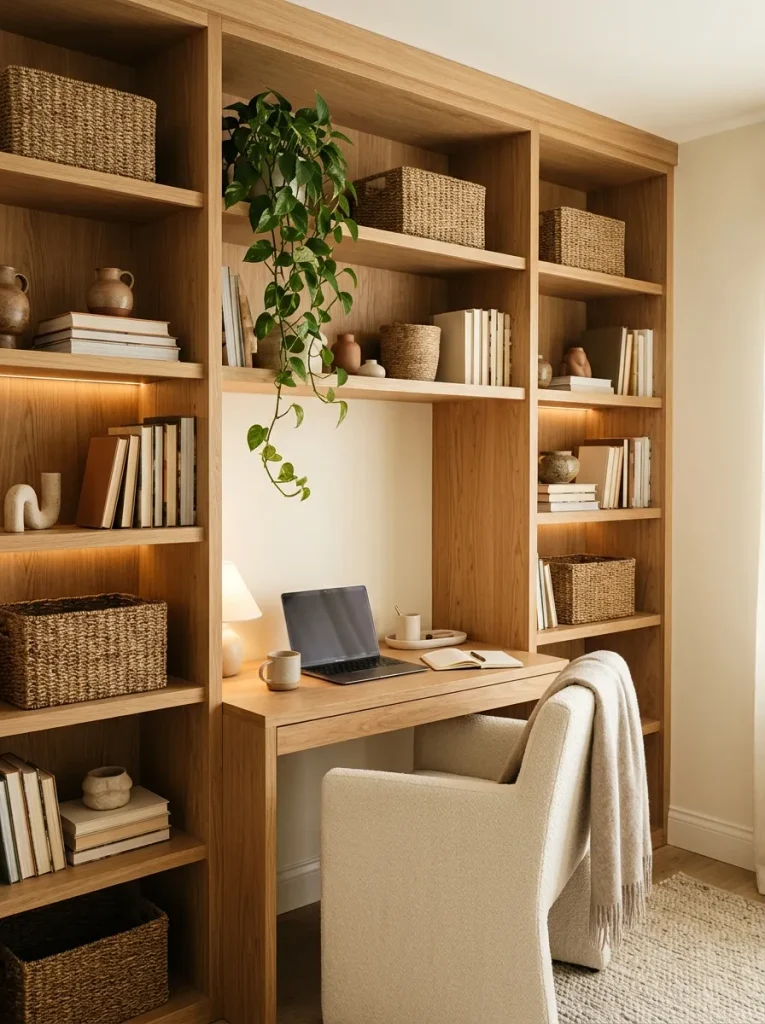
A built-in book nook combines workspace, storage and personal style in one organized arrangement. Shelves around the desk keep books within reach while creating a defined corner that feels warm and purposeful.
If custom cabinetry is outside your budget, use a freestanding bookcase beside your desk to create a similar effect. Arrange everyday reference books on accessible shelves and place decorative objects higher up. Keep the desktop open enough for your laptop, writing materials and other essentials.
Warm Desk Lamp
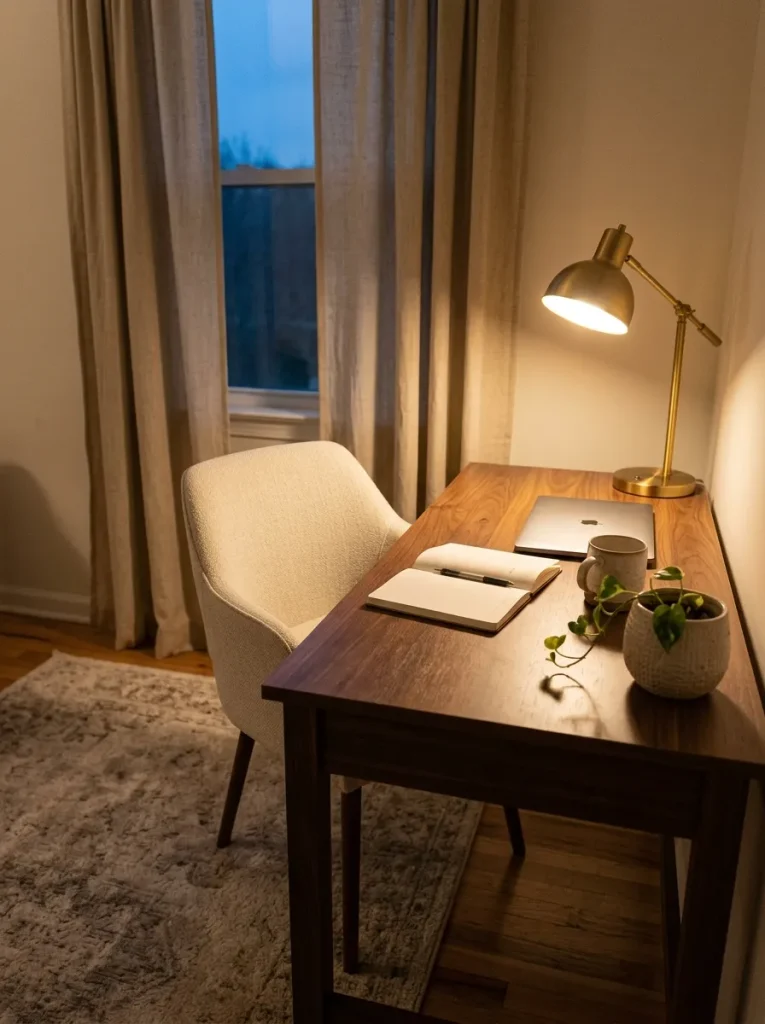
DO
- Choose an adjustable lamp so you can direct light toward your work.
- Use a bulb with a comfortable color temperature for your evening routine.
- Position the lamp to minimize shadows on your notebook.
- Match the lamp finish with nearby accessories for a coordinated look.
DON’T
- Rely on a dim decorative lamp for detailed tasks.
- Aim bright light directly at your computer screen.
- Place the lamp where its cord creates a tripping hazard.
- Overload a small desk with unnecessary lighting accessories.
A desk lamp adds both practical illumination and a welcoming glow to your workspace. Choose a compact base if your desktop is limited or consider a clamp lamp to free up valuable surface area. Adjustable brightness is especially useful when switching between focused work, reading and quieter evening activities.
Natural Plant Corner
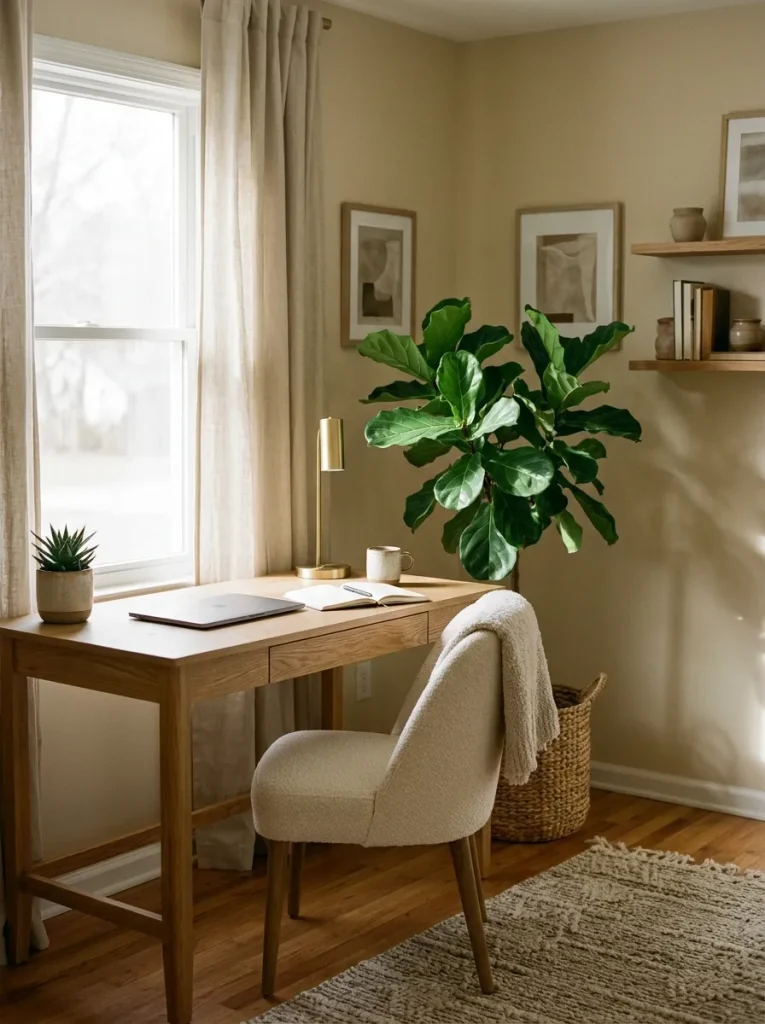
Fact 1: Large greenery: A floor plant can fill an empty corner and soften the appearance of furniture.
Fact 2: Small plants: Compact succulents or leafy plants fit neatly on shelves and desks.
Fact 3: Planter materials: Woven baskets, matte ceramic pots and terracotta containers complement natural decor.
Fact 4: Light requirements: Match your plant choice to the amount of sunlight available in your office.
Greenery can make a workspace feel more connected to the outdoors without requiring a major redesign. Start with one plant that suits your room’s lighting and your care routine. Keep larger pots clear of chair movement and walkways and use a waterproof saucer to protect wooden floors and furniture.
Upholstered Desk Chair
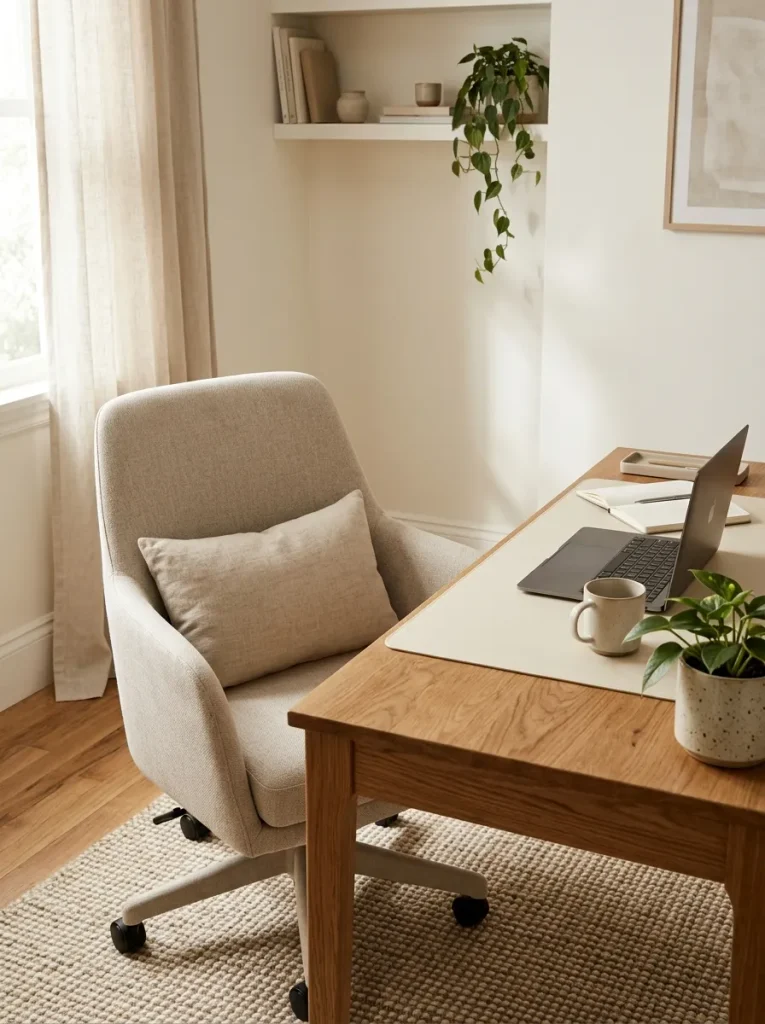
An upholstered desk chair can bring softness to a workspace that otherwise feels dominated by hard surfaces and technology. Look for supportive backrest cushioning, adjustable heightklsk and a seat that fits your body comfortably. Neutral fabric blends easily with warm wood furniture, while a muted green or dusty rose chair can add a gentle pop of color.
Before buying, check the chair’s dimensions and make sure it fits beneath your desk. If you spend many hours sitting, prioritize ergonomic support over appearance alone. A washable cover or durable upholstery is also useful if your office doubles as a shared family space.
Floating Corner Desk
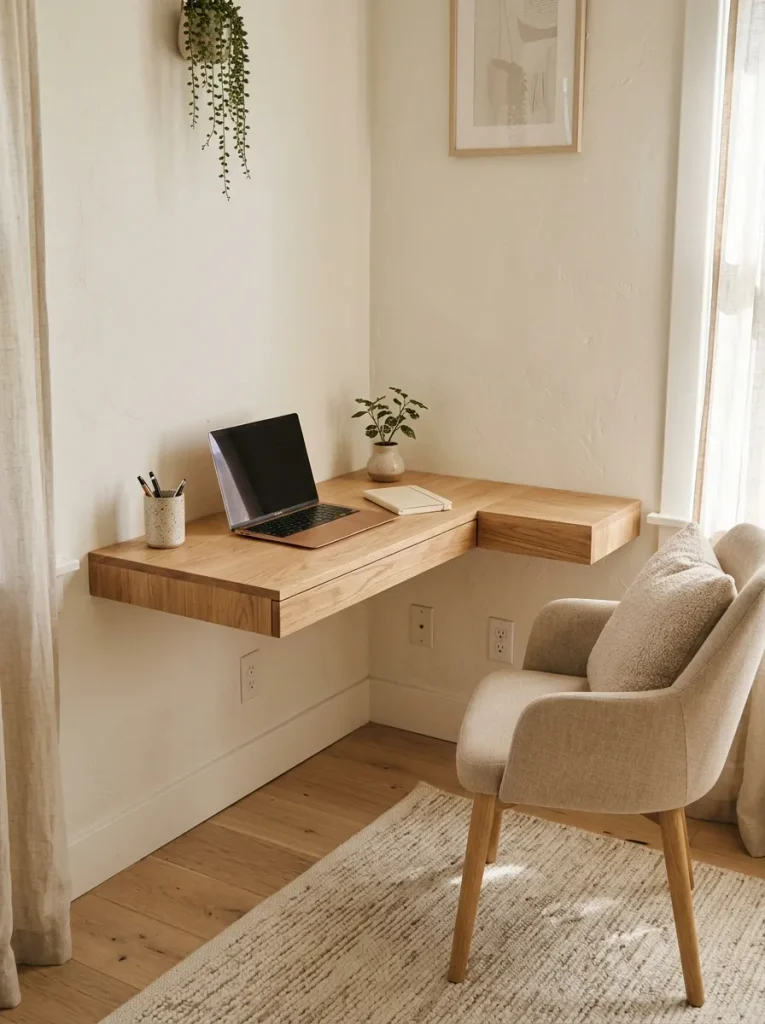
1. Measure the corner: Check both wall lengths and confirm there is enough space for your chair.
2. Choose a suitable desktop: Select a sturdy corner desk or professionally installed floating surface.
3. Plan cable access: Leave room for charging cables and any necessary power connections.
4. Add compact storage: Use a small drawer unit or nearby shelf for supplies.
5. Keep the layout open: Limit desktop decorations so the work surface stays useful.
A floating corner desk can turn an overlooked area into a dedicated workspace without adding bulky legs or cabinets. It works particularly well in bedrooms, apartments and multipurpose rooms. Make sure the desk is securely anchored to suitable wall supports and can safely hold your equipment before placing heavy items on it.
Cozy Window Desk
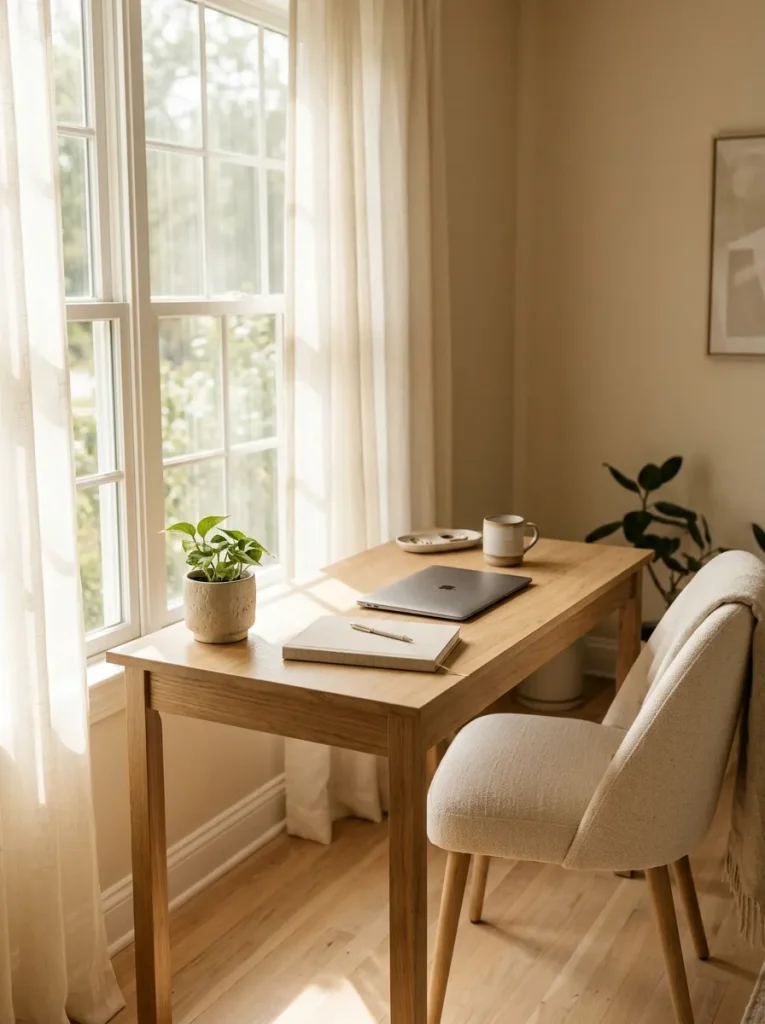
| Feature | Option A: Desk Facing Window | Option B: Desk Beside Window |
| Natural light | Direct light in front | Light enters from the side |
| Screen glare | May reflect on the screen | Can still occur depending on window angle |
| View | Open outdoor view while working | Side view of the outdoors |
| Layout | Best when space allows | Often easier in narrow rooms |
Placing a desk near a window can make the workspace feel brighter and more inviting. Check how sunlight moves through the room before settling on a layout, since direct glare can make screens uncomfortable to use. Sheer curtains or adjustable blinds offer flexible light control while preserving the connection to the outdoors.
Soft Upholstered Ottoman
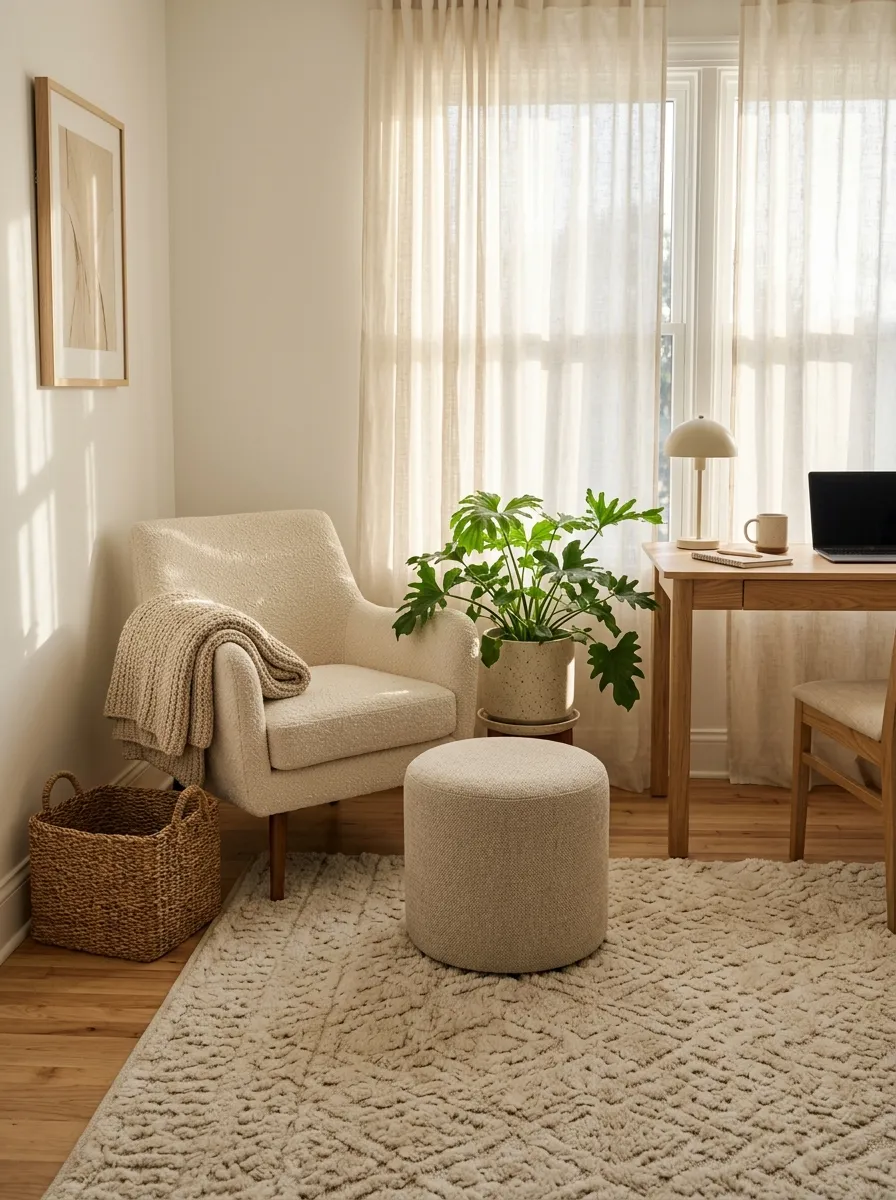
DO
- Choose a compact ottoman that fits beside your desk or reading chair.
- Select washable or easy-care upholstery for everyday use.
- Use a storage ottoman to tuck away blankets or small office supplies.
- Coordinate its fabric with your chair, rug or curtains.
DON’T
- Block your chair’s movement with an oversized ottoman.
- Use an unstable design as a substitute for an ergonomic footrest.
- Leave loose items scattered around it.
- Choose a bulky shape that overwhelms a small office.
A soft ottoman adds another comfortable element to your home office without requiring much space. It can serve as occasional extra seating, a place to rest your feet during breaks or discreet storage for cozy accessories. Keep it positioned where it is easy to move whenever you need more room to work.
Personalized Inspiration Wall
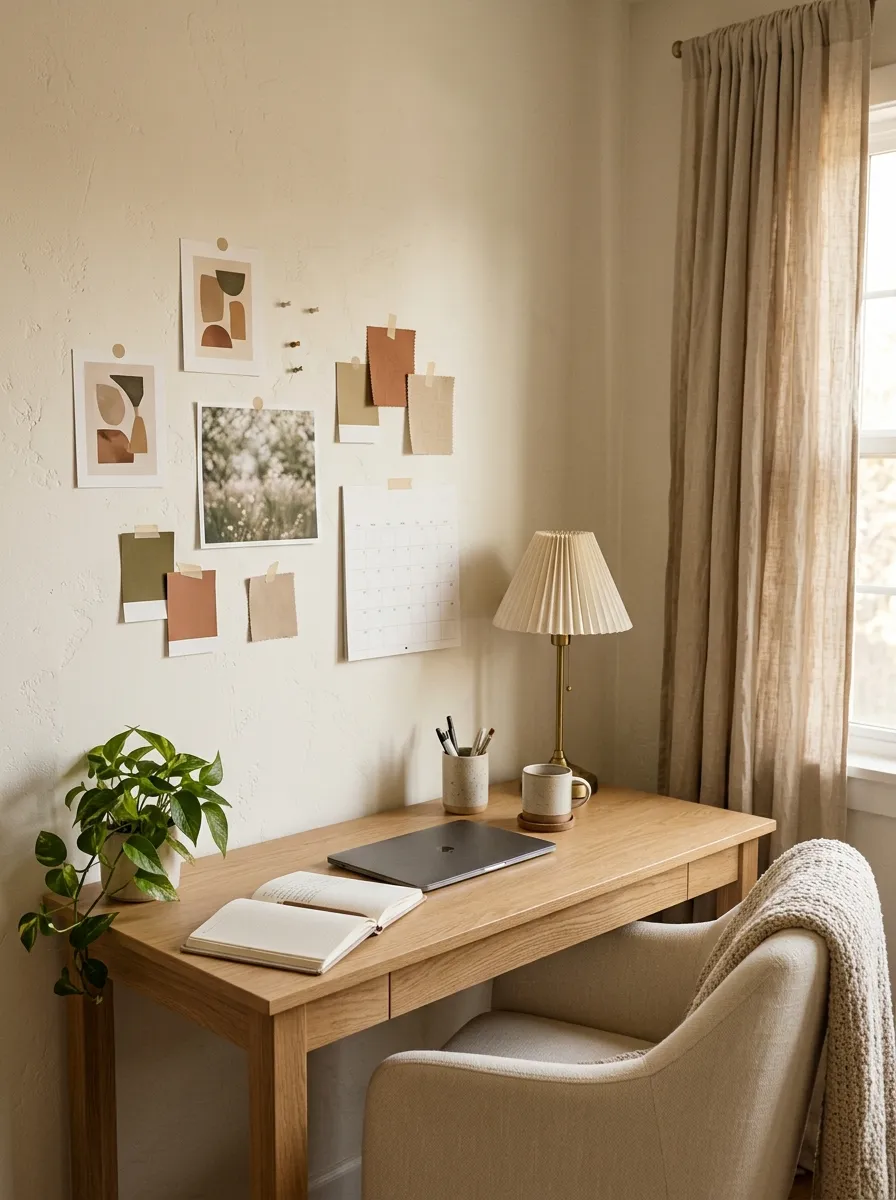
Fact 1: Personal meaning: Display photographs, artwork or objects that reflect your interests and goals.
Fact 2: Visual balance: Combine different frame sizes while keeping a consistent color palette.
Fact 3: Flexible updates: Use a pinboard or magnetic board when you like changing your display.
Fact 4: Screen placement: Keep the busiest part of the wall away from your direct line of sight if visual clutter distracts you.
An inspiration wall can give your workspace a personal touch while helping an ordinary corner feel intentional. Start with a few meaningful pieces rather than covering the entire wall at once. Arrange them on the floor first, then adjust the spacing until the display feels balanced with your desk and surrounding furniture.
Cozy Canopy Corner
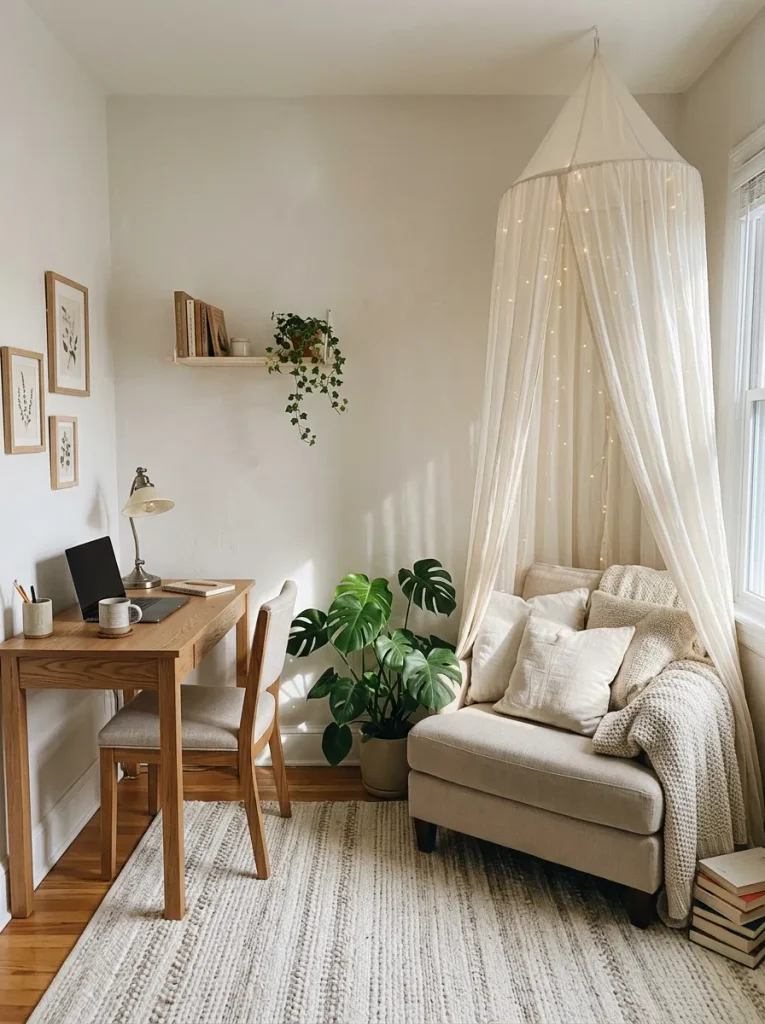
BEFORE
A plain office corner can feel functional but uninspiring, especially when it contains only a desk and chair. The lack of soft materials or visual separation may make it difficult to distinguish the workspace from the rest of the room.
AFTER
A lightweight fabric canopy can define a cozy reading or relaxation corner without adding bulky furniture. Flowing ivory fabric, a cushioned chair and a soft rug create a gentle focal point that feels separate from the main work area.
Choose a freestanding canopy frame or a securely installed curtain track suited to your room. Keep fabric away from heaters, electrical equipment and hot light bulbs and avoid blocking windows or walkways. For a simpler option, hang a single curtain panel beside the chair to create a similar soft effect.
Minimalist Desk Setup
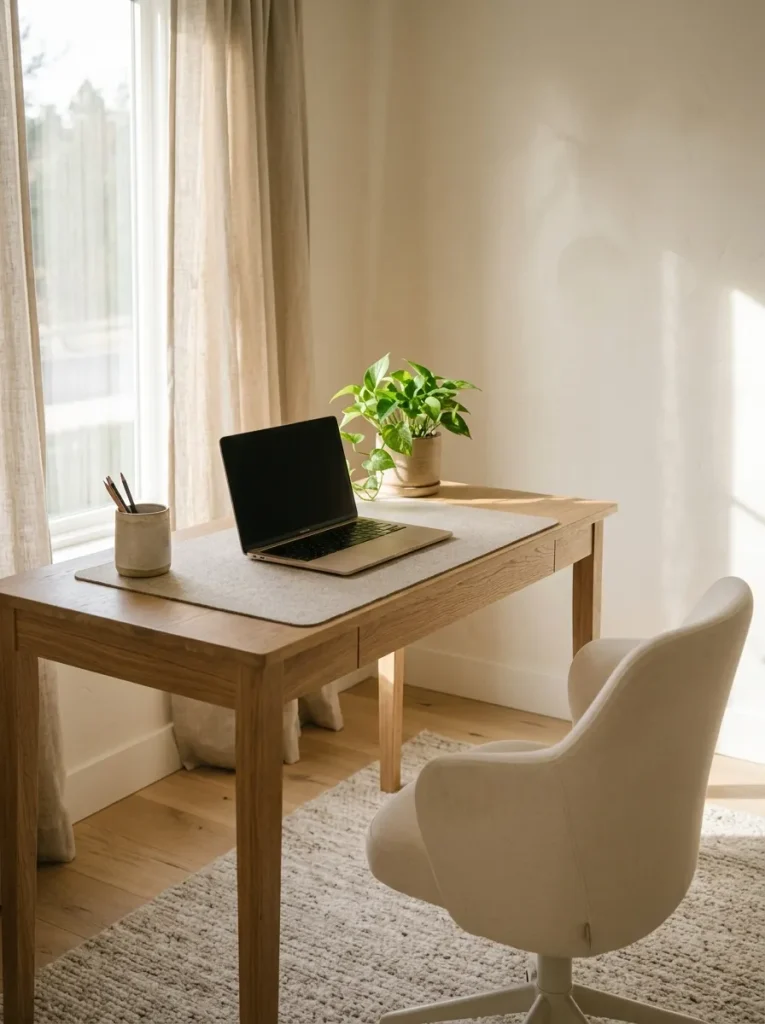
1. Clear the surface: Remove items you rarely use and keep daily essentials nearby.
2. Choose a simple palette: Combine two or three neutral shades with natural wood.
3. Organize small supplies: Use one tray or drawer organizer for pens, cables and stationery.
4. Add one personal detail: Include a small plant, framed photograph or favorite ceramic accessory.
A minimalist desk can make a home office feel calmer without sacrificing comfort. The goal is not to remove everything but to give each item a useful place. Keep frequently used tools within reach and store occasional supplies elsewhere. A clear surface also makes it easier to switch between computer work, reading and writing.
Cozy Reading Lighting
Quick Tip:
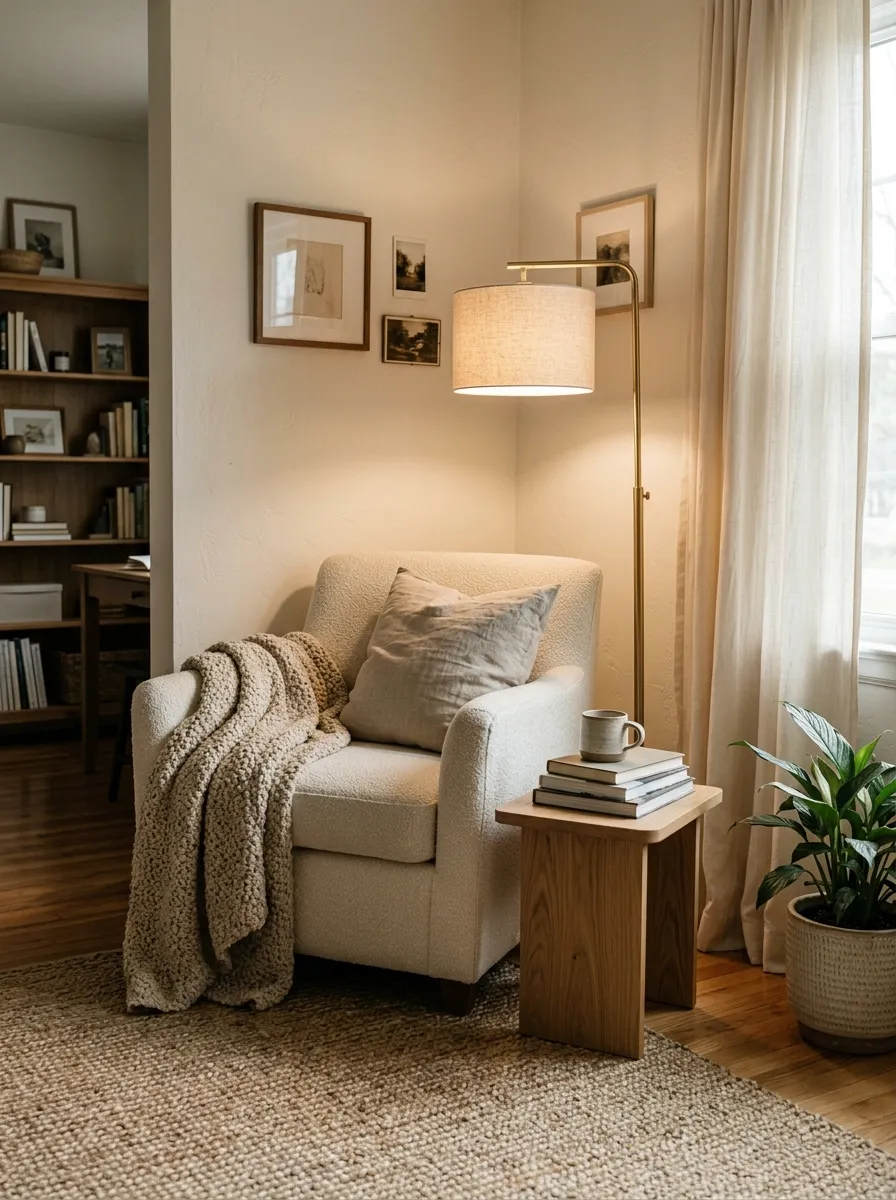
Choose a floor lamp or adjustable reading lamp that directs light onto your book without shining directly into your eyes. A warm-toned bulb can create a relaxed atmosphere, while adequate brightness helps you read comfortably.
Place the lamp close enough to illuminate the page without crowding your chair or side table. If your office has limited floor space, a wall-mounted reading light can provide focused illumination. Keep cords secured along the wall and away from walking paths to maintain a safe, uncluttered corner.
Soft Blue Accents
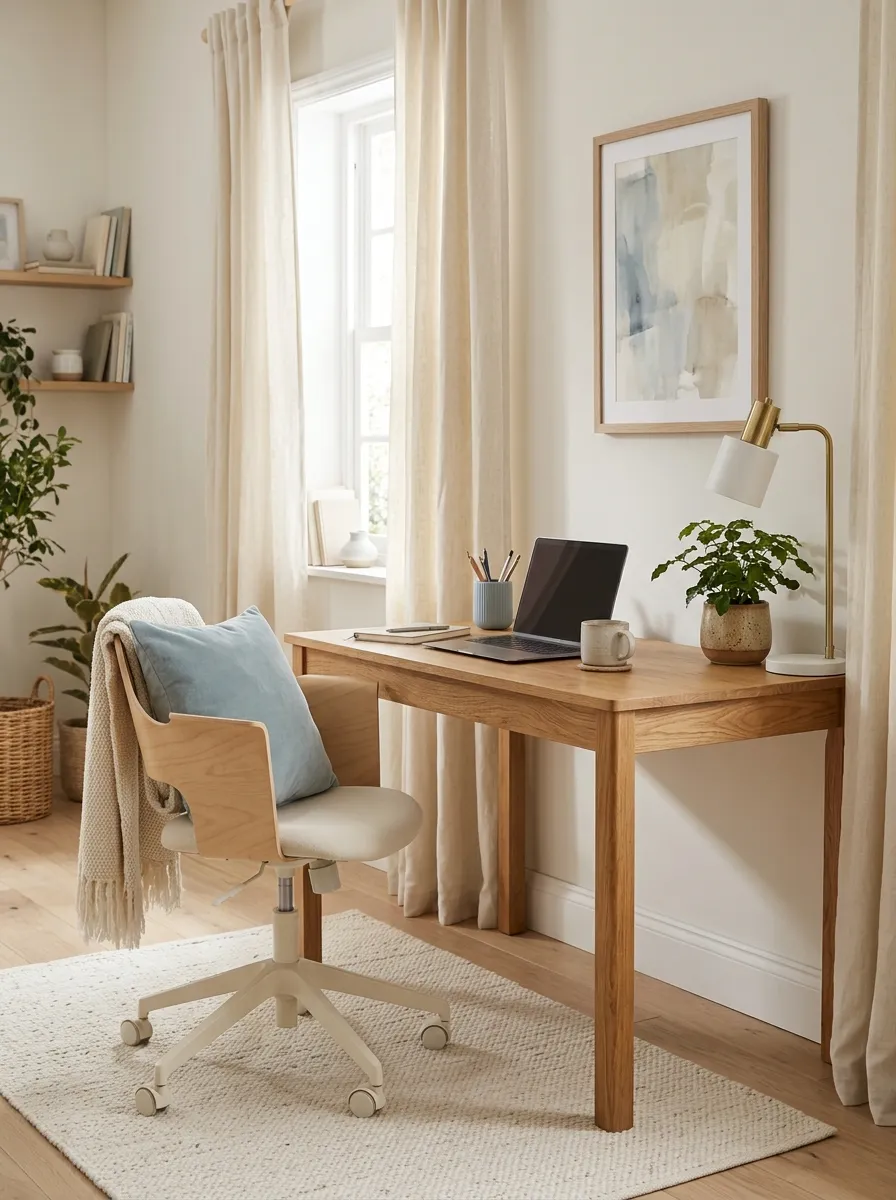
| Feature | Option A: Pale Blue | Option B: Dusty Blue |
| Appearance | Light and airy | Muted and grounded |
| Best pairing | White, cream, pale oak | Beige, walnut, ivory |
| Visual effect | Brightens a small corner | Adds gentle color depth |
| Easy accessories | Ceramic cups, cushions | Artwork, desk organizers |
Soft blue can introduce color without making your workspace feel visually busy. Use it in a few small details, such as a chair cushion, notebook or framed print and balance it with warm neutrals. If your room already has cool gray furniture, add natural wood or cream textiles to keep the overall look welcoming.
Cozy Built-In Bench
BEFORE
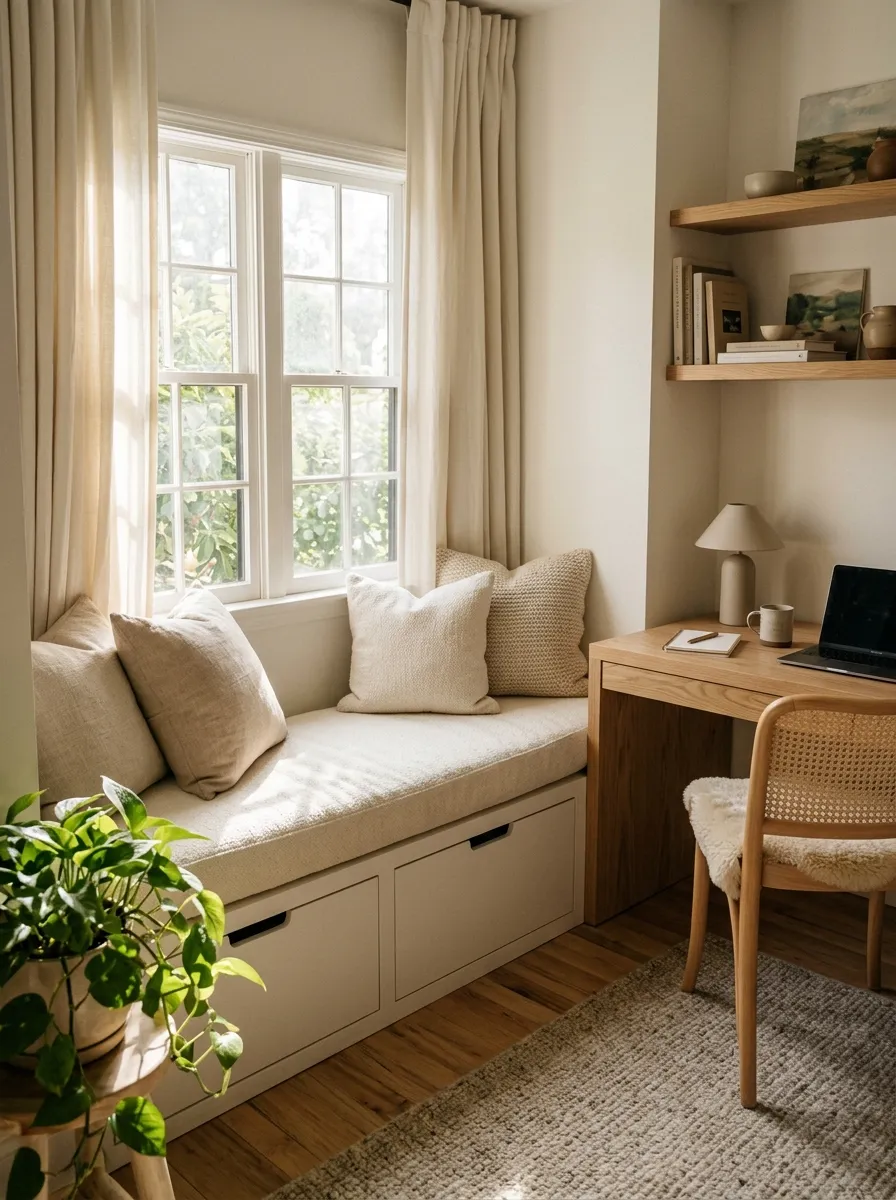
An awkward window alcove or unused wall can become wasted space in a small home office. Extra blankets, books and office supplies may also end up scattered around the room without dedicated storage.
AFTER
A built-in bench turns the unused area into a comfortable place for reading and short breaks. Cushioned seating creates a cozy feature, while drawers underneath provide discreet storage for work materials and cozy accessories.
Choose durable cushions with removable covers and make sure the bench height feels comfortable for sitting. If a built-in design is too expensive, place a storage bench beside your desk to achieve a similar look without major renovations.
Warm Terracotta Details
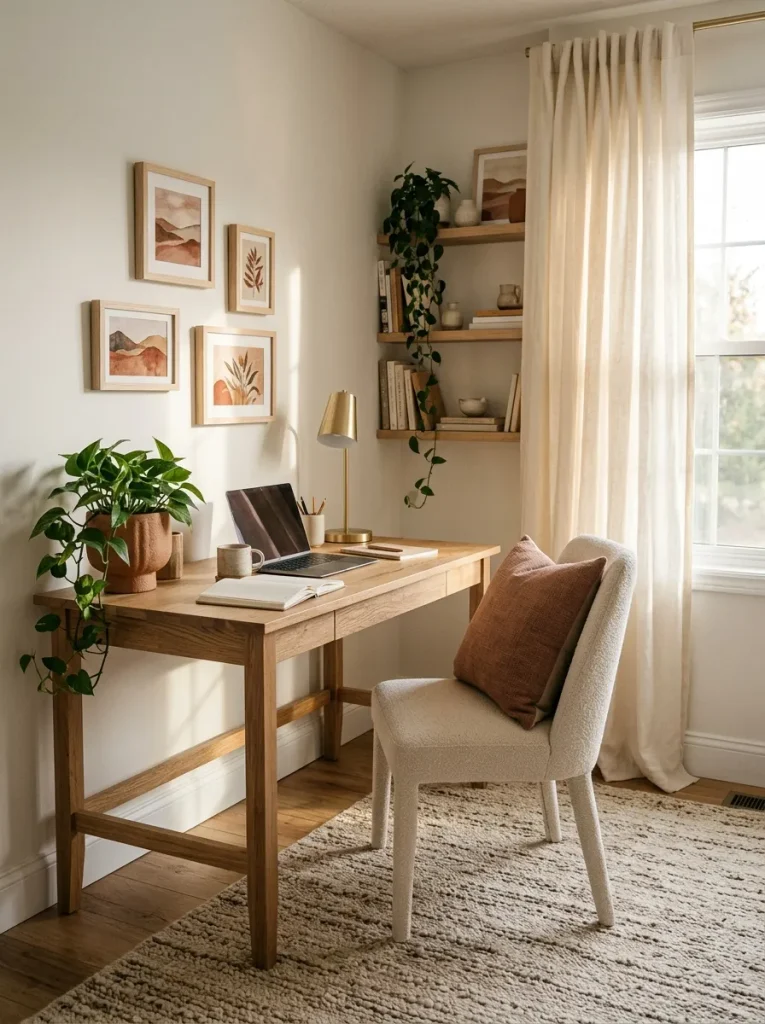
Terracotta brings an earthy warmth to a home office without requiring bold wall colors or expensive furniture. Add a rust-colored cushion, ceramic planter or small piece of artwork to create a welcoming focal point. These details pair especially well with cream fabrics, natural wood and soft beige walls.
Keep the color concentrated in two or three places so the room feels balanced rather than busy. If you prefer a subtle look, choose muted clay shades instead of deep orange. Small accessories are also easy to replace when you want to refresh your workspace for a new season.
Hidden Cable Storage
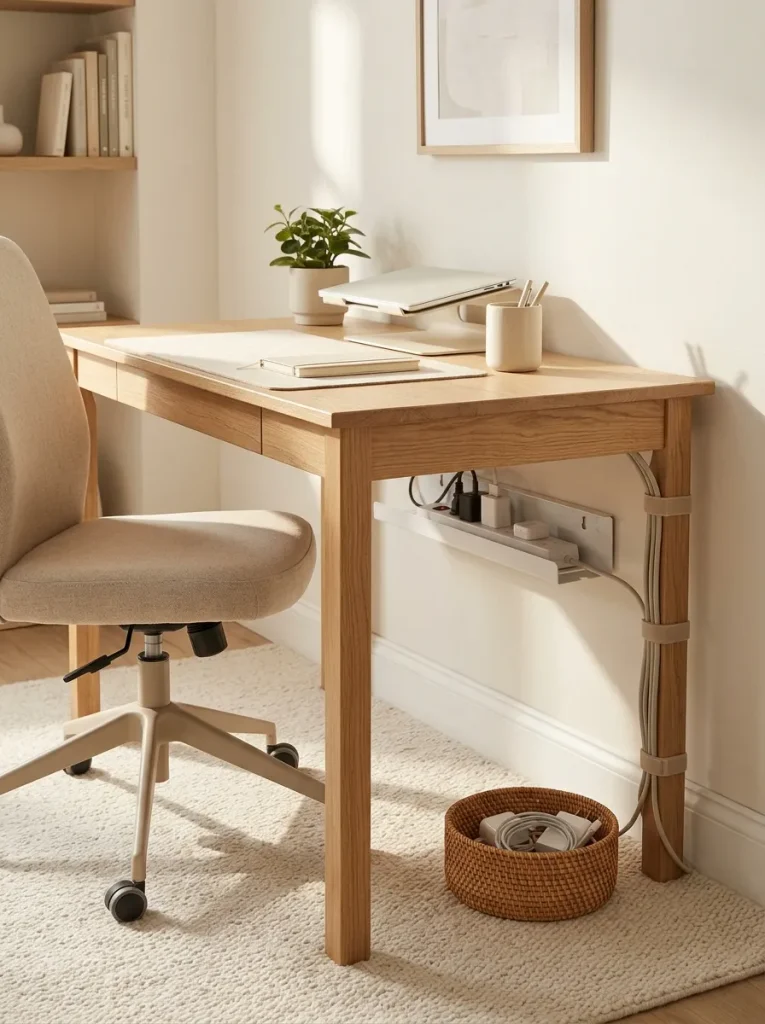
- Use an under-desk tray: Keep power strips and excess cable length out of sight.
- Secure loose cords: Use reusable cable ties or clips to guide wires along desk legs.
- Create a charging spot: Store everyday chargers together in a small organizer.
- Label important cables: Make it easier to identify equipment when you need to unplug it.
- Keep cables accessible: Leave enough slack for safe movement and avoid tightly bending wires.
Hidden cable storage makes a workspace look calmer while reducing tangles around your feet. Choose organizers suited to your desk and electrical setup and keep power adapters ventilated. Avoid placing electrical connections where they could be crushed by furniture or exposed to spills. A few simple adjustments can make even a small desk feel more organized.
Cozy Fireplace Workspace
DO
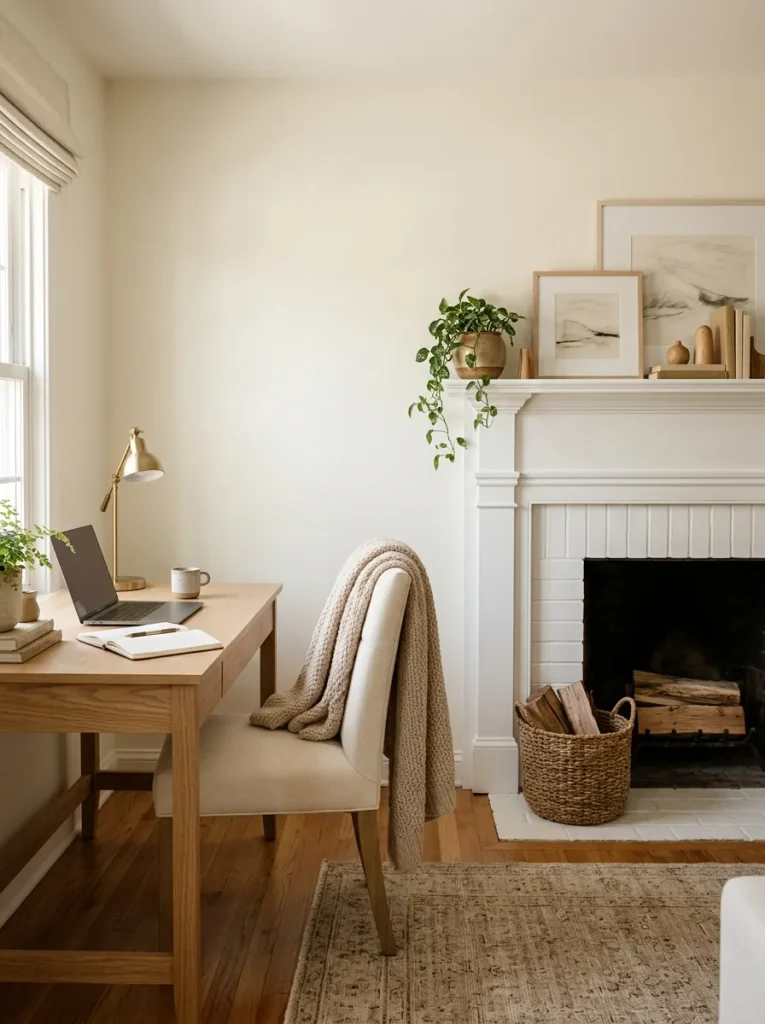
- Position the desk near the fireplace while maintaining safe clearance.
- Choose cream, taupe and warm wood tones to complement the fireplace.
- Add a soft rug and comfortable chair for a welcoming atmosphere.
- Decorate the mantel with a few simple accessories.
DON’T
- Place fabric, paper or electrical equipment near an active fire.
- Block fireplace ventilation or required safety clearances.
- Let decorative items crowd the work surface.
- Assume an unused fireplace is safe to use without checking its condition.
A fireplace can give a home office a distinctive focal point, particularly in a traditional or cottage-style room. If the fireplace is decorative or unused, keep the surrounding area tidy and use the mantel for understated decor. For a working fireplace, follow the manufacturer’s safety guidance and keep furniture, curtains and cables well away from heat.
Personalized Cozy Workspace
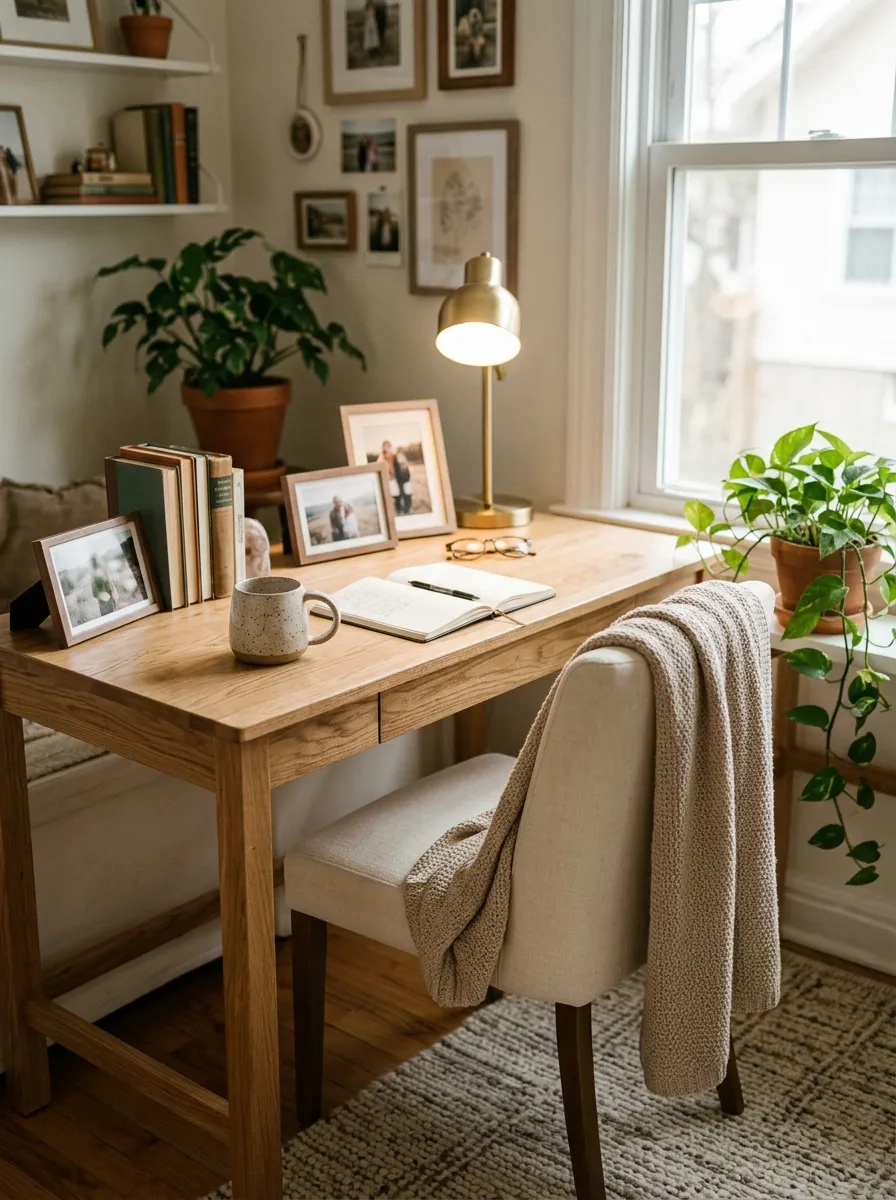
Fact 1: Personal touches: Display a few meaningful photographs, favorite books or handmade objects.
Fact 2: Comfortable details: Choose a chair cushion, soft throw or desk mat that suits your daily routine.
Fact 3: Useful organization: Keep personal items separate from essential work supplies to avoid clutter.
Fact 4: Flexible styling: Use removable artwork and small accessories so you can refresh the corner whenever your preferences change.
The most inviting workspace is one that reflects your habits and personality while supporting your daily tasks. Start with furniture that fits your room, then add a few details that make you feel comfortable spending time there. Keep the arrangement practical, with enough open space to work and move around without distraction.
Woven Storage Baskets
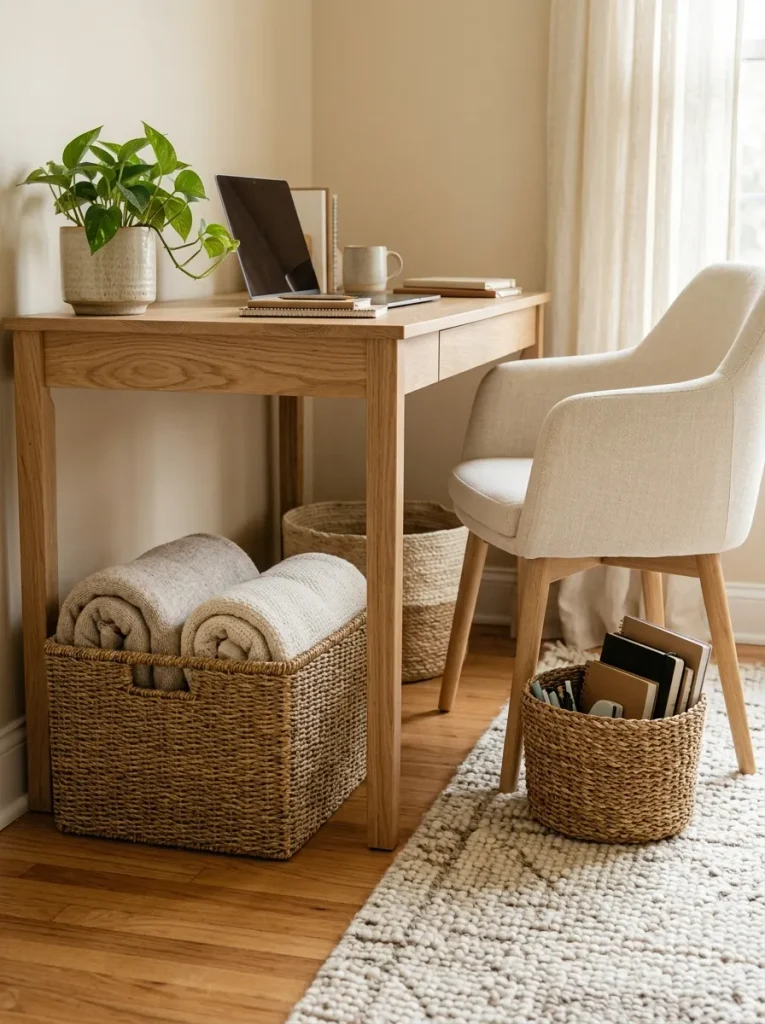
Woven storage baskets are a simple way to keep your home office organized while adding natural texture. Choose baskets in wicker, seagrass or rattan to complement wooden furniture and neutral decor. Place them beneath your desk, beside a bookcase or on a low shelf to store notebooks, chargers, extra stationery and cozy blankets.
For a coordinated look, choose two or three baskets in similar tones but different sizes. Use smaller baskets for everyday essentials and larger ones for items you only need occasionally. This practical storage solution helps reduce visible clutter without making your workspace feel cold or overly minimal.
Cream Gallery Wall
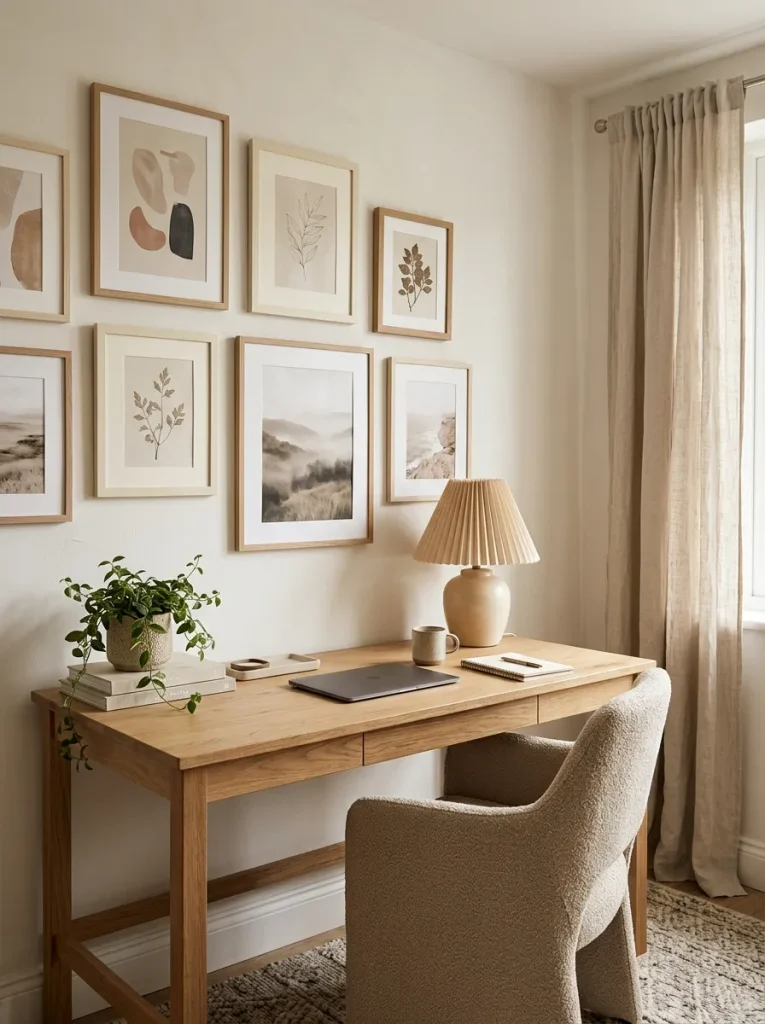
A cream gallery wall can make your home office feel thoughtfully decorated without overwhelming the space. Combine botanical prints, abstract artwork and peaceful landscape photographs in cream, beige and natural wood frames. Keep the colors connected so the arrangement feels cohesive rather than busy.
Before hanging the frames, arrange them on the floor to test different layouts. Leave consistent spacing between each piece and center the display above your desk or reading chair. If you prefer a flexible option, use a picture ledge so you can change the artwork whenever you want to refresh your workspace.
Cozy Evening Workspace
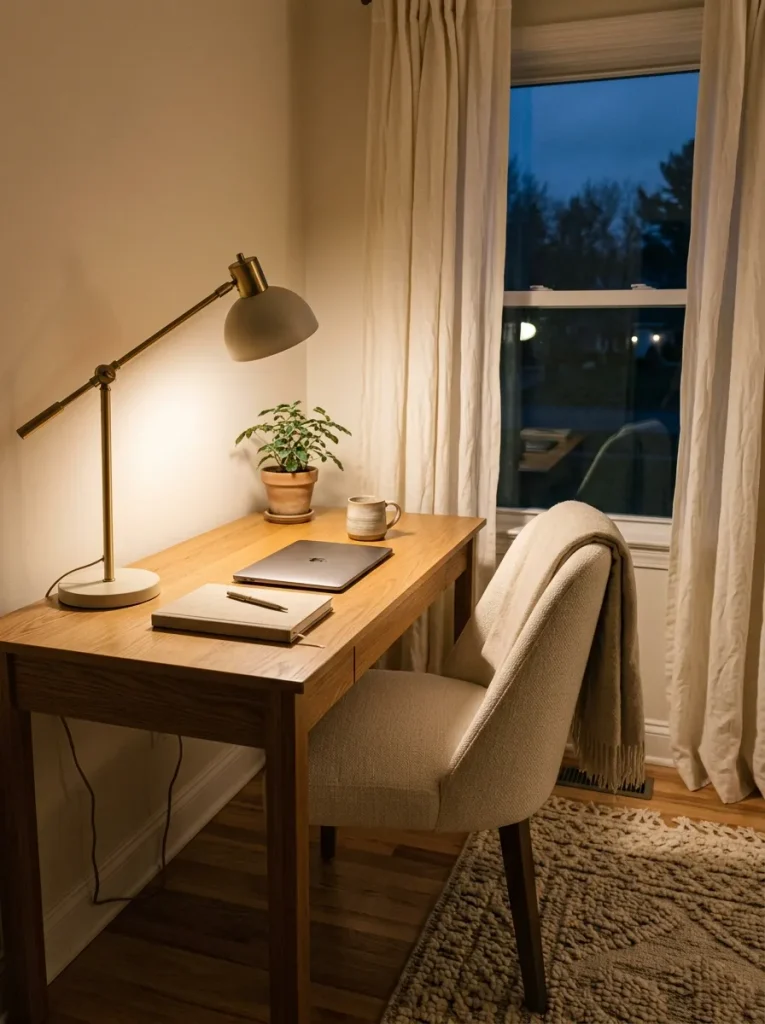
A cozy evening workspace helps your office feel welcoming after the sun goes down. Use an adjustable desk lamp, soft ambient lighting and comfortable accessories to create a relaxing atmosphere while keeping your work area functional. Warm wood finishes and cream textiles can make the room feel especially inviting during quiet evenings.
Keep your desktop organized before starting your evening routine and adjust your lighting to suit the task. Use brighter, focused light for reading or detailed work and softer ambient lighting when you finish. A comfortable chair cushion, a favorite mug and a tidy notebook can add personal touches without creating unnecessary clutter.
CONCLUSION
Creating a comfortable workspace doesn’t require expensive furniture or a perfectly designed room. Small touches like a soft rug, warm lighting, natural textures and personal accessories can help make your office feel like a place you genuinely enjoy. These Cozy Home Office Ideas offer plenty of inspiration for creating a corner that supports your work while reflecting your personality. Start with one change that feels manageable, then add more as your needs evolve. Save this article on Pinterest so you can revisit your favorite ideas, try the ones that suit your space and share it with someone who wants a cozier home office.